
Dining Room Mirror Placement: How to Double Your Window Light
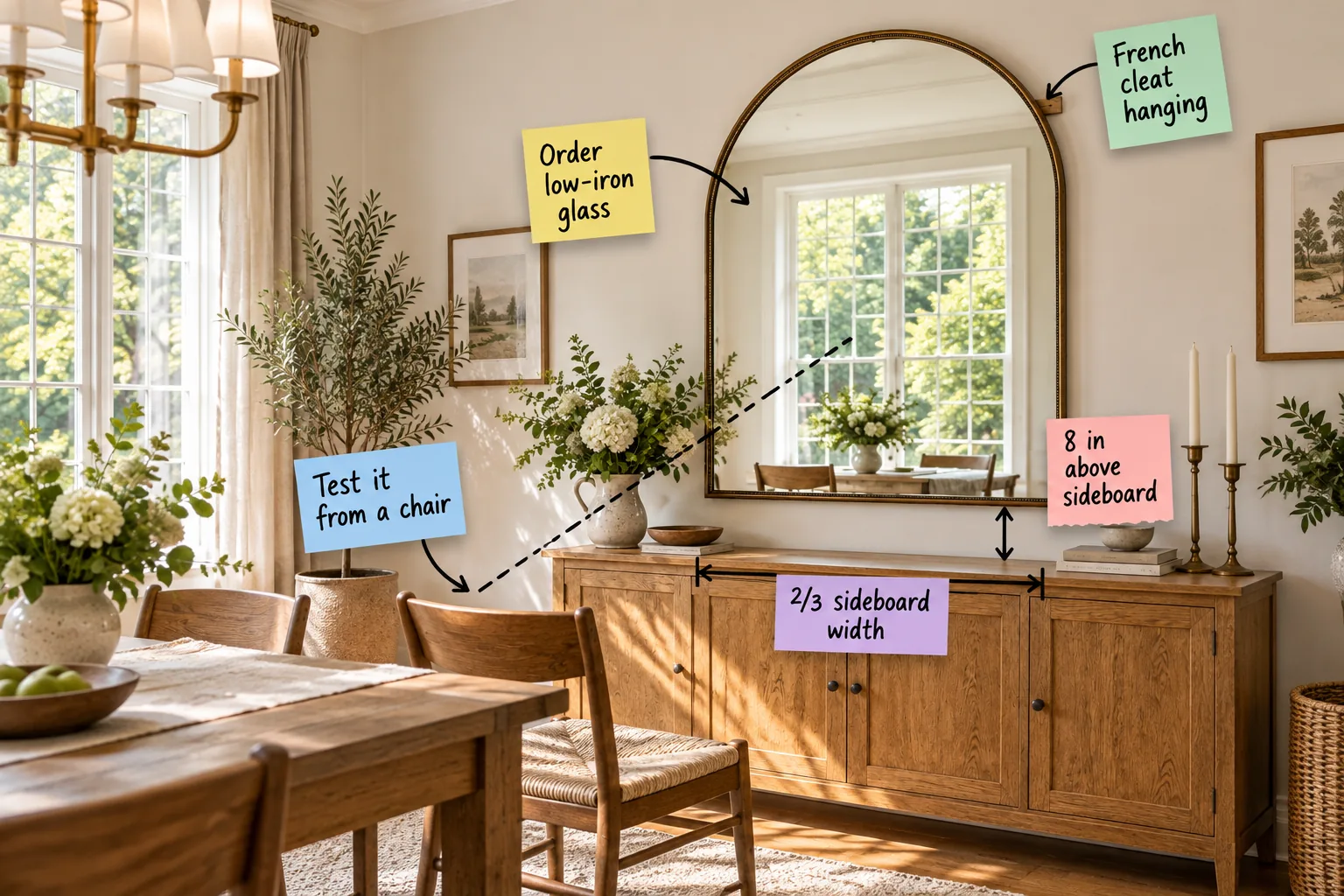
A well-placed mirror does more than fill a blank wall; it doubles your natural light, which is why I created the Dining Room Mirror Placement Sheet to help you perfectly position your reflection.
Doubling the Light with a Reflected Window
A large mirror placed directly opposite a window acts as a second light source, instantly brightening the entire dining room. Align the mirror’s center point perfectly with the window frame to capture the maximum amount of natural daylight and outdoor scenery.
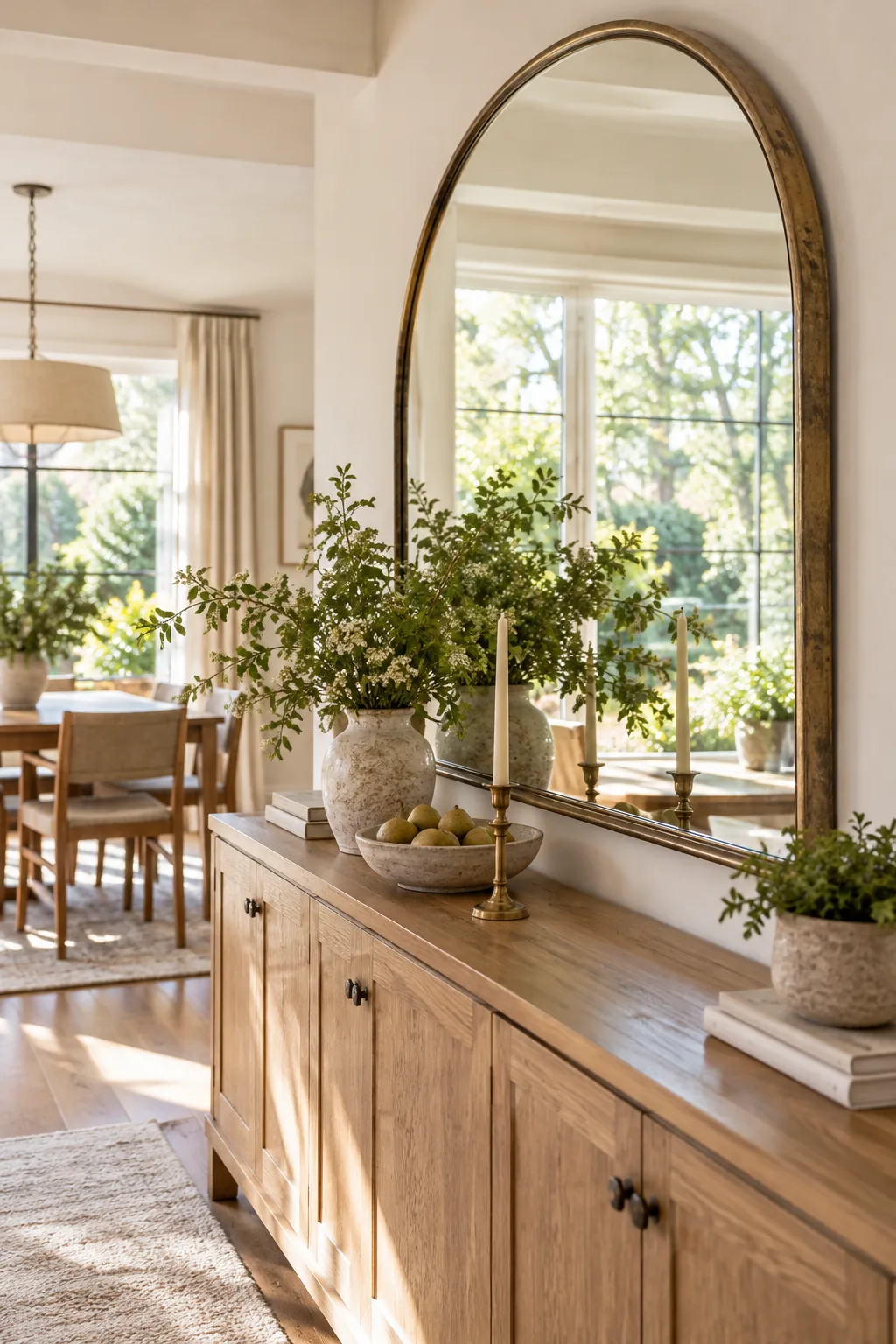
This strategic alignment bounces morning sunlight directly into the darkest corners of the room. Moving the center point even a few inches off-axis can dramatically reduce the amount of light returning to your dining table.
Why Low-Iron Glass Makes the View Real
Standard mirror glass contains high iron levels that cast a subtle green tint, dulling the crisp colors of a reflected garden. I learned this the hard way in my own Denver dining room, where a standard mirror turned our vibrant blue spruce muddy.
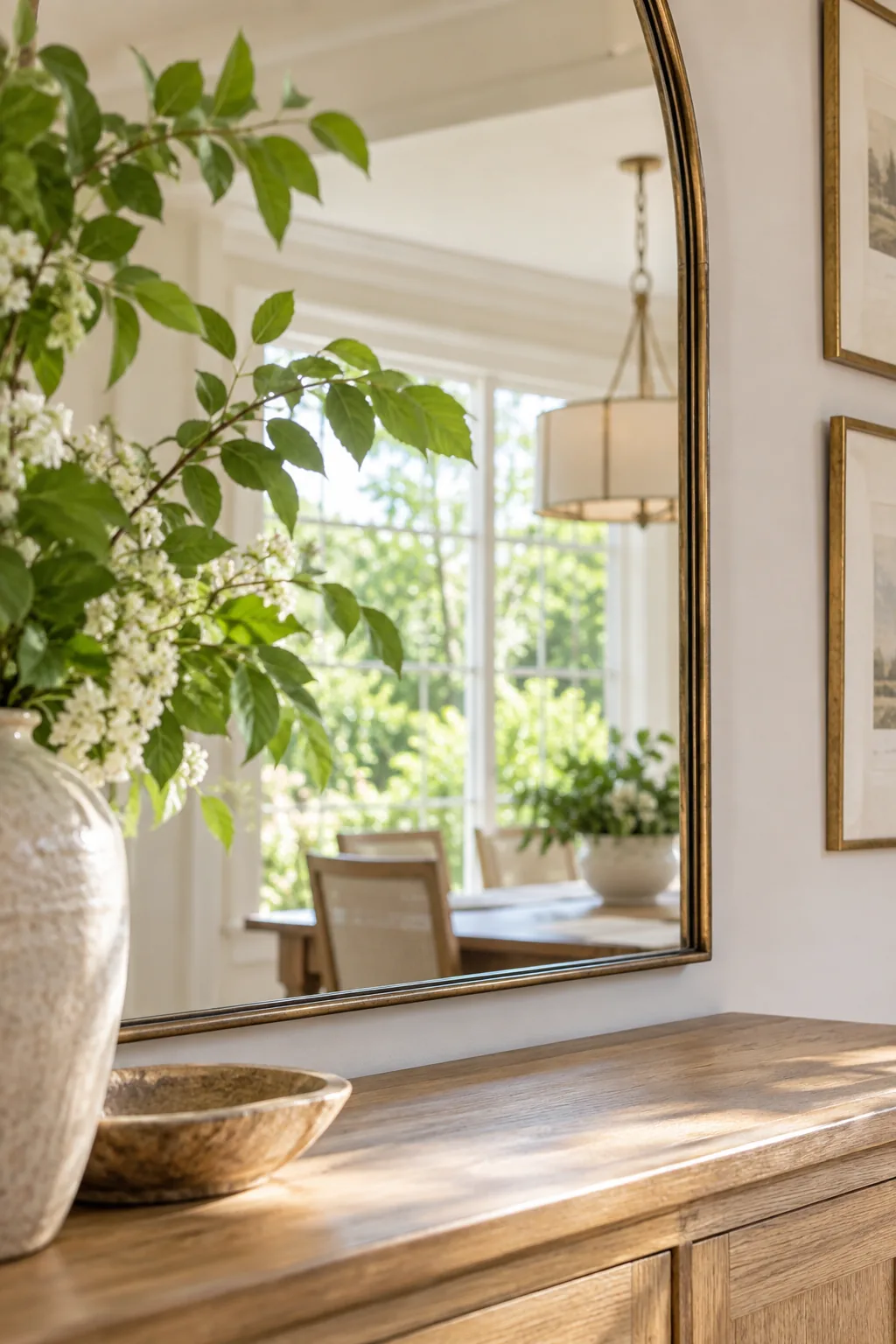
Always order low-iron glass from your glazier for a true-color reflection that makes the artificial window feel incredibly realistic. This simple material upgrade ensures the bright whites of the winter sky and true greens of your landscaping remain vivid.
Finding the Right Mirror-to-Sideboard Ratio
A mirror that is too small looks lost, while one that is too large overpowers the furniture beneath it. I always tell my clients to aim for exactly 2/3 sideboard width to maintain grounded, balanced visual proportions.
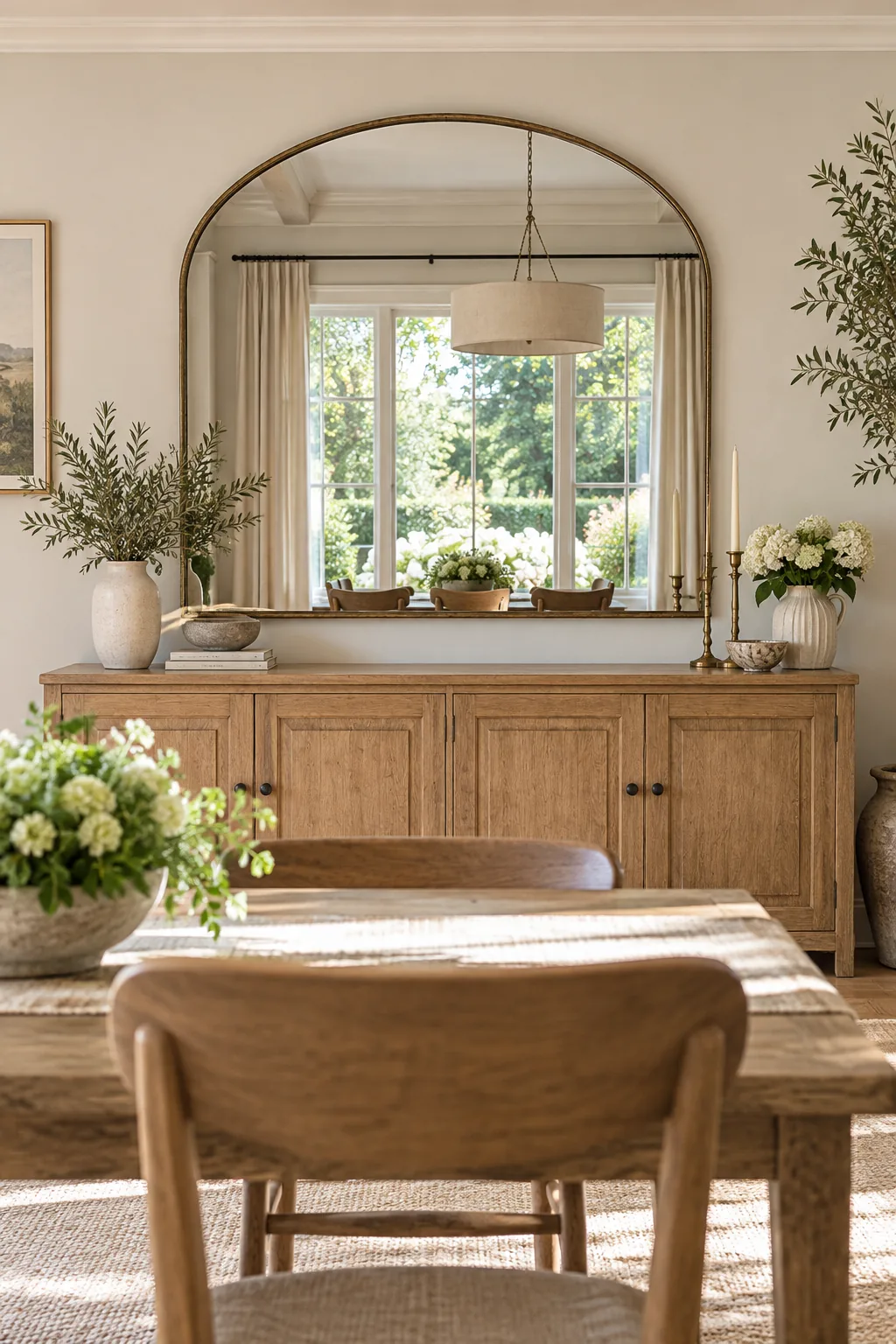
This classic design principle of leaving negative space on either side allows the heavy wooden furniture to firmly anchor the lighter glass. Check the sizing chart below to find the exact mirror width for your specific dining room furniture.
| Sideboard Width | Ideal Mirror Width | Negative Space Per Side |
|---|---|---|
| 48 inches | 32 inches | 8 inches |
| 60 inches | 40 inches | 10 inches |
| 72 inches | 48 inches | 12 inches |
| 84 inches | 56 inches | 14 inches |
The Seated Sightline Test
Dining rooms are experienced from a chair, not standing up, so you must test it from a chair before drilling any holes. Pull out a dining chair, sit down, and check the reflection strictly from a seated eye level.
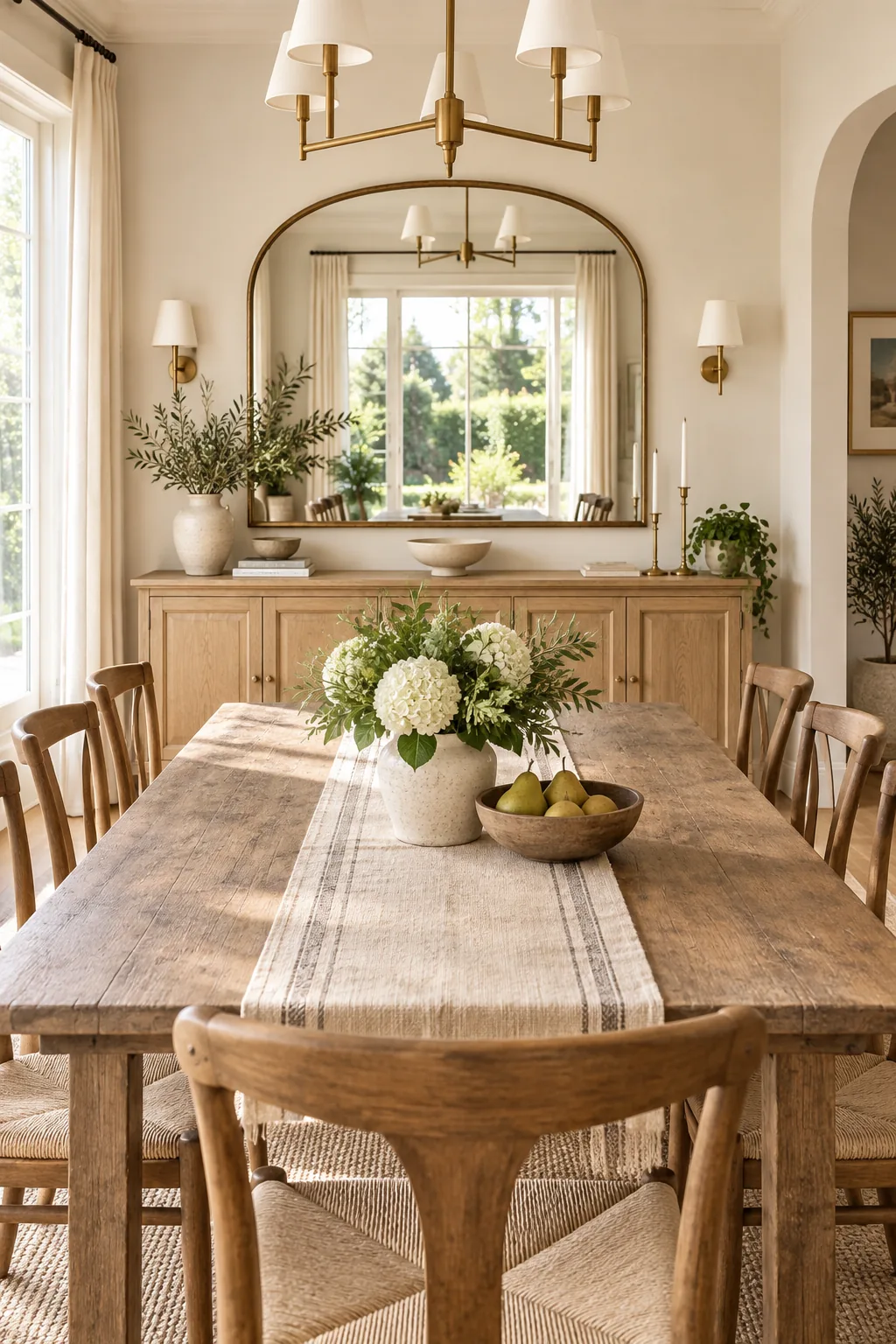
When seated, your guests should see the beautiful garden outside rather than just a blank ceiling or the neighbor’s roofline. If you only test the height while standing, the entire focal point shifts upward and ruins the immersive dining experience.
Setting the Perfect Gap Above the Sideboard
Leaving exactly 8 in above sideboard creates a deliberate connection between the two pieces while providing enough breathing room for serving dishes. This precise vertical measurement ties the mirror to the furniture so they read as a single architectural unit.
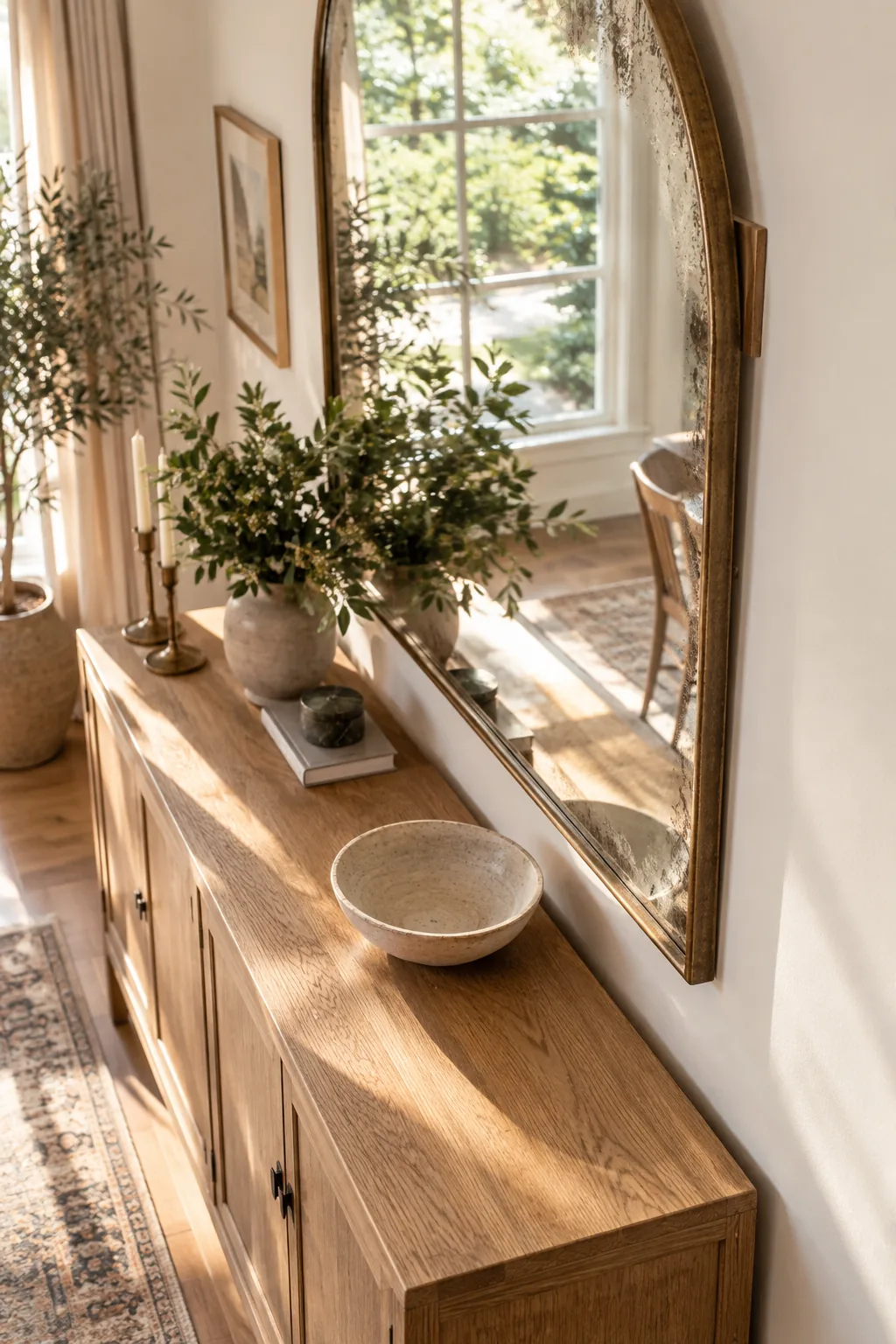
Getting the vertical spacing right prevents the mirror from floating awkwardly on the wall. A cohesive dining room anchors the wall decor directly to the furniture below it.
Securing Heavy Mirrors with a French Cleat
Large, high-quality mirrors are incredibly heavy and require a much stronger support system than a standard picture wire. A wooden French cleat hanging system distributes the massive weight safely and evenly across multiple wall studs.
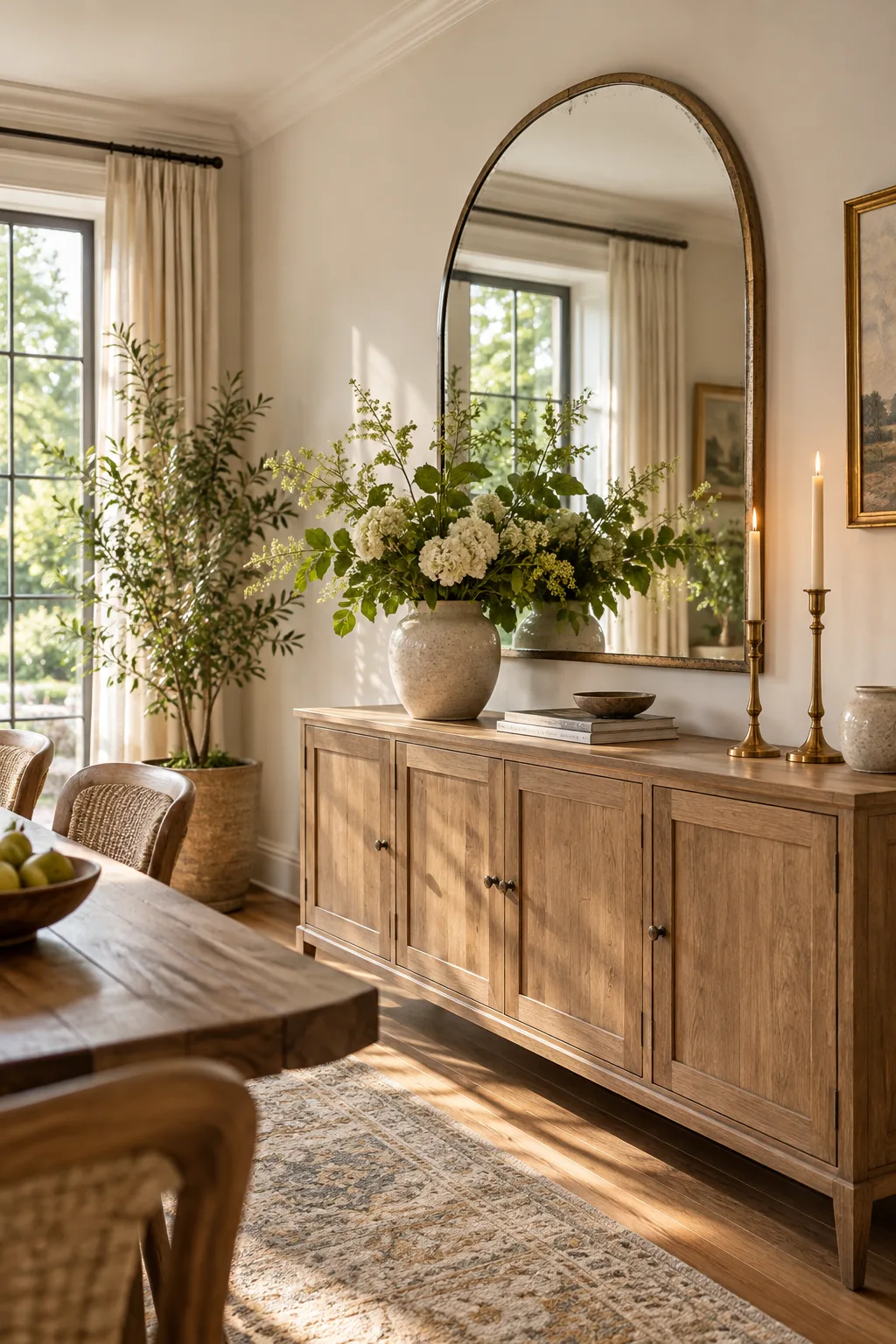
This interlocking wooden mechanism also keeps the heavy mirror perfectly flush against the wall without tilting forward. A flush mount is absolutely essential for maintaining a clean, architectural look that convincingly mimics a real window casing.
Styling the Space Between Mirror and Sideboard
The eight-inch gap and the surface of the sideboard provide a beautiful stage for your dining room decor. Layer tall candlesticks, low bowls, and organic floral arrangements to bridge the visual gap and soften the mirror’s hard, geometric edges.
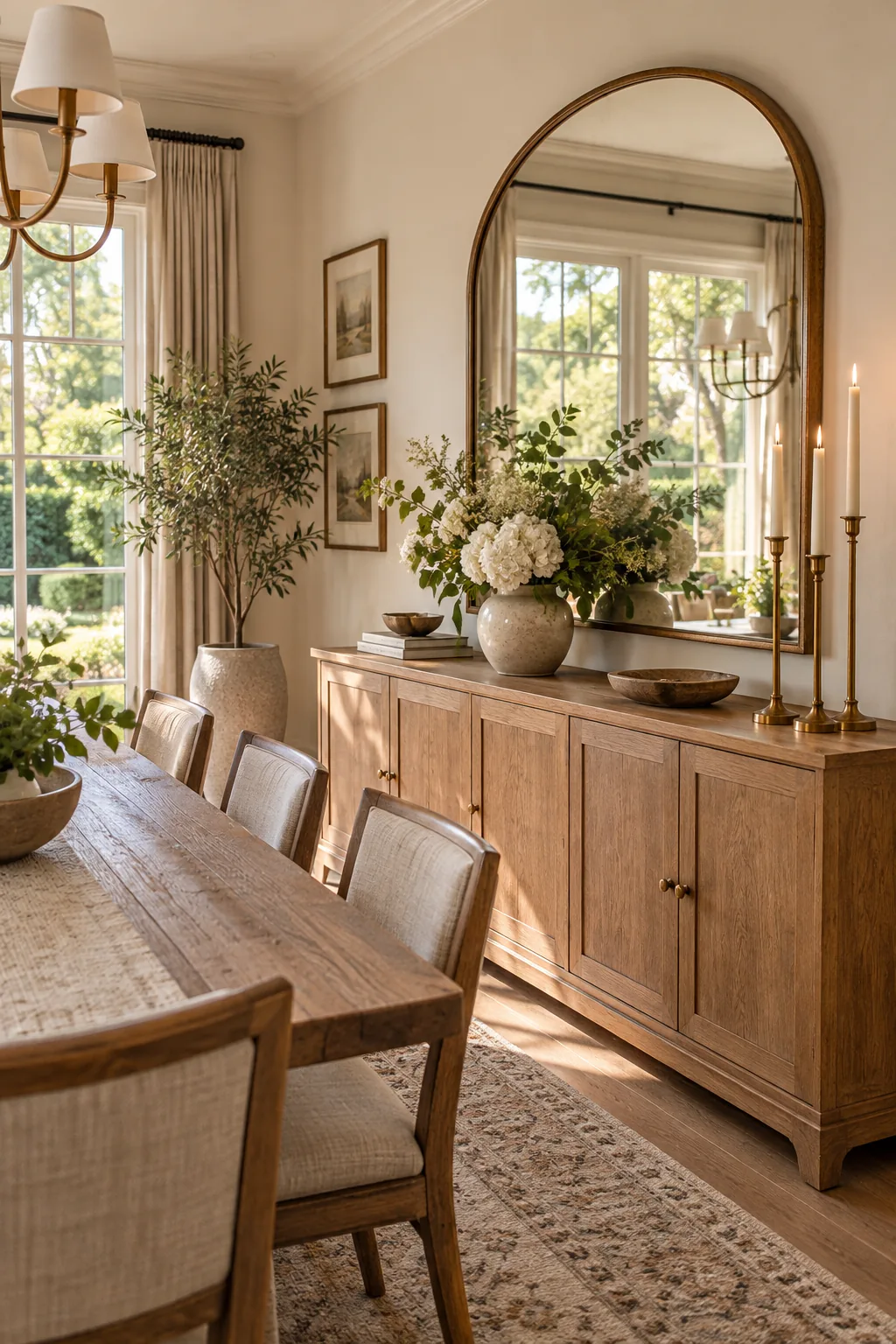
Allowing a few sculptural branches or tapered candles to overlap the bottom edge of the frame breaks up the rigid geometry. This overlapping styling technique flawlessly blends the functional storage piece with the reflective art above it.
3 Ways to Style a Dining Room Mirror
Find the perfect mirror shape and finish to match your dining room's unique architecture.
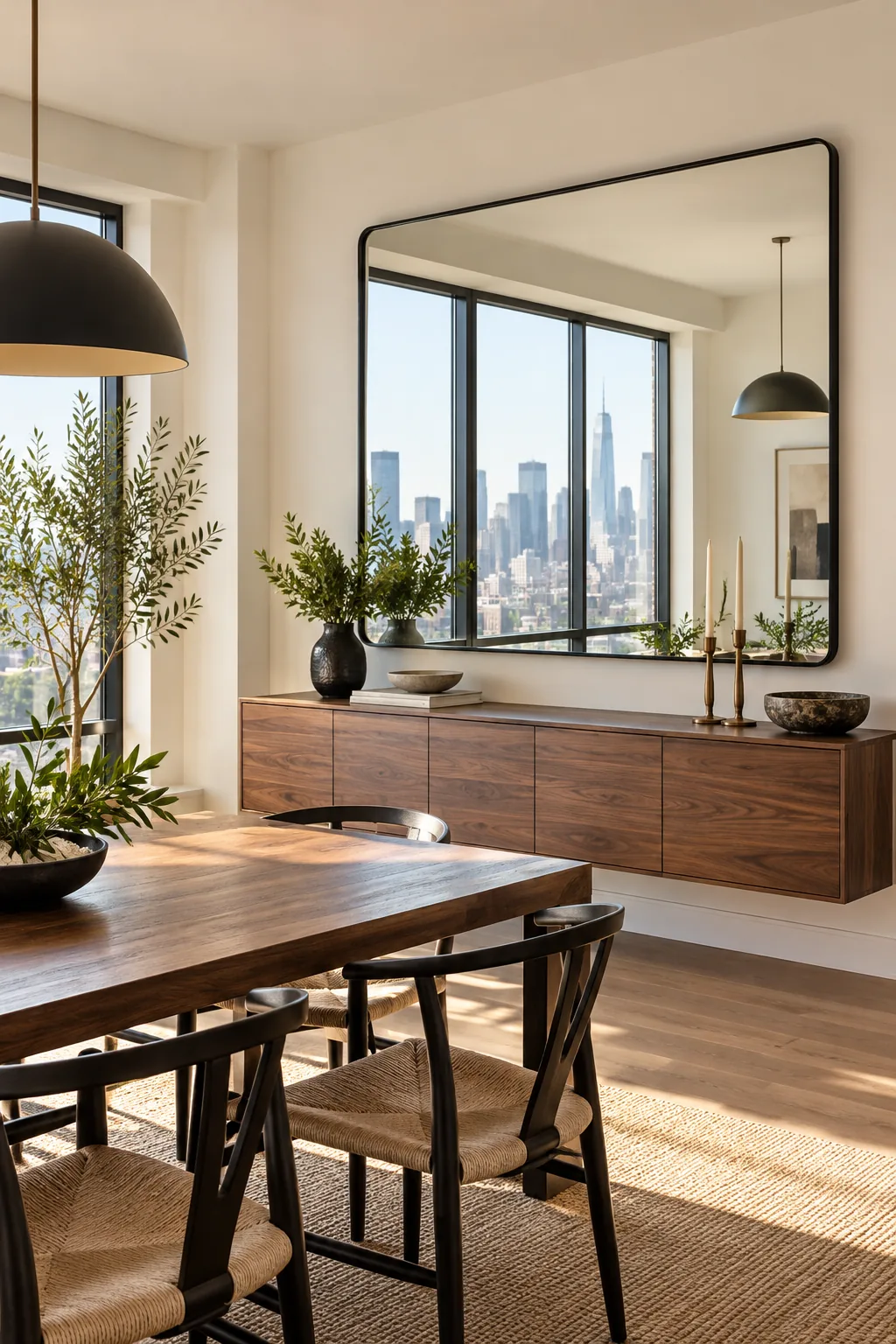
Modern Minimalist City View: A thin black metal frame keeps the focus entirely on the reflection, pairing beautifully with a sleek floating walnut console.
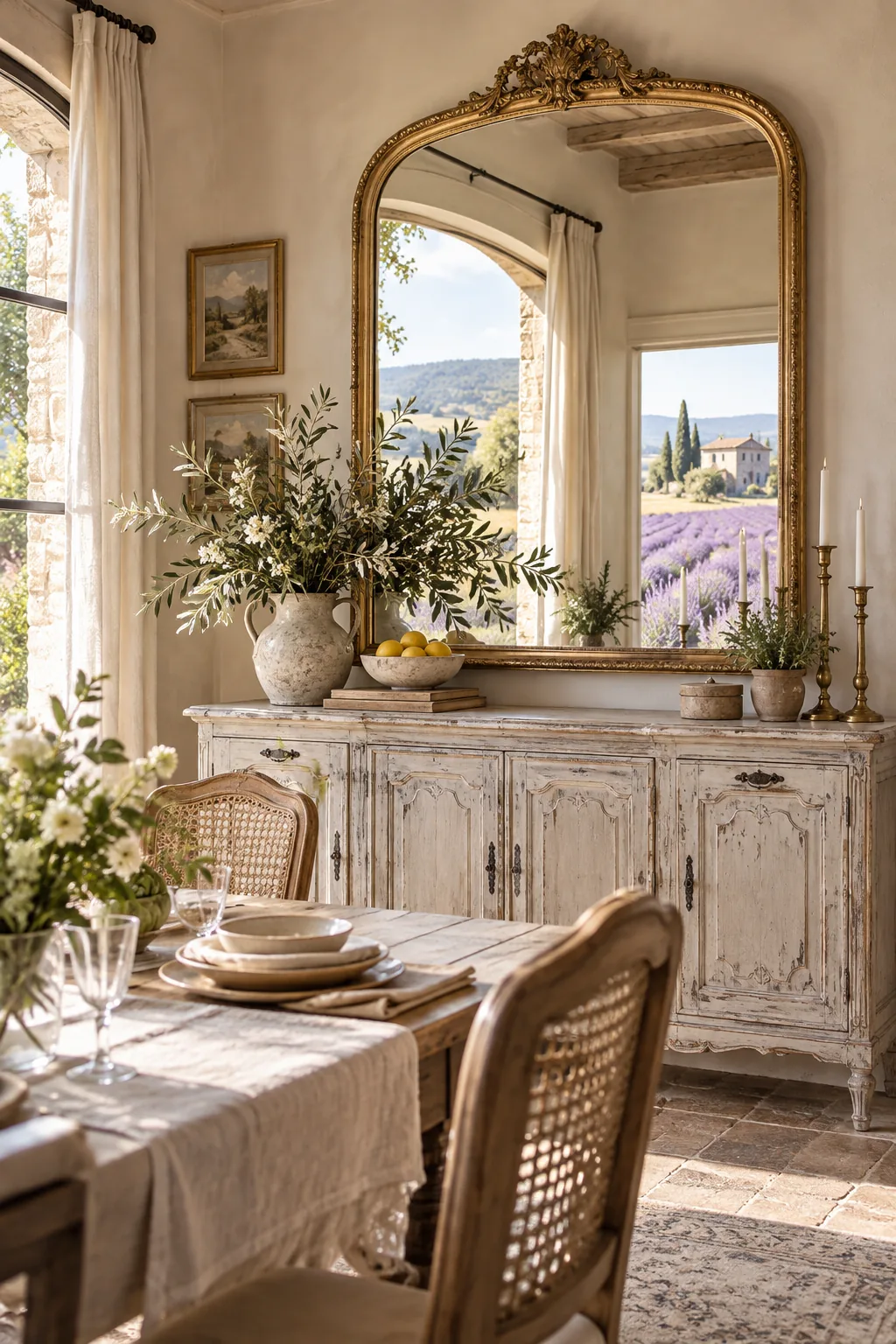
French Country Gilt Elegance: An ornate antique gold frame adds romantic texture and warmth, contrasting perfectly against a softly distressed painted credenza.
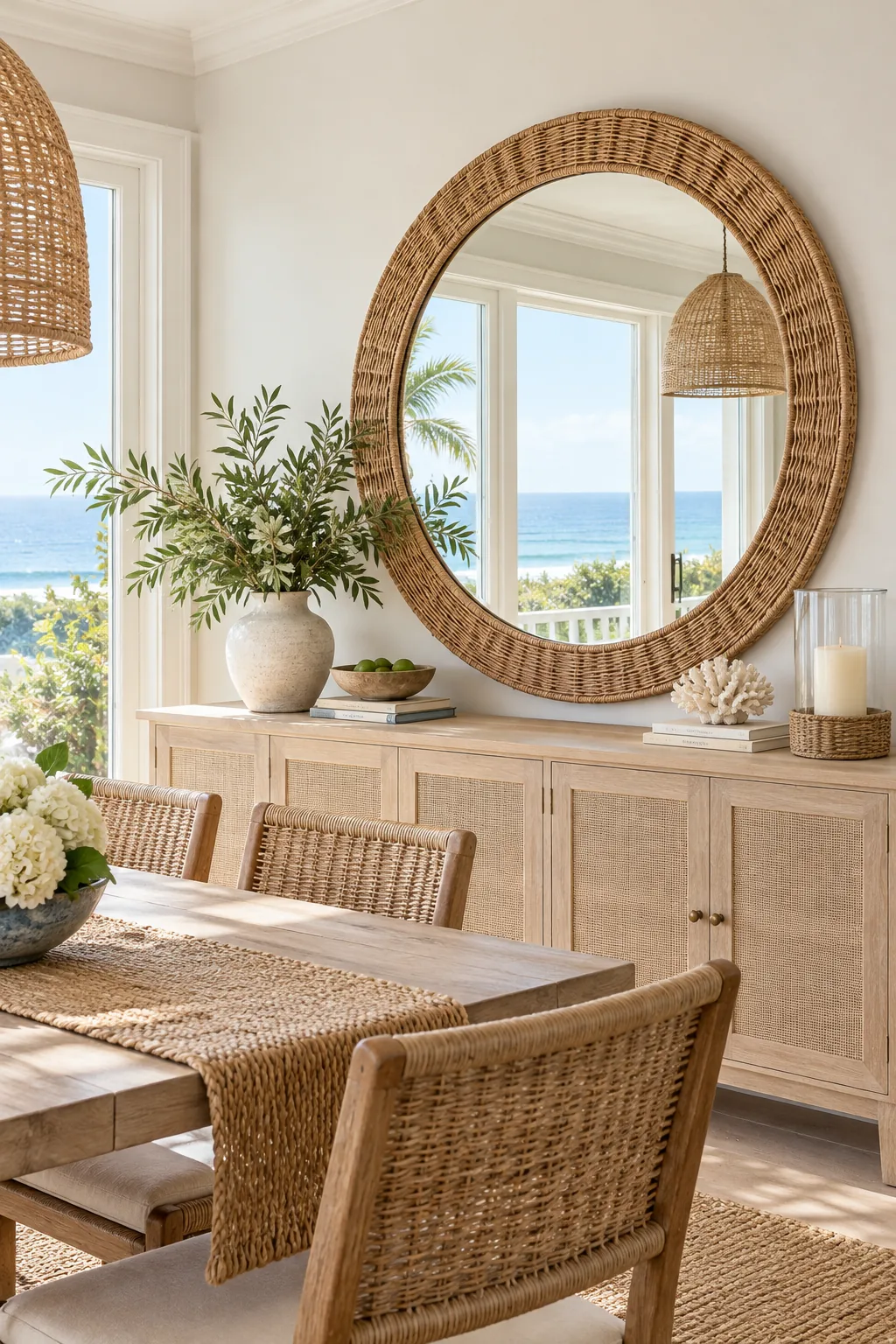
Coastal Casual Rattan Textures: Woven rattan frames bring a relaxed, tactile element to the wall that complements light white oak furniture and breezy coastal light.
Your Dining Room Mirror Placement Sheet
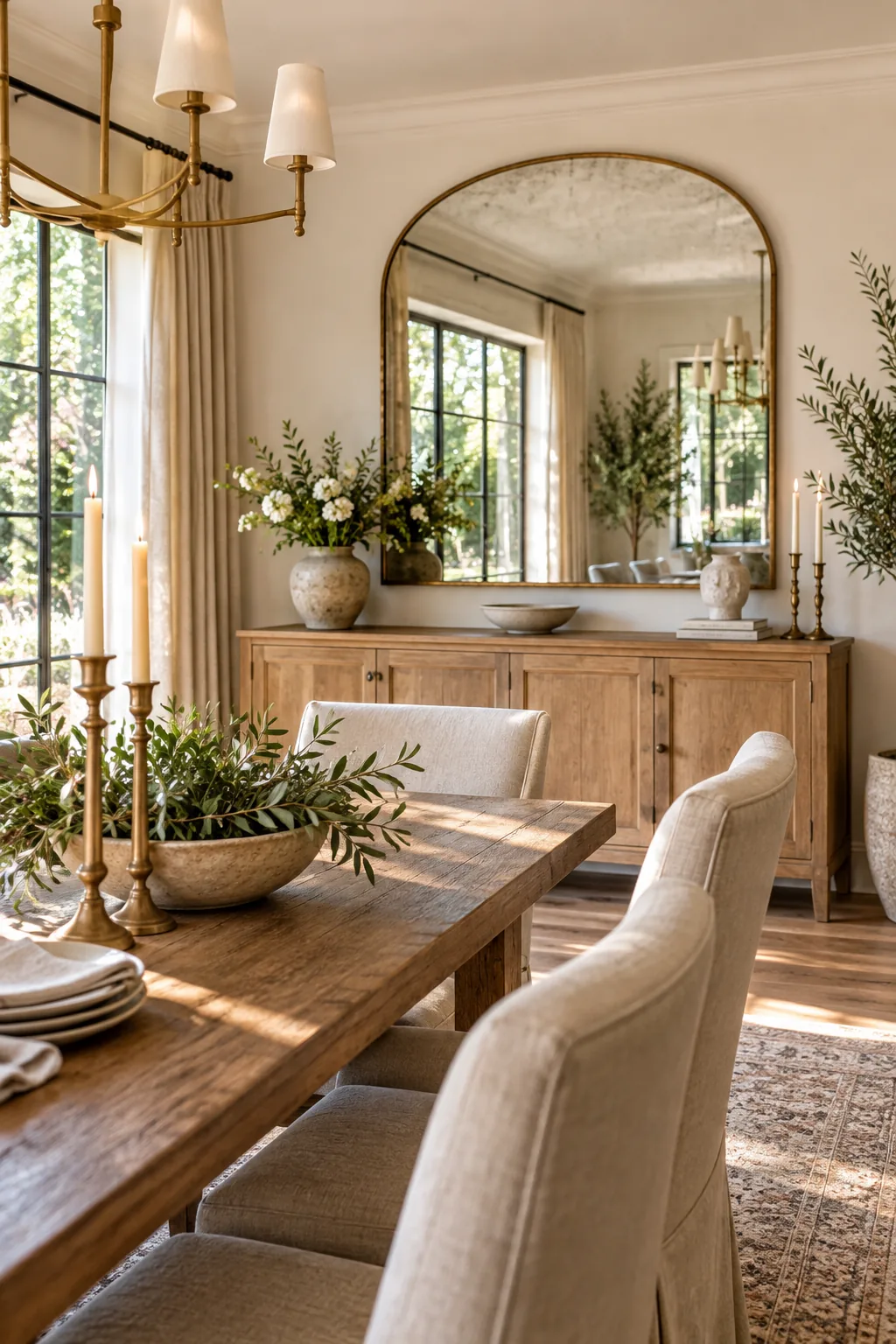
This printable placement sheet contains the complete seated sightline test, a detailed mirror-to-sideboard size chart, and exact hanging heights for any layout. Grab the download to get all the precise measurements you need for a perfectly balanced room.
Before you print the guide and start drilling holes, run through a few final checks in your own dining room to ensure the reflection hits the right mark.