
9+ Clever Desks for Small Spaces
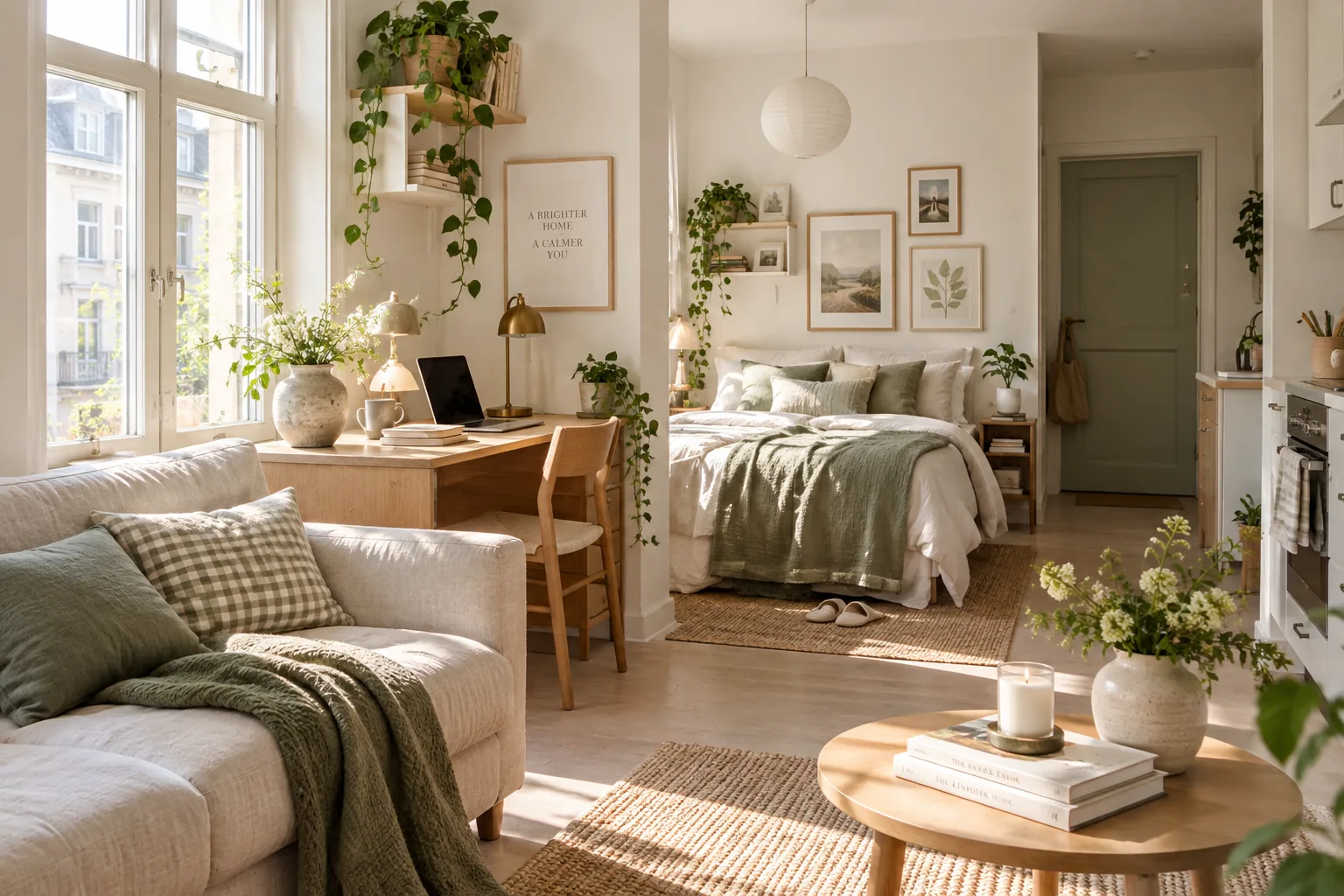
Fitting a workspace into a tiny room usually means sacrificing your walkway or settling for the sofa. I pulled together these clever layouts to help you squeeze a functional office into even the tightest corners of your home.
1. Claim the Hallway End
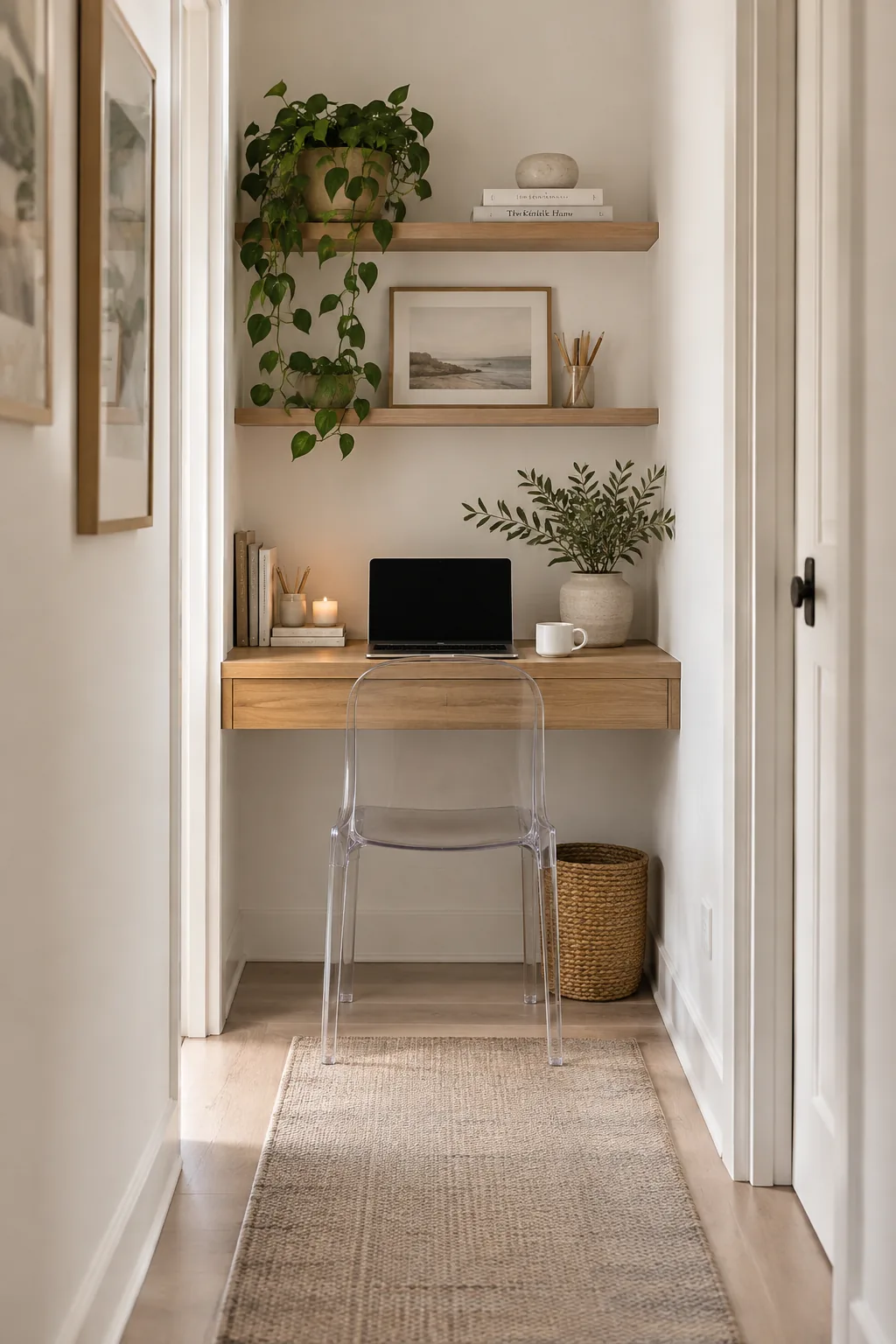
The dead space at the end of a hallway is completely wasted in most homes. You can mount a floating shelf desk right between the walls to claim that unused square footage. Pair it with a clear acrylic chair that visually disappears when you aren't working. It keeps the walkway feeling open while giving you a dedicated drop zone for your laptop.
2. Install a Fold-Away Secretary
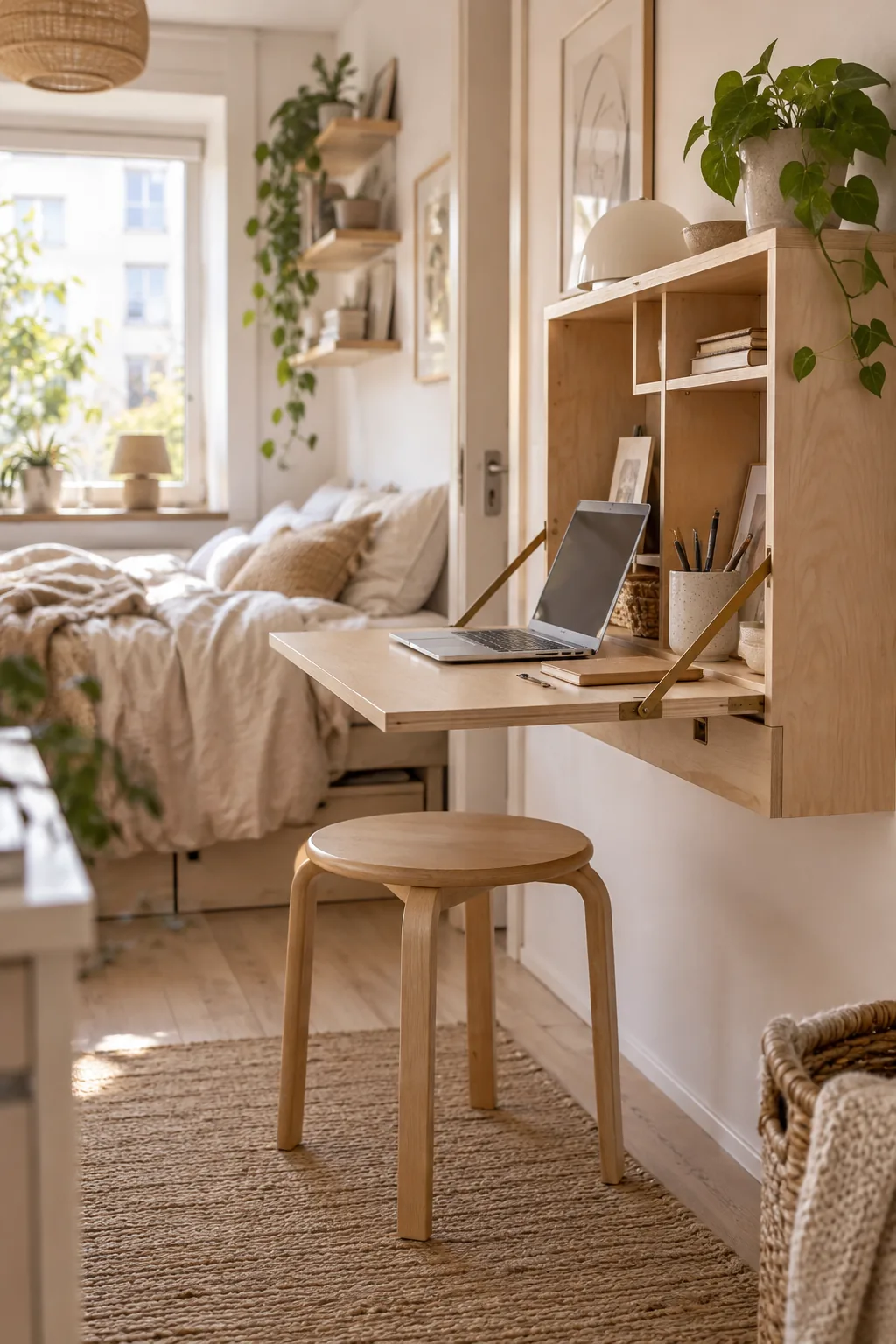
Using a wall-mounted secretary desk works because it folds entirely flat against the drywall the second you clock out. This completely eliminates the visual clutter of monitors and tangled cords from your bedroom. You just drop the front panel down to reveal your hidden workspace setup and a few shallow storage cubbies. Add a small stool that tucks neatly underneath the unit. It is the ultimate disappearing act for a tiny studio apartment.
3. Convert a Standard Closet
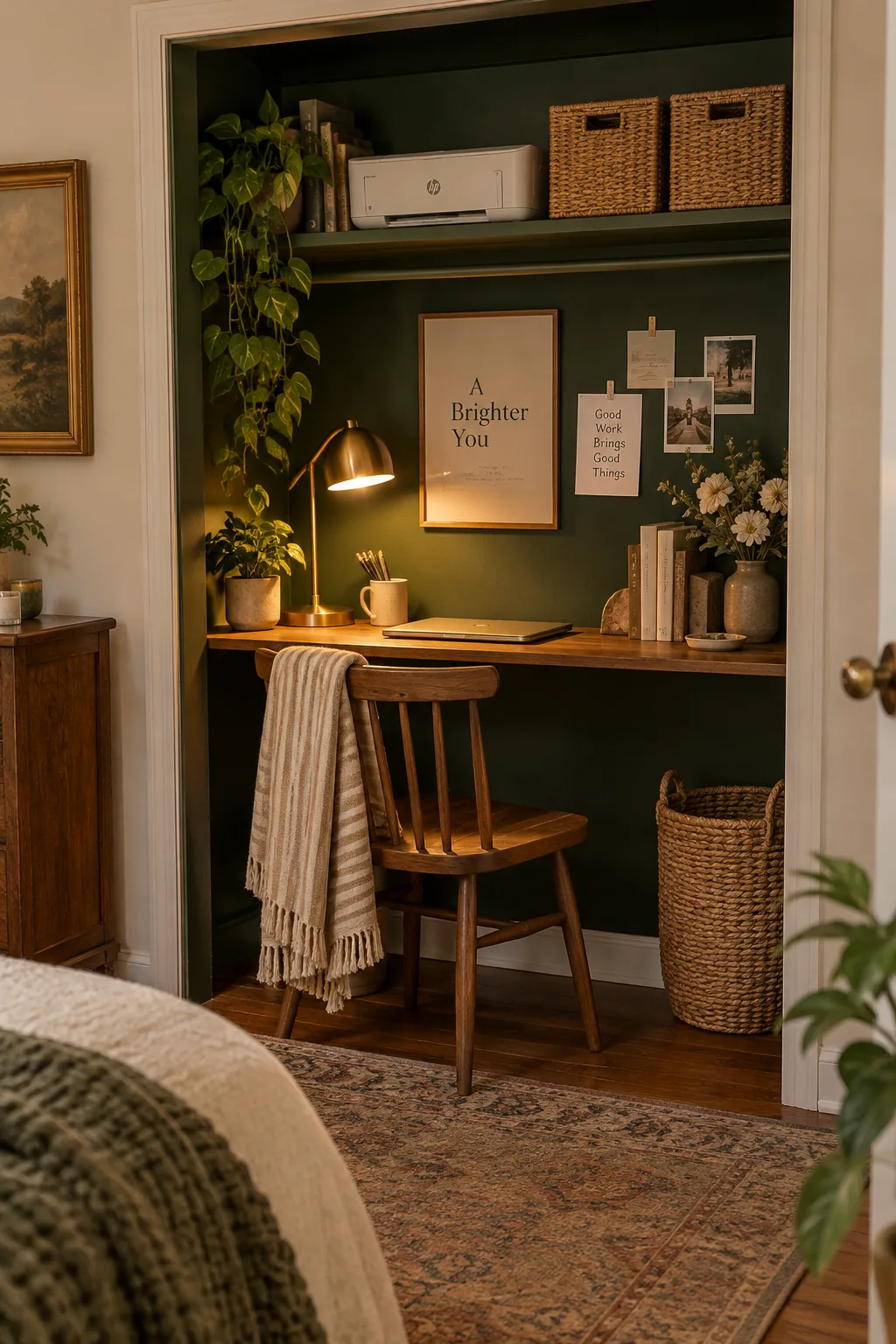
Most standard closets are exactly twenty-four inches deep.
That is the perfect depth to remove the lower hanging rod and slide in a narrow writing desk. You can leave the top shelf intact for your printer and office supplies. Removing the closet doors and painting the alcove a dark accent color turns this cloffice conversion into a deliberate architectural feature.
4. Double Up the Sofa Table
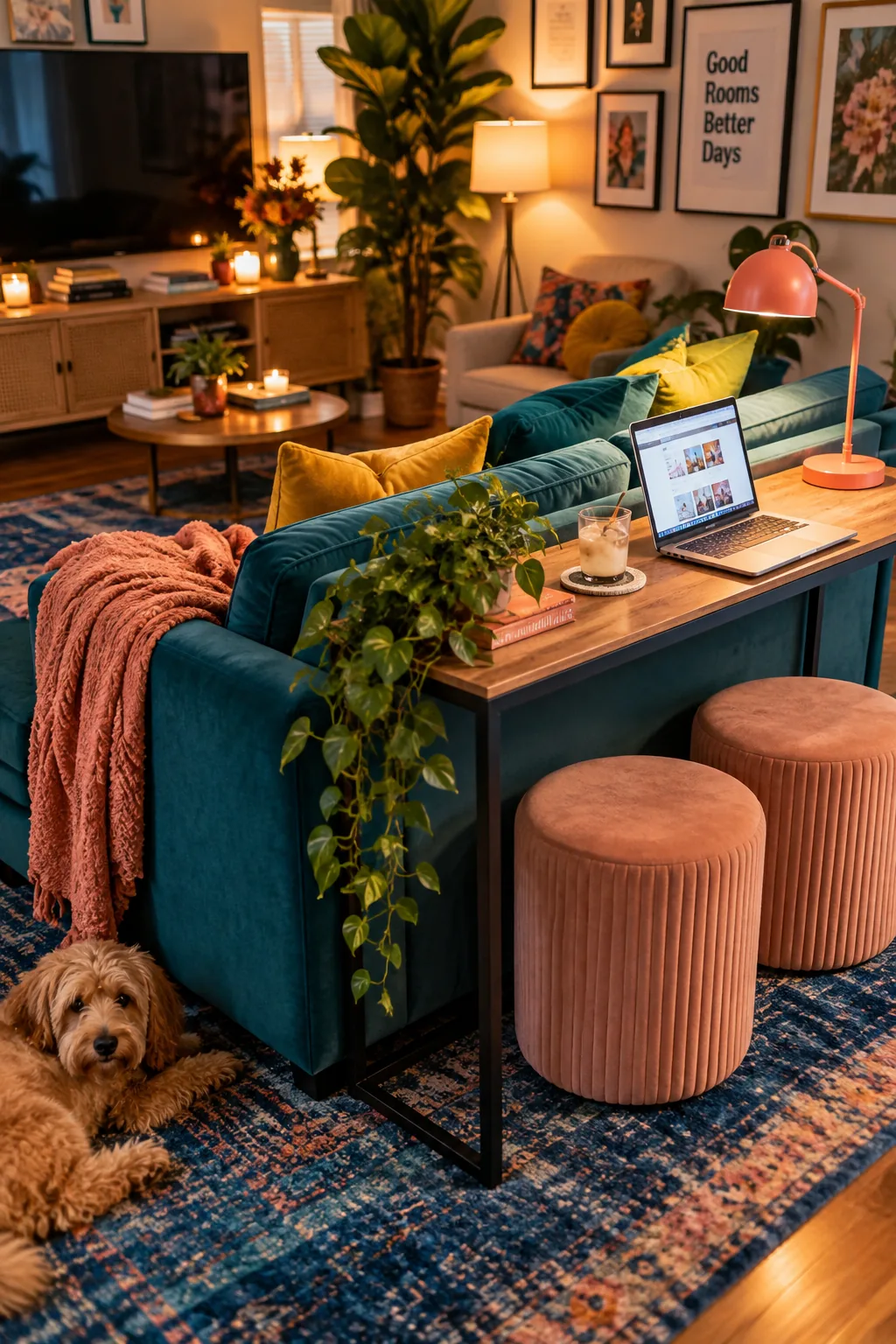
I always look for dual-purpose furniture when designing cramped living rooms. Swapping a standard side table for a tall corner desk next to your sofa is a massive space saver. You get a comfortable place to check emails during the day. By night, it holds your reading lamp and a coaster for your drink.
Why it works: It utilizes the awkward corner gap beside the couch without requiring a separate footprint.
5. Extend the Windowsill
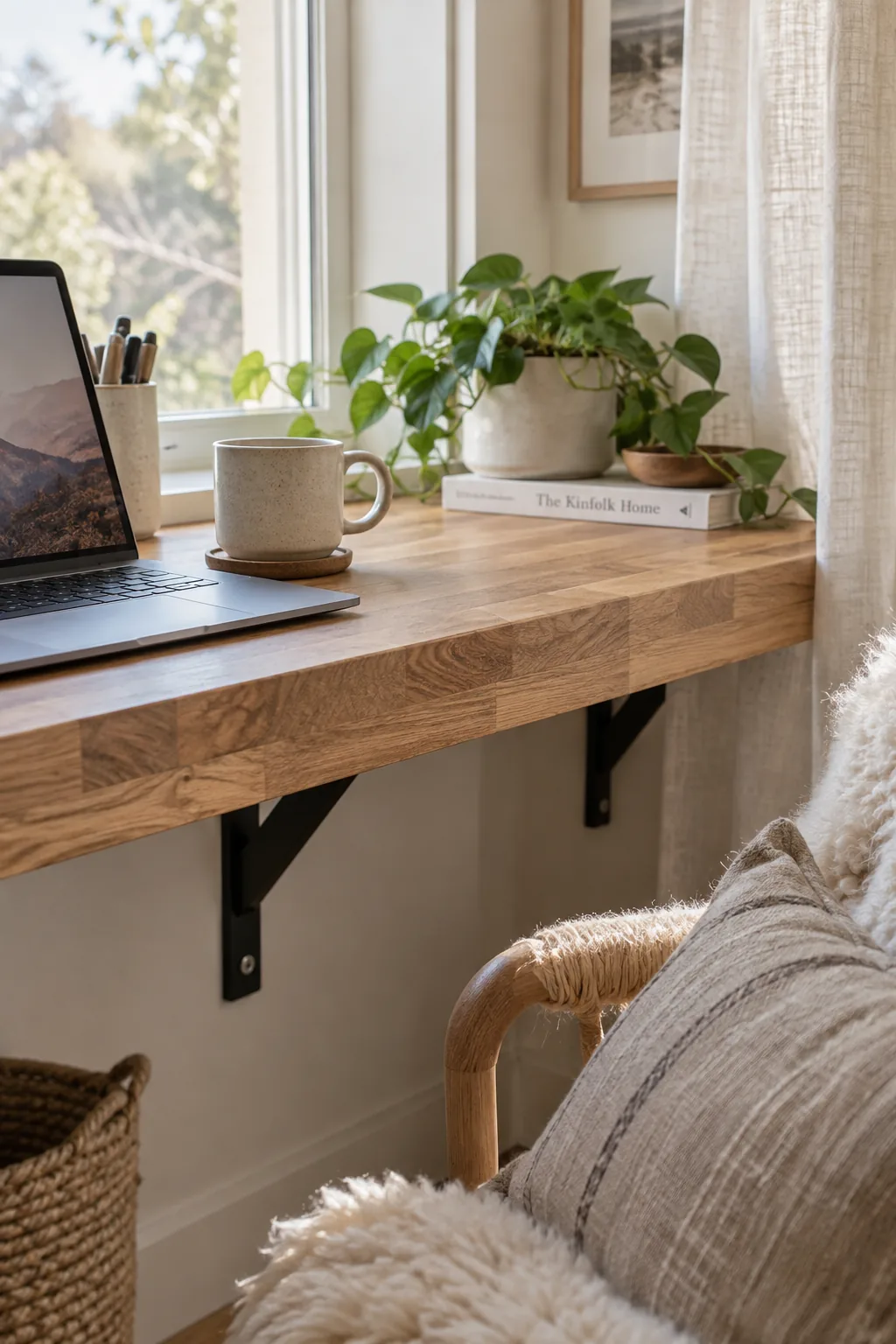
A standard windowsill sits about thirty inches off the floor.
You can extend that sill with a custom-cut piece of butcher block to create an instant workspace with a view. Secure it with heavy-duty shelf brackets into the wall studs.
The natural light is amazing for video calls. You also save precious floor space in the center of the room.
6. Lean a Ladder Desk
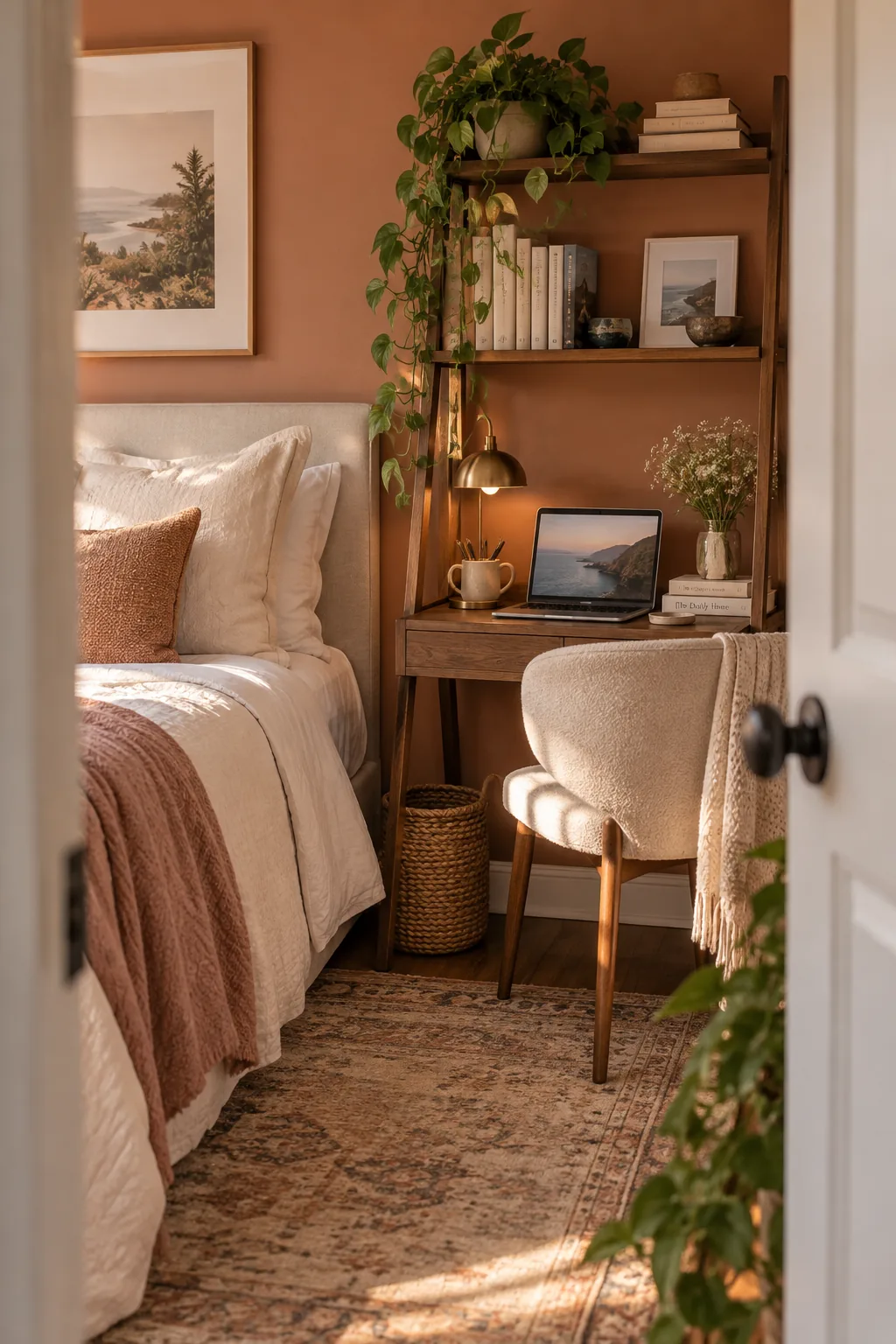
A ladder desk works beautifully because it draws the eye upward instead of taking up heavy visual weight on the floor. The leaning frame provides a surprisingly deep work surface while tapering off at the top for open shelving. You can easily squeeze one into that narrow gap between your bed and the bedroom door. It feels light, airy, and incredibly practical.
7. Build Into an Alcove
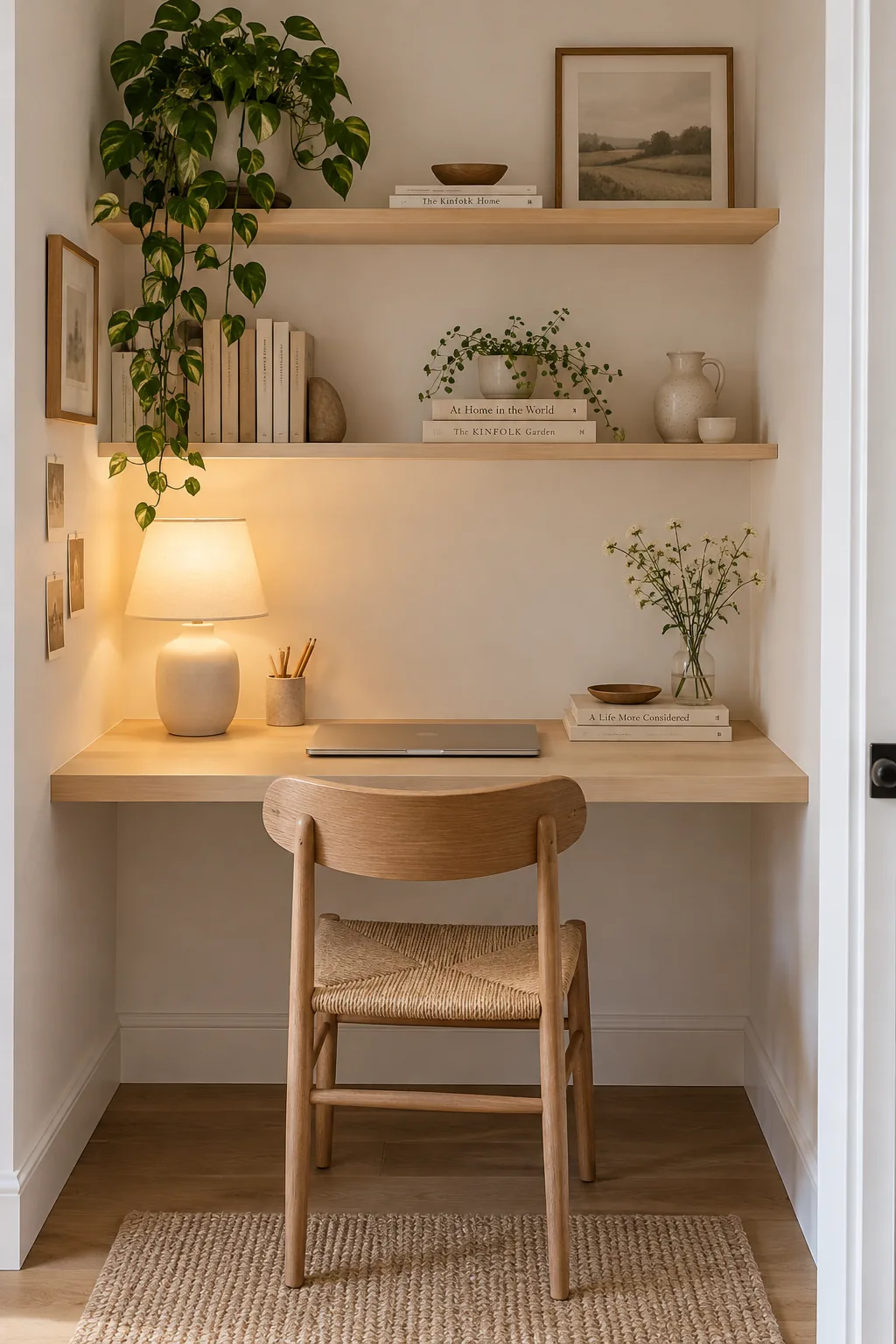
A typical alcove measures less than forty inches wide.
You can maximize this tight nook by mounting a custom desktop directly to the side walls with wooden cleats. This creates a seamless built-in look without the heavy price tag of custom cabinetry.
- Cleats cut to the alcove depth
- A solid wood or MDF top
- Two coats of matching trim paint
8. Repurpose a Drop-Leaf Table
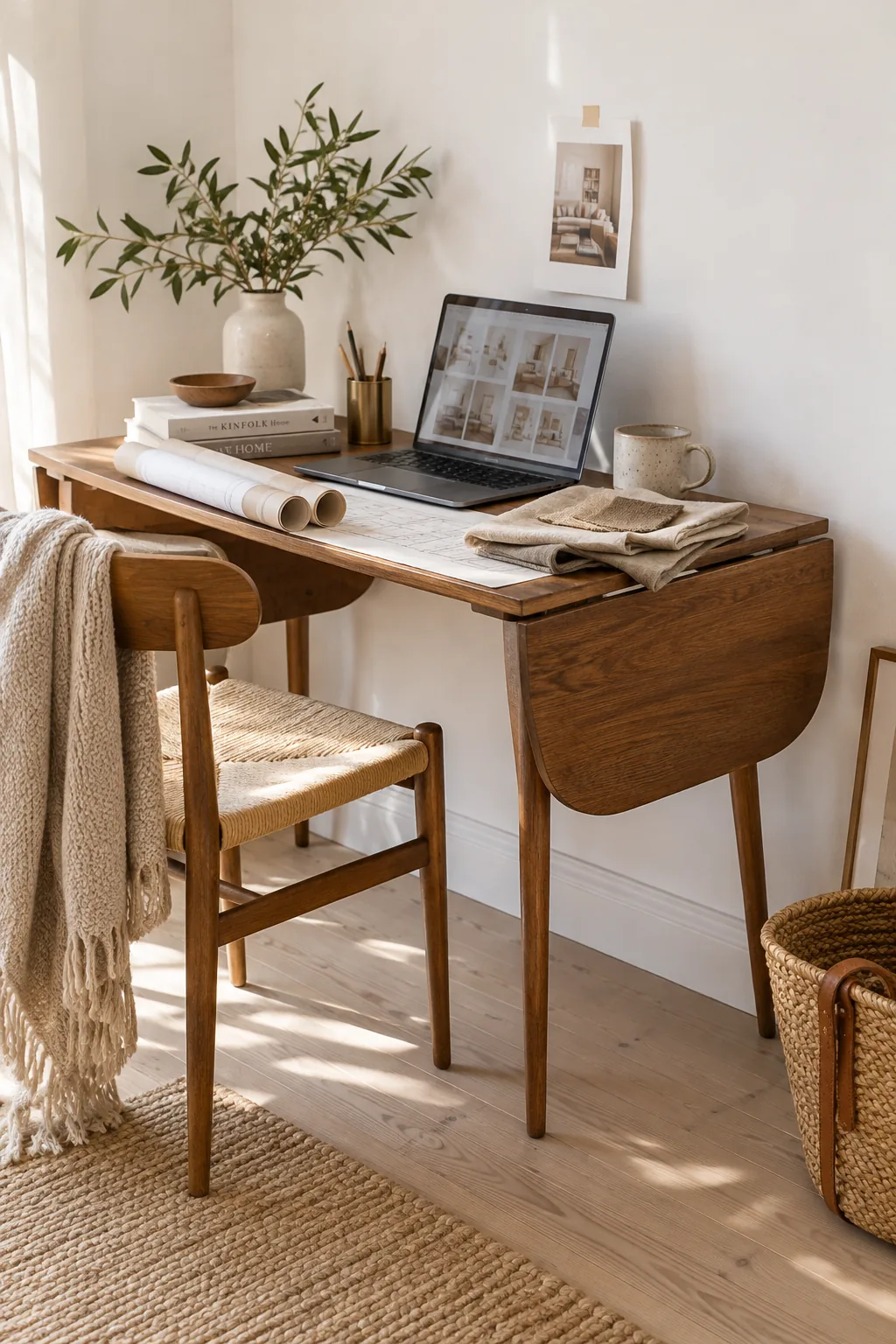
Repurposing a vintage dining table works because the slim legs keep the room feeling spacious.
You can push a drop-leaf table flat against a blank wall to serve as an everyday laptop station. When you need more room to spread out blueprints or fabric, just lift the leaf.
It is the ultimate flex piece for a tiny studio.
9. Tuck It Behind the Sofa
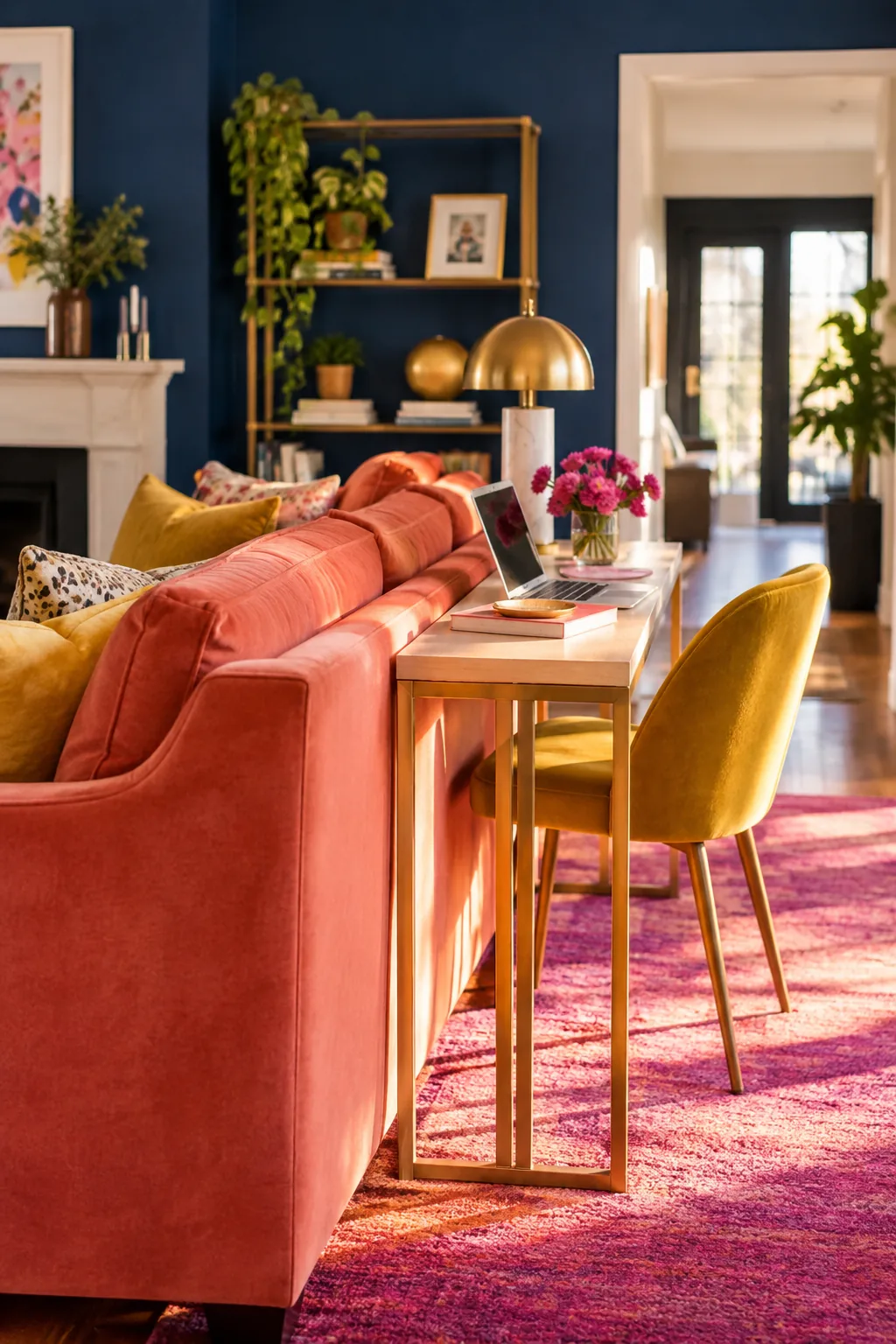
Most people have at least three feet of blank floor space directly behind their living room sofa. You can slide a narrow console table right up against the couch to serve as a hidden workspace. Pull up a comfortable dining chair when you need to work, and tuck it away when guests arrive.
Why it works: The sofa back effectively hides your messy cables and paperwork from the rest of the living room.
10. Utilize the Staircase Gap
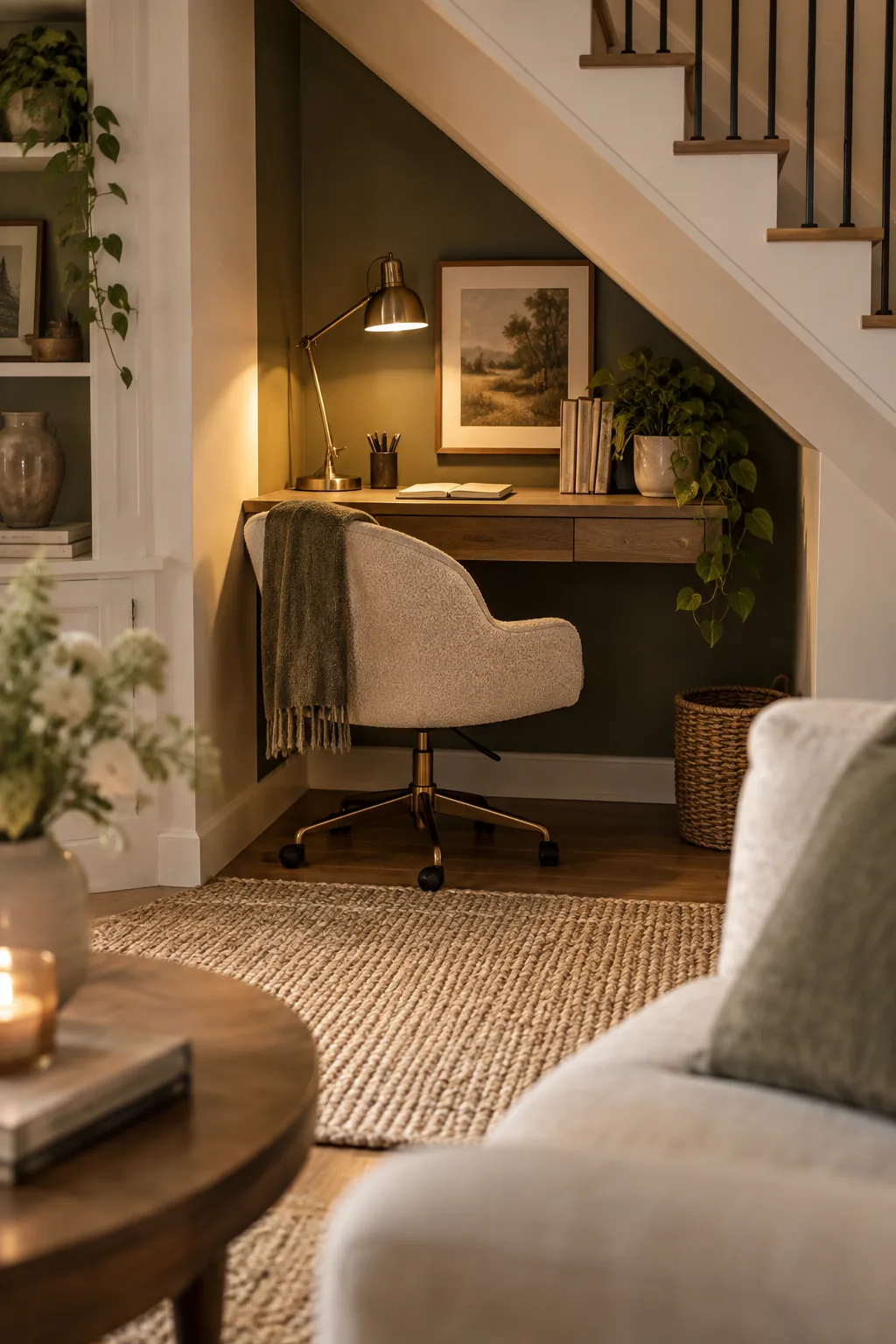
The awkward space under a staircase usually just collects dust and random clutter.
You can slide a minimalist writing desk right into that triangular wedge. Add a cozy rug and a good task lamp to brighten up the shadows.
It completely transforms a dead architectural zone into a highly productive mini office.