
One Camper, 12 Historical Styles
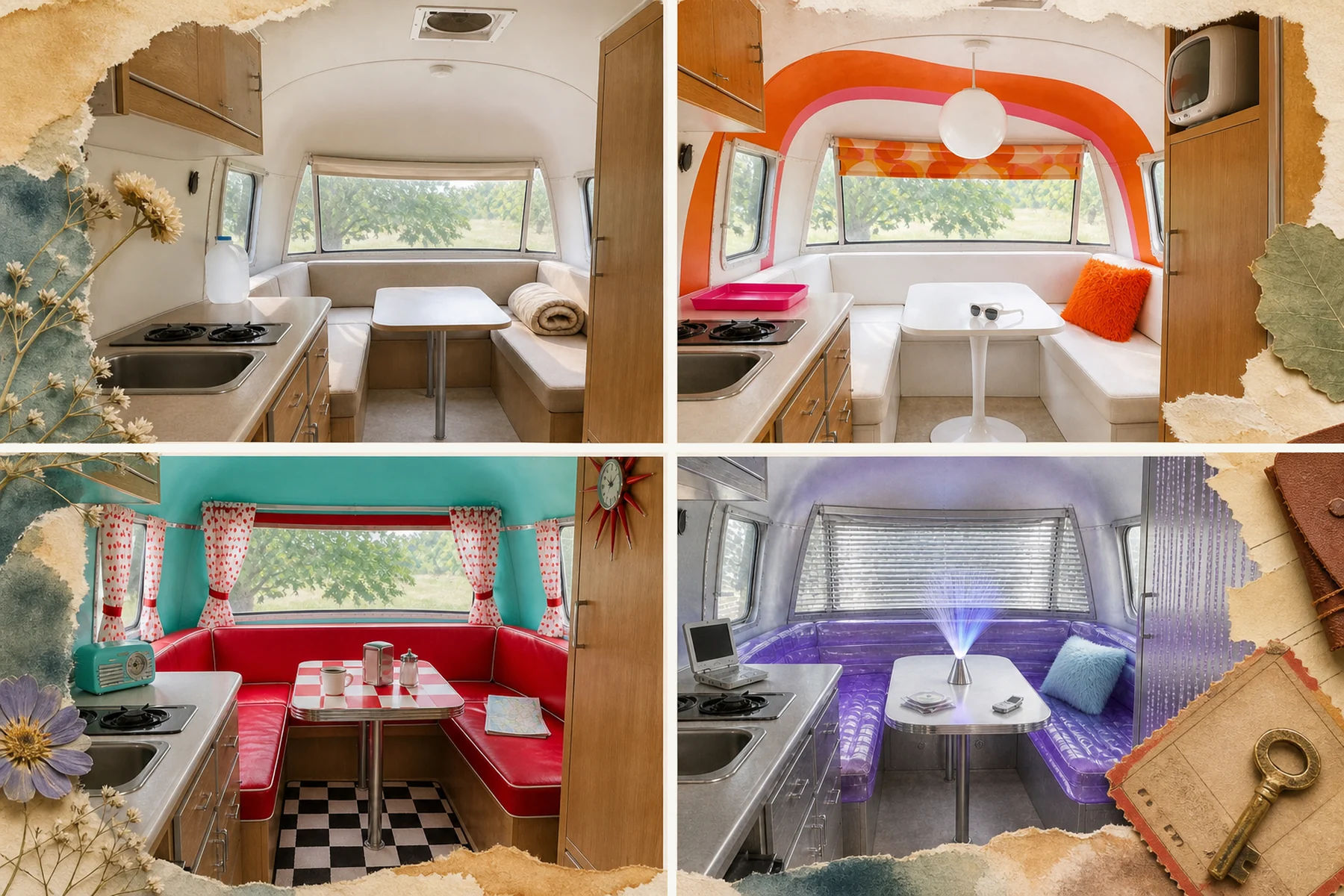
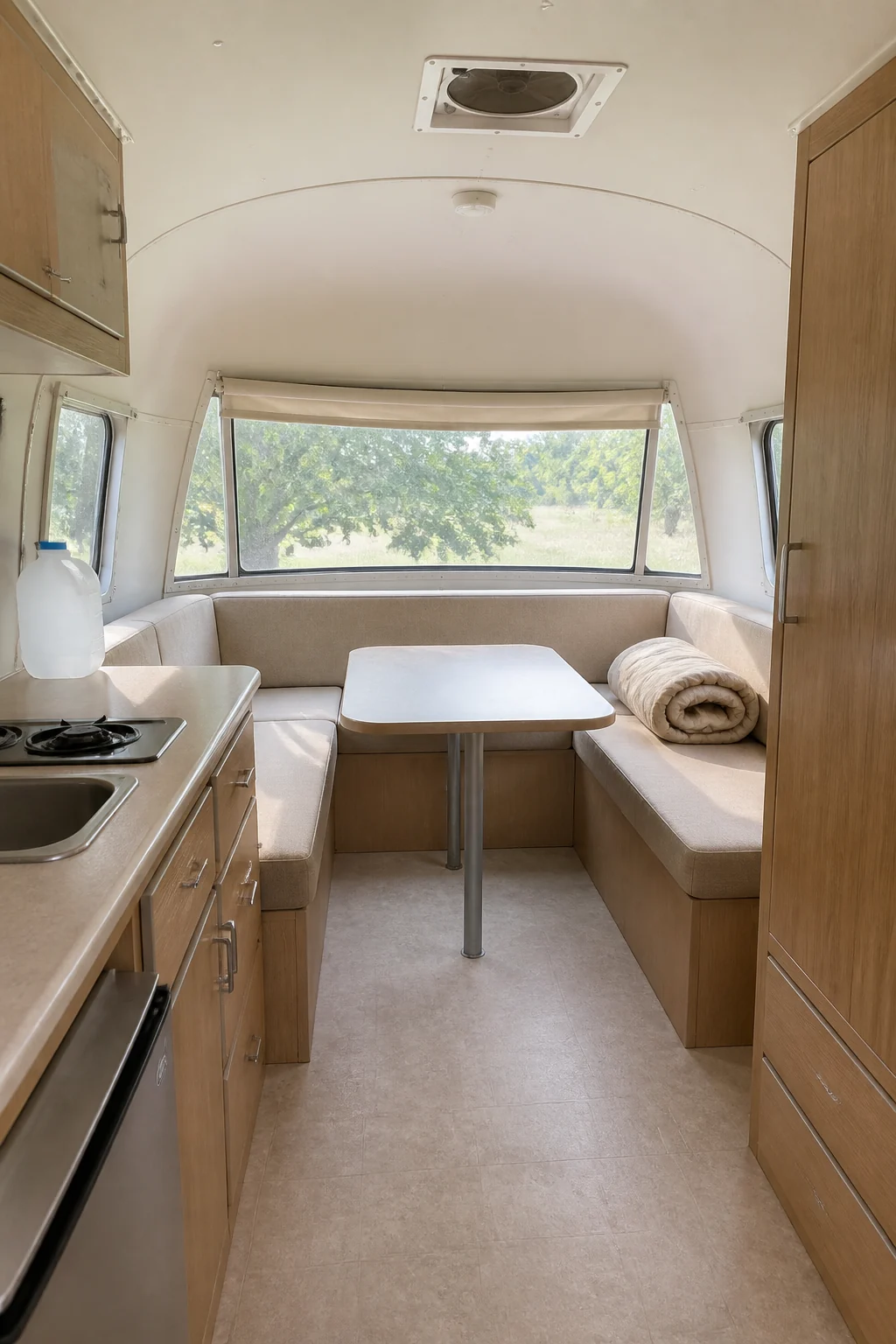
Watch a vintage camper travel through time as we transform its exact compact footprint into twelve historical eras. Discover how distinct styling redefines life on the road, and get a decade-by-decade generic shopping list for sourcing era-specific camper decor.
1880s Pioneer
Transforming the camper into a rugged frontier wagon relies on raw textures and utilitarian gear. We applied removable faux rough-sawn timber plank wallpaper to the curved walls and upholstered the dinette cushions in distressed, tufted brown leather. The kitchenette counter now features a matte black soapstone-look laminate.
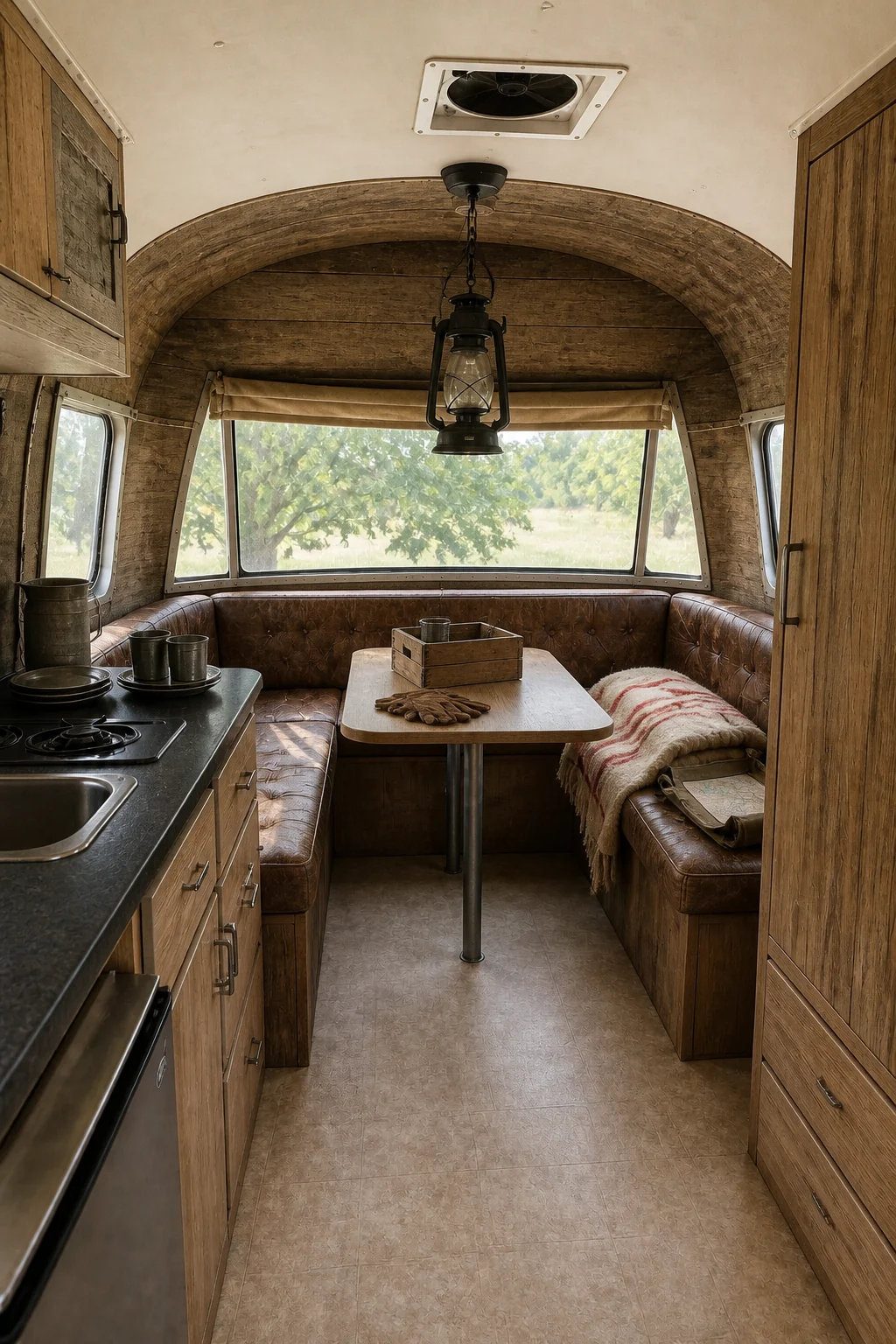
The rugged materials instantly turn the standard U-shaped dinette into a cozy frontier retreat. Distressed leather and raw wood textures absorb light, making the unchanged compact layout feel intentionally snug rather than cramped. This aesthetic is perfect for rustic camping enthusiasts seeking an authentic, off-grid atmosphere that easily hides dirt.
1890s Victorian
Bring the opulent, dark aesthetic of a Victorian parlor into a tiny mobile space. We hung dark burgundy and gold damask patterned removable wallpaper and covered the cushions in deep forest green crushed velvet. Ornate polished brass sconces and intricate white lace curtains complete the dramatic transformation.
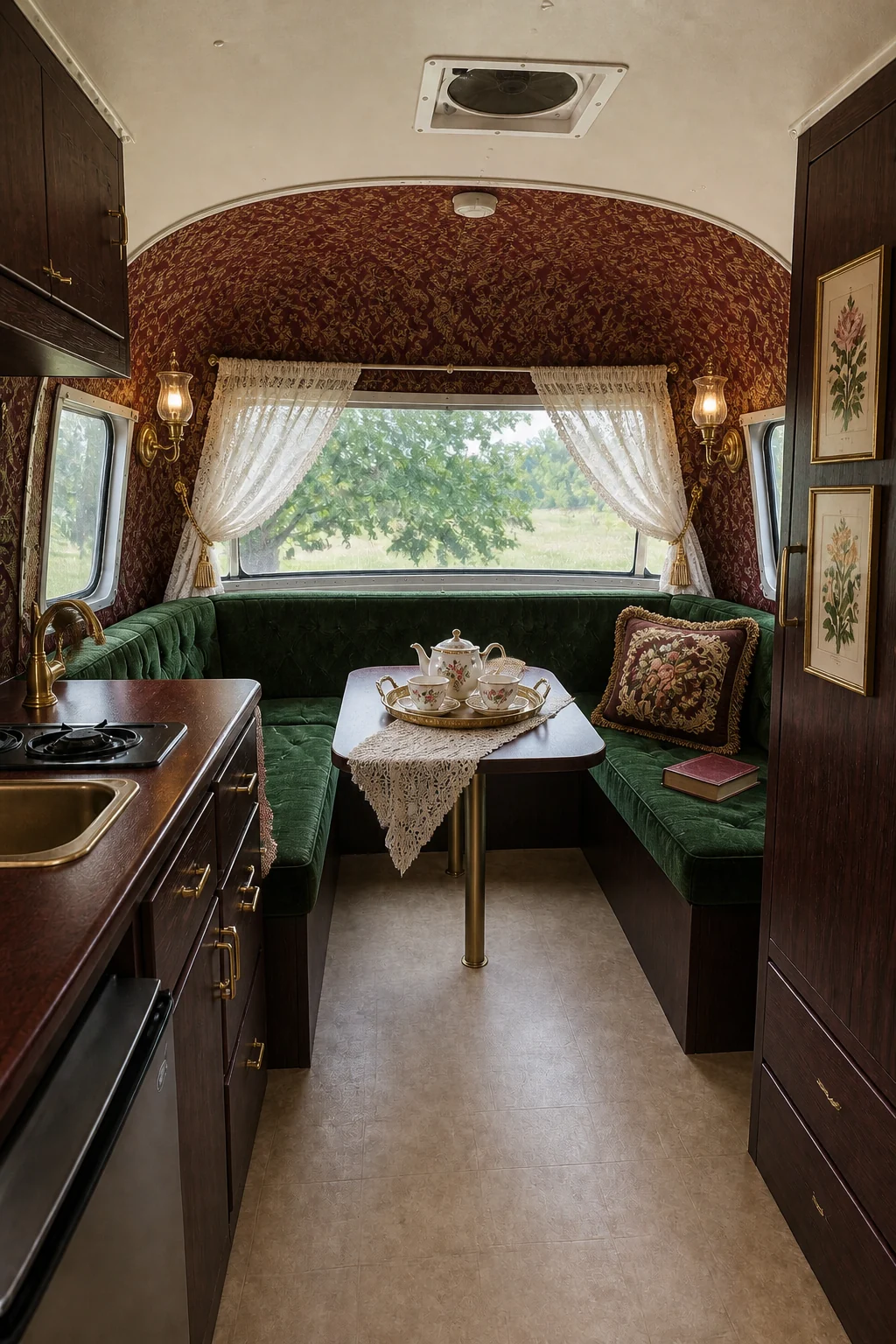
Embracing dark, opulent finishes defies the usual rule of keeping small spaces bright. The rich velvet and intricate wallpaper draw the eye inward, transforming the fixed kitchenette and wardrobe into elements of a luxurious parlor. This maximalist approach distracts from the narrow aisle and hides travel wear effortlessly.
1910s Craftsman
Apply the earthy, structured ethos of the Arts and Crafts movement to the camper interior. We painted the walls matte olive green with vertical wood batten strips and wrapped the table in quarter-sawn oak vinyl. A hammered copper pendant light adds a warm, handcrafted glow to the space.
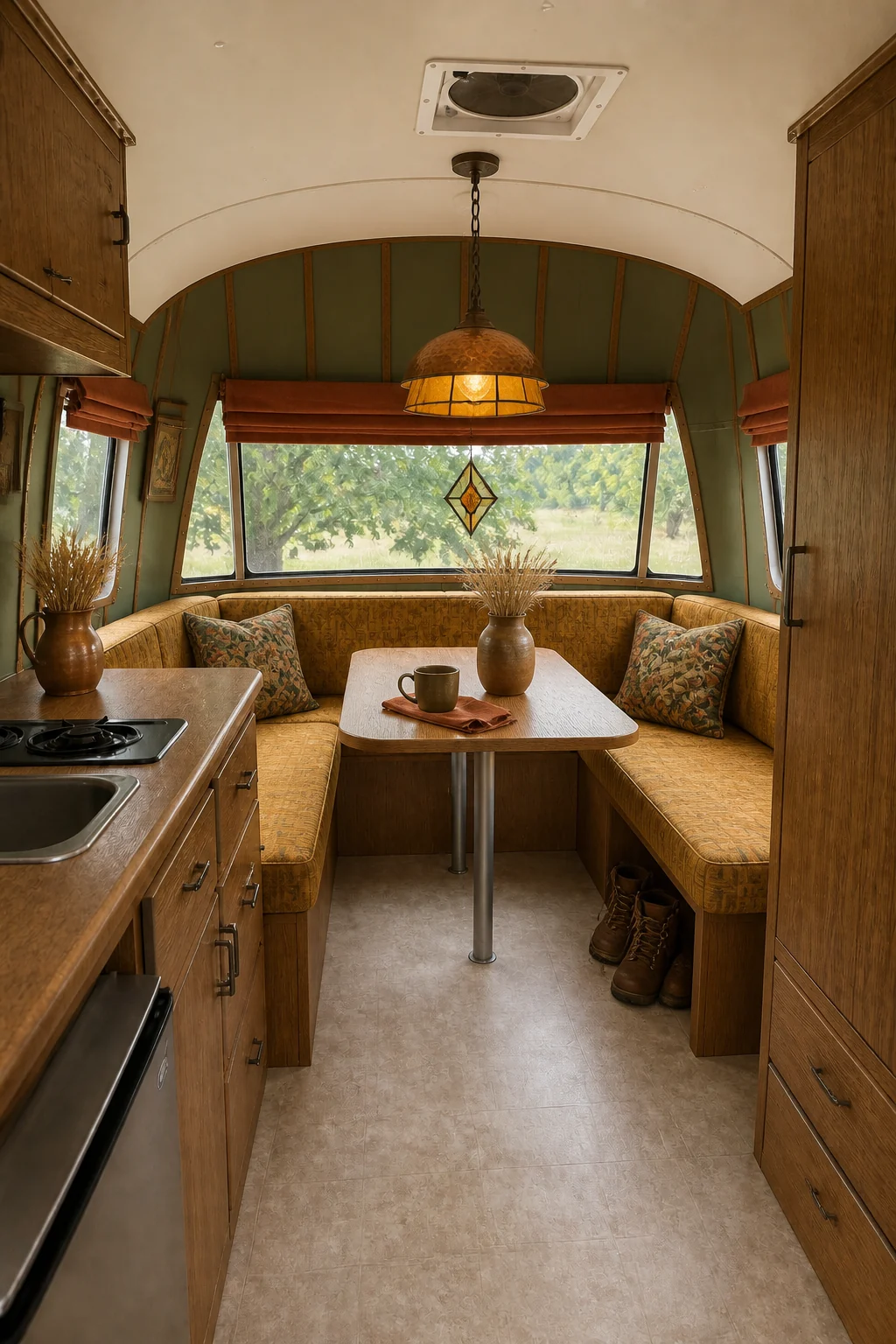
The structured batten strips add architectural interest without consuming valuable floor space. Earthy tones and oak textures ground the original panoramic window, framing the outdoors like a classic landscape painting. This highly structured design provides a durable, soothing environment for daily meals on the road.
Craftsman Essentials
1920s Art Deco
Infuse the space with the glamour, geometry, and metallic contrast of the Roaring Twenties. We applied metallic gold and black fan-patterned Art Deco wallpaper and upholstered the cushions in sleek jet black velvet. High-gloss black lacquer and polished chrome sconces elevate the fixed cabinetry to new heights.
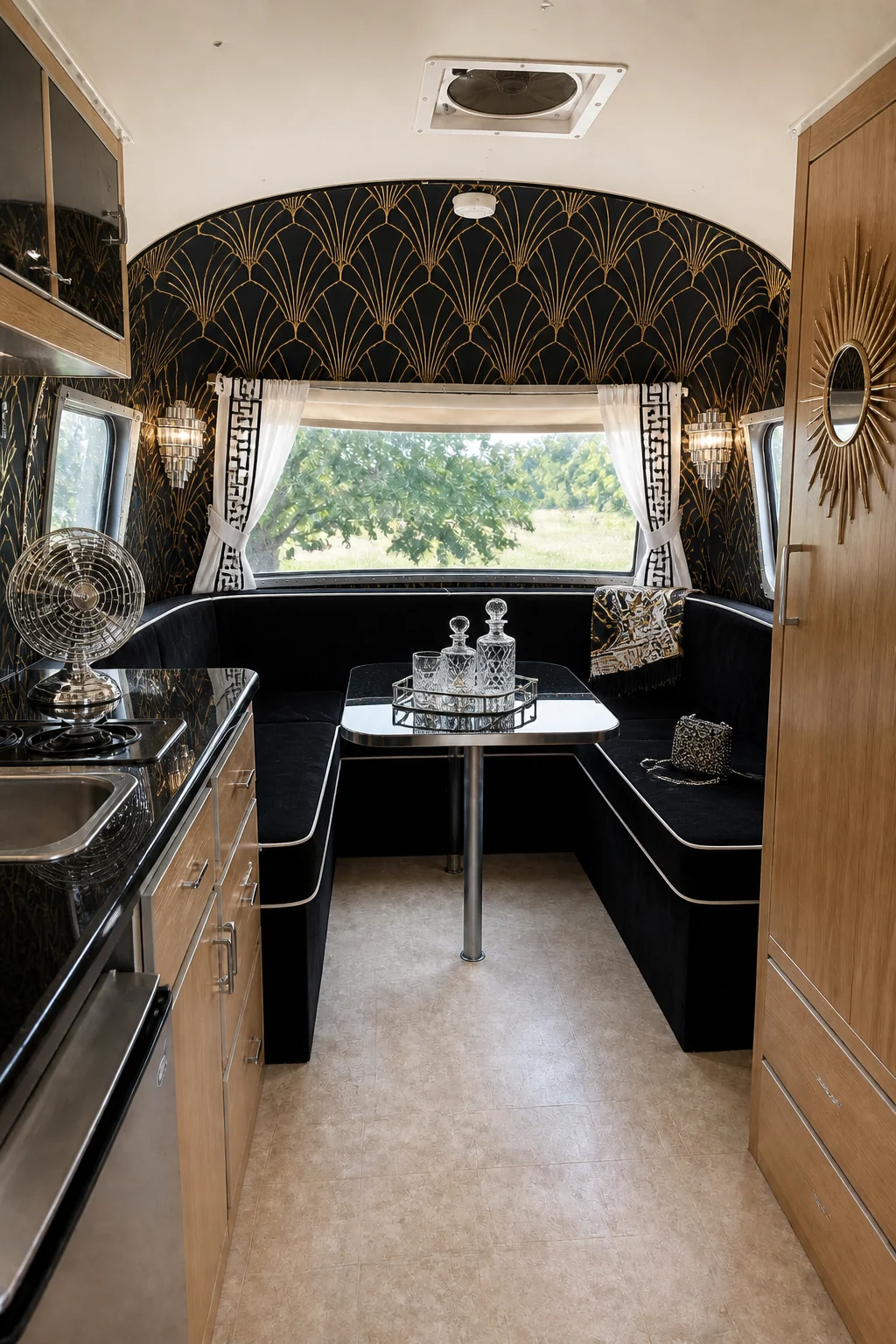
The stark contrast between jet black and metallic gold delivers immense visual drama within the fixed shell. Mirrored accessories and glossy finishes bounce light from the rear window, preventing the dark palette from feeling oppressive. Evening lounging feels incredibly glamorous, making this ideal for luxury-focused travelers.
1930s Streamline
Embrace the aerodynamic, curved, and pastel-toned nautical feel of 1930s Streamline Moderne. We painted the walls a high-gloss mint green and wrapped the counters in smooth blonde birch wood veneer. Pale yellow nautical striped canvas cushions and brushed aluminum bulkhead lights finish the breezy look.
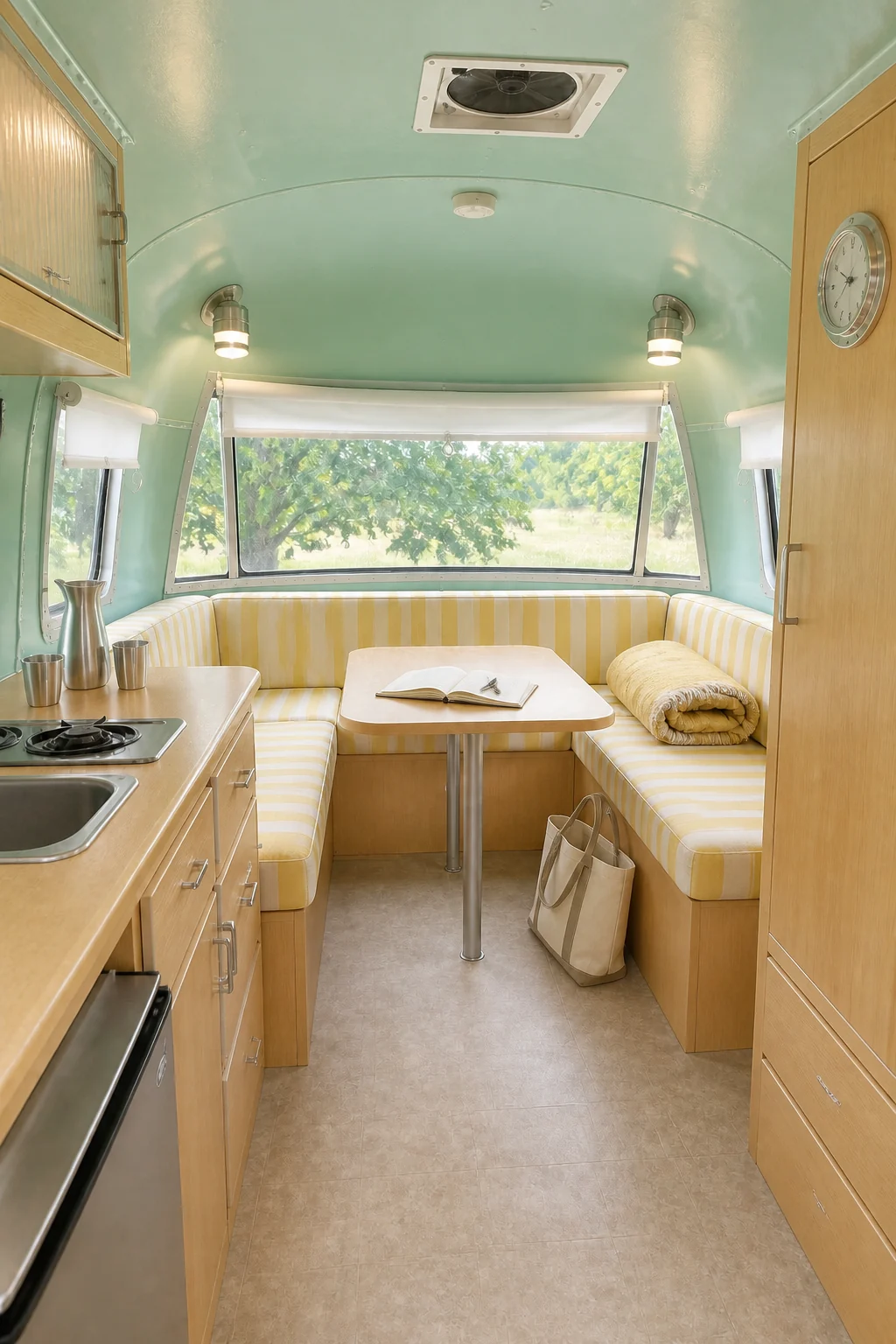
This era’s obsession with aerodynamics perfectly suits the camper’s inherent curved ceiling and rounded corners. The airy mint and blonde wood palette visually opens up the unchanged U-shaped dinette, creating a breezy nautical atmosphere. These smooth surfaces are incredibly easy to wipe clean after a long beach day.
1940s Utility
Create a stripped-back, practical interior inspired by 1940s wartime rationing and utility design. We painted the interior in a flat matte khaki tan and replaced the tabletop with a simple, unvarnished plywood surface. Durable olive drab canvas cushions and black metal cage work-lights emphasize pure function.
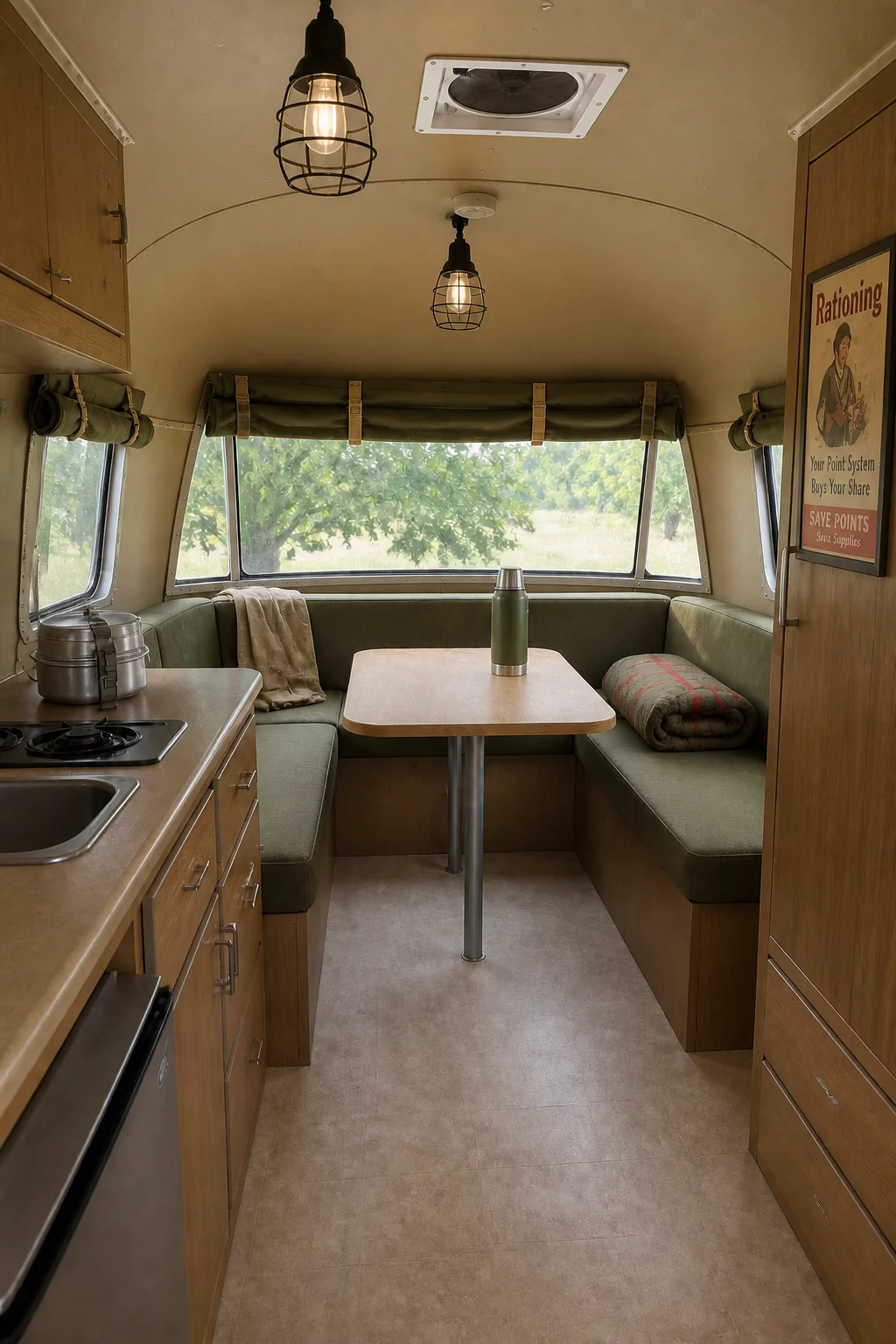
Stripping away decorative excess highlights the pure function of the camper’s layout. The heavy canvas and raw plywood withstand heavy use, proving that the basic kitchenette and dinette can thrive under rugged, no-nonsense conditions. This minimal approach is perfect for active outdoor enthusiasts carrying heavy gear.
Where to Invest
Allocate your budget toward high-rub-count canvas upholstery and genuine wool camp blankets. These durable textiles anchor the utilitarian look while surviving heavy outdoor use.
1950s Retro
Capture the optimistic, colorful energy of a 1950s roadside diner. We painted the walls bright turquoise with a horizontal polished chrome trim strip and surfaced the table in checkerboard formica. Glossy cherry red vinyl cushions and a classic atomic starburst clock complete the nostalgic, high-energy vibe.
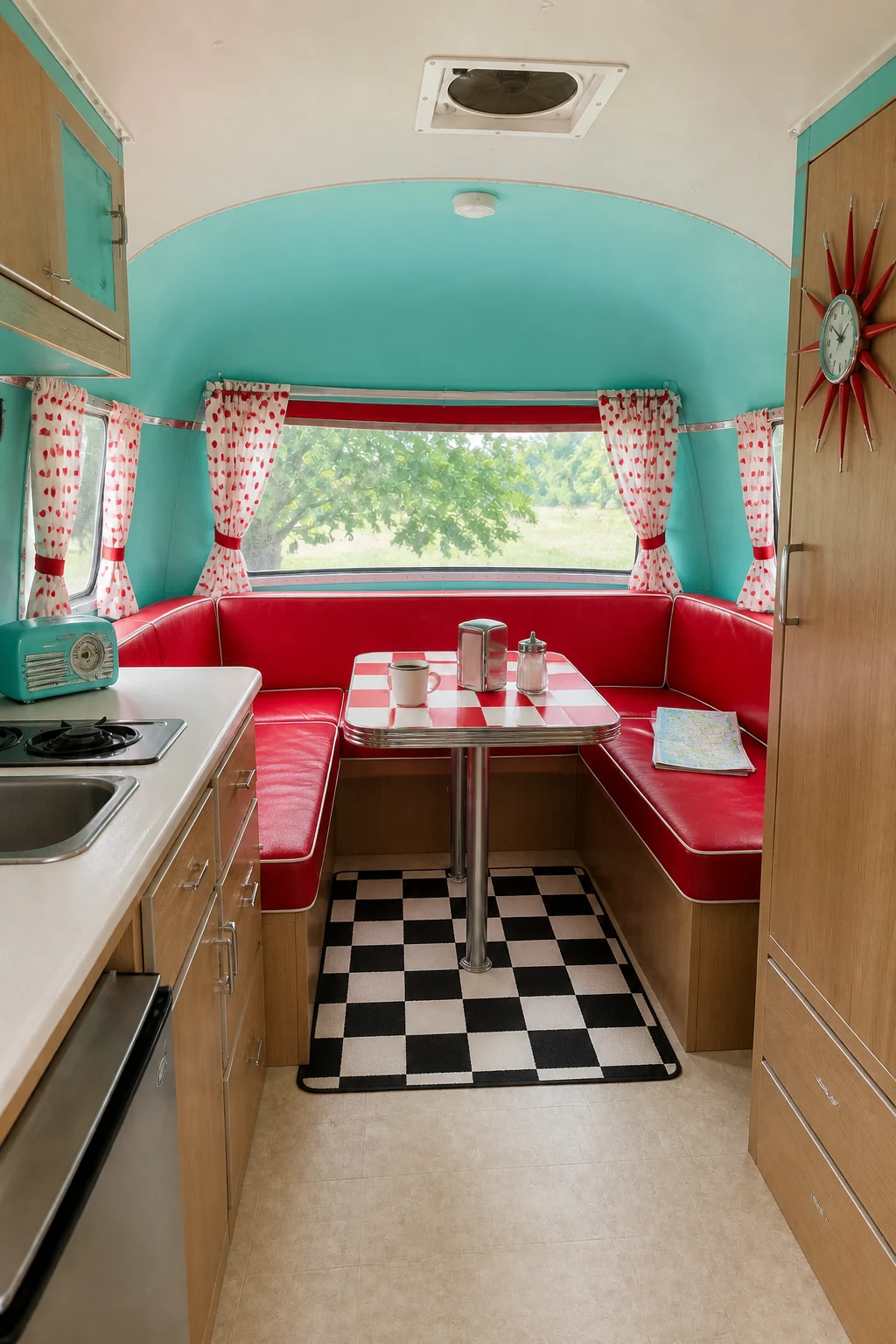
This iconic roadside diner aesthetic leans heavily into the nostalgia of the great American road trip. The glossy vinyl and checkerboard surfaces are incredibly easy to wipe down, making the original kitchenette setup both vibrant and highly practical for messy family meals on the go.
1960s Mod
Channel the bold, psychedelic, and plastic-forward Space Age design of the swinging sixties. We painted stark white walls featuring a massive tangerine and pink painted supergraphic curve. Smooth white vinyl cushions and a glossy white acrylic tulip-style tabletop fully embrace the vibrant futuristic aesthetic.
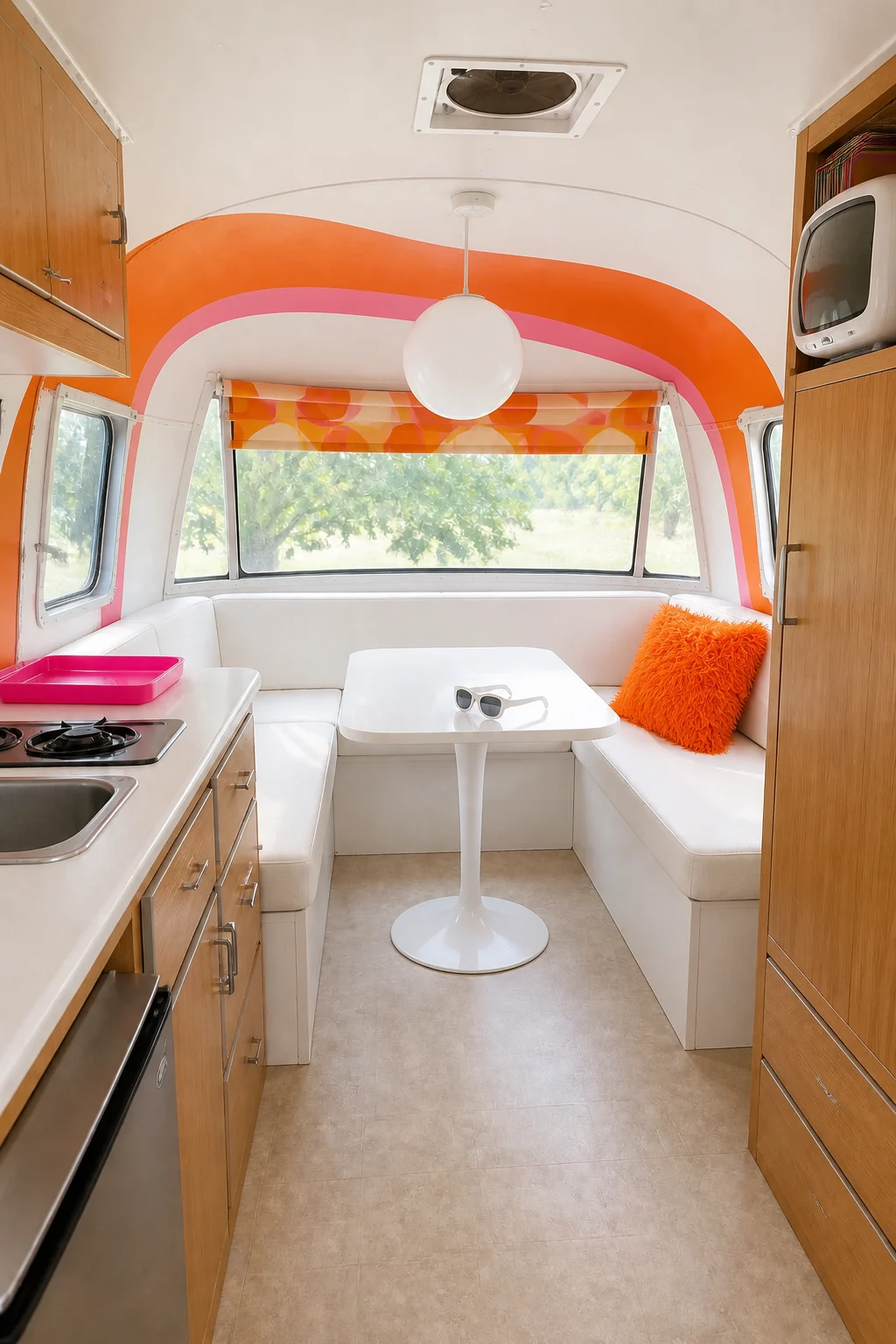
The massive painted supergraphic curve breaks up the predictable lines of the standard wardrobe and walls. Stark white plastics and vinyl create a seamless, futuristic pod effect that feels much larger than its actual footprint. This bold pop-art look demands attention and energizes the entire interior.
1970s Bohemian
Create a relaxed, earthy, and heavily textured 1970s bohemian retreat. We covered all walls in removable faux walnut wood-grain paneling and upholstered the cushions in avocado green corduroy. A woven rattan pendant light shade and macrame plant hangers add organic softness to the rigid shell.
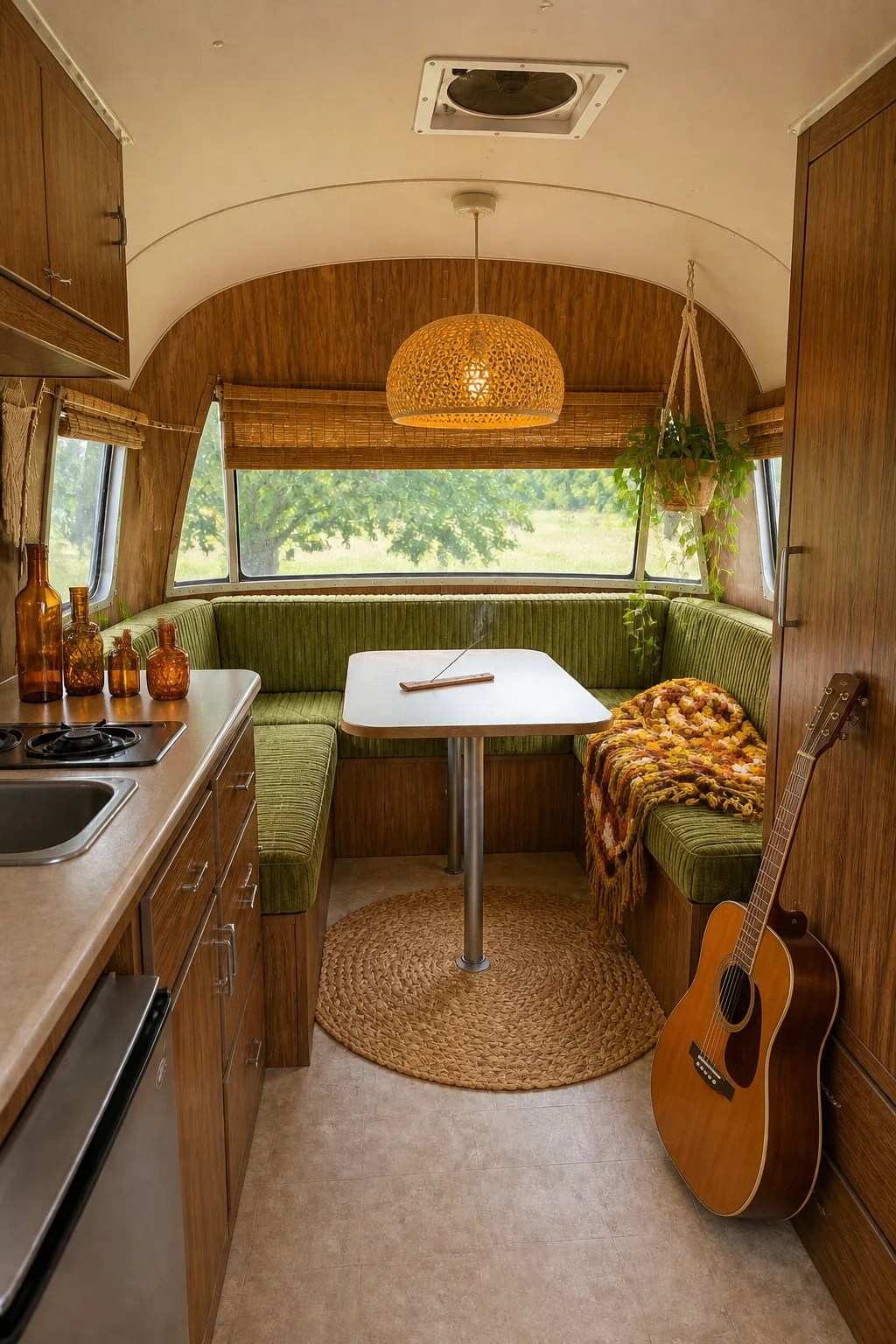
The heavy use of wood paneling and corduroy brings a warm, earthy vibration to the fixed metal footprint. Hanging macrame and trailing plants soften the hard edges of the kitchenette and rear window frame. This creates the ultimate cozy hangout for long, leisurely cross-country drives.
70s Boho Sourcing
- Peel-and-stick walnut wood paneling
- Avocado green corduroy fabric
- Woven rattan pendant shade
- Macrame plant hangers
1980s Memphis
Inject the chaotic, pastel, and geometric energy of the 1980s Memphis design movement. We applied white wallpaper with a stark black grid pattern and split the cushions into color-blocked pastel pink and mint green vinyl. A squiggly pink neon light energizes the back wall perfectly.
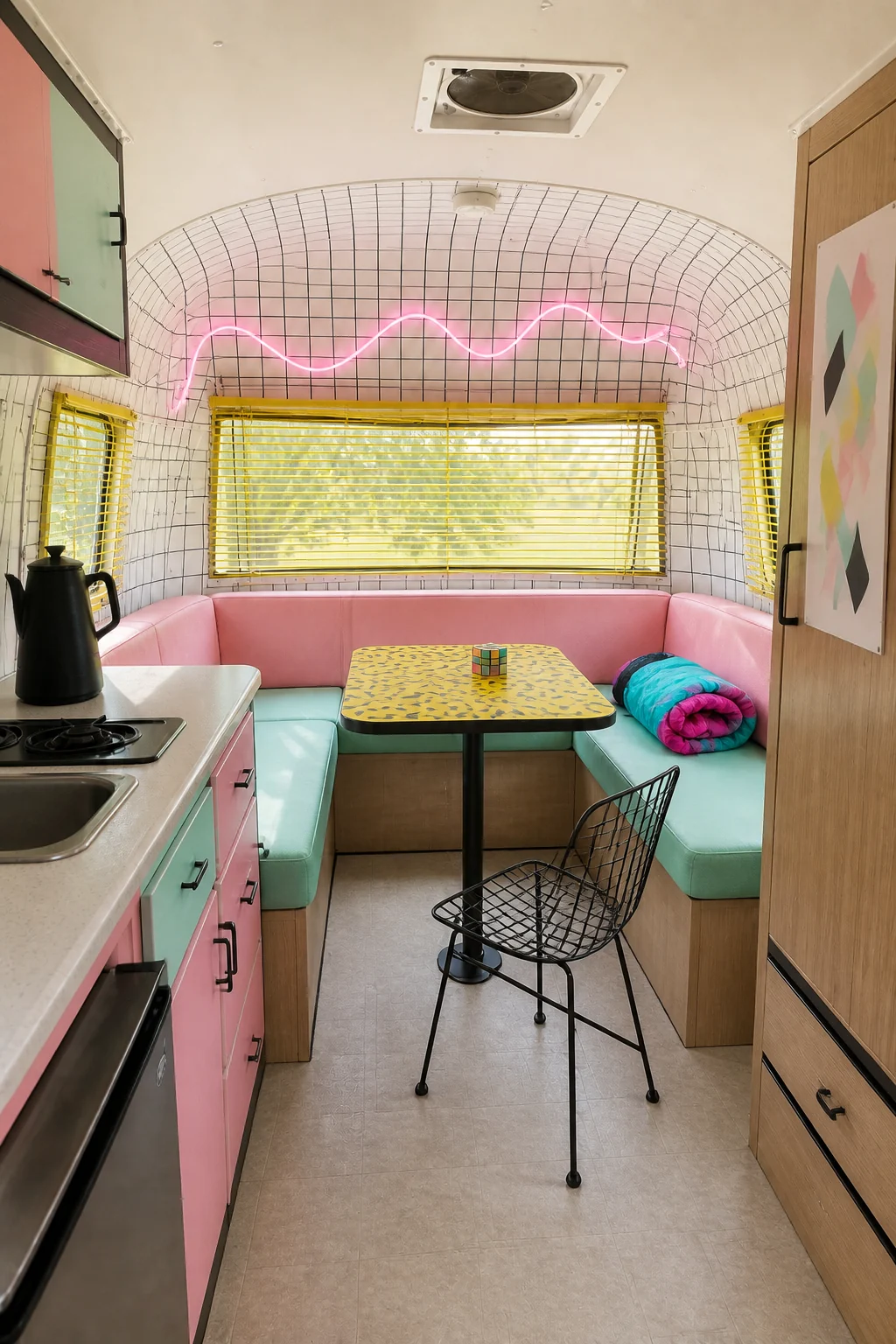
The chaotic mix of pastels and sharp grids turns the camper into a vibrant pop-art installation. By applying bold geometric laminates to the existing table and counters, the standard layout becomes a playful, rule-breaking environment. This loud aesthetic completely distracts from the narrow central aisle.
1990s Grunge
Capture the moody, flannel-clad, and slightly distressed slacker vibe of a 1990s grunge hangout. We painted all walls in a matte dark forest green and covered the cushions in classic red and black lumberjack plaid. Dark stained pine wood veneer wraps the table and counters.
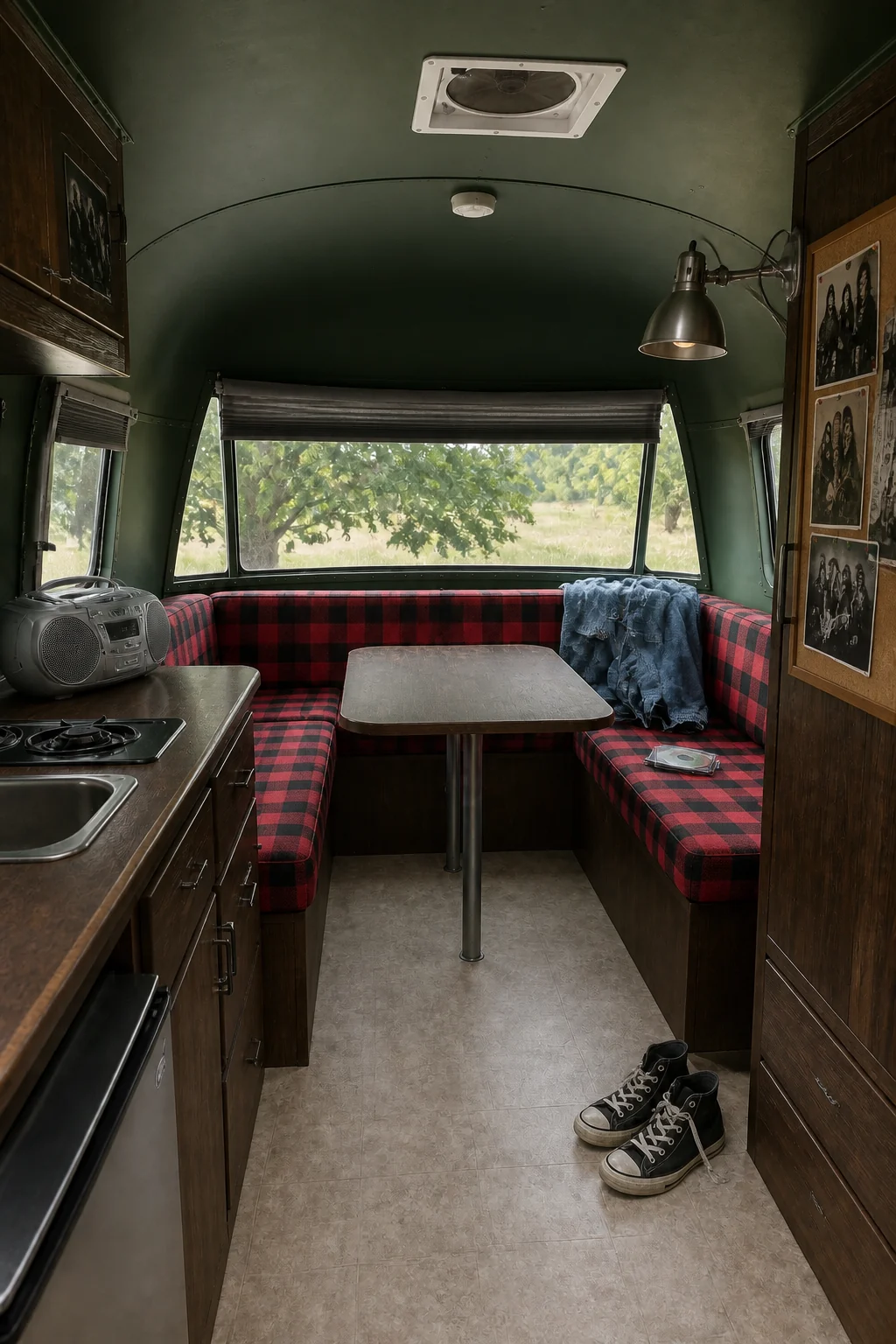
Embracing moody, dark tones creates a cozy, slacker-cabin vibe that feels incredibly inviting after a long hike. The soft flannel and distressed denim make the unchanged U-shaped dinette the perfect spot to wait out a Pacific Northwest rainstorm with a hot coffee and a good book.
2000s Y2K
Embrace the optimistic, metallic, and translucent plastic futurism of the turn of the millennium. We covered the curved walls in a smooth silver metallic vinyl wrap and replaced standard cushions with translucent purple inflatable seating. A frosted white acrylic tabletop adds a sleek, modern finish.
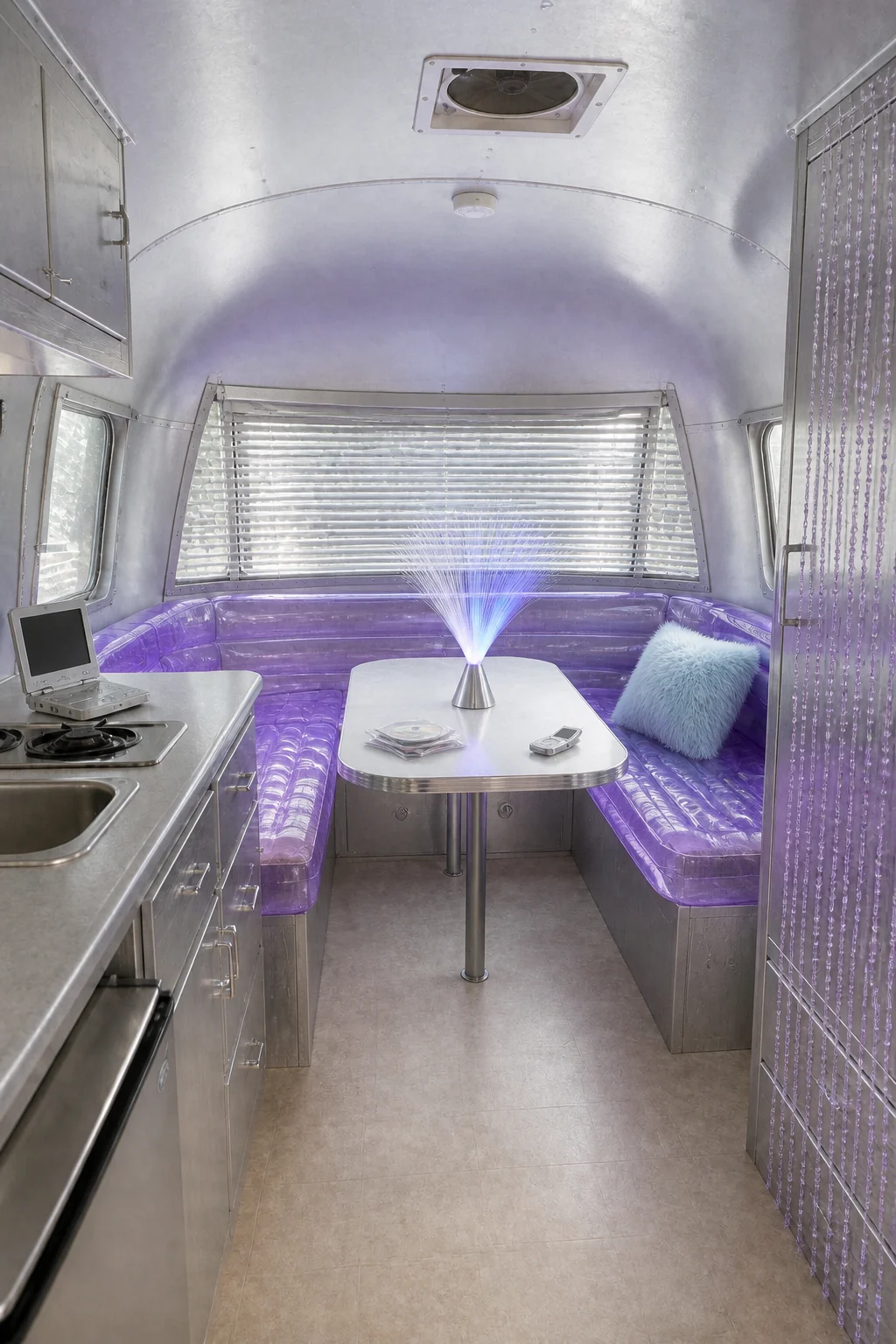
The turn of the millennium brought an obsession with metallic and translucent finishes that work brilliantly in tight quarters. The clear inflatable seating and frosted acrylic table maintain the functional layout while keeping sightlines completely unobstructed. This maximizes the natural light pouring from the panoramic window.
How to Choose Your Era
Selecting the right historical style depends entirely on how you plan to use your mobile retreat. If you need extreme durability for muddy gear and rough camping, the 1940s Utility style is unmatched. Its heavy canvas and unvarnished plywood surfaces can take a beating without showing wear, making it perfect for active outdoor enthusiasts.
Maximizing Space and Comfort
When your primary goal is to maximize perceived space and light, look to the 1930s Streamline design. The airy mint green walls and blonde wood finishes reflect light beautifully, making the tight footprint feel remarkably breezy, a proven technique for styling compact living spaces.
Embracing Moody Retreats
Conversely, if you are craving a cozy, moody retreat for cold weather, the 1990s Grunge cabin is ideal. Dark forest green walls and warm flannel textiles transform the camper into an intimate, cave-like space ideal for chilly nights.