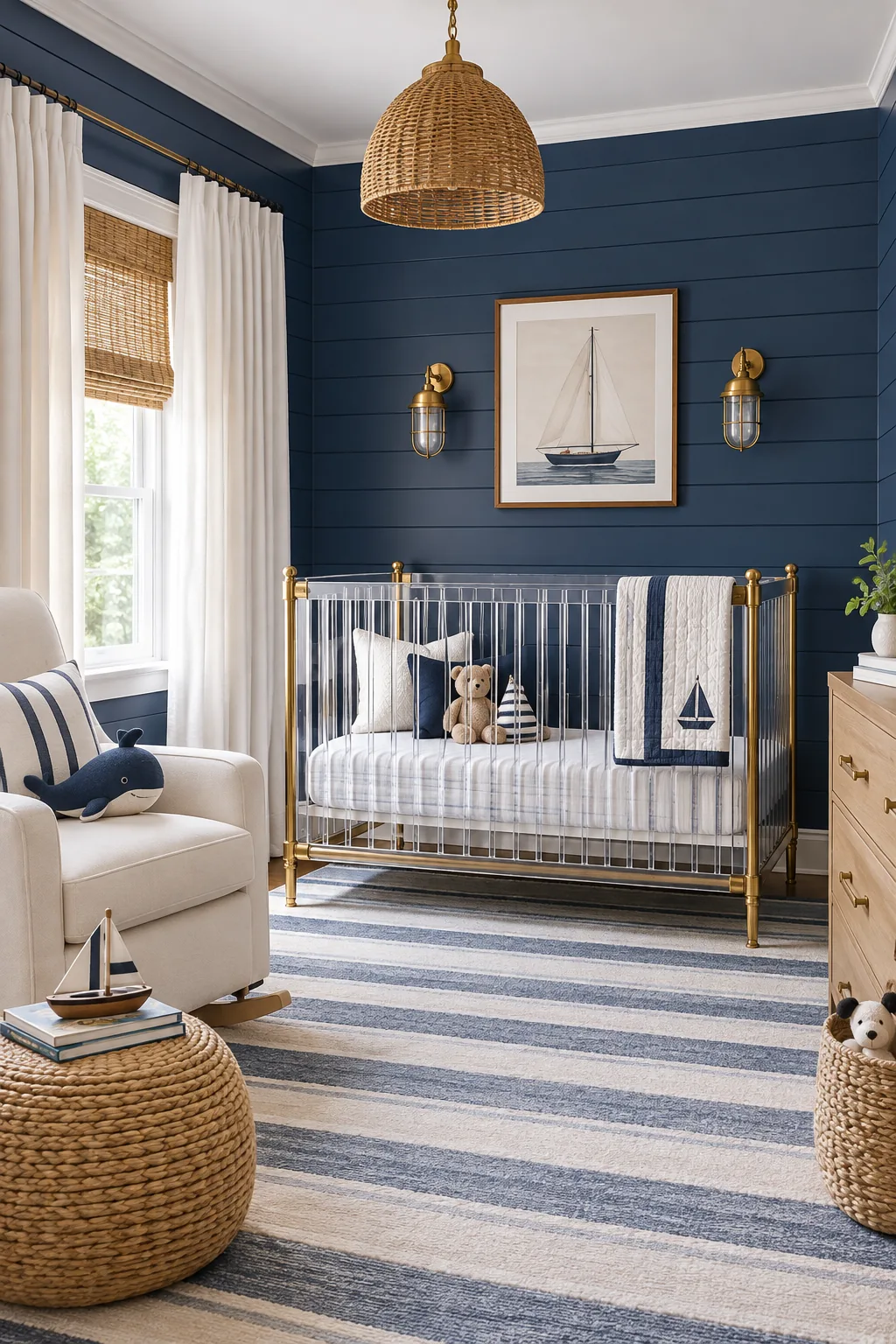
Boy Nursery Layout: The Designer Blueprint for Sleep & Play
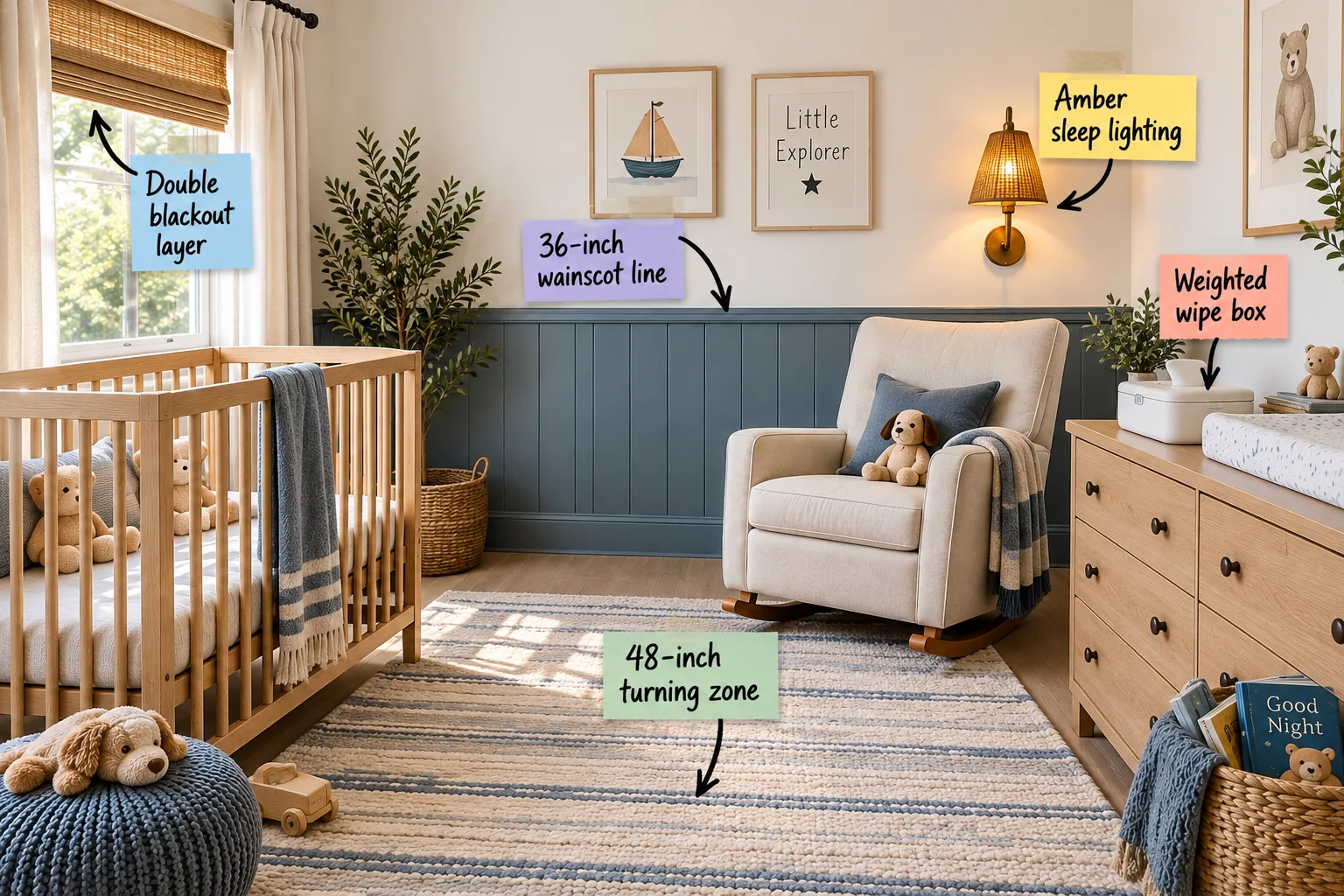
If you are planning a beautifully functional space for your baby, you need our complete nursery layout and lighting blueprint. You will be able to arrange your furniture, install optimal sleep lighting, and set up a highly functional changing station using exact designer measurements.
The Complete Layout & Lighting Blueprint
Start by establishing the core functional triangle between the crib, the feeding chair, and the changing dresser. This foundational layout blueprint minimizes footsteps during exhausting night wakings and ensures every essential care station is illuminated by its own dedicated, dimmable light source.
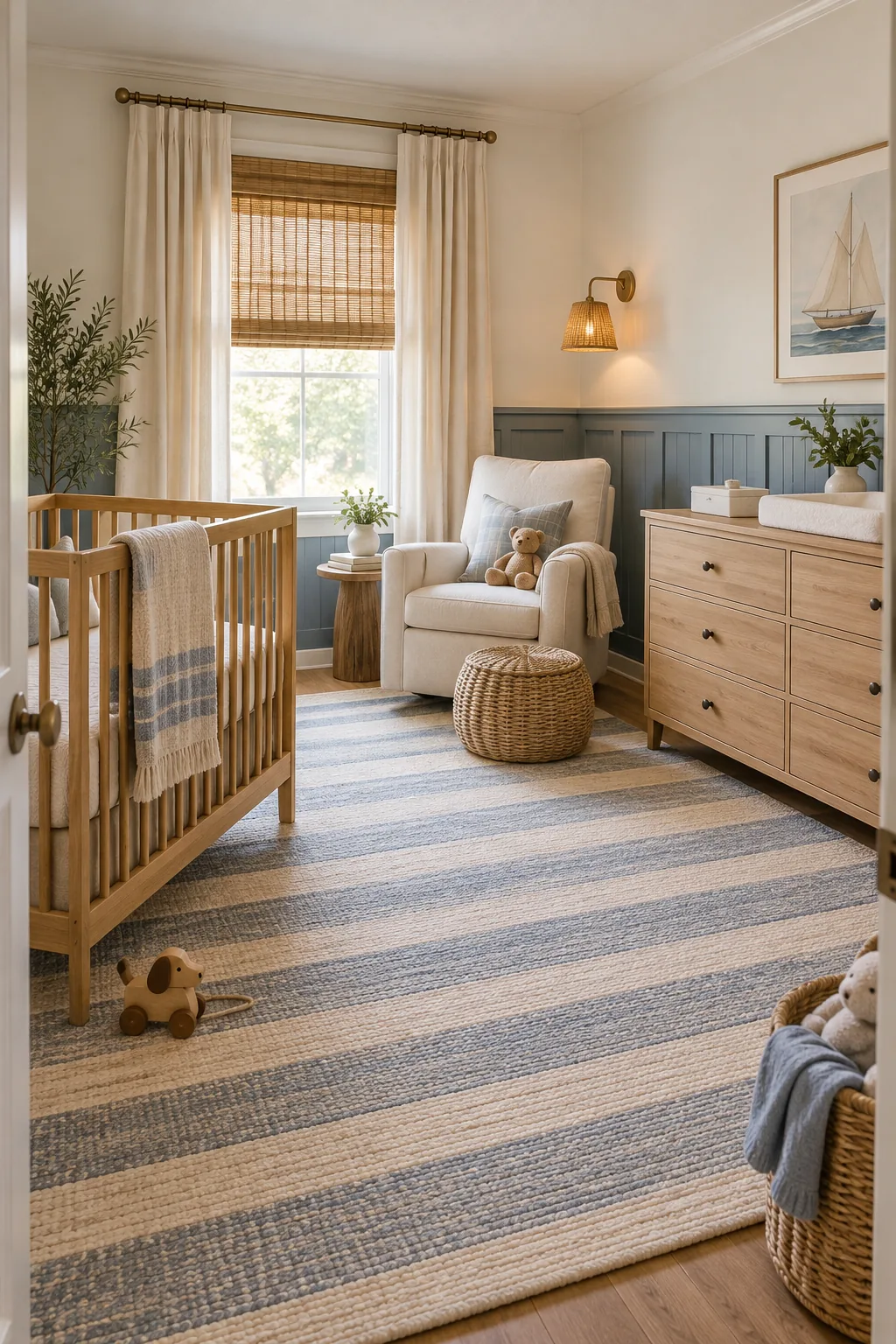
Before moving heavy furniture into place, you must verify these three essential safety and flow requirements to ensure your blueprint actually works in the physical room. Taking these measurements now prevents costly mistakes.
Mapping the Functional Triangle
I always treat the nursery layout like a highly efficient kitchen, where the distance between your primary work zones dictates your daily comfort. Keeping the dresser and rocker on opposite walls creates a balanced visual weight while keeping the central floor entirely open.
- Place the crib on the longest uninterrupted interior wall to establish your focal point.
- Position the changing dresser near the closet for seamless clothing and diaper access.
- Tuck the feeding rocker into a quiet, easily dimmable corner for peaceful nursing.
Once you lock in these three anchor points, the rest of the room’s design naturally falls into place. You can then confidently measure the remaining negative space to determine your ideal rug dimensions and map out safe floor play areas for the baby.
Establishing the 48-Inch Turning Zone
Anchor the room’s flow with a generous central clearing on the rug to prevent tripping in the dark. Maintaining a 48-inch turning zone between the crib, rocker, and dresser provides enough room to comfortably pivot with a baby in your arms.
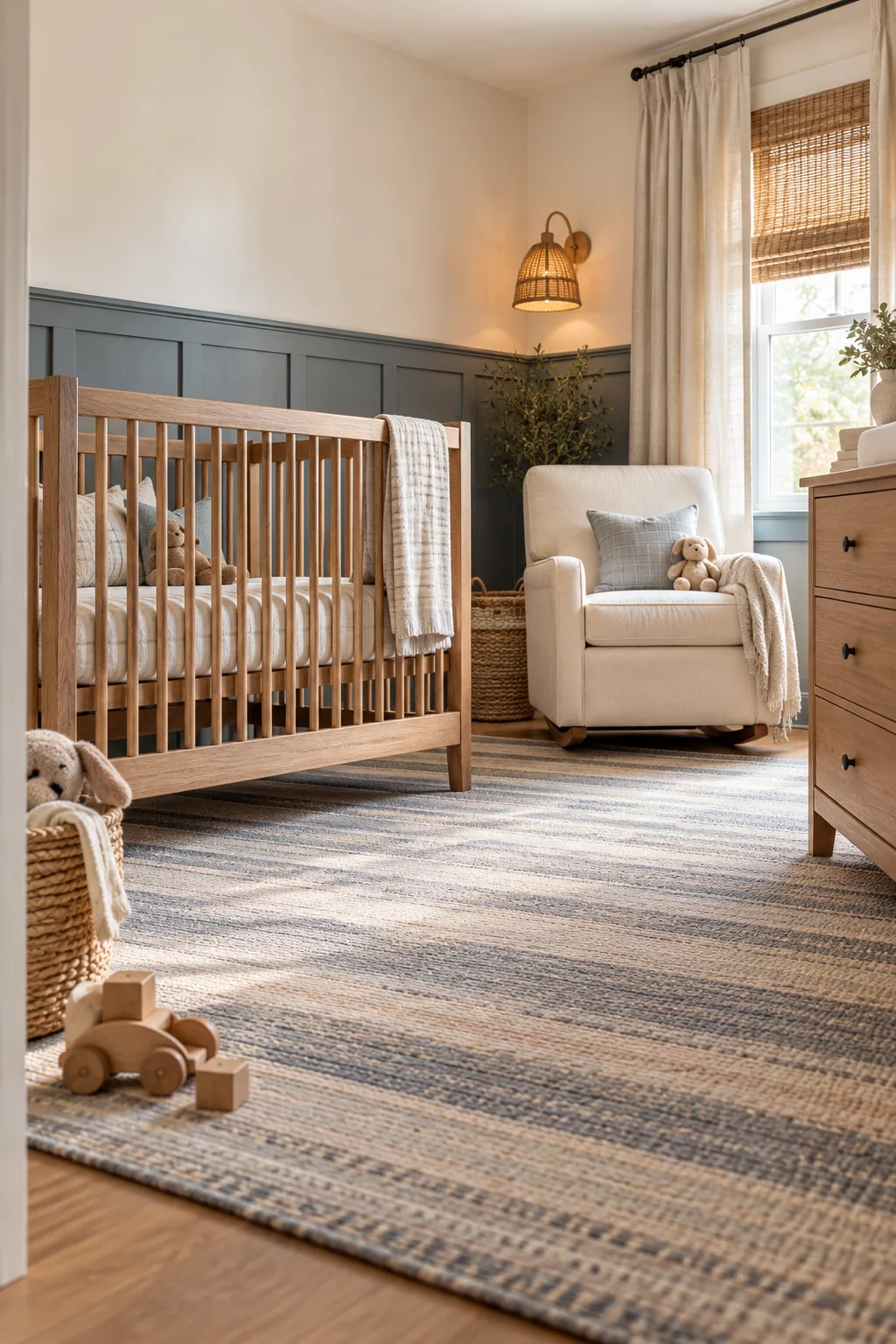
This deliberate negative space also creates a safe, soft surface for future tummy time and crawling practice. By keeping this central hub completely clear of ottomans or floor baskets, you guarantee a frictionless, hazard-free path between all three crucial care stations.
Choosing the Right Rug Dimensions
Selecting the correct rug size is critical for preserving that spacious turning zone without making the furniture feel disconnected. You want the front legs of the crib and dresser to rest securely on the textile, grounding the layout visually and physically.
| Room Size | Minimum Rug Size | Turning Zone Clearance |
|---|---|---|
| 10×10 feet | 5×8 feet | 48 inches |
| 11×12 feet | 6×9 feet | 54 inches |
| 12×14 feet | 8×10 feet | 60 inches |
A low-pile wool rug offers the absolute best combination of durability and softness for this high-traffic area. It resists crushing under heavy wooden furniture legs while remaining incredibly easy to vacuum during those inevitable early-stage spills and daily messes.
Safe Crib Placement Rules
Position the wooden crib against a solid interior wall whenever possible to create a secure, draft-free environment. When I designed my own son’s nursery, moving his crib to an interior wall instantly solved his early morning wakings by stabilizing the ambient temperature.
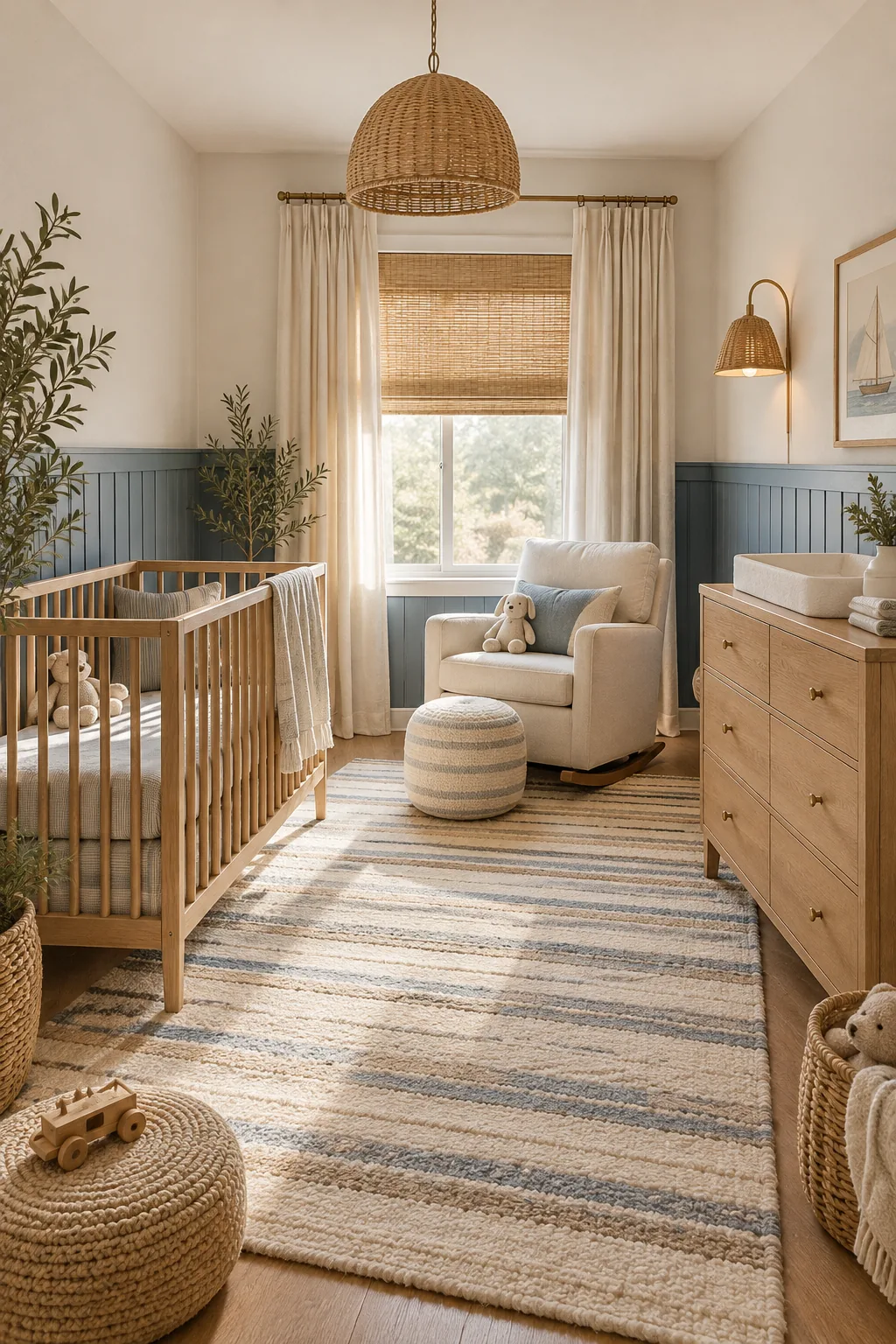
Keep the sleep surface strictly out of reach from window cords, heavy wall art, and direct airflow from heating or cooling vents. This disciplined placement strategy maintains a safe, temperature-stable environment that actively promotes longer, uninterrupted infant sleep cycles.
Managing Airflow and Temperature
Consistent ambient temperature is a massive factor in infant sleep quality, which is why I never place a crib directly under an HVAC register. You should aim to keep the nursery climate steadily between 68 and 72 degrees Fahrenheit year-round.
- Install a digital room thermometer near the crib level to monitor the exact sleeping climate.
- Use a ceiling fan on a low, reversed setting to gently circulate trapped warm air.
- Keep the nursery door slightly cracked to ensure proper return airflow to your central system.
Monitoring the temperature at the mattress level rather than eye level gives you a much more accurate reading of what the baby actually experiences. This small but vital adjustment helps you easily dress them in the appropriate sleep sack layers.
The 36-Inch Wainscot Line
Ground the nursery with a slate-blue painted wainscoting to add immediate architectural interest and durability to the lower walls. Setting the top edge at a 36-inch wainscot line perfectly aligns the architectural trim with standard dresser heights across the entire room.
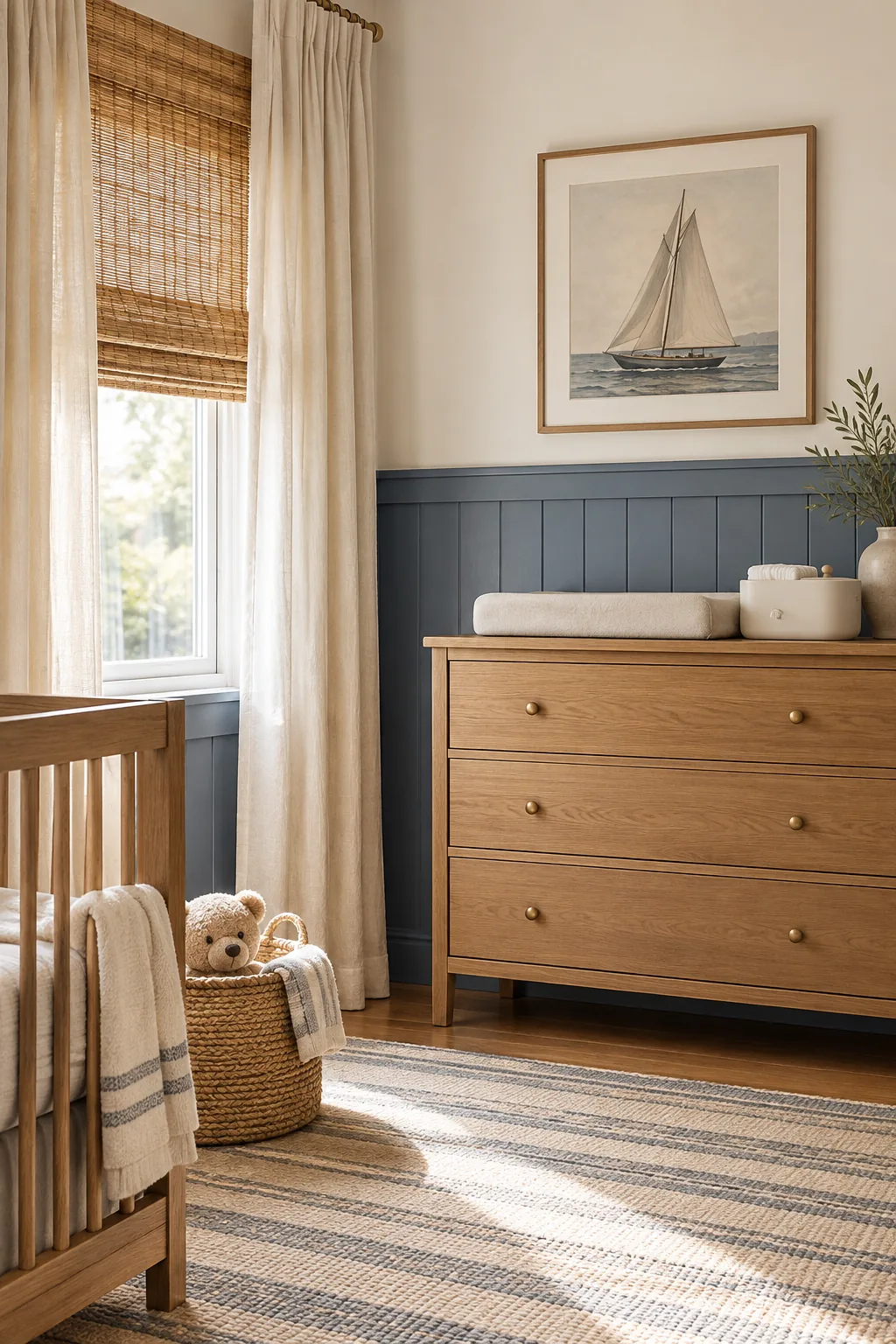
This specific measurement creates a continuous visual horizon that makes the room feel wider and more cohesive. In my own Denver home, aligning the wainscoting with the changing table made the otherwise small room feel incredibly intentional and wonderfully expansive.
Selecting the Slate-Blue Palette
A muted slate-blue acts as a sophisticated neutral that grows effortlessly with your child from infancy through the teenage years. Applying this deeper tone strictly below the chair rail grounds the space without absorbing too much natural daylight from the windows.
Installing the Double Blackout Layer
Control the room’s natural light completely to support healthy nap schedules during bright summer afternoons. A double blackout layer combines a snug woven Roman shade mounted inside the window frame with heavy linen curtains layered outside for maximum opacity.
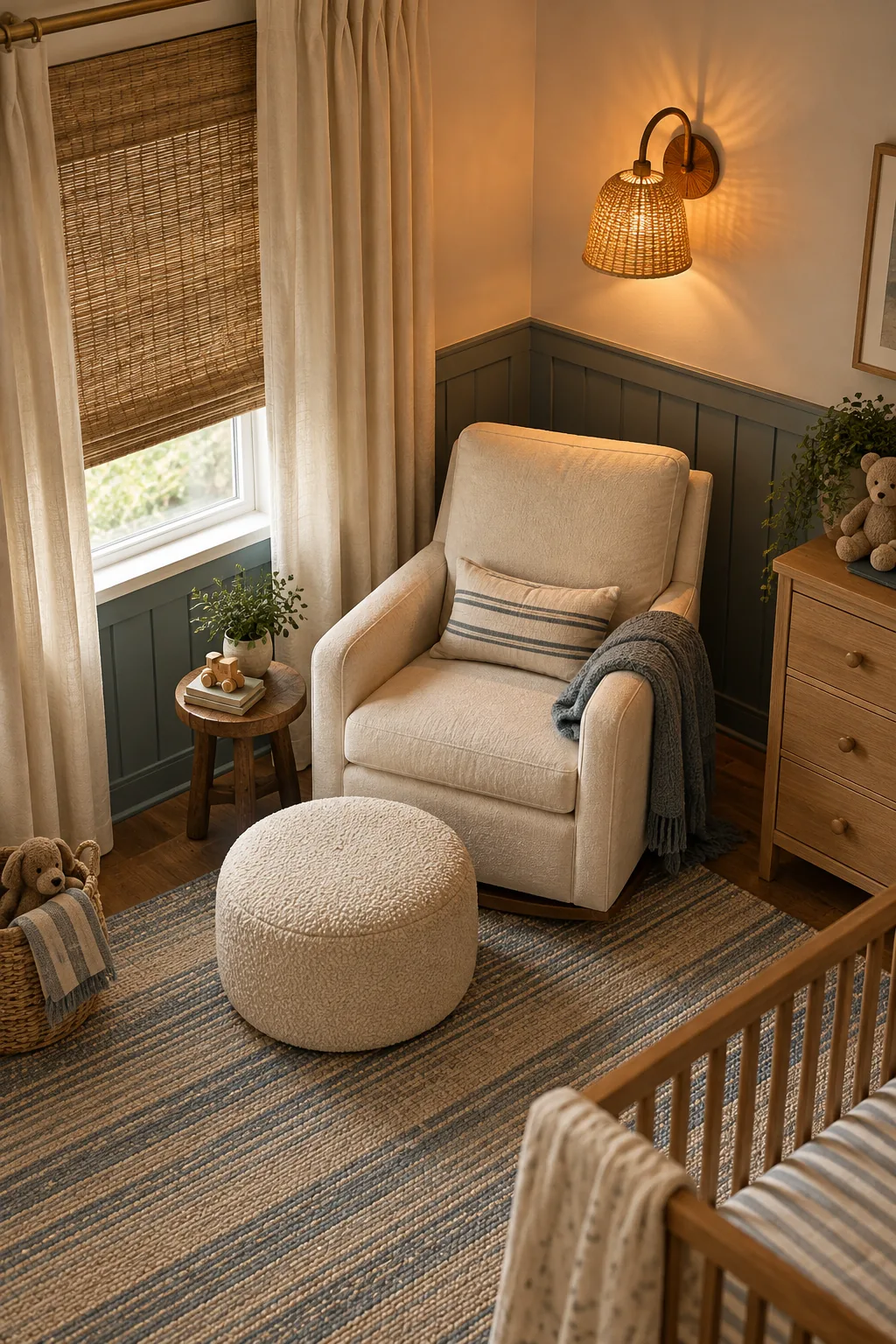
This dual-treatment strategy effectively traps the light bleed that typically escapes around the edges of single shades. By blocking that peripheral halo effect, you signal to the baby’s developing brain that it is time for deep, restorative sleep.
Mounting Hardware for Light Control
To maximize the effectiveness of your blackout curtains, you must install the drapery rod correctly. Mount the rod at least four to six inches above the window trim and extend it outward past the frame on both sides to block angled light.
Amber Sleep Lighting for Night Wakings
Mount a low wall sconce next to the cozy rocker to gently illuminate late-night feedings. Using amber sleep lighting with a warm color temperature around 2000K to 2400K provides just enough visibility for parents without shocking the nervous system.
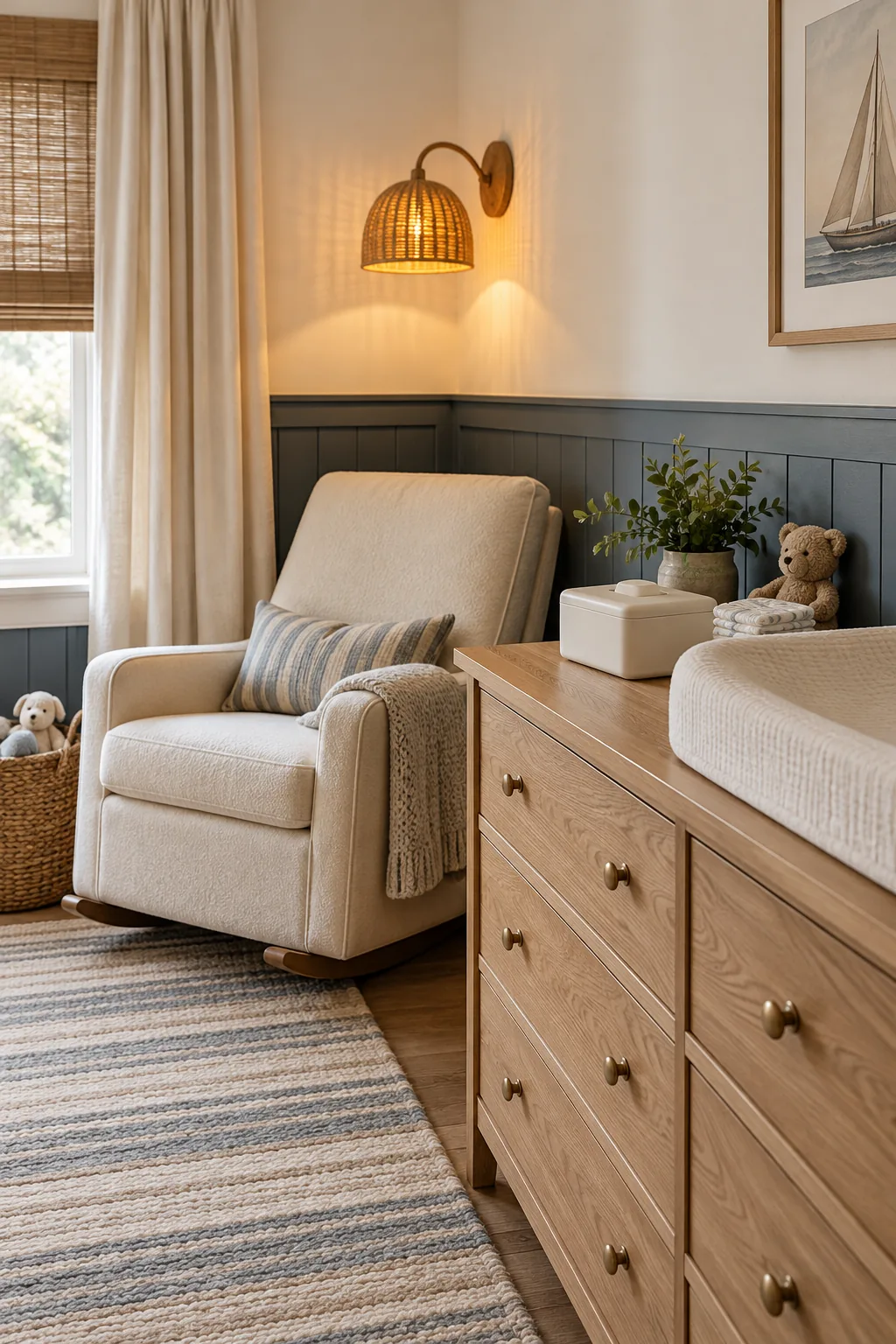
Selecting the right bulb is just as critical as the fixture placement when designing your nighttime feeding station. You need exactly enough light to operate safely in the dark.
Positioning the Feeding Rocker
The feeding chair should sit in a quiet corner where you can comfortably recline without hitting the wall or adjacent furniture. Leave at least six inches of clearance behind the rocker’s backrest to accommodate a full, smooth gliding motion.
Securing the Heavy Furniture
Once you are completely satisfied with the layout and turning zones, you must anchor all heavy furniture to the wall studs. Securing the dresser and bookshelf with anti-tip hardware is a non-negotiable safety step before the baby becomes mobile.
Layering the Lighting Zones
Beyond the amber sleep sconce, incorporate a bright overhead fixture for daytime play and a shaded floor lamp for reading. Creating three distinct lighting zones gives you complete control over the room’s mood and functionality at any hour of the day.
Organizing the Dresser Drawers
Dedicate the top drawer immediately below the changing pad strictly to diapers, creams, and extra covers. Keeping these high-frequency items exactly within arm’s reach ensures you never have to step away from the changing station while the baby is on the pad.
The Weighted Wipe Box at the Changing Station
Optimize the top of the dresser for seamless, stress-free diaper changes. Placing a sleek, weighted wipe box right next to the changing pad allows you to pull a single wipe cleanly with one hand while keeping your other hand safely on the baby.
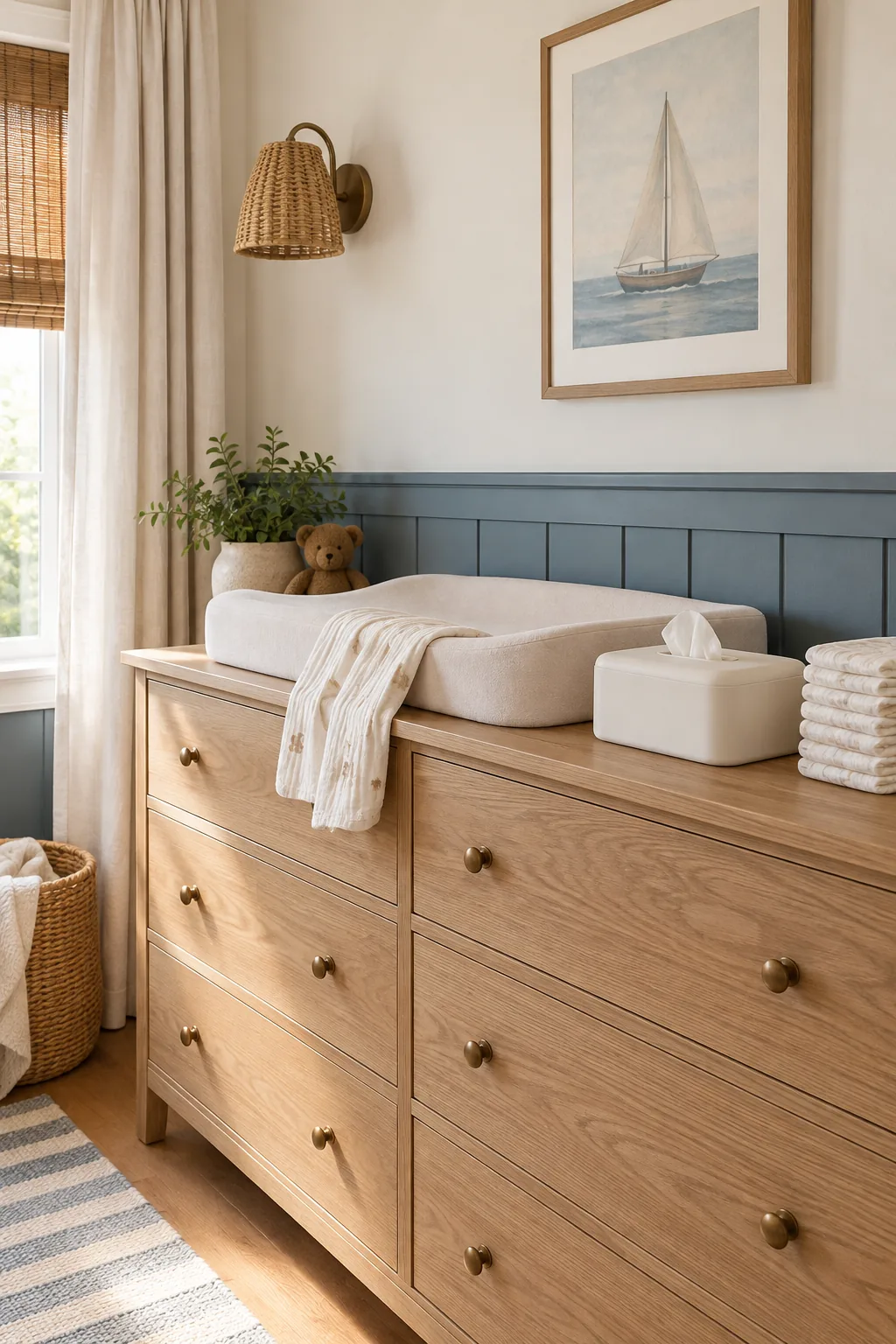
This simple upgrade prevents the frustrating experience of lifting the entire plastic wipe packet into the air during a messy change. It streamlines the entire process, allowing you to maintain physical contact and eye contact with your child at all times.
More Nursery Layout & Styling Ideas
Explore these distinct nursery designs to find the perfect style and color palette for your baby's room.
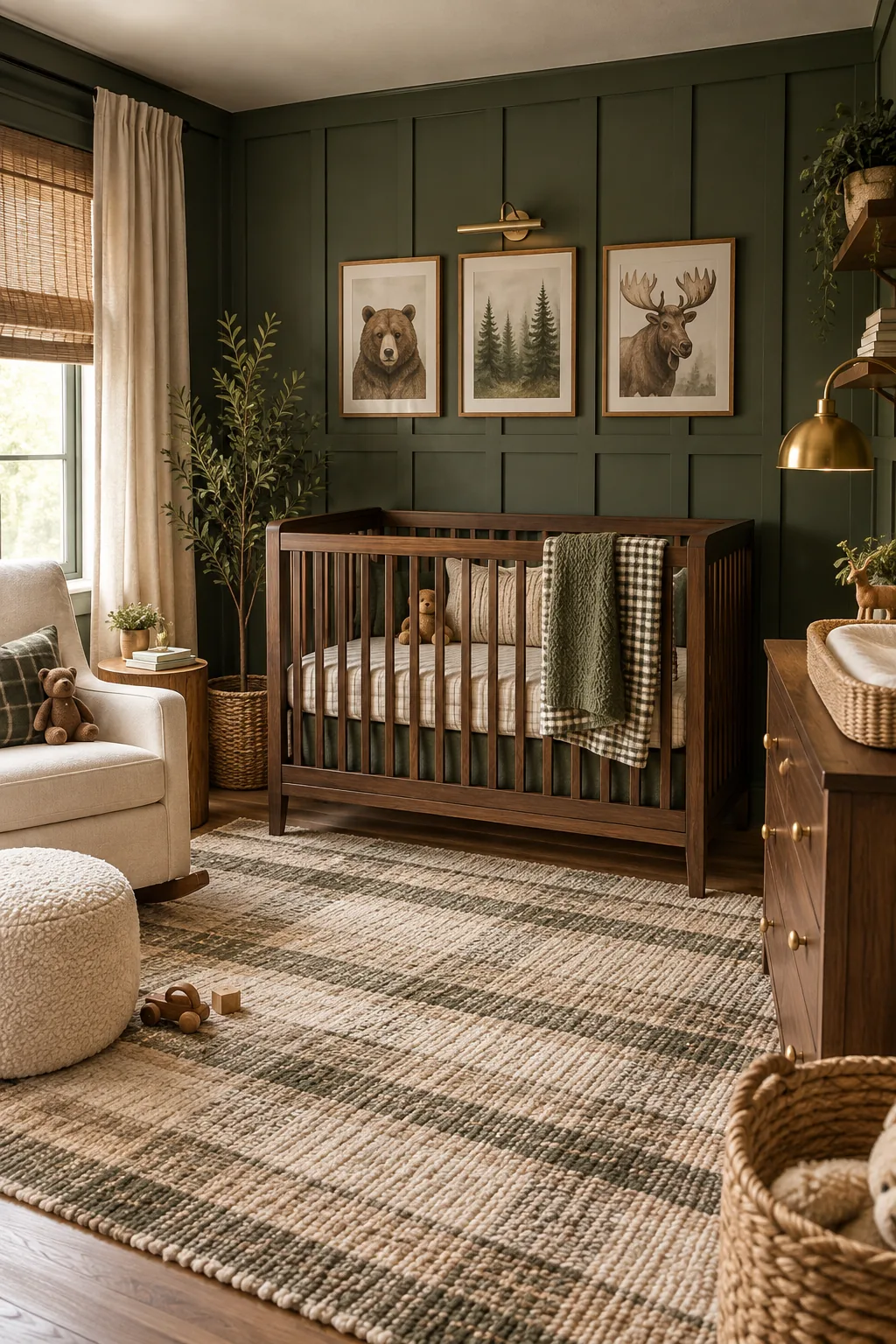
Moody Woodland Green: Deep forest green board-and-batten pairs beautifully with dark walnut furniture for a rich, grounded aesthetic.
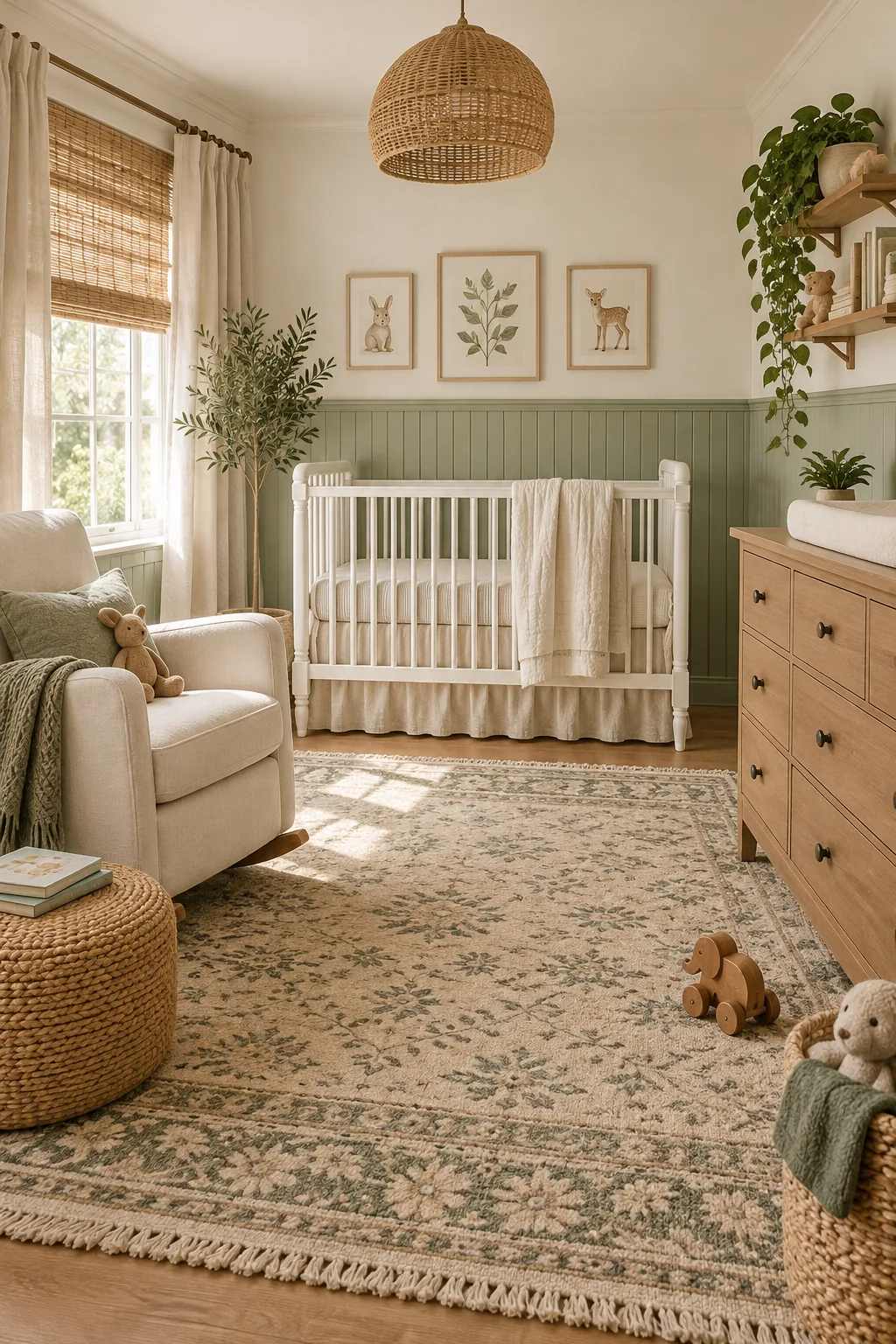
Airy Sage Botanical: Soft sage beadboard and a white spindle crib create a calming, nature-inspired environment that feels incredibly spacious.
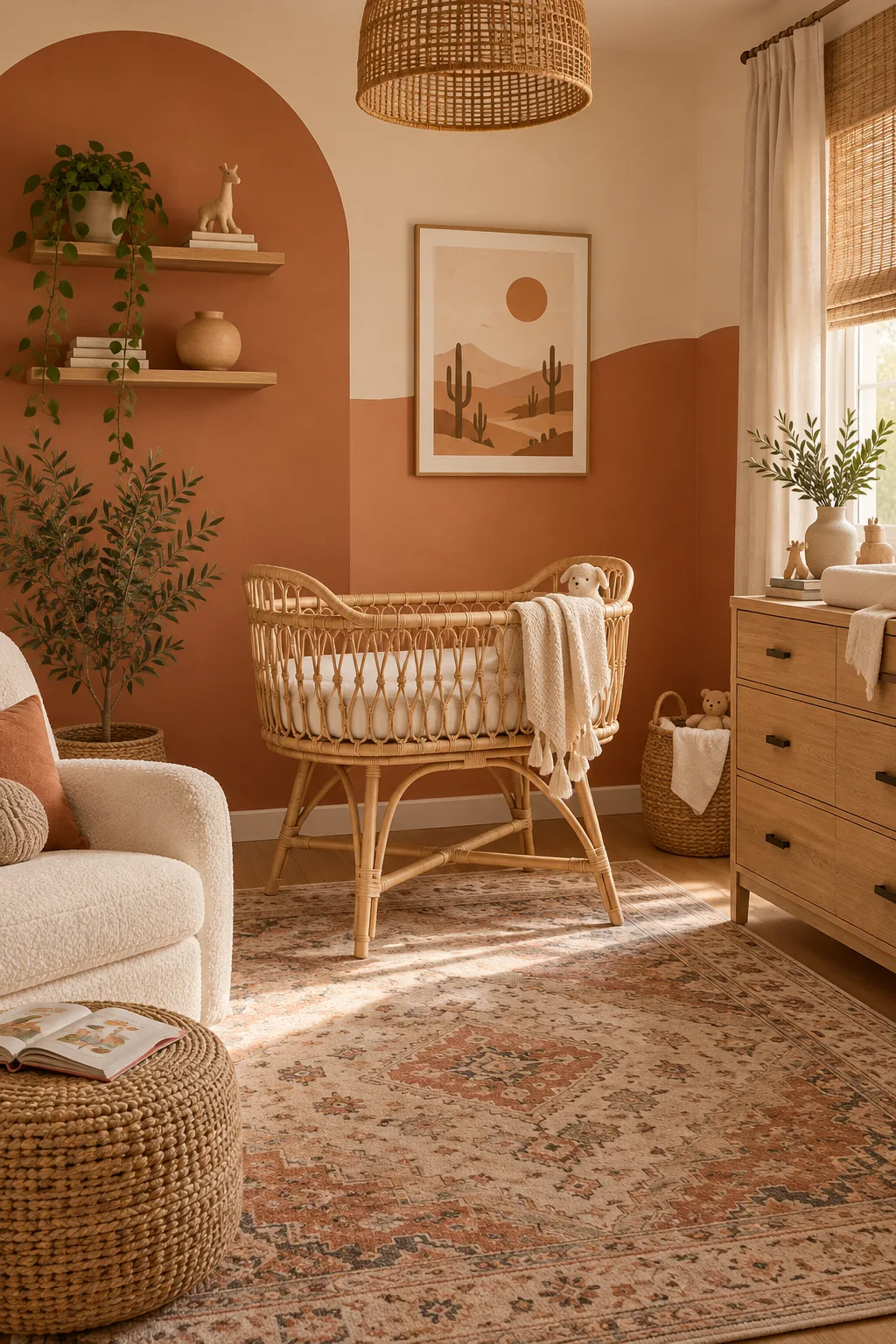
Modern Terracotta Desert: Warm terracotta walls and woven rattan textures bring a stylish, earthy warmth to a modern desert-themed room.
Crisp Navy Nautical: Navy blue shiplap provides a striking, high-contrast backdrop that makes modern acrylic and brass furniture pop.