
12+ Brilliant Twin Nursery Ideas for Your Home
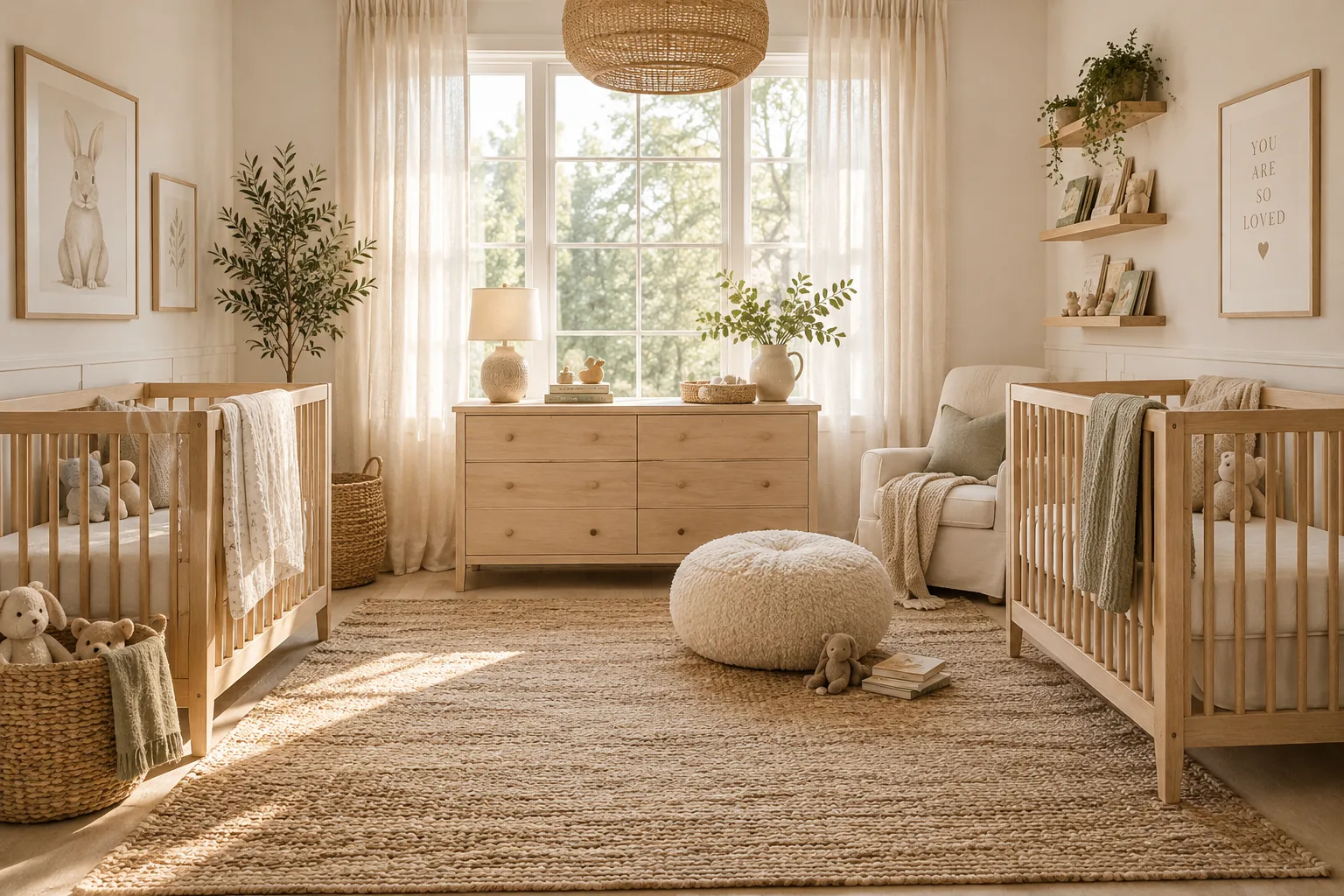
Designing a twin nursery comes down to smart spacing and maximizing every inch of the room without making it feel cluttered. I rely on a few layout tricks and storage solutions to keep these shared spaces both highly functional and beautiful.
1. End-to-End Crib Layout
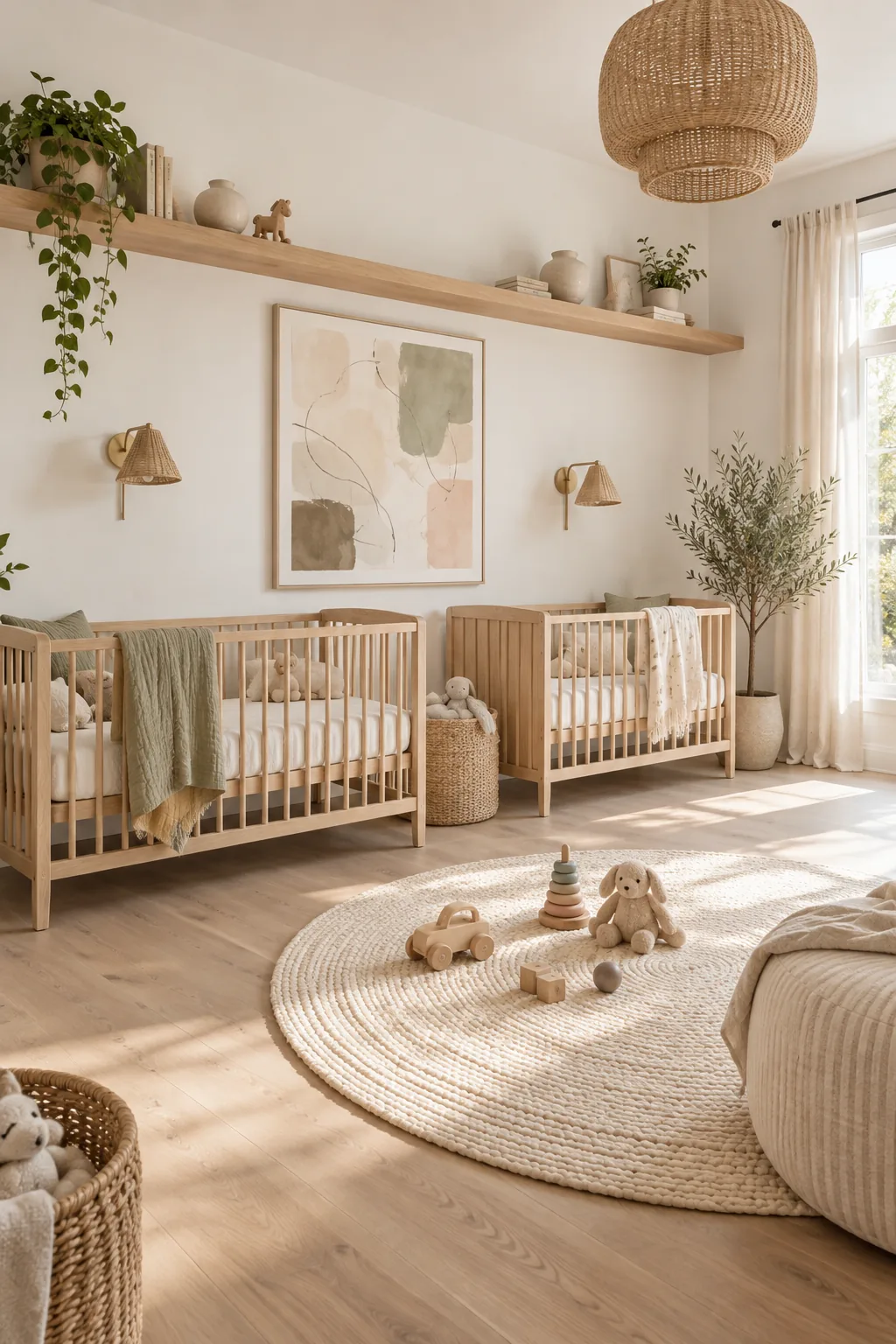
Placing two cribs end-to-end along the longest wall saves at least thirty inches of floor space compared to a side-by-side layout. This setup leaves the center of the room wide open for a shared play rug.
You can anchor the cribs visually by hanging a continuous piece of molding or a long floating shelf above them. Just make sure it is mounted high enough to be completely out of reach.
A single large art piece centered over the gap between the cribs ties the whole zone together.
Why it works: This linear arrangement frees up valuable square footage for a comfortable nursing chair and an oversized changing station.
2. Symmetrical Furniture Placement
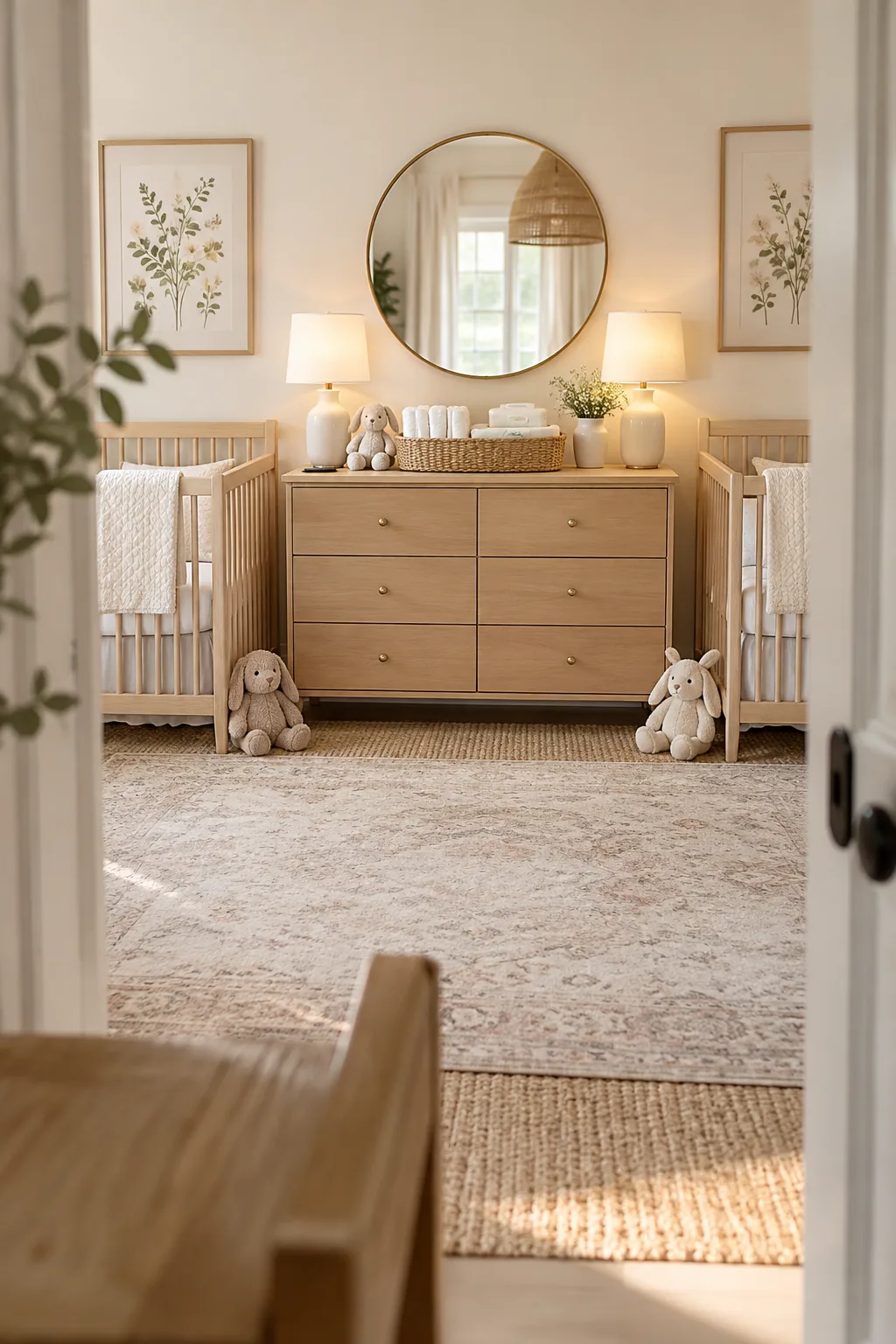
Symmetrical layouts instantly calm the eye in a room filled with double the baby gear. When you place a shared dresser exactly between the two cribs, it establishes a strong focal point that grounds the entire space. This setup also means you can easily reach diapers and wipes no matter which baby you are tending to. To make this layout truly shine, mirror the decor on both sides of the room.
- Matching crib sheets
- Identical wall sconces above each bed
- Twin mirrors over the changing station
3. Painted Accent Arches
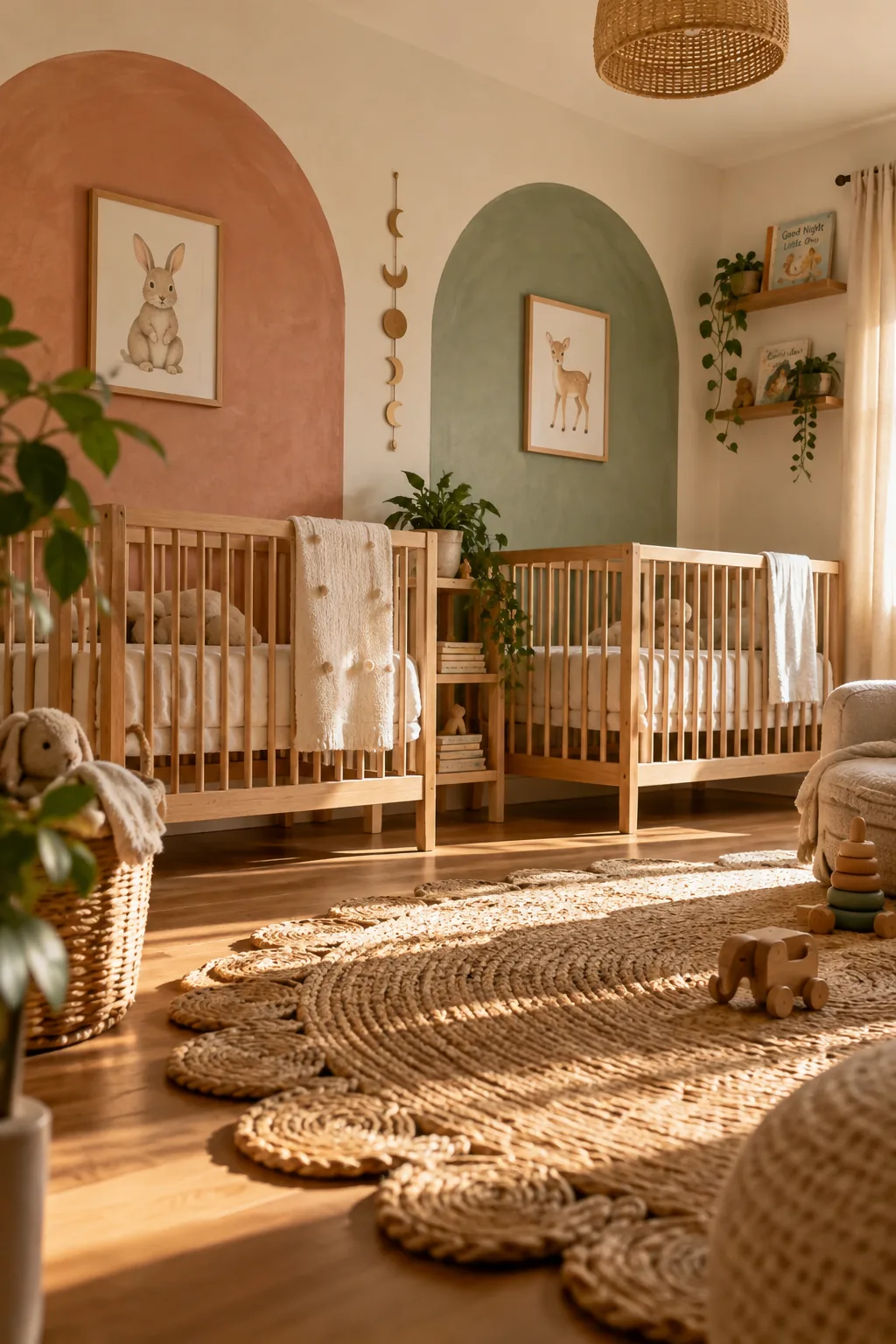
A cohesive, custom look happens naturally when you paint an accent arch behind each crib. These painted zones visually separate the sleeping areas while keeping the overall room unified and playful.
4. Oversized Glider Seating
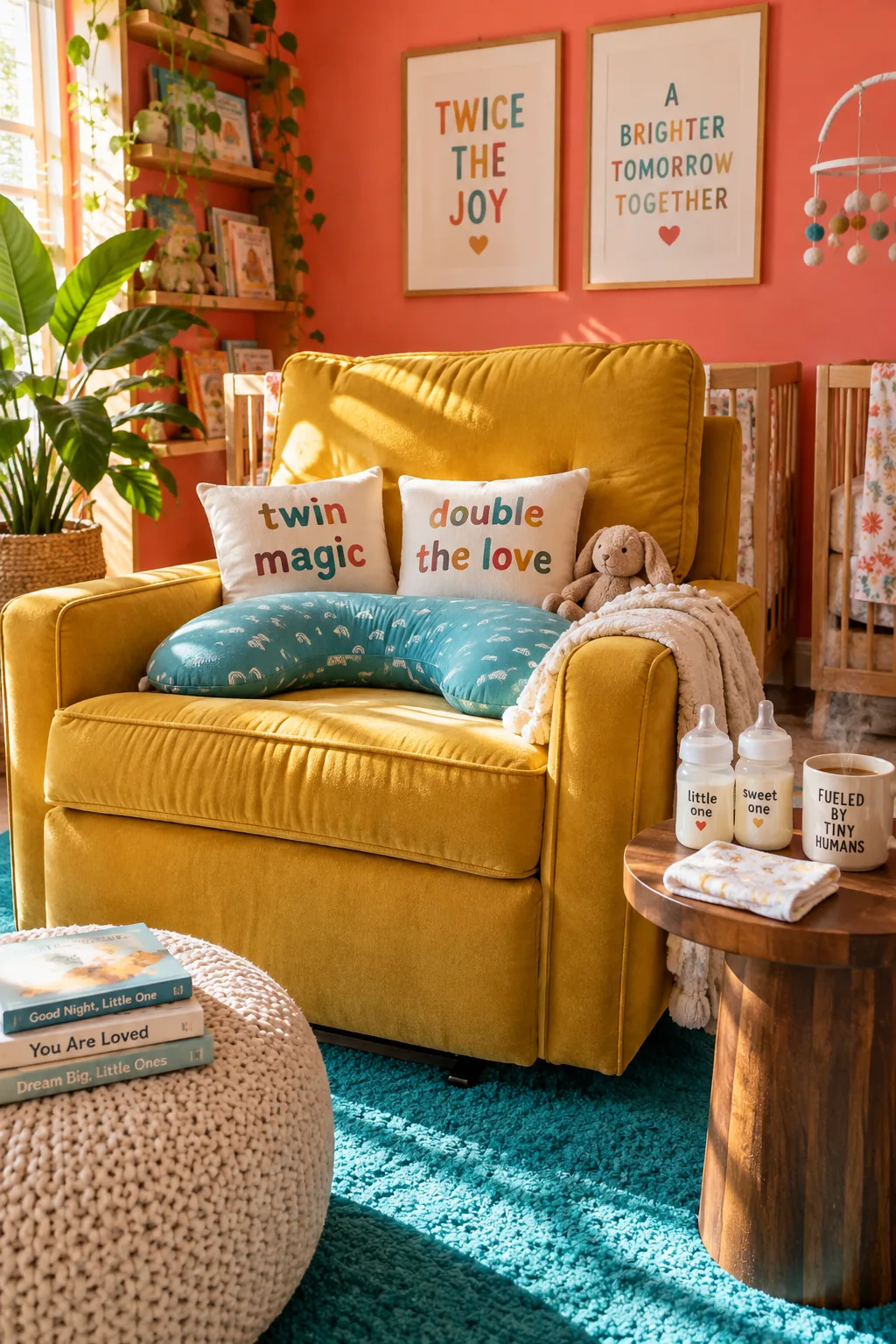
I always try to squeeze an oversized glider into a twin room instead of a standard rocking chair. You will spend countless hours feeding or soothing two babies at once, so a chair with an extra-wide seat is an absolute necessity. Look for one that easily fits a twin nursing pillow. Add a sturdy side table next to it for bottles, burp cloths, and your own coffee.
5. Tall Double Dresser
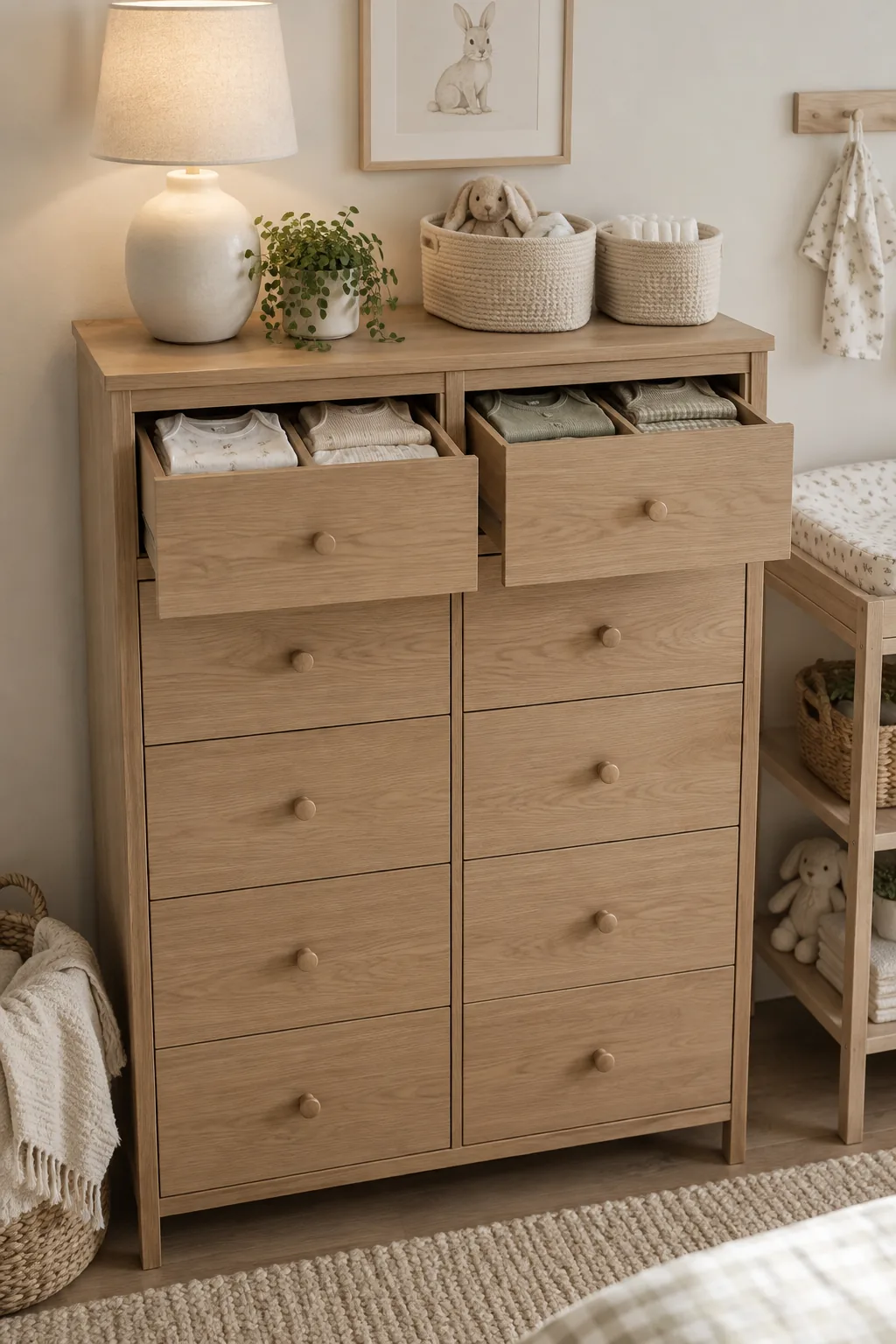
Utilizing vertical space is what makes a tall double dresser the best choice for shared nurseries. Instead of a wide, low dresser that eats up a massive footprint, a taller piece gives you separate drawers for each baby while saving room for a separate changing table. You can designate the left drawers for baby A and the right drawers for baby B. It keeps the tiny clothes perfectly sorted.
6. Acrylic Spindle Cribs
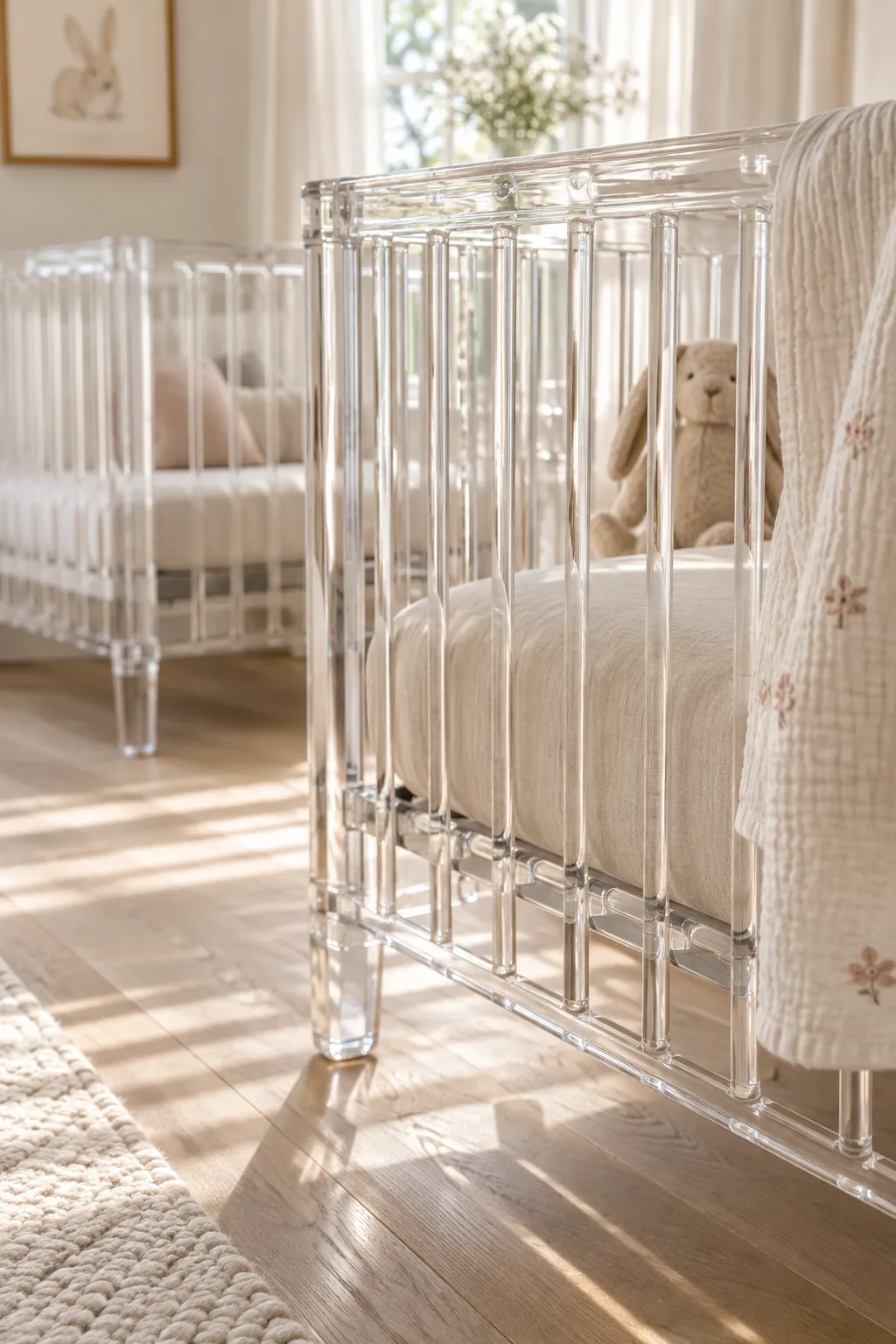
Twin nurseries often feel crowded when heavy furniture blocks the natural light.
Swapping bulky wooden cribs for acrylic spindle cribs instantly lightens the visual weight of the room. The clear slats allow light to pass right through the furniture. This simple material swap makes the entire room feel much larger and more breathable.
7. Coordinating Mismatched Bedding
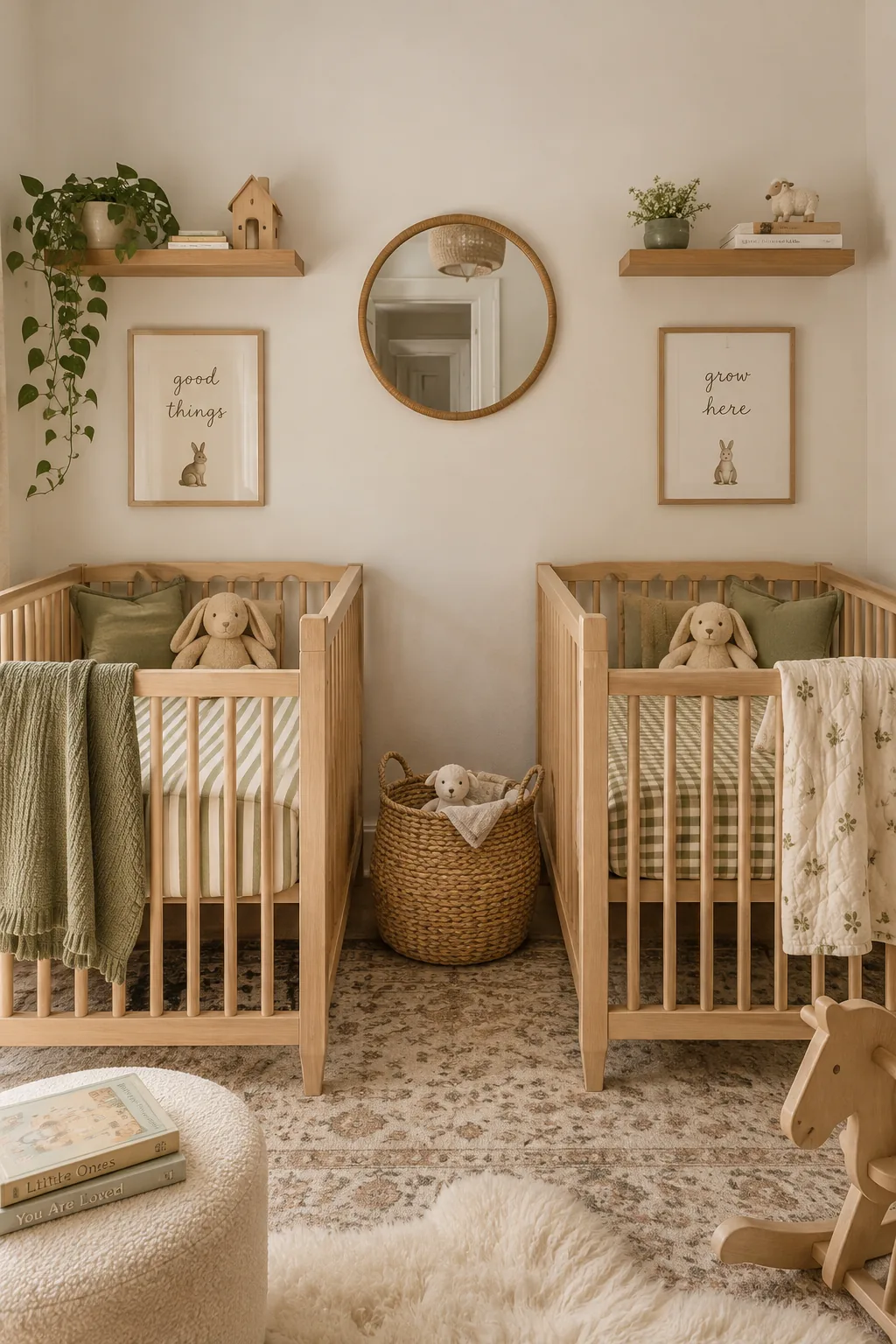
Creating a subtle distinction between the babies is what makes coordinated but mismatched bedding so charming.
Instead of buying two identical crib sets, pick a single color palette and vary the patterns. You might use a sage green stripe on one mattress and a sage green gingham on the other. It gives each baby their own identity while keeping the room's aesthetic tightly woven together.
8. L-Shaped Corner Cribs
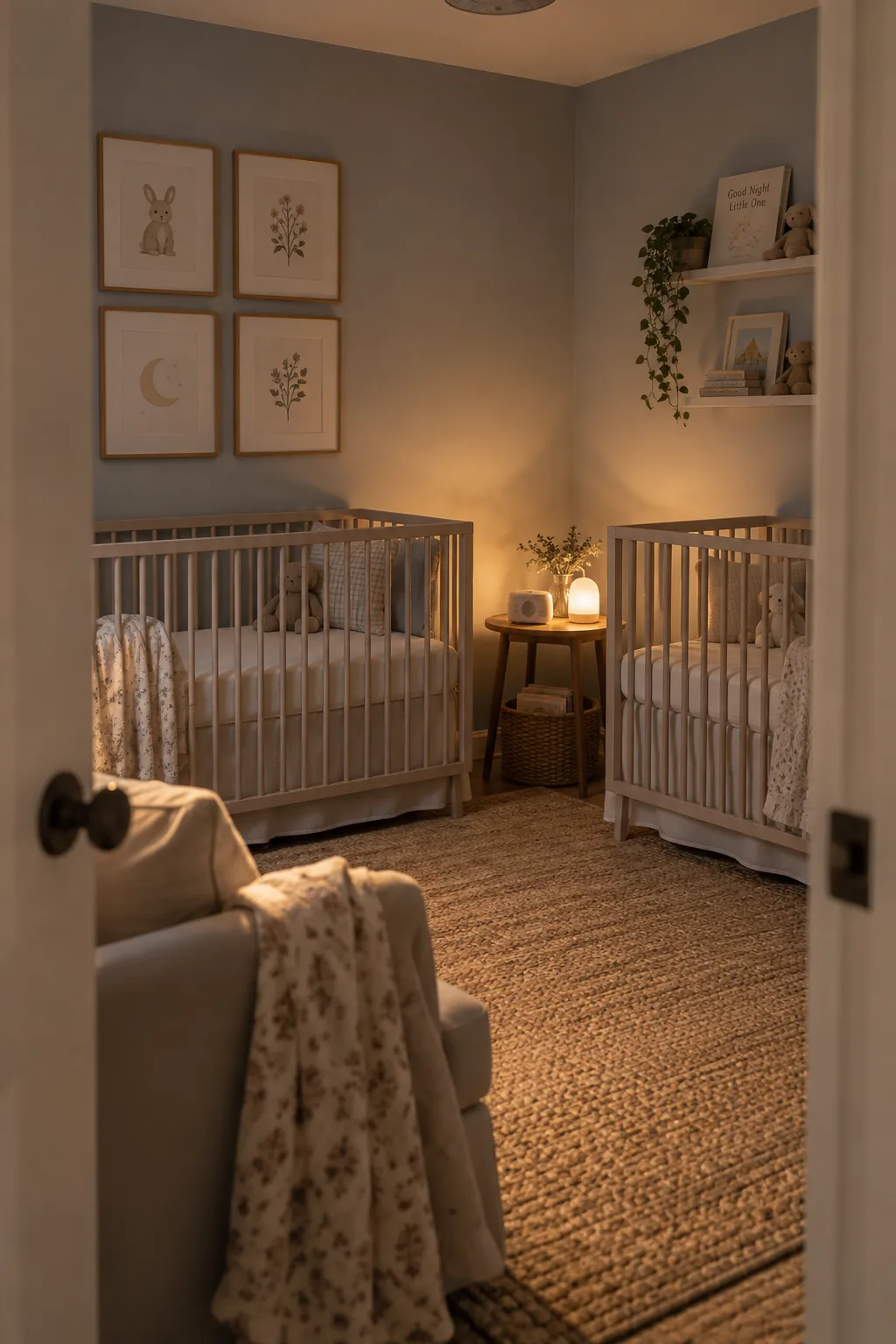
A cozy, built-in look emerges when you tuck the cribs into an L-shape in the corner.
This corner crib arrangement is a lifesaver in square rooms where wall space is limited. Place a small, round table exactly in the corner between the two cribs to hold a shared sound machine and a dim nightlight. It keeps the essential electronics safely out of the cribs but perfectly positioned for both babies.
9. Wall-to-Wall Blackout Curtains
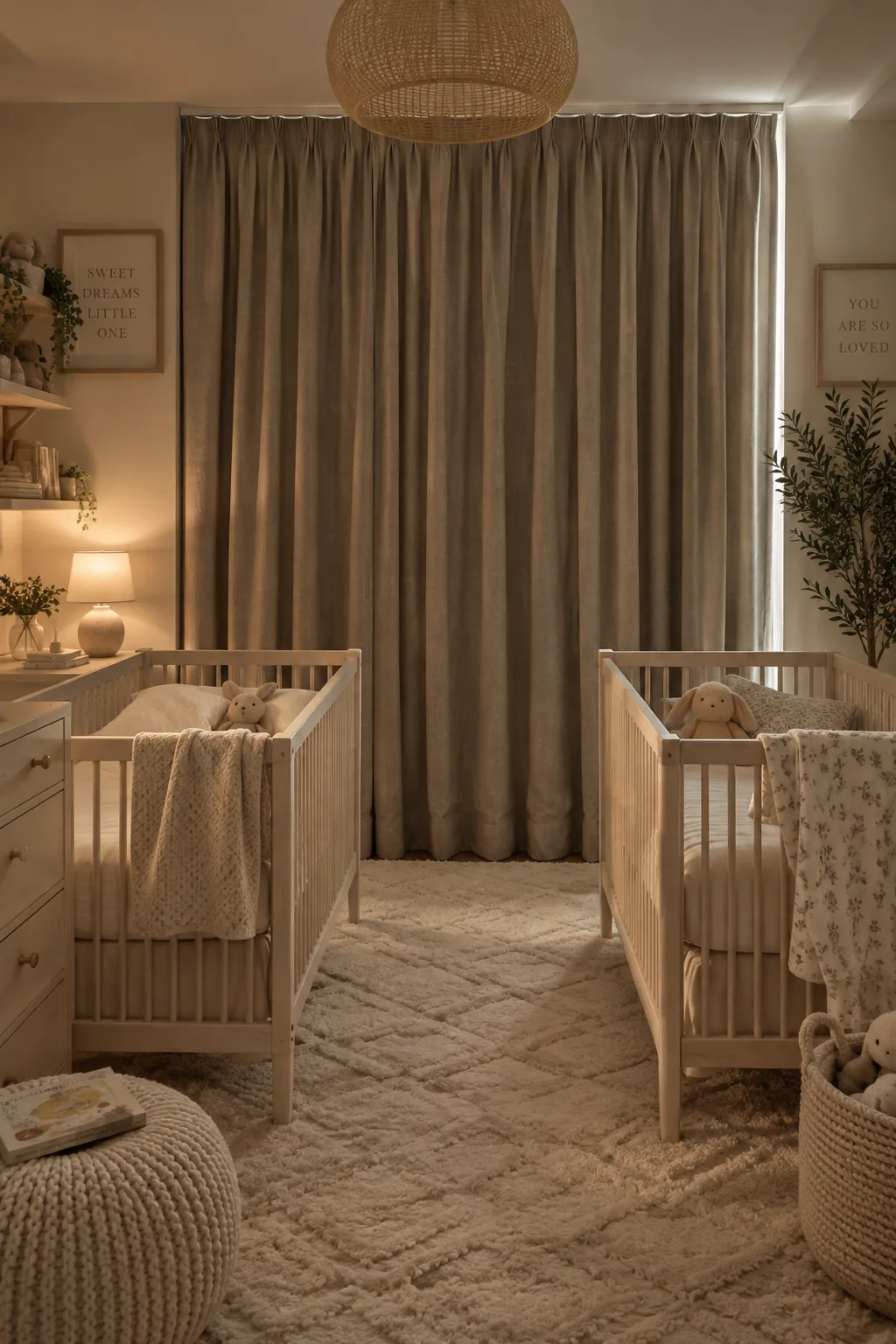
Install a heavy-duty blackout curtain system that spans the entire window wall.
Getting two babies on the same sleep schedule is tough enough without sunlight creeping in during afternoon naps. A ceiling-mounted track with wall-to-wall drapery guarantees complete darkness. It also adds a beautiful layer of soft texture that absorbs sound in an echoey room.
10. High-Capacity Diaper Station
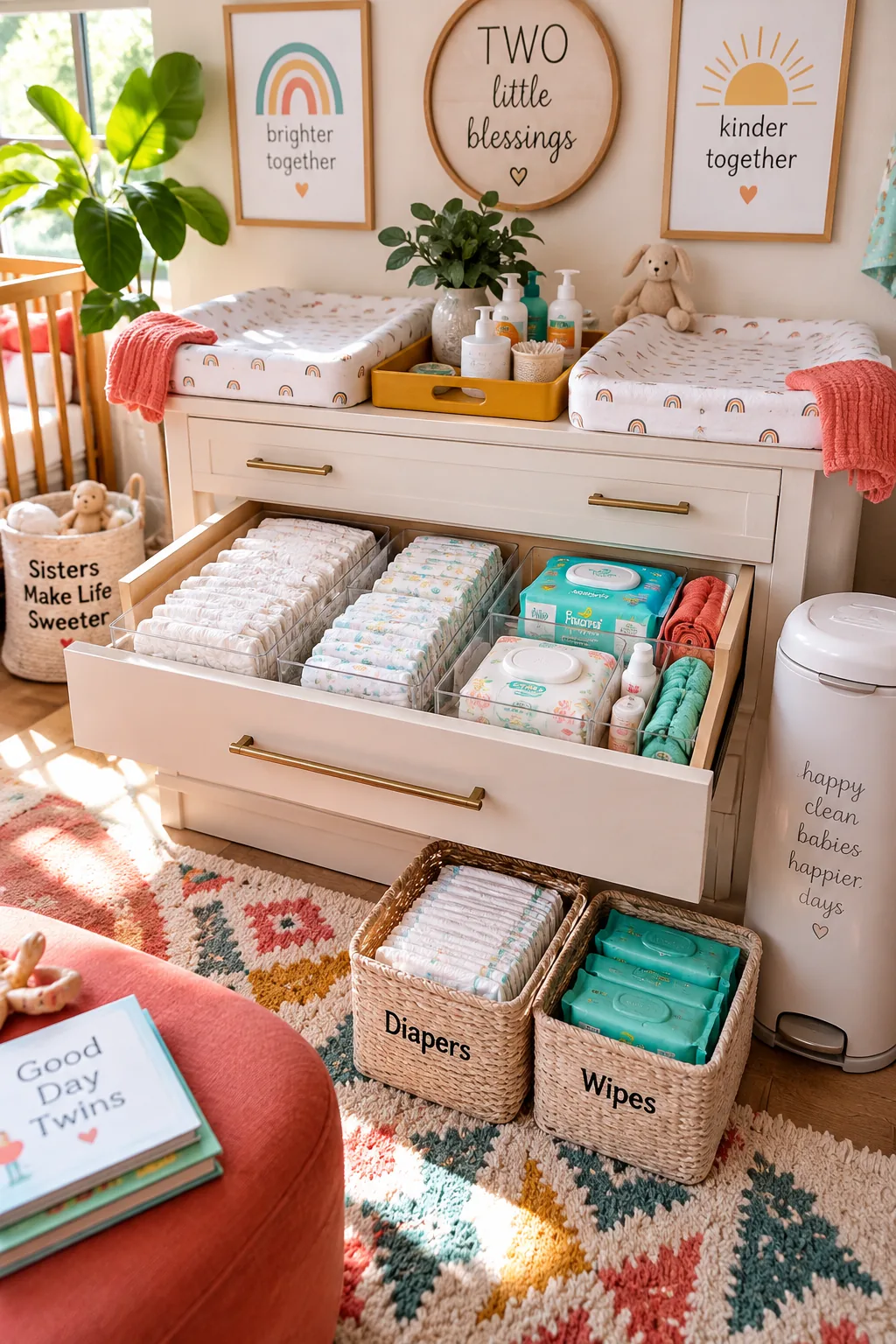
I learned the hard way that a standard diaper pail simply cannot handle the volume of two babies. You need to carve out space for a high-capacity diaper station right from the start. Dedicate the top drawer of your changing table entirely to diapers and wipes, using rigid acrylic dividers to keep stacks from falling over. Keep your backup supplies within arm's reach so you never step away from the table.
- An extra-large steel diaper pail
- Deep acrylic drawer organizers
- A rolling utility cart for backup supplies
11. Floor-to-Ceiling Book Ledges
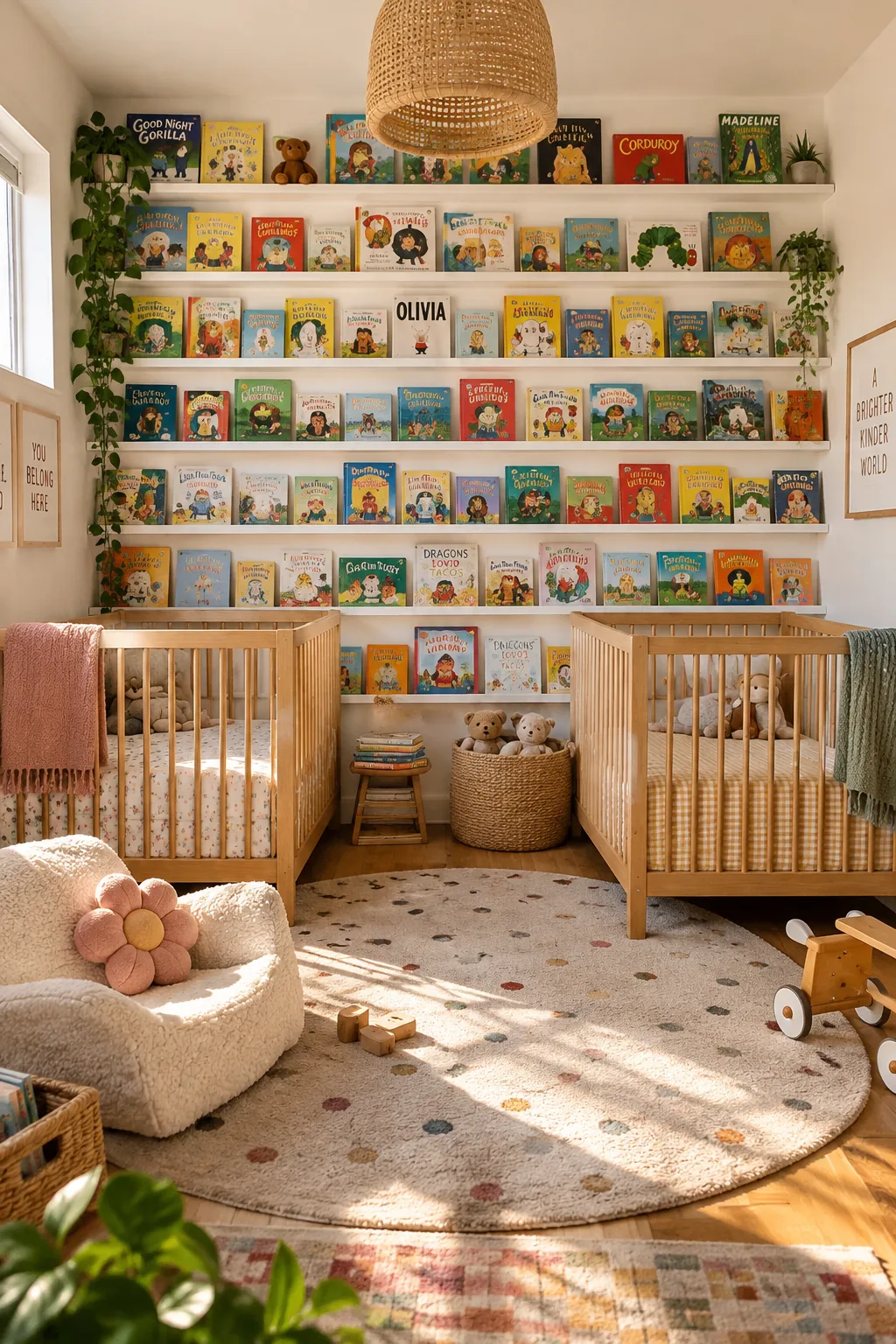
Bookshelves fill up twice as fast when friends and family start gifting baby books for both children. Installing picture ledge shelves from the floor all the way up to the ceiling utilizes wasted wall space and turns their library into a colorful focal point.
- Shallow wooden picture ledges
- Acrylic front-facing book racks
- Low baskets for heavy board books
12. Wall-Mounted Sconces
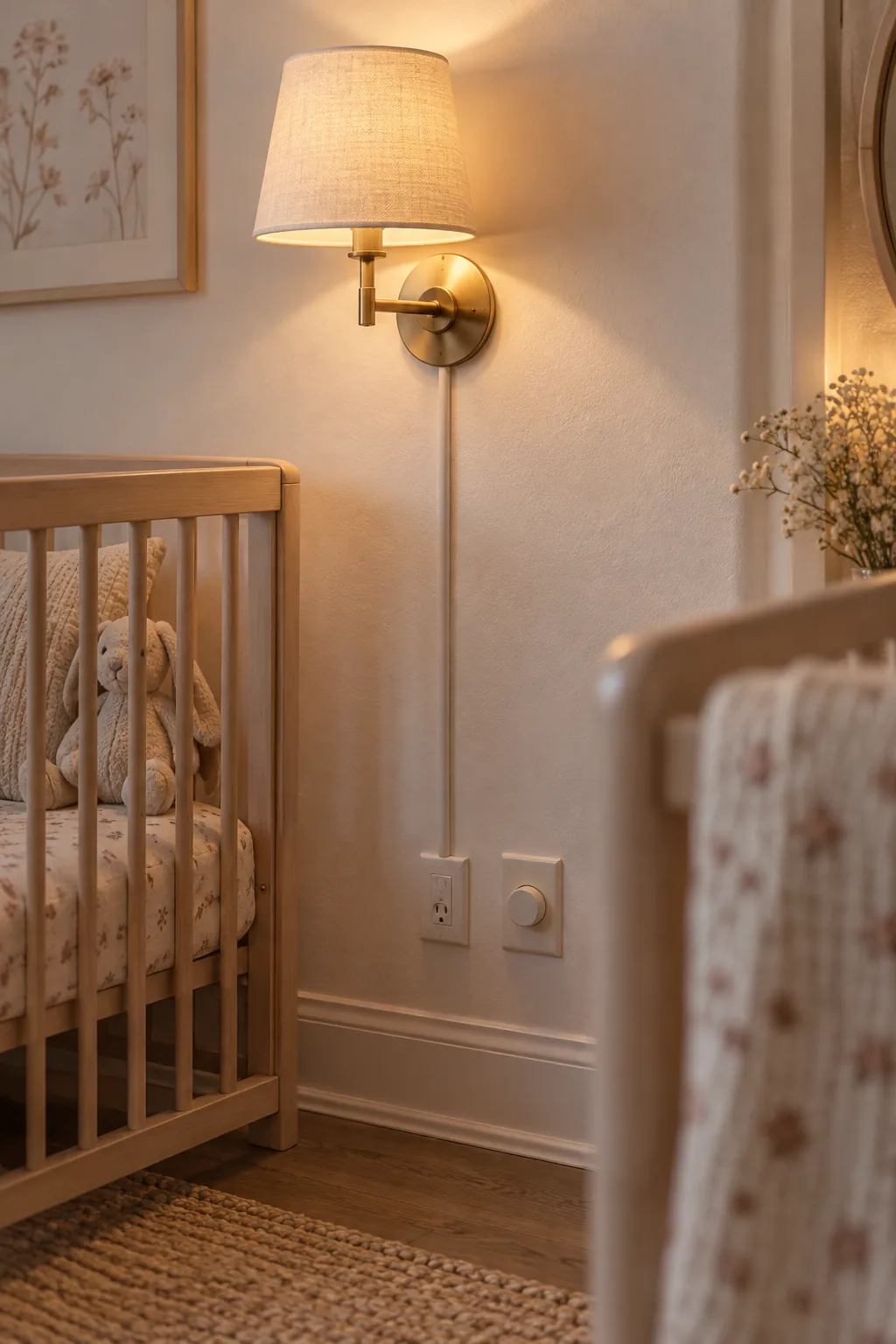
Keeping the floor clear is what makes wall-mounted lighting a superior choice for a shared nursery. Floor lamps are easily knocked over once two toddlers start crawling and wrestling on the rug.
Hardwired sconces or plug-in pendants with cord covers completely eliminate that tripping hazard.
Place them on dimmer switches so you can check on one baby without waking the other.
Why it works: Getting cords and bulky lamp bases off the floor makes the room significantly safer for mobile twins.
13. Lightweight Name Signs
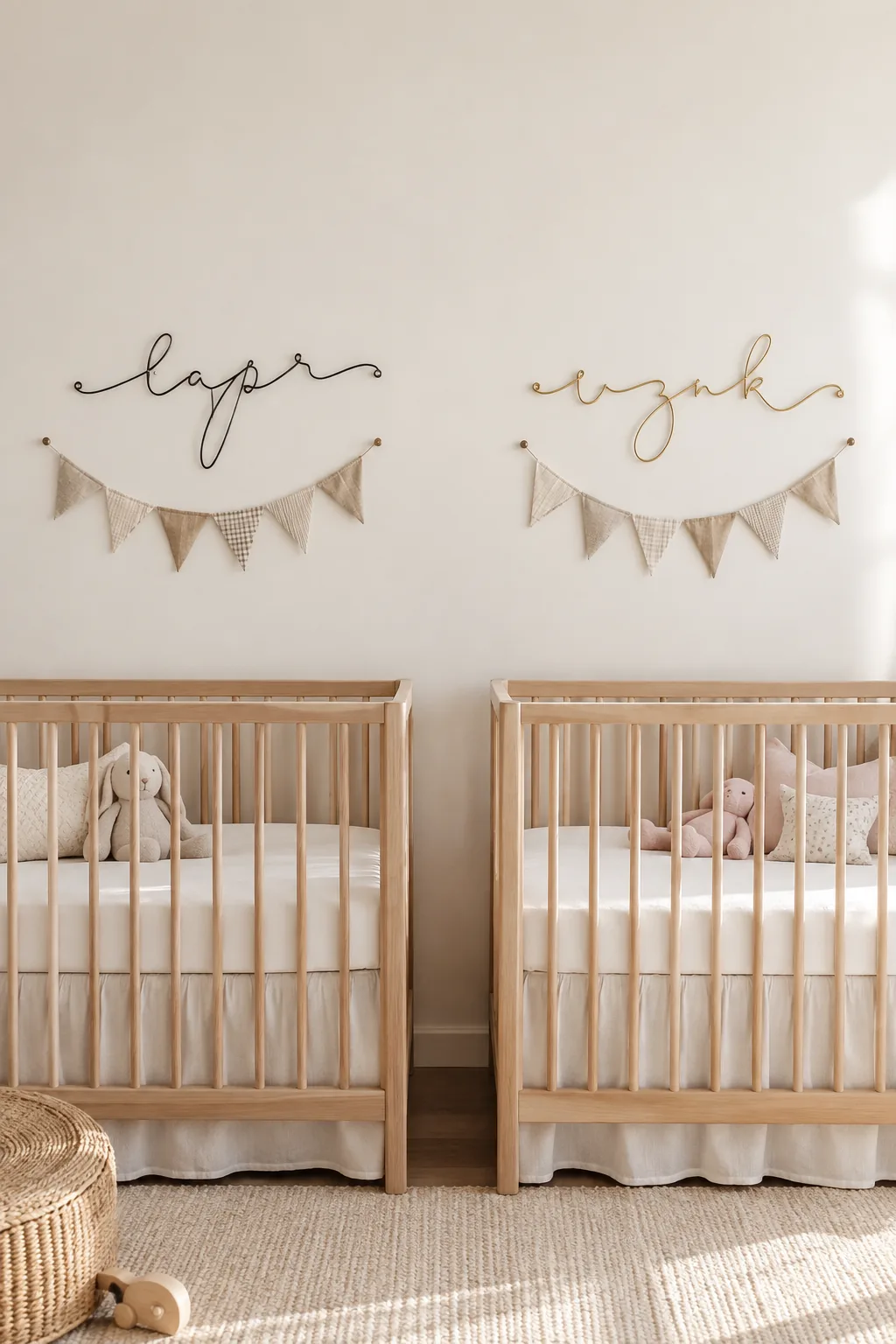
I love using personalized name signs to anchor the space above each crib.
Instead of massive wooden cutouts, opt for delicate wire lettering or soft fabric banners. These lightweight options are much safer to hang above a sleeping baby in case they ever fall. They clearly mark each baby's territory without dominating the room's design.