
Front Yard Xeriscape: The Zero-Mowing Hydrozone Layout Guide
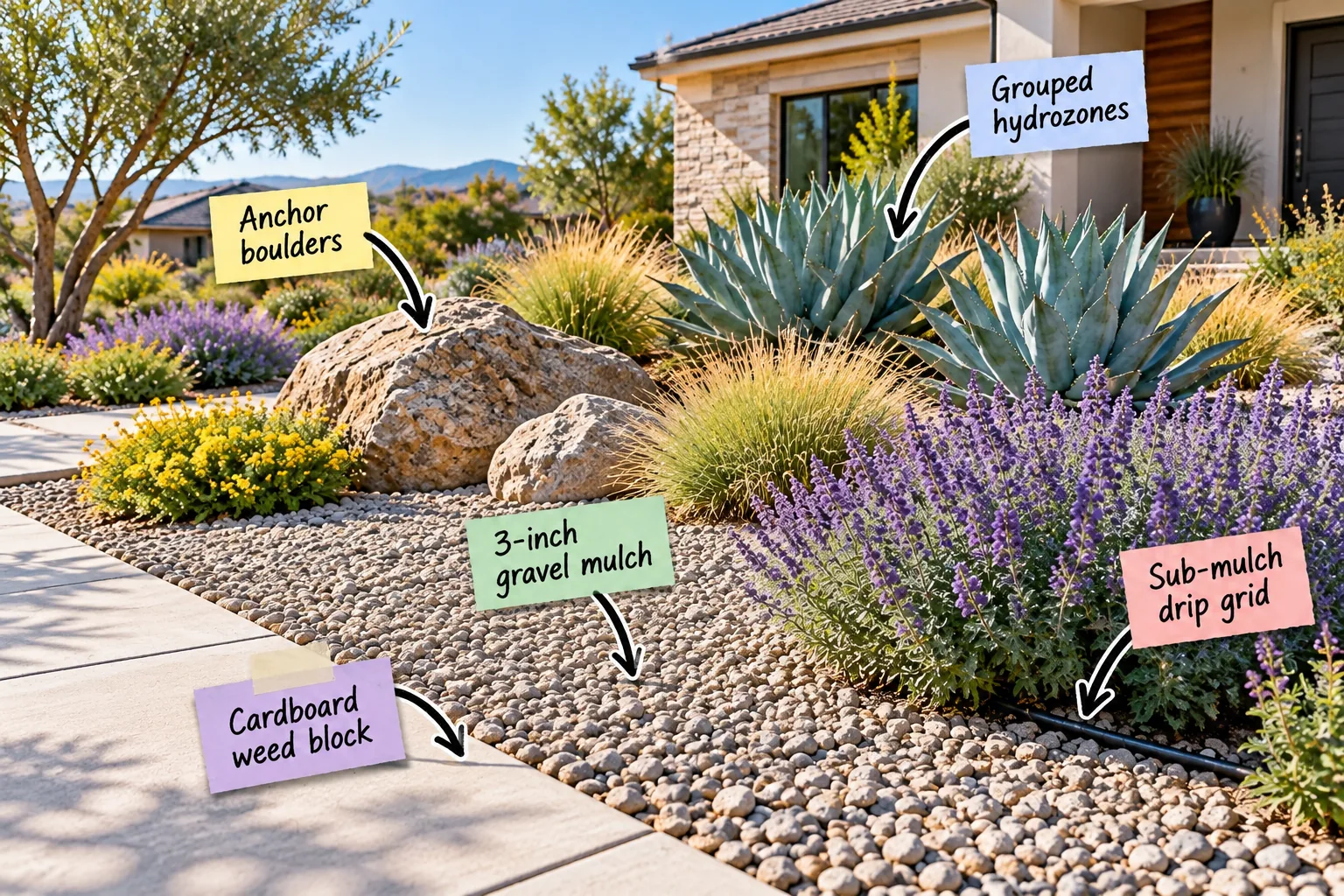
Ditch the lawnmower and use this complete Xeriscape Plant and Hydrozone Layout Grid to build a vibrant, drought-tolerant landscape. You will be able to map out your yard’s water zones and install a weed-free, low-maintenance gravel landscape today.
Smothering Grass With a Cardboard Weed Block
Here in Austin, I finally beat the invasive Bermuda grass in my front yard by laying down plain delivery boxes. Skip the plastic landscape fabric and use overlapping thick corrugated cardboard instead of plastic to block weeds.
Overlap the edges of this cardboard weed block by at least 6 to 8 inches to prevent aggressive weeds from finding the light.
Routing the Sub-Mulch Drip Grid
Lay down a sub-mulch drip grid to deliver water directly to the roots, spacing half-inch emitter tubing in a grid pattern 12 to 18 inches apart. Keeping these irrigation lines hidden requires securing them tightly against the cardboard layer before the heavy stone arrives.
Placing Anchor Boulders for Visual Depth
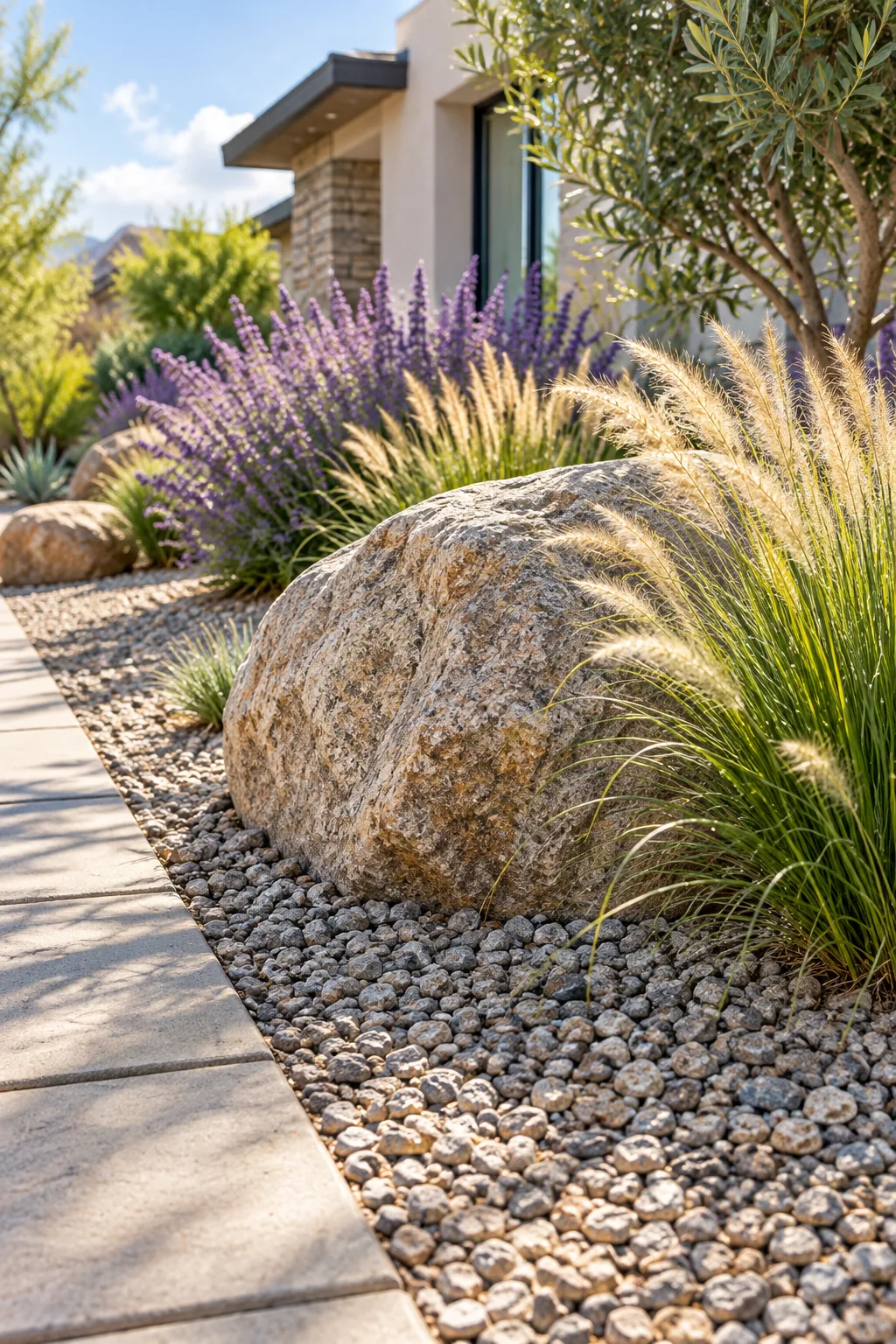
Large anchor boulders provide structural contrast against delicate ornamental grasses, but they need to look grounded in the landscape. Burying boulders one-third of their height creates natural-looking outcroppings rather than rocks that simply appear dropped on the surface.
Position these heavy stones before laying the drip lines to avoid crushing your delicate irrigation system. Grouping them in odd numbers creates a more organic, naturally occurring visual weight across the yard.
Designing With Grouped Hydrozones
A successful xeriscape relies on grouped hydrozones, which means clustering plants with identical watering needs on the exact same irrigation valve.
- Match water needs: Cluster plants with identical requirements on the same valve.
- Protect desert natives: Keep strict arid species far away from thirsty ornamentals.
This targeted strategy prevents overwatering native desert plants while keeping thirstier ornamentals perfectly hydrated throughout the hottest summer months.
Your Xeriscape Plant and Hydrozone Layout Grid
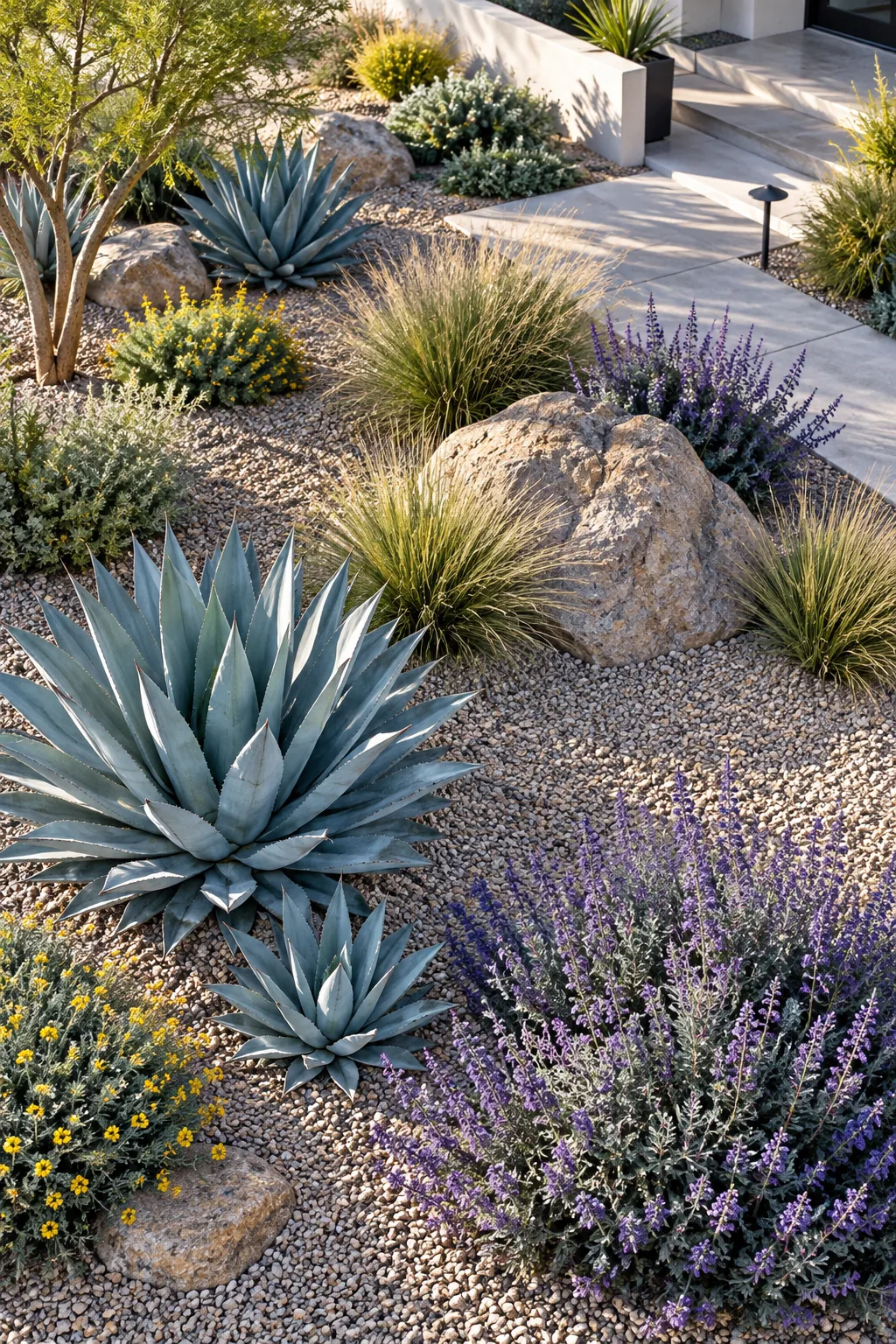
Use our Xeriscape Plant & Hydrozone Layout Grid to map the yard into three distinct watering zones based on proximity to the house.
Designating specific areas for moderate-water plants, transition species, and strict arid varieties ensures every plant receives exactly the moisture it requires.
| Hydrozone | Yard Location | Plant Types |
|---|---|---|
| Zone 1 | Shaded porch | Moderate-water ornamentals |
| Zone 2 | Mid-yard | Transition species |
| Zone 3 | Hot street edge | Strict arid varieties |
Selecting Vibrant Drought-Tolerant Plants
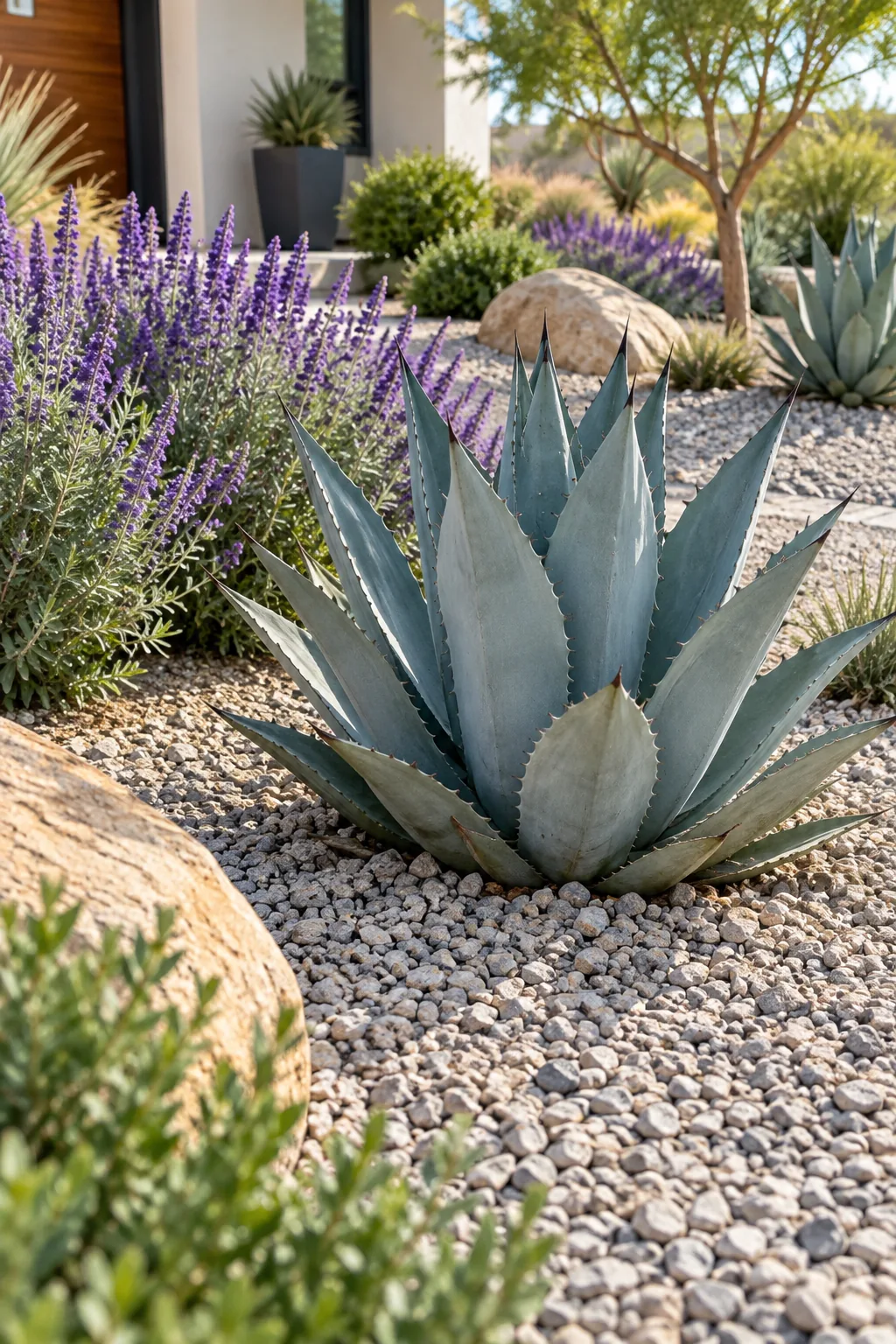
Fill your mapped zones with structural blue agaves and blooming purple sage, spacing each plant 2 to 3 feet apart based on mature width. Once positioned, you are ready for spreading a 3-inch layer of crushed stone to insulate roots and lock the barrier.
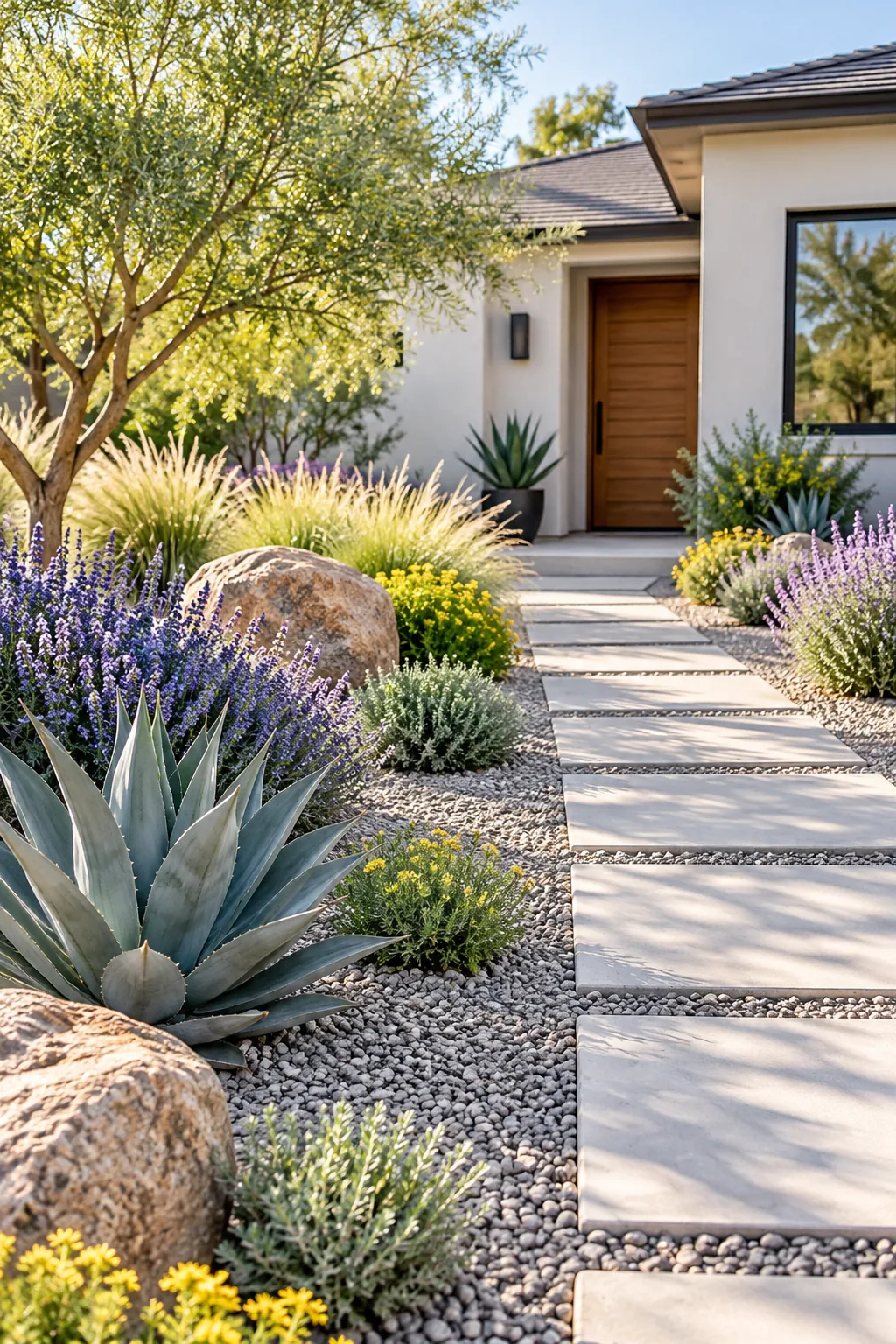
Keeping the stone layer consistently deep prevents the harsh sun from degrading the cardboard underneath. This dense coverage also regulates soil temperature, protecting delicate new root systems during the intense summer heat.
Locking Moisture In With 3-Inch Gravel Mulch
Finish the foundation with a 3-inch gravel mulch layer to insulate roots and securely hold the cardboard barrier in place.
- 3/8-inch crushed stone: Jagged edges lock together and stay firmly put.
- Smooth river rock: Tends to slide and expose the weed block beneath.
Washing the crushed stone before spreading it removes fine dust, ensuring your new landscape looks vibrant and clean from the very first day.
3 Xeriscape Styles for Your Front Yard
Explore how different materials and plant palettes can completely change the mood of a water-wise landscape.
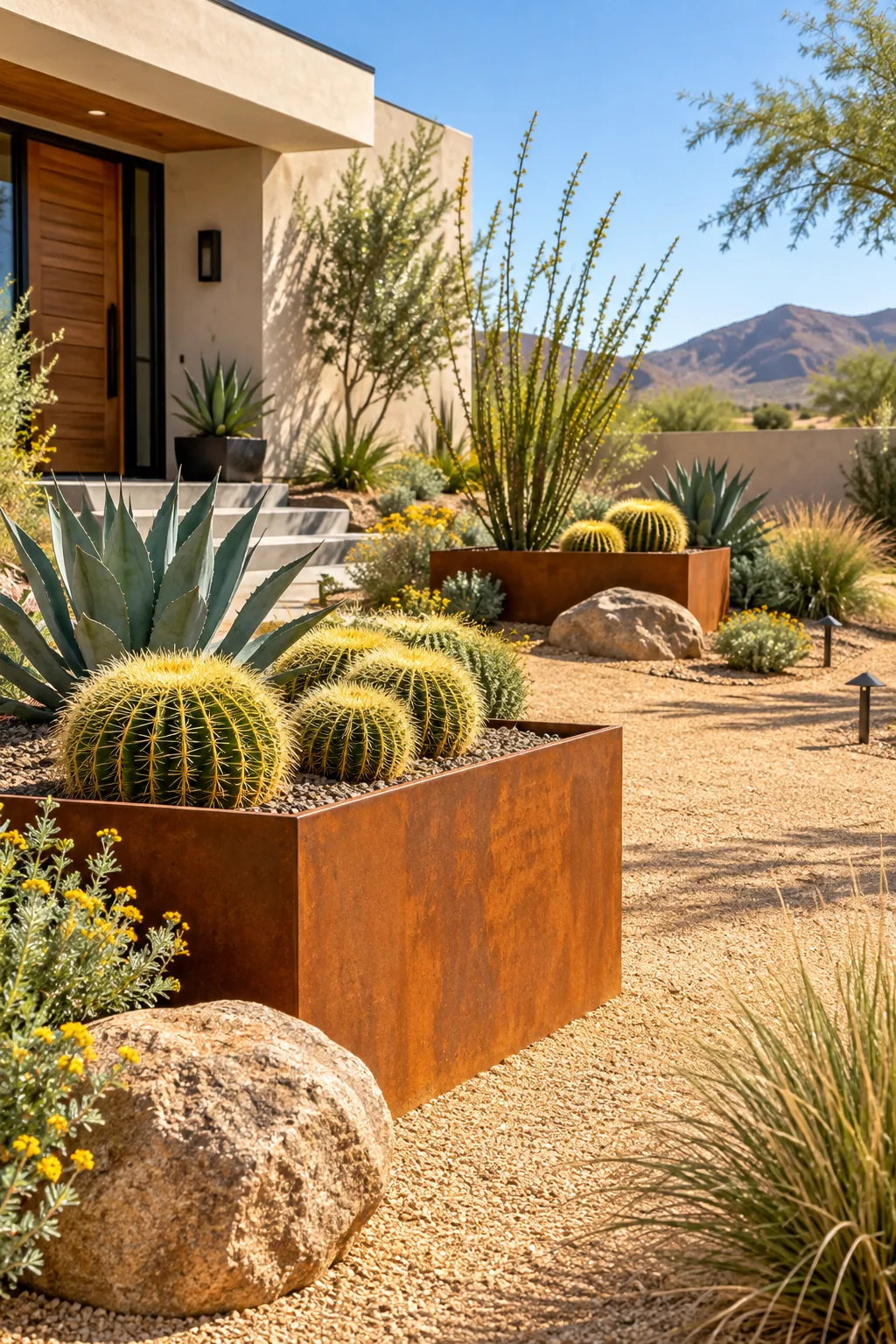
Sleek Desert Modern: Warm corten steel edging and golden barrel cacti pop beautifully against a smooth base of tan decomposed granite.
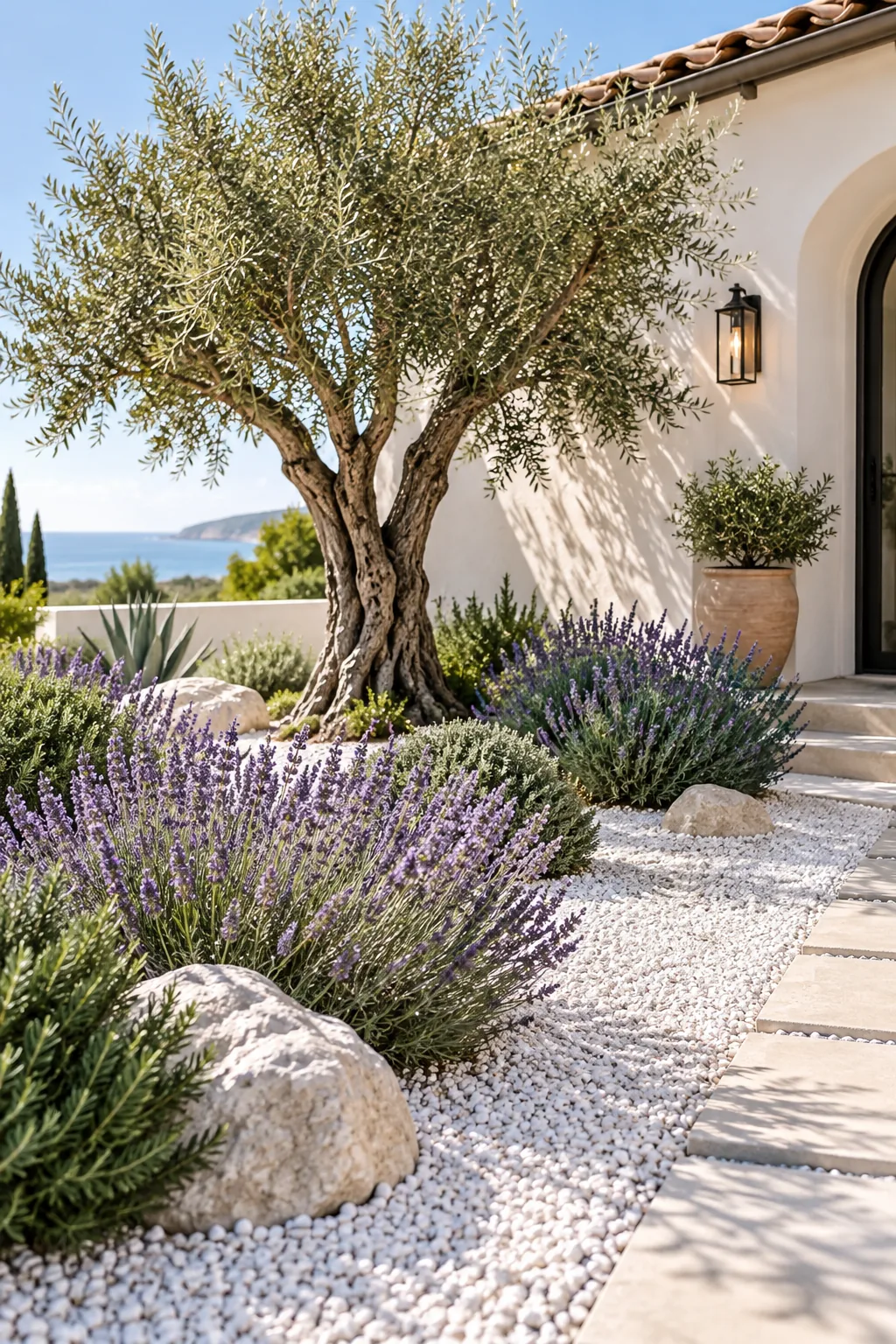
Elegant Mediterranean Coastal: Bright white gravel reflects the sun while deep purple lavender and a sculptural olive tree add soft, fragrant texture.
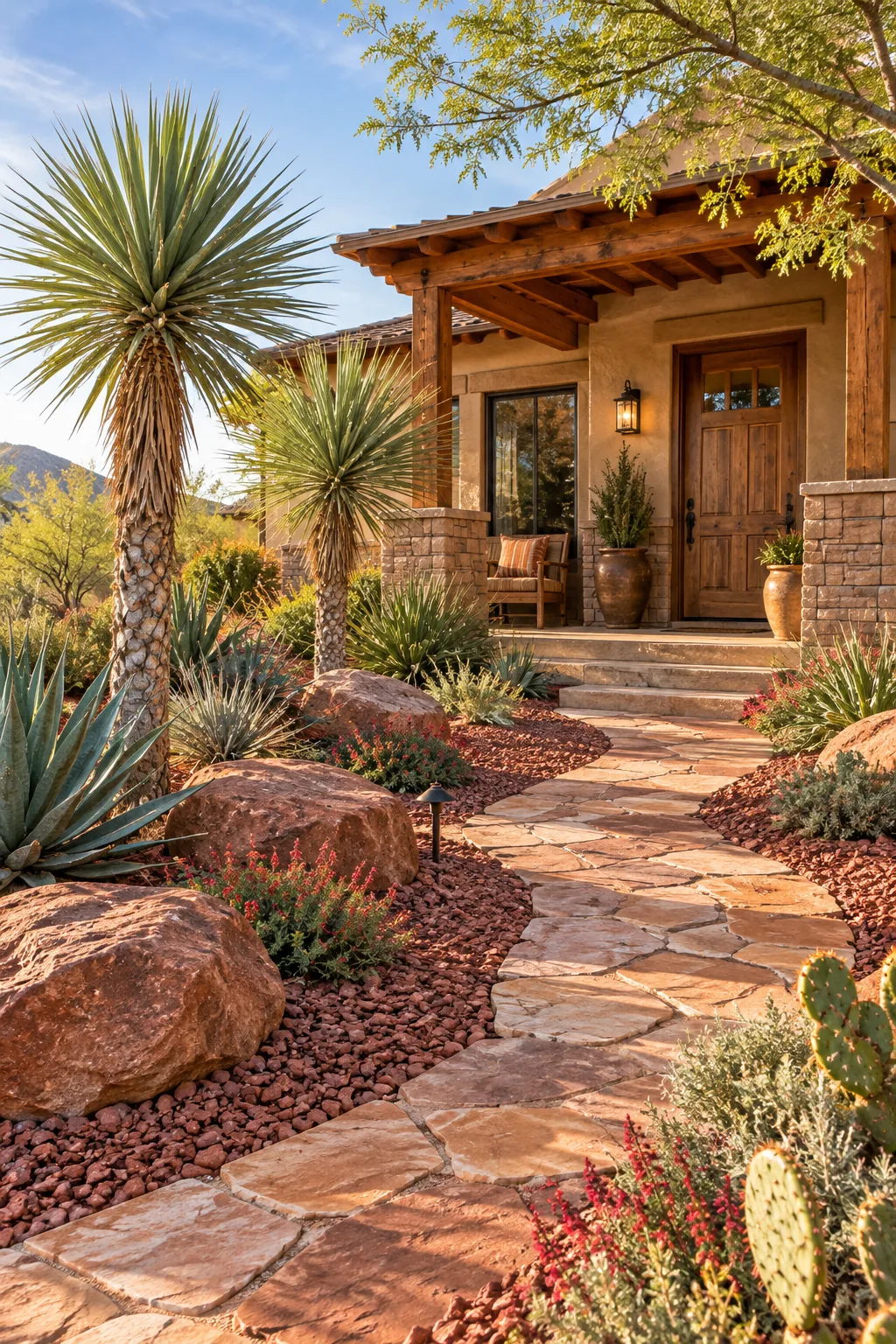
Welcoming Southwestern Rustic: Rich red rock mulch and irregular natural flagstones create a grounded, earthy foundation for tall architectural yuccas.
Enjoying Your Zero-Mowing Weekend
I used to spend every Saturday morning wrestling with a mower, but the low-maintenance reality of a fully established gravel and cardboard xeriscape stops nearly all weed seeds from germinating. This design reclaims your weekends entirely, leaving you with nothing more than a quick walk-through.
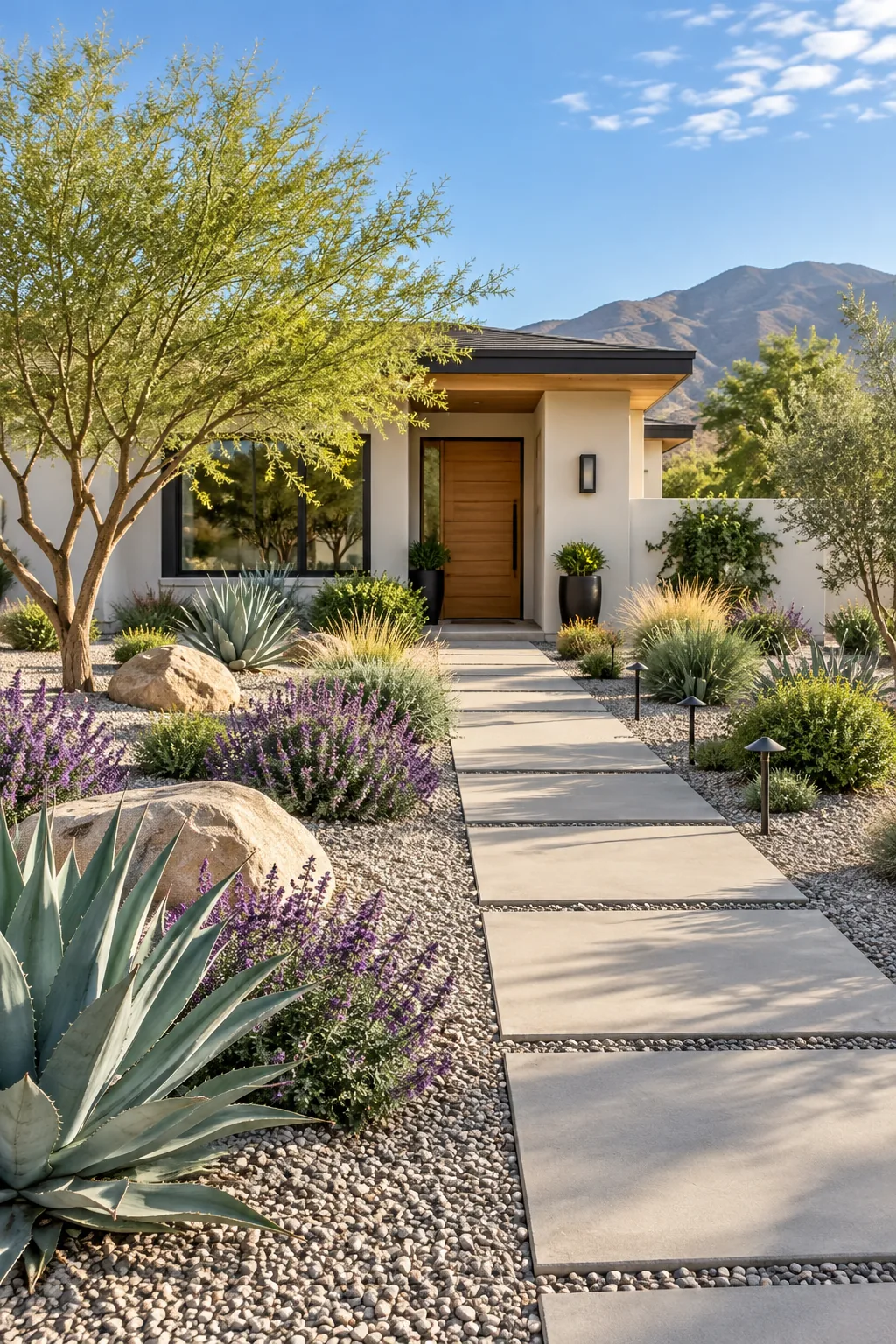
While you will never need a lawnmower again, a few simple seasonal checks will keep your drought-tolerant landscape looking pristine year-round.