
13+ Clever Clematis Trellis Ideas for Your Yard
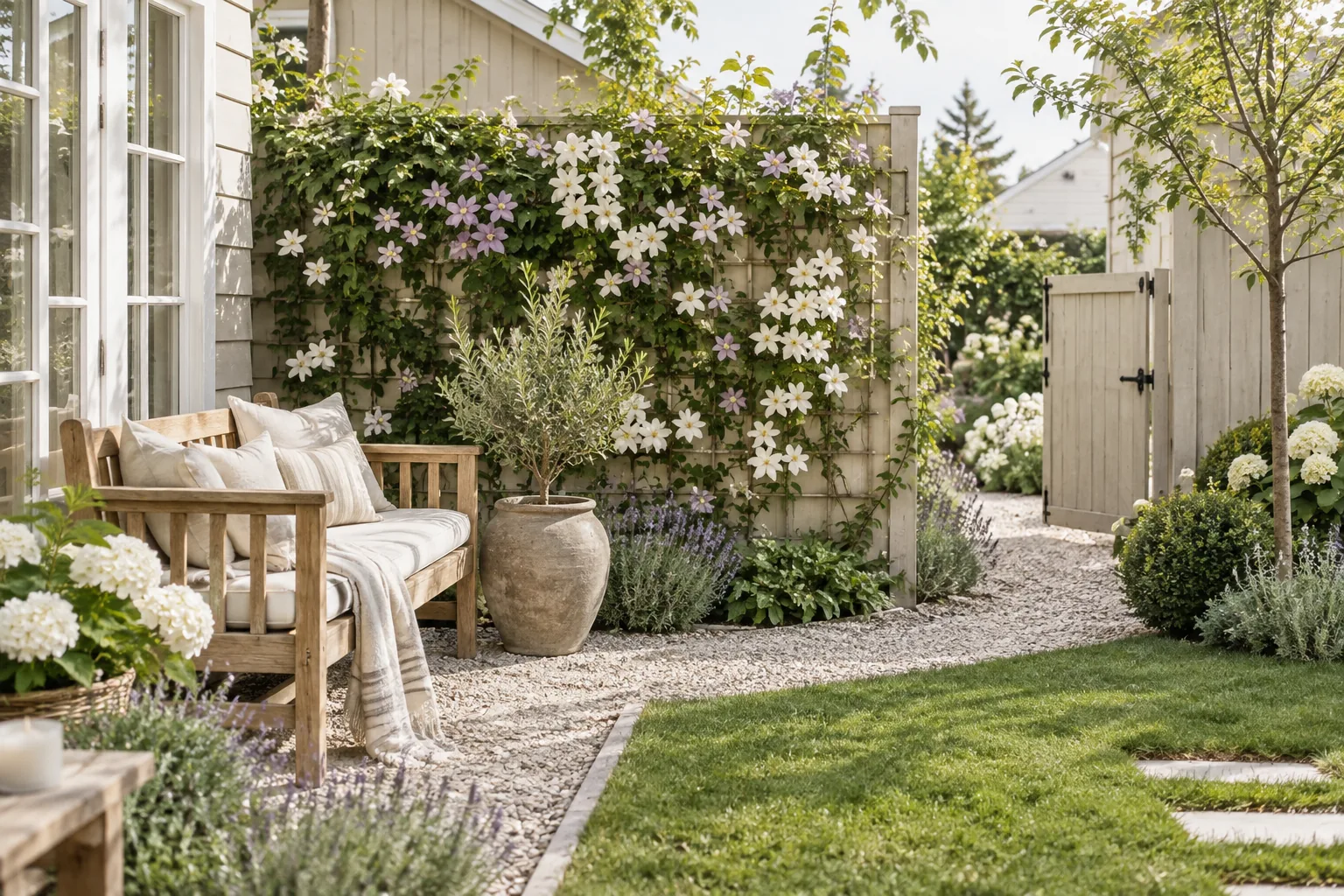
Clematis vines grow incredibly fast, so they need a sturdy structure to keep them from turning into a tangled mess on the ground. I put together my favorite ways to support these heavy climbers using materials you can easily grab at the hardware store.
1. Classic Cedar Lattice
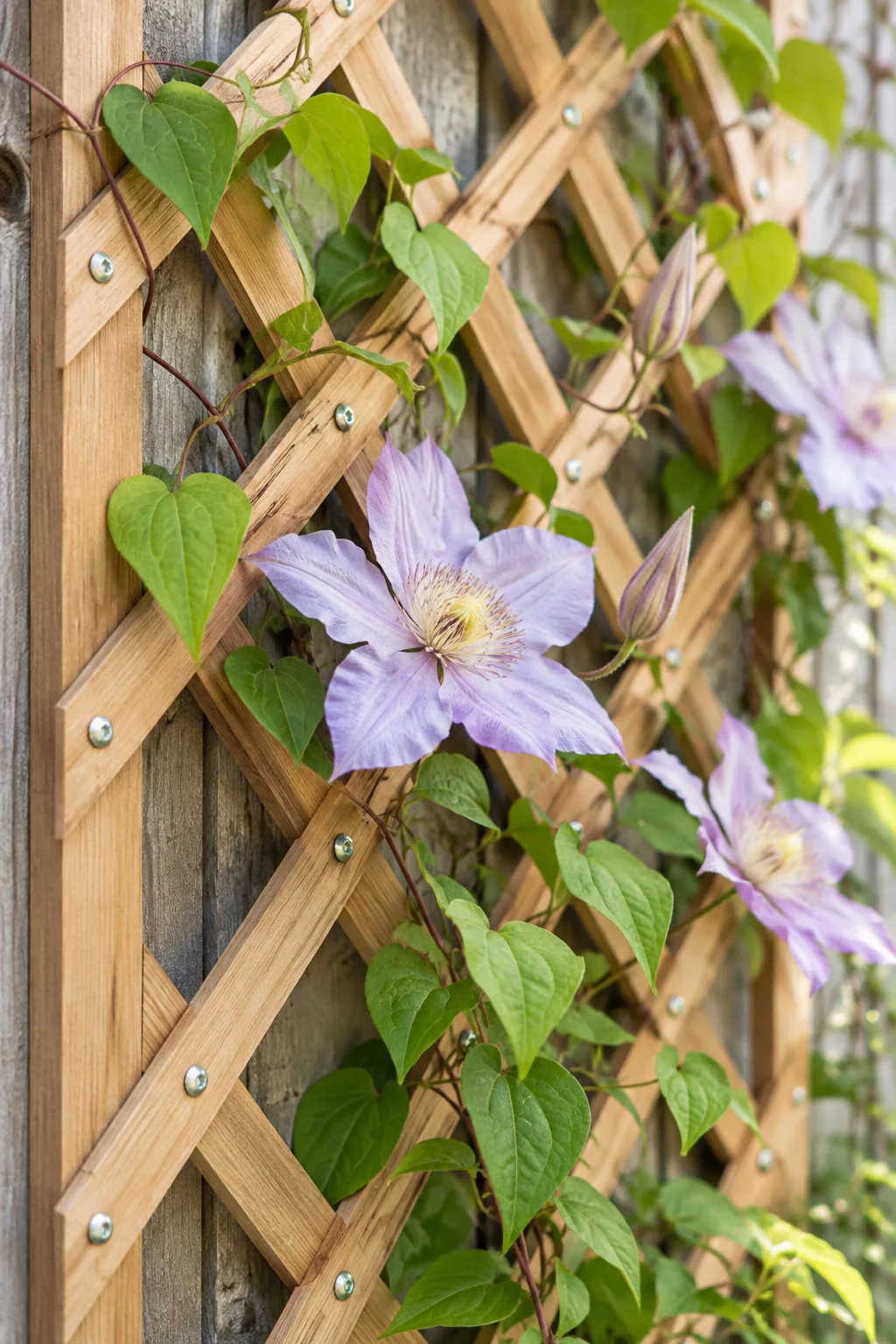
A standard cedar lattice panel costs under forty bucks and covers a massive amount of fence space.
You can mount it directly to your existing fence posts using heavy-duty exterior screws. The grid pattern gives the delicate tendrils hundreds of grabbing points as the plant shoots upward. It hides ugly chain link beautifully while letting air circulate behind the leaves.
Why it works: Why it works: The tight grid spacing perfectly matches the short reach of a clematis leaf stem.
2. Repurposed Wooden Ladder
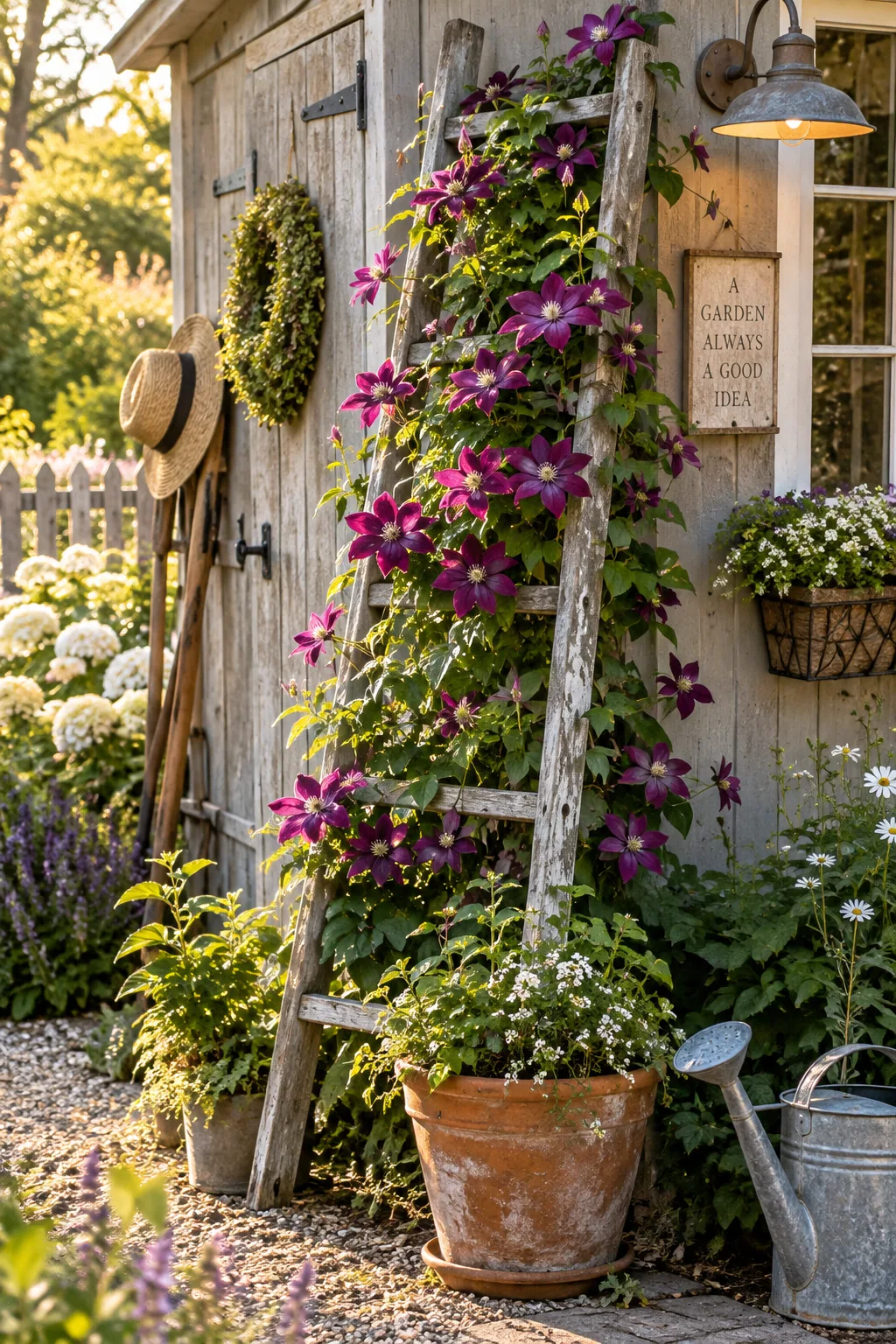
Lean a repurposed wooden ladder against your shed wall for instant rustic charm.
Old painters' ladders are usually made of sturdy pine that weathers to a beautiful gray over time. Just secure the top rung to the siding with a simple metal bracket so heavy winds won't knock it down. The wide rungs give the vines plenty of room to spread out horizontally.
3. Invisible Wire Mesh
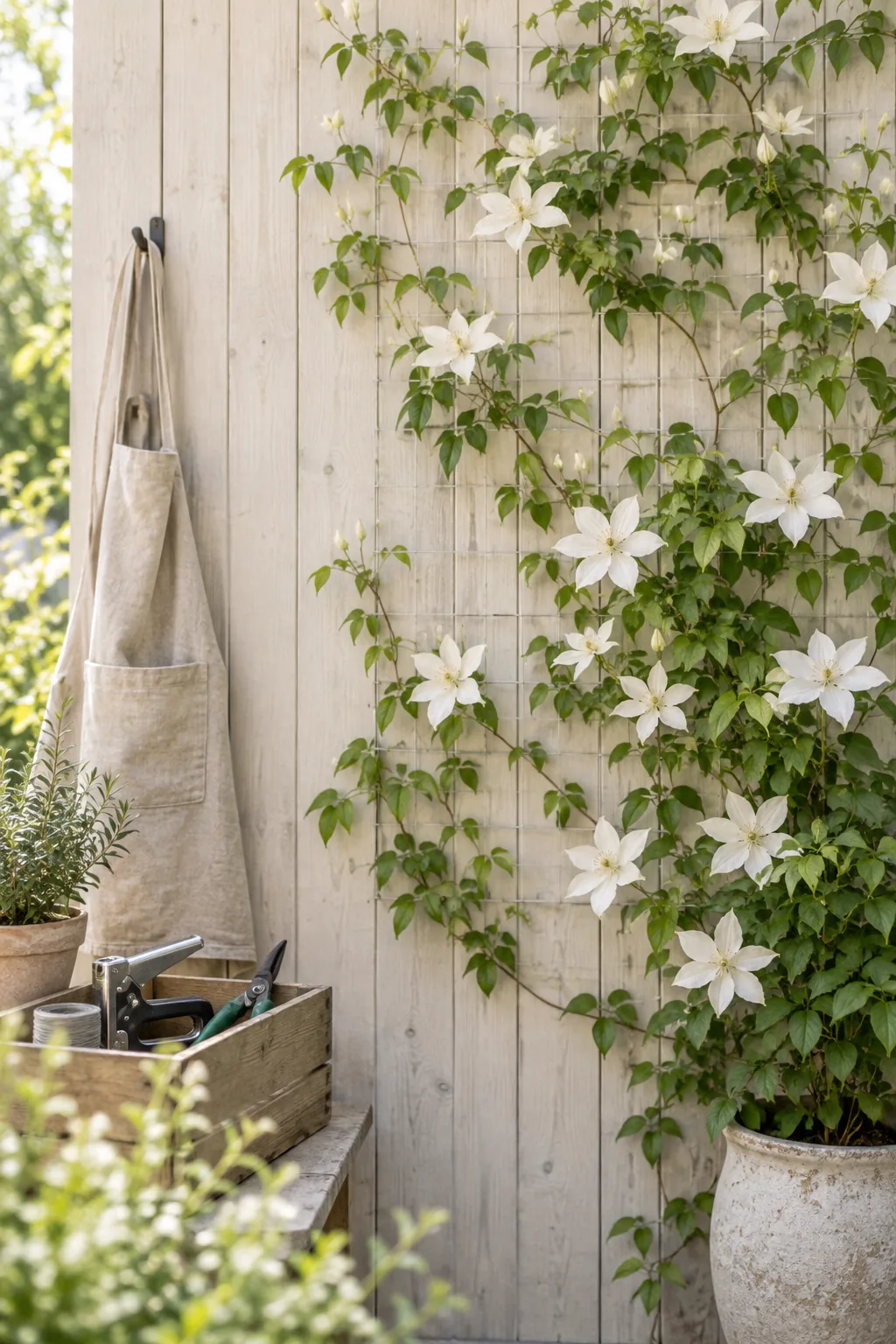
I always keep a roll of galvanized wire mesh in my shed because it solves almost any garden support problem. You can staple it directly to a blank wooden wall to create an invisible support system for your climbers. To get this look, you just need a few basic supplies.
- Heavy-duty staple gun
- Wire snips
- 14-gauge welded wire fencing
4. Custom Copper Pipes
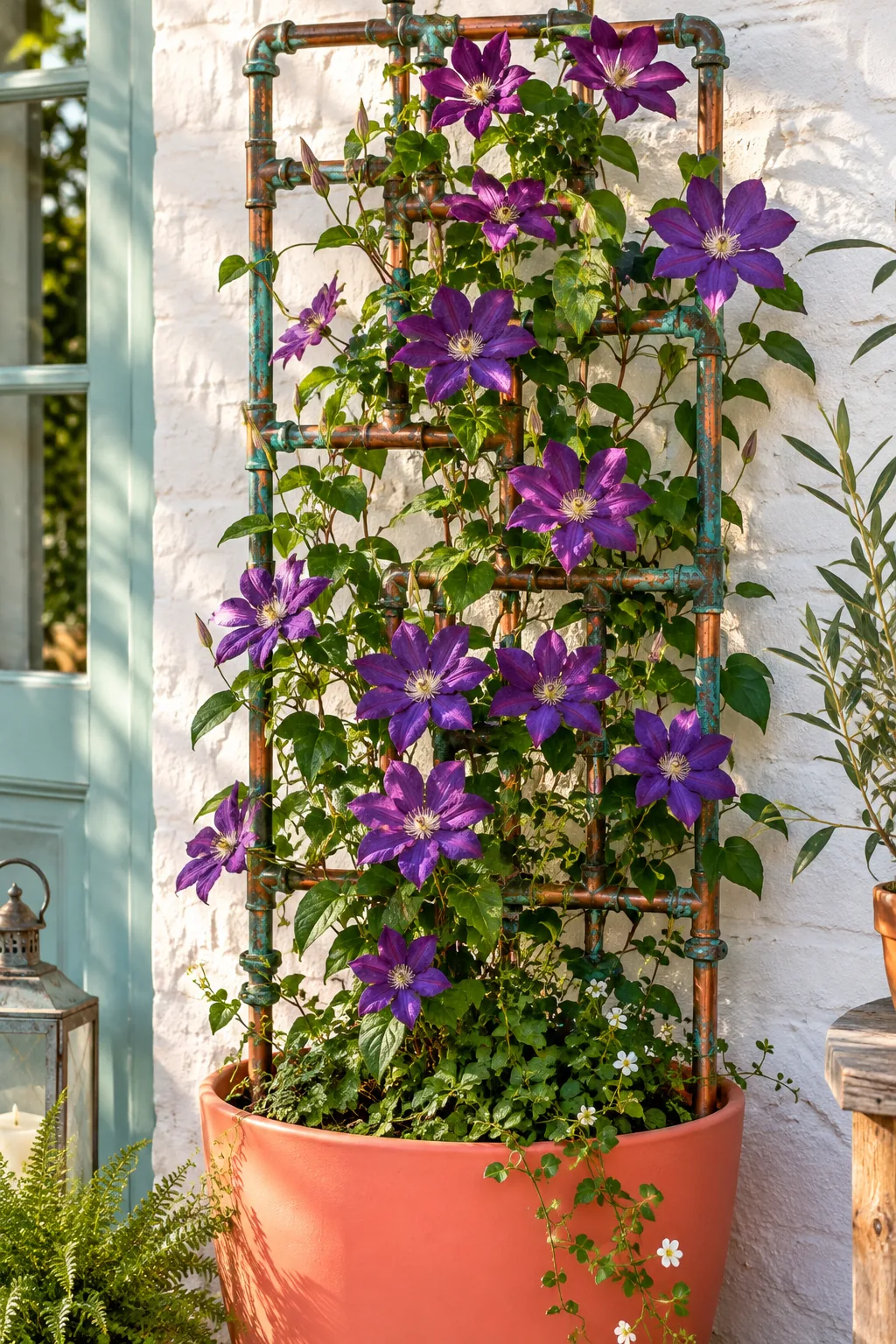
Copper pipes oxidize into a stunning green patina that looks incredible next to purple clematis blooms. You can solder a custom copper trellis using standard plumbing pipes and elbow joints from the hardware store. Push the bottom legs at least a foot into the soil to keep it stable.
It costs a bit more upfront but will literally last forever in your garden.
5. Woven Willow Obelisk
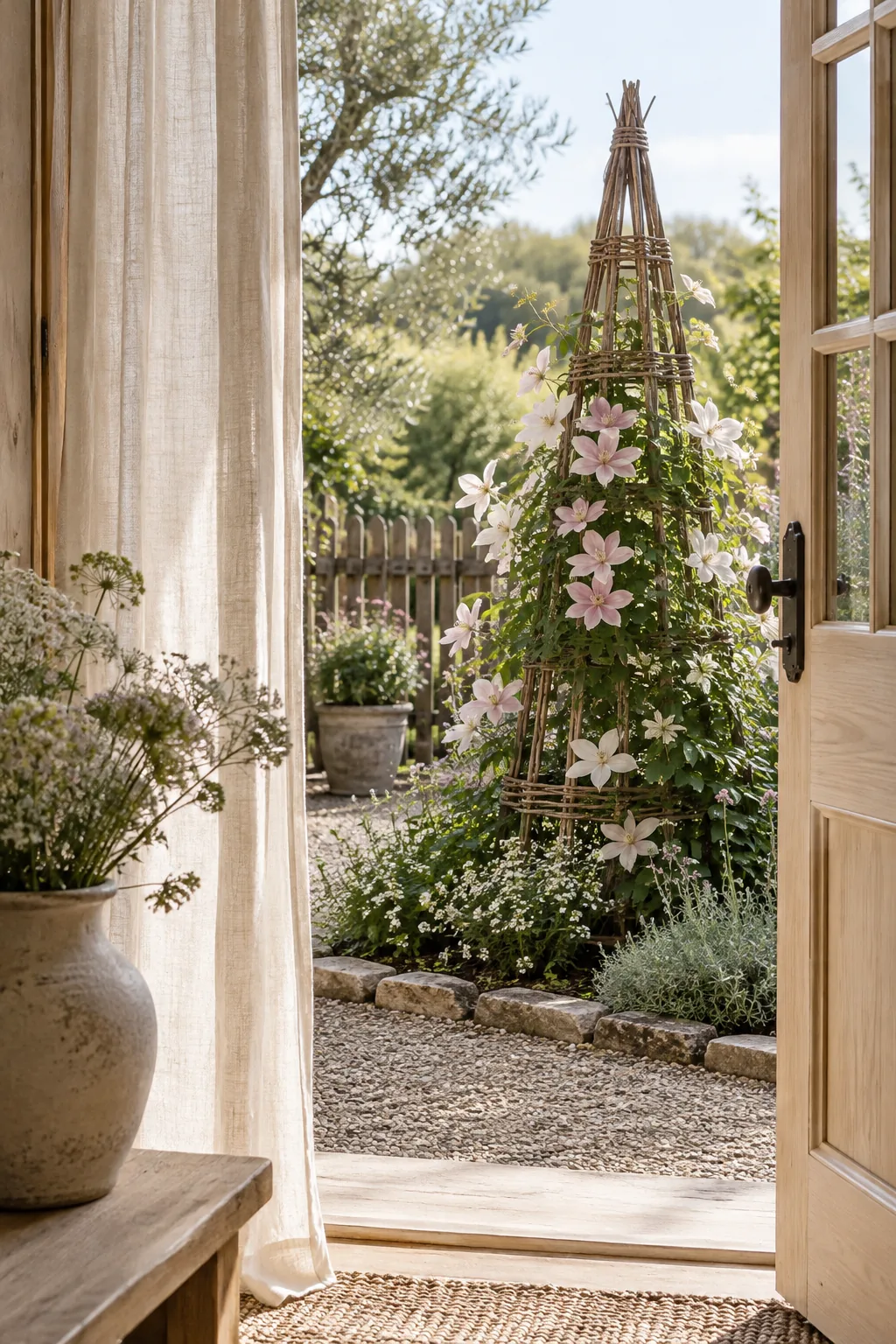
A classic English cottage garden vibe is easy to achieve with a simple woven willow obelisk.
These natural structures look beautiful even in winter when the vines die back. You can weave one yourself using soaked branches or buy them pre-made at local nurseries.
Place them right in the middle of your flower beds to add instant vertical height.
6. Quick Bamboo Teepee
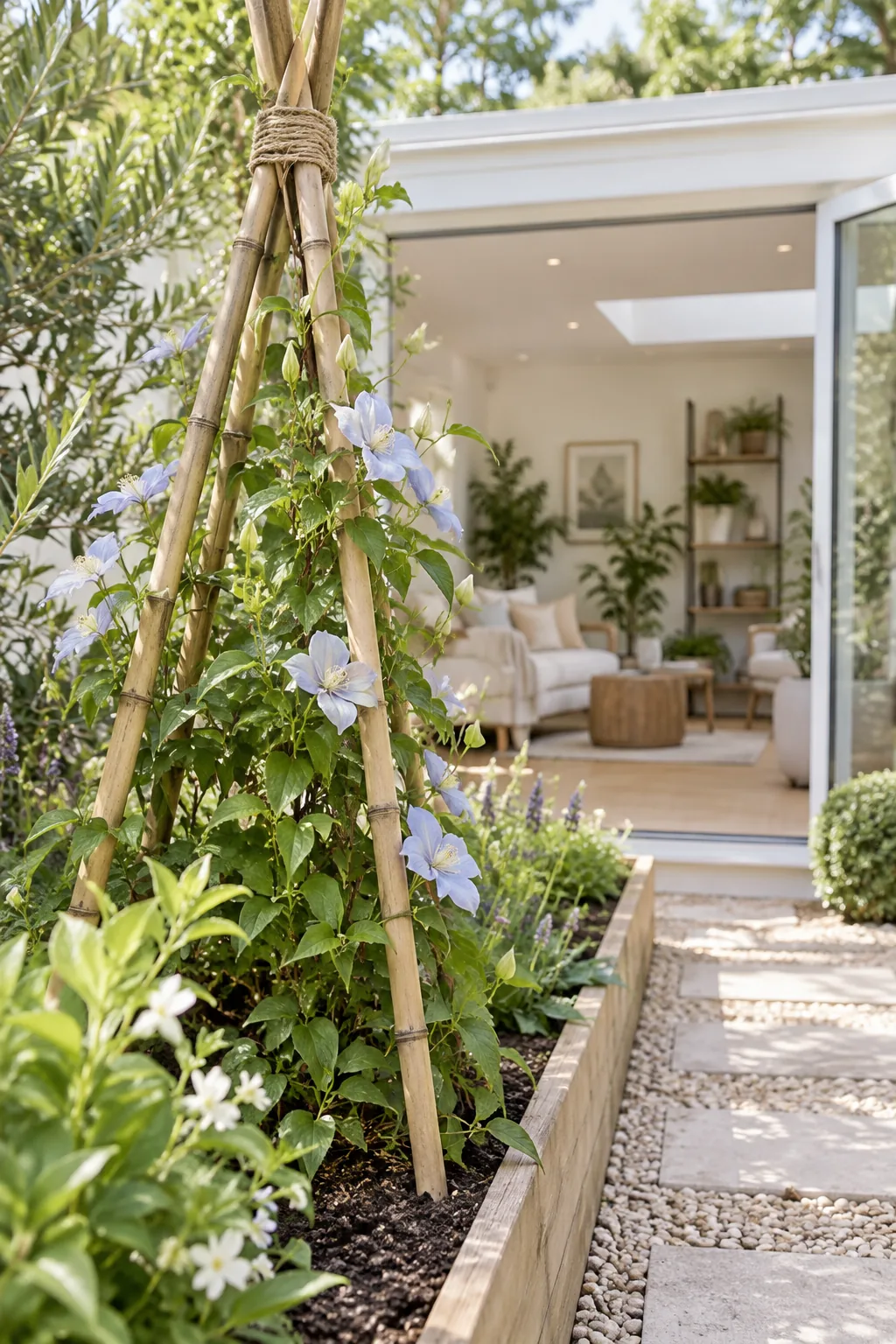
Three bamboo poles lashed together at the top create the cheapest, fastest teepee structure you can make. The rough texture of the bamboo gives the clematis vines exactly the kind of friction they need to climb without slipping down.
7. Modern Steel Cables
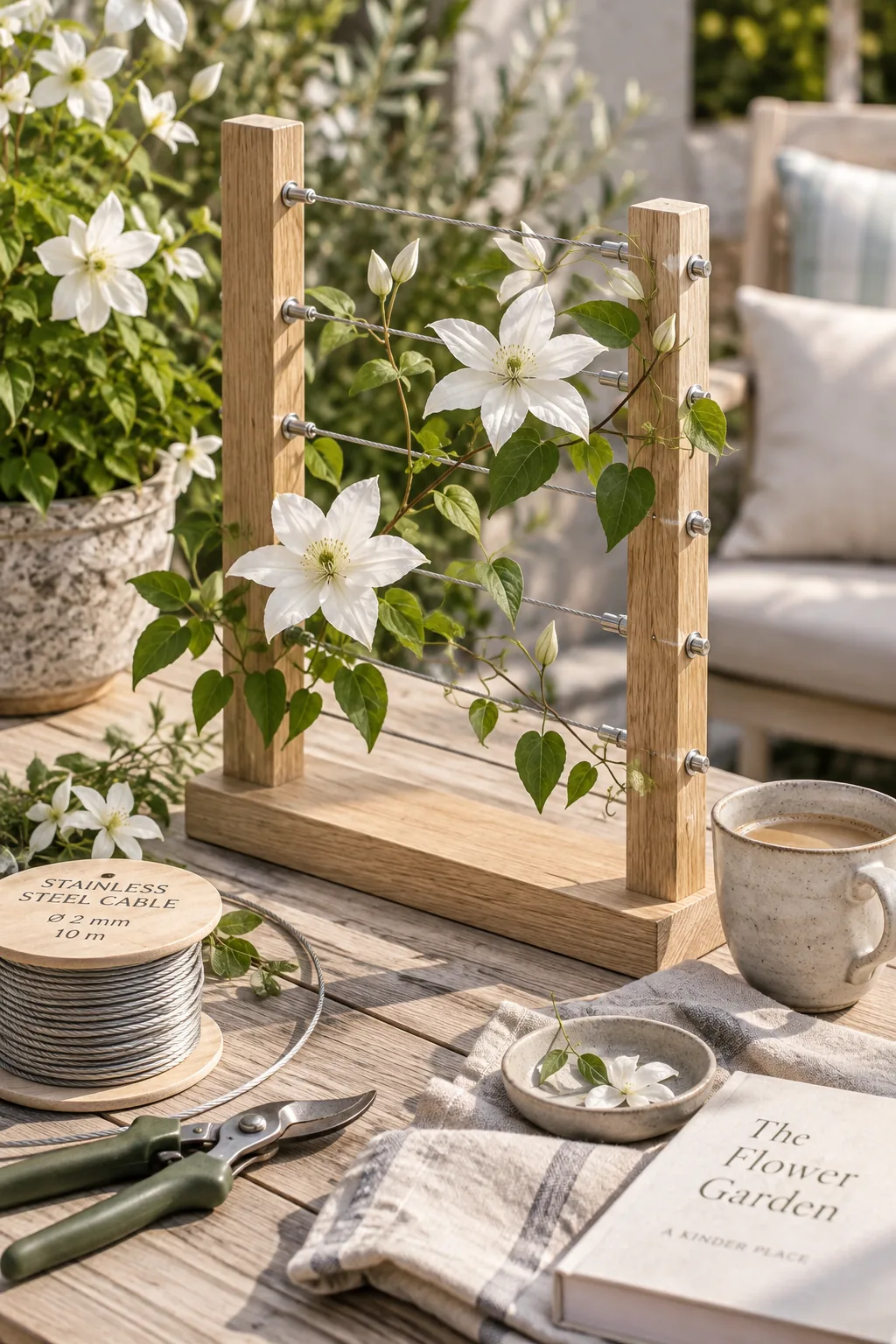
The tension of tightly strung stainless steel cables prevents heavy mature vines from sagging in the middle of summer. Running horizontal wires between two heavy wooden posts creates a sleek, modern look that doesn't distract from the actual flowers.
8. Vintage Iron Gate
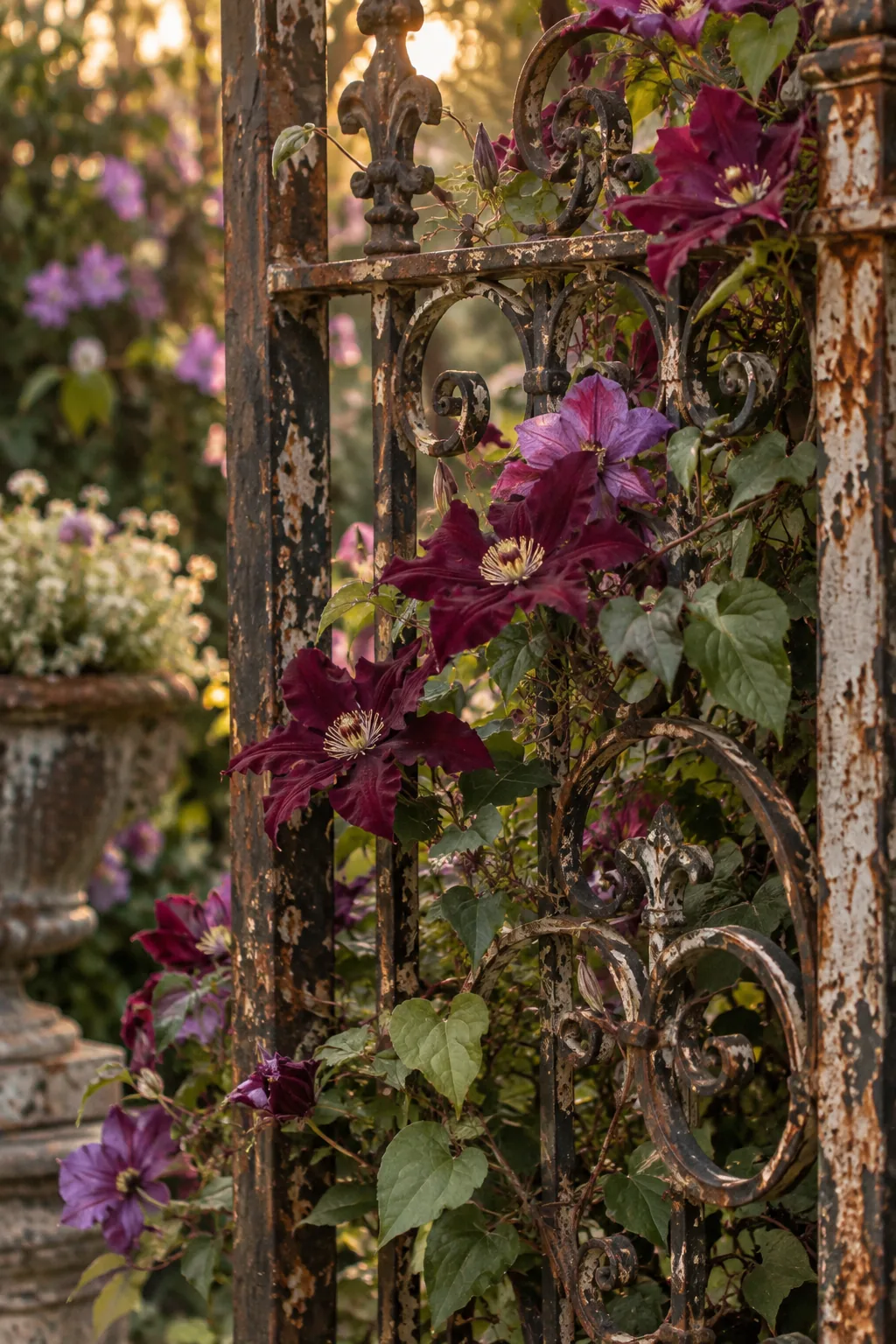
Old iron gates often end up at architectural salvage yards for surprisingly cheap prices.
Sinking a vintage wrought iron gate into your garden bed creates a massive, permanent trellis that won't rot. The intricate scrollwork provides endless pathways for the vines to weave through.
You can leave the rusty patina as is or hit it with some matte black spray paint.
9. DIY Wood Grid
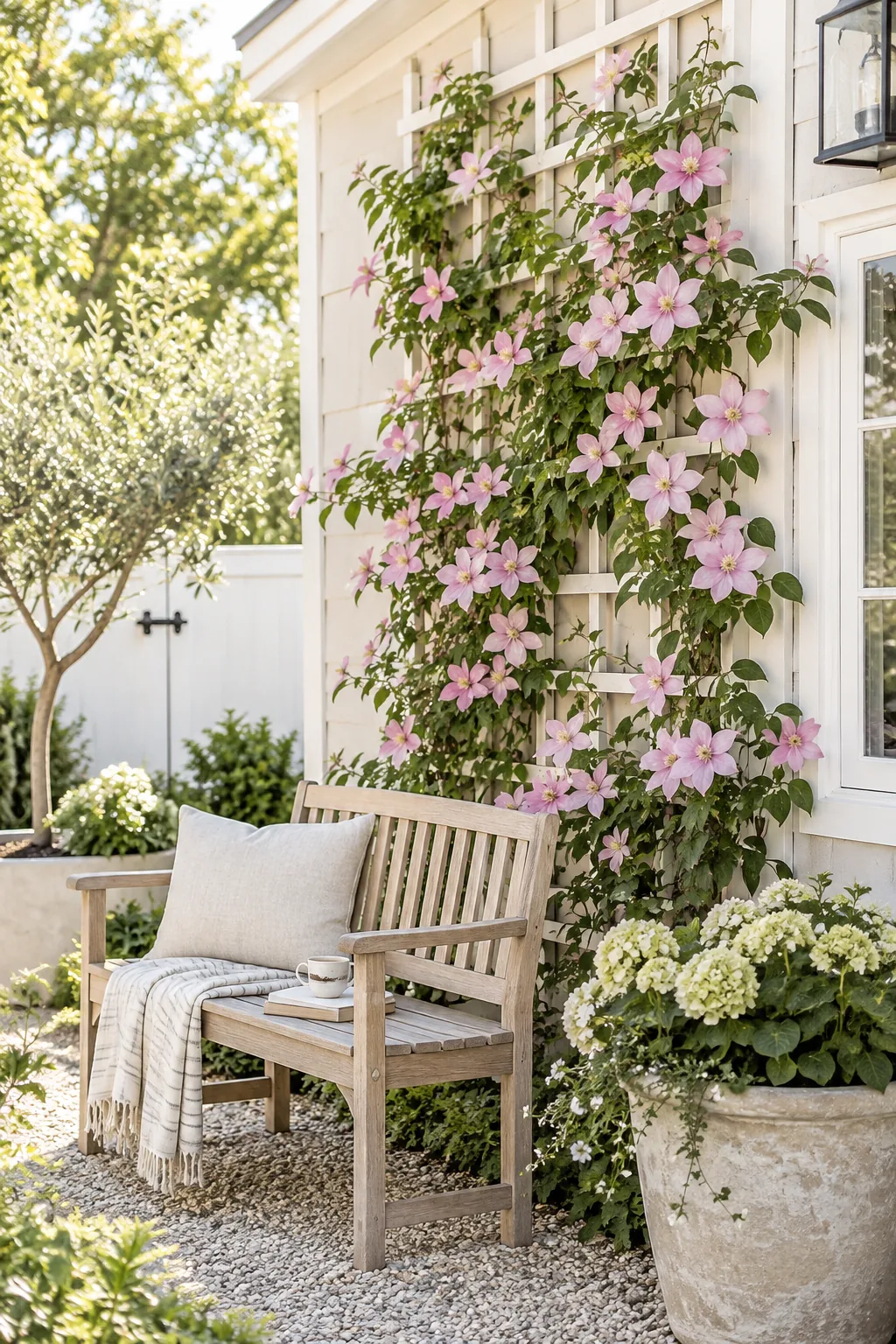
My absolute favorite weekend project is building a simple wooden grid out of cheap furring strips. You just nail the strips together in a square pattern and paint them to match your house trim.
Why it works: Why it works: The raw wood absorbs paint perfectly and provides a slightly rough surface for the tendrils to grip.
10. Chain Link Disguise
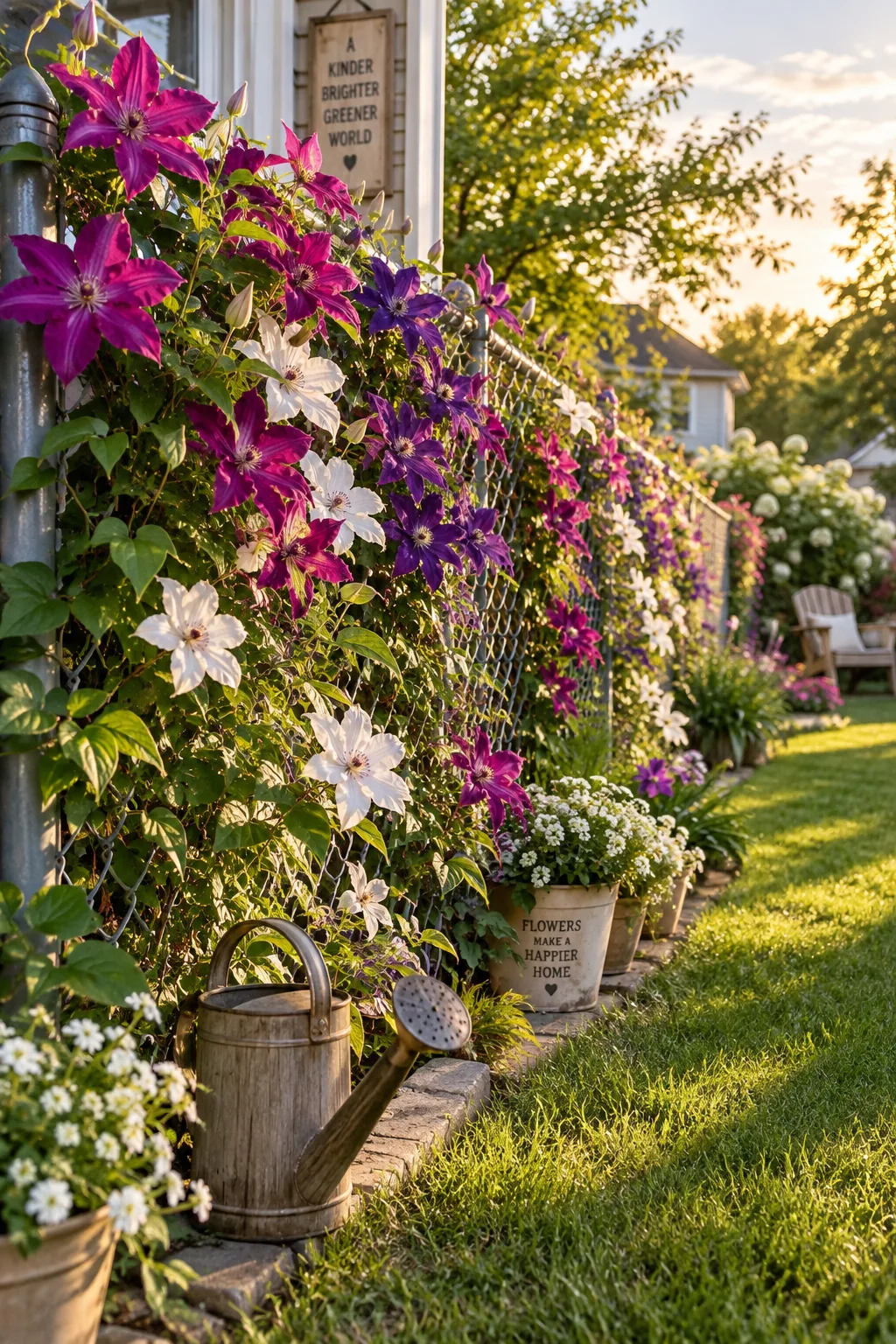
Chain link fences are an eyesore, but they are structurally perfect for supporting heavy plants. Planting a fast-growing clematis directly at the base turns that ugly metal barrier into a living floral wall. You don't even need to tie the plant up because it will naturally find the metal links.
Just remember to clear the dead vines out of the links every spring before the new growth starts.
Why it works: Why it works: The diamond pattern of the chain link offers continuous support at every possible angle.
11. Pergola Corner Posts
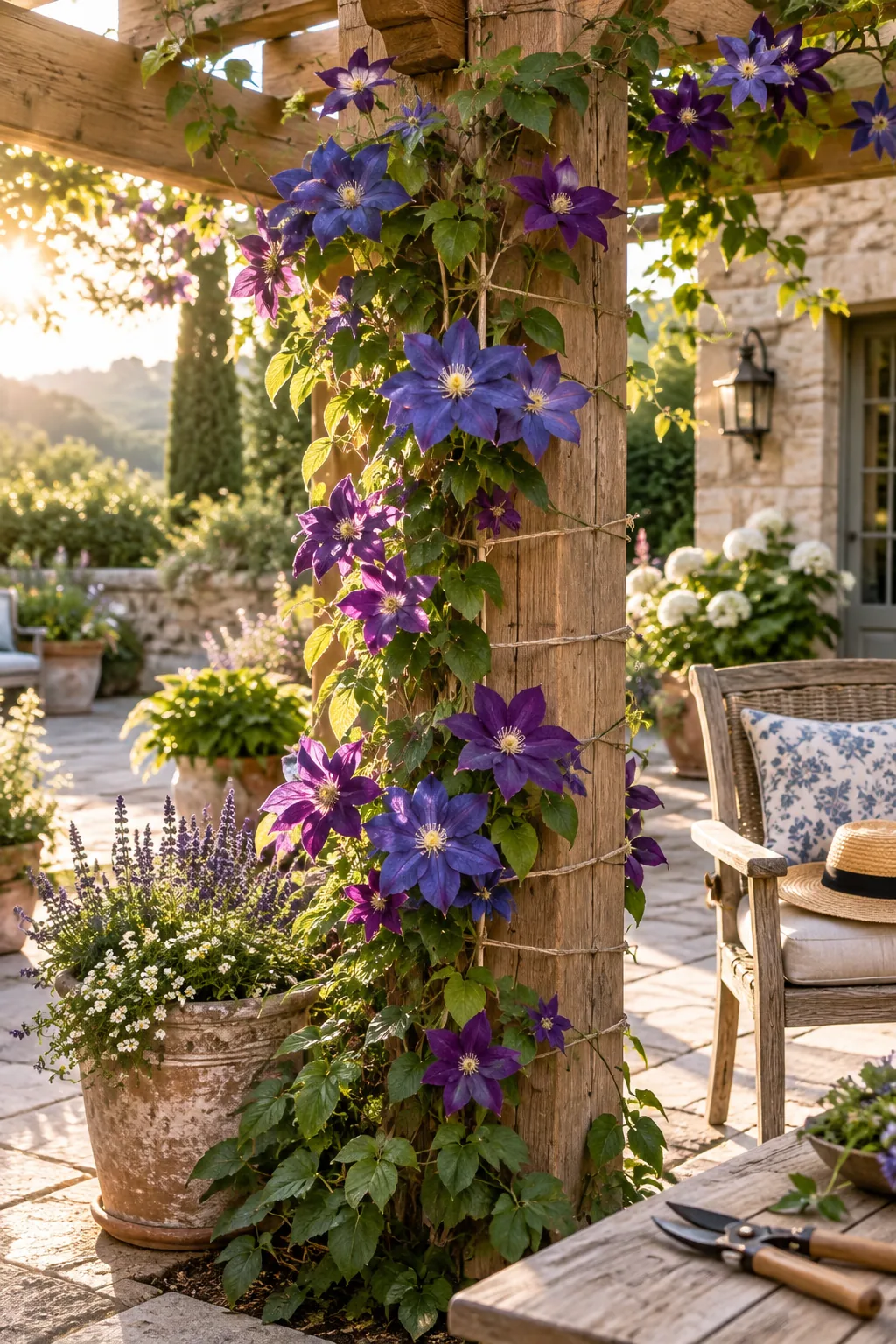
The sheer height of a wooden garden pergola gives larger clematis varieties the runway they need to thrive.
Training the vines up the corner posts eventually creates a gorgeous canopy of blooms overhead. You have to use soft garden twine to guide the young plants up the thick posts initially. Once they reach the top crossbeams, they will weave themselves into a solid roof of green leaves.
12. Tree Trunk Wrap
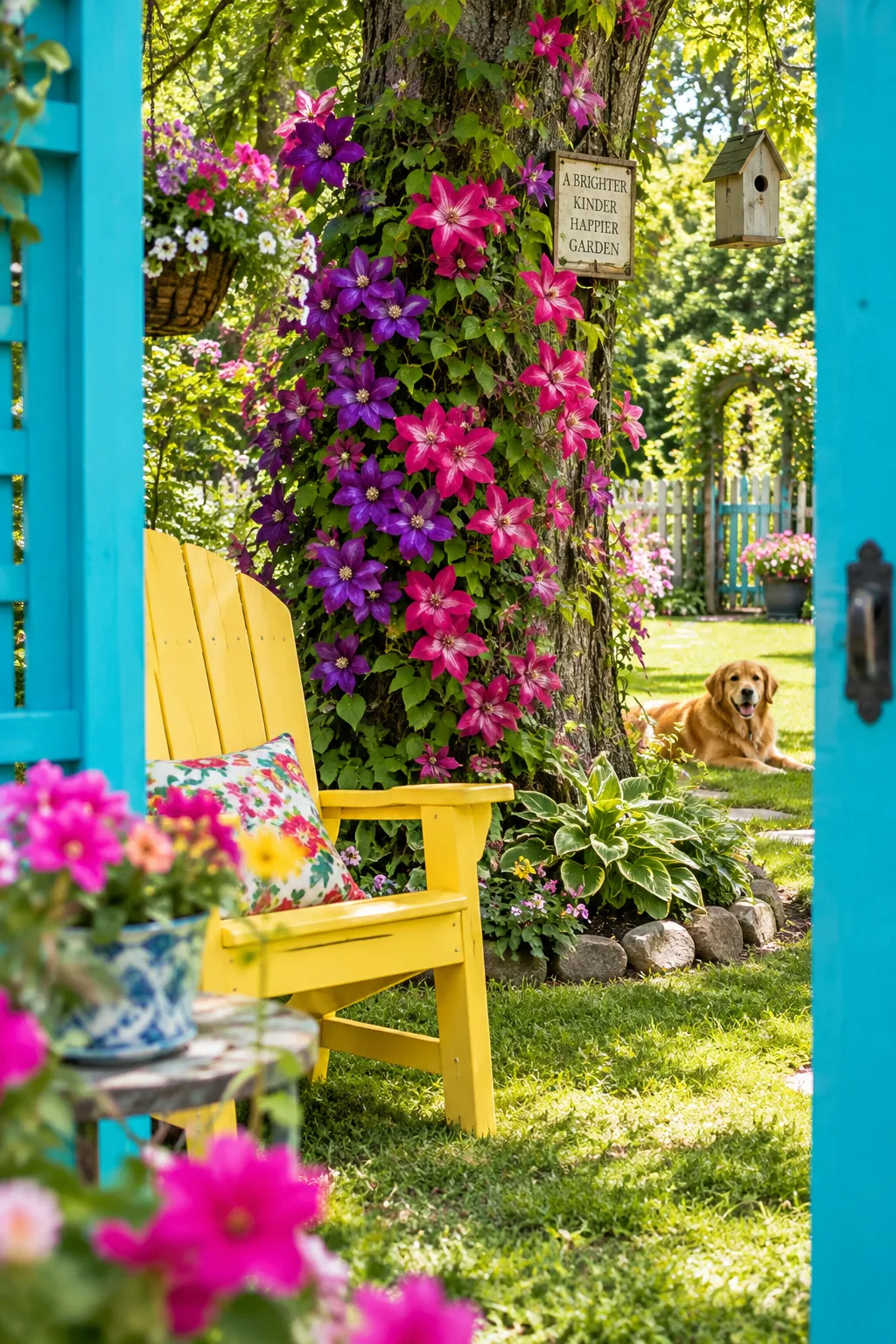
Bare tree trunks in the middle of a yard often look a bit stark and lonely. Wrapping a piece of plastic poultry netting around the trunk creates an instant climbing surface without harming the tree bark. The dark green plastic mesh disappears completely once the plant gets established.
It is a brilliant way to add a second season of color to a tree that only blooms in early spring.
Why it works: Why it works: The flexible netting wraps snugly around any irregular shape while keeping the vines slightly elevated off the bark to prevent rot.
13. Floating Fishing Line
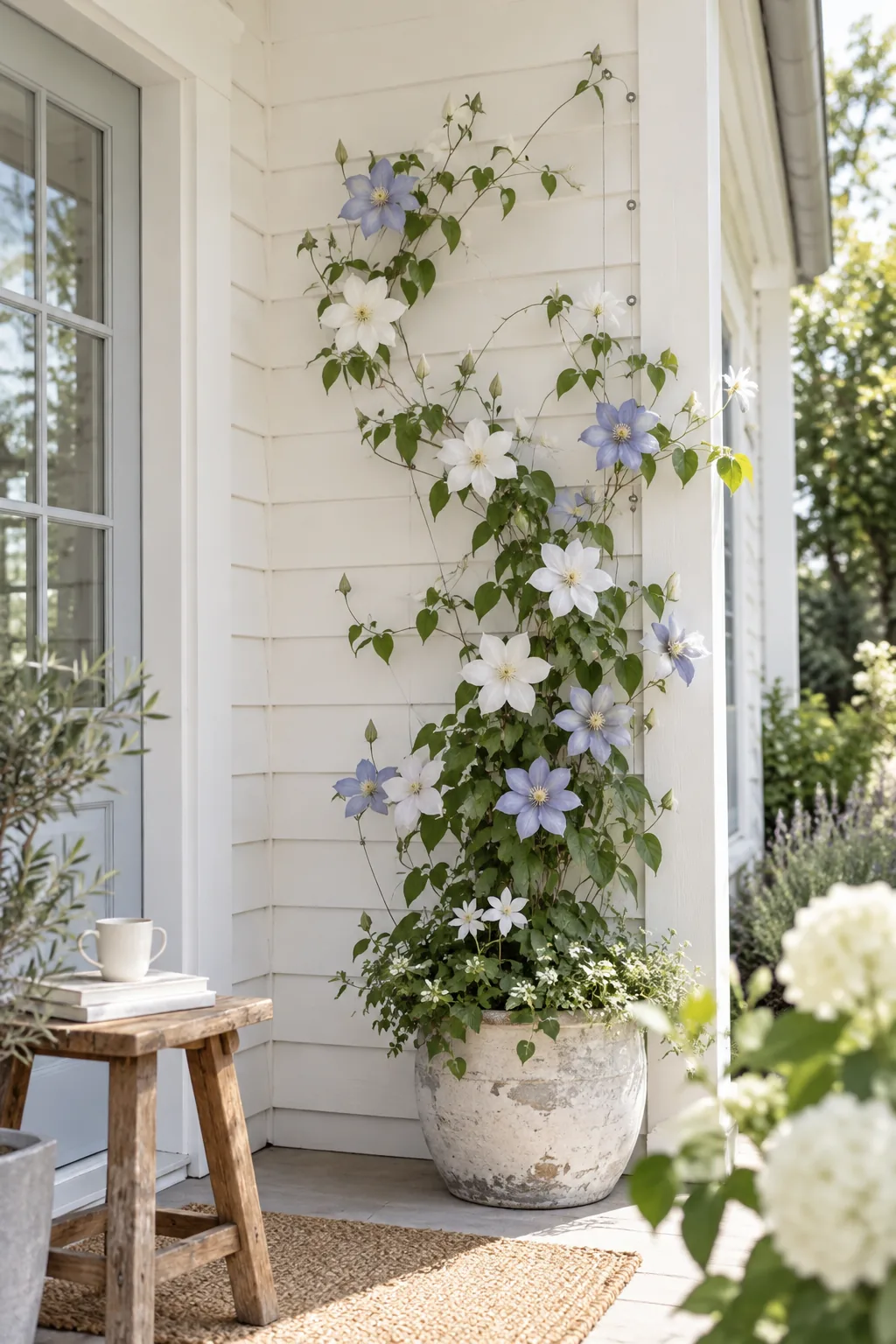
A sleek, minimalist aesthetic happens naturally when you use an invisible fishing line trellis. You just run heavy-duty clear monofilament between screw eyes attached to your siding or fence. The flowers look like they are magically floating up the side of your house.
Make sure you use the highest test weight line you can find so it doesn't snap in a storm.
Why it works: Why it works: The clear line offers incredible tensile strength without adding any visual clutter to your exterior walls.
14. Rustic Wagon Wheel
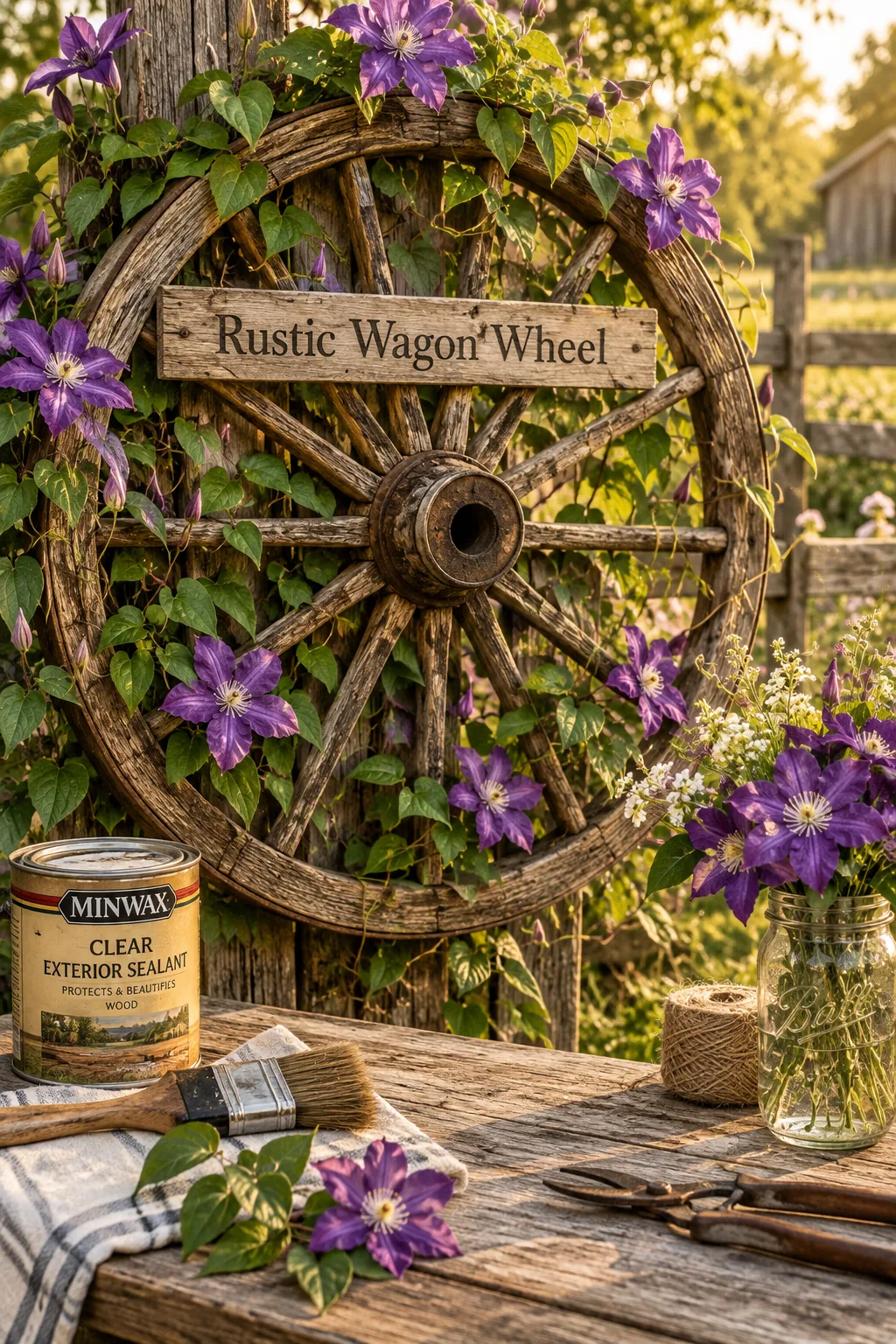
Wagon wheels are surprisingly easy to find at flea markets and antique stores across the country. Mounting a vintage wooden wheel securely to a heavy fence post gives your yard a cool farmhouse focal point. The spokes act like a natural sunburst pattern for the vines to follow outward.
Seal the old wood with a clear waterproof coat before you let the plants cover it up.