
10+ Stunning Dark Kitchen Cabinet Ideas for Your Home
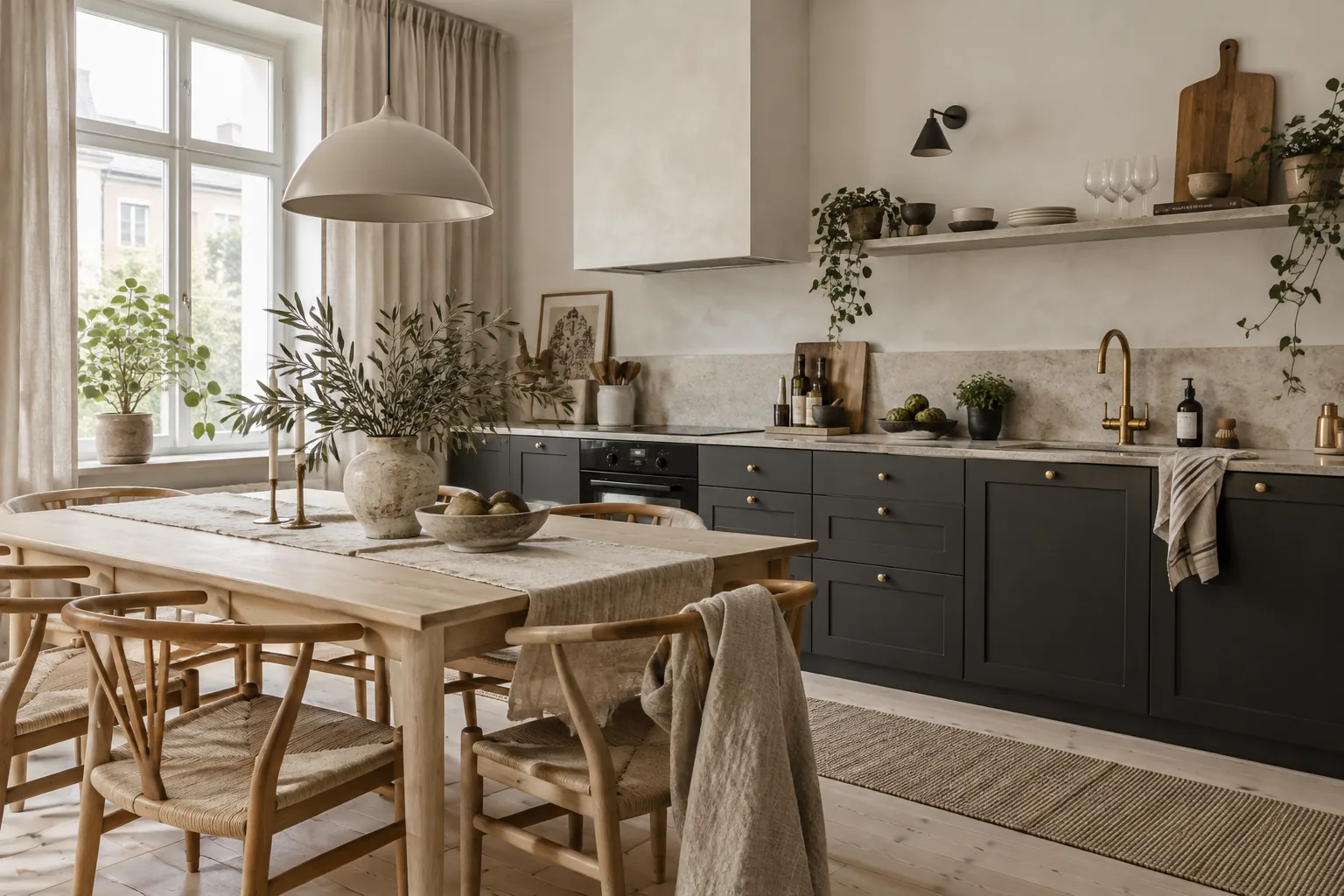
Dark kitchen cabinets completely change the mood of a house, turning a basic cooking space into a grounded, sophisticated room. You just have to balance those deep tones with the right hardware, lighting, and textures so it feels intentional instead of heavy.
1. Matte Black and Warm Wood
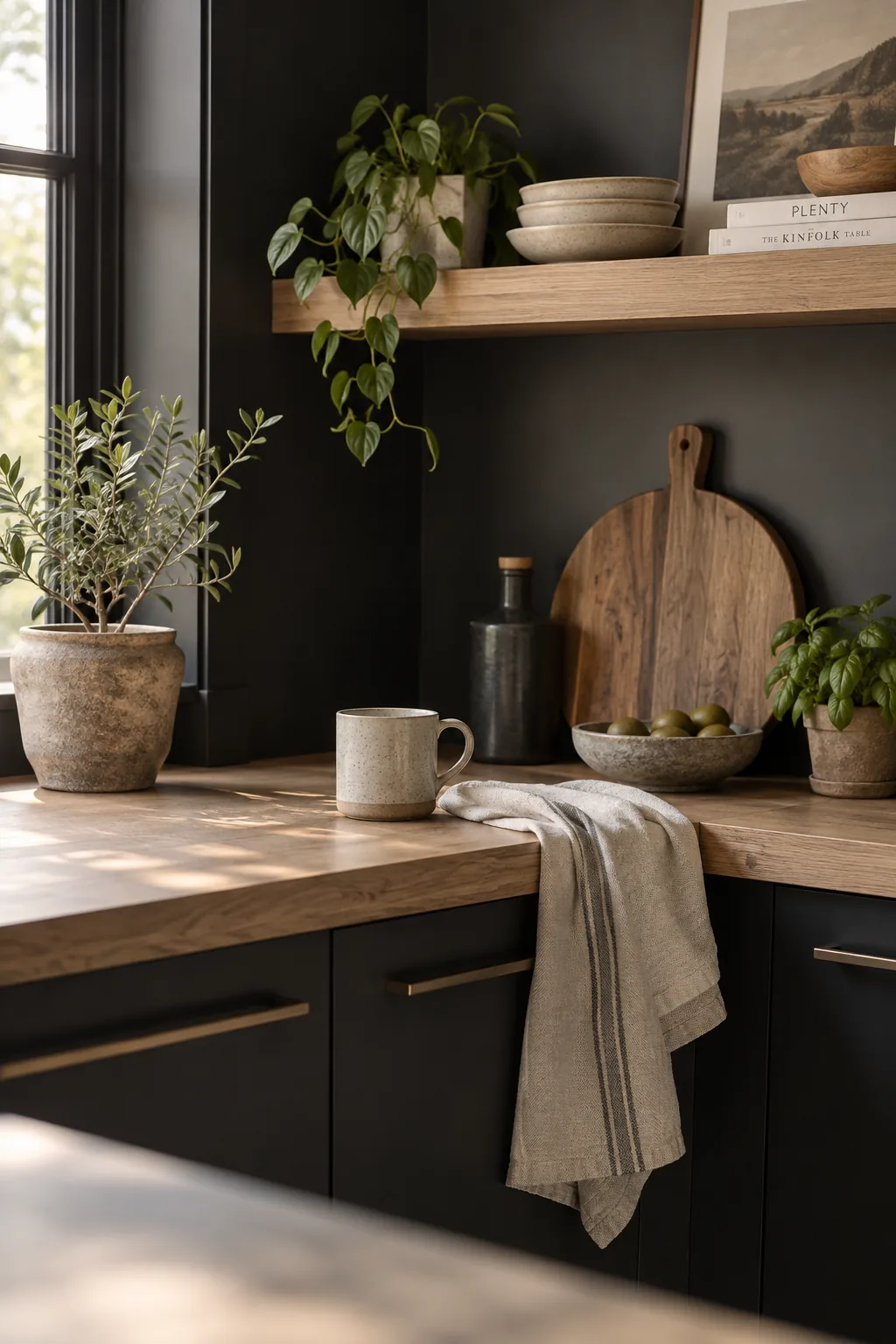
Nearly 80 percent of my recent kitchen remodels involve pairing matte black cabinets with natural wood accents. The deep charcoal tones absorb light, while a white oak island or floating shelf adds the exact warmth the room needs to feel welcoming. It keeps the space from looking like a cave.
Just make sure to seal the wood properly so it stands up to kitchen humidity.
2. Brass Hardware Contrast
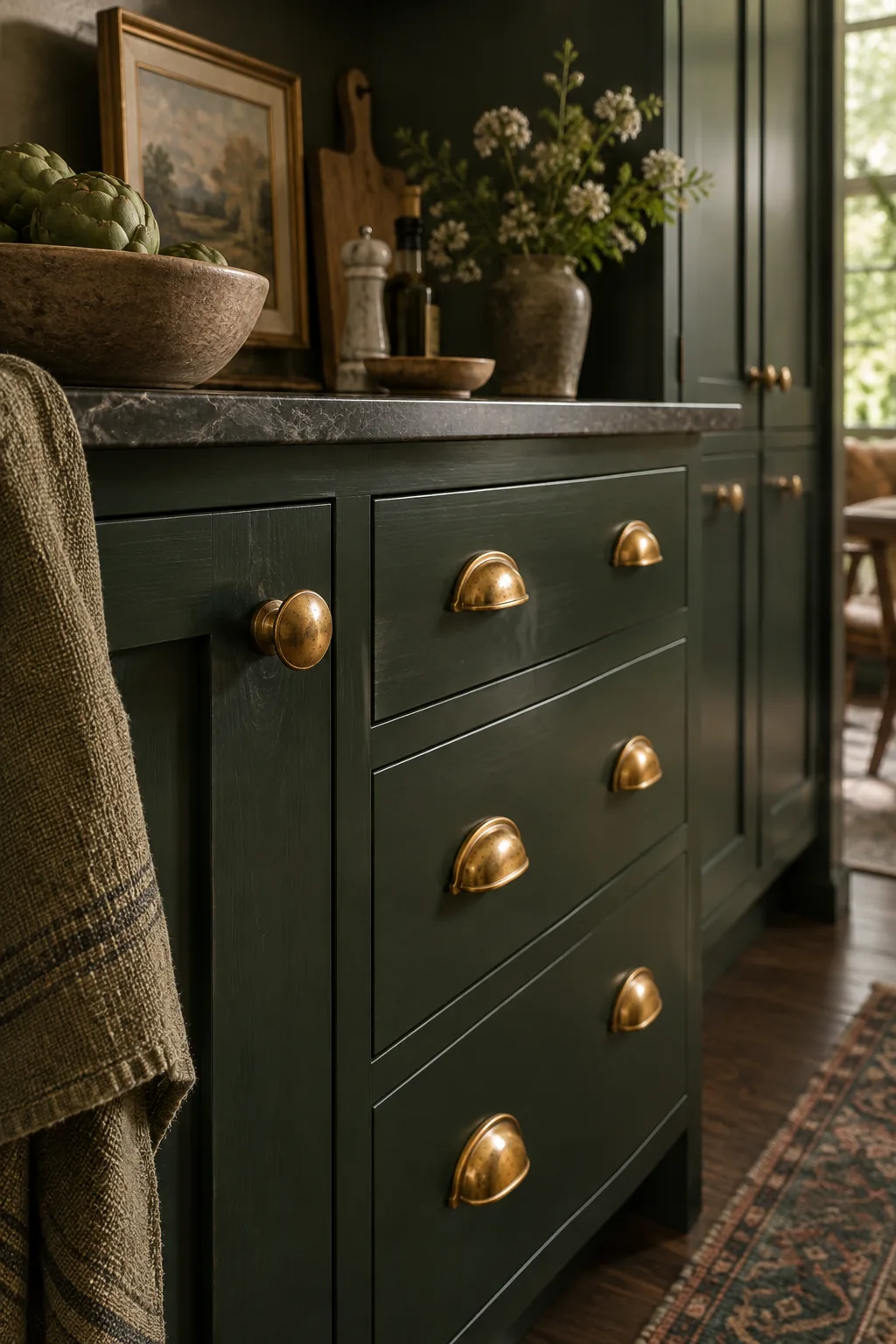
I always get a little thrill when we finally install unlacquered brass hardware on freshly painted dark doors. The bright, warm metal pops beautifully against deep navy or forest green, giving the whole room an instant, classic elegance. Over time, the brass develops a patina that makes the kitchen feel lived-in and custom.
It is the easiest upgrade if you want a high-end look without a full renovation.
3. Light Countertops
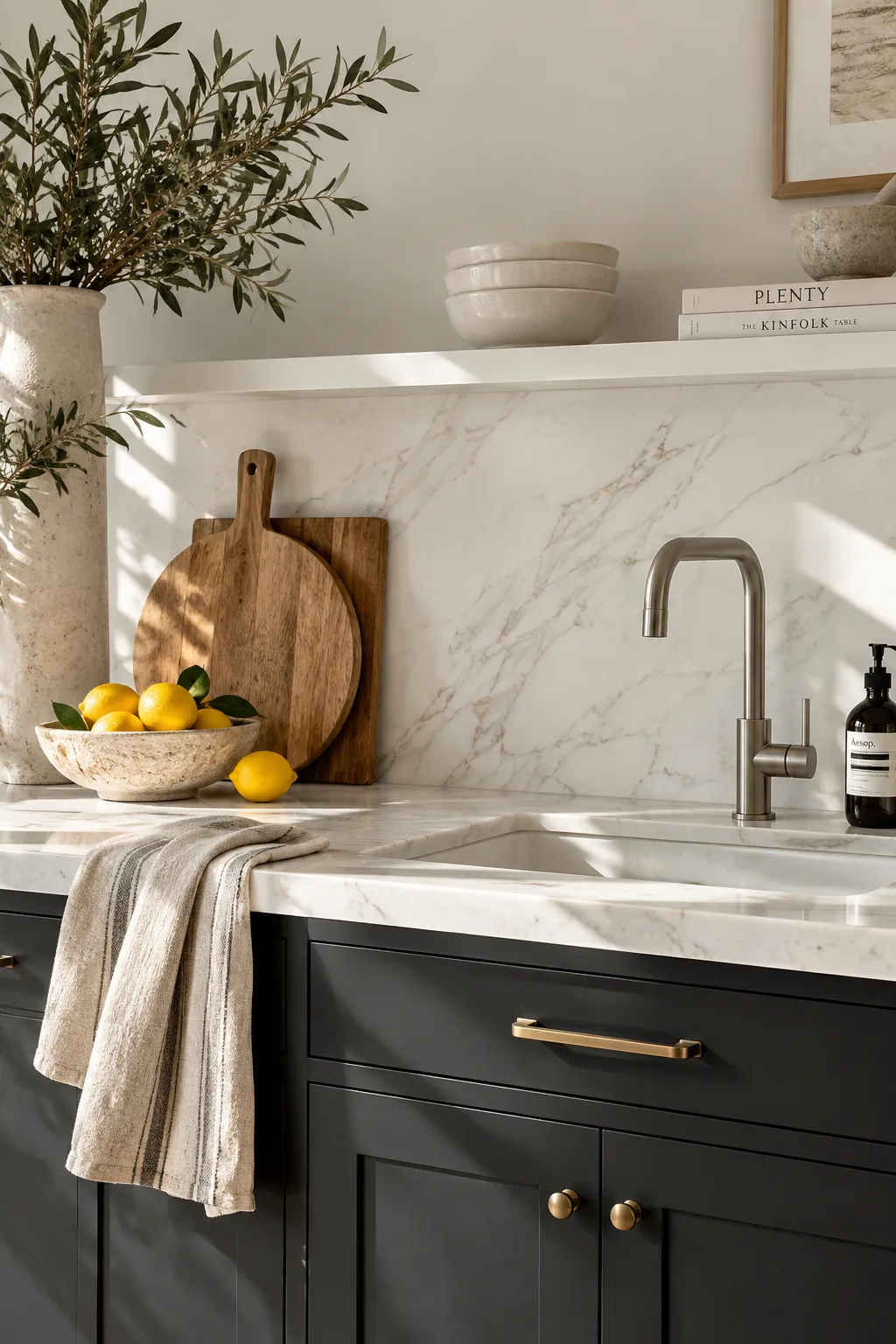
Keep your countertops bright to create a crisp visual break from your dark base cabinets. A thick slab of white quartz or lightly veined marble reflects the overhead light right back into the room. This high-contrast approach works incredibly well when you carry the same light stone up the wall as a solid backsplash.
- Bright white quartz for durability
- Carrara marble for classic veining
- Light concrete for an industrial edge
4. Glass Front Uppers
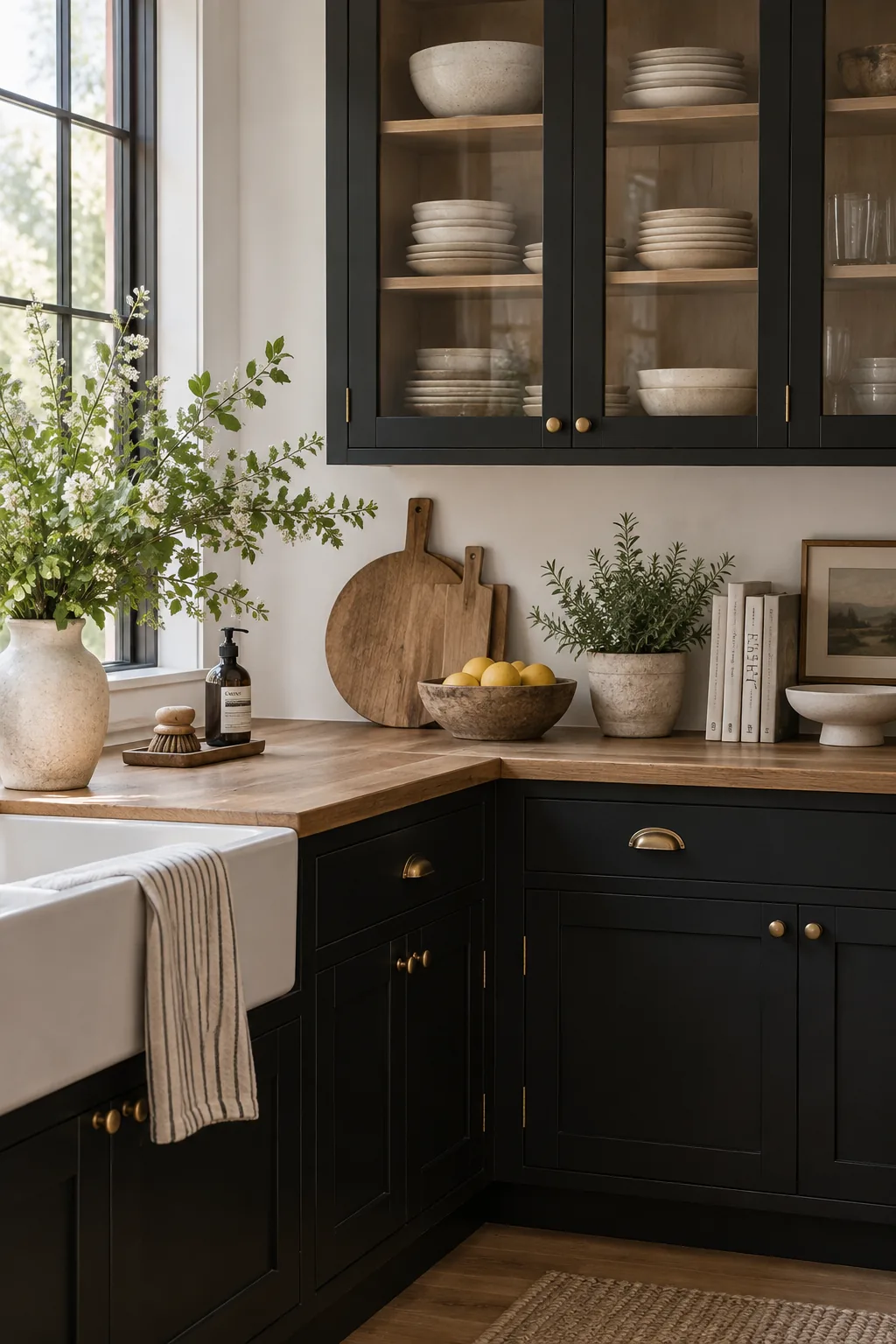
Solid walls of dark cabinetry often feel visually heavy in smaller spaces. Swapping out a few solid doors for glass-front upper cabinets breaks up that dark block and lets you display your favorite everyday ceramics.
5. Deep Green and Gold
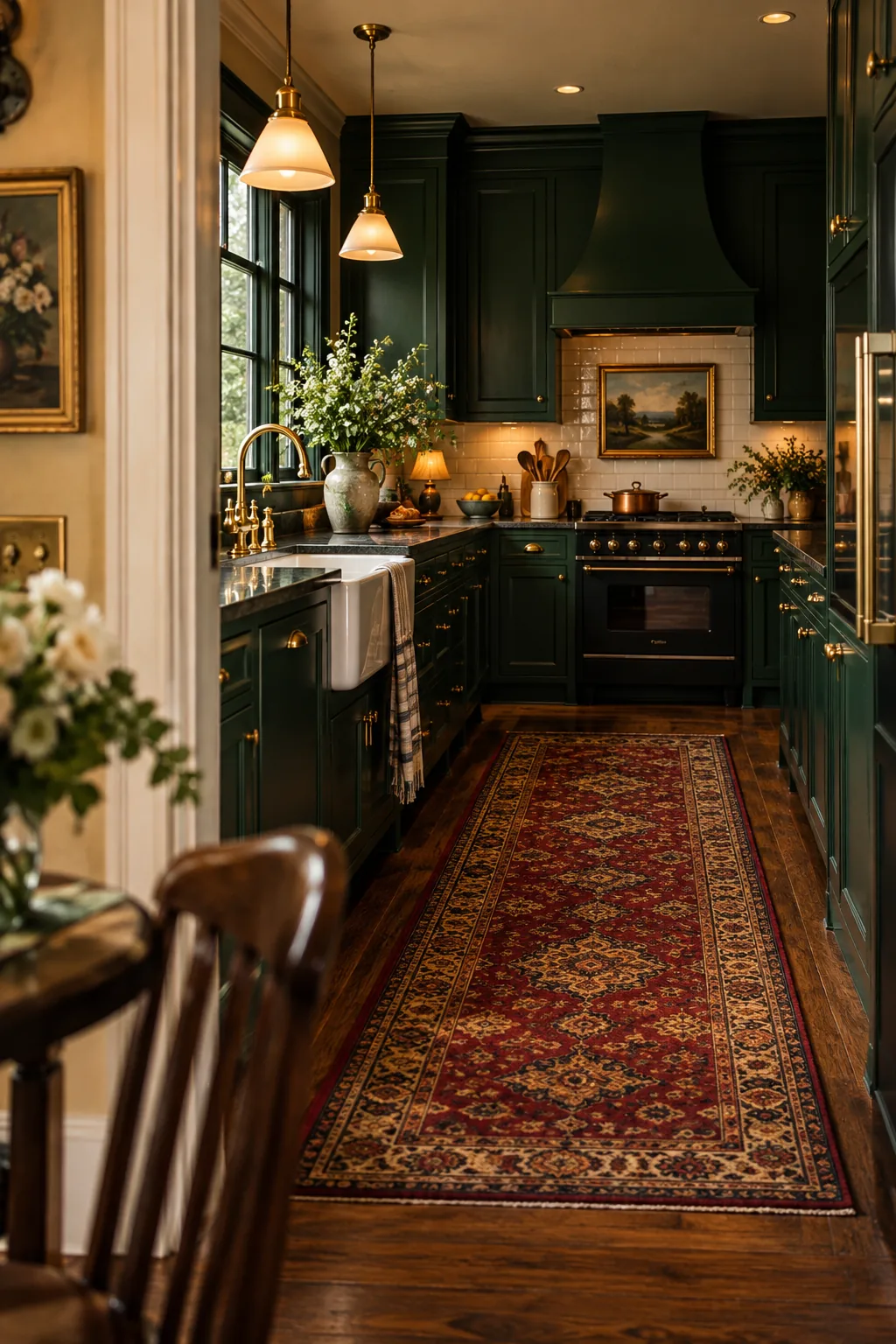
A full 50 percent of my clients who think they want black actually end up choosing dark green cabinets instead. Shades like hunter or olive act as a rich neutral that feels slightly softer and more organic than a stark black. When you pair those earthy tones with gold fixtures, the kitchen immediately feels like a cozy historic home.
I love running a vintage runner rug down the center to tie those warm tones together.
6. Open Shelving
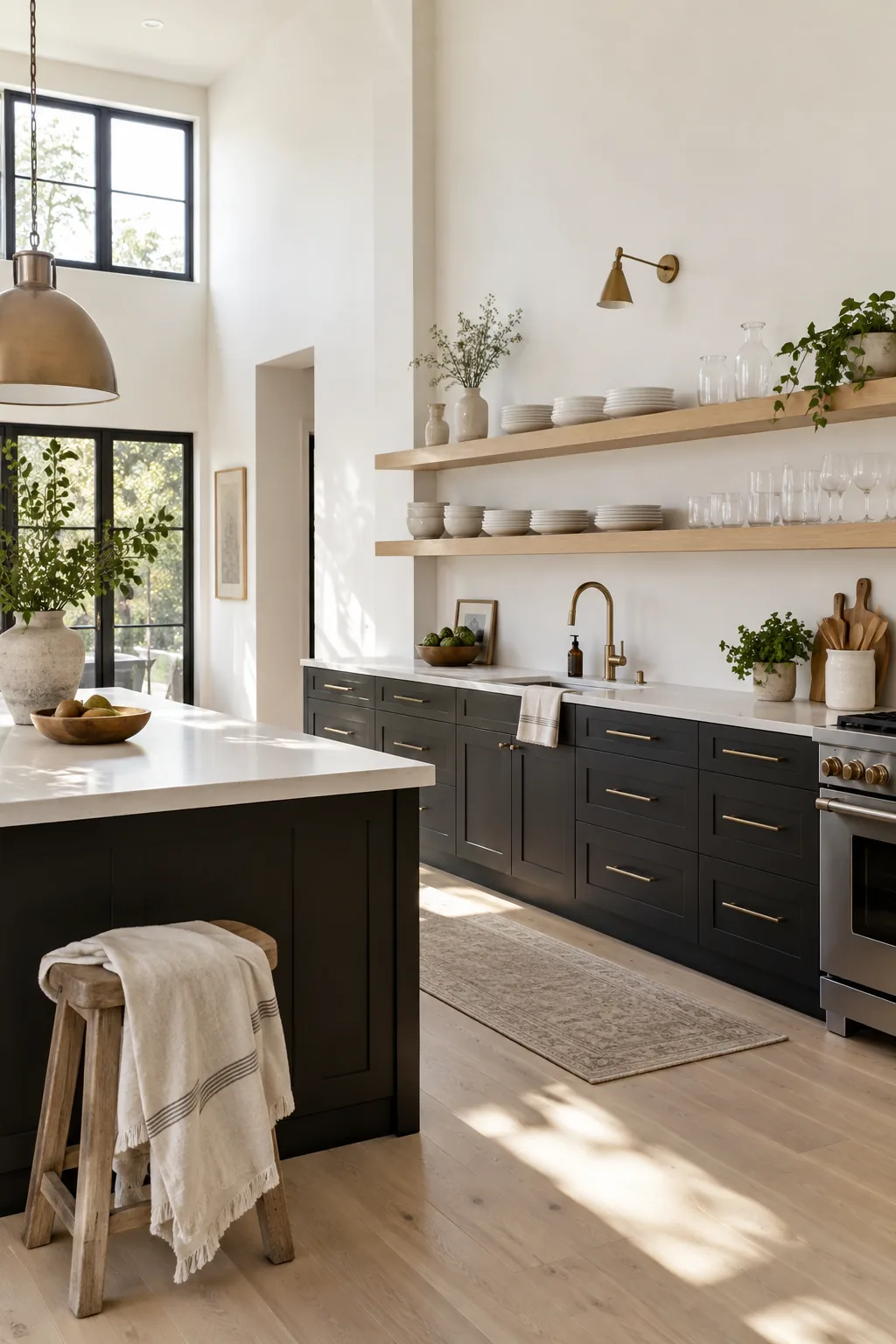
Kitchens with dark lower units and no upper cabinets always look incredibly spacious. Replacing the top row with chunky floating shelves draws the eye upward and makes the ceiling feel taller. You can stack everyday white plates and clear glassware on the shelves to keep the upper half of the room feeling light and airy.
7. Two-Tone Cabinetry
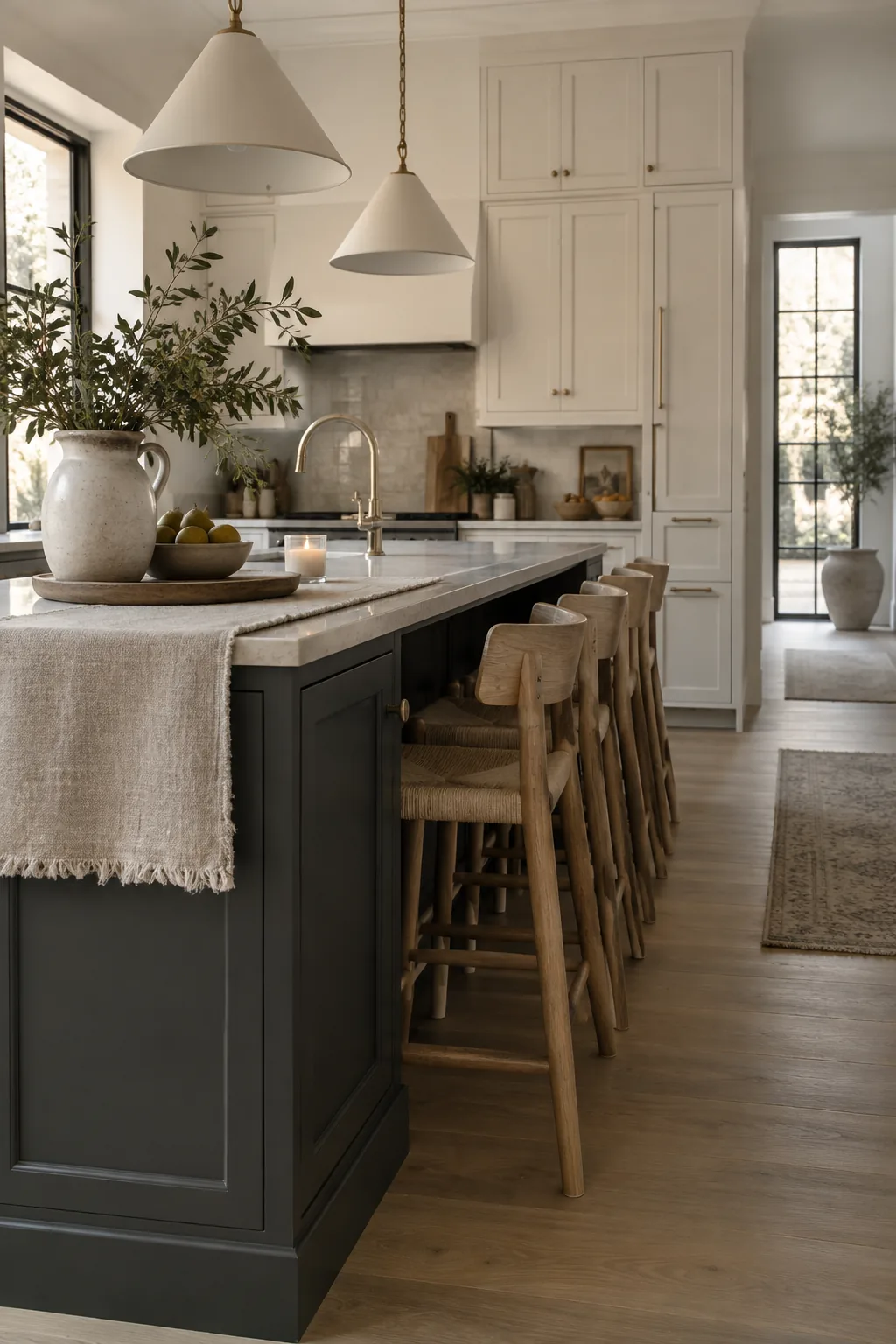
I recently painted my own kitchen island a deep, moody charcoal.
Leaving the perimeter cabinets a soft, creamy white creates a beautiful two-tone kitchen design that grounds the room. The dark island becomes the focal point of the space, hiding scuff marks from barstools while anchoring the lighter elements around it. It is a great compromise if you are nervous about committing to a fully dark room.
8. Dark Moody Backsplash
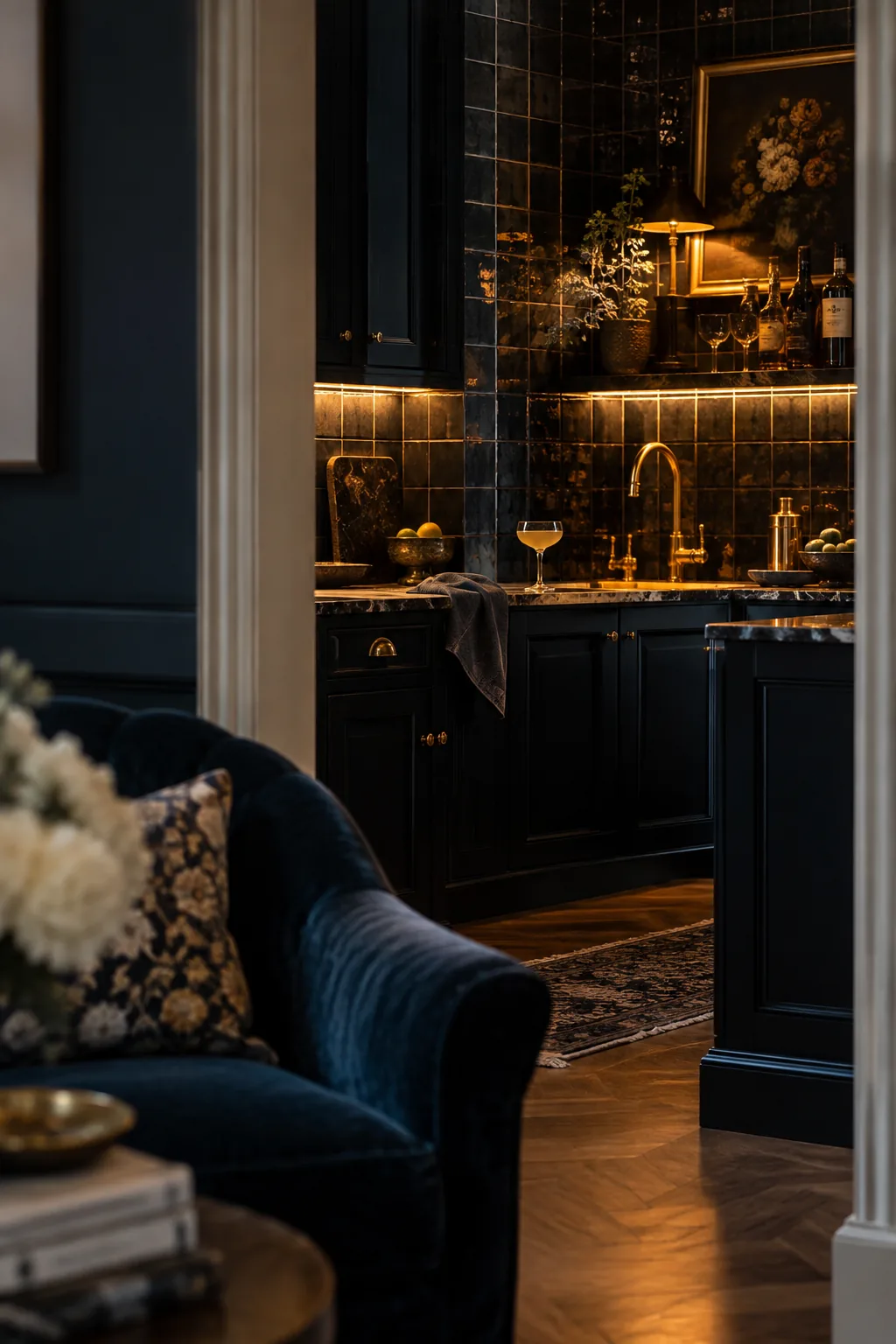
A seamless, dramatic aesthetic happens when your backsplash matches your cabinetry.
Running a dark tiled backsplash right up to the ceiling behind matching cabinets creates an incredibly immersive, moody atmosphere. Glossy tiles work best here because they catch the under-cabinet lighting and bounce it around the room. This tonal approach makes the kitchen feel like a chic, intimate cocktail bar.
9. Integrated Lighting
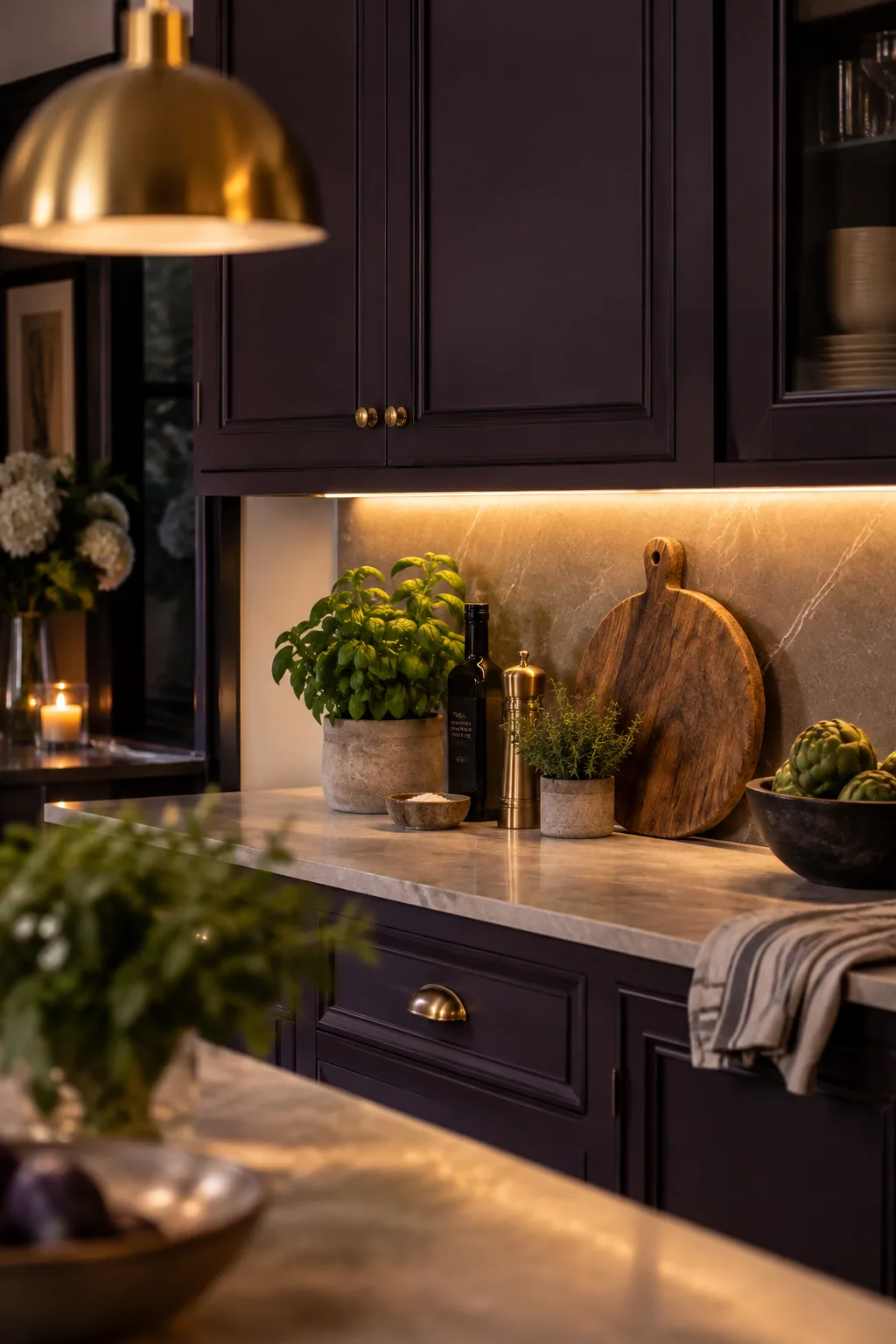
A dark kitchen requires roughly twice the ambient light of an all-white space.
Installing under-cabinet LED strips is absolutely essential to illuminate your prep zones and highlight the depth of the paint color. You should also layer in some warm pendant lights over the island to eliminate harsh shadows. Good lighting ensures those deep navy or plum tones look rich rather than gloomy.
10. Natural Stone Floors
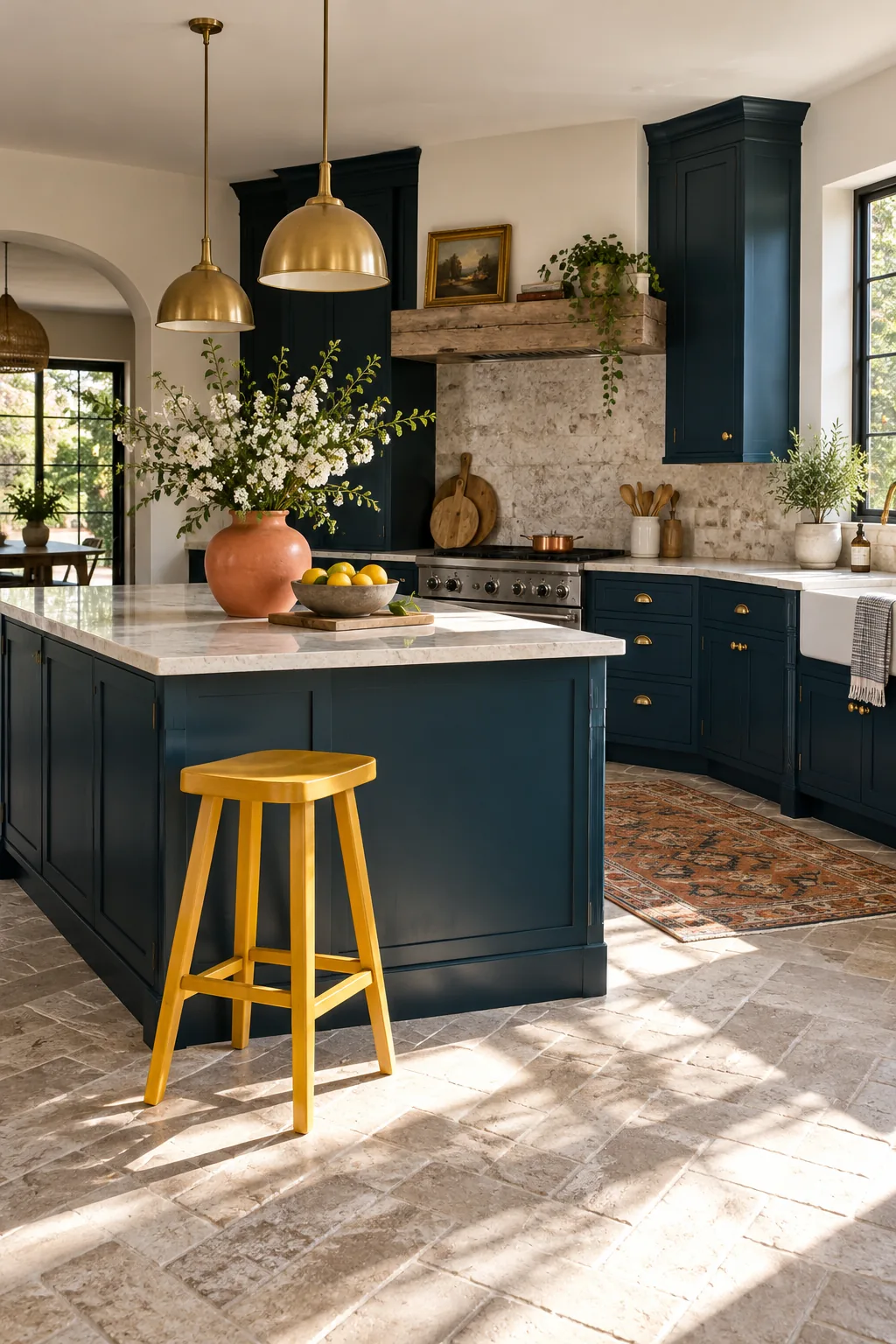
Smooth, dark cabinet fronts contrast beautifully against the rough, organic texture of natural stone floors. Laying down tumbled limestone tiles or slate brings a necessary earthy element that grounds the sleekness of the millwork. The varied tones in the stone help hide dirt while bridging the gap between the dark wood and light walls.
You can lay the tiles in a herringbone pattern for an extra layer of subtle detail.
11. Warm Terracotta Accents
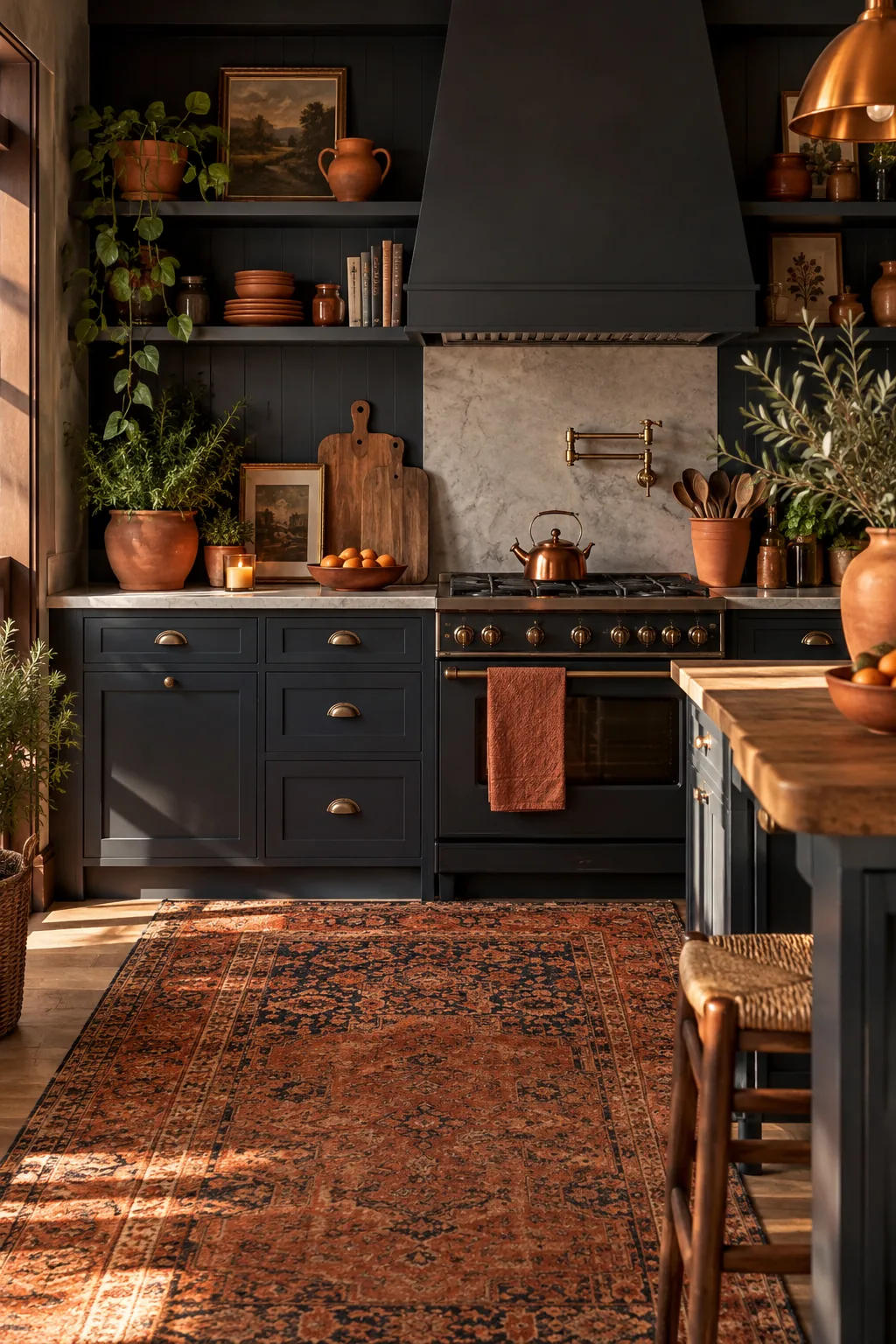
The trick to warming up a dark kitchen is introducing colors from the opposite side of the color wheel. Adding terracotta pots, copper kettles, or a vintage rust-colored rug instantly breathes life into slate gray or navy blue cabinets. These earthy, reddish hues provide a natural warmth that prevents the cool, dark tones from feeling too sterile or industrial.