Outdoor Entryway Proportions: Why Curb Size Beats Cute Size
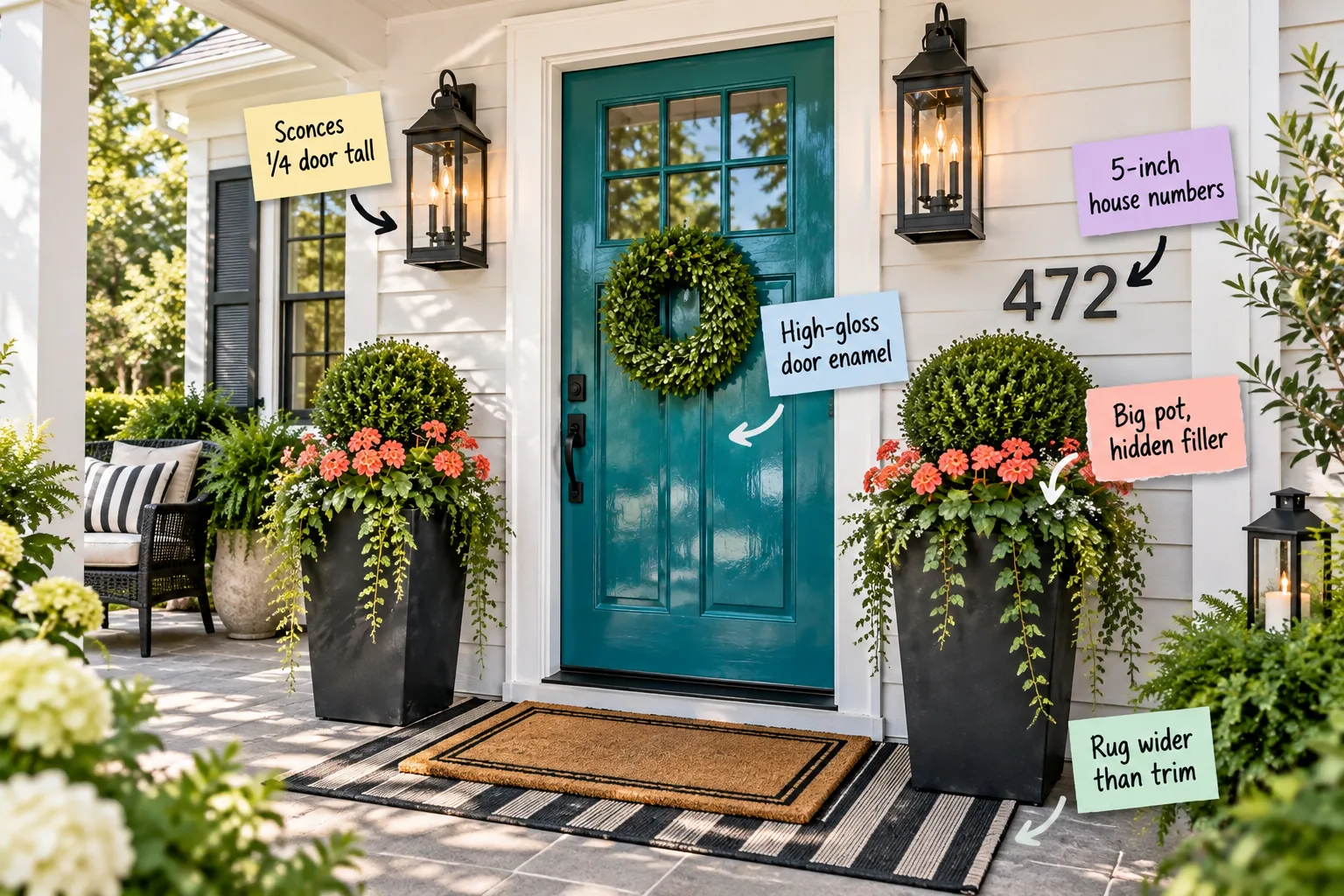
You will be able to calculate the exact dimensions for your porch lights, planters, and layered rugs based on your front door’s height and width. Grab our printable measuring sheet to scale your outdoor entryway perfectly, because curb size always beats cute size.
The Principle of Curb Scale
When you stand in a hardware store aisle, a standard exterior light fixture feels substantial and weighty in your hands.
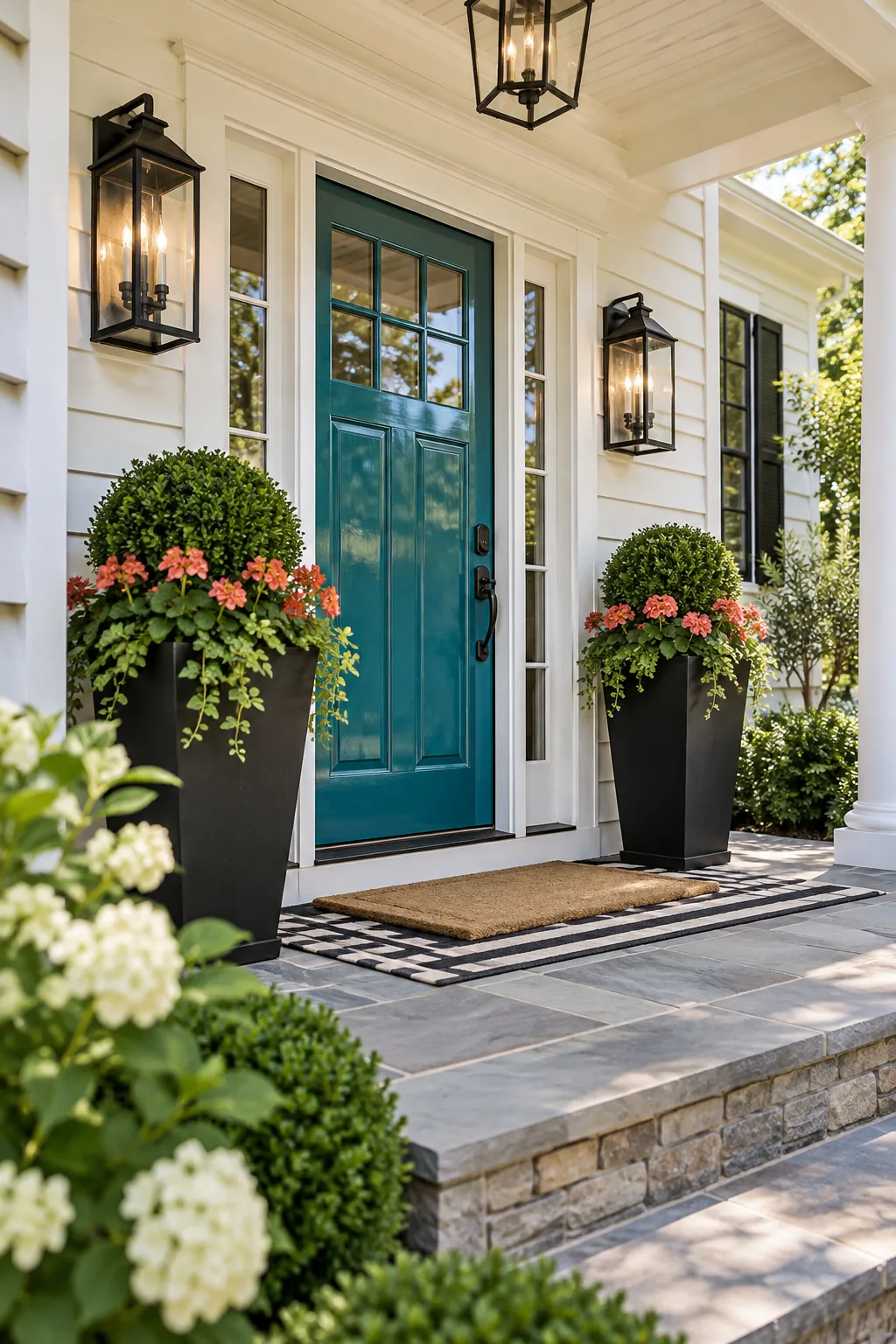
Once mounted on your exterior, the street viewing distance visually shrinks everything, making those same fixtures look like miniature dots against your expansive home facade.
Evaluating the Walkway Approach
As you walk up your driveway, notice how the angles of your roofline and the width of your steps frame the front door. This initial approach sets the stage for your entryway, highlighting exactly why oversized fixtures are necessary to hold their ground against the outdoor architecture.
Establishing the Baseline Measurements
To achieve a balanced exterior that blends Western architectural symmetry with Eastern grounding principles, you must stop guessing at scale. Start using your front door as the foundational baseline measurement for every single item you place on the porch.
- Measure the exact vertical height of your primary door panel from the metal threshold to the top edge.
- Measure the horizontal width of the door panel itself, explicitly excluding any glass side lights or decorative trim.
- Measure the total width of the outer door casing to determine your grounding footprint for the rug layers.
These three concrete numbers will dictate the scale of every accessory you add to the porch. By rooting your design in these exact dimensions, you ensure a harmonious visual flow from the highest overhead fixtures straight down to the welcome mat.
Sizing the Lantern Sconces
To anchor the upper half of your entryway and draw positive energy toward the home, select wall sconces that are at least one-quarter the height of the front door.
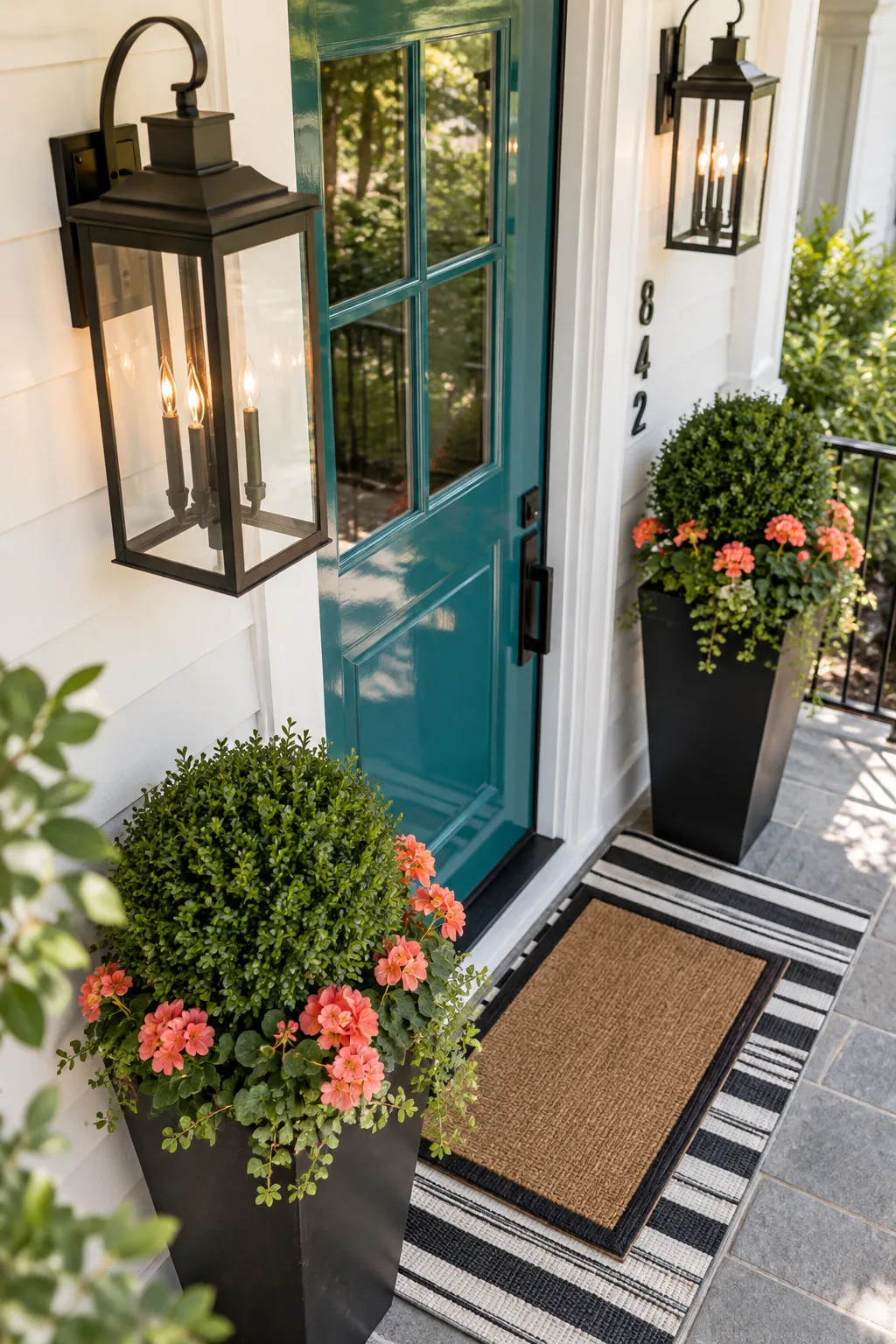
Before you drill into your exterior siding, double-check your vertical placement.
Balancing the Upper Porch Zone
Sconces that properly meet the one-quarter rule provide enough visual weight to balance a heavy solid wood or painted steel door. This deliberate scaling technique mirrors the structured, intentional proportions found in classical Western architecture, keeping the upper zone grounded.
- Choose wider, visually robust lanterns if your front door features thick, prominent classical trim or heavy molding.
- Opt for elongated, narrow sconces if you have tall, slender side lights flanking the main entry door.
- Match the metal finish directly to your door hardware to build a cohesive, intentional upper design zone.
This proportional harmony ensures the lighting feels like an intentional architectural feature rather than a hasty builder-grade afterthought. When the upper zone is balanced, the rest of the porch naturally falls into a comfortable, welcoming rhythm for your arriving guests.
Maintaining Visual Symmetry
While modern design often embraces asymmetry, a formal entryway benefits immensely from mirrored elements flanking the door. Placing identical sconces and matching planters on either side establishes a grounding sense of order, reflecting the deep-rooted Eastern philosophy of balancing energies at the primary threshold.
Placing the House Numbers
Delivery drivers and evening guests need to read your address easily from the street, which absolutely requires 5-inch minimum house numbers for proper legibility.
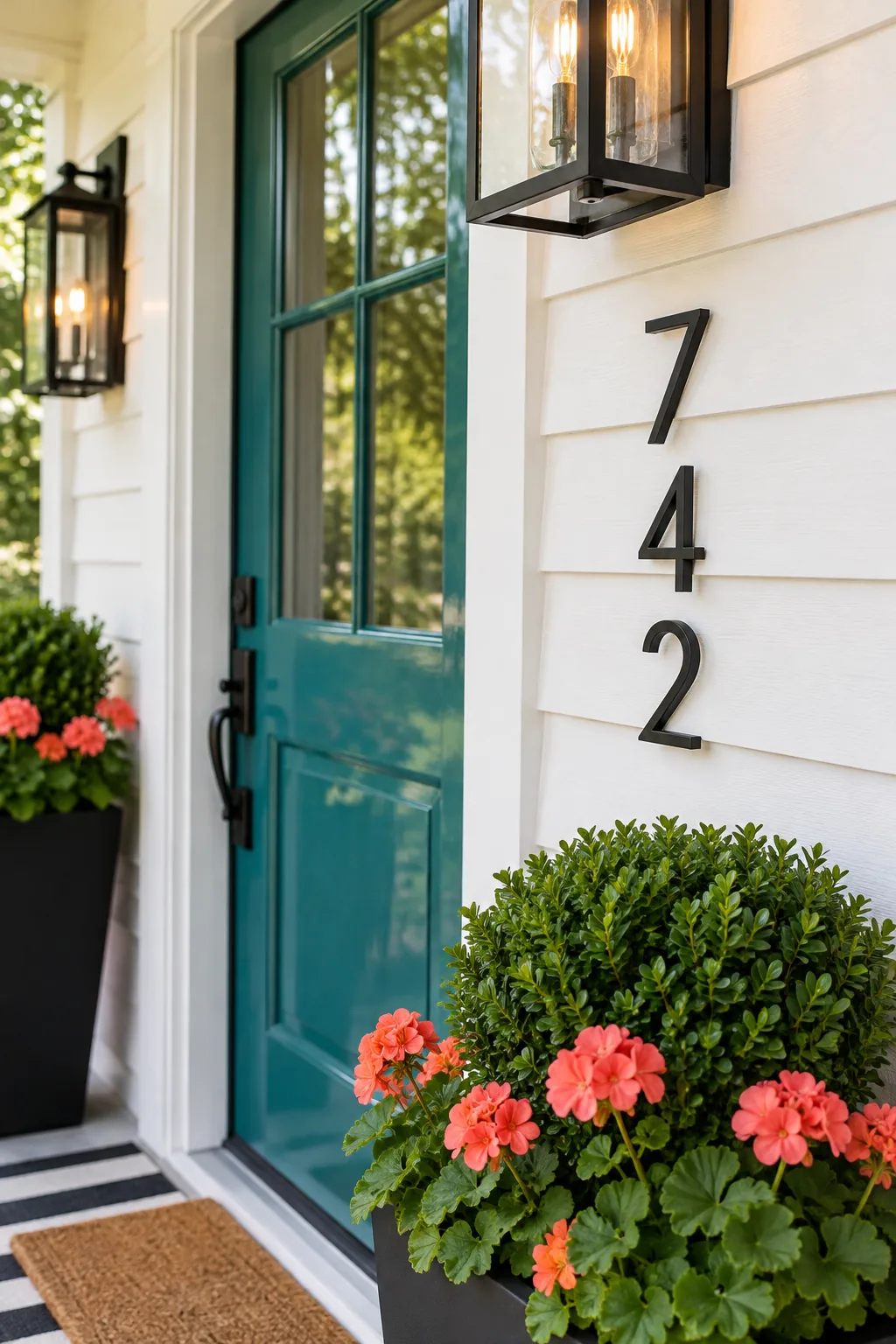
High-contrast numbers in matte black or brushed brass stand out sharply against light siding or masonry. This stark contrast provides both a crisp modern aesthetic and the crucial functional clarity needed to guide visitors directly to your front step.
Aligning Fixtures with Sightlines
The orientation of your address numbers should respond directly to the available architectural space beside your door frame. By adapting to the existing structure, you create a clean, logical sightline that enhances the overall symmetry of the porch design.
| Siding Space | Number Orientation | Spacing Rule |
|---|---|---|
| Narrow vertical trim under 6 inches | Vertical stack alignment | 1 inch between digits |
| Wide horizontal structural beam | Horizontal line placement | Centered directly over the door |
| Expansive blank wall beside entry | Staggered or oversized digits | Align vertically with sconce height |
Proper alignment prevents the entryway from looking cluttered and directs the eye naturally toward the entrance. This thoughtful placement maintains the calm, structured energy we want to cultivate before anyone even turns the handle to step inside your home.
Harmonizing the Metal Finishes
Consistency in your hardware finishes unifies the entire facade, tying the sconces, house numbers, and door handle into one cohesive visual family. Keeping the undertones aligned—pairing warm brass with bronze, or cool steel with matte black—creates a subtle, sophisticated rhythm across the porch.
Choosing the Door Finish
A deeply covered porch can easily swallow natural light, making even vibrant paint colors look muddy, flat, and uninviting when viewed from the sidewalk.
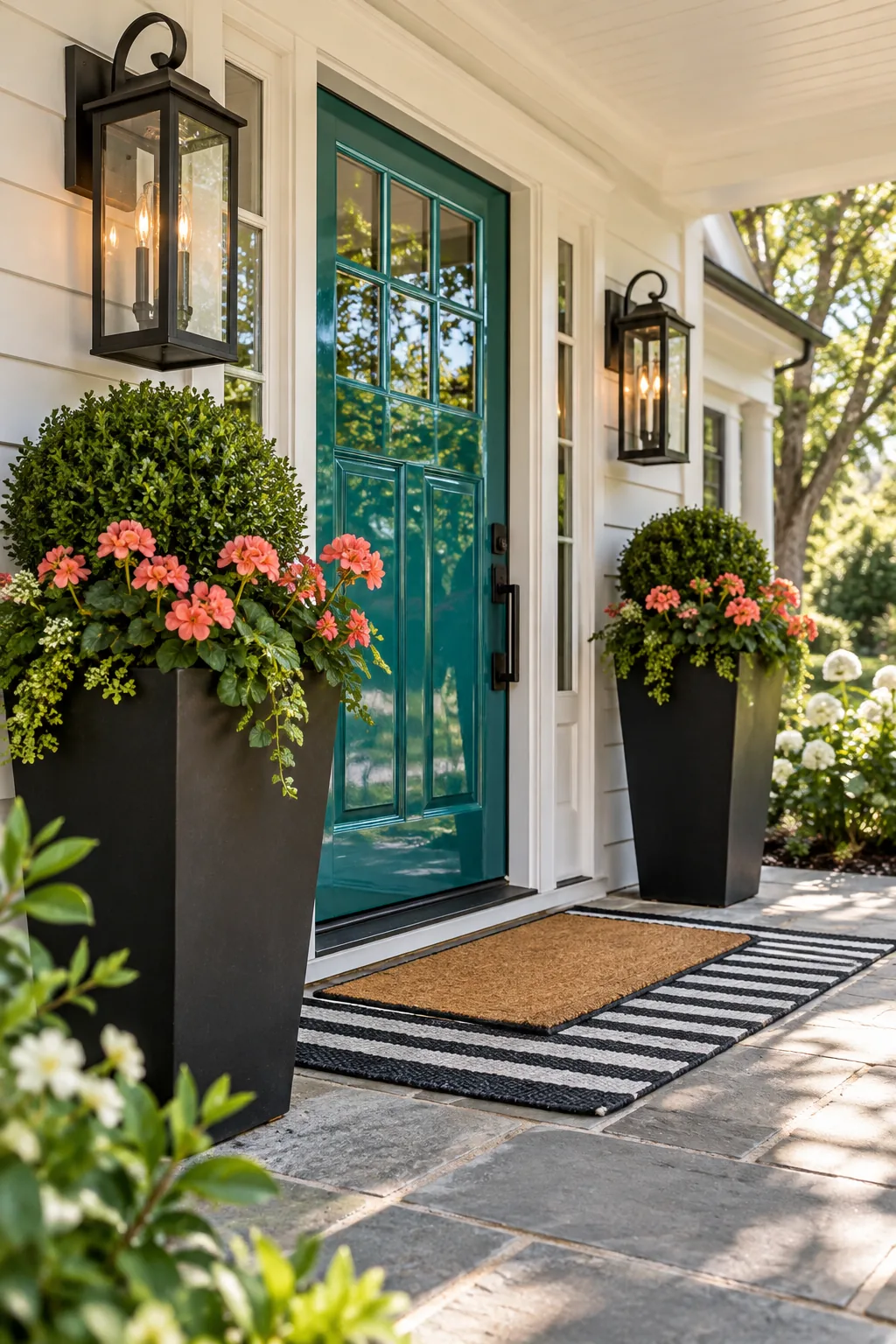
Applying a high-gloss door enamel bounces ambient light around the space, helping the color pop brilliantly in the shadows. This highly reflective finish adds a layer of sophisticated polish that elevates the entire facade with minimal extra effort.
Grounding the Middle Tier
The glossy surface acts almost like a mirror, reflecting the surrounding greenery and sky to create a dynamic, welcoming focal point. This shifting reflection brings a subtle, lively energy to the middle tier of your porch as the sun moves across your property.
Scaling the Planters
To bridge the visual gap between the ground and the sconces, choose tall planters that reach about one-third the height of the door when fully planted.
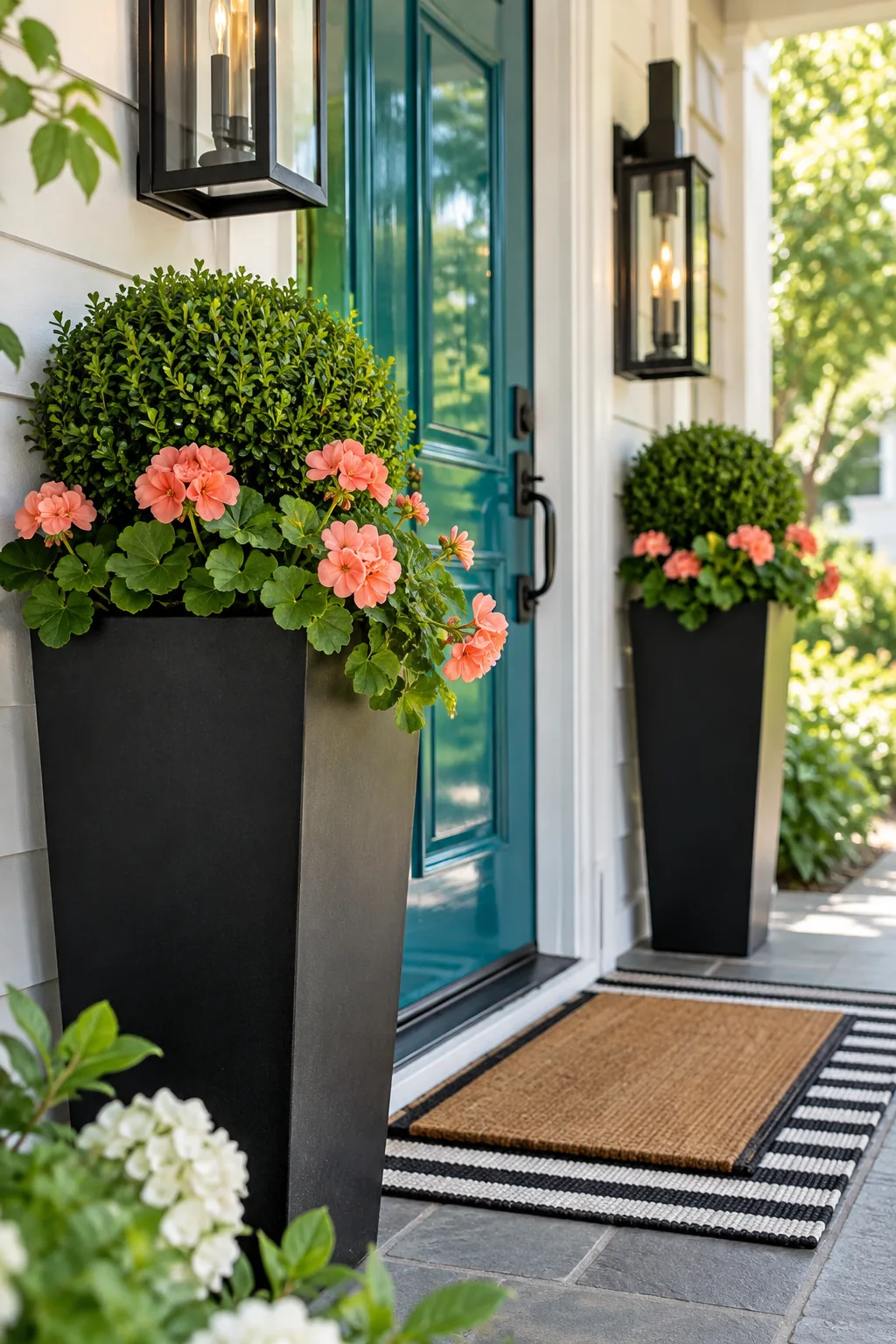
In my own Denver home, finding this exact proportion instantly transformed my disjointed porch into a cohesive column. These substantial containers act as architectural pillars, connecting the heavy ground plane to the airy upper fixtures and establishing a strong sense of rootedness.
The Hidden Planter Trick
Filling those massive planters entirely with potting soil makes them impossibly heavy and wastes money, which is why I always use an upturned nursery pot as hidden filler in the base.
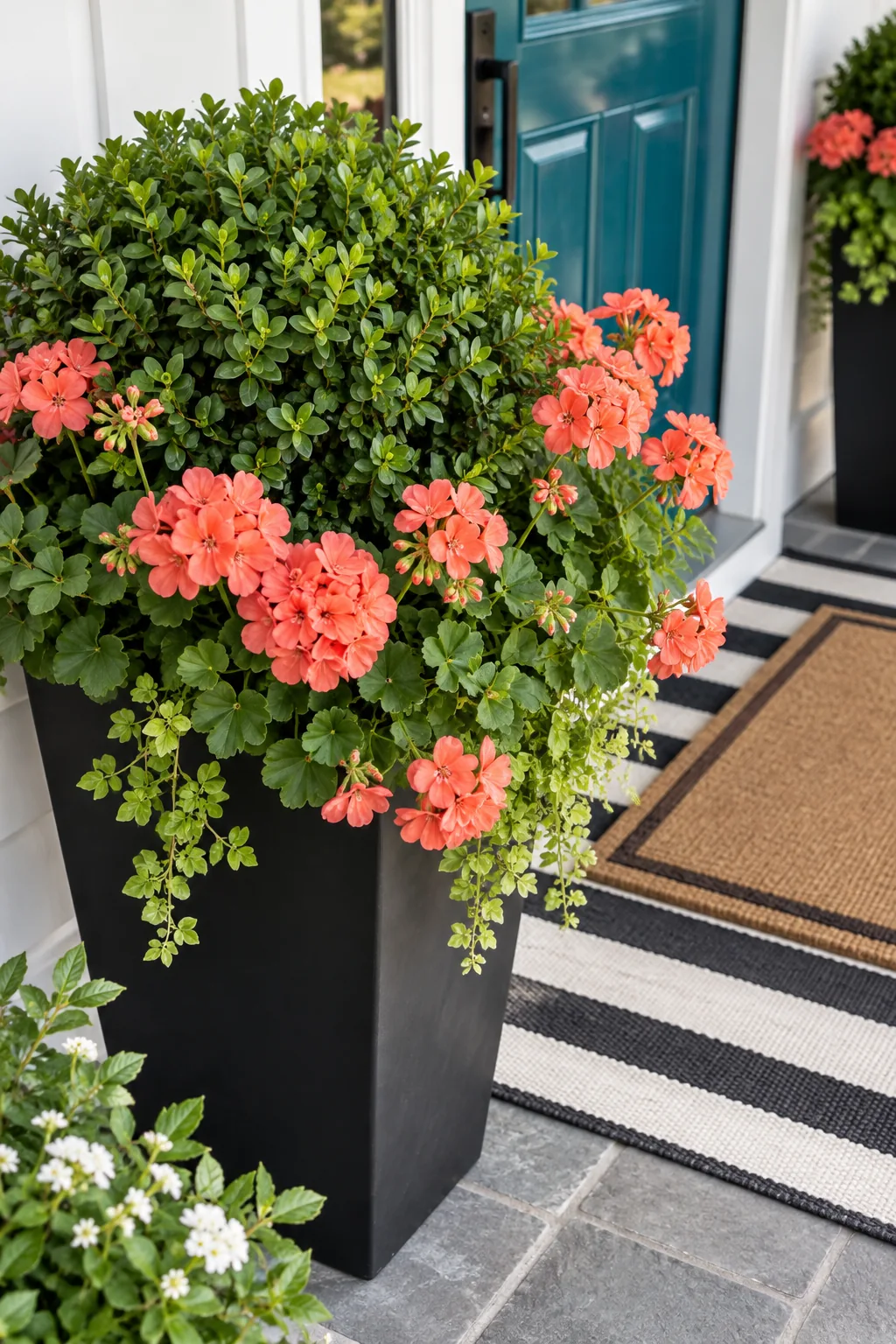
I learned this the hard way on a client project; this simple trick elevates the boxwood root ball to the perfect height while drastically improving drainage. It also keeps the planter just light enough to shift out of the way when you need to sweep.
Selecting the Right Boxwood
When capping off those perfectly scaled planters, choose a slow-growing evergreen variety like Winter Gem or Green Velvet boxwood. These specific cultivars maintain their dense, spherical shape with minimal pruning, ensuring the one-third height ratio we established remains intact without requiring constant weekend maintenance.
Layering the Entry Rugs
For a truly generous welcome zone, your base rug must extend wider than the door trim, while the top coir mat should exactly match the door panel width.
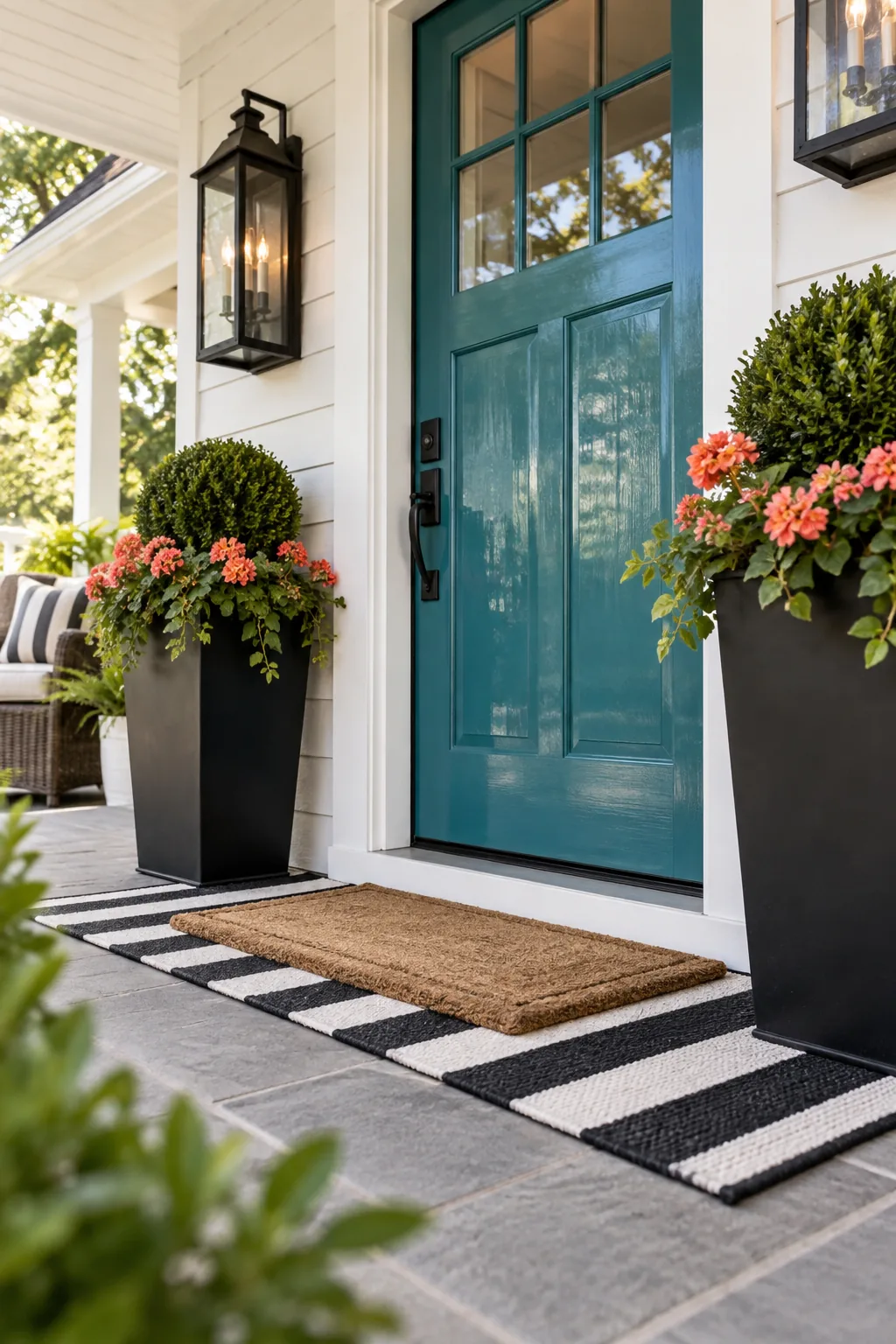
A layered rug setup looks luxurious, but it can easily become a tripping hazard on a busy porch.
Selecting the Base Rug Material
When choosing that oversized base layer, prioritize flat-weave synthetic materials like recycled PET plastic that resist moisture and fading. This ensures your carefully calculated proportions stay looking sharp, flat, and vibrant through heavy rainstorms and daily neighborhood foot traffic.
The Curb-Size Measuring Sheet
You now have the structural blueprint to build a perfectly proportioned entryway, moving logically from the highest fixtures down to the layered welcome mat.
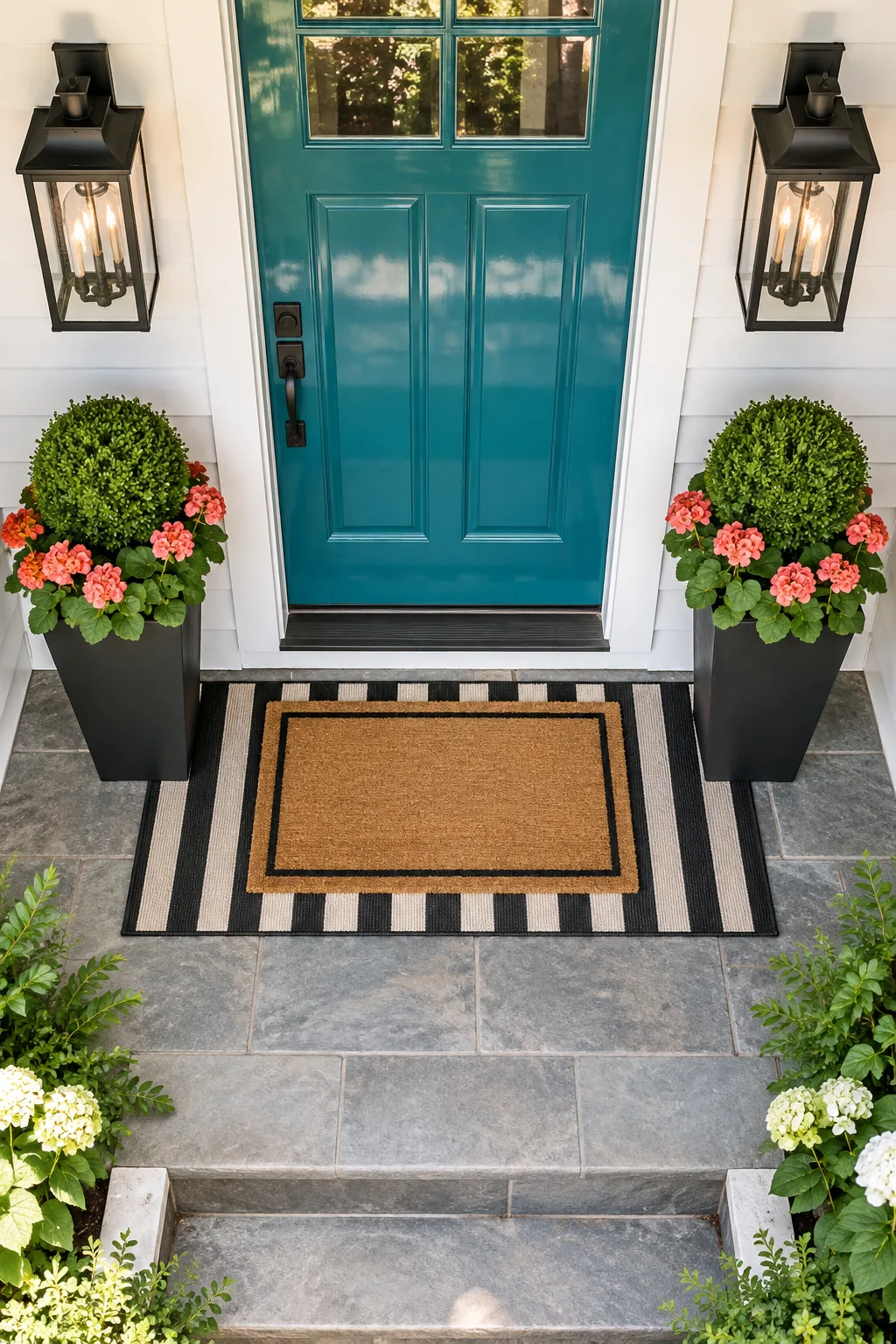
Print your Curb-Size Entry Measuring Sheet to calculate exact sconce dimensions, doormat widths, planter heights, and house-number sizes based on your door. This printable even includes a fill-depth chart for false-bottom planters, ensuring every single accessory scales perfectly to your unique home.
Three Ways to Style a Proportioned Porch
Once you have the scale right, you can adapt these rules to any architectural style.
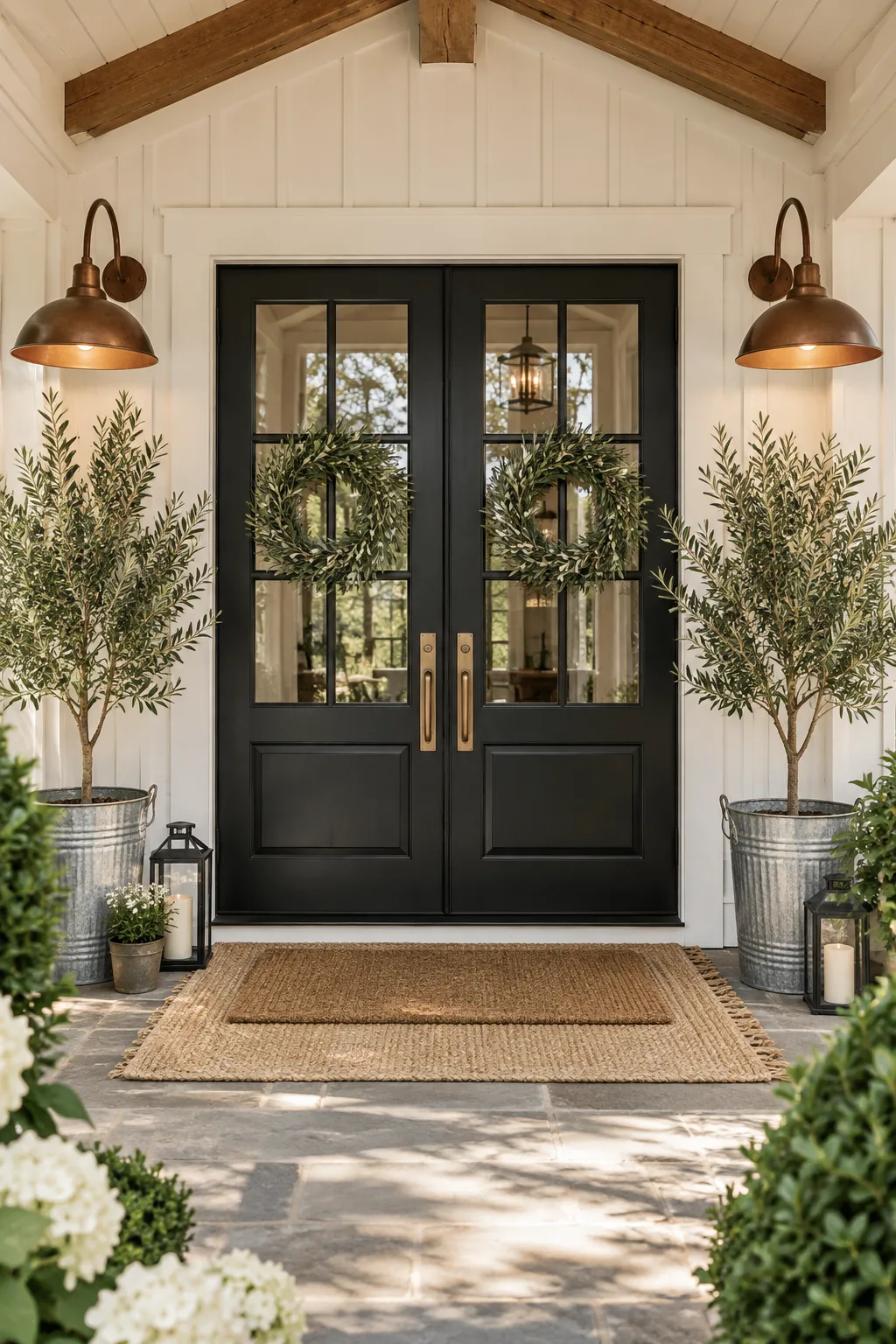
Modern Farmhouse Copper: Oversized copper gooseneck lights bring warmth to stark black double doors, while galvanized olive buckets keep the rustic scale grounded.
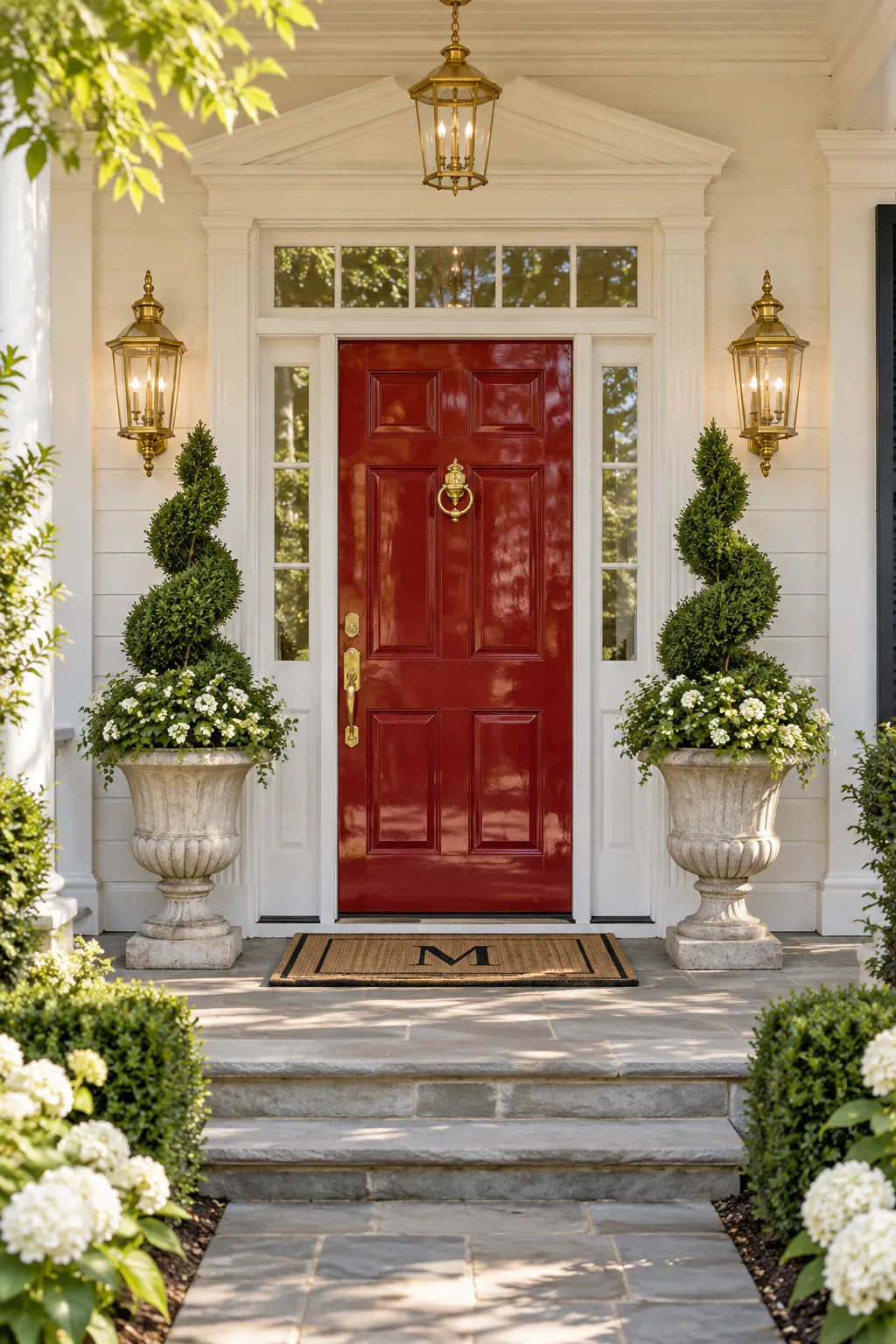
Classic Traditional Brass: Tall topiary spirals in heavy cast stone urns perfectly balance the visual weight of a bold, glossy red traditional door.
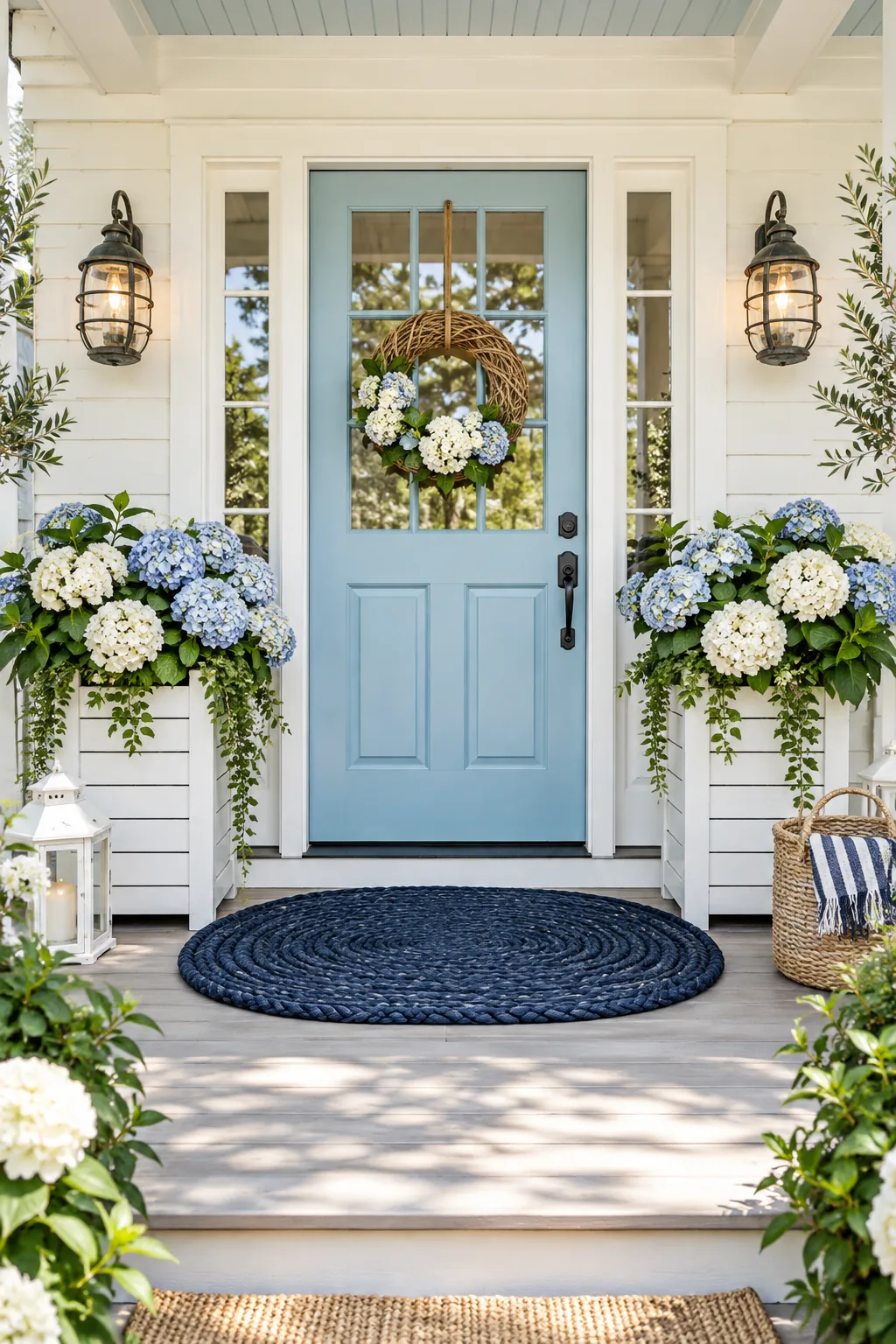
Coastal Cottage Hydrangeas: Generous white slatted planters filled with blooming hydrangeas anchor a pastel blue door and oversized nautical caged sconces perfectly.