Vase Decor Secrets: Get the Stem-to-Vase Proportion Chart
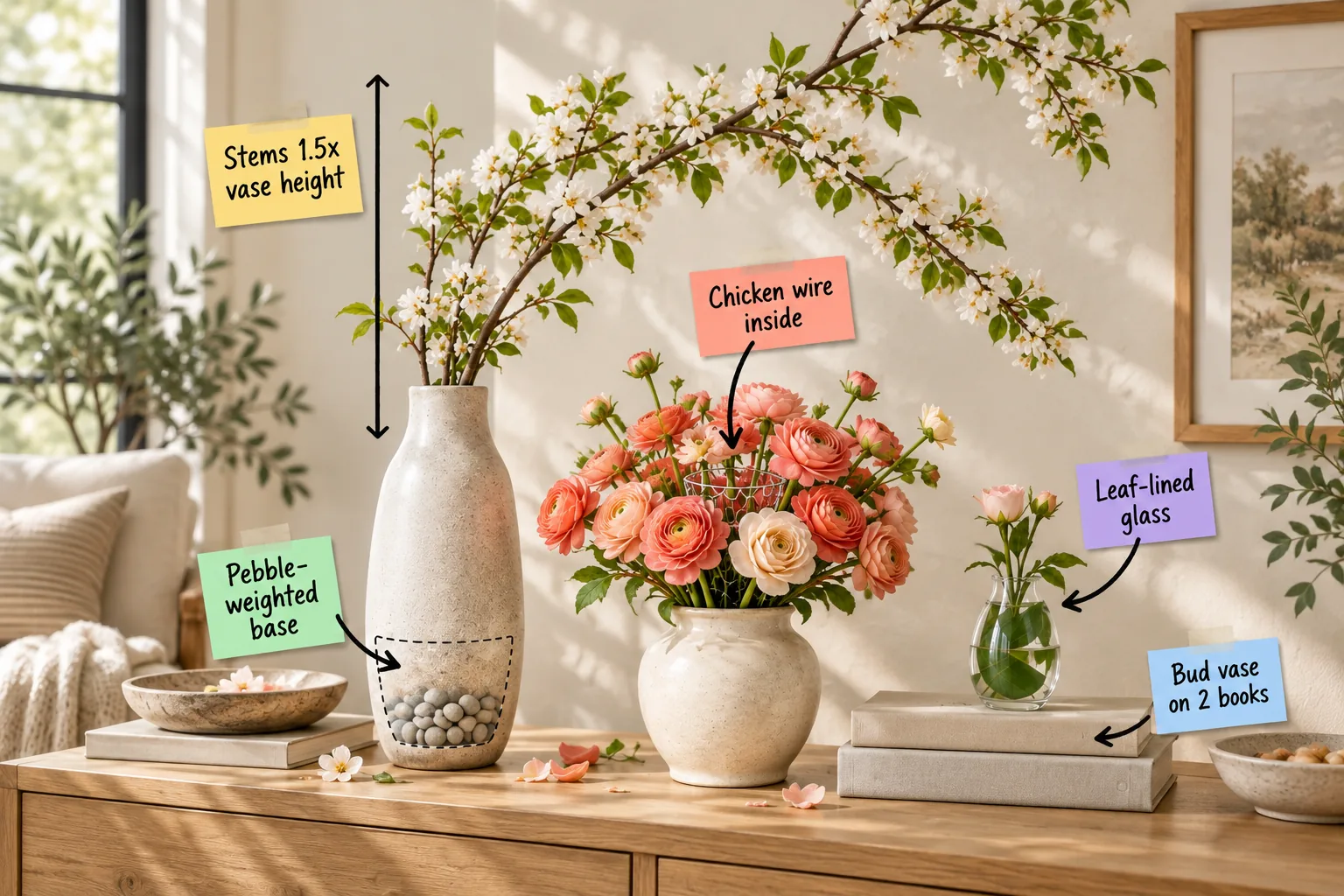
Struggle with floppy flowers and top-heavy arrangements? Download our printable stem-to-vase proportion chart to confidently measure stems, build hidden support structures, and style a perfectly balanced multi-vase display.
The 1.5x Height Rule for Branches
Start your console styling with the tallest element to anchor the space and set the overall scale. In my own Boston brownstone, I always place the statement branches first because their sweeping lines dictate where the smaller vessels need to sit.
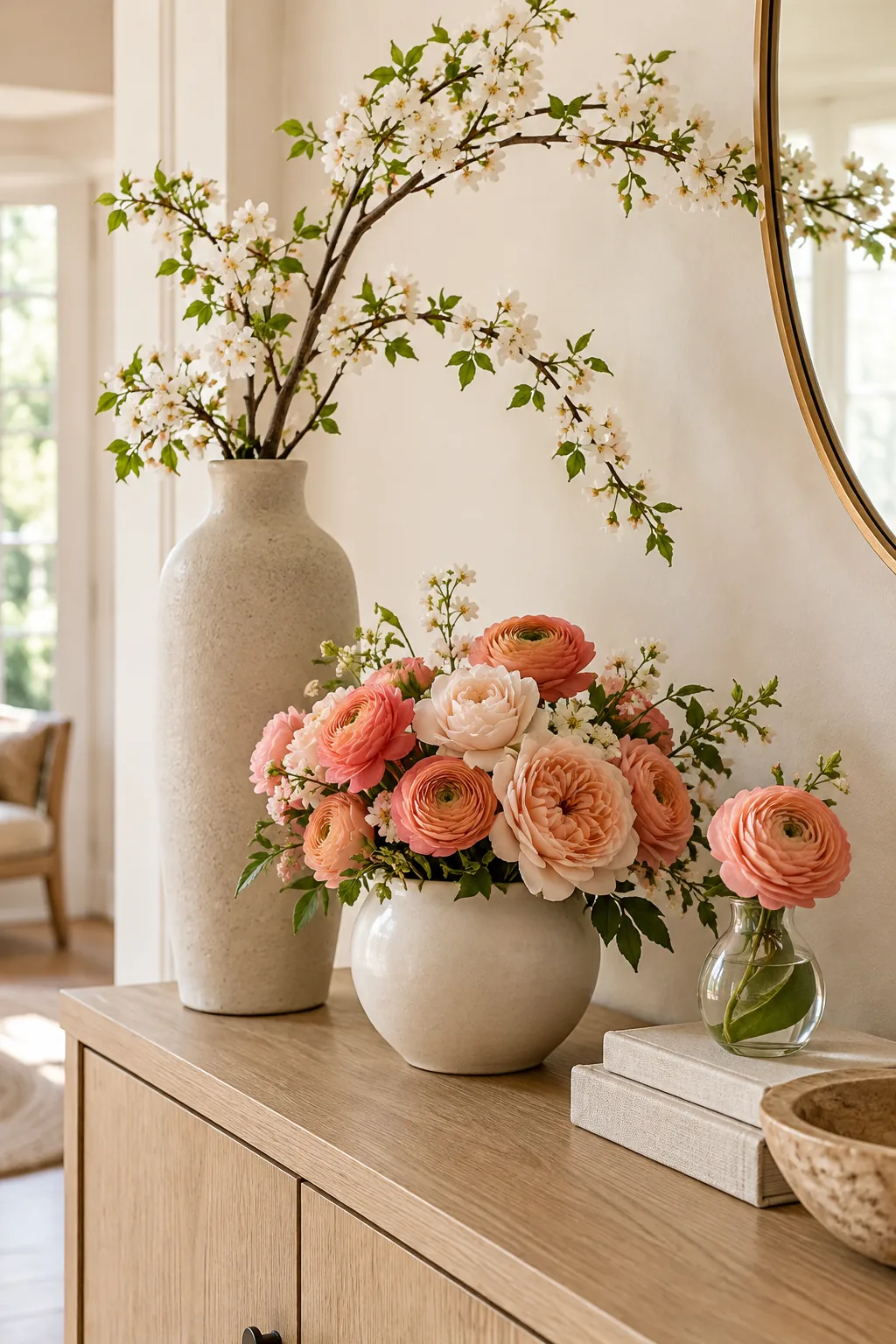
For a dramatic but stable look, trim your flowering branches so the portion extending above the rim is exactly 1.5 times the height of the vase itself.
Weighting Tall Vases with Pebbles
Long branches create a top-heavy lever that can easily tip over, so you must counterbalance those arching stems. Adding internal weight is crucial for safety, but the type of stone you select directly impacts the lifespan of your delicate branches.
Shaping Blooms with Chicken Wire
To achieve a dense, domed bunch of coral ranunculus and garden roses without using environmentally harmful floral foam, you need to create a reusable armature.
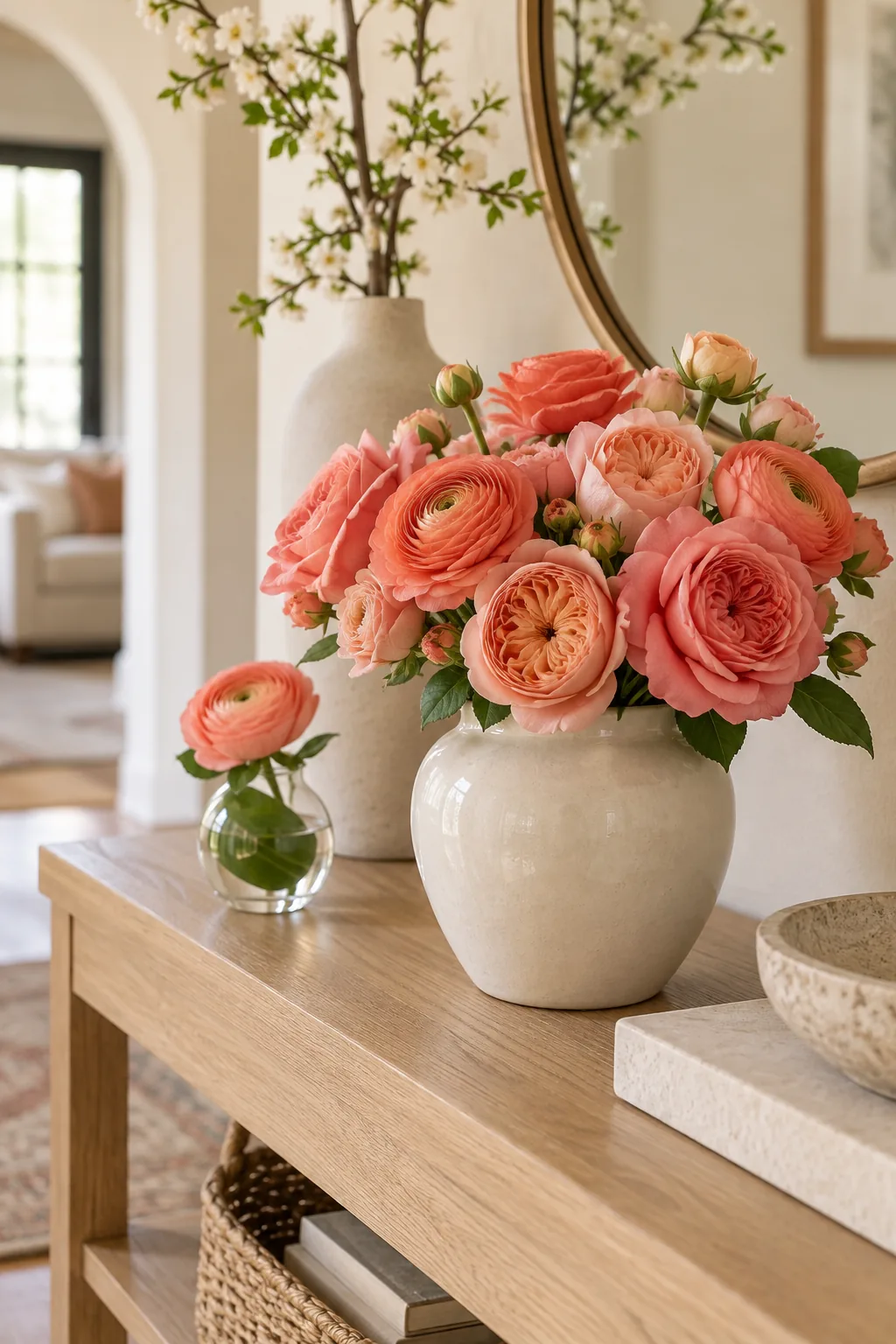
Cut a small square of chicken wire, crumple it into a loose ball, and wedge it just inside the mouth of the medium vase to hold every stem securely.
Concealing Messy Stems with Leaves
Clear glass requires flawless water and pristine stems, which is incredibly difficult to maintain throughout the week. I used to scrub my glass vessels daily until I started using this classic florist trick to hide the submerged mess.
Hide the stems entirely by curling one broad, flexible green leaf around the inside wall of the bud vase before inserting your flower.
Stacking Bud Vases on Books
A tiny bud vase can easily get lost next to larger statement pieces on a wide surface. When styling my entryway, I always give small blooms a lift so they can compete visually with the heavier ceramics.
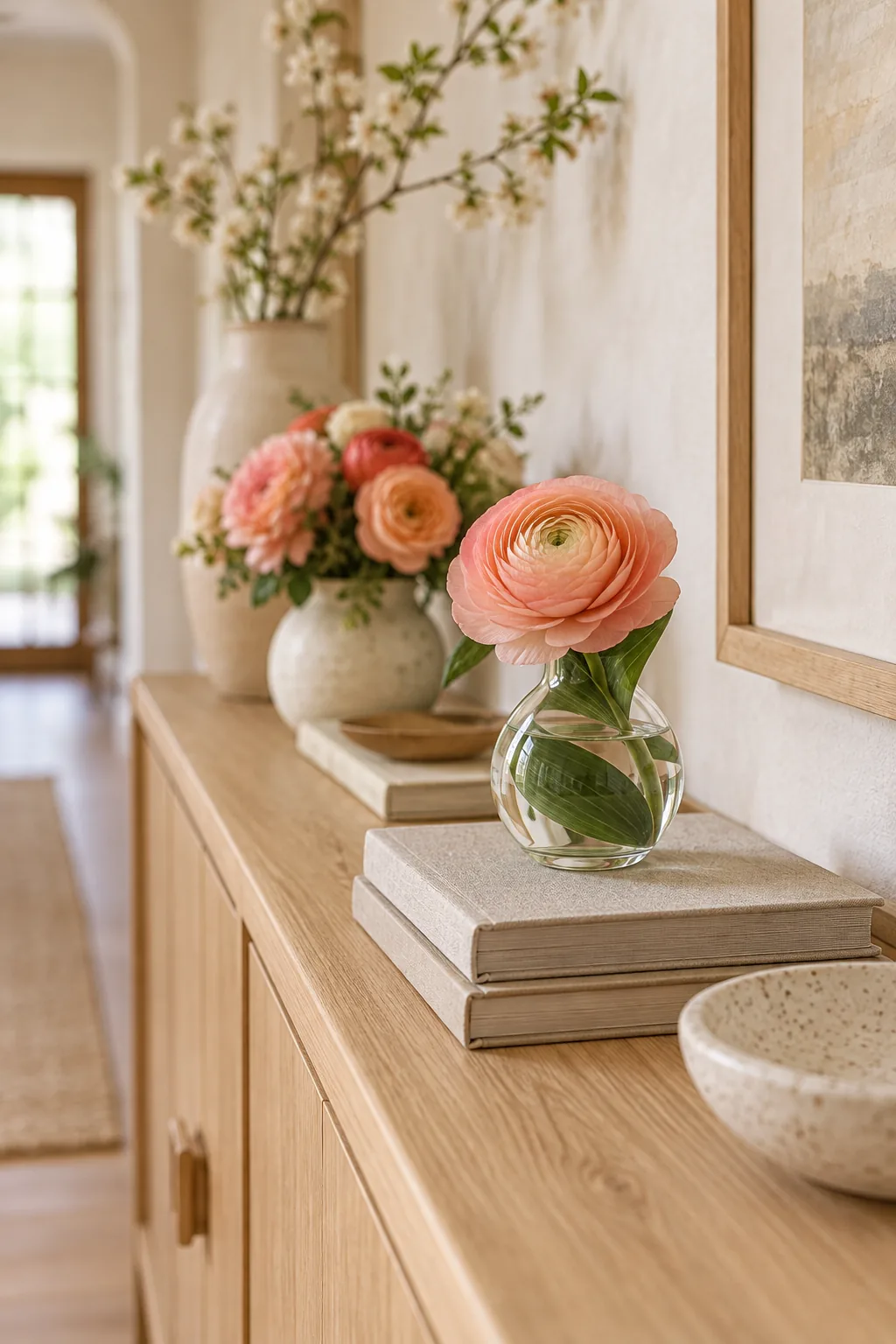
Lift your smallest arrangement into the visual spotlight by resting it on a stable pedestal made of two stacked linen-bound books.
Balancing the Three-Vase Console
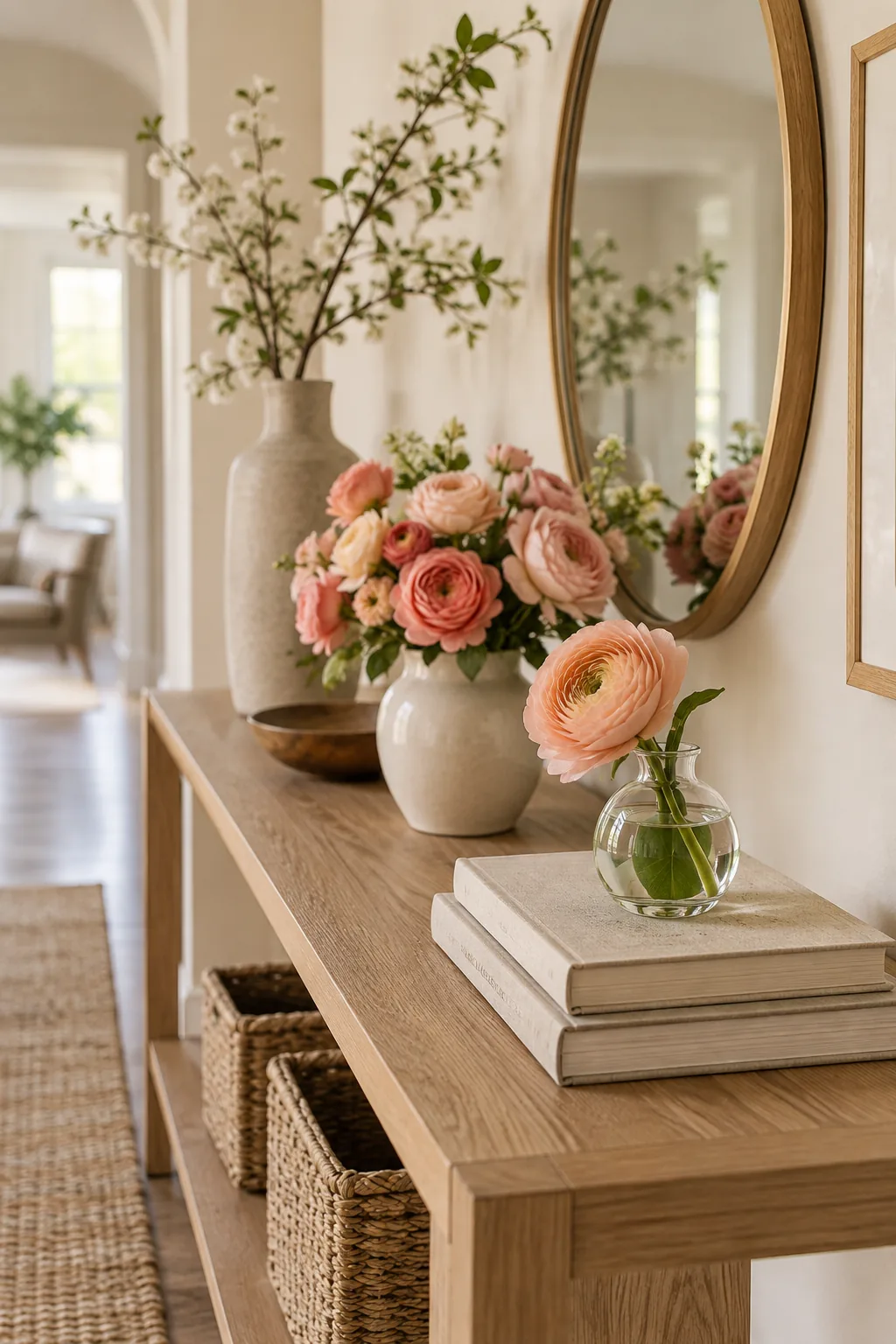
Before finalizing your console display, step back and evaluate the arrangement as a single composition to ensure the visual weight is distributed properly across the surface.
Mixing Textures and Finishes
Varying your vessel materials prevents the arrangement from looking like a flat, store-bought set. The stark contrast between the matte stone, the smooth opaque ceramic, and the reflective clear glass gives the console a collected, organic feel.
| Material | Visual Weight | Best For |
| Matte Stone | Heavy | Tall statement branches |
| Opaque Ceramic | Medium | Dense floral domes |
| Clear Glass | Light | Delicate single stems |
By distributing these distinct finishes across your triangle, you create natural focal points that guide the eye smoothly from the tallest branch down to the smallest book-bound pedestal.
Get the Stem-to-Vase Proportion Chart
Take the guesswork out of your next floral project so you never have to chop stems multiple times. I keep this exact reference sheet taped inside my utility closet right next to my floral clippers.
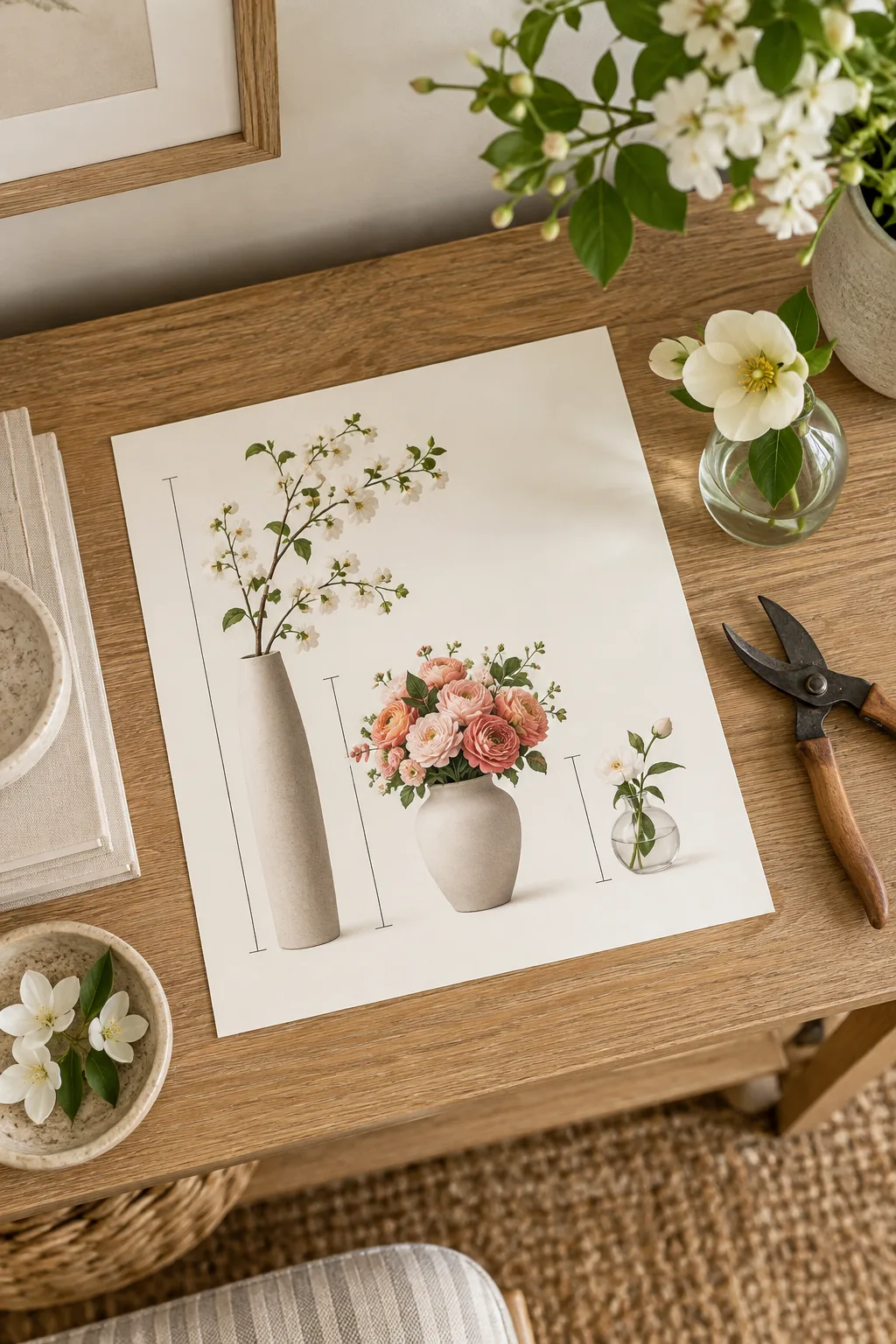
Print our one-page vase styling sheet to get the stem-to-vase proportion chart for bud, cylinder, urn, bottleneck, and low bowl shapes, plus the numbered steps for hidden mechanics.
More Ways to Style Your Vases
Explore how these hidden mechanics adapt to different room aesthetics and floral choices.
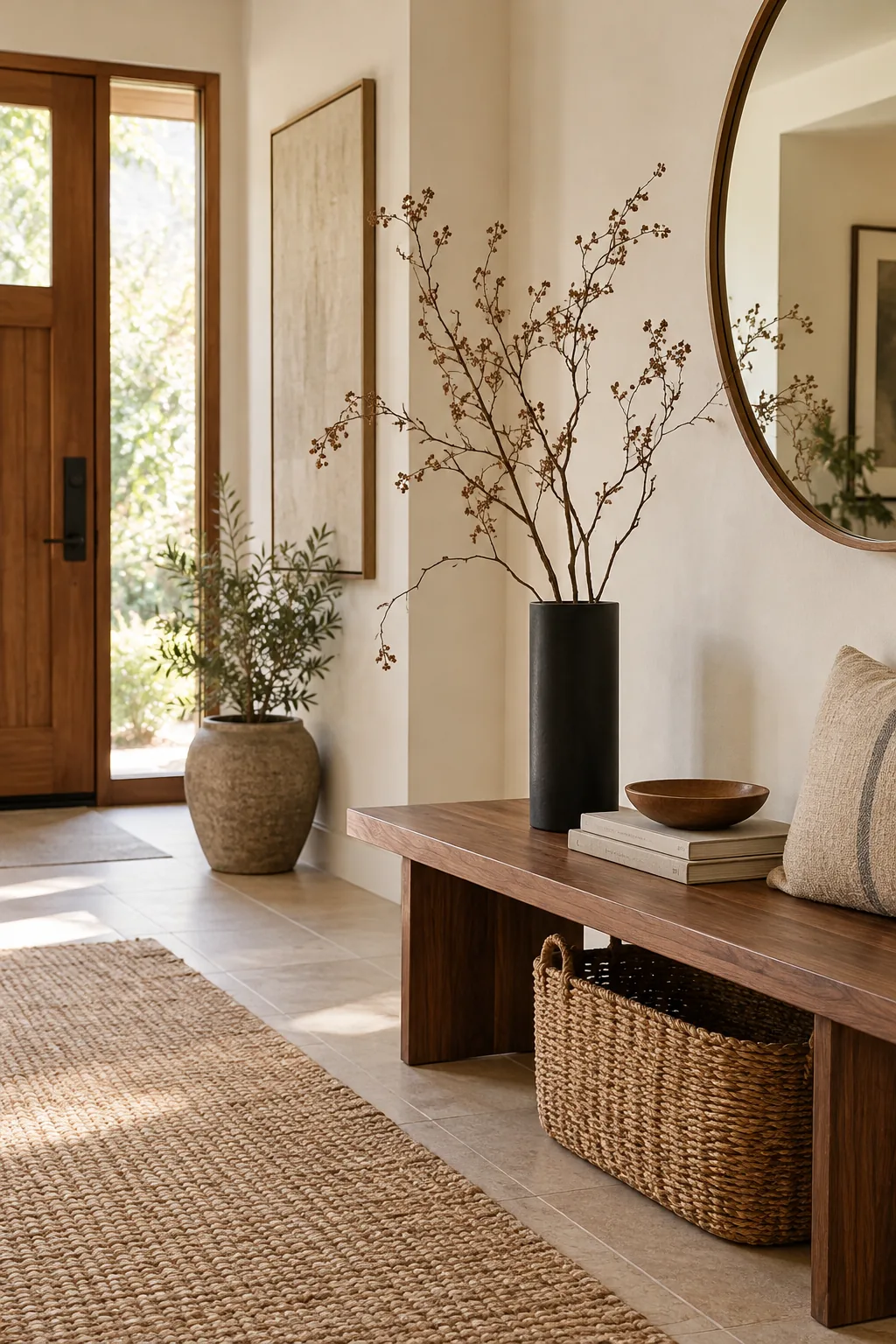
Minimalist Japandi Entryway: Embrace negative space with a matte black cylinder and sparse dried branches for a striking architectural statement.
Romantic Cottage Bedroom: Repurpose vintage ironstone pitchers as charming vessels for lush, overflowing garden roses in a cozy bedroom setting.
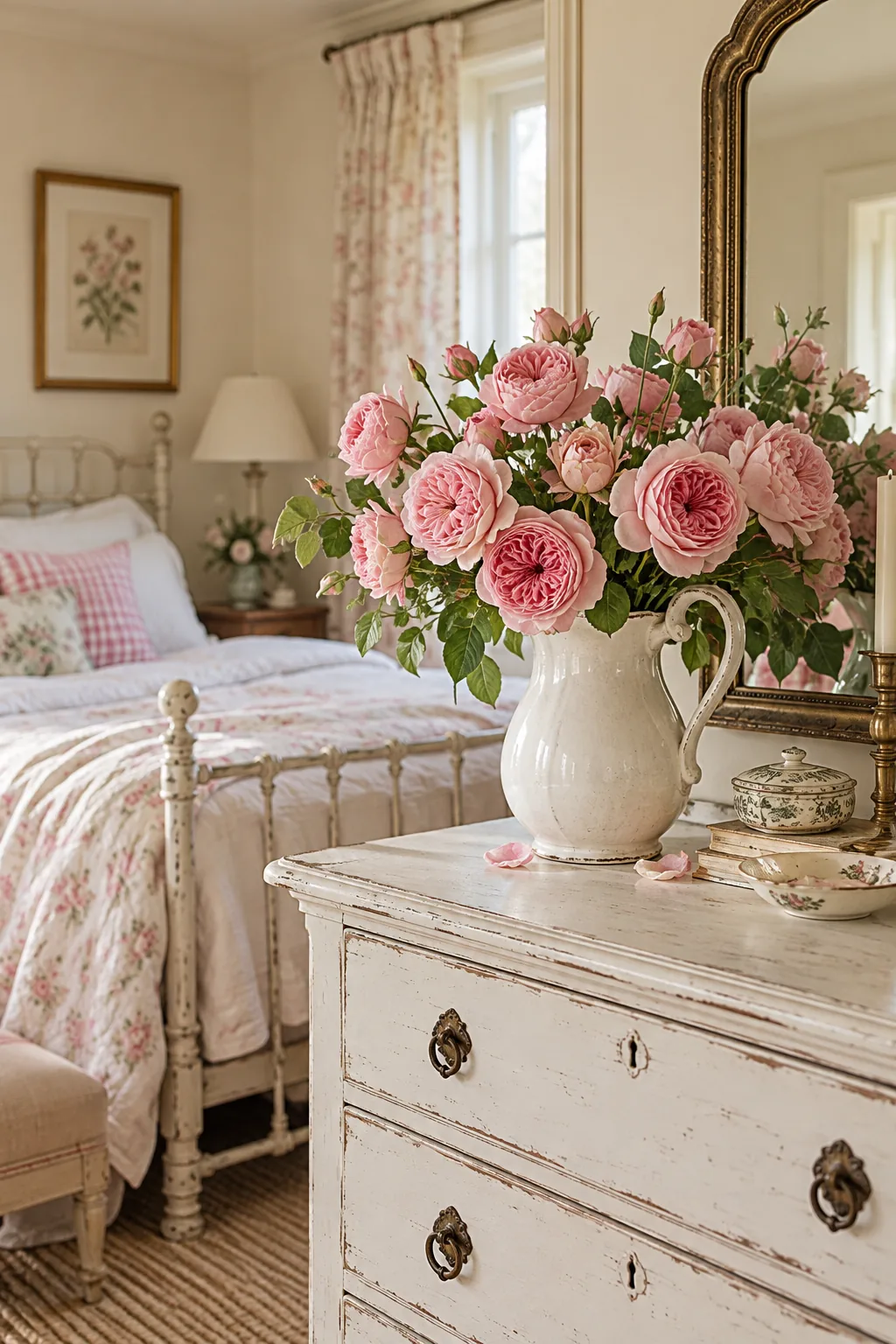
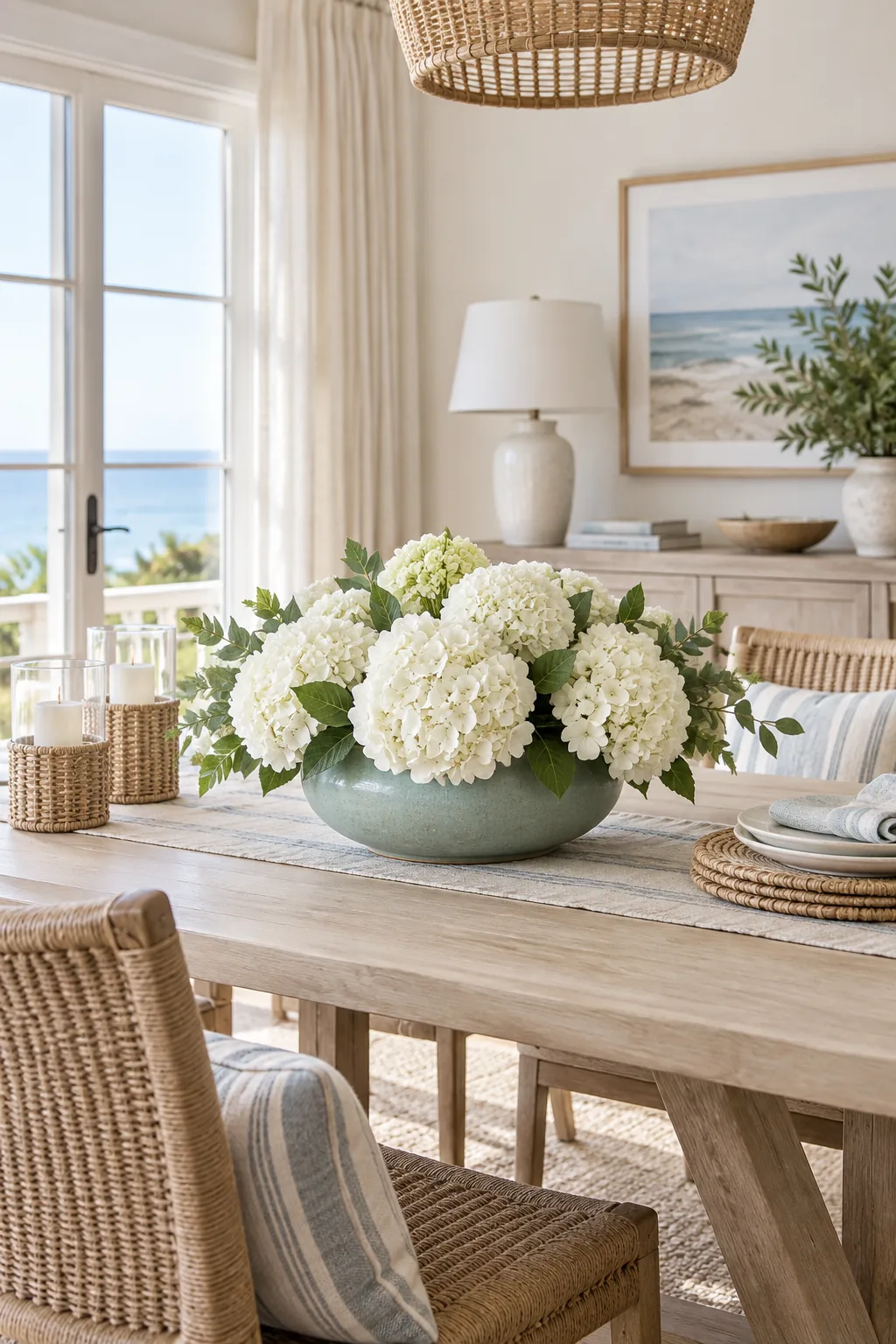
Modern Coastal Dining: Use a low sea glass bowl and chicken wire to keep white hydrangeas below eye level for easy dinner conversation.
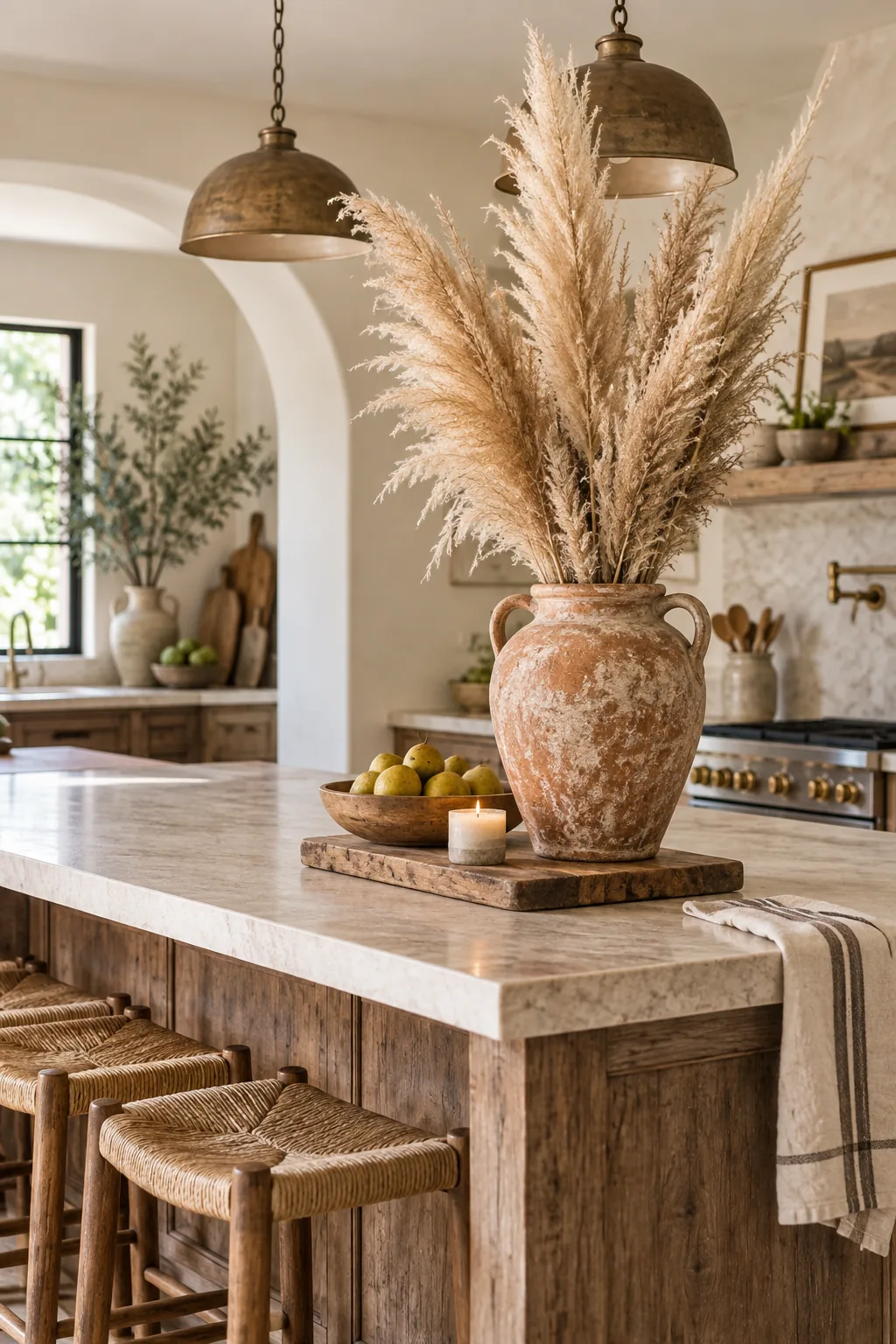
Earthy Rustic Kitchen: Anchor a large kitchen island with a heavy terracotta urn and tall, textured pampas grass that requires zero watering.