
New Year's Eve Champagne Bar Setup: Why B Wins Midnight
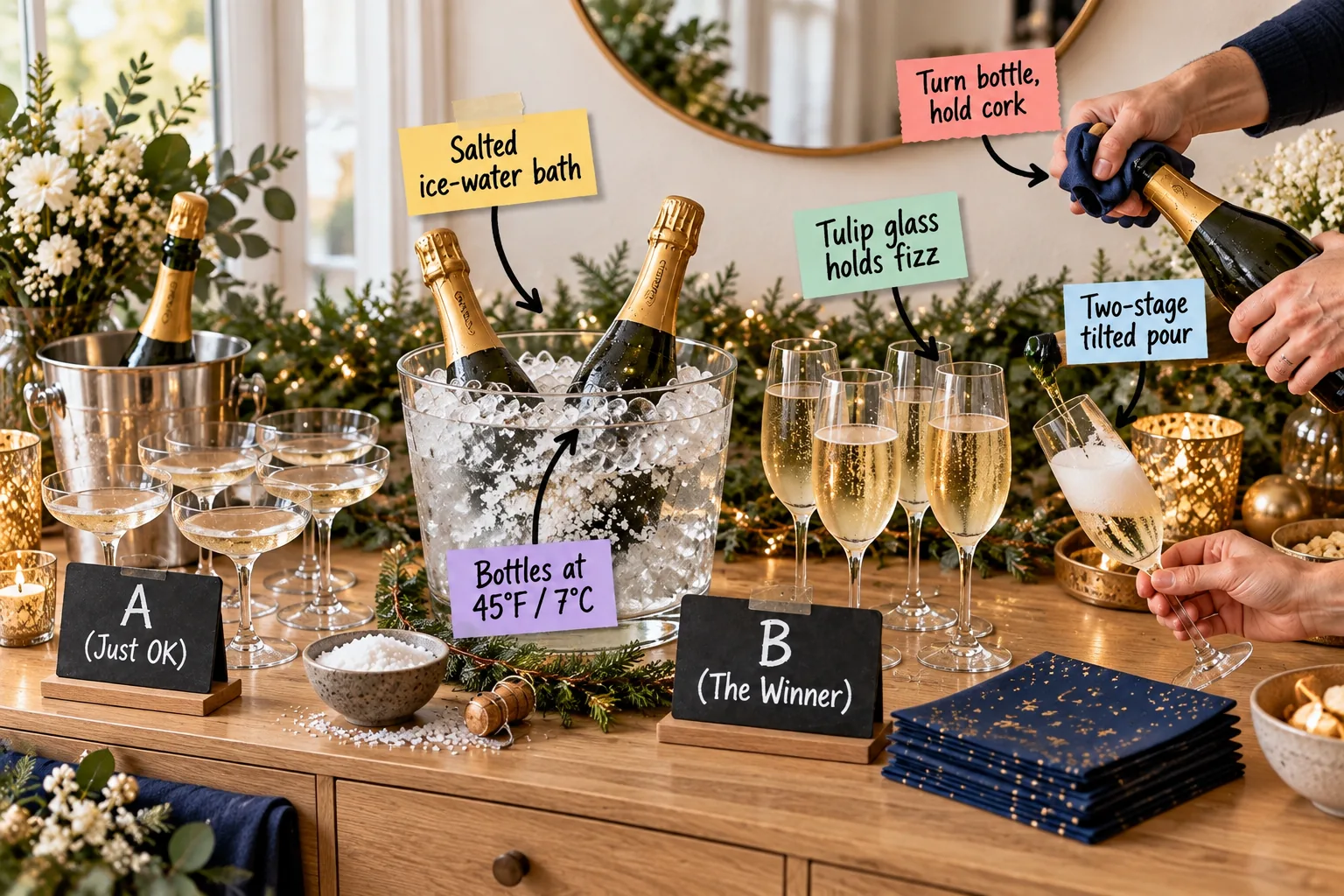
You will be able to set up a professional-grade chilling station and follow a timed schedule for a flawless midnight toast. Grab our printable Midnight Bubbly Countdown Sheet for a schedule and bottles-per-guest chart that guarantees a perfect 11:57 pour.
Seeing the visual difference between a basic setup and a dedicated, optimized midnight station proves exactly why this method wins.
The Winning Midnight Bar Setup
In my own Boston brownstone, I used to squeeze the champagne bucket onto the busy kitchen island, which always caused a disastrous traffic jam at 11:55 PM. A dedicated midnight station in the dining room absolutely prevents those stressful kitchen bottlenecks when the countdown begins.
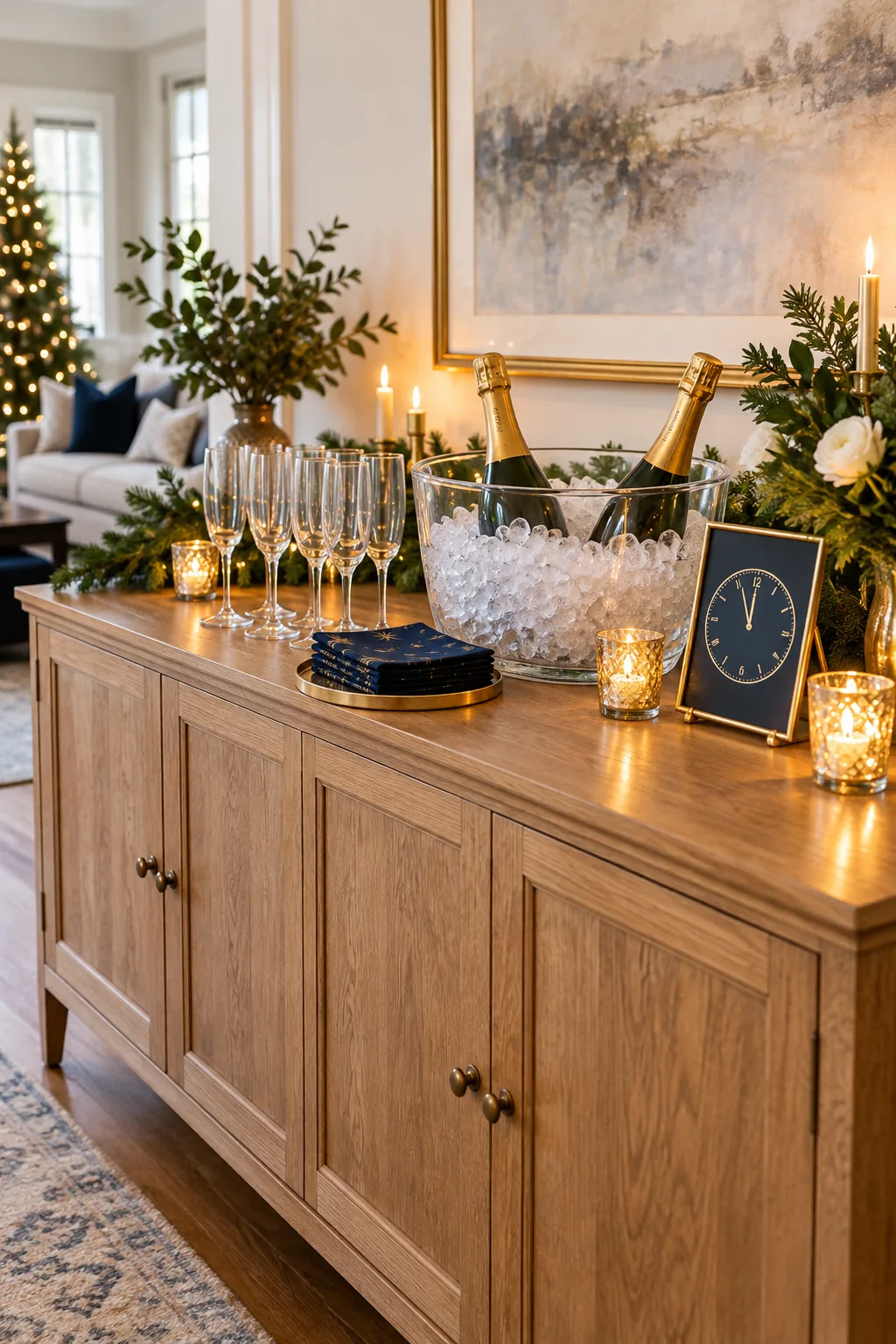
While a standard setup with a plain ice bucket and wide coupes loses its chill and fizz quickly, an optimized bar guarantees perfection.
Preventing the Kitchen Bottleneck
Setting up hours in advance lets you actually enjoy the party until it is time to pour.
- Clear a dedicated sideboard or console table entirely away from the main food buffet.
- Wipe down the surface and lay out your linens before any guests arrive.
- Position your chilling tub in the center so you have ample room to work on both sides.
Establishing this separate zone ensures everyone naturally gravitates toward the right space when the ball drops.
Timing Your Initial Preparation
You want to complete the heavy lifting early in the evening so you are not hauling ice in your party clothes. Setting the foundation by 9:00 PM gives the station time to chill thoroughly while you mingle.
The Salted Ice-Water Bath
Last New Year’s Eve, my guests were amazed when the sparkling wine chilled in under twenty minutes using my favorite visual merchandising trick. Filling a clear glass tub with ice cubes, water, and coarse salt lowers the freezing point significantly for a rapid chill.
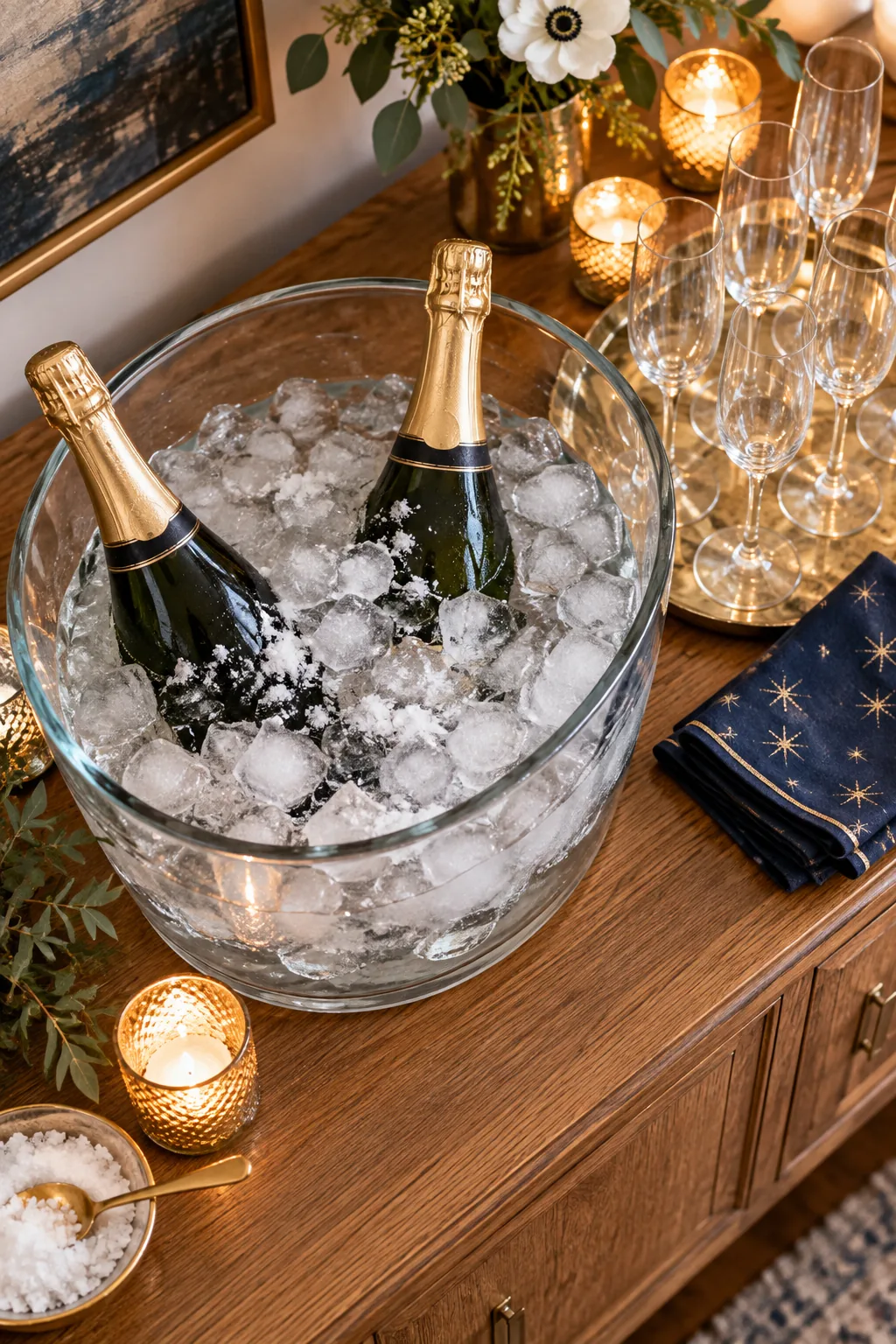
A salted ice-water bath fully submerges the bottles to the shoulder, chilling them faster and more consistently than a standard refrigerator.
The Science of the Fast Chill
Ice alone leaves warm air pockets against the glass, resulting in an uneven temperature that ruins the pour.
This simple chemical reaction pulls heat out of the glass rapidly, ensuring a crisp sip every time.
Submerging to the Bottle Shoulder
You must ensure the icy liquid reaches high enough to cover the actual wine inside the glass. Leaving the neck exposed is fine, but the entire wide body must sit below the water line.
Hitting the 45°F Sweet Spot
I learned the hard way at a client’s gala that warm bubbly foams over uncontrollably and ruins the floor. Serving sparkling wine at exactly 45°F (7°C) keeps the carbonation suspended beautifully and ensures the cork releases safely.
Achieving that perfect temperature requires avoiding these common chilling errors that can easily ruin the midnight toast.
Recognizing the Frosty Shoulder
You will know the bottles are perfectly ready when a frosty, beaded condensation forms along the exposed glass above the ice.
Why Tulip Glasses Hold the Fizz
Glass shape dictates exactly how long your celebratory drink stays bubbly after it leaves the bottle. Wide coupes allow carbonation to escape instantly, leaving the wine completely flat before the clock even strikes twelve.
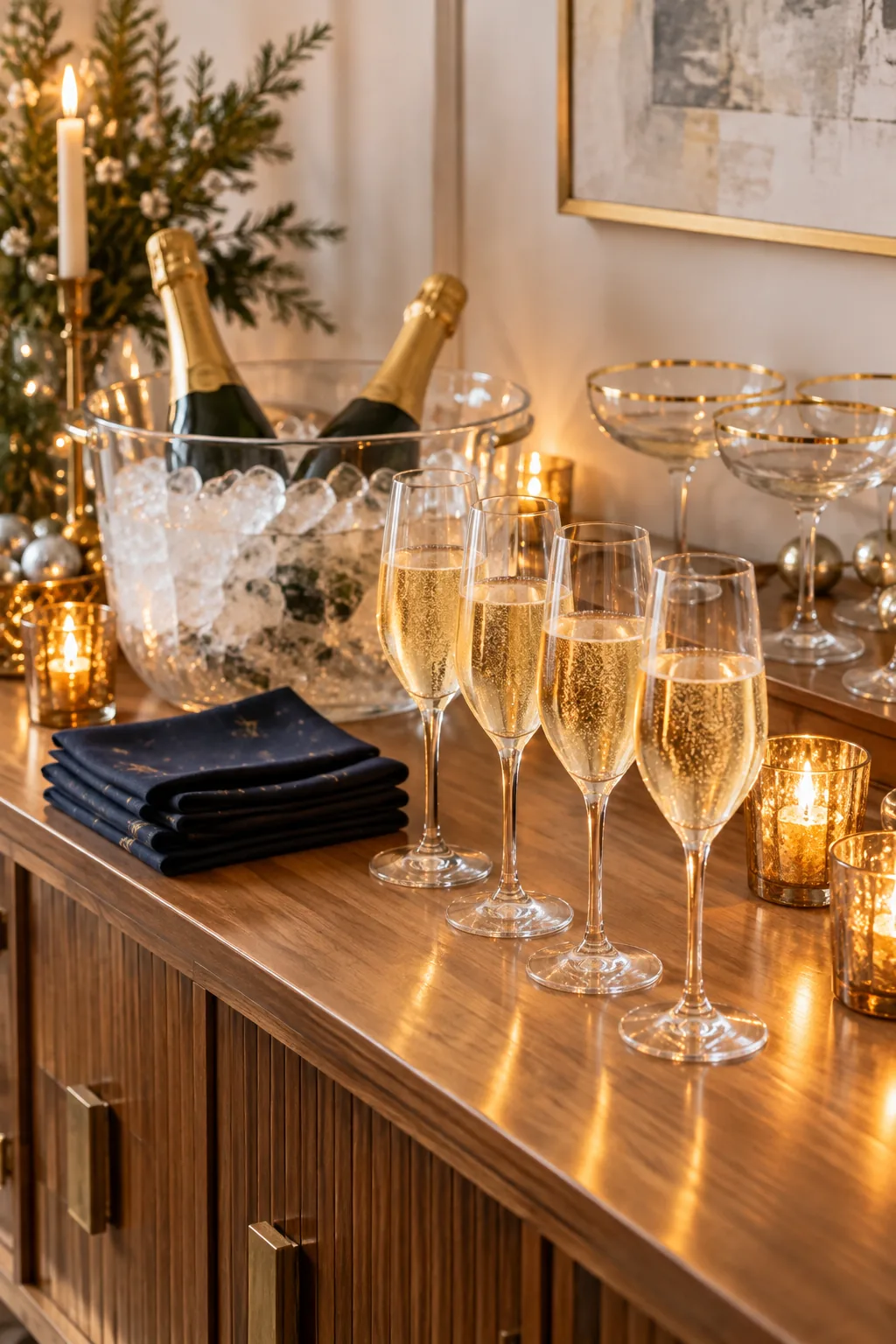
A row of tulip-shaped glasses provides a wider bowl to develop aromas while using a narrow rim to trap the fizz.
Trapping the Aromatic Bouquet
The inward curve at the top of the glass directs those delicate yeast and fruit notes straight toward your nose.
Arranging the Glassware Layout
Line up your polished stems in neat, accessible rows so you can grab them quickly without knocking others over. Spacing them an inch apart prevents accidental clinking during the hurried final countdown.
The Safe Turn and Hold Open
Opening the bottle correctly prevents sticky spills and preserves the precious bubbles you worked so hard to chill. Instead of pulling the cork, use your dominant hand to slowly turn the bottle’s base until it releases.
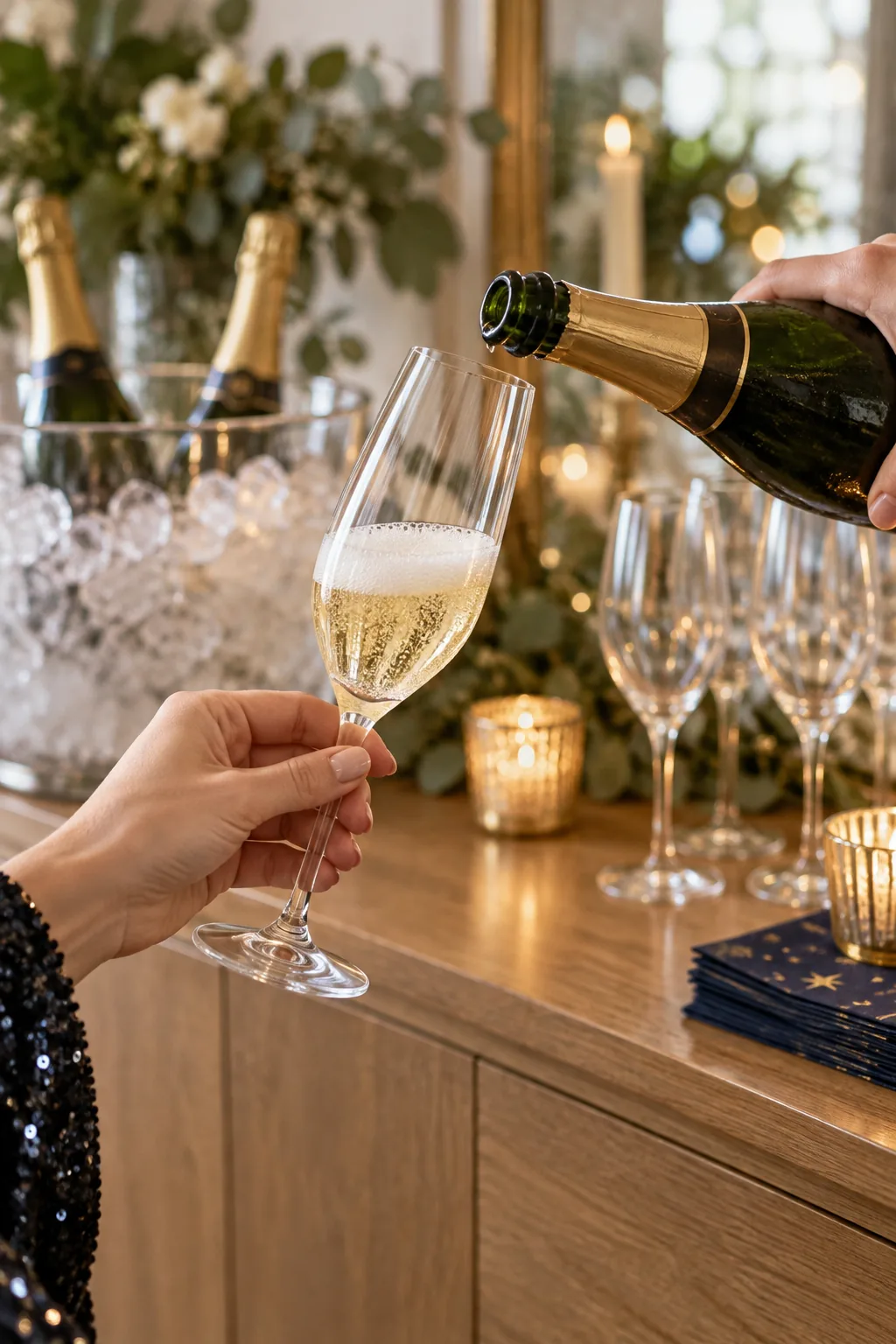
You must hold the cork firmly with your other hand, allowing it to ease out with a quiet sigh rather than a loud pop.
The Midnight-Blue Napkin Grip
Drape a folded midnight-blue napkin over the top before you begin twisting to catch any unexpected foam.
Controlling the Pressure Release
Keeping the bottle angled at forty-five degrees while opening redirects the internal pressure against the side of the glass. This simple angle prevents the wine from shooting straight up through the narrow neck.
Managing the Midnight Rush
The ten minutes before midnight are always chaotic if you are unprepared and trying to do everything at once.
As the clock ticks closer to midnight, a quick final check ensures you are not scrambling when the ball drops.
Stocking the Final Ten Minutes
Having your station fully stocked means you only need to focus on opening and pouring when the time finally comes. Keep your countdown card visible so guests know exactly when to gather around the bar.
The Two-Stage Tilted Pour
Pouring straight down into an upright glass creates excessive, unmanageable foam that immediately spills over the delicate rim.
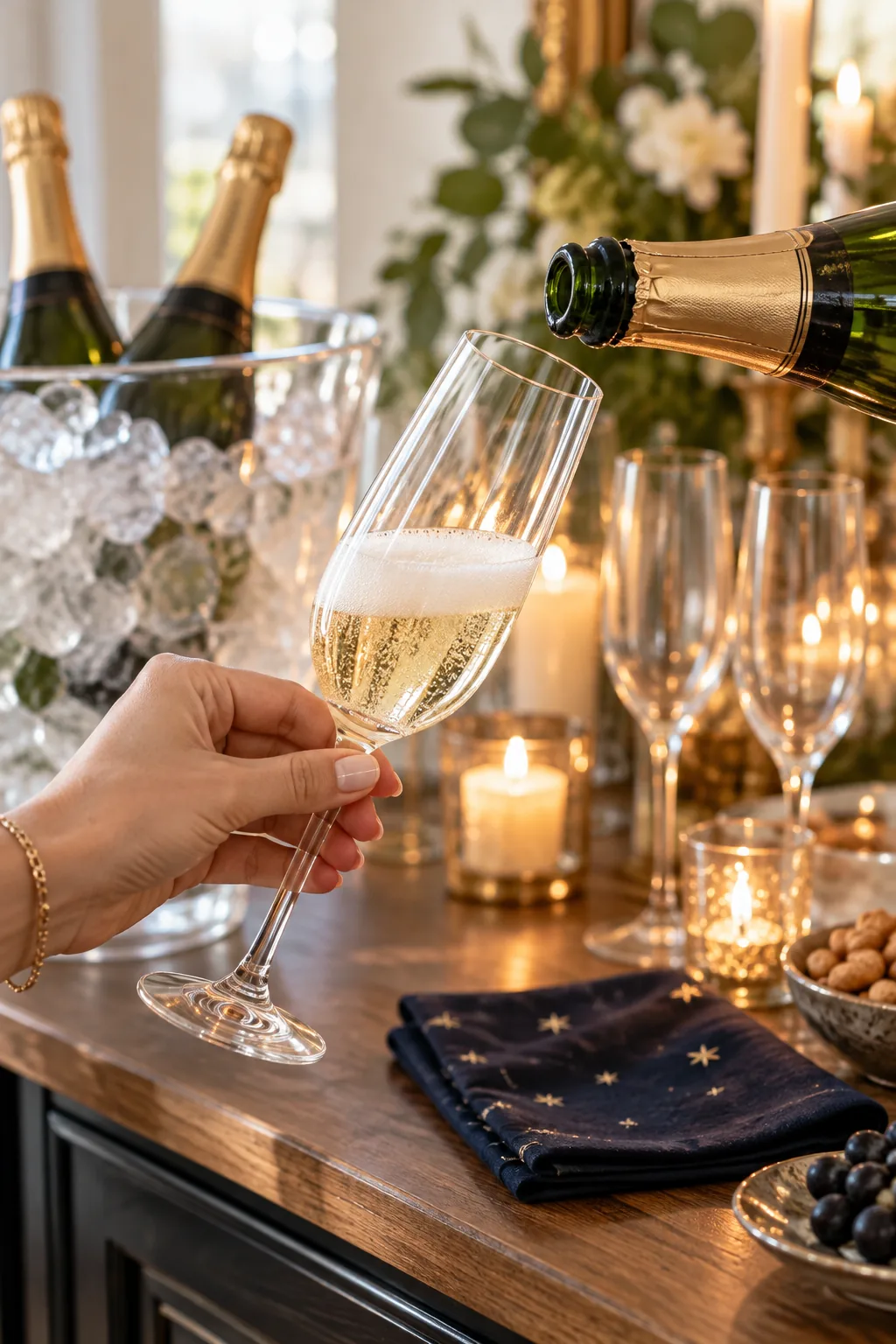
Hold the tulip glass at a sharp angle and execute a two-stage tilted pour to keep the carbonation intact.
Letting the Initial Foam Settle
Pour a single inch down the slanted side of the glass to let the initial rush of foam settle completely.
Preserving Maximum Carbonation
Once that first layer subsides, tip the bottle again to fill the glass smoothly to the widest part of the bowl. This gentle technique respects the wine and delivers a brilliant, lively texture to every guest.
Your Midnight Bubbly Countdown Sheet
I keep this exact printed schedule taped inside my dining room cabinet every single New Year’s Eve to stay on track. Print this one-page guide to keep your party running smoothly from the early ice bath setup to the final toast.
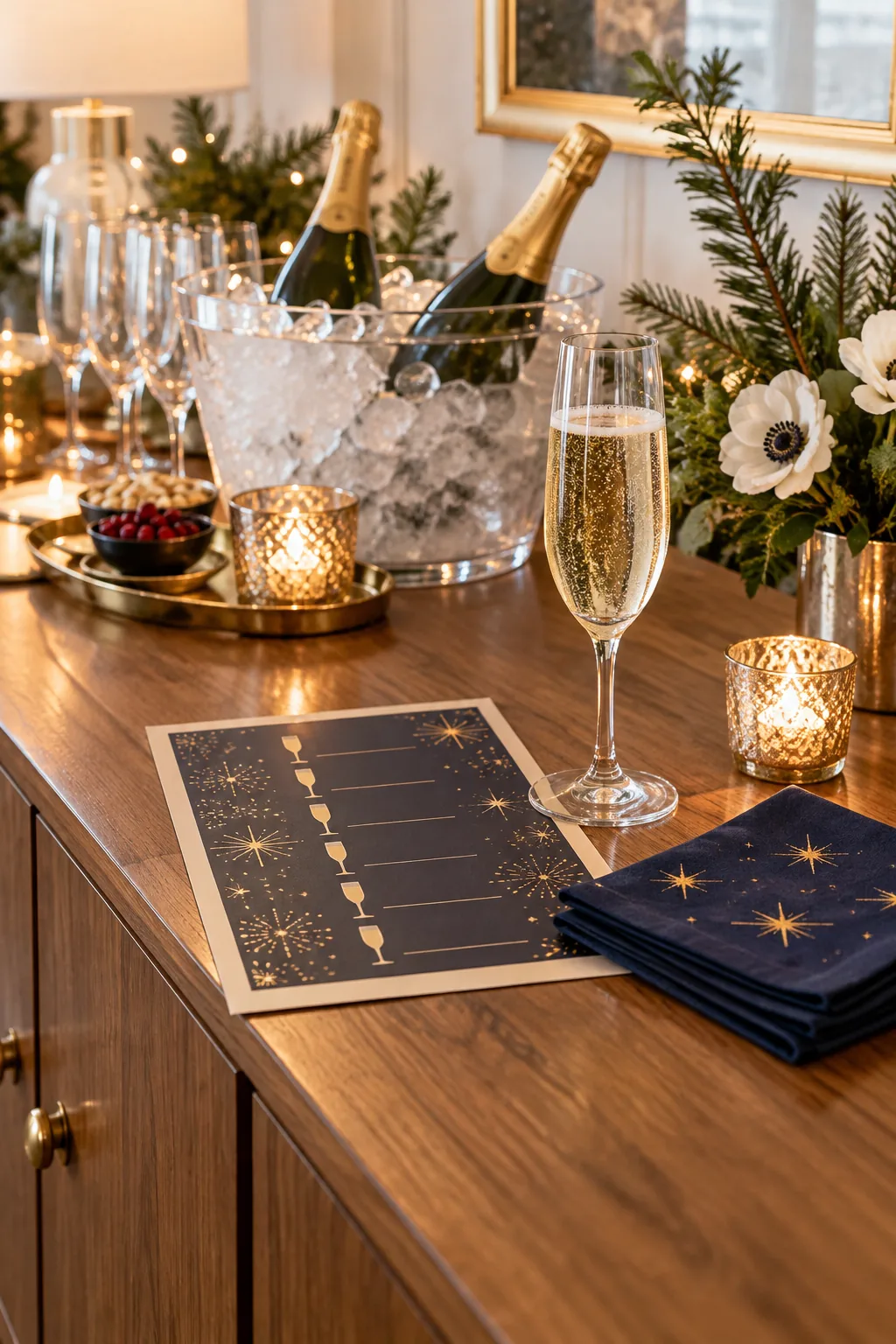
Calculating Bottles Per Guest
Use the included chart to calculate your shopping list accurately, based on exactly 6 glasses per 750 ml bottle.
| Number of Guests | Bottles Required |
|---|---|
| 4 to 6 guests | 1 to 2 bottles |
| 8 to 12 guests | 2 to 3 bottles |
| 14 to 18 guests | 3 to 4 bottles |
| 20 to 24 guests | 4 to 5 bottles |
| 26 to 30 guests | 5 to 6 bottles |
Buying slightly more than you need ensures a generous pour for everyone and covers any unexpected plus-ones.
5 Ways to Style Your Midnight Bar
Match your chilling station to your party's exact mood with these distinct looks.
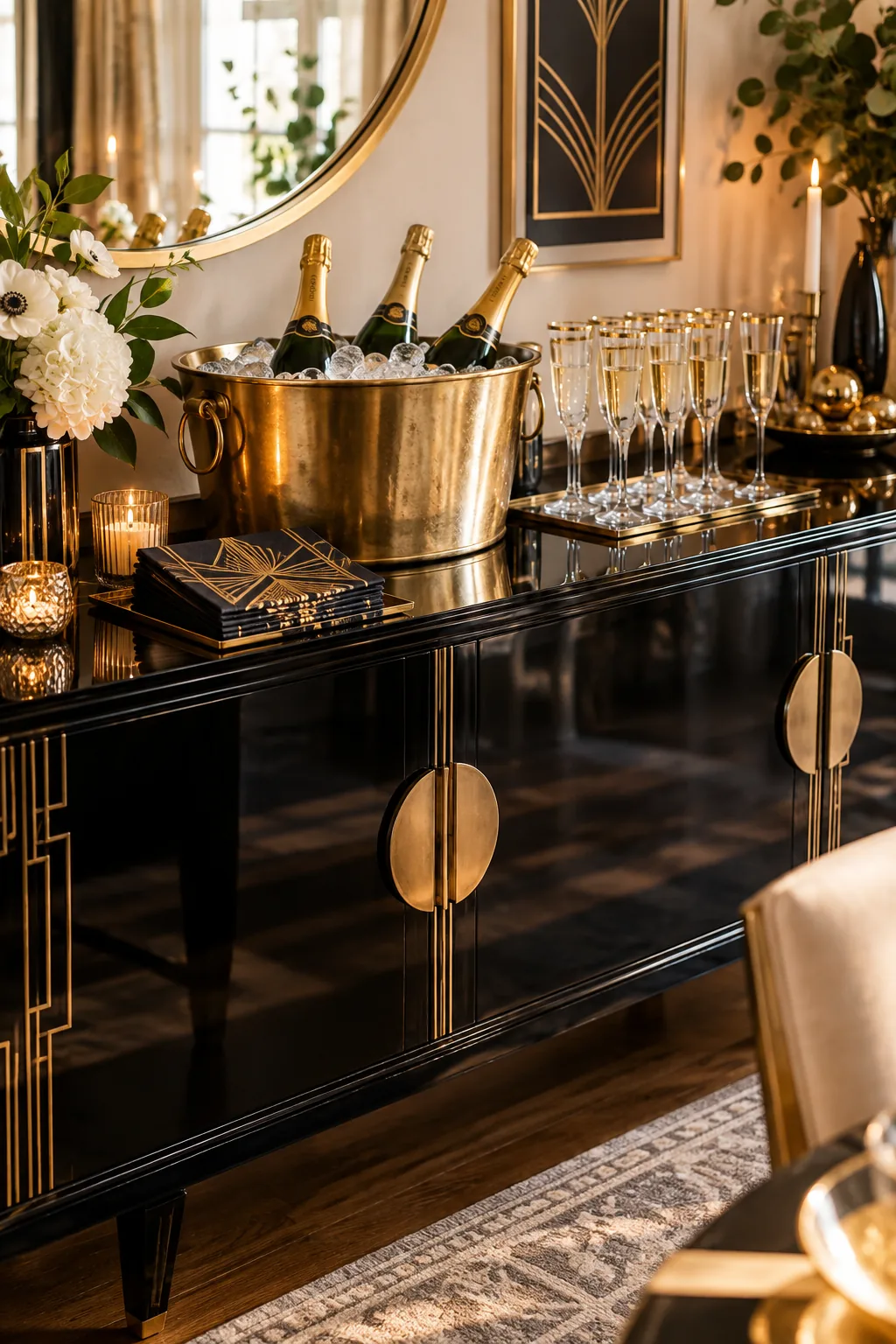
Classic Art Deco Glamour: Elevate a formal dining room with bold black lacquer, polished brass ice tubs, and geometric gold accents.
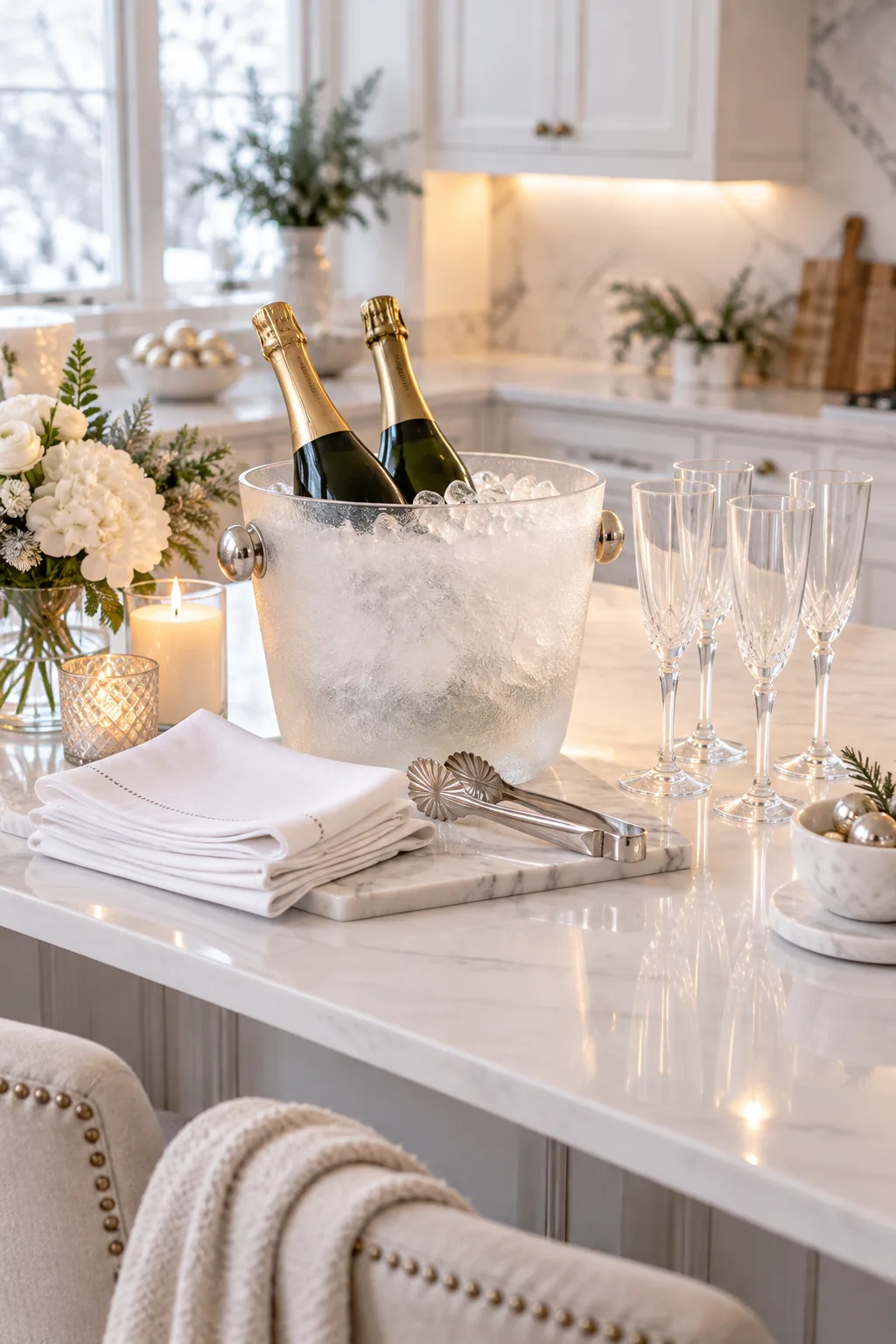
Minimalist Winter White: Keep a modern kitchen island feeling fresh with frosted glass chillers, crisp white linens, and simple silver tools.
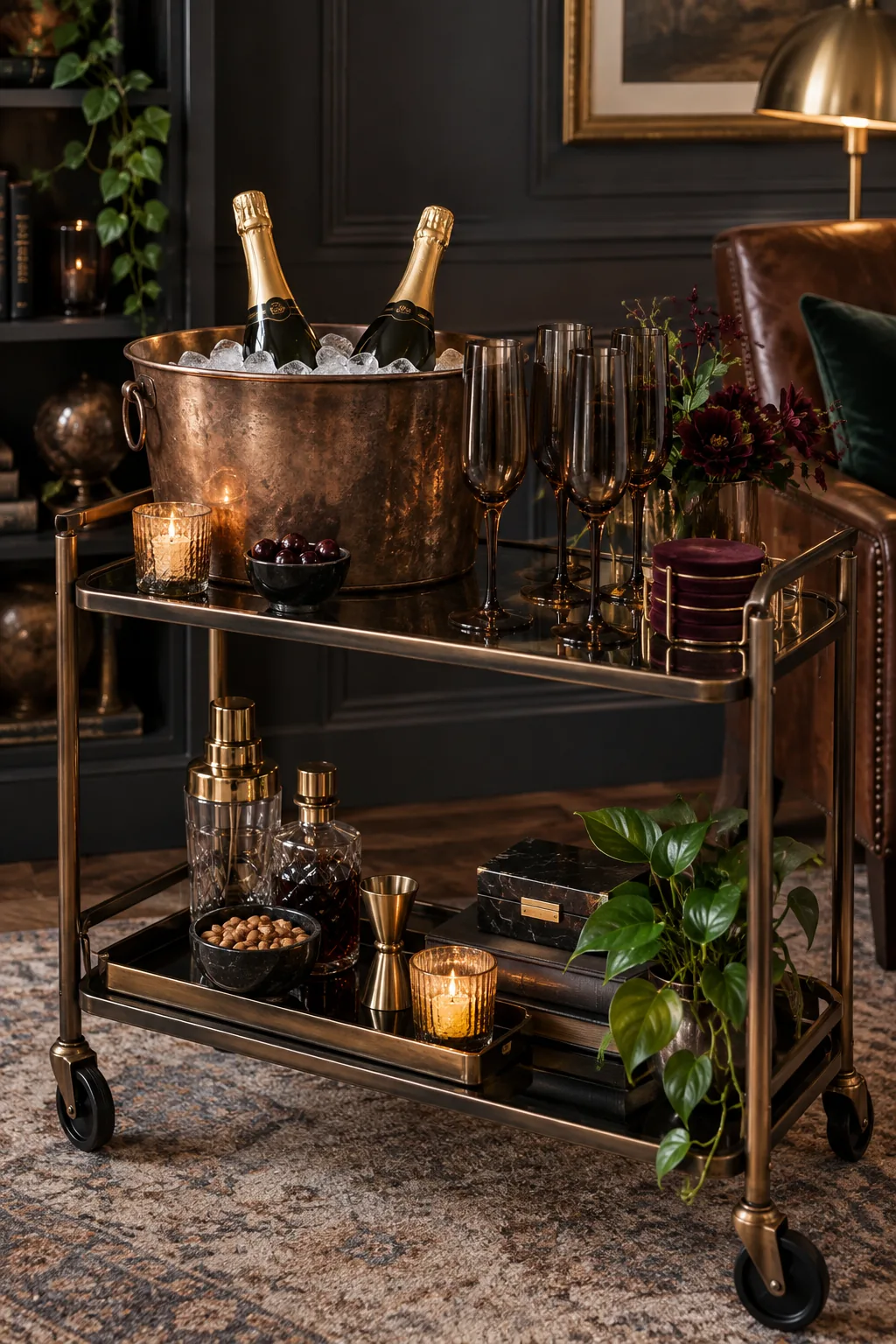
Moody Midnight Lounge: Transform a quiet study corner using an antique copper tub, smoked glassware, and rich velvet textures.
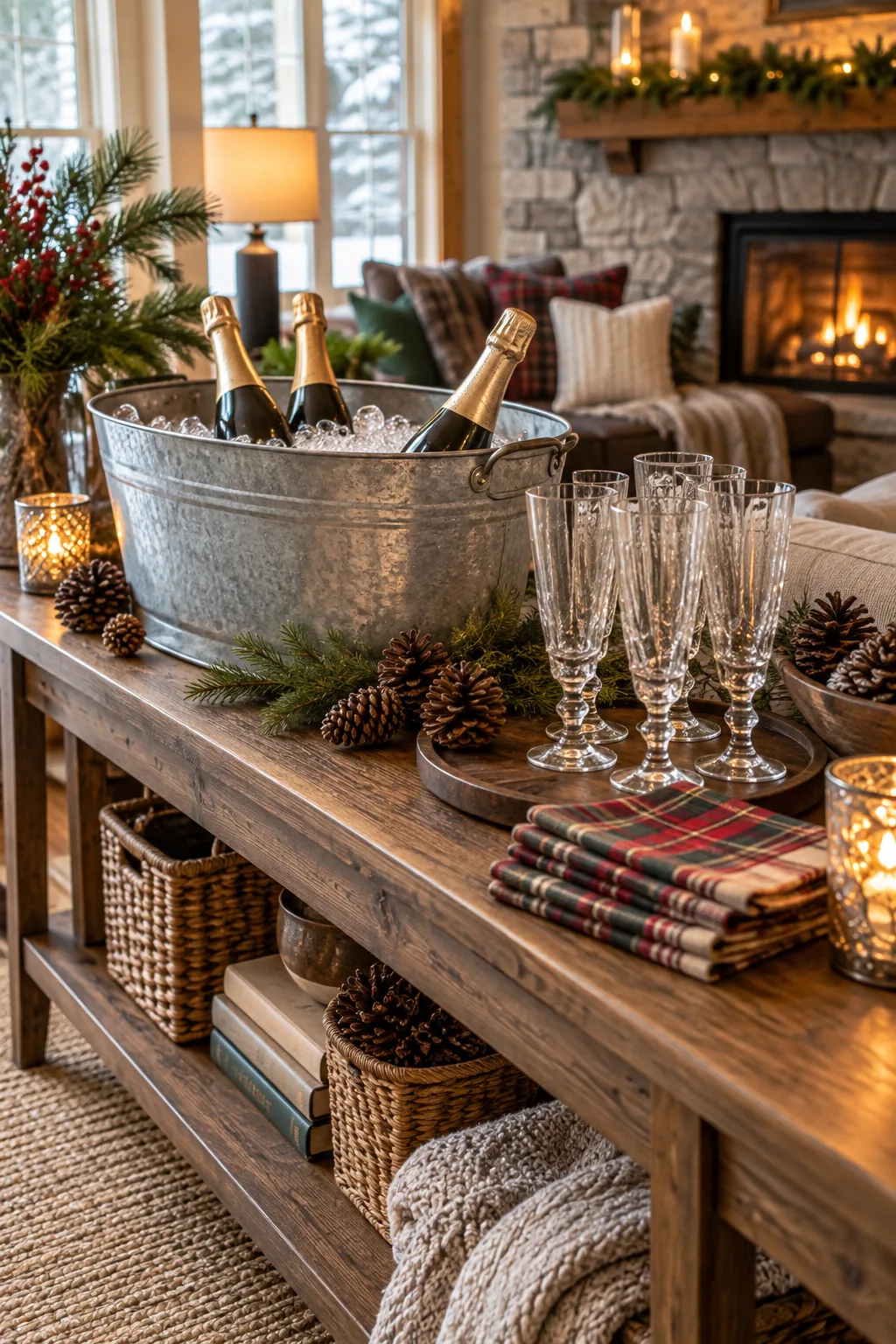
Rustic Cabin Celebration: Bring warmth to a living room console with a galvanized metal tub, scattered pinecones, and cozy plaid napkins.
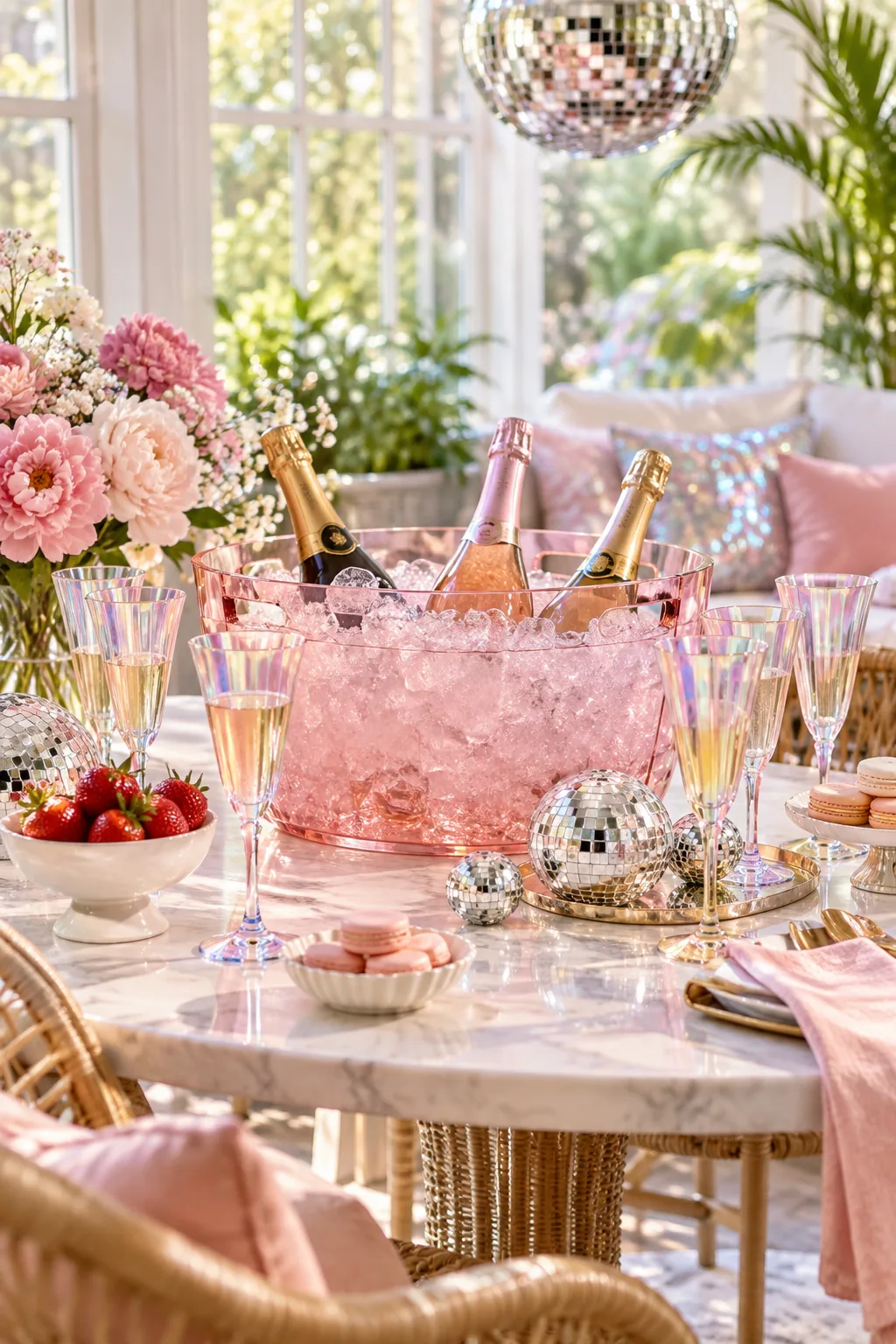
Pastel Disco Party: Add playful energy to a sunroom using a blush pink acrylic tub, iridescent glasses, and miniature disco balls.
Printing Your Final Schedule
Pinning this schedule to the fridge or keeping it on the bar keeps busy hosts entirely accountable as midnight approaches.
You can confidently enjoy the countdown knowing every detail of the toast is perfectly staged.