
16+ Stunning Wallpaper Living Room Ideas
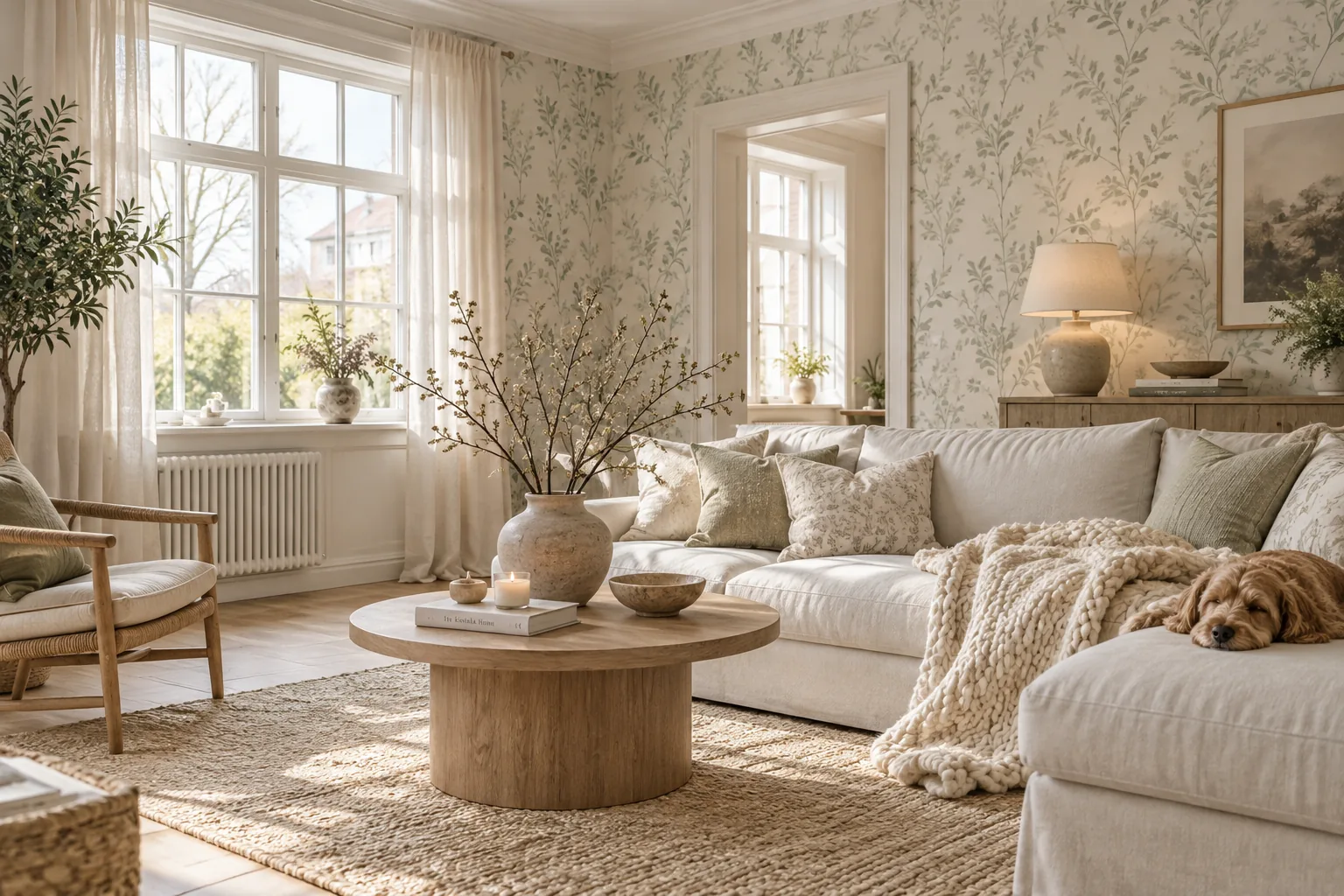
Wallpaper completely changes the energy of a living room without requiring a massive renovation. I gathered these solid, real-life ways to use pattern and texture so you can skip the guesswork and just get it done.
1. Go Dark and Botanical
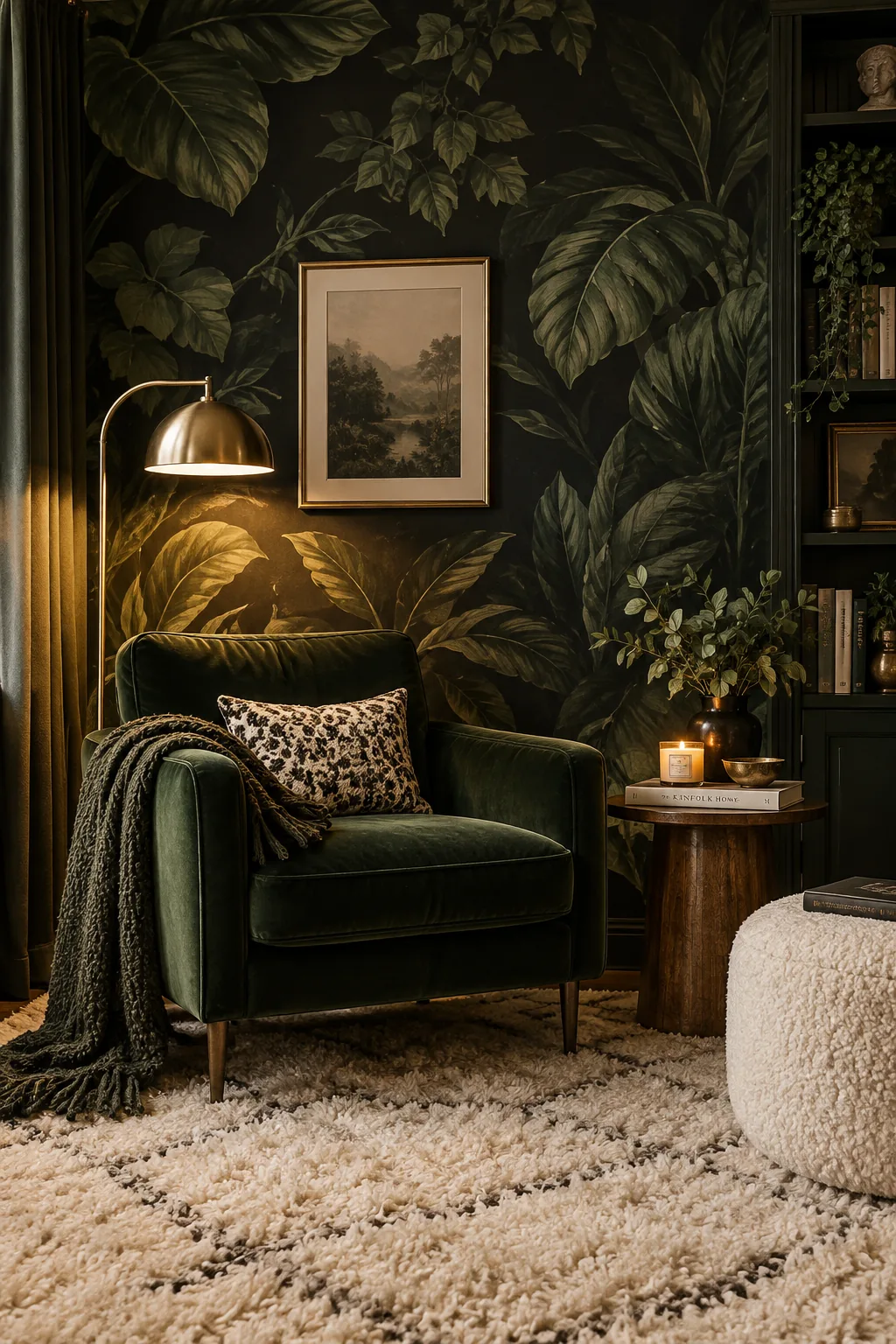
A moody, enveloping atmosphere comes from wrapping the entire room in a dark botanical print. Taking the paper across all four walls blurs the corners and makes a standard living room feel like a cozy den. You just need to balance the heavy walls with a light-colored rug and bright, warm lighting. This approach works incredibly well in rooms that already lack natural light.
2. Anchor With a Mural
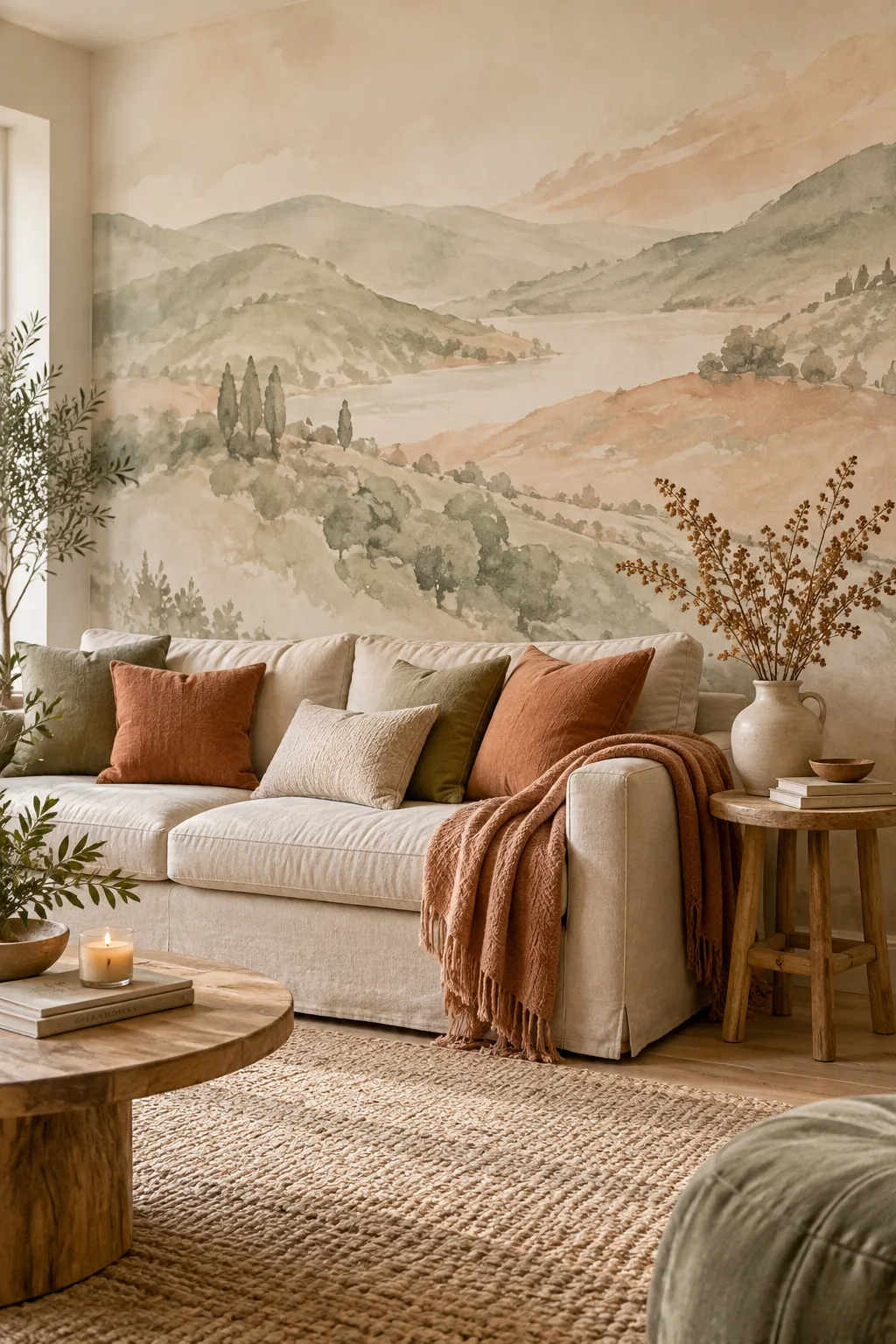
Keep your large-scale mural on a single unbroken wall.
You want the artwork to act as the room's primary anchor without getting chopped up by windows or doors. Push your sofa against this wall to ground the layout. Pulling colors from the mural into your throw pillows ties the whole space together effortlessly.
3. Pair With Wainscoting
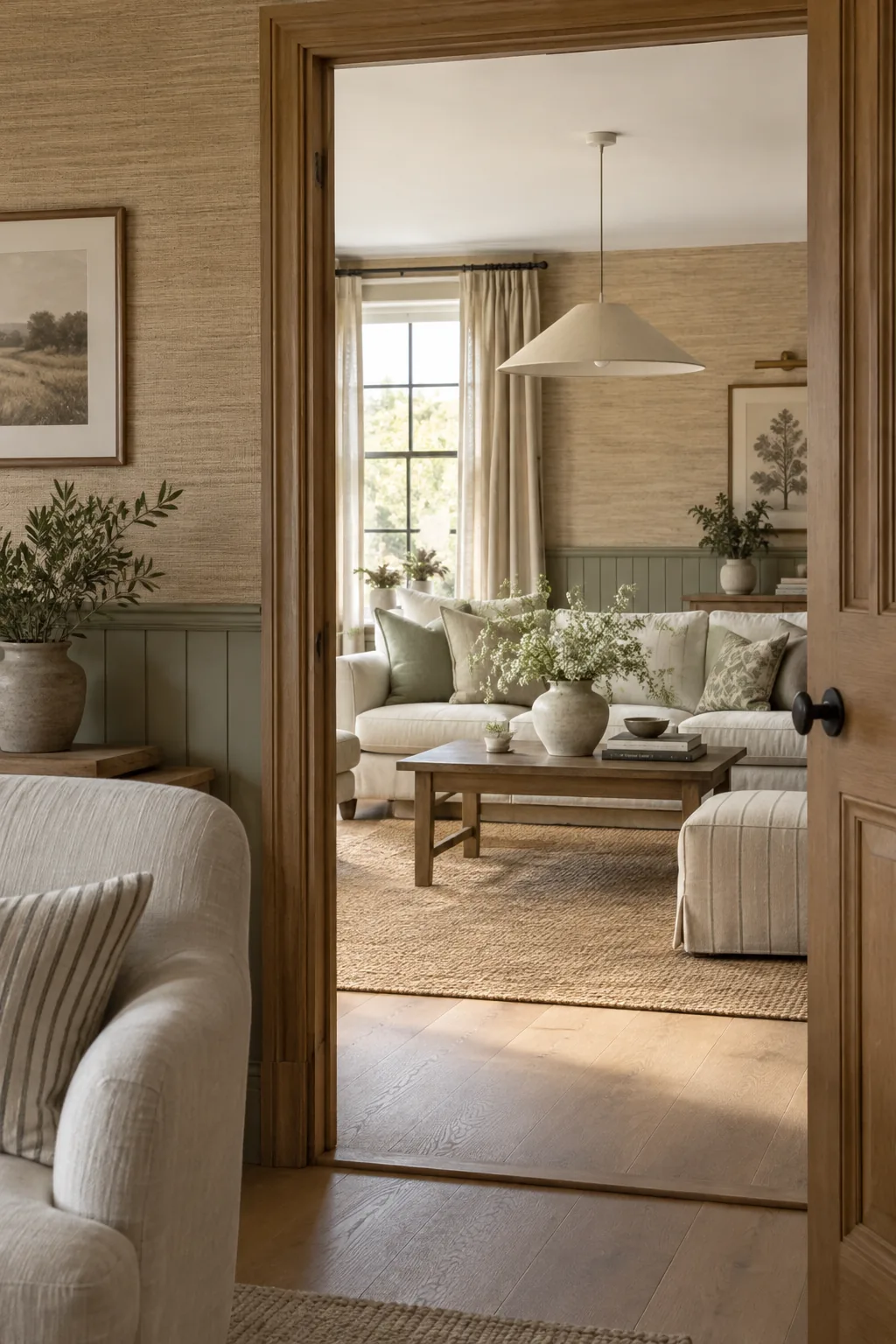
Installing wallpaper just above the wainscoting saves you about fifty percent on material costs. It also gives you the perfect excuse to use a highly detailed, expensive grasscloth without overwhelming the space. Paint the lower wood panels in a complementary solid color to ground the room. This classic split-wall technique instantly adds architectural interest to plain drywall.
4. Paper the Ceiling
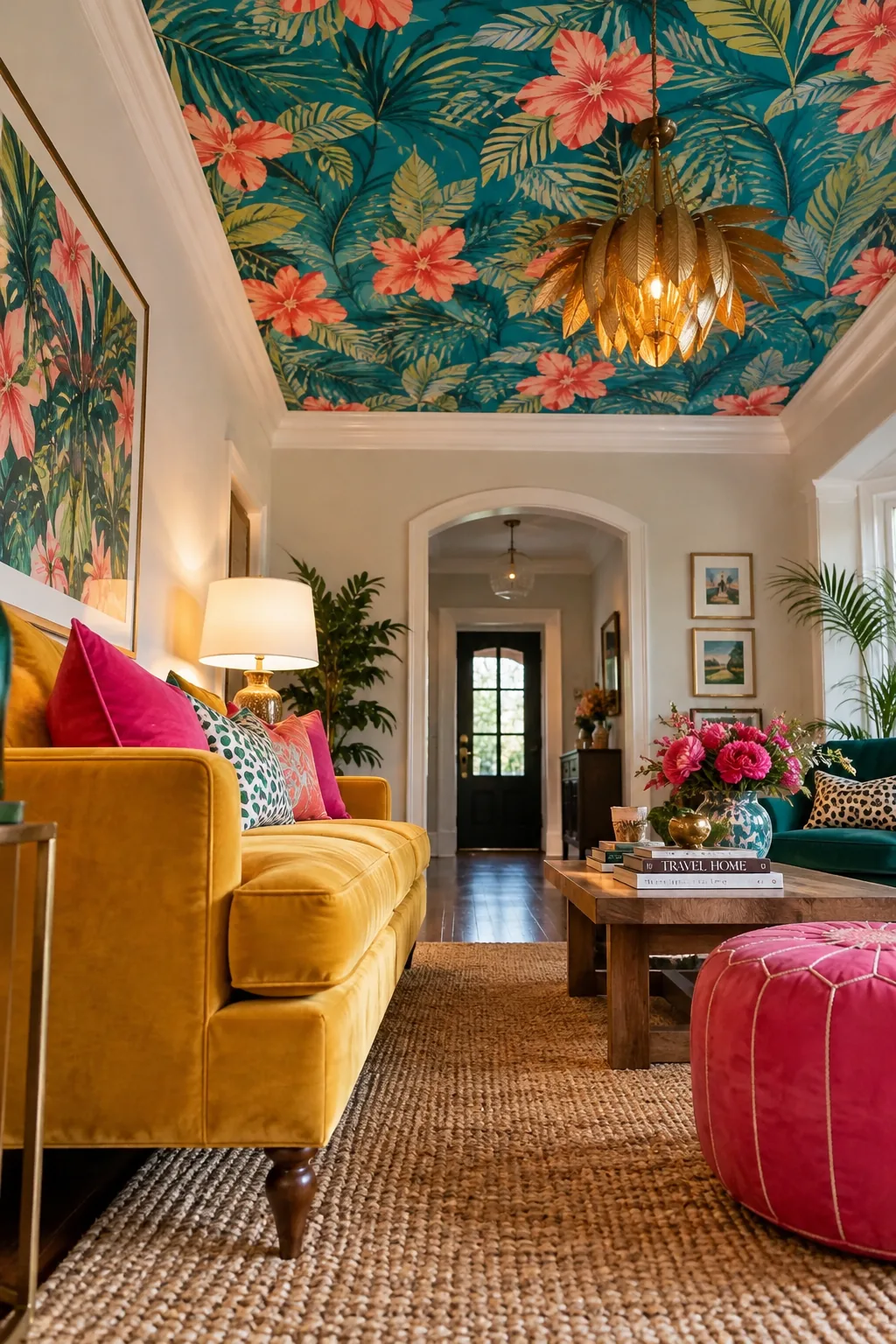
I always recommend ceiling wallpaper when clients complain about boring boxy rooms. Drawing the eye upward makes standard eight-foot ceilings feel much taller and adds a layer of unexpected polish. You can keep the side walls completely neutral and let the fifth wall do all the heavy lifting.
Just make sure your crown molding is painted a crisp white to frame it.
- Subtle geometric patterns
- Soft metallic finishes
- Sky-inspired murals
5. Upgrade the Bookcases
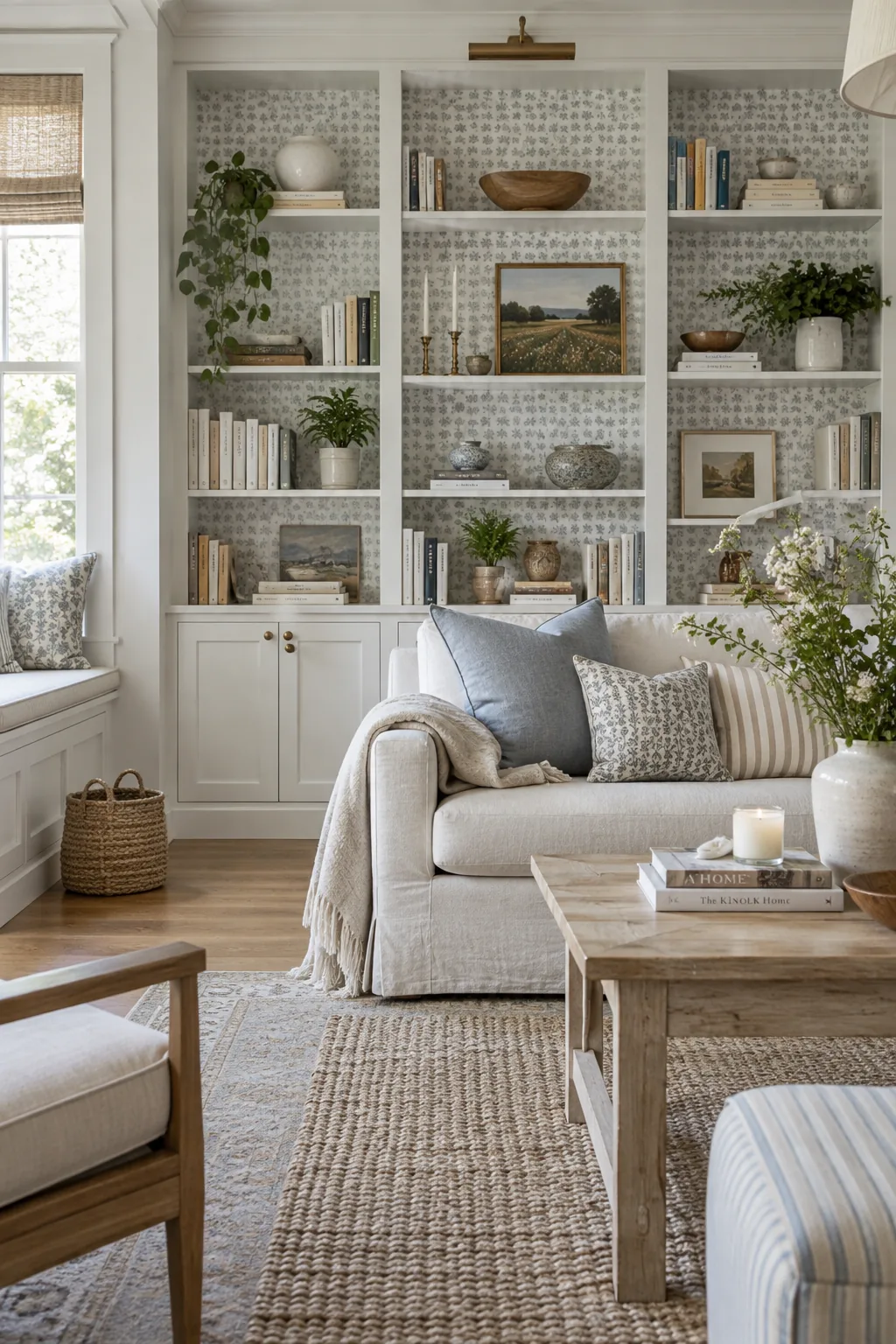
A seamless, custom-built look happens when you wallpaper the backs of your built-in bookcases. It highlights your decor objects and breaks up a massive wall of wood or white paint.
Pick a small repeating pattern so the design remains visible behind your books.
You can even use peel-and-stick paper here for an easy weekend update.
6. Define Open Concepts
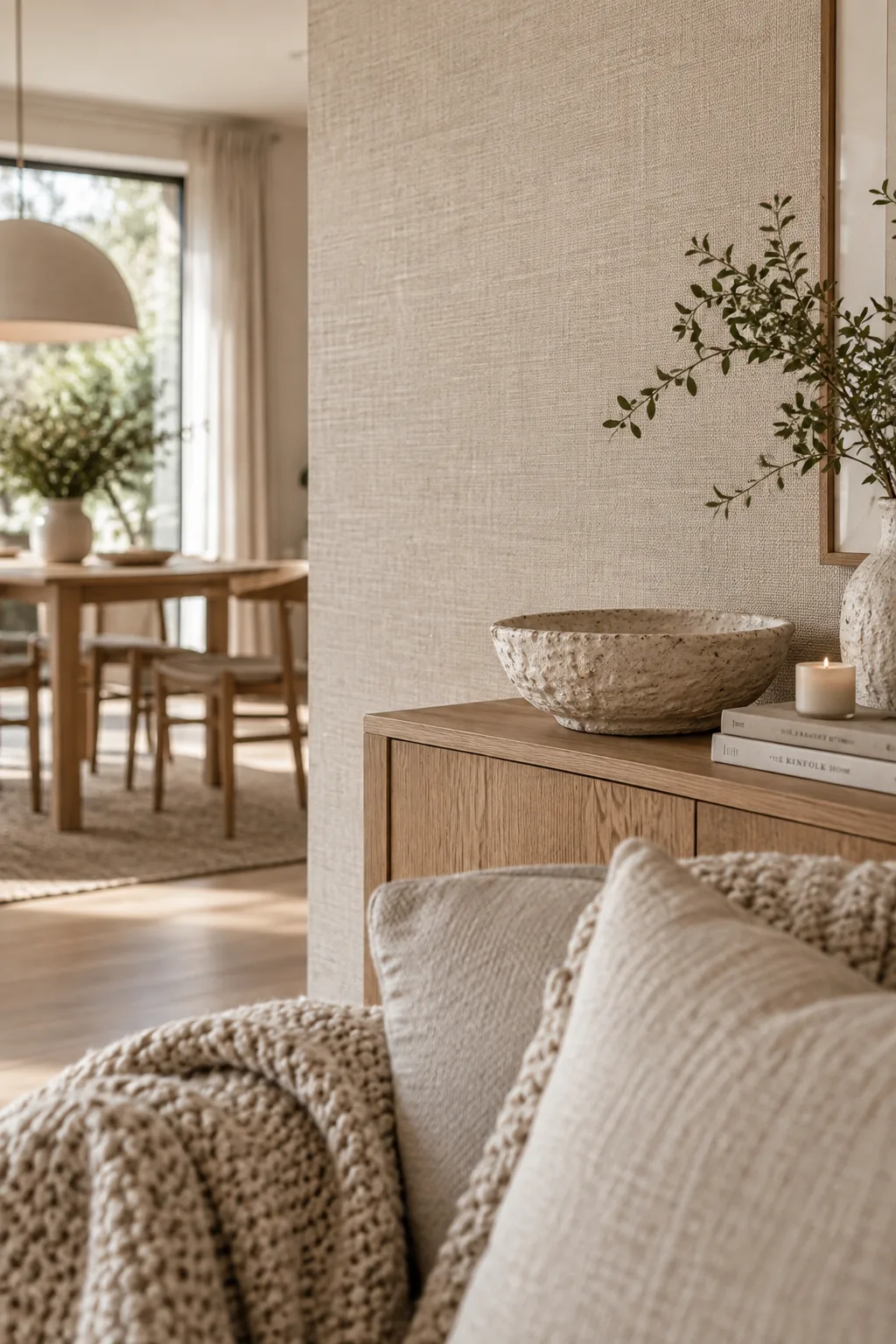
My favorite trick for open-concept spaces is using wallpaper to define the living area. Wrapping the living room zone in a subtle linen texture visually separates it from the dining space or kitchen. It creates a distinct boundary without needing physical room dividers.
It is the easiest way to make a cavernous floor plan feel intimate.
7. Frame It Like Art
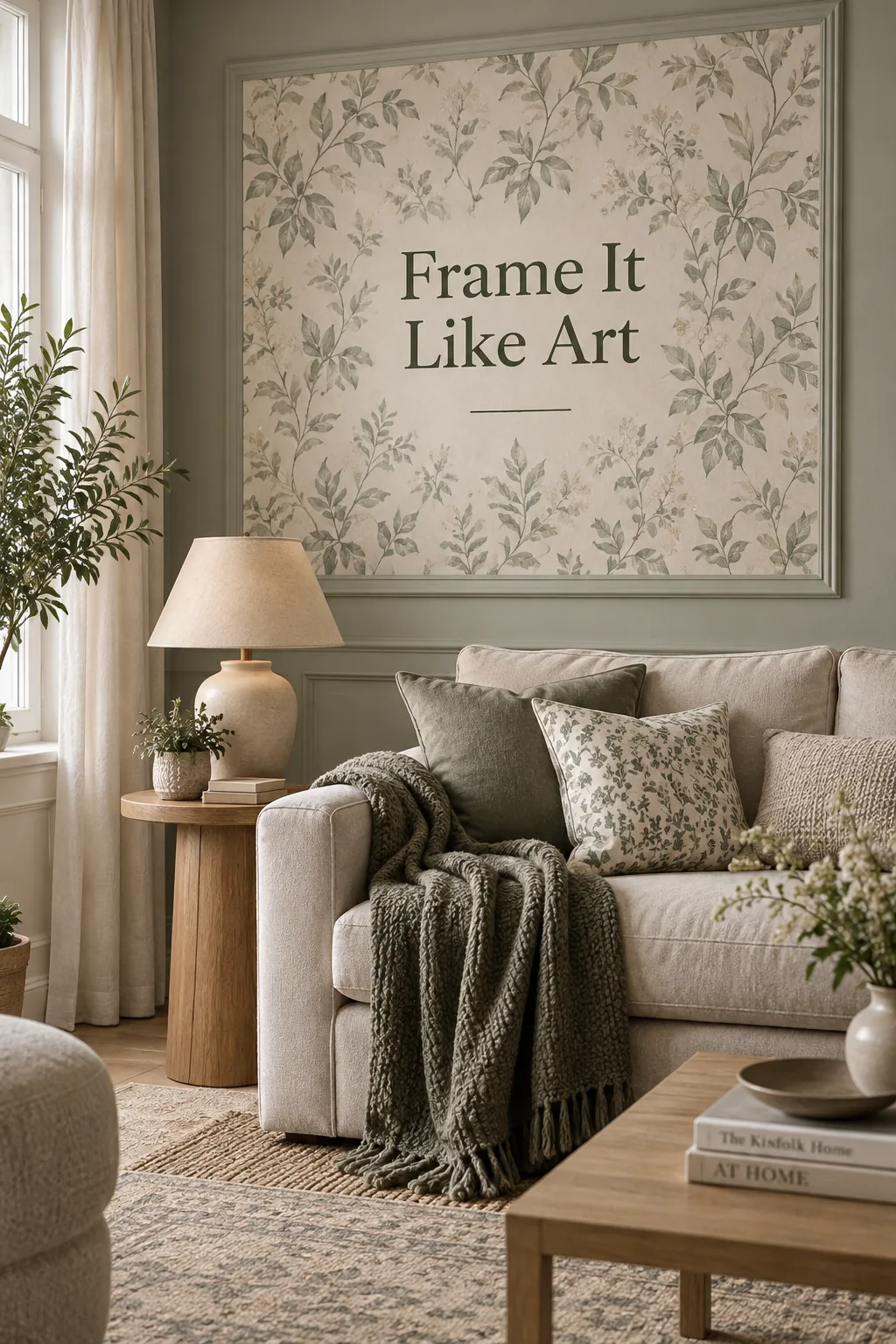
Frame wallpaper panels like oversized art if you rent your home. You get the impact of a massive pattern without losing your security deposit.
Buy inexpensive wooden trim, paint it to match your walls, and nail it directly over the wallpaper edges.
This works brilliantly behind a sofa or flanking a fireplace.
8. Try Monochromatic Textures
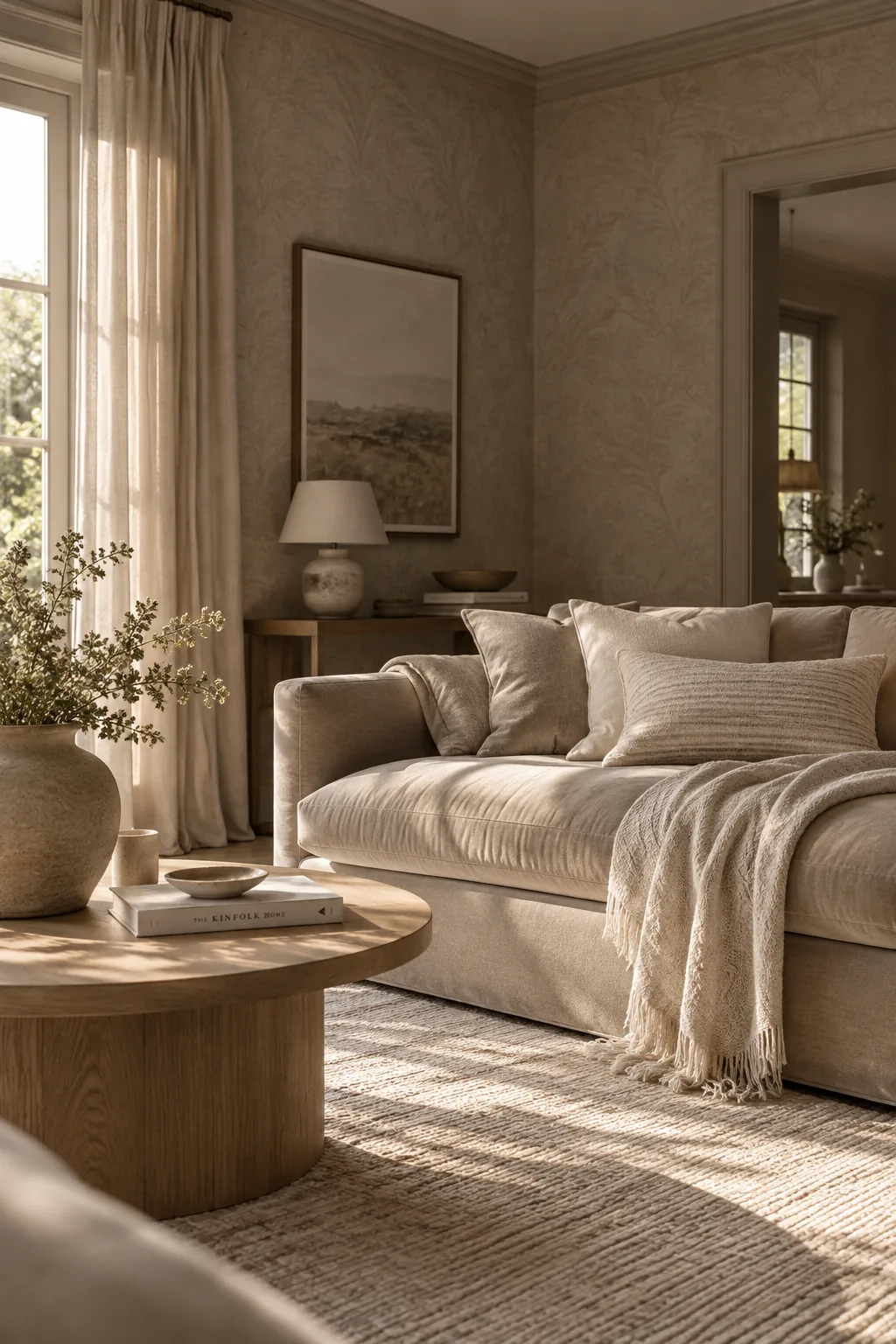
What makes a monochromatic wallpaper work is the subtle interplay of light and shadow on the texture. Choosing a paper that matches your trim color creates an incredibly sophisticated, tone-on-tone environment. The pattern only reveals itself when the sunlight hits it at the right angle. This is the perfect solution if you are terrified of bright colors but still want a highly designed aesthetic. Layering velvet furniture over this backdrop pushes the luxury feel even further.
9. Mix Florals and Stripes
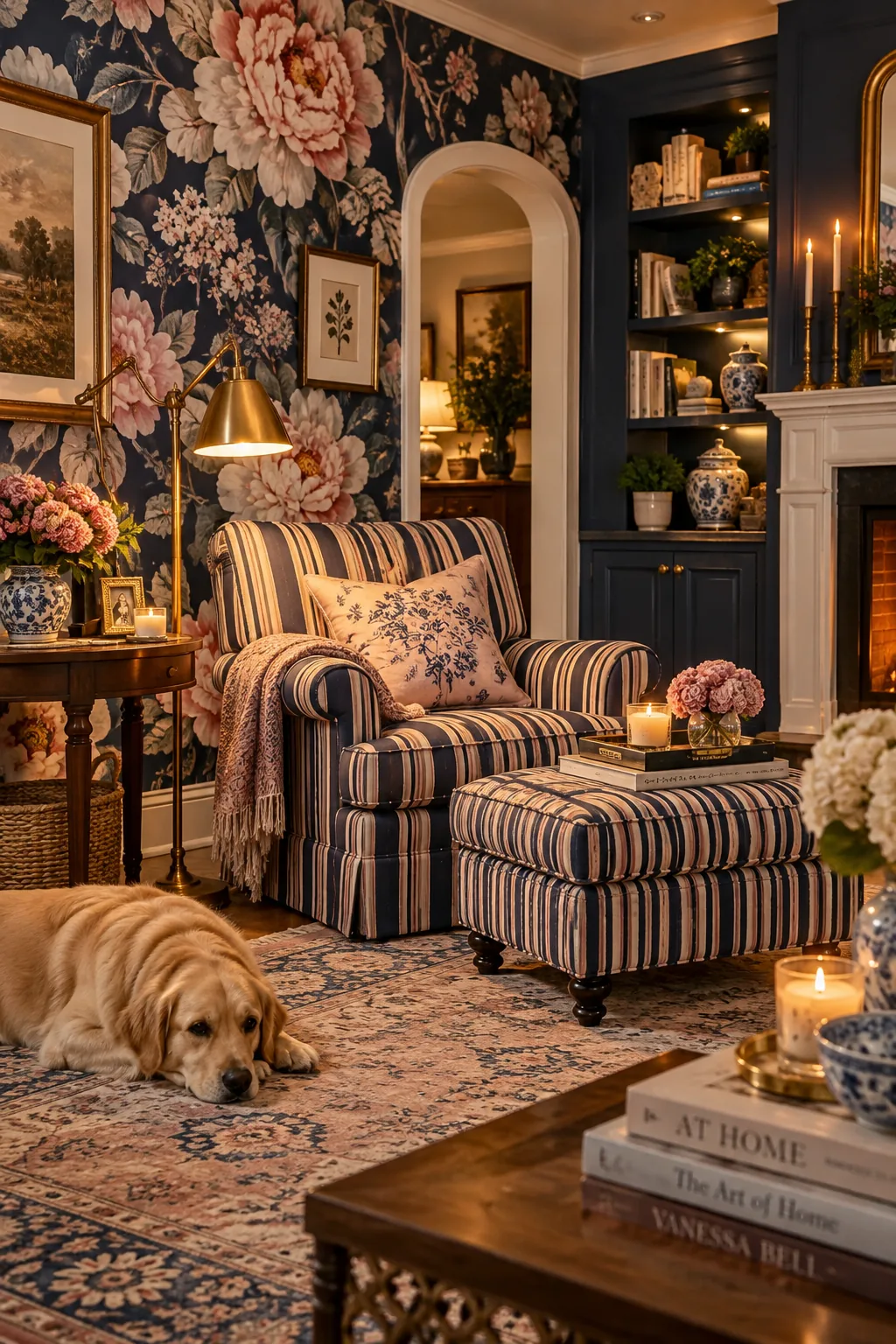
A bold, maximalist vibe bursts into the room when you mix a floral wallpaper with striped upholstery. The trick is to keep the color palette strictly limited to three main hues so the room feels cohesive rather than chaotic. Scale is also crucial here, so pair a massive wall print with tighter, smaller patterns on your furniture.
10. Catch the Light
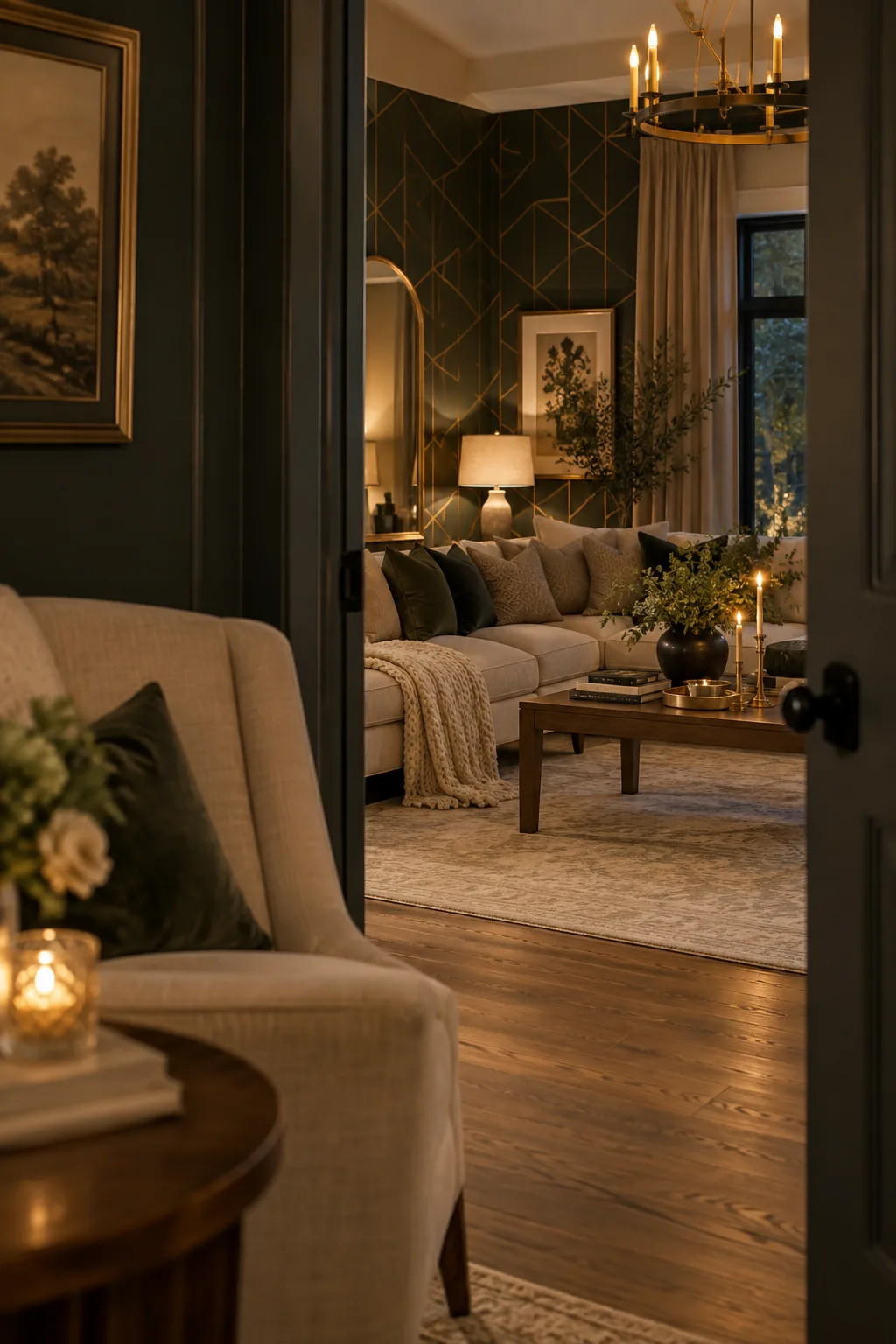
The reason metallic accents in wallpaper succeed is their ability to bounce warm light around a dark space. A geometric pattern with subtle gold or silver lines catches the glow from your lamps and makes the walls feel alive. You want to avoid anything too shiny or mirrored, sticking instead to brushed or matte metallic inks. Pair this look with matte black hardware and soft linen curtains to keep the room grounded. It brings a touch of glamour without feeling like a nightclub.
11. Wrap the Arches
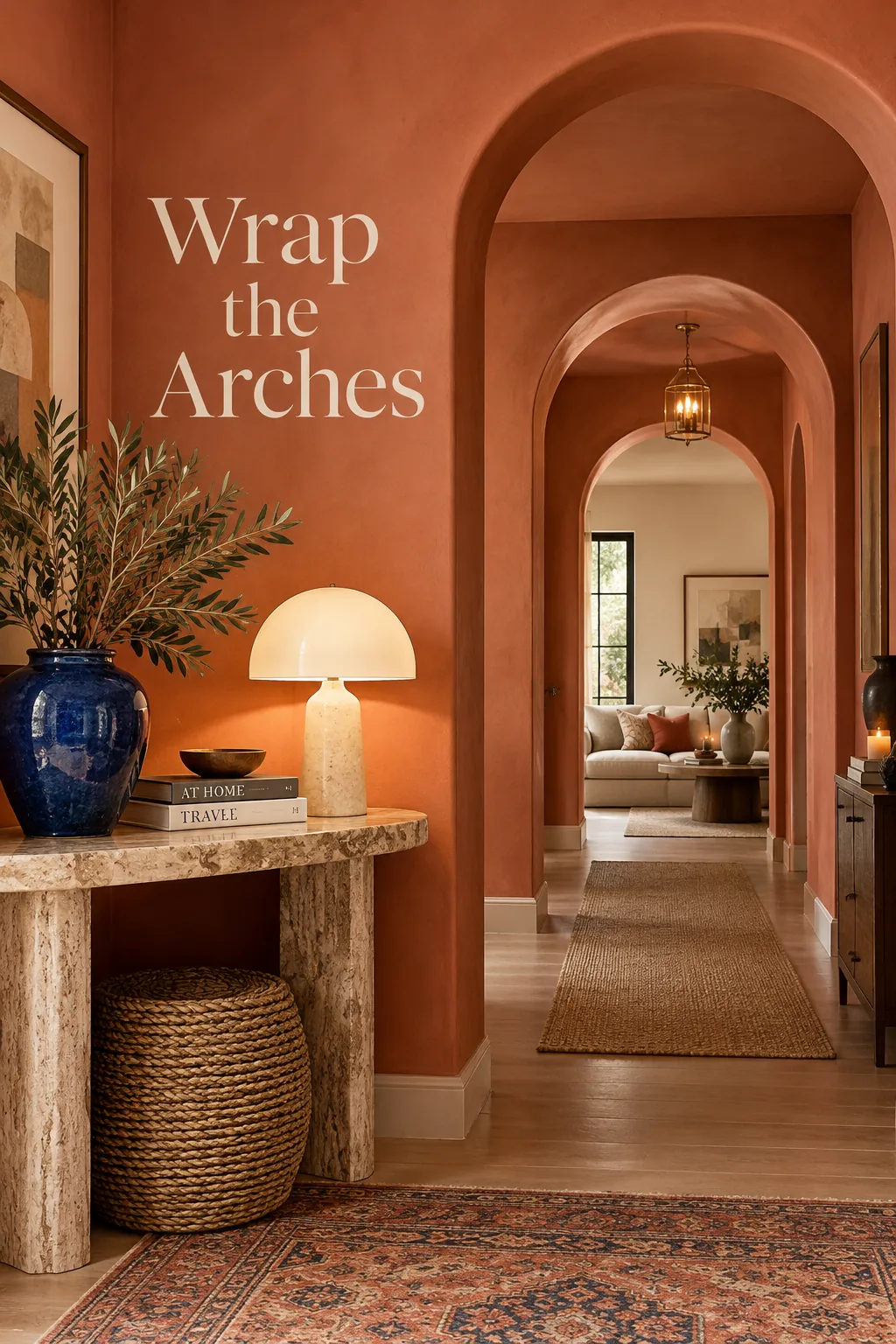
A soft, organic flow emerges when you wrap curved walls or archways in a continuous pattern. Standard drywall corners can feel rigid, but wrapping a plaster-look wallpaper around an arch softens the entire architectural shell. The seamless transition draws the eye naturally from the living room into the adjacent hallway. You need a highly flexible, unbacked paper to pull this off without creasing. The final result feels incredibly custom and high-end.
12. Highlight the Fireplace
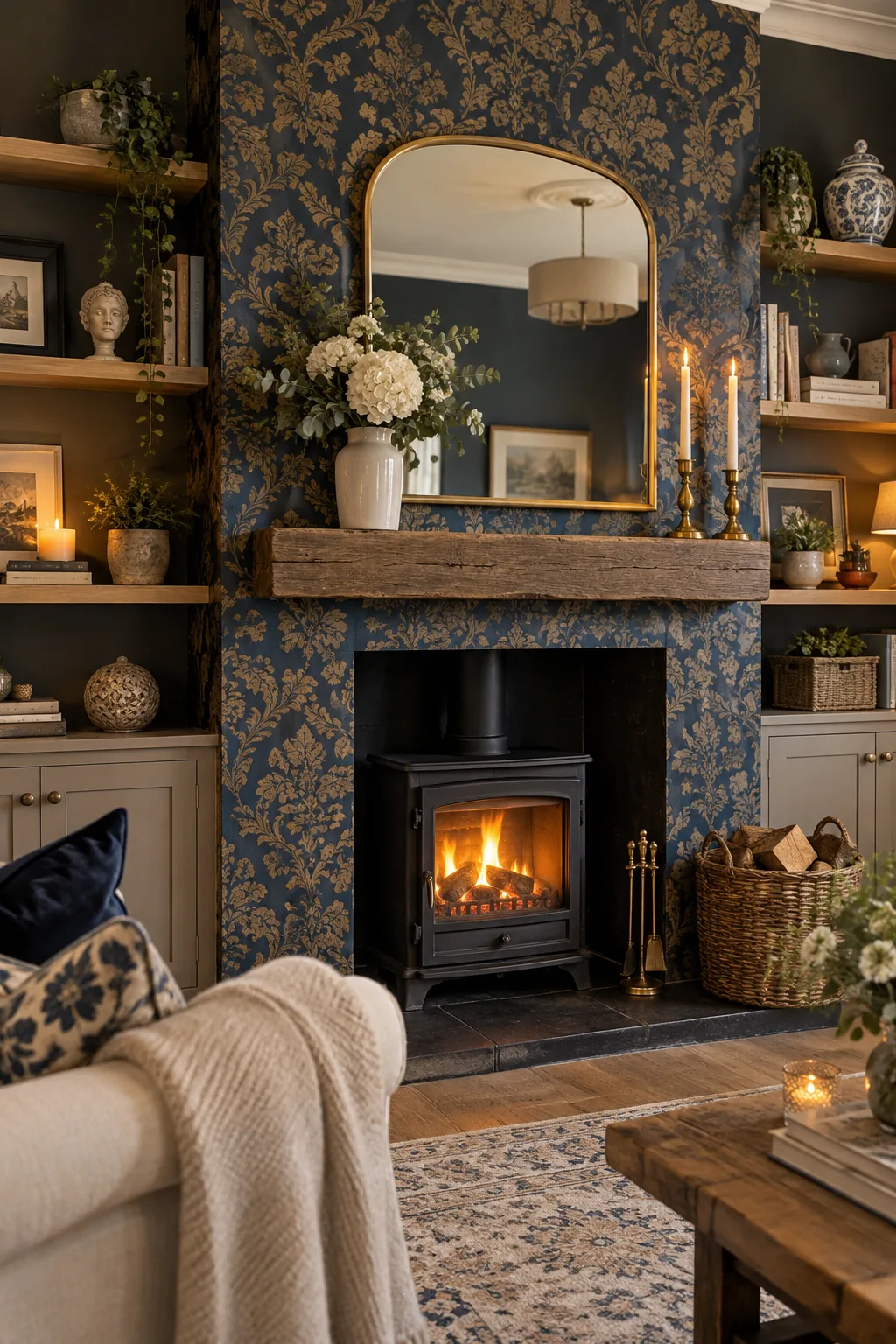
I recently used a vintage-inspired damask paper to completely revive a dated fireplace wall.
Applying a bold pattern to the chimney breast turns a standard fireplace into a massive architectural feature. You can flank it with neutral floating shelves to let the pattern stand out. Just ensure you use a heat-resistant adhesive if the fireplace gets heavy use during the winter.
13. Fill the Alcoves
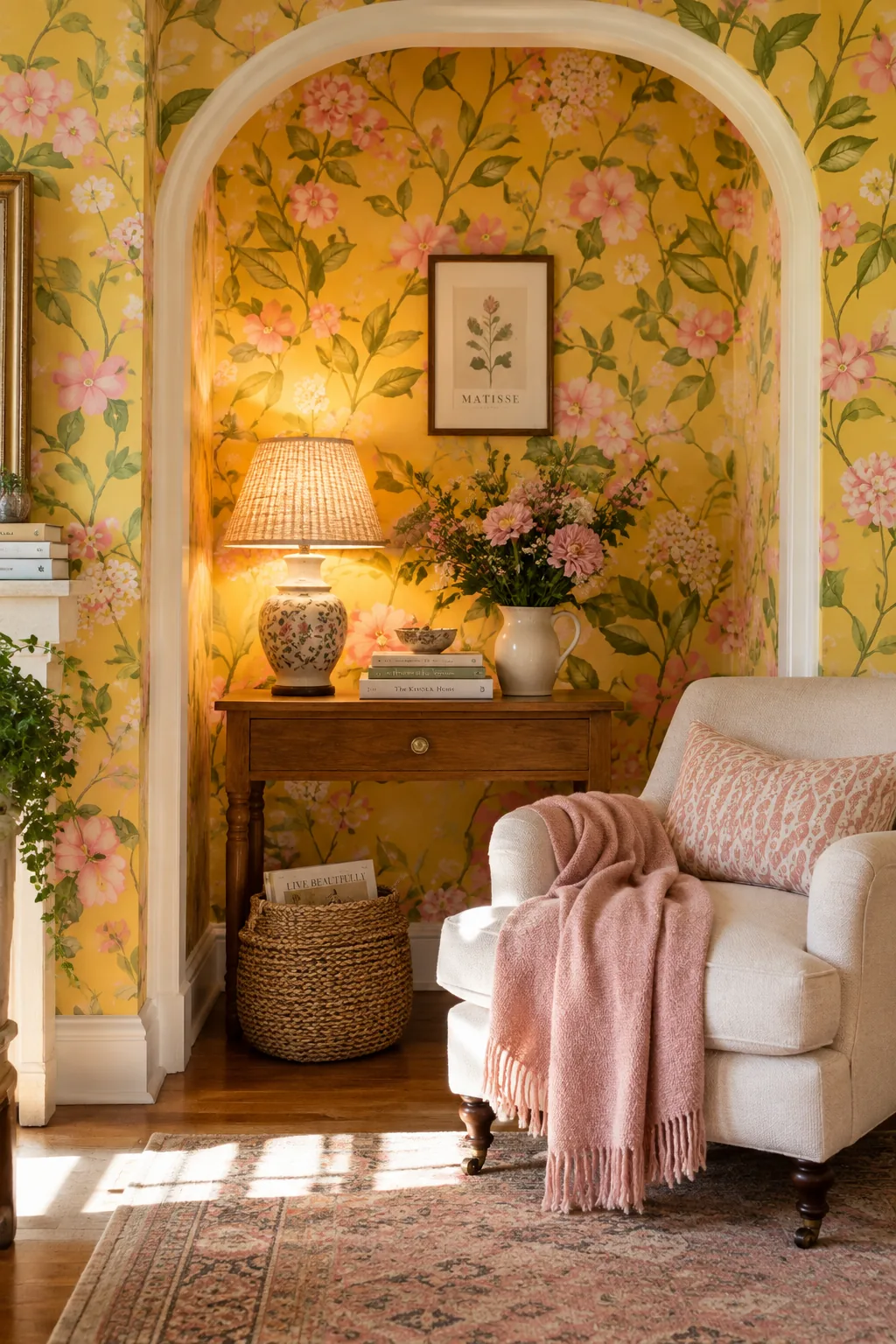
Most living rooms have at least one awkward alcove that goes completely unused. Tucking a brightly colored wallpaper into this recess instantly transforms it into a purposeful design moment. Add a small console table or a reading chair to complete the vignette. It proves that tricky floor plans are actually just opportunities for hidden character.
14. Lift the Ceiling
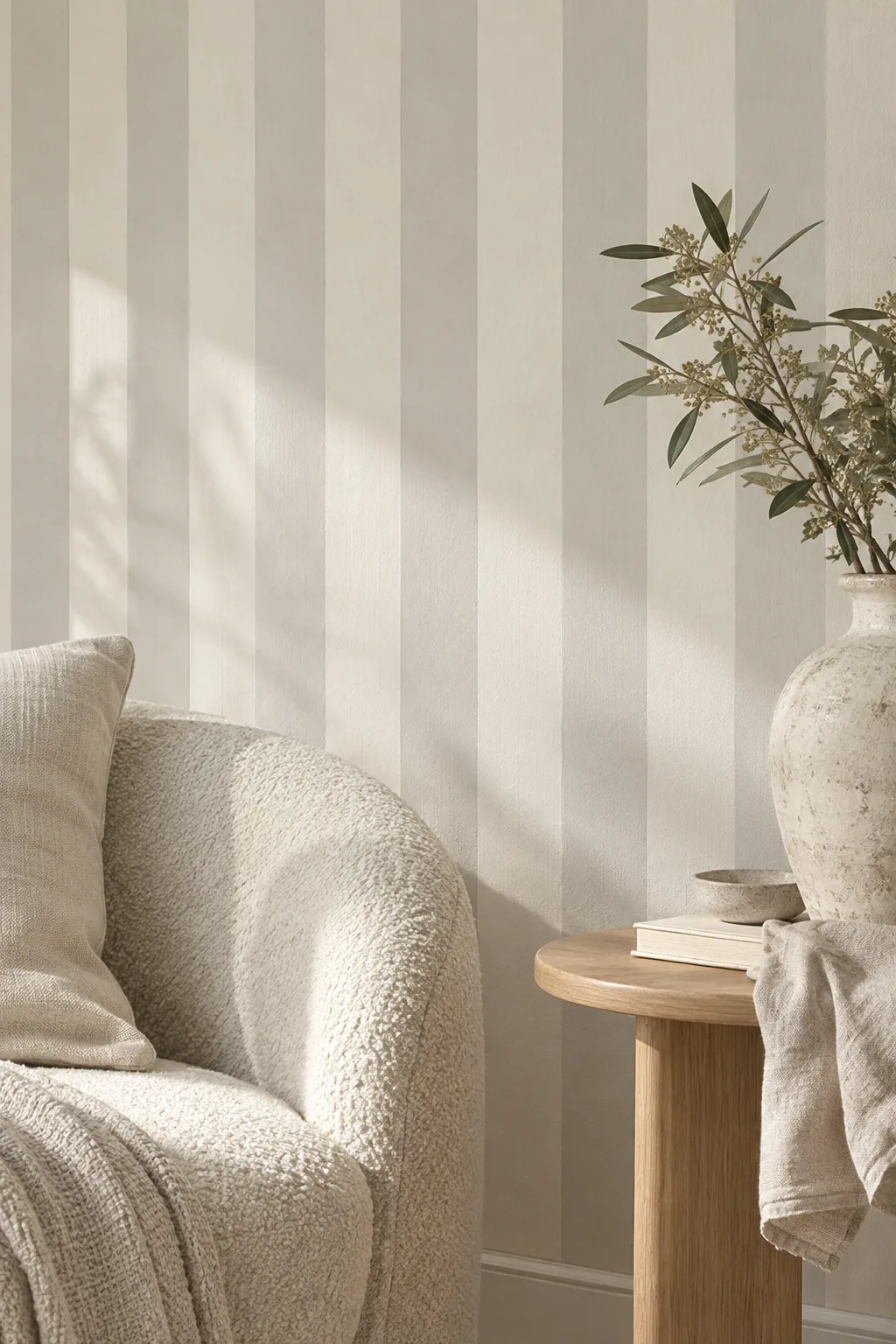
What makes a striped wallpaper so effective is its ability to manipulate the perceived proportions of a room. Vertical lines force the eye up, making a cramped living room feel open and airy.
Stick to low-contrast stripes if you want a calm, traditional aesthetic.
Pair it with curved furniture to soften the rigid lines of the walls.
15. Fake a View
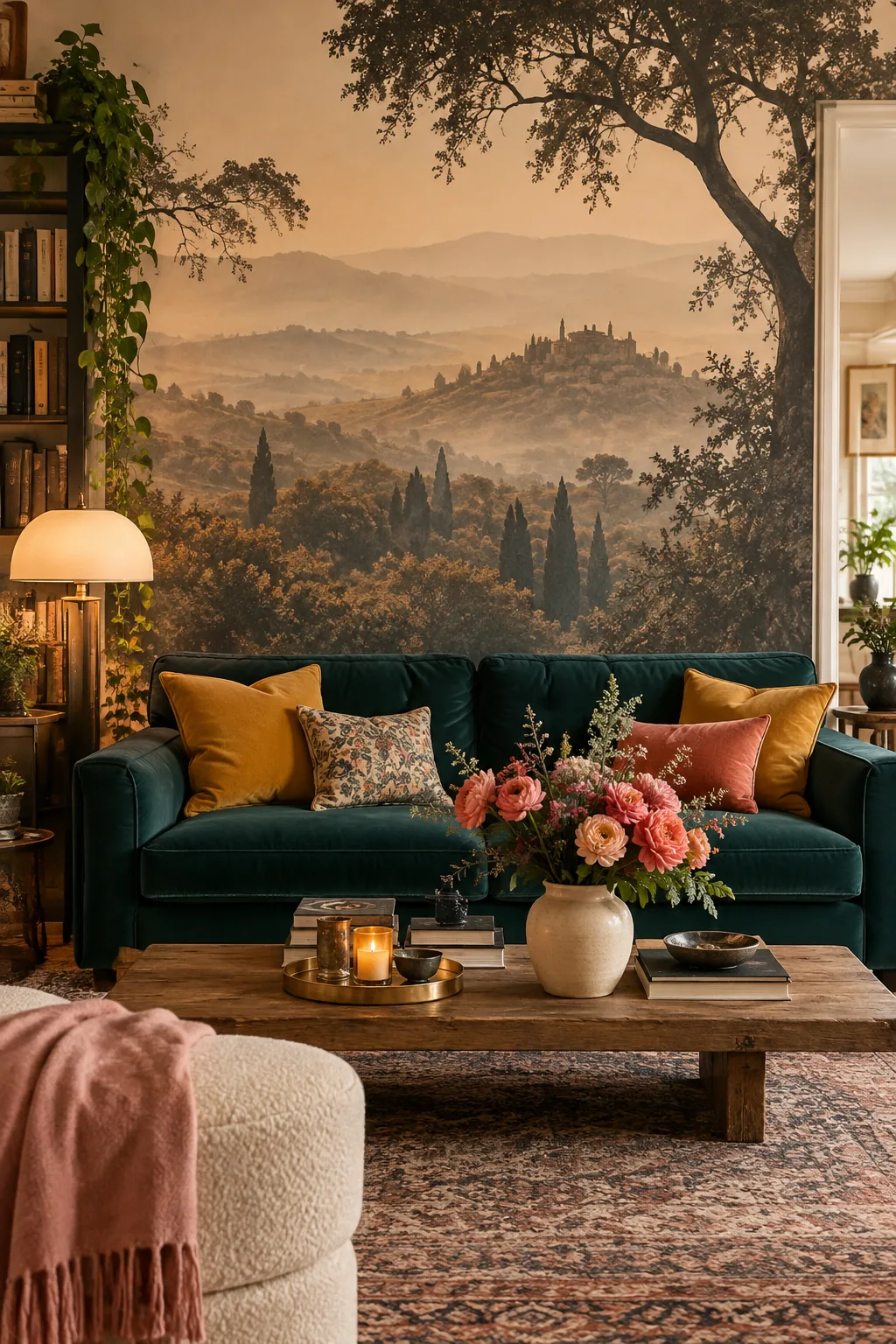
Using a peel-and-stick mural takes roughly three hours to install but changes the room forever. A landscape mural in muted sepia tones acts as a massive window in a room that lacks a real view. You can place your main seating arrangement facing this wall to create a serene, conversational focal point. The lack of repeating patterns makes the room feel expansive rather than enclosed. It is a brilliant strategy for urban apartments that stare at brick walls.
16. Fake Architectural Details
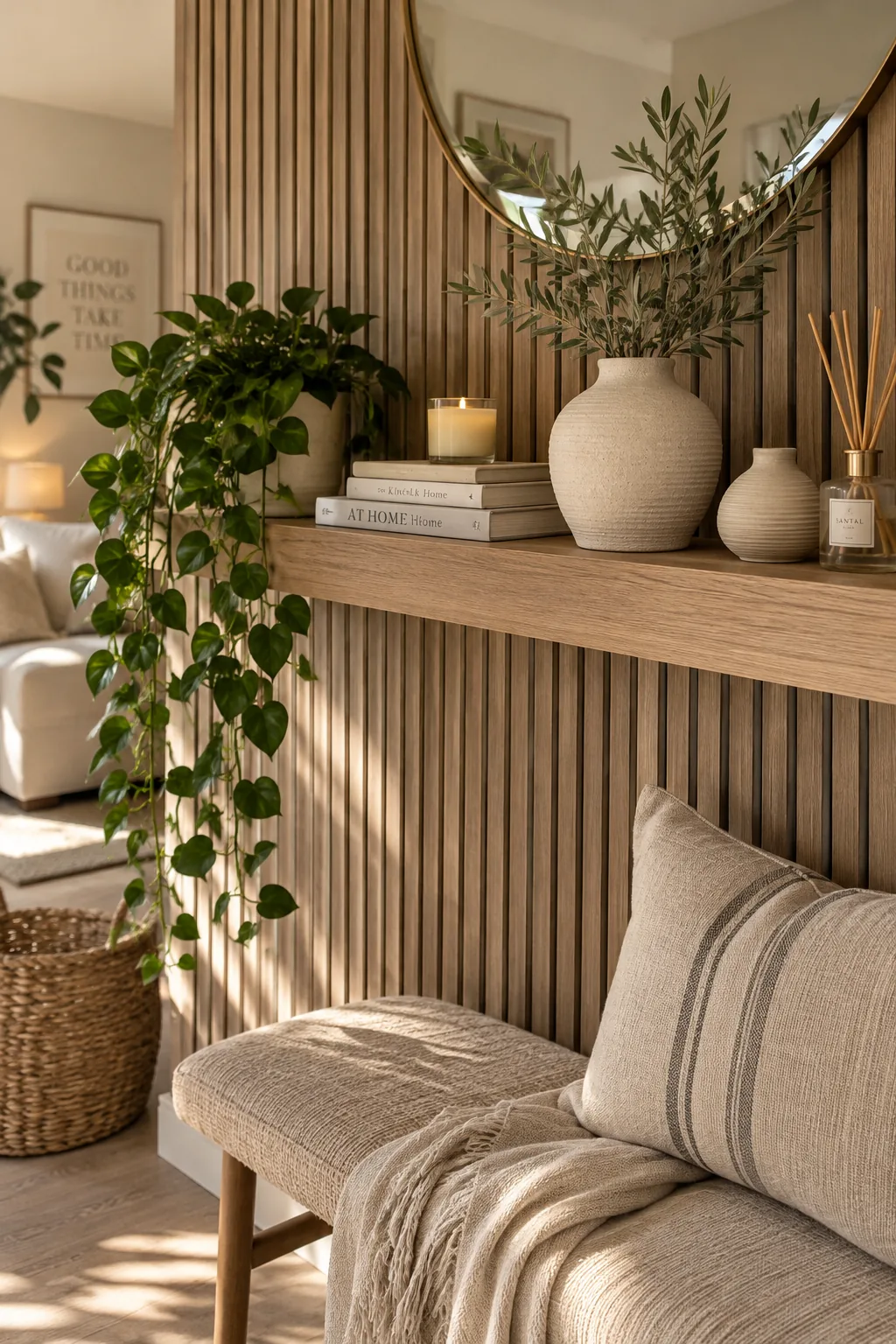
The success of a faux-texture wallpaper lies in its hyper-realistic shadow details. Using a high-quality faux wood slat or concrete paper gives you the industrial look without the massive construction bill. It instantly warms up a sterile, newly built living room.
Nobody will know it is paper until they touch it.
- Faux exposed brick
- Vertical wood slats
- Poured concrete finishes
17. Color-Drench the Trim
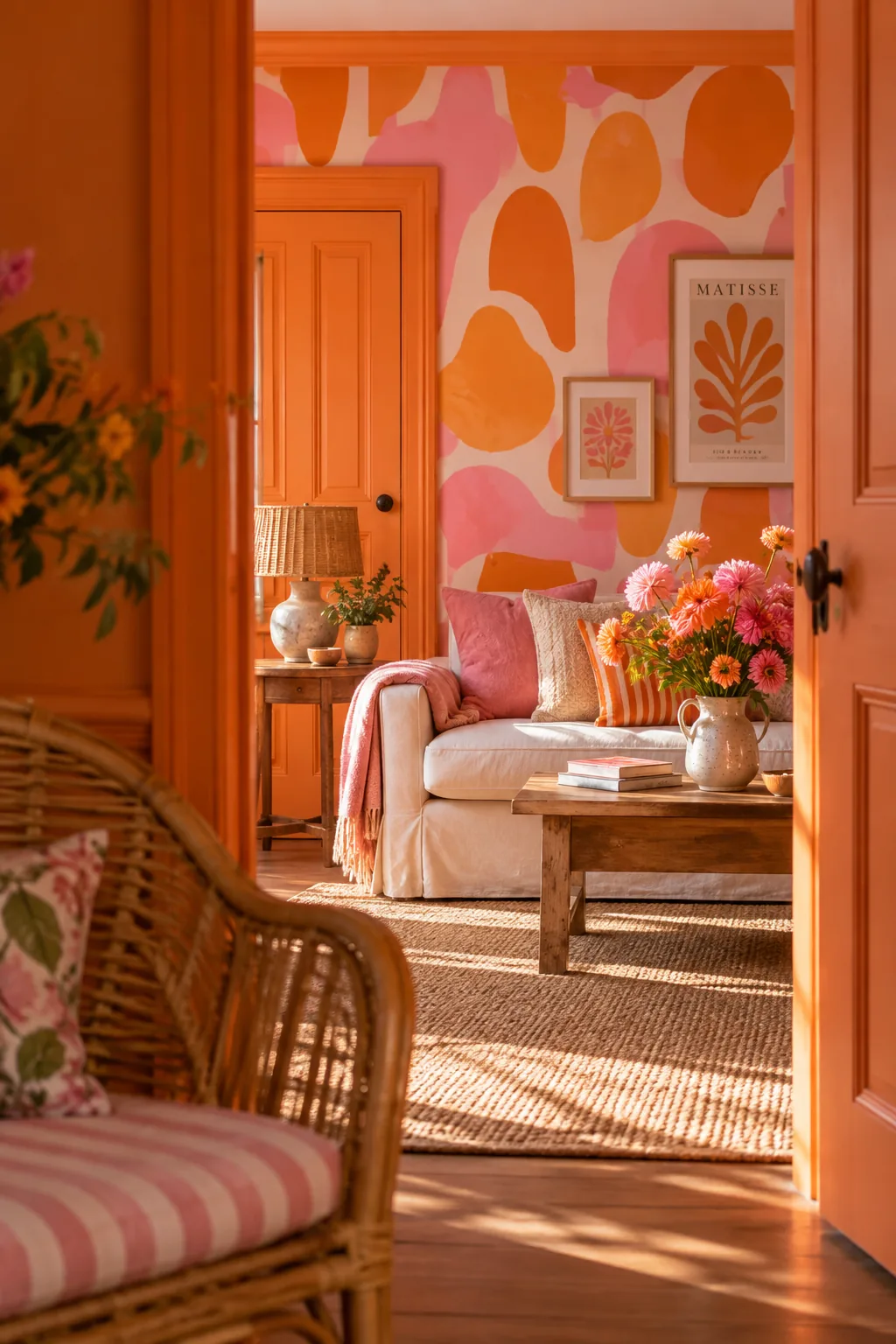
A bright, cheerful energy takes over when you pair a colorful abstract wallpaper with painted trim. Instead of defaulting to white baseboards, pull the most dominant color from the paper and paint your doors and moldings to match. This color-drenching technique makes the paper feel like an intentional part of the architecture rather than an afterthought. Focus on matching these specific trim elements for the best result. It completely envelops the space in warmth and personality.
- Window casings
- Crown molding
- Baseboards