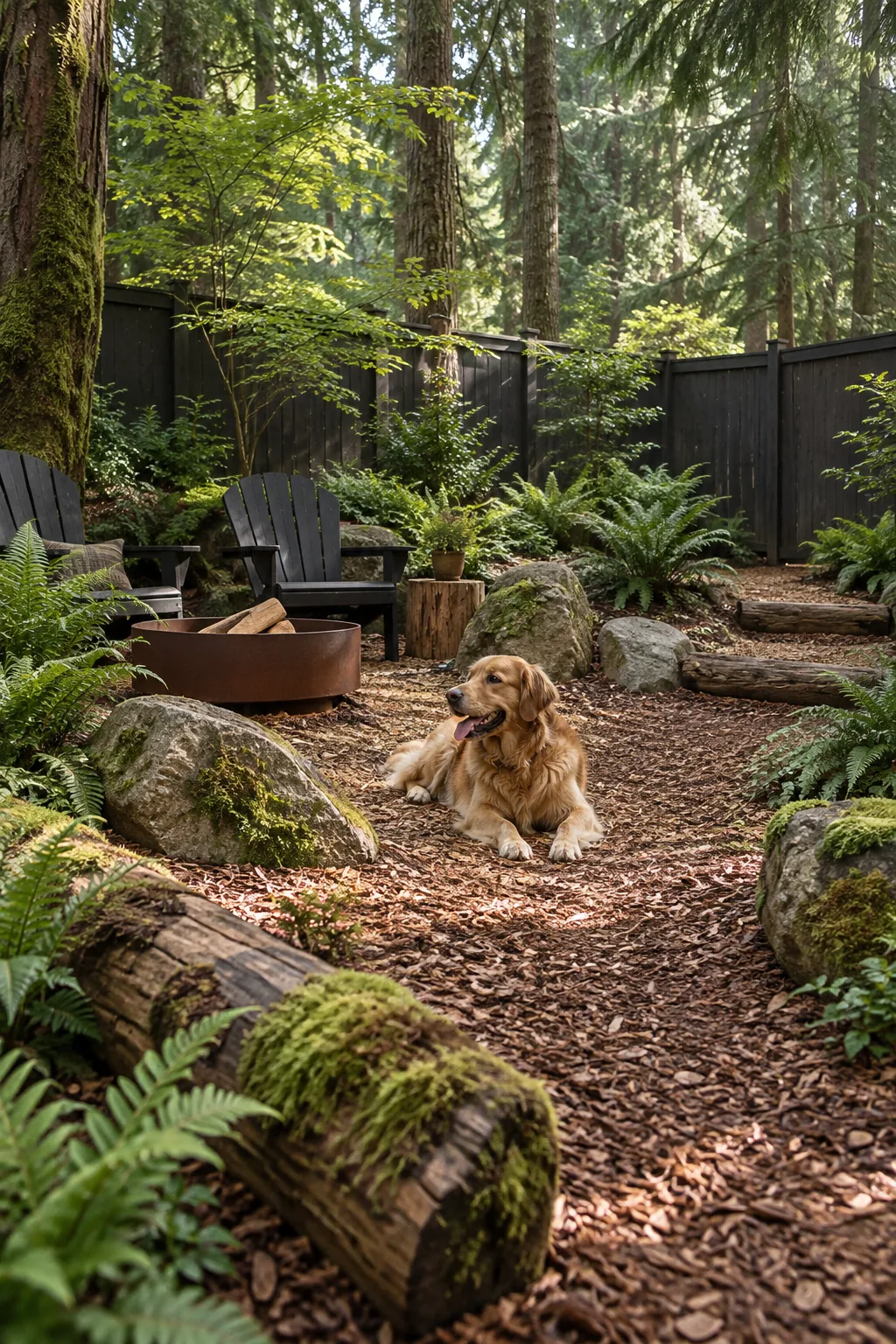
Low-Maintenance Pet-Friendly Backyard Ideas + Build Sheet
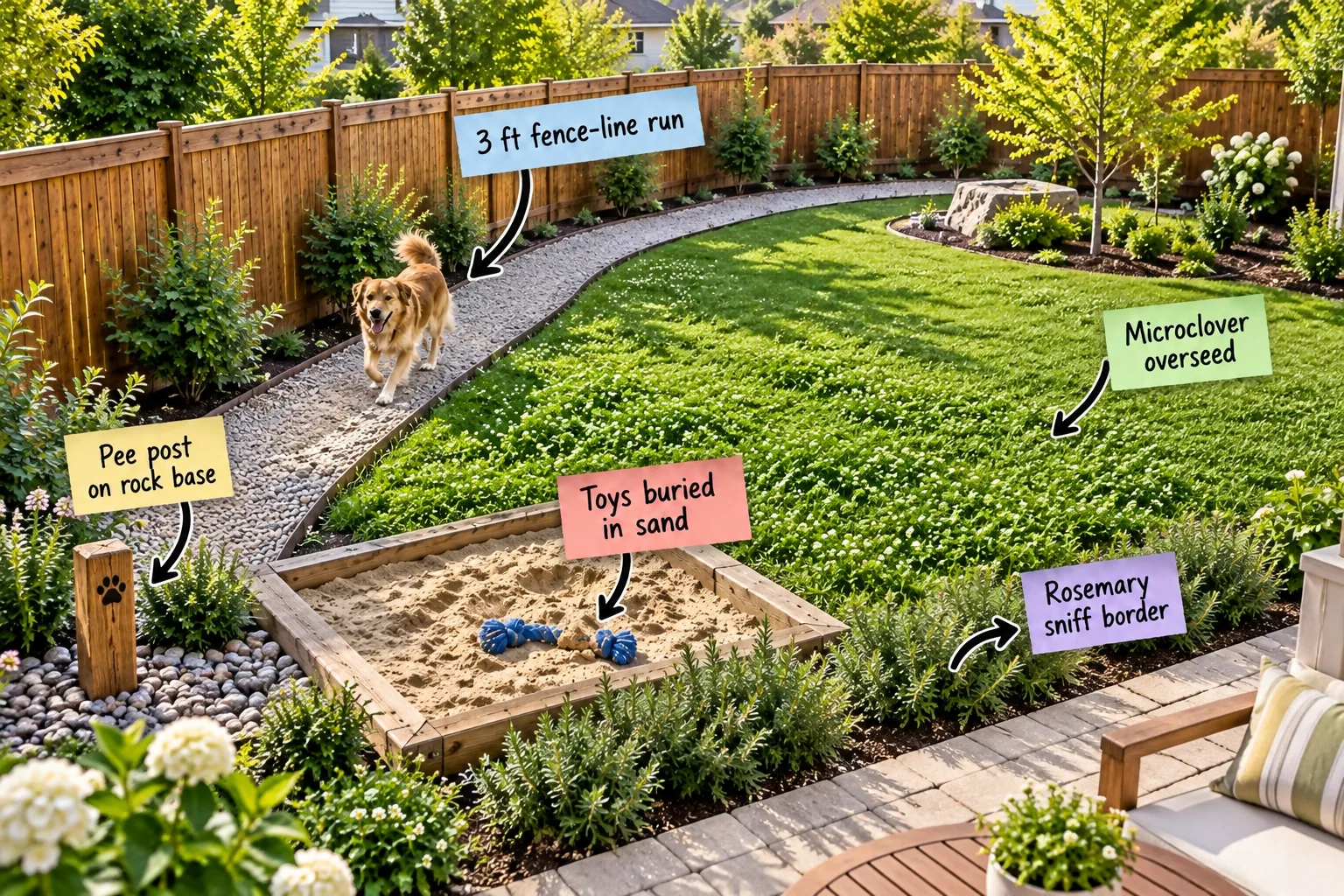
You will be able to map out your dog’s daily activity zones and use our printable dog-zone build sheet to install the exact base depths needed for a beautiful, mud-free yard.
Zoning for Dog Behavior
Carefully evaluate your entire outdoor space to see exactly where your dog naturally sprints and rests before committing to expensive hardscaping installations.
Dedicating specific areas for high-impact activities drastically reduces overall yard wear and keeps your primary lawn looking fresh throughout the most active outdoor seasons.
Evaluating Yard Topography
Watch how rainwater moves across your lawn during a heavy storm to identify natural low spots that might collect stagnant puddles or cause your new base materials to wash away.
The Rosemary Sniff Border
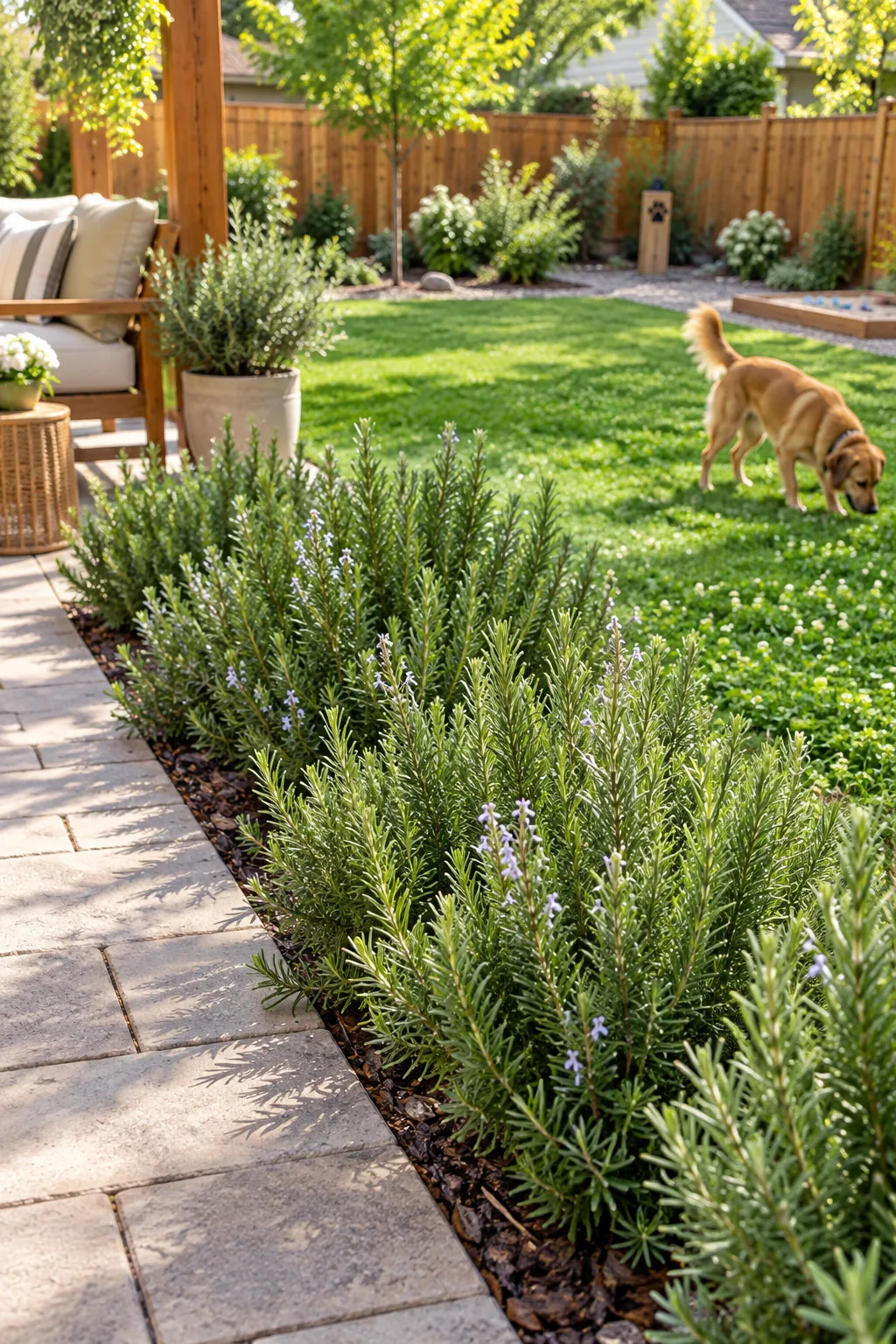
Planting a sensory border between the patio and lawn gives your dog a safe, engaging space to explore without trampling delicate garden flowers. I actually put one of these along my own Austin patio, and my terrier loves brushing past the fragrant leaves every morning.
Space your dog-safe rosemary plants 18 to 24 inches apart to create a dense, fragrant barrier that easily withstands curious sniffing and occasional clumsy bumps.
Alternative Dog-Safe Plants
If your yard lacks full sun, swap the rosemary for sturdy, shade-tolerant native grasses like blue oat grass that provide excellent texture and movement without introducing any toxicity risks.
Microclover Overseeding
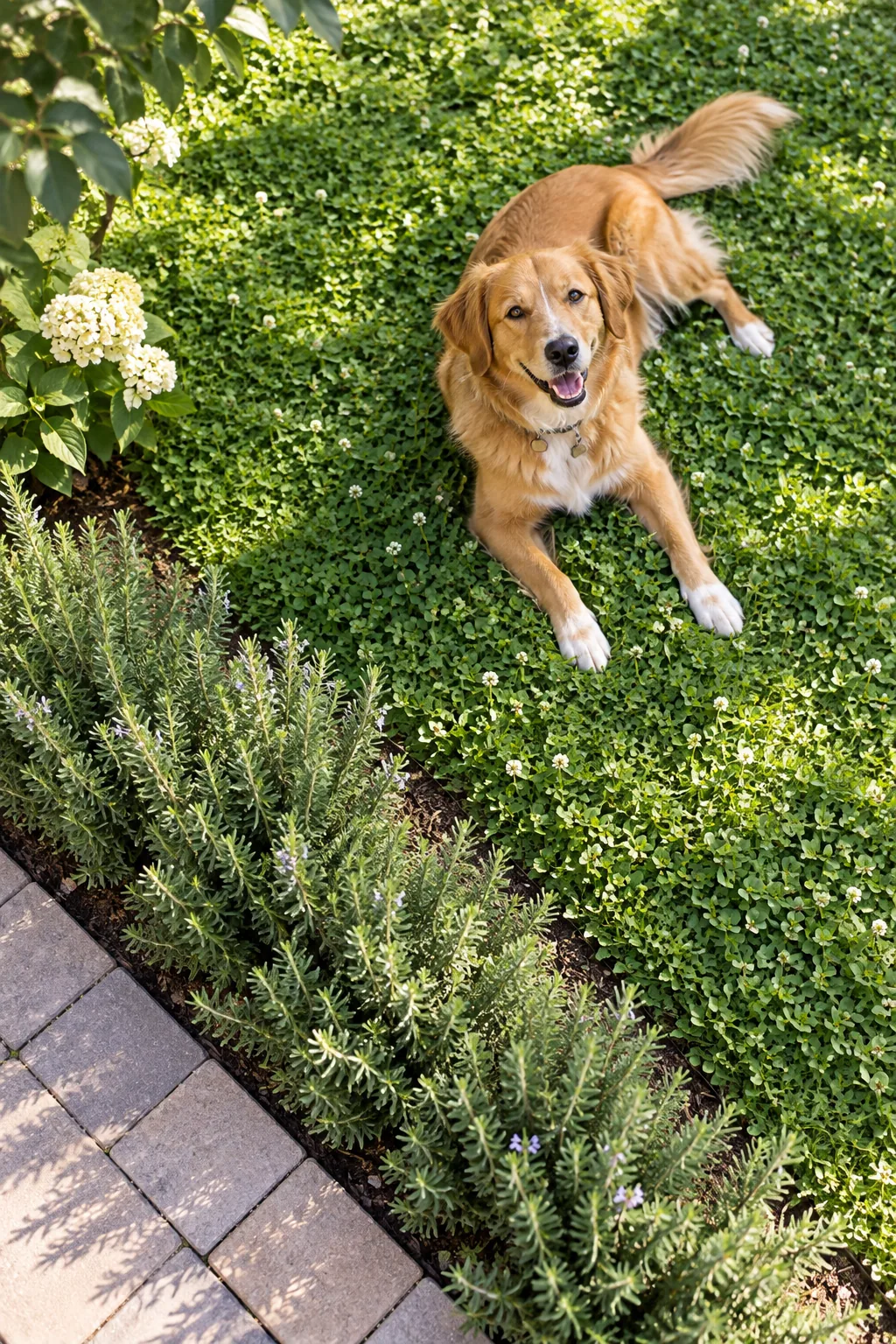
Overseeding your existing lawn with microclover creates a highly resilient, drought-tolerant turf that stays remarkably green even in the most heavily used areas.
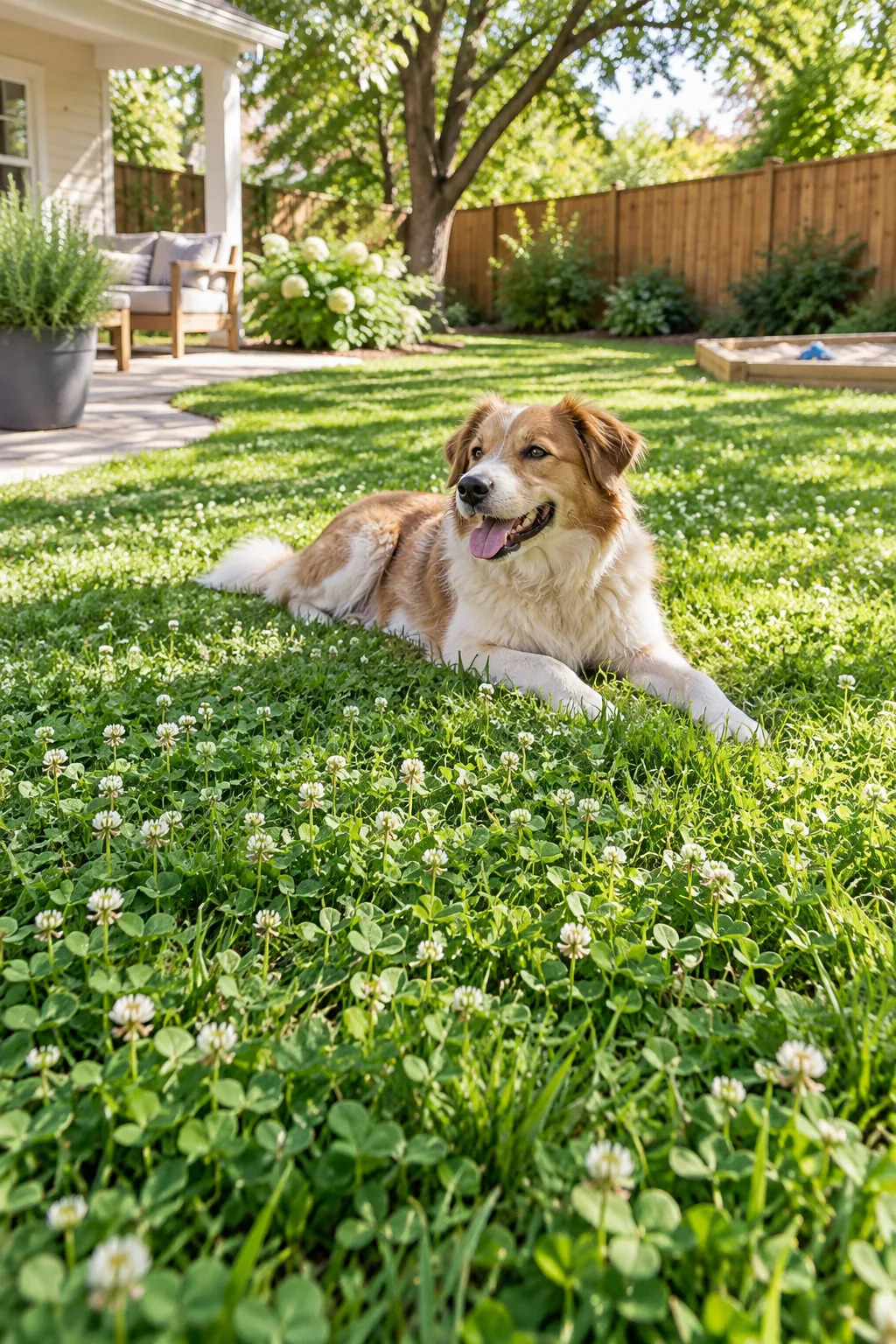
Use a standard overseeding rate of 1 to 2 pounds of seed per 1,000 square feet to achieve even, lush coverage across the entire central play area.
Soil Preparation Steps
Properly prepping the ground ensures your new clover seeds establish deep, robust roots before the heavy summer foot traffic inevitably begins.
- Aerate the existing compacted soil to dramatically improve oxygen and water flow.
- Spread a thin quarter-inch layer of compost evenly over the entire lawn.
- Water the freshly seeded area lightly twice a day until consistent germination occurs.
The 3-Foot Fence-Line Run
Create a dedicated path along the fence line where dogs naturally patrol to prevent them from carving deep, muddy trenches into your pristine grass.
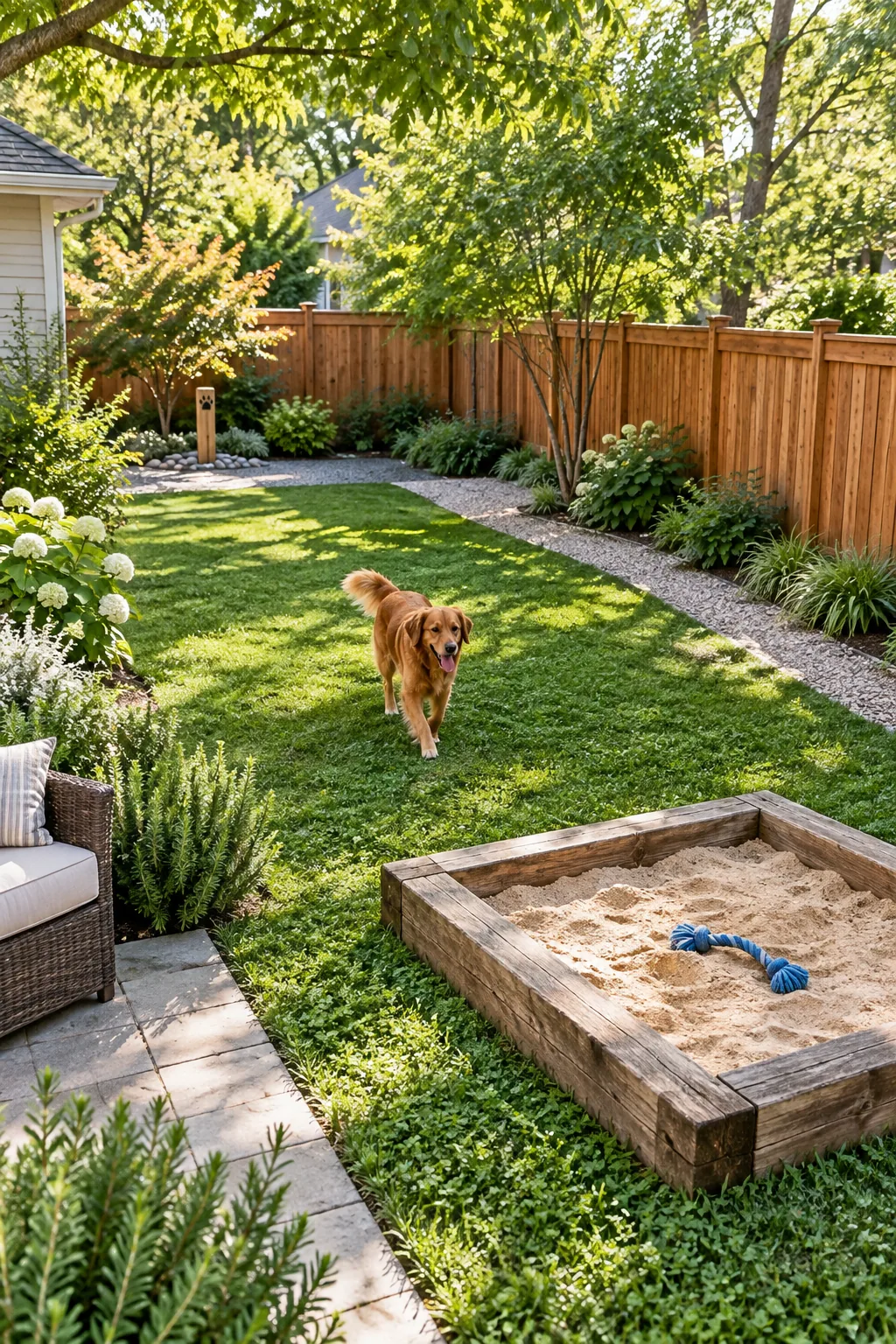
Before ordering bulk materials for the patrol path, avoid these common installation errors that can hurt sensitive paws or cause long-term maintenance headaches.
Selecting Landscape Fabric
Always choose a heavy-duty, non-woven geotextile fabric for the base layer to prevent aggressive weeds while still allowing heavy rainwater to drain quickly into the subsoil below.
Building the Sand Dig Pit
Frame a dedicated dig pit with heavy landscape timbers to contain the inevitable messy excavation process in one tidy, easily accessible zone.
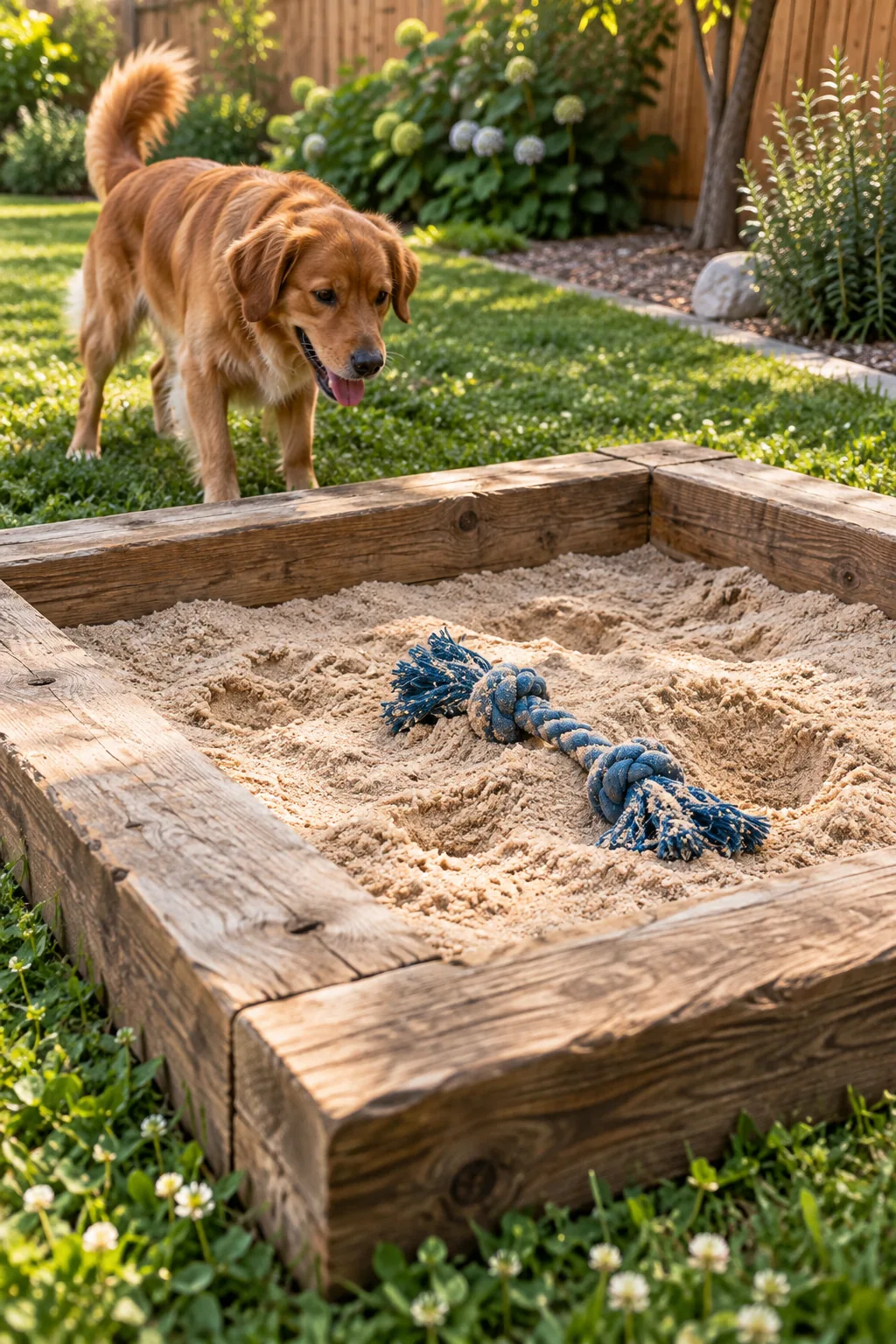
Dig down 6 inches into the native soil and fill the sturdy wooden frame with 8 inches of washed play sand to create a safe, deep digging environment.
Timber Sizing and Hardware
Using appropriately sized materials guarantees your dig pit frame will not shift, splinter, or warp under the weight of an active, enthusiastic dog leaping in and out.
| Timber Size | Rebar Length | Spacing |
|---|---|---|
| 4×4 inches | 12 inches | Every 3 feet |
| 6×6 inches | 18 inches | Every 4 feet |
Burying Toys for Enrichment
Partially burying toys in the sand pit taps into canine instincts and encourages digging only in the approved zone. When I first tried this trick with my rescue pup, hiding a few rope toys completely saved my flower beds from excavation.
Bury enrichment items at a 3-inch depth initially so they remain easy and highly rewarding for your dog to discover during their first few sessions.
Rotating High-Value Rewards
Swap out the buried toys every few days with different textures or durable puzzle feeders to keep the sand pit infinitely more interesting than your freshly laid garden mulch.
Pee Post on a Rock Base
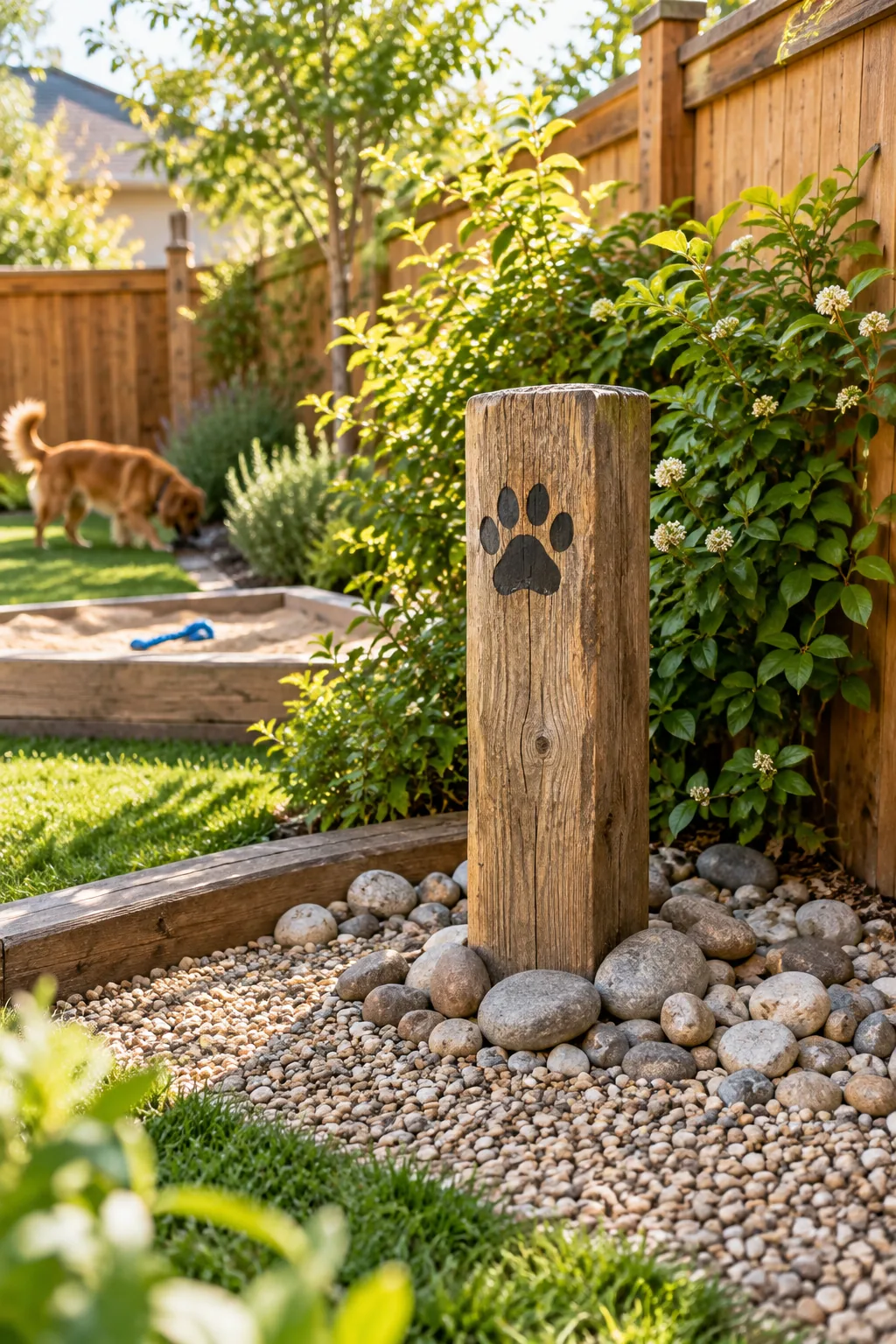
Designing a dedicated potty corner with a vertical wooden pee post makes daily yard cleanup incredibly fast, sanitary, and visually unobtrusive.
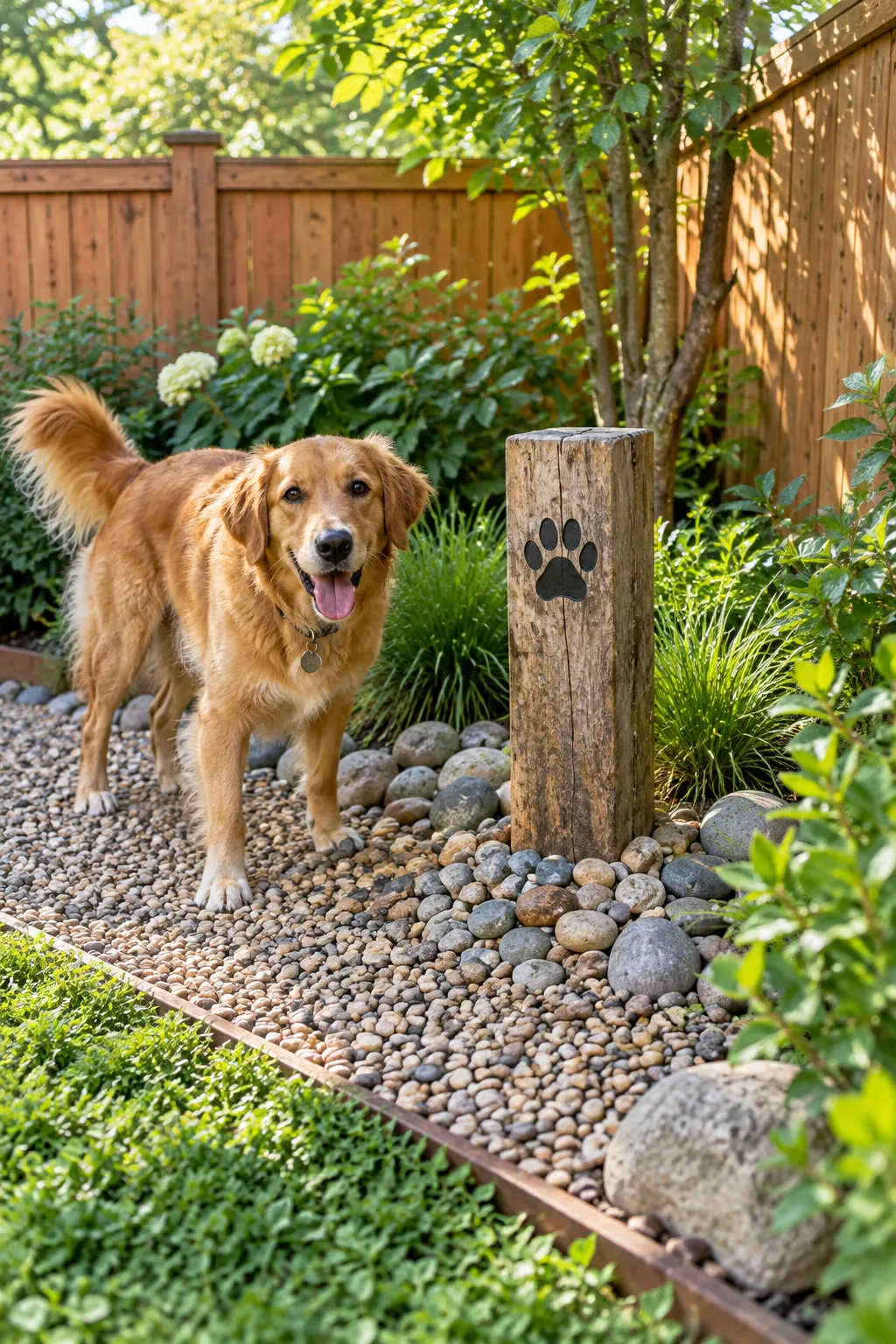
Set the post securely in a bed of 4 inches of crushed drain rock topped with larger, smooth river stones so liquids filter through instantly.
Sanitizing the Potty Area
Spray the rocks weekly with a pet-safe enzymatic cleaner attached to your garden hose to actively break down odor-causing proteins trapped deep within the gravel layers.
Your Dog-Zone Build Sheet
You can easily construct this entire landscape using the exact base depths, dimensions, and microclover seeding rates we mapped out today.
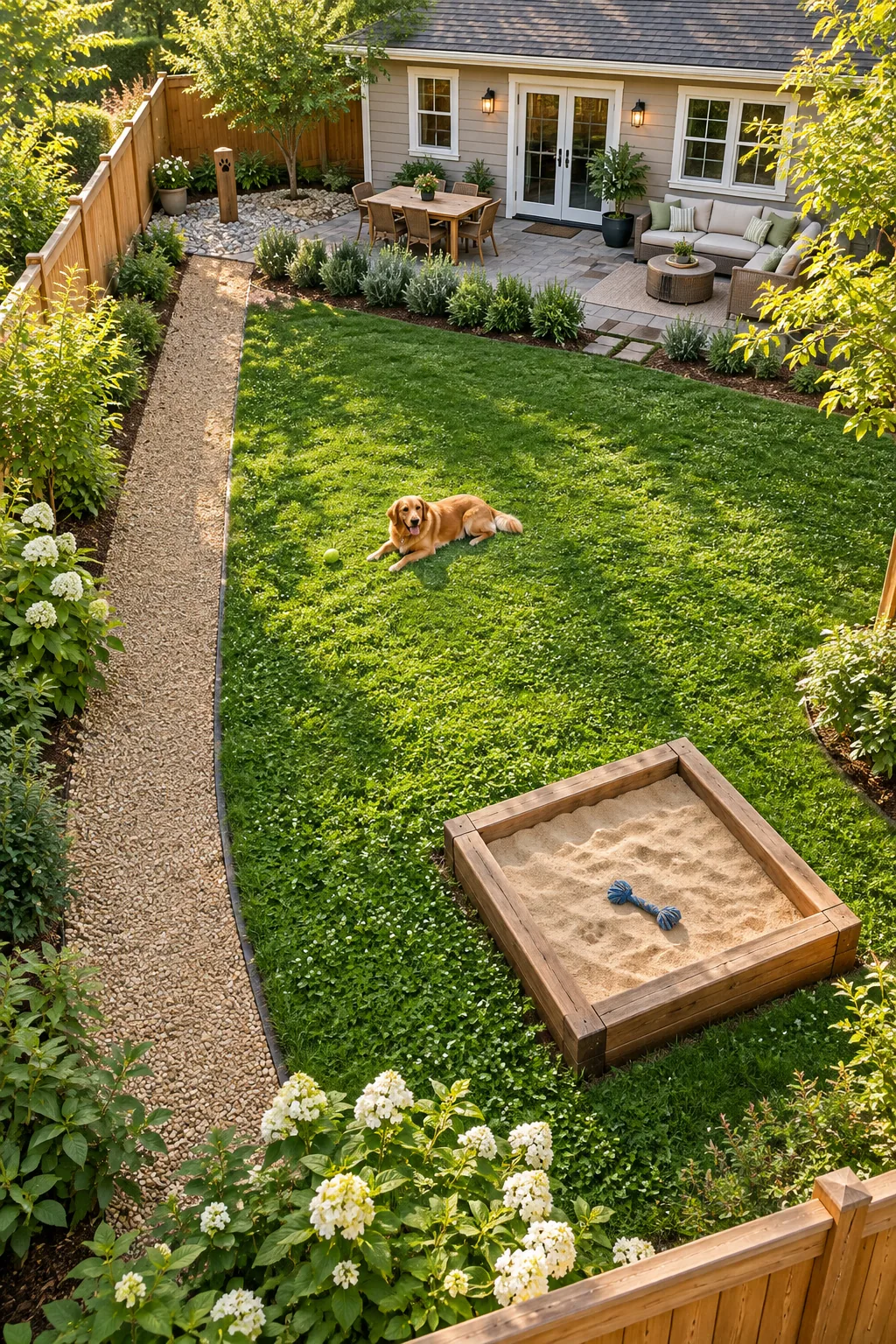
Review these final safety and longevity checks before downloading your printable dog-zone build sheet to officially start the project.
More Pet-Friendly Backyard Styles
Find the perfect aesthetic for your dog's outdoor oasis with these distinct landscaping looks.
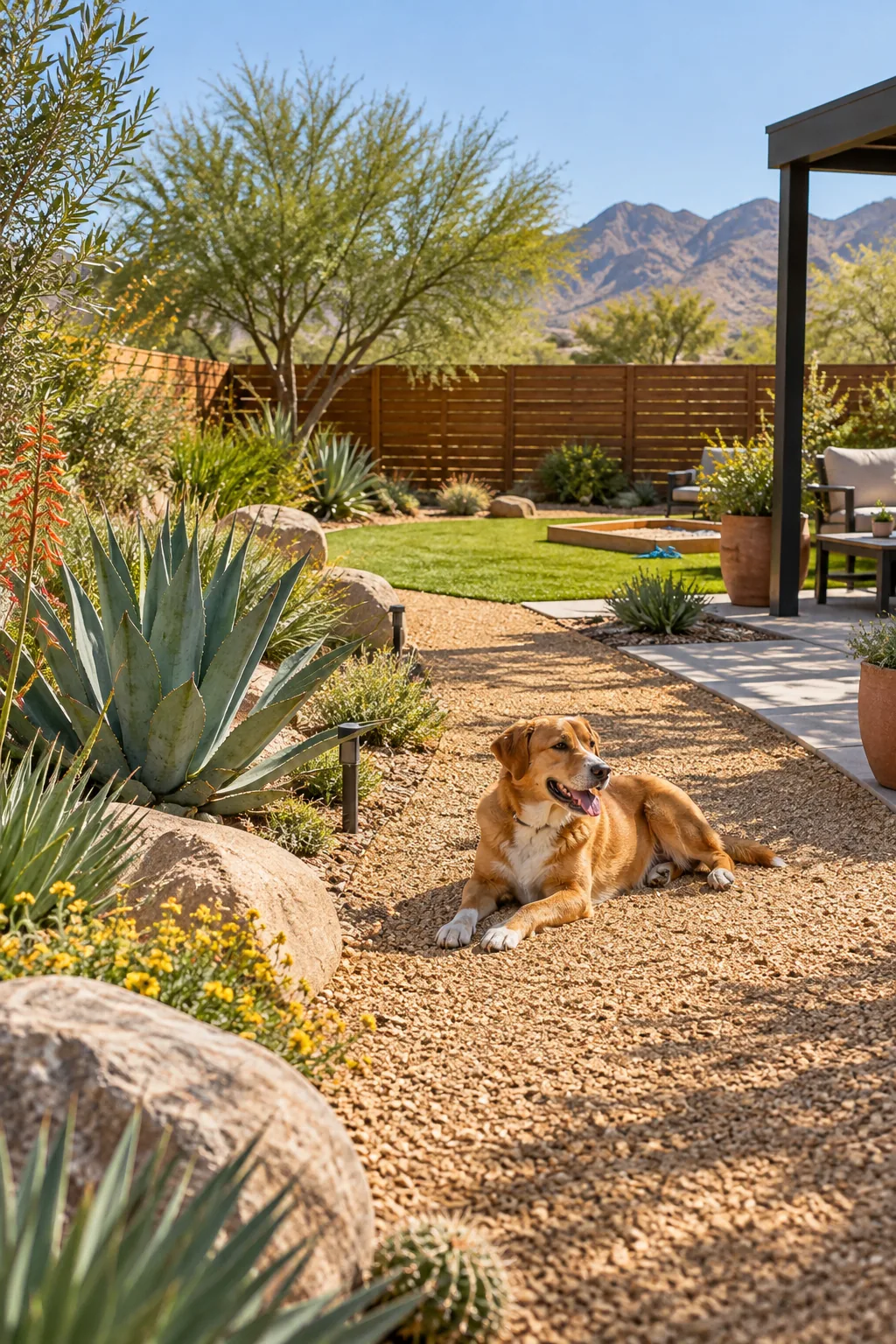
Modern Desert Xeriscape: This modern desert yard uses decomposed granite and dog-safe succulents for a drought-tolerant space. Use smooth boulders instead of sharp rocks to protect their paws.
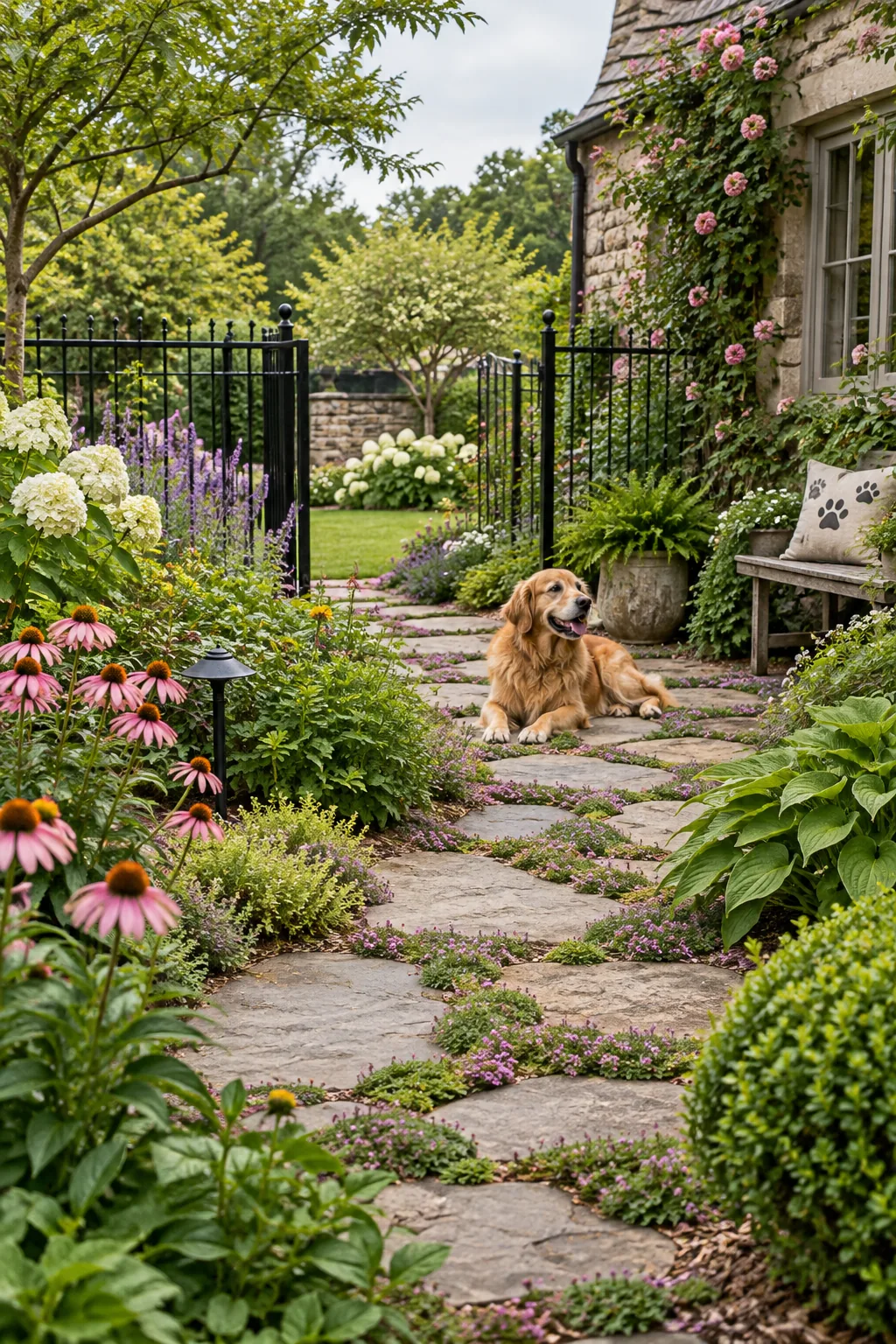
English Cottage Garden: An English cottage style features flagstone paths and creeping thyme between pavers. Install sturdy wrought iron fencing that allows your dog to safely watch the neighborhood.
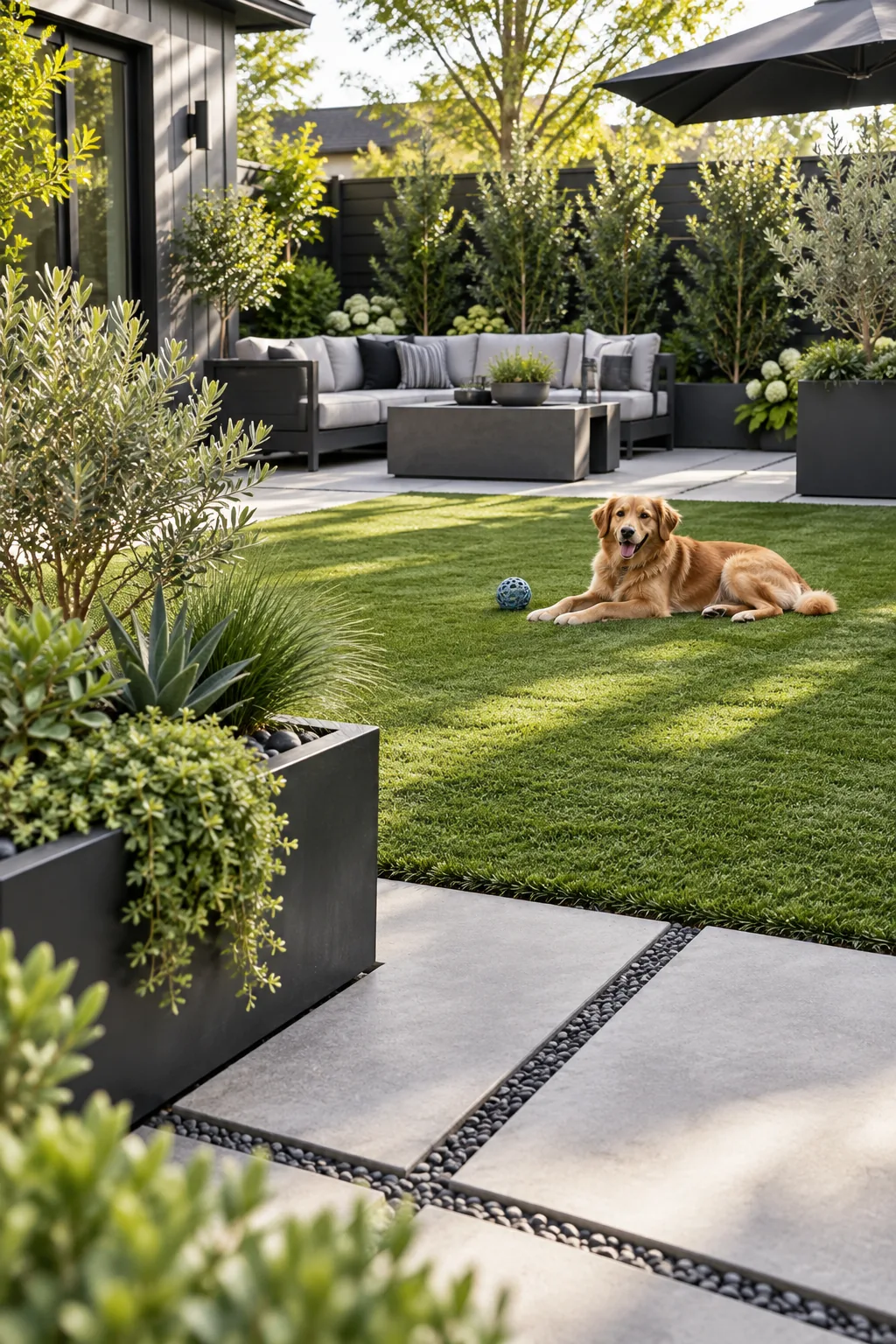
Urban Minimalist Courtyard: Urban minimalist designs rely on durable concrete pavers and high-quality artificial turf. Build raised steel planters to keep delicate ornamental grasses safely out of reach.
Pacific Northwest Woodland: A Pacific Northwest aesthetic embraces shade with soft cedar chips and native ferns. Create a natural woodland barrier using large mossy logs to gently guide their running path.