Pool Deck Furniture Checklist: Clearances, Materials & Setup
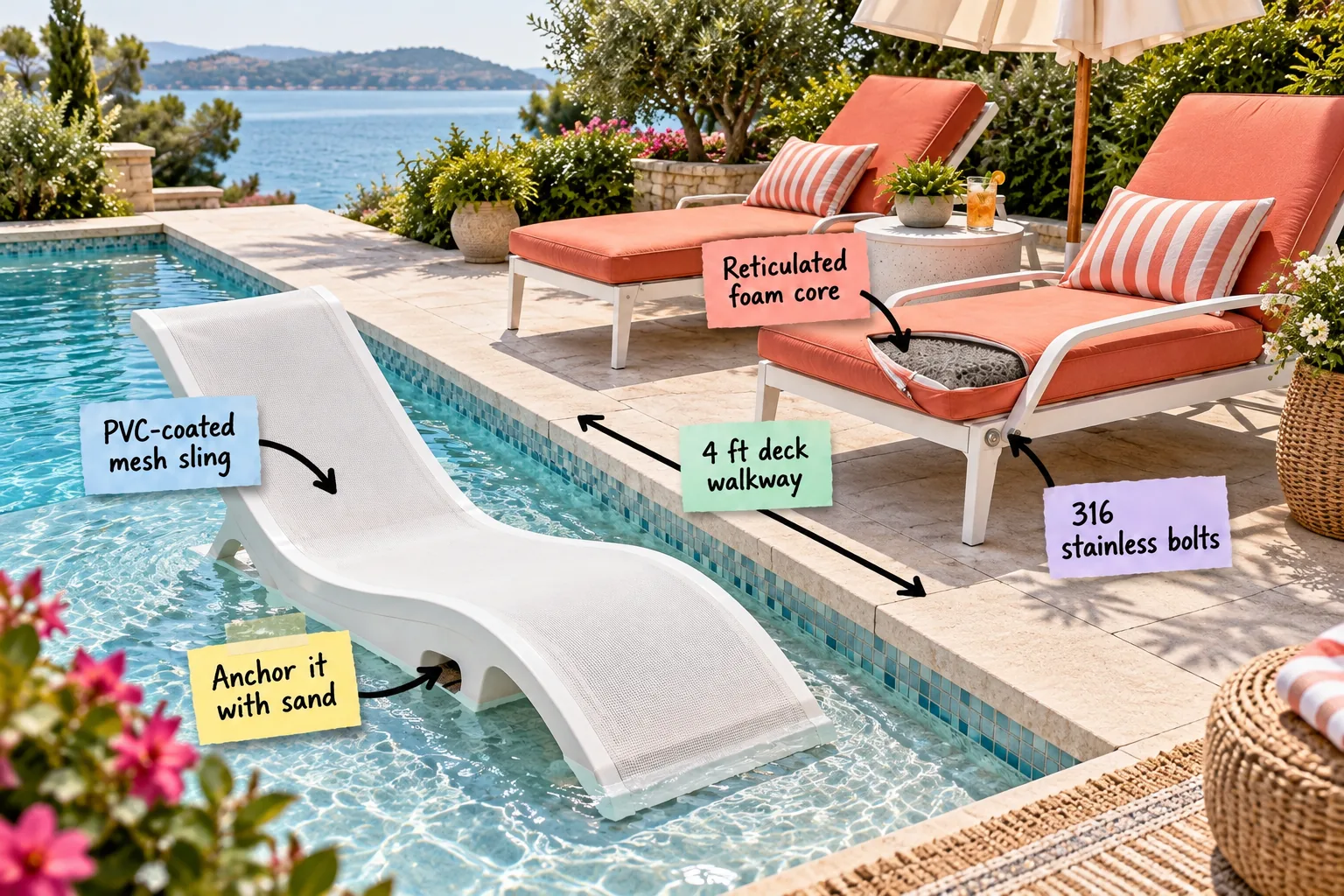
You will be able to confidently arrange your deck with the correct walkway clearances and shop for pool-safe materials using our printable checklist. Grab this one-page guide to correctly anchor your sun-shelf loungers and build a resort-worthy sanctuary that actually withstands the elements.
Styling the Sun Shelf for Resort Lounging
The sun shelf acts as a transition zone between the dry deck and the deep water, bringing a resort-style lounging experience right into your pool. Most in-pool chaises require a specific water depth, with maximum limits typically resting between 9 and 12 inches.
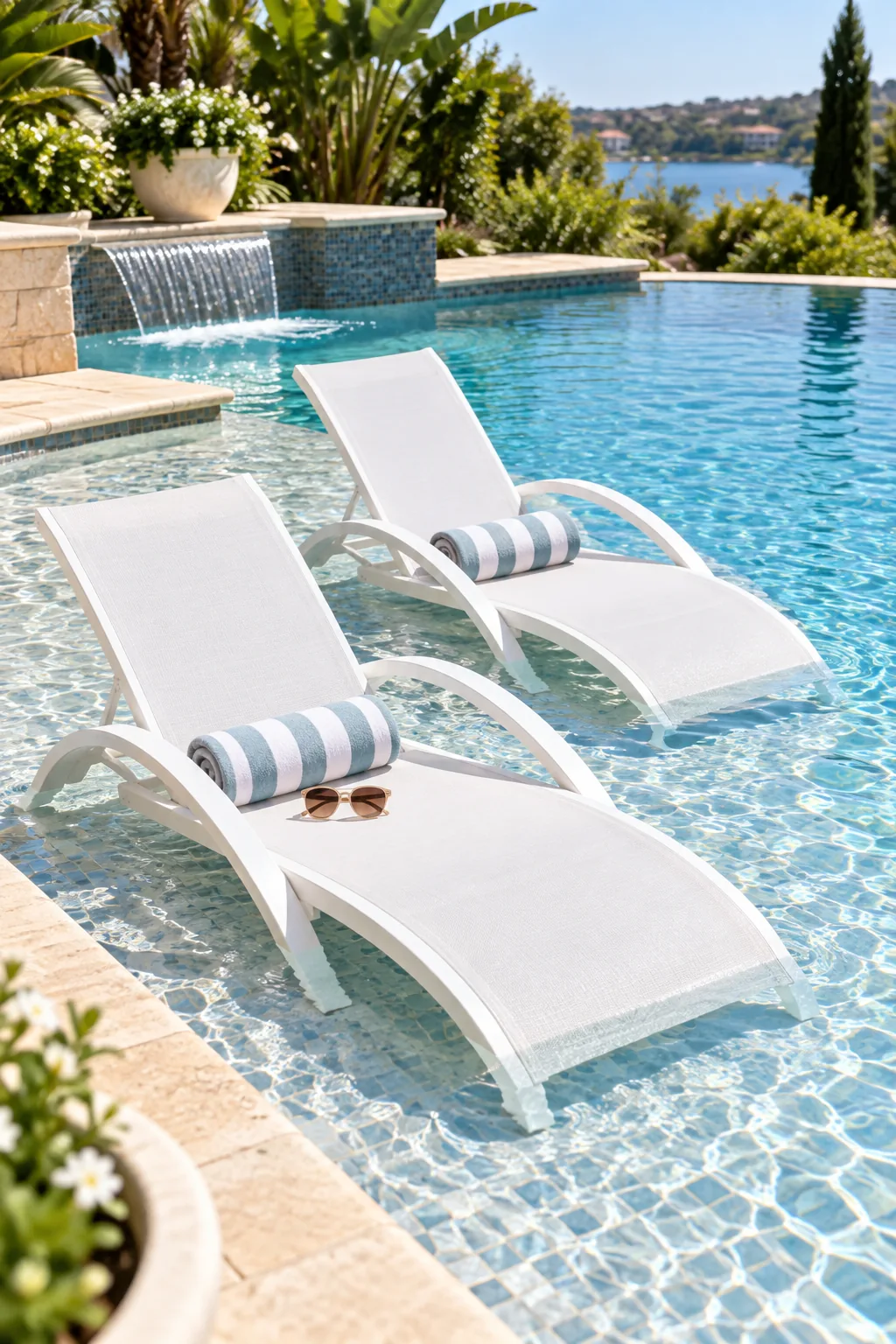
Verifying this crucial measurement prevents you from buying chairs that sit too low and become entirely submerged once you step into the water.
Verifying Your Sun Shelf Dimensions
Beyond the water depth, you must carefully evaluate the pitch of your shallow ledge before placing any furniture. A steep slope will cause your loungers to slide forward, compromising both your physical comfort and the structural integrity of the resin base over time.
Securing In-Pool Furniture Against Floating
Hollow resin chaises naturally want to float, so you must fill their bases with permanent weight to keep them securely submerged. You should always anchor it with sand rather than just pool water to provide enough mass against the current.
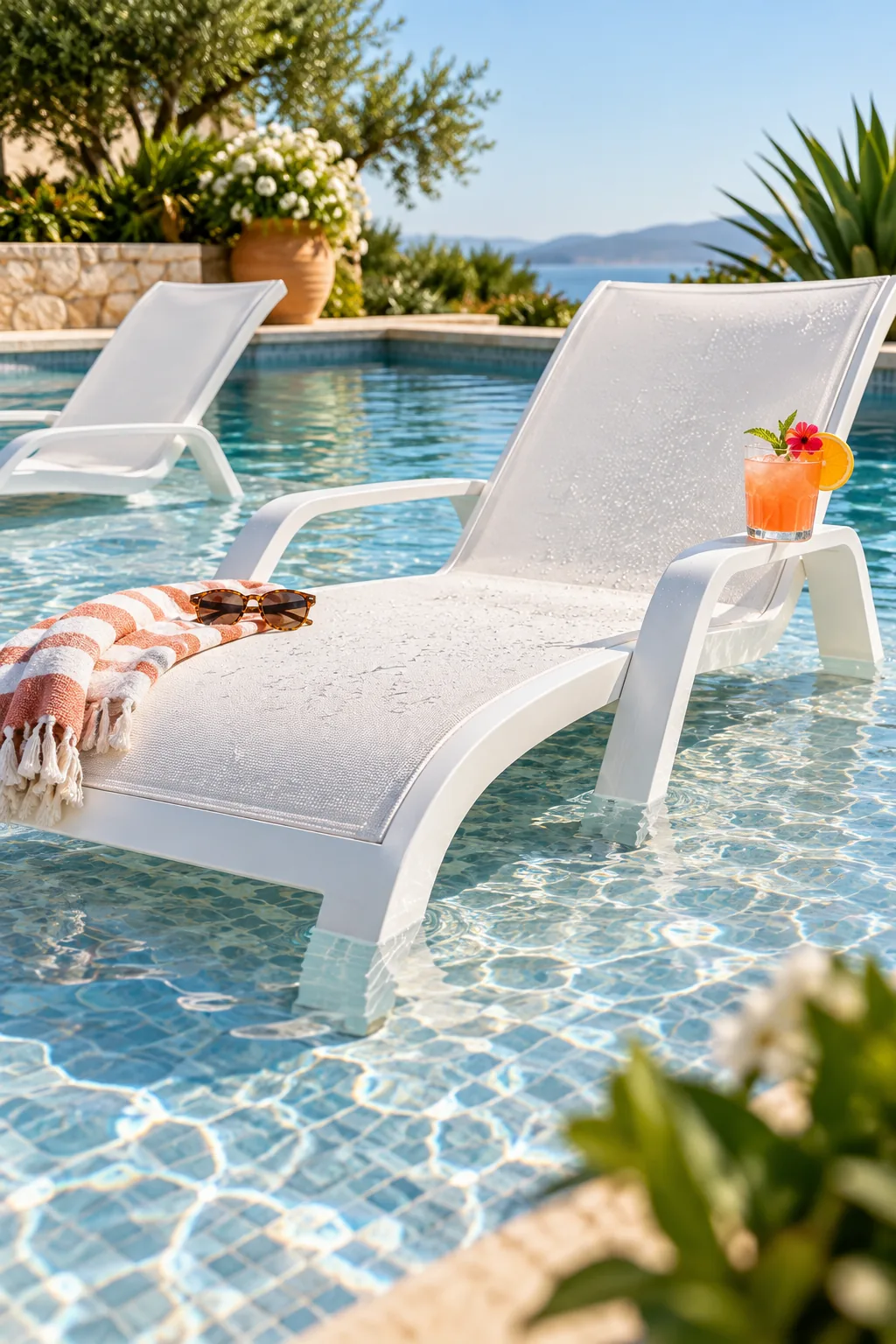
Once you have positioned your empty loungers on the sun shelf, you will need to add that weight to keep them firmly planted.
Selecting Chlorine-Resistant Sling Fabrics
Traditional outdoor fabrics degrade quickly when submerged, requiring materials engineered specifically for constant chemical exposure. A PVC-coated mesh sling is the only reliable choice for in-pool seating because it resists chlorine breakdown and wipes clean effortlessly.
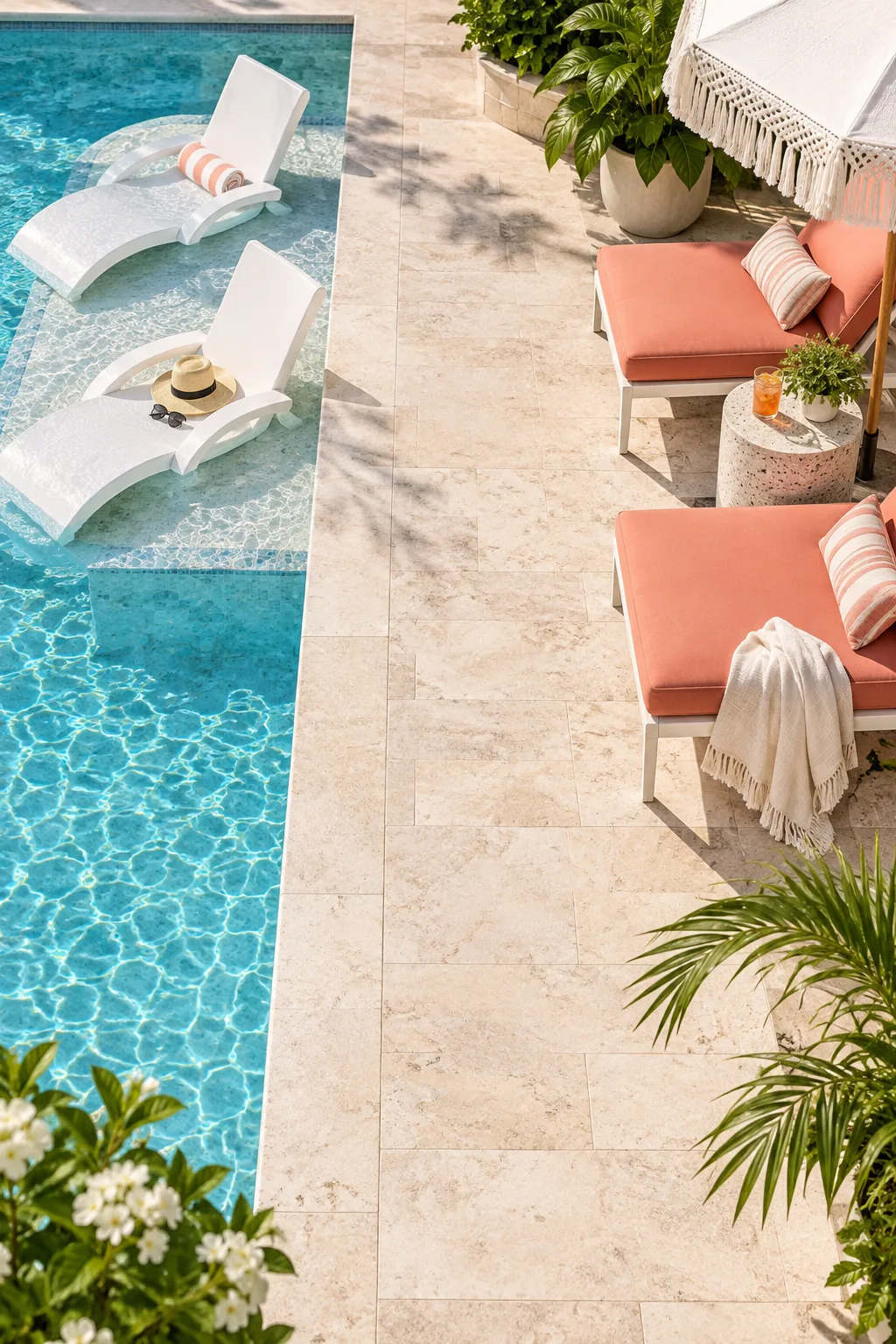
In my own Denver backyard, swapping standard acrylic for coated mesh finally stopped our poolside chairs from bleaching out after a single season.
Cleaning Your Mesh Slings
Maintaining that pristine resort look requires a simple but consistent cleaning routine to remove sunscreen buildup and calcium deposits. A gentle scrub with mild dish soap and a soft bristle brush will keep the coated mesh looking brand new without scratching the surface.
Coordinating Sling Colors with Pool Finishes
The color of your submerged furniture directly interacts with the tint of your pool water and the plaster beneath it.
| Plaster Color | Recommended Sling Color |
|---|---|
| White or Light Blue | Crisp White or Navy |
| Medium Grey | Charcoal or Slate |
| Teal or Green | Sand or Earth Tones |
Choosing a sharply contrasting hue makes the loungers pop as distinct architectural focal points beneath the water’s surface.
Maintaining Safe Deck Walkway Clearances
Moving up onto the dry deck, spatial planning becomes a strict matter of safety and visual balance. You must maintain a 4 ft deck walkway between the pool coping and the foot of your deck chaises to ensure safe, slip-free passage.
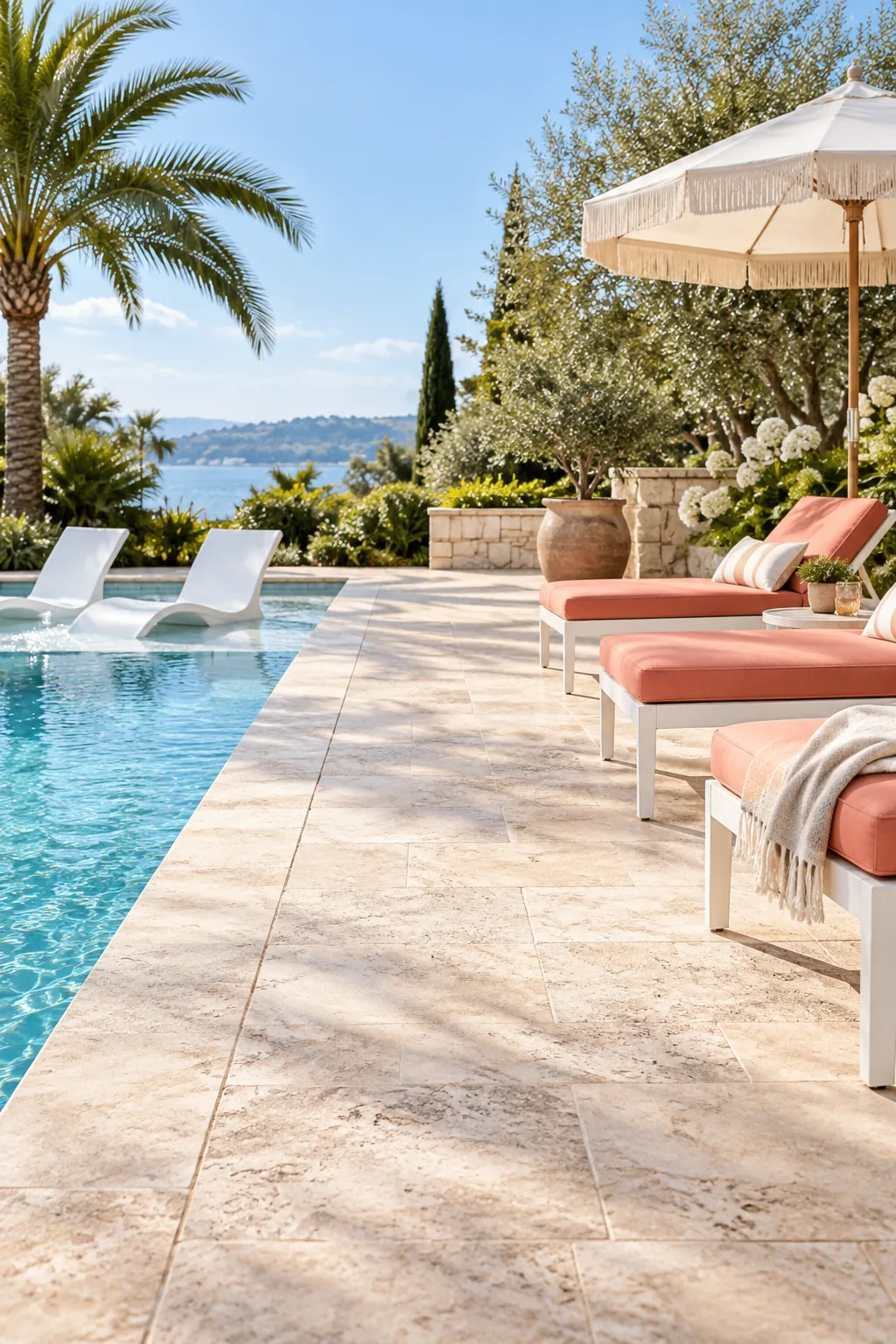
Generous spacing prevents the deck from feeling cluttered and gives wet swimmers enough room to safely exit the water without tripping.
Accounting for Umbrella Clearances
When plotting your deck layout, you must also factor in the sweeping canopy of any freestanding or cantilevered umbrellas. Ensure the open canopy does not overhang the water’s edge, which can obstruct swimmers and create a hazard during sudden wind gusts.
Upgrading to Marine-Grade Hardware
The hidden danger of cheap patio furniture is the rust that eventually bleeds onto expensive stone pool pavers. You must specify 316 stainless bolts for all frame joints, as this marine-grade alloy withstands the highly corrosive microclimate around the water.
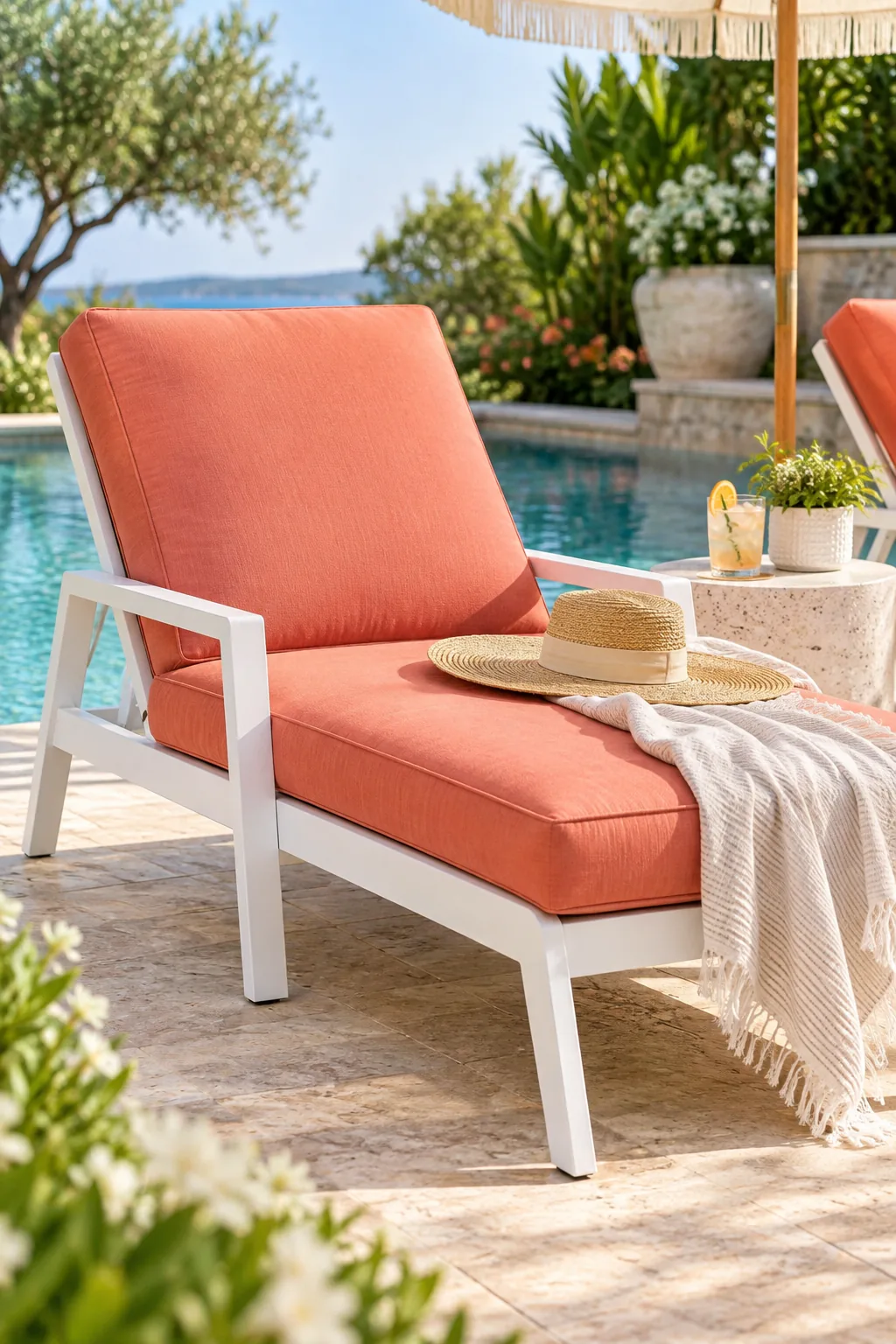
Standard steel fasteners will quickly oxidize and weaken when exposed to the constant evaporation of chlorinated pool water.
Protecting Pavers from Furniture Scratches
Heavy metal frames can easily gouge soft travertine or stamped concrete decks when dragged into position during a sunny afternoon.
- Install heavy-duty nylon glides on all chair legs.
- Lift the furniture entirely rather than dragging it across the stone.
- Inspect the foot caps for wear at the start of every summer season.
Maintaining a protective barrier between your metal frames and the deck surface preserves your expensive hardscaping investment for decades.
Investing in Quick-Dry Cushion Cores
High-quality deck cushions require specialized interiors to survive heavy summer rainstorms without developing hidden mildew. A true reticulated foam core features an open-cell structure that allows rainwater to pass straight through and drain instantly.
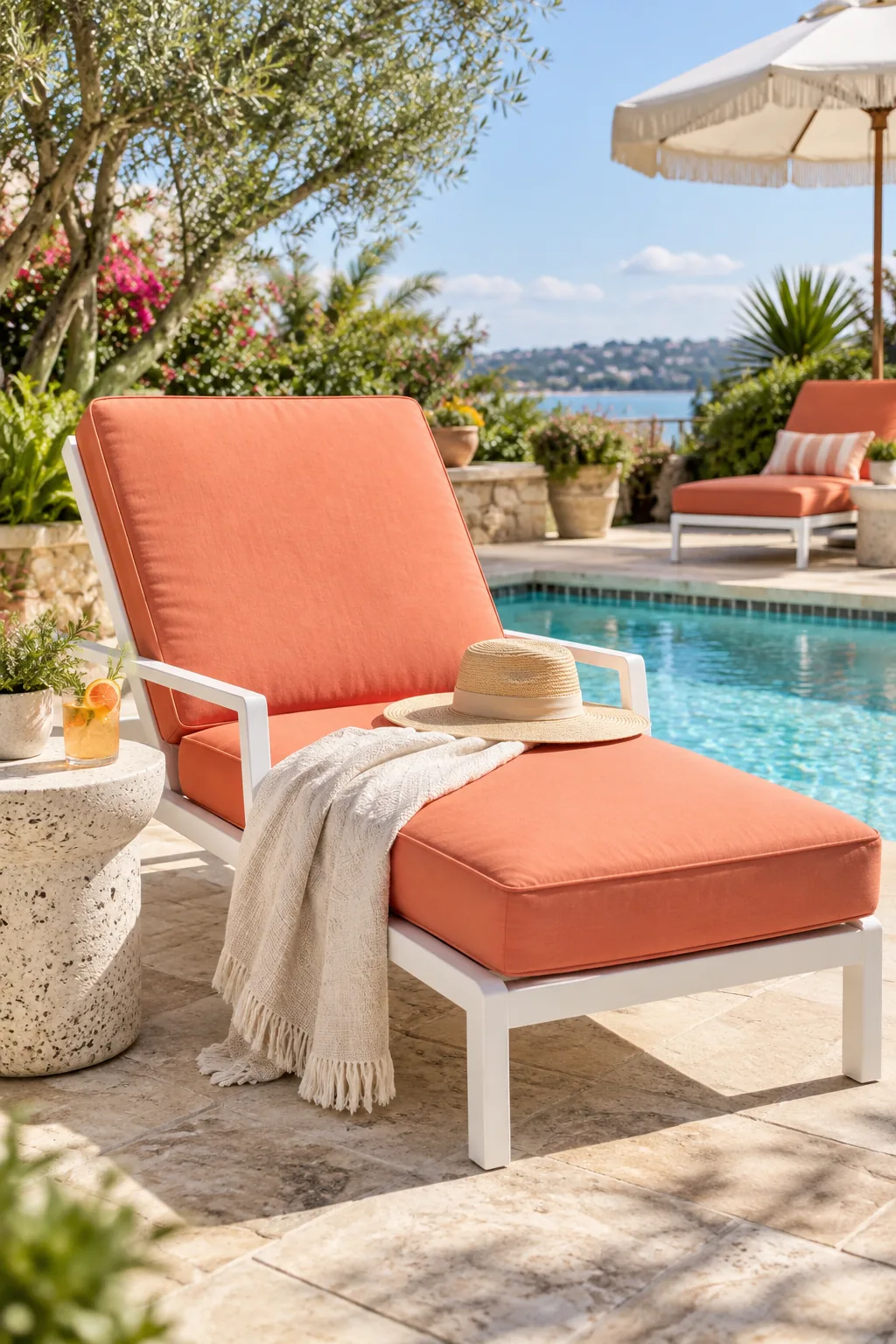
This highly porous architecture ensures your seating remains comfortable and completely dry within hours of a passing afternoon storm.
Storing Cushions During the Off-Season
Even the most resilient outdoor foam requires proper protection when the swimming season finally comes to an end. Storing your cushions in a climate-controlled garage or a waterproof deck box extends their lifespan and keeps them free from winter debris.
Choosing Salt- and Chlorine-Safe Frames
Selecting the right structural frame dictates how long your furniture will survive the harsh combination of UV rays and pool chemicals. Powder-coated aluminum and high-density polyethylene are the top choices because they will never splinter, warp, or rust.
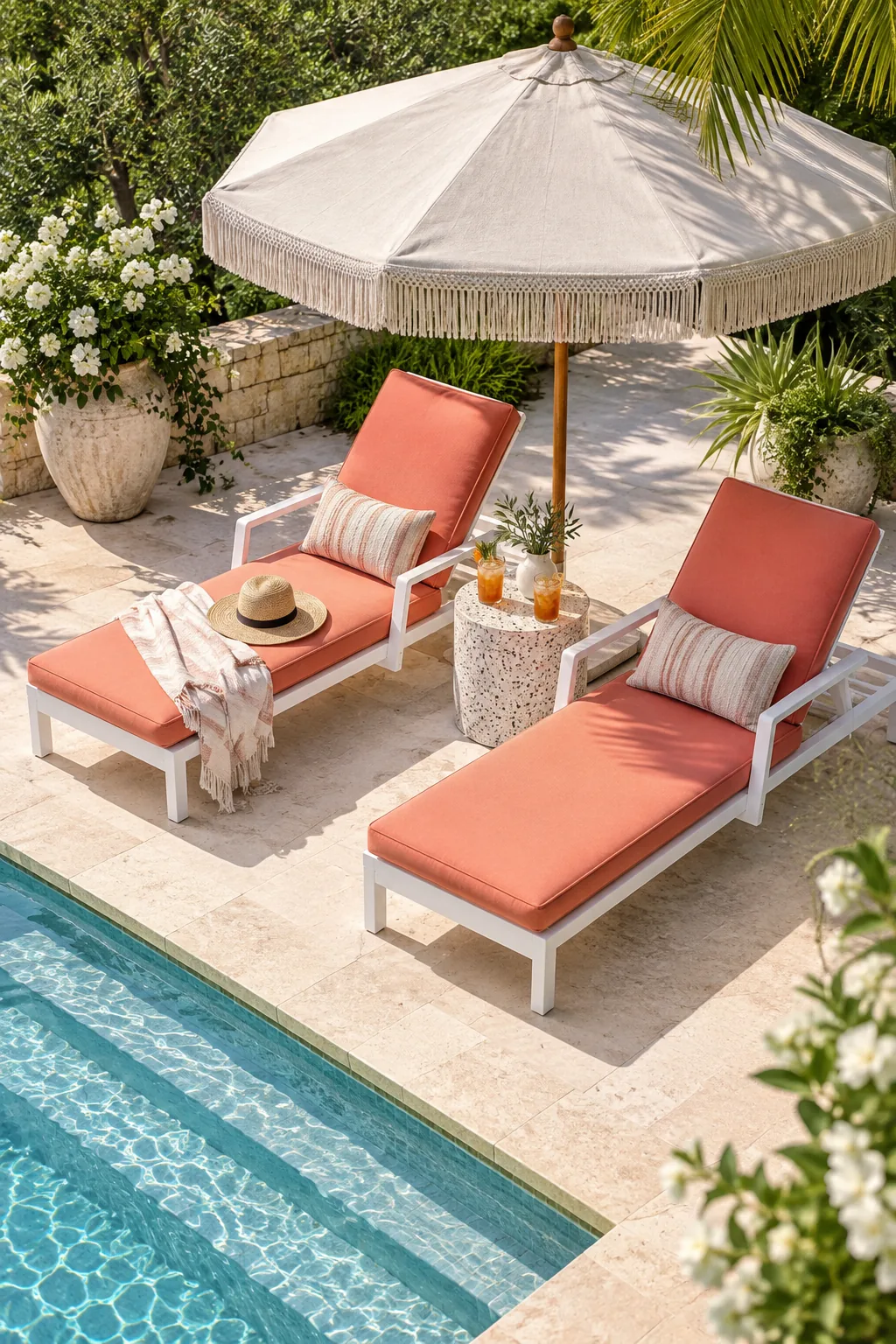
I learned this lesson the hard way when a beautiful set of untreated steel chairs left permanent rust rings on a client’s pristine travertine deck.
Evaluating Frame Weight for Windy Climates
While aluminum is wonderfully rust-proof, its lightweight nature makes it incredibly vulnerable to sudden gusts of wind on an exposed patio.
Pairing Side Tables with Loungers
Every functional seating arrangement requires a convenient surface for resting cold drinks, sunscreen, and sunglasses. Select a low-profile side table crafted from the same resilient high-density polyethylene to create a cohesive and durable matching set.
Layering Outdoor Textiles for Comfort
Once the heavy furniture is securely in place, you can soften the rigid metal frames with carefully selected outdoor accessories. Adding a rolled lumbar pillow in a contrasting geometric pattern instantly elevates the visual appeal while providing crucial lower back support.
Illuminating the Pool Deck for Nighttime
A well-designed outdoor space should remain inviting long after the sun goes down. Incorporating low-voltage LED path lights along the perimeter of your deck ensures guests can navigate around the loungers safely in the dark.
Adding Shade Structures for Afternoon Relief
Continuous sun exposure can quickly make even the most comfortable lounger feel unbearable during peak afternoon hours. Erecting a permanent pergola or installing a shade sail provides a necessary retreat from the intense heat.
Your Printable Pool-Deck Furniture Checklist
Bringing all these material specifications and spatial rules together ensures your backyard functions beautifully and safely. Download your comprehensive one-page checklist to confidently track walkway clearances, sun-shelf depth limits, and the exact marine-grade materials required.
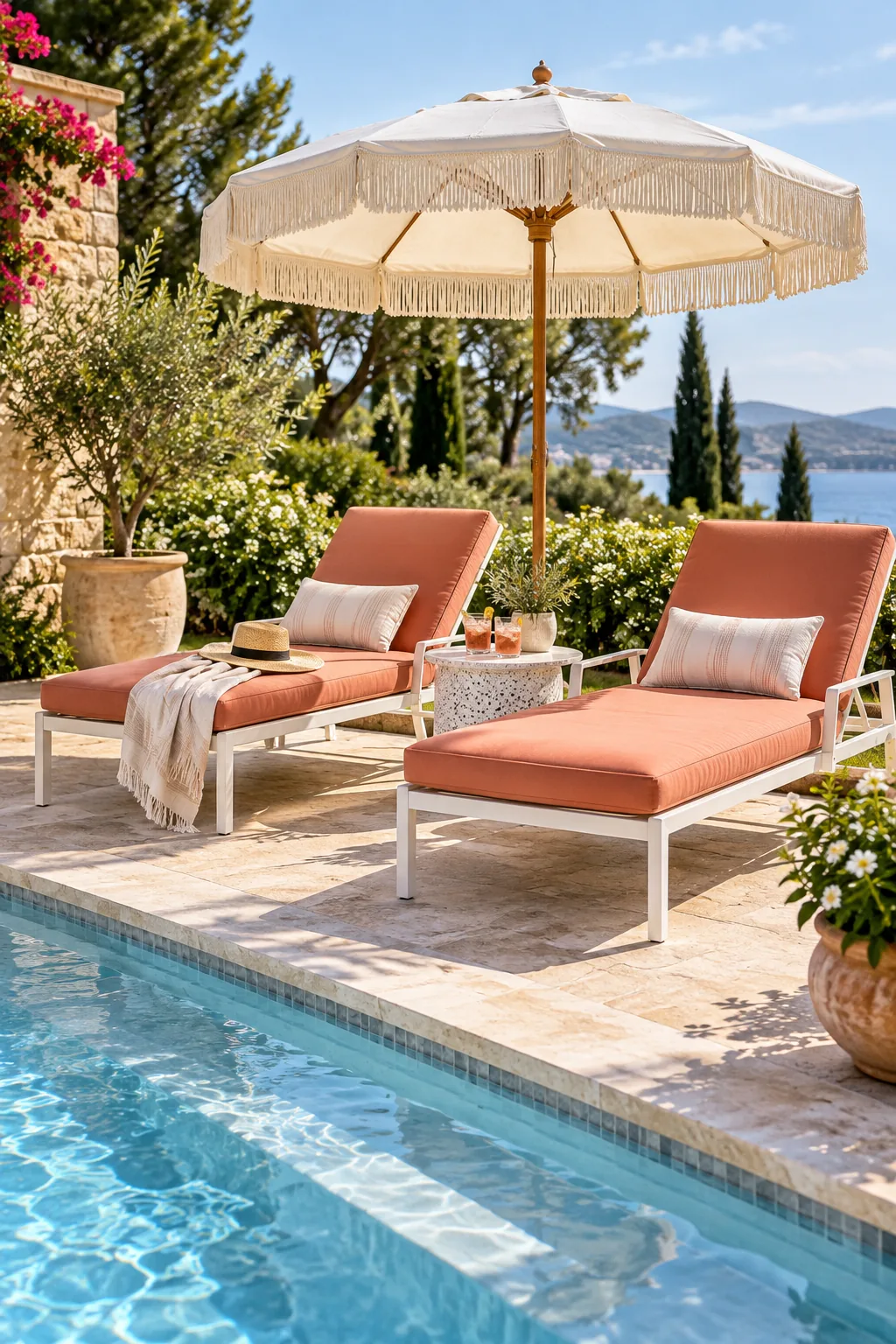
Before you head to the showroom or finalize your online cart, gather these three crucial measurements from your backyard. I keep this exact printed list on a clipboard whenever I source pieces for a new outdoor project.
Four Resort-Inspired Pool Deck Looks
Find the perfect aesthetic for your outdoor oasis by exploring these distinct poolside styling approaches.
Warm Mediterranean Terracotta: Embrace a European villa aesthetic by pairing warm clay cushions with dark, ornate aluminum frames that mimic traditional wrought iron without the rust.
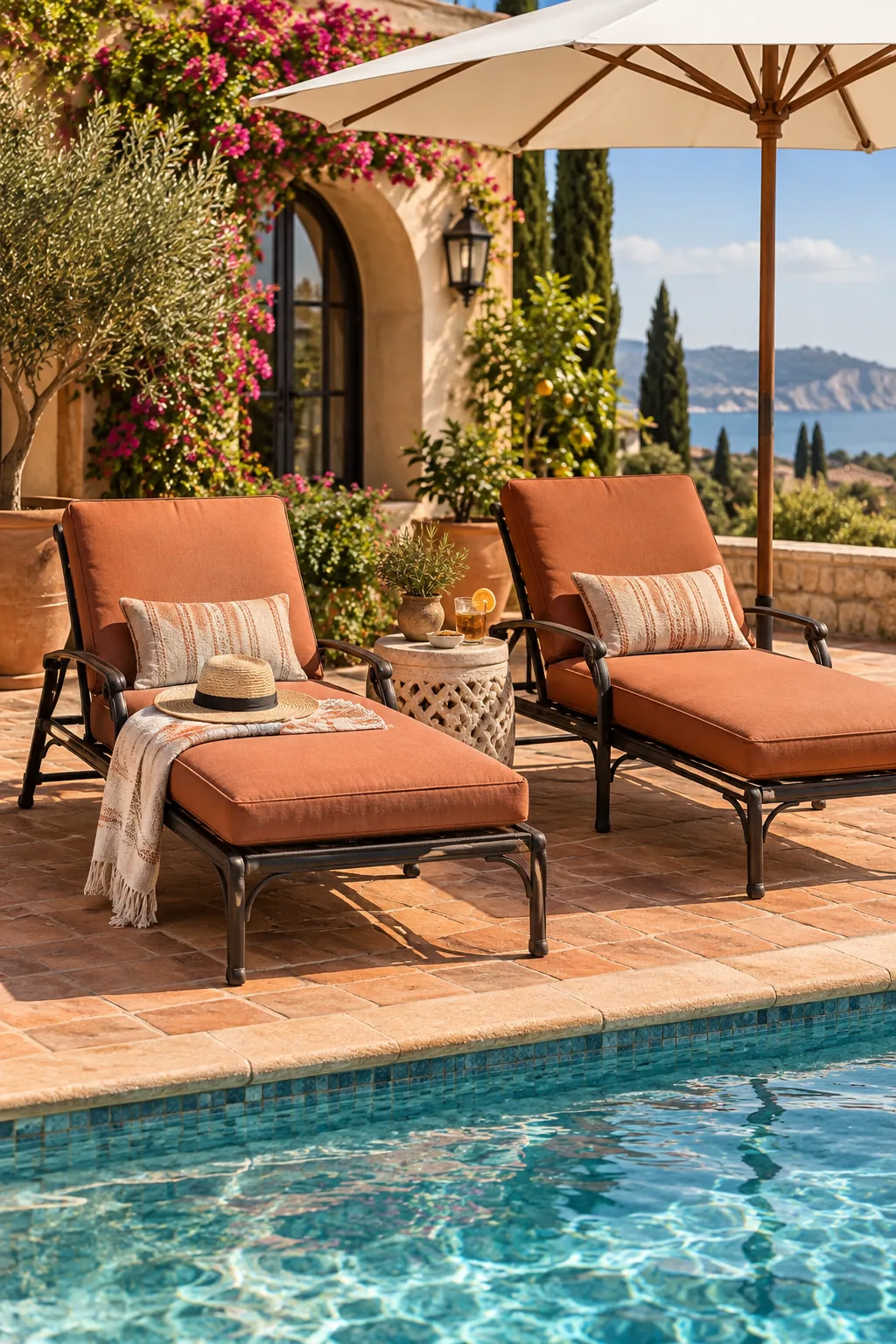
Crisp Modern Coastal: Achieve a classic nautical vibe using crisp navy stripes and durable teak-look HDPE frames that easily withstand harsh coastal salt air.
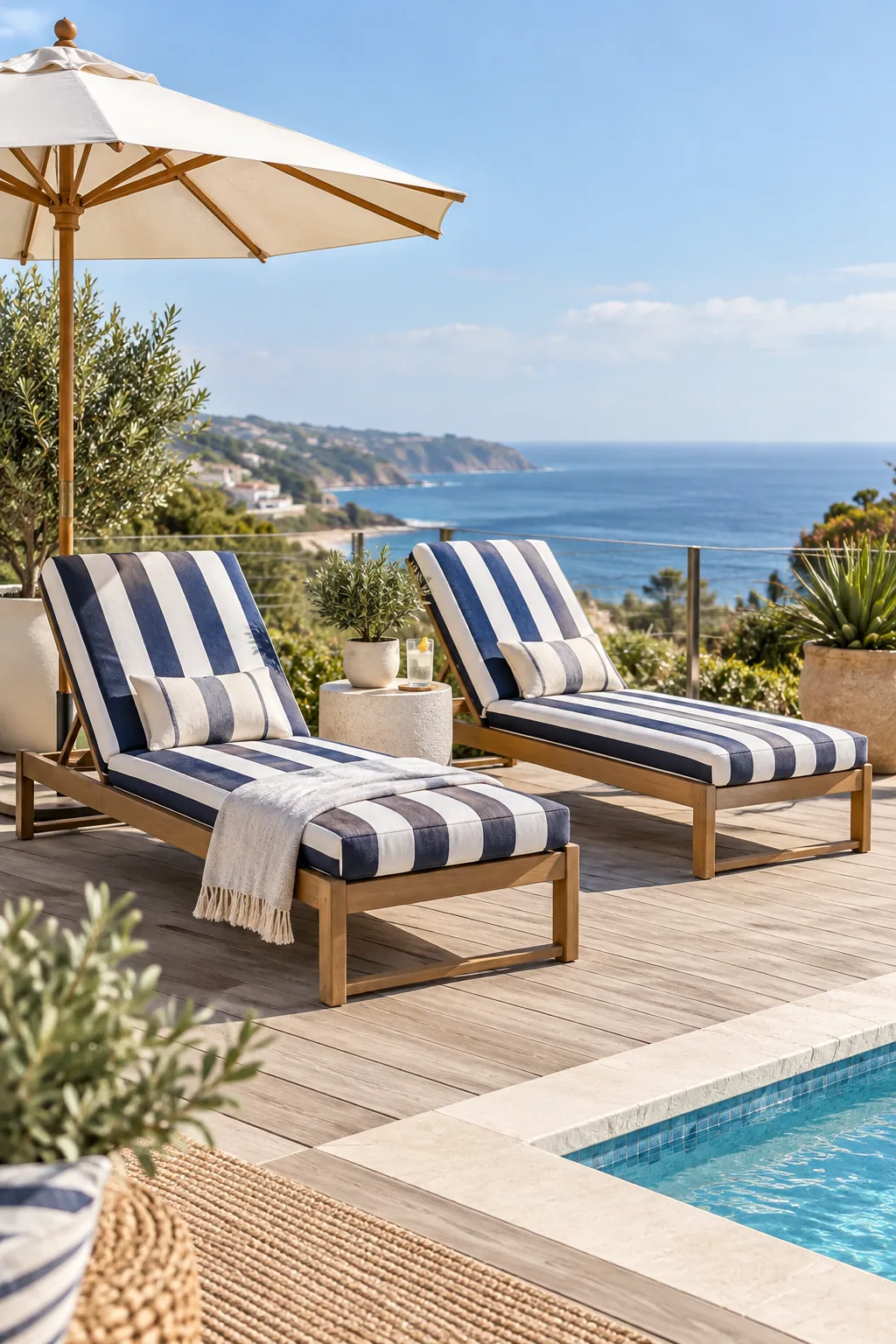
Lush Tropical Resort: Transform your deck into an island getaway by selecting vibrant botanical prints and faux-bamboo aluminum frames nestled among oversized potted palms.
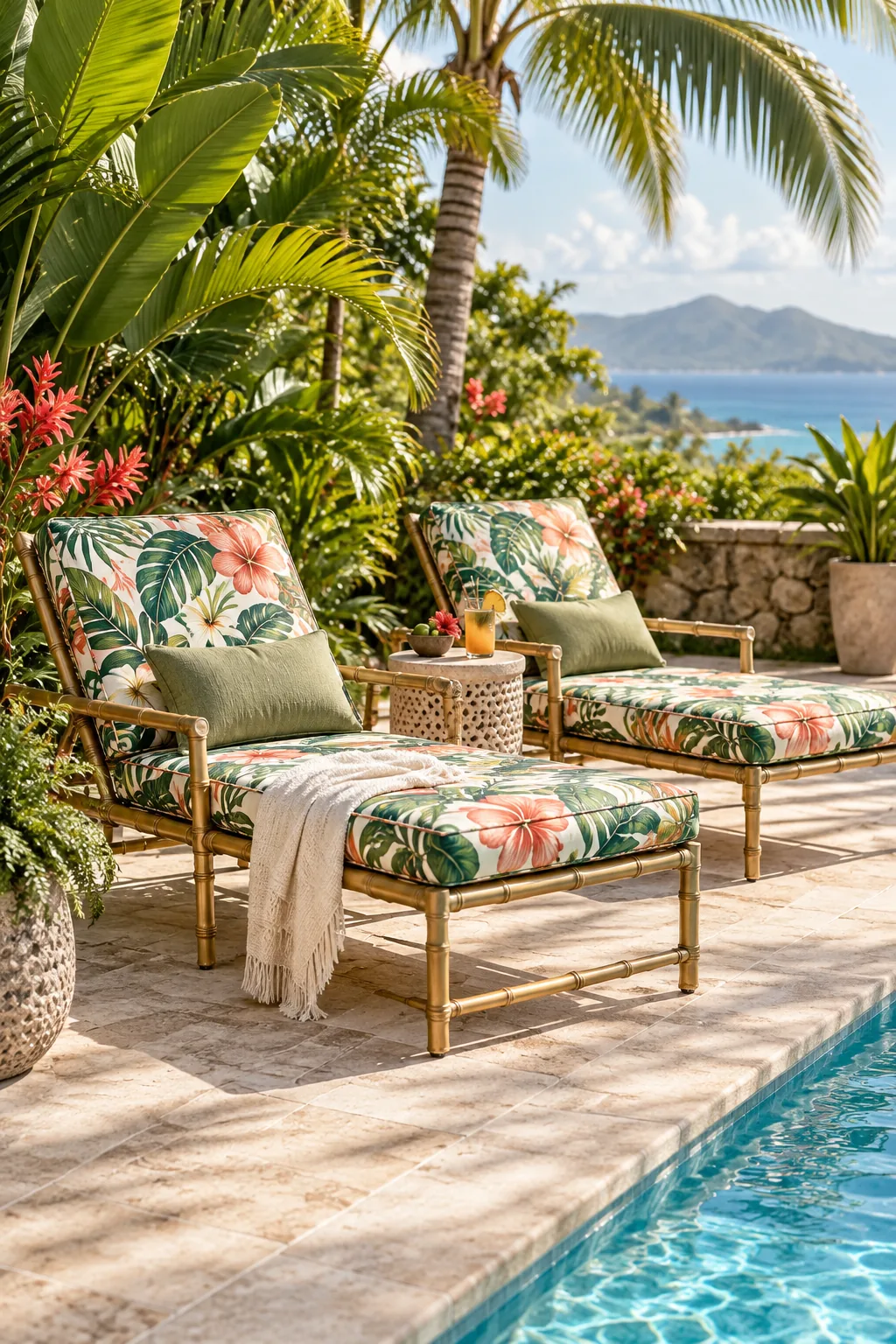
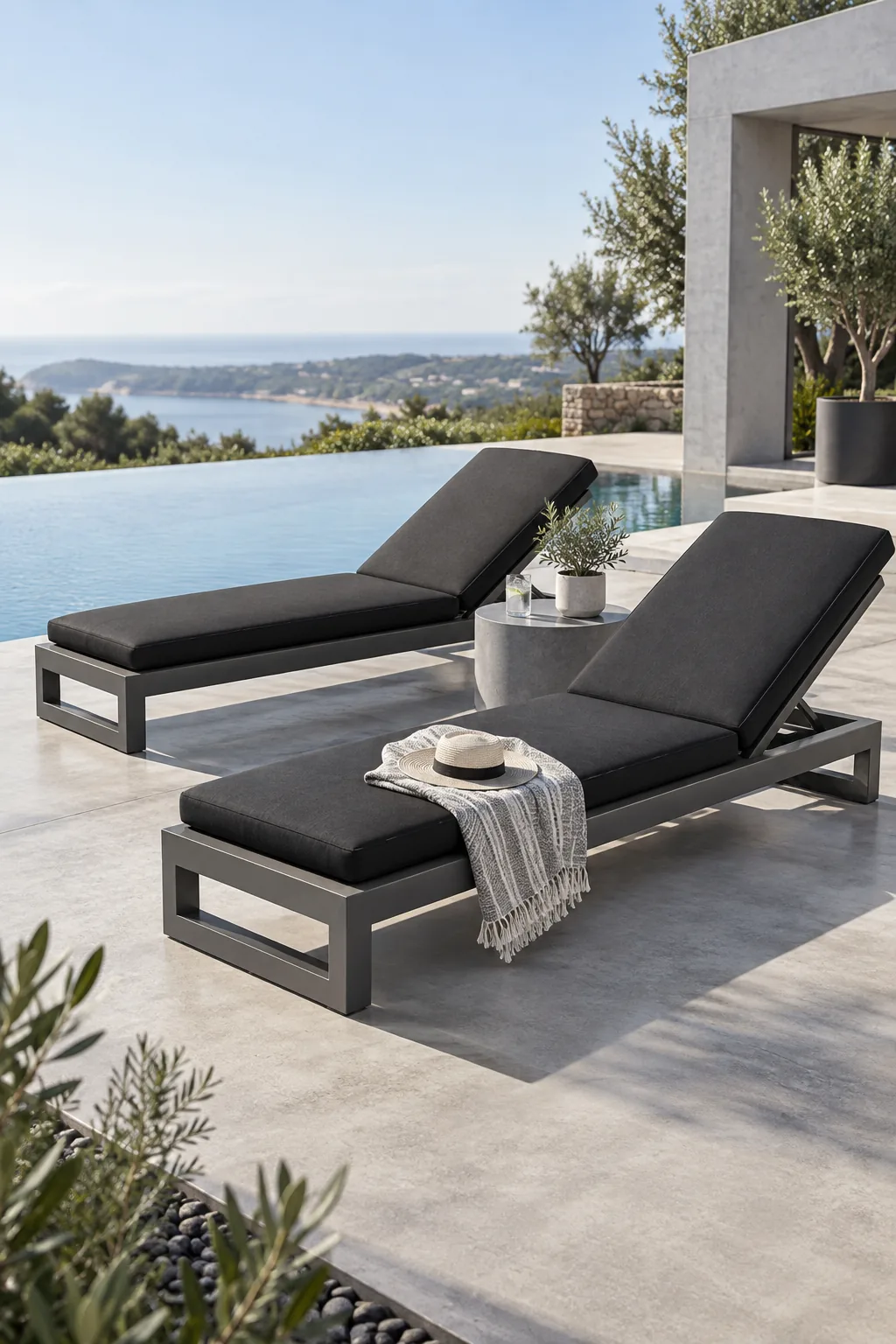
Sleek Minimalist Concrete: Keep the focus on the architecture with low-profile charcoal frames and seamless black cushions that blend perfectly into a poured concrete deck.