Porch Paint Colors: The Walkway Test & LRV Cheat Sheet
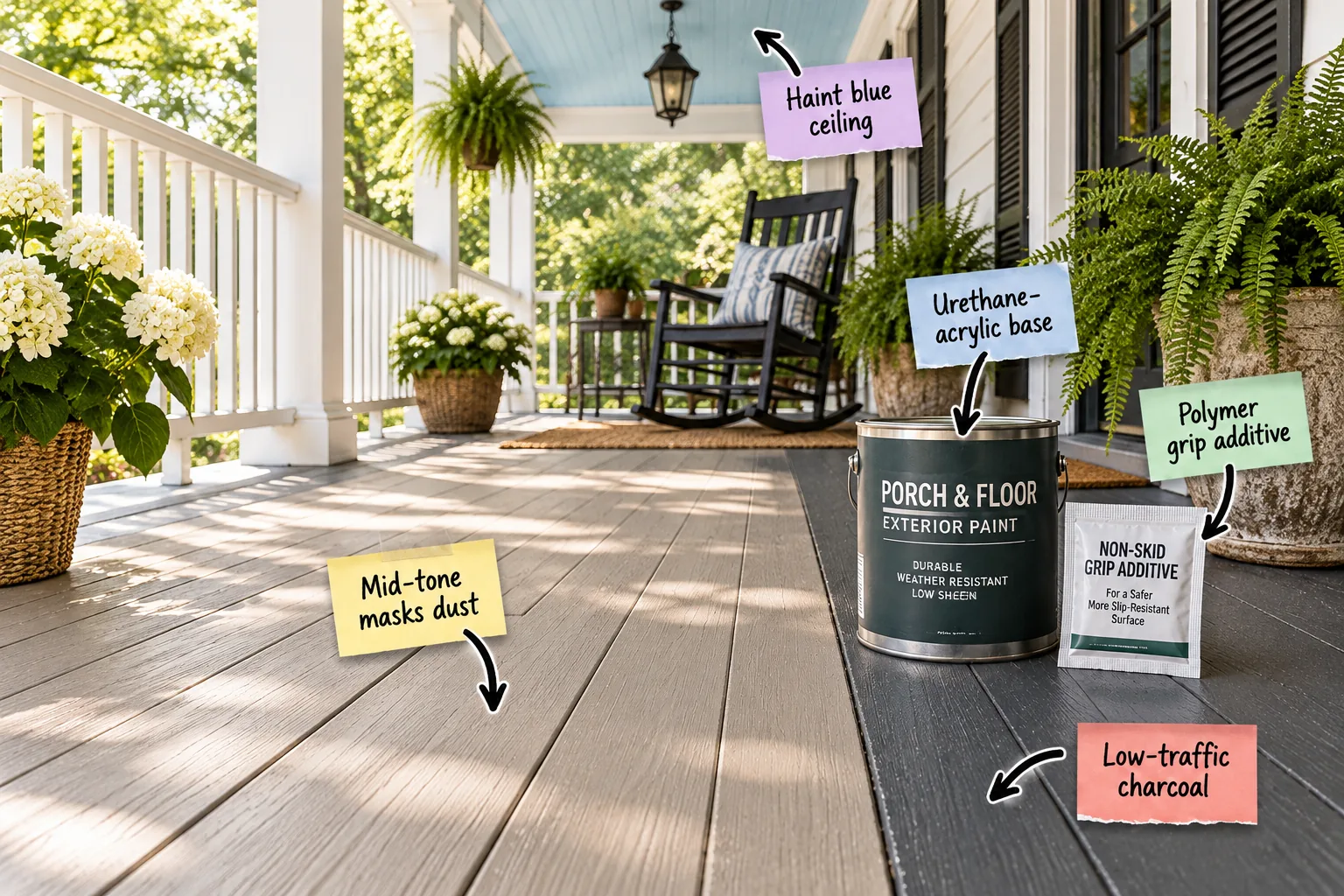
Choosing the right outdoor colors doesn’t have to be a guessing game when you use the two-tone walkway test and our Porch Color & LRV Cheat Sheet. You will be able to select the exact right paint for your traffic zones and mix a durable, slip-resistant finish.
The Two-Tone Walkway Test
Dividing your porch floor into two distinct color zones creates a natural runner that guides foot traffic directly to your front door. This visual separation lets you use a welcoming shade for the path while hiding the edges where debris naturally collects.
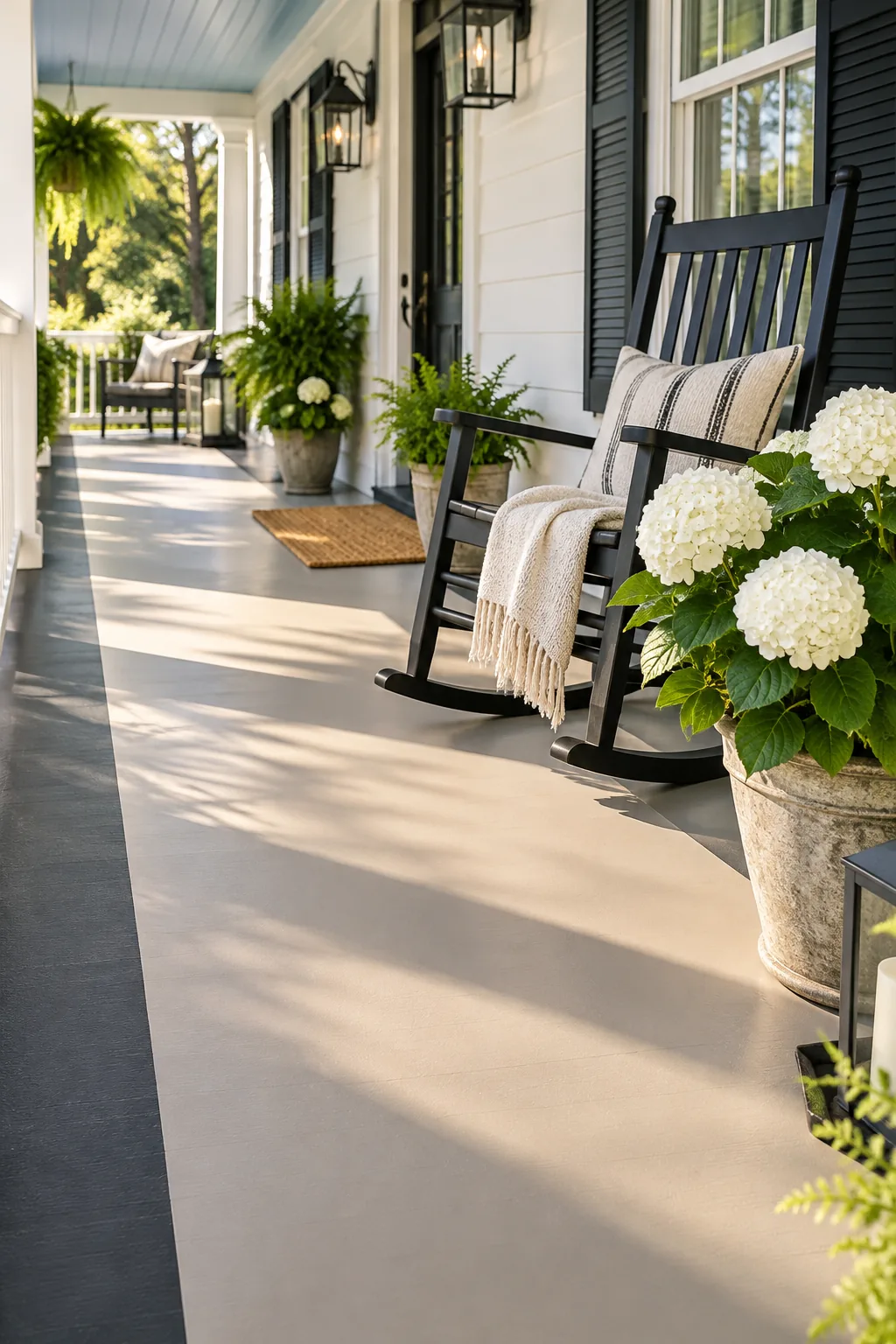
To pull off this trick, measure your total porch width and dedicate the center 60 percent to the main walkway color. The remaining space becomes your dark framing border, perfectly proportioned to anchor your outdoor furniture.
Your Porch Color LRV Cheat Sheet
Light Reflectance Value measures light reflection on a scale of 0 to 100, and an LRV 40 mid-tone greige is the absolute best color for camouflaging daily dirt. This specific value prevents the floor from blinding you in direct sunlight or looking like a black hole.
Before committing to a gallon, always test your chosen LRV ranges under your actual porch roof to see how the shadows affect the brightness. Your dark border should have an LRV below 15 to provide enough contrast against the walkway.
Mid-Tone Walkways Mask Daily Dust
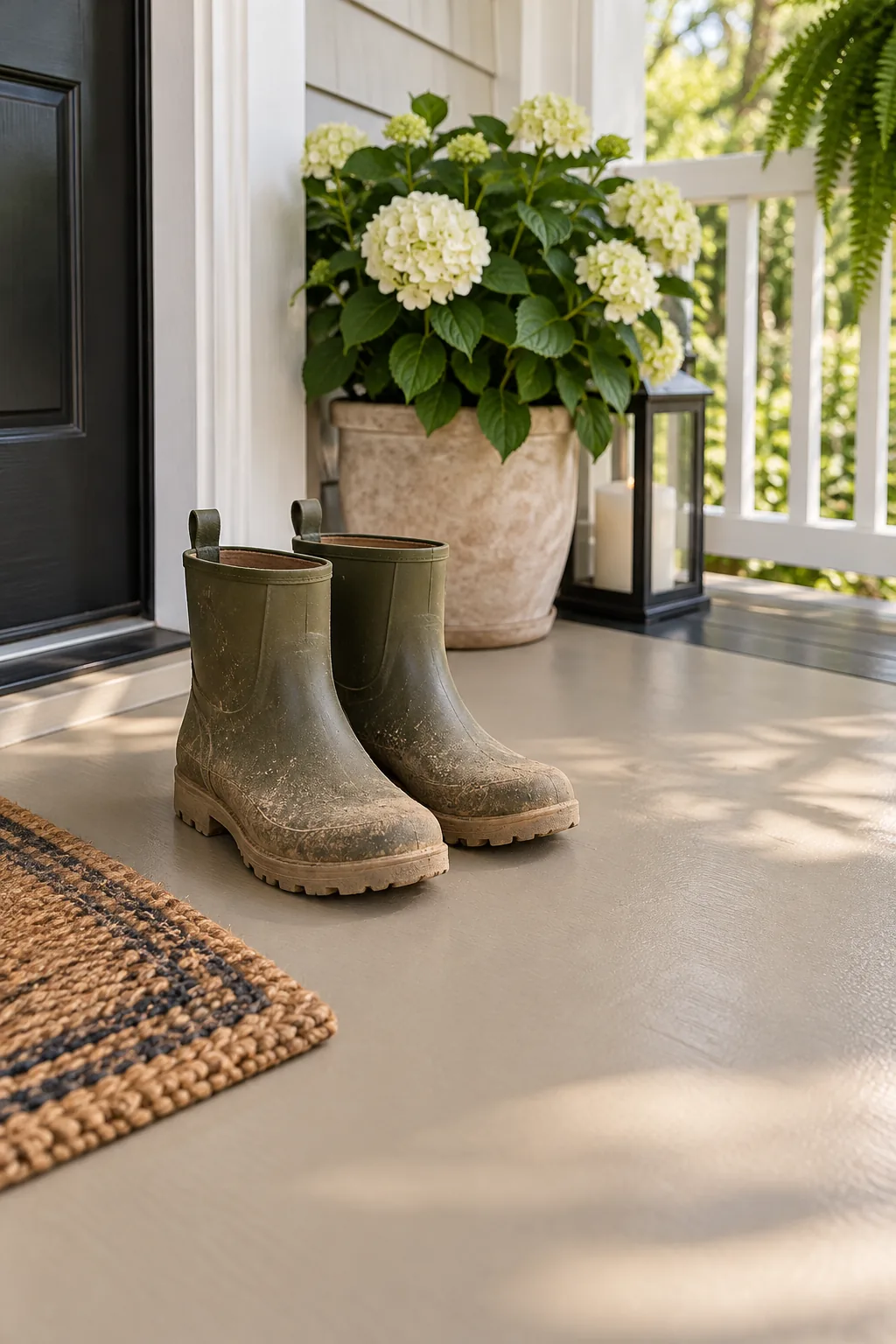
A warm greige actively camouflages dried mud, meaning you can sweep once a week instead of daily. To complete the look, painting a 12-to-18-inch border in dark charcoal beautifully frames the porch and hides scuffs from heavy furniture.
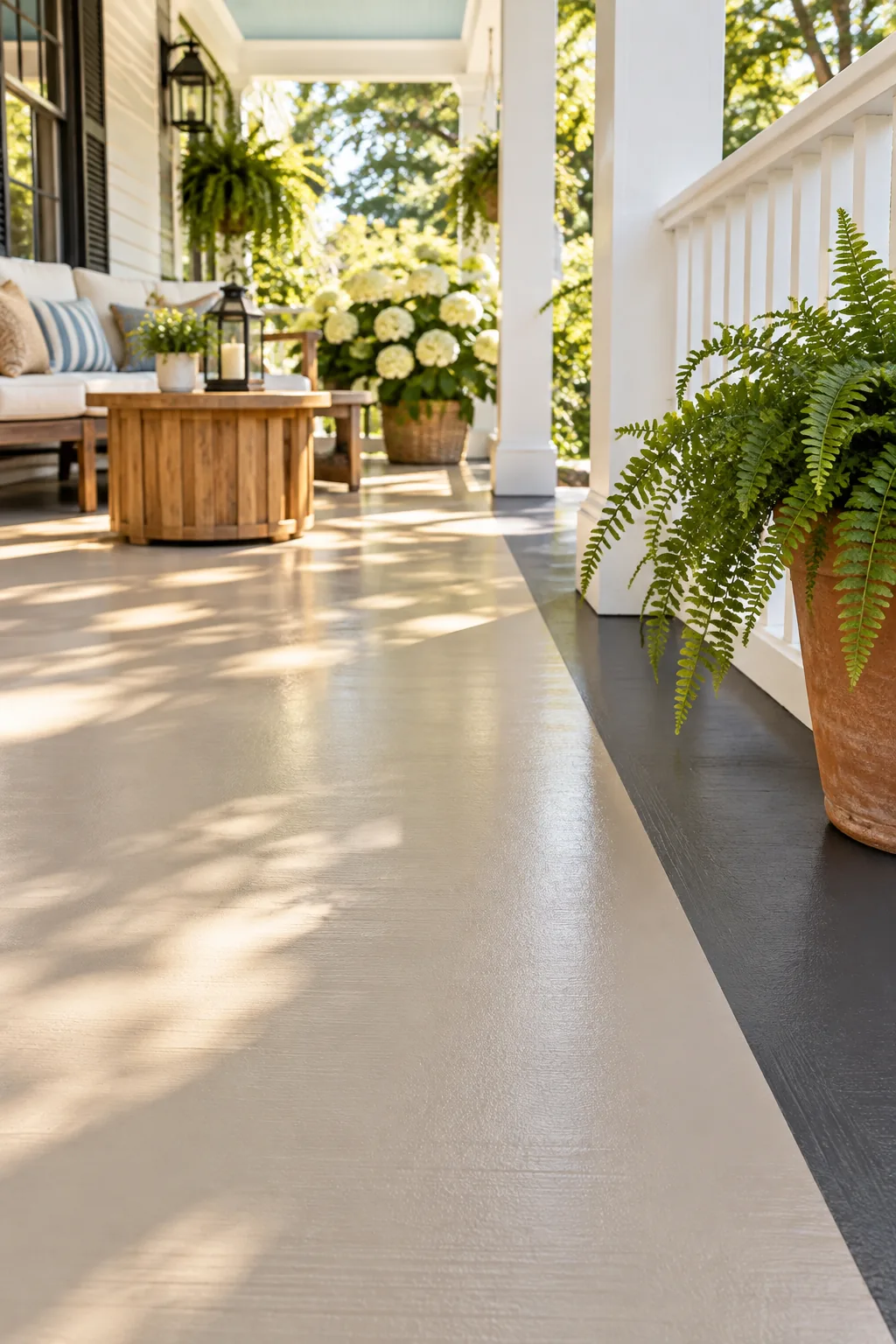
On my Austin porch, swapping a stark white floor for this forgiving mid-tone meant I could finally relax instead of constantly sweeping. This deep perimeter grounds the lighter walkway and keeps the edges looking pristine where leaves naturally collect.
Dark Charcoal for Low-Traffic Borders
The perimeter of your porch rarely sees heavy foot traffic, making it the perfect place for a dramatic accent color. I used to constantly scrub white edges, but this dark frame completely hides the inevitable marks from pushed-back rocking chairs.
| Zone | LRV Target | Width | Primary Benefit |
|---|---|---|---|
| Main Walkway | 35 to 45 | Center 60% | Hides daily dust |
| Perimeter Border | Under 15 | 12 to 18 inches | Conceals furniture scuffs |
Sticking to these precise measurements ensures your border looks like an intentional architectural feature rather than a simple painted stripe around the edge of the wood.
Why Urethane-Acrylic is the Best Base
Standard exterior latex will peel under the pressure of foot traffic and standing water. A urethane-acrylic blend combines the hard, scuff-resistant durability of polyurethane with the flexible, color-fast properties of acrylic to survive harsh weather.
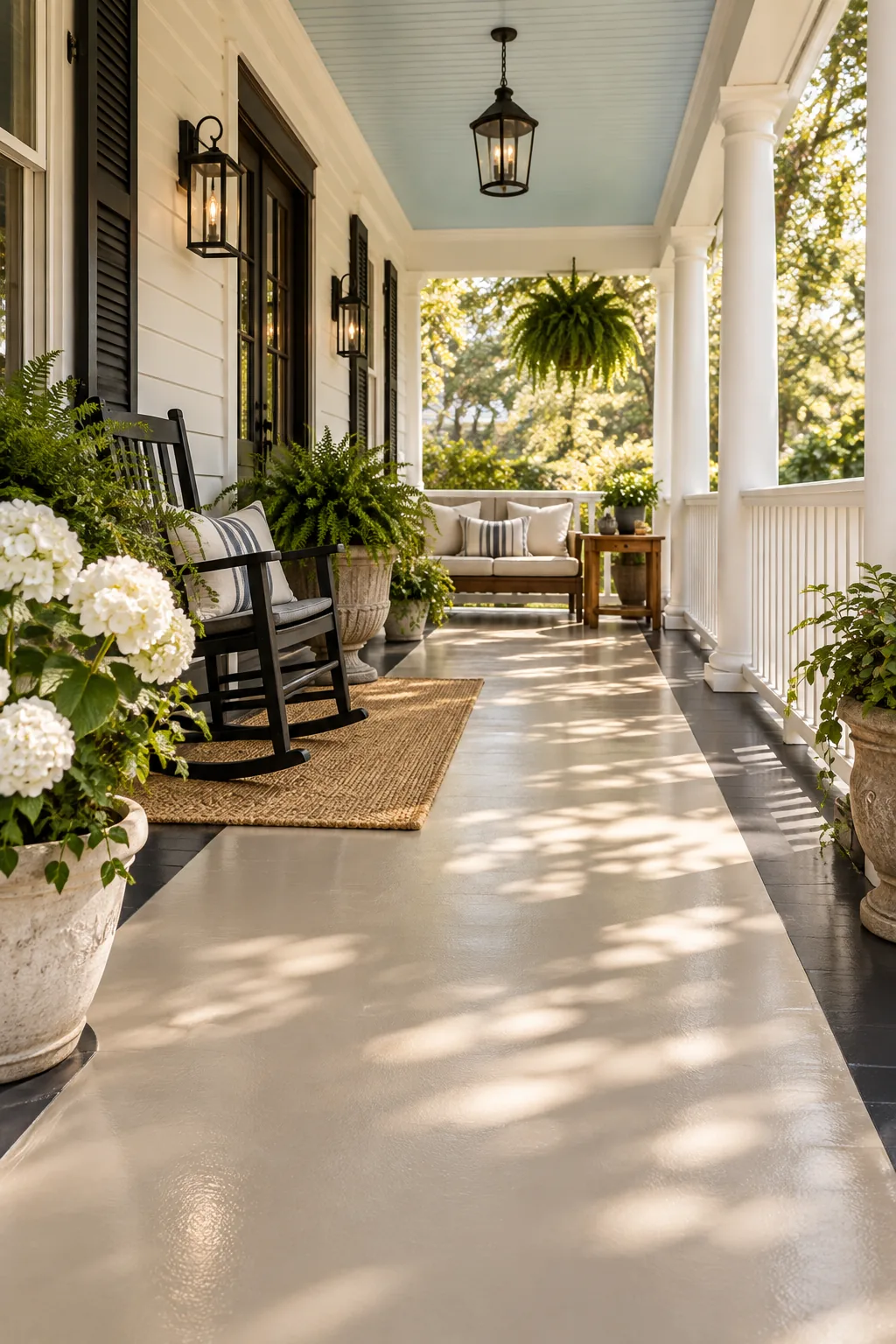
When our brutal Texas summers cause the wood to expand, this specific chemistry flexes with the boards. This elasticity prevents the micro-cracks that inevitably lead to widespread peeling and flaking on older porches.
Mixing in a Polymer Grip Additive
Painted wood gets incredibly slick when wet from rain or morning dew. Adding a polymer grip additive directly into your final coat of paint creates a safe, slip-resistant micro-texture that won’t tear up bare feet.
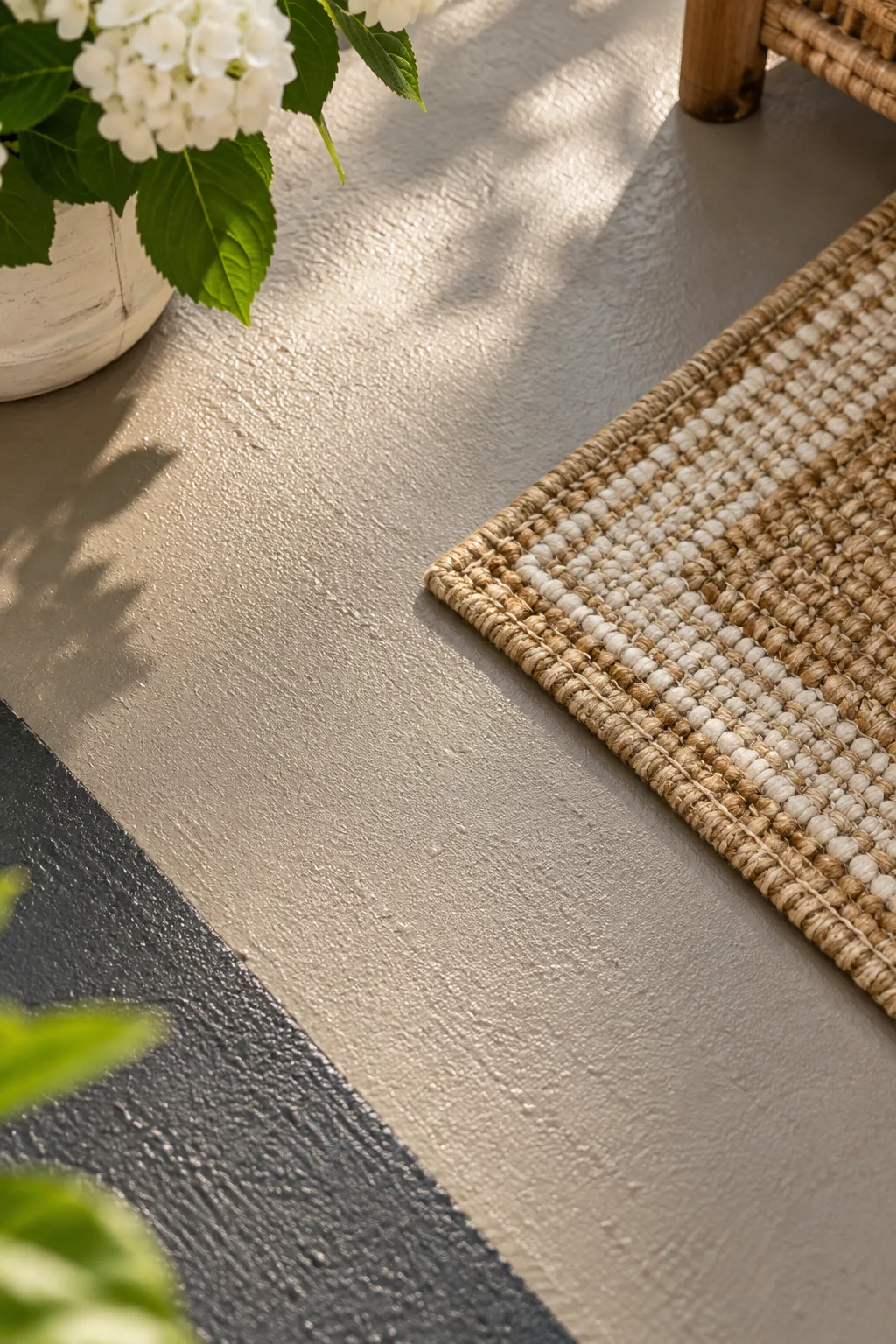
Achieving an even texture requires stirring in 2 ounces of additive per gallon every 15 minutes to keep the particles suspended. Avoid these common missteps that ruin a smooth finish when mixing your grip additive.
The Classic Haint Blue Ceiling
Drawing the eye upward makes a covered porch feel taller and more expansive. A soft haint blue ceiling is a Southern tradition that mimics the sky and is widely thought to deter wasps from nesting in the corners.
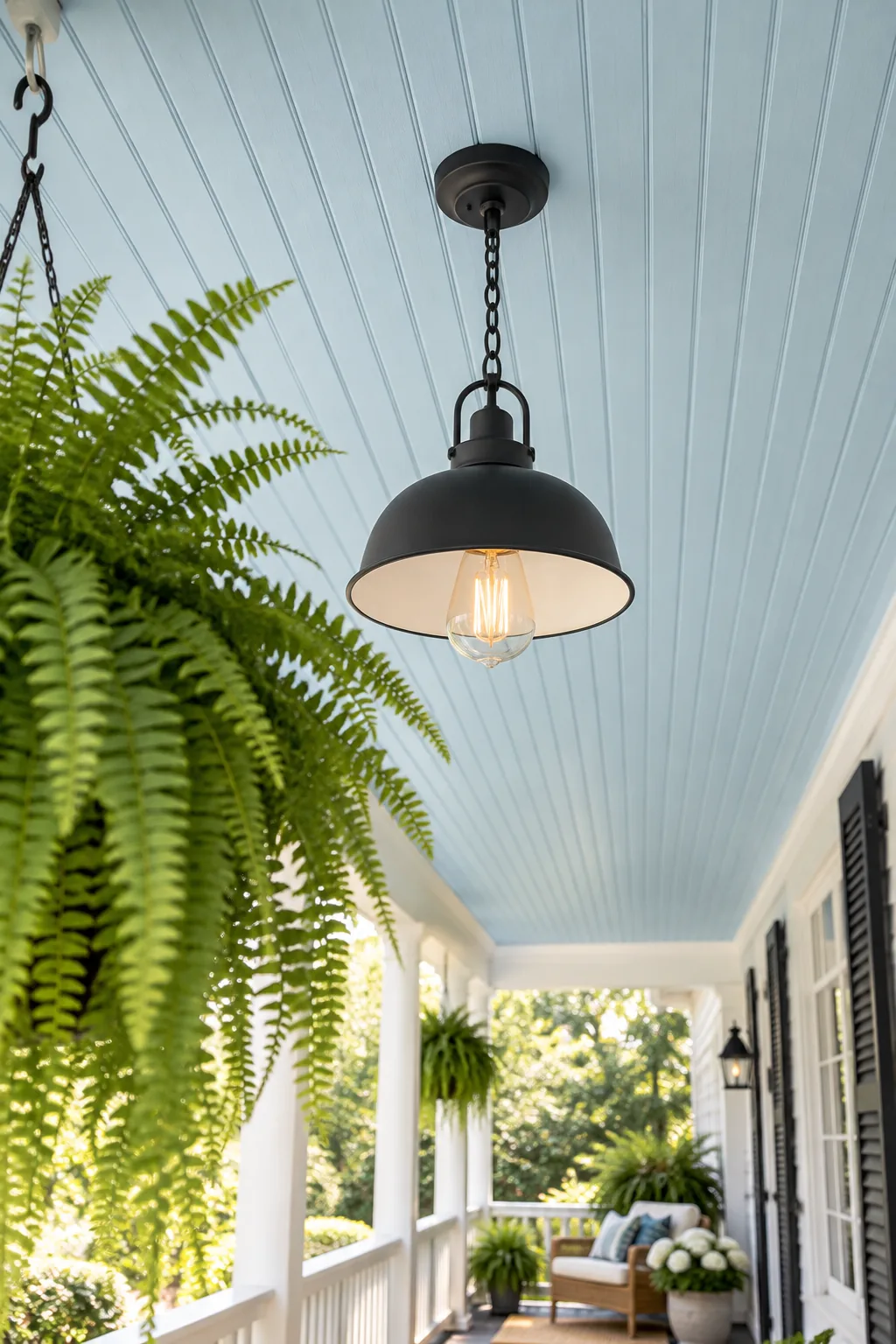
I painted my own ceiling a pale blue with an LRV of 60 to 70, and it instantly made the entire space feel brighter, airier, and significantly more welcoming during humid summer evenings.
Curing Times for Painted Porch Floors
Even the best urethane-acrylic paint needs time to harden completely before it can handle furniture. While the floor may feel dry to the touch in 4 hours, you must wait a full 24 hours before allowing light foot traffic.
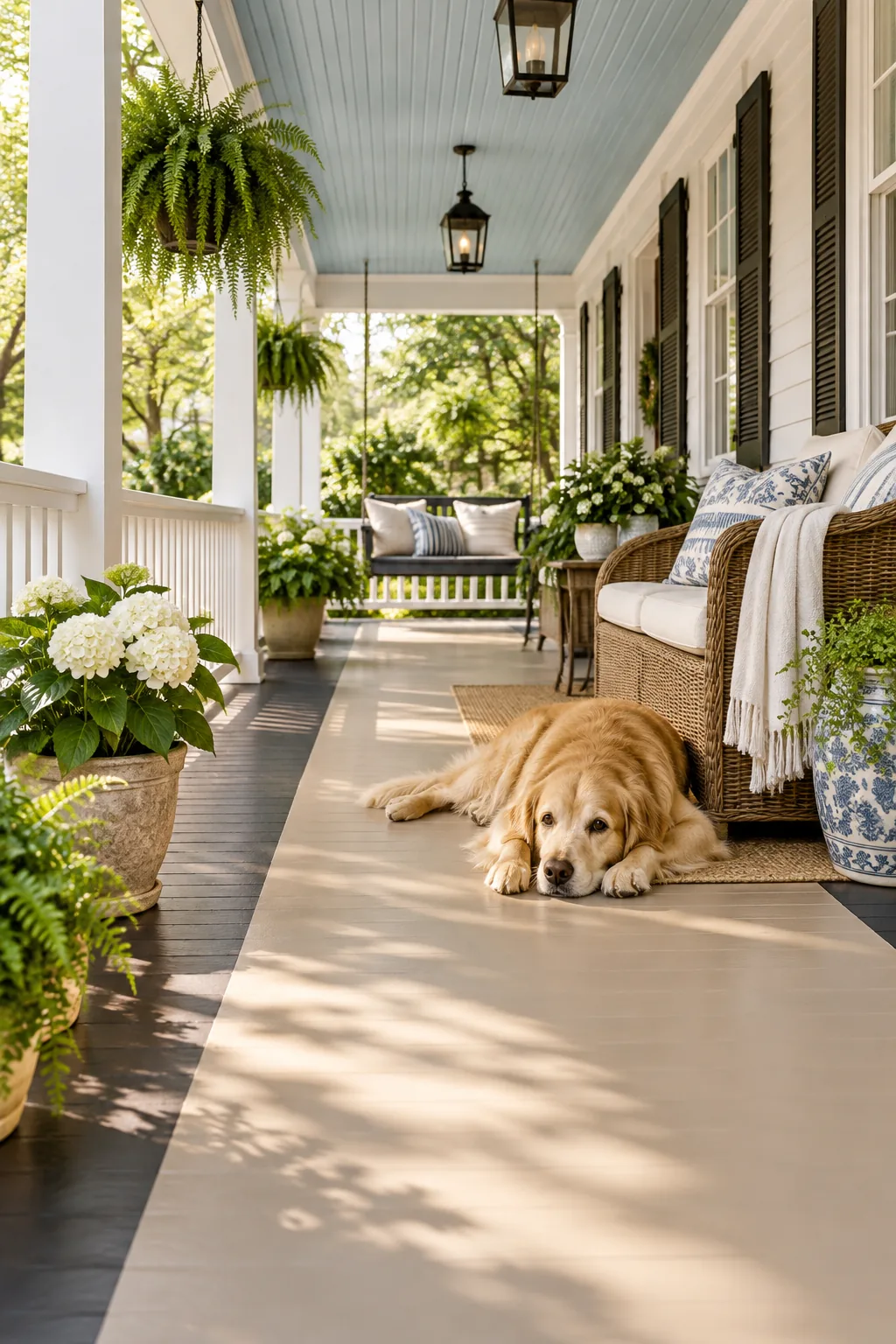
You must wait 7 to 10 days before dragging heavy planters or rocking chairs across the surface. Patience during this critical curing phase is the only way to prevent gouging your fresh, beautiful finish.
5 Two-Tone Porch Color Combinations
Find the perfect color pairing for your home's architecture with these finished porch palettes.
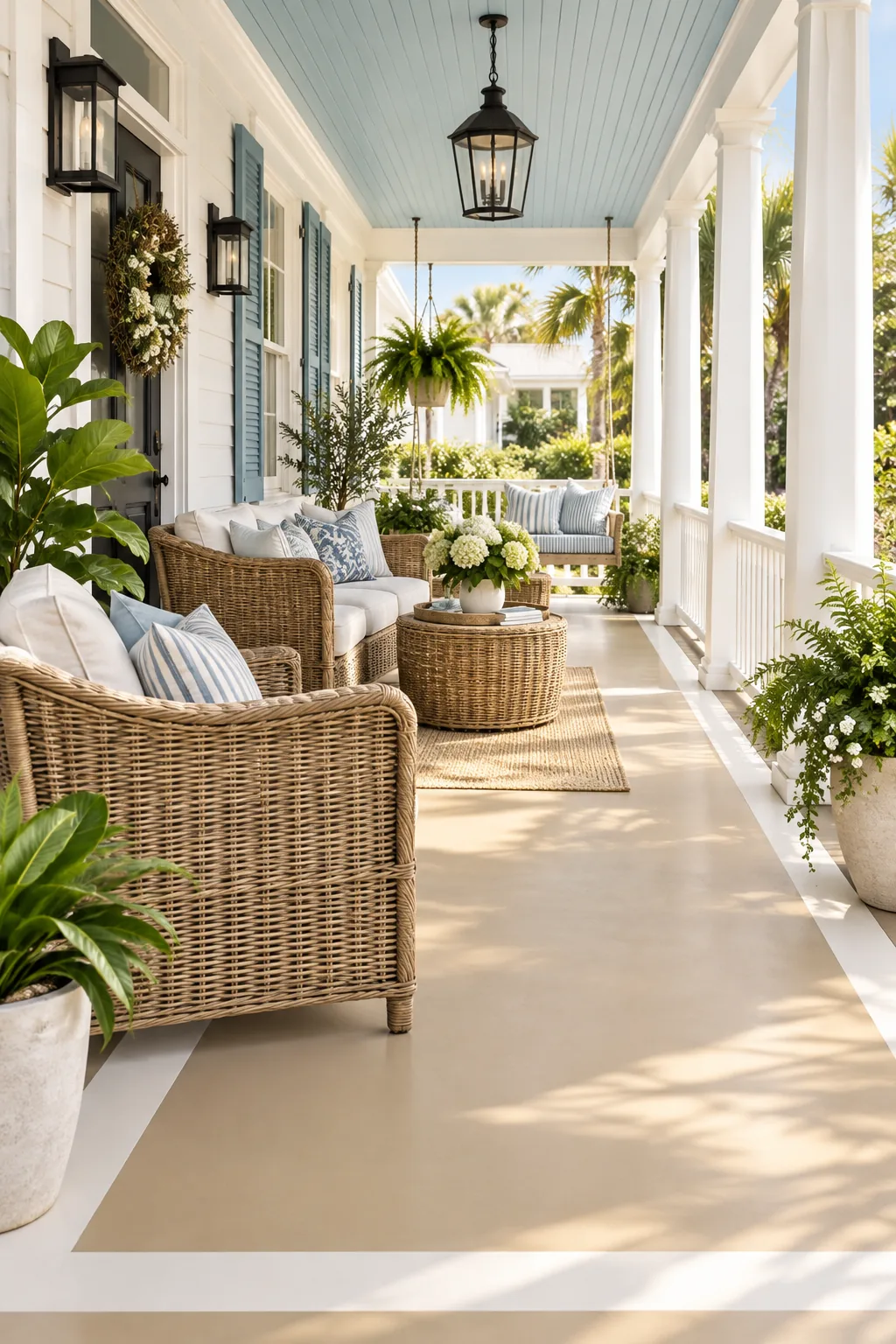
Coastal Cottage Sand and White: A warm sand center paired with a crisp white border creates a breezy, beach-inspired foundation that pairs perfectly with rattan furniture.
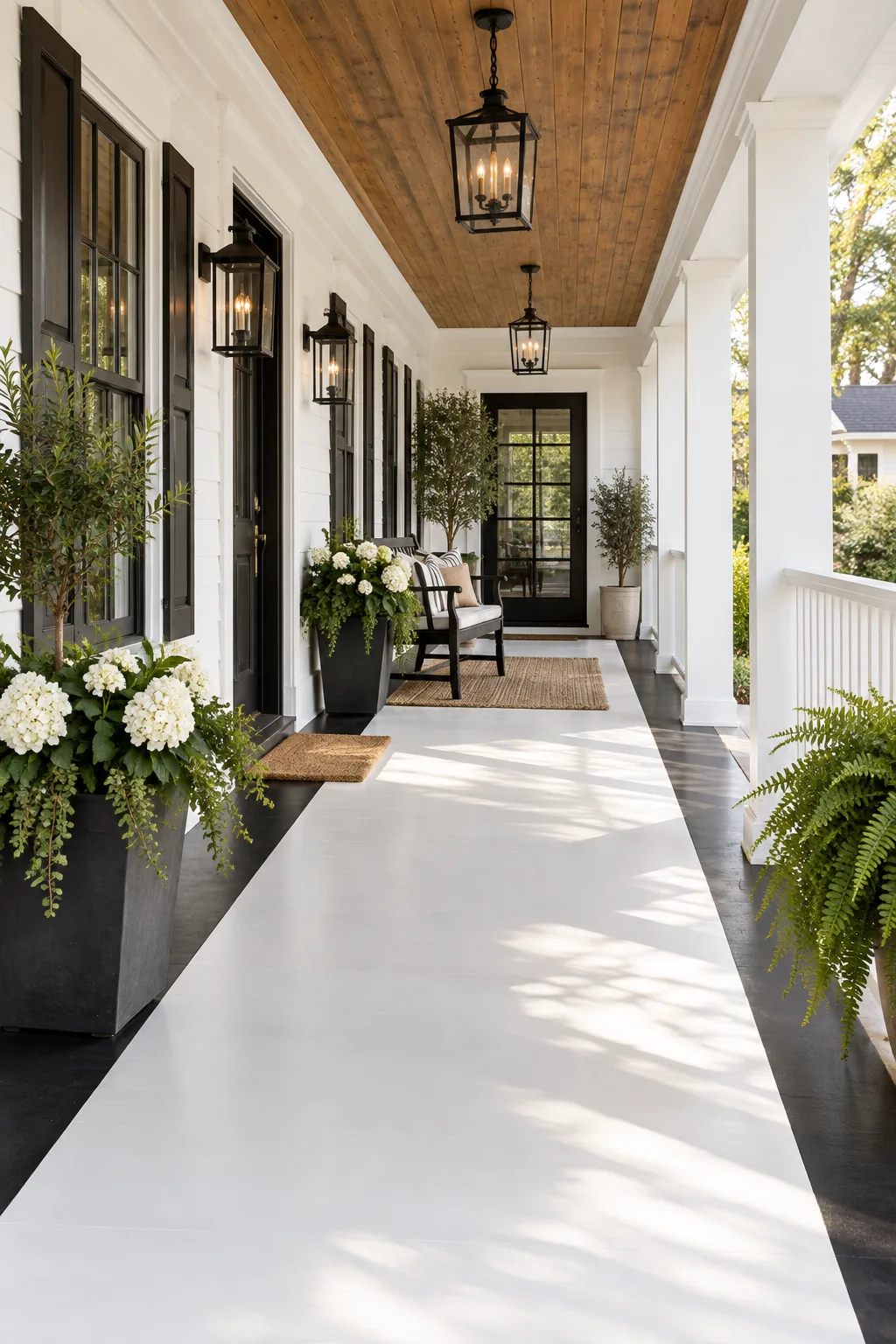
Modern Farmhouse High Contrast: Embrace bold contrast with a bright white walkway and a stark black border to anchor sleek metal lanterns and modern planters.
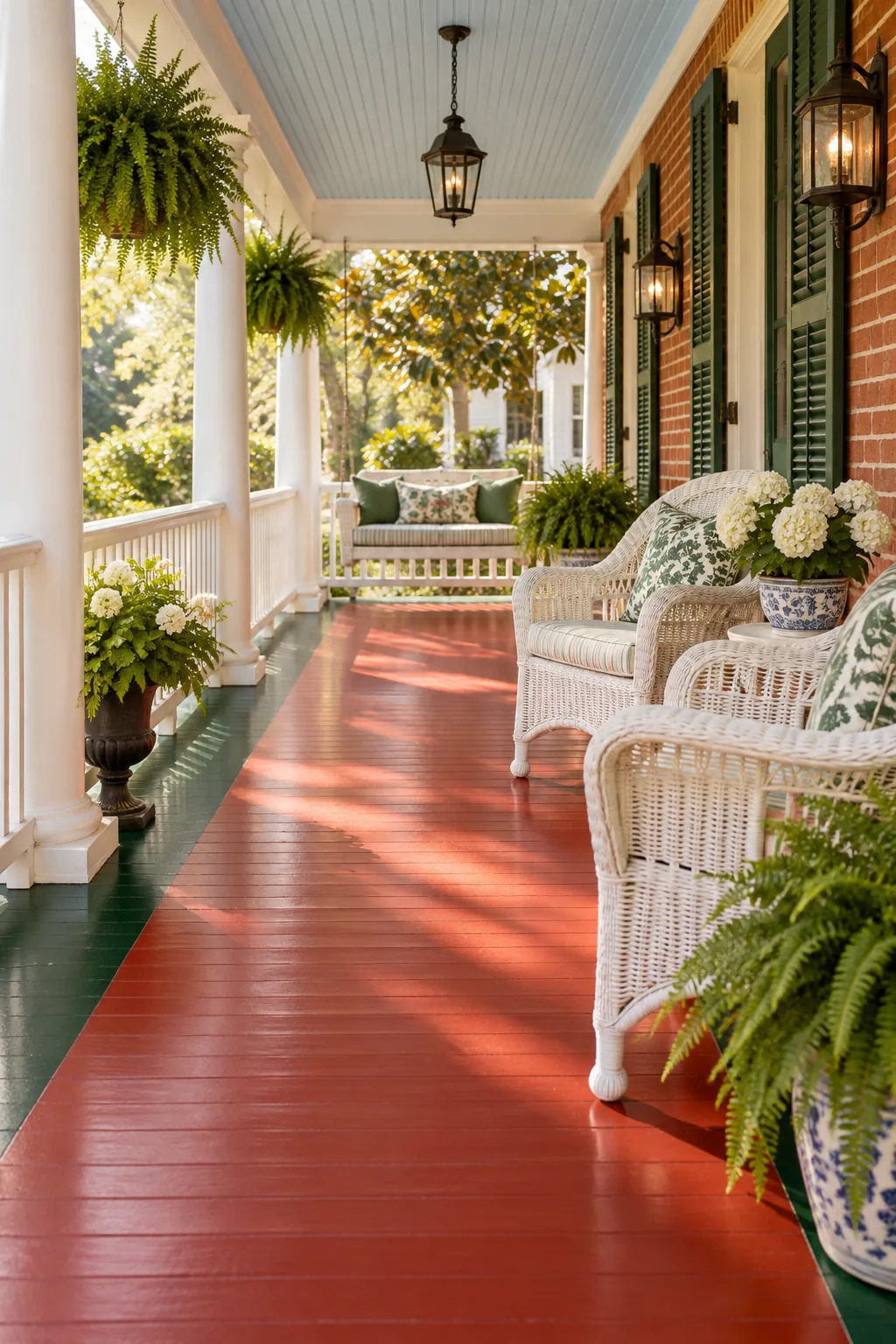
Southern Traditional Red and Green: Honor historic architecture by pairing a classic brick red walkway with a deep hunter green border for a timeless, welcoming entrance.
Desert Boho Terracotta and Cream: Warm up your outdoor space with a muted terracotta floor and a soft cream border that beautifully complements natural clay pots.
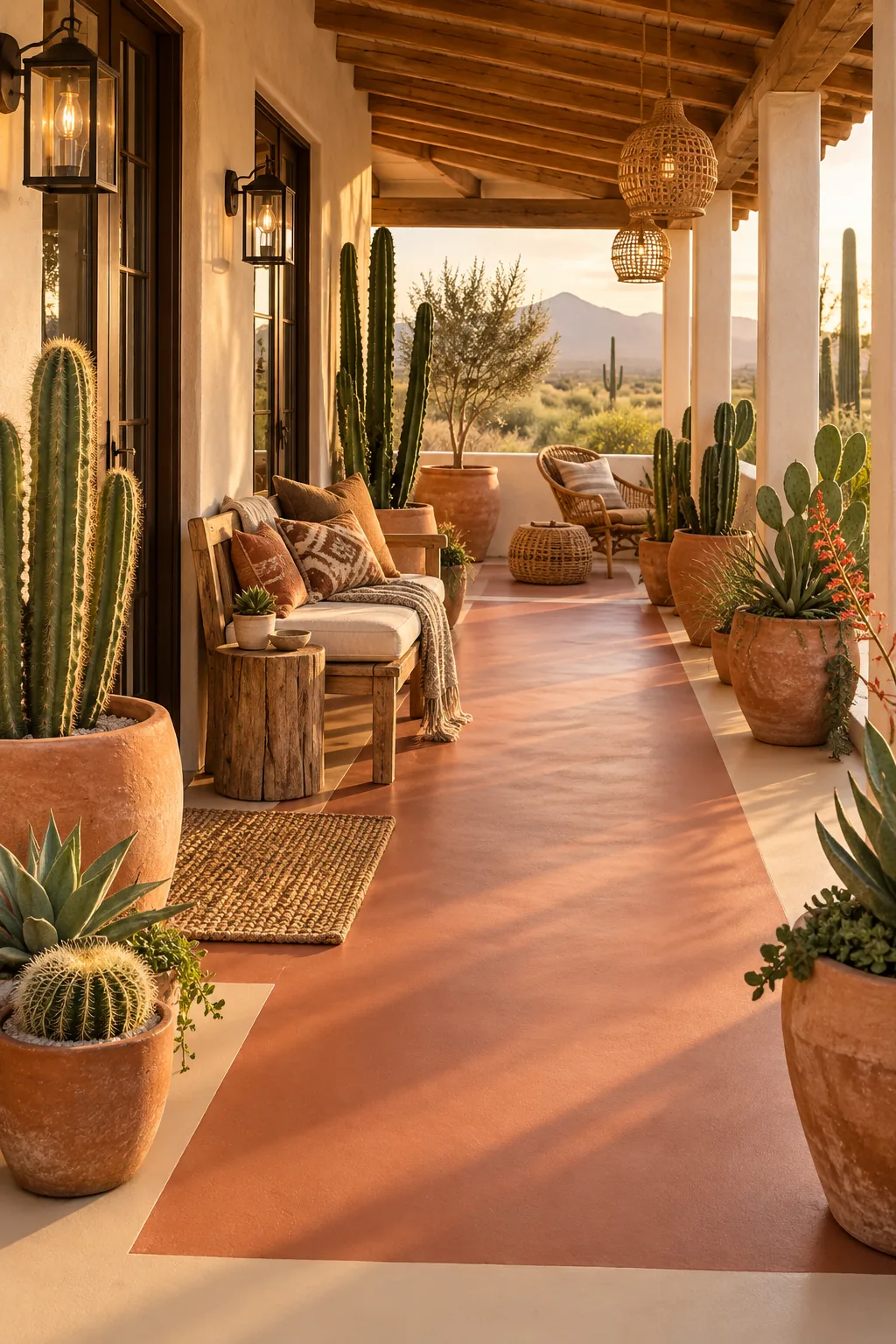
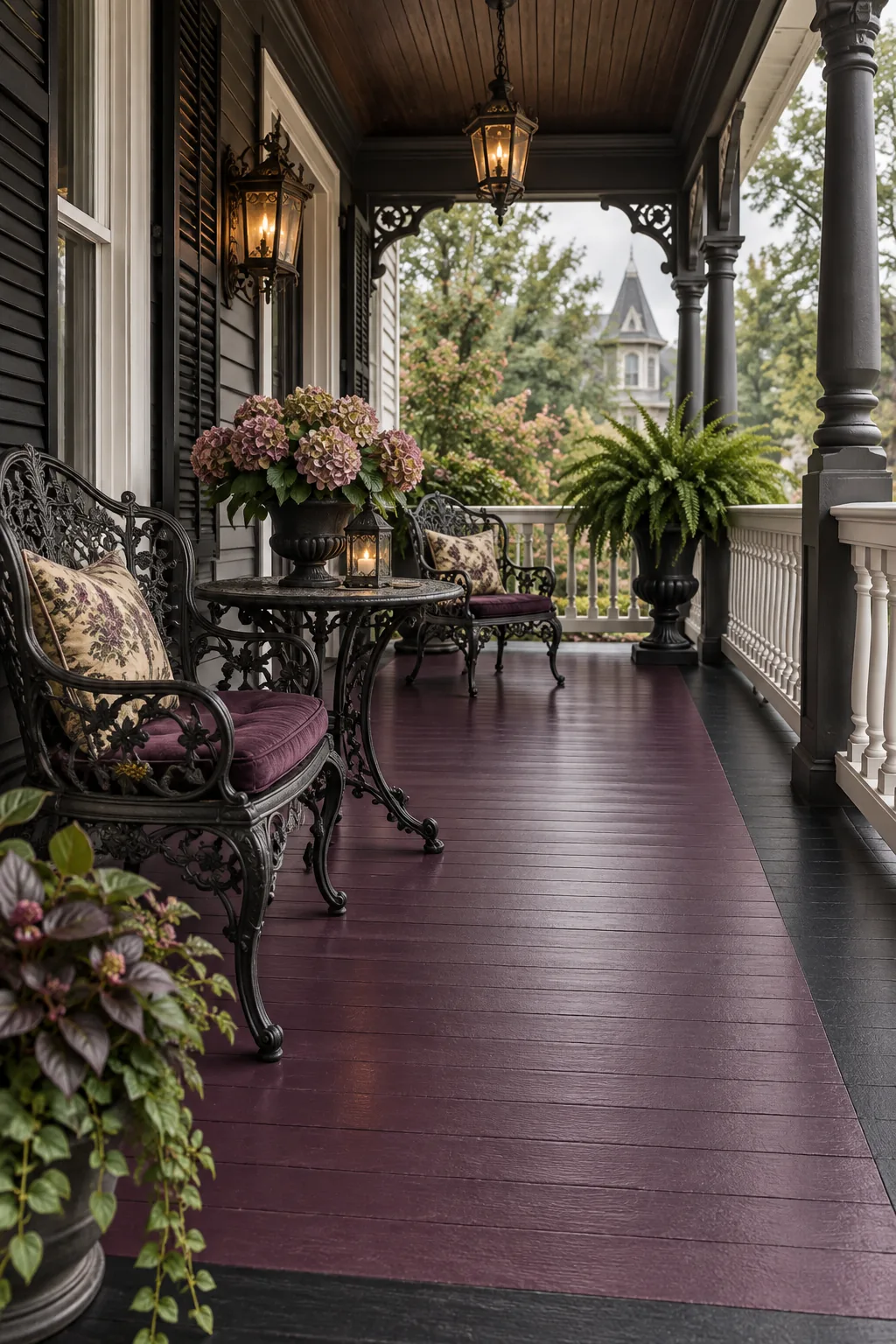
Moody Victorian Plum and Charcoal: Create dramatic elegance with a deep plum floor and a charcoal border, providing a rich backdrop for ornate cast iron seating.