
Entryway Bench Sizing Secrets & Dimension Cheat Sheet
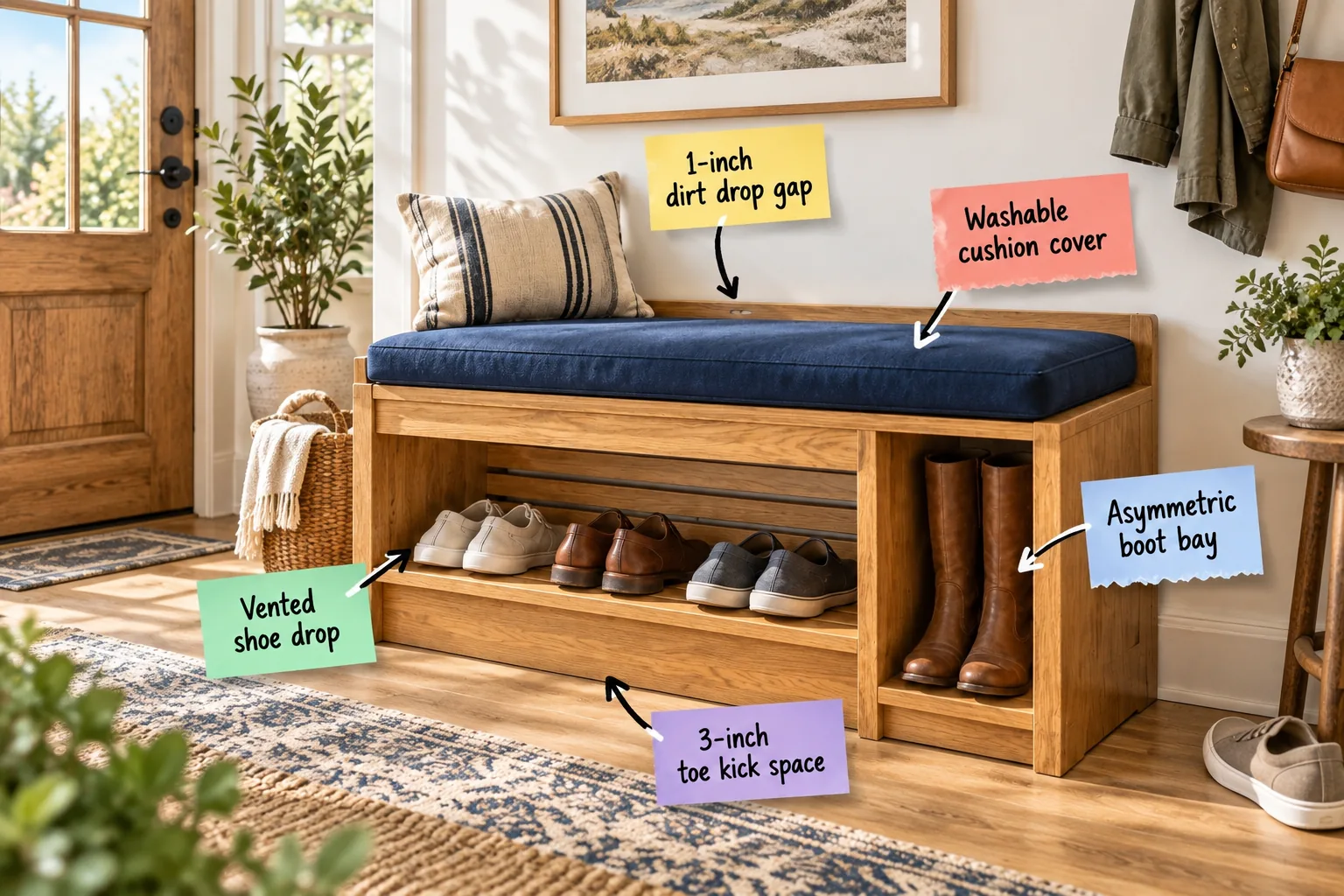
Stop guessing at mudroom proportions and use this complete entryway bench dimension cheat sheet to plan your perfect drop zone. I am sharing the exact sizing secrets you need to confidently measure, select, or build a bench that effortlessly handles your chaotic daily routine.
The 1-Inch Dirt Drop Gap
Leaving a deliberate 1-inch dirt drop gap between your wooden bench back and the crisp white wall is my absolute first rule for any mudroom. This intentional spacing protects your baseboards from dirt buildup and prevents heavy winter coats from scuffing your pristine paint.
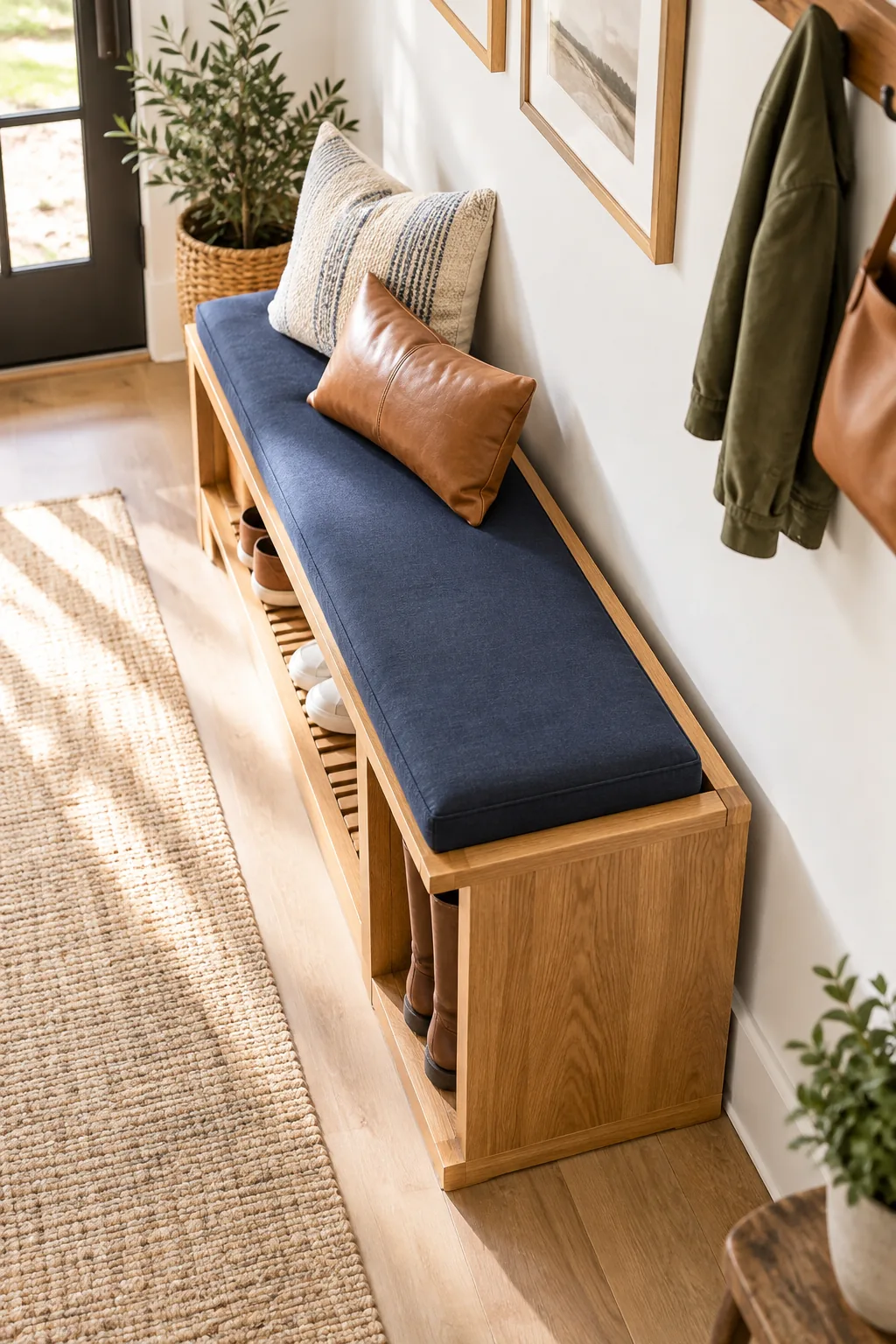
Instead of grinding dry mud and grit directly into the trim, debris simply falls behind the furniture where your vacuum nozzle can easily reach it. This tiny breathing room makes weekly maintenance significantly faster and preserves your delicate drywall over the long term.
Baseboard Integration and Scribing
If you prefer a seamless built-in look rather than freestanding furniture, you must carefully scribe the side panels to match your existing trim profile perfectly. Removing the home’s baseboard entirely is often unnecessary if you use a simple contour gauge to transfer the exact molding shape.
Paint Sheen for High-Traffic Zones
Busy mudrooms endure constant daily abuse from sharp metal zippers, wet umbrellas, and heavy canvas bags, making flat or matte finishes a terrible choice for walls. I always specify a durable satin or semi-gloss finish behind the seating area so you can quickly wipe away inevitable scuffs.
Washable Cushion Cover
Wet coats and muddy dog paws demand a removable, washable cushion cover made from heavy performance canvas or highly durable outdoor fabric. In my own Denver home, a zippered performance-fabric seat has saved my hallway from countless melted snow puddles and spilled morning coffees.
Cushion Foam Density and Thickness
A flimsy cushion insert will quickly compress under heavy daily use, leaving you sitting on hard wood while lacing up your hiking boots. Invest in a 2-inch to 3-inch thick slab of high-density polyurethane foam, wrapped in a thin layer of batting to keep the fabric taut.
Selecting Solid Wood vs Plywood
Choosing the right core material determines whether your bench will survive a busy household or warp under the heavy weight of wet winter gear. Hardwoods offer superior longevity for stained seats, but cabinet-grade plywood provides excellent dimensional stability for painted project bases.
| Material | Best Application | Durability | Cost |
|---|---|---|---|
| Solid Oak | Stained top seats | Exceptional | High |
| Birch Plywood | Painted bases | Very Good | Moderate |
| MDF | Dry interior trims | Fair | Low |
Asymmetric Boot Bay
Dedicating one uninterrupted vertical zone creates an asymmetric boot bay that effortlessly accommodates rigid winter footwear without causing damage. I always design these with a minimum 18-inch clearance so my clients’ tallest leather riding boots never suffer from folded or permanently creased shafts.
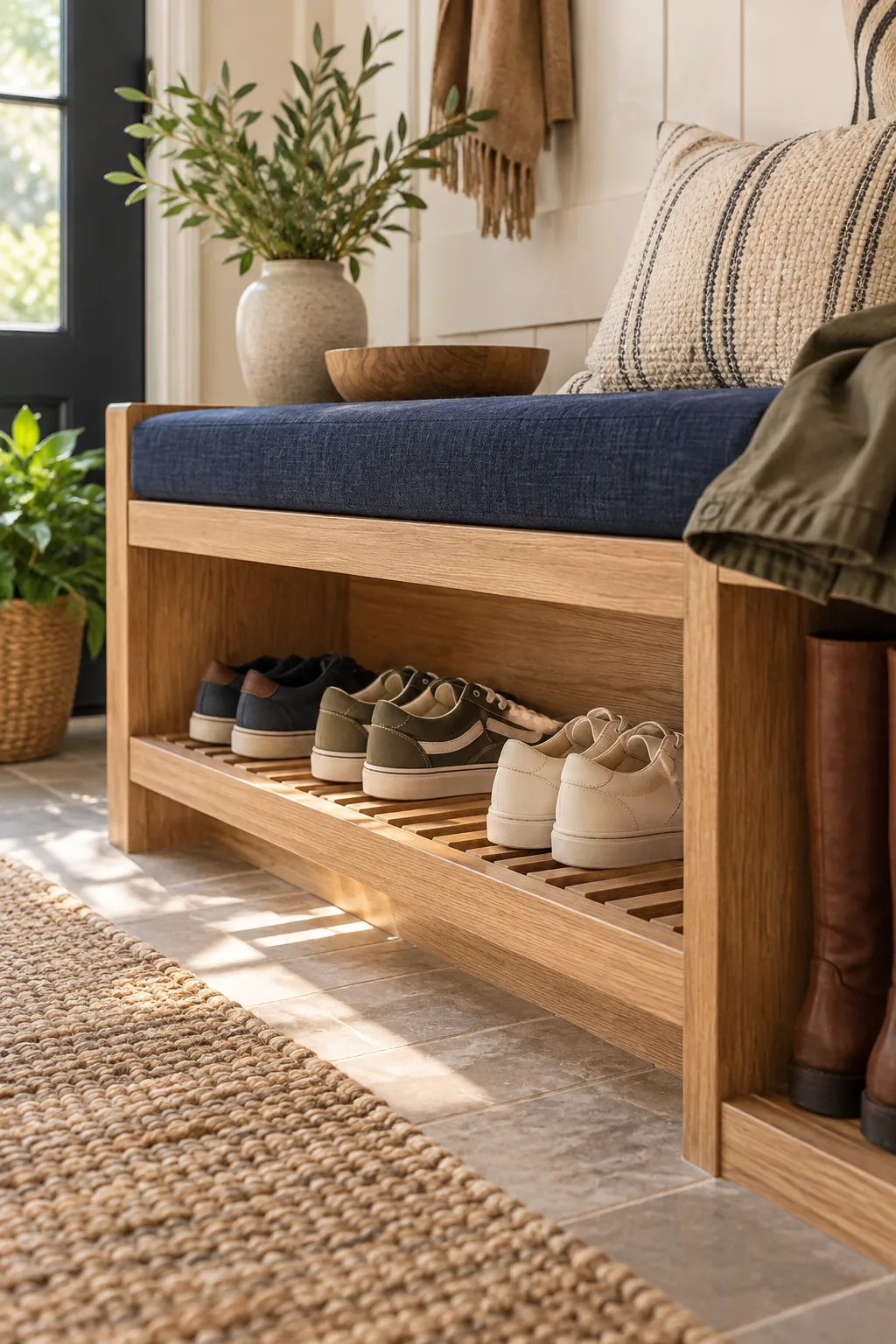
Grouping tall items on one side leaves the rest of the bench footprint completely available for standard shoe storage. This visual imbalance actually grounds the piece beautifully, creating a highly functional and modern silhouette that feels custom-tailored to your specific family life.
Everyday Shoe Cubby Widths
Once you secure the tall boot section, divide the remaining horizontal space evenly to fit standard pairs of daily shoes. Planning for 9 to 10 inches of width per pair ensures that bulky running sneakers and wide winter loafers slide in without crushing against each other.
Weight Capacity and Center Supports
Spanning more than 36 inches without a vertical center support invites dangerous sagging when multiple people sit down at the exact same time. Integrating rigid wooden dividers between your shoe cubbies naturally reinforces the seat, transferring the heavy load directly down to the floor base.
Vented Shoe Drop
A slatted wooden shelf creates a naturally vented shoe drop that allows fresh air to circulate around damp rubber soles. Providing a 6-inch to 8-inch height for this lower tier easily fits standard sneakers while preventing trapped odors from pooling in an enclosed cubby.
Moisture Management for Shelves
Even with excellent airflow, wet rubber soles will eventually degrade raw wood or standard interior paint over time. Applying three coats of a water-based polyurethane sealant over your slatted shelves creates an invisible, durable barrier that easily repels melting snow and muddy rainwater.
The 3-Inch Toe Kick Space
That slatted shelving improves airflow for damp footwear, but it must sit above a properly recessed baseboard to remain truly ergonomic. A 3-inch toe kick space that is 3 to 4 inches high allows you to tuck your heels comfortably under the seat.
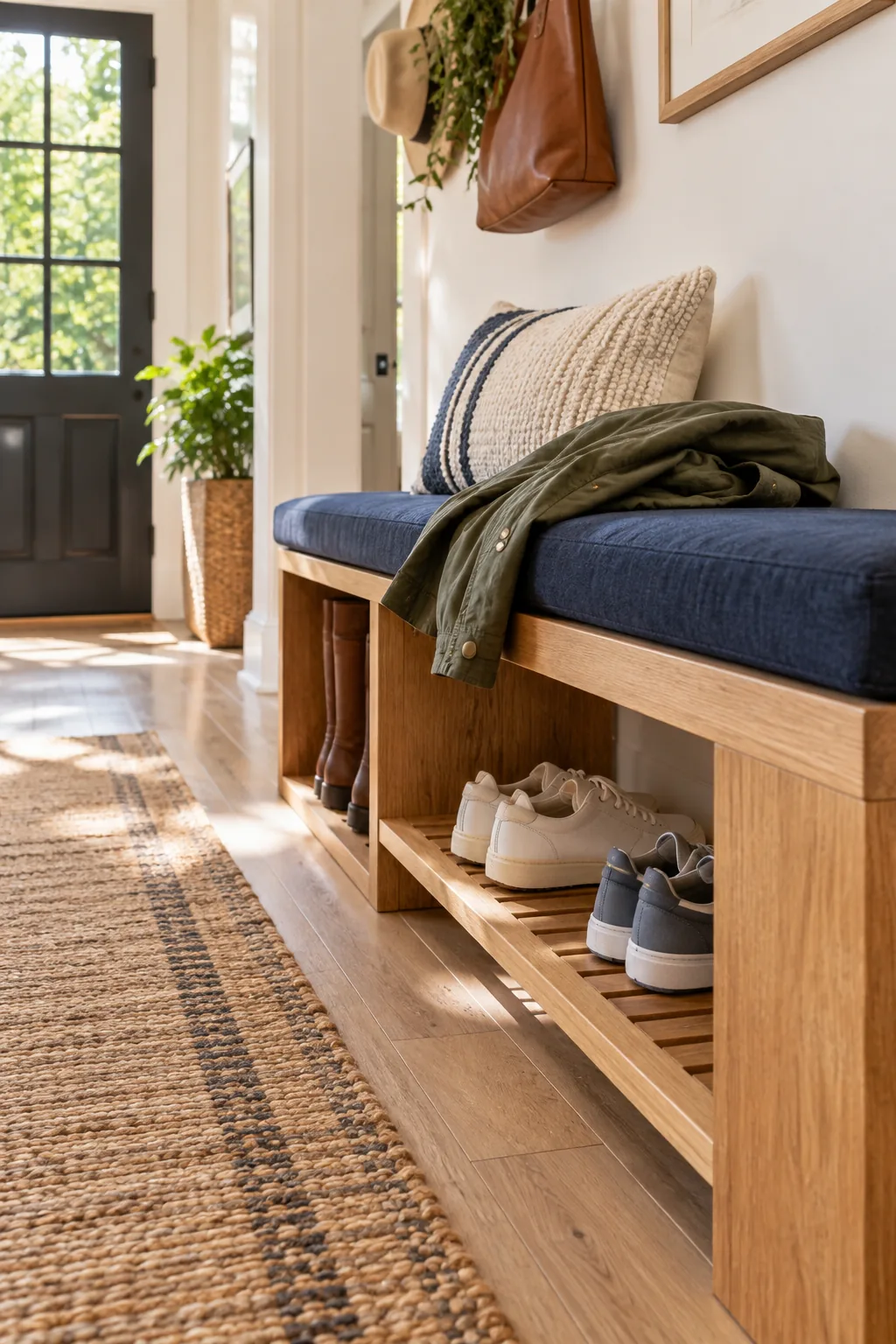
Skipping this recessed base is one of the most common DIY furniture errors I see, and it immediately impacts how comfortable the finished bench feels to use every single day.
Ideal Seat Height and Depth
Matching standard dining chair dimensions ensures perfect ergonomic comfort when you sit down to lace up your daily sneakers. I always aim for a finished 18-inch seat height, including the cushion, paired with a depth of 15 to 18 inches to fully support adults.
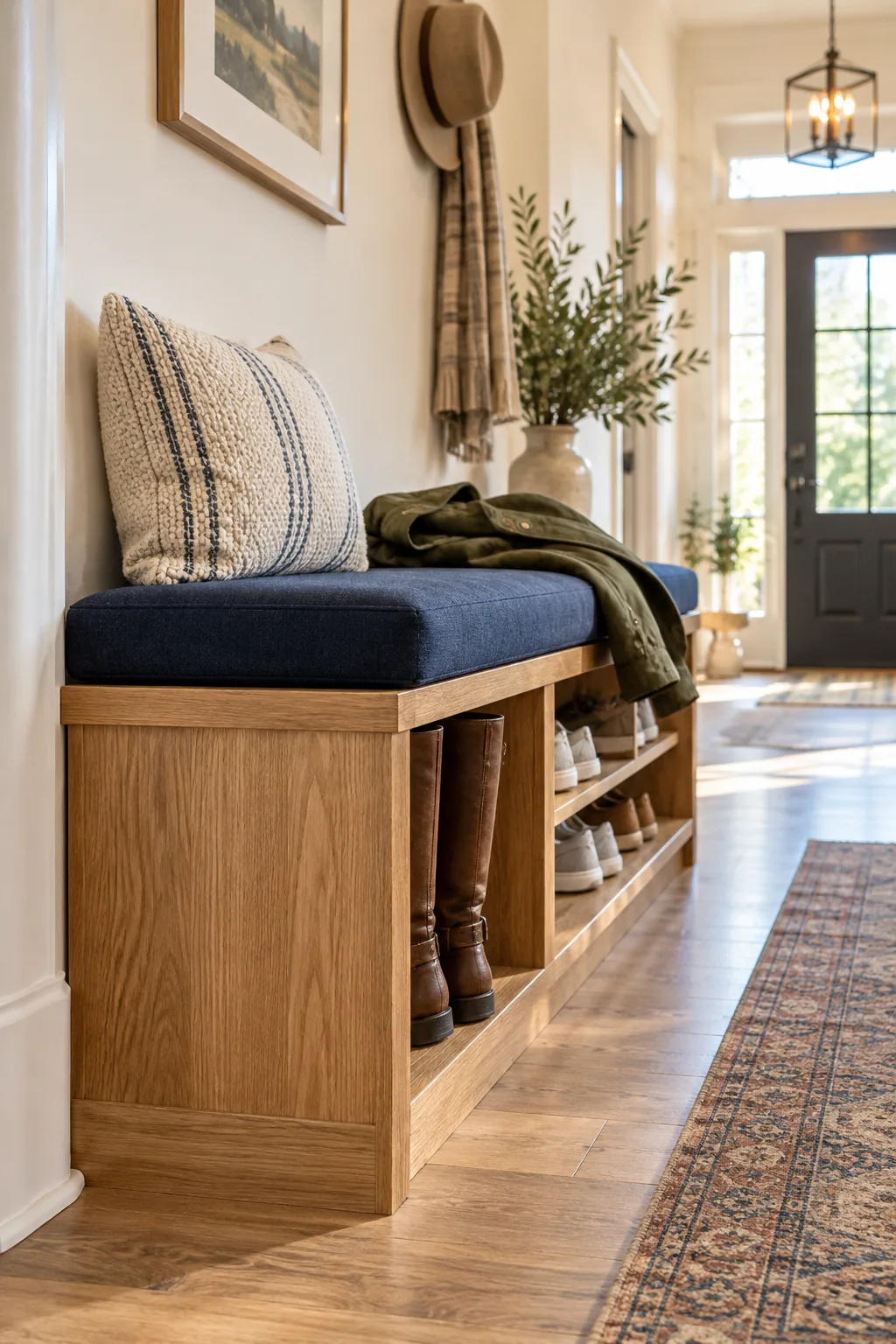
When I built my own foyer bench, locking in that 15-inch depth meant the piece felt substantial without overwhelming the narrow hallway. It provides just enough surface area to drop a heavy grocery bag while you comfortably take off your shoes.
Armrests and Side Panels
Leaving the ends of your bench open creates a lighter, airier aesthetic that works beautifully in tight corridors or small entryways. However, adding solid side panels or low armrests provides a helpful handhold for older family members who need extra leverage when standing back up.
Integrating Woven Storage Baskets
Open shelves are perfect for daily shoes, but seasonal accessories require contained storage to keep the entryway looking meticulously tidy. Slide beautifully textured baskets onto the upper shelves to hide visual clutter while keeping essential winter gloves and scarves instantly accessible.
- Measure the interior cubby width and subtract one inch for easy basket sliding.
- Select baskets with built-in handles to quickly pull down heavy winter gear.
- Use natural materials like rattan or water hyacinth to add warmth to painted benches.
Traffic Flow and Walkway Clearance
Spatial planning around your new furniture is just as critical as the bench dimensions themselves. You must leave at least 36 inches of clear walkway in front of the seat so family members can easily pass behind someone who is tying their shoes.
Rug Placement Beneath the Bench
A durable runner rug traps dirt before it tracks into the house, but its placement relative to the bench matters immensely. Tuck the rug edge just beneath the toe kick recess so it anchors the furniture visually without interfering with the swing of your front door.
Hardware and Fastener Concealment
Visible screw heads instantly downgrade the look of a custom entryway build, so plan your assembly methods carefully. Using pocket hole joinery hidden on the underside of the shelves ensures the visible surfaces remain perfectly smooth, professional, and easy to wipe clean.
Back Panel Beadboard Detailing
Adding a beadboard back panel behind the bench instantly elevates the entire mudroom aesthetic and protects the drywall from daily wear. Cut the paneling to end exactly at the top of the bench seat so it visually integrates the furniture into the surrounding architecture.
Seasonal Gear Swap Strategies
Your mudroom storage needs shift dramatically between summer sandals and bulky winter layers. Designing adjustable upper shelving above the bench allows you to swap out tall boot space for low sneaker cubbies, keeping the drop zone perfectly optimized for the current season.
Customizing the Finish Color
Selecting a bold, saturated color for your bench transforms a utilitarian drop zone into a stunning architectural focal point. Deep navy, rich forest green, or warm charcoal gray easily disguise daily scuff marks while adding a sophisticated layer of high-end design to your entryway.
Integrating Hidden Shoe Drawers
If you prefer a minimalist aesthetic, replace open slatted shelves with deep, full-extension storage drawers beneath the main seat. This hidden storage solution completely conceals chaotic shoe piles, ensuring your foyer always presents a calm, organized welcome to arriving guests.
Entryway Bench Styling Inspiration
Explore how these core dimensions adapt beautifully to three entirely different aesthetic styles.
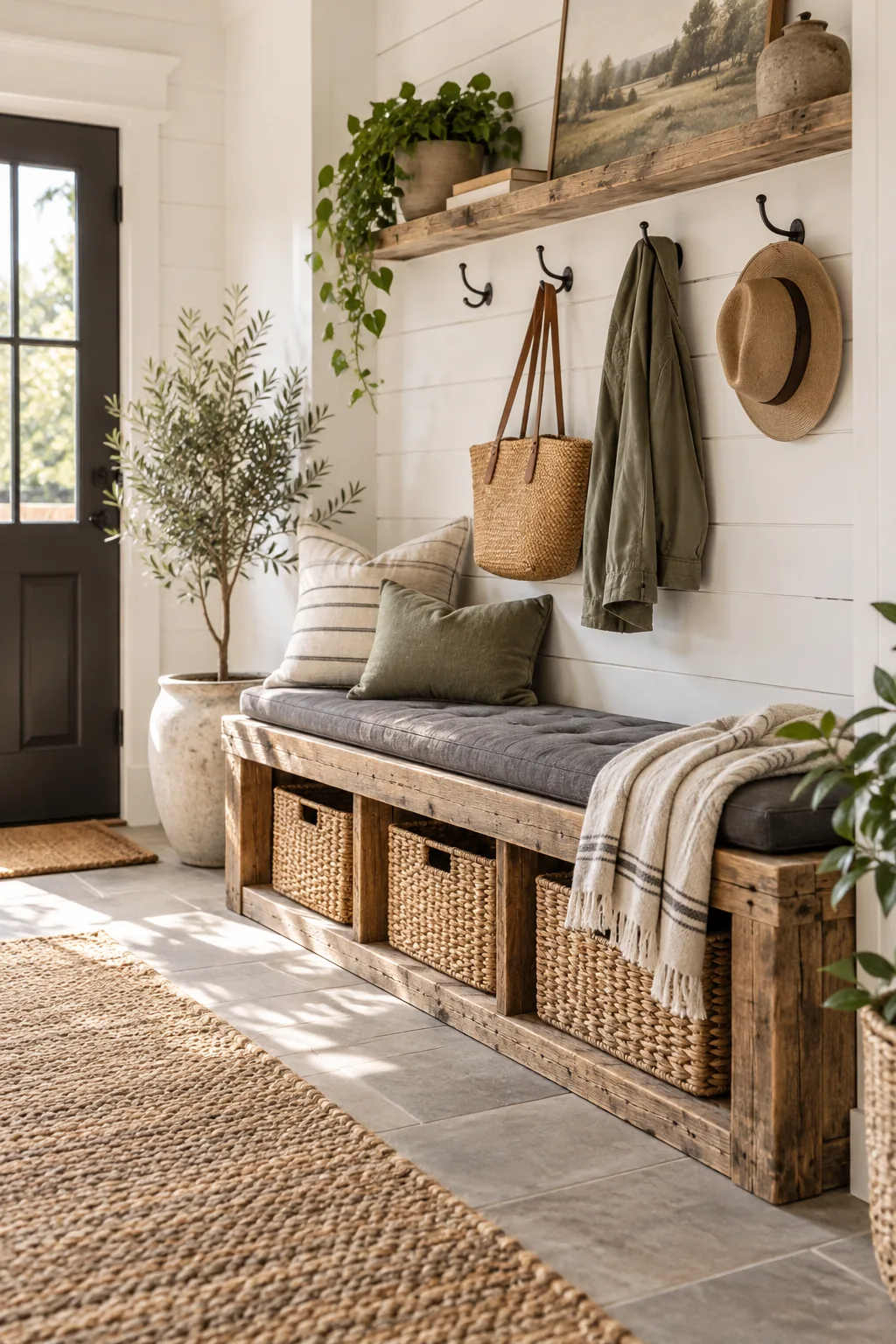
Modern Farmhouse Mudroom: Distressed reclaimed wood and white shiplap create a rustic foundation, while woven baskets hide seasonal clutter.
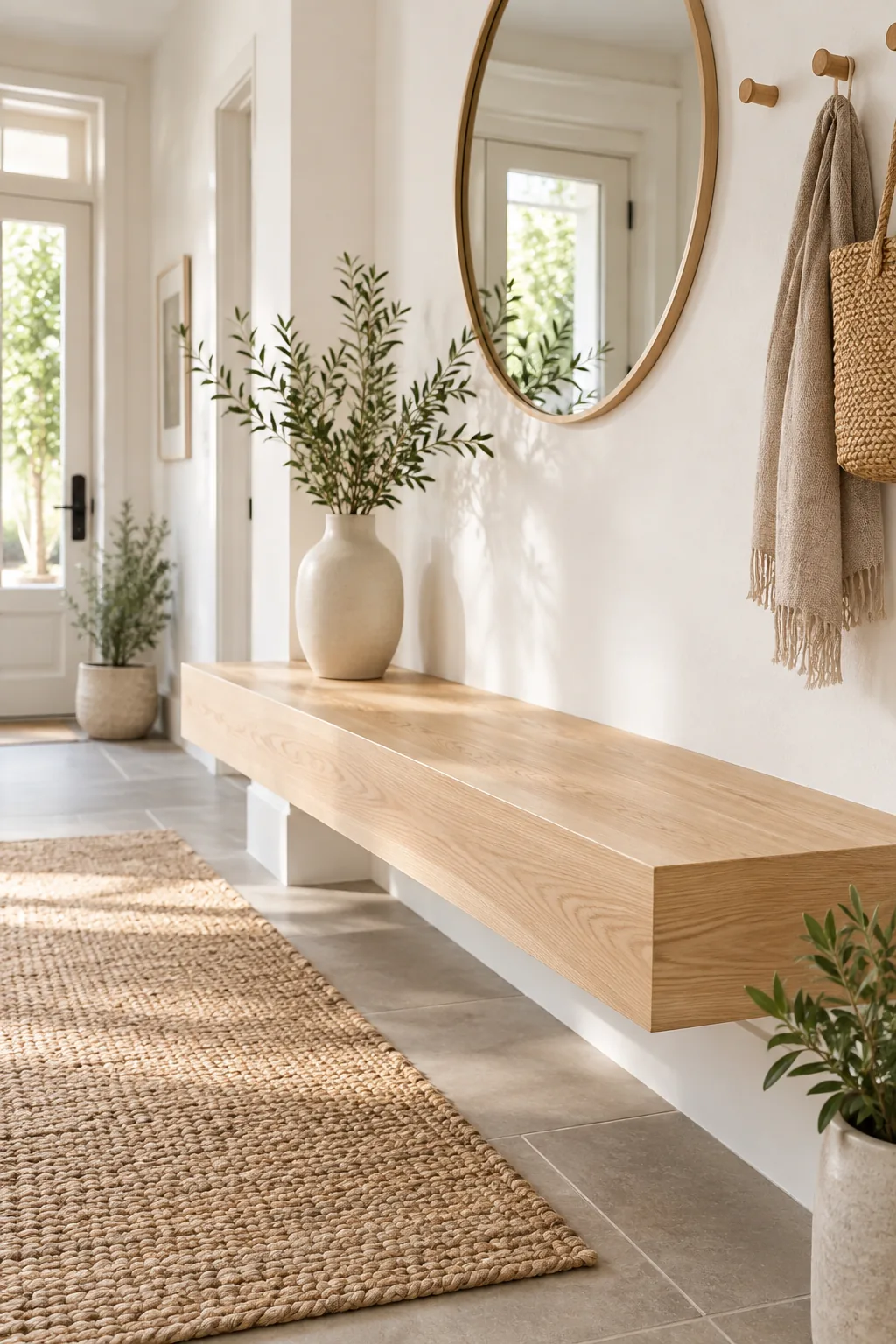
Minimalist Scandi Foyer: A floating pale ash design without a cushion emphasizes clean architectural lines and maximizes visual floor space.
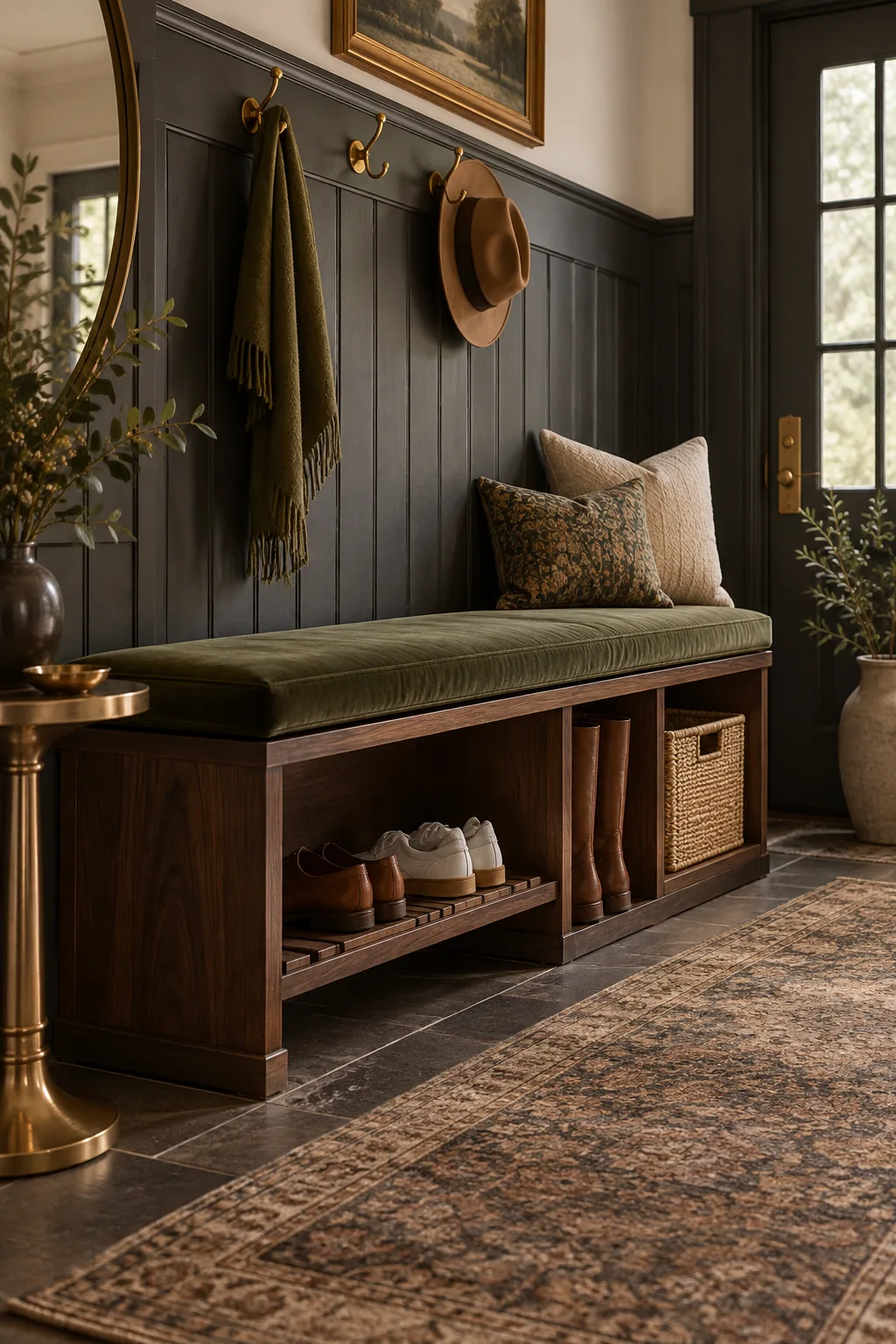
Moody Transitional Entry: Rich charcoal beadboard and a dark walnut finish give the entryway a sophisticated, enveloping atmosphere.
Entryway Bench Dimension Cheat Sheet
All these individual measurements combine into one balanced, highly functional piece of daily furniture. Keep these exact numbers handy to ensure your next mudroom upgrade looks completely intentional and works flawlessly for your entire family.
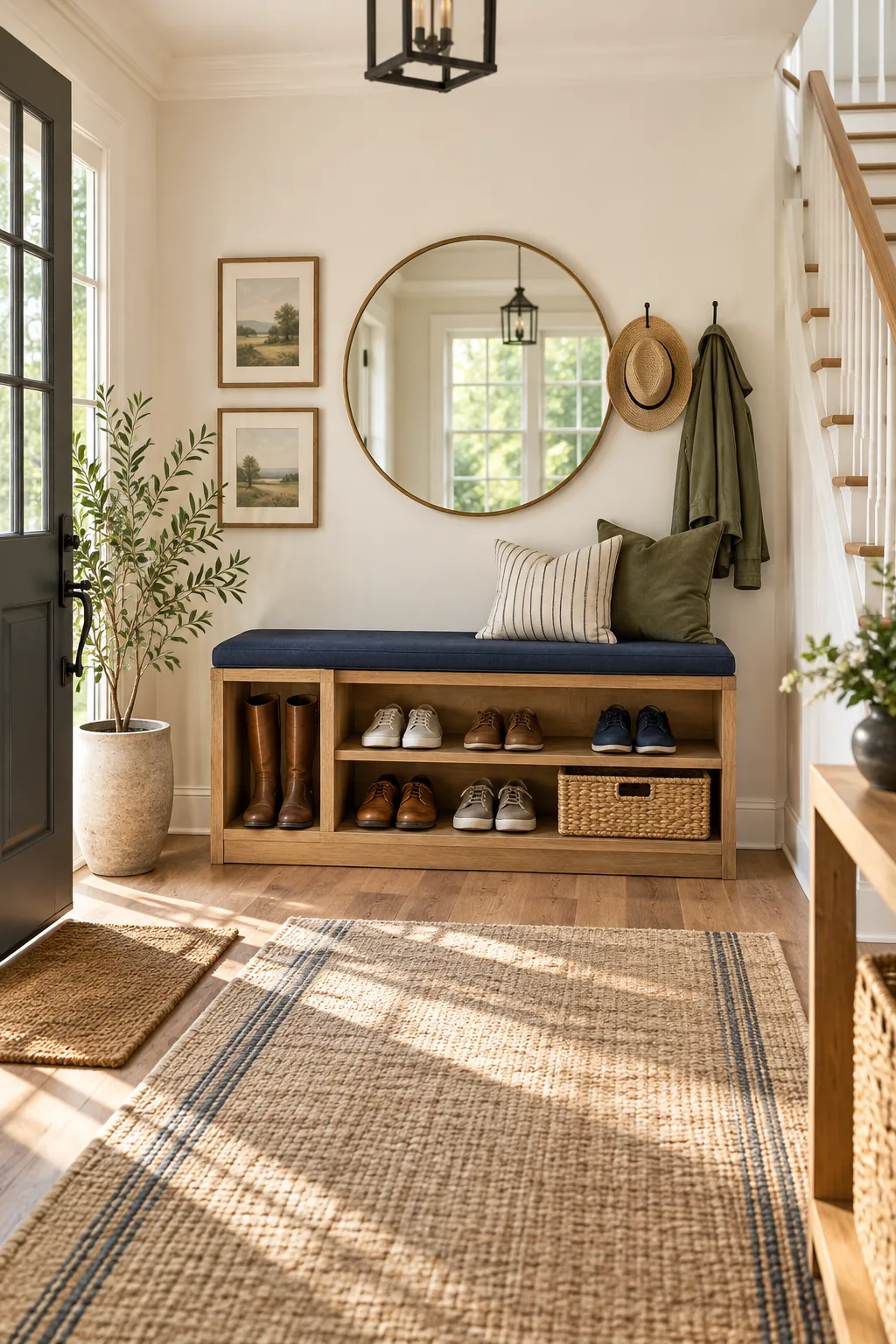
Use this sequential checklist to carefully verify your planned dimensions before purchasing expensive materials or finalizing a custom order with a local cabinetmaker.
- Seat height: Plan for 18 inches total, including the compressed cushion.
- Seat depth: Allow 15 to 18 inches for comfortable adult seating.
- Boot bay: Provide an 18-inch vertical opening for tall winter boots.
- Shoe drop: Leave 6 to 8 inches of height for standard footwear.
- Toe kick: Recess the base 3 inches deep and 3 to 4 inches high.