Small Porch Curtains: How to Hang Panels for an Outdoor Room
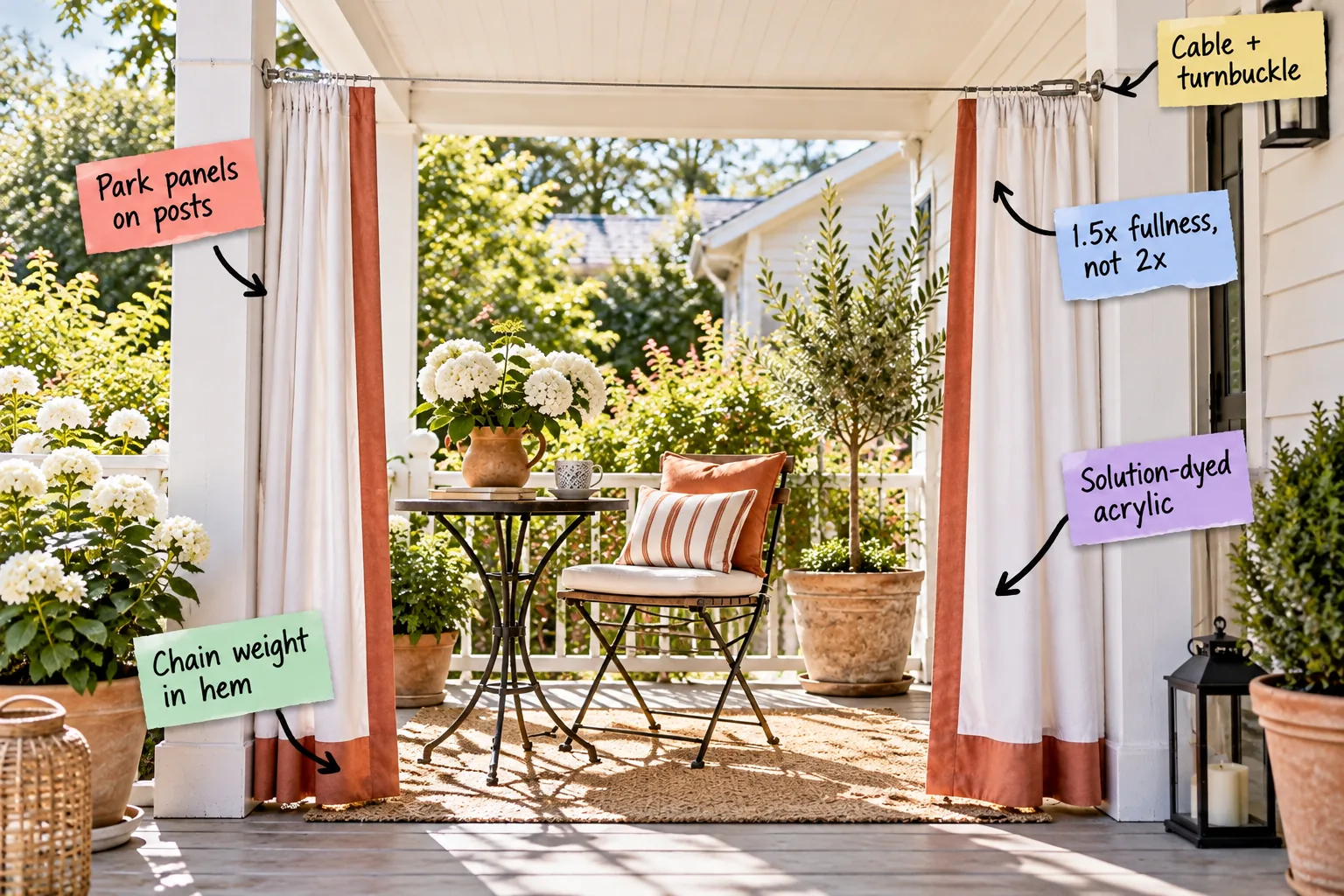
Transforming a cramped outdoor space starts with knowing exactly how to hang your fabric, which is why you can print our complete Small Porch Curtain Measuring & Hanging Sheet to calculate your precise cable length, panel fullness, and hem weight. You will be able to measure, source hardware, and perfectly hang outdoor curtains that turn a tiny porch into a defined living space.
Installing the Tension Cable and Turnbuckle
A standard curtain rod adds unnecessary visual bulk to a tiny porch, making the ceiling feel significantly lower than it actually is. Instead, run a taut stainless steel cable just under the porch beam, secured with a small turnbuckle hooked to a screw eye on the post.
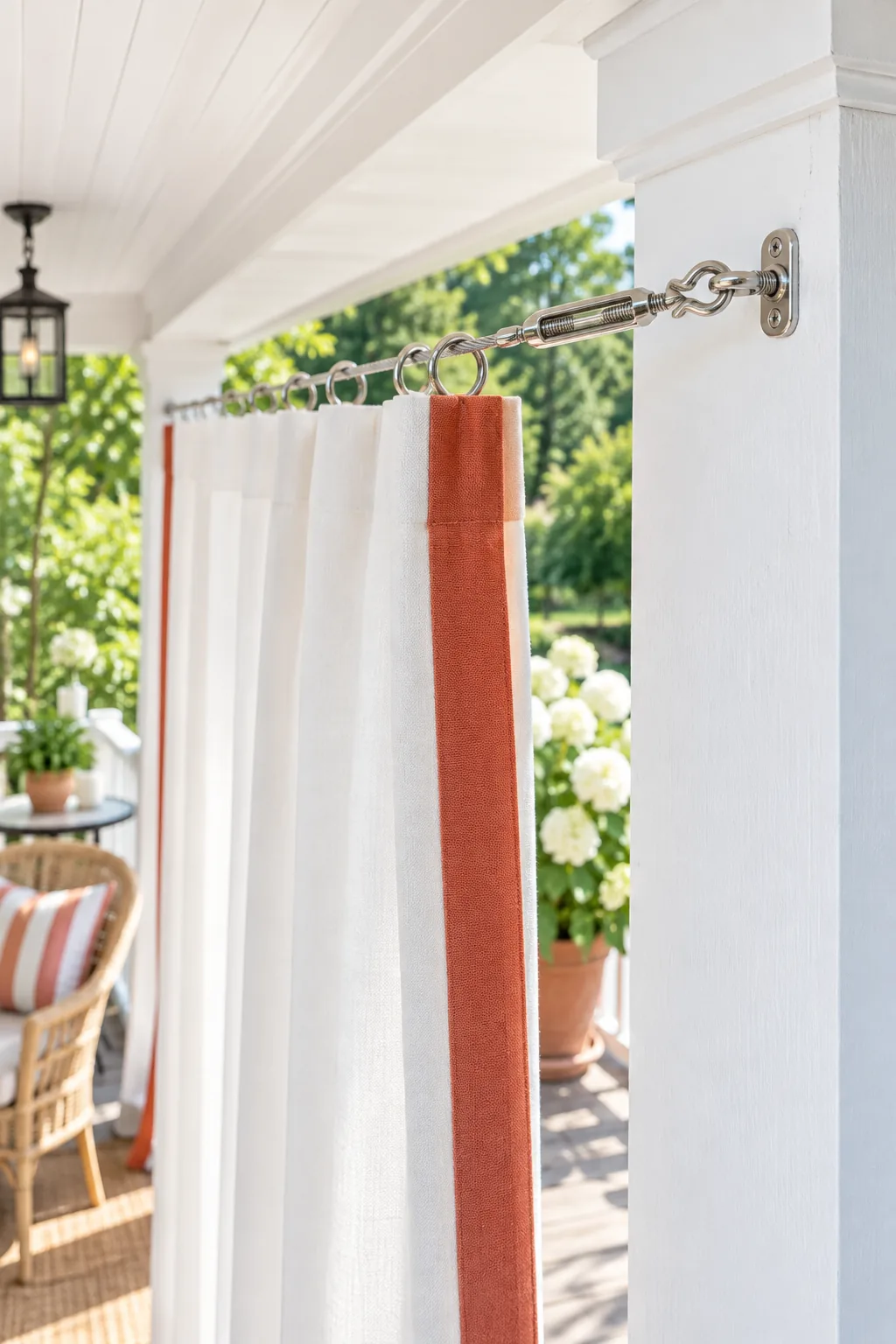
Because outdoor hardware is constantly exposed to humidity and morning dew, selecting the right metal is just as important as the installation method.
Selecting the Right Turnbuckle Hardware
When you shop for tensioning hardware, you will notice several different end fittings designed for specific anchoring methods. Choosing the correct turnbuckle configuration ensures your cable remains perfectly level and securely attached to the wooden porch columns without slipping under the weight of the fabric.
| Turnbuckle Type | Best Application | Mounting Hardware |
|---|---|---|
| Hook and Eye | Standard wood posts | Heavy-duty screw eye |
| Jaw and Jaw | Metal columns | Welded anchor bracket |
| Eye and Eye | Permanent fixed spans | Through-bolt loop |
For a typical residential wooden porch, the hook and eye combination provides the easiest and most forgiving installation process. You simply twist the screw eye anchor into your wooden post, attach the hook end of the turnbuckle, and rotate the center body to tighten the span.
Choosing Solution-Dyed Acrylic Fabric
Standard indoor fabrics will rot or fade within a single season outdoors when subjected to intense sunlight and unexpected rainstorms. Specify solution-dyed acrylic for your curtain panels, which locks the color directly into the fibers to resist UV fading and mildew.
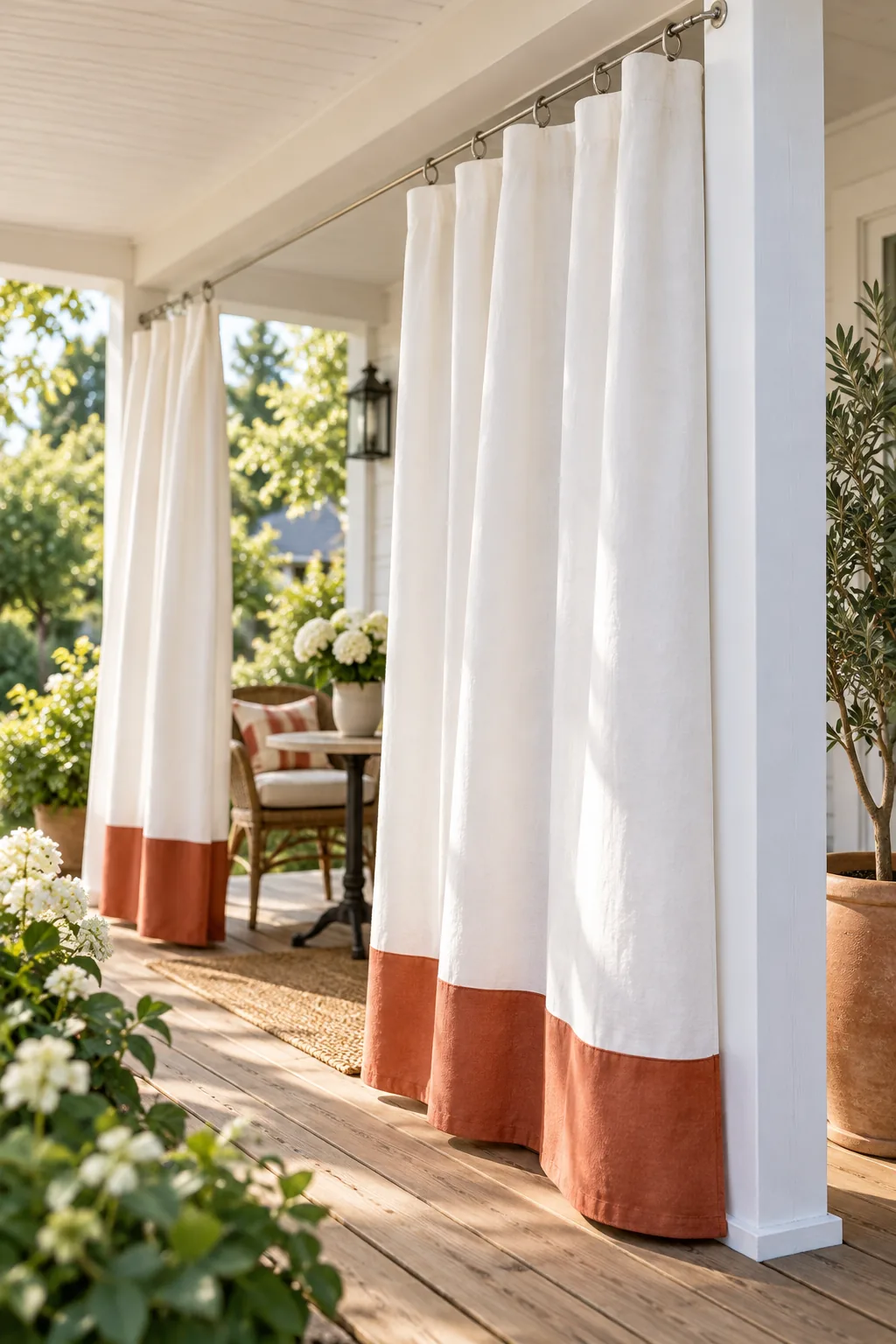
This specialized manufacturing process ensures crisp white backgrounds and vibrant terracotta borders stay bright year after year. The woven acrylic breathes easily, preventing trapped moisture while providing enough shade to cool your seating area during harsh afternoon sun.
Calculating for 1.5x Fullness
While indoor drapery typically uses 2x fullness to create deep, luxurious pleats, that much fabric will quickly overwhelm a narrow porch. Calculate your panel count for exactly 1.5x fullness relative to your total post-to-post span to keep the space feeling open.
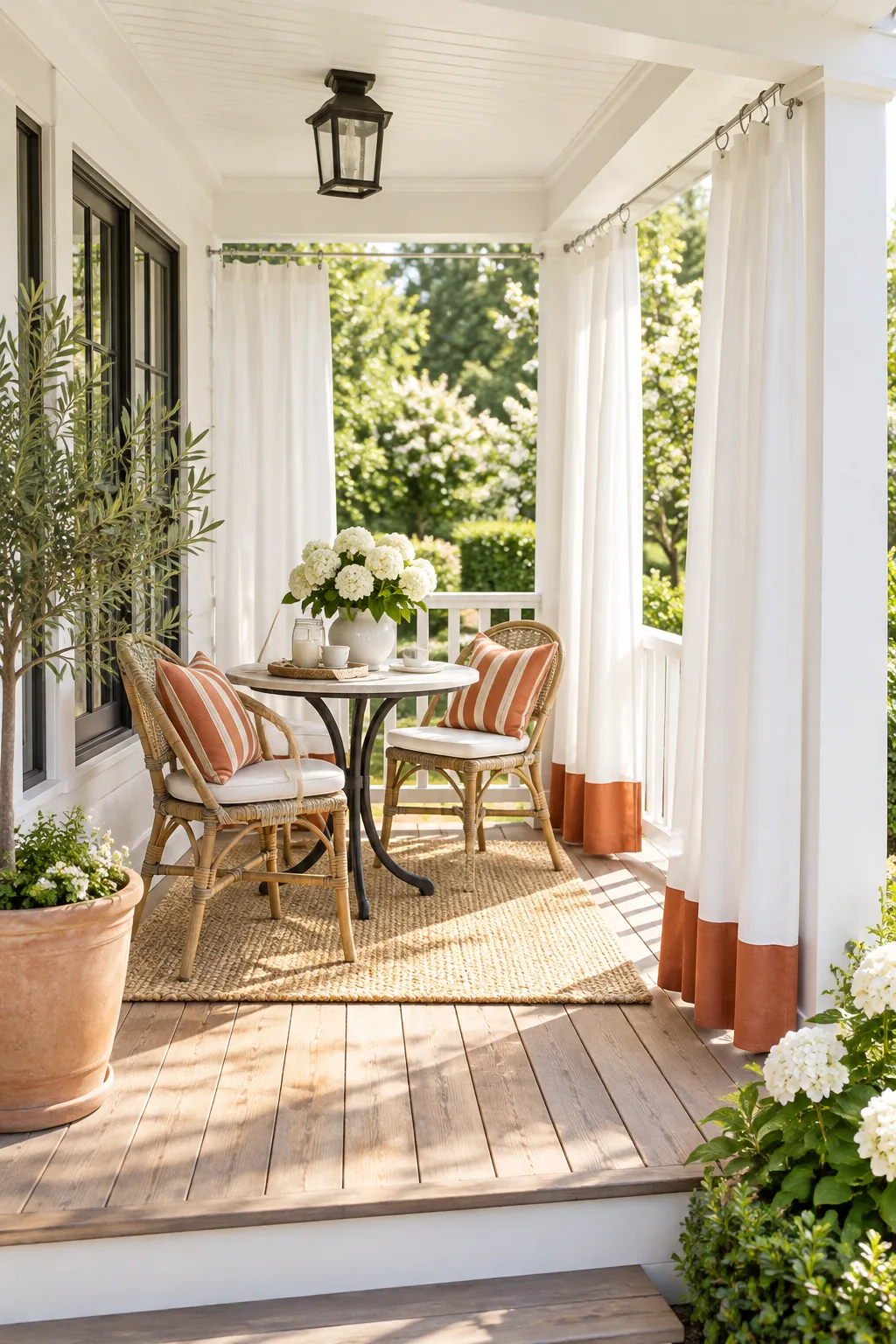
When I first hung curtains on my own Austin porch, I used standard double-width panels and felt completely boxed in, but reducing it to one-and-a-half times the span opened everything up. This ratio provides soft, lightly gathered folds along the cable without creating a bulky fabric wall when pushed aside.
Setting a One-Inch Drop Length
Outdoor curtains should never puddle on the floor where they will inevitably collect dirt, moisture, and fallen debris from the yard. Measure your drop length to leave exactly 1 inch of clearance above the deck surface to protect the bottom edge.
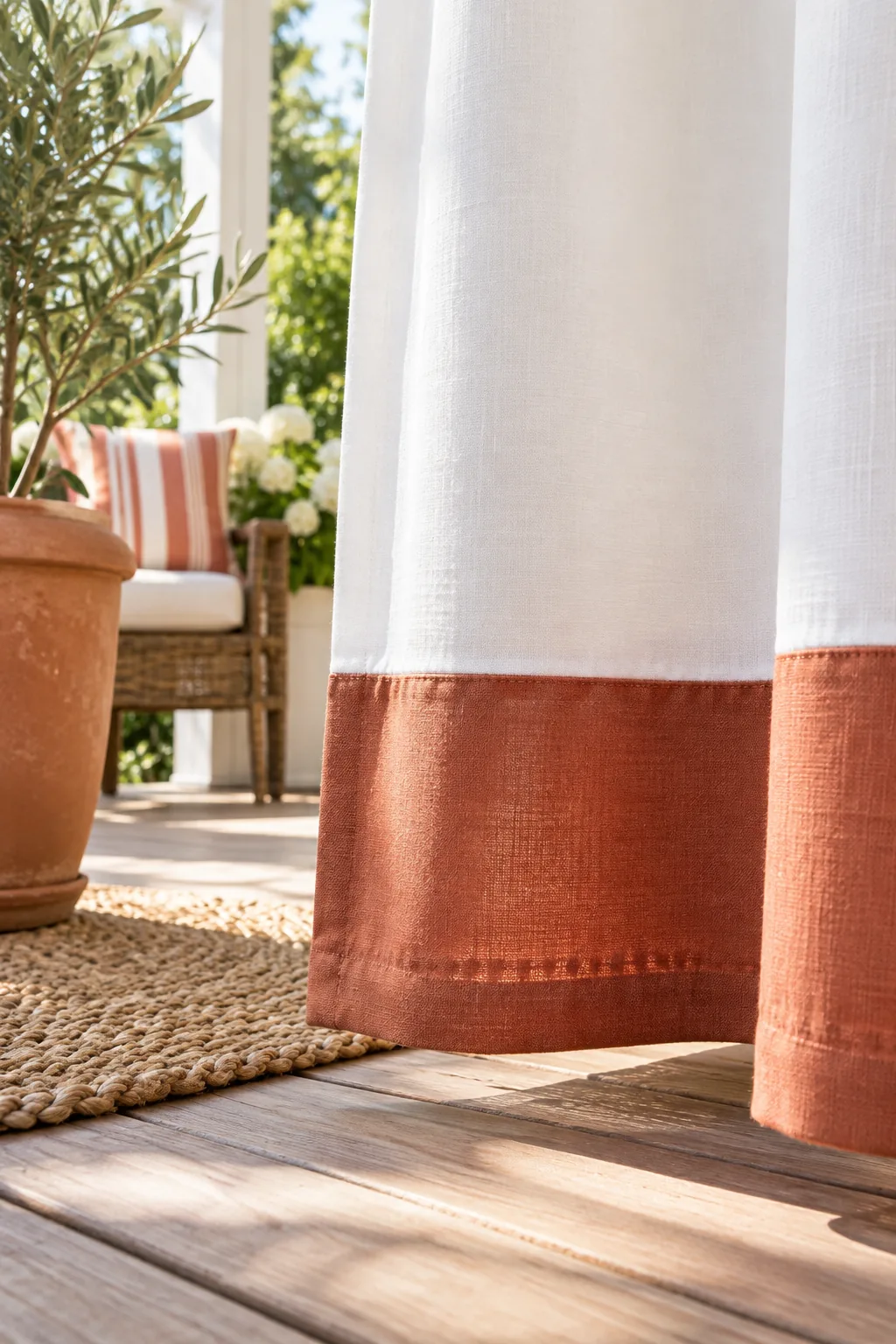
This slight hover keeps the hem pristine while maintaining the illusion of a fully enclosed outdoor room from the street. To get this measurement right, install your tension cable first, then measure directly from the bottom of the curtain ring down to the floor, subtracting one inch.
Sewing the Perfect Bottom Hem
Creating a durable pocket for your hem weight requires a slightly larger fold than standard indoor drapery to withstand outdoor breezes. A double-folded four-inch bottom hem provides enough structural integrity to hold the metal chain while finishing the curtain edge beautifully.
- Fold the raw bottom edge up exactly four inches and press flat with a warm iron.
- Fold the fabric up another four inches to enclose the raw edge completely.
- Pin the double fold securely across the entire width of the acrylic panel.
- Stitch along the upper folded edge, leaving both side ends open to insert the weight.
Leaving those side ends open is the crucial step that transforms a standard hem into a highly functional weight pocket. Once the heavy chain is installed, you can easily hand-stitch the side openings closed to lock the metal securely inside the fabric.
Securing the Hem with Chain Weight
Wind is the biggest challenge for porch curtains, quickly turning lightweight panels into chaotic sails that can easily knock over drinks. Slide a continuous bead chain weight entirely through the bottom hem before sewing it shut to anchor the fabric against gentle breezes.
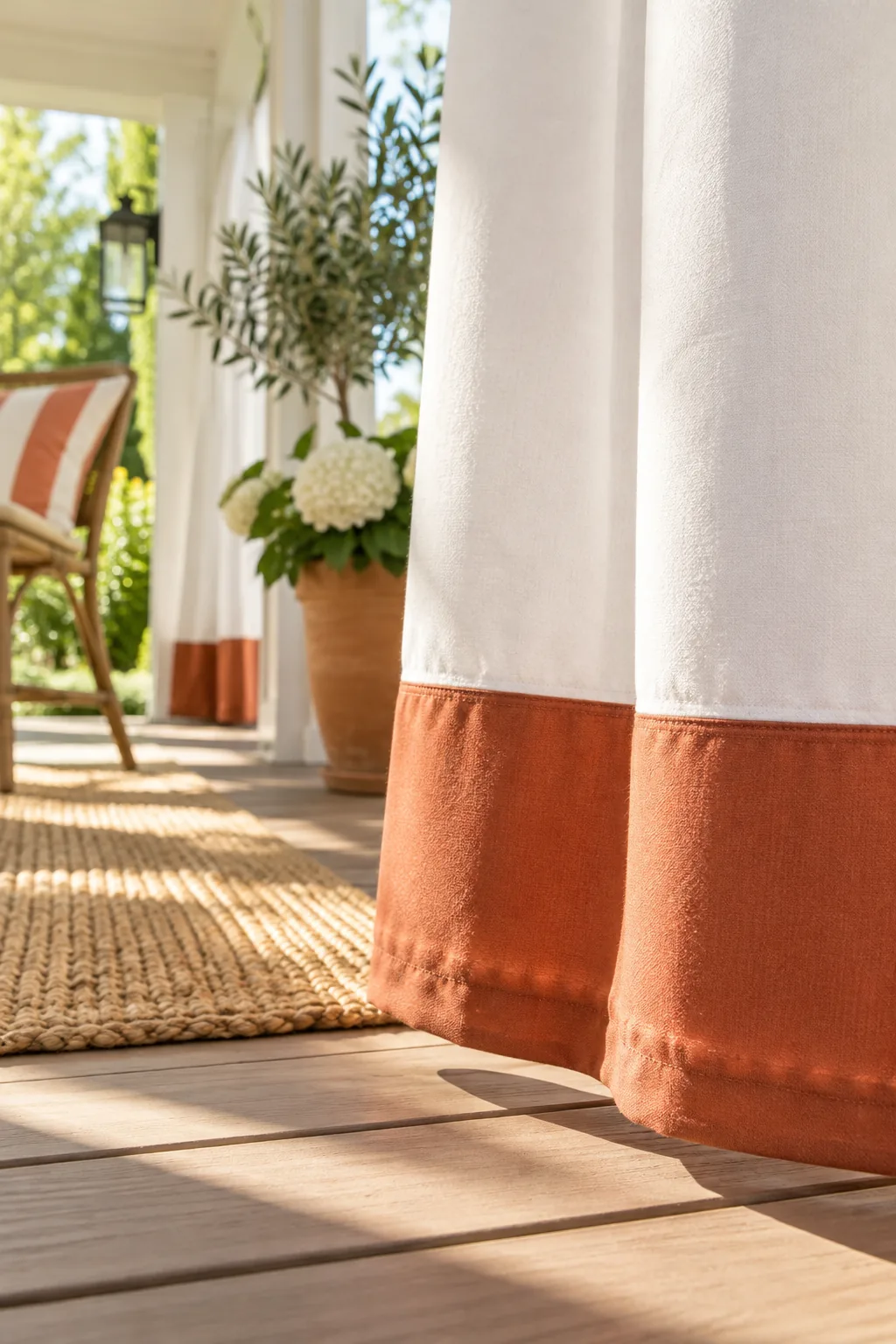
This hidden technique provides even, gentle tension across the entire width of the fabric rather than just weighting the outer corners. The continuous metal chain moves fluidly with the acrylic material, ensuring the panels drape elegantly instead of hanging stiffly like a canvas tarp.
Parking Panels on the Posts
To preserve every inch of a narrow entryway, train the gathered curtain panels to rest flat against the outer face of the posts. Parking the fabric directly on the structural columns leaves the full opening clear for foot traffic while framing the space beautifully.
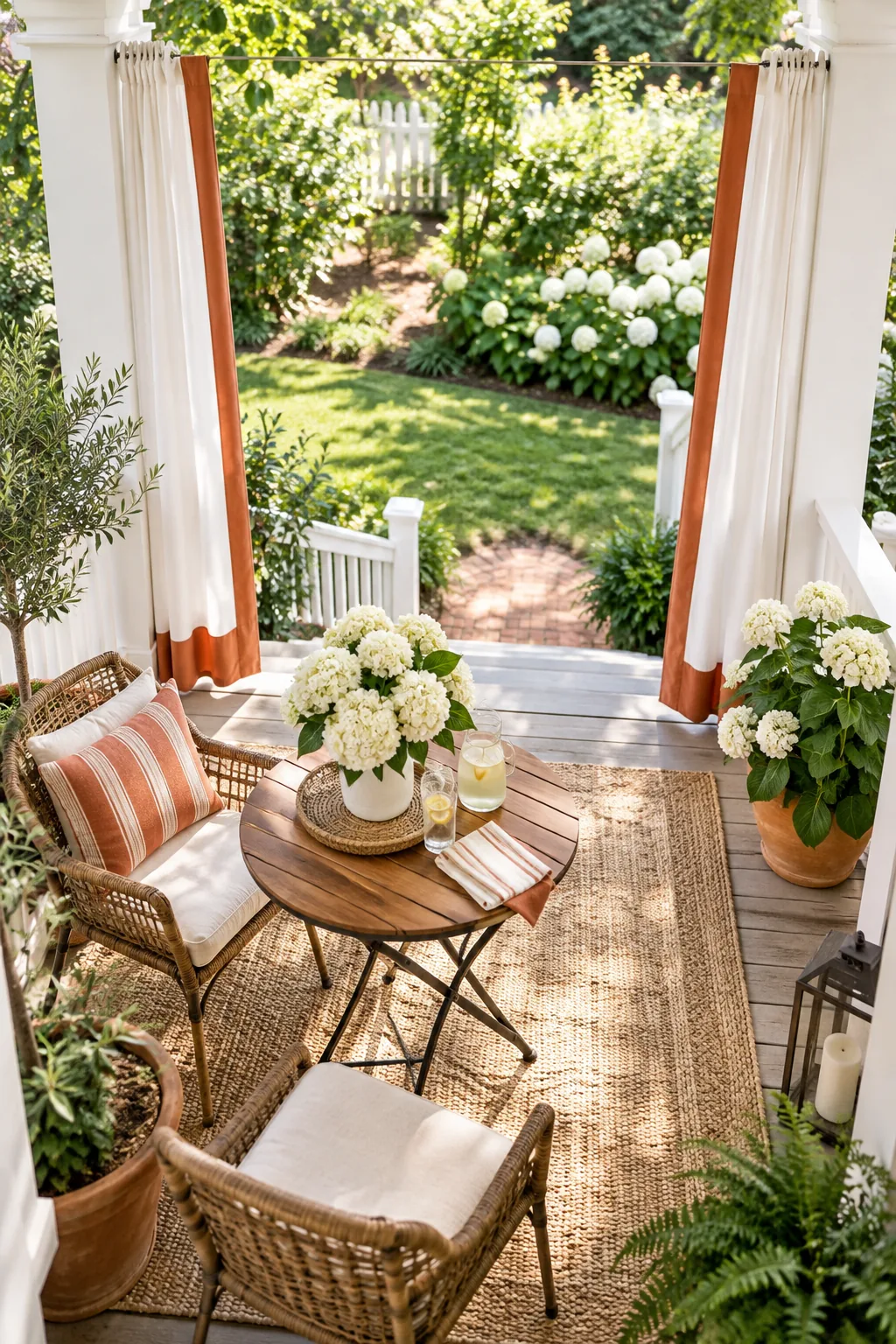
I used to let my panels bunch up randomly near the steps, but training them to sit flush against the wooden columns gave me back nearly two feet of usable walkway. This simple placement trick instantly makes a cramped exterior feel like a deliberately designed architectural feature.
Training the Folds for a Tailored Look
Freshly sewn solution-dyed acrylic can be slightly stiff and may resist falling into neat, uniform pleats right off the sewing machine. You need to physically train the fabric memory so the panels accordion smoothly whenever you open or close them along the tension cable.
- Push the curtain panel entirely to one side and arrange the folds into even, uniform pleats.
- Wrap a wide fabric ribbon snugly around the gathered panel at the center point.
- Tie a second ribbon near the bottom hem to keep the lower folds perfectly aligned.
- Leave the ribbons tied for at least forty-eight hours while the acrylic sets its shape.
Once you remove the training ribbons, the outdoor fabric will naturally want to return to these crisp, organized folds. This minimal effort guarantees your porch always looks impeccably tailored from the street, even after a windy afternoon disrupts the arrangement.
Framing the Tiny Porch Room
Once the panels are hung and parked, the tiny porch instantly transforms into a defined architectural space that feels entirely separate from the front yard. The crisp white fabric acts as soft exterior walls, creating a cozy, intimate backdrop for a compact bistro corner.
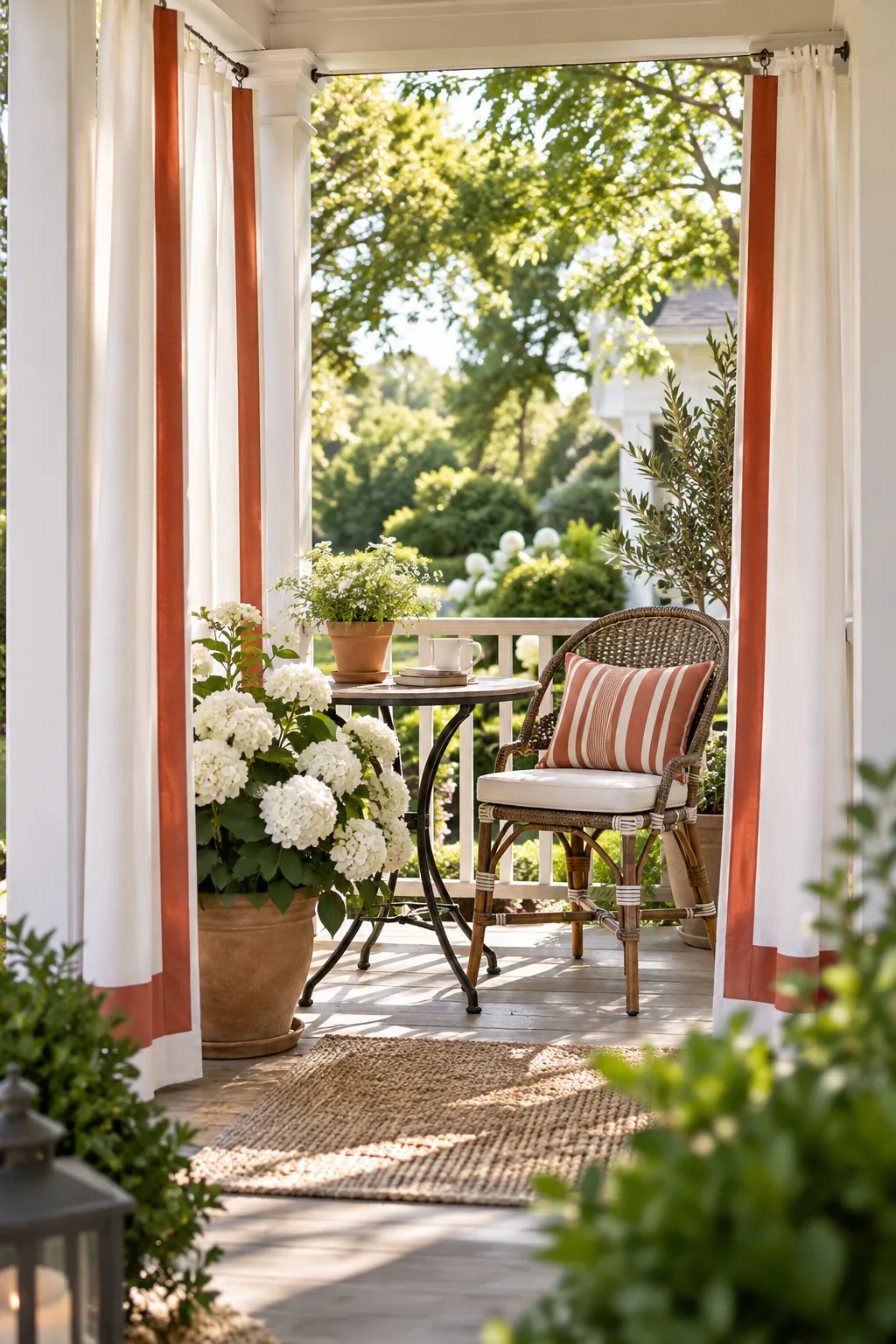
These textile boundaries define the seating area instantly without requiring permanent construction or expensive carpentry work. Surrounding your small table and potted plants with flowing acrylic panels elevates a basic concrete slab into a sophisticated outdoor dining destination.
Your Porch Curtain Measuring Sheet
Getting the tension cable length and fabric dimensions right requires careful planning before you order a single yard of acrylic. The Small Porch Curtain Measuring & Hanging Sheet is a one-page printable with dedicated spaces for your post-to-post span, turnbuckle length, panel count, and hem-weight amount.
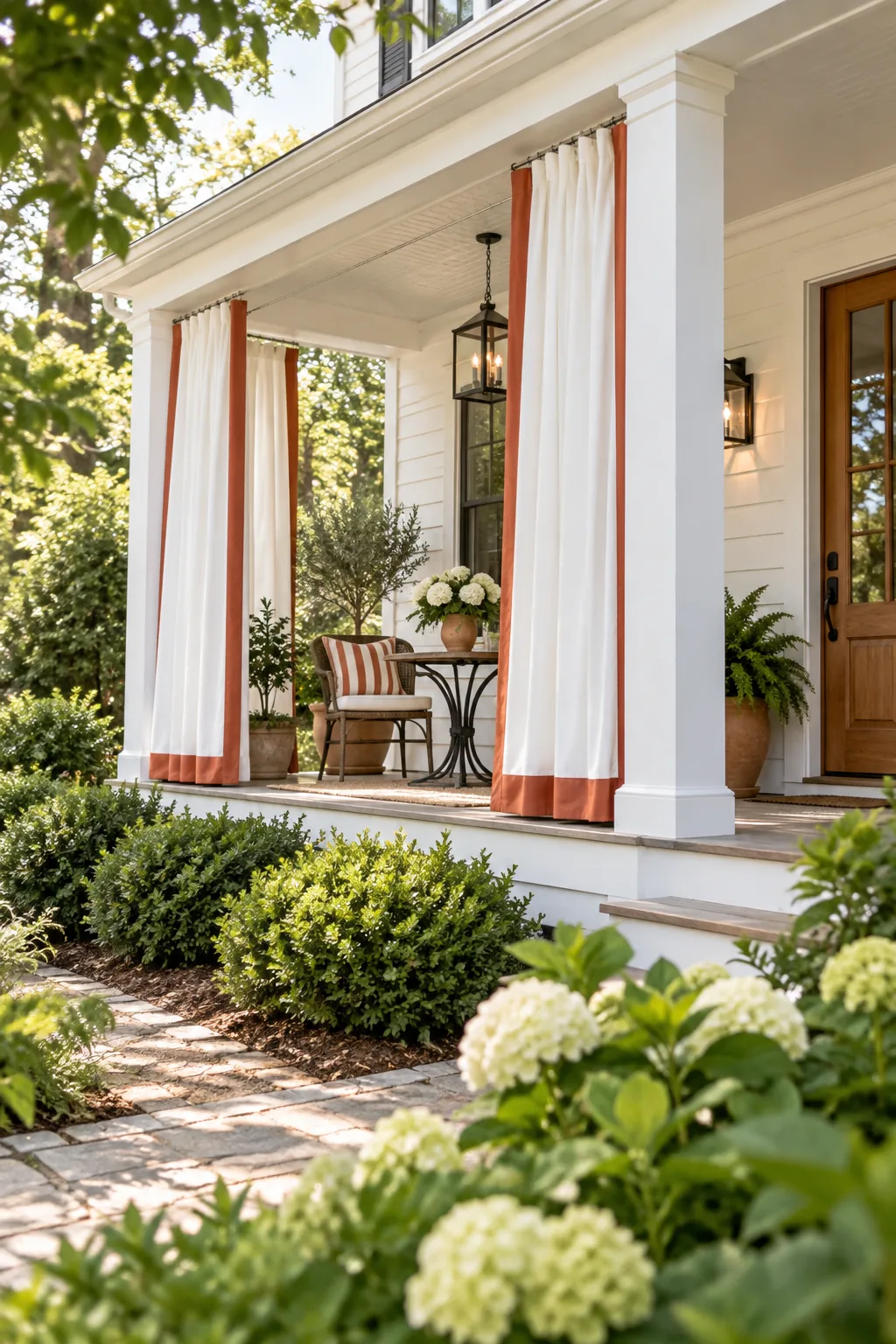
Before printing the sheet and heading to the hardware store, run through these final dimension checks to ensure a flawless installation. I learned the hard way that guessing hardware lengths leads to sagging fabric, so always measure twice.
Download your complete measuring sheet right here to access the full hardware shopping list and start mapping out your perfect outdoor room. Having every dimension calculated beforehand guarantees your tension cable will hang taut and your panels will drape flawlessly.
More Ways to Style Porch Curtains
Find the perfect fabric palette and styling approach for your home's exterior.
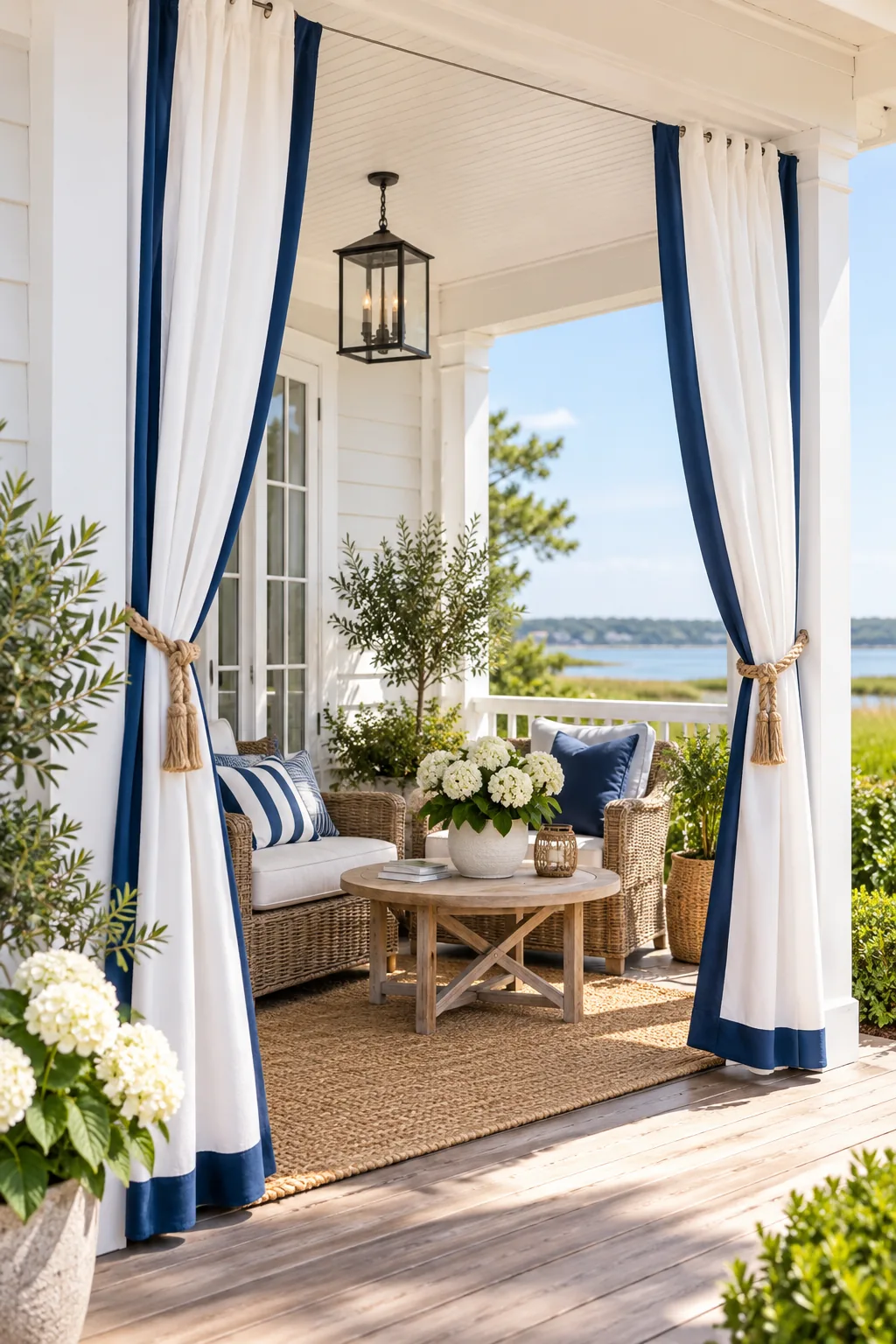
Coastal Navy and Rope: Navy borders and thick rope tie-backs give these crisp white panels a classic maritime feel.
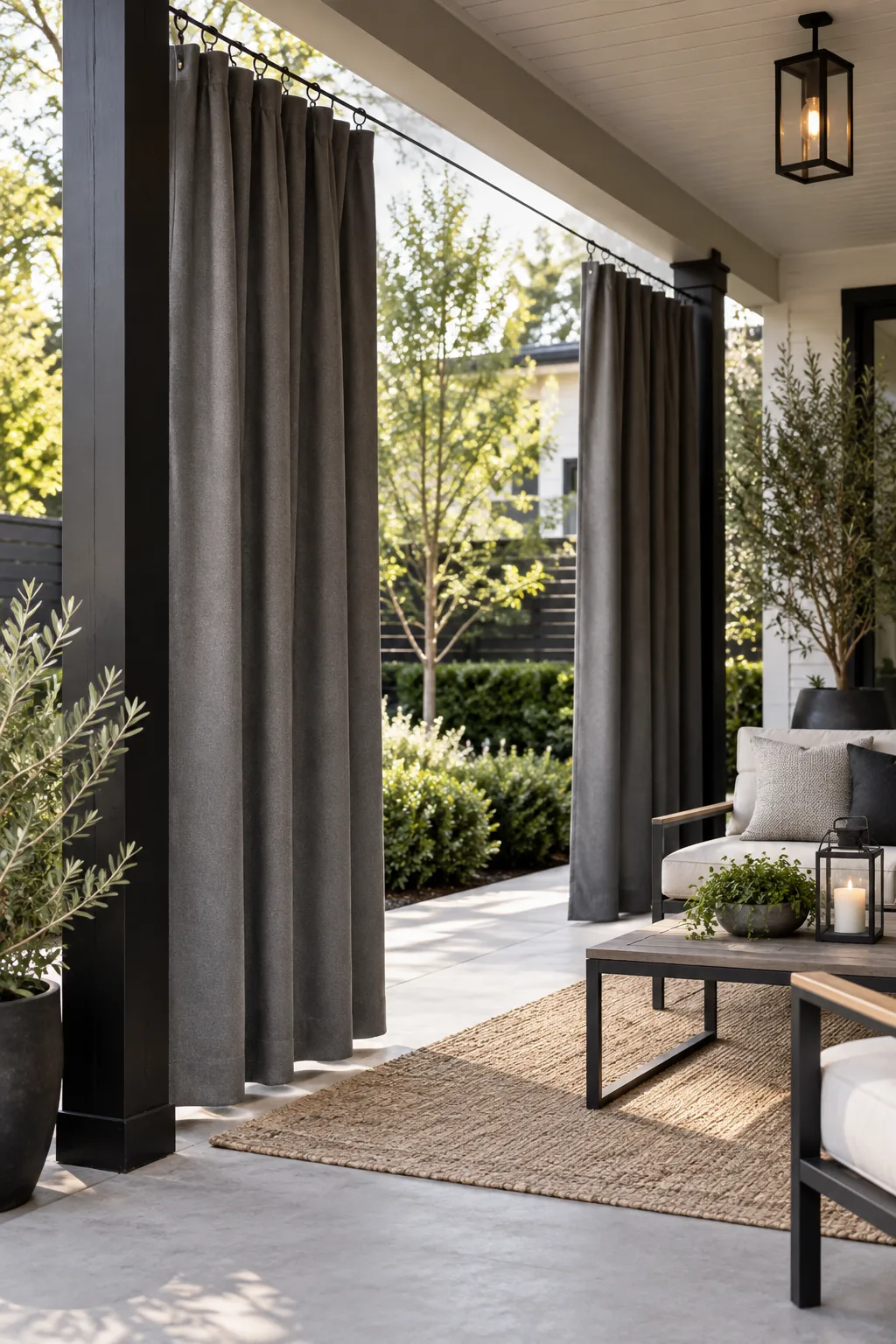
Modern Charcoal and Metal: Solid charcoal panels paired with matte black hardware create a sleek, architectural boundary.
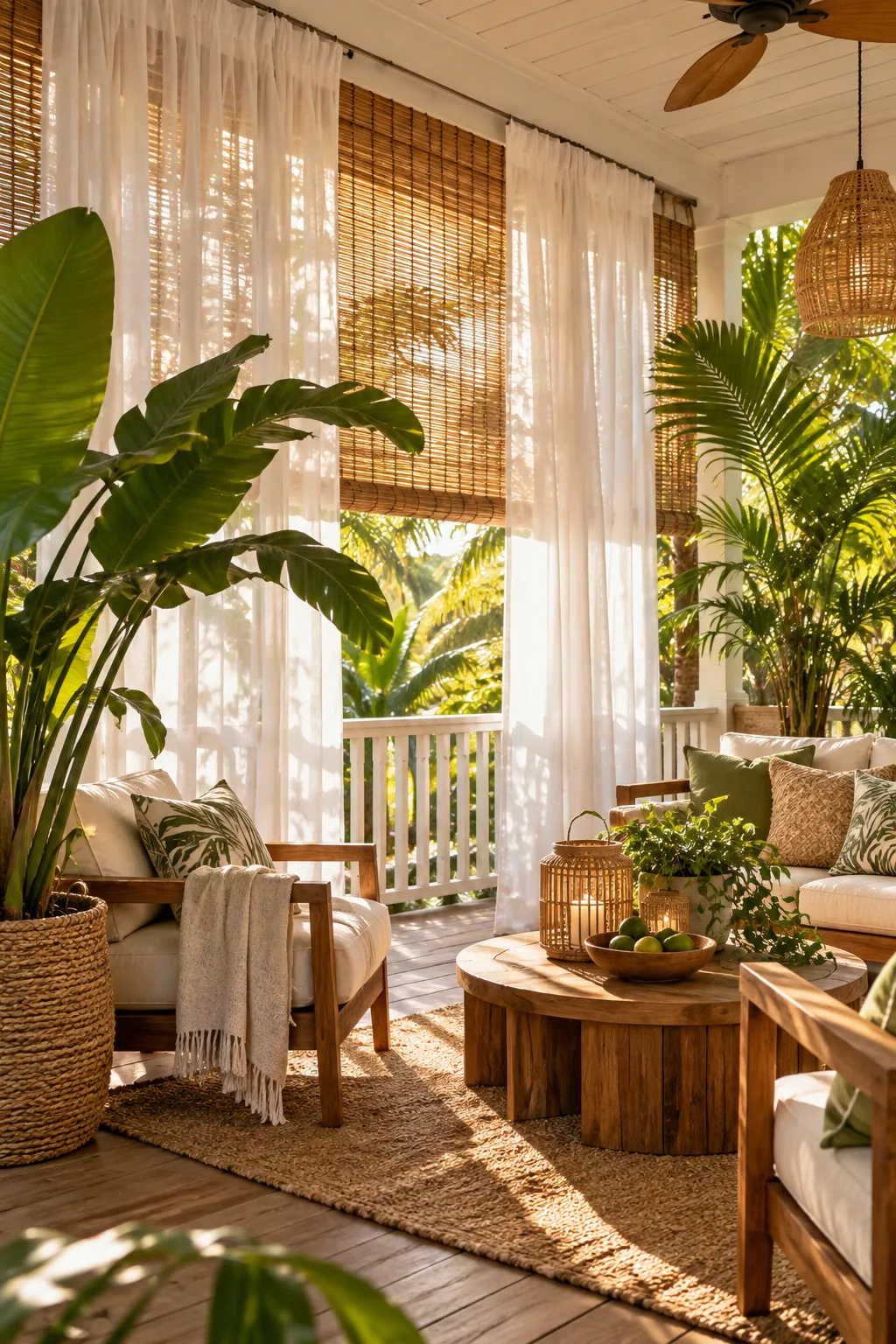
Tropical Sheers and Bamboo: Layering lightweight sheers over natural bamboo blinds adds incredible depth and filters harsh sunlight beautifully.
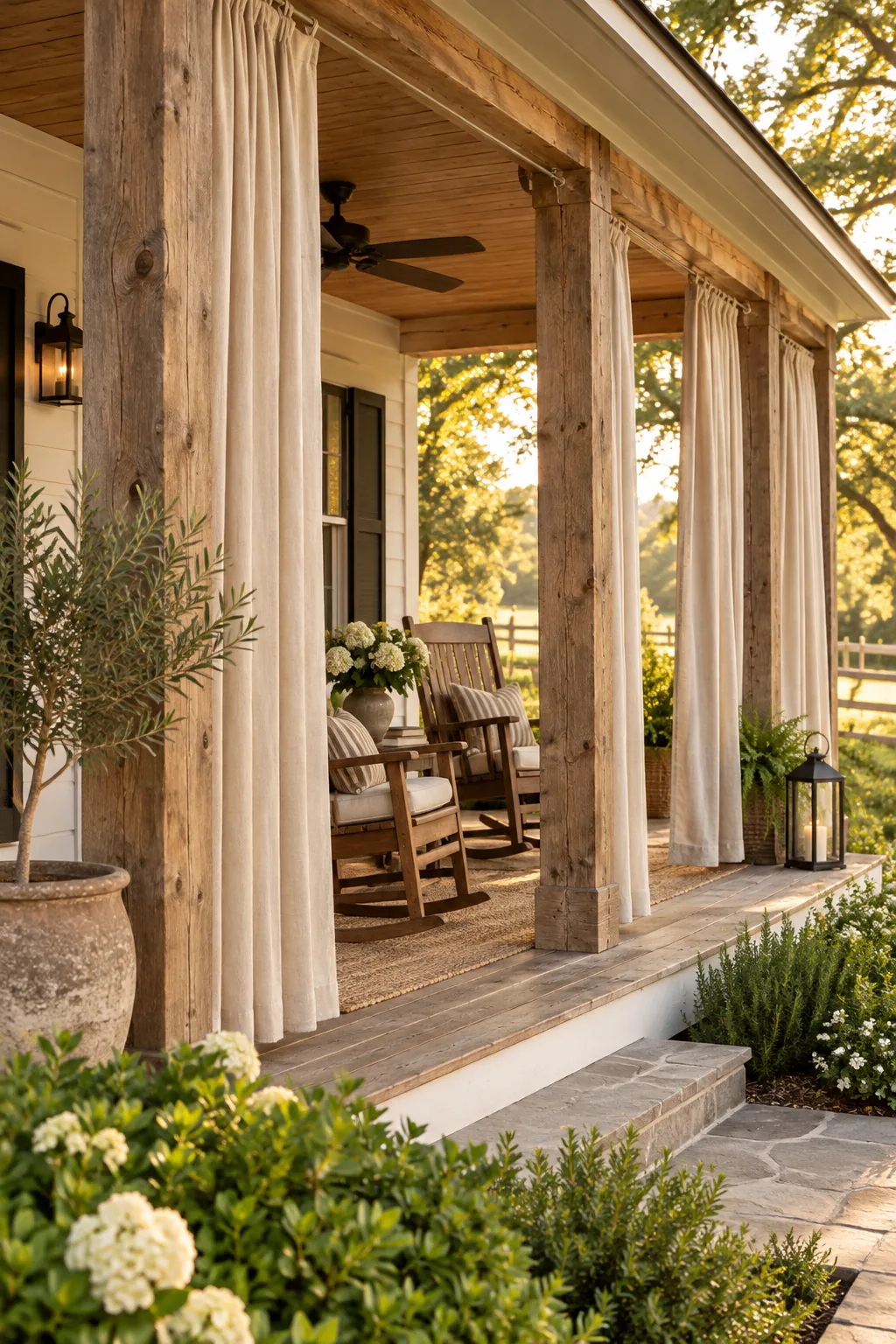
Farmhouse Linen and Wood: Natural linen-toned acrylic softens heavy rustic timber posts and complements classic wooden rocking chairs.