
11+ Easy Front Yard Paver Walkway Ideas for Your Home
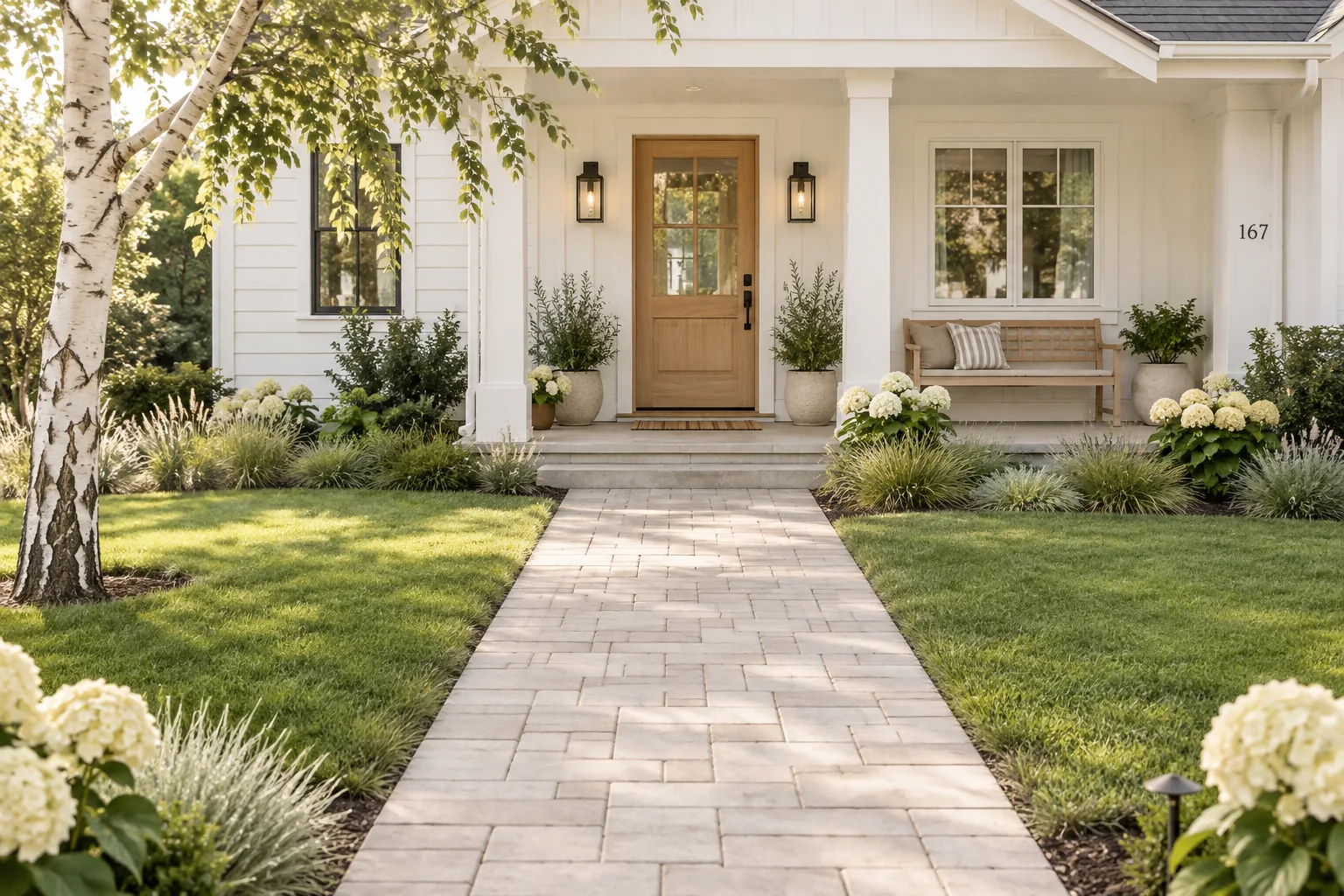
A well-planned front yard paver walkway completely changes the way your home welcomes people. I rounded up my favorite practical designs that you can easily adapt to fit your own outdoor space.
1. Classic Running Bond
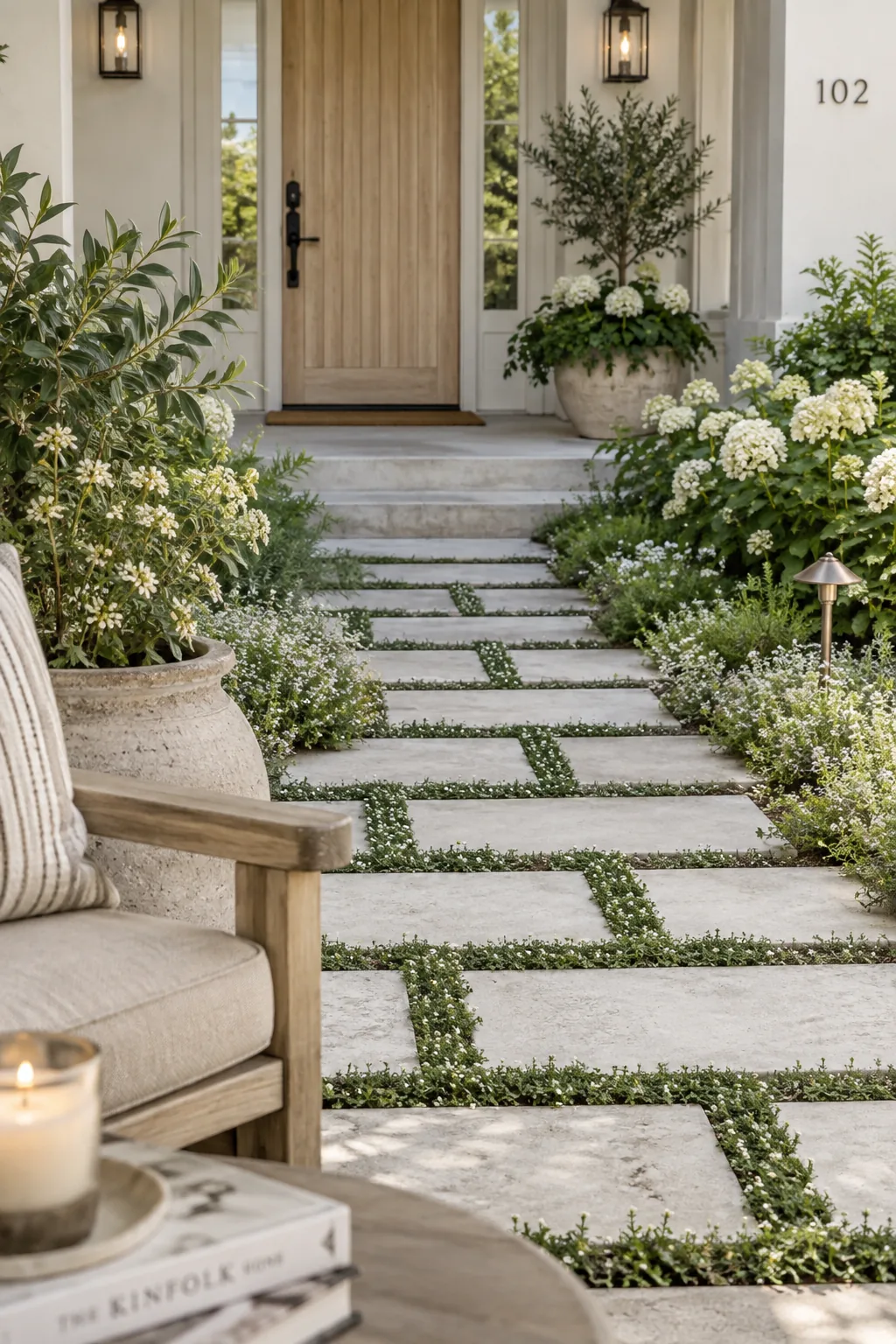
Standard concrete pavers are exactly two inches thick, making them incredibly stable for heavy foot traffic. You can lay them in a simple running bond pattern to guide guests directly to your front porch. Leaving a two-inch gap between the stones allows you to plant low-growing ground cover for a softened edge.
Why it works: This classic layout draws the eye straight to your front door while keeping maintenance low.
2. Staggered Modern Lines
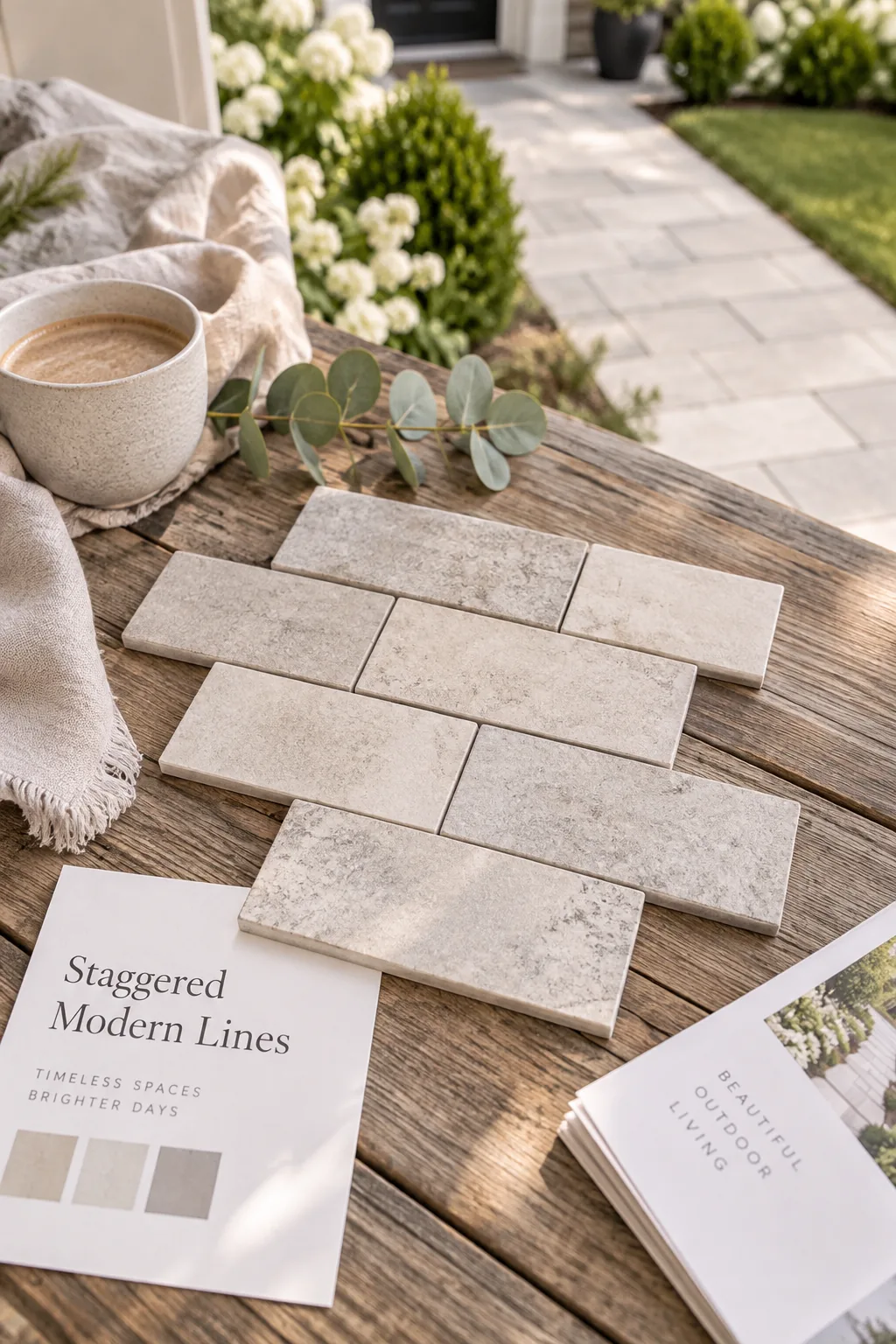
A staggered layout creates a modern, relaxed aesthetic that breaks up a rigid rectangular lawn. You just shift every other paver row a few inches to the side for an asymmetrical finish.
Why it works: The offset joints make the path feel wider and more inviting without requiring extra materials.
3. Firm Flagstone Paths
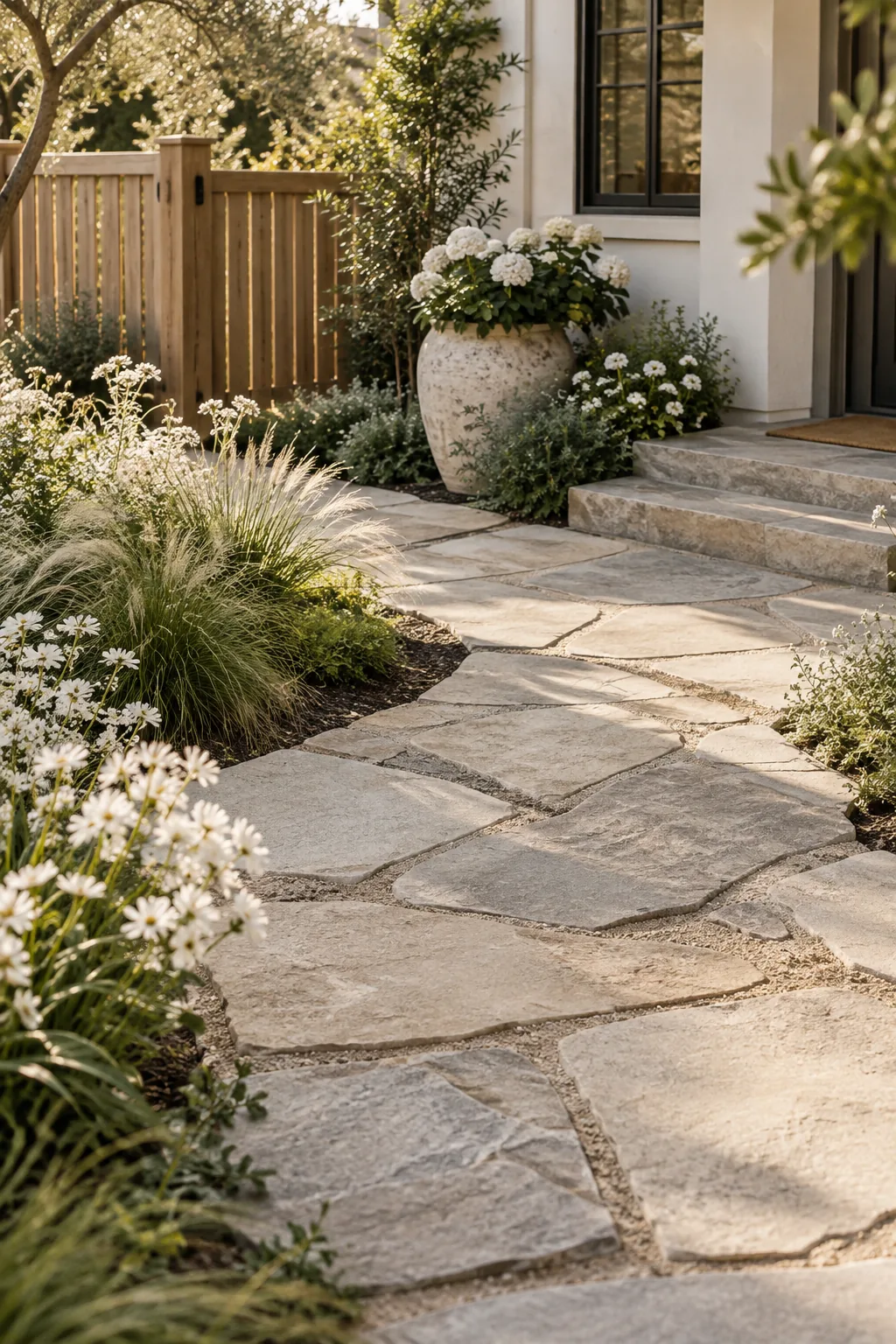
I always loved the charm of stepping stones, but they can sink into mud over time. Setting large flagstone pavers into a solid base of leveling sand solves that problem completely. You still get that organic, winding garden trail but with a firm surface underfoot.
It is the perfect weekend project if you want to skip pouring concrete.
4. High-Contrast Checkerboard
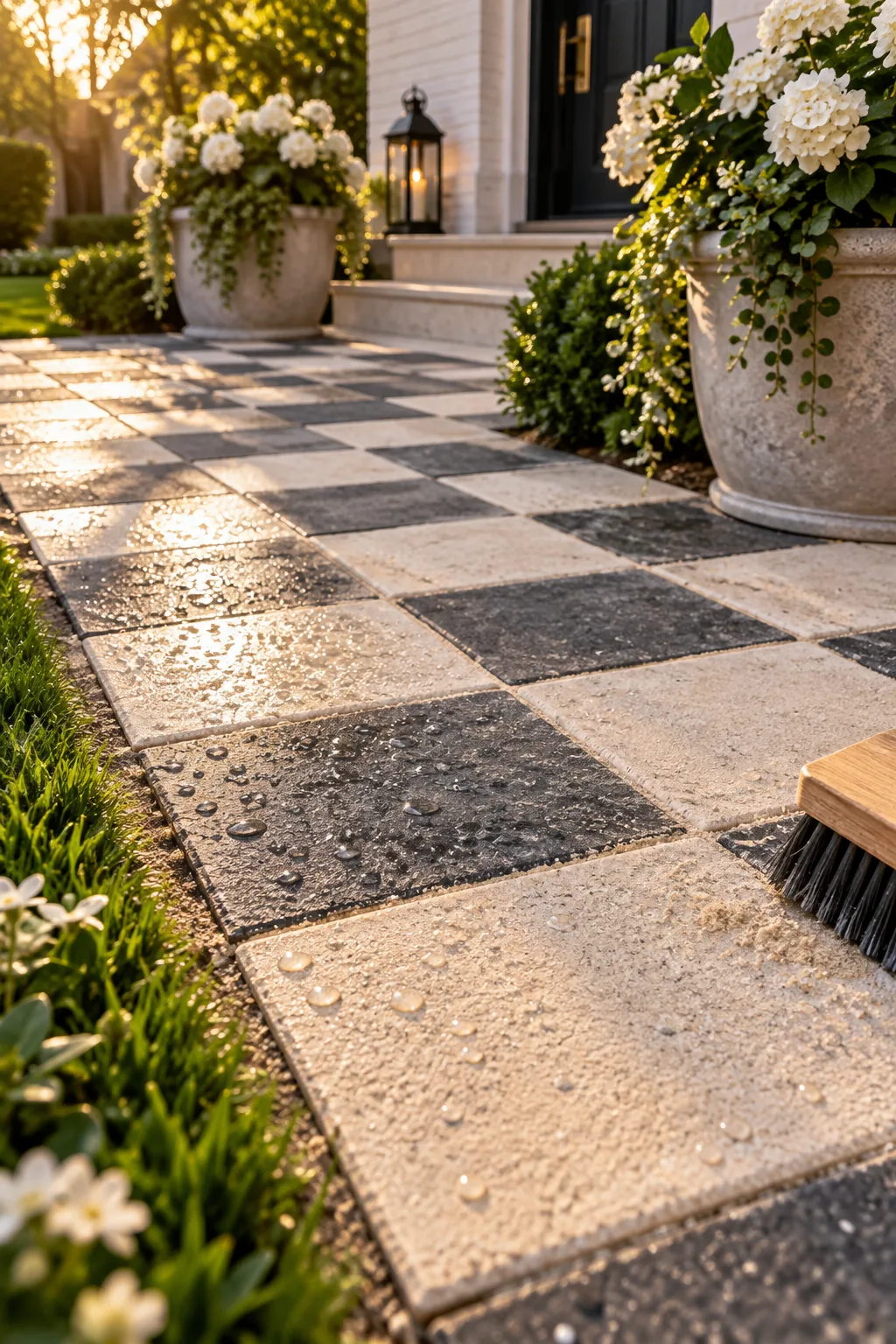
Mixing dark and light stones creates a striking checkerboard effect that commands attention. You can use this high-contrast style to bridge the gap between a traditional house exterior and contemporary landscaping.
Just make sure to sweep the sand thoroughly before wetting it down.
- Charcoal pavers
- Light gray stones
- Polymeric sand
5. Sweeping Garden Curves
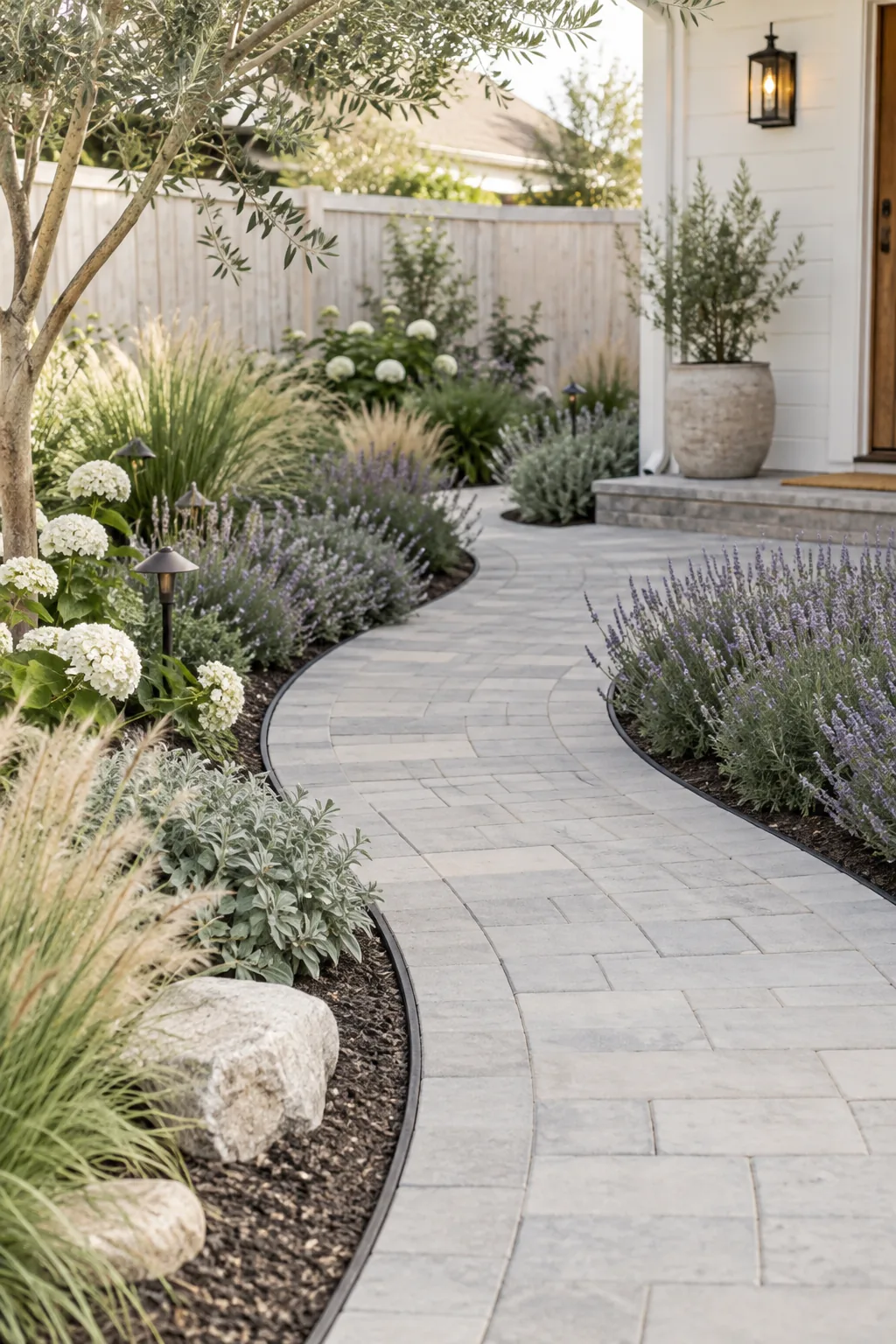
A curved path requires about fifteen percent more material due to the necessary edge cuts. The sweeping motion naturally slows people down, encouraging them to actually notice your garden beds. You will need a flexible edge restraint to keep the border crisp and prevent the stones from shifting outward over time.
- Curved edge restraints
- Masonry saw
- Marking paint
6. Built-In Drainage Slope
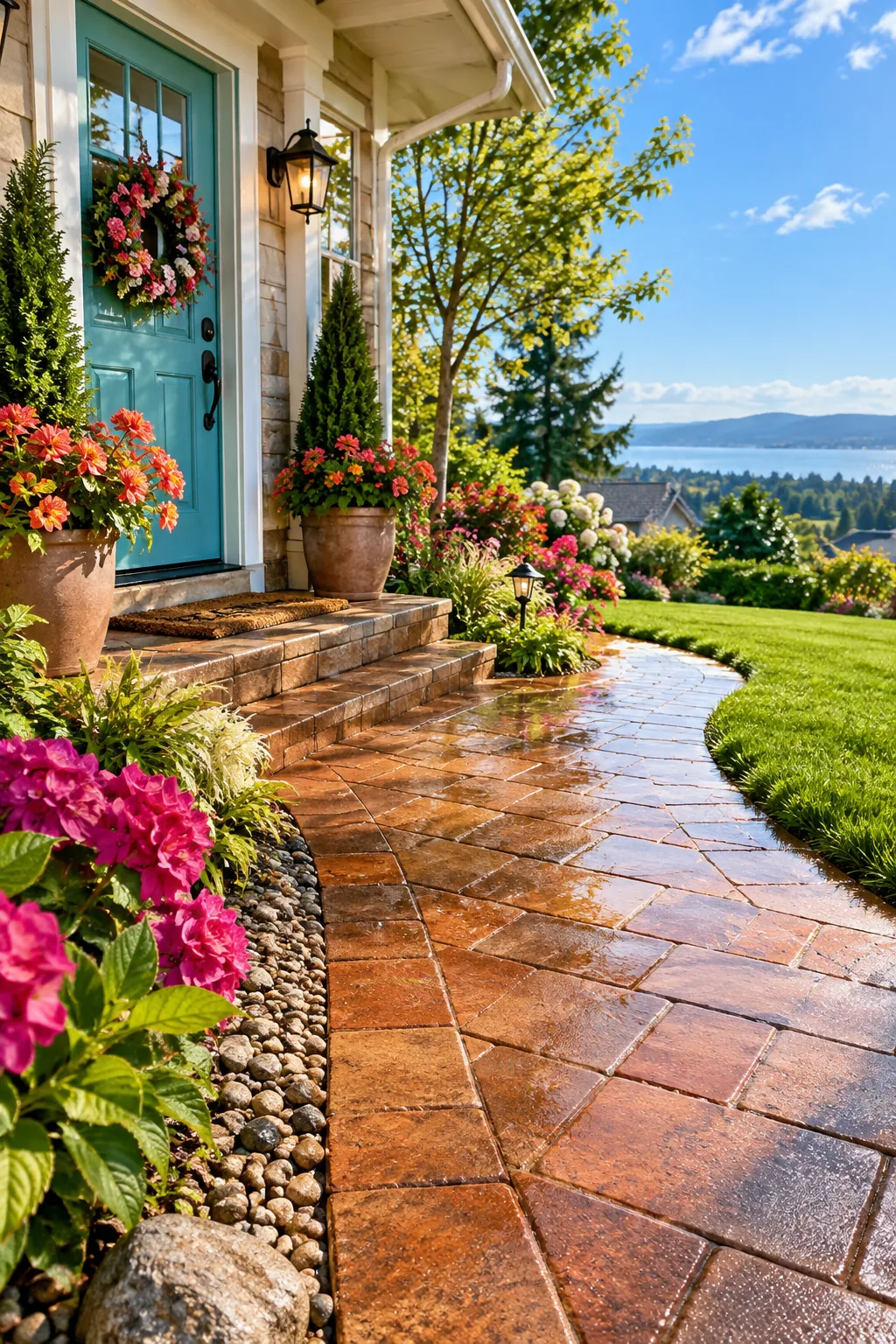
I learned the hard way that drainage matters more than anything else.
Sloping your paver walkway slightly away from the foundation keeps rainwater out of your basement. A drop of a quarter inch per foot is barely noticeable to walk on but does wonders for water runoff. You can build this subtle grade right into your gravel base layer.
7. Tailored Brick Borders
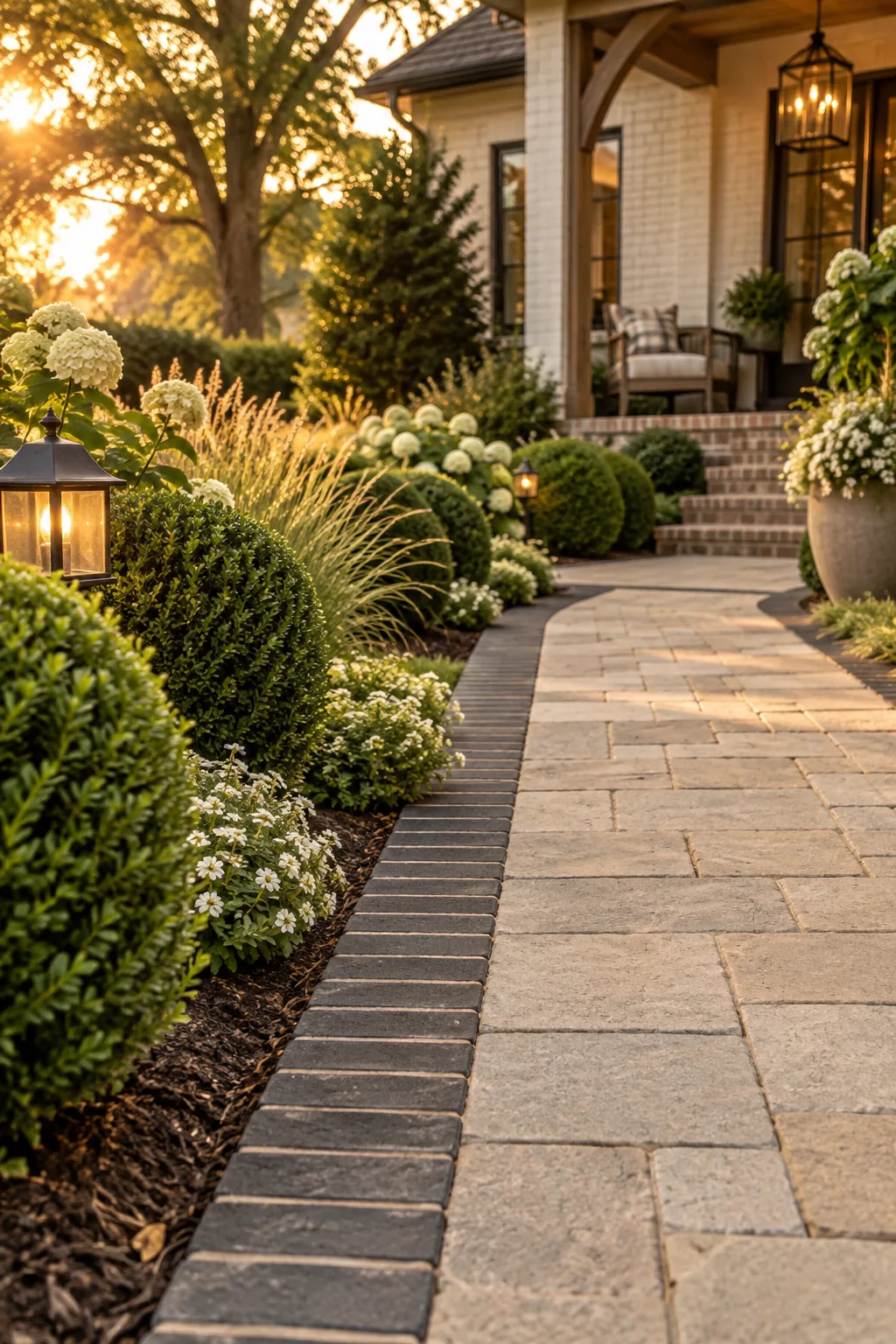
Bordering a path with contrasting bricks creates a neat, tailored frame.
A dark soldier course border really pops against lighter interior stones.
You can lay the border flat or stand the bricks on edge for extra depth.
Why it works: The solid border locks the inner field pavers tightly in place to prevent spreading.
8. Flared Driveway Transitions
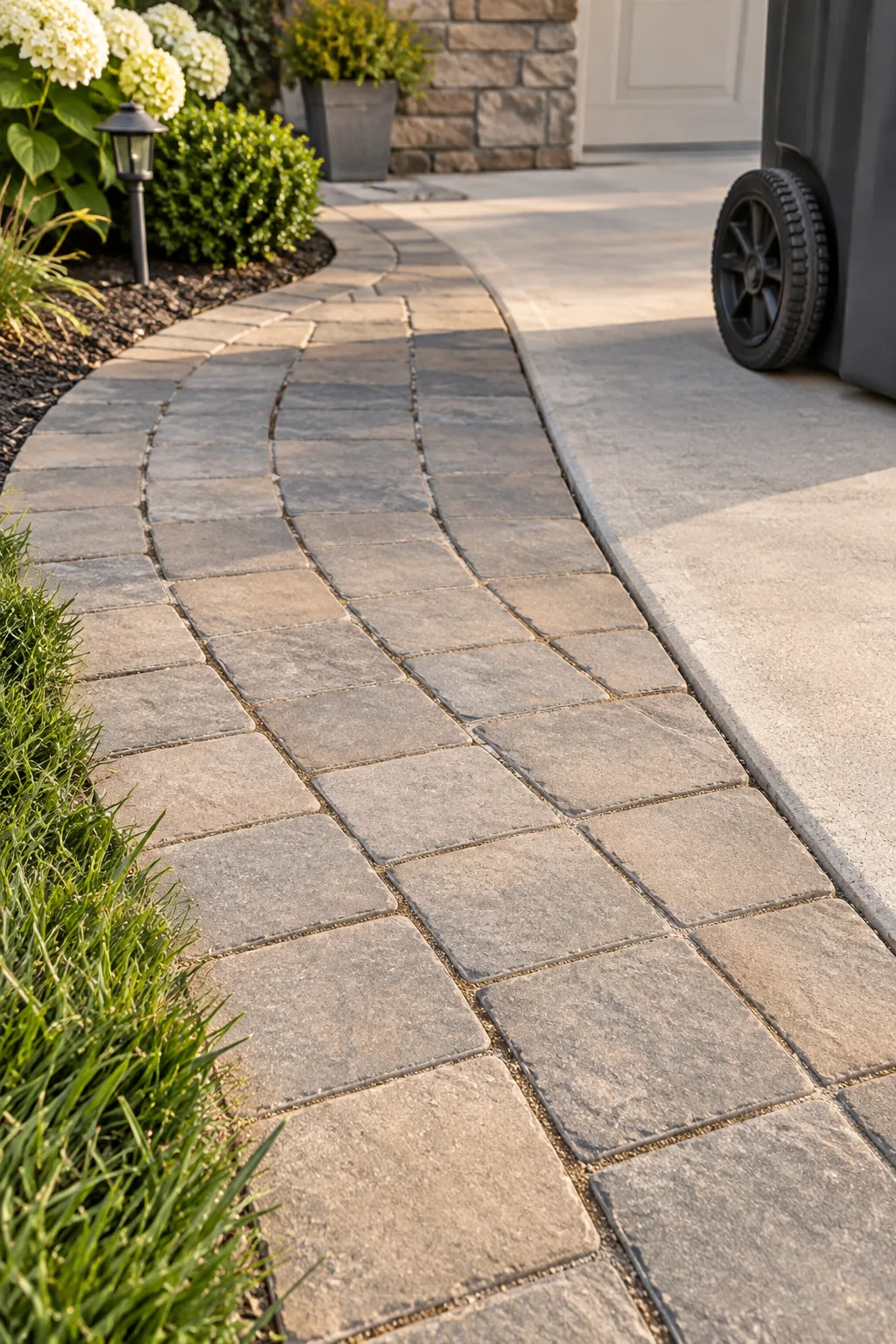
Most suburban front yards feature straight lines and sharp right angles everywhere. Adding a subtle flare where your walkway meets the driveway visually softens those harsh transitions. You just widen the final few rows of pavers to create a welcoming funnel shape.
It makes pulling the trash cans to the curb much easier, too.
9. Durable Herringbone Brick
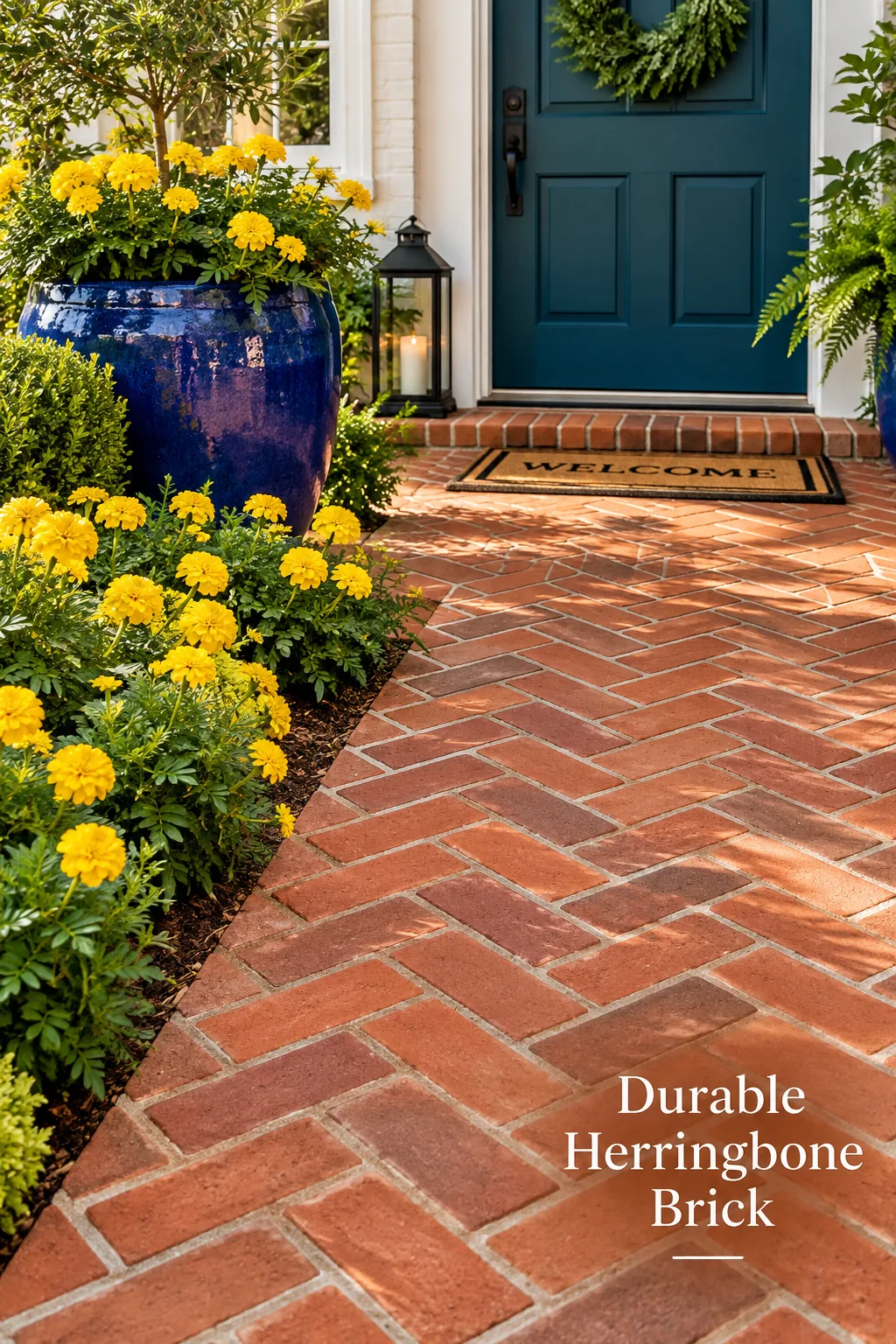
A herringbone pattern creates an incredibly dynamic, textured surface.
The interlocking zigzag design is actually the strongest way to lay brick pavers. The stones push against each other when weight is applied, meaning they will not shift or rut over the years. It takes a bit more patience to get the angles right, but the durability is unmatched.
10. Oversized Minimalist Slabs
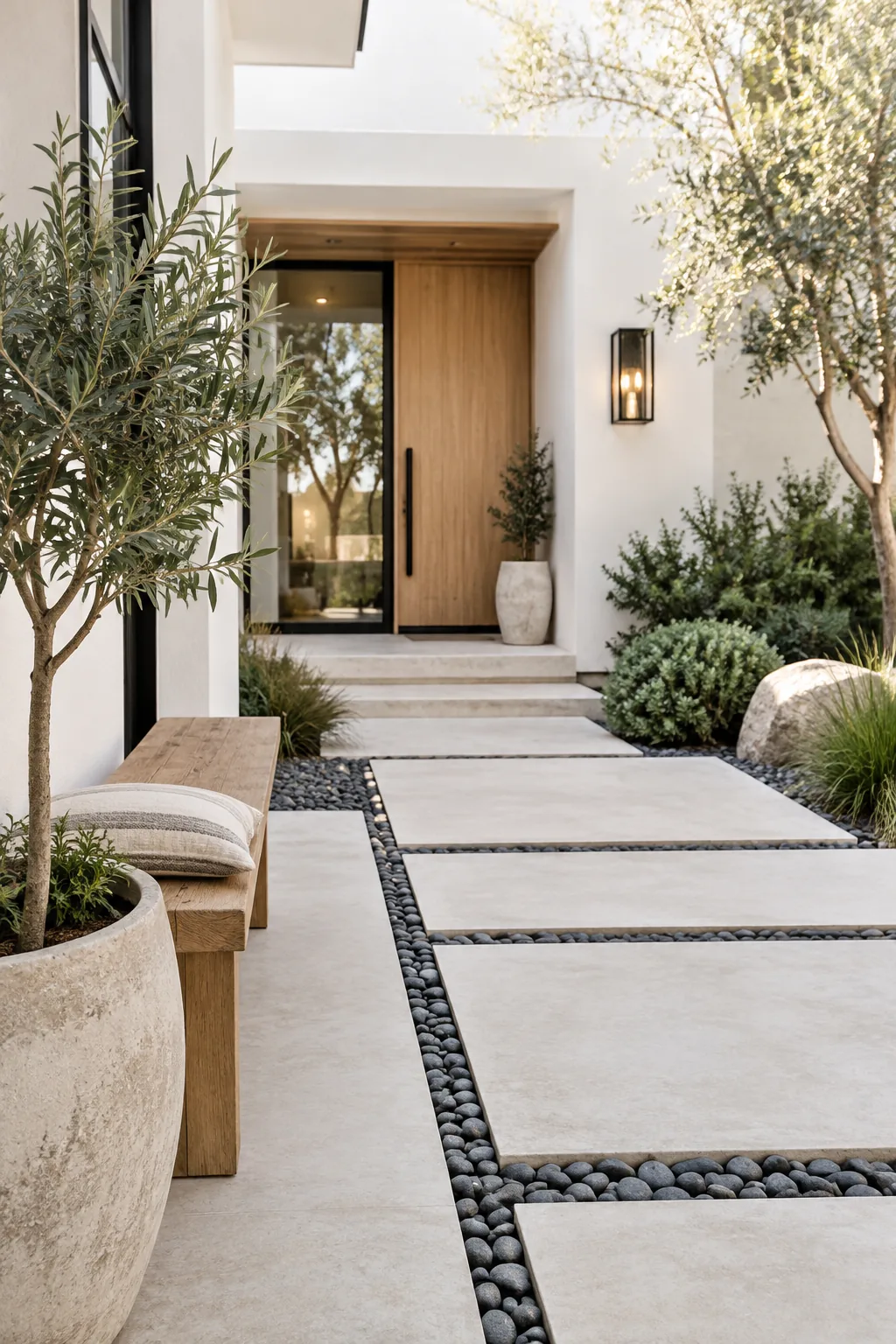
Using oversized slabs works because it minimizes the number of visible joints.
Huge architectural pavers give your front yard a sleek, minimalist vibe that feels very current. You spend less time sweeping sand into cracks and more time enjoying the clean aesthetic. Surrounding these massive stones with dark river rock highlights their geometric shape perfectly.
11. Seamless Hidden Repairs
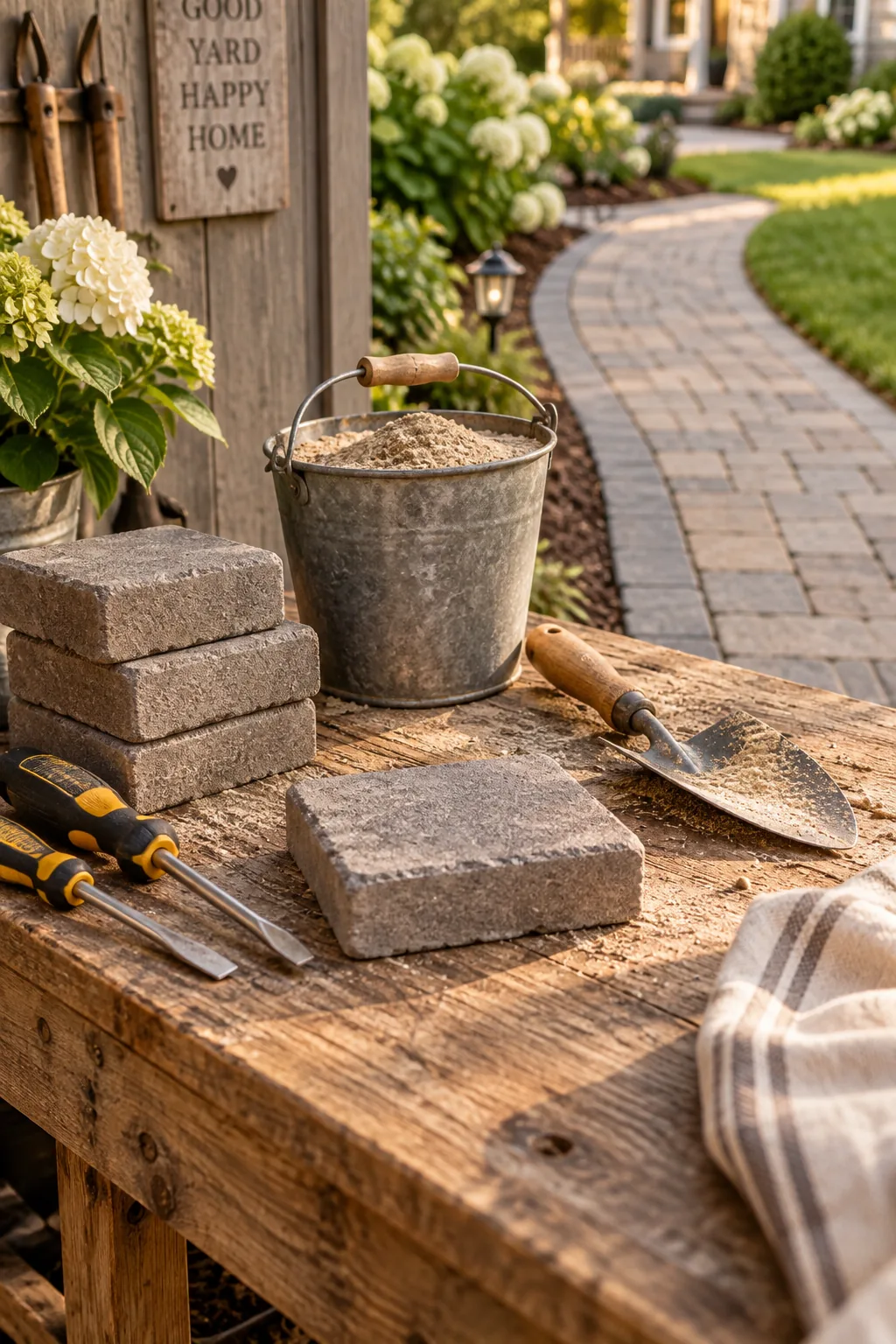
I always keep a few extra stones from every project stacked behind my shed. If a heavy delivery truck ever cracks a driveway paver, I have an exact color match ready to swap in. You can lift out a damaged stone with two flathead screwdrivers and drop the replacement right into the existing sand bed. It takes five minutes and keeps the entire approach to your house looking flawless. Nobody will ever know a repair was even made.
12. Eco-Friendly Permeable Paths
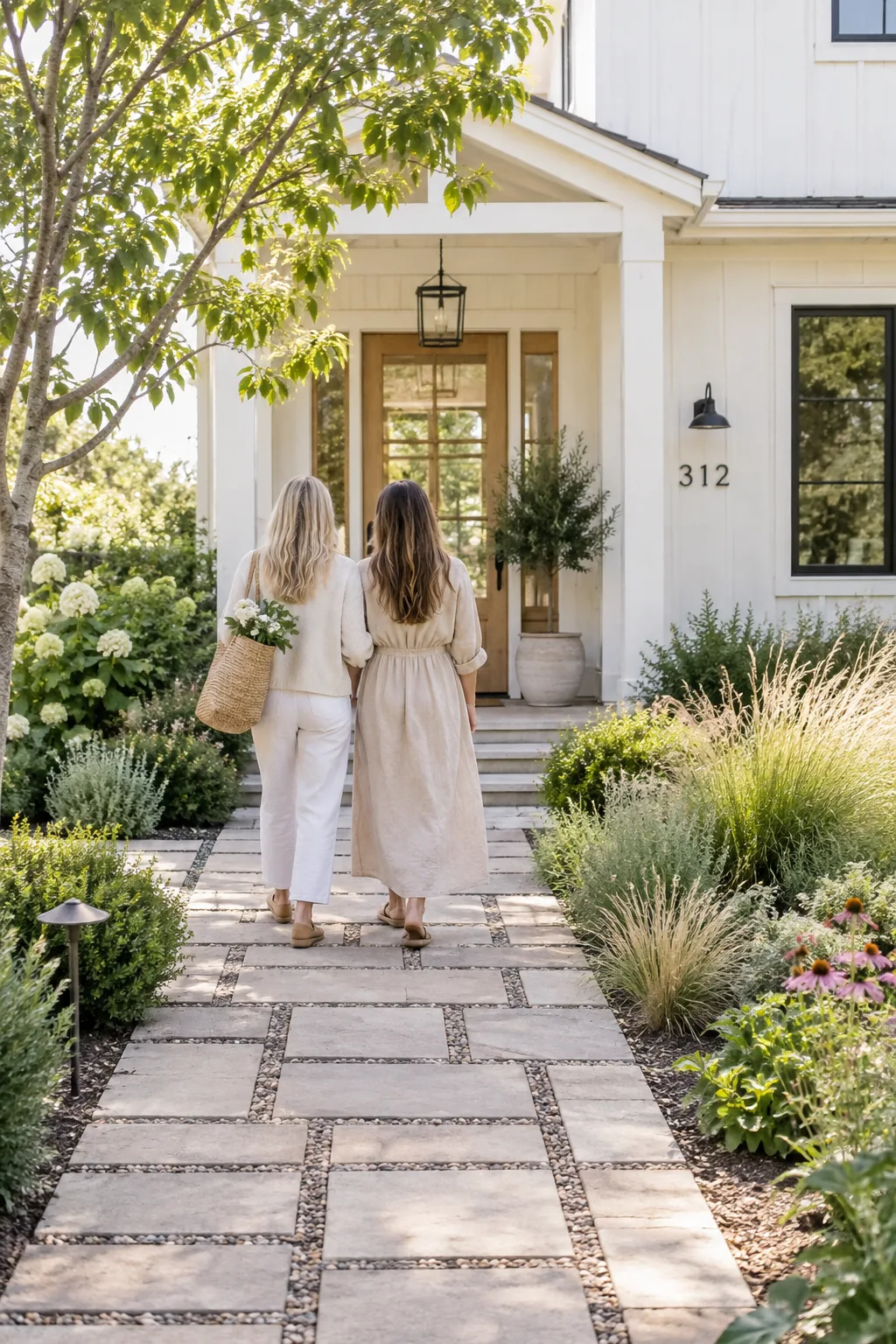
A standard walkway should be at least forty-eight inches wide so two people can walk side by side. If you use permeable pavers, you also allow rainwater to filter directly back into the ground instead of overwhelming the storm drains. The tiny gaps between these specific stones are filled with crushed stone rather than sand to let the water flow freely.
Your local municipality might even offer a rebate for installing them.
Why it works: It solves pooling water issues near the front steps while keeping your shoes completely mud-free.