Cozy Gray Bedroom Styling: The Texture & Tone Checklist
You will be able to select the right gray paint, lighting, and textiles to style a perfectly balanced, cozy bedroom. Master the exact paint LRVs, lighting temperatures, and fabric layers you need with this comprehensive Gray Room Texture & Tone Checklist.
The Secret to Cozy Gray Walls
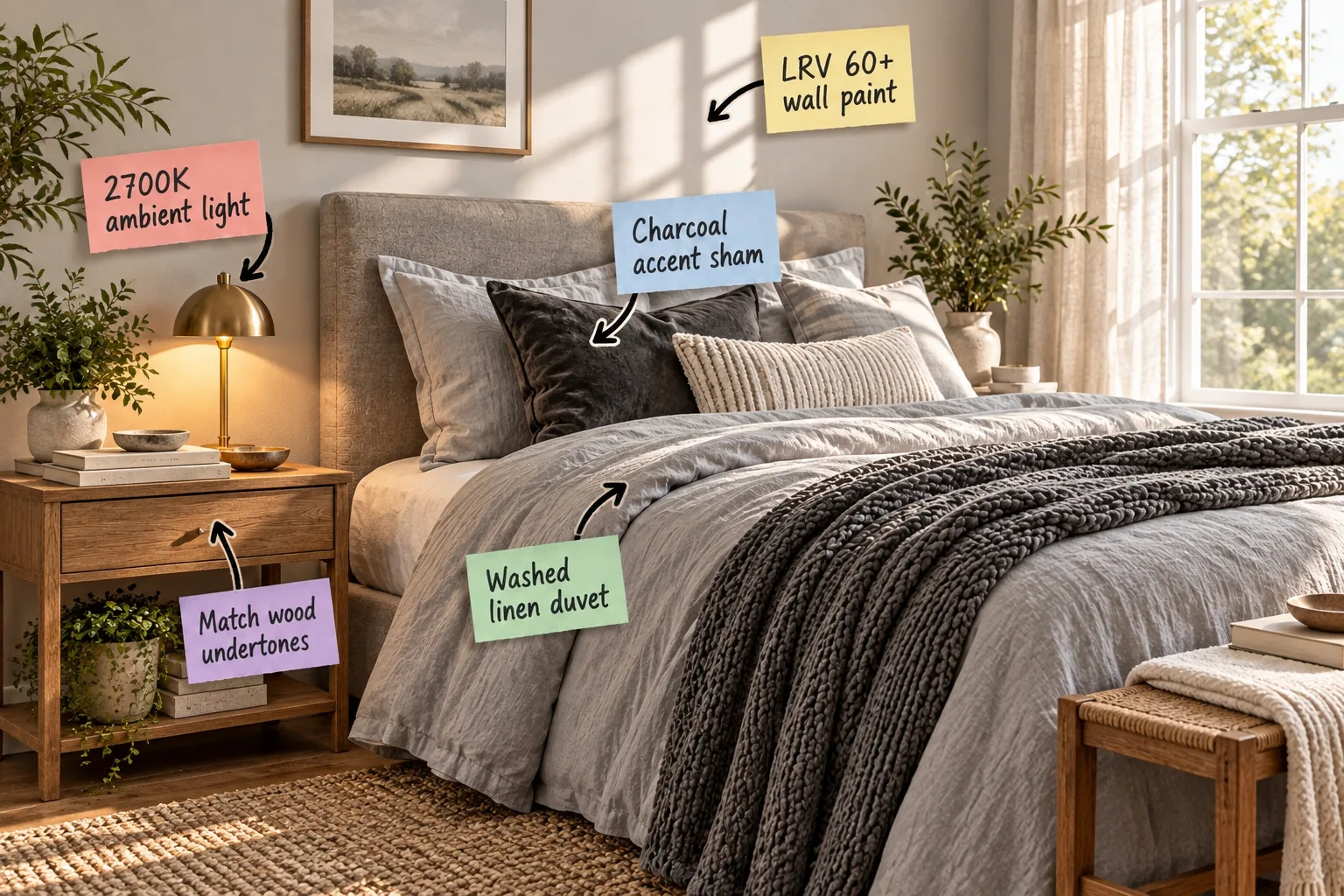
Choosing the perfect gray is notoriously tricky, but selecting an LRV 60+ wall paint ensures your walls bounce enough daylight around the room to keep it feeling airy. In my own Denver home, switching to a high-LRV warm gray instantly cured a bedroom that previously felt like a dreary cave.
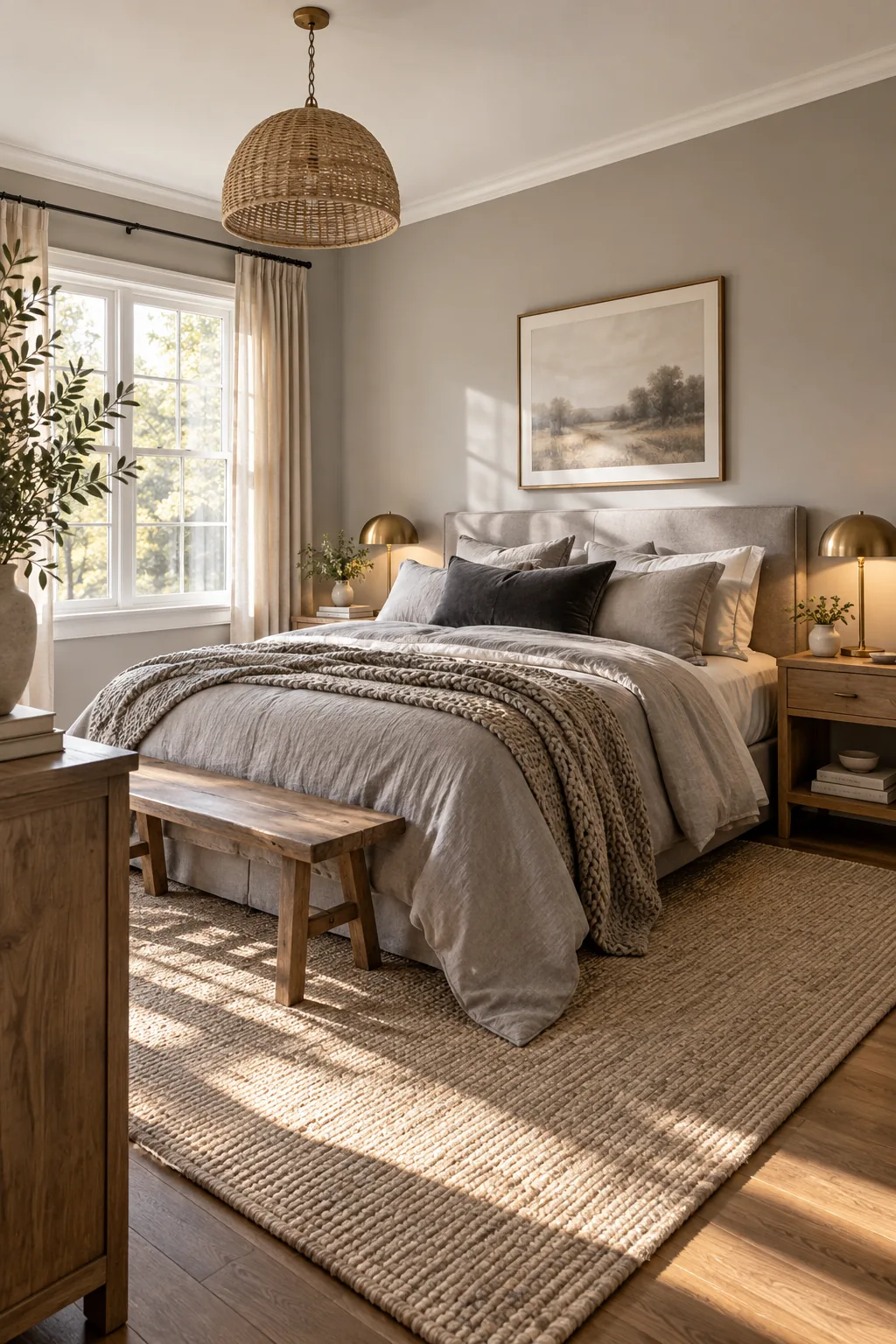
Before you finalize your paint order, it is absolutely crucial to understand how your room’s natural light interacts with these subtle pigments throughout the day.
Understanding Light Reflectance Value
Light Reflectance Value measures the percentage of light a paint color reflects back into the room, on a scale from zero to one hundred. Selecting a value above sixty guarantees that your gray walls will illuminate the space rather than absorbing your precious natural daylight.
Evaluating Light and Orientation
The direction your bedroom windows face dramatically alters how any gray paint reads from morning until evening. Understanding this relationship allows you to select an undertone that perfectly compensates for your specific natural light conditions.
| Window Direction | Light Quality | Gray Appearance | Ideal Undertone |
|---|---|---|---|
| North | Cool and bluish | Flat and chilly | Yellow or brown |
| South | Warm and golden | Bright and glowing | Cool or neutral |
| East | Bright morning | Shifts significantly | Warm greige |
| West | Shadowy morning | Warm late day | Balanced neutral |
By matching your paint’s undertone to your room’s exposure, you guarantee a consistent, welcoming atmosphere regardless of the time of day.
Dialing in the Ambient Glow
Once the sun goes down, your artificial lighting must take over the job of warming up the space, which is why 2700K ambient light is strictly required. These specific bulbs provide a warm, yellowish glow that beautifully counteracts the naturally cool shadows that gather in gray rooms.
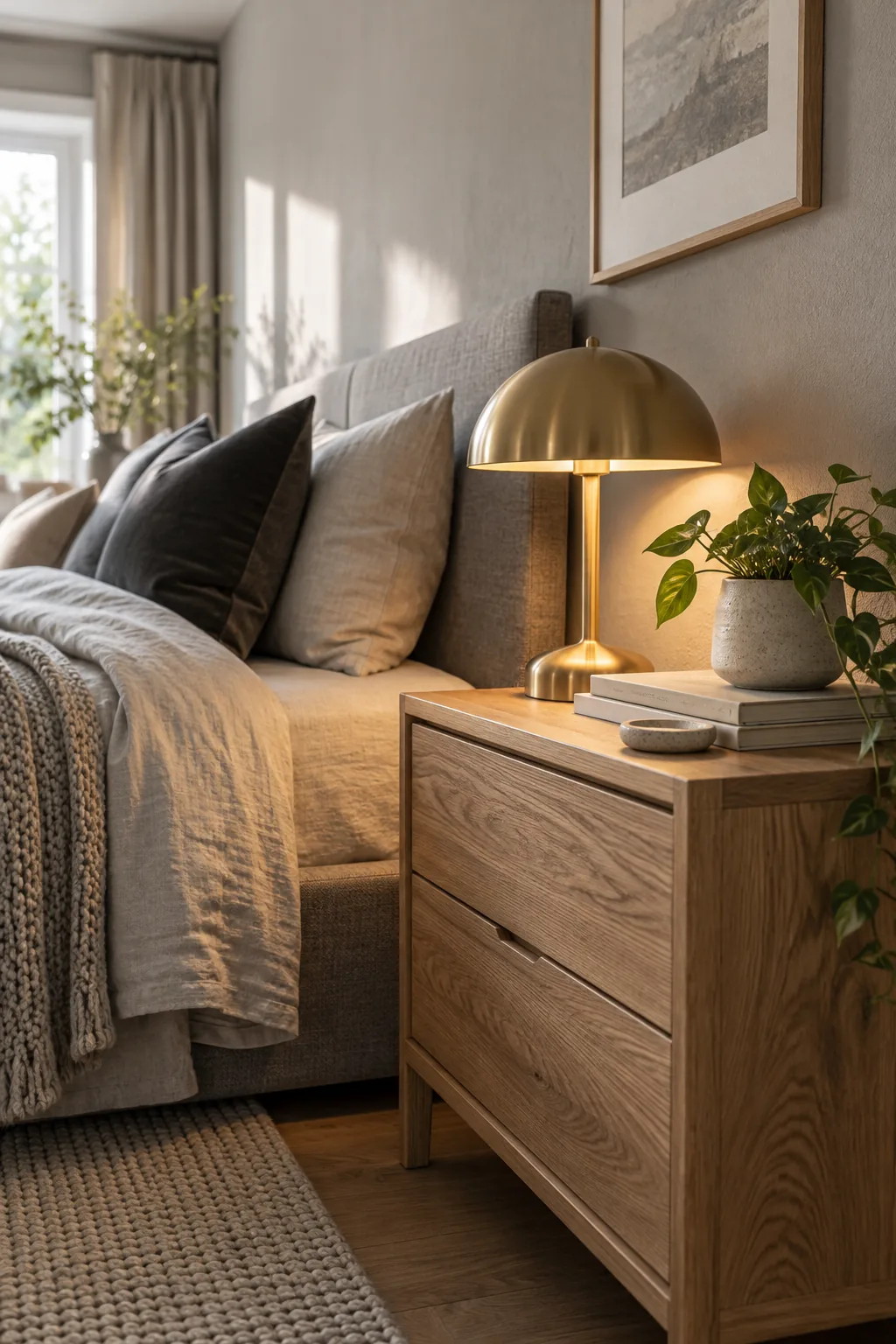
Placing these warm light sources at the correct height is the next critical step in building a genuinely cozy evening sanctuary.
Selecting the Right Bulb Wattage
While color temperature dictates the warmth of the light, the wattage determines the intensity of the glow cast against your gray walls. Opting for lower wattage bulbs in your bedside lamps ensures the light remains soft and relaxing rather than harsh and clinical.
Layering Your Bedroom Illumination
Relying entirely on a single overhead fixture flattens the room’s textures and makes gray walls look stark and uninviting. You must build a tiered lighting strategy to create overlapping pockets of warmth throughout the space.
- Install dimmable overhead fixtures to provide a soft baseline of general illumination.
- Place articulated reading lamps on your nightstands to create focused, warm pools of light near the bed.
- Add a floor lamp in a dark corner to cast an ambient glow upward against the gray walls.
This staggered approach entirely eliminates harsh shadows and ensures your gray tones remain rich and dimensional long after dark.
Grounding Gray with Natural Wood
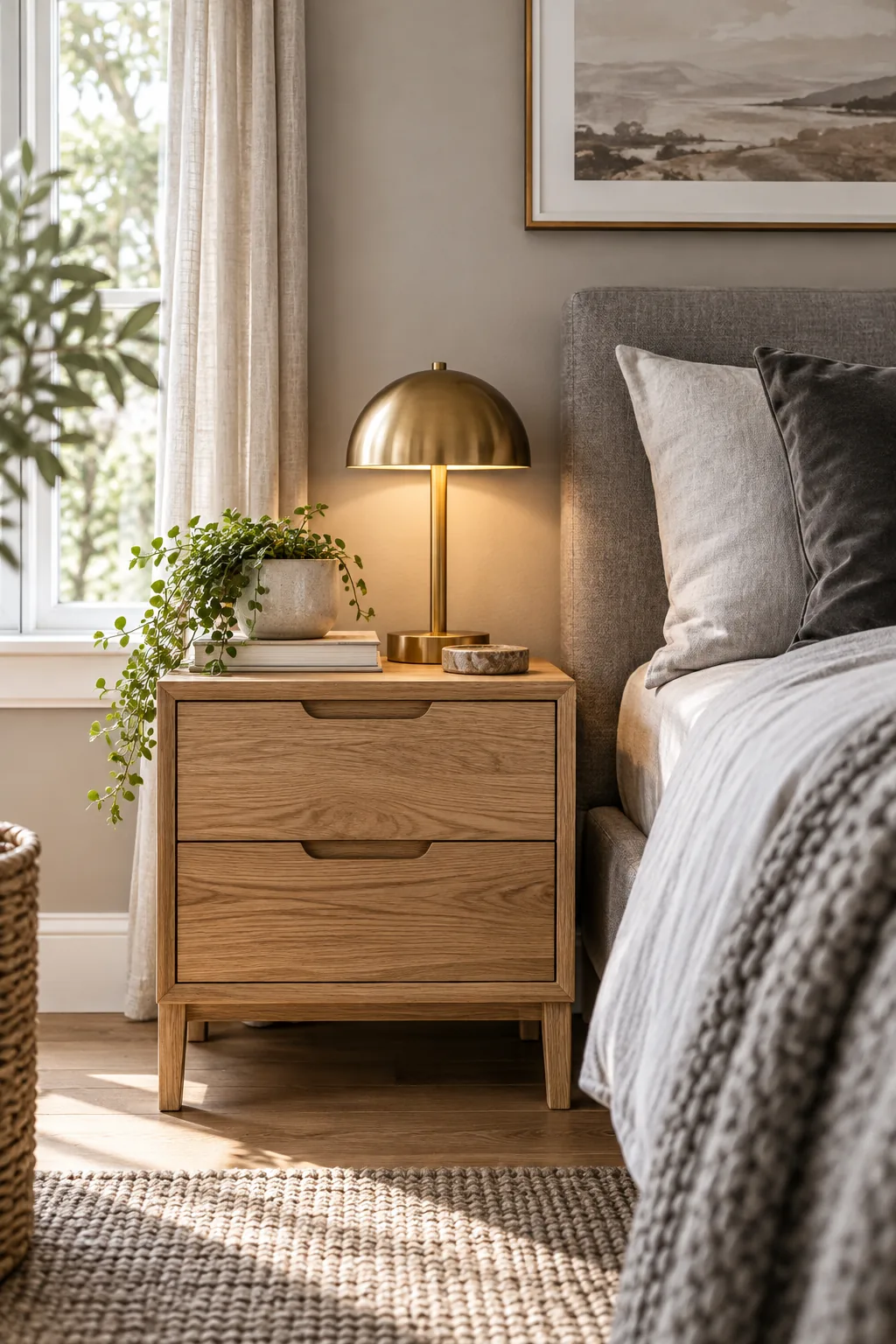
A monochrome space desperately needs organic elements to bring it to life, so you must match wood undertones to your chosen paint to create a cohesive, grounding effect. Pairing a warm oak nightstand with your warm gray walls prevents the room from feeling like a sterile showroom.
The visible grain in natural wood introduces a subtle, organic pattern that effortlessly breaks up the flat expanse of painted drywall.
Identifying Wood Undertones
Determining the underlying hue of your wood furniture is essential for creating a harmonious pairing with your gray walls. Look closely at the grain in natural daylight to spot the subtle yellow, orange, or red tones that define the wood’s inherent warmth.
Balancing Secondary Wood Finishes
While your primary wood pieces should share a similar warmth, introducing a slightly darker accent wood can add necessary architectural weight to the room.
This deliberate variation keeps the eye moving around the room and prevents your foundational furniture from looking like a predictable, matched catalog set.
Layering the Primary Bedding
The structural shell is complete, so we move to the soft layers, where a washed linen duvet introduces essential tactile texture. This highly textured fabric catches the ambient light beautifully, preventing a solid gray bed from looking flat or institutional.
The natural, relaxed wrinkles of high-quality linen effortlessly communicate comfort and practically invite you to sink into the bed at the end of the day.
Selecting the Ideal Bedding Weight
The physical loft of your duvet insert dictates exactly how luxurious your linen cover will look when draped across the mattress. Opting for an all-season insert with a baffle-box construction ensures the gray linen remains plump and visually substantial year-round.
Creating Contrast with Accent Pillows
To break up the expanse of lighter gray fabrics, introducing a dark charcoal accent sham provides immediate visual depth and a striking focal point. I recently used a deep charcoal velvet in a client’s mountain retreat, and it instantly anchored the entire bedscape with a sophisticated weight.
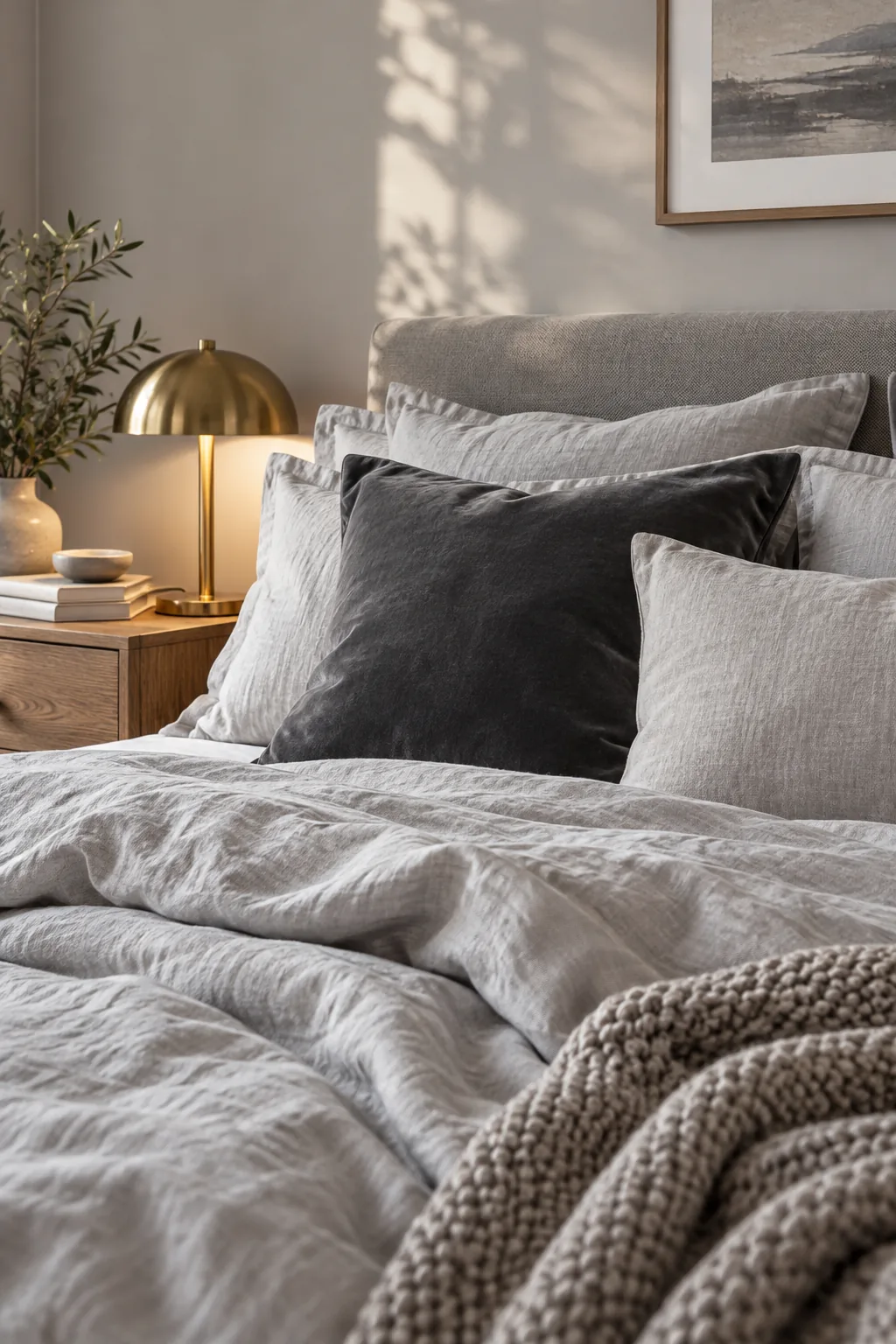
Mixing the matte finish of washed linen with the subtle sheen of dark velvet creates a highly sophisticated interplay of light across the bed.
Arranging Your Pillow Formation
The structural arrangement of your pillows is just as important as their color, as it dictates the visual balance of the entire bed. Stacking standard sleeping pillows flat against the mattress provides a solid, horizontal base for standing your textured accent shams upright in front.
Incorporating Heavy Woven Throws
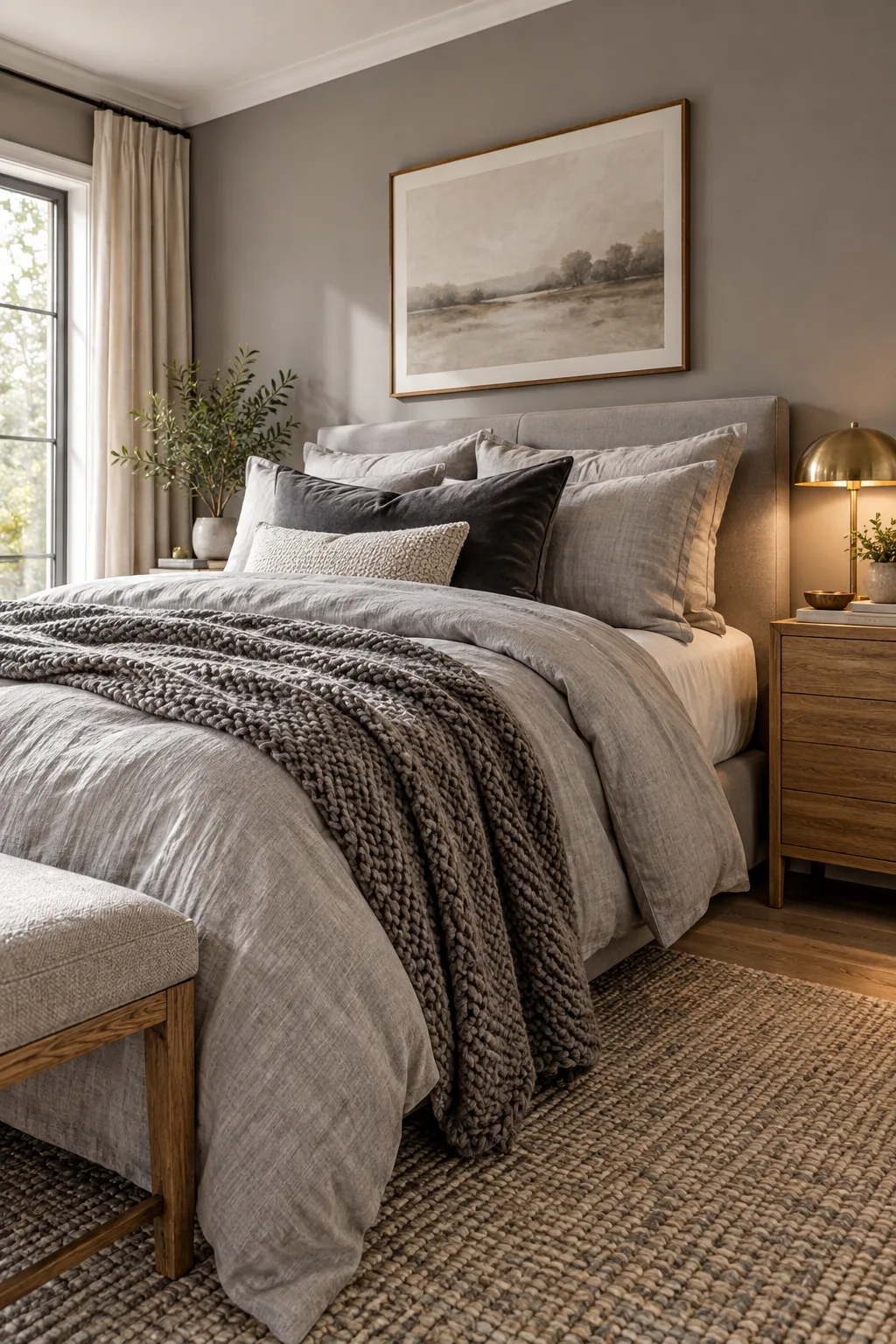
Adding a chunky knit blanket at the foot of the bed introduces a distinct, oversized pattern that significantly enhances the cozy, lived-in atmosphere. The heavy physical weight of the thick yarn drapes beautifully over the corners, softening the rigid rectangular lines of the mattress.
Styling the Chunky Knit Throw
Rather than folding the heavy blanket into a pristine rectangle, casually draping it across the lower third of the bed emphasizes its organic texture. This intentional asymmetry perfectly balances the structured arrangement of your accent pillows at the head of the bed.
Adding Warmth Through Brass Details
Incorporating warm metallic finishes like antique gold or a brass lamp base adds a subtle shine that beautifully offsets matte gray surfaces. In my own bedroom, swapping out brushed nickel hardware for unlacquered brass was the exact final touch that made the gray walls truly glow.
Maintaining Unlacquered Brass Finishes
Living finishes like unlacquered brass will naturally develop a rich patina over time as they react to the oils on your hands and the air in the room. Allowing this natural aging process to occur adds an authentic, vintage character that perfectly complements the relaxed linen bedding.
Understanding Paint Sheen in Gray Rooms
The finish of your paint drastically alters how the gray color reads, making sheen selection just as critical as the undertone itself. Opting for a flat or matte finish absorbs light gently, creating a velvety backdrop that minimizes drywall imperfections and enhances the cozy atmosphere.
Managing Window Treatments for Light Control
Your window treatments play a massive role in regulating the natural light that hits your carefully chosen gray walls throughout the day. Installing layered linen drapery allows you to filter harsh afternoon sunlight while maintaining a soft, diffused glow that keeps the room feeling warm.
Grounding the Space with an Area Rug
A large area rug is essential for anchoring the bed and providing a soft, warm surface for your feet on cold mornings. Selecting a rug with subtle warm beige or taupe threads beautifully bridges the gap between your natural wood furniture and the gray walls.
Sizing Your Bedroom Area Rug
An undersized rug visually shrinks the room and makes the bed appear disproportionately massive against the gray backdrop. Ensure your rug extends at least two feet beyond the sides and foot of the bed to create a generously proportioned foundation for the entire space.
Incorporating Subtle Patterns
While solid blocks of gray and wood form a restful foundation, introducing a very subtle pattern prevents the room from feeling completely static. A delicate pinstripe on your sheets or a muted geometric weave in your throw blanket adds necessary visual interest without overwhelming the serene palette.
Selecting the Perfect Nightstand Height
The physical scale of your wood furniture must align perfectly with your mattress to maintain the room’s carefully constructed visual balance. Selecting nightstands that sit exactly level with the top of your mattress ensures your warm ambient lighting casts an even, flattering glow across the bed.
Curating Your Bedside Accessories
Clutter instantly destroys the serene, cozy atmosphere you have worked so hard to build with your layered gray textures. Limiting your nightstand accessories to a single brass lamp, a small stack of books, and a textured ceramic catchall maintains a clean, intentionally styled appearance.
Your Gray Room Texture & Tone Checklist
Before you purchase your final decor pieces, run your comprehensive design plan through this quick evaluation to ensure you have the right balance of warmth and contrast.
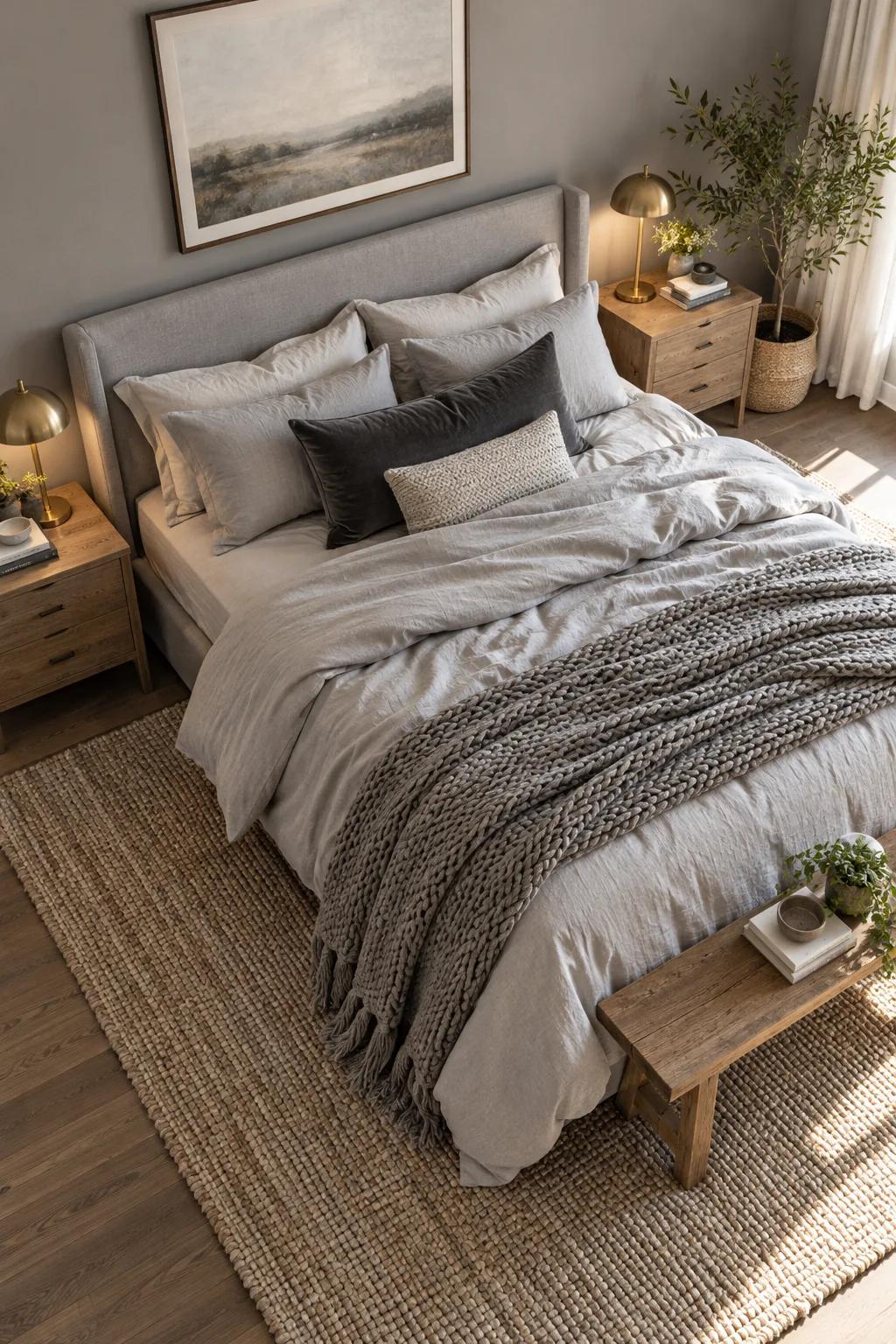
Use this final audit to rigorously confirm that your foundational shell and soft layered textiles are working together seamlessly to create a cozy sanctuary.
More Gray Bedroom Styling Ideas
Explore how different shades and materials can completely change the mood of a gray bedroom.
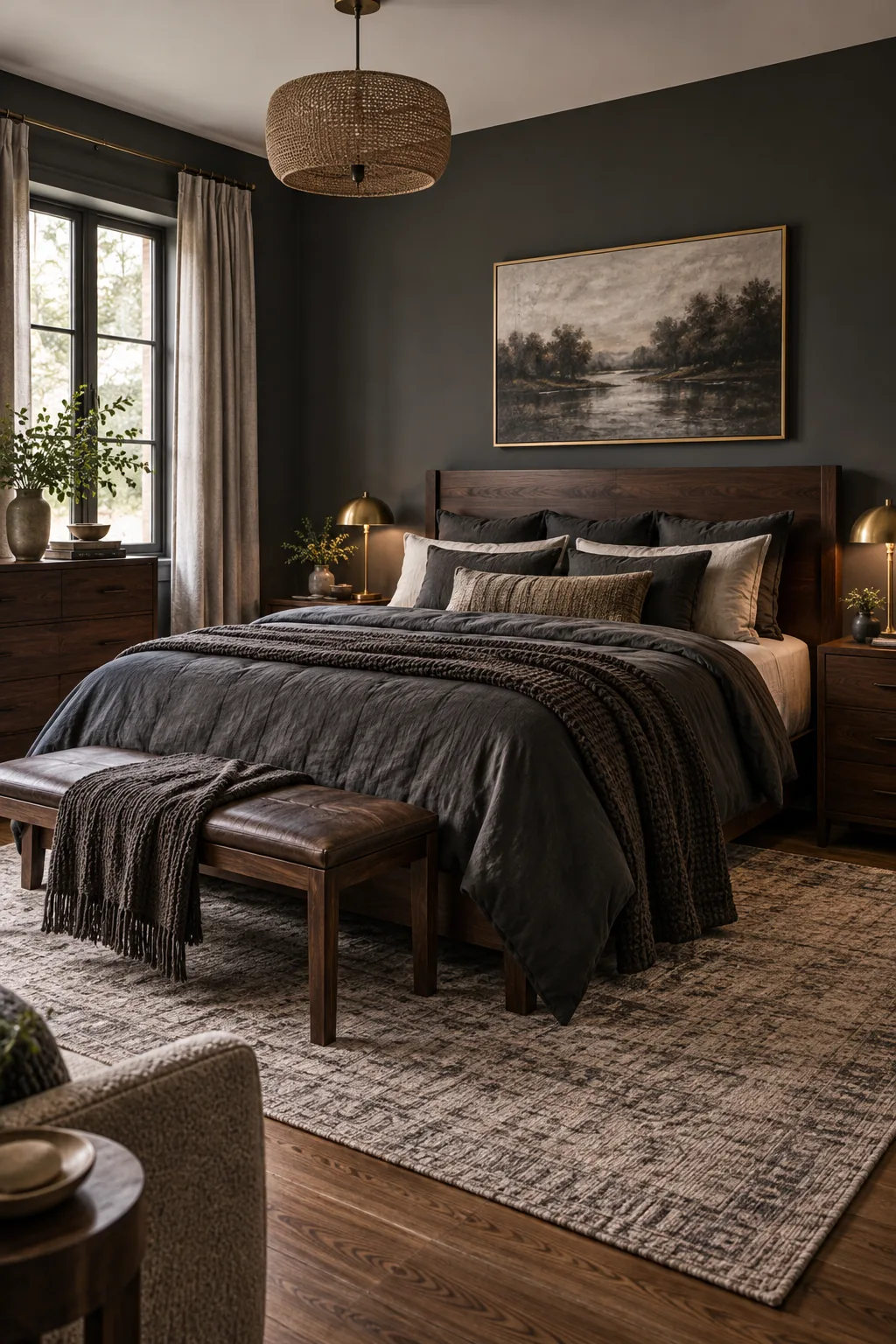
Moody Charcoal & Walnut: Deep charcoal walls paired with rich walnut furniture create an intimate, sophisticated retreat perfect for evening relaxation.
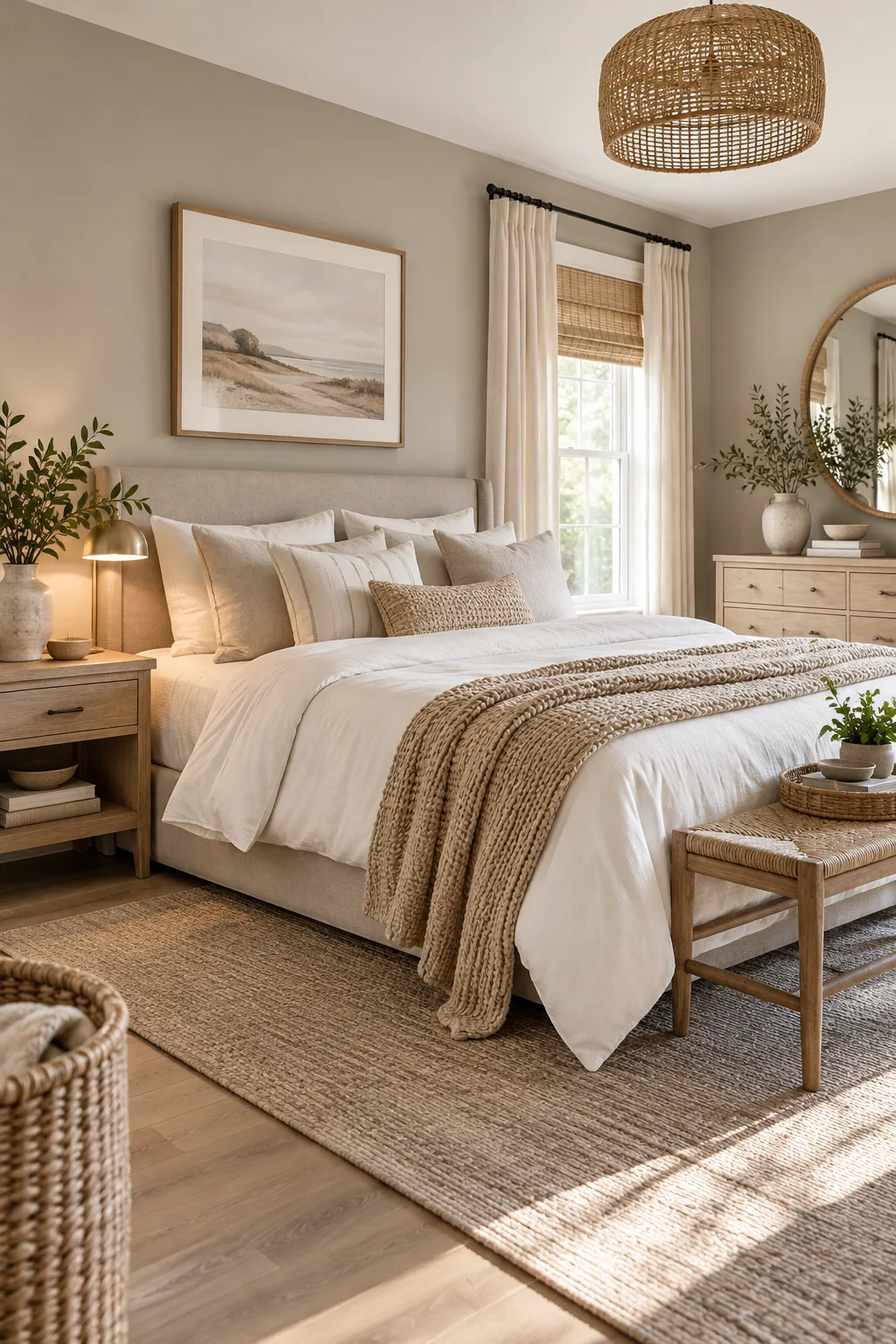
Greige & Whitewashed Oak: A warmer greige base mixed with whitewashed oak and crisp white linens offers a bright, airy coastal interpretation.
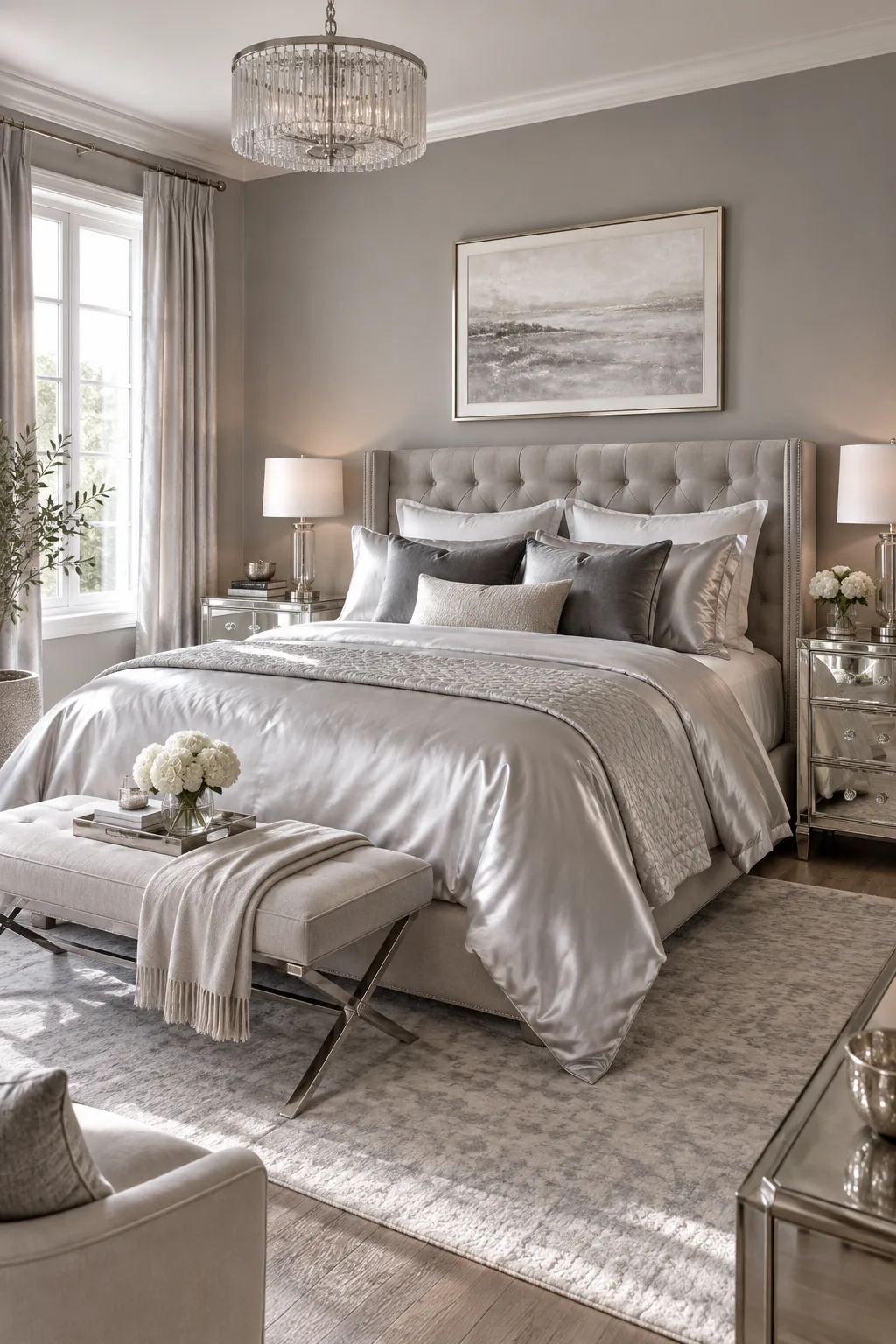
Silver & Polished Nickel: Cooler silver tones accented by polished nickel hardware and silk textiles deliver a highly tailored, glamorous aesthetic.