
First-Summer English Garden: A 1.5 X 4 M Border Planting Plan
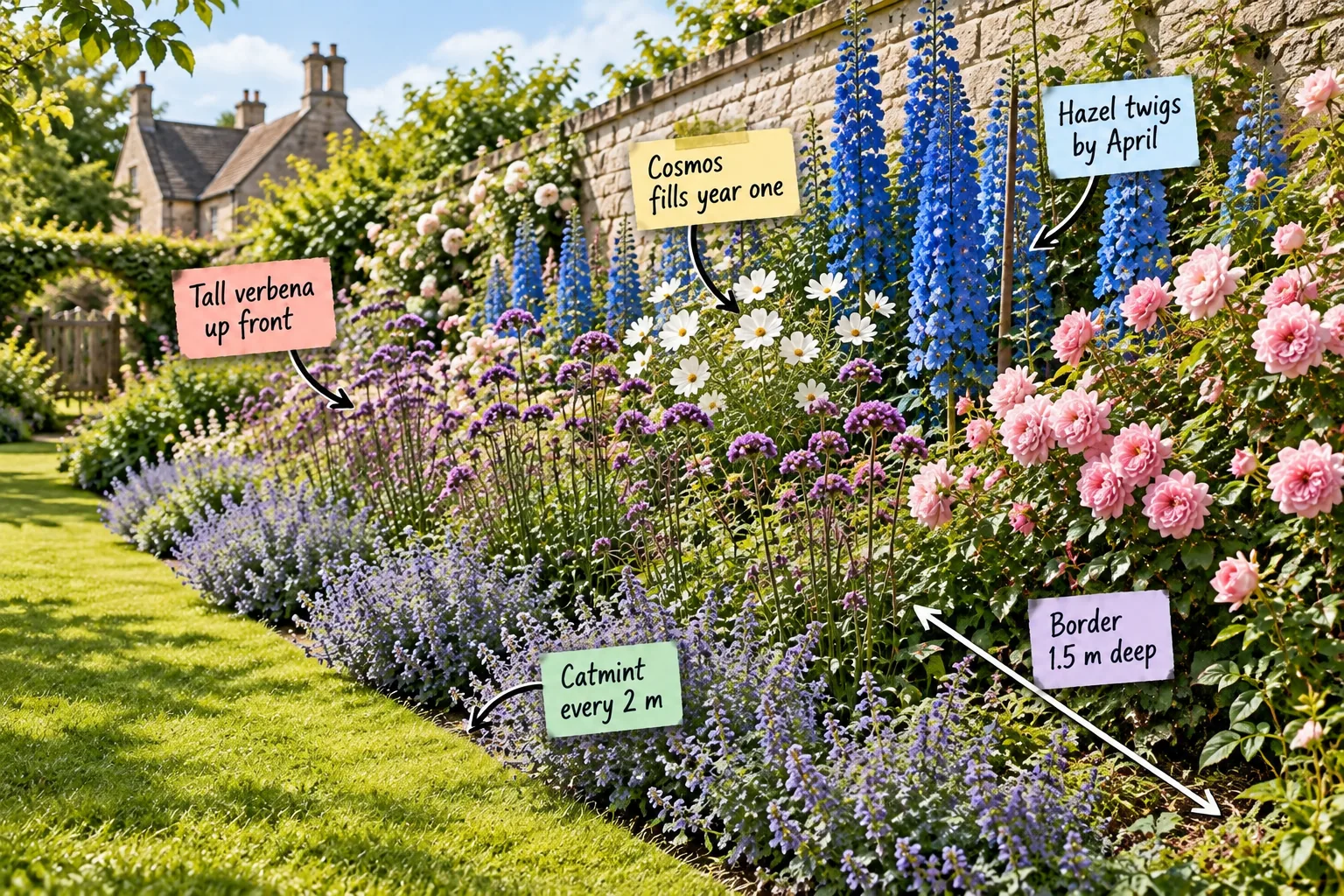
You will be able to mark out, plant, and maintain a fully layered English border that looks established by July using our printable 1.5 x 4 metre planting plan. This complete layout and month-by-month schedule gives you the exact back, middle, and front row quantities to turn a bare lawn into a full, blooming garden in just one season.
Carving Out a 1.5-Metre Depth
A true English border requires enough depth to support distinct back, middle, and front layers without crowding the root zones or restricting airflow. Measure exactly 1.5 metres from your boundary wall to the lawn edge to ensure the back-row delphiniums have ample breathing room.
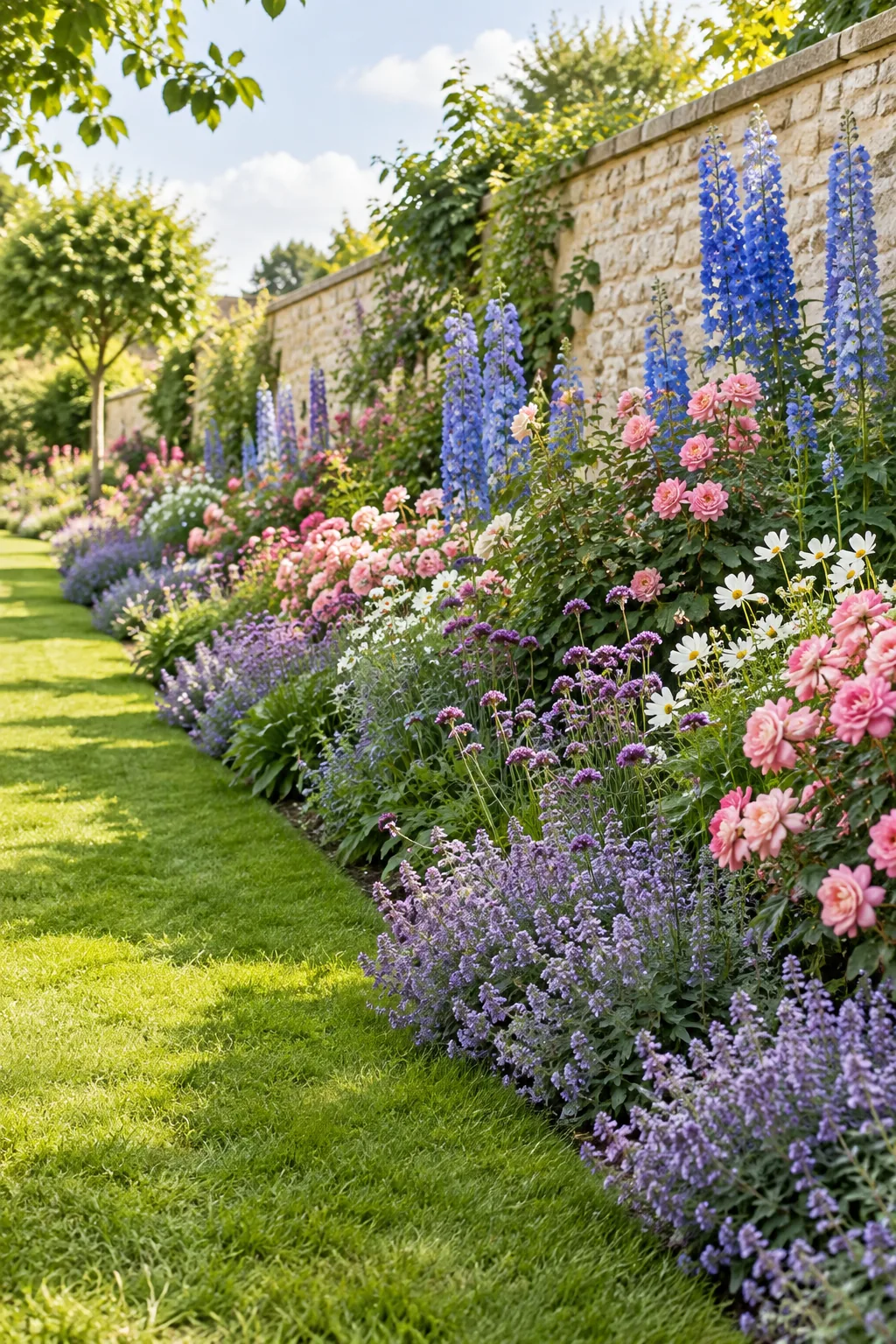
Establishing this generous footprint guarantees the front-row catmint can eventually spill forward without leaving the middle tier cramped. Before you cut the final edge into your lawn, avoid the most common layout traps that limit a new border’s potential and stunt early growth.
Preparing the Soil Foundation
Turning a compacted lawn into a thriving garden bed requires breaking up the dense hardpan beneath the grass layer before any planting begins. Double-digging the entire 1.5 by 4 metre footprint ensures the delicate new perennial roots can penetrate to a depth of at least 30 centimetres to find essential moisture during dry summer spells.
Anchoring the Back with Delphiniums
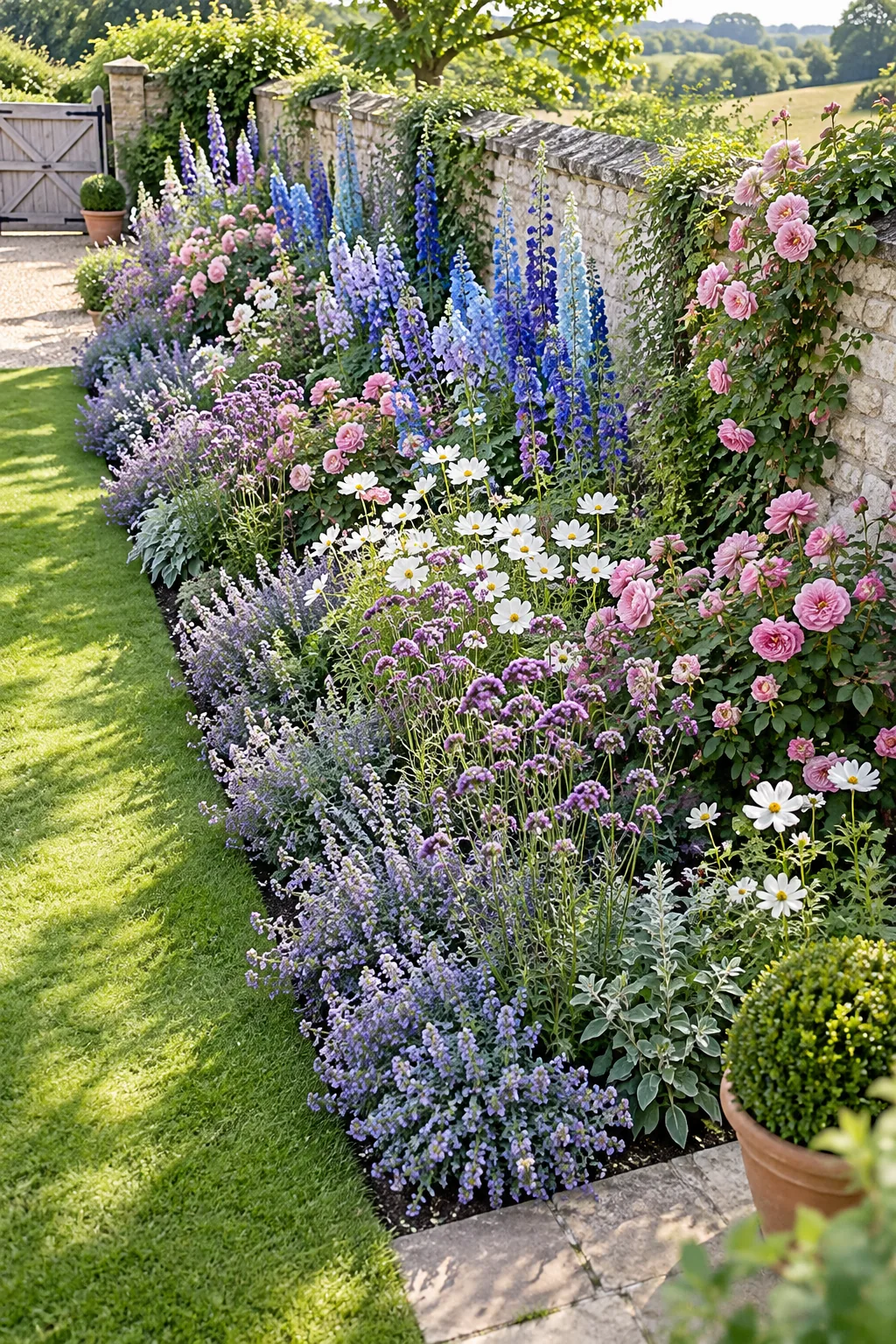
The back row sets the scale for the entire display, and I learned early on in my own Austin garden that you need dramatic height against a hard boundary. Plant delphiniums 60 centimetres apart directly against the wall to provide a solid, towering backdrop for softer shrubs.
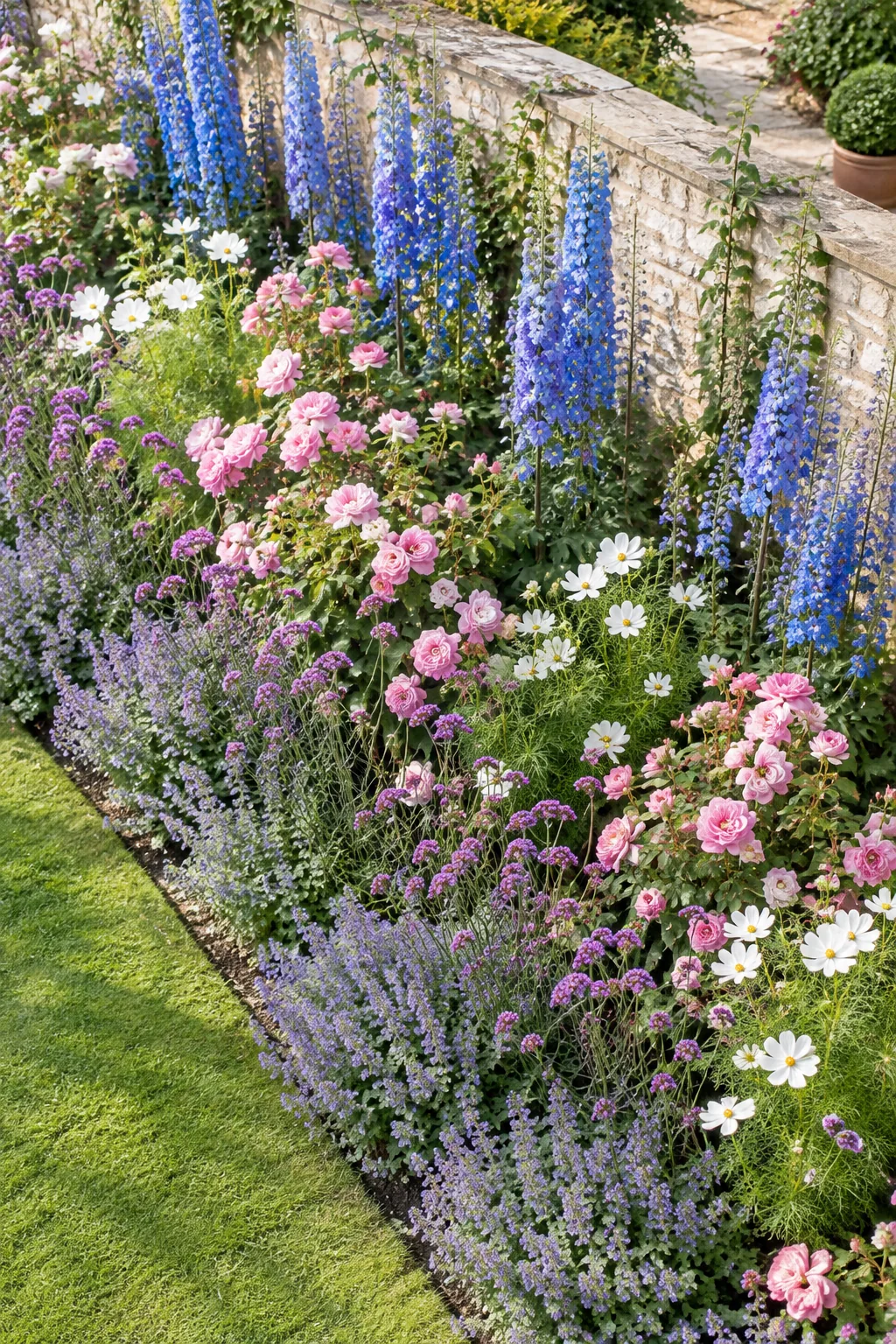
Getting these tall, heavy-feeding perennials established quickly requires careful handling during the initial spring planting phase. You must protect their fragile crowns from rot while giving the roots enough loose soil to expand rapidly before the summer heat arrives.
- Dig a planting hole twice as wide as the nursery pot to thoroughly loosen the compacted soil near the masonry wall.
- Position the plant crown exactly level with the surrounding soil surface to prevent the hollow stems from rotting in wet weather.
- Backfill the hole gently and water the base deeply to settle the roots before moving forward to the middle shrub layer.
Placing Hazel Supports by April
Tall perennials will inevitably snap in heavy summer winds if left unsupported, a heartbreaking lesson I learned when a sudden storm flattened my best blooms. Push twiggy hazel pea-sticks deep into the soil around the delphinium crowns in early April while the shoots are still short.
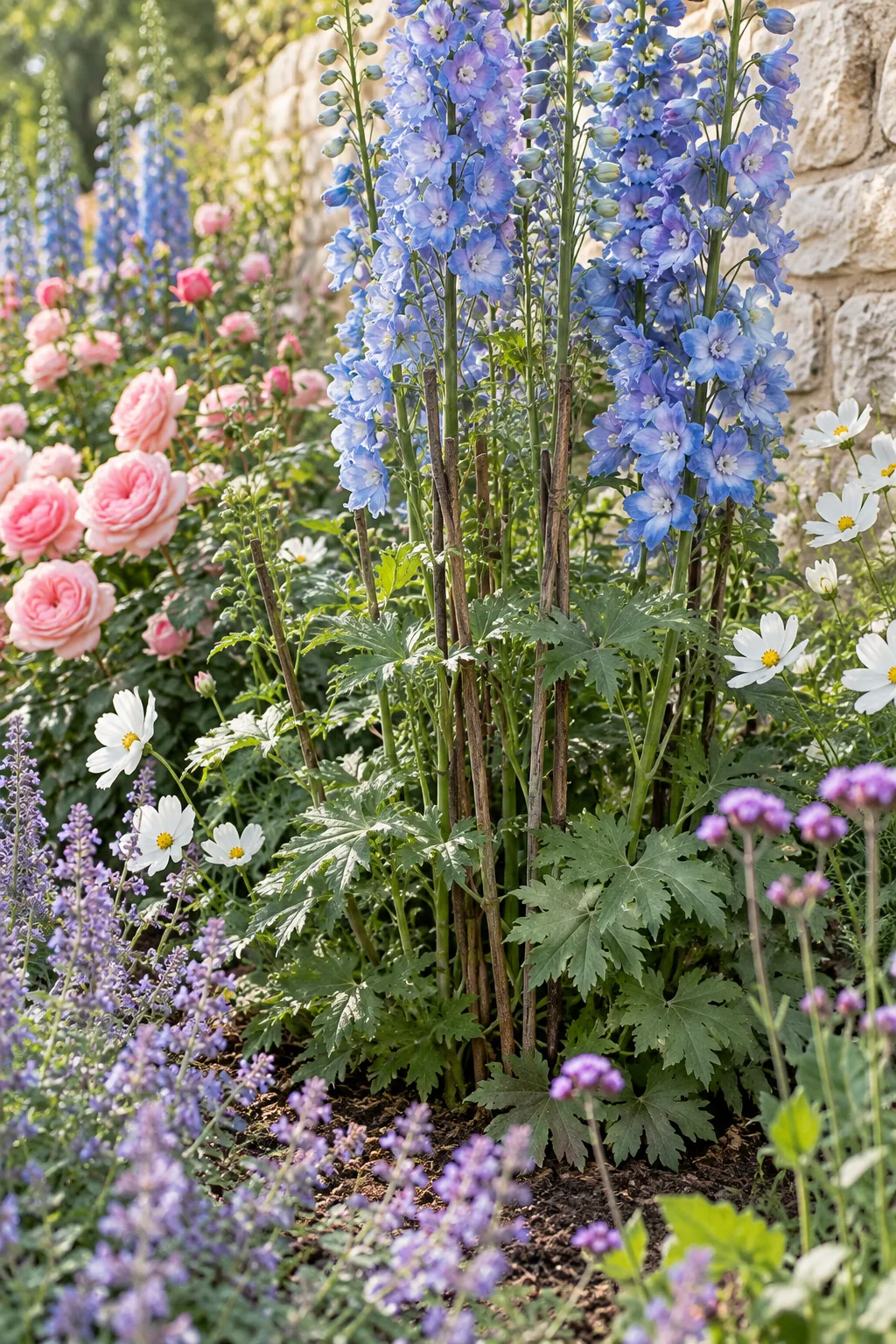
By July, the maturing green foliage will completely hide the brown wood while the stems remain perfectly upright. Getting these natural supports in early prevents you from having to awkwardly tie up bent, damaged stems later in the busy growing season.
Layering Shrub Roses in the Middle
Shrub roses provide the permanent woody structure and continuous vibrant colour that anchor the middle of the bed throughout the hottest months. Space them roughly 80 centimetres apart, staggering them slightly forward from the delphinium gaps to create a dense, interlocking wall of pink blooms.
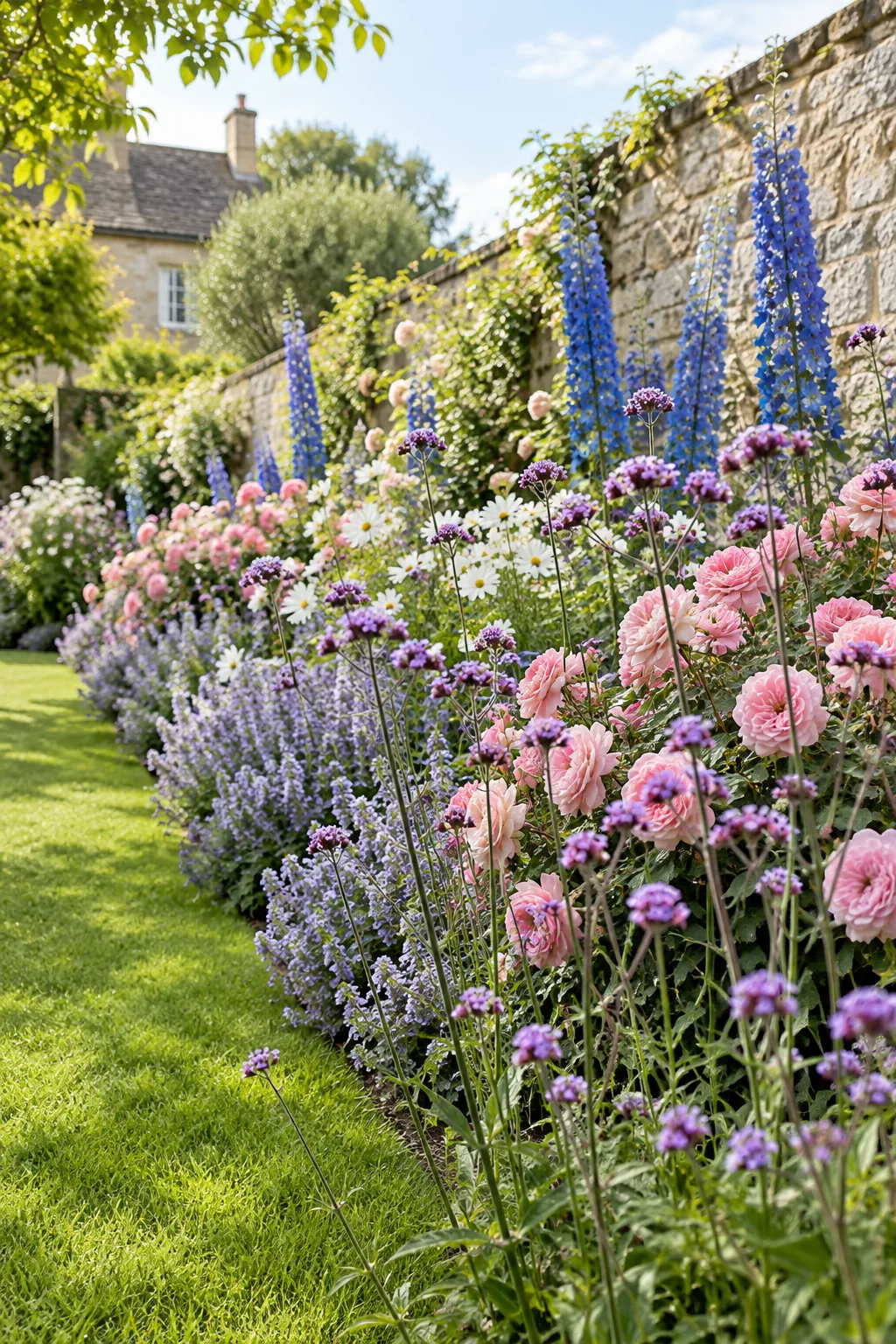
Choosing the right companion spacing for your middle tier is absolutely critical for long-term health. This precise arrangement ensures the roses have enough ambient airflow to prevent fungal disease while still looking incredibly full and lush by mid-summer.
| Plant Layer | Spacing Target | Placement Rule |
|---|---|---|
| Back (Delphiniums) | 60 cm apart | Directly against the wall |
| Middle (Roses) | 80 cm apart | Staggered between back gaps |
| Front (Verbena) | 50 cm apart | Scattered in the front row |
| Edge (Catmint) | Every 2 metres | Spilling over the lawn |
Selecting the Right Rose Varieties
Not all roses behave well in a mixed, densely planted border; you need compact shrub varieties rather than leggy hybrid teas or massive, unruly climbers. Look for repeat-flowering English roses that naturally form rounded bushes about one metre tall and wide to perfectly fill the middle tier.
Breaking Rules with Verbena Up Front
Traditional borders keep tall plants strictly relegated to the back, but planting Verbena bonariensis in the front row adds incredible modern depth. Its rigid, see-through stems reach 1.2 metres high, creating a stunning purple haze you look right through to see the roses blooming behind.
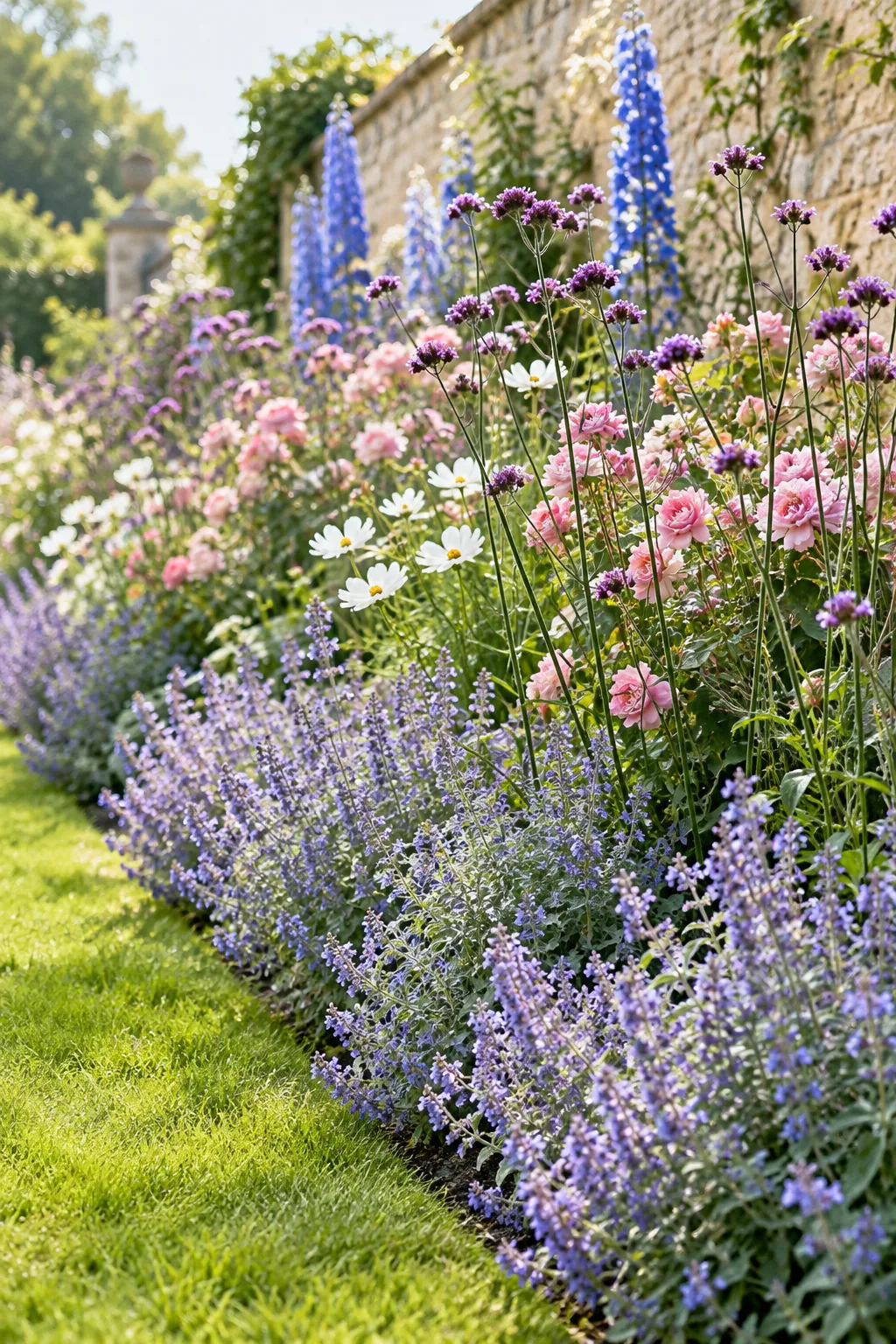
This unexpected burst of height at the front edge draws the eye immediately and challenges traditional staging. Breaking the height rules makes the entire 1.5-metre border feel significantly deeper and much more complex than its actual compact footprint suggests.
Repeating Catmint Every Two Metres
A cohesive garden relies heavily on rhythm, and repeating a signature reliable plant is my absolute favorite trick for tying a long bed together. Plant a generous mound of lavender-blue catmint exactly every two metres along the very front edge to establish a strong visual pulse.
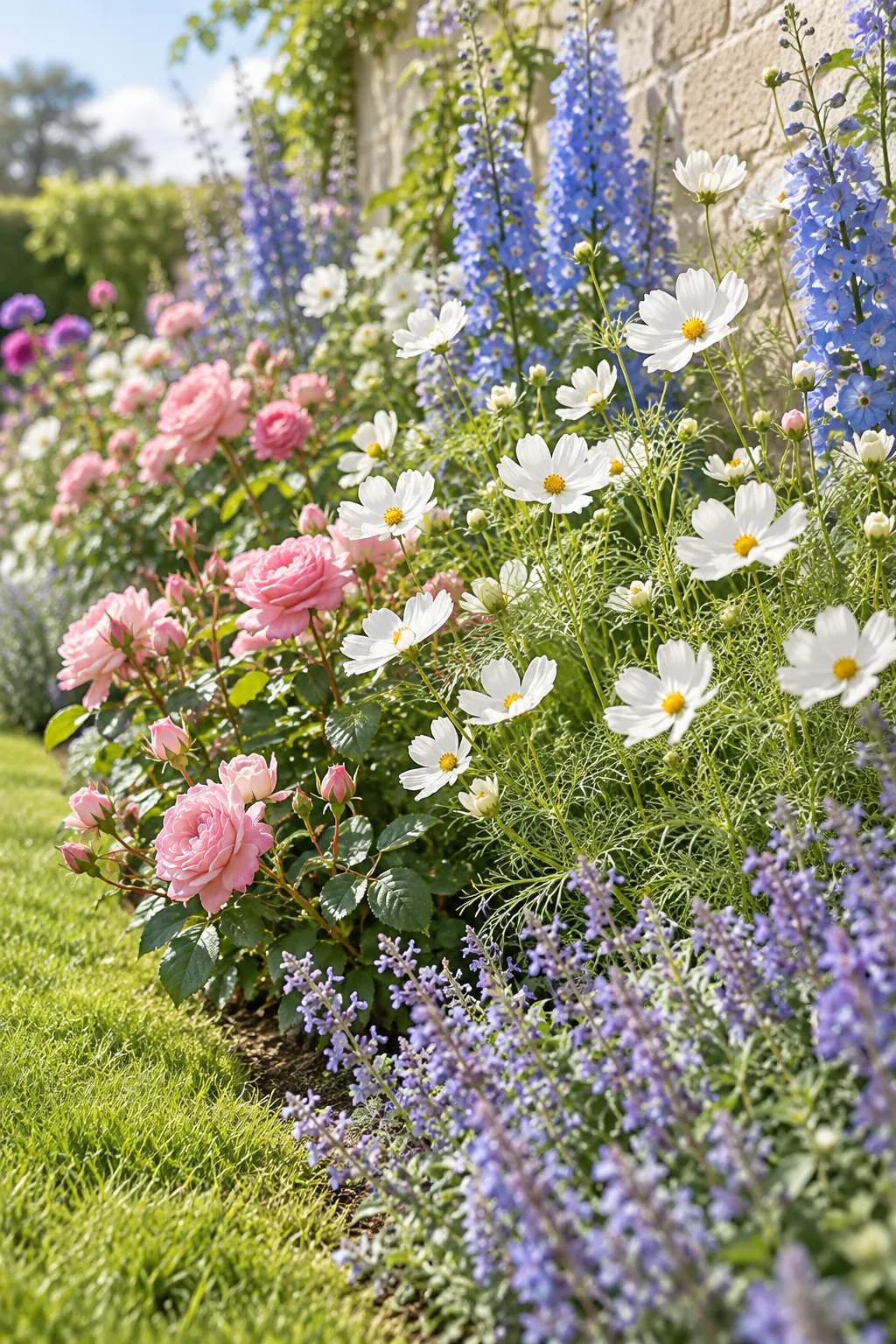
Allowing the soft, textured foliage to physically spill over softens the hard, unnatural line where the dark soil meets the green lawn. This consistent repetition anchors the chaotic blooming layers above, giving the eye a reliable resting place.
Edging the Lawn for a Crisp Finish
A sharp, distinct boundary between the grass and the flowerbed prevents the lawn from creeping into your fresh compost and strangling the delicate front-row plants. Recut the turf edge vertically with a half-moon iron every spring to maintain a clean, professional trench that beautifully frames the sprawling catmint.
Filling First-Year Gaps with Cosmos
Perennials generally take three full years to reach their mature size, leaving bare soil in year one that can look sparse, weedy, and unfinished. Sow airy white cosmos seeds directly into the empty gaps in May to rapidly fill the negative space with bright, cheerful flowers.
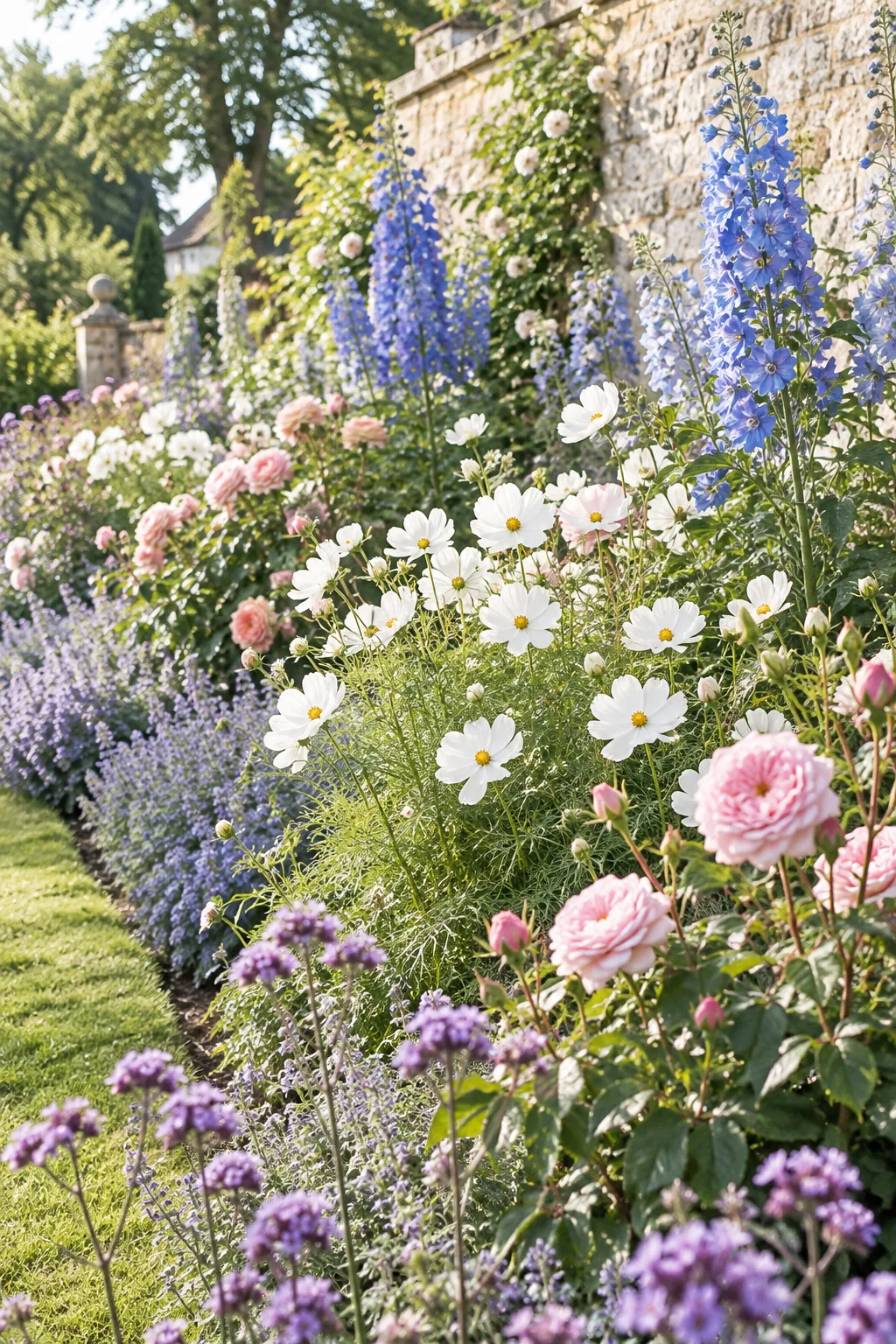
These fast-growing annuals act as a temporary colourful bridge until the permanent herbaceous plants catch up in scale. To get the absolute most volume from your annual fillers, a quick and simple pruning trick makes all the difference.
Watering the Maturing Border
First-year plants completely lack the deep, established root systems needed to survive intense July heat without consistent supplemental irrigation. Lay a dedicated porous soaker hose winding through the middle tier, running it for 45 minutes twice a week to deliver moisture directly to the crucial root zones.
Deadheading for Continuous Colour
Once the border erupts into full bloom, regular weekly maintenance is required to stop the plants from setting seed and shutting down early for the season. Snip off faded rose and cosmos flowers every Sunday morning to redirect the plant’s energy into producing a spectacular second flush.
Feeding for Late-Summer Blooms
Heavy-flowering perennials and hungry shrub roses quickly exhaust the nutrients in the topsoil as they push out their first major flush of July flowers. Scratch a balanced organic granular fertilizer into the soil surface around the base of each plant in mid-summer to fuel their continued growth.
Preparing for the Second Year
While the annual cosmos completely fills the gaps during this critical first summer, your perennial delphiniums and roses will double in size by next spring. Pull out the faded annuals in October and apply a fresh layer of protective mulch to insulate the expanding perennial crowns through the winter.
More English Border Colour Palettes
Once you have the structural layout down, you can adapt the plant choices to fit your favourite colour mood.
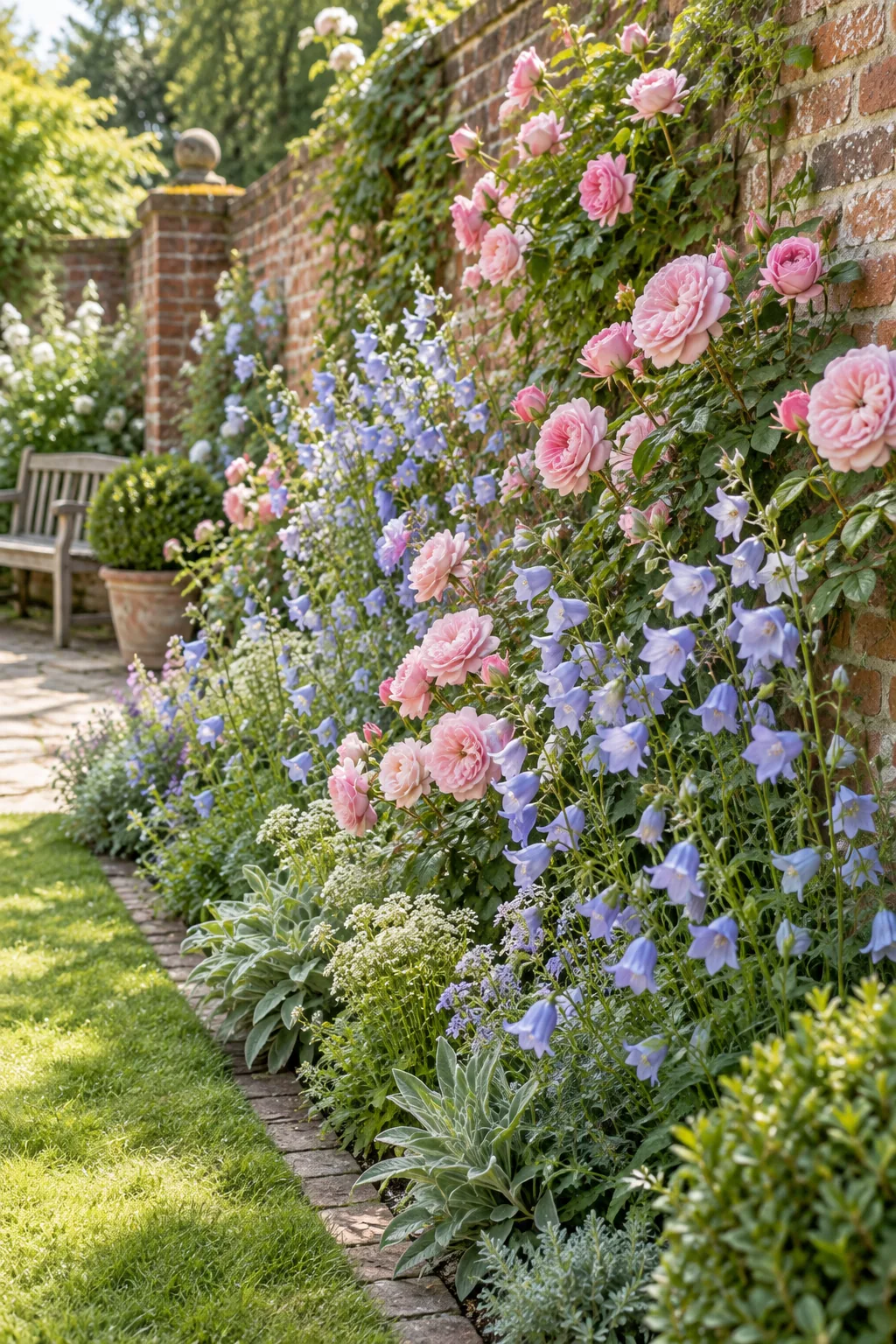
Cottage Pastels: Soft pinks and pale blues create a classic, romantic mood that perfectly complements traditional red brick boundaries.
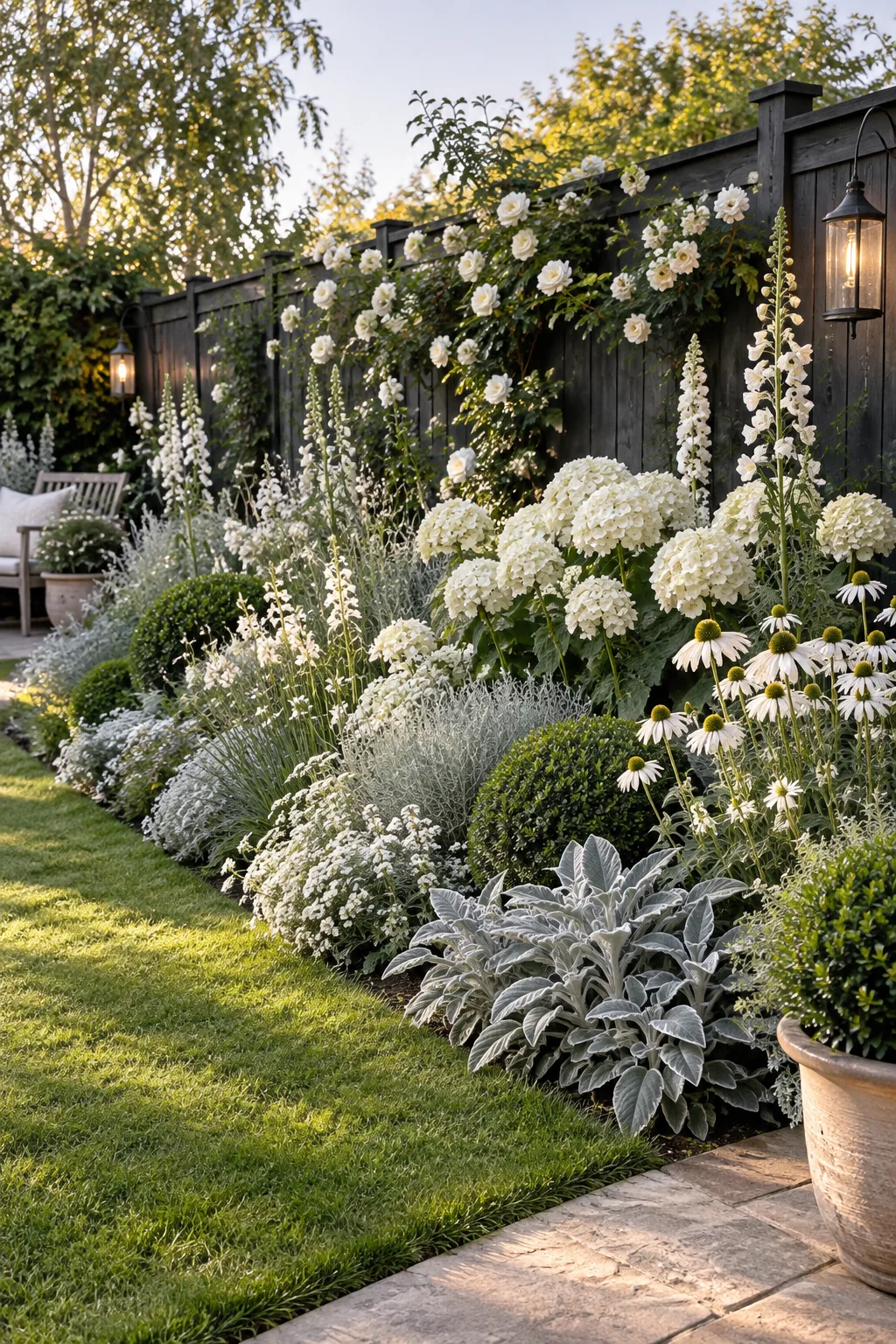
Moonlit White: Crisp white flowers and silver foliage stand out brilliantly against dark wood, glowing beautifully in the evening light.
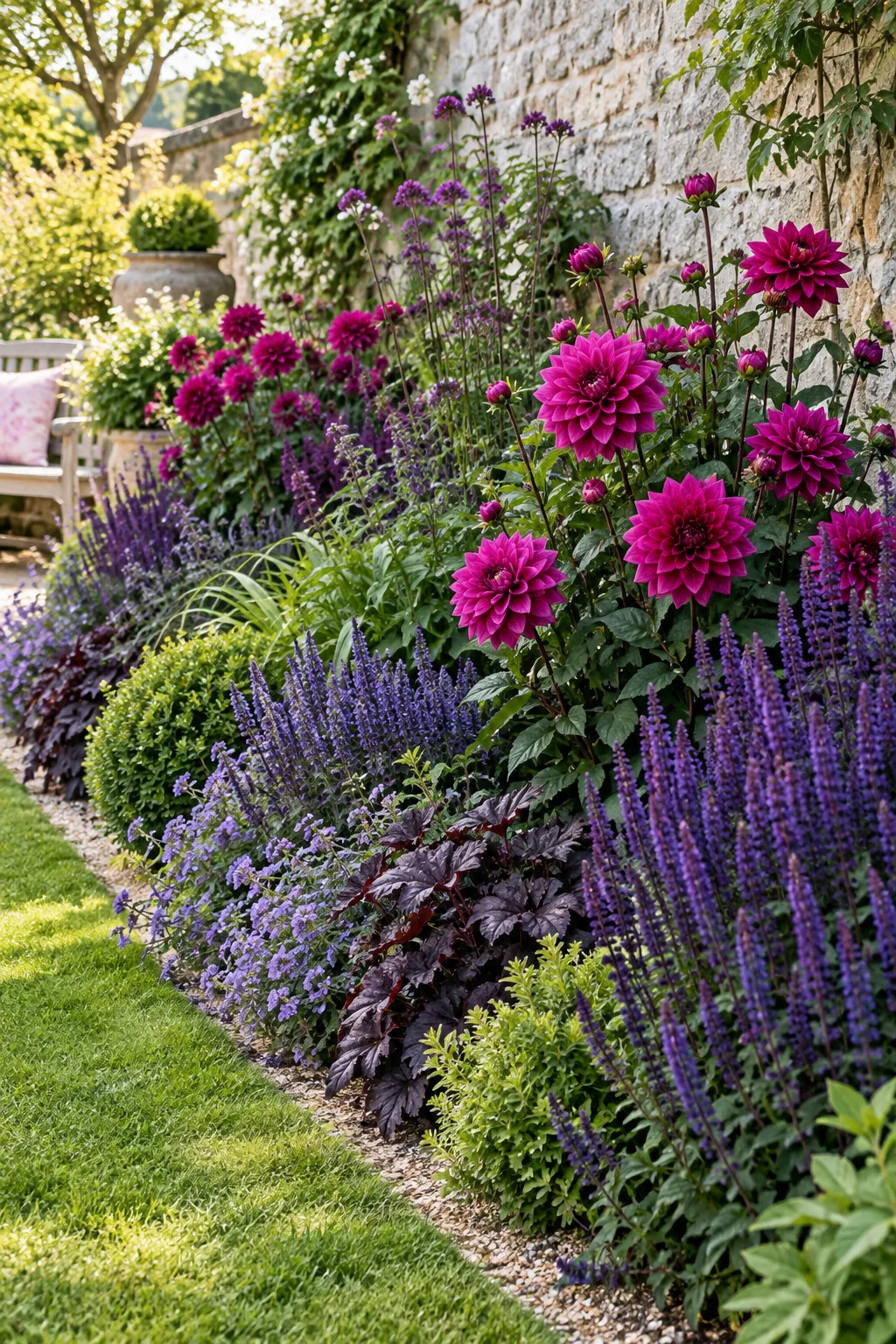
Jewel Box: Rich, saturated purples and magentas bring intense drama and warmth to pale stone or concrete walls.
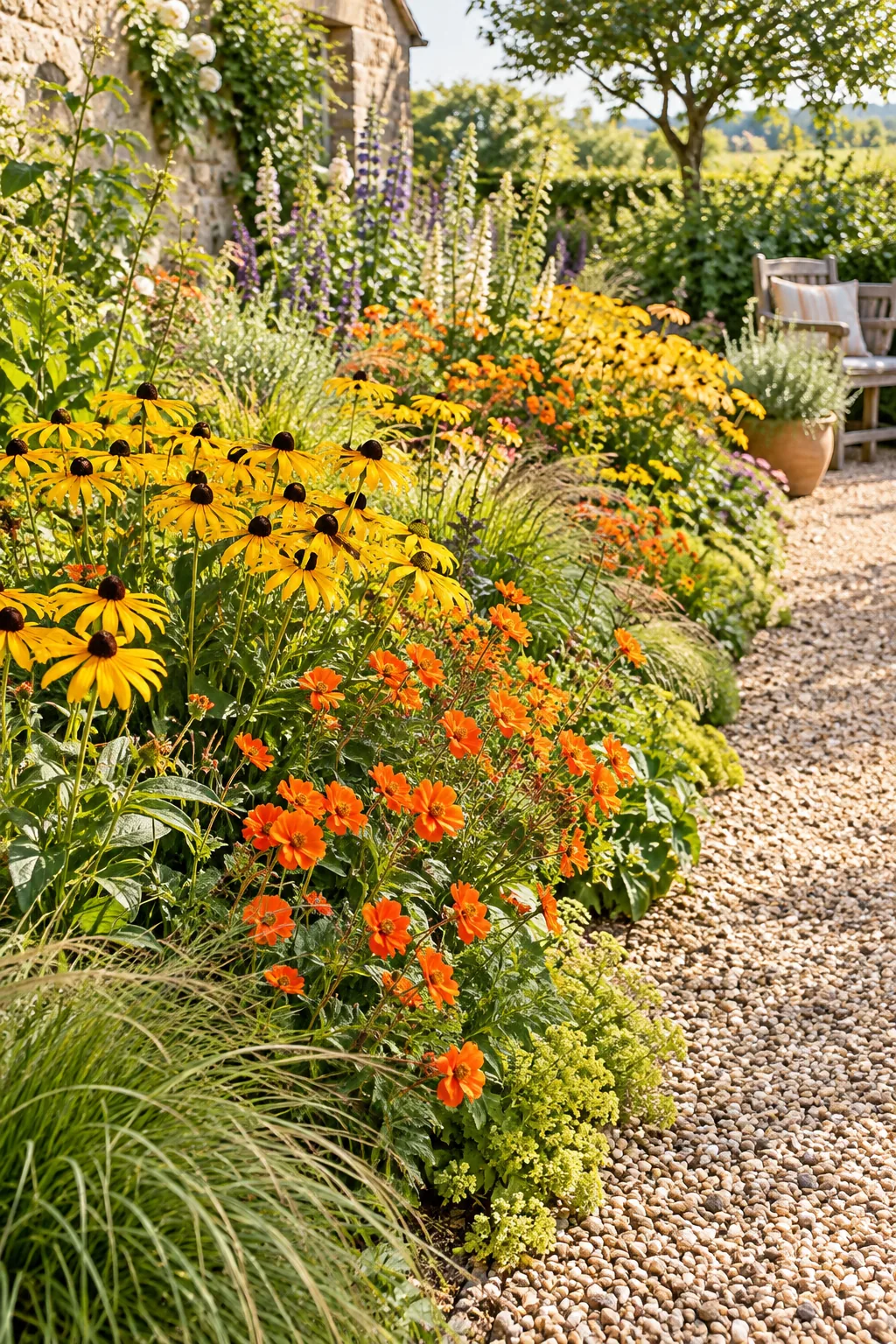
Sun-Drenched: Warm yellows and fiery oranges create an energetic, welcoming atmosphere that pairs naturally with informal gravel paths.
The Complete First-Summer Border Plan
Are you ready to transform your bare lawn into a spectacular flowering border using these exact layers, varieties, and spacing rules? The printable two-page plan includes the complete 1.5 by 4 metre layout and specific plant quantities required for every single row.
Download the detailed layout sheet and the comprehensive month-by-month schedule to take all the frustrating guesswork out of your next garden center trip. This guide gives you a crystal-clear roadmap to a fully blooming, professional-looking English border by mid-summer.