Best Whiskey Barrel Plants: Get the 12-Plant Full Sun Map
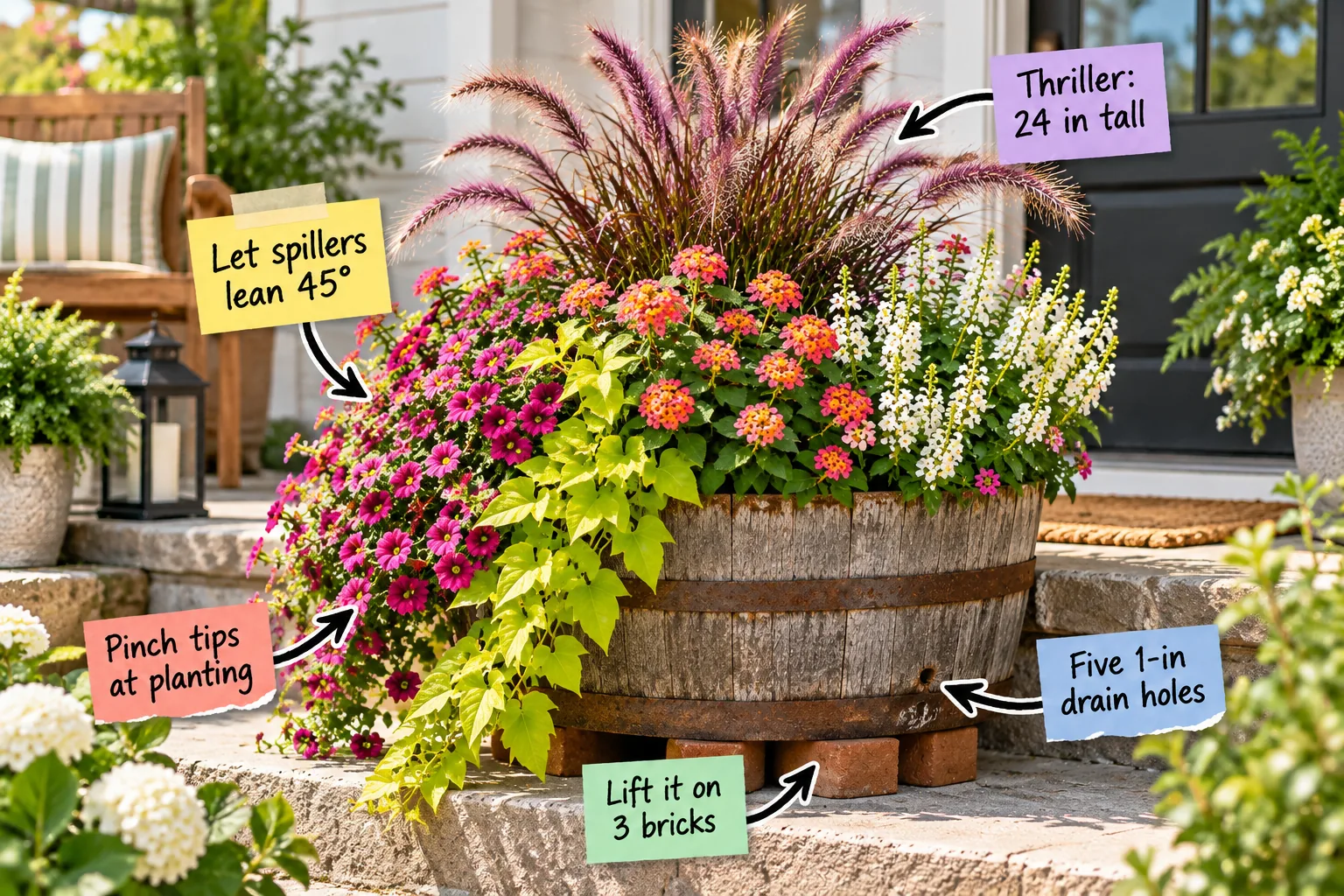
Grab our free printable map to perfectly position your thriller, fillers, and spillers, because this guide delivers the exact 12-plant full sun map you need. You will be able to arrange, space, and plant a thriving 26-inch whiskey barrel using our layout and recipes.
Select the Ideal Wooden Planter
Finding a genuine oak half-barrel provides the best natural insulation for delicate roots during scorching summer afternoons. You want a container measuring exactly 26 inches across the rim to comfortably accommodate the dense root systems of a dozen mature blooming plants.
| Planter Size | Soil Capacity | Plant Count | Water Needs |
|---|---|---|---|
| 20-inch barrel | 30 quarts | 7 plants | Moderate |
| 24-inch barrel | 40 quarts | 9 plants | High |
| 26-inch barrel | 50 quarts | 12 plants | Very High |
Understand the Sun Requirements
A true full-sun container arrangement requires a location that receives at least six to eight hours of direct, unfiltered light daily. Positioning your heavy planter in a south-facing or west-facing exposure guarantees the vibrant lantana and calibrachoa will produce continuous, abundant blooms.
Drill Proper Drainage Holes
Oak halves hold moisture tightly, and without generous drainage, the densely packed root system of 12 plants will quickly succumb to rot. Start by flipping the empty 26-inch barrel over to prepare the solid wood bottom for immediate, reliable water runoff.
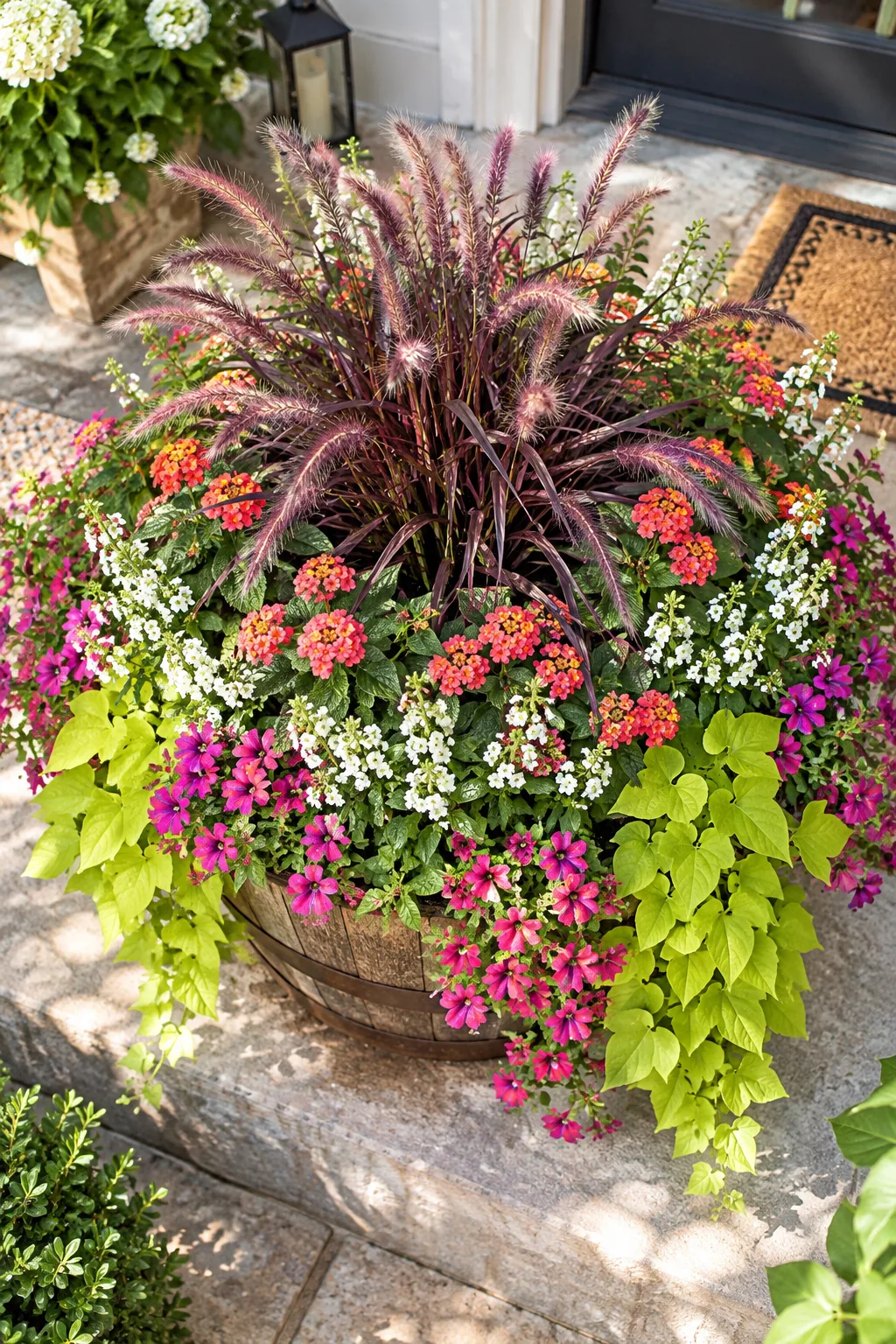
Use a heavy-duty paddle bit to drill five 1-inch drain holes evenly spaced directly through the thick bottom wood. Positioning one hole in the dead center and four around the perimeter ensures excess water cannot pool in any hidden low spots.
Treat the Interior Wood
Raw oak staves will eventually deteriorate when exposed to constant damp soil and daily summer watering routines. Brushing a non-toxic waterproofing sealer along the inside walls extends the life of your planter by several seasons without harming delicate flower roots.
Position the Barrel Before Filling
A 26-inch wooden planter filled with wet soil and a dozen mature plants can easily weigh over one hundred pounds. You must select its permanent location on your porch or patio before adding any heavy materials, as moving it later becomes nearly impossible.
Elevate on a Brick Foundation
Lifting the base prevents the wood from sitting in standing water and allows those five freshly drilled holes to drain freely. Creating a stable, slightly elevated foundation keeps the heavy container perfectly leveled on sloped or uneven outdoor hardscape surfaces.
- Sweep your sunny porch step completely clear of slippery dirt and debris.
- Position three standard red bricks in a tight, evenly spaced triangle formation.
- Set the drilled barrel on top, ensuring it does not rock or wobble.
The 12-Plant Barrel Map
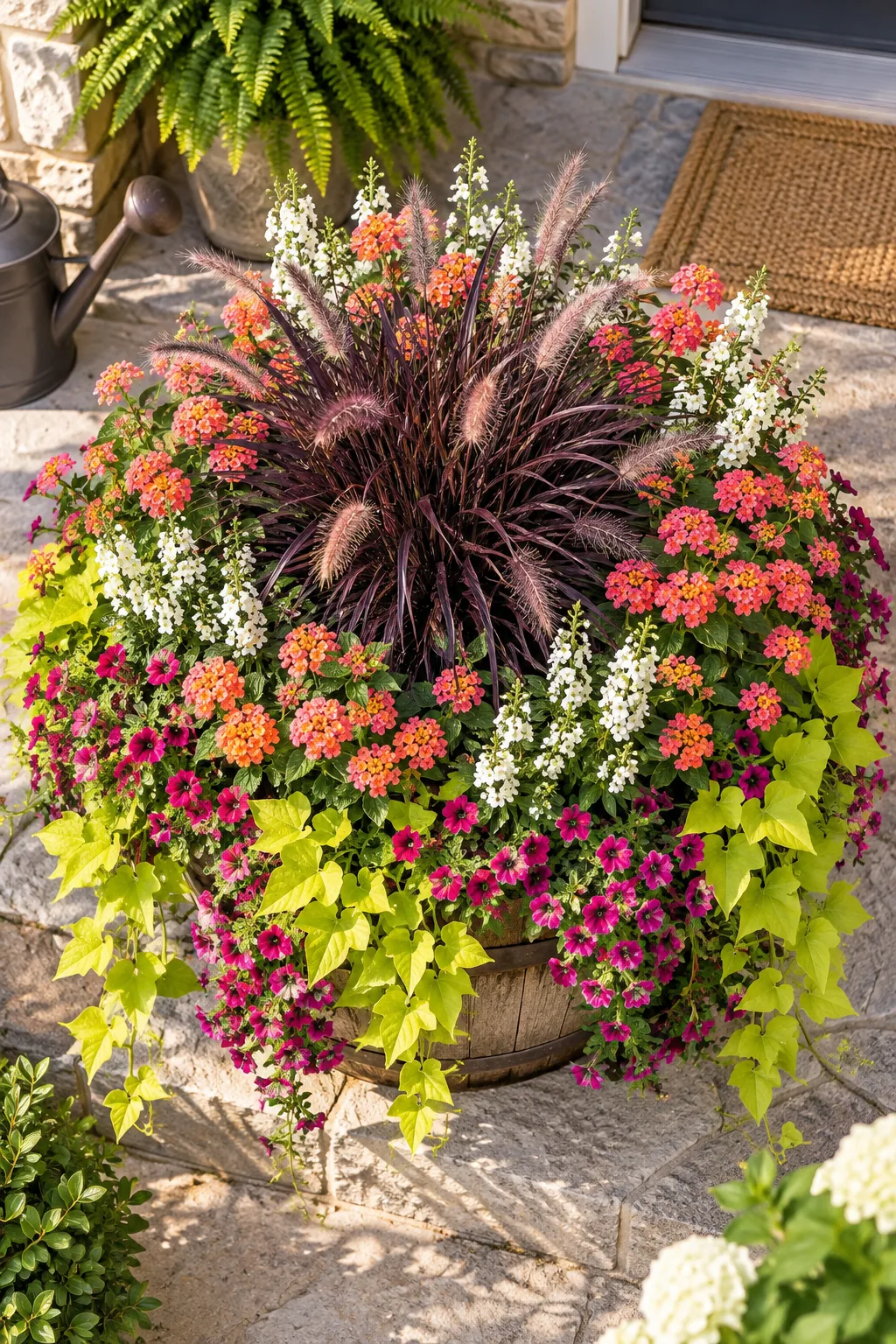
Download the printable one-page planting map to guide your exact geometric arrangement and take the guesswork out of spacing. It details the precise position for the center thriller, the alternating ring of 5 fillers, the 6 spillers, and calculates the necessary soil volume.
Before printing the layout and heading to the local nursery, gather these essential supplies to properly fill a 26-inch planter. Having your materials ready ensures you can assemble the entire arrangement smoothly before the tender nursery roots begin to dry out.
Prepare the Drainage Layer
Covering your freshly drilled holes with a piece of mesh window screen prevents loose soil from washing out and staining your patio. Adding a two-inch layer of large pine bark nuggets at the bottom creates a highly breathable buffer zone for deep roots.
Choose the Right Potting Mix
Never use heavy garden dirt or raised bed soil, as these dense materials will quickly compact and suffocate your container plants. Purchasing a high-quality, lightweight potting mix formulated specifically for outdoor containers ensures the roots receive adequate oxygen throughout the growing season.
Mix the Custom Potting Soil
Fill the barrel up to four inches below the rim with your selected potting mix to leave room for the root balls. Blending in two generous scoops of perlite ensures the soil remains well-aerated, preventing severe compaction as the root systems expand.
Unpot the Nursery Plants Safely
Gently squeeze the sides of each plastic nursery pot to release the root ball without tearing the delicate main stems. If the roots are tightly wound in a circle, carefully tease the bottom fibers apart to encourage outward growth into the new soil.
Anchor with a Tall Thriller
Plant the purple fountain grass directly in the dead center of the soil to establish your dramatic focal point. Choose a mature nursery specimen that already stands 24 inches tall to ensure it creates proportional height against the wide wooden base.
Layer the Sun-Loving Fillers
Surround the central grass with an alternating ring of coral lantana and white angelonia to bridge the visual gap. I used to plant my angelonia too close to the edge, but moving them inward transformed my Austin porch planters into lush mounds.
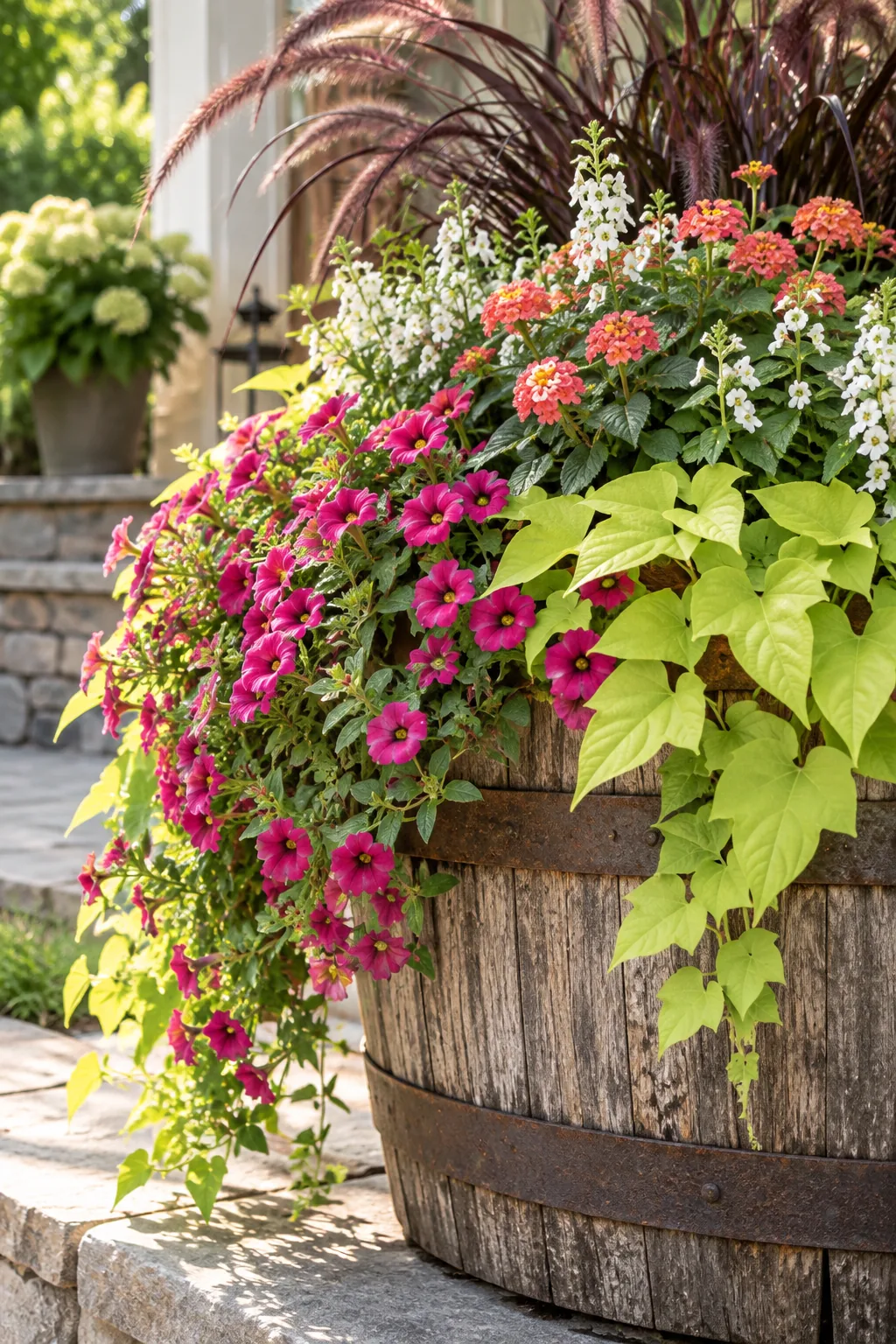
These tough fillers thrive in full afternoon sun while providing a dense, continuous burst of contrasting color. Spacing them four inches apart gives their root balls enough room to expand without competing directly with the aggressive central fountain grass.
Space the Fillers Correctly
Leaving adequate breathing room between the central thriller and your ring of five fillers promotes healthy air circulation. Tucking the root balls firmly into the soil while keeping their crowns perfectly level with the soil surface prevents stem rot during heavy rainstorms.
Tilt Spillers Over the Edge
Set the calibrachoa and sweet potato vine root balls right at the barrel rim to create a lush, cascading effect. Alternating their placement ensures a balanced mix of bright blooms and vibrant trailing foliage along the entire circumference of the planter.
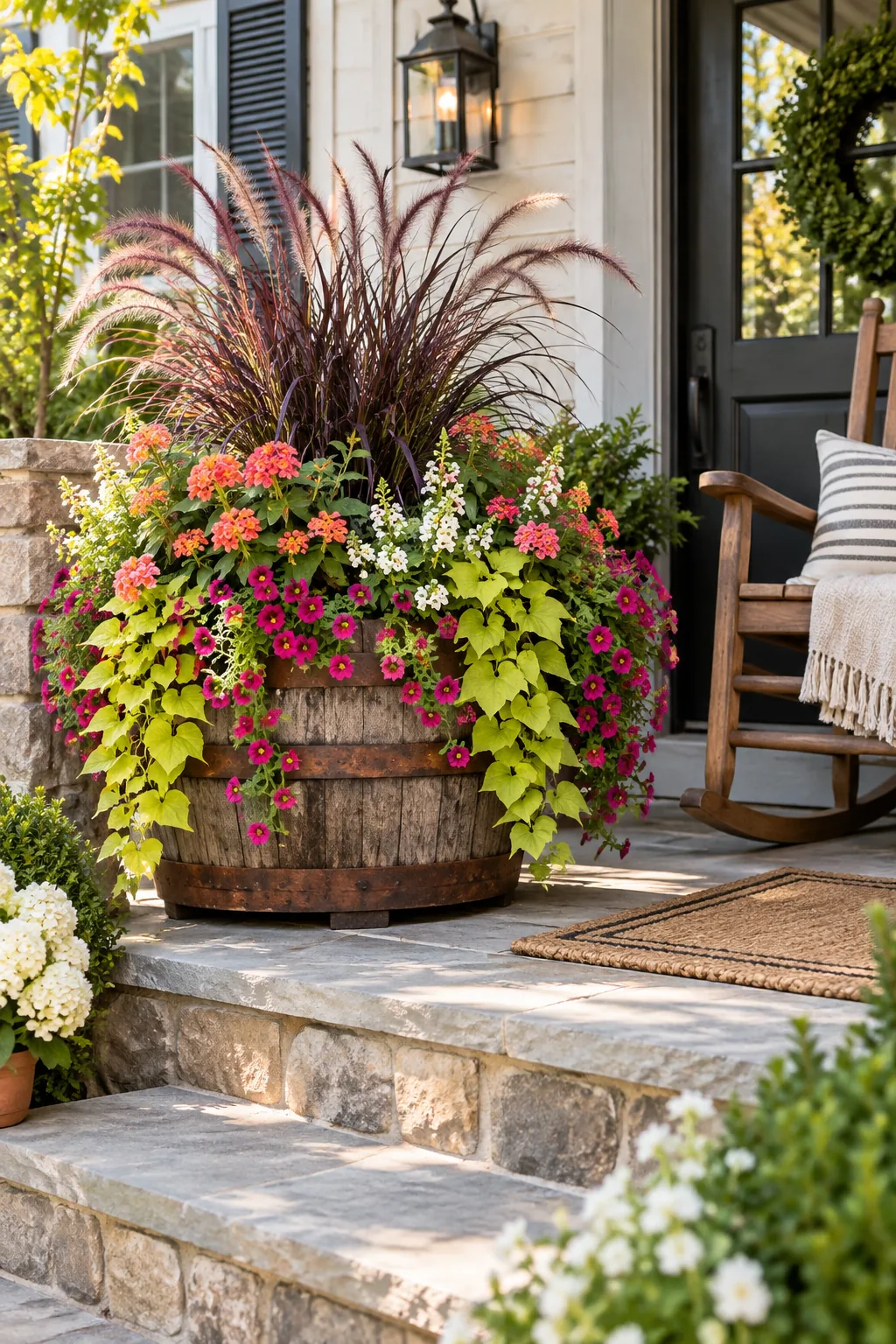
Positioning the trailing plants incorrectly is the most common reason barrel planters look sparse and woody at the edges. You must let spillers lean 45° outward so the stems immediately cascade down the oak staves instead of growing awkwardly inward.
Alternate the Trailing Vines
Planting three chartreuse sweet potato vines and three magenta calibrachoas in an alternating pattern creates a striking, cohesive skirt. This strategic color distribution draws the eye completely around the barrel, ensuring the container looks spectacular from every possible viewing angle.
Pinch Tips for Bushy Growth
You must pinch tips at planting to force lateral branching for a much thicker, more robust cascade. Removing the very ends of the branching stem tips on the chartreuse sweet potato vine and magenta calibrachoa triggers explosive, bushy new growth instantly.
Water the Freshly Planted Barrel
Immediately after arranging all twelve plants, soak the entire barrel thoroughly to settle the loose soil and eliminate hidden air pockets. Continue applying water gently at the base until you see a steady stream escaping from the five drainage holes underneath.
Feed the Dense Root System
A dozen aggressively growing plants will exhaust the available nutrients in standard potting soil within just four weeks. Working a handful of slow-release granular fertilizer into the top two inches of soil provides a steady supply of essential phosphorus for continuous blooming.
Deadhead for Continuous Blooms
Snapping off faded lantana flower clusters redirects the plant’s energy from producing seeds back into generating fresh, vibrant buds. Taking five minutes each week to groom the entire barrel ensures your arrangement looks professionally maintained from early summer straight through the first frost.
Monitor for Common Pests
Inspect the undersides of the sweet potato vine leaves weekly for tiny aphids or destructive spider mites drawn to the lush foliage. Spraying a gentle insecticidal soap at the first sign of damage prevents an infestation from spreading to your delicate calibrachoa blooms.
Maintain Moisture in Full Sun
A densely packed 12-plant barrel in full sun depletes water incredibly rapidly as the summer progresses. During our scorching Texas Julys, I’ve found that watering my barrels right at dawn keeps the delicate foliage from crisping up in the afternoon heat.
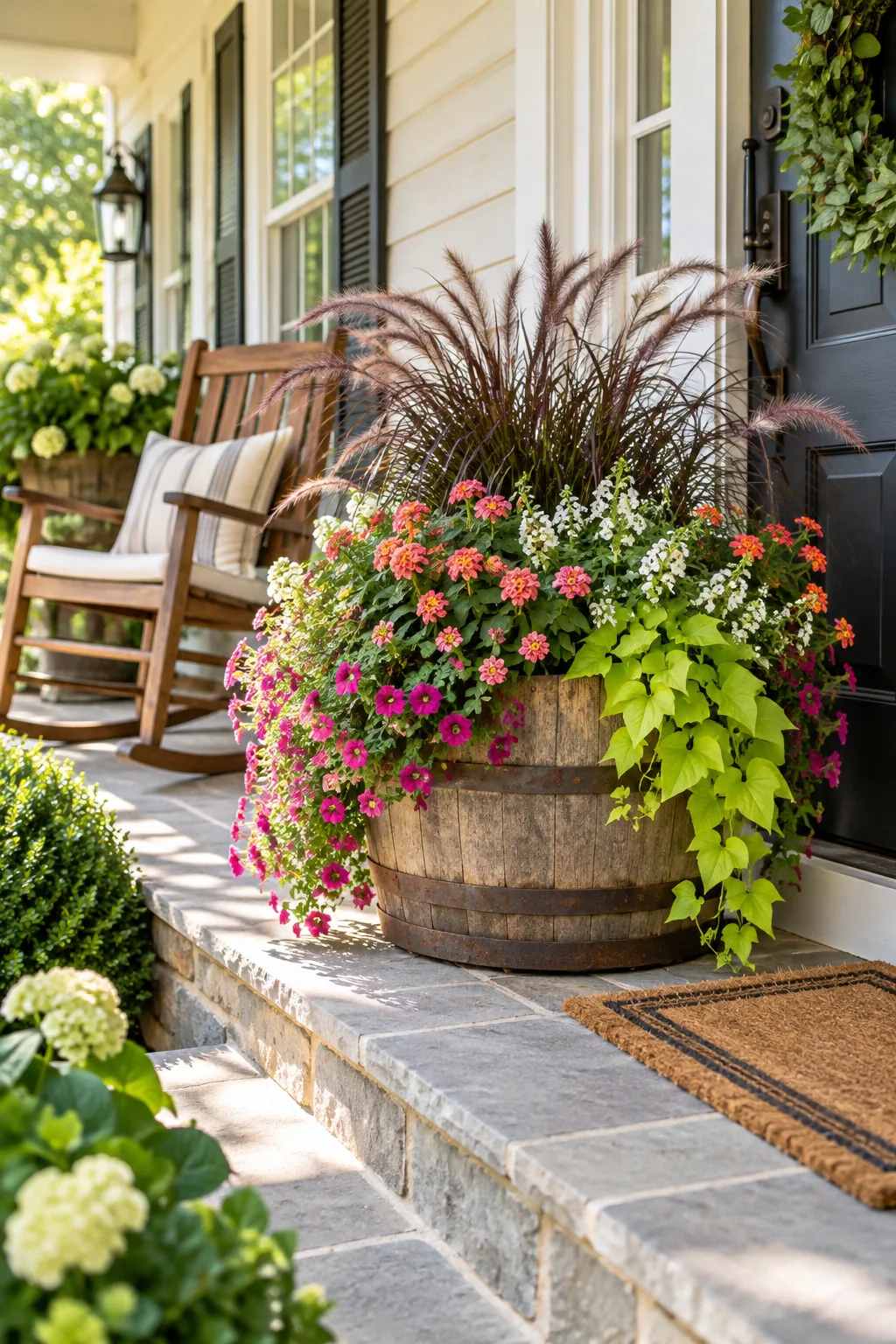
Check the top inch of soil daily, and water deeply at the base until excess moisture escapes through the bottom drain holes. Consistent hydration prevents the trailing vines from dropping their lower leaves and looking hopelessly leggy by late August.
More Whiskey Barrel Plant Ideas
Explore these different styling variations to match your home's unique exterior.
Shade-Loving Fern Oasis: Swap the sun-lovers for lush ferns and hostas to brighten up a covered, shady patio corner.
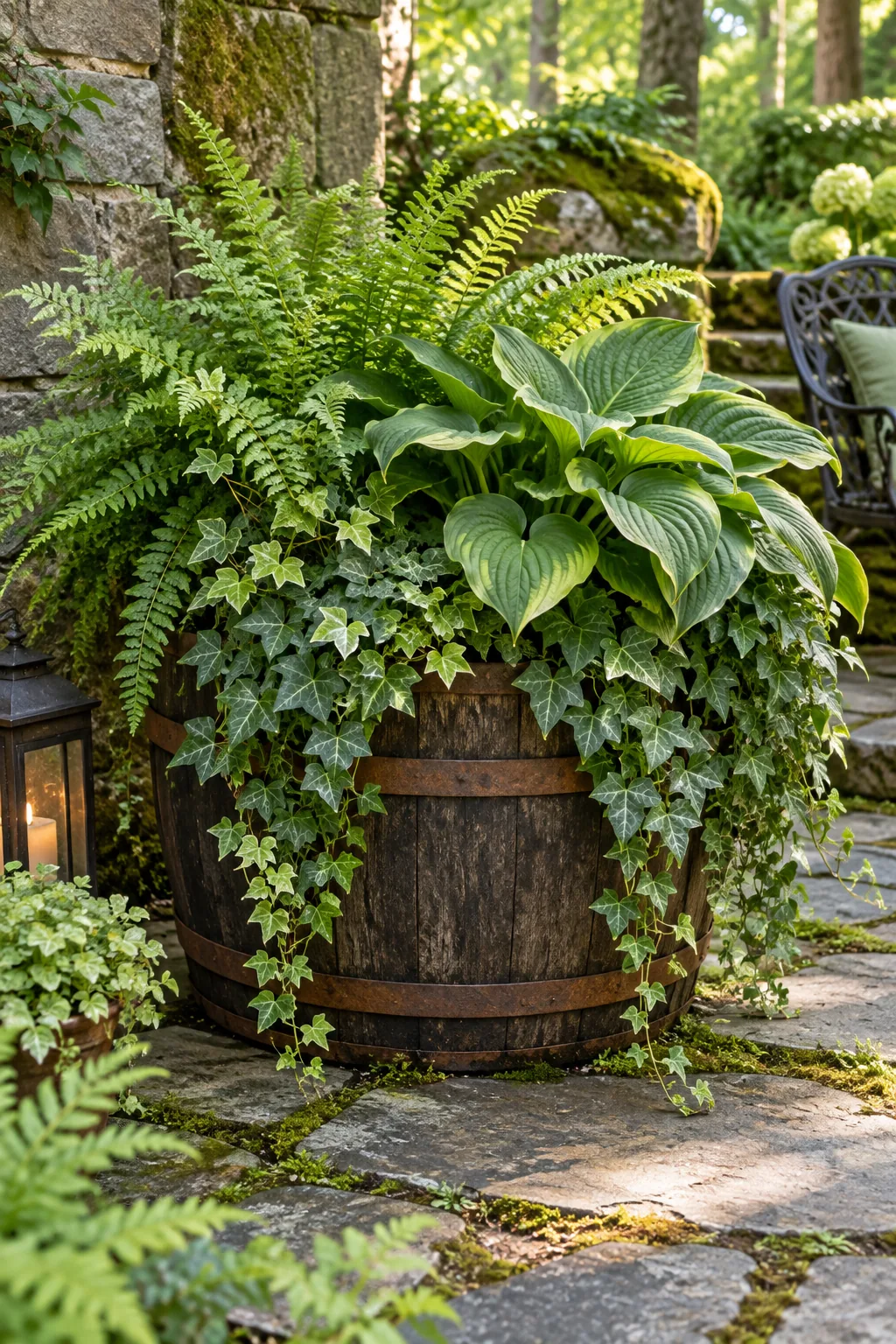
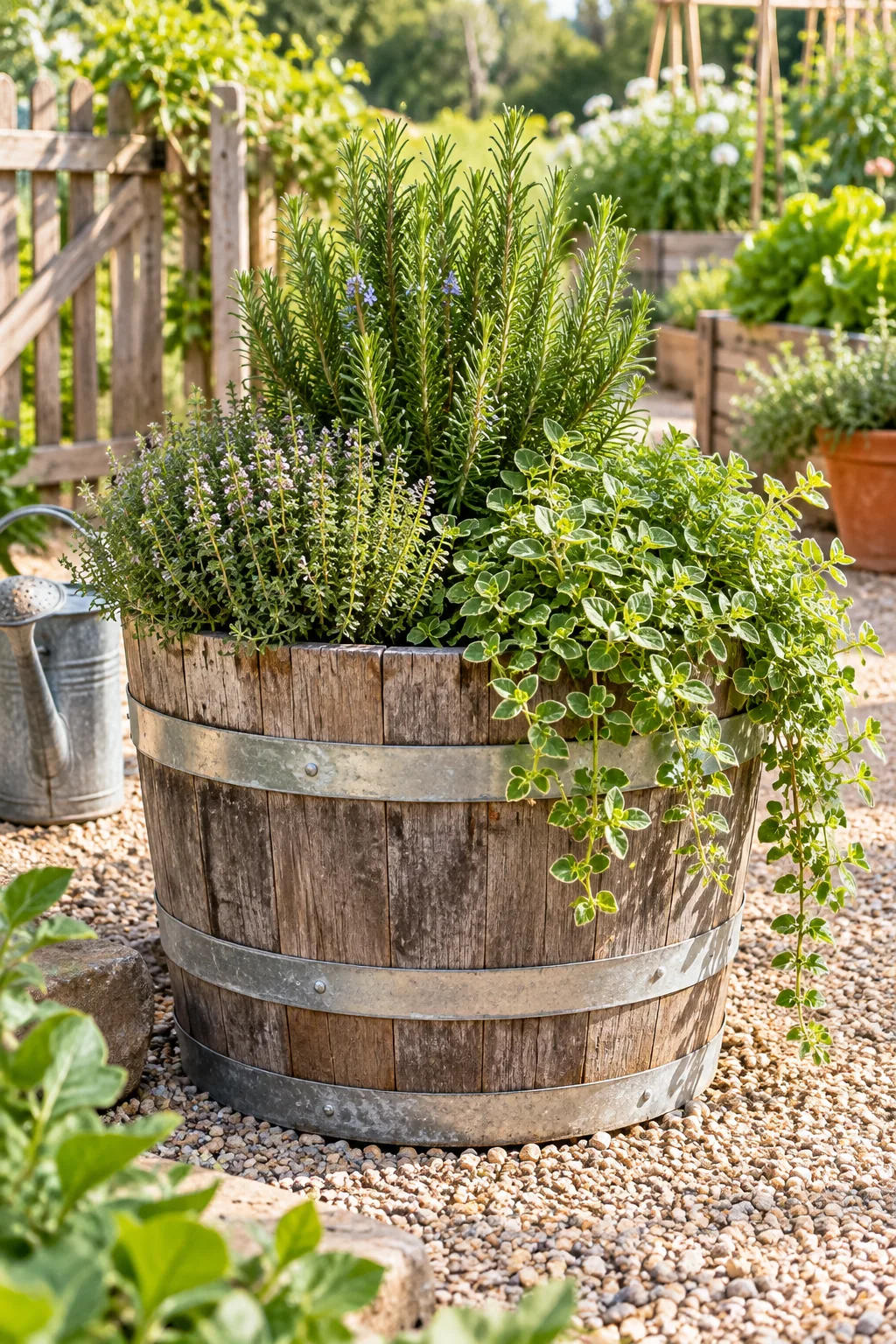
Rustic Farmhouse Herbs: Plant a dense culinary herb garden right outside your kitchen door for easy harvesting.
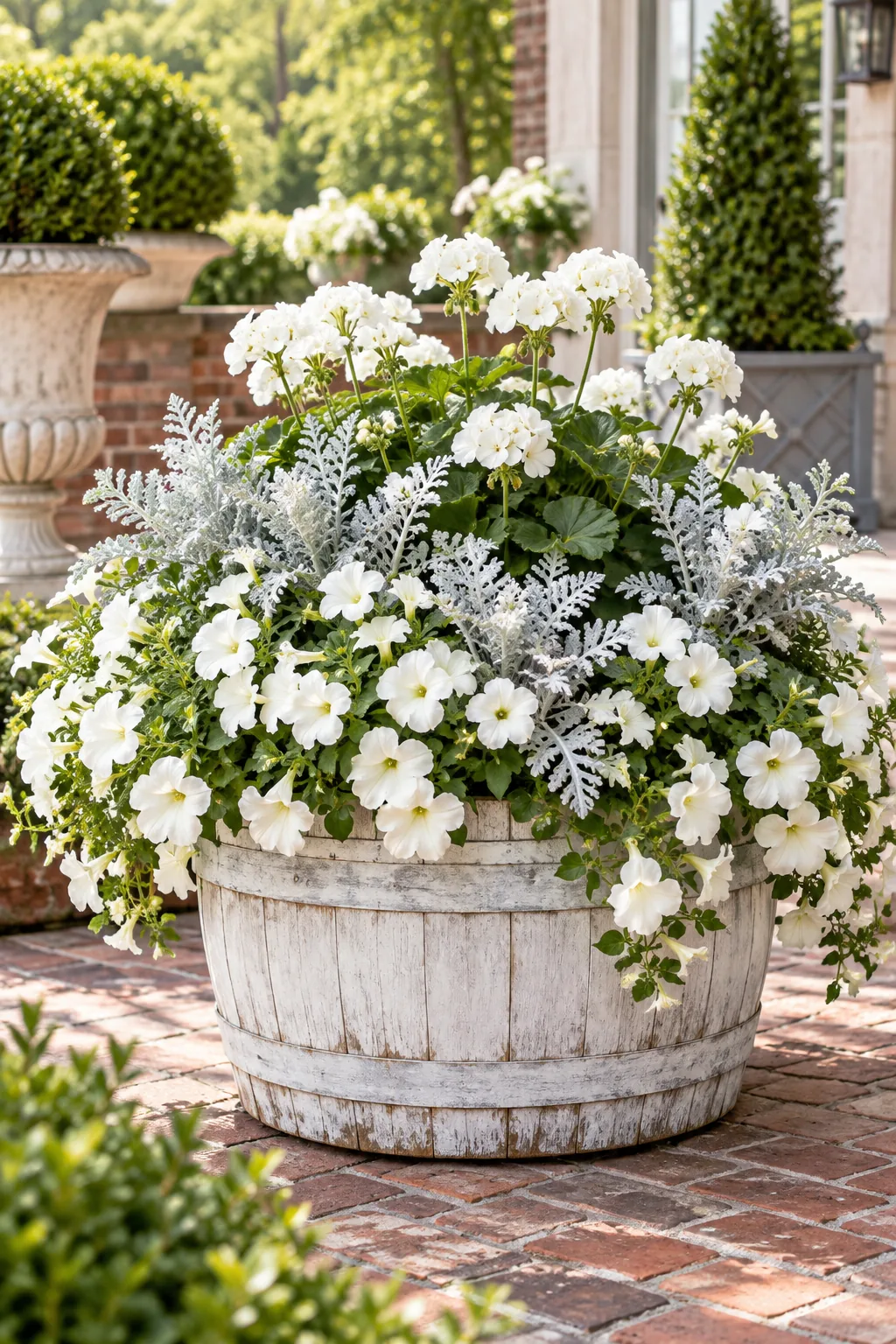
Monochromatic White Elegance: Use a whitewashed barrel and entirely white blooms to create a formal, elegant look for evening terraces.