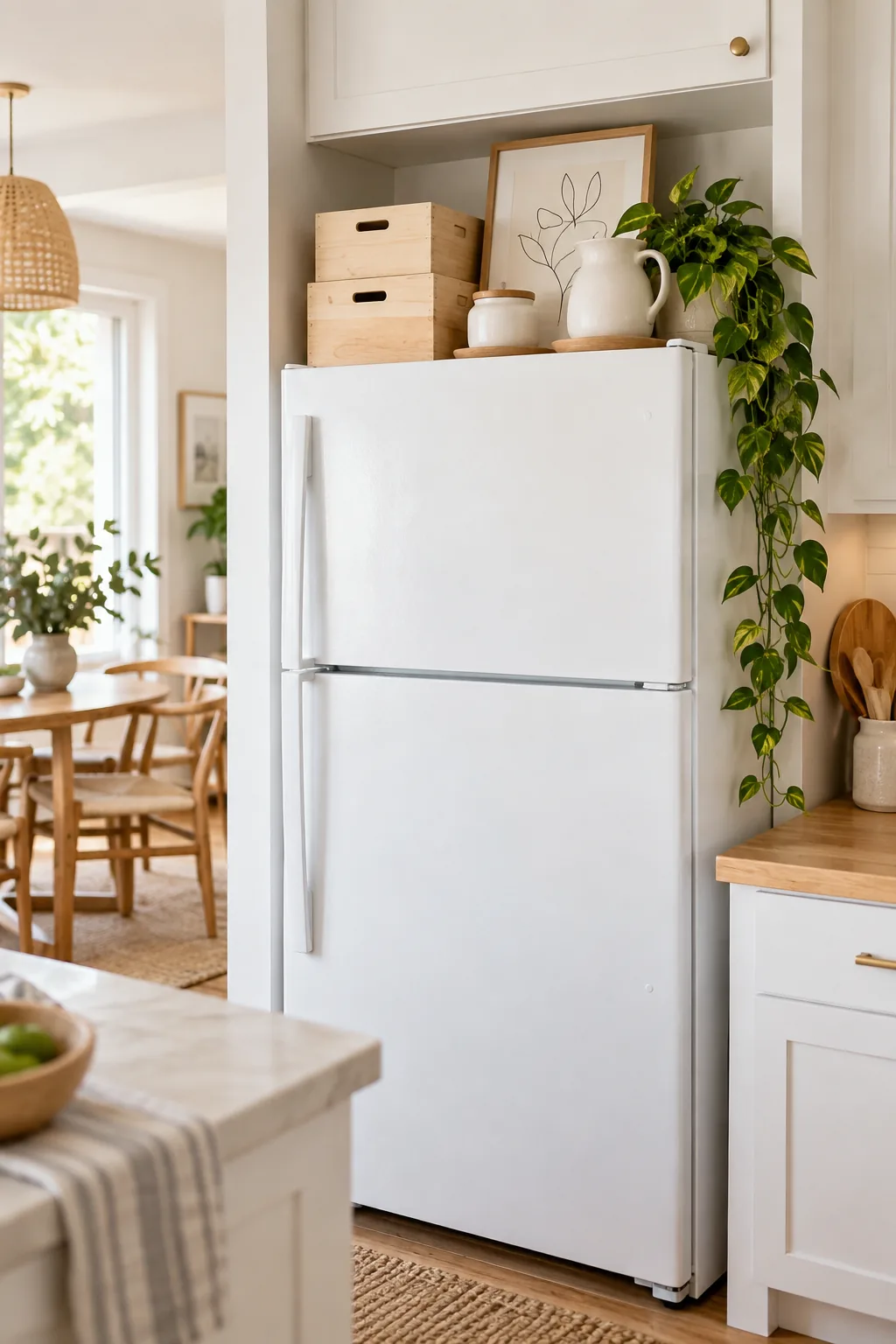
Above-Fridge Decor: Your Printable Measure & Shop Guide
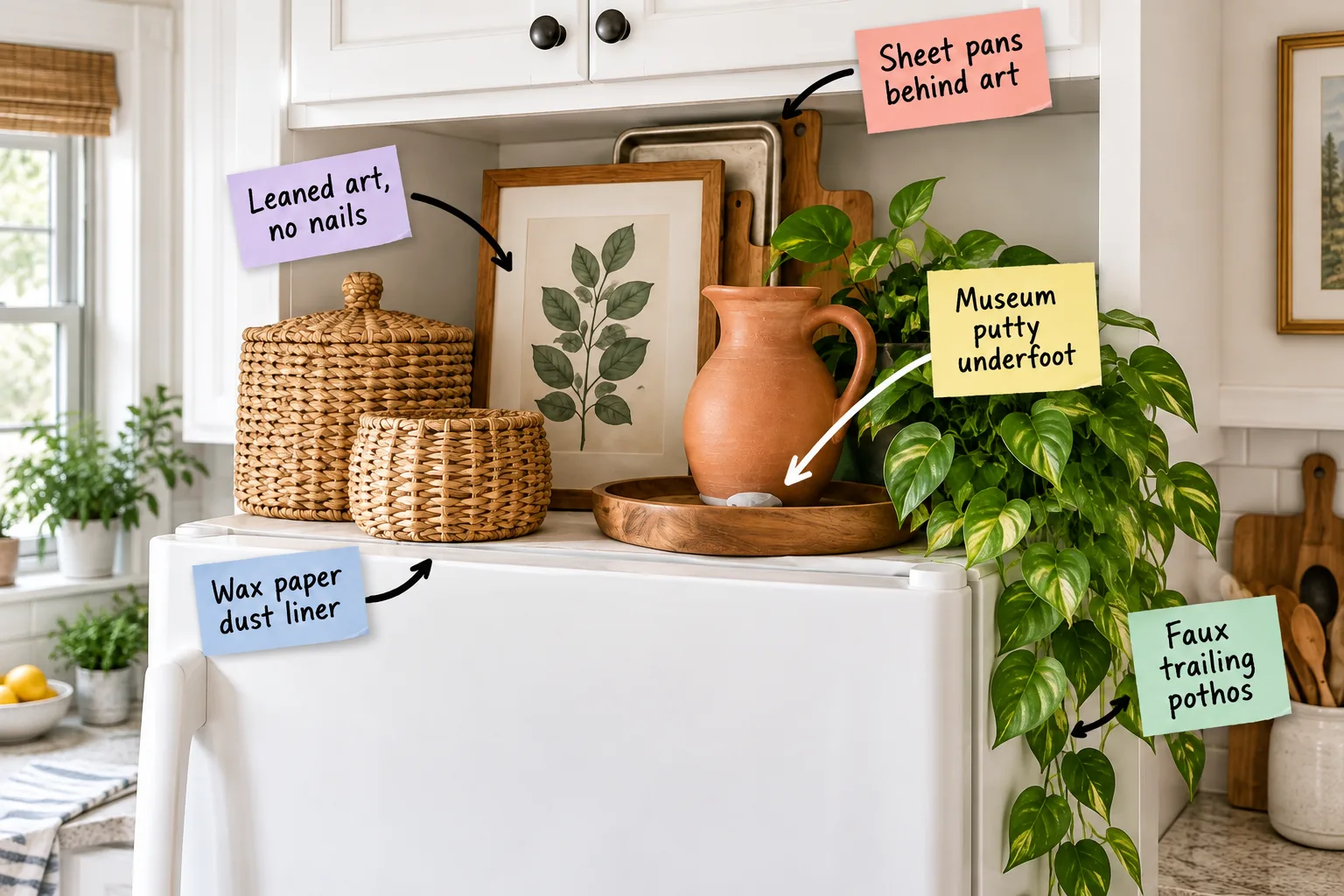
Style the awkward gap above your refrigerator with our renter-friendly decor guide and download the printable Above-Fridge Measure & Shop Sheet to perfectly scale your baskets. You will be able to measure your exact cabinet gap, print a customized shopping list, and build a cohesive display that won’t shift when the compressor kicks on.
Measure Your Fridge-to-Cabinet Gap
Start by measuring the exact height, width, and depth of the awkward gap between the top of the refrigerator and the upper cabinets to accurately calculate your ideal decor scale.
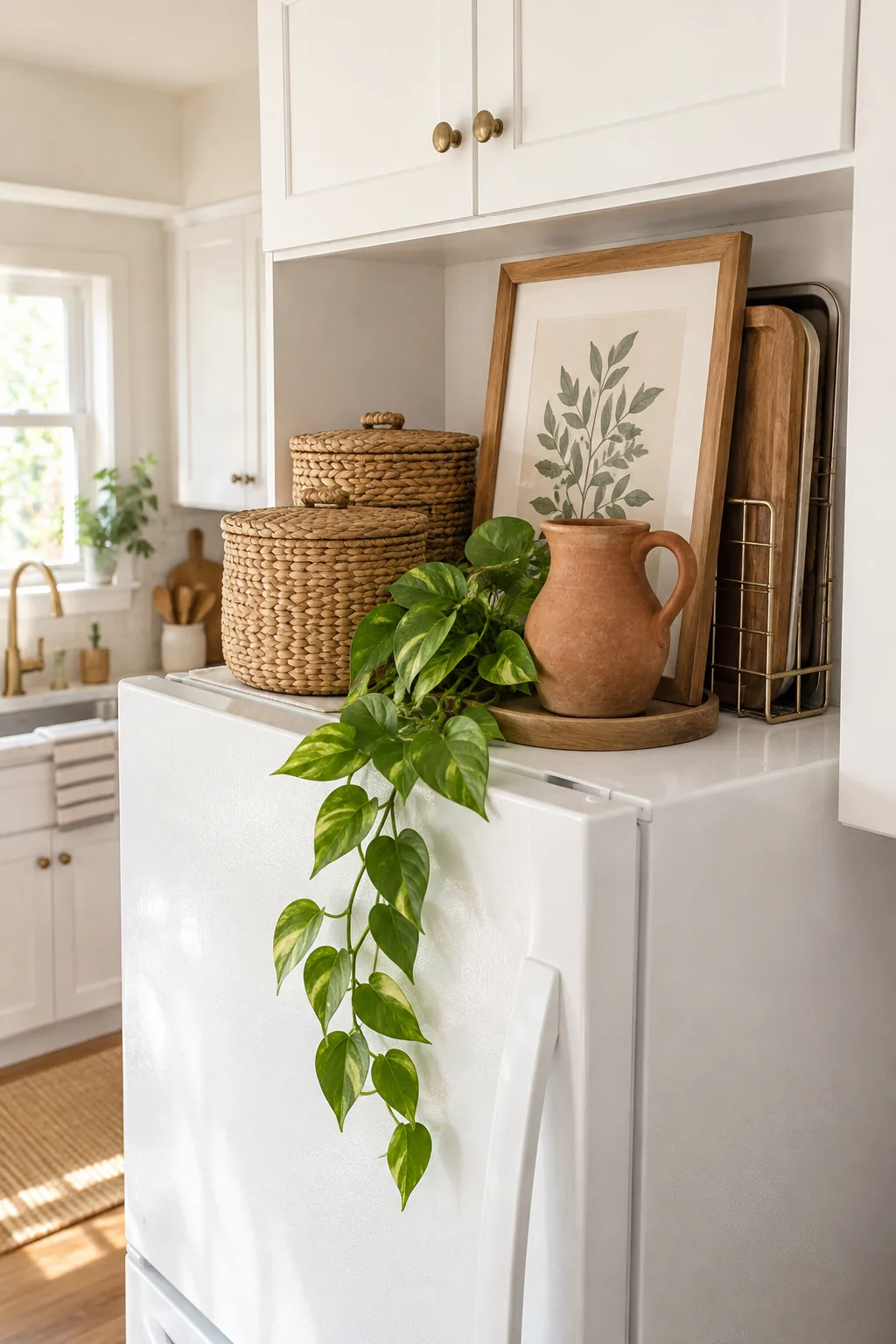
Use these exact dimensions to fill out the printable Above-Fridge Measure & Shop Sheet, which instantly calculates your matching basket sizes and provides a complete 5-piece renter-friendly shopping list.
Gathering Your Measurement Tools
Before you begin planning your layout, grab a rigid steel tape measure rather than a flexible sewing tape to ensure precise vertical readings. You will also need a stable step stool and a level to verify that your upper cabinets run perfectly parallel to the appliance.
Understanding Appliance Ventilation Clearances
Modern refrigerators require adequate airflow around the compressor casing to prevent the motor from overheating during heavy cooling cycles. Always verify your manufacturer specifications to ensure your decorative arrangement leaves at least one inch of unobstructed airflow behind the back wall.
The Wax Paper Dust Barrier
Before placing any heavy decor, lay down a single sheet of standard wax paper dust liner along the front and middle of the appliance top. This creates an invisible, disposable foundation that catches the inevitable mix of household dust and airborne cooking grease.
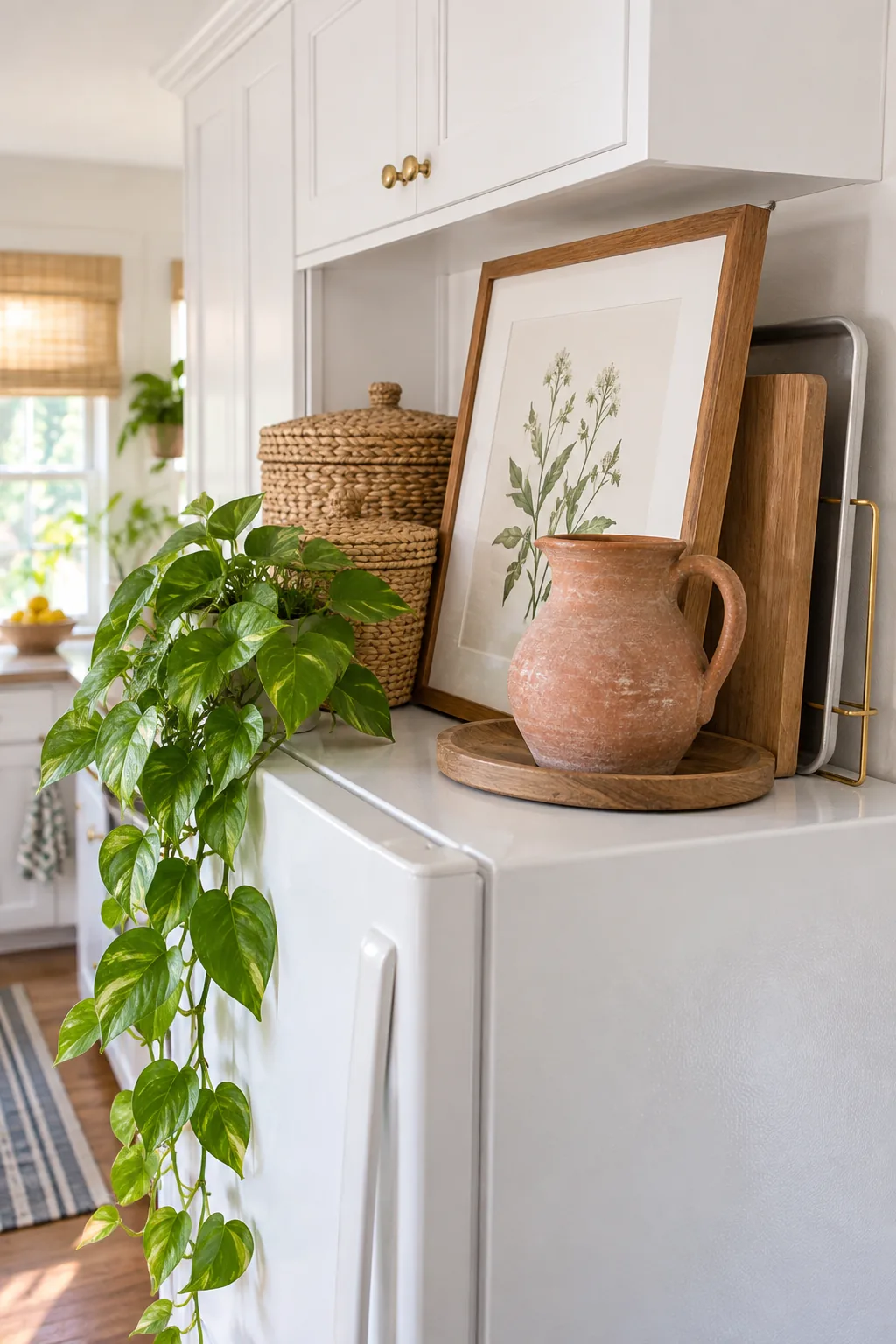
Because the top of the refrigerator sits near the stove in most small kitchen layouts, it acts as a powerful magnet for sticky airborne cooking oils.
Choosing the Right Wax Paper Grade
Standard supermarket wax paper provides the ideal balance of moisture resistance and affordability for this protective application. Avoid using expensive parchment paper or thick silicone baking mats, as they lack the slightly tacky surface needed to trap airborne dust particles effectively before they settle.
Scheduling Grease Barrier Replacements
A protective liner only works effectively if you maintain a strict replacement schedule before the paper becomes fully saturated with kitchen grease.
Stashing Sheet Pans Behind Art
Maximize the deep, dark space at the back of the fridge by turning it into hidden vertical storage for your bulkiest kitchen items.
- Place a slim wire file organizer firmly against the back wall.
- Slide quarter sheet pans and wooden cutting boards upright into the slots.
- Ensure the tallest cutting board sits just below your frame height.
In my own Denver kitchen, stashing sheet pans behind art keeps them easily accessible for roasting vegetables while remaining completely out of sight from the dining area.
Selecting the Right Wire Organizer
A standard office file sorter provides the perfect structural support for heavy metal bakeware that would otherwise slide around. Look for a heavyweight steel organizer with at least two-inch slots to comfortably accommodate thick wooden carving boards alongside thin aluminum baking sheets.
Preventing Scratches on the Appliance Surface
Metal file organizers feature sharp wire edges that can easily gouge the delicate enamel finish of your refrigerator during installation. I recommend attaching small felt adhesive pads to the four bottom corners of the wire rack to create a soft, protective buffer against the appliance.
Leaning Art Without Nails
Conceal the hidden storage and add distinct personality by resting a large framed botanical print directly against the back wall. This simple technique provides a beautiful, structured backdrop for the smaller decorative elements positioned near the front edge.
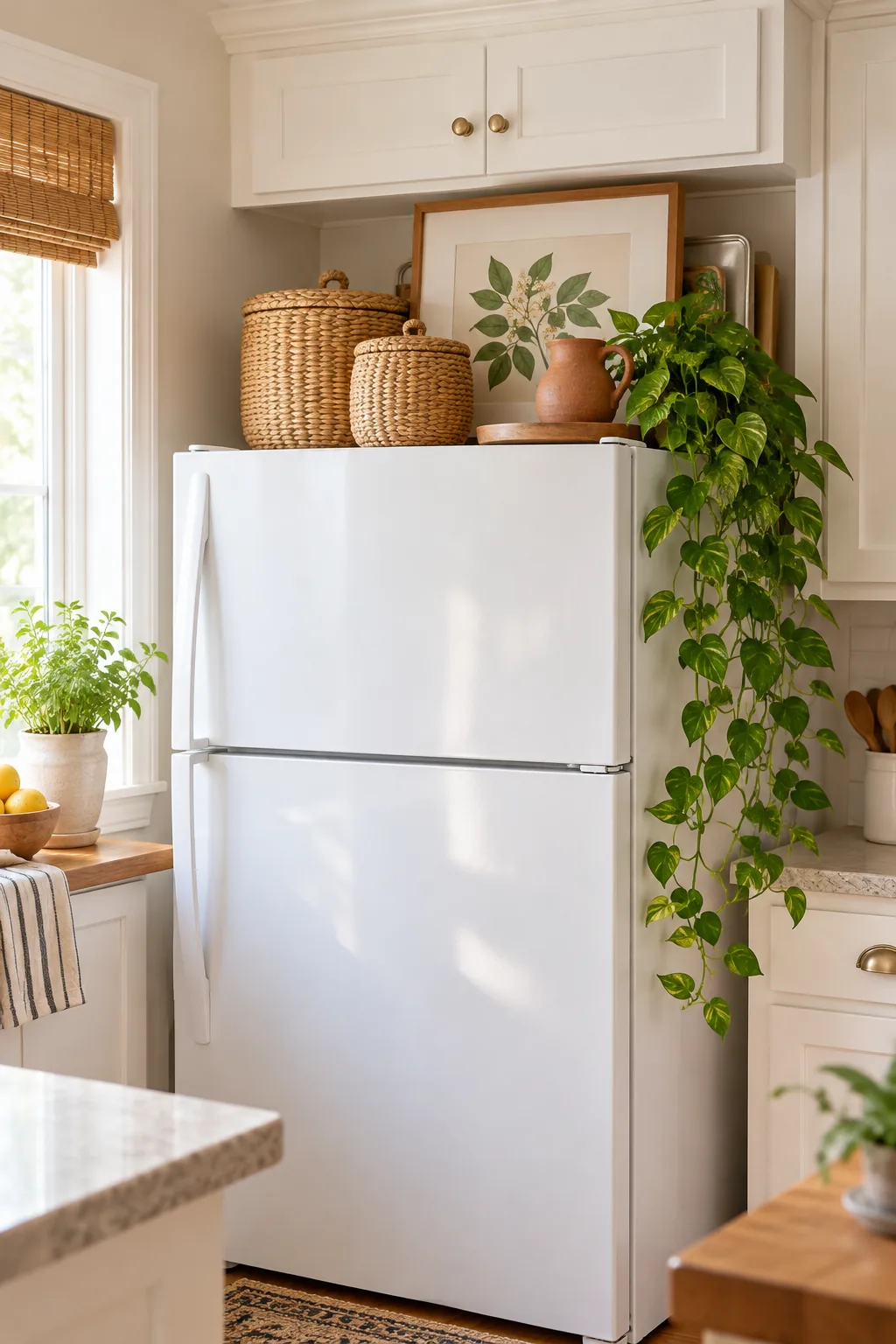
Choose a solid frame that fills at least two-thirds of the gap height to create a purposeful focal point with leaned art, no nails required.
Choosing Moisture-Resistant Frame Materials
Kitchen environments experience rapid fluctuations in temperature and ambient humidity, which can easily warp cheap particleboard frames over time. Invest in a solid hardwood or metal frame fitted with tempered glass to protect your artwork from steam damage and accidental grease splatters.
Selecting the Right Botanical Print Style
A large botanical print introduces organic linework that beautifully contrasts with the rigid, geometric grid of your kitchen cabinetry. Look for vintage-inspired illustrations featuring muted sage greens and warm ochre tones to bridge the gap between your natural woven baskets and the sleek white appliance.
Assessing Your Kitchen Lighting
The deep alcove above a refrigerator often suffers from poor illumination, casting heavy shadows that can make your beautiful decor look murky. If your kitchen lacks ambient ceiling fixtures near this zone, select lighter-colored baskets and bright, high-contrast artwork to naturally reflect the available light.
Sizing and Spacing Baskets
Introduce organic texture and enclosed storage by placing two lidded seagrass baskets on the left side of the arrangement. The woven material adds essential warmth to the cold white appliance while hiding extra kitchen linens and seasonal cookie cutters.
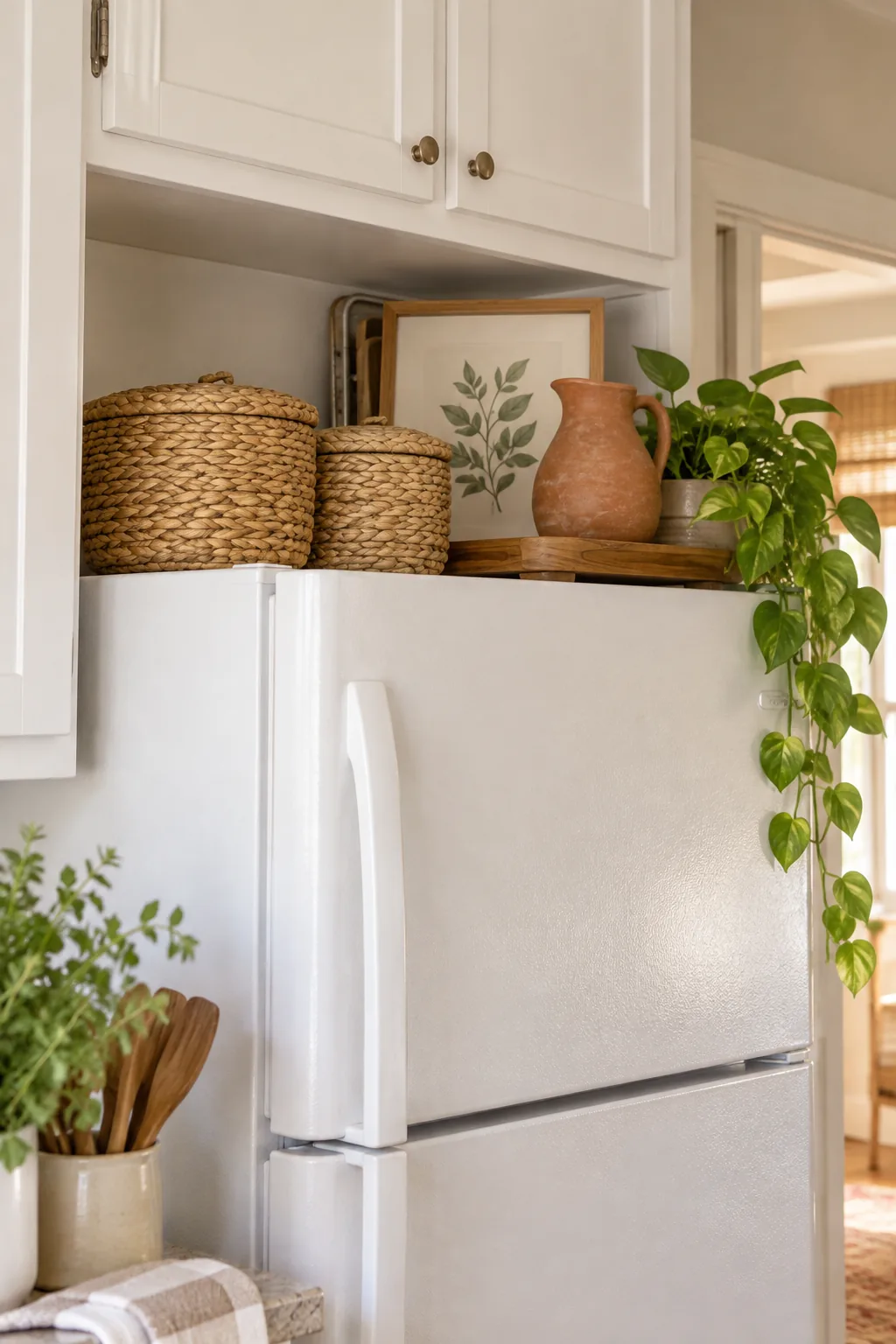
In a recent Denver loft project, I ensured the baskets left at least two inches of breathing room below the upper cabinet so the homeowners could easily lift the lids.
Hiding Extra Kitchen Linens
Lidded baskets offer the perfect dust-free environment for storing seasonal textiles that clutter your primary kitchen drawers.
| Linen Type | Storage Location | Access Frequency |
|---|---|---|
| Holiday Tablecloths | Back Left Basket | Once Yearly |
| Cloth Napkins | Front Left Basket | Weekly |
| Oven Mitts | Lower Kitchen Drawer | Daily |
| Seasonal Aprons | Back Left Basket | Monthly |
By strategically dividing your textiles, you keep the most frequently accessed items within arm’s reach while utilizing the high fridge top for long-term storage.
Maintaining Accessibility for Daily Use
Placing your heaviest items in the front left basket ensures you can retrieve them safely without overextending your reach. Always store lightweight, unbreakable items like seasonal cloth napkins or plastic cookie cutters in the back basket to minimize the risk of dropping heavy objects.
Balancing Visual Weight
Achieving a harmonious display requires balancing the heavy, solid mass of the woven baskets on the left with lighter, airy trailing vines on the right. This asymmetrical balance draws from Eastern design principles, distributing visual weight evenly so the arrangement feels grounded rather than lopsided.
Securing Decor With Museum Putty
Refrigerators vibrate constantly during their cooling cycles, which can cause hard decorative objects to rattle loudly or slowly walk off the edge over time.
- Pinch off a pea-sized amount of the adhesive putty.
- Roll it firmly into a small ball to warm the material.
- Press the museum putty underfoot beneath the base of your pitcher.
This specialized renter-friendly adhesive anchors your delicate items firmly to the surface and holds everything perfectly still without leaving any permanent sticky residue behind.
Choosing the Perfect Terracotta Pitcher
A vintage terracotta pitcher introduces a crucial element of earthy, handcrafted warmth that breaks up the mass-produced surfaces of modern appliances. Search local antique stores for a vessel with a beautifully weathered patina and a wide, stable base that resists tipping when the door slams.
Anchoring the Wooden Tray Foundation
A shallow wooden tray serves as the vital grounding element that connects your scattered decorative pieces into one cohesive visual unit. Applying putty to the four corners of the tray ensures the entire vignette remains locked in place when you accidentally bump the fridge door.
Creating Depth With Layered Objects
Avoid lining your decorative objects up in a rigid, single-file row along the front edge of the appliance. Pushing the framed art to the back wall while pulling the pitcher and wooden tray forward creates dynamic visual depth that makes the awkward gap feel intentional.
Harmonizing Hardware Finishes
Treat your above-fridge arrangement as an extension of your existing kitchen architecture by echoing the metallic finishes found on your cabinet pulls. If you have brushed brass hardware, look for a wire file organizer or a subtle picture frame detail that incorporates similar warm golden tones.
Removing Museum Putty Safely
When it comes time to move out or update your seasonal decor, museum putty releases easily without damaging the underlying surface. Simply grip the base of the terracotta pitcher, twist it gently in a clockwise motion, and roll the remaining adhesive off with your thumb.
Softening the Edge With Faux Pothos
The sharp, boxy corner of a standard refrigerator desperately needs an organic shape to soften the harsh visual transition into the surrounding room. A high-quality artificial plant is ideal here, as the localized heat and lack of direct sunlight above a fridge will quickly kill real greenery.
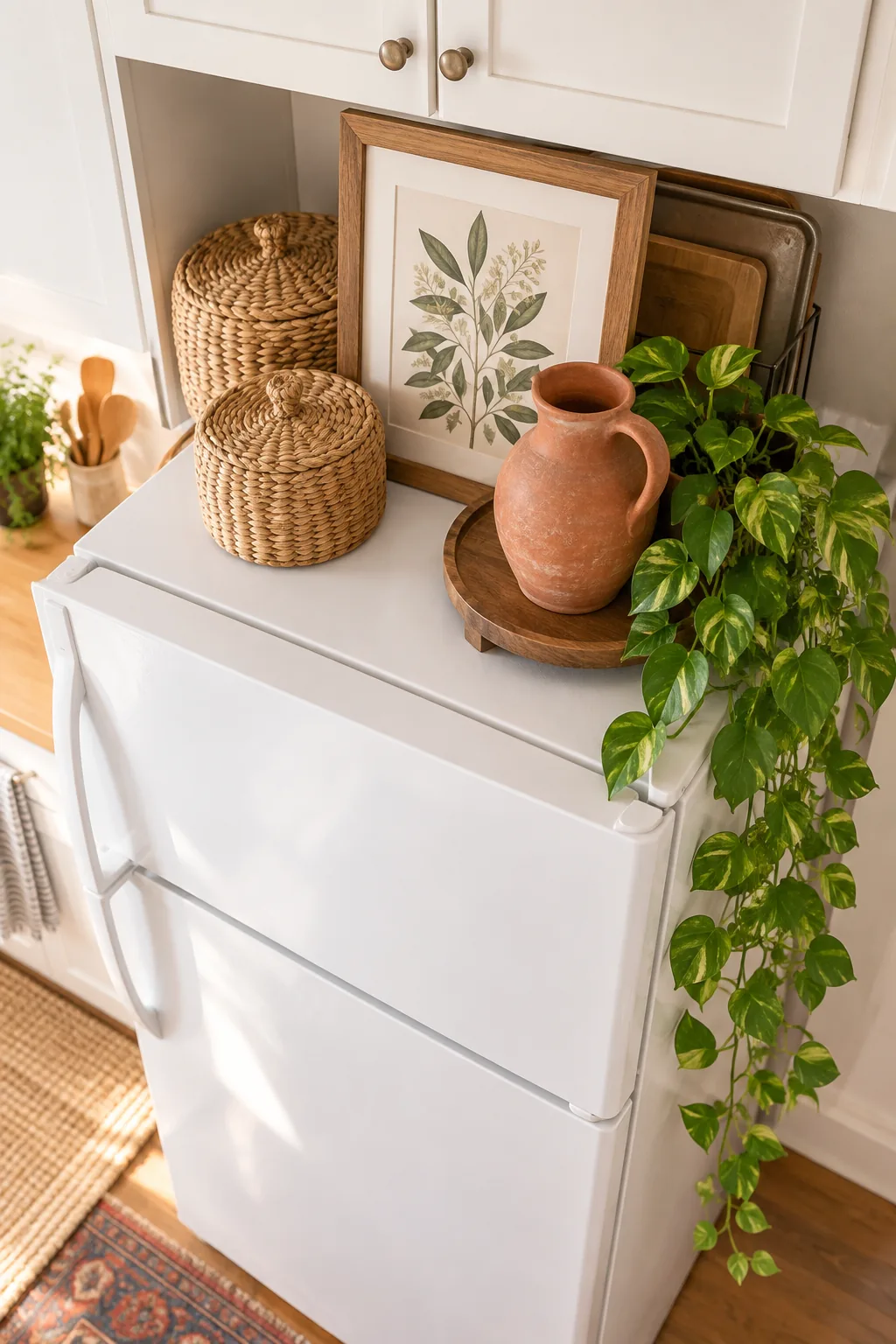
Tuck a faux trailing pothos plant directly behind the wooden tray and let its vines spill naturally over the front right edge.
Managing Heat Around Faux Greenery
While artificial plants survive where live plants fail, cheap plastic foliage can warp or emit unpleasant odors when exposed to appliance exhaust heat. Always select silk or high-grade polyurethane vines and ensure no leaves dangle directly over the warm ventilation grilles at the back.
Integrating Seasonal Decor Swaps
The beauty of this modular above-fridge arrangement lies in its flexibility for quick seasonal updates without disrupting the foundational storage elements. Swap the standard terracotta pitcher for a moody matte black vase in autumn, or introduce subtly frosted faux greenery during the winter months.
Dusting and Maintenance Routine
Even with a protective wax paper liner in place, your elevated decorative items will still collect a fine layer of ambient household dust over time. Incorporate a quick swipe with a microfiber cloth into your weekly kitchen cleaning routine to keep the arrangement looking fresh.
The Final Shake Test
Once every basket, frame, and trailing vine is perfectly positioned, step back and evaluate the complete setup from the floor to confirm visual balance.
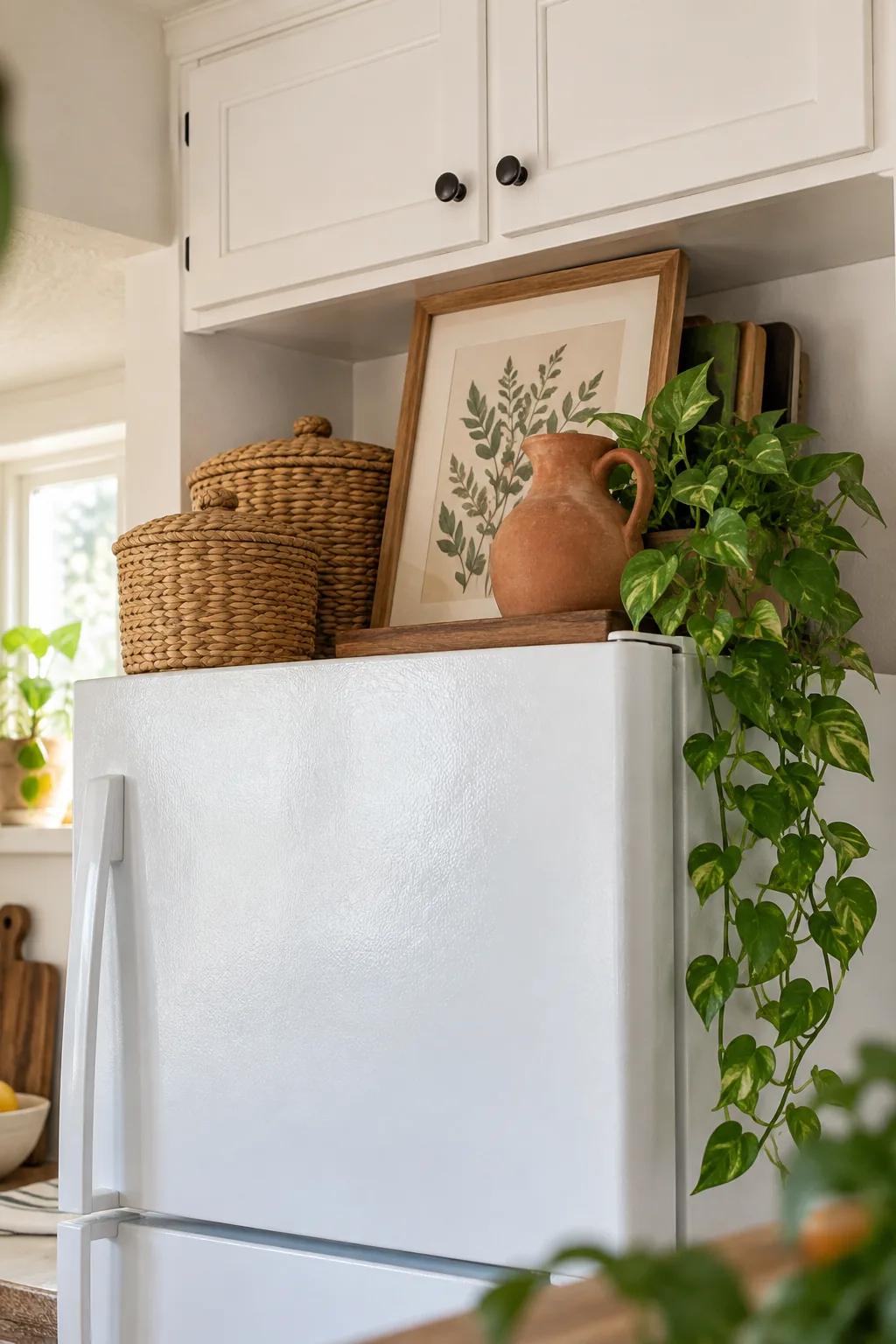
Before you consider the styling complete, you need to ensure the daily operation of the bustling kitchen won’t slowly walk your decor off the edge.
More Above-Fridge Styling Ideas
Discover how different materials and palettes can completely transform the gap above your refrigerator.
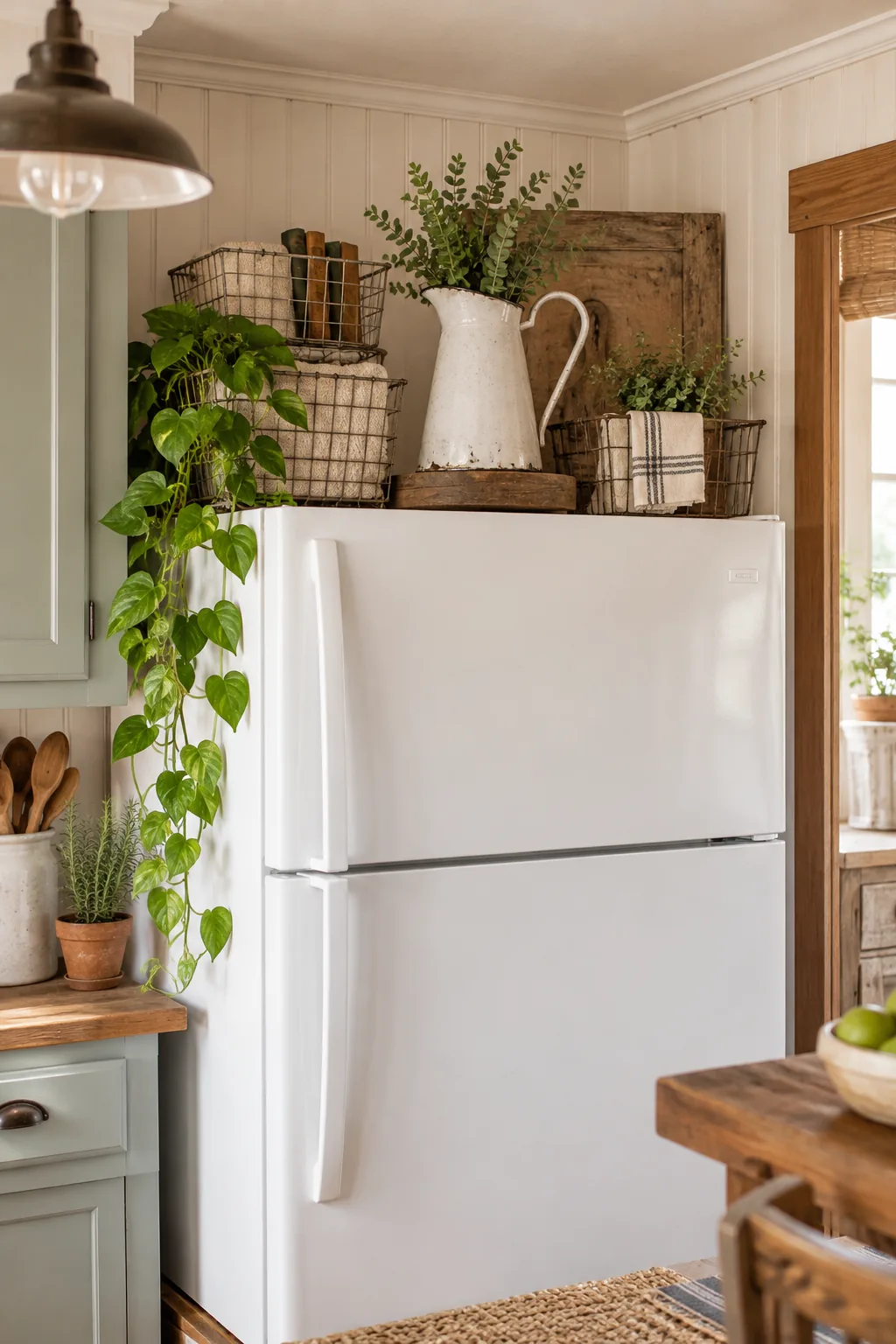
Rustic Farmhouse Wire and Enamel: Wire baskets lined with ticking fabric offer vintage charm while keeping extra kitchen towels completely dust-free.
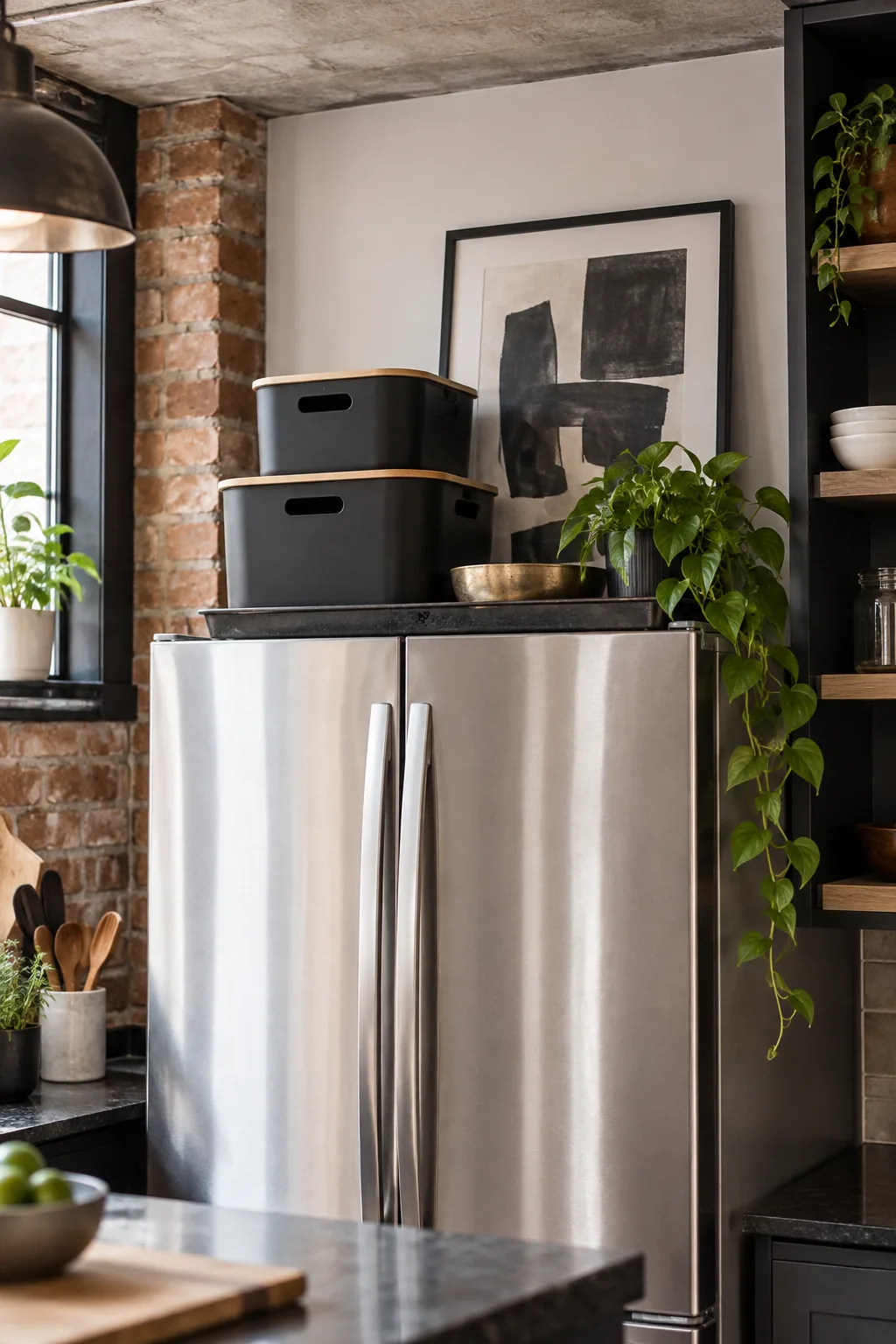
Modern Minimalist Matte Black: Sleek matte black bins provide maximum hidden storage while maintaining a clean, uncluttered visual profile.
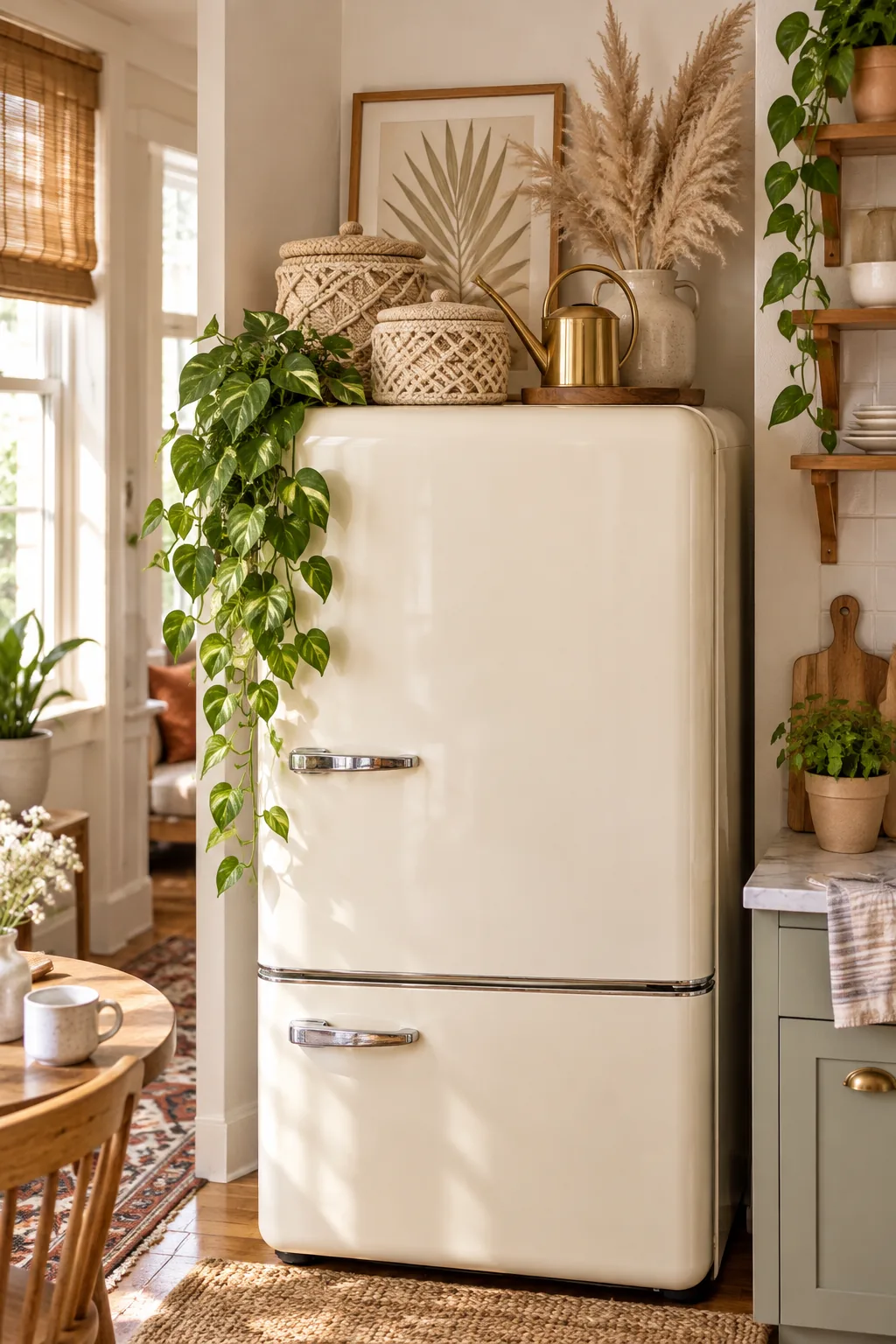
Boho Macrame and Brass: Dried pampas grass adds incredible height and texture without requiring any sunlight or maintenance.
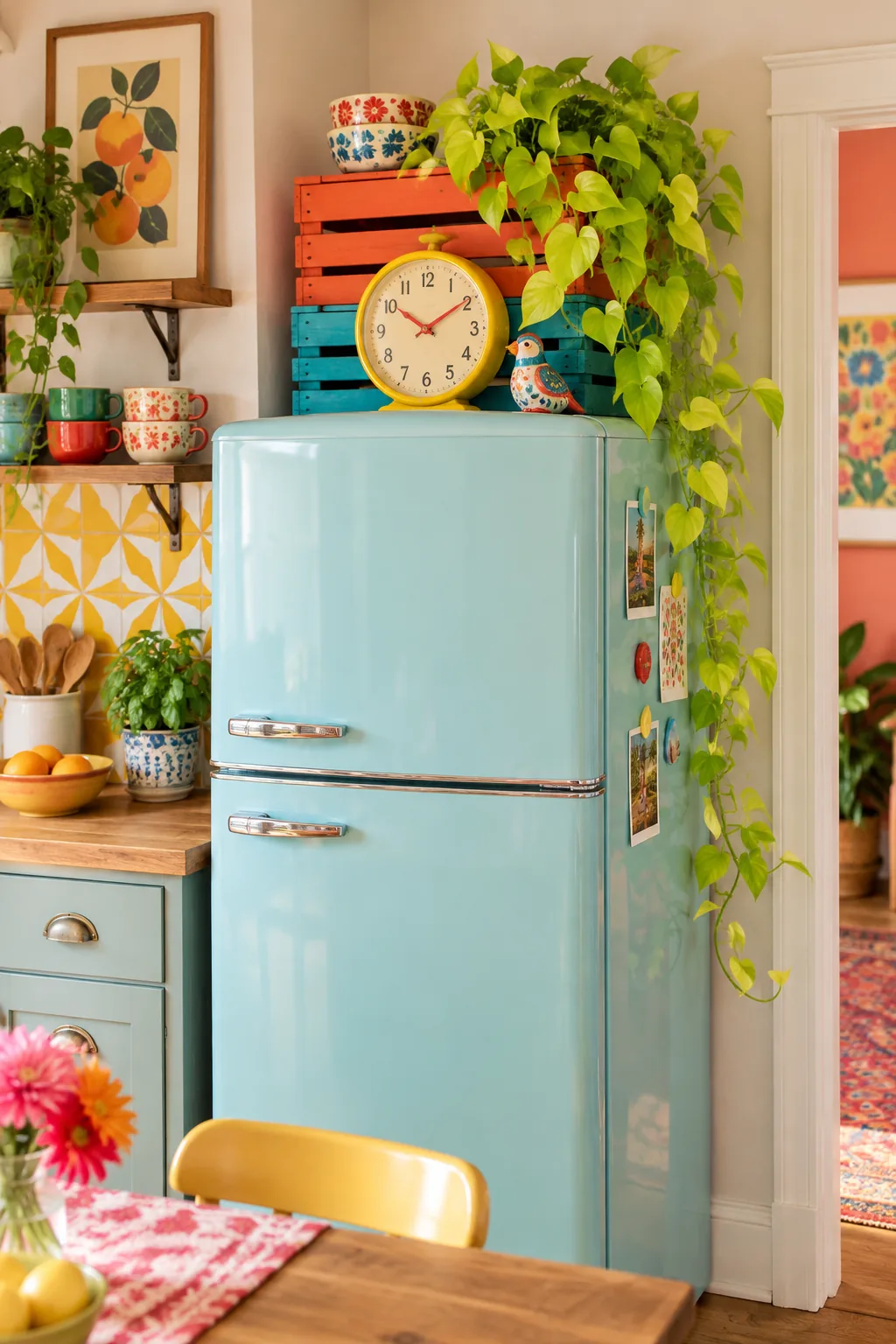
Colorful Eclectic Painted Crates: Brightly painted wooden crates turned on their sides create instant, joyful cubbies for displaying colorful cookbooks.
Scandi Birch and White Ceramics: Light birch wood boxes blend seamlessly with white walls, making the awkward gap feel intentional and airy.