How to Build a Grazing Table: The per-Person Quantity Cheat Sheet
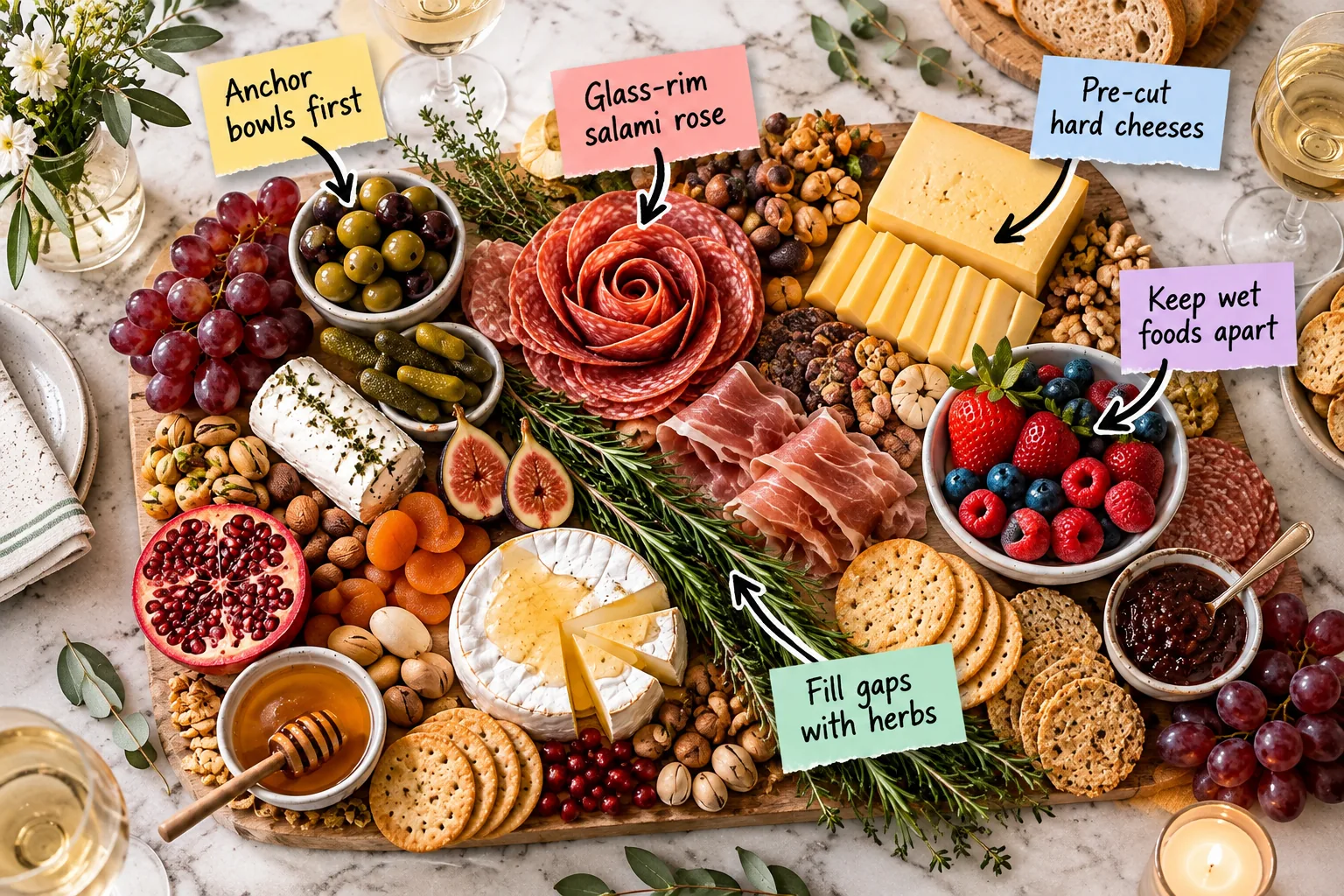
You can finally take the guesswork out of entertaining and build a stunning grazing table using this exact per-person quantity cheat sheet. We will walk through the physical assembly order so you know exactly how much food to buy and where every single piece belongs.
How Much to Buy: The Per-Person Cheat Sheet
When the per-person math is perfectly executed, you achieve an abundant, well-calculated spread that never leaves your guests hungry. Scaling your ingredients correctly is the most important step before you even touch the wooden board.
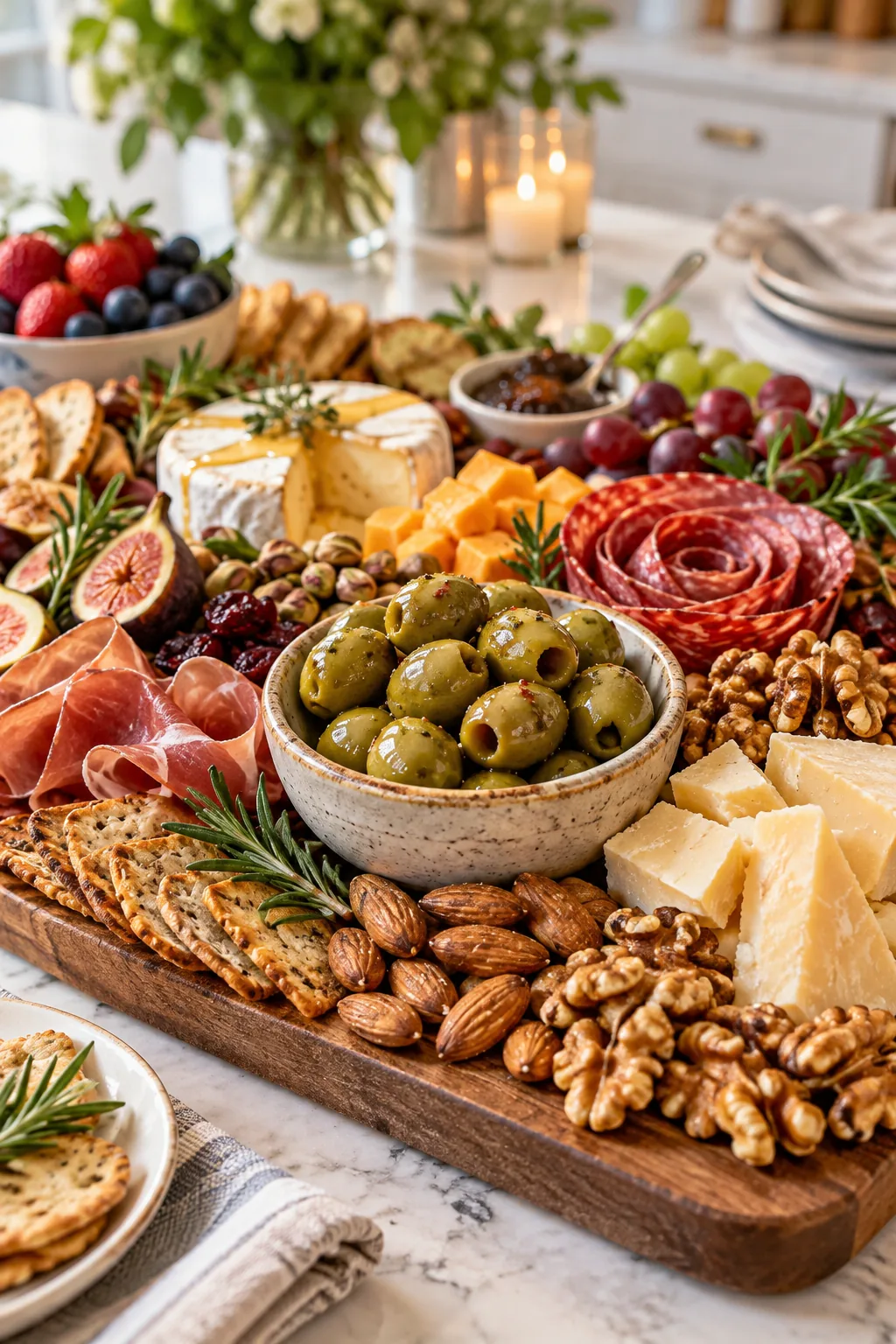
Plan on 3 to 4 ounces of cheese, 2 ounces of charcuterie, and 4 ounces of accompaniments like crackers, fruit, and nuts per person for a standard party. This ratio guarantees a beautifully balanced table without excessive leftovers.
Scale Up for Main Course Portions
If your grazing table is the only food being served at the event, you must increase the cheese to 5 ounces and meats to 3 ounces per guest. Treating the board as a meal replacement requires significantly heavier baseline ratios.
| Ingredient Category | Standard Party Portion | Main Event Portion |
| Artisan Cheeses | 3 to 4 ounces | 5 ounces |
| Cured Charcuterie | 2 ounces | 3 ounces |
| Crackers and Breads | 2 ounces | 3 ounces |
| Fruits and Nuts | 2 ounces | 2 ounces |
Select the Right Wooden Foundation
A standard three-foot wooden board comfortably serves about twenty guests when packed edge to edge with heavy, overlapping ingredients. If you are hosting a significantly larger crowd for a holiday party, push two rectangular boards seamlessly together.
Place Your Anchor Bowls First
Using heavy bowls as structural pillars allows you to build the rest of the table around a solid, reliable foundation. These sturdy vessels dictate the flow of the entire arrangement, protect delicate items, and prevent smaller ingredients from rolling off the edges.
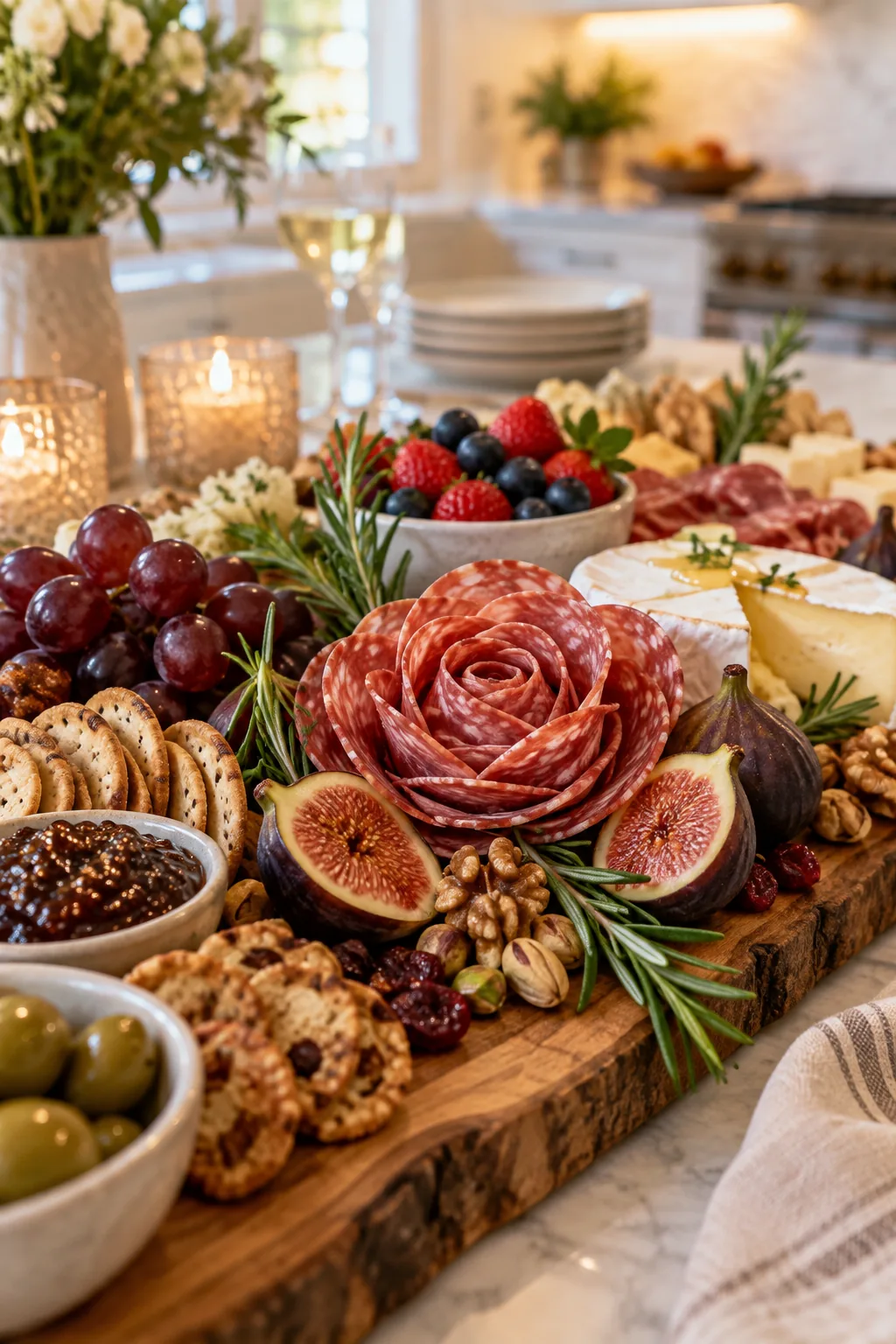
Before adding any loose items, look at the topography of your board and place 3 to 5 small ceramic bowls asymmetrically. Fill these essential anchors with wet, messy ingredients like marinated green olives, sticky honeycomb, and thick seasonal fruit jams.
Build the Glass-Rim Salami Rose
Nothing elevates a charcuterie board like the visual impact of a tightly layered salami rose serving as a dramatic centerpiece. This simple folding technique instantly transforms standard deli meats into a professional-tier culinary display.
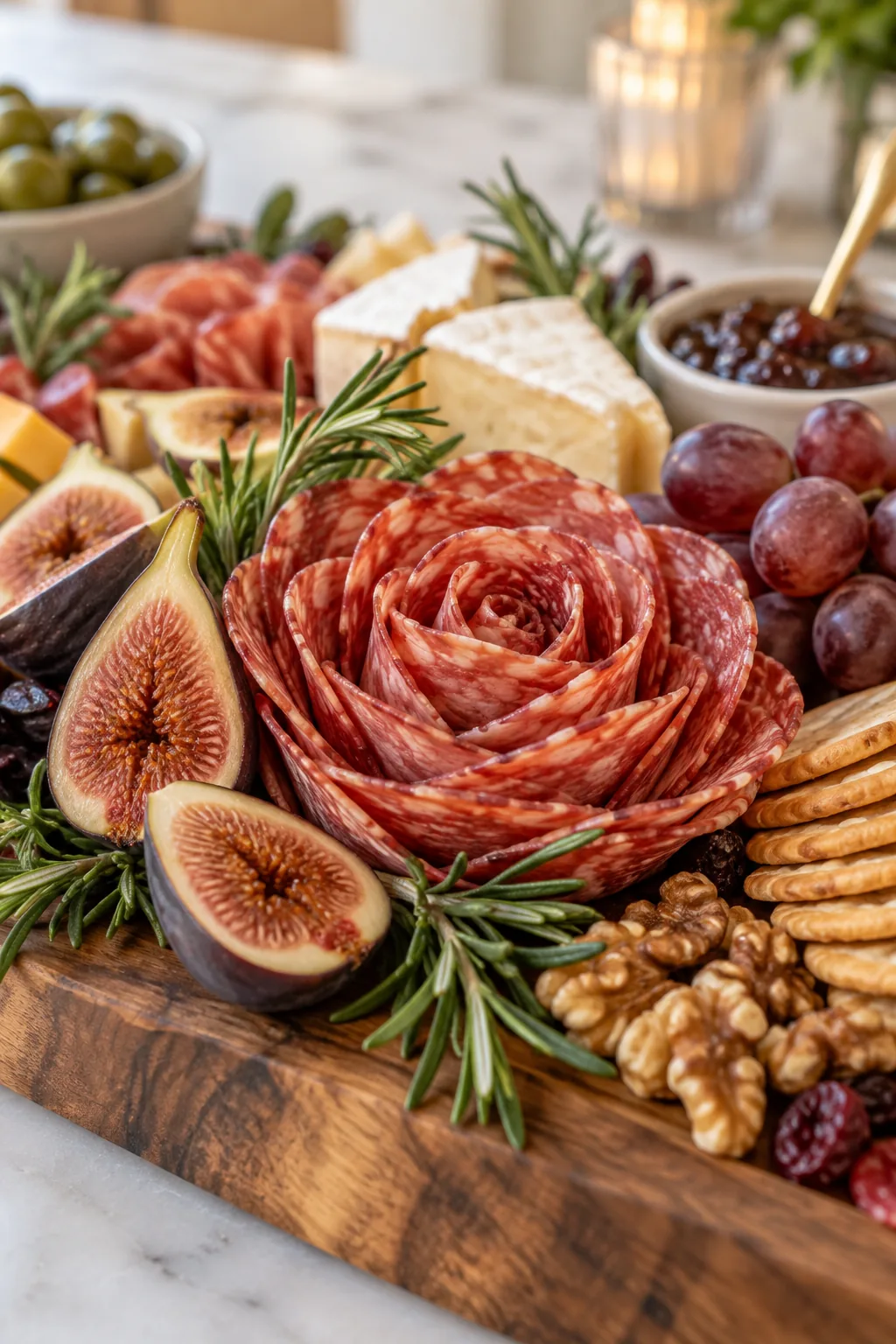
When I host in my Boston apartment, I always use a standard white wine glass to shape my roses, overlapping the meat until the center completely closes. You just flip the glass firmly onto the wood to reveal the perfect floral shape.
- Fold each circle exactly in half over the delicate glass rim.
- Overlap every new slice halfway over the previous piece.
- Press the final layers tightly to secure the inner structure.
Fold Prosciutto Ribbons for Texture
To contrast the tight, formal structure of your salami rose, drop loose ribbons of prosciutto into the negative spaces between your anchor bowls. Pinching each delicate slice in the exact middle and letting the fatty edges drape naturally creates a beautifully voluminous, ruffled texture.
Prep Hard Cheeses for Easy Grabbing
You must maintain the aesthetic of a whole cheese block while ensuring complete convenience for your grazing guests. Forcing people to hack away at a solid brick of aged cheddar will inevitably ruin the beautiful arrangement you worked so hard to build.
Slice hard cheeses completely through, but carefully push the pieces back together into their original block shape. This smart preparation method keeps the board looking incredibly neat while making it completely effortless for guests to serve themselves without using a knife.
Position Soft Cheeses and Spreads
Inviting guests to dig in by removing the first slice of a soft cheese wheel yourself eliminates the intimidation factor. Nobody wants to be the first person to cut into a pristine, perfect wheel of expensive artisanal cheese.
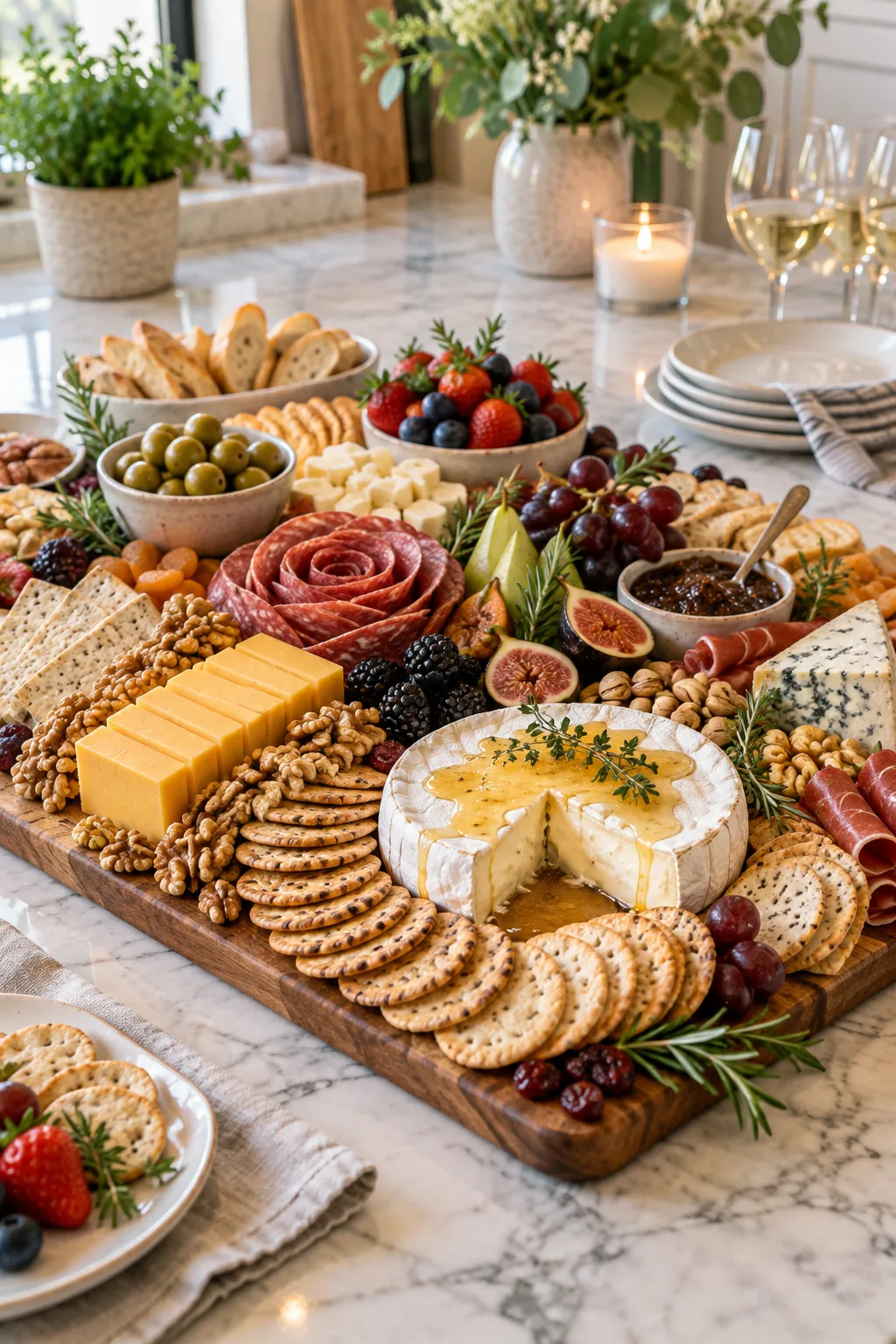
Whenever I style a massive table for a client, I always place the brie near the center, safely away from the board edges. This strategic positioning ensures the gooey center will not drip onto the table or get knocked over by passing sleeves.
Keep Wet Foods Safely Apart
Creating strategic barriers to protect the texture of your baked goods ensures your expensive crackers never turn soggy. You must cluster wet items like berries, pickles, and cut fruit in their own dedicated zones or inside smaller ramekins.
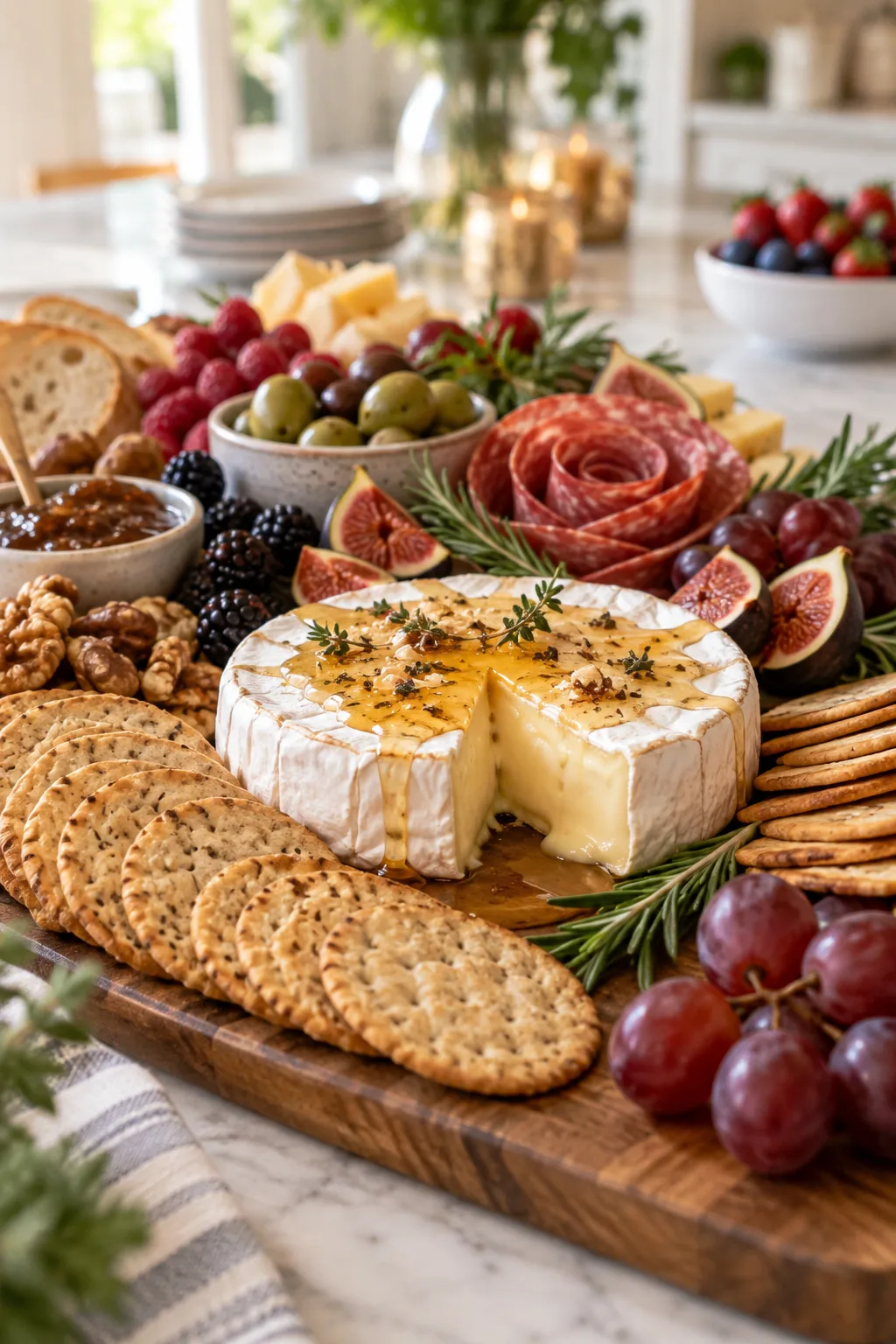
Moisture is the absolute enemy of a crisp, satisfying grazing board, so you must keep juicy elements strictly separated from your dry carbohydrates.
Fan Out Crackers and Bread
Create flowing rivers of crackers and toasted baguette slices in the remaining large spaces to establish dynamic visual movement across the table. You want these carbohydrate paths to curve gracefully around your heavy anchor bowls and solid cheese blocks, acting as a visual guide.
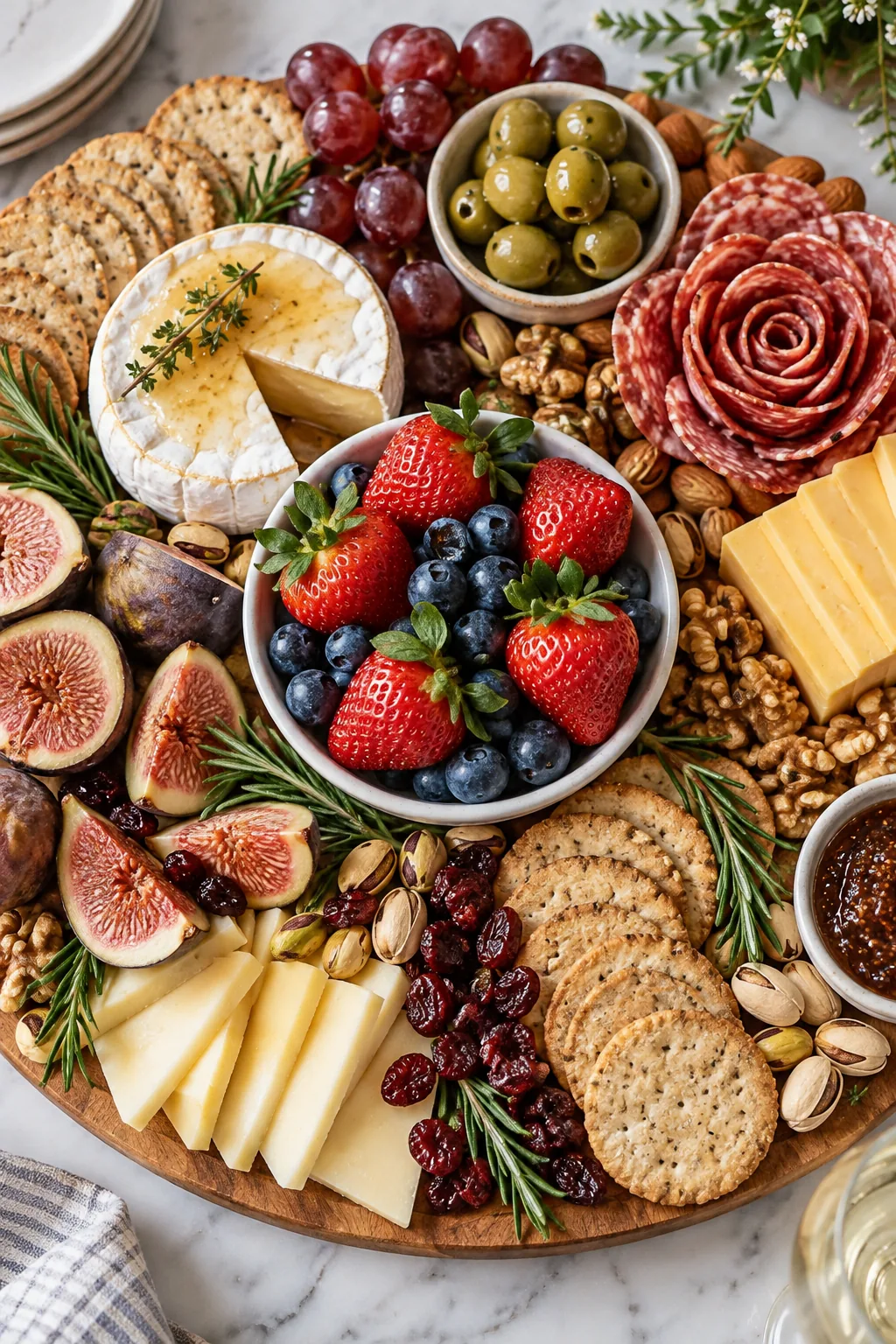
- Overlap your crackers tightly like roof shingles for easy grabbing.
- Mix different shapes, like long breadsticks and square water crackers.
- Sweep the paths diagonally to break up the rigid rectangular board.
Whenever I build a massive board in my own kitchen, I rely heavily on these sweeping cracker paths to naturally guide the guest’s eye across the entire spread. They fill awkward gaps perfectly while keeping the expensive cheeses safely separated.
Select the Best Breads for Grazing
Always offer a thoughtful mix of plain water crackers for tasting delicate cheeses and robust, heavily seeded crisps for scooping up thicker dips. If you decide to include fresh bread, make sure to toast thin slices of rustic sourdough with a generous drizzle of olive oil.
Fill Every Gap With Herbs and Nuts
Using small garnishes to eliminate empty space and create a lush finish is the final, essential step of assembly. A professional grazing board should have absolutely zero empty wood showing when you are finally done.
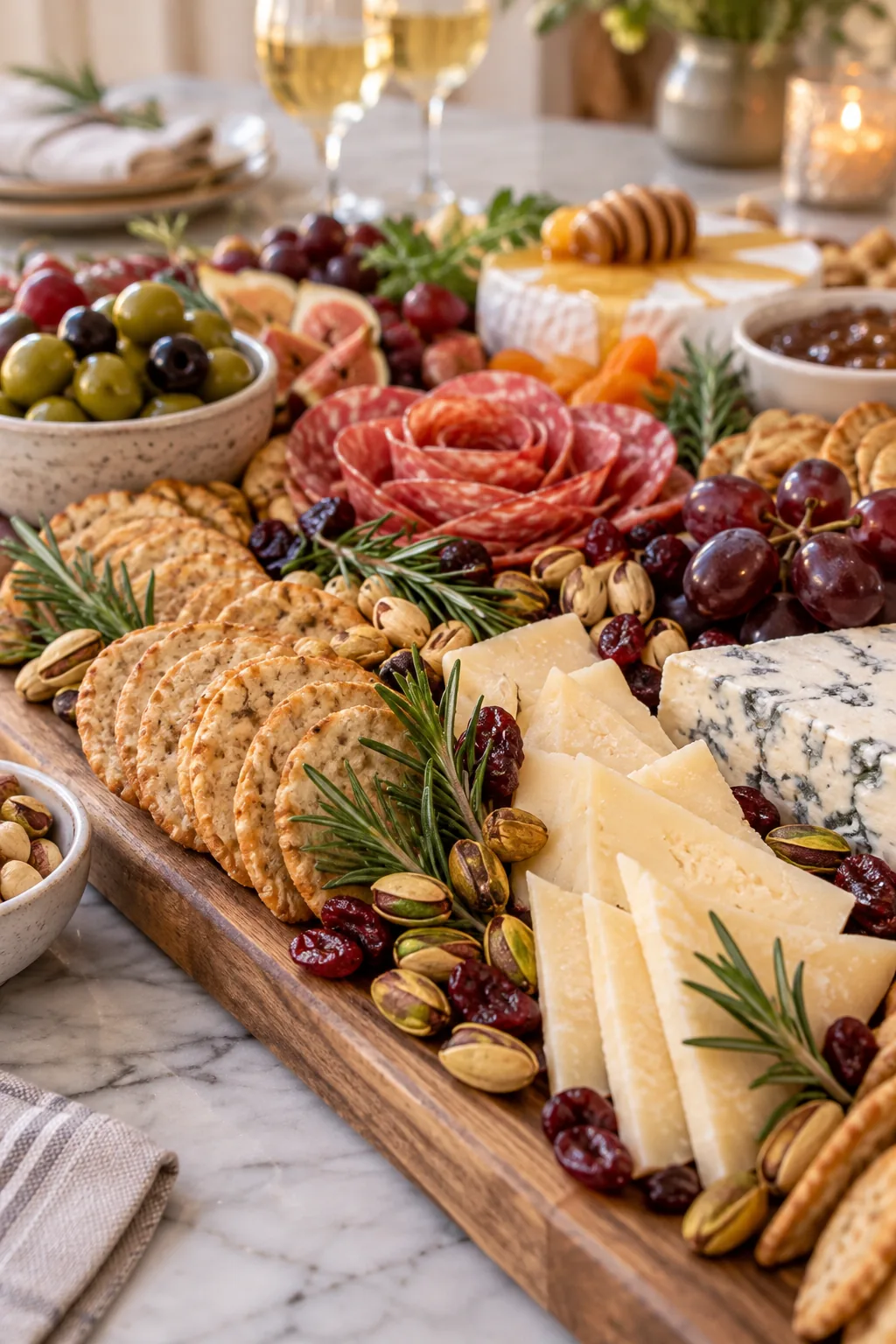
Tuck fresh rosemary sprigs, bright green pistachios, and dried apricots into every remaining crevice to create that signature look of overwhelming abundance. These tiny fillers lock the larger ingredients in place and make the entire table feel incredibly generous.
4 Grazing Table Styles for Any Occasion
Pick a distinct flavor profile and aesthetic to match your next gathering.
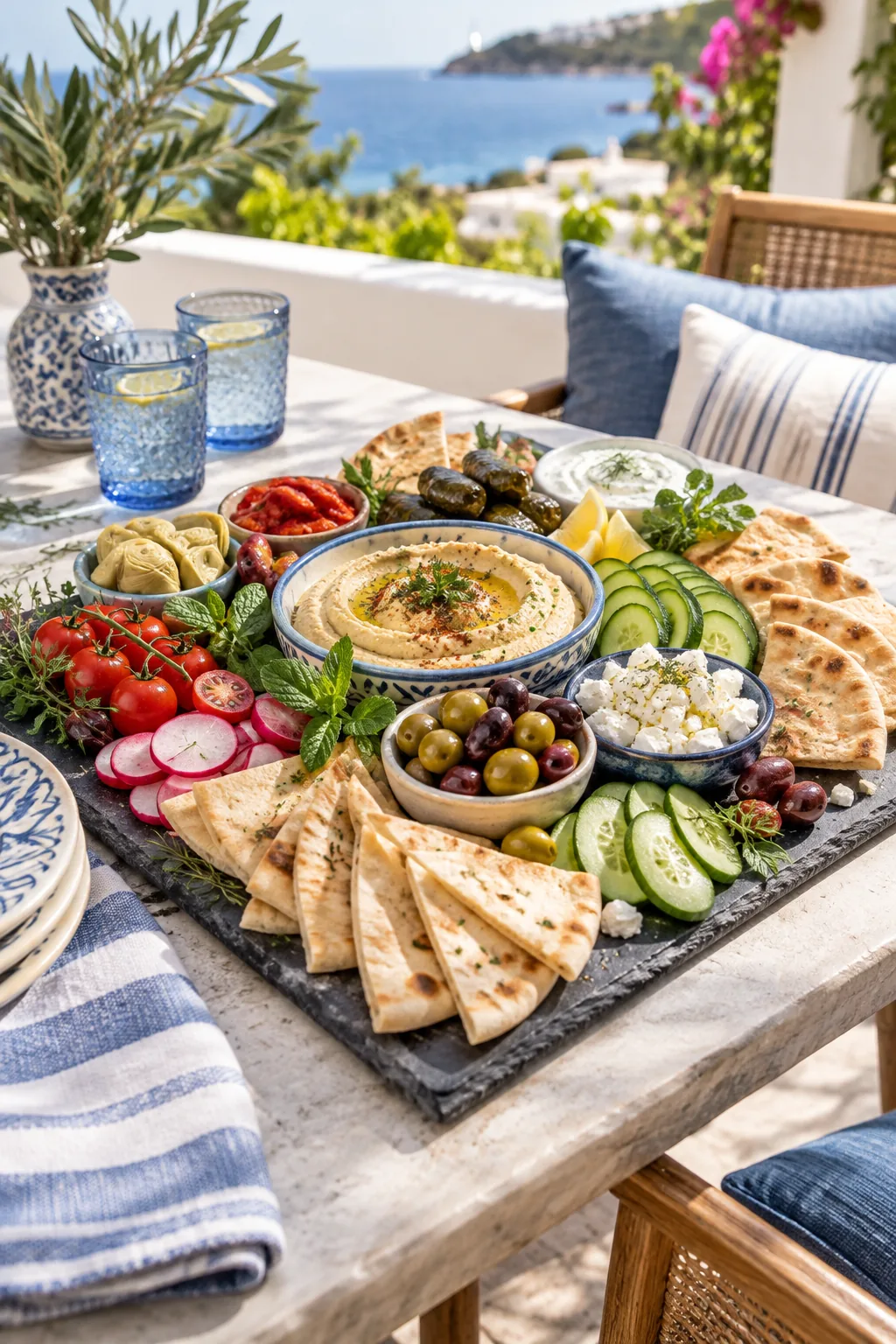
Mediterranean Mezze Board: Swap traditional cheddar for marinated feta and rich hummus to give your spread a bright, coastal feel.
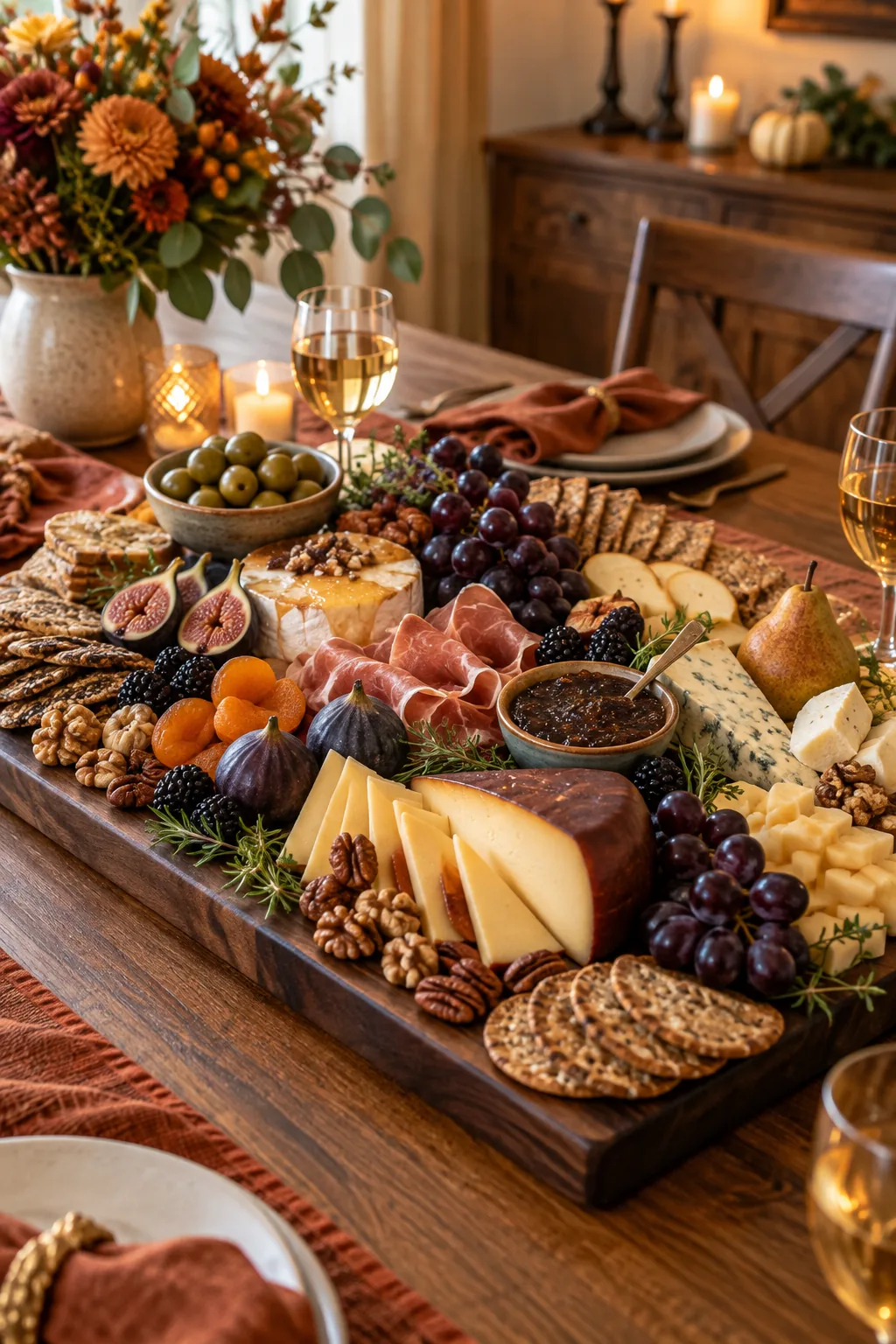
Rustic Autumn Harvest: Lean into seasonal warmth by incorporating smoked cheeses, dark fruits, and deep amber jams.
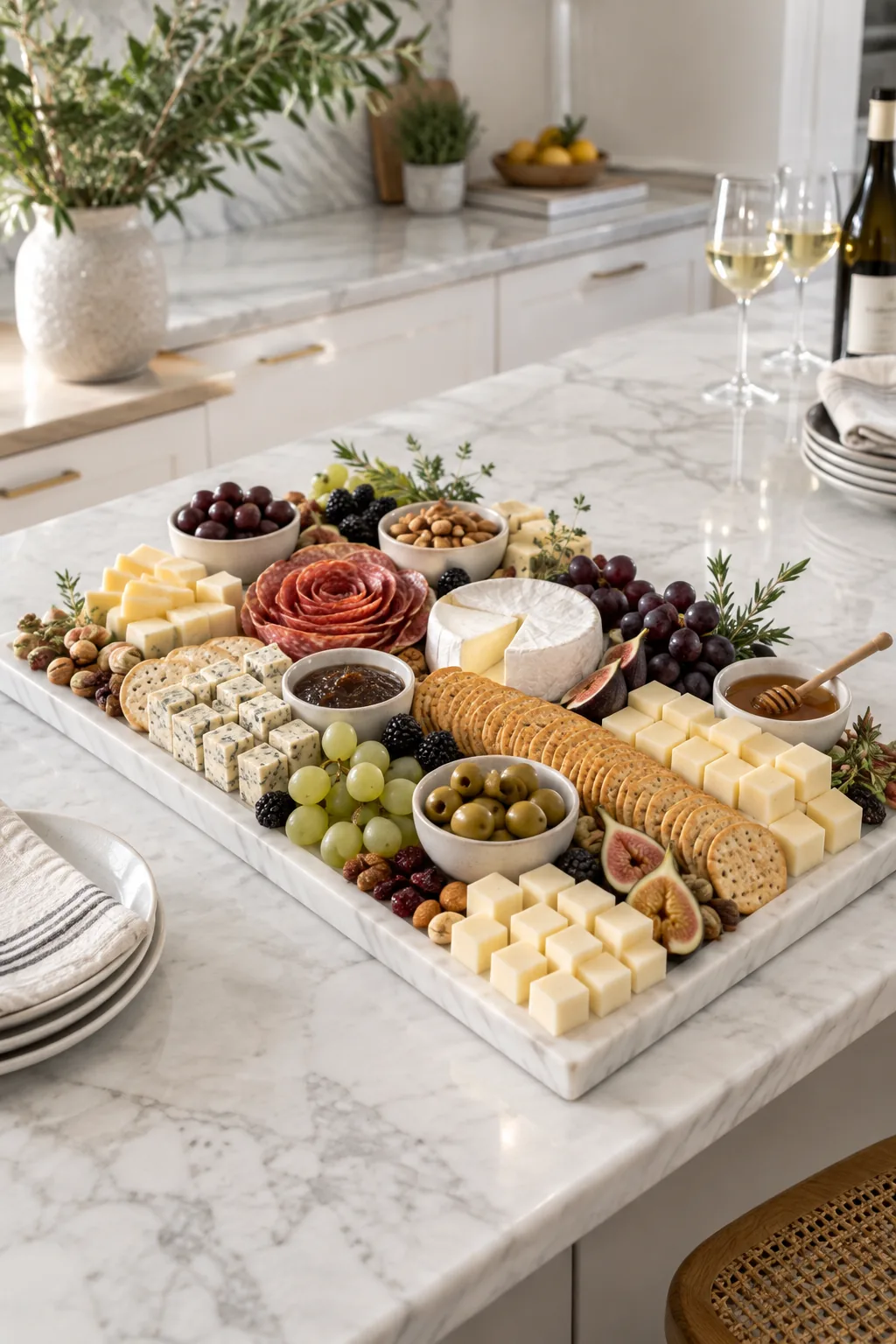
Modern Minimalist Spread: Arrange ingredients in precise, geometric rows on a stark marble slab for an ultra-contemporary look.
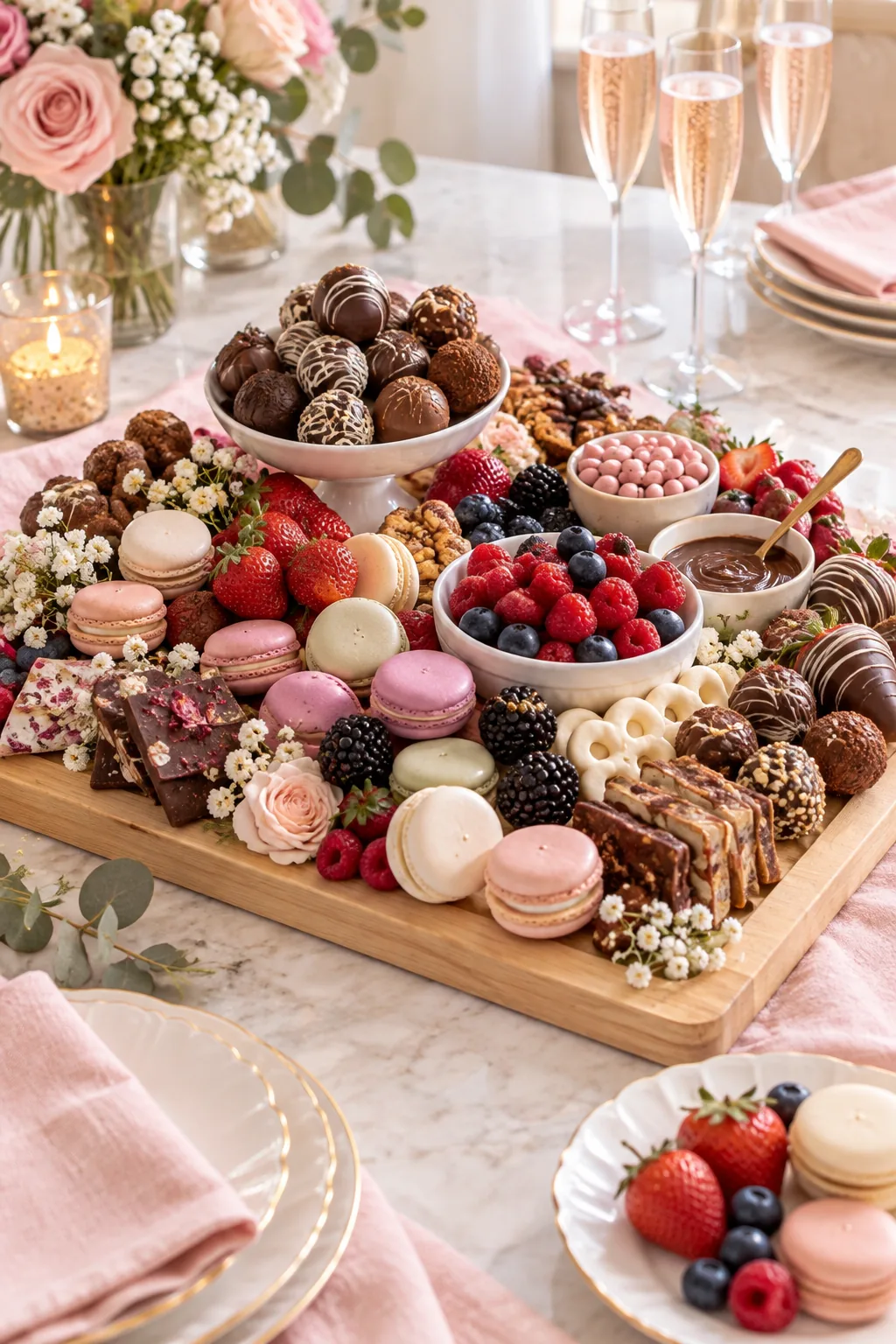
Sweet Dessert Board: Forgo the savory meats entirely and pile a board high with gourmet chocolates, macarons, and fresh berries.