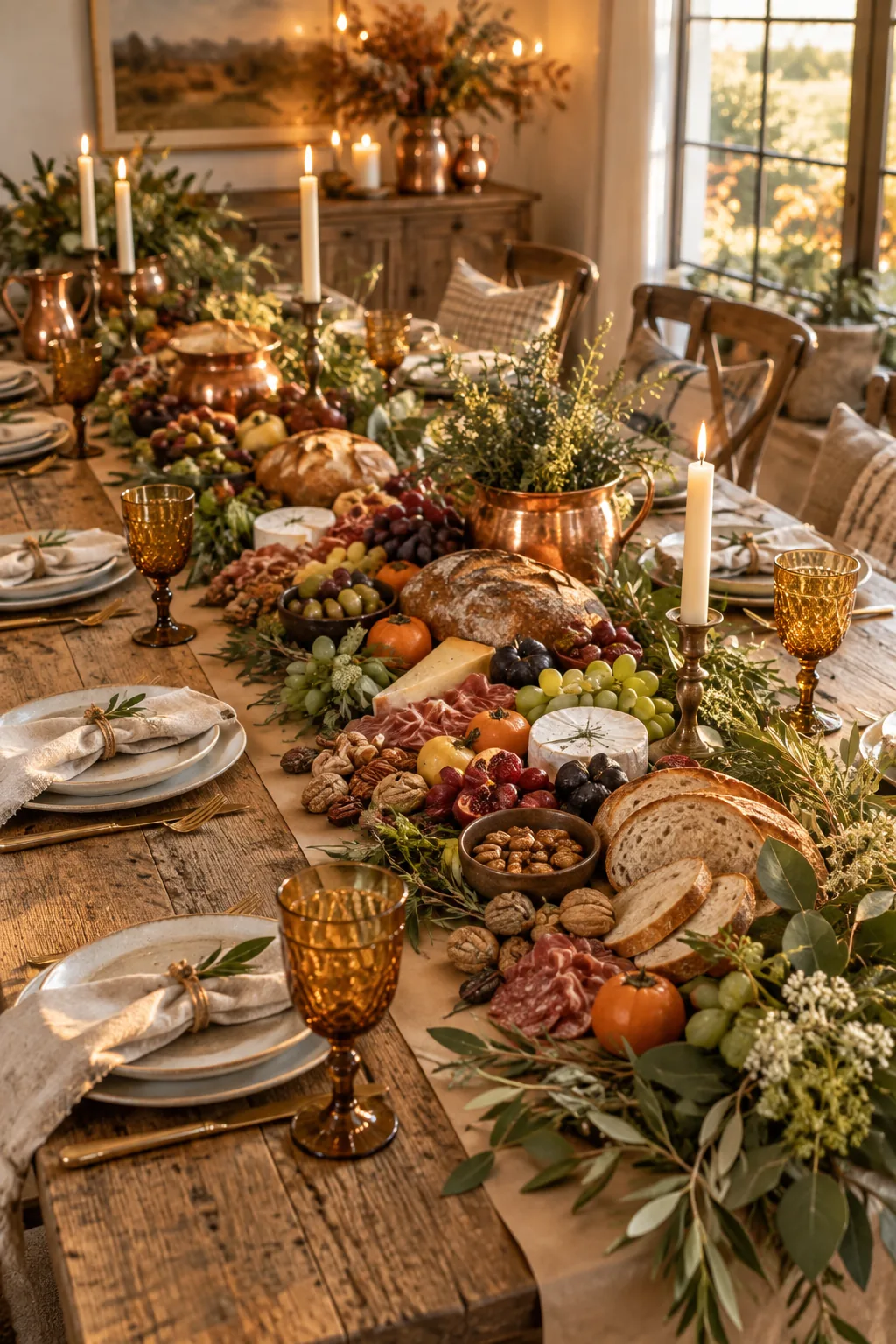
Non-Traditional Thanksgiving Grazing Table & Prep Schedule
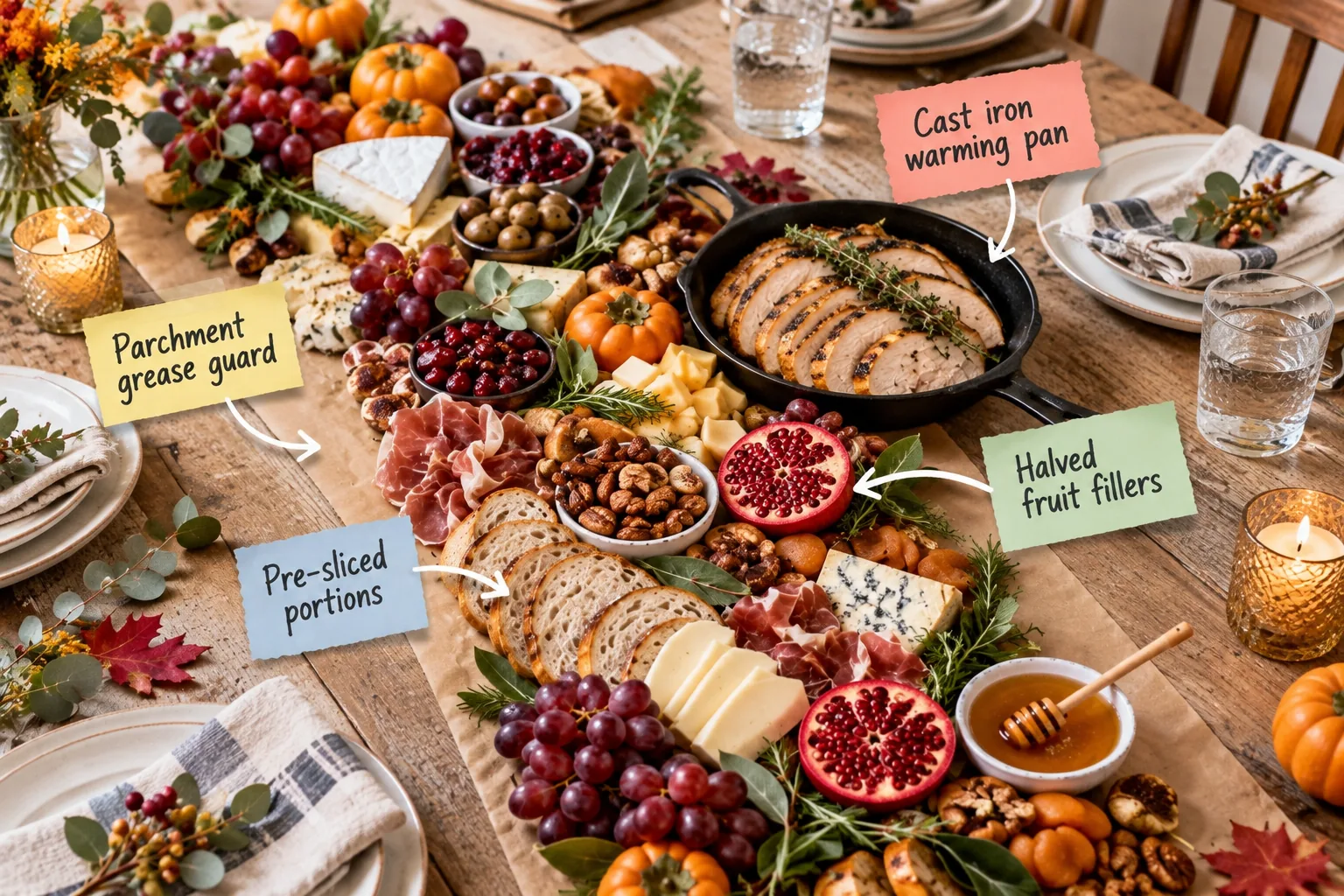
Skip the formal plated dinner with a lush, interactive table runner and follow my step-by-step grazing table prep schedule to pull it off stress-free.
Rethinking the Traditional Feast
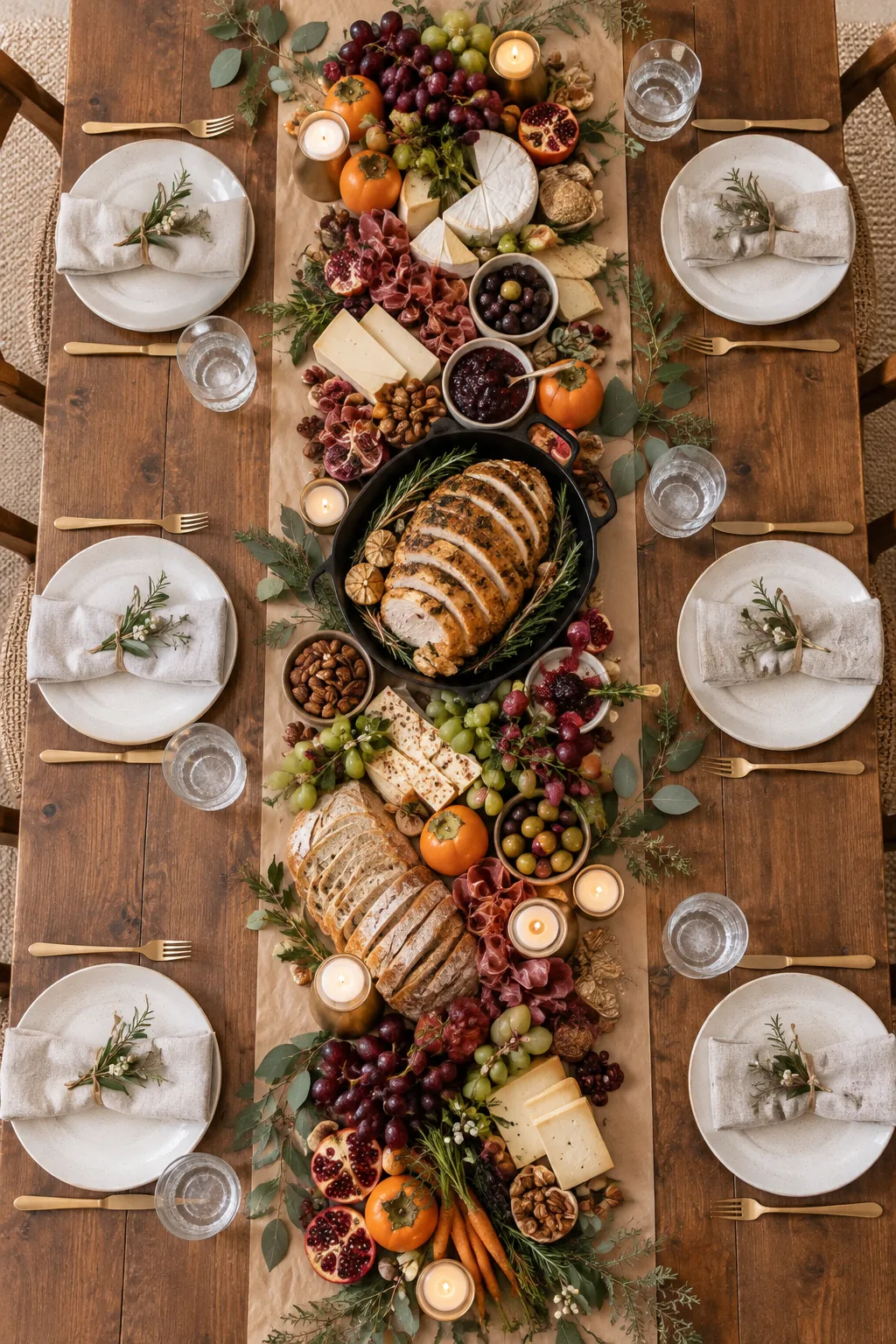
Swap the rigid, formal dinner for an interactive grazing runner that encourages mingling and natural conversation. A standard 6-foot dining table requires a runner width of about 18 to 24 inches to look appropriately abundant without overcrowding.
Sizing Your Grazing Space
Leaving empty perimeter space ensures your guests have comfortable room to set down their drinks. Aim for exactly 12 inches of clearance along the table edges for dinner plates, silverware, and water glasses to keep the space functional.
Choosing the Right Table Shape
A rectangular dining table naturally supports a linear grazing runner best. If you are working with a round dining table, build a concentrated circular centerpiece instead, leaving a 14-inch perimeter for your plates and glassware.
Selecting the Right Base Materials
Building directly on the wood table requires food-safe barriers that block moisture and grease. A dual-layer system uses heavy paper for visual warmth and a top layer of treated parchment for actual food contact.
| Material | Purpose | Width |
|---|---|---|
| Kraft Paper | Visual base | 30 inches |
| Clear Parchment | Grease barrier | 12 inches |
Selecting the Kraft Paper Color
Bleached white paper shows every single grease spot and crumb almost immediately. Opt for natural brown heavyweight kraft paper to hide minor spills and provide a warm, rustic backdrop that makes the vibrant food pop.
Protecting the Table Surface
I always lay a parchment grease guard over a kraft paper base on my vintage dining table to prevent oily roasted nuts from leaving permanent stains. Overlap your parchment sheets by at least 2 inches to ensure absolutely no oils leak through the seams.
Securing the Foundation Layers
Loose paper will shift and tear as guests reach across the table for food. Tape the kraft paper directly under the table edges using painter’s tape, which holds firmly without damaging your delicate wood finish when you remove it.
Positioning the Hot Main Dish
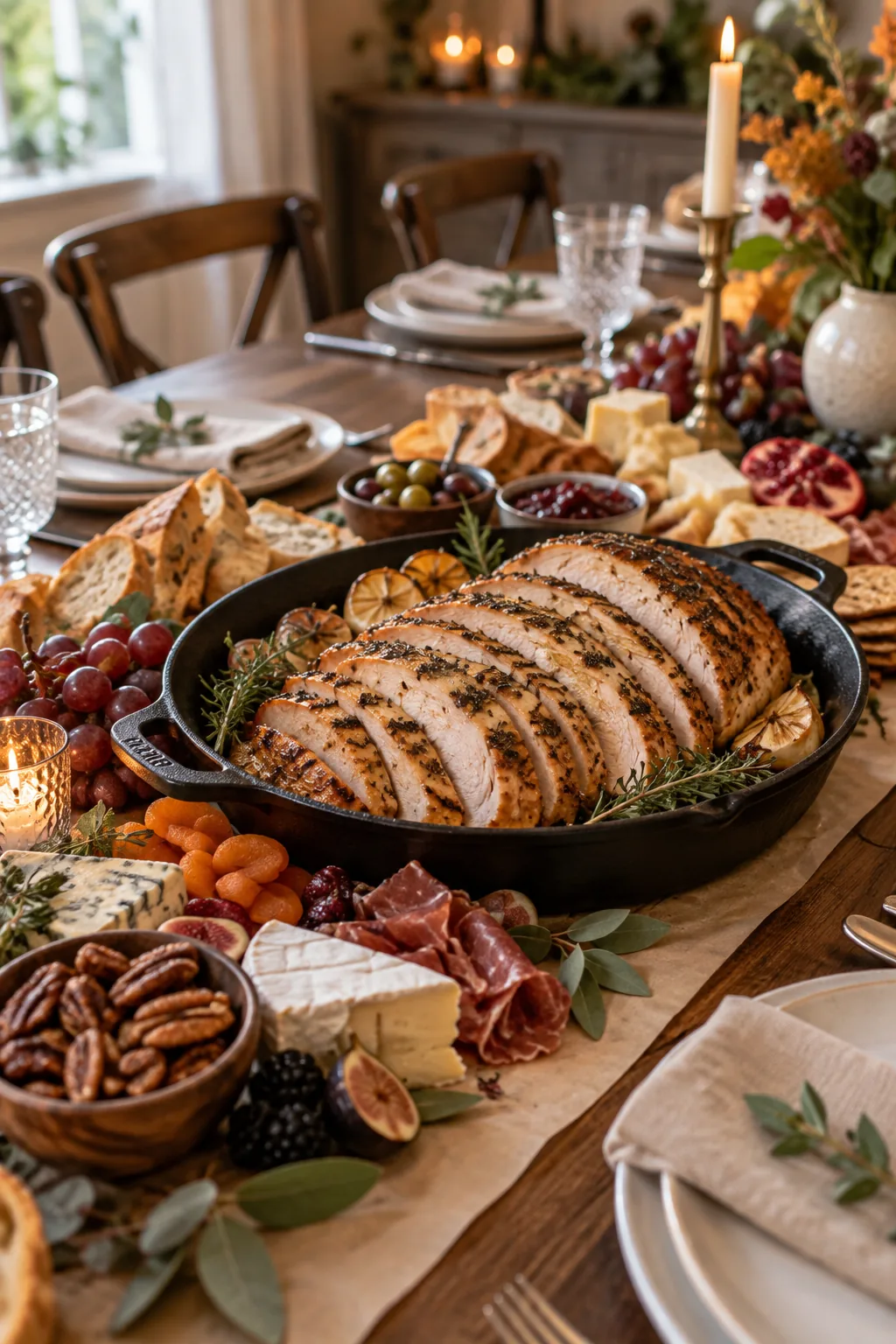
You do not need a massive carving platter to feature the Thanksgiving turkey beautifully. Anchor the center of the table with a pre-warmed 8-inch or 10-inch cast iron warming pan to hold the meat.
Pre-Warming the Skillet
A cold pan will immediately sap the heat from your freshly cooked bird. Heat the empty cast iron skillet in a 200-degree oven for twenty minutes before transferring the sliced turkey into it to retain the ideal serving temperature.
Choosing the Right Turkey Cut
Serving a whole bird on a grazing table is visually overwhelming and incredibly messy to carve. Roast a boneless turkey breast instead, which yields neat, uniform medallions that fit perfectly inside your warming skillet.
Pre-Warming the Dinner Plates
Serving hot turkey onto a cold ceramic plate will cool the meat down instantly. Run your stacked plates through a warm dishwasher cycle or place them in a 150-degree oven for ten minutes before setting them out.
Adding Structure with Bowls
Placing your bowls first creates a reliable, foolproof roadmap for the rest of your ingredients to follow. Use small vessels for wet items like cranberry sauce, honey, and marinated olives.
Spacing the Wet Ingredients
Crowding all your dips into one spot creates a traffic jam when everyone wants cranberry sauce. Space your 3 to 5 small ramekins roughly 12 inches apart down the center line to distribute the flow evenly.
Selecting the Right Honey
Runny liquid honey creates a sticky mess when guests try to drizzle it over their cheese. Serve a chunk of raw honeycomb instead, which looks incredibly architectural and stays neatly contained within its serving bowl.
Choosing the Olives
Whole olives are traditional, but dealing with the pits while mingling is incredibly awkward for your guests. Always serve pitted castelvetrano olives to keep the eating experience seamless and eliminate the need for discrete pit-disposal bowls.
Pre-Slicing Breads and Cheeses
In my own apartment, I keep the buffet line moving smoothly by offering pre-sliced portions so nobody has to chop. Cut artisan bread into 1/2-inch slices and hard cheeses into bite-sized wedges before guests arrive.
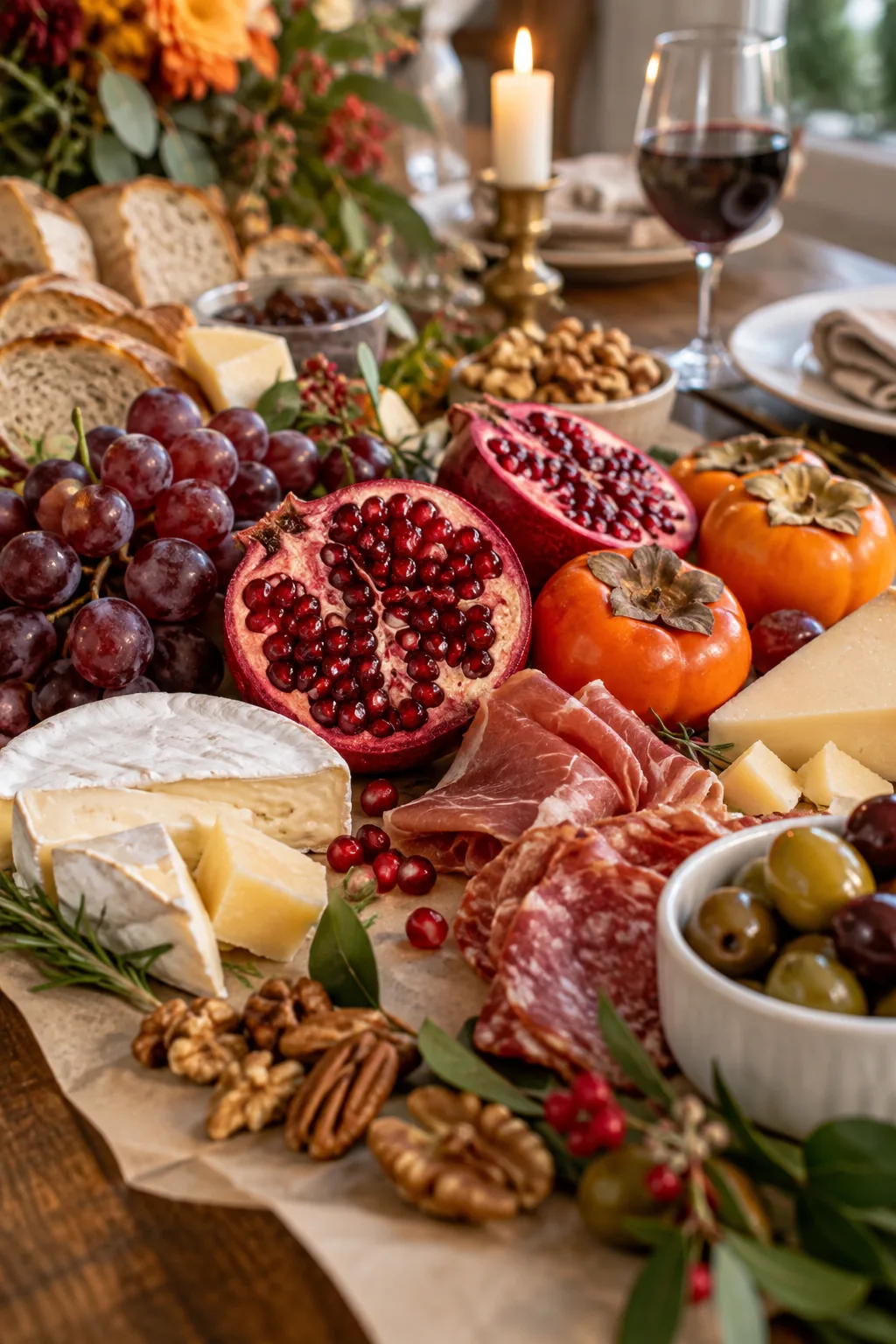
Selecting the Artisan Breads
Soft sandwich bread will turn mushy when exposed to the ambient moisture of the grazing table. Choose crusty sourdough or dense seeded baguettes that hold their structure even when sitting out for a few hours.
Picking the Hard Cheeses
Soft bries and goat cheeses look messy once a few people dig into them with a knife. Stick to firm options like aged cheddar, manchego, and gouda that hold their crisp geometric shapes beautifully throughout the evening.
Stacking for Easy Grabbing
Flat layers of cheese look uninspired and take up far too much valuable real estate. Shingle the wedges in tight, overlapping rows or stack them vertically so guests can grab exactly what they need with one hand.
Layering the Cured Meats
At my own Thanksgiving parties, I introduce savory depth by folding prosciutto into loose ribbons to create appealing height against the flat cheeses. This technique builds a lush, abundant texture that looks incredibly high-end.
Calculating Meat Portions
Running out of charcuterie halfway through the dinner is a host’s worst nightmare. Plan for roughly 3 ounces of cured meat per guest when serving this arrangement as your primary main-course grazing table.
Folding Prosciutto Ribbons
Laying meat flat makes it look greasy and unappetizing under the dining room lights. Pinch the center of each prosciutto slice and twist it gently to form a loose rosette that stands up on its own.
Balancing Sweet and Savory
A great grazing board hits every flavor profile to keep the palate engaged. Scatter small handfuls of candied pecans and dried apricots near the salty cured meats to offer a bright, sweet contrast.
Adding Crunch with Nuts
Raw nuts taste flat and lack the necessary texture to stand up to rich cheeses. Always use dry-roasted almonds and salted pistachios, scattering them generously into any tiny remaining gaps to create a truly abundant look.
Tucking in Halved Fruit Fillers
Once the main elements are placed, fill the awkward gaps between the cheeses and bowls with brightly colored halved fruit fillers. Pomegranates and persimmons add vibrant autumnal color while breaking up the heavy proteins.
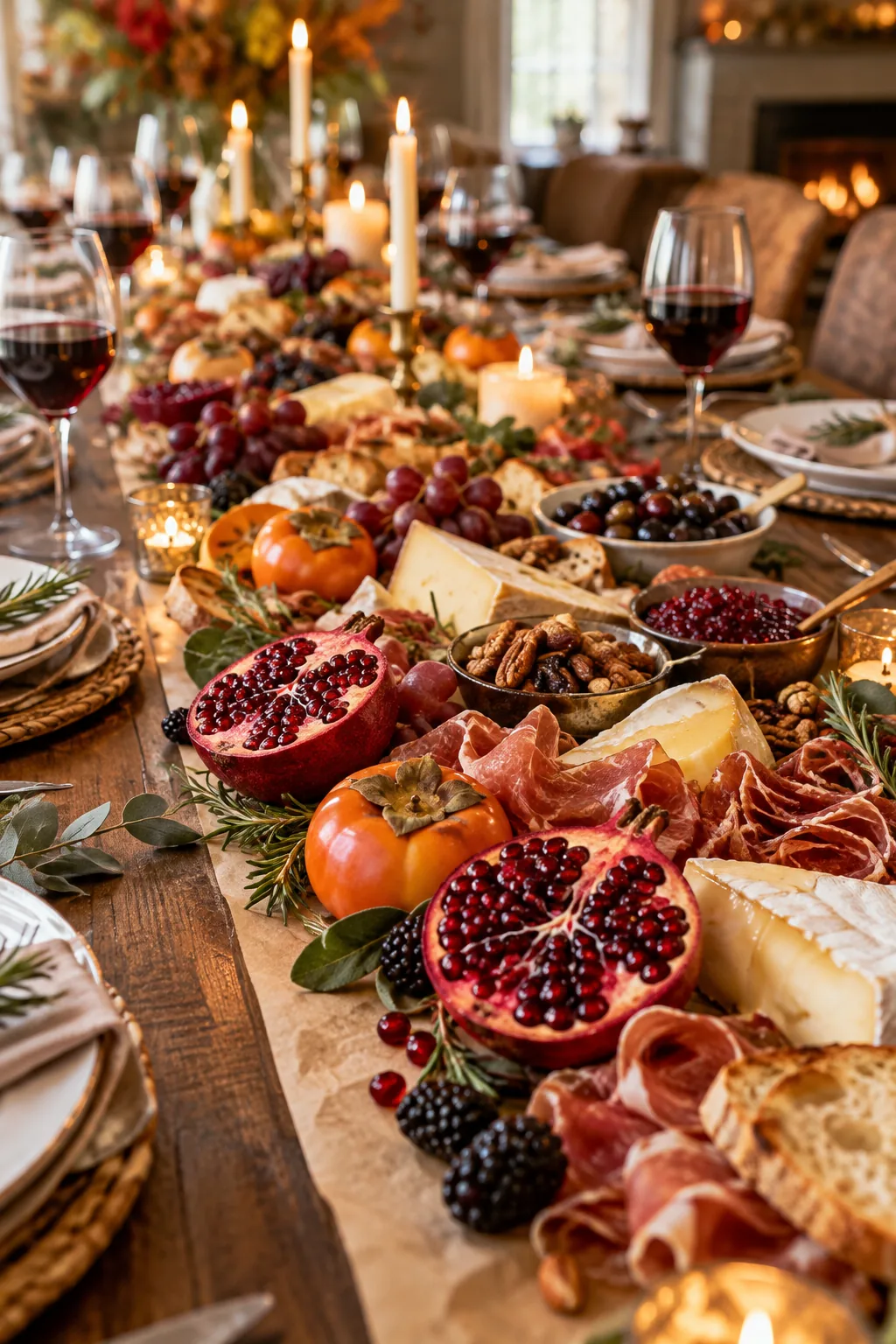
Slicing Pomegranates Cleanly
Cutting straight through a pomegranate will burst the seeds and bleed red juice all over your pristine cheeses. Score the skin lightly around the equator and pull the halves apart with your hands for a clean break.
Placing the Persimmons
Whole fruits are too bulky and roll away when the table is bumped. Cut firm persimmons perfectly in half to create a stable flat base that completely covers any exposed parchment paper edges.
Adding Greenery for a Lush Finish
While a lush runner looks stunning, it is easy to accidentally ruin the meal with the wrong finishing touches. Soften the hard edges of the table and bring the arrangement to life with fresh herbs.
Sourcing Food-Safe Herbs
Florist shops often spray their greenery with chemical preservatives that are unsafe for human consumption. Buy your decorative herbs exclusively from the produce section of your grocery store to ensure they are completely food-grade.
Tucking the Herb Sprigs
Dropping whole branches onto the table looks messy and overgrown. Snip your rosemary and sage into neat 4-inch sprigs and tuck them firmly under the outer edges of the food so they spill naturally outward.
Setting Up Plates and Silverware
Forcing guests to balance a plate while serving themselves is a recipe for spills. Stack your 10-inch dinner plates at the very ends of the table so guests can grab one before moving down the sides.
Providing Serving Utensils
Expecting guests to pick up sticky fruits or meats with their hands is a massive hosting misstep. Place small bamboo tongs and cocktail forks near every major cluster of food to keep the serving process sanitary.
Managing Dietary Restrictions
Cross-contamination ruins the experience for guests with food allergies. Create a designated gluten-free zone at one end of the table, using a separate set of tongs for those specific crackers and cheeses to ensure everyone eats safely.
Managing Room Temperature Safety
Perishable foods cannot sit out indefinitely at room temperature. Plan to leave the grazing table out for a maximum of two hours before packing up the remaining meats and cheeses to prevent spoilage.
Clearing the Table Afterward
The beauty of a paper-based grazing table lies in the incredibly fast cleanup. Once the reusable bowls and cast iron skillet are removed, simply roll up the kraft paper base with the remaining scraps inside and toss it.
Lighting the Grazing Table
Harsh overhead dining room lights wash out the rich autumnal colors of your food. Place three to five taper candles in low brass holders along the table edges to cast a warm, flattering glow.
The Complete Grazing Table Prep Schedule
Pulling off this feast requires timing, not culinary mastery, so you can actually enjoy your own party.
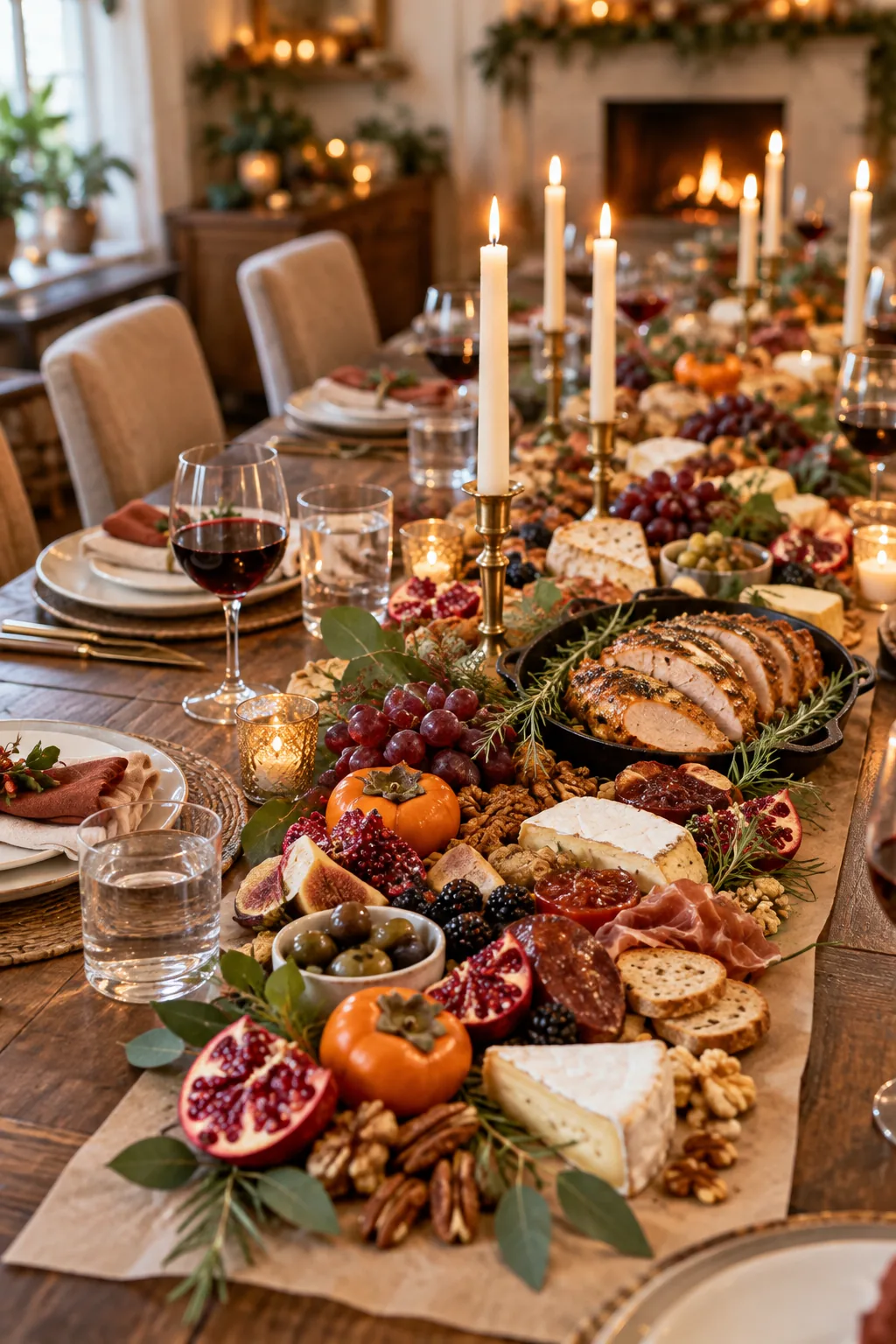
Following a strict countdown ensures your room-temperature ingredients look fresh and your hot proteins stay perfectly safe.
- 2 days before: Shop for non-perishables, cured meats, and hard cheeses.
- 1 day before: Pre-slice your cheeses, breads, and halved fruits, storing them in airtight containers.
- 2 hours before: Lay your parchment foundation and build all room-temperature ingredients.
- 10 minutes before: Drop the hot cast iron turkey pan into the center and serve.
More Thanksgiving Grazing Table Styles
Adapt the grazing runner concept to perfectly match your dining room's aesthetic.
Moody Jewel-Toned Thanksgiving Runner: Embrace a dramatic atmosphere by pairing dark walnut wood with deep purple fruits, rich meats, and elegant brass bowls.
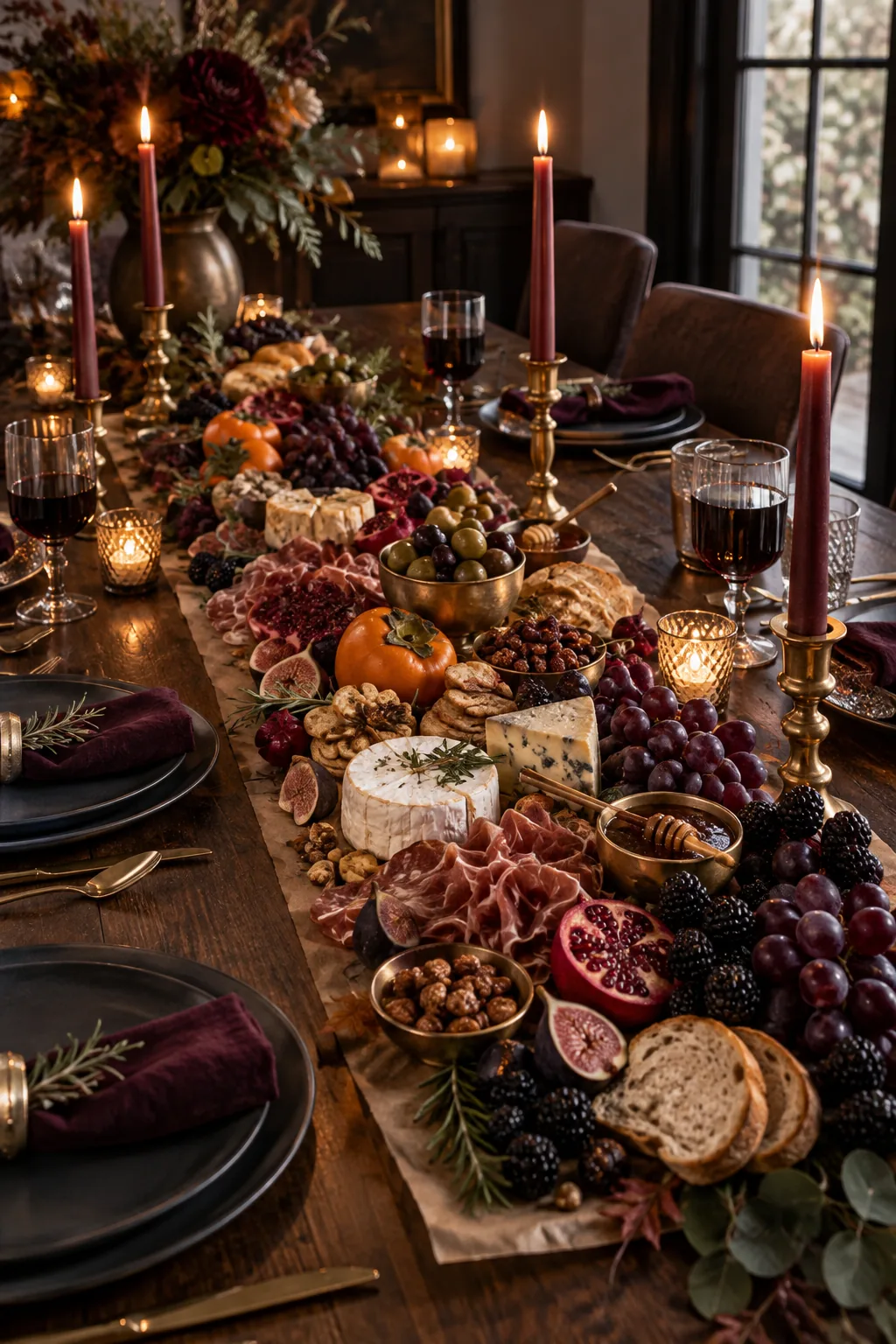
Minimalist Scandi Grazing Table: Keep things fresh and bright with pale ash wood, white ceramics, and a tightly curated palette of light cheeses.
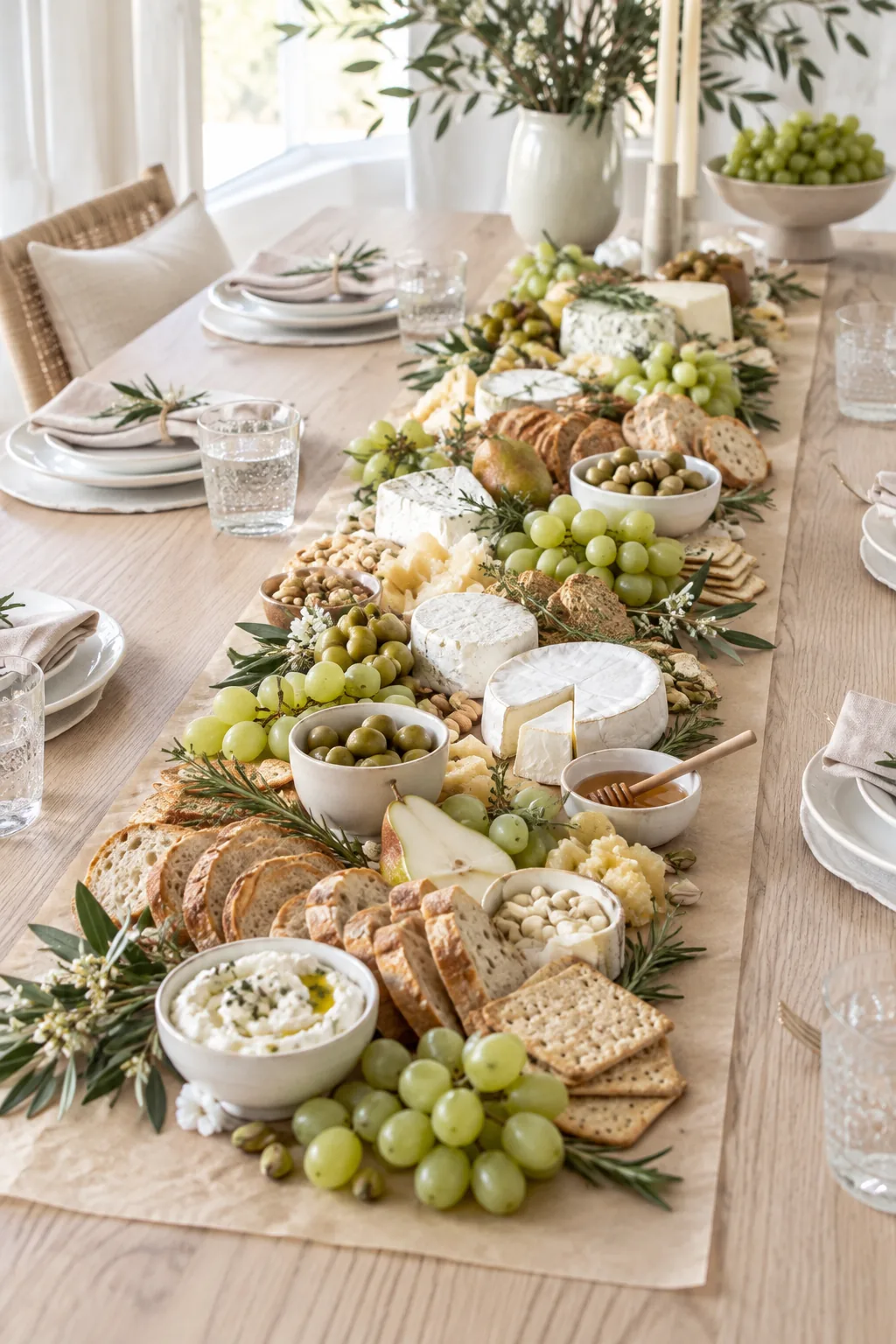
Rustic Farmhouse Harvest Runner: Lean into a cozy harvest feel by incorporating chunky artisan breads, overflowing fresh herbs, and warm copper accents.