
Dresser Decor Tricks for Limited Space (Free Styling Map)
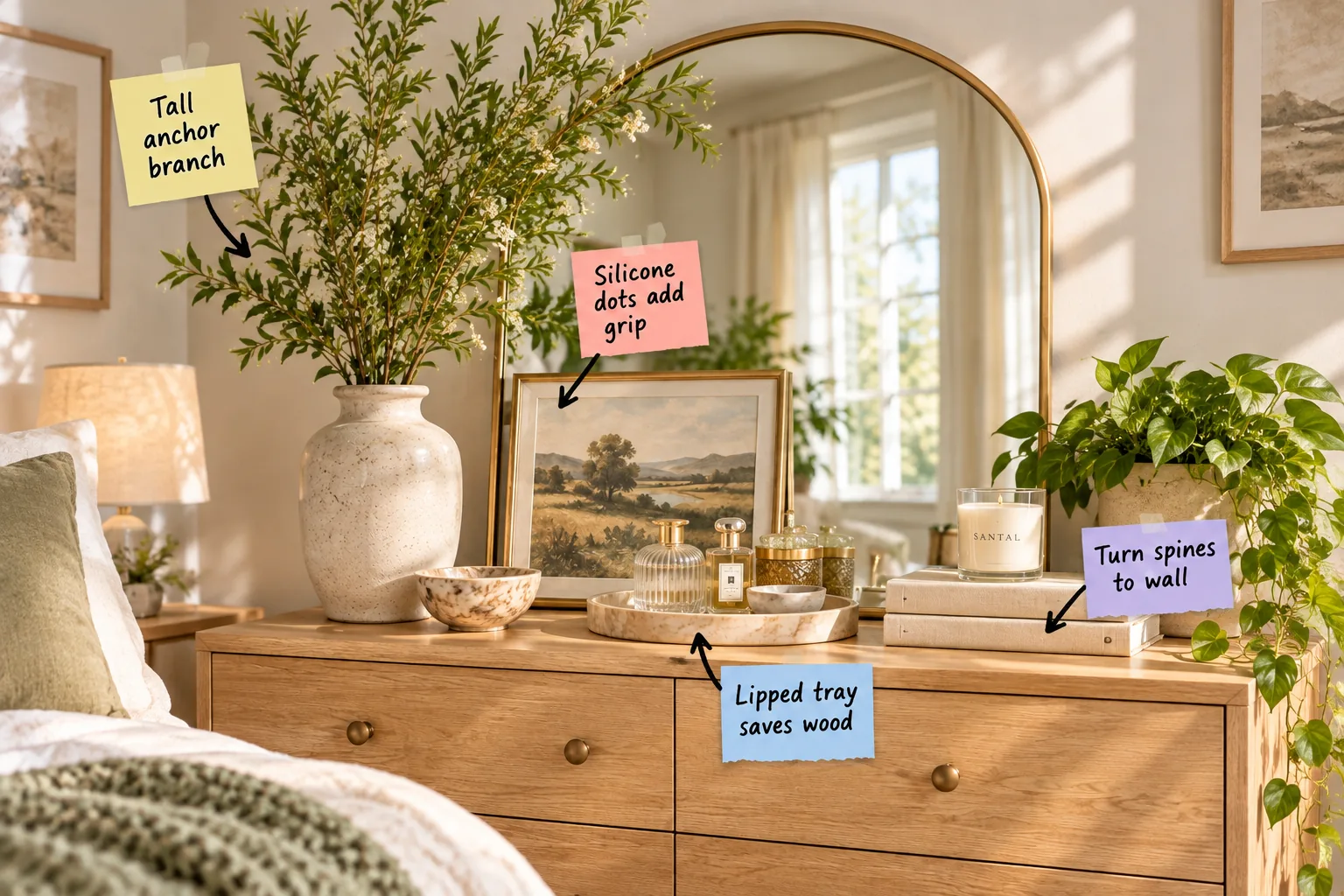
Maximizing a small bedroom means every surface needs to work harder, which is exactly why our free surface styling map will help you arrange your dresser with intentional layers. You will be able to style a foolproof setup that balances height and minimizes visual clutter.
Start with a Tall Anchor Branch
Anchor the left side of your dresser with a heavy ceramic vase and tall leafy branches reaching at least 24 inches high to establish the highest point of your styling triangle.
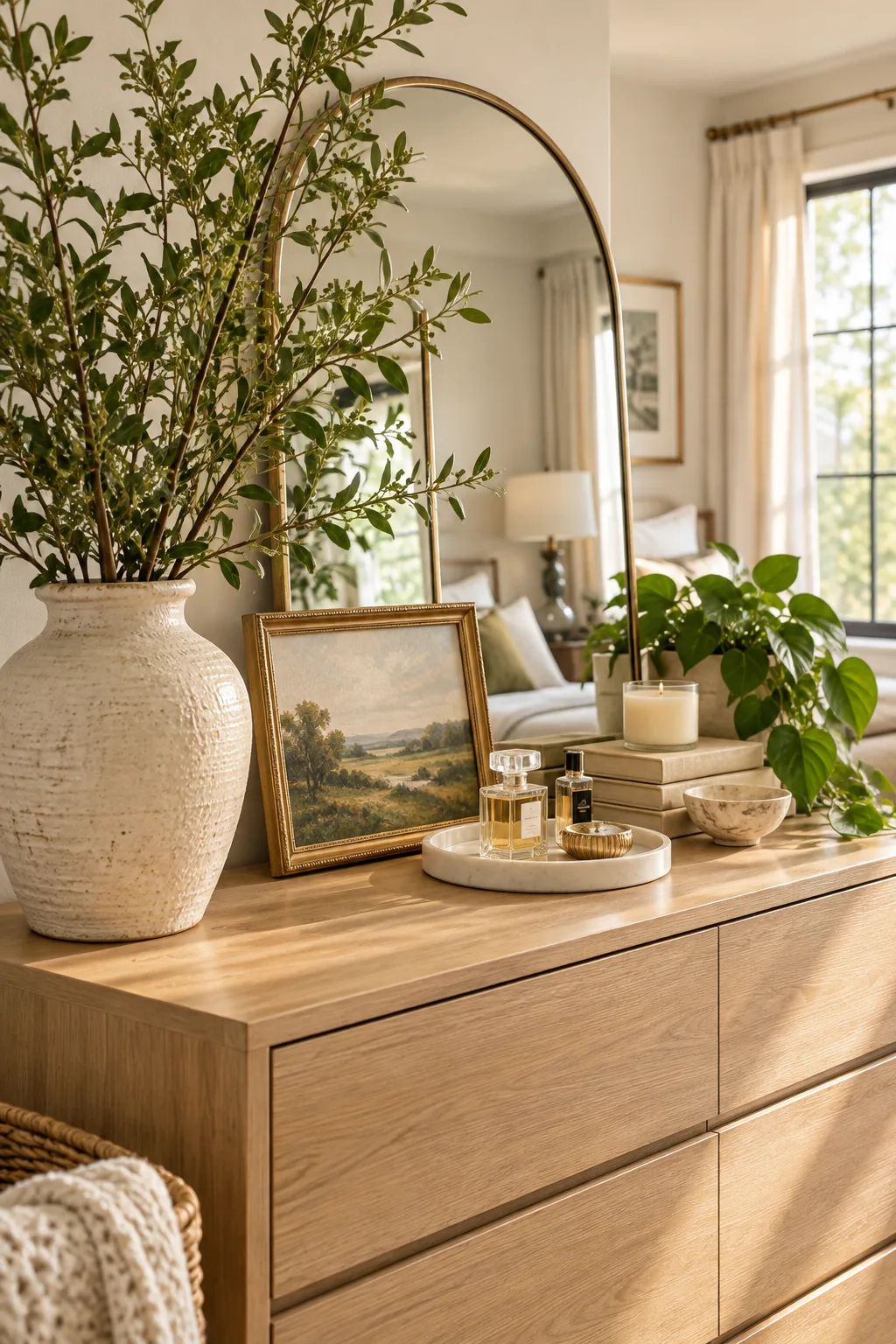
With your vertical anchor established, mapping out the remaining surface area ensures your shorter items have a purposeful place to sit.
Select a Heavy Ceramic Vessel
Tall branches require a substantial base to prevent tipping when you open and close the dresser drawers daily. Choose a vessel that weighs at least three pounds when empty to provide adequate counterweight for top-heavy greenery.
| Branch Height | Minimum Vase Weight | Vase Opening |
|---|---|---|
| 24 inches | 3 lbs | 3 inches |
| 36 inches | 5 lbs | 4 inches |
| 48 inches | 8 lbs | 5 inches |
Measure Your Vertical Clearance
Before finalizing your anchor piece, measure the distance between the dresser top and the ceiling to ensure the branches have room to breathe. Leave at least 12 inches of empty space above the leaves so the arrangement feels intentional rather than cramped.
Download Your Surface Styling Map
Grab our free surface styling map to take the guesswork out of your layout, using exact spacing designed for a standard 6-drawer bedroom dresser. The guide shows exactly where to place 5mm clear silicone bumper dots so your leaning art grips the smooth oak surface.
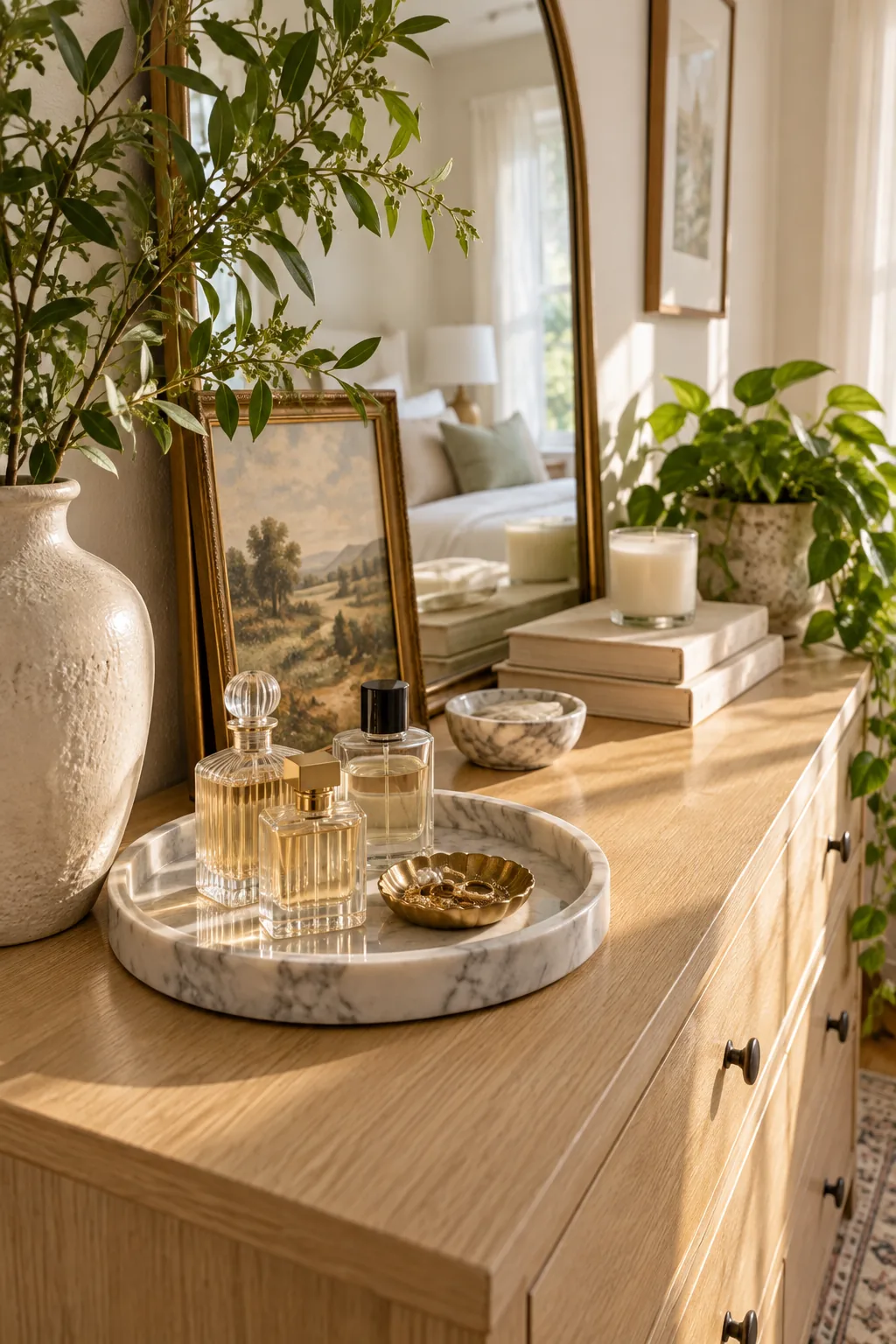
Once your map is set and your leaning frames are stabilized, you can start building out the functional catch-all zones in front of them.
Choose the Right Mirror Proportion
A foundational mirror should span roughly half to two-thirds of your dresser’s total width to reflect light without overwhelming the wood surface. Opt for an arched or round shape to break up the rigid horizontal lines of the furniture and room architecture.
Position the Foundation Mirror
Center your large mirror slightly off-axis or exactly in the middle, depending on where your tall anchor branch sits. Keeping the mirror flush against the wall ensures it remains stable when you start layering smaller, more delicate frames directly in front of it.
Secure Layered Art with Silicone Dots
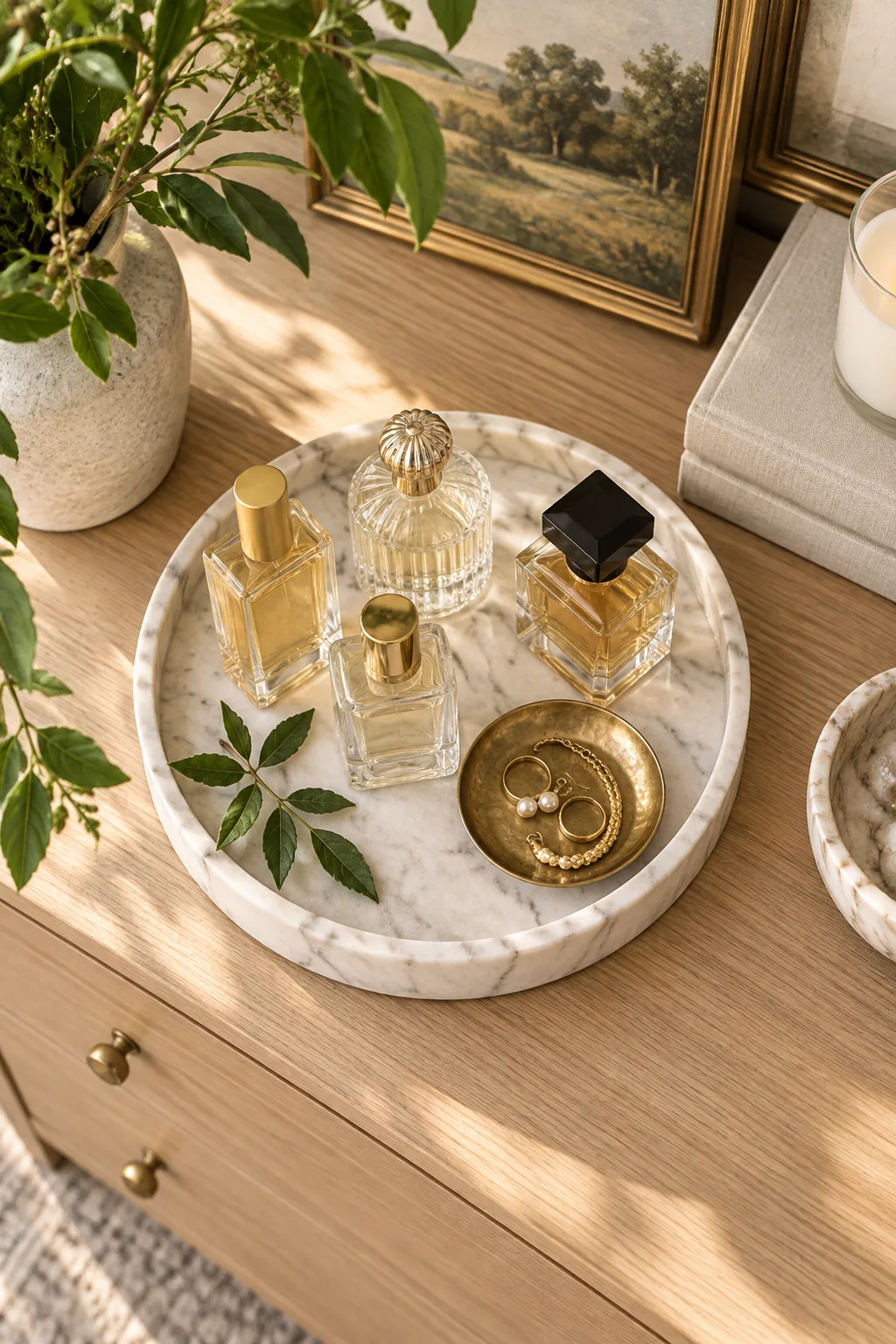
Leaning a smaller framed landscape against a large mirror creates effortless depth, and I always use those hidden silicone bumpers in my own apartment so the frame stays put. To further protect your dresser, group your daily perfumes inside a shallow marble tray.
While the bottom edge of your art needs grip, the top edge needs protection from the mirror glass directly behind it.
Select Non-Porous Tray Materials
When storing liquids, always choose a tray made from non-porous materials like sealed marble, resin, or glazed ceramic. These materials naturally repel accidental drips, preventing essential oils and perfumes from seeping through and staining the delicate wood veneer underneath.
Protect Wood Surfaces with a Lipped Tray
A dedicated catch-all zone contains accidental spills and protects the porous wood finish from permanent alcohol and oil damage. When arranging your tray, prioritize these three daily essentials to keep the surface functional:
- Everyday perfumes and colognes
- Daily jewelry and watches
- Essential oil rollers
Organize the Catch-All Zone
Keep the tallest bottles in the back of your tray and the smallest jewelry pieces near the front edge for easy daily access. This micro-layering technique mirrors the overall dresser layout and ensures you never knock over a glass bottle while reaching for a ring.
Introduce a Textural Element
Smooth mirrors, glass bottles, and polished marble can make a bedroom feel slightly cold if left unbalanced. Introduce warmth by incorporating woven linen or raw canvas elements into the center of your arrangement to soften the hard, reflective materials.
Turn Book Spines to the Wall
Elevate a small candle by stacking two linen-bound books underneath it, and turn the spines toward the wall to expose the neutral, textured paper edges. I started doing this on my own bedroom dresser, and it instantly reduces visual clutter in a small space.
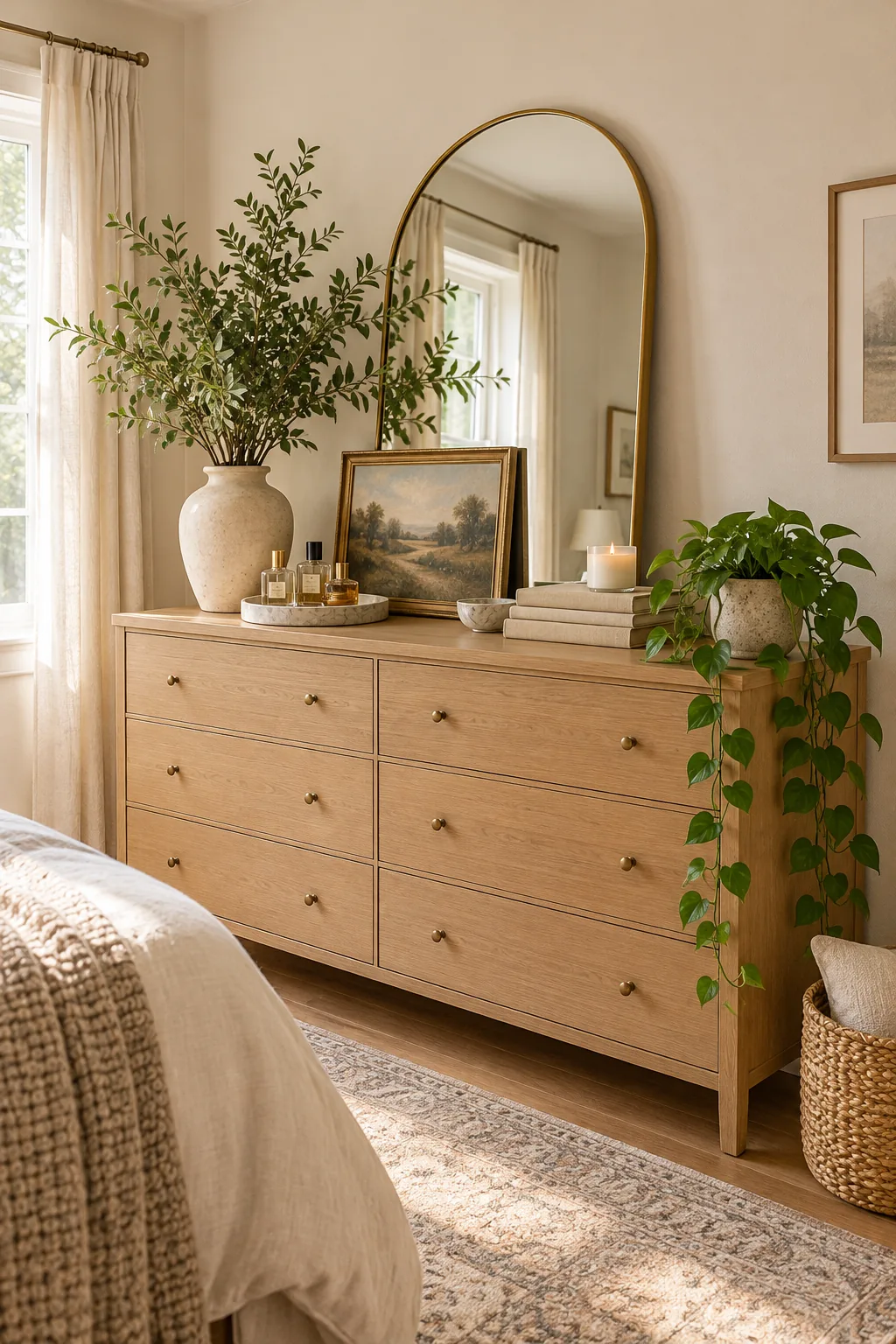
Softening those sharp, geometric book corners prepares the right side of the dresser for a final organic element.
Select the Right Candle Size
Choose a candle that measures roughly one-third the height of your leaning art piece to maintain a satisfying visual slope. A simple white glass or ceramic vessel keeps the focus on the ambient glow rather than competing with your carefully selected framed landscape.
Create a Secondary Height Variation
The stack of books and candle should sit noticeably lower than your left-side anchor branch but higher than the flat catch-all tray. This deliberate stepping creates a gentle visual wave that guides the eye naturally across the entire width of the furniture.
Choose a Low-Light Trailing Plant
Bedrooms often have limited natural light, making hardy varieties like Golden Pothos or Heartleaf Philodendron ideal for dresser decor. These resilient plants thrive in indirect sunlight and naturally drape over the edge, softening the sharp right angles of the wood.
Balance the Setup with Trailing Greenery
Counterweight the tall left-side branches with a 6-inch potted pothos or similar trailing vine on the far right. Adding this organic shape softened the hard right angles of the furniture in my latest brownstone project, perfectly bridging the gap to the wall.
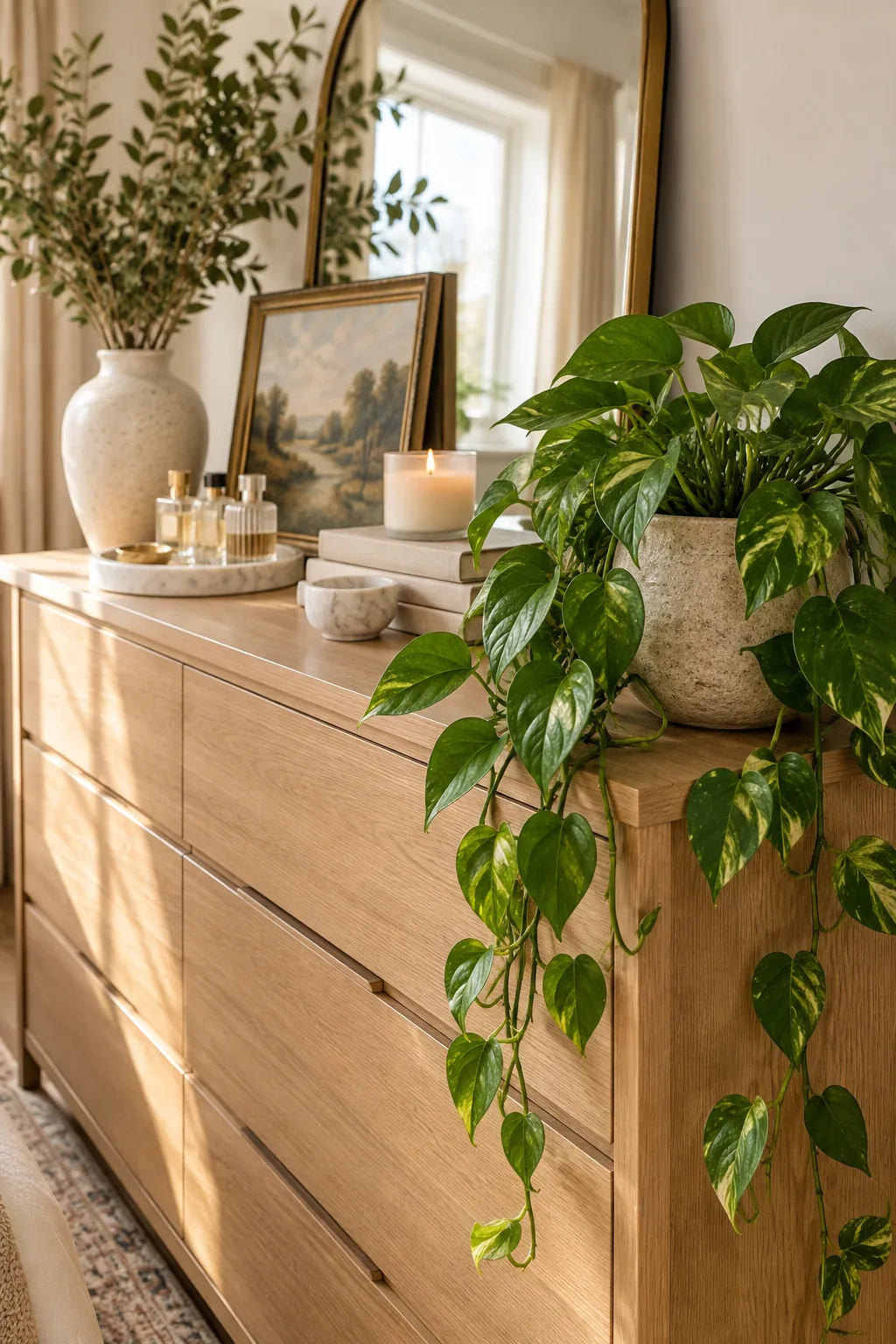
Now that the outer edges are perfectly balanced with greenery, you can focus on fine-tuning the smaller accessories in the center.
Select a Watertight Planter
Always keep your trailing plant inside its plastic nursery pot and drop it into a fully sealed, watertight decorative stone planter. This double-potting method guarantees that excess moisture will never leak through the bottom and leave a permanent water ring on your oak dresser.
Incorporate a Small Sculptural Object
Tuck a small marble bowl or abstract knot sculpture next to your book stack to break up the functional daily items. This purely decorative piece acts as a visual resting point between the busy perfume tray and the trailing plant on the right.
Group Daily Essentials in Odd Numbers
When arranging items inside your catch-all tray or placing loose objects on the wood, stick to groupings of three or five. I always rely on odd numbers because they force the eye to move around the arrangement, creating a natural asymmetry that feels intentionally styled.
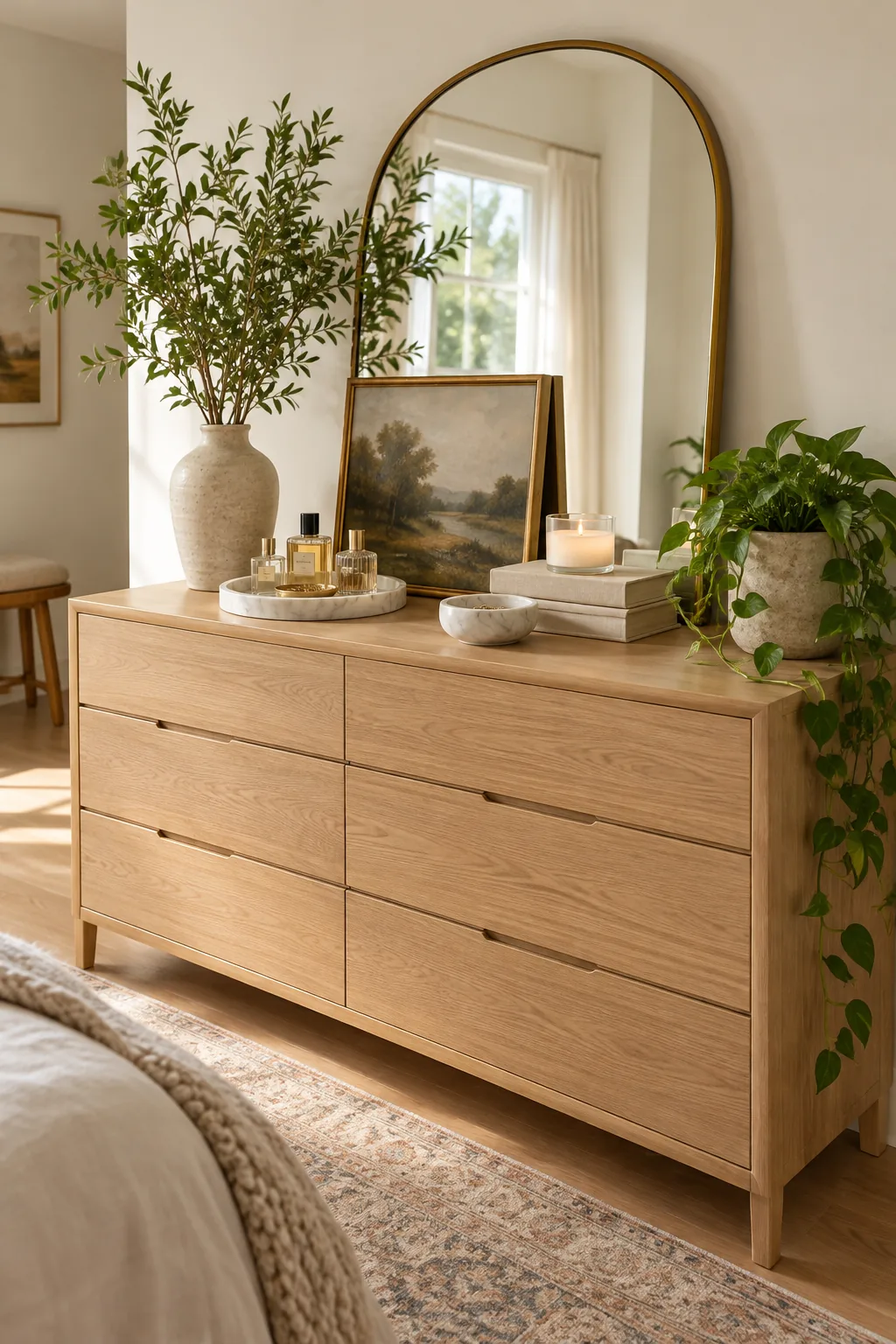
Once your central odd-numbered groupings are set, the final step is ensuring the overall composition doesn’t swallow the entire furniture piece.
Mix Metallic Finishes Intentionally
If your foundational mirror has a brass frame, introduce a contrasting metal like brushed nickel or matte black through a small candle snuffer or tray detail. Mixing two distinct metals prevents the styling from looking overly matched and adds a collected, custom feel.
Establish a Daily Drop Zone
Leave a small, dedicated 5-inch square of space directly in front of the marble tray completely empty for your keys or sunglasses. Having an intentional drop zone prevents you from mindlessly tossing items onto the delicate wood and disrupting your carefully planned aesthetic.
Hide Unsightly Cords and Cables
If you keep a smart speaker or charging pad on your dresser, route the cables directly behind your leaning art or tall anchor vase. Securing the wires against the back edge of the furniture with adhesive clips keeps the surface looking pristine and heavily curated.
More Dresser Styling Ideas
Explore how these core styling rules adapt to completely different bedroom aesthetics.
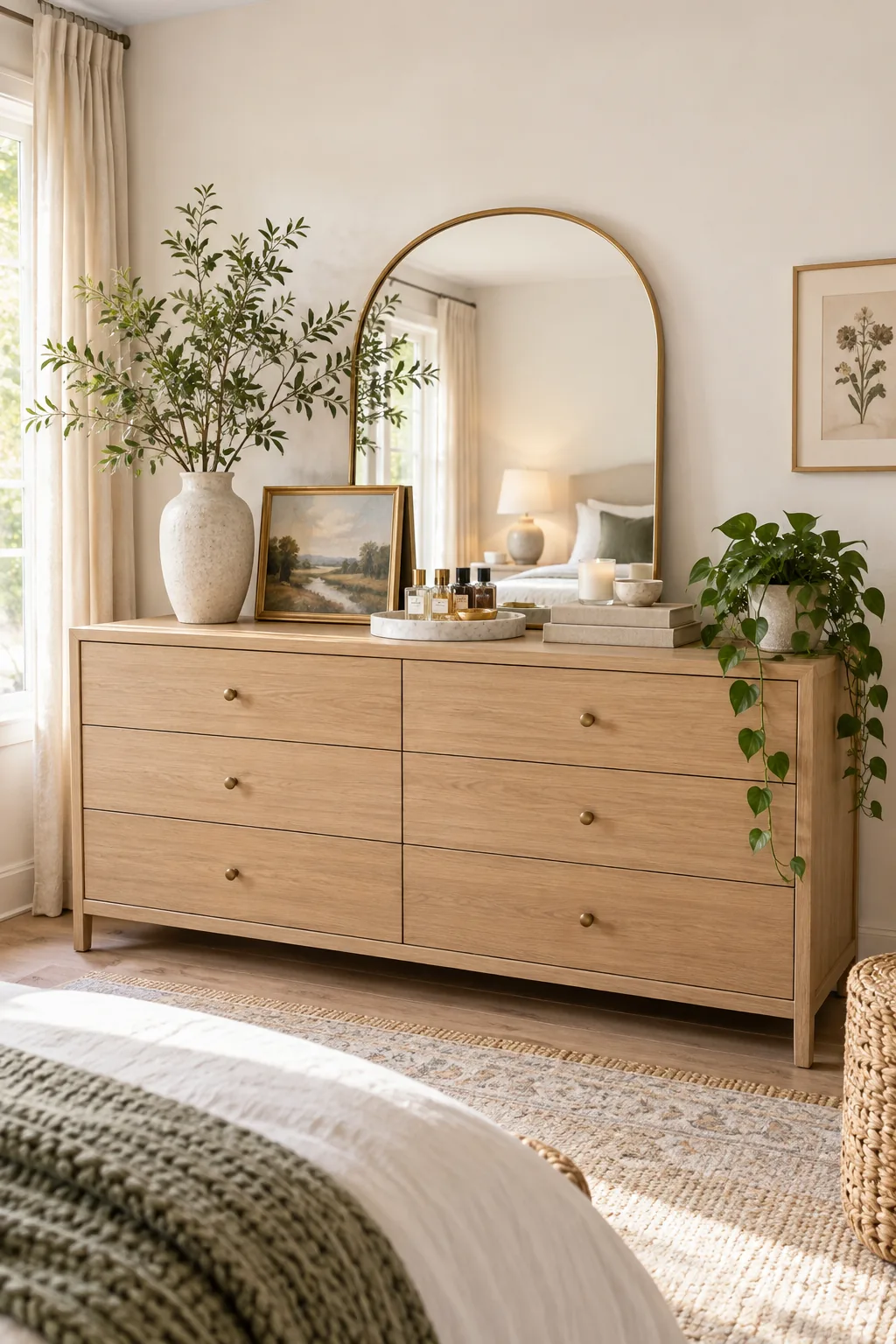
Minimalist Scandi Ash: Embrace a serene, uncluttered aesthetic by sticking to a strict monochromatic palette and matte finishes.
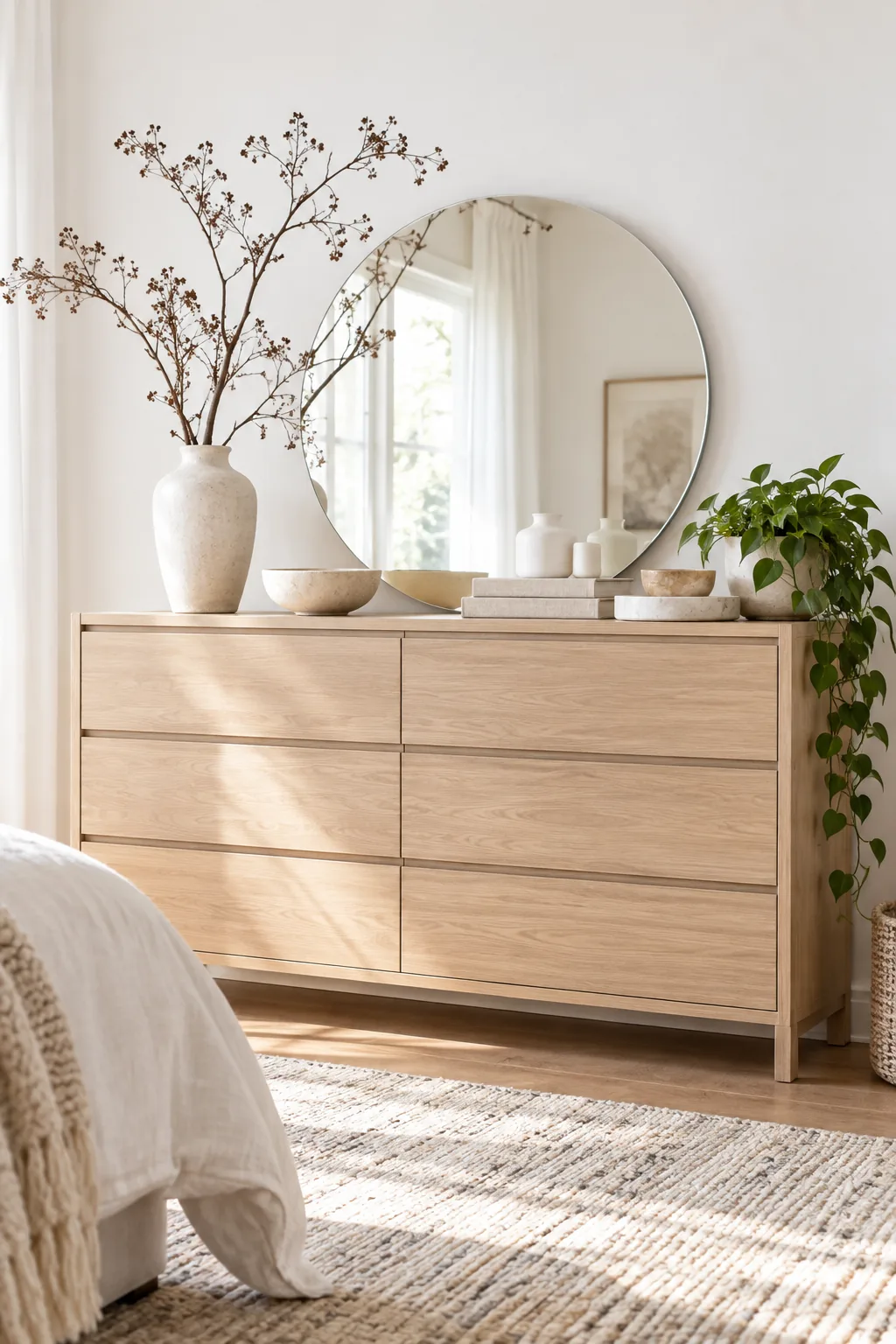
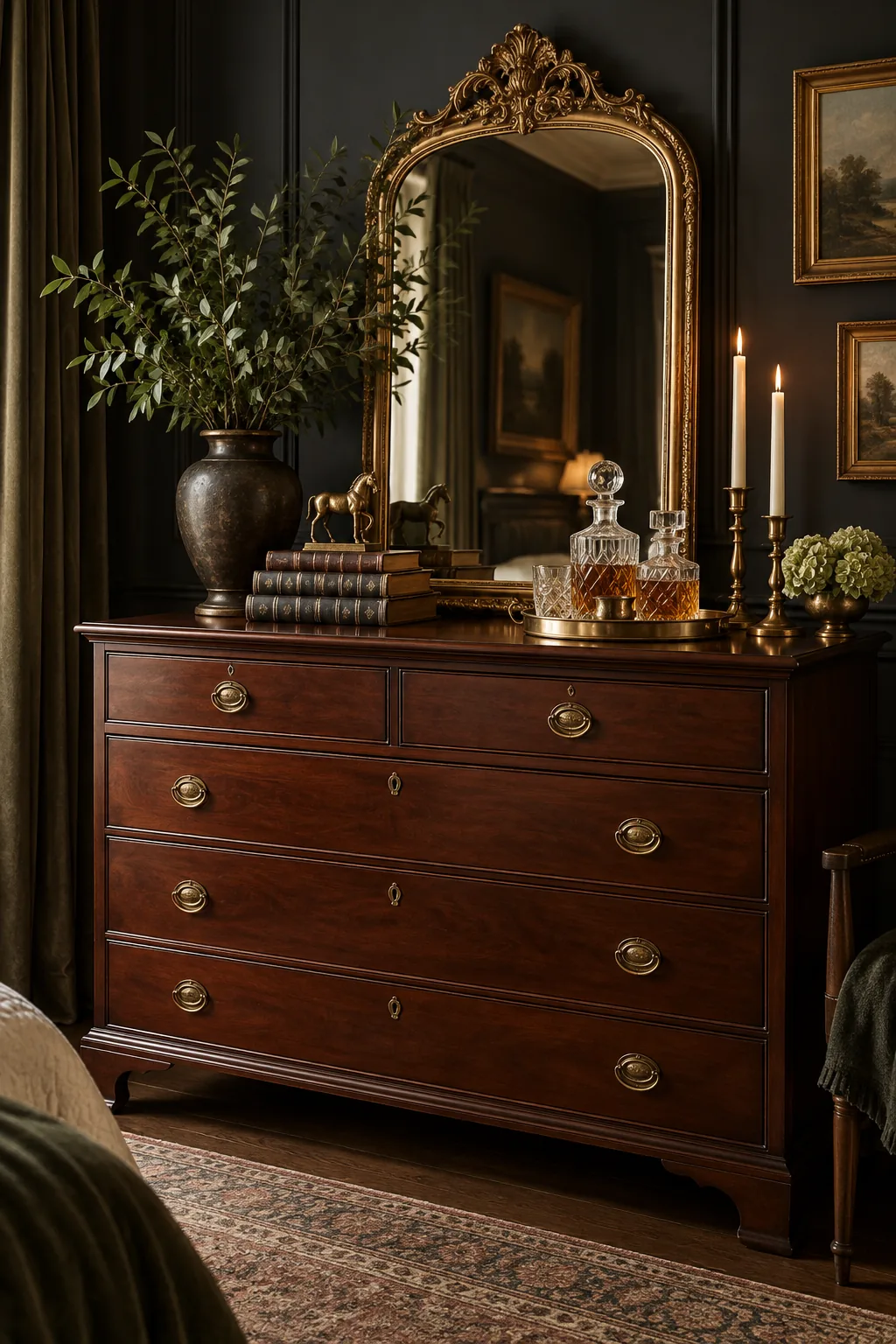
Moody Traditional Mahogany: Create dramatic contrast by pairing dark, historic wood tones with reflective brass and crystal accents.
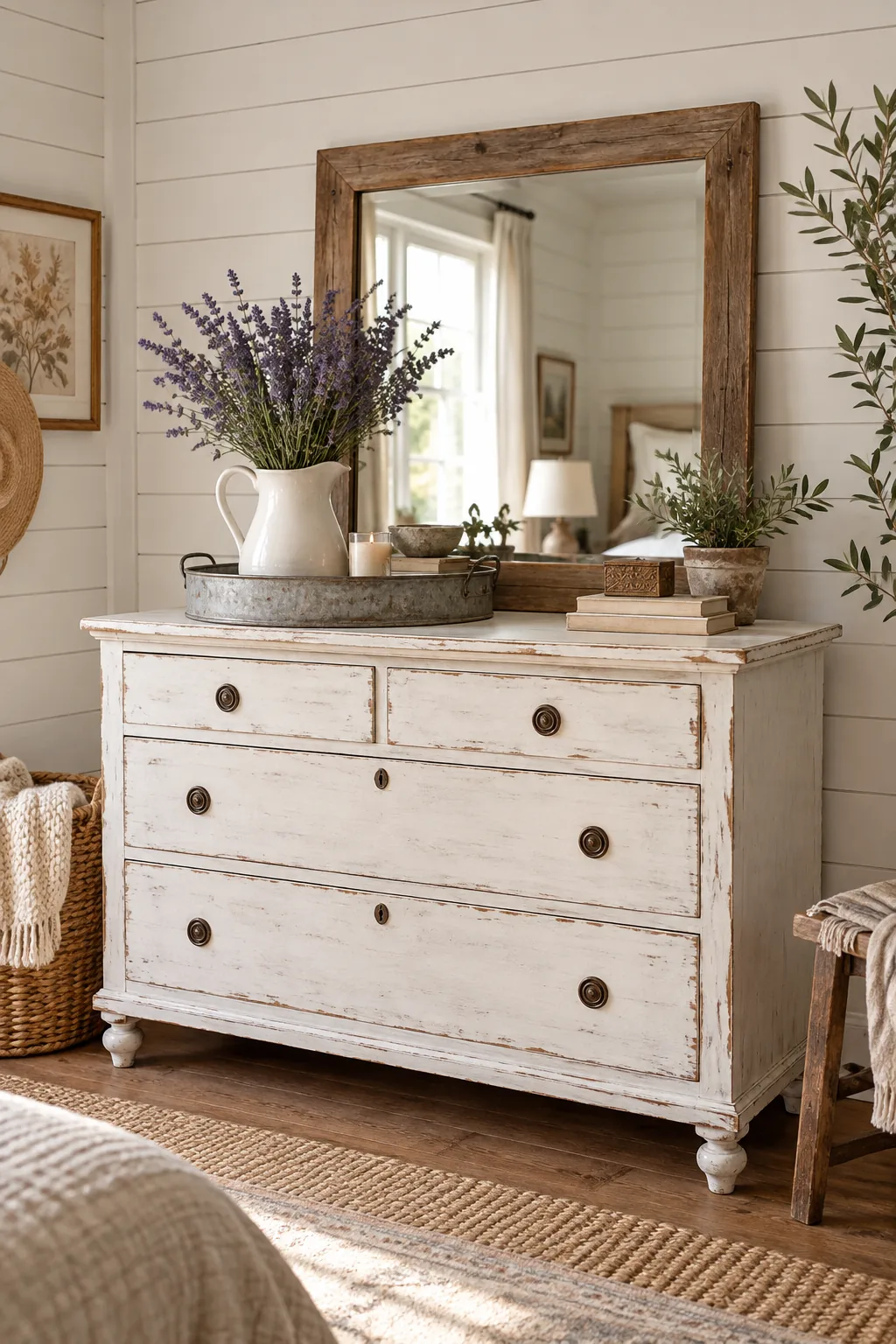
Modern Farmhouse Whites: Add warmth to painted white furniture by introducing natural textures like raw wood and galvanized metal.
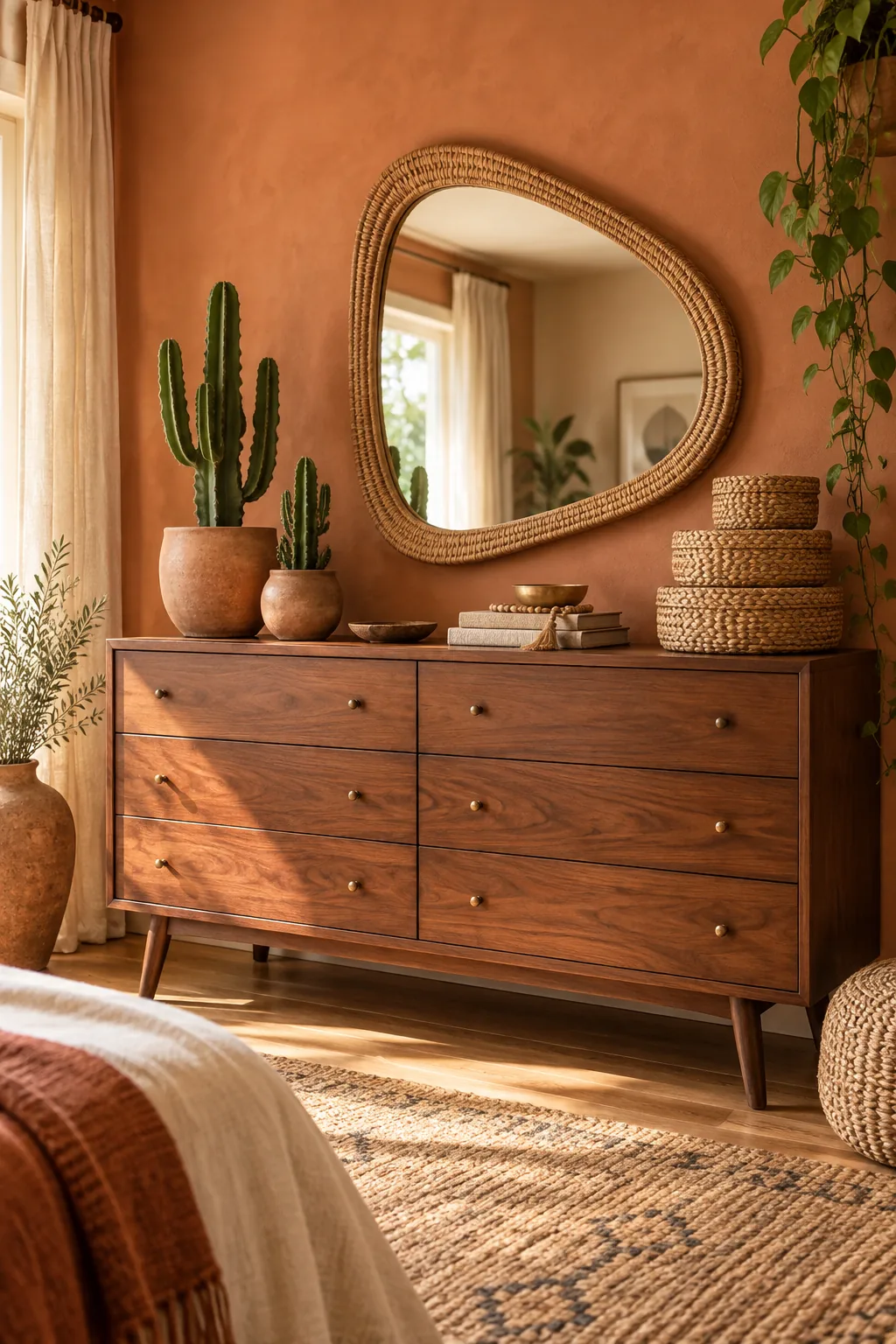
Warm Desert Boho: Bring the outside in by mixing warm walnut wood with earthy terracotta pots and woven rattan textures.
Leave Breathing Room at the Edges
Resist the urge to decorate the surface from edge to edge by keeping at least 4 inches of empty wood visible at both ends. This negative space prevents the limited area from feeling overcrowded and gives your curated pieces room to breathe.
Before you finish your bedroom refresh, step back and review the surface against these final visual checks.