Small Backyard Privacy: The Screen Height & Placement Chart
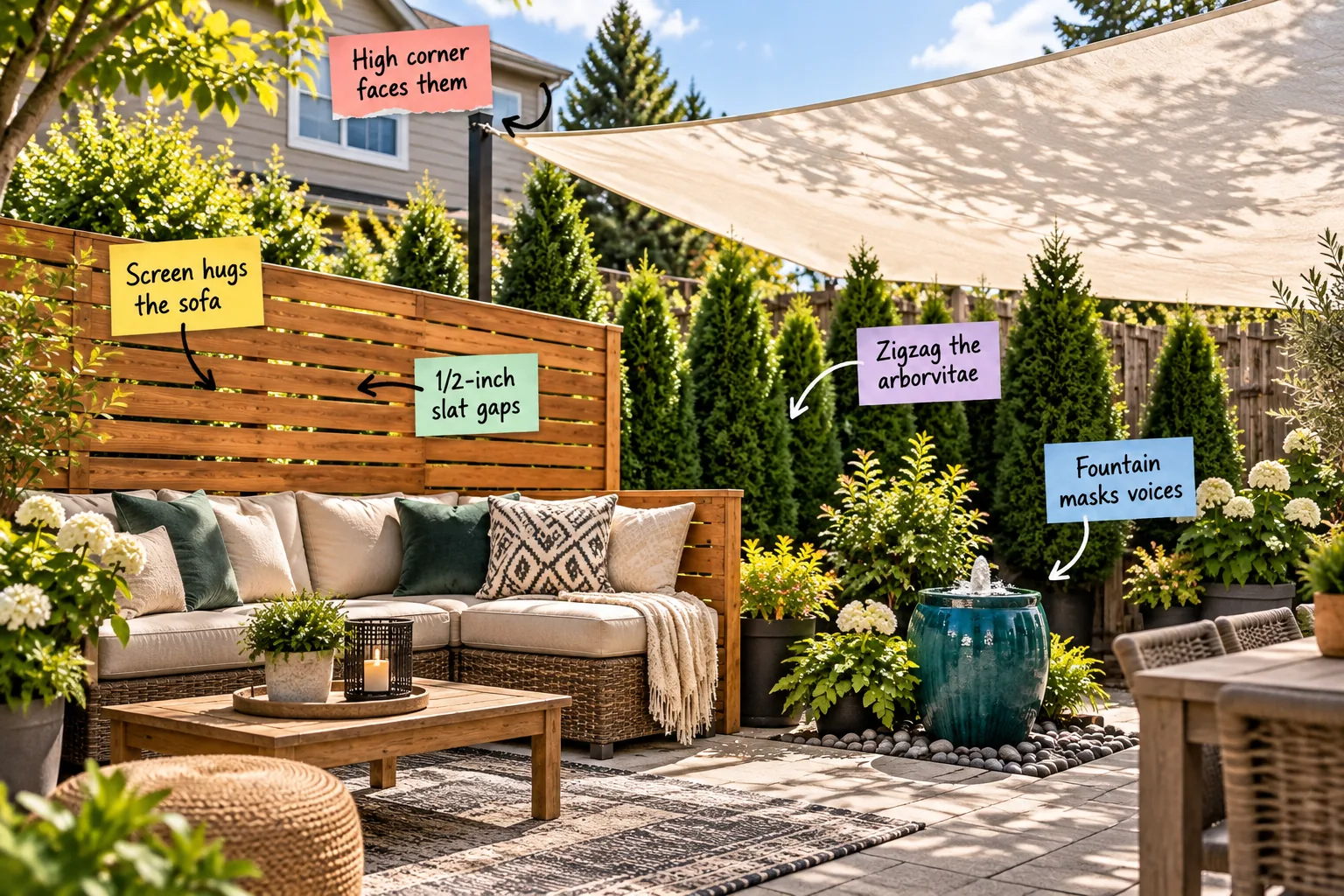
If you are struggling with overlooking windows, you can transform your small patio using our printable Small-Yard Privacy Placement Sheet. You will be able to calculate exact screen heights, angle shade sails, and arrange layered planting to block neighbors completely.
Plant a Staggered Arborvitae Boundary
When I first moved into my Austin home, the bare chain-link fence made me feel like I was on a stage, so I immediately planted a staggered double row of arborvitae. Zigzagging the root balls creates a solid visual block much faster than a single line.
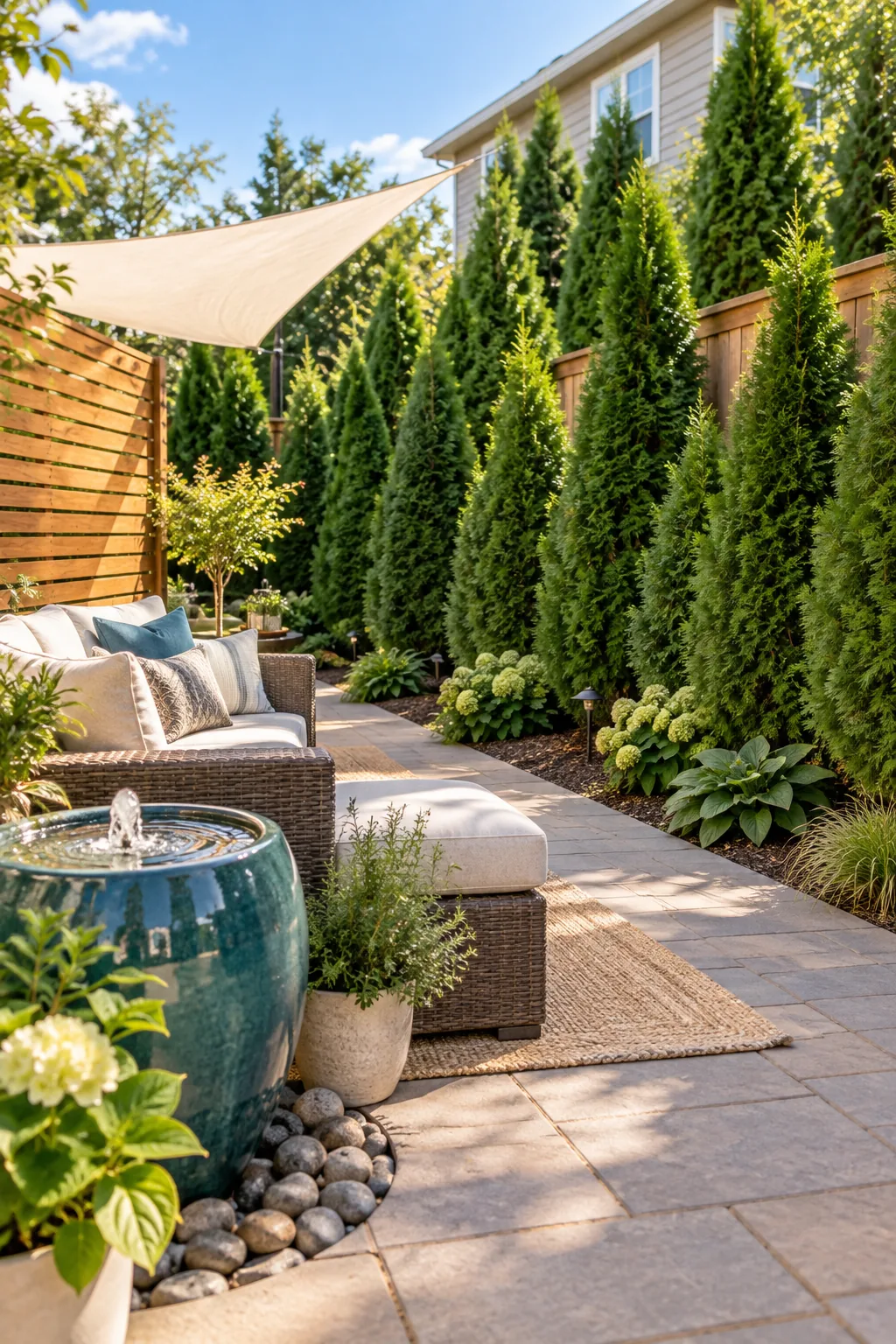
Even with the right spacing method, installing a living boundary requires careful positioning to ensure the trees thrive and fill in completely. You must measure based on the mature width of your specific evergreen variety rather than guessing.
Select the Right Fast-Growing Evergreens
Choosing the correct species dictates exactly how far apart you should dig your staggered planting holes. You want a variety that grows tall enough to block second-story sightlines while maintaining a naturally tight, columnar shape that requires minimal pruning over the years.
- Emerald Green Arborvitae: Stays highly compact at just 3 to 4 feet wide, making it perfect for tight urban property lines and narrow garden beds.
- Green Giant Arborvitae: Reaches up to 15 feet wide rapidly, requiring significantly more yard space but providing an impenetrable, towering screen.
- Spartan Juniper: Offers a darker green texture and stops around 5 feet wide, handling intense afternoon heat and drought conditions beautifully.
Always measure the distance between the center trunks rather than the edges of the current foliage. This guarantees the root systems will not compete for water as the canopy matures into a seamless, healthy green wall.
Layer Your Ground Cover
While the evergreens handle the upper sightlines, planting a dense understory of shade-tolerant shrubs prevents pets or children from seeing through the bare lower trunks. Layering different foliage textures creates a lush, deeply forested aesthetic right at the shared property boundary.
Angle the Shade Sail Upward
To block upper windows without losing natural light, you must tilt your canopy so the high corner faces them directly. Angling the highest point of a white shade sail toward the neighbor’s upstairs window acts as a targeted overhead blinder.
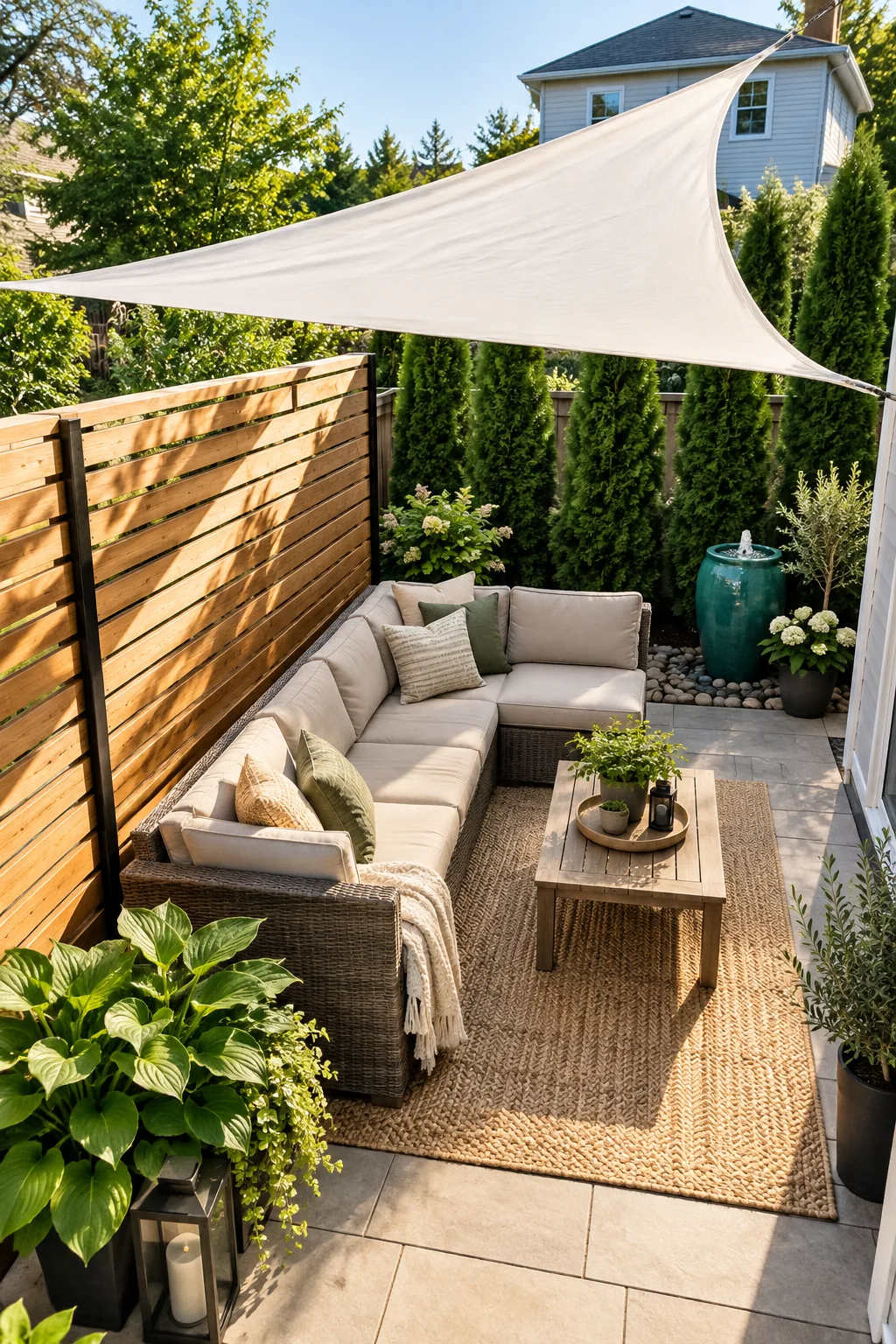
This specific upward angle cuts off the downward line of sight completely while allowing hot air to escape the seating area. You avoid trapping heat or plunging your carefully designed patio into total darkness during the brightest parts of the afternoon.
| Window Height | Distance to Patio | Sail High Corner | Sail Low Corner |
|---|---|---|---|
| 12 feet | 10 feet | 9 feet | 7 feet |
| 15 feet | 12 feet | 10 feet | 7.5 feet |
| 18 feet | 15 feet | 11 feet | 8 feet |
| 20 feet | 18 feet | 12 feet | 8.5 feet |
| 22 feet | 20 feet | 13 feet | 9 feet |
| 25 feet | 25 feet | 14 feet | 9.5 feet |
Anchor the Shade Sail Securely
Because an angled canopy catches significantly more wind than a flat one, you must tension the corners using heavy-duty stainless steel turnbuckles. Proper tension prevents the fabric from sagging into your sightline or violently snapping during sudden summer storms.
Pull the Privacy Screen Close
I used to think fences had to sit on the property boundary, but I finally realized that a screen hugs the sofa much better. Moving the horizontal cedar slat screen just 3 feet from the seating dramatically changes the backyard geometry.
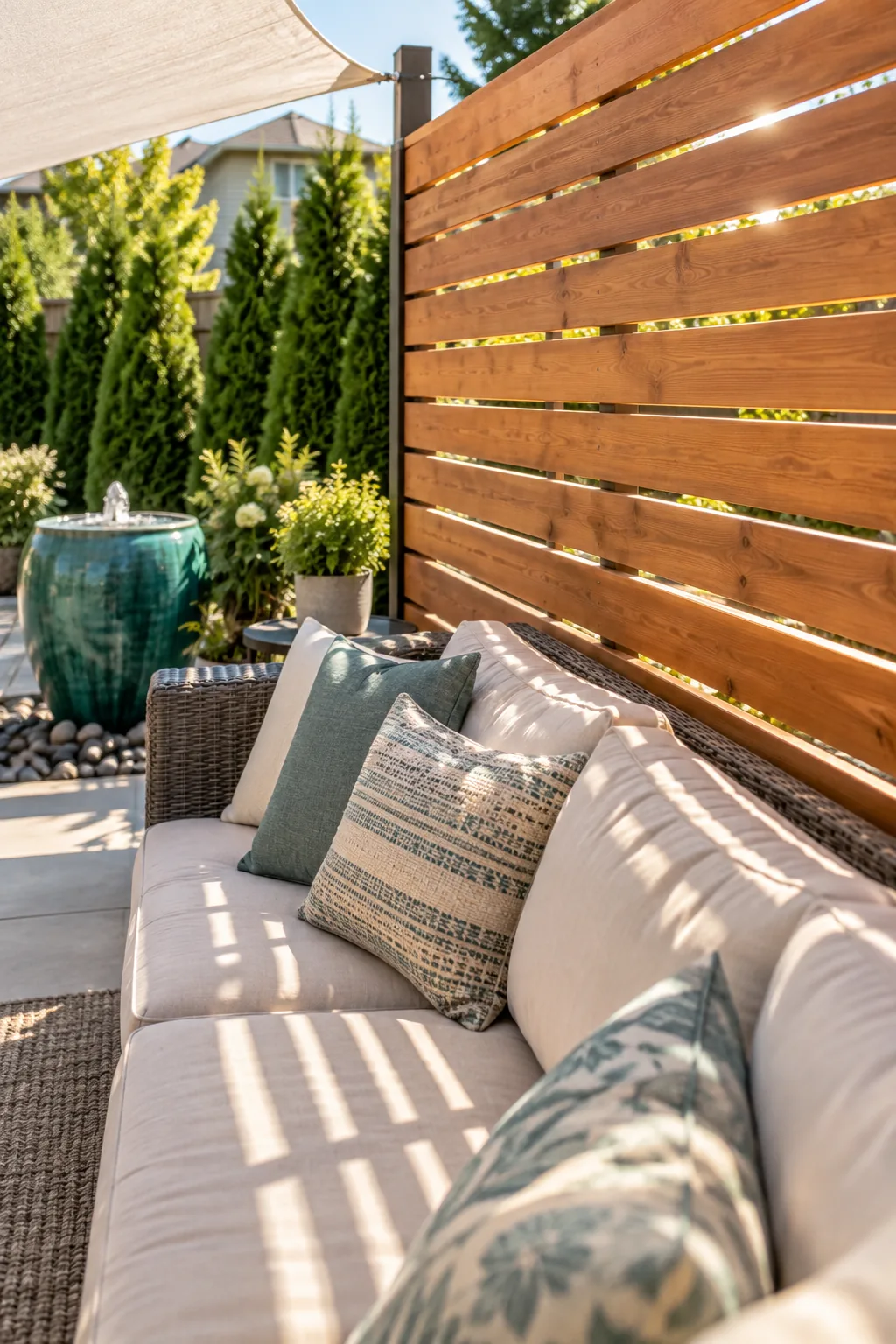
A closer screen cuts off steep sightlines easily, requiring far less overall height than a perimeter fence built 20 feet away. You can block a bedroom window completely with a standard 6-foot structure if you simply pull it inward.
Choose Cedar for Lasting Durability
Building your freestanding structure from Western Red Cedar ensures the boards remain perfectly straight despite constant sun exposure. The natural oils resist rot and insect damage, which is crucial when the wood sits just inches from your patio cushions.
Applying a UV-blocking clear coat immediately after installation stops the warm tones from fading into a weathered gray. You want the backdrop of your seating nook to feel vibrant and intentional rather than neglected as the seasons change.
Space the Slats for Airflow
A solid wall feels oppressive in a small yard, so you must maintain exactly 1/2-inch slat gaps between the horizontal cedar boards. This precise measurement allows cooling breezes to flow through the seating nook effortlessly during hot summer afternoons.
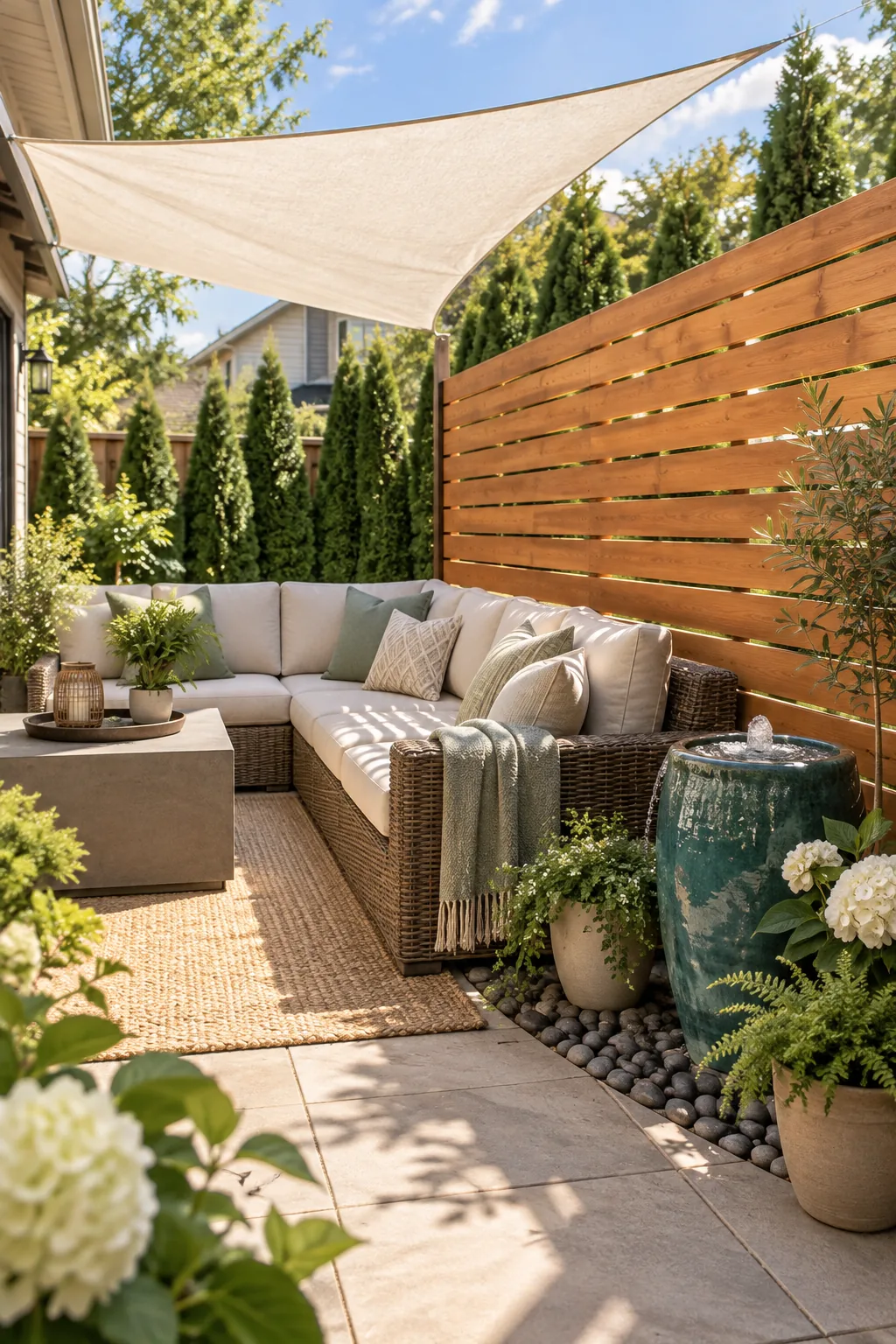
These narrow gaps prevent the space from feeling like a stifling box while remaining too tight for neighbors to see through from a distance. The optical illusion creates absolute privacy without sacrificing your vital connection to the outdoors.
Stain the Wood to Reduce Glare
If your patio receives harsh afternoon sun, finishing the horizontal slats with a semi-transparent dark stain helps the structure recede visually into the background. Darker colors absorb the light, making the narrow gaps appear even tighter to anyone looking down.
Add a Fountain for Acoustic Privacy
Visual blocks mean nothing if your neighbors can hear every word of your evening conversations, so a fountain masks voices beautifully. Placing a continuous bubbling water feature immediately beside the sofa creates an localized layer of white noise.
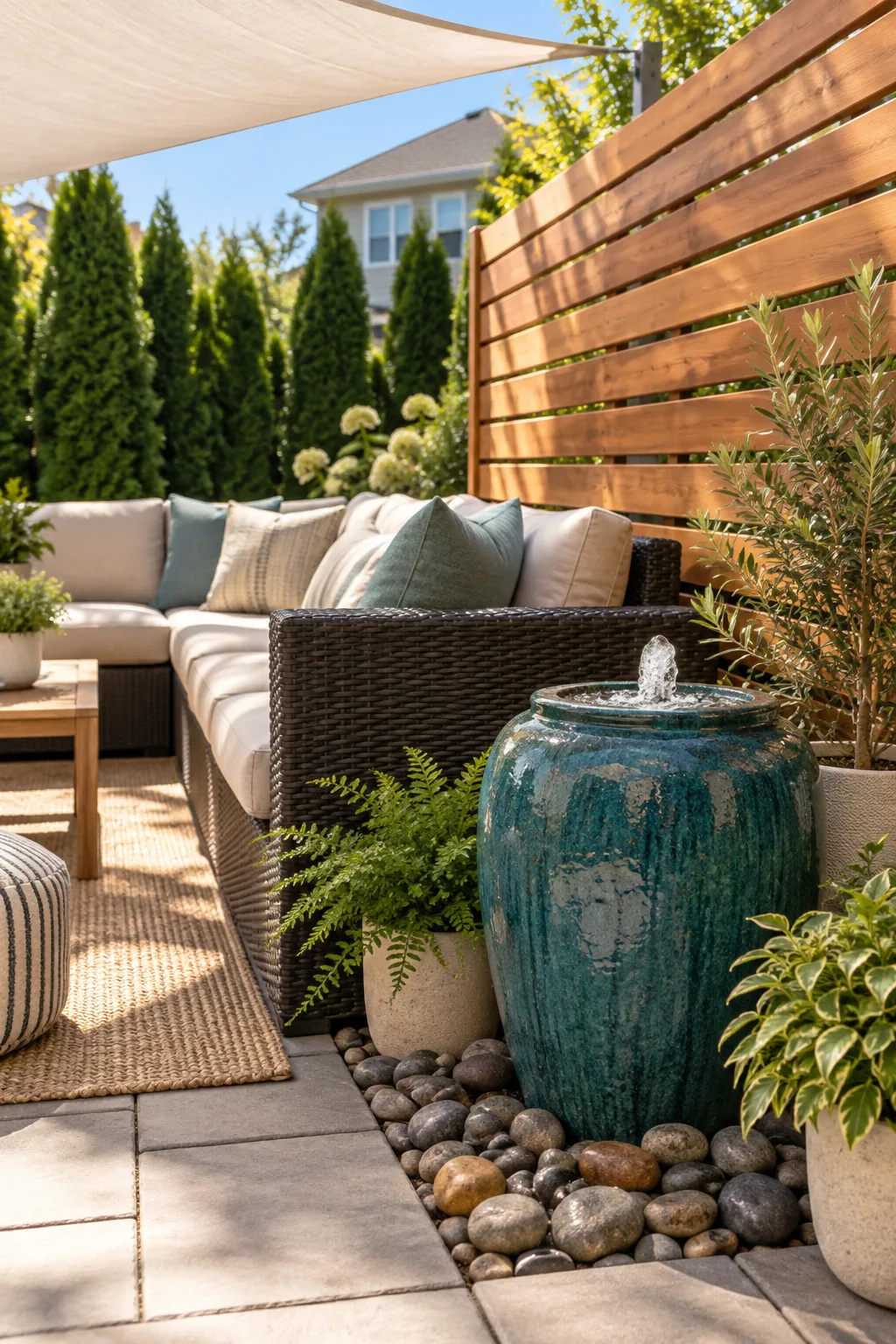
The random splashing sounds scramble human conversational frequencies perfectly, preventing eavesdropping without requiring you to blast music. You get the relaxing ambiance of a spa while keeping your private discussions entirely within your own patio footprint.
Select a Continuous Water Pump
To maintain that acoustic shield reliably, you need a heavy-duty submersible pump rated for continuous 24-hour operation. Stopping and starting the water flow daily introduces air bubbles into the lines and severely shortens the lifespan of the internal impeller mechanism.
Position the Seating for Optimal Angles
Before finalizing your screen placement, shift your outdoor sofa so the primary seating positions face away from the most intrusive neighbor. Forcing the eye toward your own garden focal points naturally reduces the psychological feeling of being watched from above.
Calculate Your Exact Screen Height
I designed the Small-Yard Privacy Placement Sheet after spending hours doing trigonometry on scrap paper for my own yard. You can use the printable chart to find your required screen height based on the measured distance and the neighbor’s elevation.
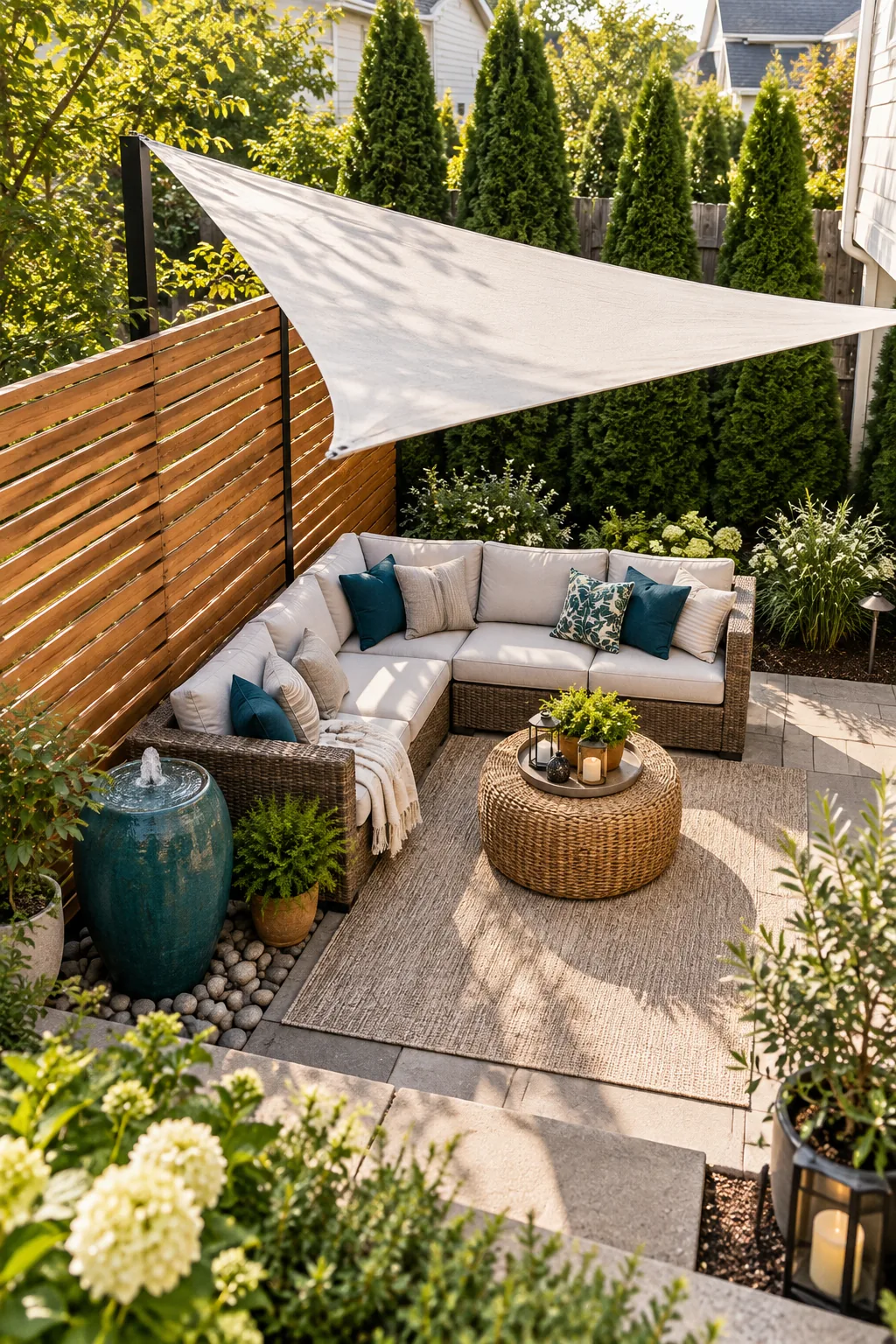
Before cutting any lumber or ordering your shade sail, verify your exact site conditions to ensure the chart’s geometry will work for your yard. A few quick physical checks guarantee your new privacy structures will perform exactly as planned.
Three Ways to Style Your Privacy Screen
Once you calculate your perfect screen placement, choose a finish that transforms your patio into a true outdoor room.
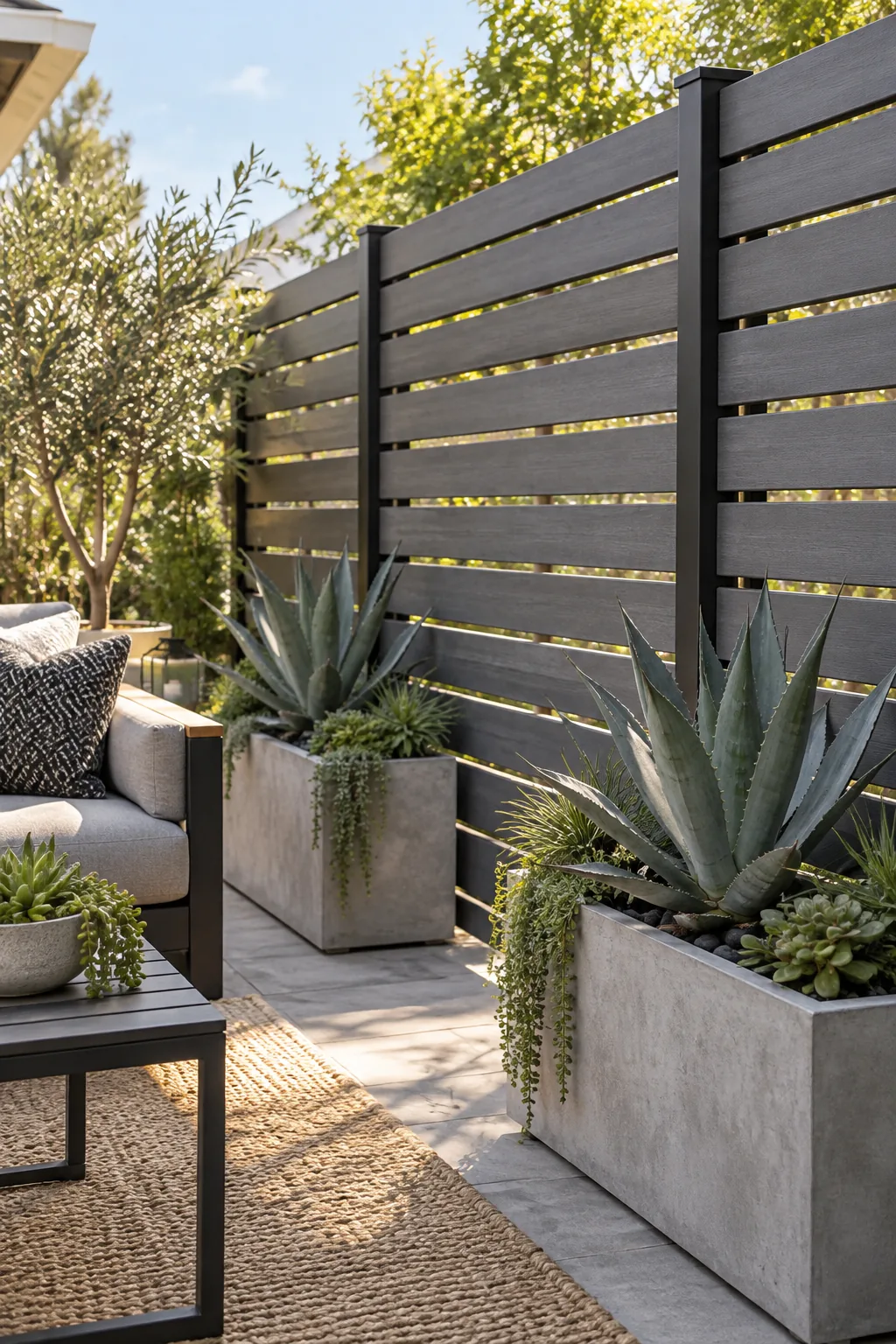
Modern Slate and Succulents: Dark grey horizontal slats recede into the background while architectural planters add clean, low-maintenance structure.
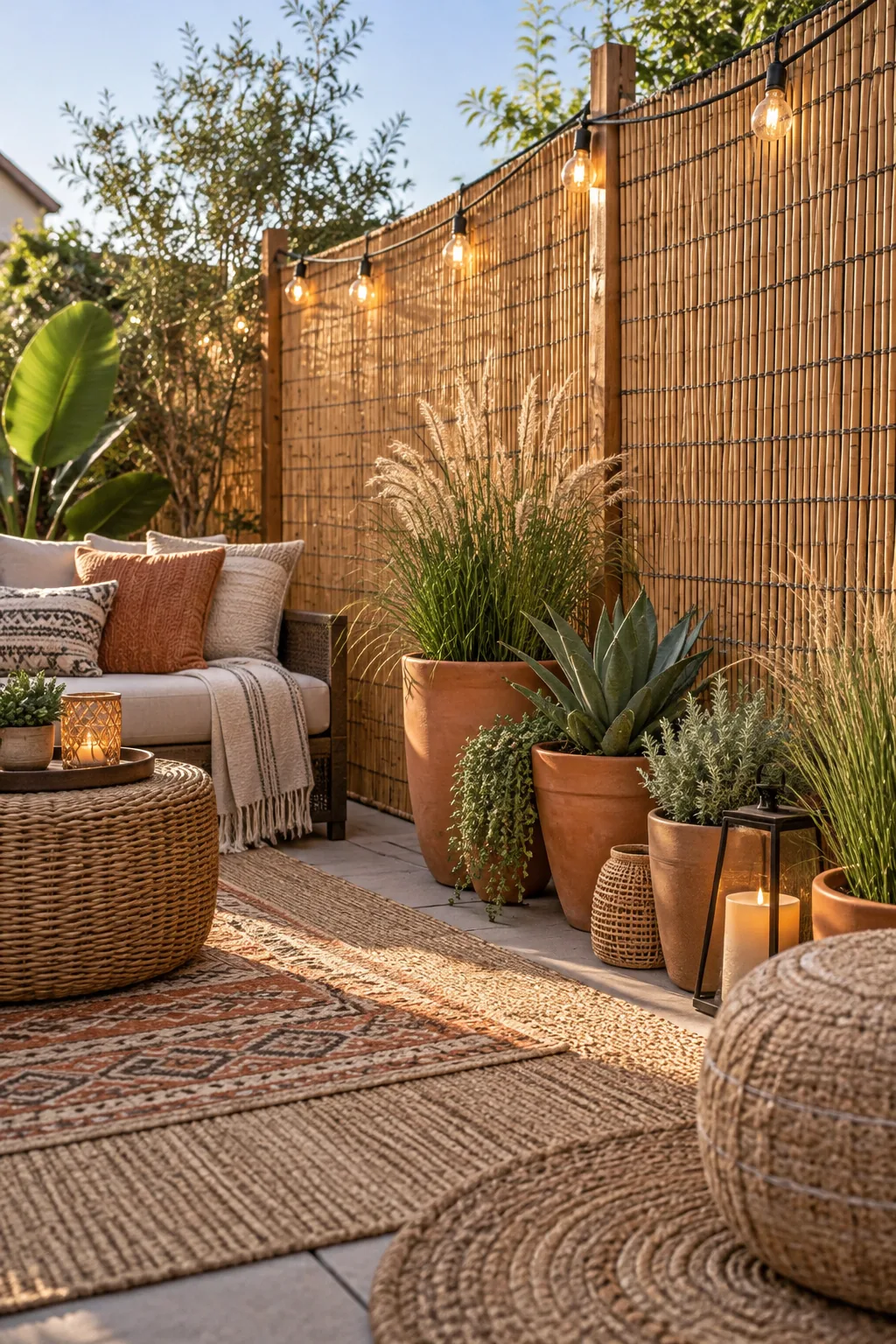
Warm Boho Bamboo Screening: Natural rolled bamboo creates an organic barrier that pairs perfectly with terracotta pots and layered woven rugs.
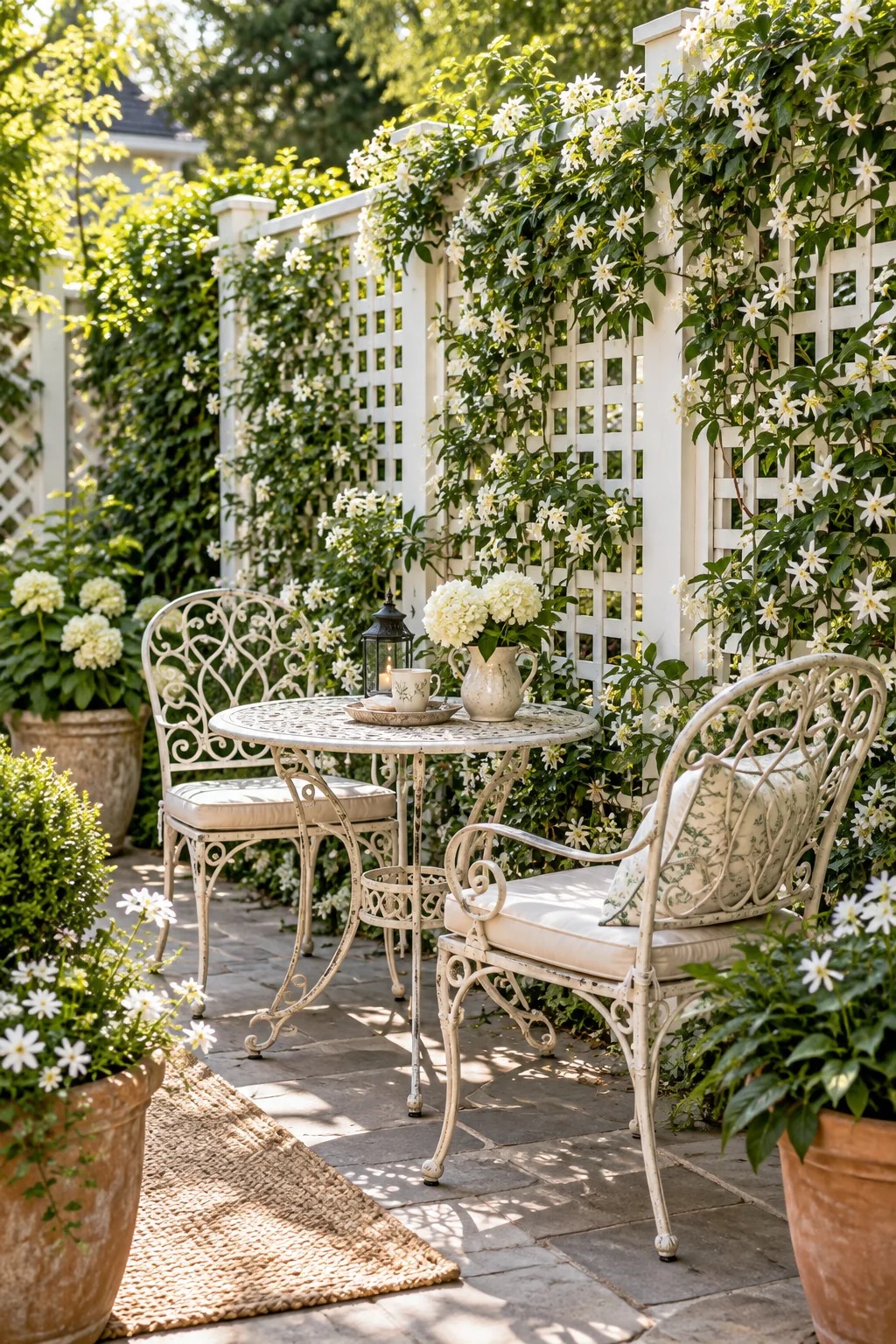
White Lattice With Climbing Jasmine: A classic white painted lattice screen supports fragrant climbing vines that soften the boundary and perfume the patio.