
This Iron Cauldron Became a Covered Porch
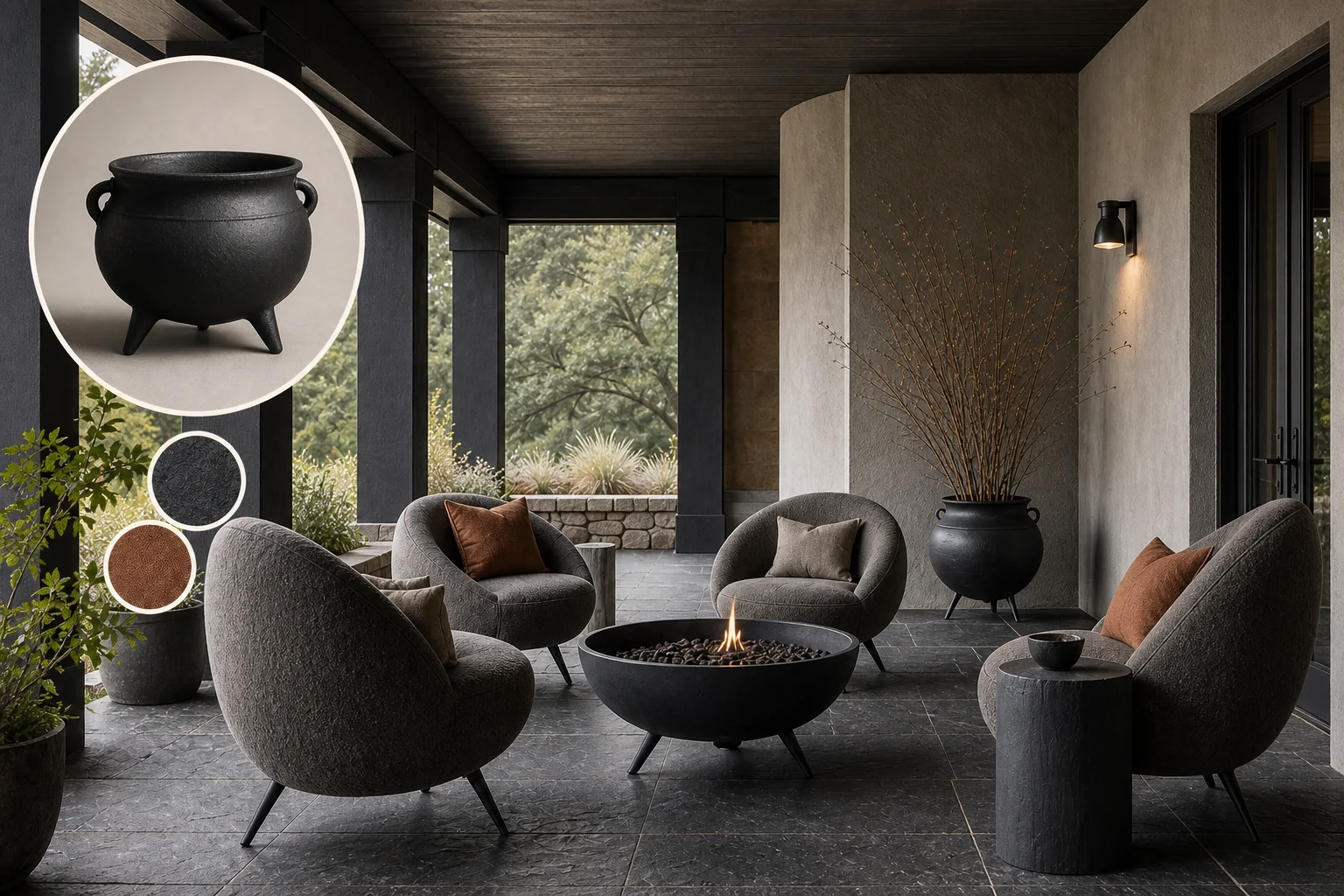
Explore how the dense mass and light-absorbing surface of a traditional cast iron cauldron translates into a sophisticated, moody covered porch. We balance this heavy, grounded presence by offsetting dark, rugged textures with a rhythm of dense mass floating on delicate, elevated points to keep the space from feeling visually oppressive.
Anchoring the Space with Grounded Weight
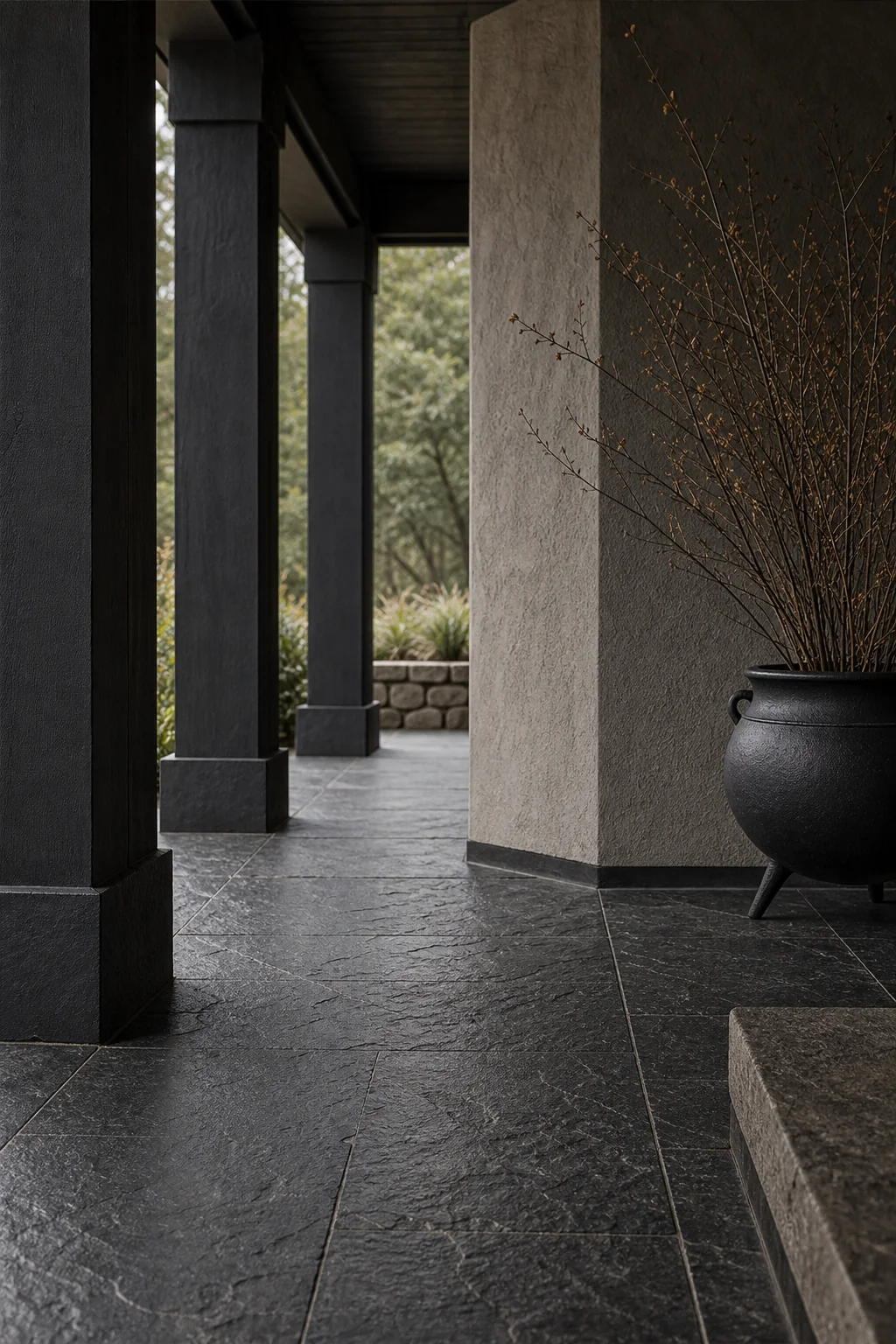
Establishing a visually heavy, light-absorbing base grounds the porch in the exact same way the cauldron’s thick bottom anchors it to the hearth. By installing large-format, dark cleft slate tiles across the entire floor, we minimize distracting grout lines and maximize a continuous, dense feel that perfectly replicates the heavy iron base. Ensuring the masonry floor is properly sealed with a flat, matte finish maintains the dry, non-reflective aesthetic essential to the room’s foundational weight. This deliberate grounding strategy provides a sturdy, elemental stage for the lighter architectural framing and delicate furniture legs that will eventually rest upon it.
- Install large-format cleft slate tiles across the floor
- Seal the masonry floor with a flat, non-reflective sealant
- Paint timber columns and ceiling beams in matte charcoal
- Apply ash gray stucco to the exterior walls
Framing with Matte Darkness
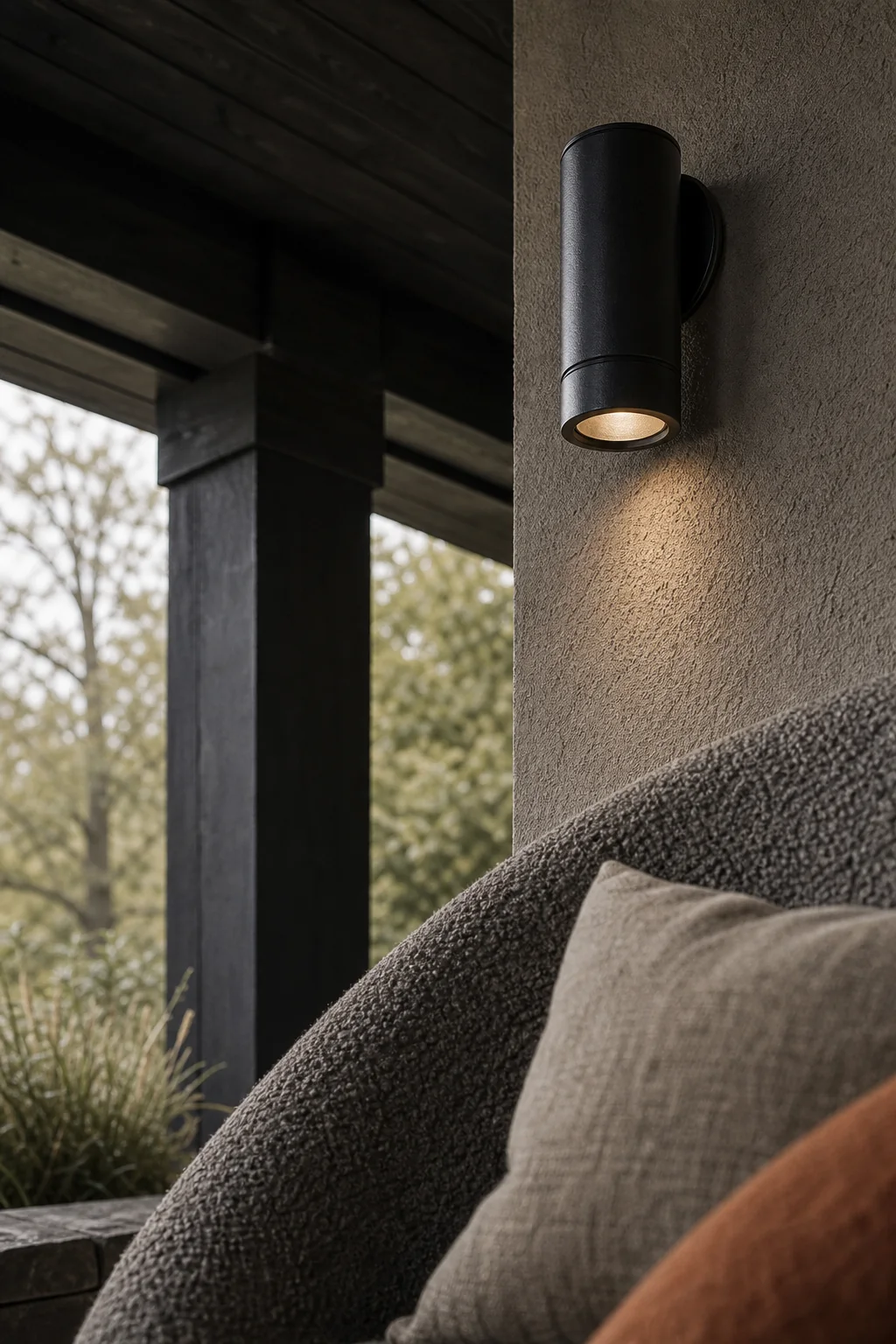
Applying a deep, non-reflective charcoal to the architectural framing captures the cauldron’s light-absorbing essence without darkening the entire room. Keeping the ceiling beadboard and stucco walls in lighter ash gray tones prevents the matte charcoal framing from overwhelming the space, ensuring the deep black finish remains a crisp framing device rather than a cave-like enclosure. Avoid any gloss or sheen on the painted timbers to stay strictly true to the source motif’s dry surface. This high-contrast structural approach draws the eye upward, celebrating the porch’s substantial timber construction while paying homage to the vessel’s defining, light-swallowing patina.
| Source trait | Visible evidence | Room move |
|---|---|---|
| Grounded Weight | The dense, heavy base of the iron vessel that anchors it to the floor. | Dark cleft slate tiles replicate the heavy iron base. |
| Matte Darkness | The non-reflective, deep black finish of the cast iron. | Matte charcoal framing replicates the cauldron’s light-absorbing finish. |
| Sand-Cast Roughness | The pitted, dry, and highly tactile surface of traditional cast iron. | Heavy raw linen mimics the dry, porous metal surface. |
| Tripod Elevation | The three angled feet that lift the bulbous body of the cauldron off the ground. | Slender angled legs lift chairs like the cauldron’s tripod. |
Translating Sand-Cast Roughness
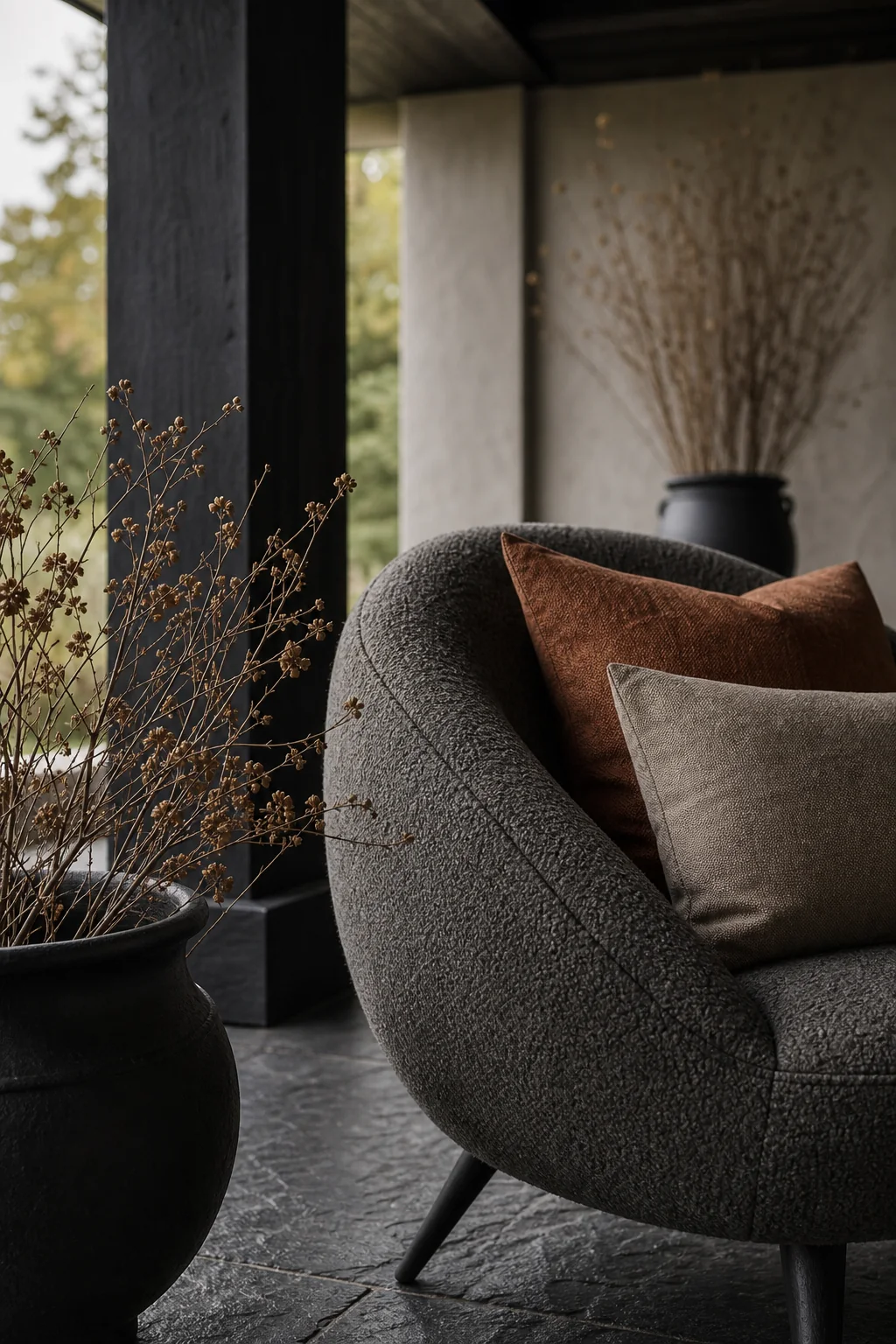
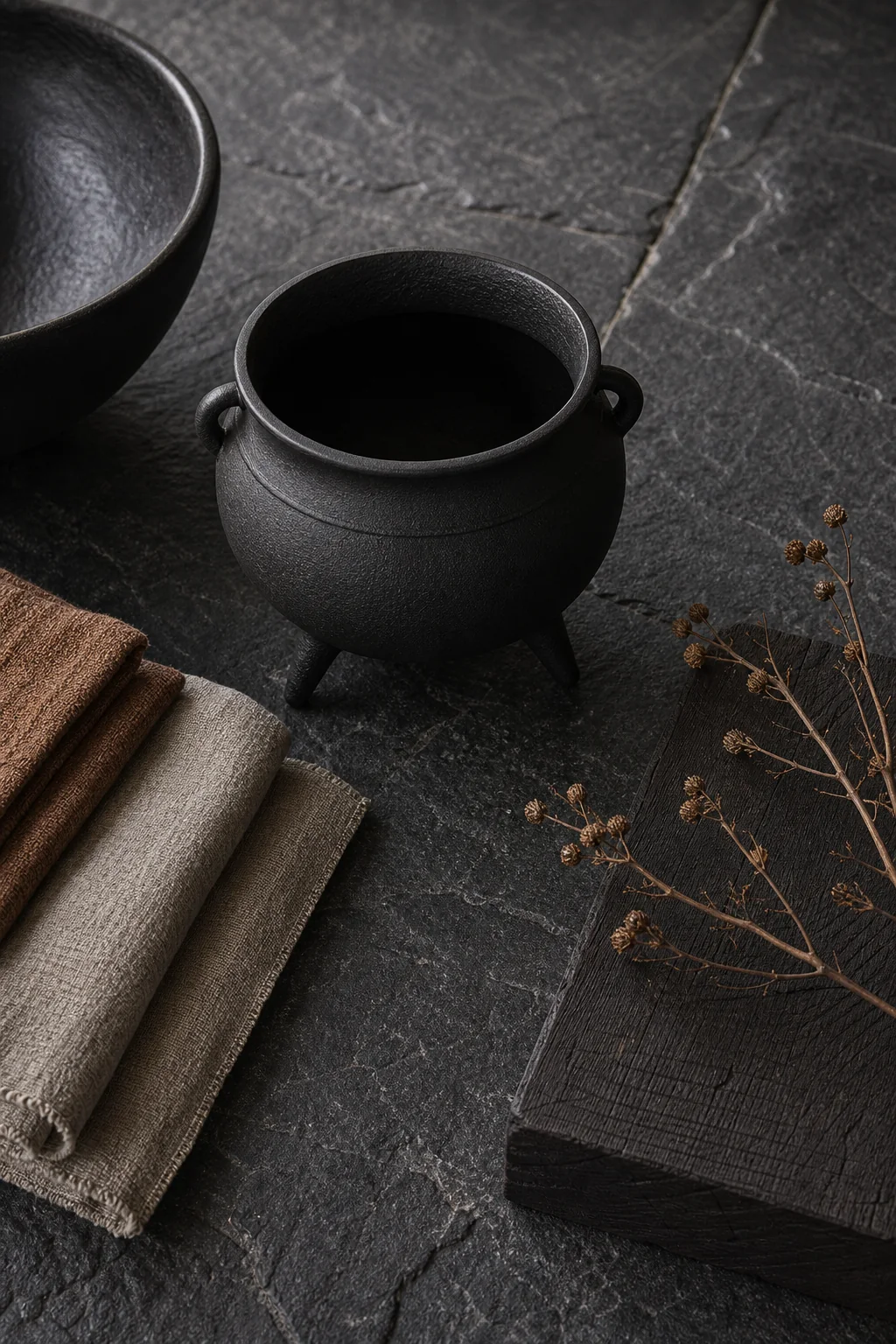
Introducing dry, highly tactile fabrics brings the rugged, sand-cast texture of the iron vessel into the realm of human comfort. Layering outdoor bouclé and heavy raw linen builds a complex, porous tactile experience that mimics the pitted, dry surface of traditional cast iron without feeling harsh against the skin. Sticking strictly to ash gray and iron oxide tones maintains the moody, elemental palette while softening the room’s overall acoustics. Selecting textiles with visible, irregular slubs ensures that every upholstered surface reflects the imperfect, handmade quality of a forged metal object, transforming cold industrial inspiration into an inviting outdoor retreat.
Layering Dry Textures
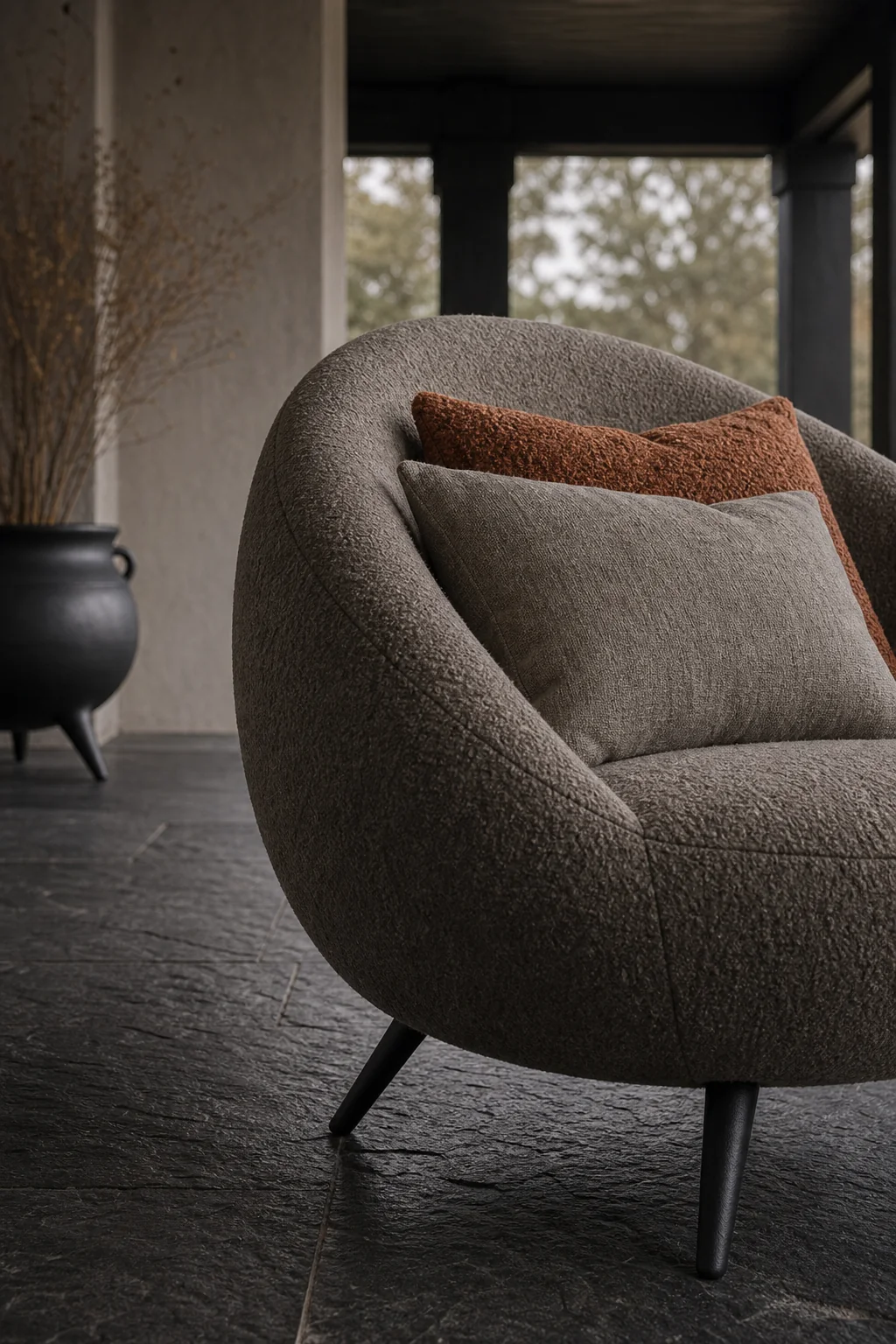
Nubby bouclé pillows introduce the texture of oxidized iron directly into the seating arrangement, enhancing the tactile depth of the heavy raw linen. This combination of dry, non-reflective materials ensures that even the softest elements of the porch respect the light-absorbing logic of the original metal casting, creating a cohesive sensory experience. By mixing ash gray bases with subtle rust-toned accents, the upholstery mimics the natural aging process of cast iron left exposed to the elements. These carefully chosen textiles invite guests to linger, proving that industrial inspiration can feel remarkably warm and welcoming when translated through appropriate fabrics.
Elevating Mass on Slender Tripods
Lifting heavy, rounded volumes slightly off the ground on delicate points creates a floating tension that defines the room’s rhythm. By selecting lounge seating with bulbous, bottom-heavy upholstery that contrasts sharply with thin, rigid legs, you echo the three angled feet that lift the cauldron’s body. This structural choice prevents the dark materials from feeling visually oppressive, allowing light and air to pass freely underneath the furniture. The resulting interplay between dense, grounded volumes and delicate, spindly supports injects a sense of dynamic energy into the porch, ensuring the moody palette feels sophisticated and intentional rather than heavy or stagnant.
Ensure the angled legs of your seating do not protrude too far into walkways to maintain a safe, easily navigable porch layout.
Centering the Geometry
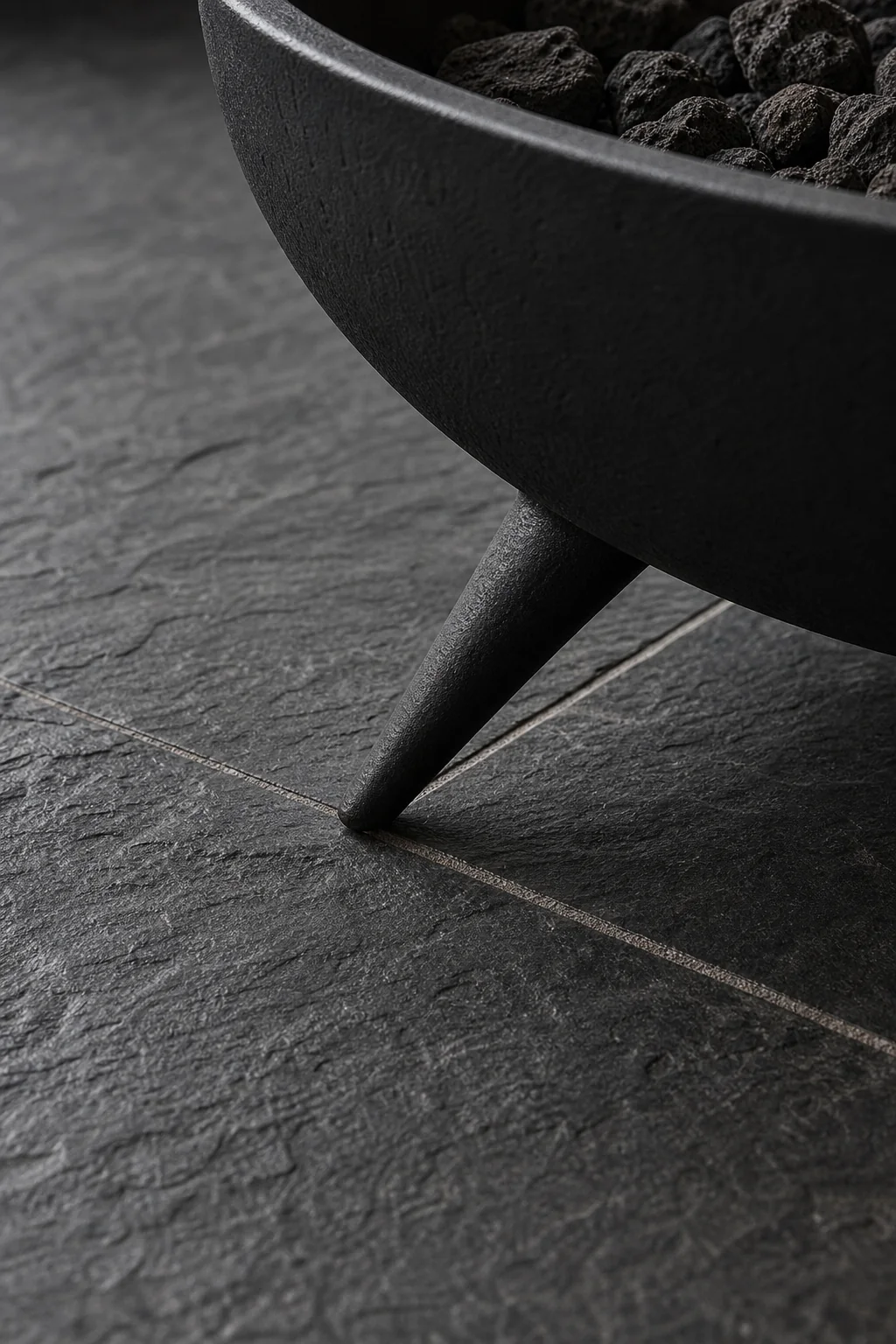
A tripod fire bowl echoes the vessel’s angled feet, serving as the ultimate focal point for the space. You can scale this concept’s intensity: a subtle approach introduces the cauldron’s influence strictly through texture using dark slate and nubby fabrics, while a balanced execution pairs those heavy surfaces with low-slung seating on slender legs. For a truly bold statement, paint the entire ceiling in deep matte charcoal and center the room around a massive blackened steel fire bowl on rigid, angled supports. Each intensity level relies on the same fundamental tension between heavy, grounded mass and delicate, elevated geometry.