
Industrial Loft Meets Renaissance: Dining Room
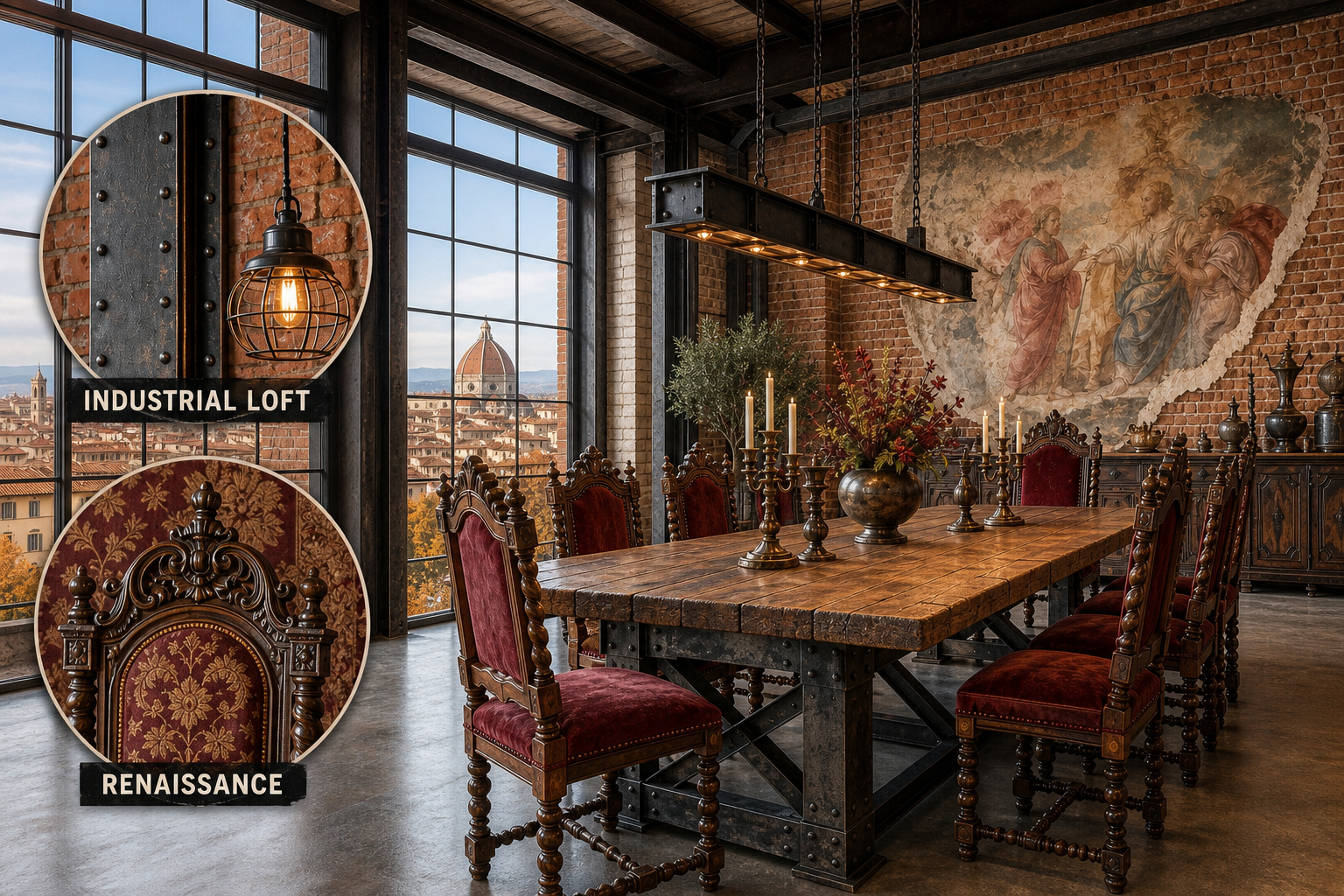
The raw utilitarian functionality of a machine-age warehouse clashes with the highly ornamented craftsmanship of 15th-century antiquity. We resolve this contradiction by letting industrial loft architecture control the massive shell while renaissance proportions define the furniture and art.
The Industrial Loft Foundation
Start by letting the architecture do the heavy lifting. Massive Crittall-style factory windows, exposed steel I-beams, and raw concrete flooring create a cavernous, utilitarian envelope. This raw architectural shell prevents historical elements from feeling stuffy and sets the stage for highly ornamented seating.
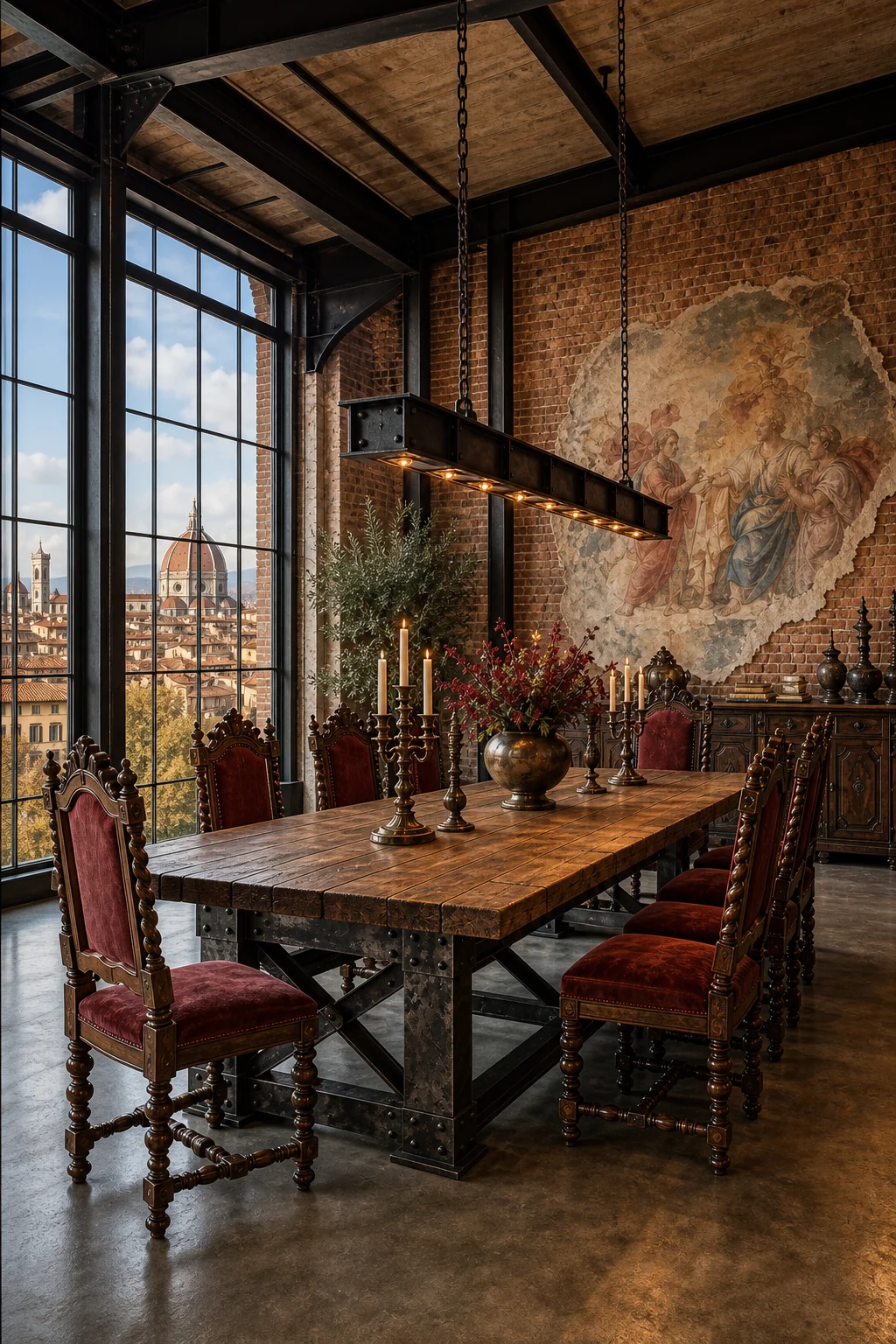
Notice how the rough, weathered brick wall perfectly frames the delicate carved walnut credenza. The porous architectural textures ground the delicate antiques, establishing a decidedly modern context that prevents the room from feeling like a preserved historical museum exhibit.
Leaving these structural elements untouched ensures the space retains its authentic warehouse atmosphere. This preservation provides the necessary visual weight to support ornate historical artifacts without overwhelming the senses.
The Renaissance Flourish
Against this cold, hard shell, introduce highly ornamented, aristocratic craftsmanship. Intricately carved walnut dining chairs featuring classical motifs and rich, faded oxblood velvet upholstery provide the necessary visual weight. Uniting these disparate eras requires a careful and deliberate material transition.
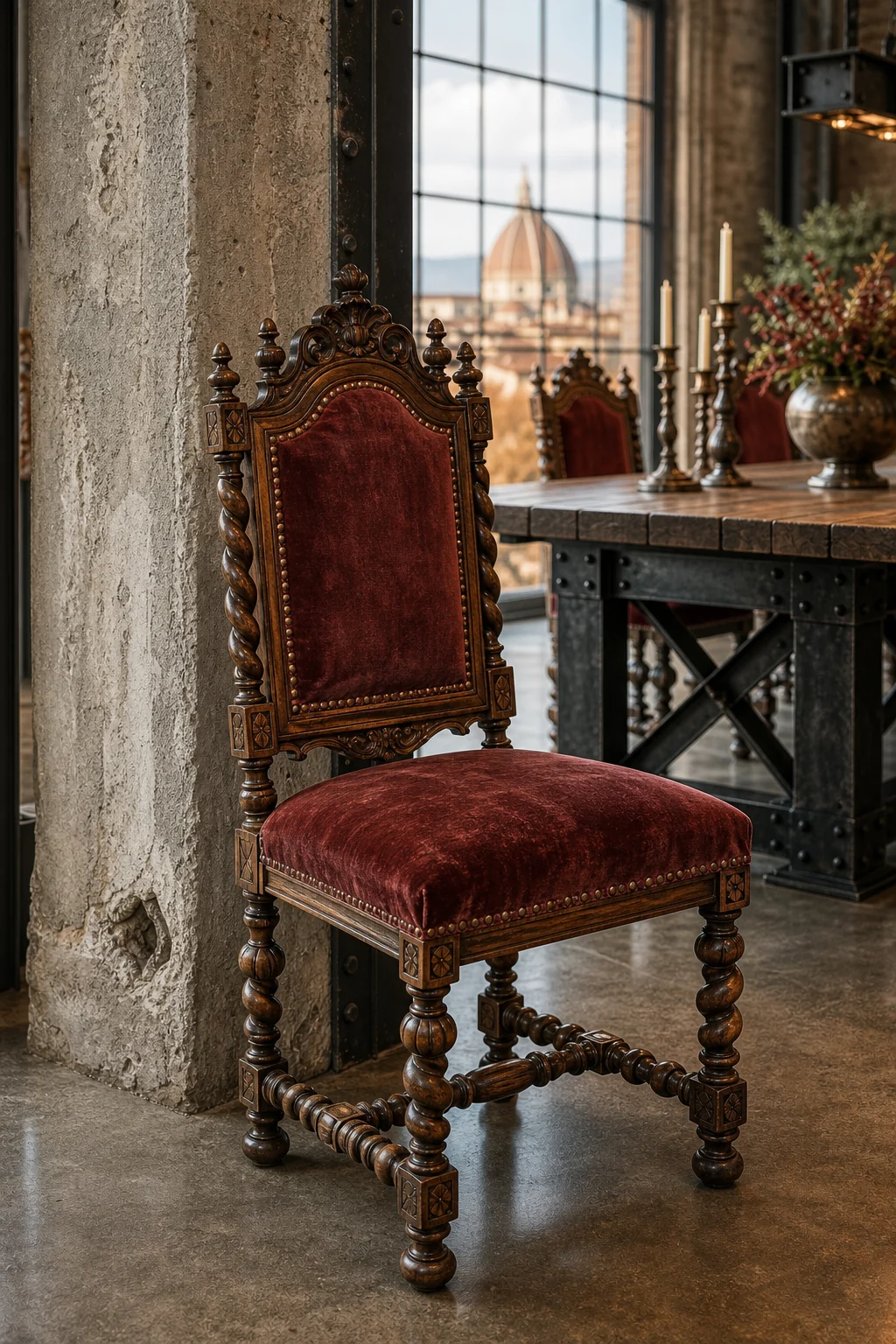
The juxtaposition of rich, faded oxblood velvet against a raw concrete pillar highlights the core tension. This tactile contrast emphasizes the aristocratic craftsmanship of the seating without overpowering the room’s utilitarian roots or compromising the integrity of the architectural envelope.
- Choose solid walnut woods featuring a highly polished, naturally aged patina to reflect ambient room light.
- Select heavy, tactile textiles like faded oxblood velvet to soften the harsh industrial loft concrete pillars.
- Incorporate classical motifs through subtle wood carvings that contrast sharply against the utilitarian steel and brick.
- Source seating with grand proportions that can hold their own inside the cavernous warehouse architectural shell.
Bridging the Centuries
The tension is resolved through a shared palette of oxidized iron, terracotta, and faded oxblood. These tones bridge the gap between industrial oxidation and renaissance pigments, making the centuries-wide leap feel intentional. This material harmony is crucial when assembling the primary dining arrangement.
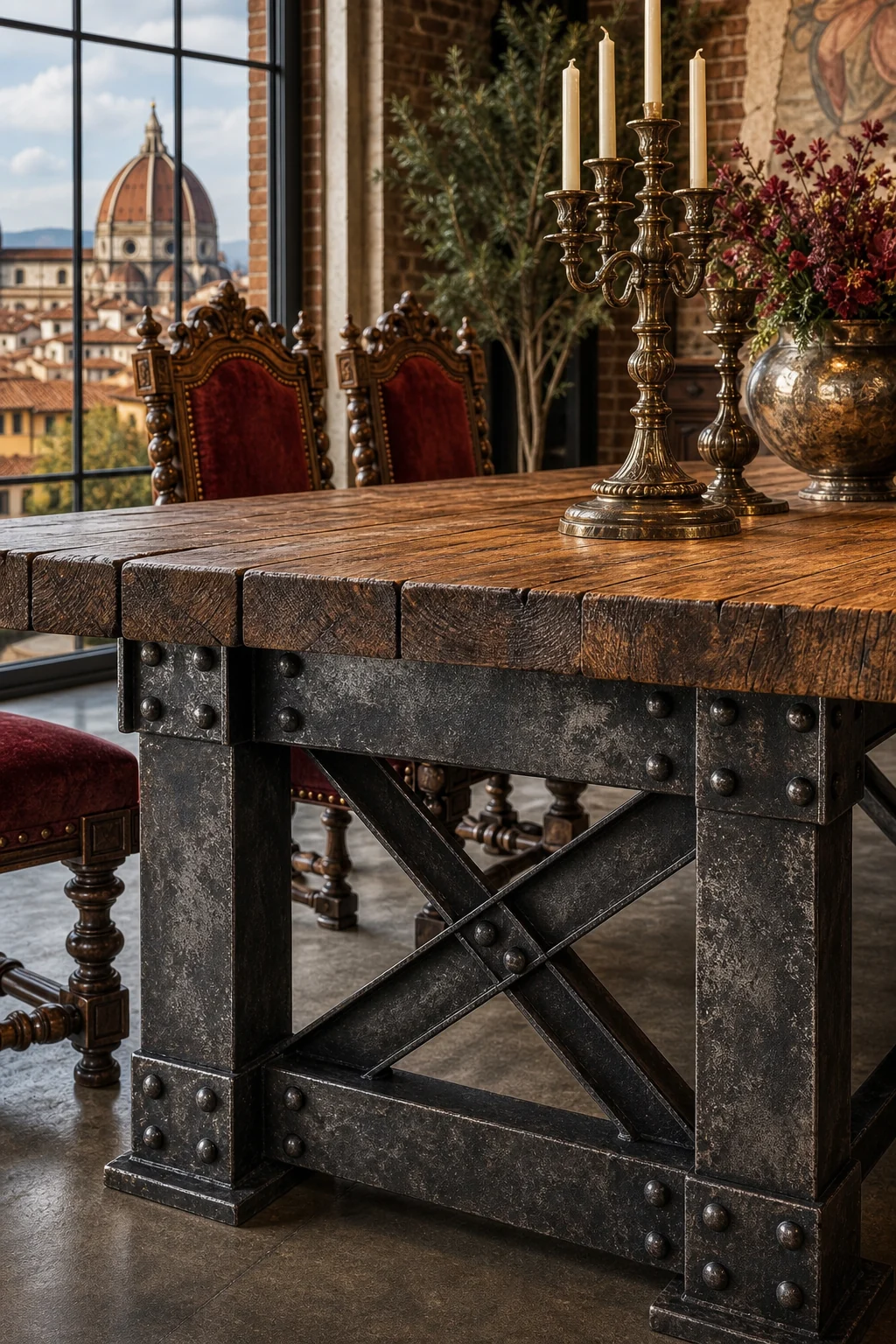
Observe how the oxidized iron hardware perfectly harmonizes with the antique brass candelabras. This shared warmth bridges the historical divide, ensuring the transition from utilitarian grit to aristocratic grandeur feels like a natural evolution rather than a jarring collision.
Establishing this shared color palette early prevents costly mistakes. By anchoring both the industrial loft elements and the renaissance antiques in warm, earthy tones, you create a cohesive environment that celebrates the inherent contradictions.
Assembling the Dining Room
Building the central dining vignette requires careful layering. A massive dining table combining a raw steel industrial base with an aged walnut plank top perfectly anchors the delicate, historically rich antiques. To translate this logic across the room, follow a strict material hierarchy.
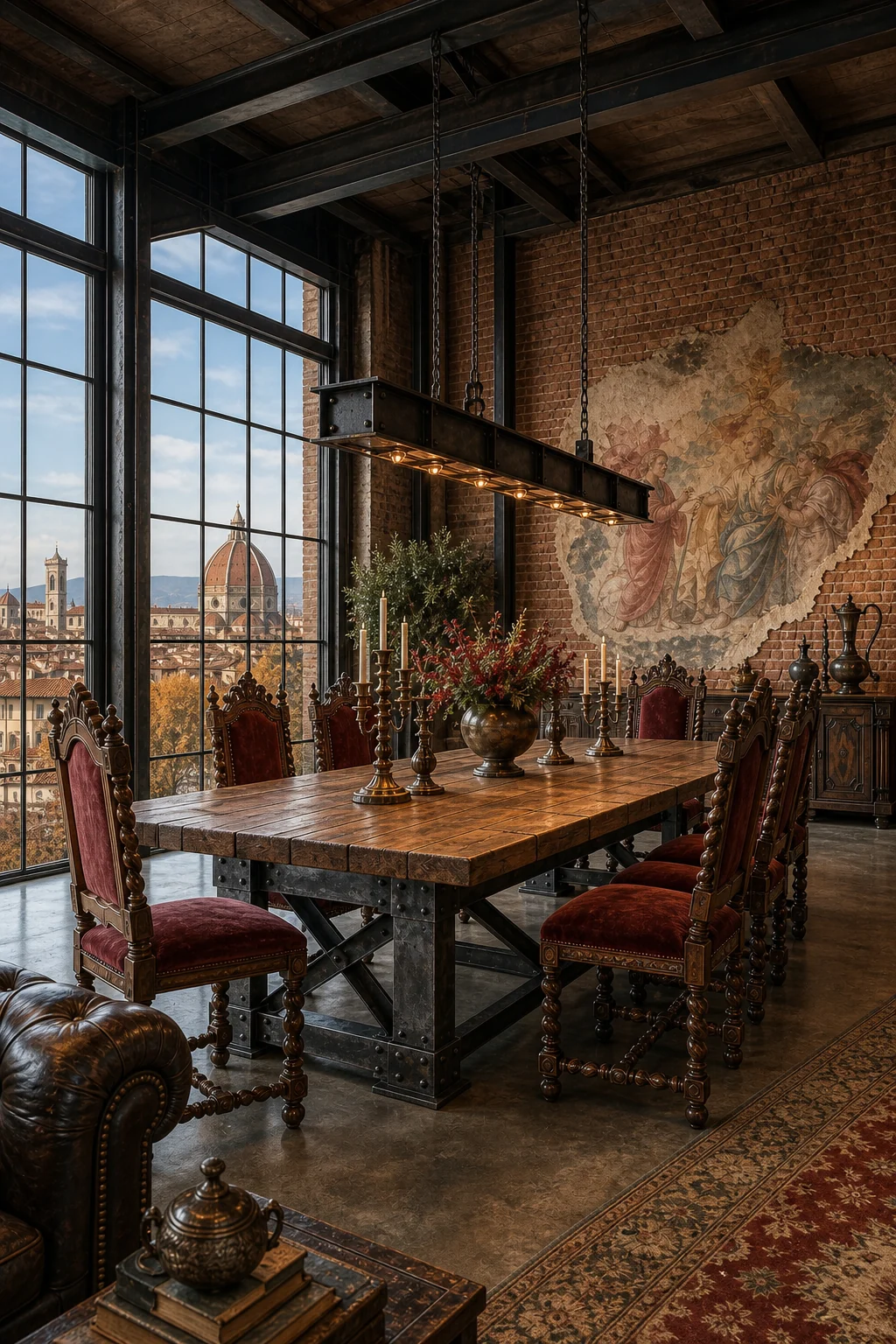
The heavy proportions of the industrial loft table base easily accommodate the grand scale of the renaissance seating. This central arrangement serves as the definitive anchor for the room, dictating how secondary elements should be layered to maintain the delicate historical balance.
| Design Layer | industrial loft Role | renaissance Role | Bridge Decision |
|---|---|---|---|
| Architectural Shell | Raw brick walls, exposed steel I-beams, and poured concrete flooring | Faded classical fresco fragments and aristocratic art installations | A shared backdrop of terracotta and rust tones uniting both eras |
| Large Furniture | Heavy, riveted raw steel table bases with utilitarian hardware | Thick, aged walnut planks and intricately carved chair details | Oversized scale that commands the cavernous warehouse space |
| Tactile Textiles | Utilitarian canvas or bare, hard architectural surfaces | Rich, heavy oxblood velvet upholstery and woven tapestries | Faded, matte finishes that avoid excessive shine or modern gloss |
| Room Lighting | Modern linear steel fixtures and factory wire cage pendants | Antique brass candelabras and ornate classical candlesticks | Warm, ambient glow reflecting off oxidized metals and aged wood |
| Small Accents | Raw concrete planters and weathered iron door hardware | Classical terracotta urns and gold woven historical motifs | Highly tactile, porous surfaces with an authentic aged patina |
Illuminating the Contrast
Avoid gloomy chiaroscuro clichés. Warm, crisp autumn daylight flooding through factory windows illuminates rich, tactile textiles and lifts the midtones, ensuring the space feels like a functional modern home rather than a dungeon. The same clarity should apply to your smaller tabletop moments.
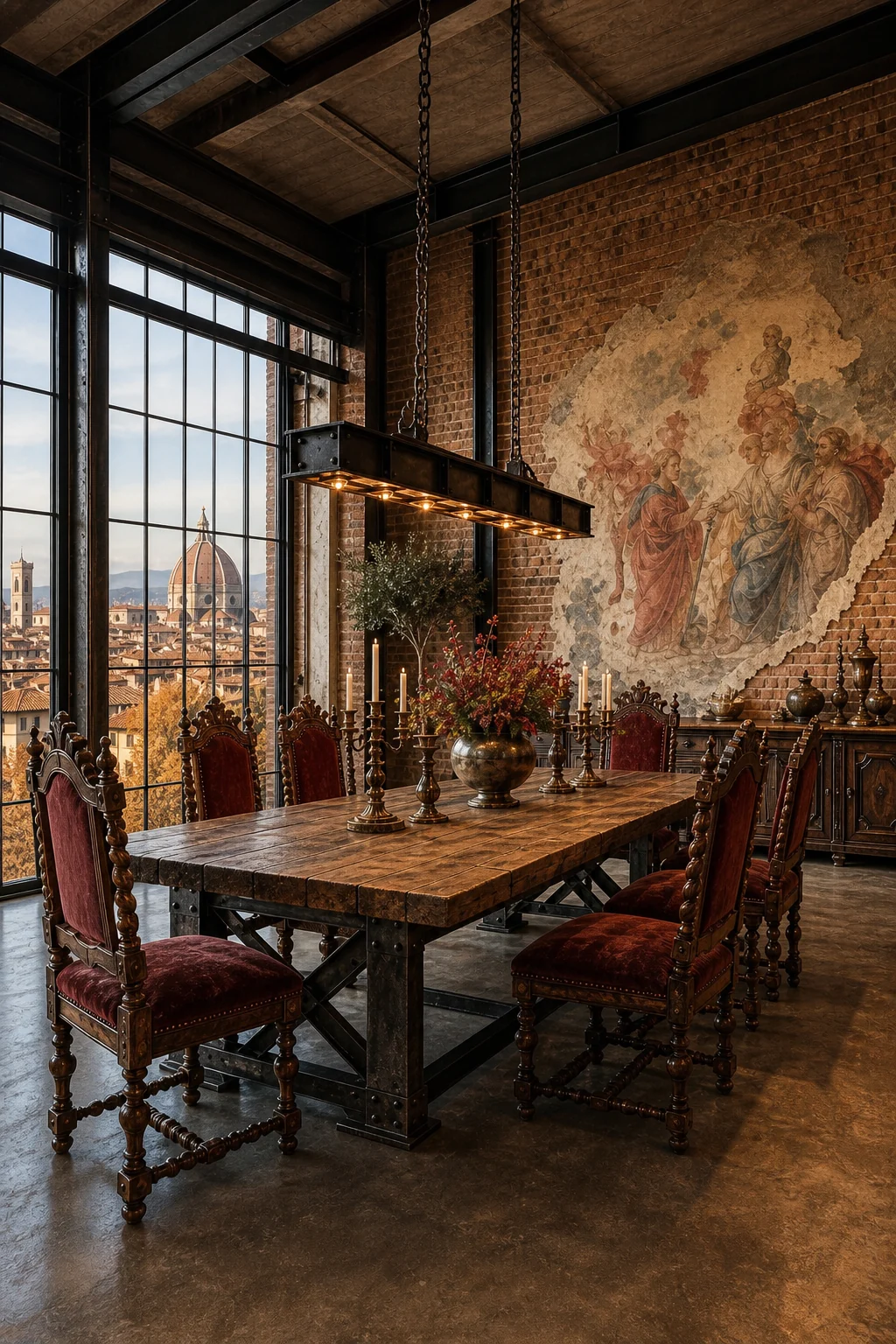
The generous natural daylight beautifully highlights the faded classical fresco against the rough industrial brick. To maintain this essential clarity into the evening hours, you must strategically layer your artificial lighting sources to prevent the cavernous space from feeling dark or oppressive.
- Maximize natural ambient light by leaving massive factory windows completely unadorned and free of heavy drapery.
- Position the primary dining table directly in the path of the strongest natural daylight to illuminate the textiles.
- Install modern linear steel fixtures directly above the dining table to distribute evening illumination evenly across the surface.
- Place antique brass candelabras at eye level to introduce a warm, flickering glow that softens the raw steel.
Styling the Accents
Accent styling must balance utilitarian grit with aristocratic grandeur. A modern linear steel chandelier hanging above antique brass candelabras creates a striking focal point without cluttering the visual field. These focused vignettes are the key to adapting the style beyond the main room.
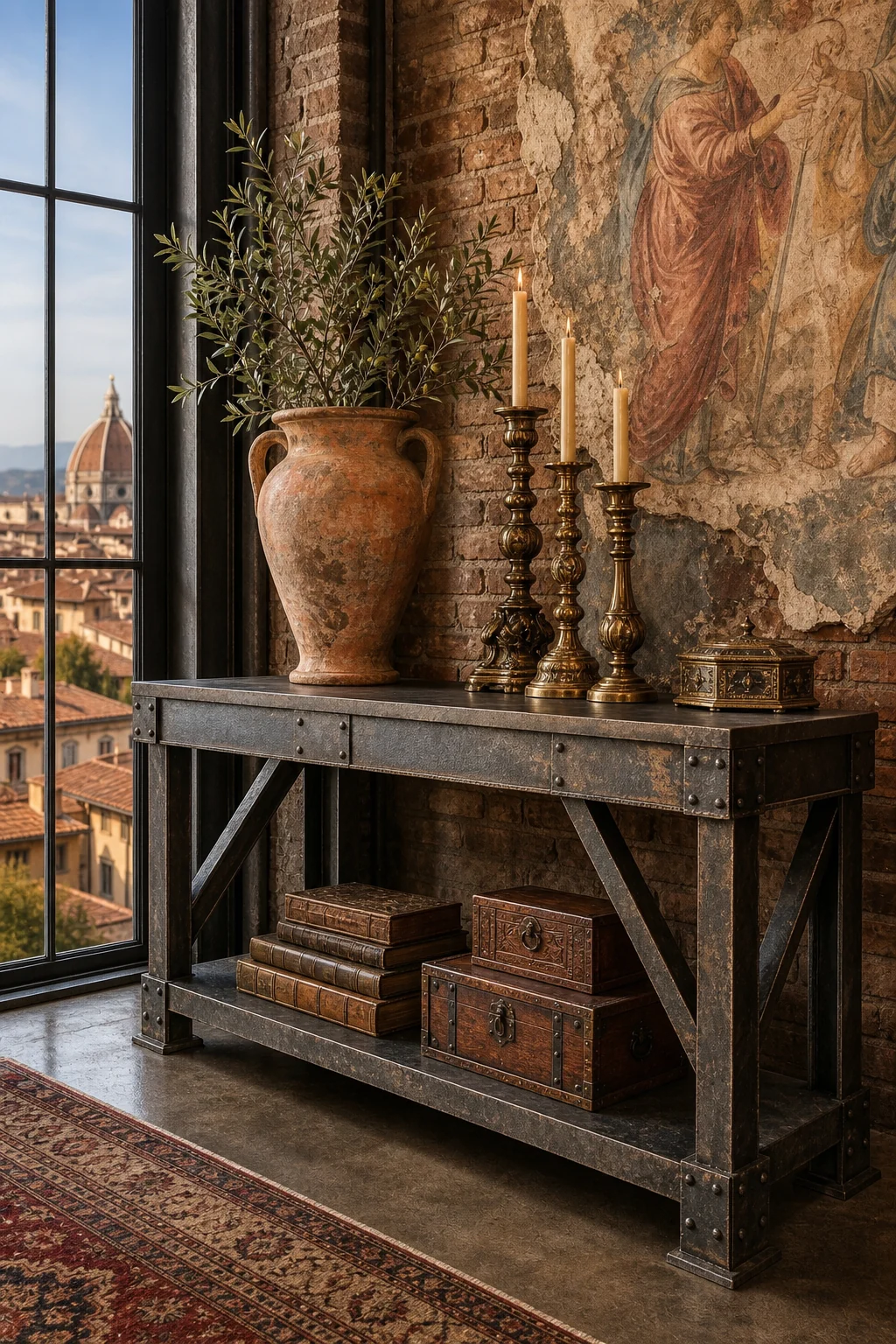
The interplay of a faded terracotta urn against a raw steel table base proves that small styling moments matter deeply. By carefully curating these tabletop accessories, you reinforce the overarching narrative of the room without overwhelming the primary architectural statements.
- Prioritize carved walnut dining chairs for essential historical warmth.
- Source antique brass candelabras to introduce a soft, flickering glow.
- Contrast historical pieces directly with linear industrial chandeliers.
- Utilize raw steel dining tables to maintain the necessary tension.
Adapting the Look
You can translate this logic without a cavernous warehouse. Focus on the material clash at thresholds and passages, using oxidized iron hardware against rich tapestries to evoke the same tension in smaller rooms. However, balancing these elements requires strict discipline and careful editing.
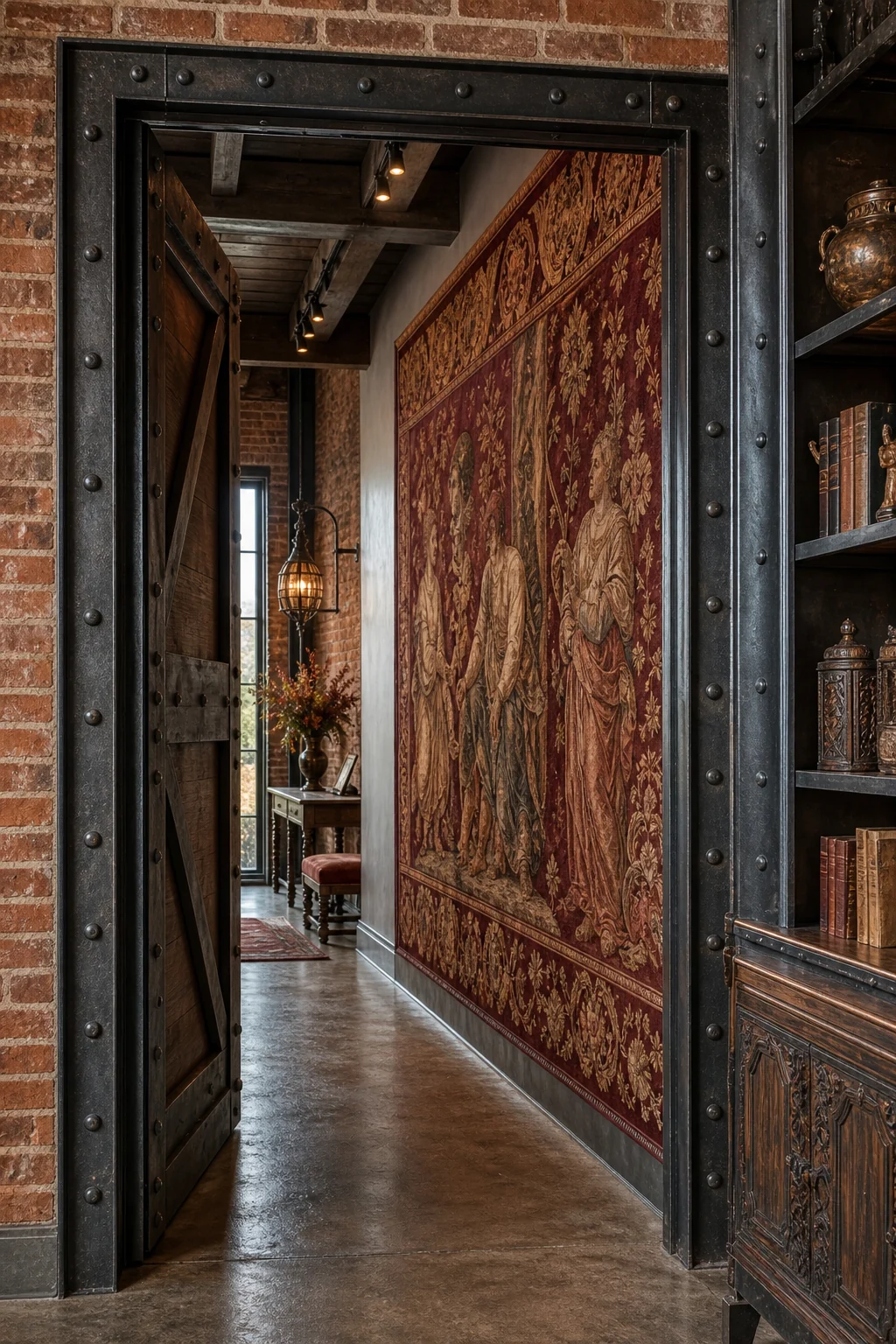
Framing a rich renaissance tapestry through a heavy steel doorframe creates an immediate, striking architectural dialogue. This technique proves that the core aesthetic tension relies on material juxtaposition rather than sheer square footage, allowing the concept to thrive in more modest residential footprints.
Allocating resources toward a singular focal point simplifies the design process. Once the heavy dining table is in place, confidently layer in more affordable vintage accents without sacrificing the historically grounded atmosphere.
Avoiding the Museum Trap
The most common failure mode is the costume effect, where the room feels like a movie set. Prevent this split personality by ensuring the industrial loft shell remains dominant and strictly utilitarian, resisting the urge to over-decorate the walls with excessive historical ornamentation.
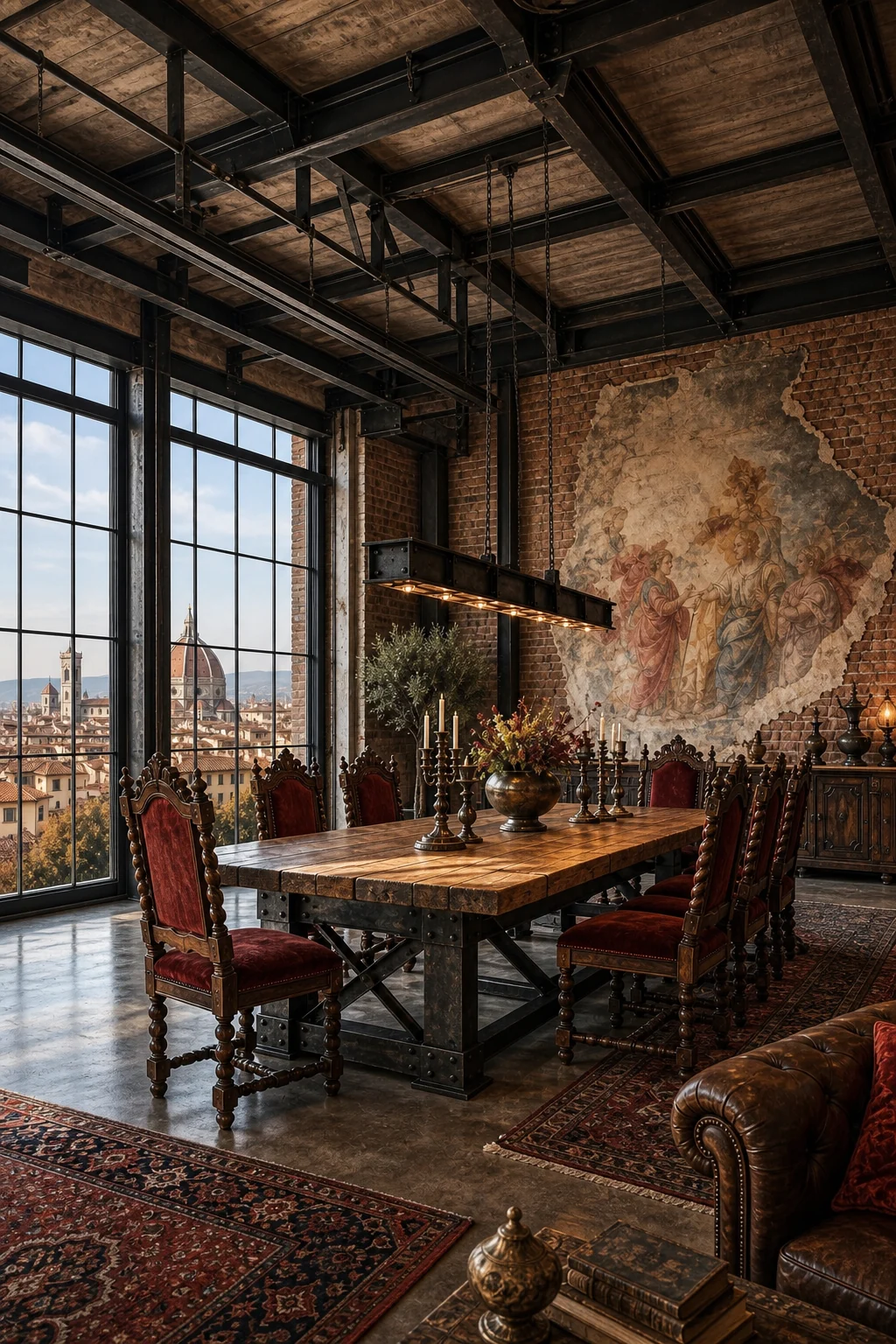
The massive exposed steel I-beams overhead keep the heavy renaissance furniture firmly grounded in reality. To successfully resolve this historical contradiction and maintain a livable atmosphere, you must strictly enforce the boundaries between the two distinct design languages at all times.
- Never use faux brick, plastic architectural beams, or artificial weathering techniques on the structural shell.
- Avoid overcrowding the room with delicate antiques; negative space is crucial for highlighting the architecture.
- Ensure the industrial loft shell remains strictly utilitarian, serving only as a backdrop for the furniture.
- Reject highly polished, modern glossy finishes that disrupt the shared matte palette of the two eras.