
Georgian Meets Japanese Traditional: Dining Room
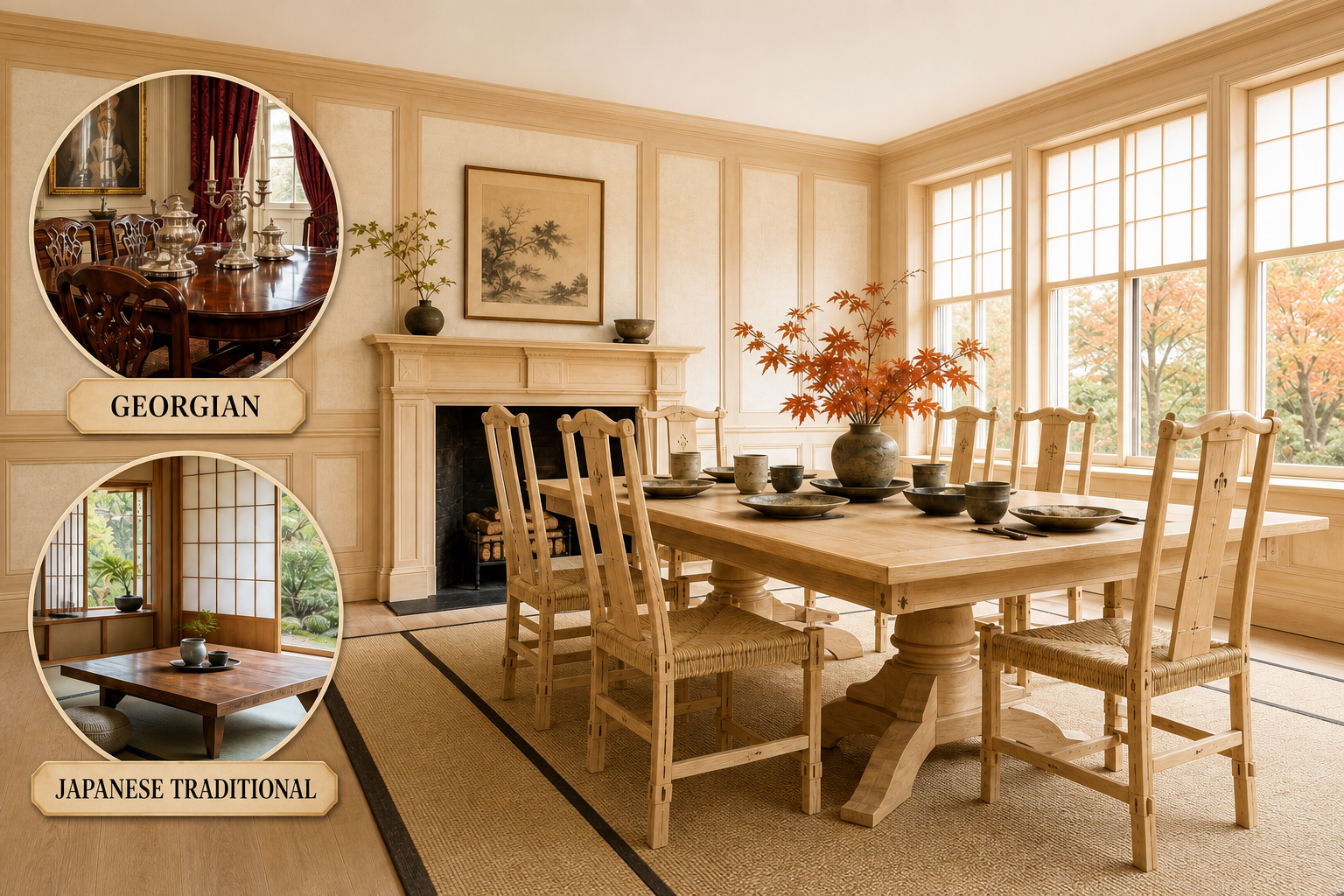
The heavy, vertical formality of 18th-century British architecture clashes directly with the unvarnished simplicity of Japanese interiors. We resolve this by letting Georgian proportions dictate the layout while Japanese Traditional materials strip away the heavy ornamentation entirely.
Style A language
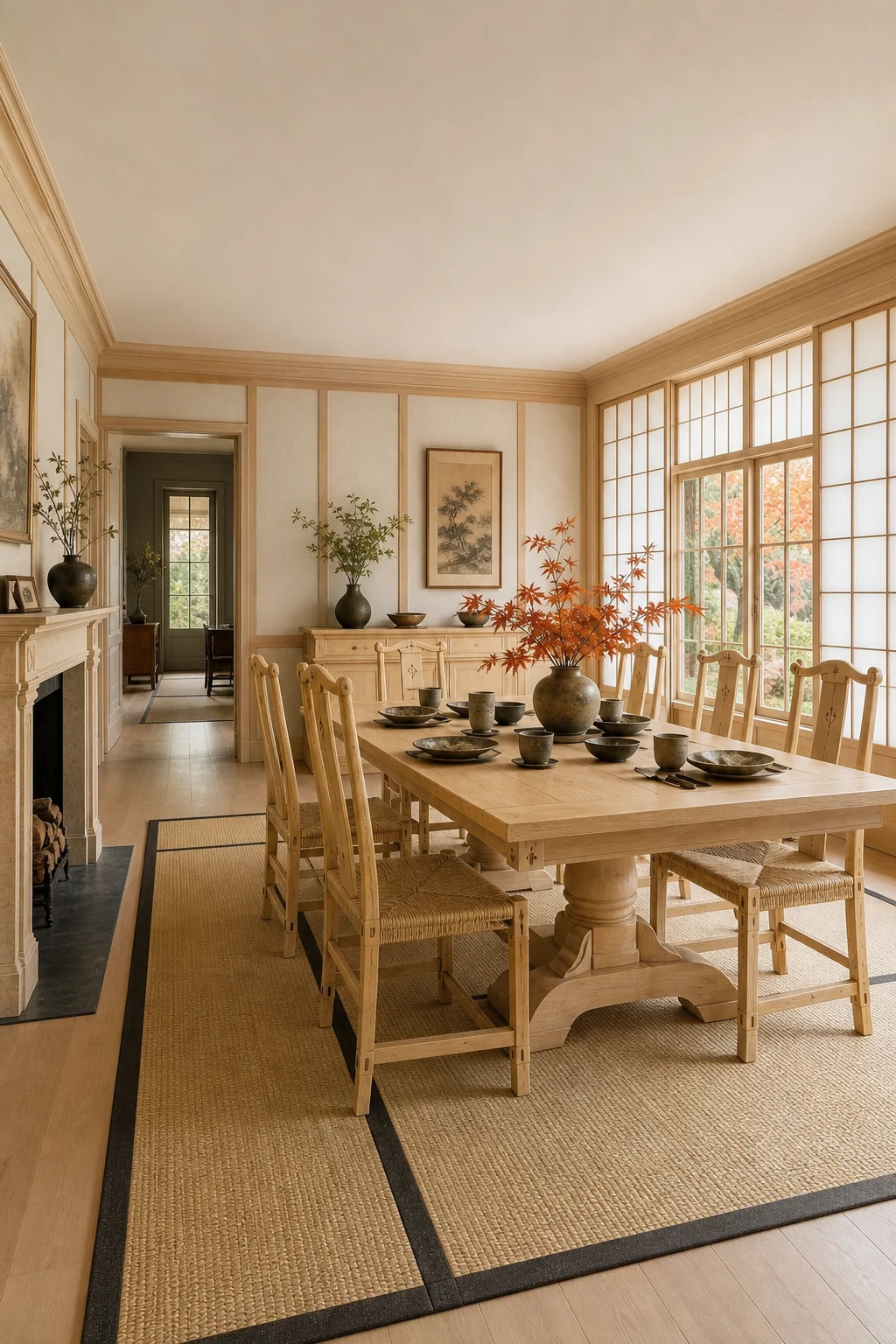
Georgian design relies on strict symmetry and heavy ornamentation to project authority within formal dining spaces. To soften this imposing presence, we retained the classical fireplace mantel silhouette but stripped away the expected marble and high-gloss paint completely, favoring a more natural approach.
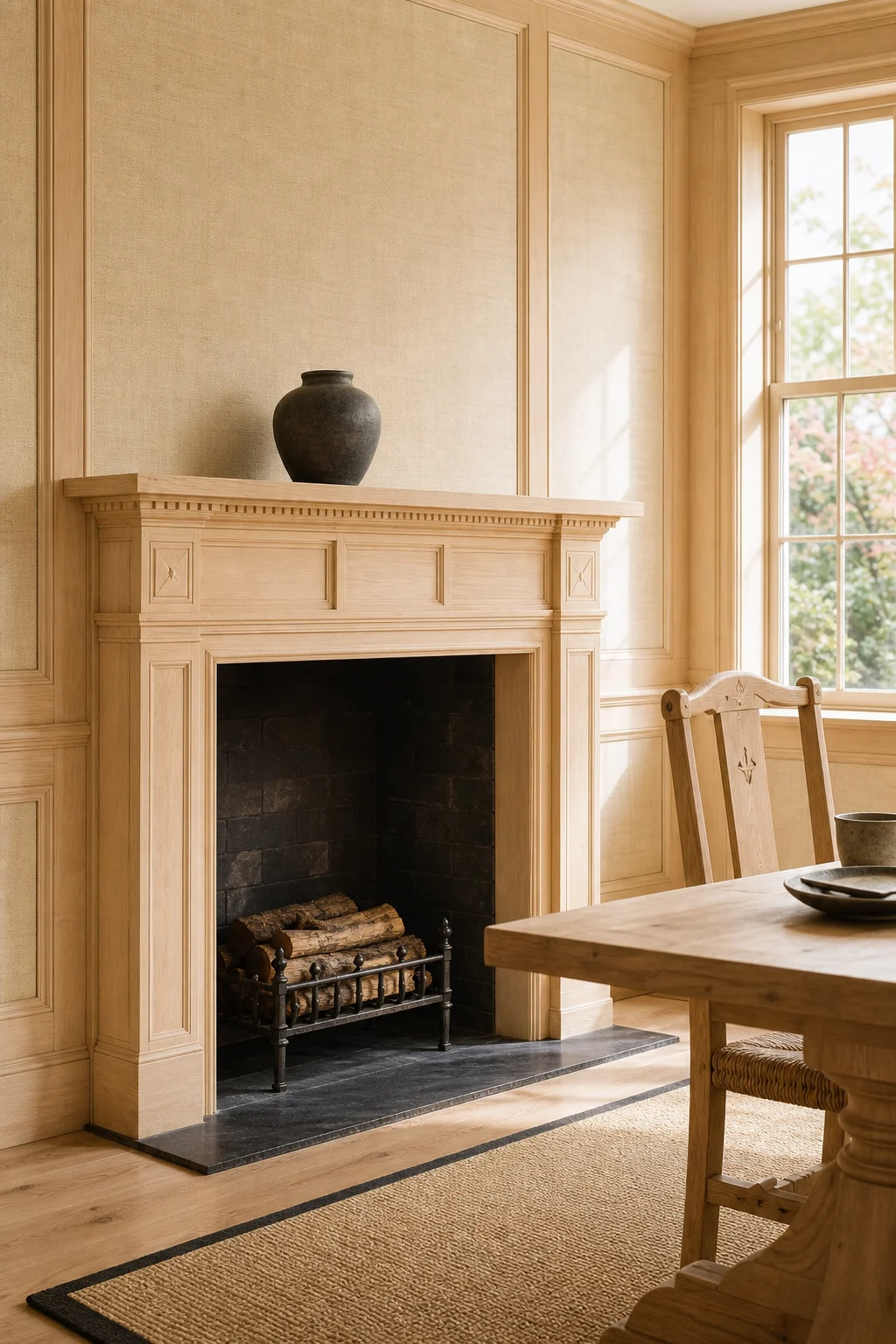
By executing this formal European anchor entirely in raw, pale wood, the architecture immediately loses its stiffness. It sets the stage for a softer, more organic approach to the surrounding space, naturally inviting closer inspection of the foundational floor treatments below.
This careful subtraction of gloss ensures the room feels grounded rather than grandiose. The eye naturally travels downward, seeking the textural warmth that defines the second half of this hybrid equation and anchors the entire dining experience in natural fibers.
Style B language
Japanese Traditional interiors prioritize horizontal lines, natural fibers, and a deep connection to the floor. We introduced a large tatami-weave rug to ground the room in earthy, green-gold warmth, deliberately counteracting the strict verticality of the surrounding British architectural walls.
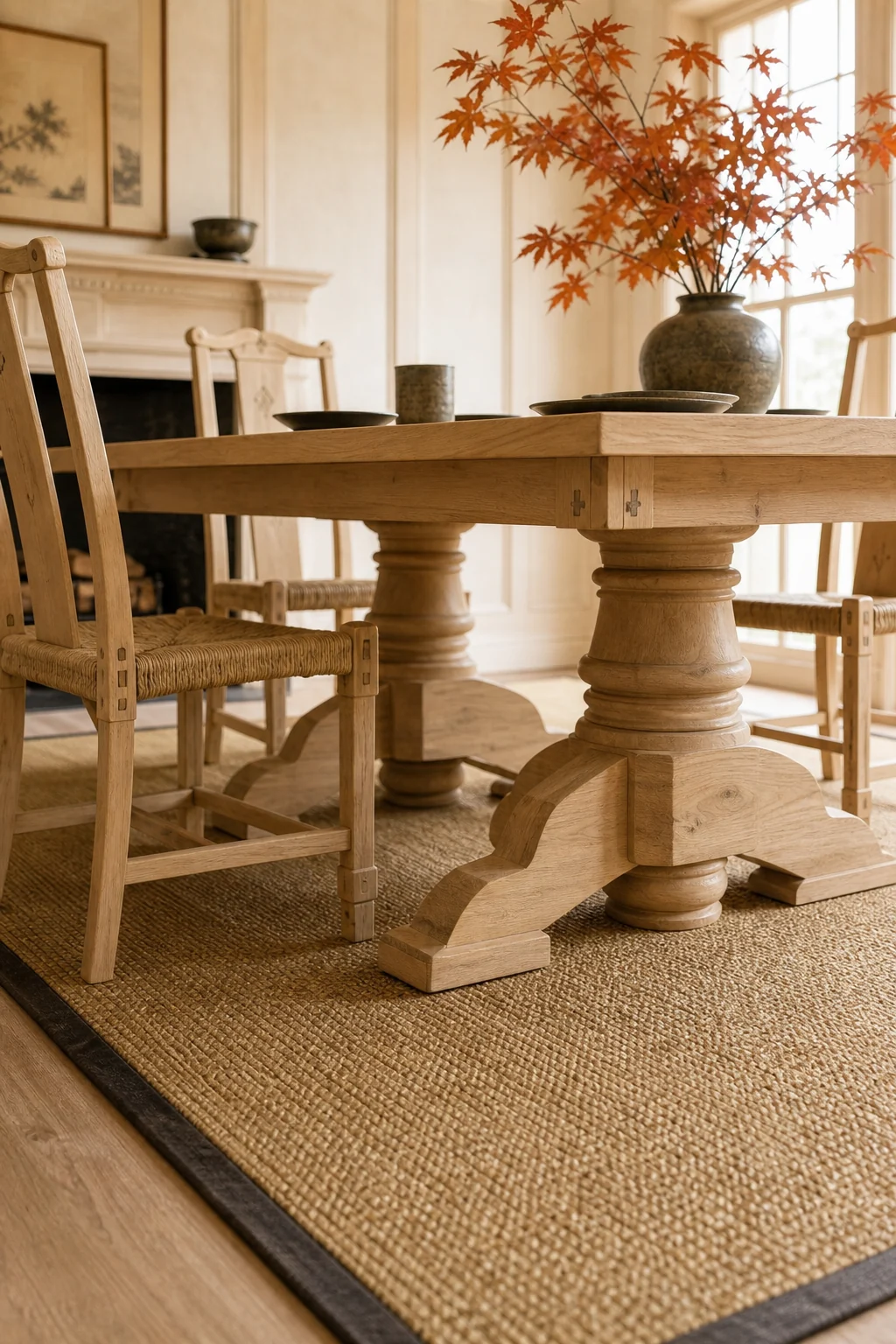
This woven foundation completely changes the tactile experience of the dining area. It forces the heavy wooden furniture to feel lighter, drawing attention upward to the architectural envelope. To establish this grounding Japanese influence beneath formal European furniture, prioritize these specific material choices.
- Use unvarnished hinoki wood to create a pale, blonde structural foundation for the entire room.
- Introduce tatami-weave floor coverings with dark fabric borders to soften heavy foot traffic.
- Select wabi-sabi ceramics to break up rigid, predictable symmetry on the dining table.
The bridge
The most critical bridge occurs right on the walls, where both aesthetics must coexist harmoniously. We kept the symmetrical Georgian wall paneling but discarded the traditional painted plaster entirely, seeking a softer, more luminous alternative for the space.
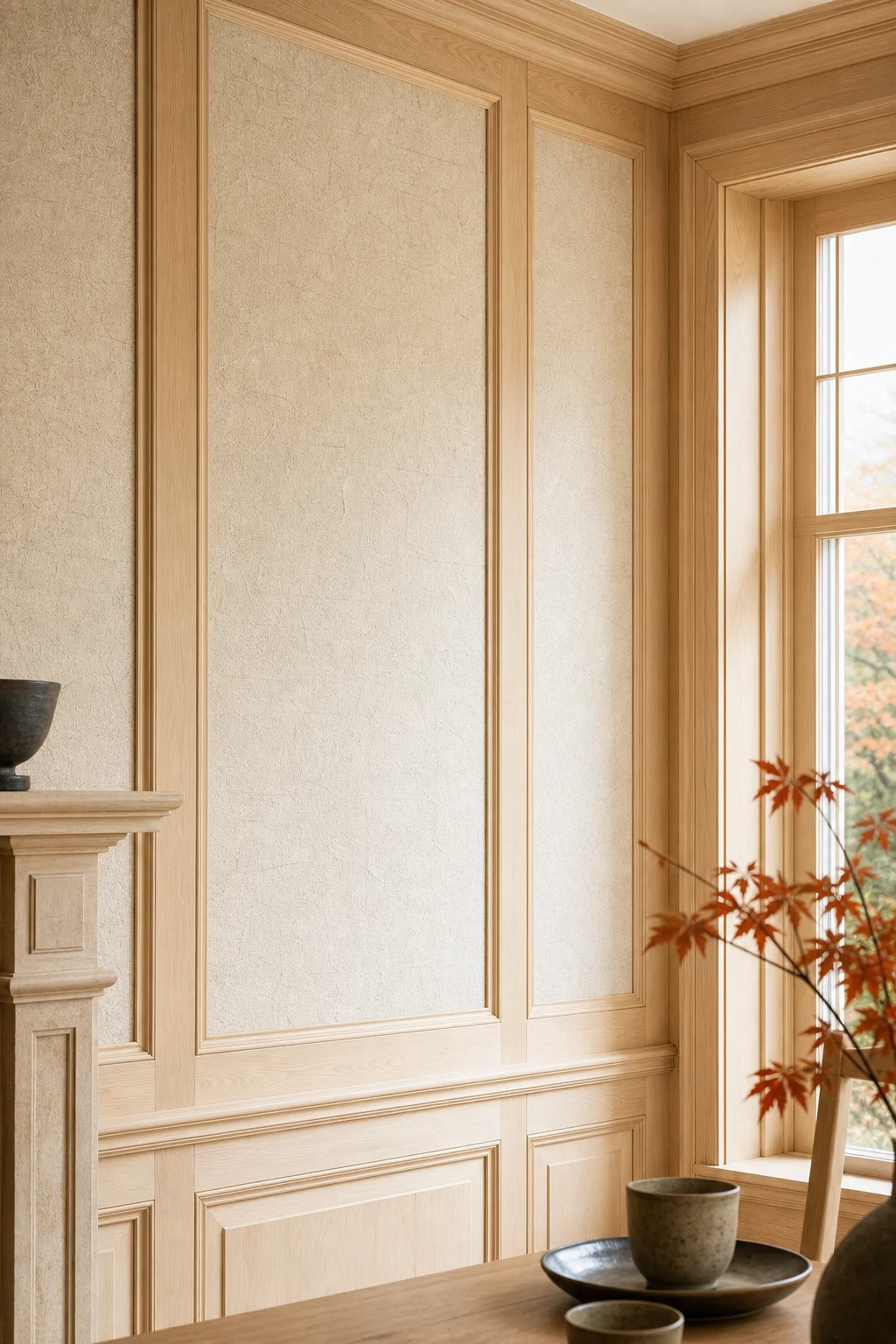
Warm washi paper inserts now fill the molding voids. This simple material swap honors British architectural rhythm while introducing the luminous, textural depth of a Kyoto teahouse, perfectly preparing the room’s envelope for the central furniture arrangement to follow.
Applying paper within rigid wooden grids unifies the vertical planes beautifully. The resulting walls feel simultaneously structured and incredibly soft, creating the perfect backdrop for the central dining arrangement to take shape in the middle of the formal room.
Build the room
Bringing the seating together requires careful structural translation to maintain the established balance. The long double-pedestal dining table and high-backed chairs maintain their formal British outlines but utilize visible Japanese mortise-and-tenon joinery to eliminate the need for heavy metal hardware.
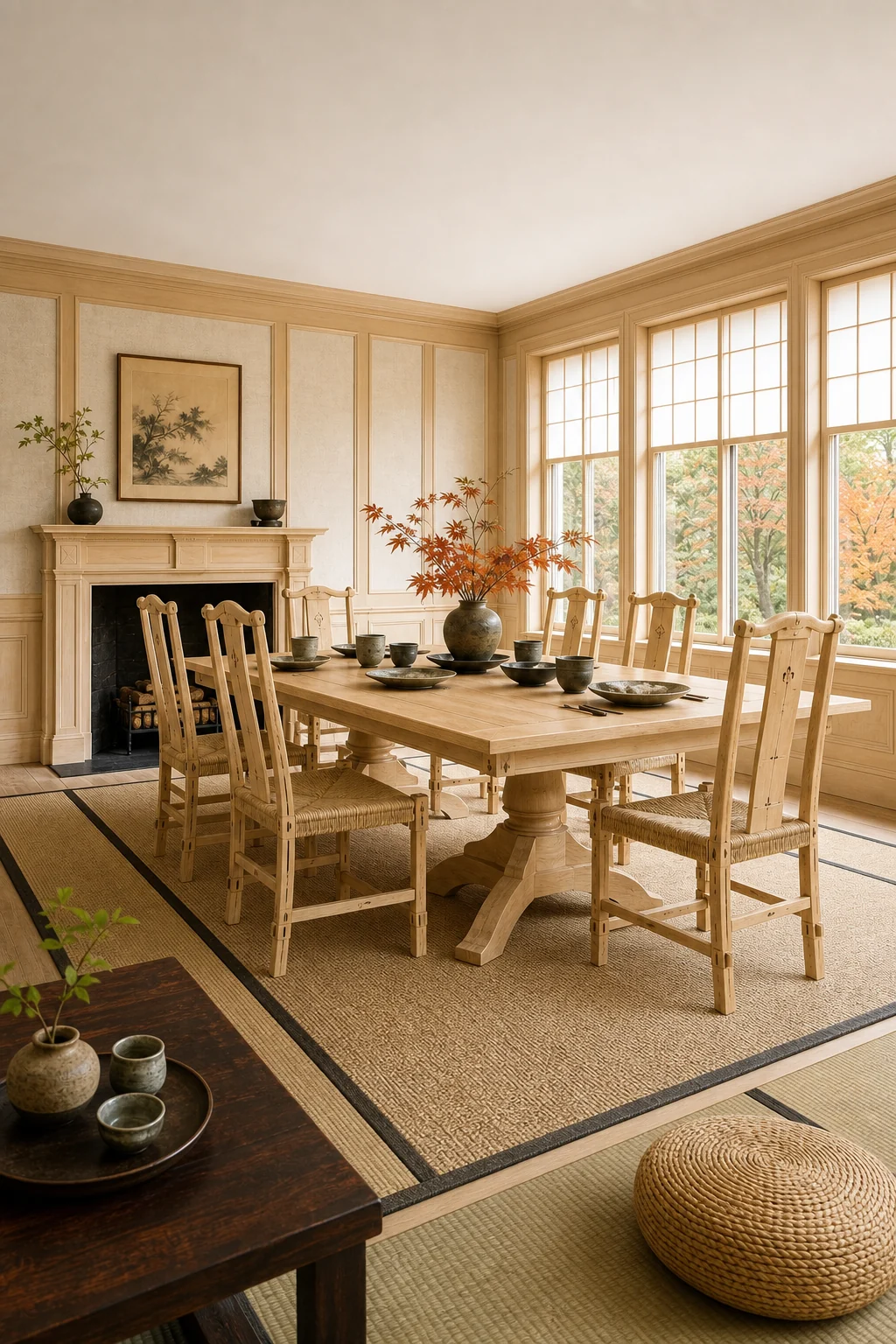
This physical intersection of 18th-century shapes and Kyoto craftsmanship defines the room’s primary purpose. The seating arrangement commands the space with absolute authority, yet remains highly approachable through its honest, unvarnished construction and the inclusion of woven natural rush seats.
| Layer | Georgian Role | Japanese Traditional Role | The Bridge |
|---|---|---|---|
| Shell | Symmetrical Georgian wall paneling and classical fireplace mantels | Washi paper screens and raw, unvarnished hinoki wood | Georgian molding profiles framing warm washi paper inserts |
| Furniture | Double-pedestal dining table and formal high-backed chairs | Visible wood joinery and natural woven fibers | British silhouettes built entirely with Japanese mortise-and-tenon techniques |
| Textiles | Formal, room-filling decorative area rugs | Woven rush seating and tatami floor textures | A large tatami-weave rug defining the formal dining zone |
| Lighting | Tall, vertically proportioned classical sash windows | Diffused, paper-filtered natural autumn daylight | Shoji-style window treatments mimicking classical sash window proportions |
| Accents | Centralized, highly symmetrical tabletop displays | Rustic, ash-glazed wabi-sabi ceramic tableware | Matte charcoal pottery arranged in a formal seasonal centerpiece |
By mapping each layer deliberately, the hybrid avoids feeling like a random assortment of mismatched furniture. The resulting environment relies heavily on exactly how natural light interacts with these carefully chosen textures throughout the changing hours of the day.
Light and architecture
Lighting dictates the mood of any hybrid space, especially one deeply reliant on natural textures. Instead of heavy damask drapery, soft autumn daylight filters through shoji-style window treatments that perfectly mimic classical sash proportions to maintain the formal architectural rhythm.
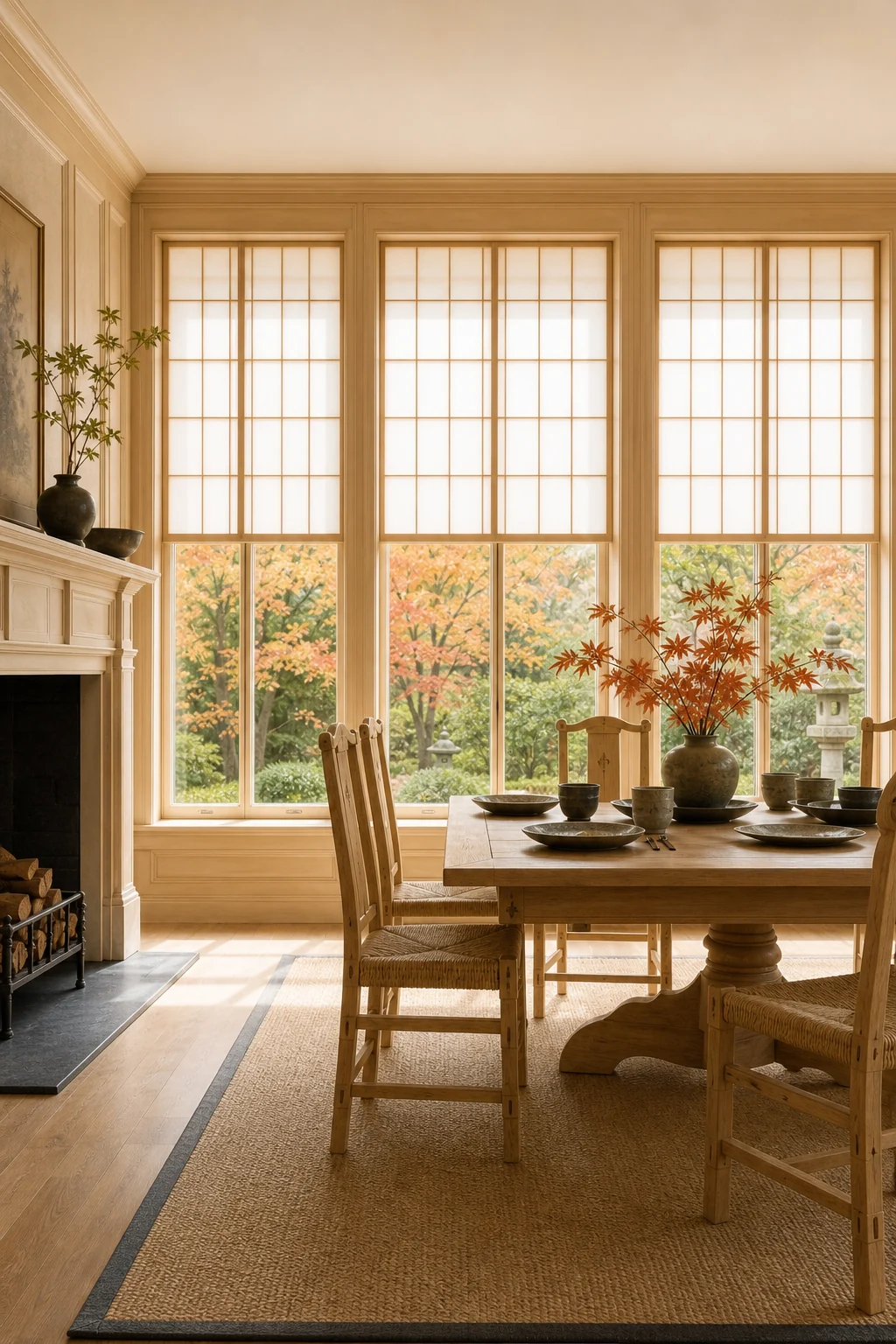
This architectural repetition unifies the room with remarkable subtlety. The grid of the window screens echoes the geometry of the wall panels, wrapping the dining space in a continuous, glowing envelope. To replicate this environment, sequence your lighting decisions carefully from the perimeter inward.
- Maximize natural daylight with translucent, paper-based window treatments to illuminate the dining space.
- Avoid harsh, direct overhead chandeliers or modern directional spotlights that create heavy shadows.
- Rely on the washi paper screens to lift midtones naturally across the room.
Style the details
Tabletop styling is where the rigid architectural symmetry finally relaxes into something far more organic. A subtle centerpiece of autumn maple branches signals the season, beautifully breaking the strict vertical lines of the surrounding high-backed formal dining chairs.
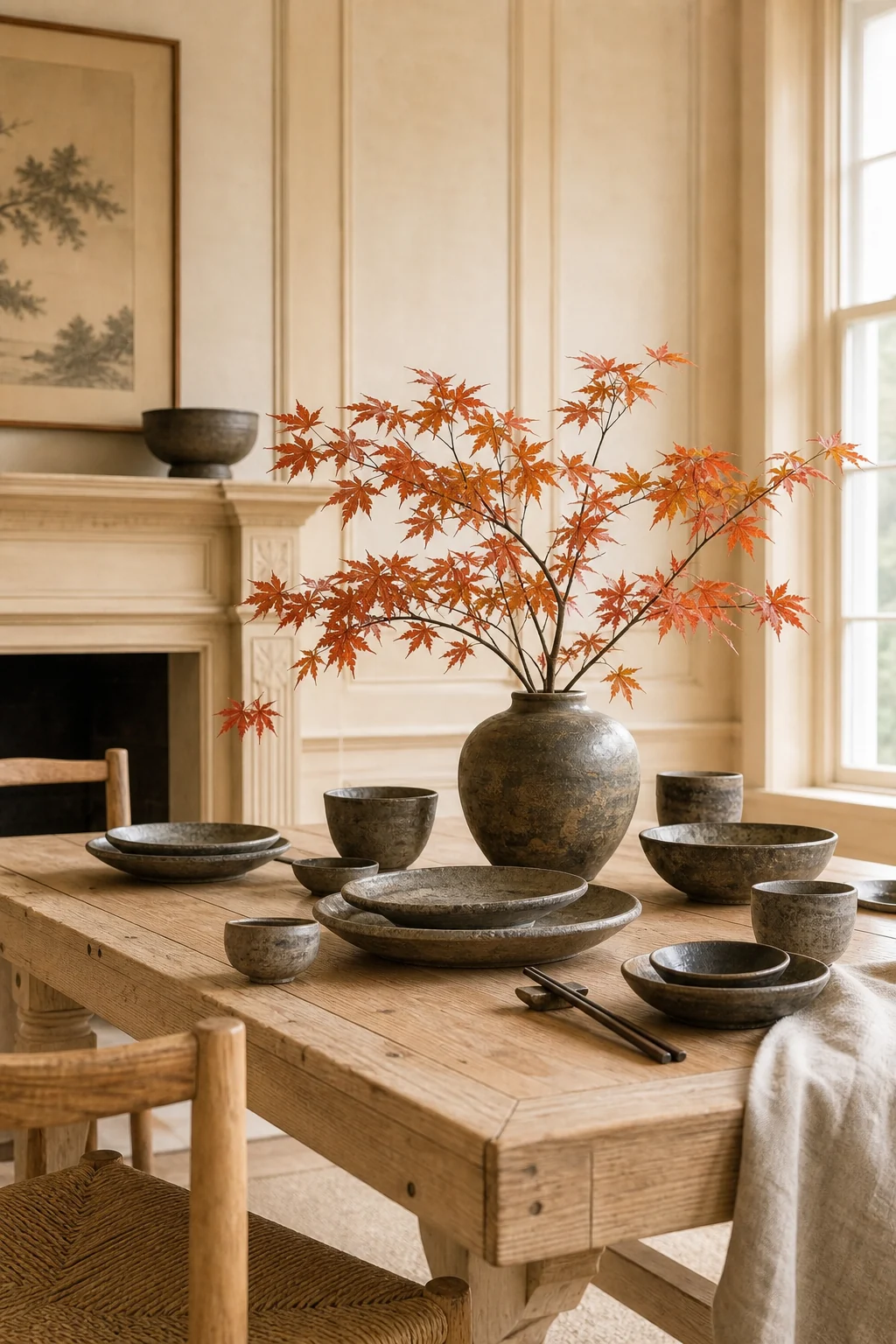
Rustic, ash-glazed ceramics replace ornate silver candelabras and polished crystal. These matte charcoal elements provide necessary visual weight, grounding the pale blonde woods and warm white walls without adding any unnecessary decorative clutter to the serene dining experience.
Curating these final touches requires strict adherence to the established material palette. Focus your sourcing efforts on a few high-impact categories that reinforce the tactile narrative of the dining space without overwhelming the senses or cluttering the table.
- Source matte charcoal ceramic dining plates and rustic serving bowls for the table.
- Find unvarnished pale wood dining chairs featuring comfortable woven rush seats.
- Seek large tatami-weave floor coverings finished with dark, tailored fabric borders.
- Install shoji-style translucent window screens or freestanding wooden room dividers.
Adapt it
You do not need custom wall paneling to capture this feeling in a standard home. Focus on the threshold moments and the transition between different flooring materials to establish the hybrid aesthetic in any layout without undertaking a massive architectural renovation.
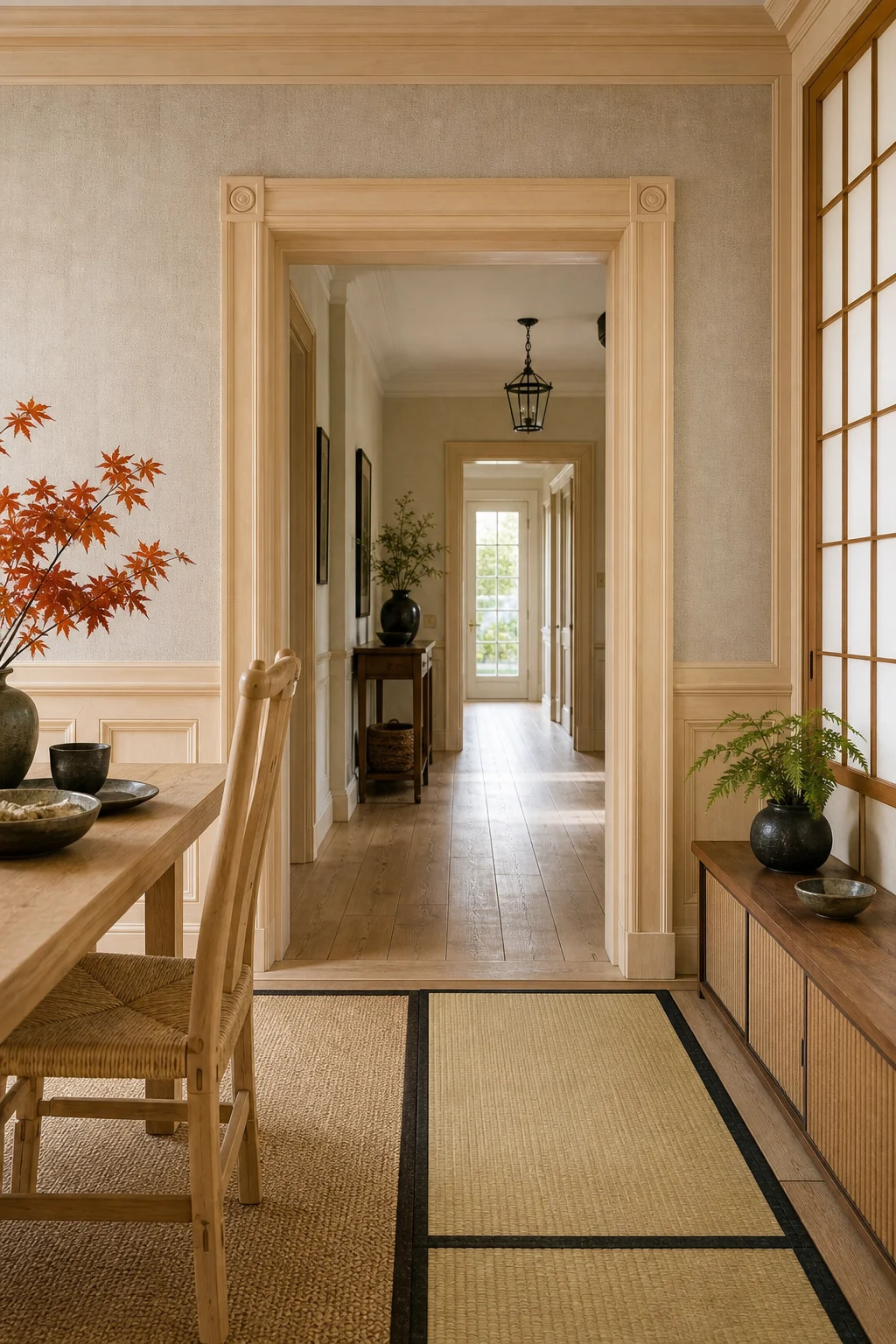
Applying washi paper as a standard wallcovering above a simple wooden chair rail achieves a remarkably similar effect. Pair a second-hand traditional dining table with new woven rush chairs, and invest your budget in a high-quality tatami rug to anchor the floor.
Avoid the costume
The greatest risk in this hybrid is creating a space that feels like a themed movie set. Success relies on absolute restraint and a strict adherence to the limited material palette we established at the very beginning of the design process.
By letting the architecture lead, the room remains effortlessly serene. The tension between formal structure and organic materials resolves into a livable sanctuary. When evaluating your space, watch for these common missteps that threaten to unravel the delicate balance between British formality and Japanese simplicity.
- Costume: Adding literal cultural artifacts like samurai swords or decorative teapots.
- Split personality: One wall looks entirely British, while the other looks completely Japanese.
- Dominance: Dark mahogany furniture overpowering the delicate paper screens and pale woods.
- Generic result: Drifting into a basic, uninspired minimalist beige box without structural tension.