
Modern Prairie Meets Maximalism: Library
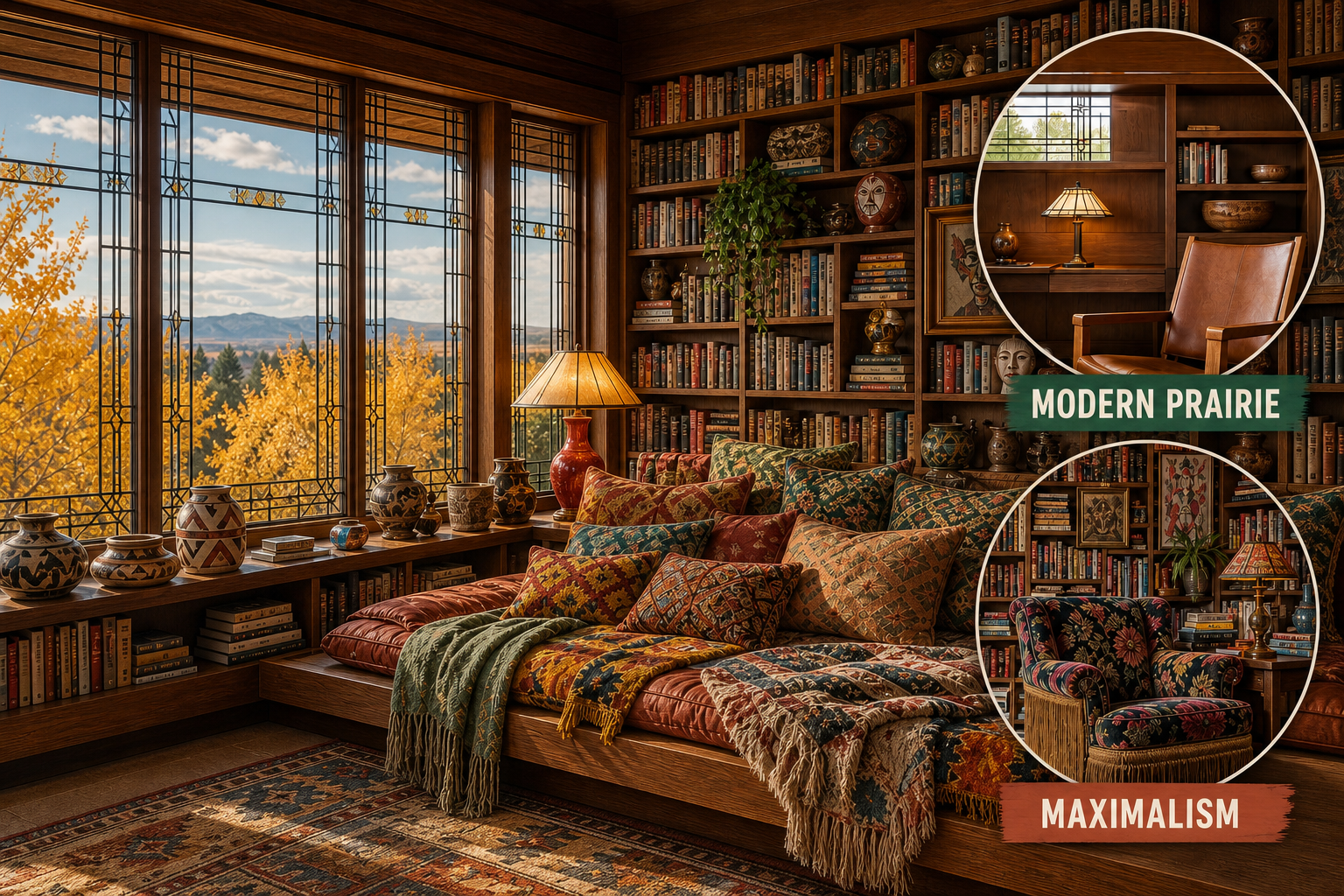
The strict horizontal discipline of Modern Prairie architecture directly opposes the chaotic abundance of Maximalism. We resolved this contradiction by using rigid walnut banding to control the shell while filling the resulting grid with dense, richly colored global collections.
Establish the Architectural Grid
Modern Prairie architecture demands strict horizontal discipline, establishing an austere, low-slung framework that directly opposes chaotic abundance. This foundational layer provides the vital architectural structure required to safely display extensive personal collections without overwhelming the room’s essential spatial proportions.
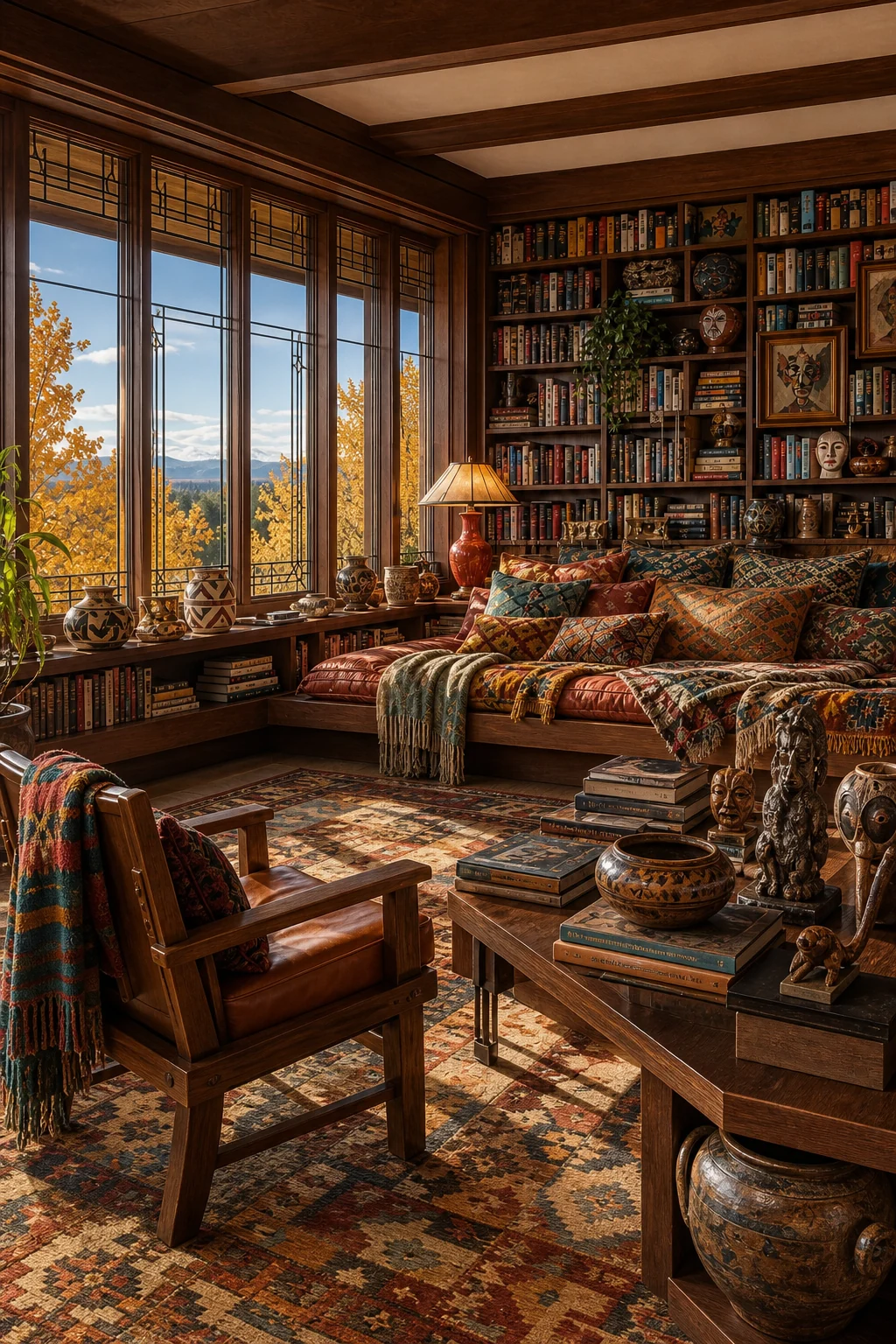
We anchor the room with continuous walnut banding, creating a rigid framework that safely holds massive volumes. This unbroken line establishes a necessary datum across the entire library, forcing the eye to acknowledge the room’s structural logic before processing the decor.
By respecting these strict wooden borders, the room completely avoids feeling cluttered or haphazard. The architecture itself does the heavy lifting, providing a calming sense of order that makes the subsequent layers of intense styling feel deliberate and highly curated.
Soften the Rigid Silhouettes
The stark, cantilevered silhouettes of Modern Prairie seating can often feel austere and unforgiving in a residential setting. We introduce Maximalism by piling these low-slung frames with heavily patterned textiles, instantly softening the room’s rigid geometry and inviting physical comfort.
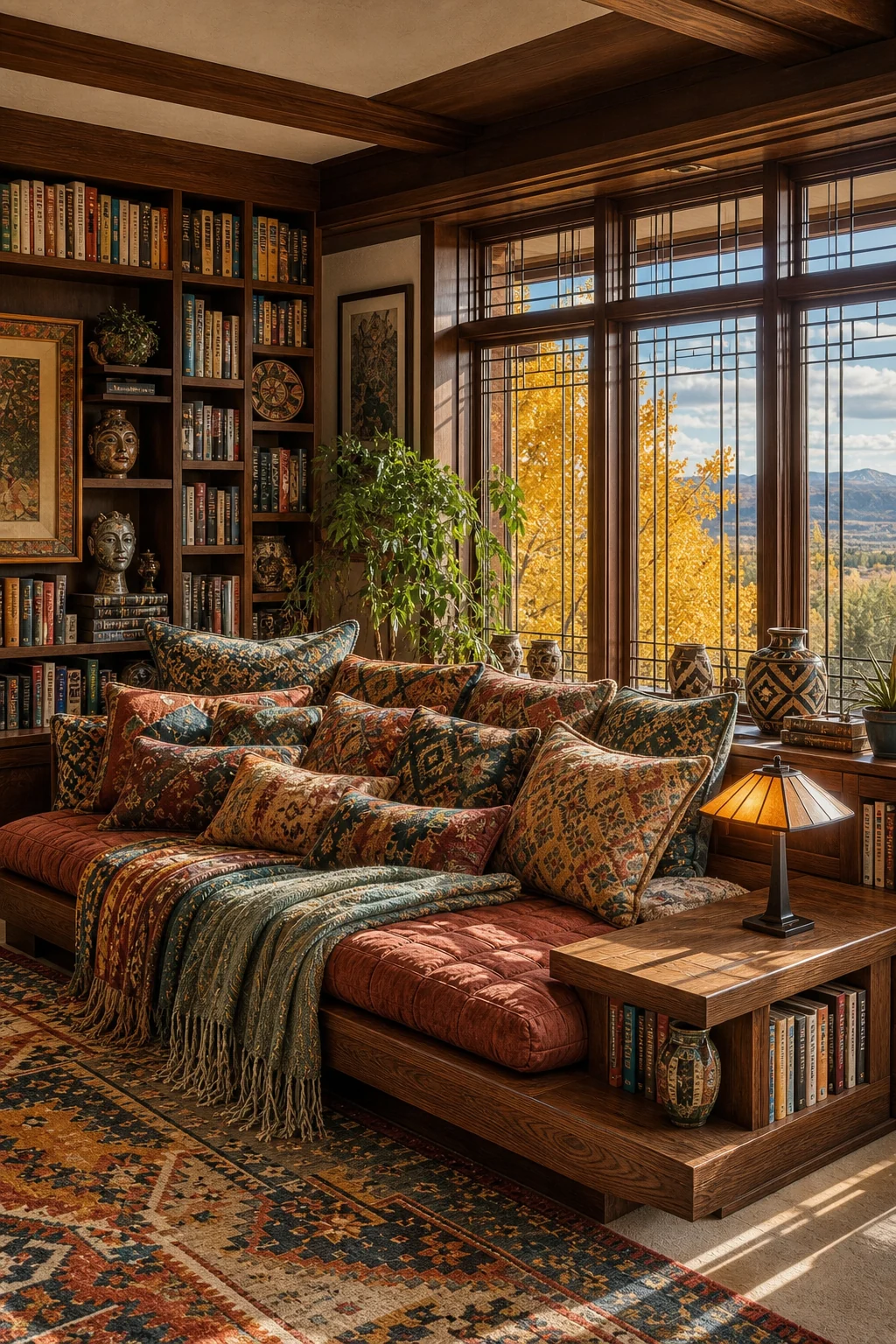
Layering dense fabrics over unadorned saddle leather bridges the gap between strict architecture and plush comfort. This tactile abundance invites you to linger within the highly structured space, transforming a severe architectural statement into a deeply welcoming reading environment.
- Mix large-scale botanical prints with rigid geometric patterns to echo the window panes.
- Keep all fabric tones strictly within the terracotta, ochre, and forest green family.
- Use heavy, tactile fringes to soften the hard wooden edges of cantilevered furniture.
- Layer multiple contrasting throw blankets to build visual depth over sleek leather seating.
Bridge the Gap with Earth Tones
A shared warm palette prevents the layered styling from overwhelming the senses. Deep terracotta, ochre, and warm walnut act as a visual bridge, grounding the vibrant Maximalism within the earthy Modern Prairie shell and unifying the disparate design languages.
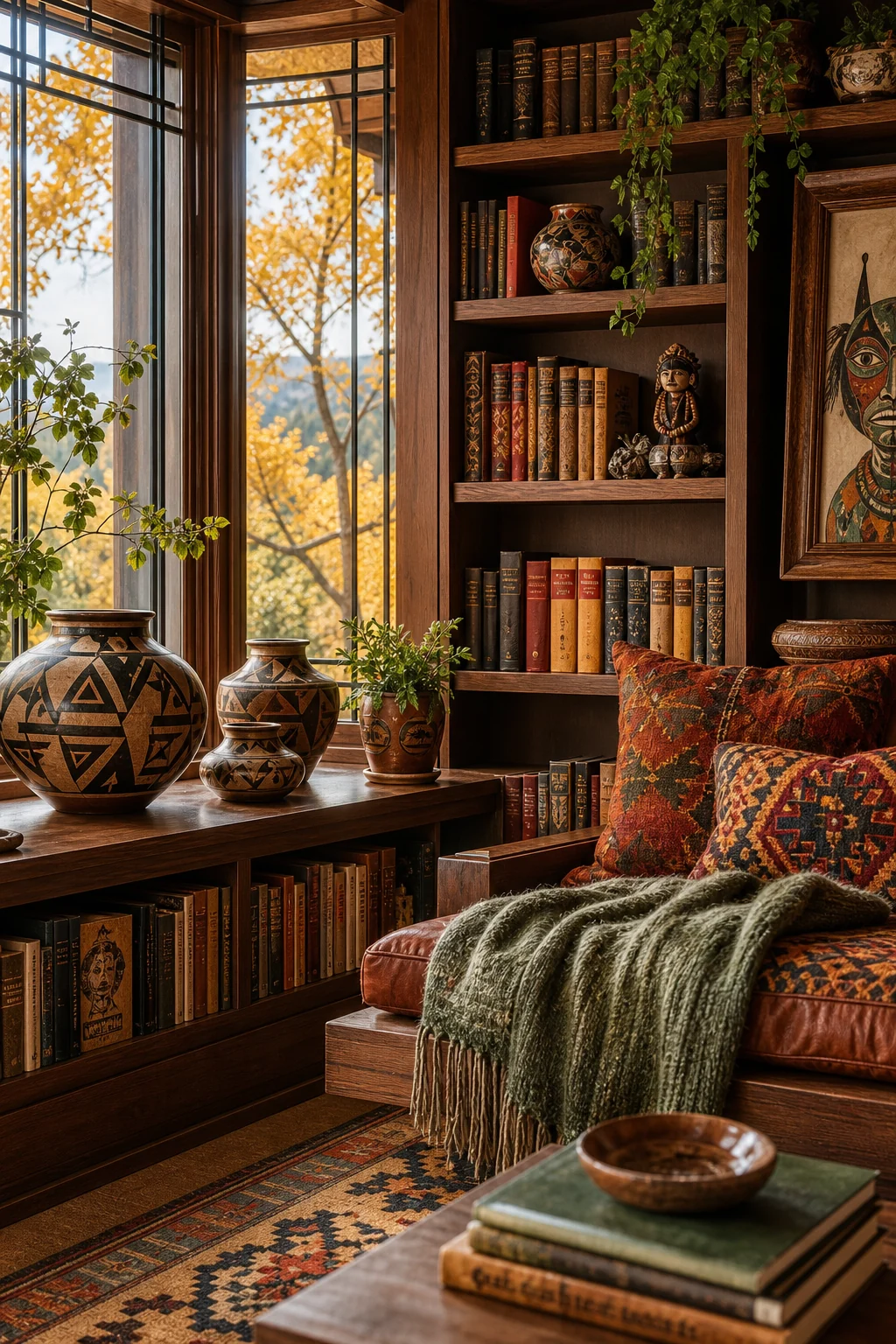
When the woodwork and the collections share the exact same undertones, the inherent stylistic tension dissolves. The eye registers a single, cohesive environment rather than a battle between competing aesthetics, allowing dense arrangements to feel surprisingly restful and balanced.
This disciplined approach to color allows for wild variations in texture and pattern without generating visual noise. The unifying warmth ensures that even the most chaotic, densely packed displays feel intentional, rooted, and perfectly suited to the high desert environment.
Balance the Seating Vignette
Bringing both styles into a single seating area requires careful weight distribution and spatial planning. A sleek leather chair provides crucial visual rest beside a densely styled side table overflowing with stacked books, ceramic lamps, and framed art.
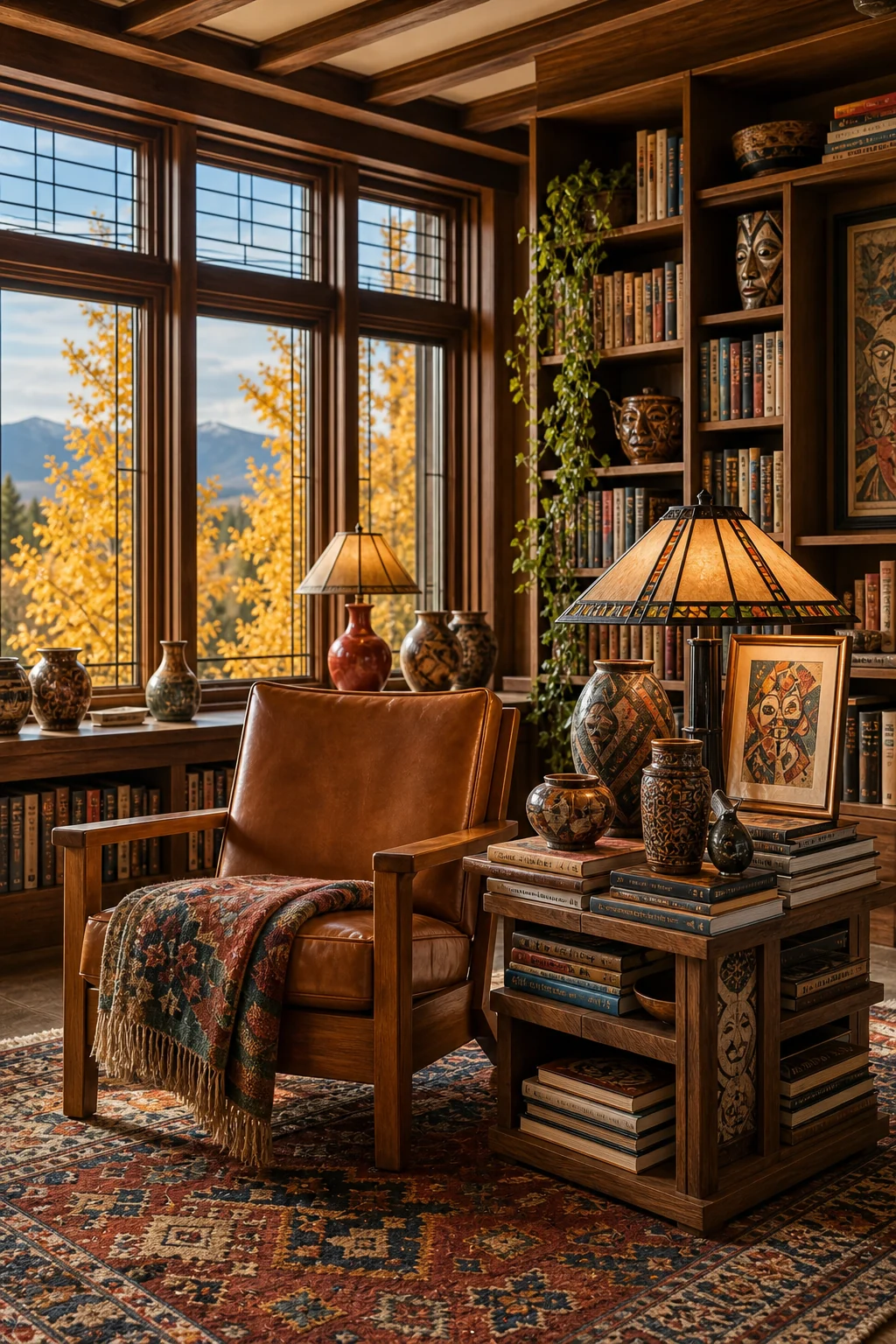
This deliberate contrast between empty architectural space and filled maximalist surfaces defines the successful hybrid room. The translation table below outlines exactly how each distinct design layer contributes to the final, carefully calibrated balance between austerity and absolute abundance.
| Design Layer | Modern Prairie Role | Maximalism Role | Bridge Decision |
|---|---|---|---|
| Shell | Continuous horizontal walnut banding and built-ins | Floor-to-ceiling dense packing of books and art | The rigid geometric grid safely contains the visual explosion |
| Large Furniture | Low-slung, cantilevered seating silhouettes | Heavy, ornate vintage armchairs and side tables | Shared warm leather and wood tones ground both shapes |
| Textiles | Unadorned saddle leather and smooth wool | Layered, heavily patterned botanical brocades | Geometric motifs in maximalist fabrics echo Prairie art-glass |
| Lighting | Geometric stained-glass table lamps | Ornate ceramic bases with fringed fabric shades | Golden ambient light unifies the disparate lamp styles |
| Accents | Sparse, intentional placement of natural materials | Global artifacts, Pueblo pottery, and salon art | A unified terracotta and ochre palette prevents clutter |
By assigning specific roles to each layer, you prevent either style from dominating the space. The architecture remains the undisputed container, while the furnishings and accents provide the vibrant, expressive personality that brings the library to life.
Unify with Light and Glass
Lighting serves as the ultimate unifier in this complex, heavily layered environment. Golden Santa Fe autumn daylight filters through geometric art-glass windows, lifting the midtones of dense fabrics while maintaining the crisp, defining shadows of the surrounding woodwork.
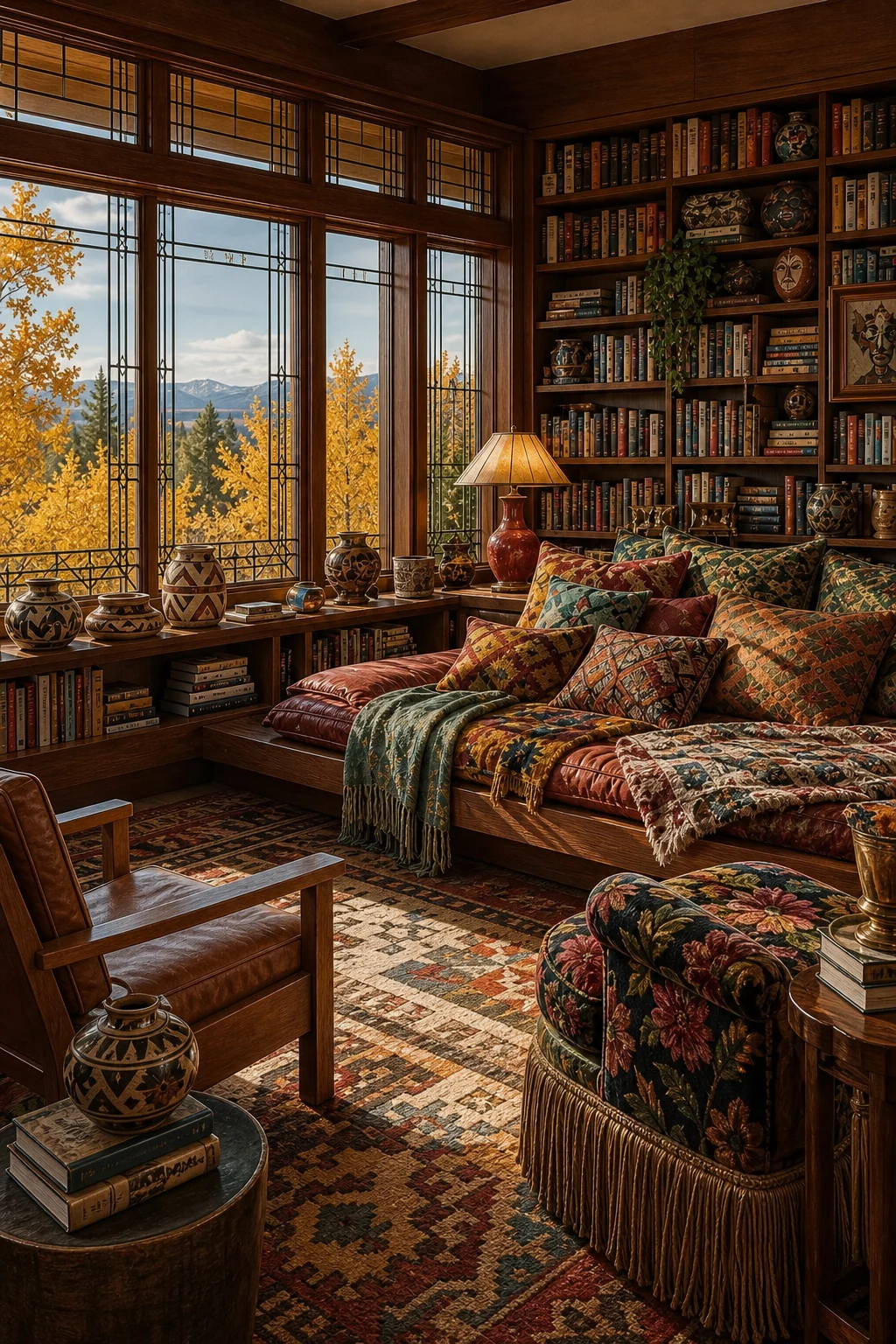
This brilliant natural illumination perfectly highlights the plush textures of the textiles without washing out the room’s darker corners. The specific quality of directional light prevents the heavy maximalist layering from feeling oppressive or visually heavy during the day.
Artificial lighting must mimic this golden clarity after dusk to sustain the mood. Warm, low-level lamps scattered throughout the grid ensure the rich colors remain vibrant and the architectural lines stay incredibly sharp against the encroaching evening shadows.
Style the Shelving Grid
Built-in shelving offers the absolute best canvas for this ambitious stylistic merger. You must treat the wooden bookcase mullions as a physical frame that organizes, separates, and contains your most expressive, chaotic collections of books and art.
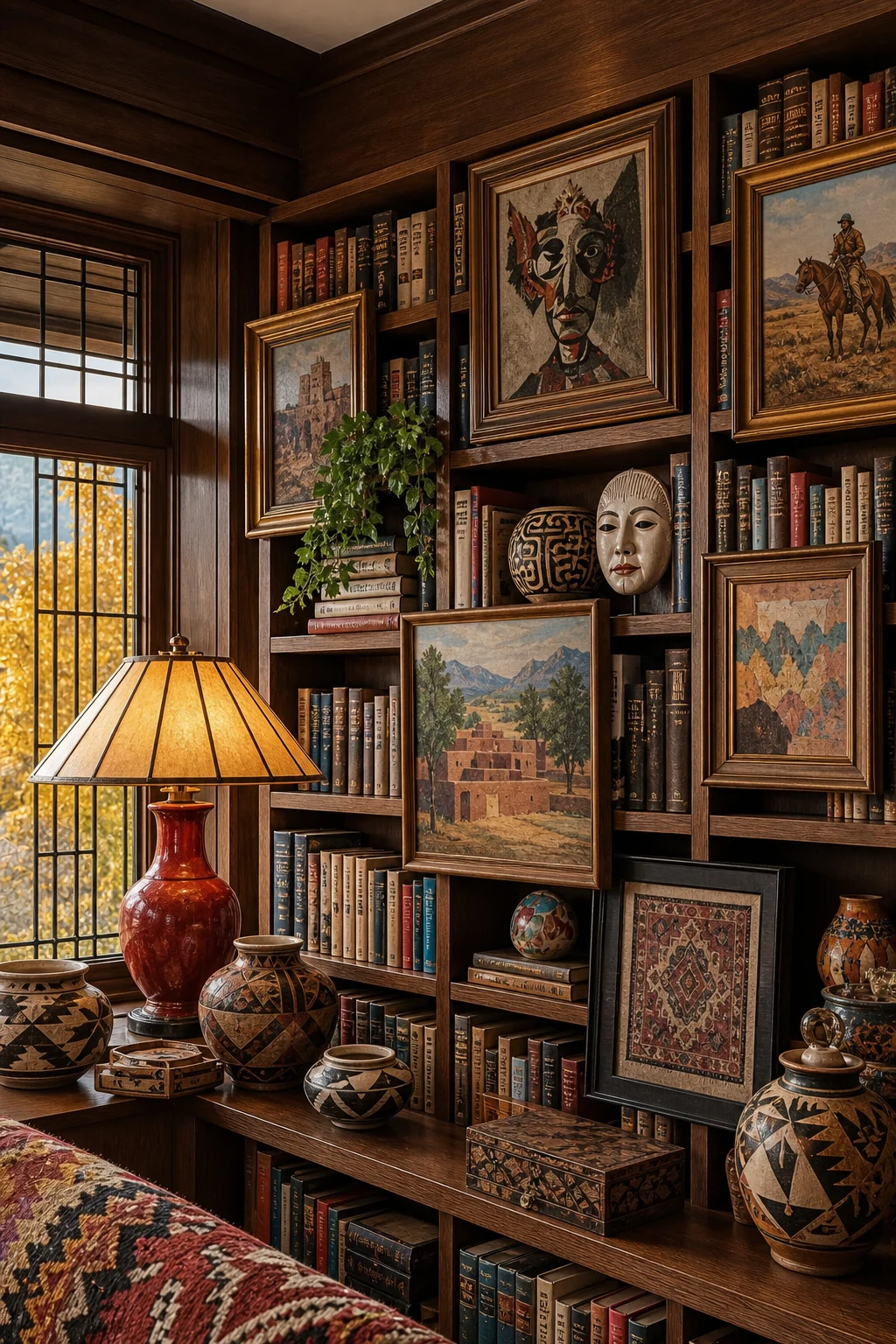
Hanging salon-style art directly onto the wooden grid forces the chaotic collections to obey the room’s architectural logic. This specific technique creates a highly curated, gallery-like atmosphere within the library, elevating everyday objects into a deliberate design statement.
- Start by establishing a solid base of densely packed books across the lowest shelves.
- Layer global artifacts and terracotta Pueblo pottery directly in front of the stacked volumes.
- Hang smaller framed artworks directly on the vertical wooden mullions to break the depth.
- Group smaller artifacts tightly together to read as a single, deliberate maximalist moment.
Extend the Logic to Passages
This precise tension works beautifully in transitional spaces where you might otherwise lack distinct architectural interest. You can seamlessly extend the core concept into a hallway or threshold to maintain narrative continuity throughout the entire home.
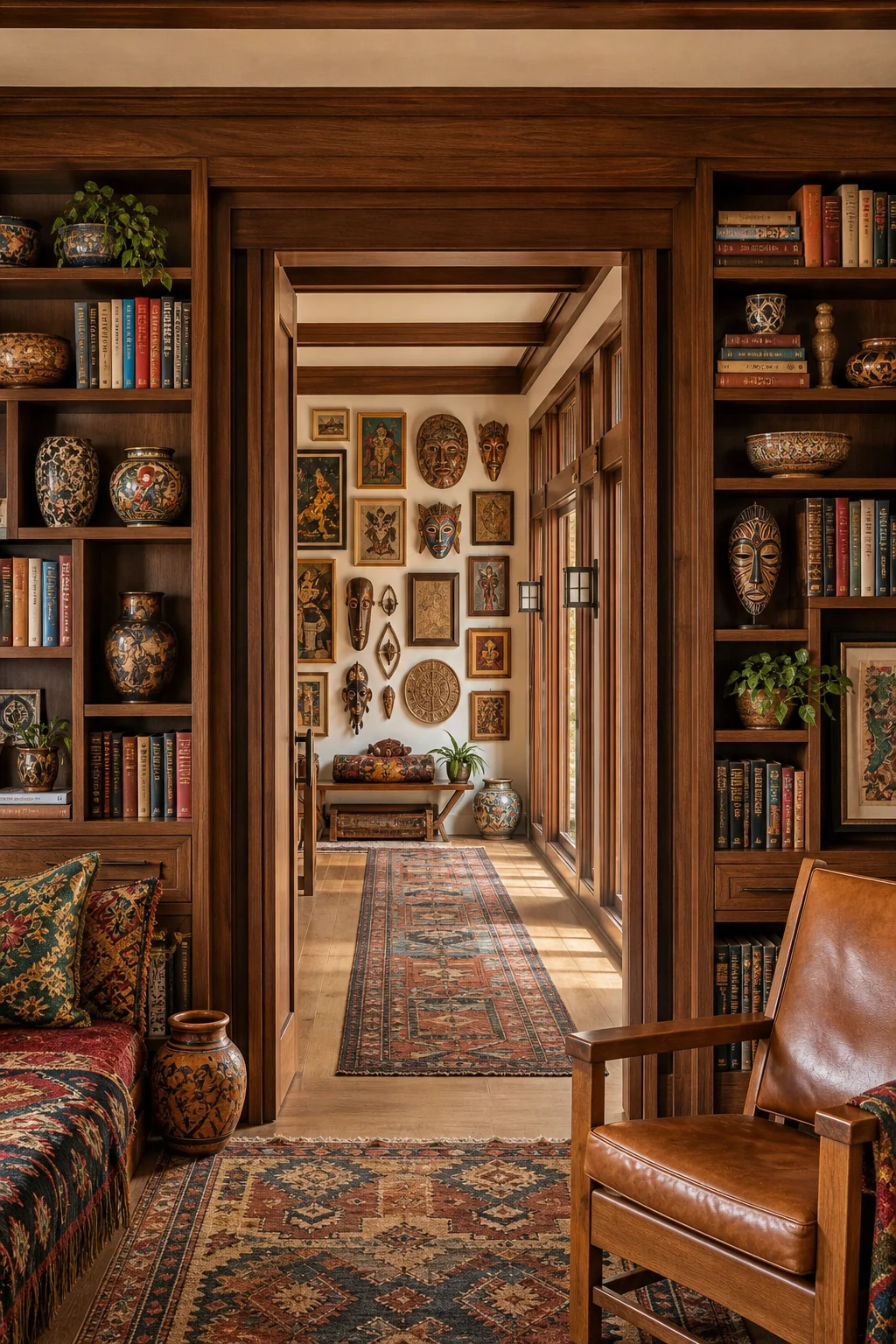
Carry the continuous horizontal wood banding into adjacent passages, using that strict datum line to organize dense gallery walls. This unbroken trim acts as a guiding rail for the eye, pulling you deeper into the home’s vibrant narrative.
- Maintain continuous horizontal wood trim across all connected doorways and transitional hallways.
- Keep all framed artwork and artifacts strictly below the top horizontal wooden band.
- Use heavily patterned runner rugs to carry the rich textile story into the passage.
- Ensure the lighting in the hallway matches the golden warmth of the main library.
Avoid the Hoarder Costume
Without the strict horizontal wood banding, this room quickly devolves into a chaotic, uncurated costume. The ultimate success of the space relies entirely on letting the woodwork dictate the absolute physical boundaries of your sprawling, vibrant display.
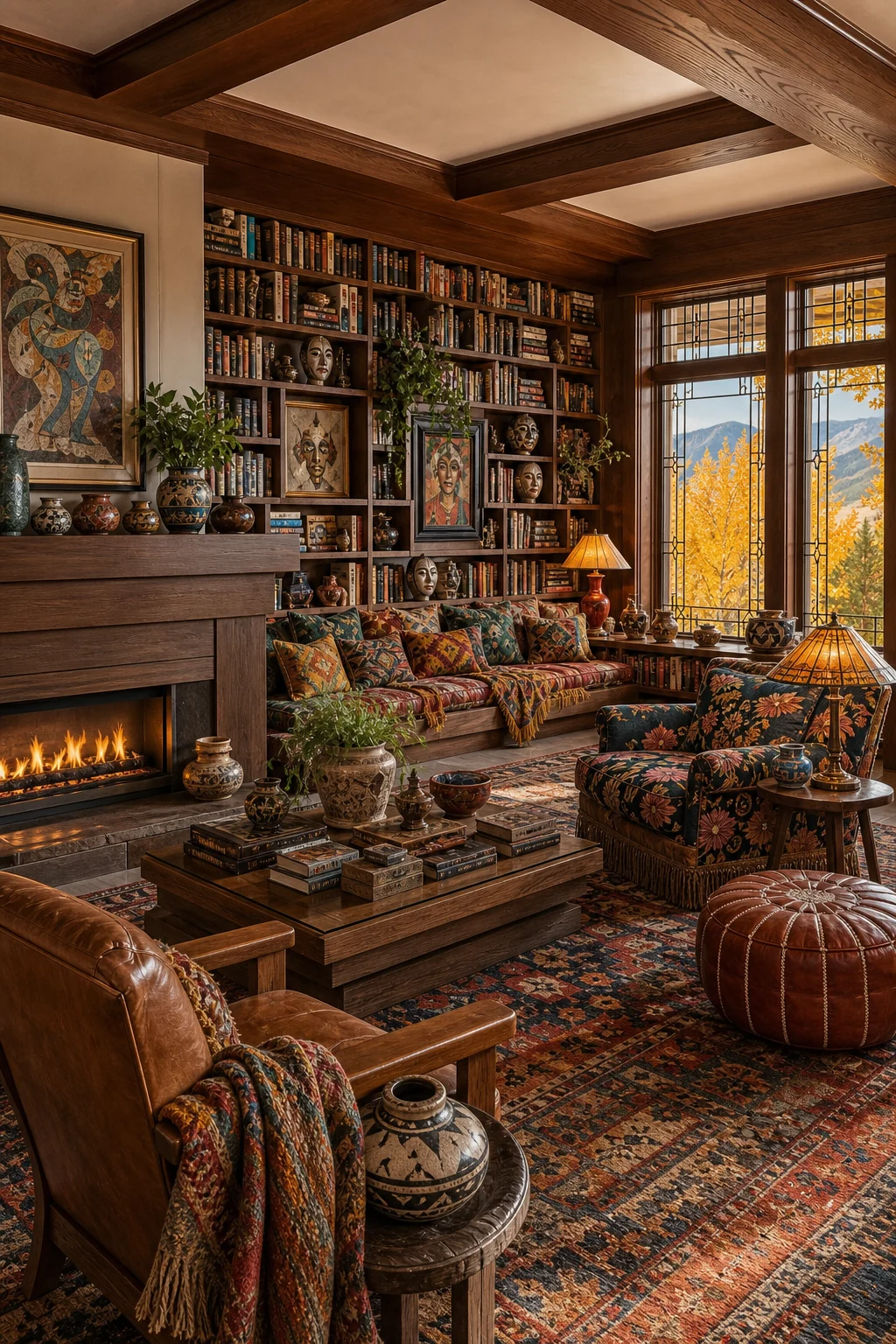
When the rigid framework successfully holds the abundant collections, the room feels richly authored rather than accidentally hoarded. The fully resolved space celebrates both the severe discipline of structure and the unapologetic joy of lifelong accumulation.
- Avoid floating small, disconnected objects without a rigid architectural frame to anchor them.
- Do not mix cool, icy tones into this inherently warm, earth-toned desert palette.
- Never obscure the continuous horizontal wood banding with oversized art or trailing plants.
- Always ensure the foundational geometric lines remain visible through the layers of decor.