
This Shell Lamp Became a Meditation Corner
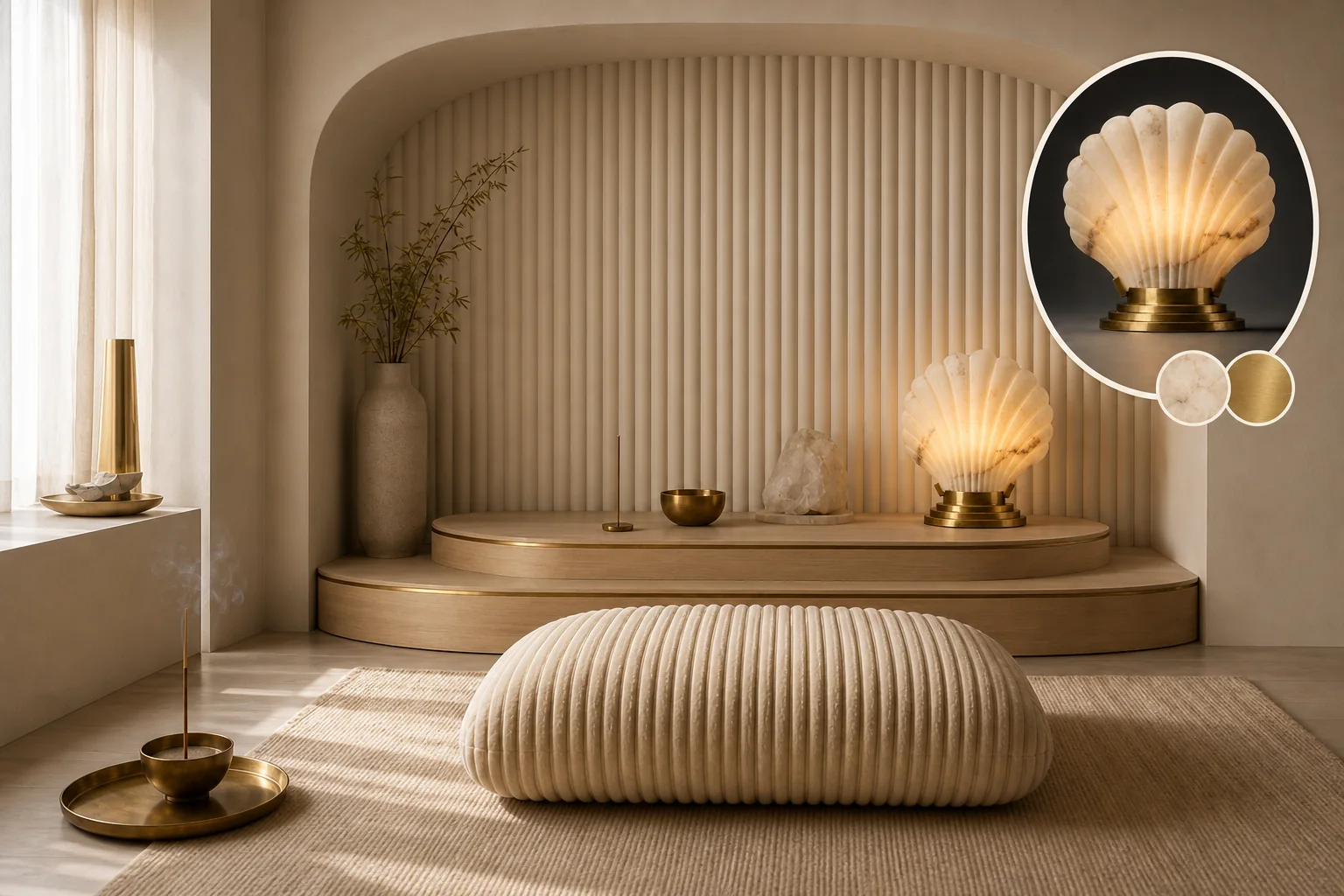
Explore how the structured Art Deco geometry of a vintage alabaster shell lamp shapes a focused meditation corner. By translating repetitive vertical channeling into smooth, calming planes, we create a quiet acoustic sanctuary designed for extended floor-level focus, keeping the palette strictly monochromatic to prevent the heavy textures from feeling chaotic or overwhelming.
Carving out a quiet alcove
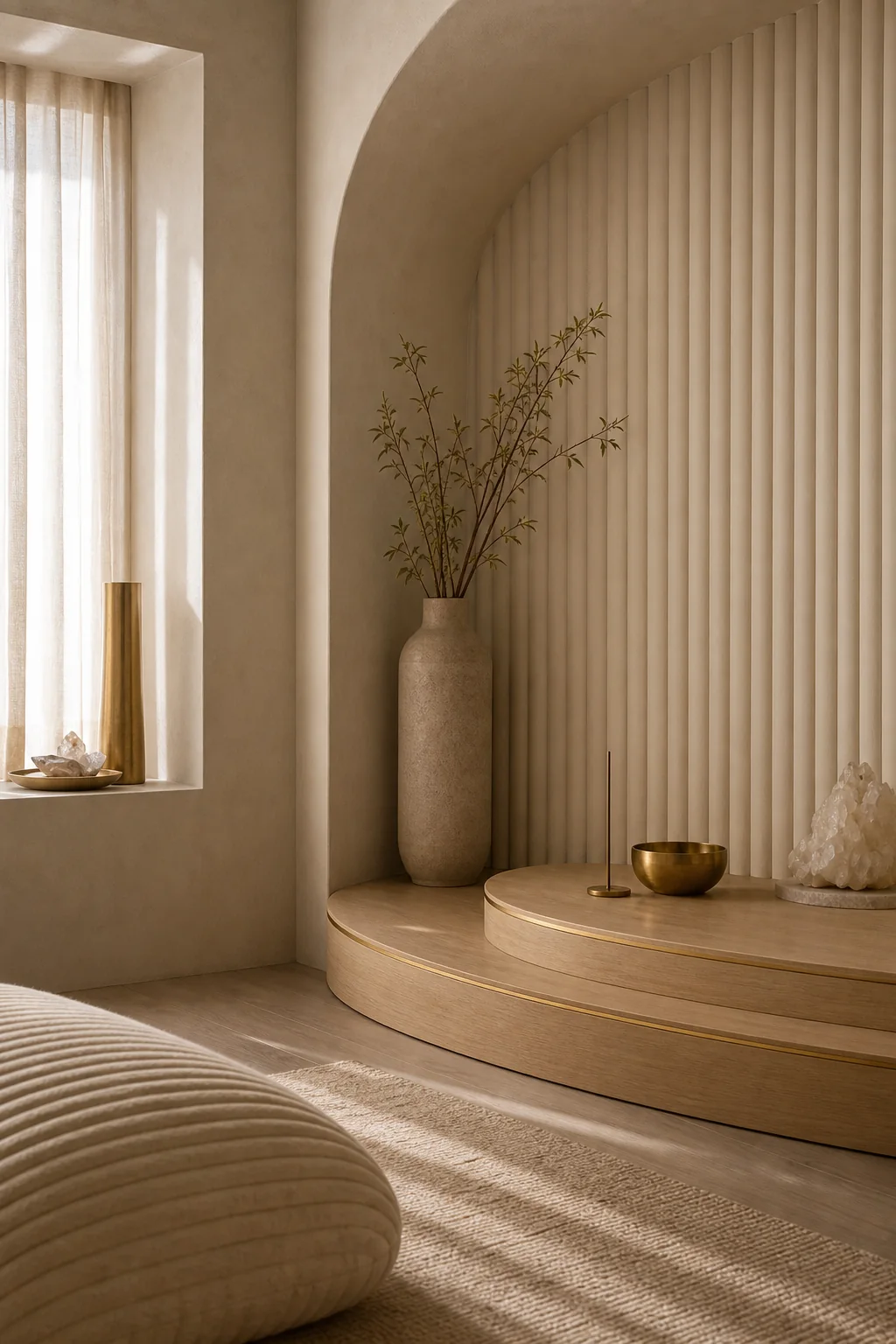
The tight, repetitive channeling of the lamp’s shell translates into an architectural embrace, turning a flat corner into a curved, acoustic alcove. To achieve this foundation, you must physically reshape the room’s hard boundaries to mimic the organic sweep of the source object. Frame a curved corner alcove using flexible drywall to soften harsh 90-degree angles, then apply vertical fluted plaster across the sweeping surface to catch and diffuse daylight. Installing a lowered ceiling canopy above the zone ensures the space feels intimately scaled, while painting everything in a matte alabaster white keeps the deep plaster channels from creating harsh, distracting glare during your practice.
- Frame a curved corner alcove using flexible drywall to soften hard 90-degree corners.
- Apply vertical fluted plaster across the curved wall to create deep, repetitive channels.
- Install a lowered ceiling canopy above the alcove for acoustic dampening and intimate scale.
- Paint the walls and ceiling in matte alabaster white to diffuse light softly.
Milky warmth and aged brass
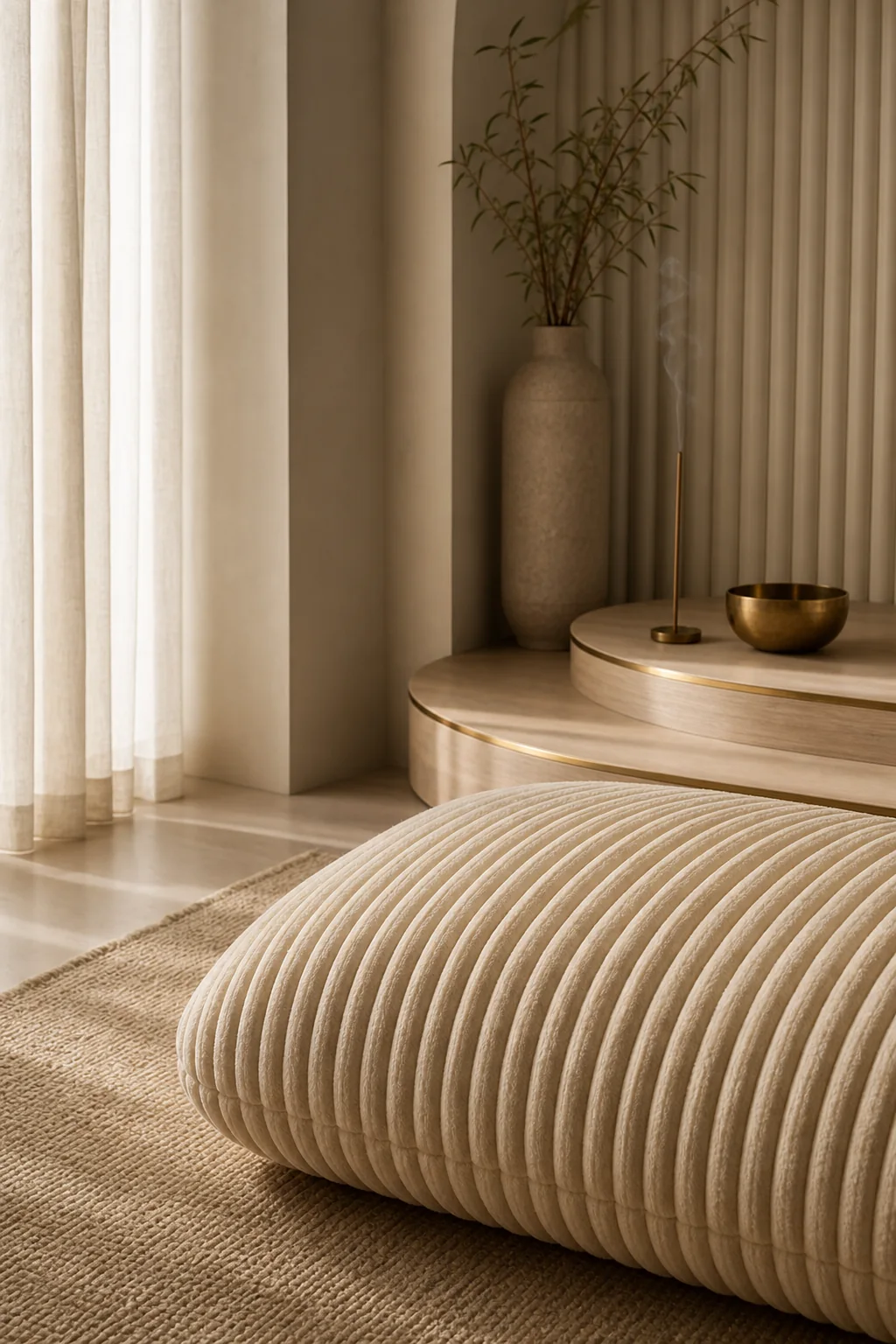
By limiting the palette to alabaster white and warm cream, the room captures the lamp’s soft translucence while allowing metallic accents to ground the space. This monochromatic discipline prevents the deeply channeled textures from overwhelming the senses during quiet reflection. The translation from a small glowing object to a full immersive environment requires mapping specific geometric traits directly into architectural and decorative choices. This visual-DNA mapping ensures the glowing stone and structural pedestal inform every surface, creating a cohesive sanctuary without resorting to literal nautical themes or shell-shaped furniture.
| Source trait | Visible evidence | Room move |
|---|---|---|
| Radiating ribs | The carved, fluted lines of the alabaster shell | A curved alcove wall finished in soft, vertical fluted plaster that catches and diffuses daylight. |
| Milky warmth & brass | The translucent stone paired with the metallic base | A dominant palette of alabaster white across the walls and floor, punctuated by brushed brass architectural hardware. |
| Carved softness | The smooth but deeply ridged surface of the stone shell | A heavy, ribbed cream velvet floor cushion that provides tactile comfort while echoing the channeled texture. |
| Stepped progression | The geometric, tiered brass pedestal base | A low, tiered pale wood meditation altar with subtle brass inlay, mimicking the geometric progression. |
Warming the alabaster base
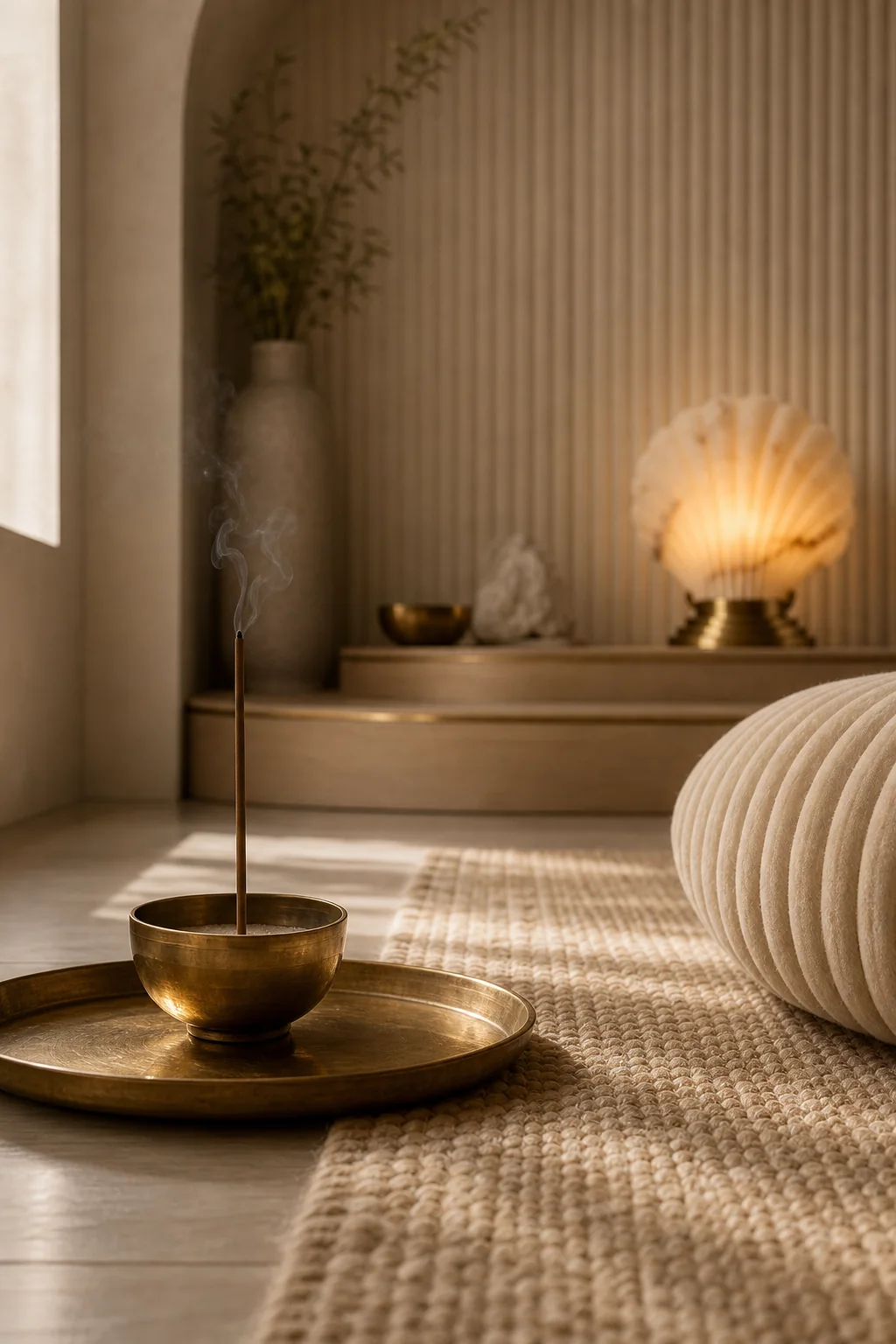
Brass accents and amber light warm the alabaster palette, preventing the monochromatic scheme from feeling sterile or cold. You can easily scale this concept depending on your desired intensity and available space. For a subtle approach, introduce a single fluted plaster accent wall and a small brass incense burner. A balanced execution pairs curved, fully fluted alcove walls with a ribbed velvet floor cushion and a tiered wooden altar. If you prefer a bold transformation, wrap the entire room in fluted plaster and install a large, custom-built stepped brass meditation platform to completely immerse yourself in the Art Deco geometry.
Tactile comfort in ribbed velvet
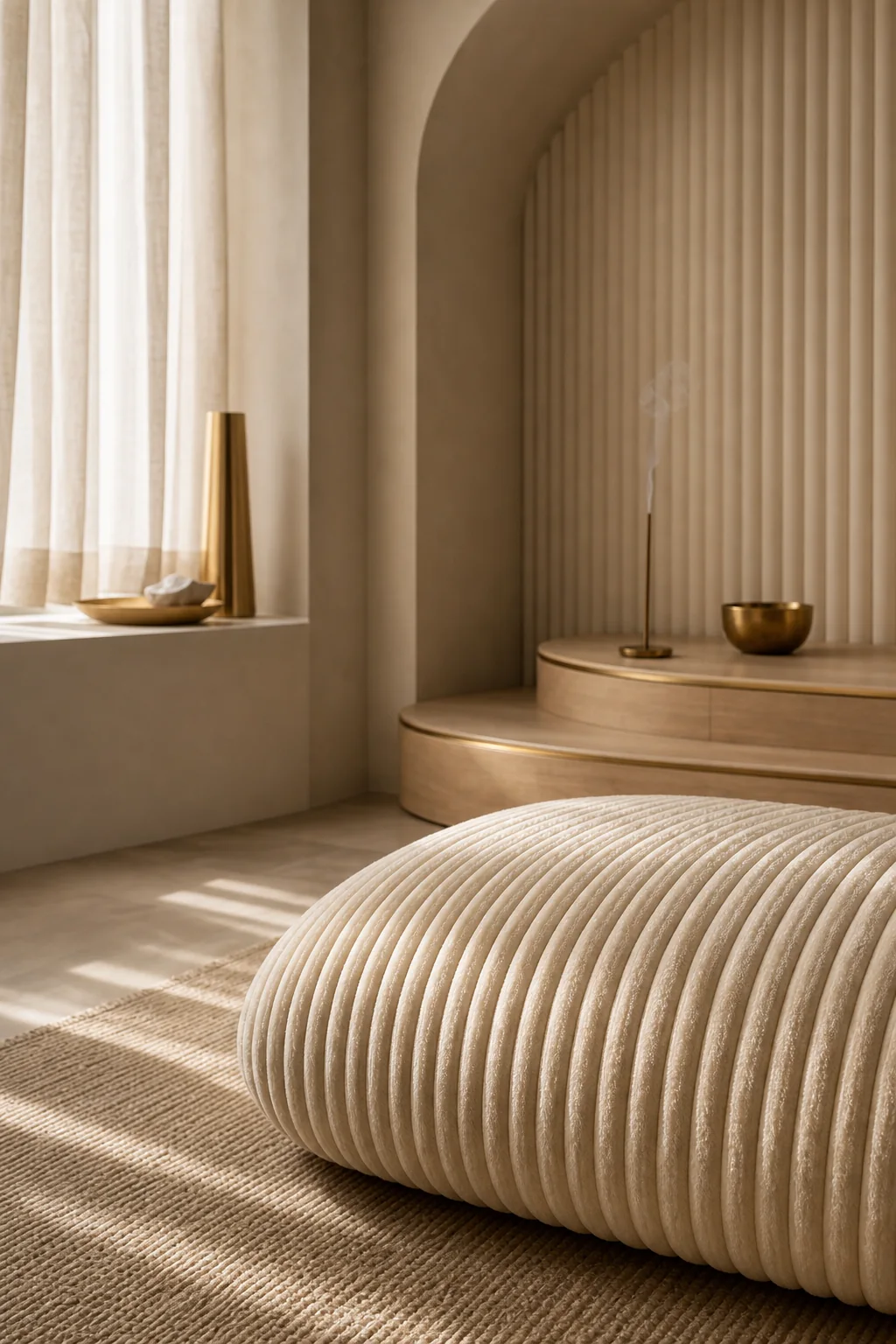
The visual weight of carved stone is softened into plush, tactile surfaces that support extended periods of seated meditation. Translating the deeply ridged surface of the shell requires textiles that offer both physical comfort and strong visual shadows. A heavy ribbed cream velvet floor cushion provides this necessary grounding, while sheer alabaster linen filters harsh sunlight into a soft, ambient glow. To complete the material palette, introduce matte pale wood and brushed aged brass, ensuring every element you touch reinforces the serene, focused sanctuary without introducing chaotic patterns or distracting literal shell prints.
Catching the light
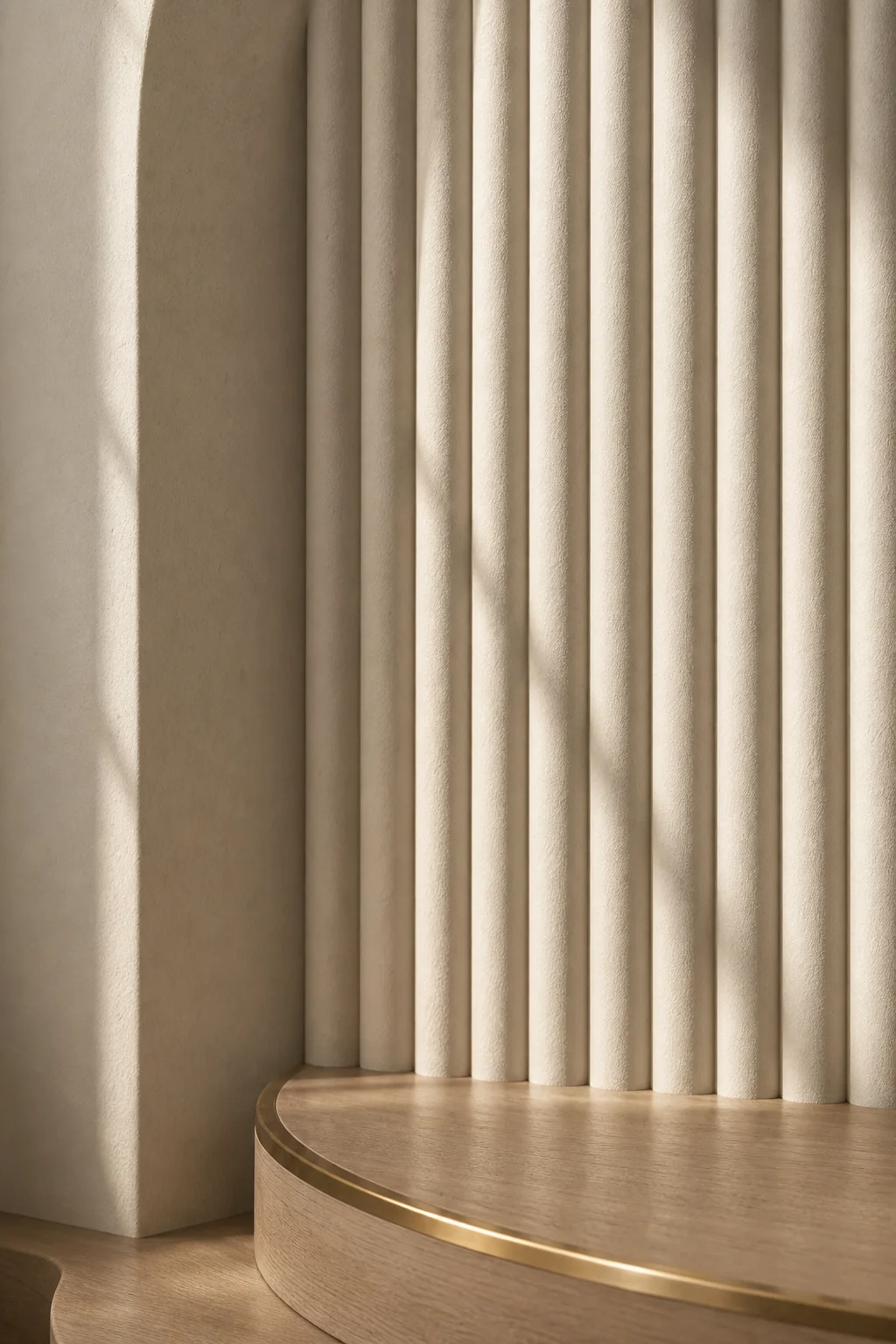
Fluted plaster diffuses daylight like the carved stone shell, relying on the interplay of shadow and illumination rather than applied color. As the sun moves across the narrow, deep-set window, the vertical channels create a slow, rhythmic shifting of light that naturally aids in grounding your meditation practice. This dynamic texture eliminates the need for wall art or additional decor, keeping the visual field clean and focused. By prioritizing matte, light-diffusing expanses over glossy finishes, the alcove maintains a quiet, acoustic softness that absorbs distraction and encourages deep, uninterrupted reflection for hours.
Stepped geometry for focus
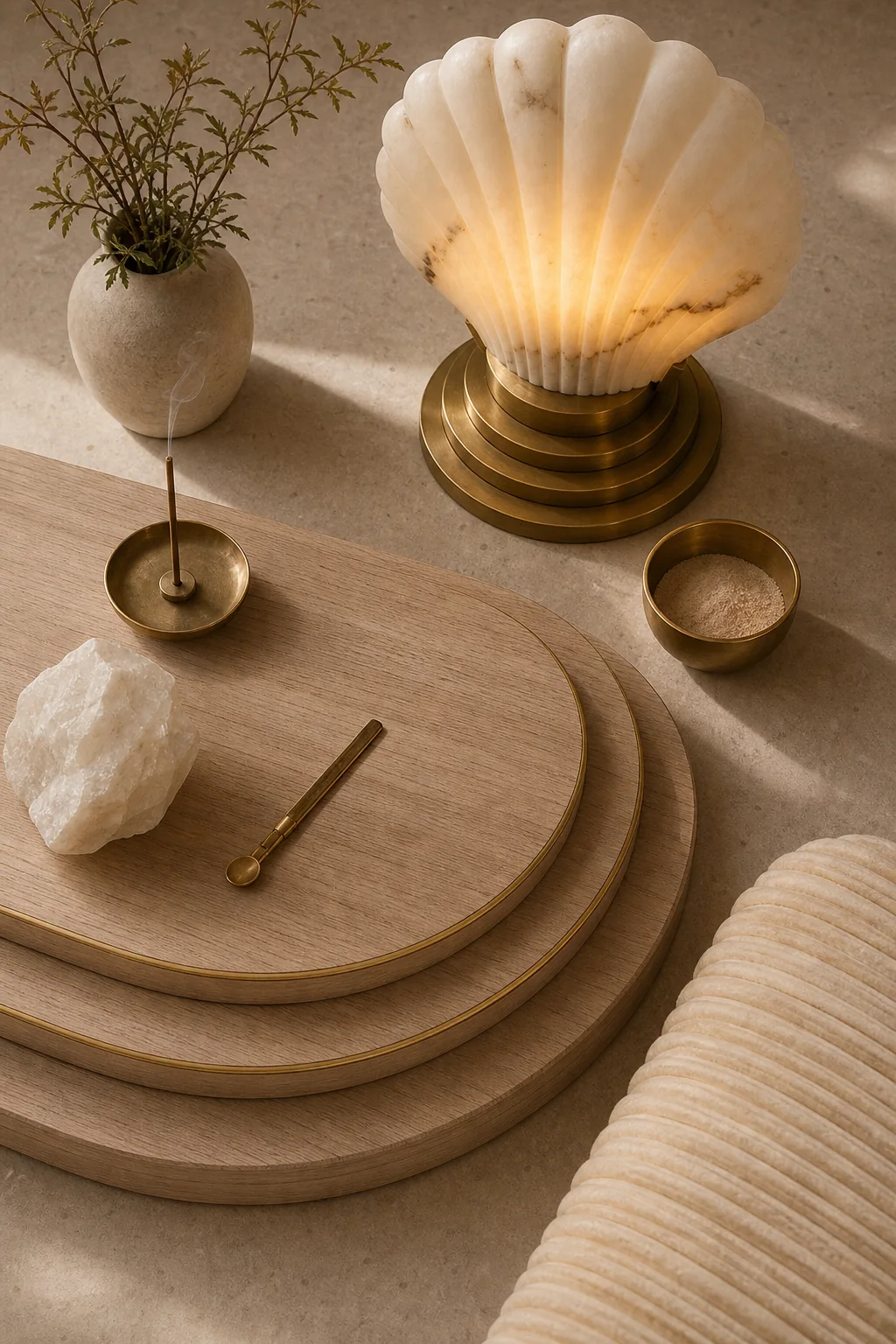
The concentric, stepped progression of the lamp’s pedestal provides a blueprint for a low focal altar that anchors the meditation practice. Mimicking the geometric progression of the brass base, a tiered pale wood table serves as a functional surface for focal objects and incense. This stepped geometric progression introduces a subtle architectural rhythm to the floor level, giving the eye a structured place to rest. By keeping the horizontal planes smooth and quiet, the altar perfectly balances the tight vertical channeling of the surrounding plaster walls, completing the room’s precise visual translation.
Keep the tiered altar low to the ground. The stepped geometry should anchor your focus during seated meditation without towering over your eye level.