
Adirondack Style Meets Victorian: Library
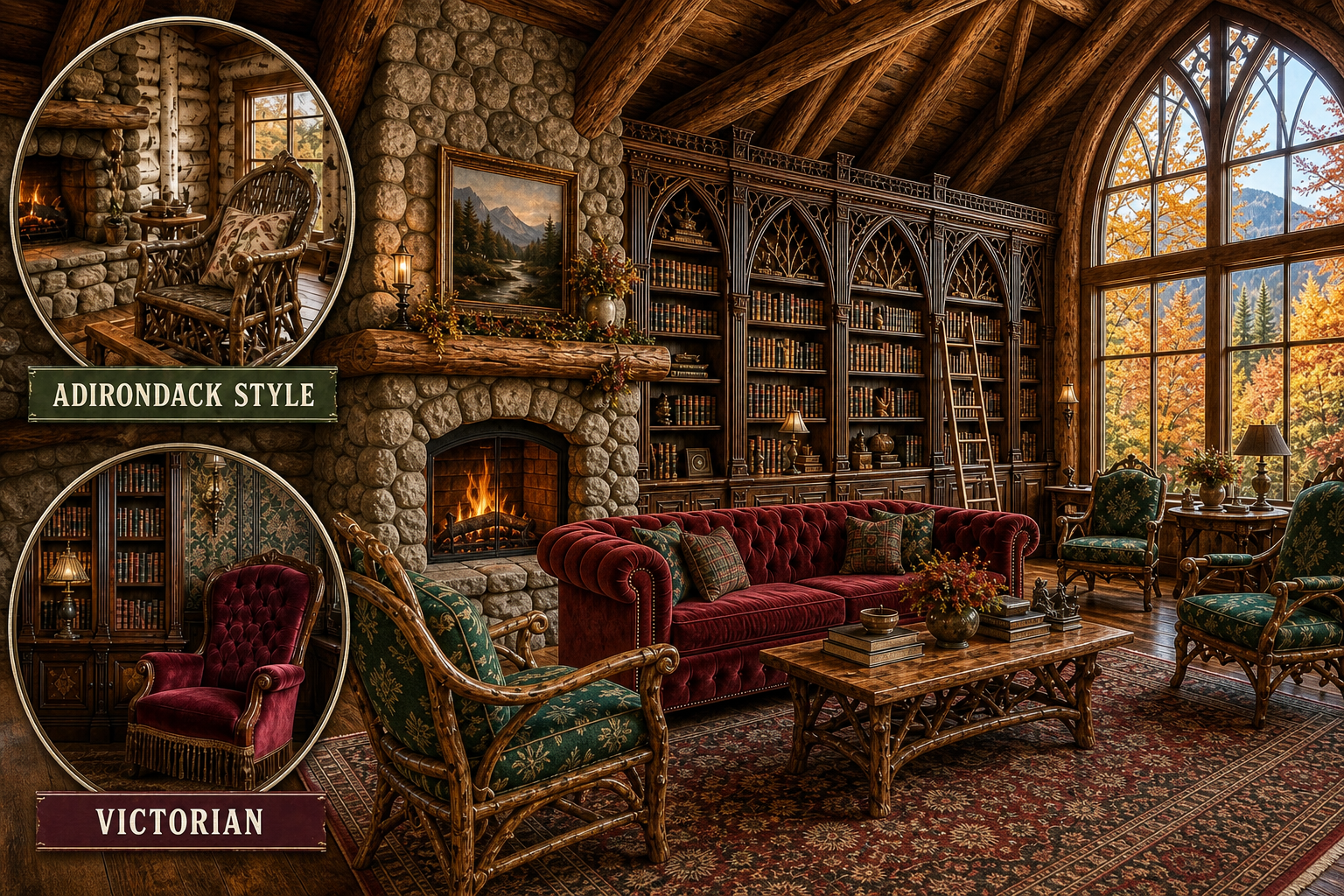
The raw, unhewn ruggedness of the wilderness inevitably clashes with the highly civilized, upholstered ornamentation of the 19th-century parlor. Resolving this contradiction requires strict victorian floorplans and symmetrical cabinetry to tame the monumental adirondack style architectural shell.
Grounding the Room in adirondack style
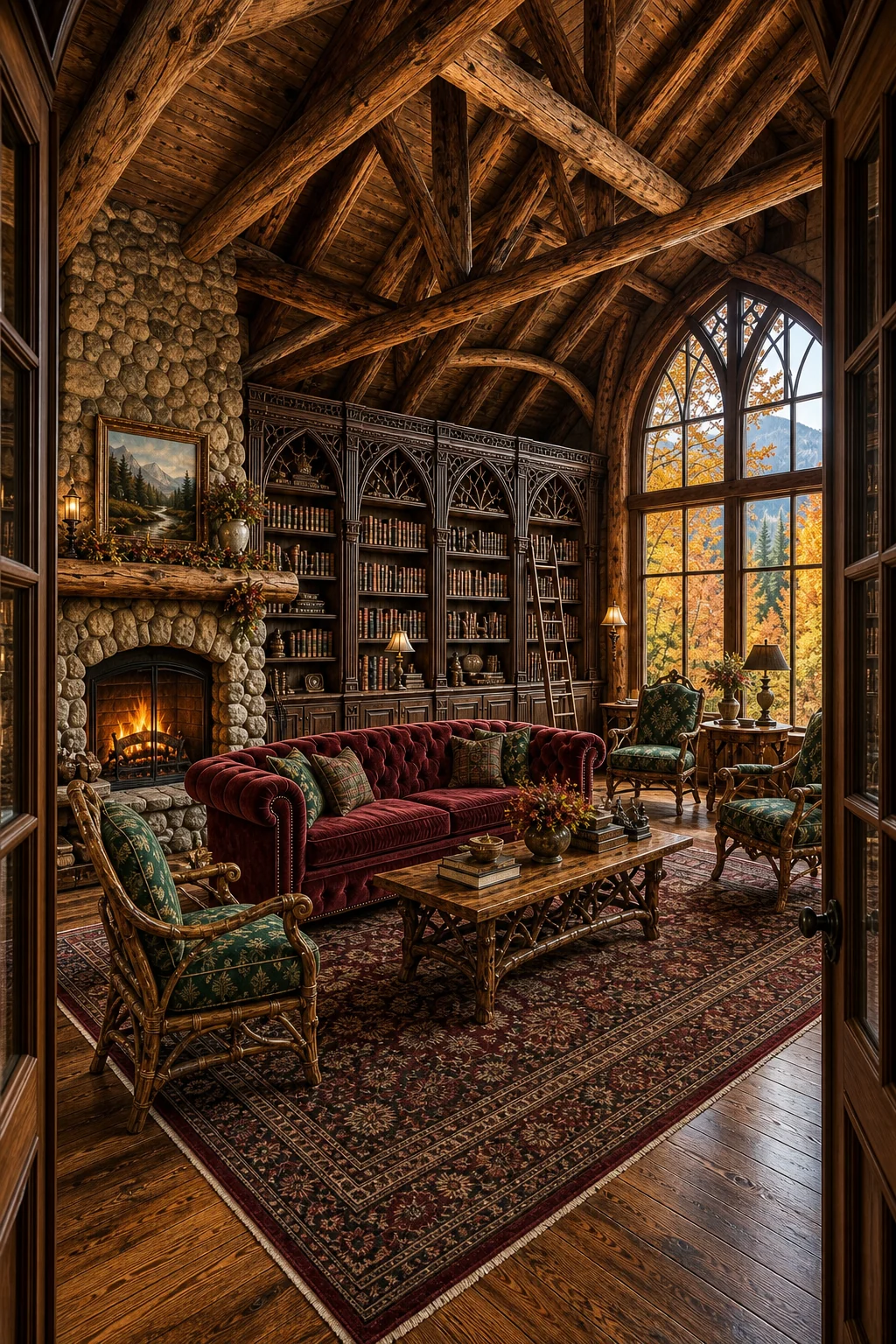
To prevent this hybrid space from devolving into a delicate, unconvincing parlor, the architectural shell must feel undeniably rugged and permanent. Massive unpeeled cedar log beams provide the essential wilderness anchor required to firmly ground the entire design in its mountain context.
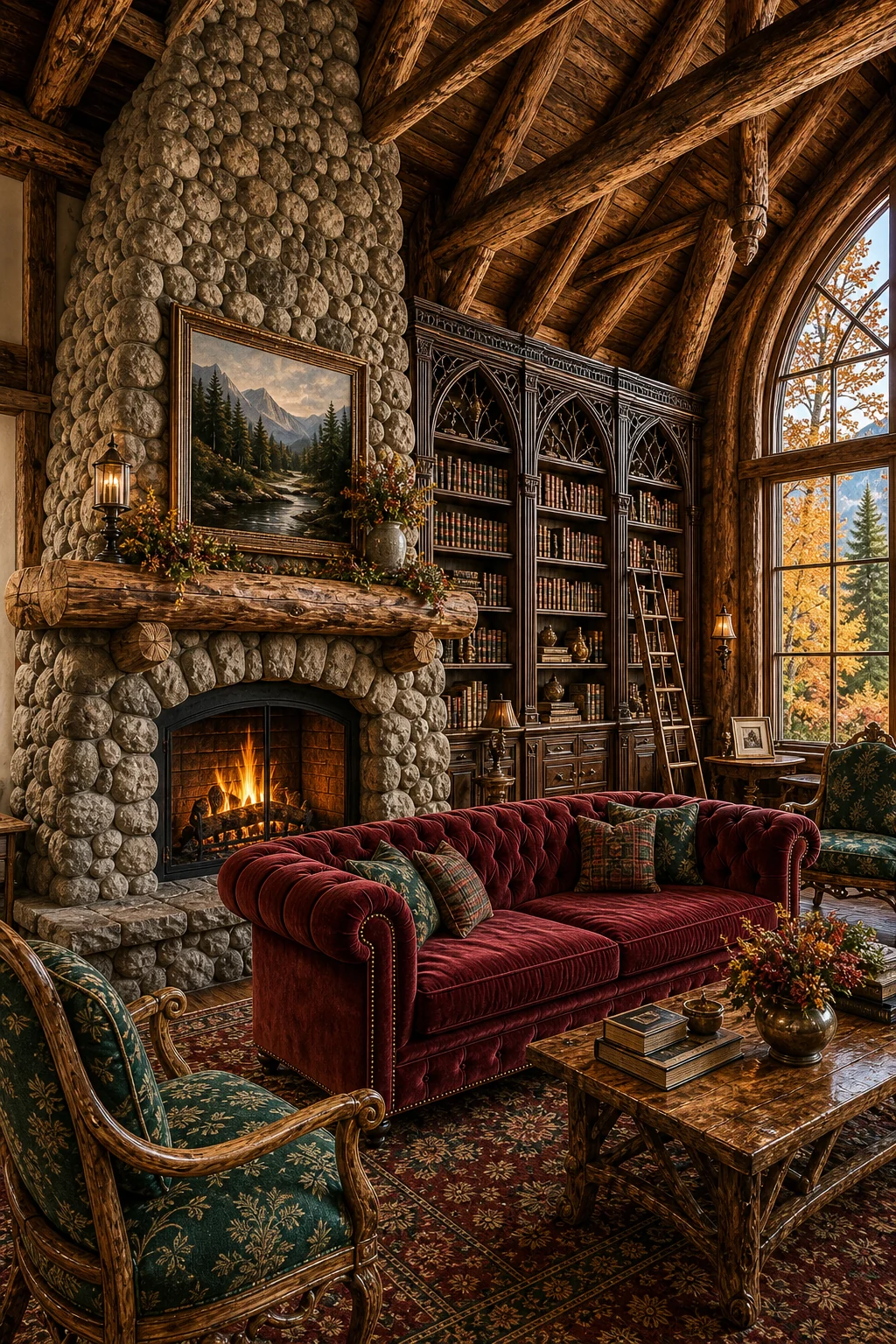
A monumental river-stone fireplace dominates the vertical plane, establishing a visual and physical weight that delicate furnishings simply cannot overpower. This raw masonry demands an equally strong, uncompromising response from the room’s formal furniture layout to maintain perfect visual equilibrium.
By committing entirely to this heavy, highly textured envelope, you create a protective, authentic mountain lodge atmosphere. The untamed surroundings now await the civilizing influence of structured, symmetrical cabinetry and deeply upholstered comfort to complete the fully resolved room.
Introducing victorian Formality
Within that rugged shell, strict symmetry establishes necessary visual order. Floor-to-ceiling built-in bookcases impose a highly civilized, geometric framework on the untamed surroundings, instantly signaling that this is a refined space dedicated to quiet intellectual pursuit rather than mere survival.
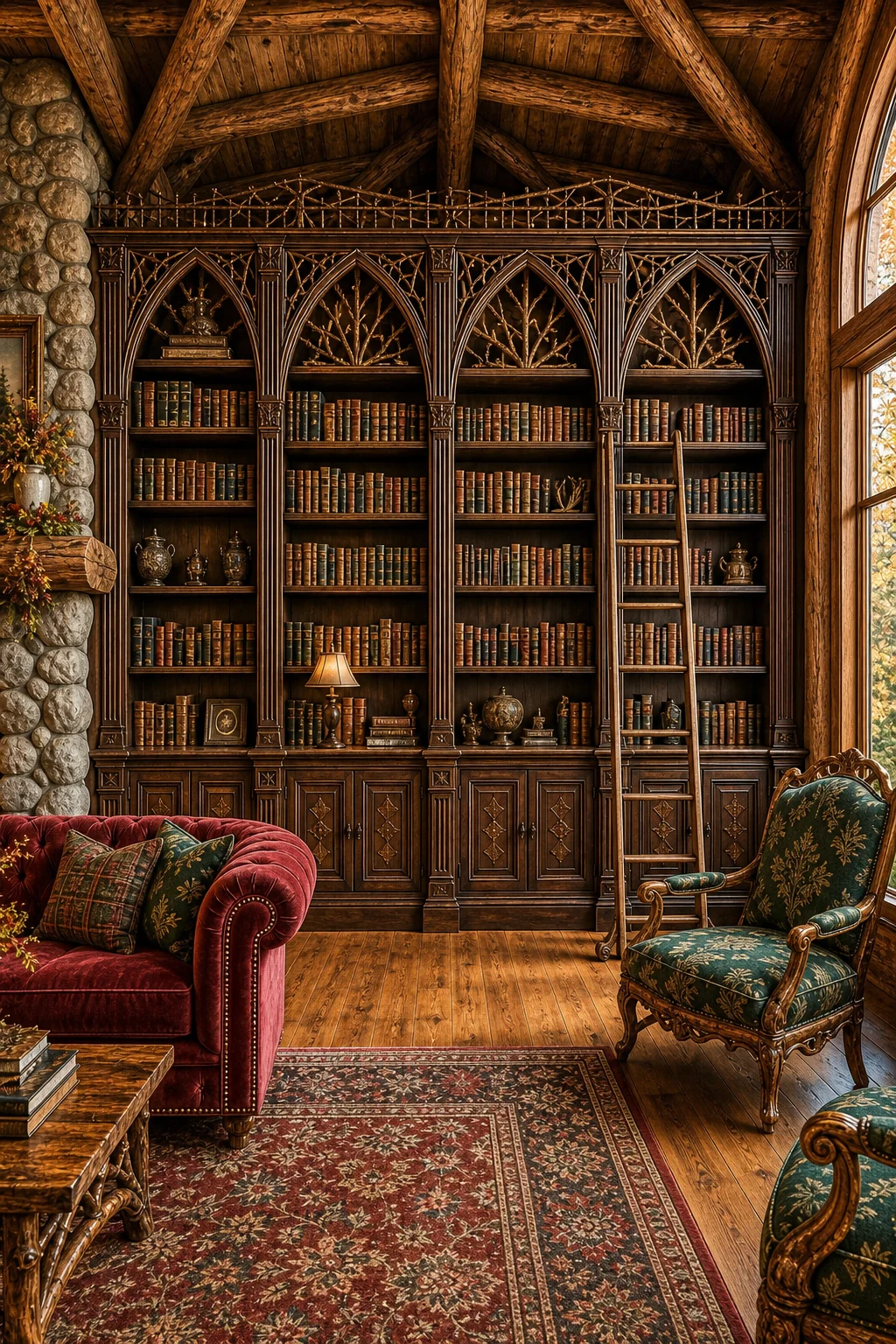
This structured layout explicitly dictates the formal conversation zones, organizing the space with parlor-like precision. By anchoring the room with a classic rolling ladder, the environment feels deeply intentional, ensuring the cabin never appears haphazardly rustic or accidentally unfinished.
- Align all tall bookcases with strict bilateral symmetry to enforce rigid architectural order.
- Create distinct, formal conversation zones directly facing the massive stone hearth for balance.
- Use a traditional rolling ladder to introduce classic, highly functional library architecture.
- Keep interior walkways rigid and predictable to effectively tame the wilder organic textures.
Bridging the Styles with Material and Color
The true design magic happens precisely where the two distinct aesthetics physically intersect. Instead of importing delicate carved mahogany from the city, the woodwork adapts to the mountain context by utilizing intricate mosaic twig-work detailing across the upper cabinetry.
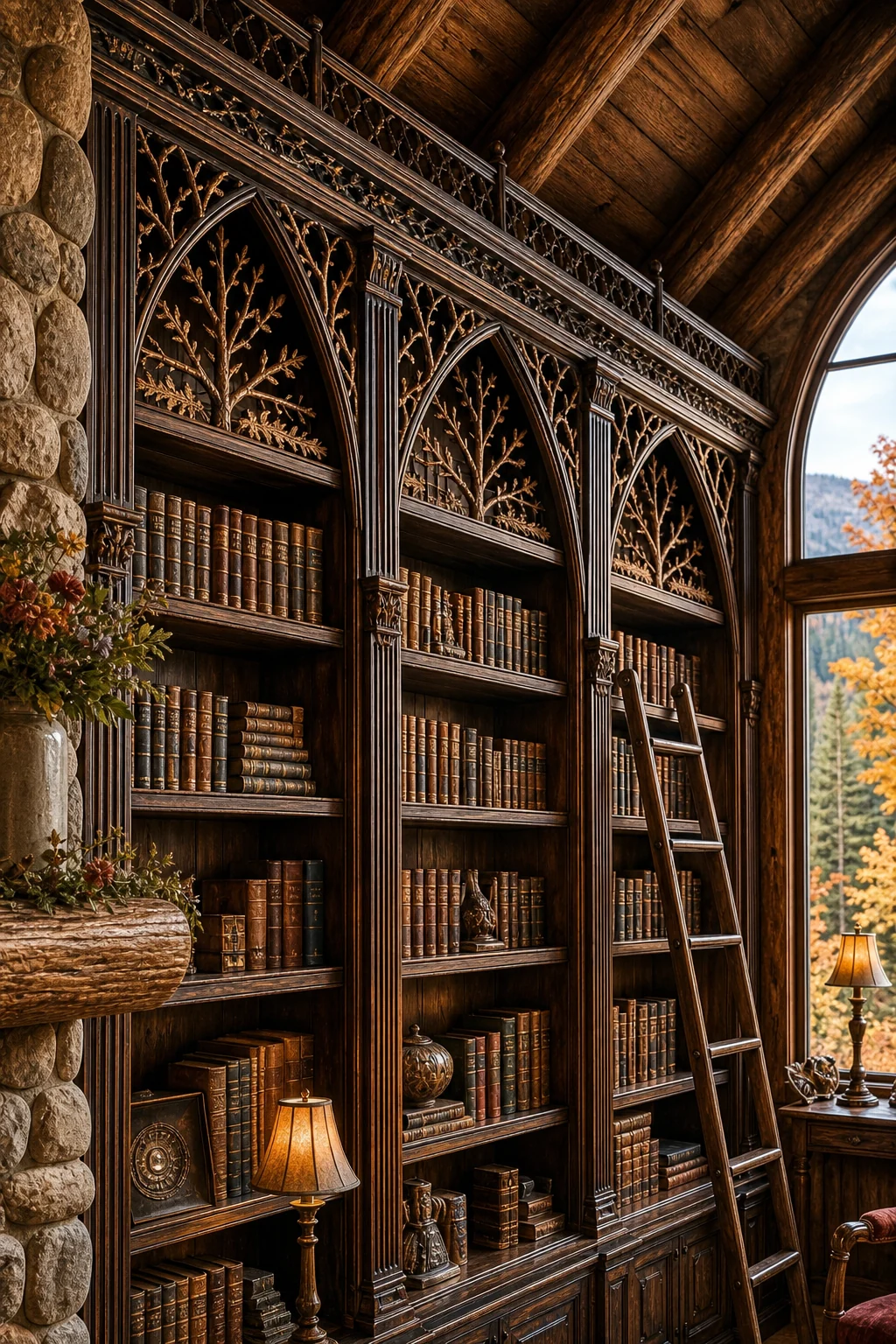
This rustic material cleverly mimics ornate 19th-century carving, forming perfect victorian Gothic arches across the upper bookcase sections. It is a precise, highly tactile translation of parlor elegance directly into the rugged vernacular of the surrounding autumn forest.
Silver-white birch bark and warm golden oak provide necessary bright highlights against the dark charcoal river stone. These organic textures ensure the refined jewel tones never feel synthetic or disconnected from the natural mountain setting located just outdoors.
Building the Seating Arrangement
A successful seating area demands both immense physical comfort and sharp visual tension. A classic tufted Chesterfield sofa in rich velvet introduces undeniable luxury, boldly challenging the rough-hewn, unpeeled log architecture that surrounds it completely on all sides.
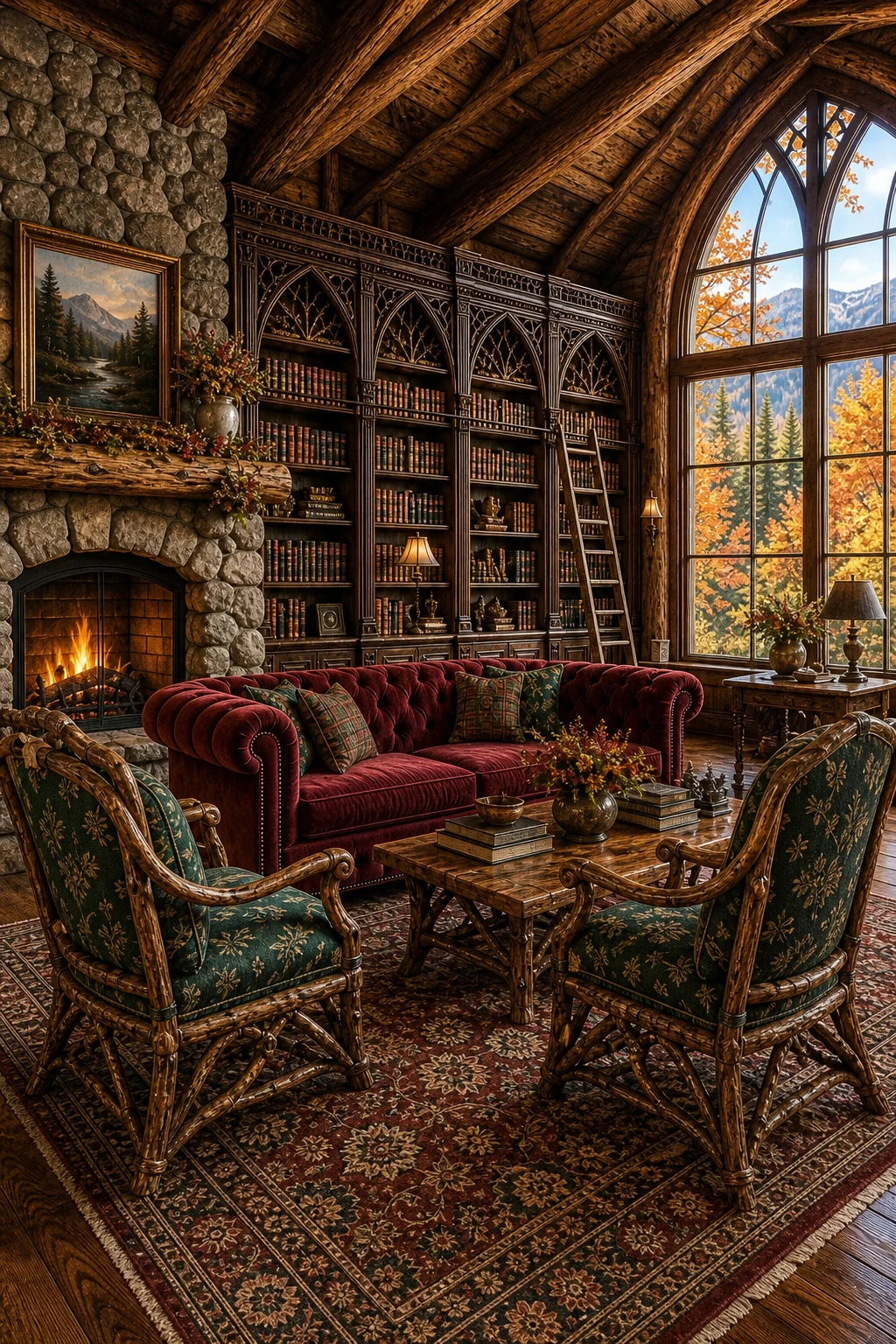
Flanking the sofa, reading chairs framed in polished root-wood prove that rugged frames support refined upholstery. Covered in emerald green damask, these chairs perfectly encapsulate the room’s dual identity, seamlessly bridging the gap between the wild and the civilized.
| Design Layer | adirondack style Role | victorian Role | Bridge Decision |
|---|---|---|---|
| Shell | Massive unpeeled logs and rugged river stone | Symmetrical layout and strict formal proportions | Twig-work applied as Gothic architectural details |
| Furniture | Raw root-wood and organic branch frames | Tufted Chesterfield seating and built-in bookcases | Rustic frames carrying formal, structured upholstery |
| Textiles | Tactile, heavy wools and natural animal hides | Refined velvet and botanical damask fabrics | Jewel-tones like oxblood and emerald that suit both |
| Lighting | Forged iron and natural wilderness motifs | Ornate brass and traditional shaded lamps | Simple brass fixtures with warm, ambient glow |
| Accents | Birch bark and natural found objects | Curated leather-bound books and polished brass | Symmetrically arranged natural artifacts on tabletops |
This meticulous, layer-by-layer integration ensures that neither aesthetic overwhelms the other. The heavy, tactile wools and raw hides of the cabin seamlessly give way to the polished velvet and botanical damask expected in a proper 19th-century study.
Illuminating the Architecture
Heavy dark woods and rich, light-absorbing textiles require generous, crisp daylight to avoid feeling gloomy or visually oppressive. Large divided-light windows reveal the golden maple foliage outside, beautifully lifting the midtones across the dark mahogany cabinetry and warm oak floors.
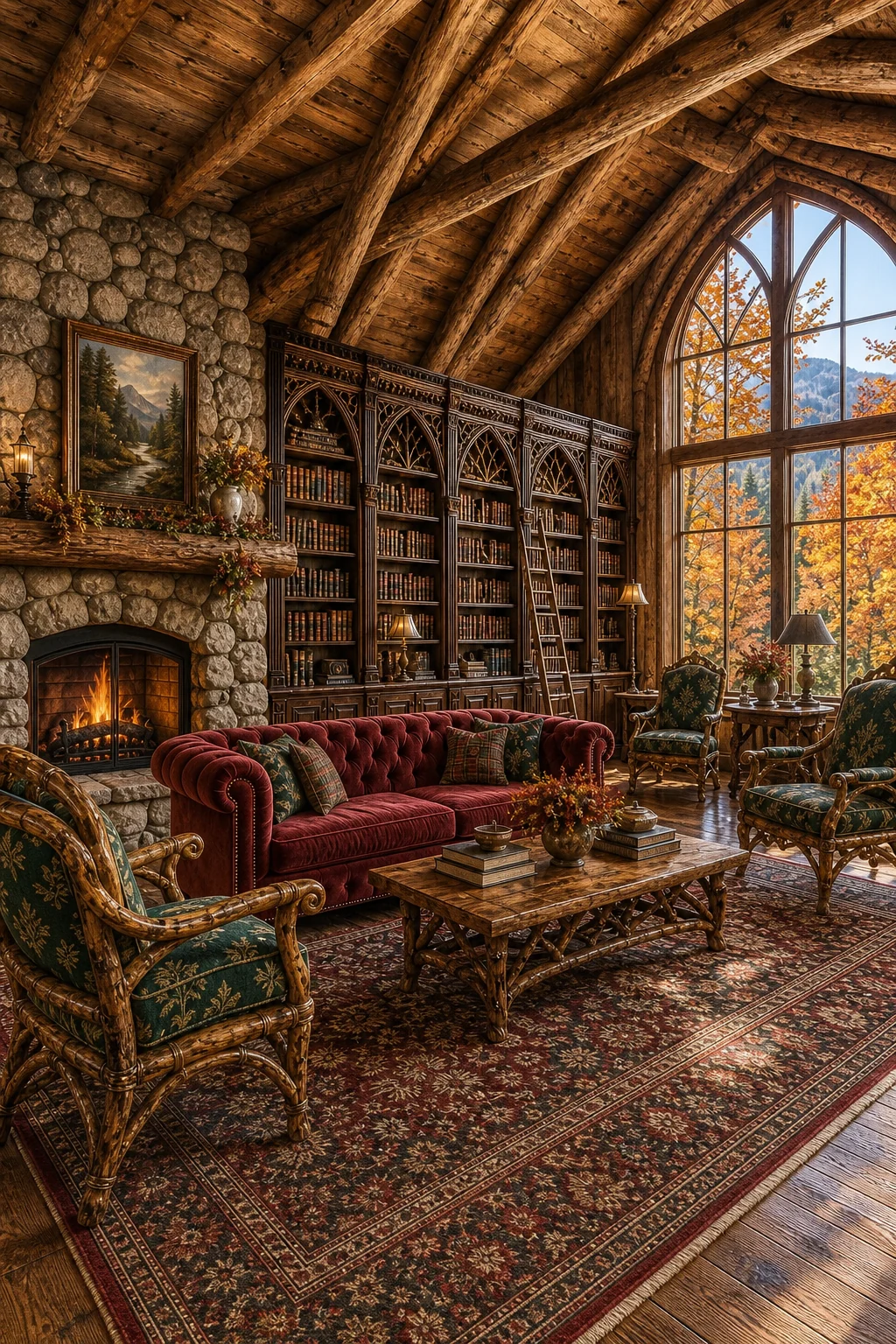
Consistent architectural lighting must highlight the intricate twig-work and the tufted velvet equally. This careful, balanced illumination ensures the rugged overhead beams and the refined upholstery below share the exact same visual weight throughout the entire integrated space.
- Maximize natural daylight through large divided-light windows to lift heavy interior shadows effectively.
- Ensure clear, sharp detail remains highly visible in all dark woods and textiles.
- Avoid heavy, opaque drapery that blocks the vibrant mountain view from the interior.
- Install simple brass fixtures to cast a warm, ambient glow across the room.
Styling the Library Details
Small tabletop moments anchor the room’s dual identity on an intimate, highly tactile scale. The accessories must strike a careful balance between curated, intellectual parlor collections and raw, natural artifacts gathered directly from the surrounding autumn woods.
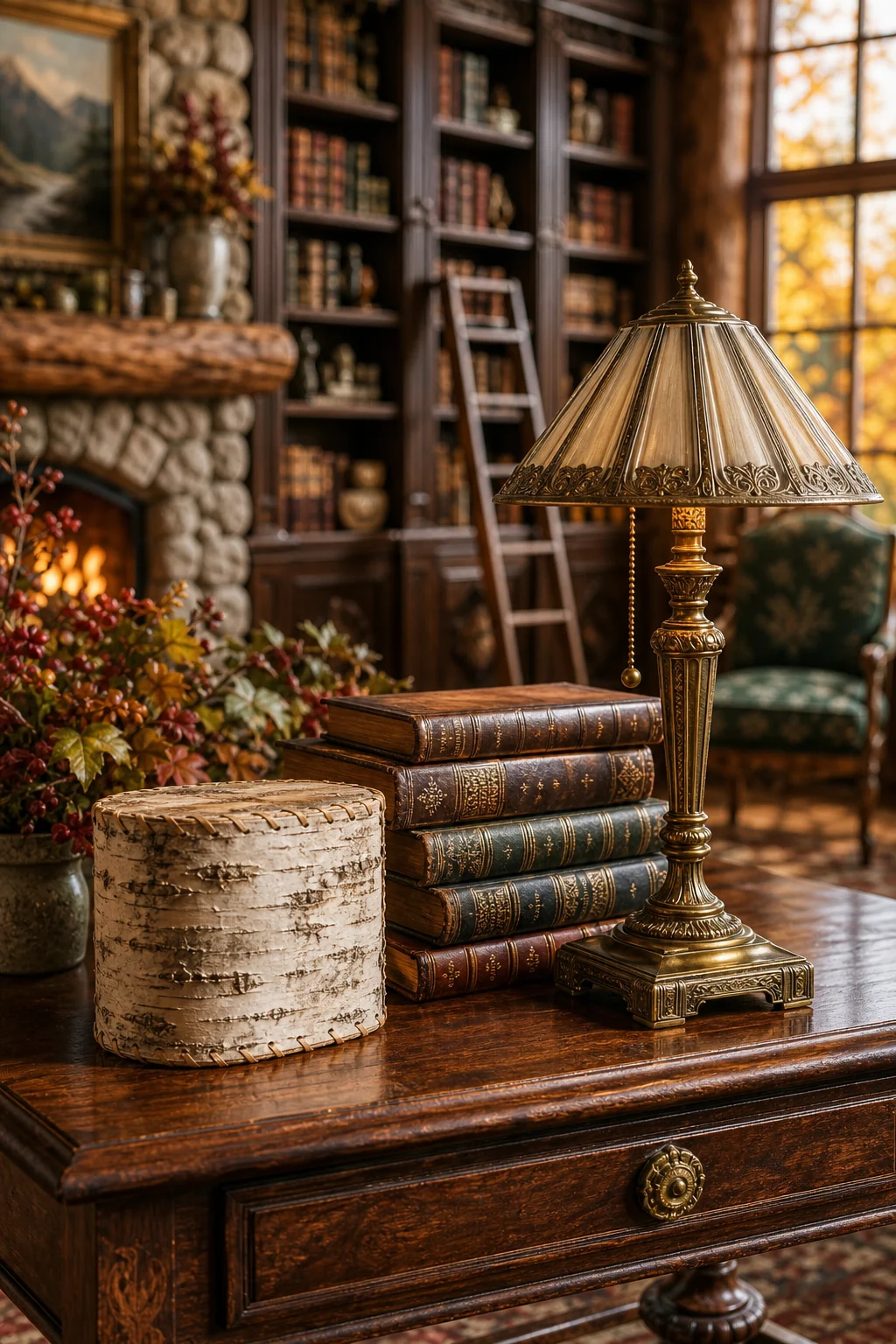
A silver-white birch bark box placed beside antique leather-bound books creates a quiet, poetic dialogue between the wilderness and the study. Ornate brass library lamps provide the necessary civilized polish to properly elevate the raw timber surfaces.
- Source tufted velvet sofas in deep, saturated jewel tones like rich, traditional oxblood.
- Select root-wood accent chairs finished with a smooth, highly polished surface for comfort.
- Choose emerald botanical damask fabric for refined, traditional upholstery applications on rustic frames.
- Find brass library lamps featuring classic, understated 19th-century parlor profiles and warm bulbs.
- Display leather-bound antique books to provide authentic, scholarly texture on the symmetrical shelves.
Adapting the Look for Smaller Spaces
You do not need a monumental stone hearth to successfully capture this distinct aesthetic. In a smaller study, focus entirely on the sharp contrast between a single piece of refined upholstery and a rugged, highly textured architectural wall.
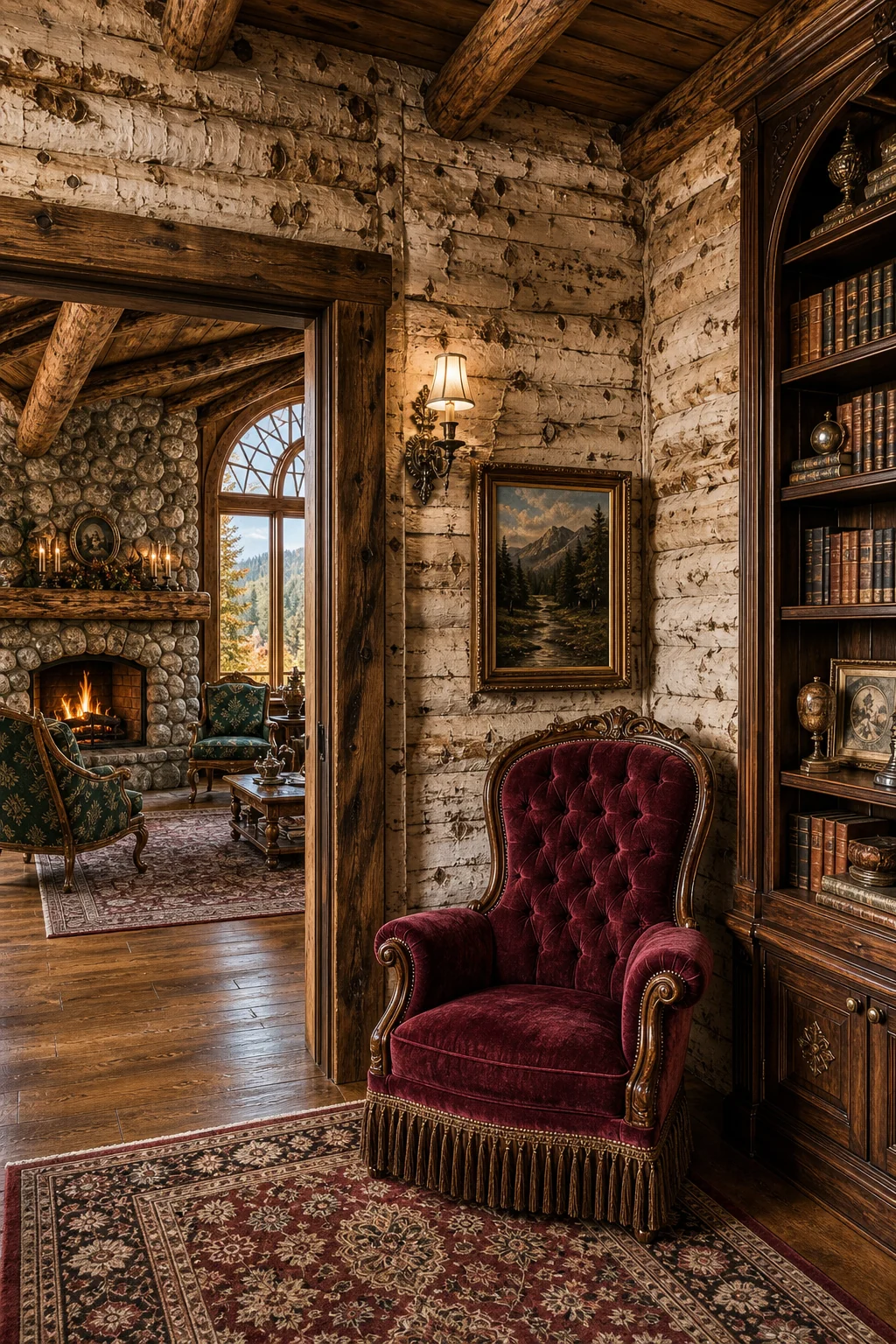
A deeply tufted burgundy chair set against raw birch bark paneling delivers the exact same visual tension. Scale down the built-in shelves while strictly maintaining their bilateral symmetry to preserve the essential formal parlor logic in tight quarters.
This localized, highly focused approach works beautifully in cozy reading nooks or rented cabins. By isolating the key textures, you evoke the grandeur of a mountain estate without requiring massive, permanent architectural interventions or highly expensive structural renovations.
Avoiding the Theme Park Trap
The greatest risk in this design is creating a disjointed split personality where the room feels like two separate sets. Success requires absolute, unwavering commitment to both the rugged architectural shell and the highly formal furniture layout simultaneously.
Do not scatter cheap rustic trinkets across a traditional room, or place a single velvet pillow in a bare log cabin. The integration must be deeply structural, permanently binding the adirondack style architecture to the strict victorian floorplan.
- Commit entirely to the heavy, authentic mountain lodge architectural envelope without any compromise.
- Maintain a strict formal furniture layout to provide a civilized, highly orderly sanctuary.
- Avoid synthetic rustic reproductions that undermine the genuine historical parlor antiques and textiles.
- Ensure every delicate fabric is visually supported by a robust, heavy wooden frame.