
Scandi Modern Meets Bohemian: Living Room
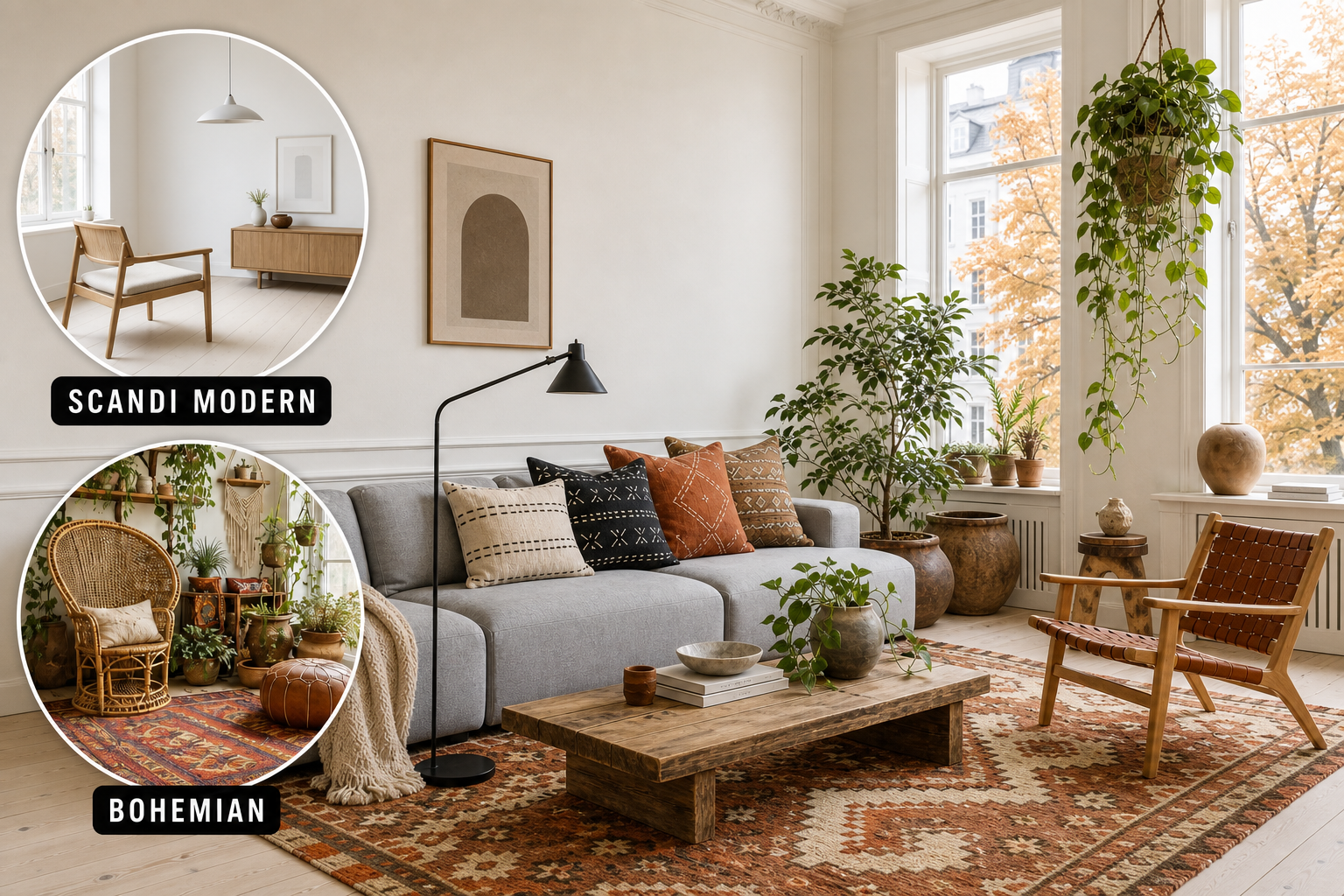
The disciplined, uncluttered restraint of scandi modernism often clashes violently with the layered, tactile excess of bohemian decor. We resolve this contradiction by letting strict architecture dictate the clean shell, while earthy textiles and organic plant life introduce soulful warmth.
Establish the Scandi Modern Foundation
Start by addressing the largest volume in the room to firmly anchor the entire space. A low-profile, clean-lined grey linen modular sofa establishes the essential scandi modern discipline, ensuring this foundational seating provides a visually quiet canvas for future eclectic layering.
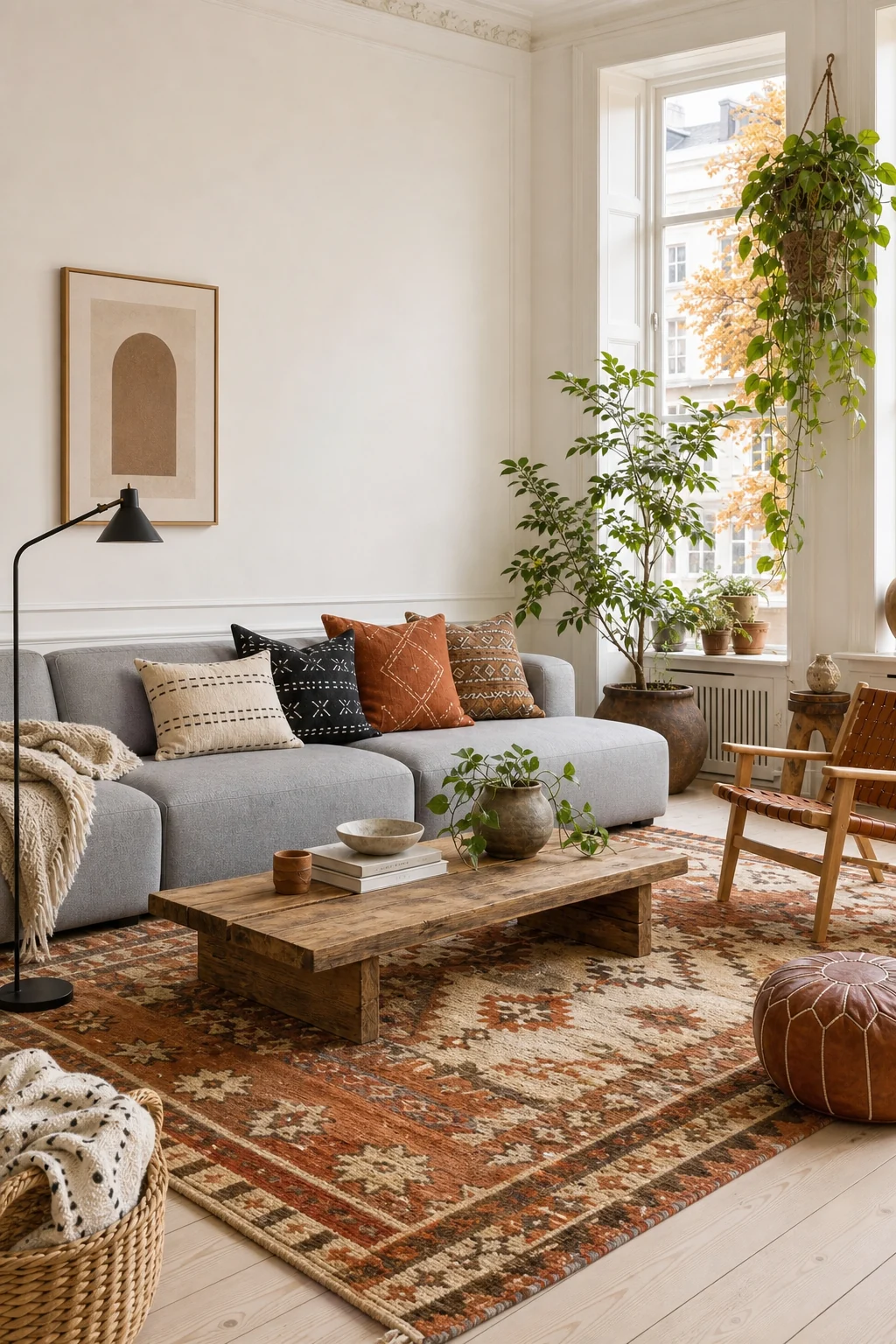
By prioritizing crisp white walls alongside wide-plank light Douglas fir floors, the room immediately gains an uncluttered architectural shell. This deliberate emptiness is absolutely crucial, creating the necessary negative space required to absorb much heavier, textured decorative elements later.
Once these strict architectural boundaries are set, you can begin plotting exactly where organic warmth is needed most. The stark contrast between pale wood and cool grey upholstery demands a thoughtful intervention, setting the perfect stage for globally inspired textiles.
Ground the Room with Bohemian Texture
With the sleek seating firmly in place, you must deliberately introduce tactile friction to the floor. A vintage Moroccan wool rug featuring warm terracotta motifs instantly disrupts the clinical perfection of the bare planks, grounding the entire arrangement with history.
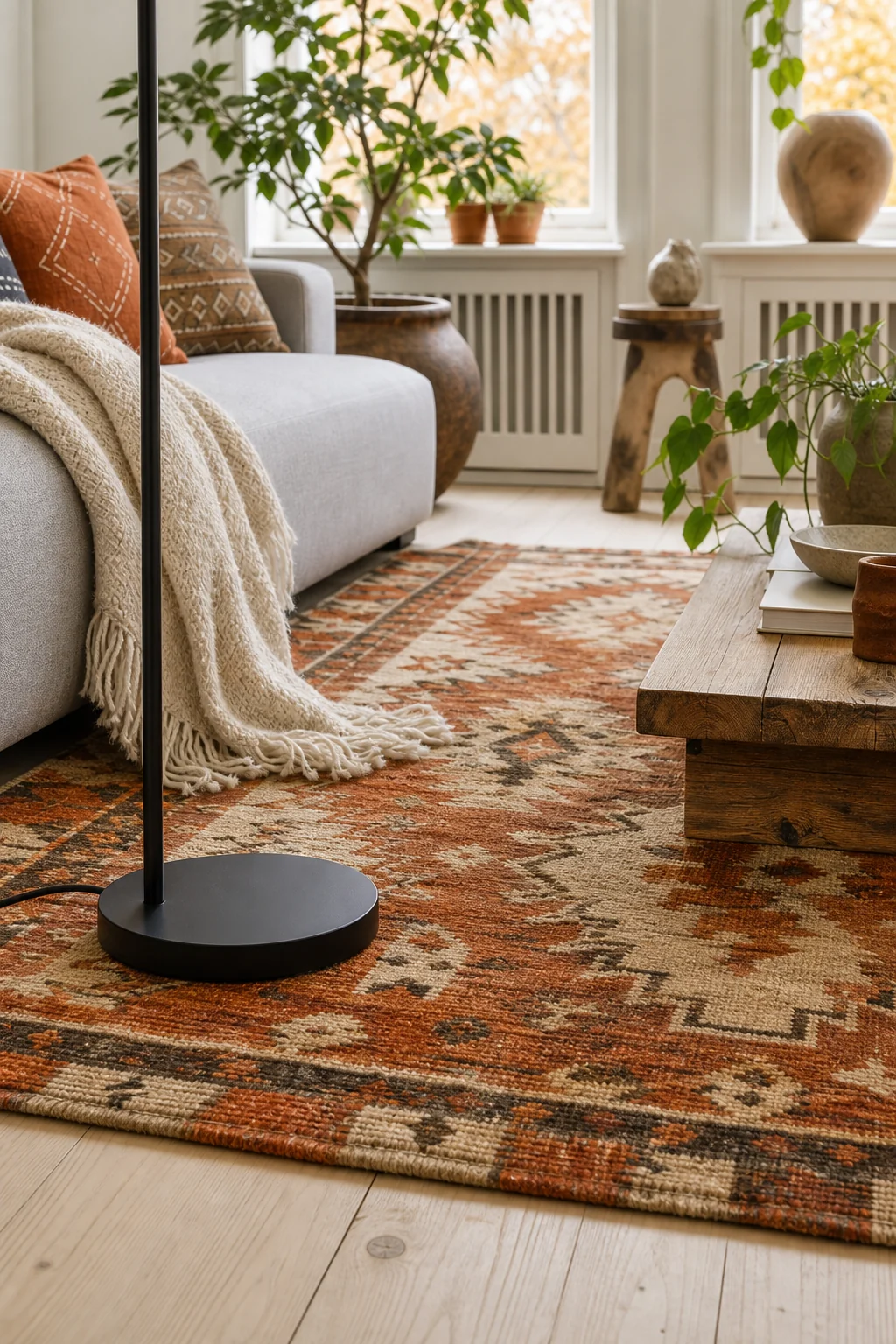
This heavy, grounded layer introduces necessary bohemian warmth to the otherwise austere environment. The key to success is allowing organic textures and vintage patina to soften the strict geometry of the surrounding architecture without completely erasing its clean, functionalist lines.
- Layer vintage Moroccan wool rugs directly over pale Douglas fir floors to anchor the seating.
- Introduce handcrafted unglazed ceramic planters to provide immediate tactile warmth to empty room corners.
- Use densely patterned mudcloth pillows to break up the visual weight of solid grey upholstery.
- Drape heavy kilim throws over minimalist chairs to instantly soften their rigid wooden frames.
Bridge the Gap with Earthy Materials
The secret to successfully merging these polar opposites lies in establishing a shared material language. Warm oak, baked terracotta, and soft ash grey belong naturally to both design traditions, creating an unspoken, seamless dialogue between the two distinctly different styles.
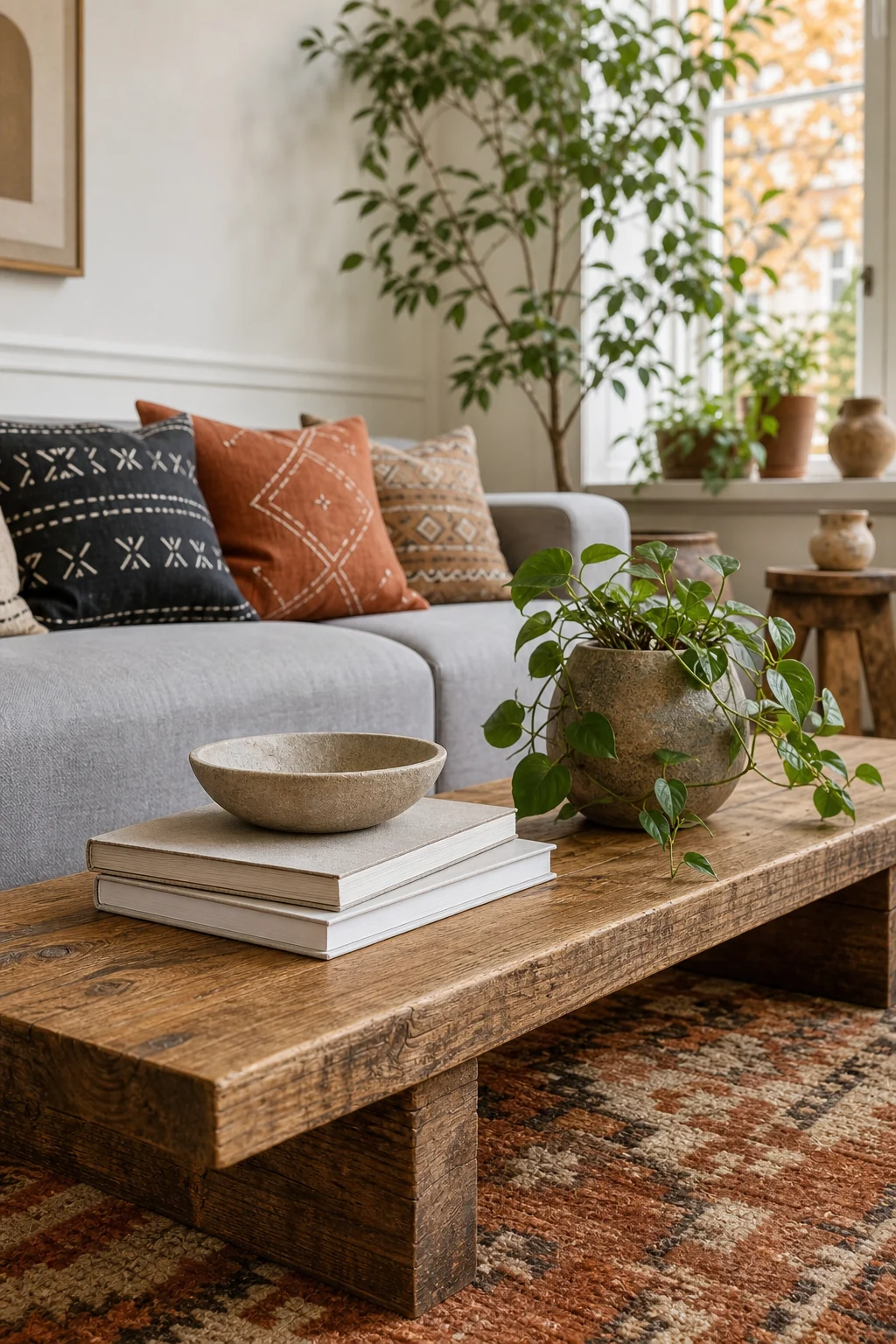
Notice how raw natural materials actively connect the opposing aesthetics across the room. Elements like tactile wool, supple leather, and unglazed clay provide a seamless, organic transition between minimalist functionalist lines and the highly eclectic, heavily layered styling approach.
When every surface reflects natural light differently, the room gains immense depth without requiring additional clutter. The friction between a smooth matte black metal lamp and a coarse kilim pillow becomes a deliberate, highly successful design feature rather than an accident.
Balance the Complete Seating Vignette
Bringing the entire living room together requires incredibly strict role assignment across every surface. The architectural shell must remain entirely quiet and unobtrusive, while the curated textiles and trailing plants are explicitly allowed to speak loudly and command visual attention.
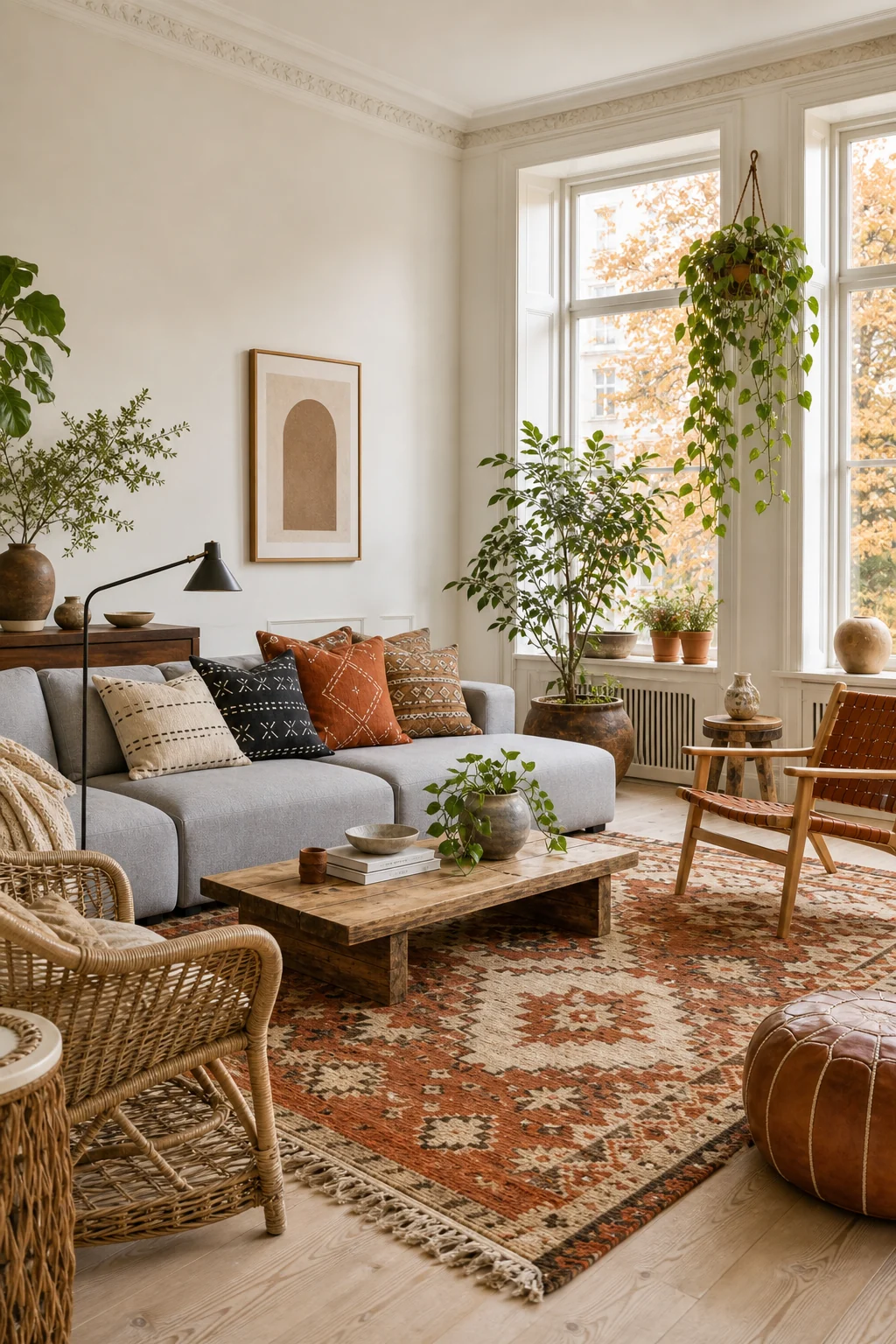
This deliberate separation of duties prevents visual chaos from overtaking the shared space. When scandi modern dictates the large structural forms and bohemian controls the intimate accents, the resulting hybrid space feels intentionally curated rather than haphazardly thrown together overnight.
| Design Layer | Scandi Modern Role | Bohemian Role | Bridge Decision |
|---|---|---|---|
| Architectural Shell | Crisp white walls and pale wide-plank wood floors | Lush trailing organic houseplants in corners | Unadorned windows maximizing bright natural daylight |
| Primary Furniture | Low-profile minimalist grey linen modular sofa | Woven leather and raw rattan accent chairs | Warm oak frames and clean, simple geometry |
| Soft Textiles | Simple, unadorned linen upholstery on main seating | Vintage Moroccan wool rugs and layered kilims | Creamy natural wool and raw, unprocessed fibers |
| Room Lighting | Sleek matte black metal functionalist fixtures | Ambient woven or handcrafted ceramic lanterns | Functionalist geometry finished with flat matte textures |
| Surface Accents | Visually quiet, completely unadorned flat wooden surfaces | Layered mudcloth pillows and textured macrame hangings | Unglazed clay and baked terracotta ceramic vessels |
By adhering strictly to this detailed translation framework, you ensure neither aesthetic dominates the other. The visual tension is perfectly suspended, allowing the disciplined restraint and the layered excess to coexist harmoniously within the exact same residential square footage.
Enhance Architecture with Natural Light
Generous, diffused autumn daylight is absolutely crucial for preventing the layered textiles from feeling oppressive or heavy. Subtle period moldings provide a classic Copenhagen backdrop, offering elegant, structured architectural framing for the wild, organic trailing plant life scattered throughout.
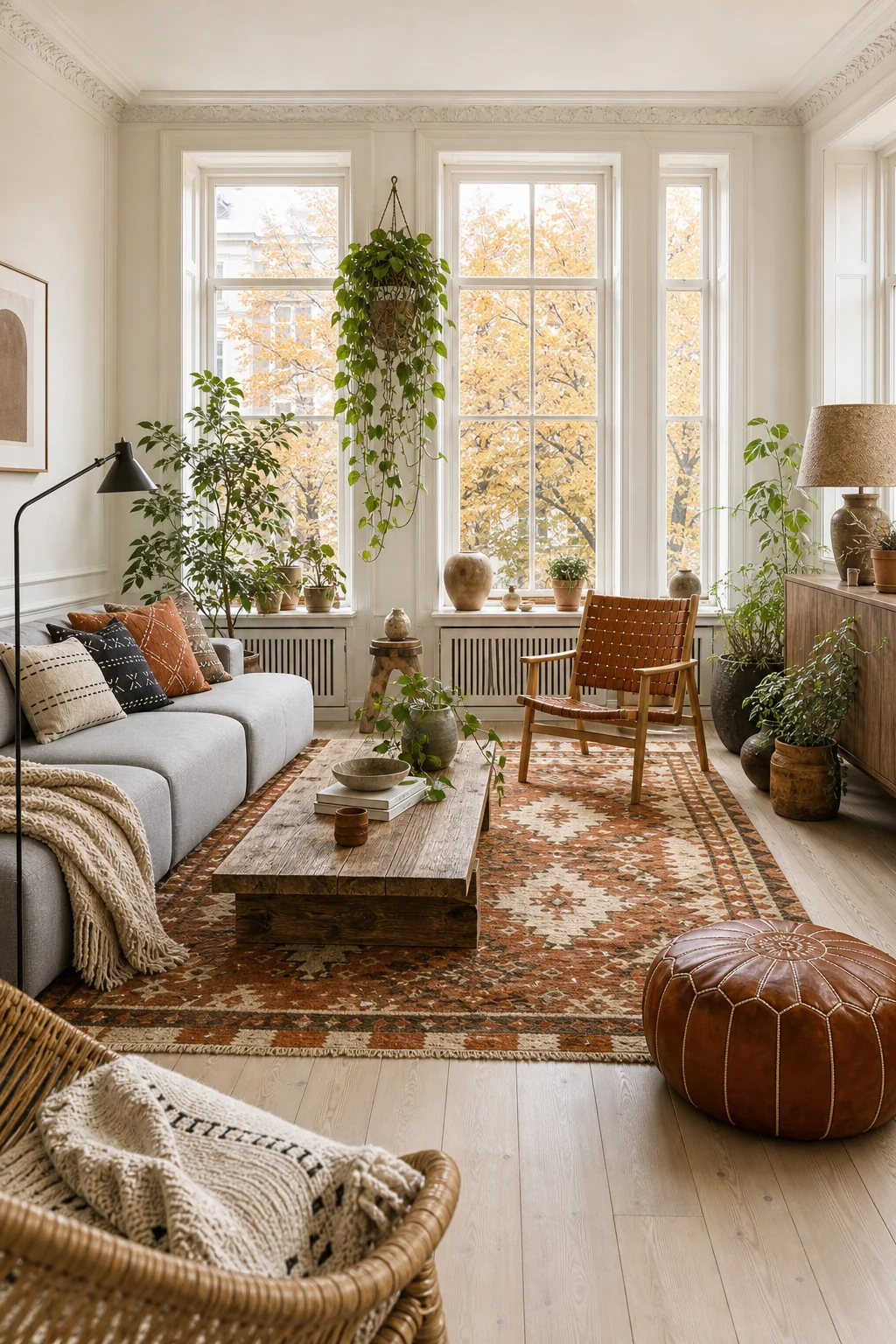
Illumination serves as a powerful unifying force across both contrasting styles. By carefully controlling how daylight hits textured surfaces, you emphasize the tactile woven wool and raw ceramics without adding any unnecessary physical objects to the already heavily layered room.
- Leave large architectural windows completely unadorned to consistently maximize generous natural daylight exposure.
- Highlight subtle period moldings with crisp, matte white paint to reinforce the architectural shell.
- Position vibrant trailing houseplants strategically to soften rigid architectural corners gracefully and organically.
- Place matte black floor lamps near heavy textiles to create sharp, deliberate visual contrast.
Curate the Transitional Details
Small styling moments ultimately dictate how successfully the living room merges its dual identities. A sleek matte black functionalist lamp cutting sharply across a dense, patterned kilim pillow perfectly illustrates this beautiful, highly controlled visual tension in everyday practice.
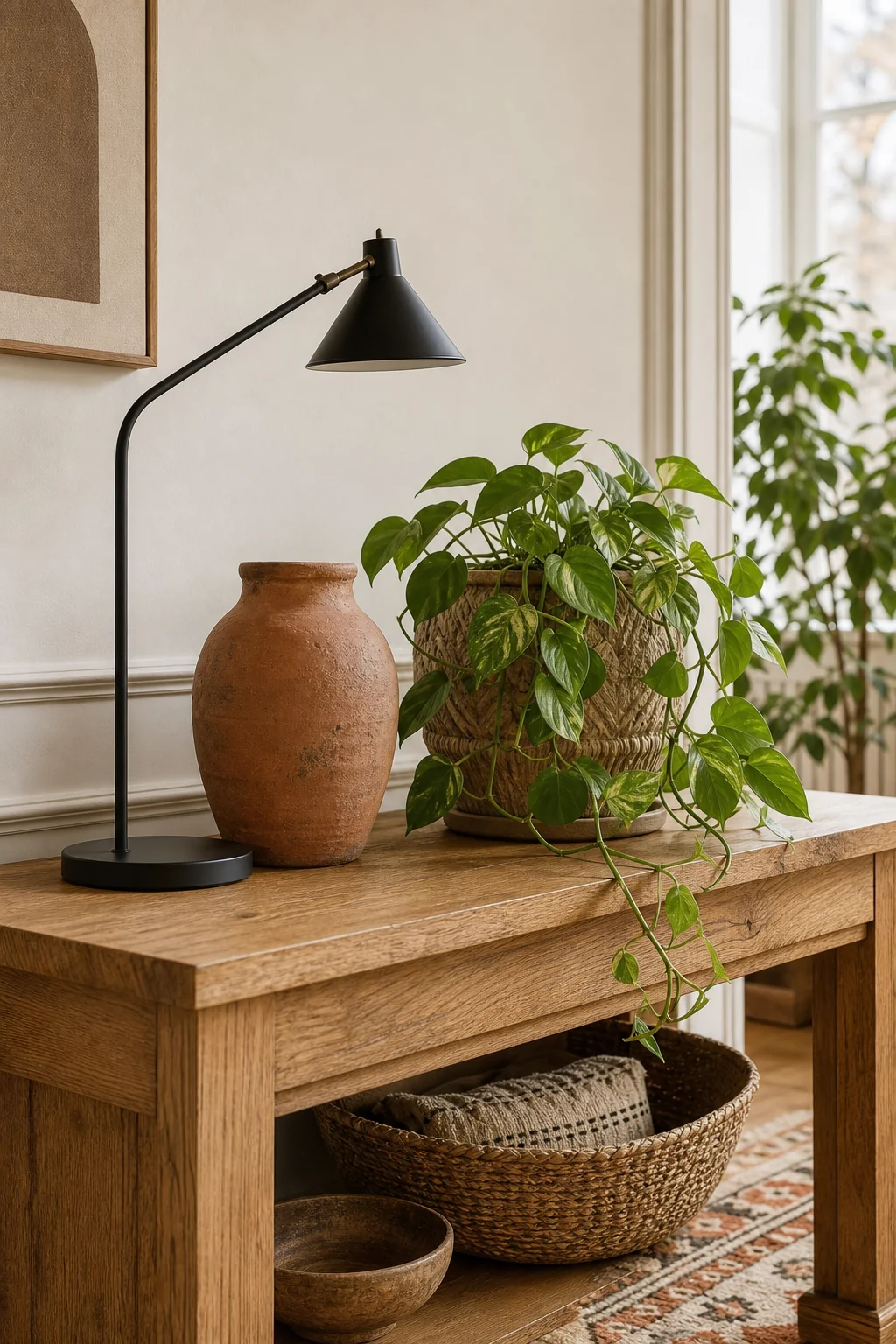
Focus your budget entirely on authentic materials rather than cheap imitation pieces. Genuine raw leather, solid oak, and hand-woven textiles will age gracefully together, reinforcing the shared earthy palette as they develop a rich, natural patina over time.
This smart containment strategy allows you to display cherished eclectic items without cluttering the minimalist surfaces. The wooden tray acts as a strict visual boundary, turning a potential mess of ceramics into a deliberate, highly organized gallery display.
Extend the Logic to Transition Zones
This beautiful aesthetic oxymoron works exceptionally well beyond the main seating area. You can apply the exact same rules to hallways and thresholds by pairing bare, pale wood floors with a single, highly textured woven wall hanging for instant impact.
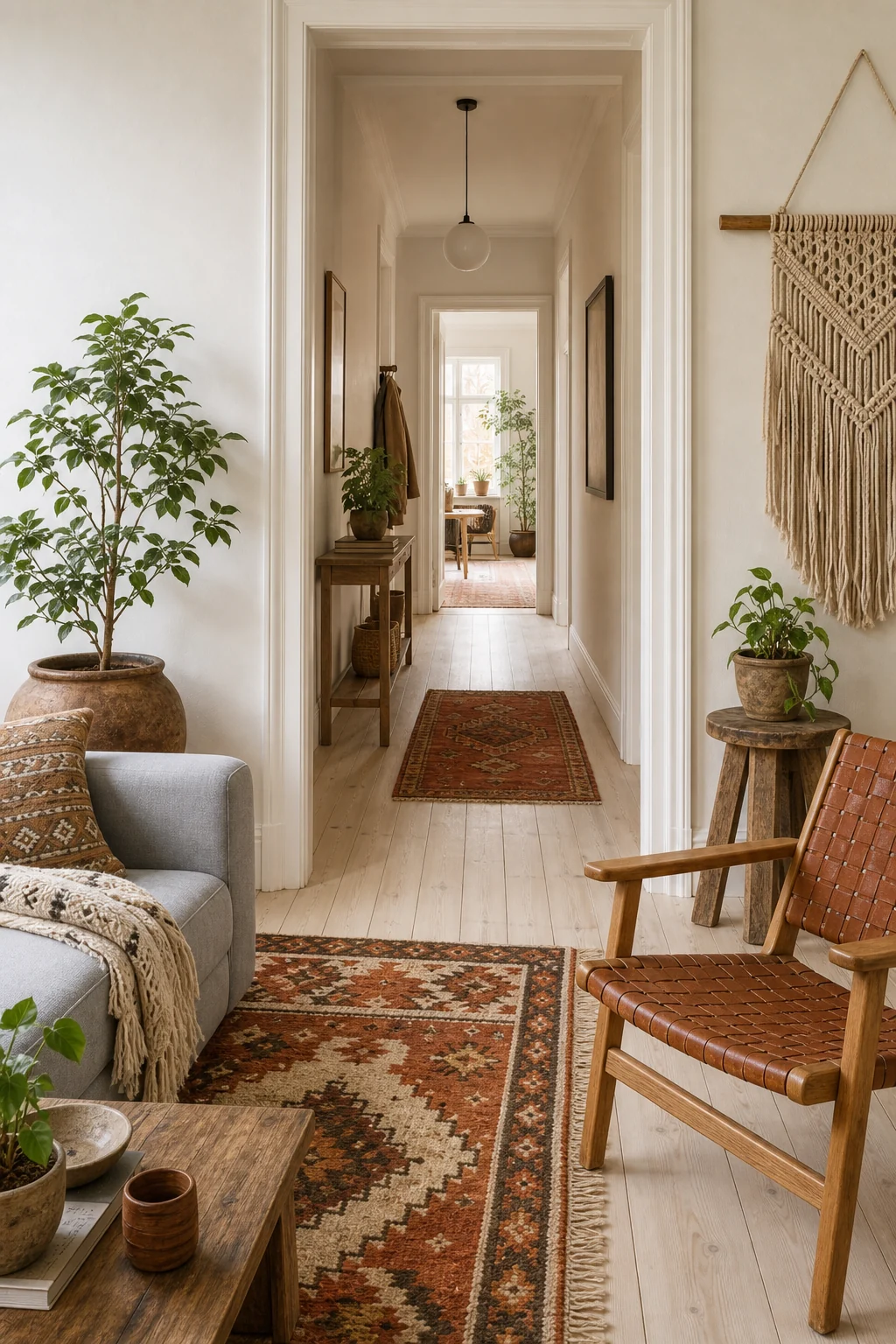
Transitional spaces require even stricter discipline to remain functional and uncluttered. Let a single vintage bohemian runner rug guide foot traffic, while keeping the surrounding walls entirely bare to maintain essential visual breathing room between the various adjoining rooms.
- Keep hallway walls entirely bare to maintain vital visual breathing room between active spaces.
- Use a single vintage bohemian runner rug to clearly and beautifully guide foot traffic.
- Install sleek scandi modern wall sconces for practical, minimalist lighting along the corridor.
- Place a single unglazed ceramic planter at the threshold to introduce immediate organic warmth.
Avoid the Split Personality Trap
A successful hybrid space should never look like two completely different rooms awkwardly colliding. If the heavy bohemian elements overwhelm the scandi modern restraint, the living room quickly devolves into a state of cluttered, unmanageable chaos that feels exhausting.
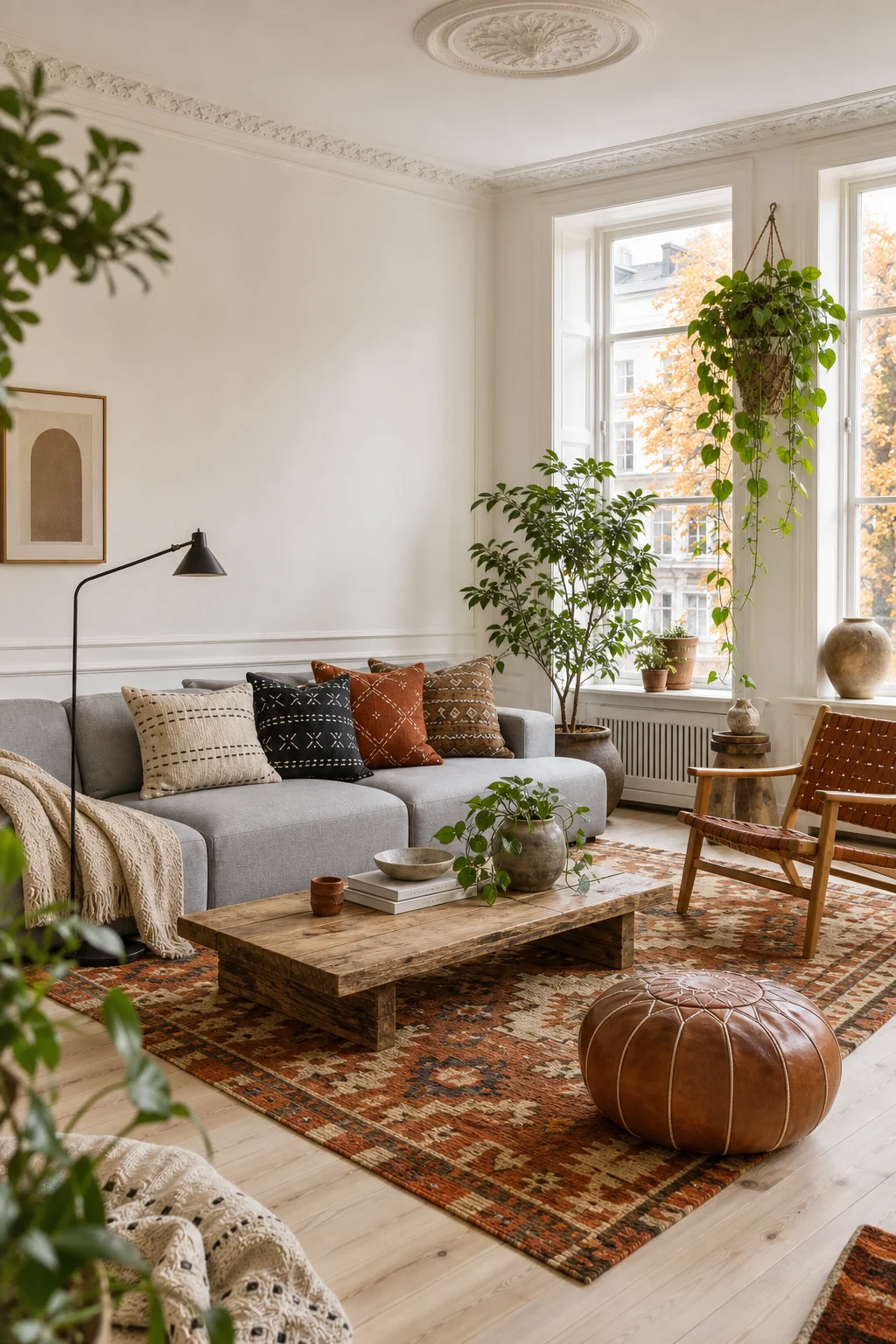
Maintain the delicate balance by consistently anchoring eclectic patterns with sleek metal lighting and sharp minimalist frames. This strict discipline ensures the final room feels like a single, cohesive, and deeply personal environment rather than a temporary theatrical costume.
- Avoid matching furniture sets that instantly ruin the carefully curated, eclectic bohemian illusion.
- Never use synthetic fabrics or plastics within this strict, natural material mix.
- Keep walls stark white to prevent the heavily layered room from feeling dark or oppressive.
- Limit your accent colors strictly to the established earthy palette of terracotta and ash grey.