
This Mushroom Lamp Became a Hearth Corner
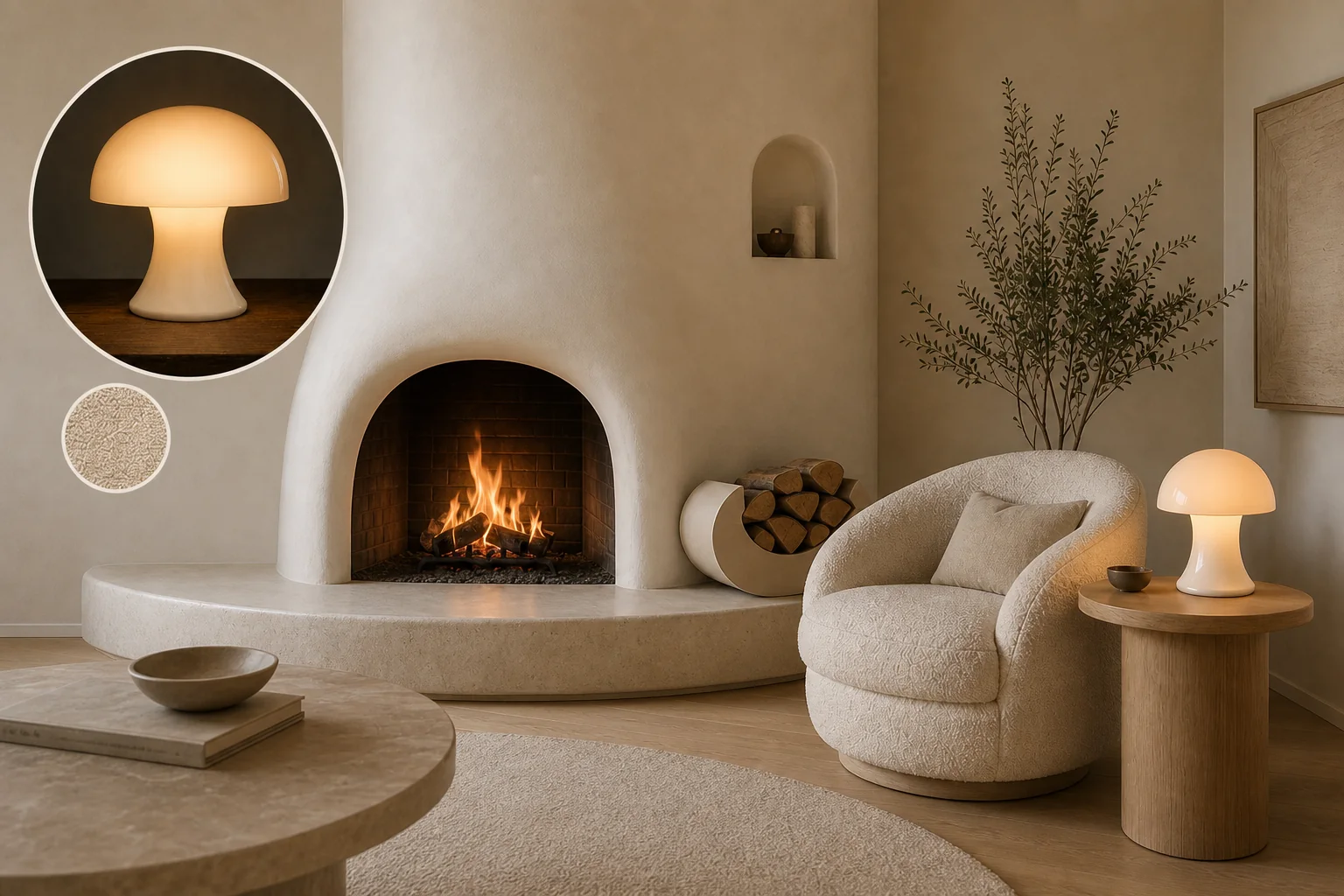
A vintage opal glass lamp offers a masterclass in how continuous curves and diffused light can shape a space. By translating its glowing silhouette into architectural forms, a standard fireplace becomes a molded, comforting living room retreat that grounds ethereal light with heavy, monolithic forms like a solid stone hearth.
Shaping seamless transitions
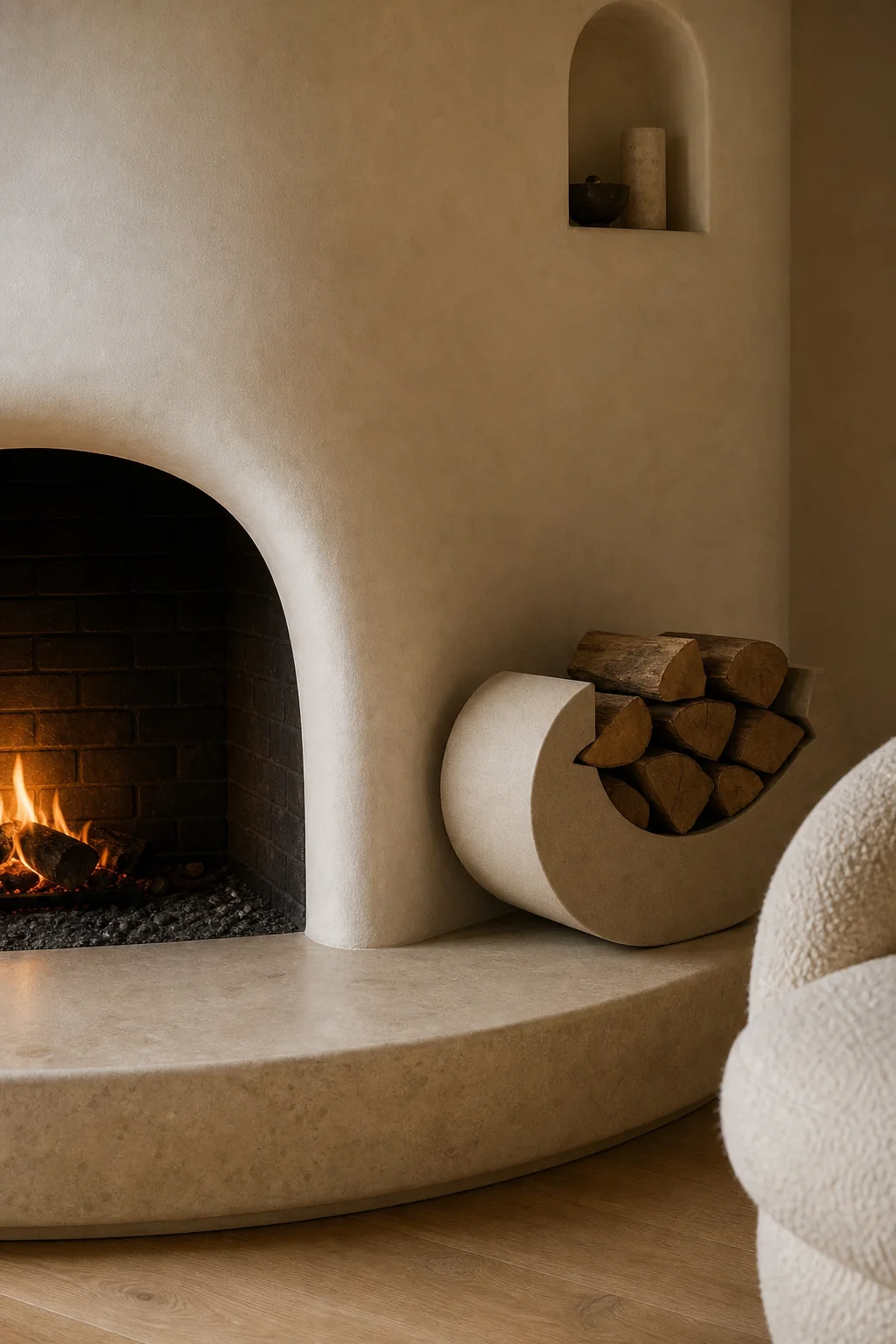
Erasing sharp corners mimics the continuous, unjointed curve from the lamp’s base to its flared shade, creating a hearth that feels molded rather than built. Hand-troweled plaster curved smoothly into the surrounding walls establishes a seamless foundation, ensuring the architecture flows uninterrupted from the firebox to the ceiling. This technique removes the visual harshness of traditional right angles, allowing the room’s structural shell to mimic the fluid, poured appearance of vintage glassware. To bring this continuous silhouette into your own living room and build a truly cohesive retreat, follow these architectural shaping steps to master the foundation.
- Frame the fireplace breast with curved corner beads to completely eliminate sharp right angles and harsh shadows.
- Apply a hand-troweled plaster finish across the walls so the entire surface appears continuous, seamless, and softly textured.
- Install a low, bullnosed stone hearth pad to anchor the fireplace gently without introducing rigid, sharp edges.
- Position secondary ambient lighting at low levels to wash warm amber light up the opal walls, creating a soft gradient.
Capturing the diffused warmth
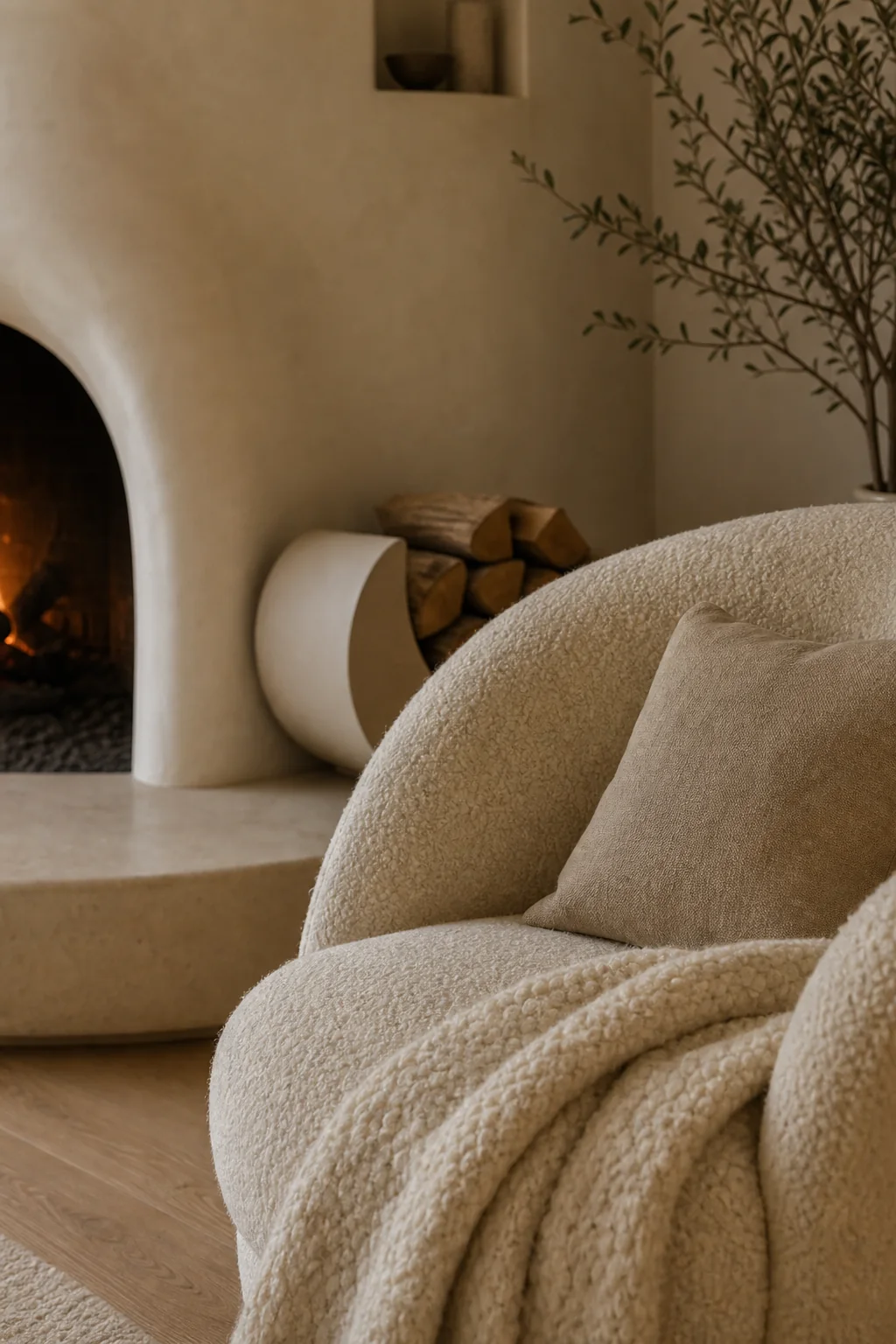
Translating the bulb’s internal glow into the room’s palette requires a base of opal white that catches and softens the firelight. The amber and cream gradient created by the bulb glowing through the milk glass directly informs a room move where opal white walls are warmed by ambient amber lighting, creating a diffused warmth that wraps the entire corner in comfort. By relying on flat or matte paint finishes, the walls behave exactly like the translucent glass, absorbing the harshness of direct light and radiating an even glow. This visual-DNA mapping table illustrates the translation.
| Source trait | Visible evidence | Room move |
|---|---|---|
| Seamless Transitions | The continuous, unjointed curve from the lamp’s base to its flared shade | A hand-troweled plaster fireplace breast that curves smoothly into the surrounding walls without sharp corners |
| Diffused Warmth | The amber and cream gradient created by the bulb glowing through the milk glass | A palette of opal white walls warmed by ambient amber lighting and pale oak flooring |
| Milky Opacity | The dense, smooth but non-reflective surface of the opal glass | A plush, cream-colored wool boucle armchair that absorbs light and softens the room’s acoustics |
| Domed Silhouettes | The distinctive hemispherical cap of the mushroom shade | A low, rounded stone hearth pad and a monolithic, curved ceramic log holder |
Layering the amber glow
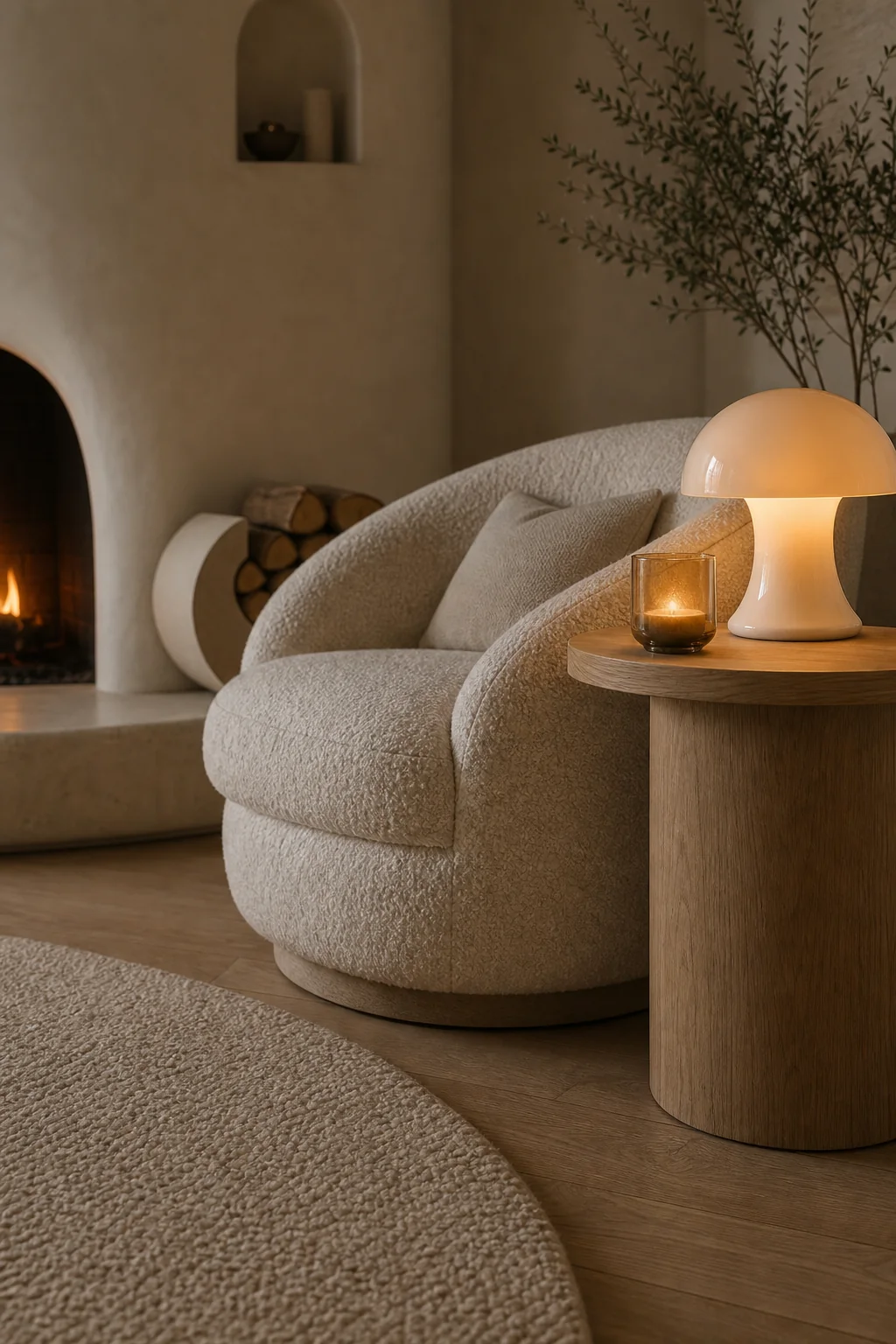
Secondary amber lighting recreates the bulb’s internal warm gradient, casting a soft glow against the plaster. You can easily control the mood’s intensity. A subtle approach focuses purely on the opal white palette, using standard drywall with softly rounded corners. A balanced execution commits to the hand-troweled plaster fireplace and boucle seating, allowing the glow to come naturally from the fire and low ambient lamps. For a bold statement, exaggerate the monolithic forms with an oversized, sweeping curved hearth and deeply saturated amber accent lighting washing the plaster walls.
Translating milky opacity
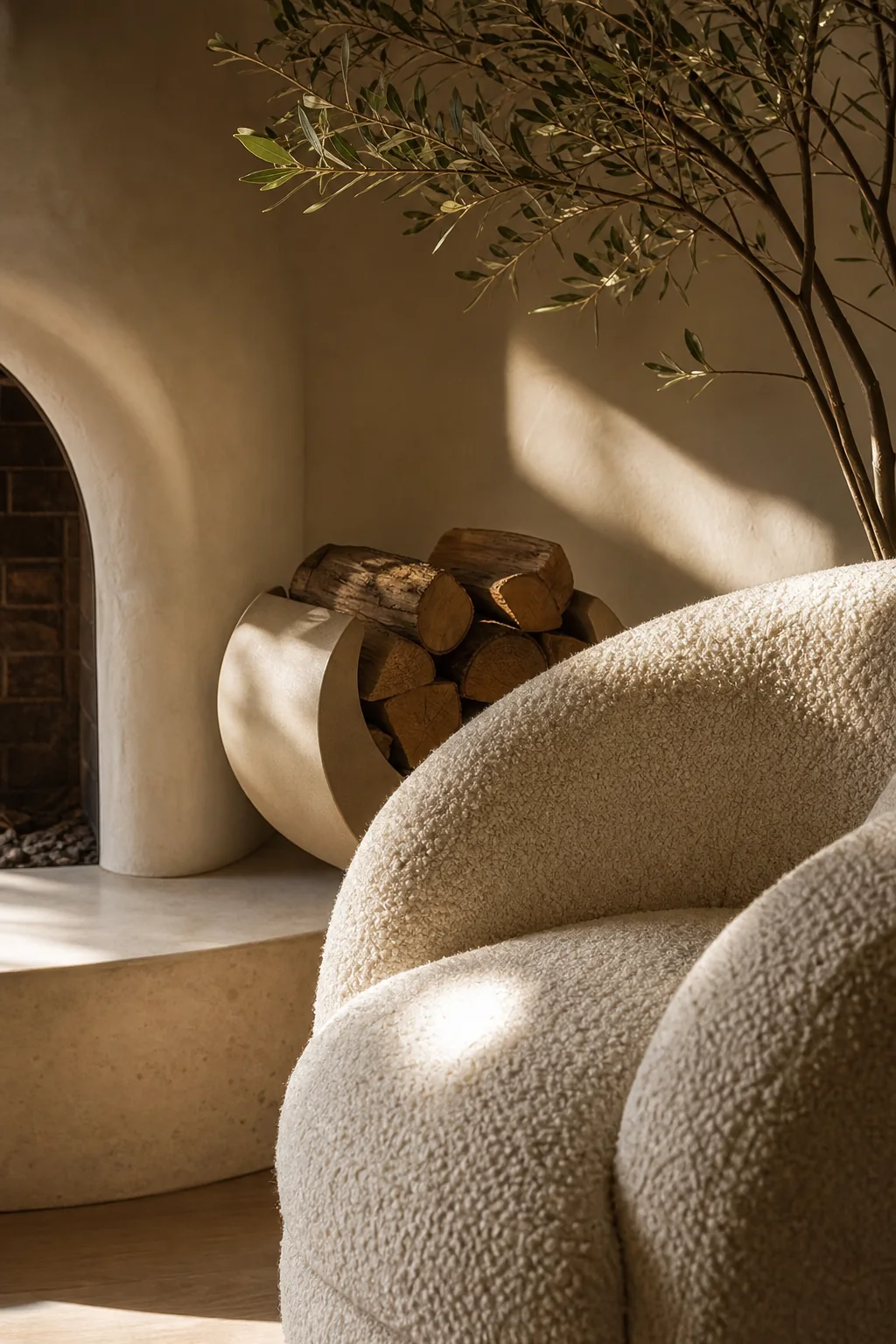
To replicate the dense, non-reflective nature of opal glass, tactile materials like wool boucle and matte plaster absorb light rather than bounce it around the room. A plush cream wool boucle armchair acts as the room’s primary light absorber, providing the milky opacity and dense visual weight of the lamp base while softening the room’s acoustics. Avoiding high-gloss finishes on hard surfaces is crucial here; everything must feel honed, brushed, or woven. Securing these light-diffusing matte finishes ensures the space remains serene, inviting, and visually quiet. Gather the following elements to complete your material palette.
Grounding domed silhouettes
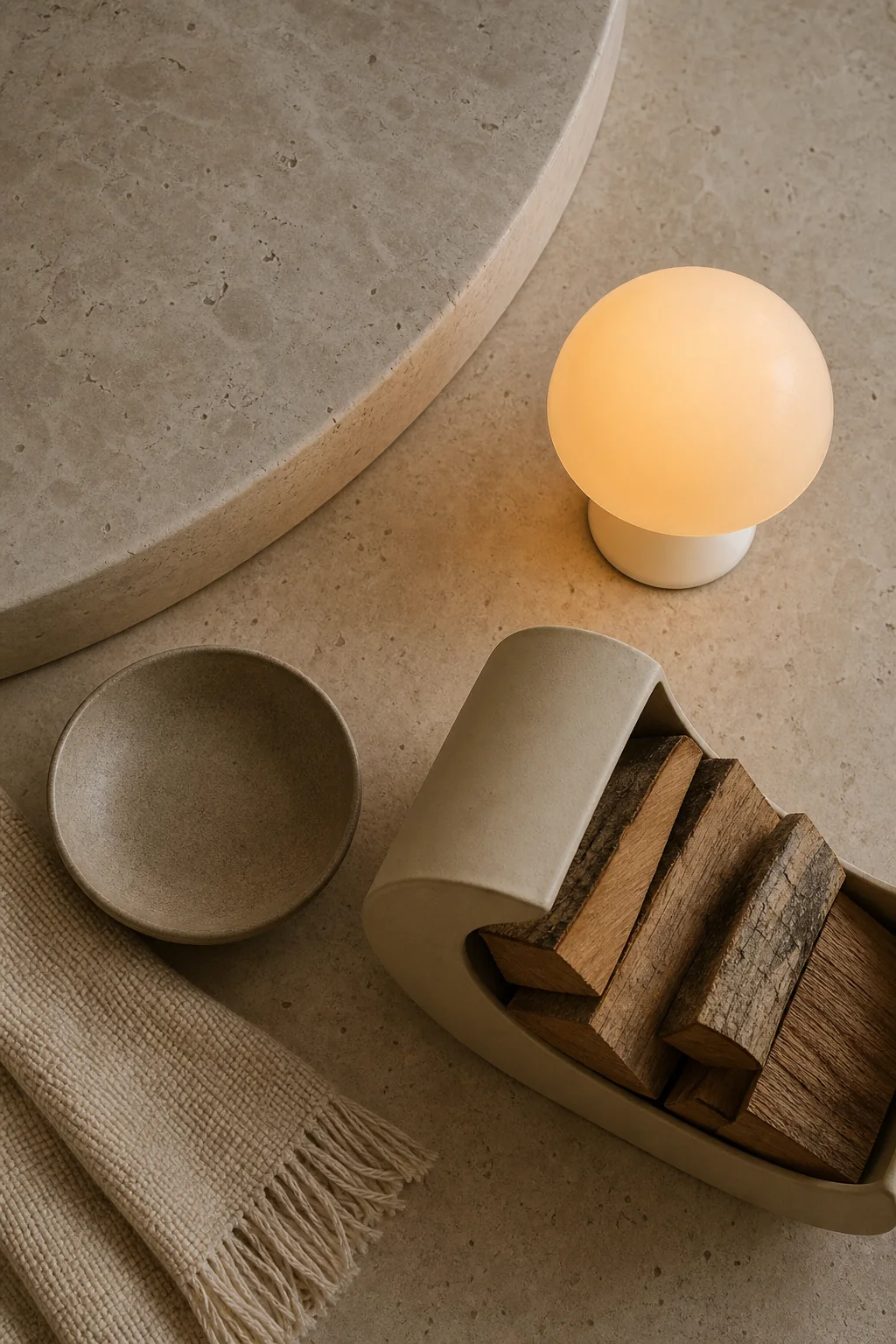
The distinctive hemispherical cap of the shade translates into low, rounded furniture and architectural details that anchor the space securely to the floor. A rounded stone hearth pad echoes the lamp’s cap, maintaining the grounded, monolithic rhythm of the original object without relying on literal mushroom motifs on pillows or art. Introducing a monolithic curved silhouette ensures the hearth feels substantial yet soft, balancing the ethereal lightness of the opal white walls. This careful proportioning prevents the room from feeling overly delicate or unmoored.
Keep rounded furniture low to the ground to maintain the grounded, monolithic rhythm of the original lamp base without overwhelming the room’s soft curves.
Anchoring with monolithic shapes
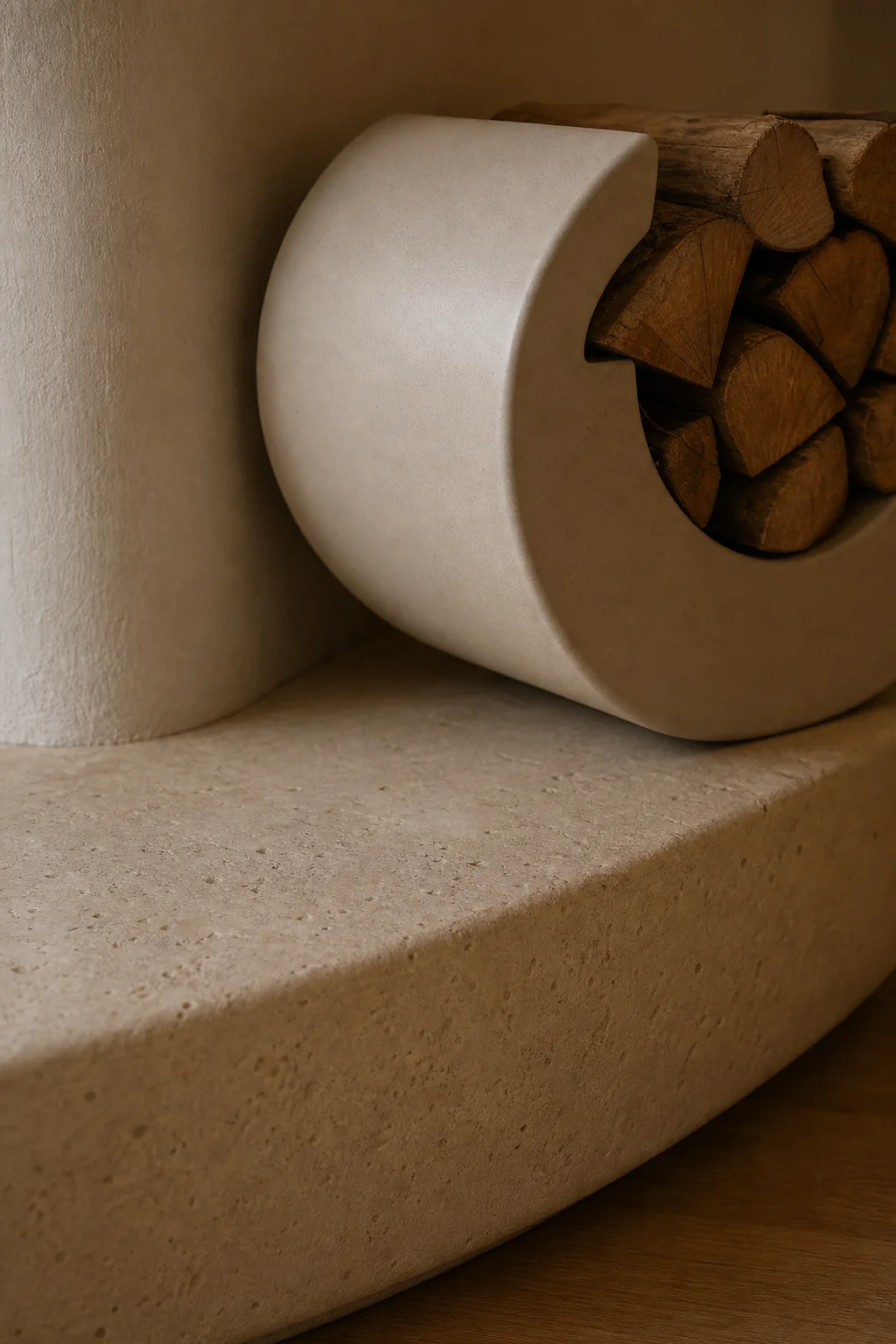
A curved ceramic log holder repeats the shade’s domed silhouette, sitting quietly on the pale stone hearth while keeping firewood neatly organized. This final touch reinforces the continuous sweeping curves that define the space, ensuring every functional element feels like a deliberate extension of the original glowing milk glass inspiration. By maintaining these soft geometries all the way down to the accessories, the entire hearth corner becomes a cohesive, immersive environment that perfectly captures the vintage lamp’s comforting, sculptural essence.