
This Peacock Vase Became an En Suite Bathroom
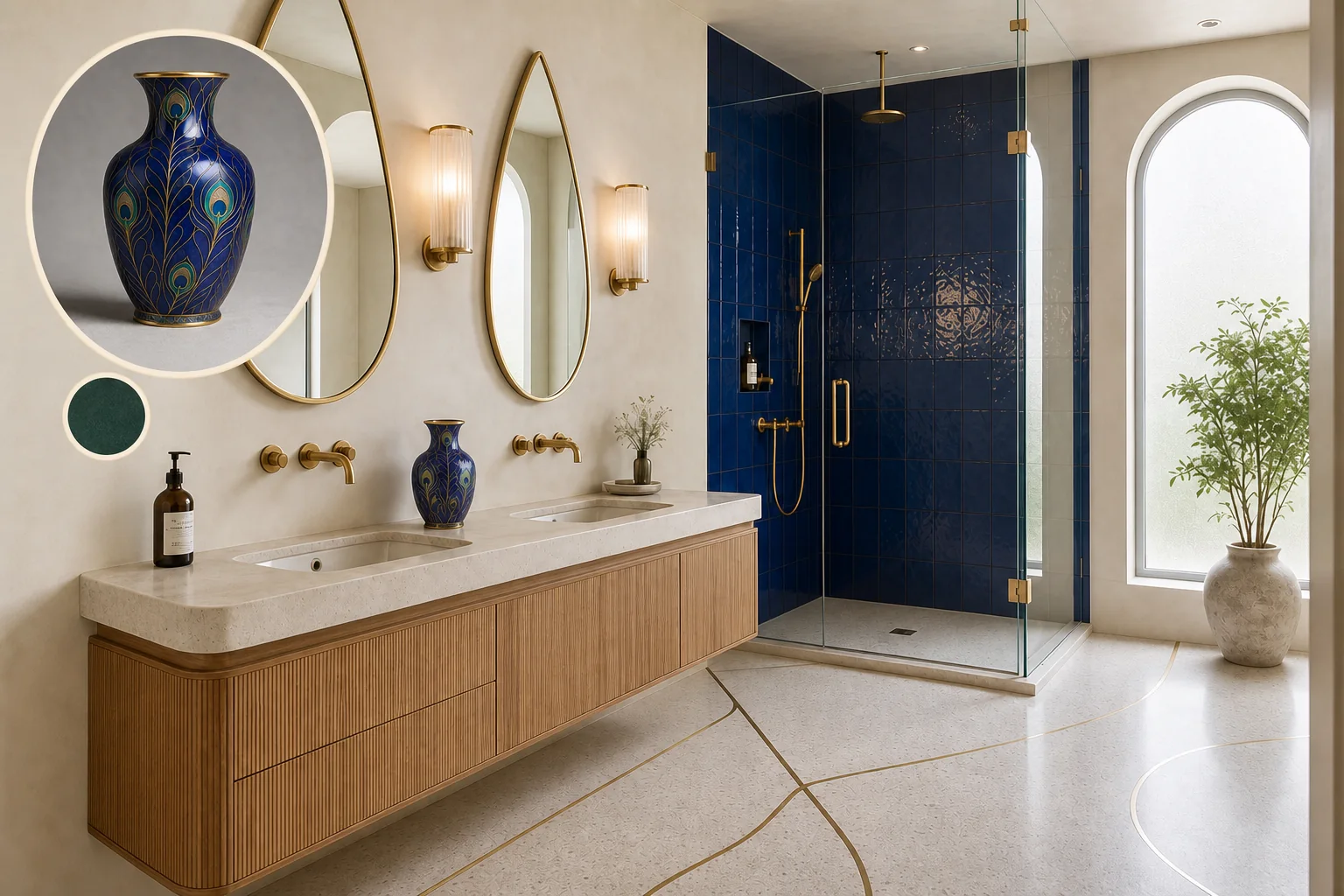
Translating an antique cobalt cloisonné peacock vase into a serene en suite bathroom requires a deliberate contrast between expansive surfaces and delicate metallic boundaries. By restricting high-gloss jewel tones to the wet areas while keeping the dry zones expansive and matte, the design captures the meticulous artistry without visual overwhelm.
Anchoring the space in deep enamel
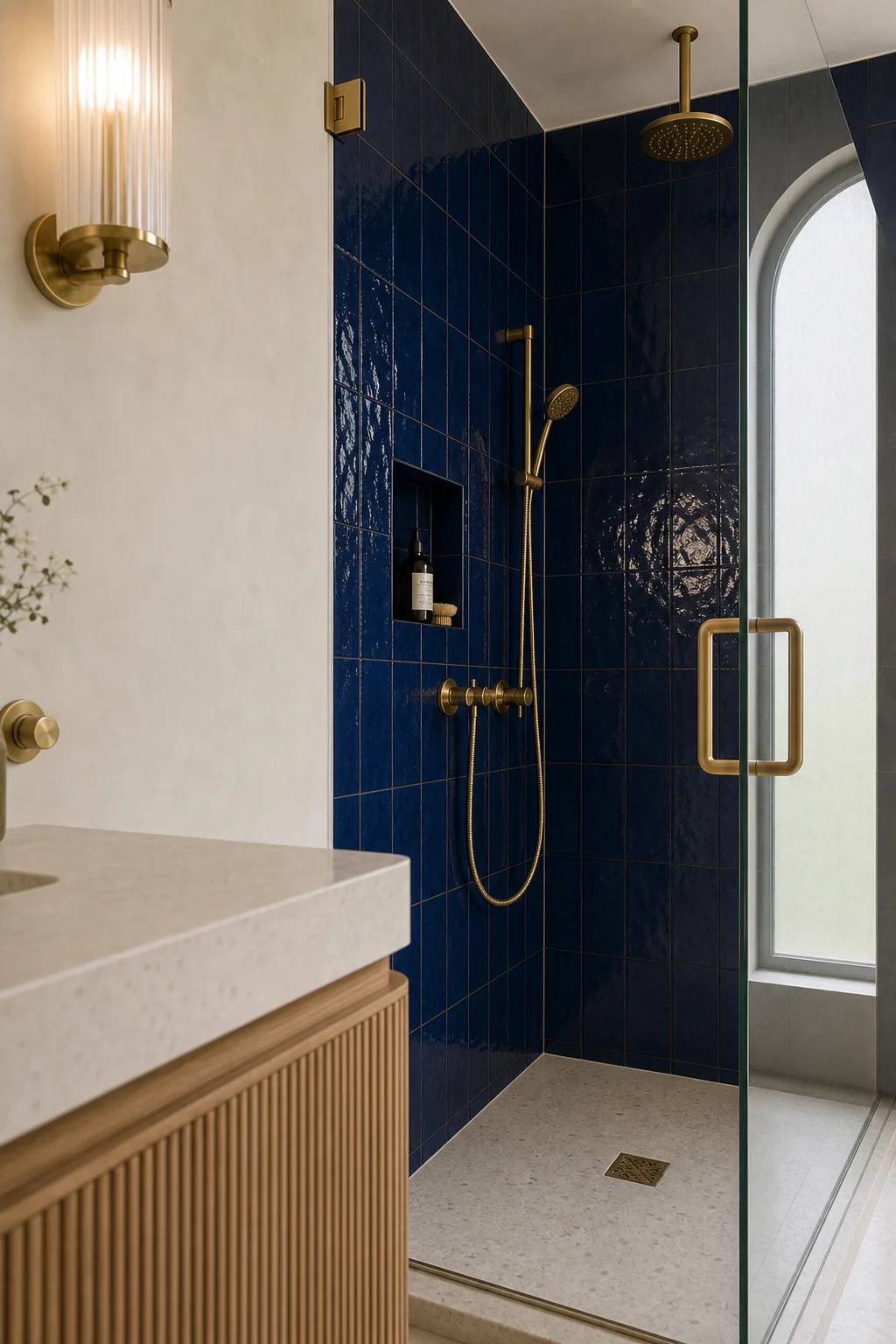
The deep, reflective blue enamel that forms the background of the vase translates directly into a continuous wall of high-gloss cobalt glazed tiles wrapping the interior of the walk-in shower. By confining this dramatic, glossy cobalt exclusively to the shower enclosure, the room captures the vase’s incredible depth while maintaining a bright, breathable atmosphere in the primary vanity area. Executing this foundation correctly requires a sequential approach to ensure the wet and dry zones remain architecturally seamless and functionally watertight from the ground up.
- Apply matte tadelakt plaster to the primary vanity walls.
- Install high-gloss cobalt ceramic tiles inside the shower enclosure.
- Embed thin brass transition strips into the bathroom floor.
- Mount unlacquered brass fixtures onto the cobalt tile.
- Hang teardrop-shaped mirrors above the double vanity.
The matte alabaster balance
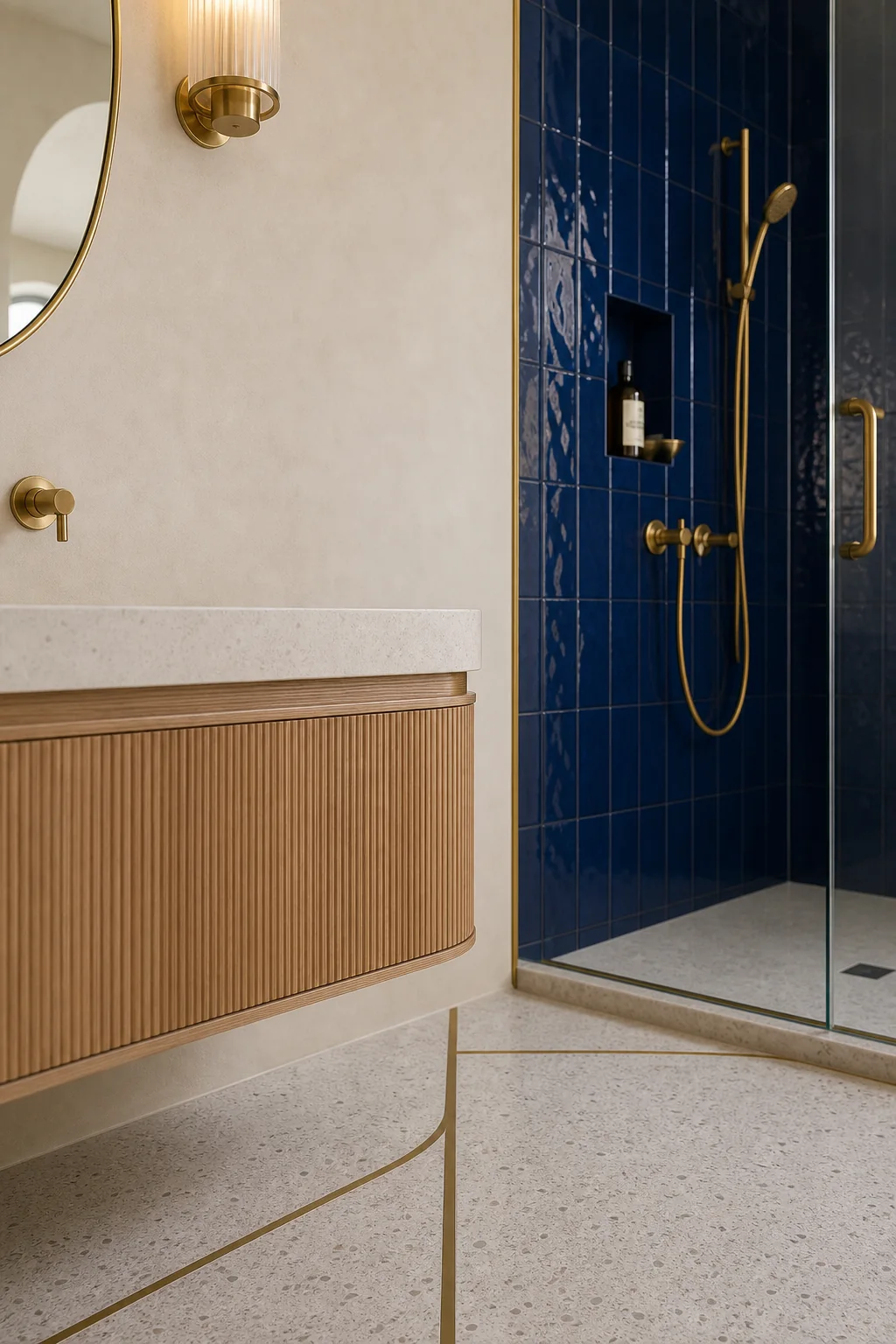
Pairing the intense shower enclosure with matte alabaster plaster walls emphasizes the textural contrast essential to this balanced design. The seamless transition where the soft, non-reflective tadelakt meets the glassy cobalt tile, separated only by a single vertical brass trim piece, ensures the dry zones feel soft, breathable, and visually quiet. This deliberate juxtaposition allows the jewel-toned wet room to act as a deep, reflective focal point without dominating the entire bathroom or creating a claustrophobic, overly reflective environment for daily routines.
Tracing lines of jewel and wire
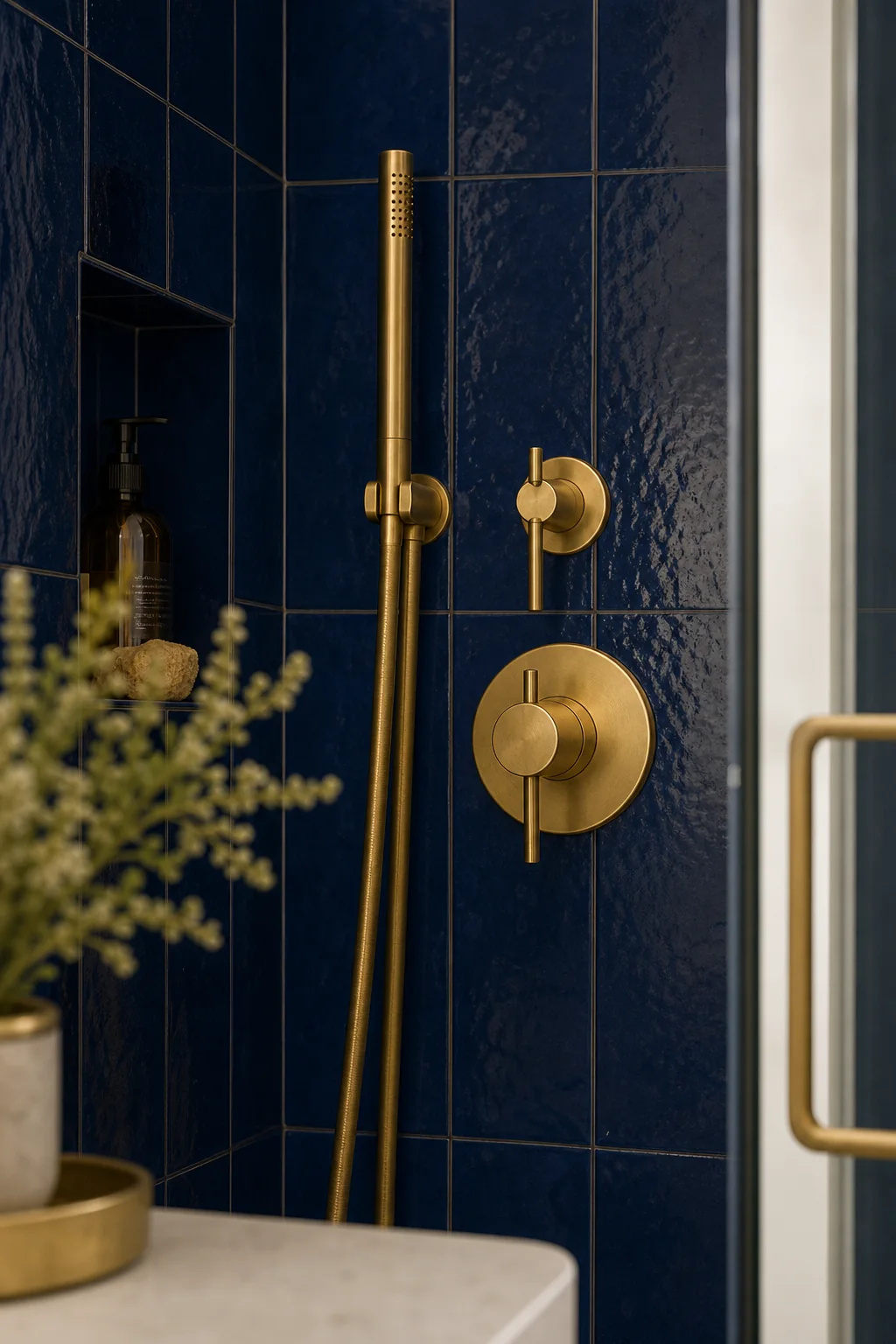
The high-contrast pairing of saturated blue enamel and bright gold linework defines the cloisonné technique, inspiring the use of unlacquered brass plumbing fixtures mounted directly onto the dark cobalt tile. The sharp contrast of bright metallic linework against dark, saturated backgrounds brings the signature effect to the room’s functional hardware. This approach establishes a clear, sophisticated visual-DNA mapping between the historical object and the modern bathing space, ensuring every architectural decision traces back to the original source motif without feeling overly literal.
| Source trait | Visible evidence | Room move |
|---|---|---|
| Glossy Cobalt Expanse | The deep, reflective blue enamel that forms the background of the vase. | A continuous wall of high-gloss, deep cobalt glazed tiles wrapping the interior of the walk-in shower, providing a rich, reflective anchor against the matte alabaster walls. |
| Jewel and Wire | The high-contrast pairing of saturated blue enamel and bright gold linework. | Slender, unlacquered brass plumbing fixtures and delicate brass shower hinges mounted directly onto the dark cobalt tile. |
| Compartmentalized Inlay | The cloisonné technique using raised gold wire to separate pools of colored glass. | Thin brass inlay strips embedded flush into the smooth, pale terrazzo flooring, creating geometric zones that transition from the vanity to the wet area. |
| Sweeping Teardrop | The repeating, elongated eye and teardrop shapes of the stylized peacock feathers. | Twin elongated, teardrop-shaped brass-framed mirrors floating above the vanity, flanked by curved, fluted glass sconces. |
Delicate metallic boundaries
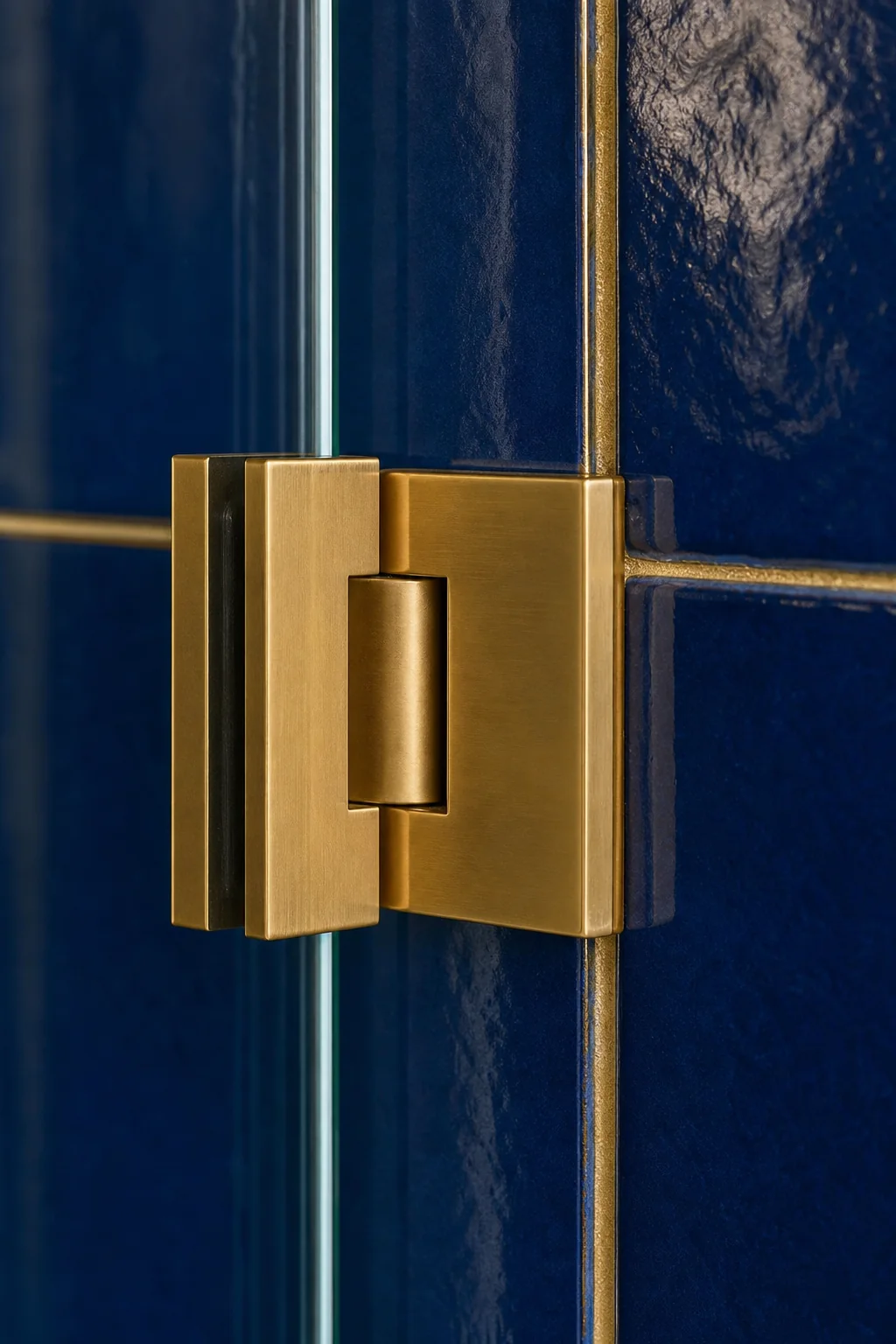
Selecting slender brass glass-to-wall shower hinges echoes the vase’s delicate gold wire, reinforcing the strict metallic boundaries that separate distinct material zones. Keeping fixture profiles minimal and unlacquered adds an antique warmth that will develop a living patina over time, perfectly mirroring the intricate craftsmanship of the original piece. These tiny, functional details ensure that the transition between the heavy glass and the glossy tile remains elegant, preventing the modern hardware from feeling too heavy, industrial, or visually distracting for the serene space.
Grounding the room with compartmentalized inlay
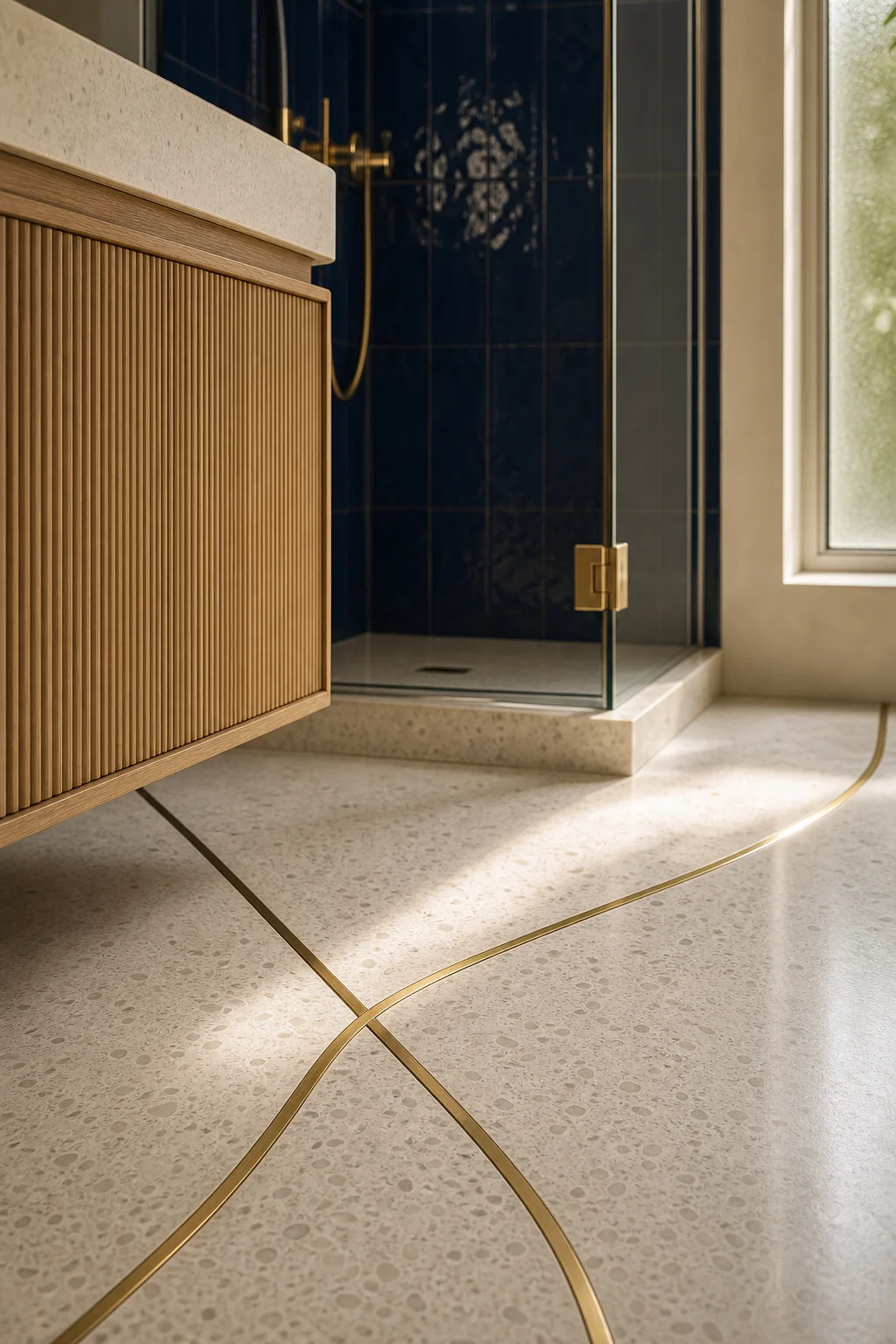
Translating the meticulous wire-work to the floor plan introduces a subtle, tactile grid that organizes the room’s flow without cluttering the walls. By embedding thin brass transition strips flush into poured pale terrazzo, the floor creates distinct geometric zones that elegantly separate the wet room from the vanity area. This compartmentalized inlay provides a continuous, smooth base that grounds the room, requiring a precise edit of foundational materials to maintain the delicate balance between high-gloss wet areas and ultra-matte dry zones.
Echoing sweeping teardrops
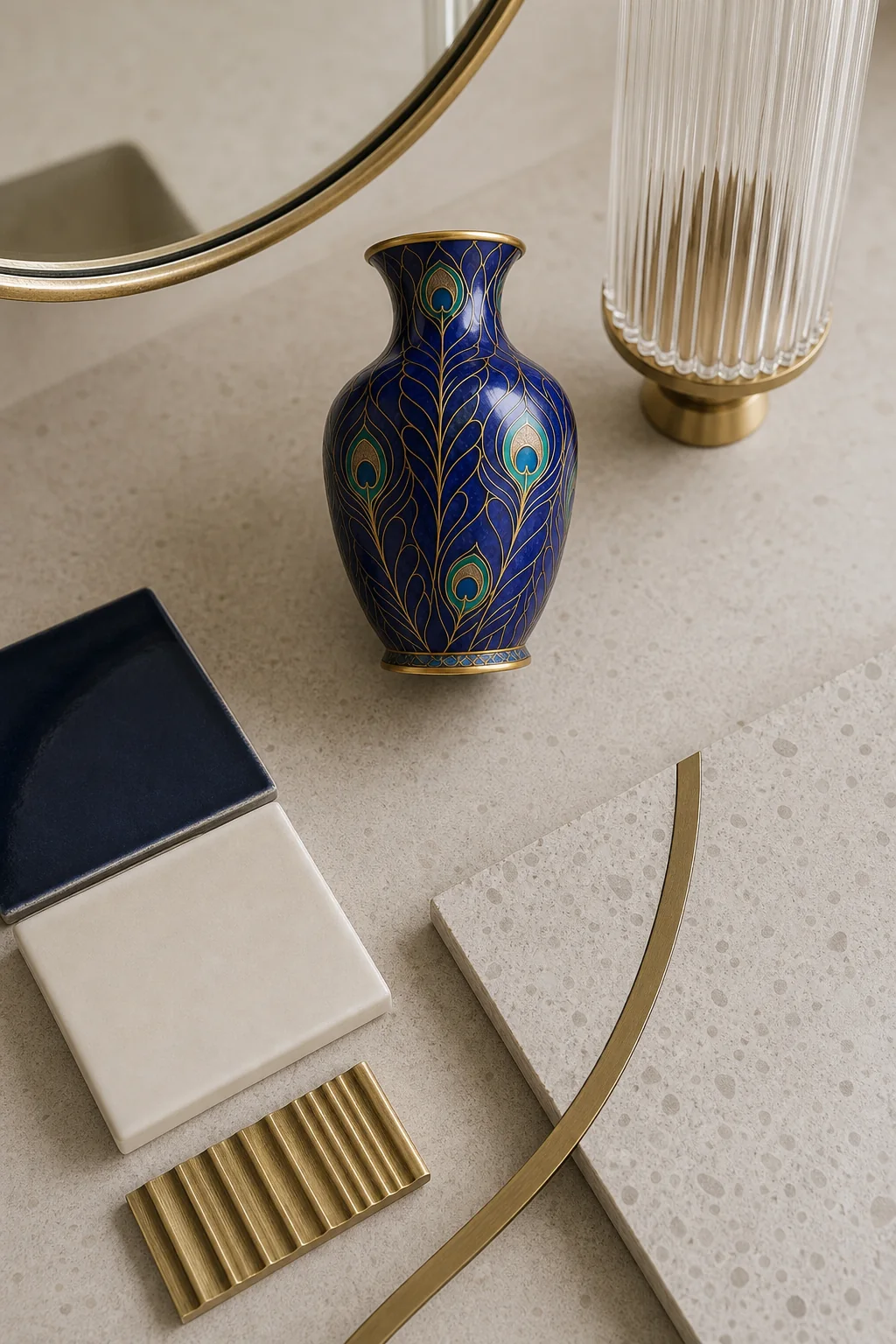
Introducing organic, sweeping curves through twin teardrop brass mirrors and fluted glass sconces softens the strict geometric grids established by the floor inlay and tilework. A balanced execution confines the high-gloss cobalt to the shower enclosure while using expansive matte alabaster walls to ground the space. For a subtle variation, you could limit the blue to a single vanity backsplash with brushed nickel, whereas a bold interpretation might wrap the entire bathroom in glossy cobalt tiles with emerald green accents on the vanity cabinetry.
Skip literal bird prints. Extract the core geometry—like sweeping teardrops or elongated ovals—and apply them to mirrors, lighting, or hardware.