
Nanyang Style Meets Goth: Bedroom
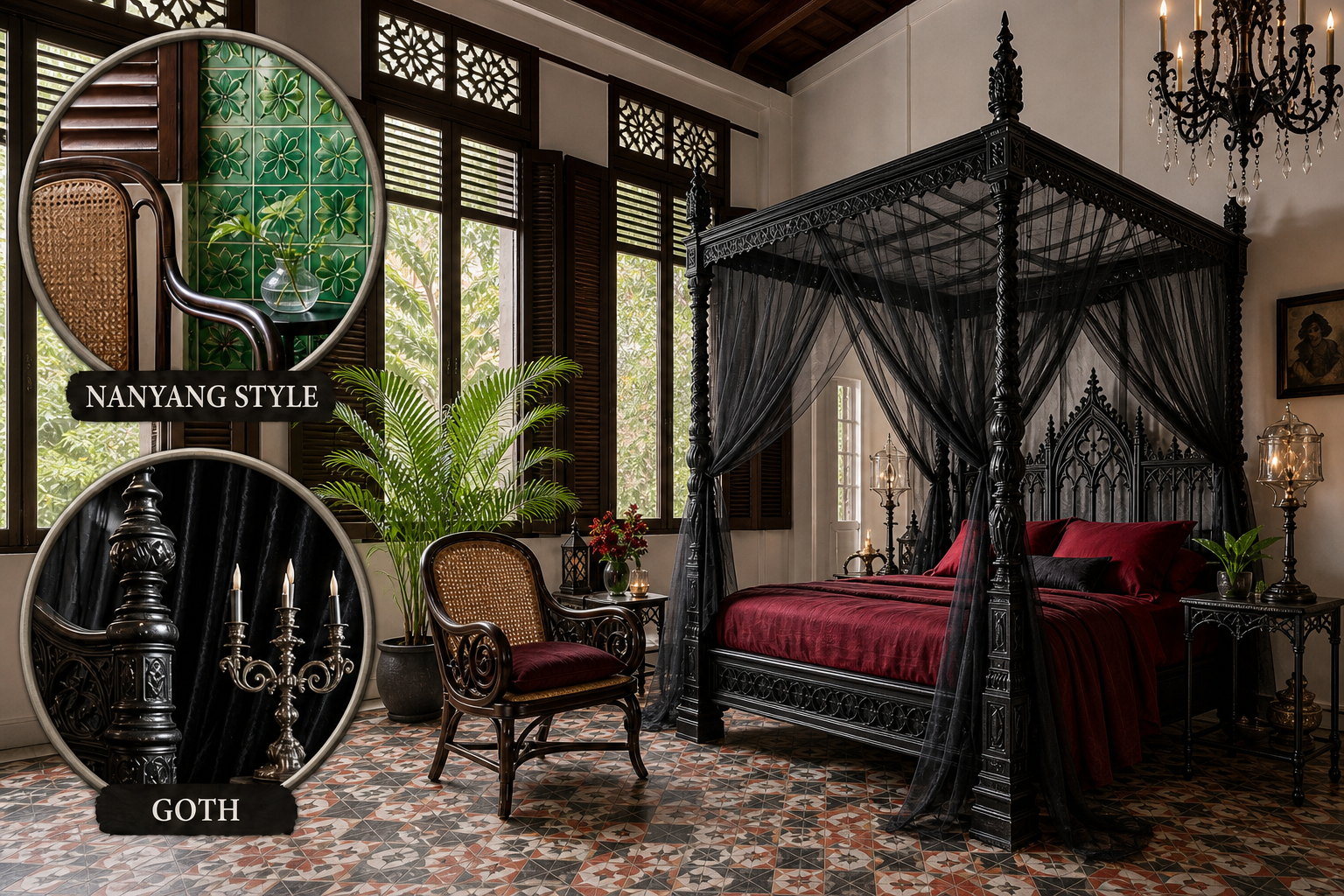
The breezy, practical lightness of tropical nanyang style architecture inherently clashes with the heavy, enclosing romanticism of traditional goth. We resolve this by using sheer black mosquito netting and dark teak to deliver moody drama without trapping tropical heat.
The tropical foundation
Tropical climates demand constant airflow, making heavy European fabrics physically impossible. Traditional nanyang style louvered windows provide the necessary architectural ventilation while setting a dark, rhythmic backdrop. This structural shell naturally supports a much darker, moodier interior aesthetic without compromising physical comfort.
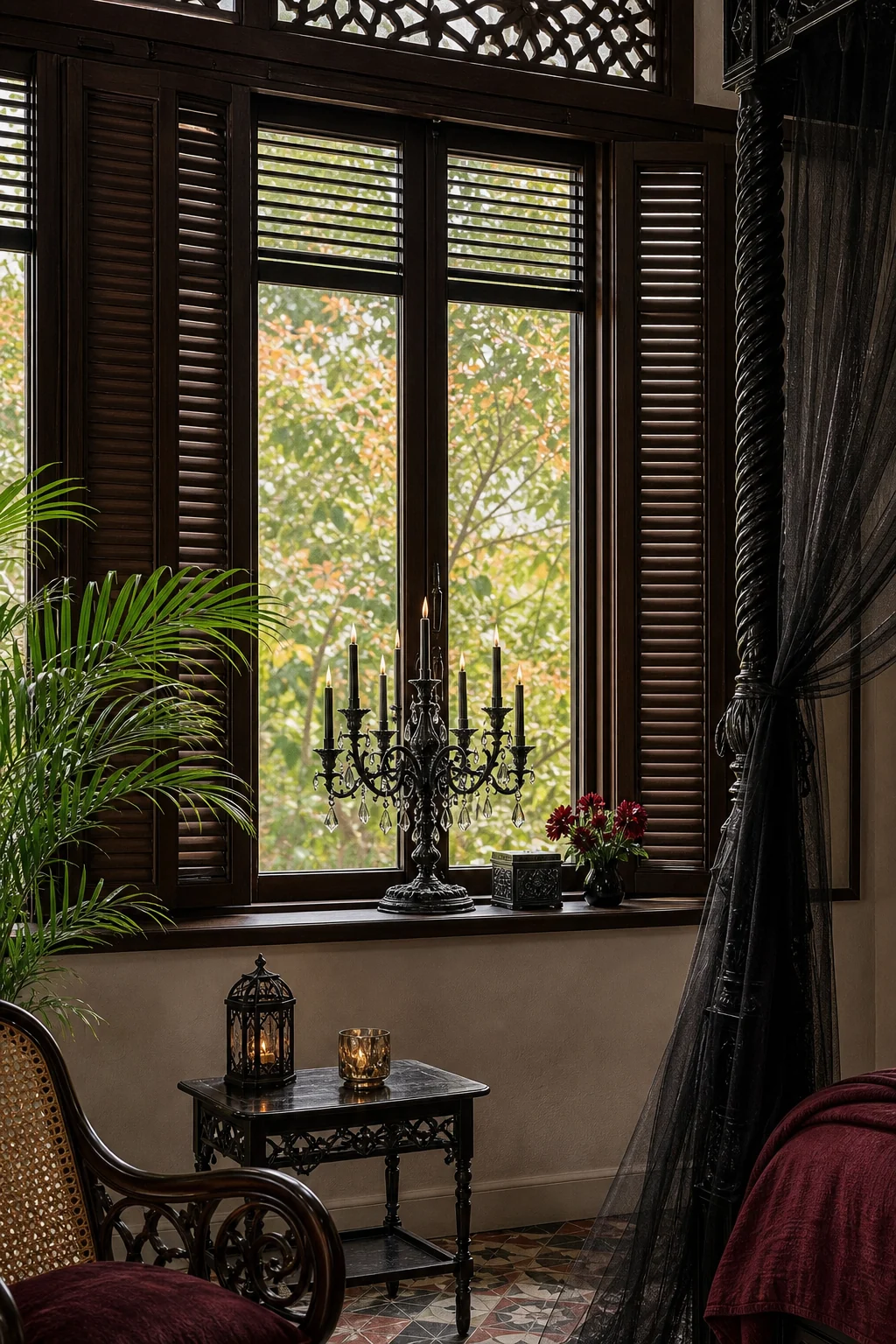
By pairing these breezy teak structures with heavy wrought-iron accents, the room achieves a moody atmosphere without trapping humidity. The resulting contrast feels highly intentional, establishing a solid, breathable dark teak foundation that prevents the darker decorative elements from feeling suffocating.
Embracing this architectural skeleton allows you to introduce heavier visual textures elsewhere. The dark teak frames act as a natural bridge, grounding the room in its tropical context while preparing the eye for the dramatic, melancholic silhouettes that will anchor the space.
The romantic anchor
The focal point of any dark romantic bedroom is the bed itself. A carved ebony four-poster frame delivers the required architectural weight and historical melancholy expected from goth, grounding the center of the room with undeniable visual authority and striking dramatic scale.
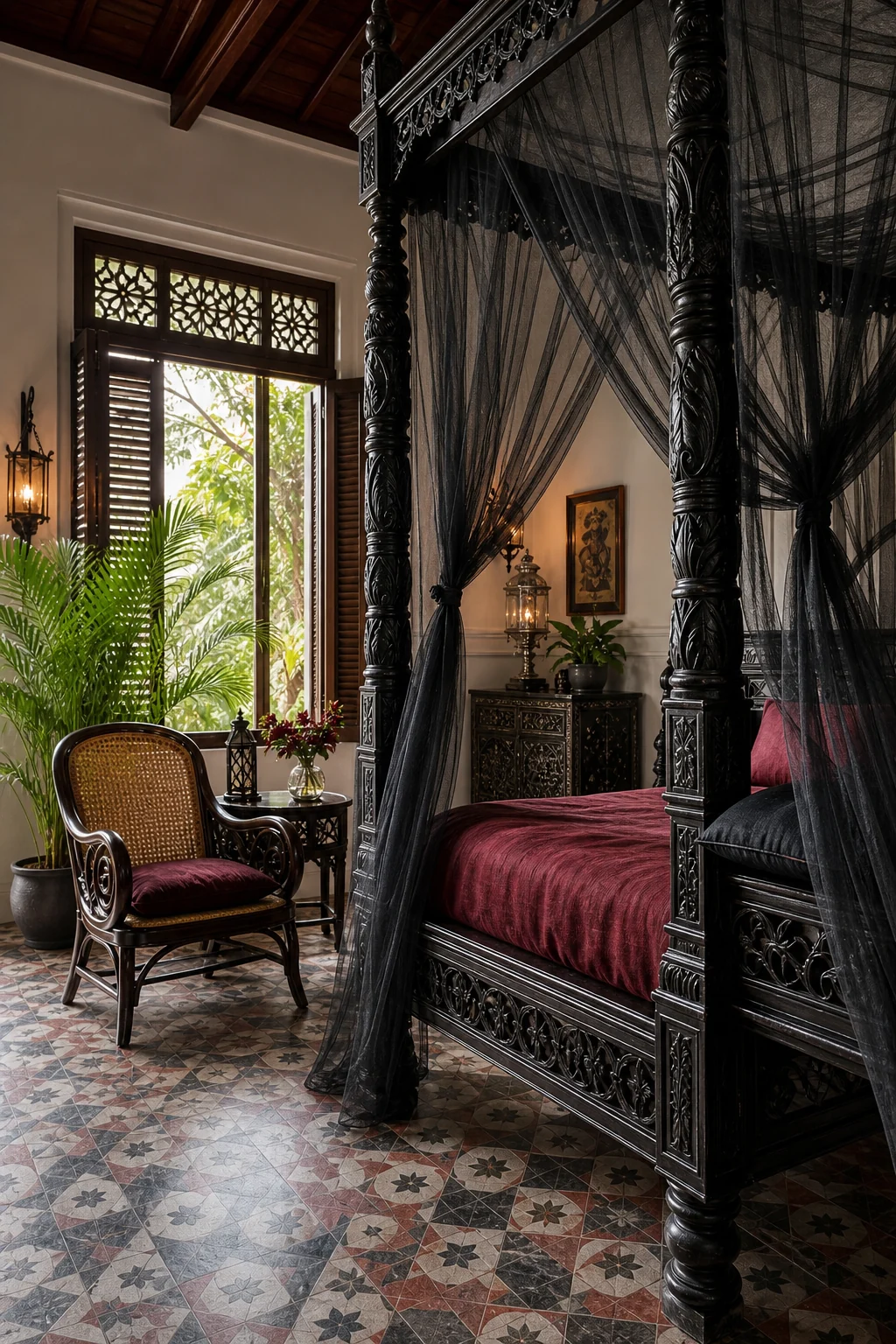
Instead of suffocating the space with heavy velvet, we swap the traditional canopy for sheer black netting. This single material swap honors the dark aesthetic while completely respecting the tropical climate logic, achieving romantic melancholy with absolute breathability.
- Choose heavy bed frames featuring sharply pointed finials to introduce authentic vertical drama into the breezy tropical space.
- Drape sheer black netting loosely across the top rails to maintain continuous, comfortable airflow throughout the humid nights.
- Keep the canopy structure entirely open at the sides to ensure necessary visual lightness against the dark wood.
- Avoid dense European fabrics like velvet that inevitably trap heat and completely ruin the practical daily sleeping experience.
Grounding the palette
Bridging these opposing worlds requires a shared color palette that feels historically grounded and emotionally heavy. Dark nanyang style woods provide the crucial foundational link, offering a natural richness that effortlessly supports the dramatic shadows required by the darker aesthetic.
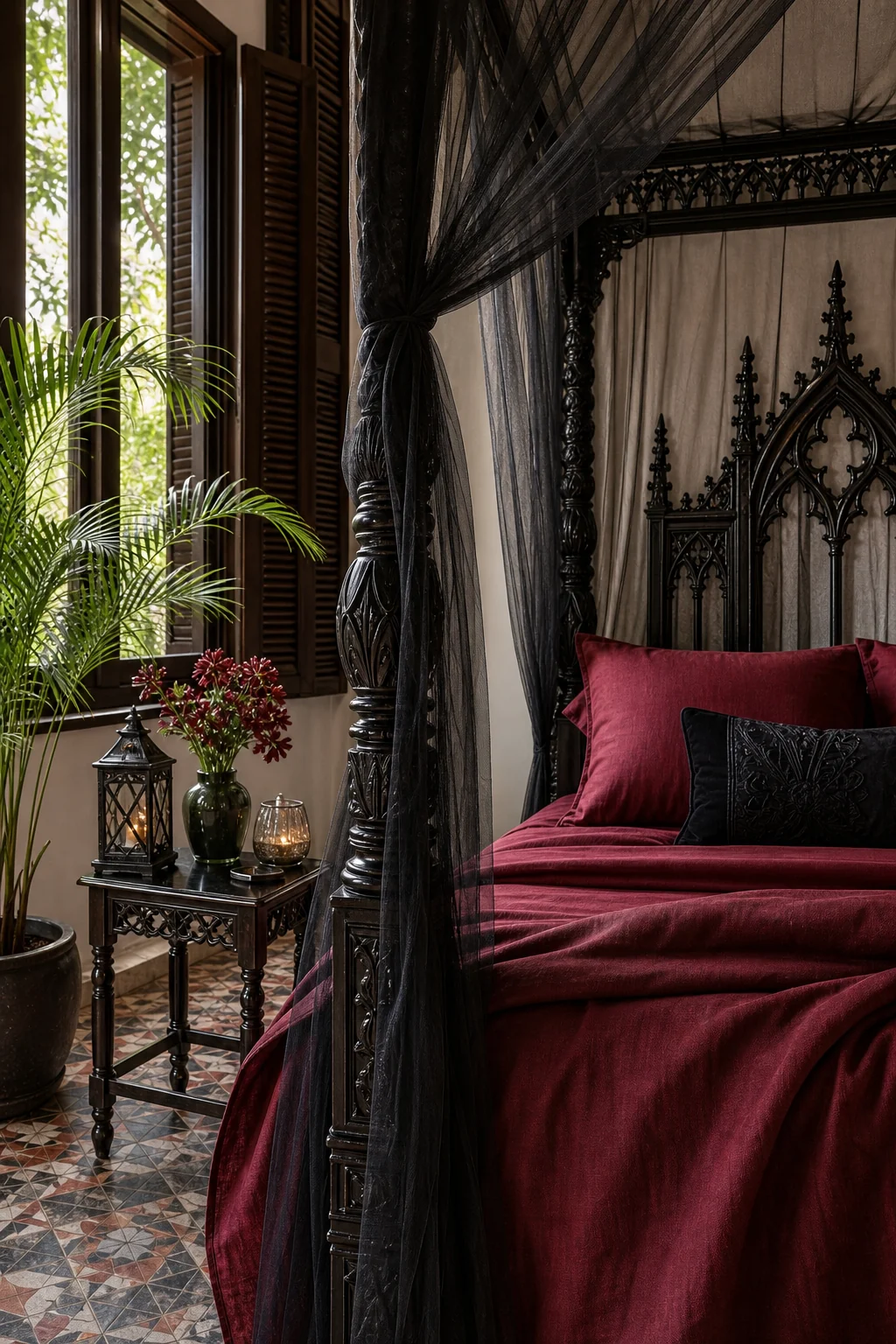
We rely heavily on sheer charcoal, aged brass, and deep oxblood red linens. These specific tones echo faded Peranakan heritage colors while simultaneously delivering the melancholic romance required by goth, ensuring the room feels cohesive rather than chaotic or disjointed.
This restricted palette prevents the tropical elements from feeling too vibrant or cheerful. By filtering heritage colors through a darker lens, the space maintains its geographic authenticity while fully embracing the moody, enclosing comfort that defines this unique stylistic intersection.
Build the room: A balanced vignette
A successful seating vignette proves the concept works beautifully beyond the bed. The furniture must perfectly balance visual weight with physical breathability, ensuring every corner of the room participates in the delicate negotiation between tropical practicality and dark romanticism.
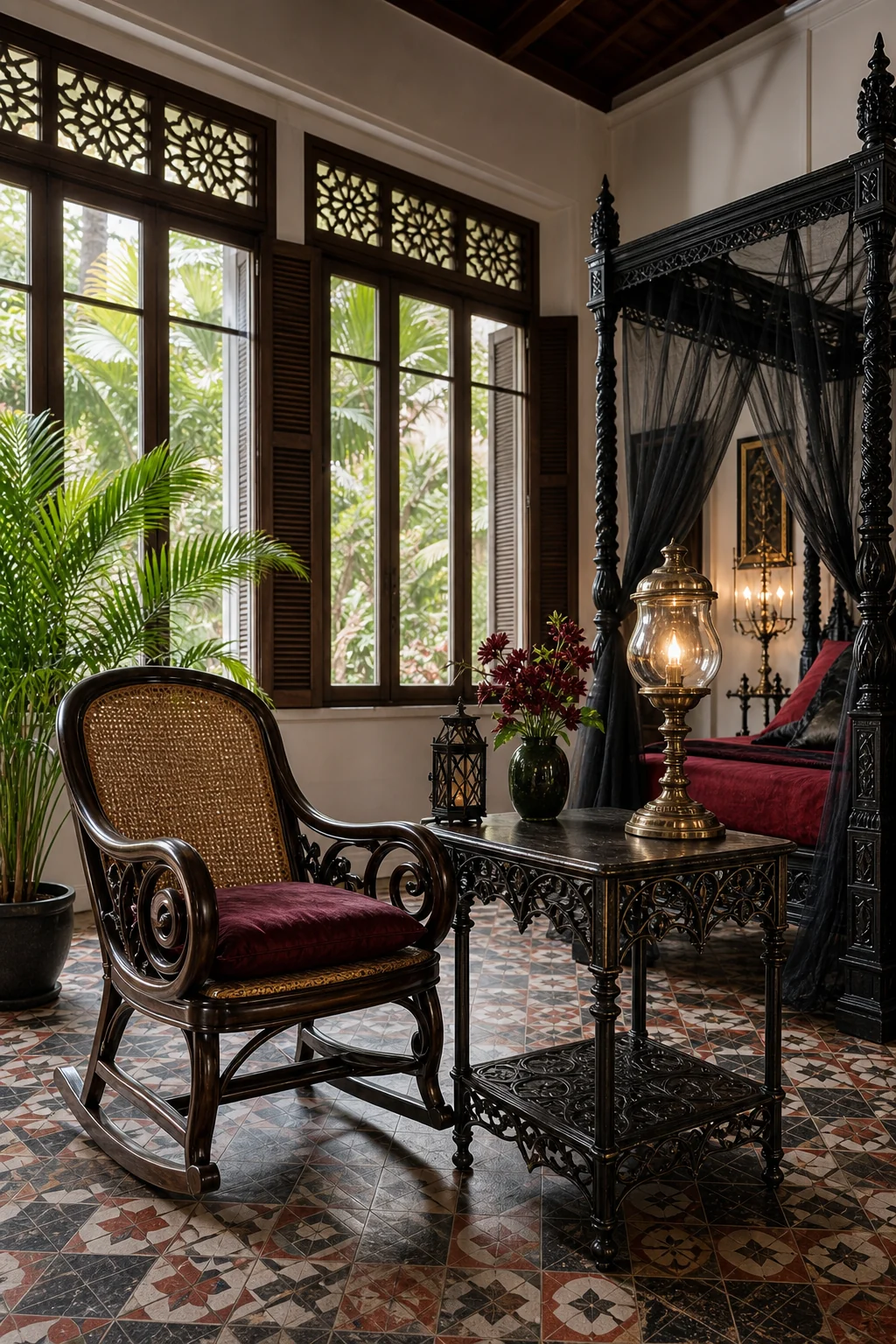
A classic nanyang style rattan plantation chair offers essential tropical comfort and texture. Placing it beside an ornate wrought-iron side table grounds the pairing, establishing undeniable dark romanticism without cluttering the floor plan or blocking the crucial cross-breeze.
| Design Layer | nanyang style Role | goth Role | Bridge Decision |
|---|---|---|---|
| Architectural Shell | Louvered teak windows | Heavy velvet drapery | Dark teak structures |
| Large Furniture | Rattan plantation chairs | Carved ebony frames | Wood and iron mix |
| Soft Textiles | Breathable tropical linens | Dark romantic bedding | Sheer black netting |
| Room Lighting | Generous diffused daylight | Wrought-iron chandeliers | Aged brass fixtures |
| Small Accents | Faded Peranakan tiles | Silver candelabras | Oxblood and charcoal |
Mapping these material swaps across the entire floor plan guarantees a unified aesthetic. When every layer deliberately addresses both climate logic and emotional weight, the resulting space feels incredibly deliberate, entirely avoiding the trap of looking like a temporary thematic display.
Light and architecture: Managing the shadows
Moody interiors often fail by becoming genuinely dark and practically unusable during the day. This space relies on generous, diffused daylight to keep the dark materials fully legible, ensuring the carved ebony and sheer black textiles never collapse into gloomy silhouettes.
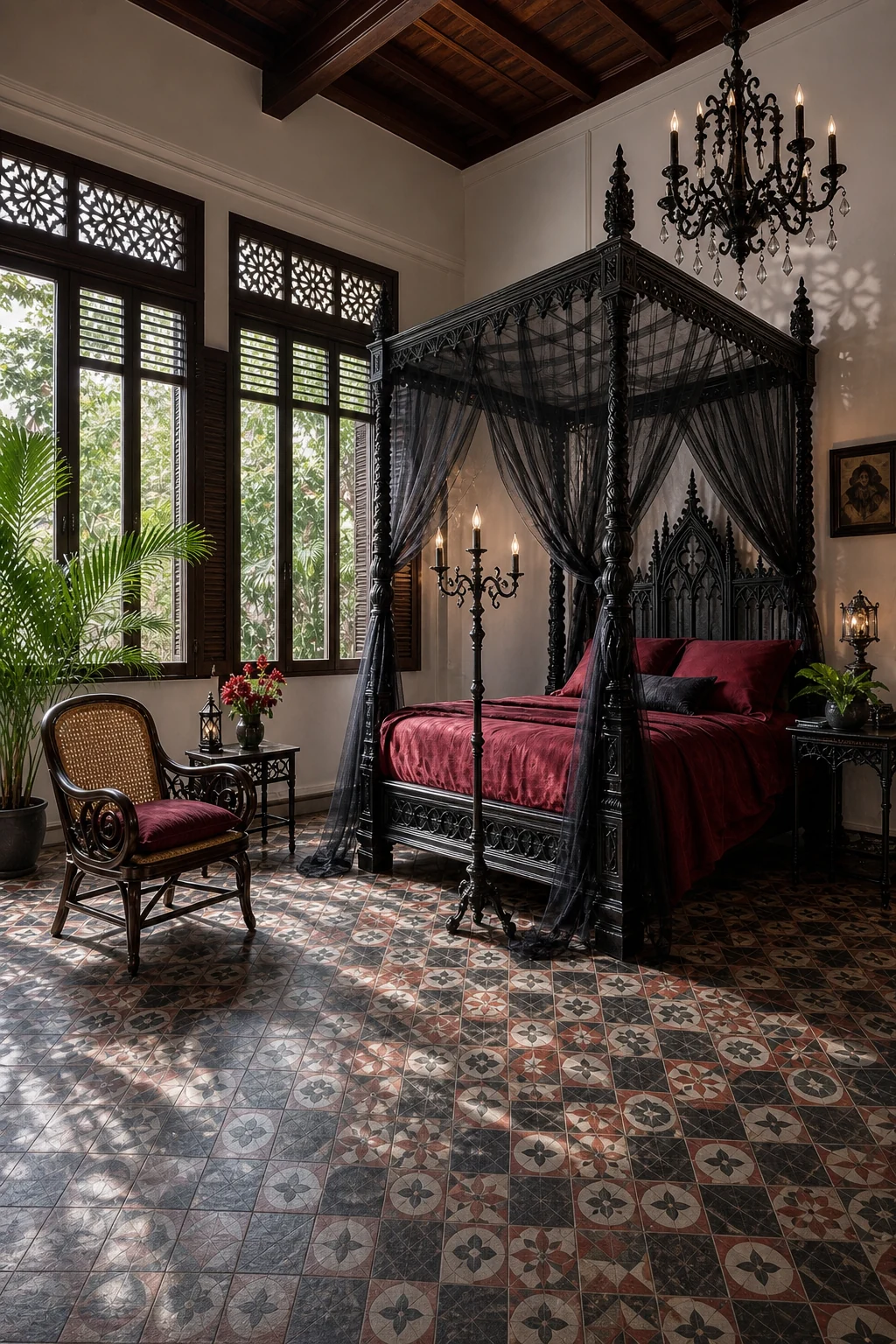
Faded Peranakan encaustic floor tiles bounce soft, diffused light upward. This crucial reflection ensures the dark teak baseboards and intricate ironwork remain visually distinct, allowing the room to feel expansive and inviting even while utilizing a predominantly dark color palette.
- Maximize natural daylight through louvered windows to keep all dark woods and textiles fully visible and texturally rich.
- Use matte encaustic floor tiles to diffuse incoming sunlight softly upward, preventing the lower half of the room from disappearing.
- Avoid harsh overhead bulbs that flatten carved wood details and destroy the subtle, moody atmosphere during the evening hours.
- Install dimmer switches on all brass fixtures to carefully control the transition from bright tropical daylight to dark evening romance.
Style the details: Curating the accents
Small styling moments prevent the room from feeling like a rigid, themed movie set. The decorative accents must feel organically collected, highly practical, and historically plausible for a tropical environment, bridging the gap between two distinct visual histories.
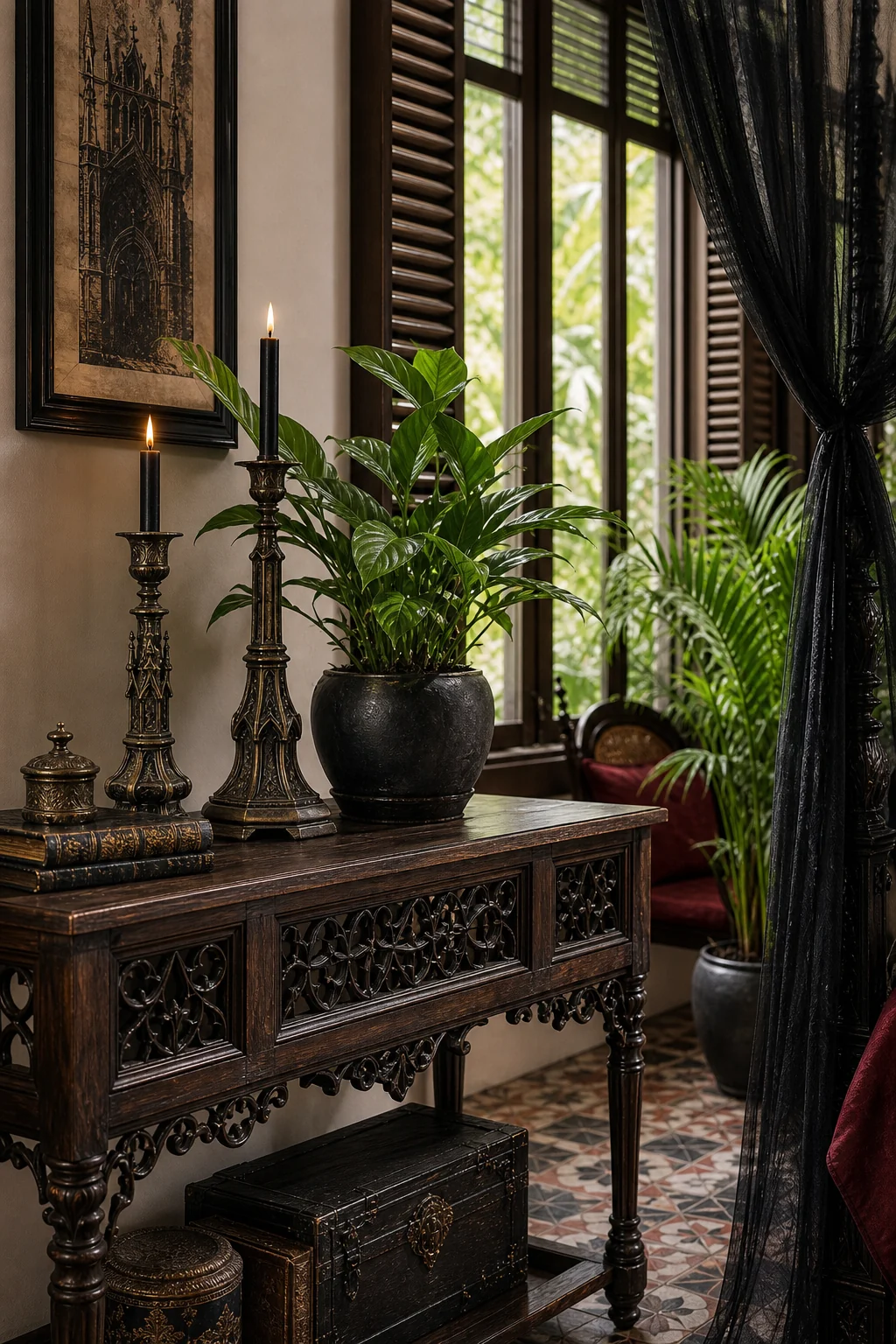
Aged brass candelabras sit alongside lush tropical greenery housed in dark terracotta vessels. This precise mix grounds the dramatic goth elements in everyday tropical reality, proving that melancholic romance can exist comfortably alongside vibrant, living botanical elements.
- Avoid synthetic black plastics or modern glossy finishes that instantly break the carefully constructed historical and romantic illusion.
- Seek out tactile, aged qualities for every surface, prioritizing materials that show natural patina, wear, and historical depth.
- Use dark charcoal or terracotta vessels to hold tropical greenery, ensuring the plants feel integrated into the moody palette.
- Select heavy, ornate brass candlesticks to introduce traditional romantic weight without relying on suffocating fabrics or oversized furniture pieces.
Adapt it: Managing the threshold
Translating this specific look to other rooms requires focusing intensely on the architectural transitions. The threshold sets the psychological tone before you even enter the space, making the journey from the rest of the house a critical design consideration.
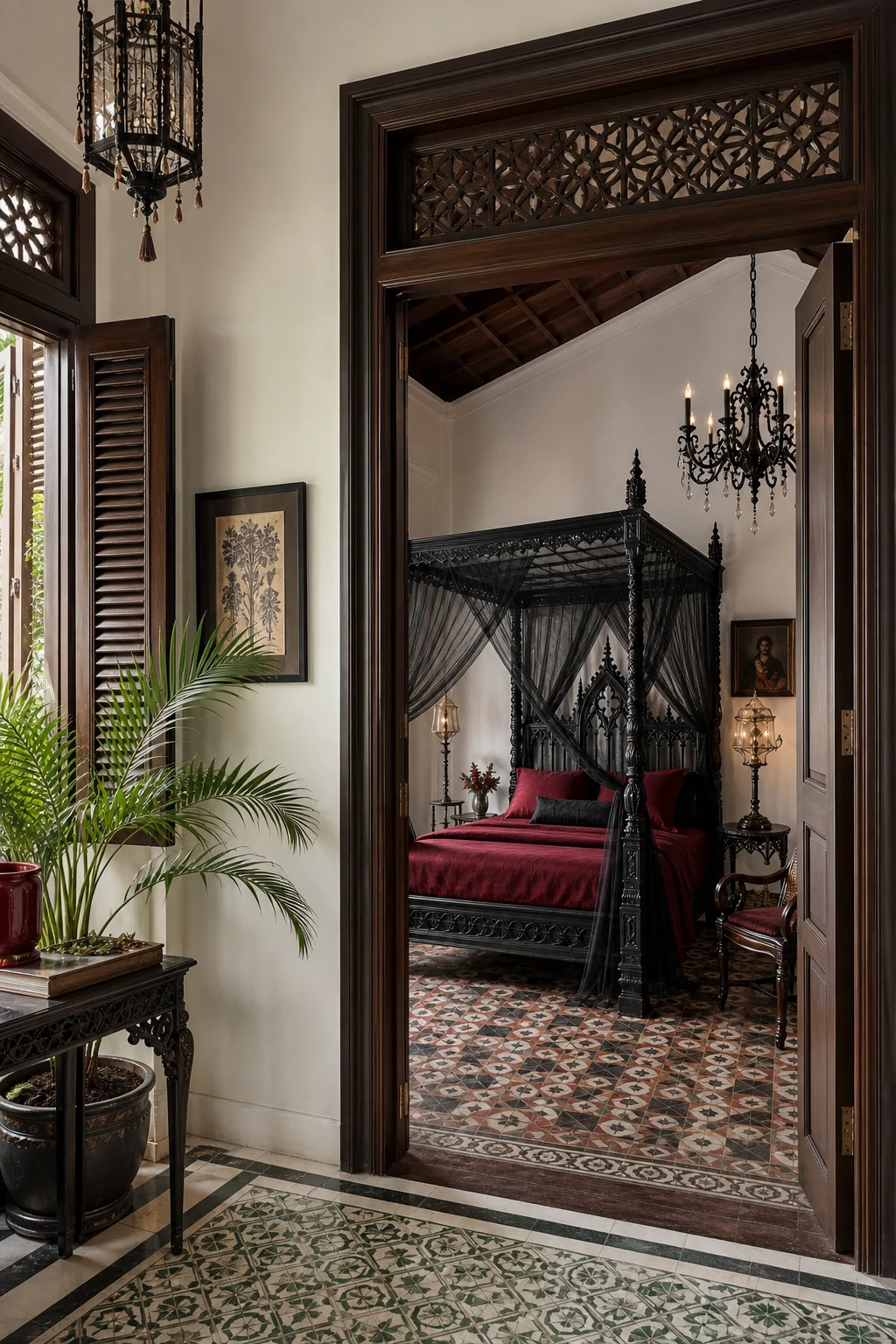
Moving from a bright, white-walled hallway into this moody space requires a highly deliberate shift. Painting the bedroom door frames dark serves as the perfect visual palate cleanser, signaling a distinct change in atmosphere and preparing the eye for heavier shadows.
- Paint the bedroom door frames a deep charcoal or dark teak to clearly signal the transition into a moodier zone.
- Carry identical aged brass hardware from the bright hallway into the dark bedroom to maintain a subtle, continuous visual thread.
- Use lower-wattage bulbs in the immediate adjacent spaces to help the eyes adjust before crossing the threshold into the bedroom.
- Ensure the flooring material transitions smoothly, allowing the faded Peranakan tiles to introduce the new aesthetic right at the doorway.
Avoid the costume: The final proof
The greatest risk when mixing these powerful aesthetics is accidentally creating a haunted house caricature. The tension must remain perfectly balanced across the entire floor plan, ensuring the space feels like a legitimate, livable home rather than a temporary theatrical stage.
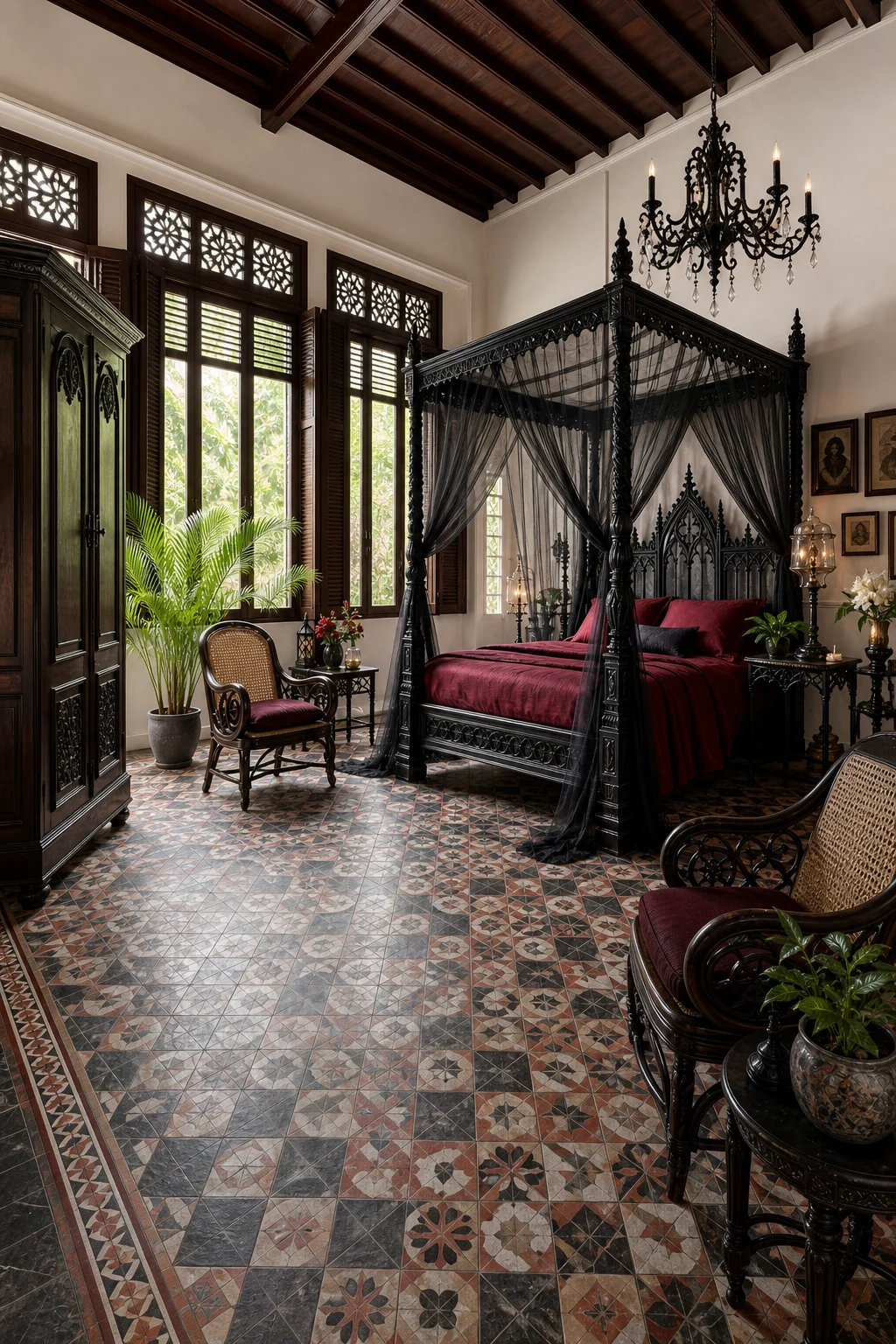
By letting the tropical architecture breathe and restricting the dark romanticism to breathable textiles and carved woods, the space remains a functional sanctuary. The room successfully honors its humid climate while fully delivering the emotional weight of a much darker aesthetic.
This careful calibration ultimately defines the success of the space. When the architectural shell handles the climate and the textiles handle the mood, the resulting environment offers a deeply comforting, highly personal retreat that defies conventional geographic and stylistic expectations.