
This Desert Rose Became a Dining Room
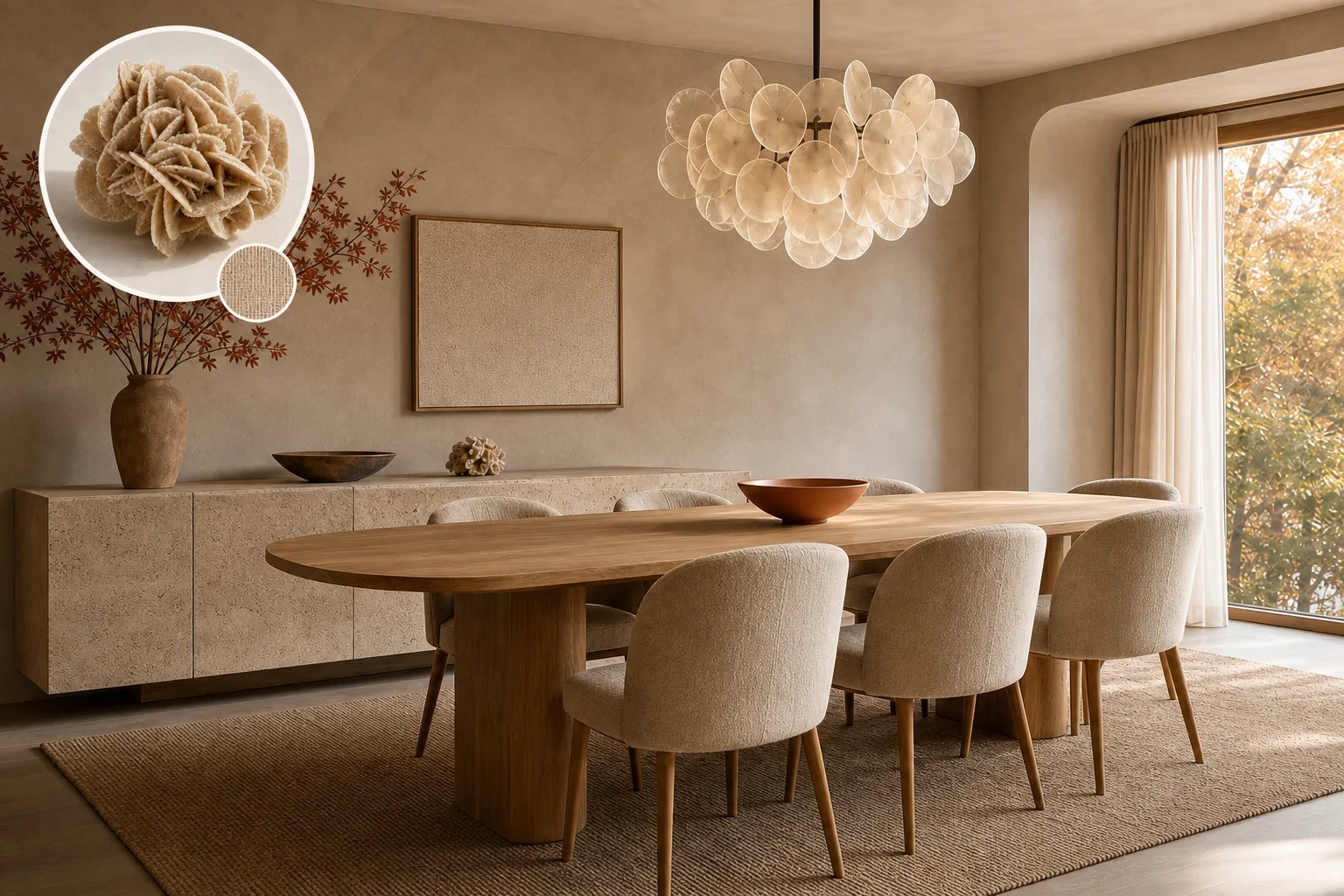
Explore how a brittle desert rose mineral transforms into a warm, minimalist dining room. This design story translates the crystal’s layered, overlapping surfaces and grainy textures into a highly tactile space, carefully balancing the dry, arid roughness with soft linen upholstery and expansive negative space to create an inviting atmosphere.
Building depth with overlapping planes
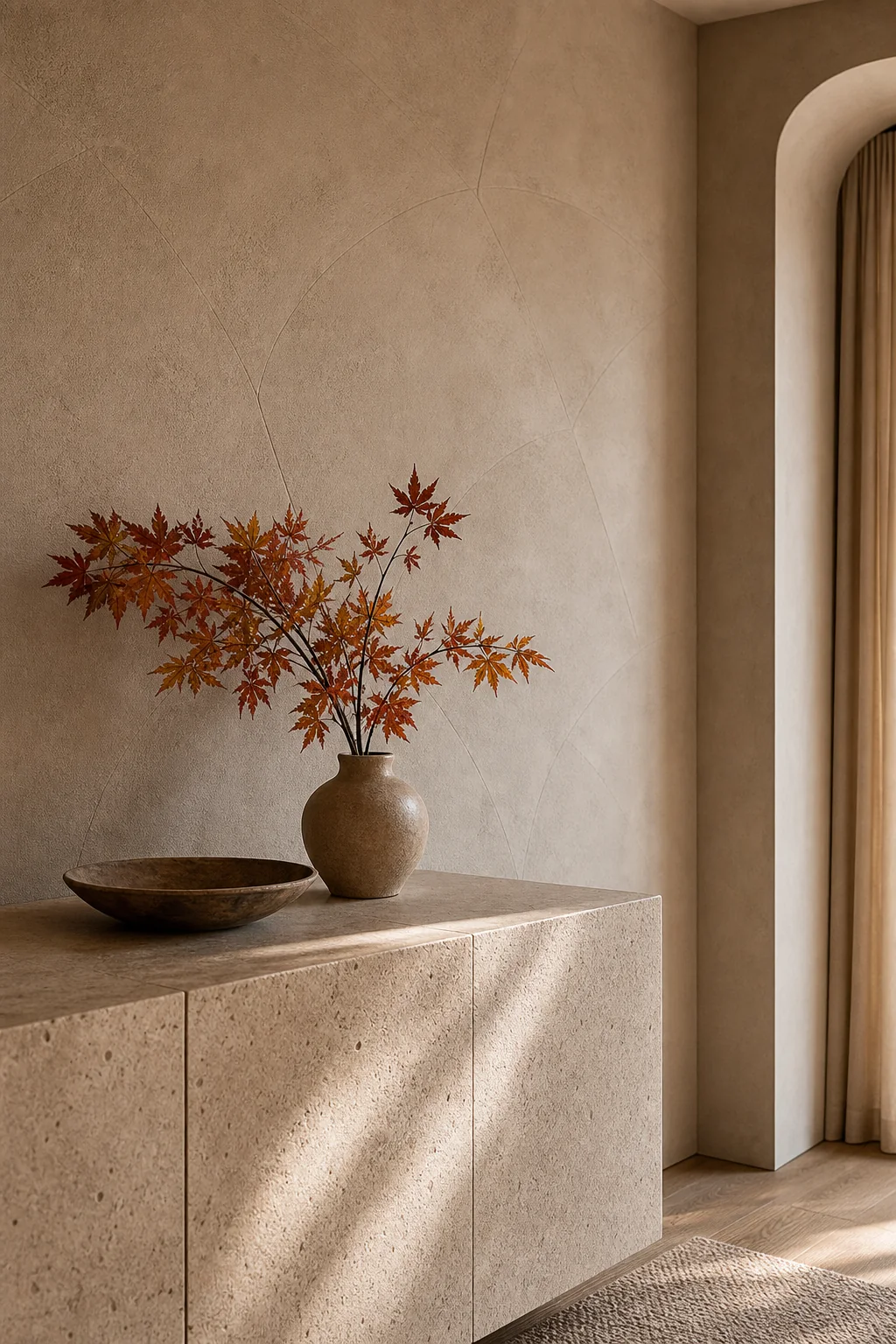
The structural logic of the crystal begins at the perimeter, where flat surfaces are replaced by sweeping, layered applications. To recreate these intersecting planes of shadow, apply Roman clay in overlapping strokes across the dining room walls, mimicking the petal-like gypsum discs. This foundational technique establishes a subtle, rhythmic backdrop that catches the diffused autumn sunlight without feeling overly rustic. Keep the ceiling entirely flat to prevent the textured walls from overwhelming the space, ensuring the room remains serene. Follow these sequential implementation steps to properly prepare and execute the textured clay finish across your dining room walls.
- Prep walls for a smooth, even base, ensuring the surface is completely free of bumps and primed for proper clay adhesion.
- Apply the first coat of Roman clay, making sure a thin, even base layer covers the entire wall surface comprehensively.
- Trowel the second coat in sweeping arcs so that overlapping strokes create visible, intersecting planes of texture and subtle depth.
- Burnish the edges lightly, allowing the trowel marks to catch the ambient light without making the finish feel overly rustic.
Warming the room with arid tones
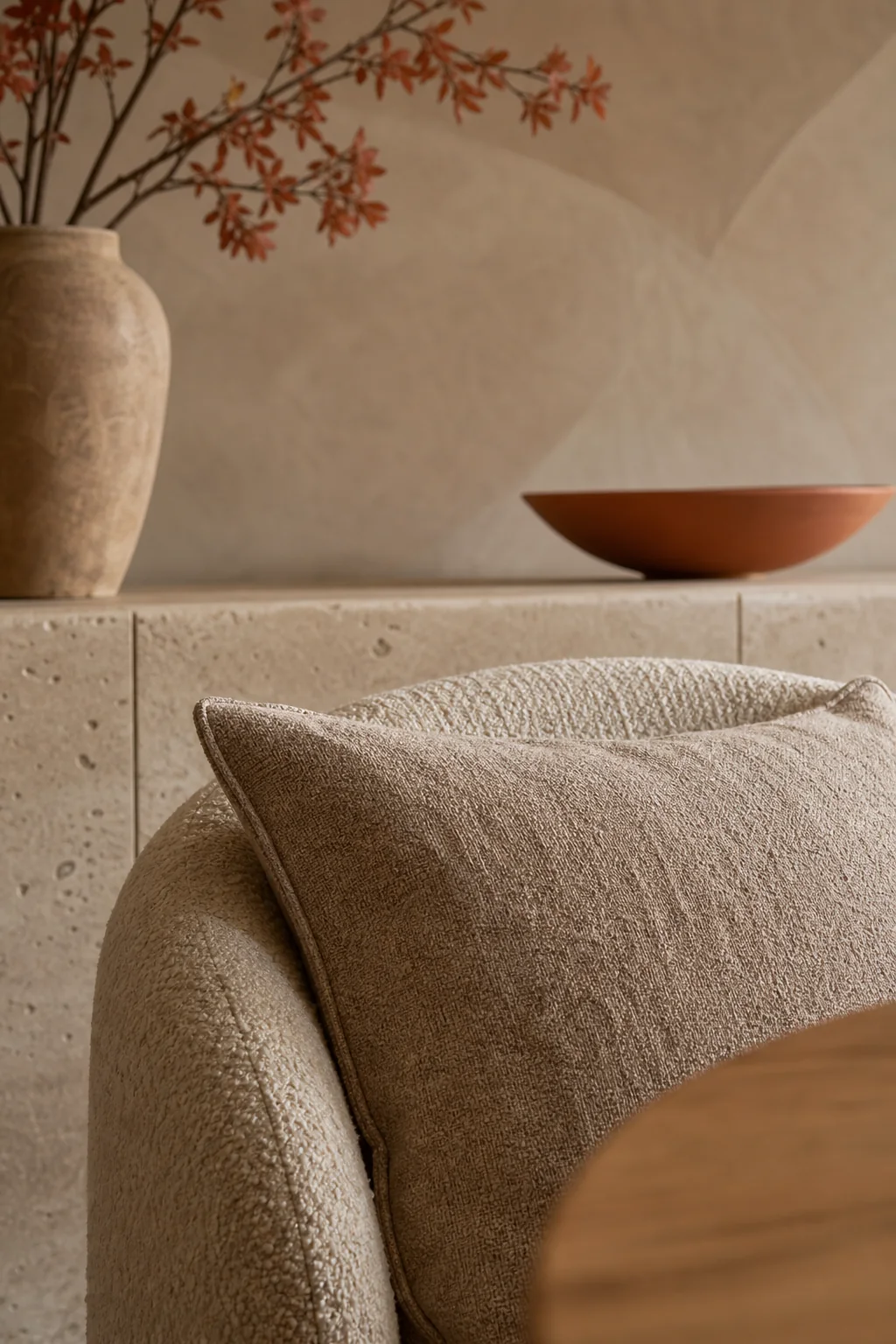
By pulling the exact sand and taupe values from the gypsum, the room achieves a baked, earthy warmth that feels sophisticated rather than heavy. Using a dusty taupe base grounds the dining area, echoing the mineral’s natural tonal variations while providing a soft canvas for seasonal displays. This deliberate color strategy avoids literal desert landscape murals, focusing instead on the intrinsic hues of the stone itself. The visual-DNA mapping table below details exactly how the arid mineral tones and geometric traits of the desert rose are translated into a beautifully layered, inviting environment for autumn gatherings.
| Source trait | Visible evidence | Room move |
|---|---|---|
| Overlapping planes | The intersecting, petal-like gypsum discs | Roman clay walls applied with sweeping, overlapping trowel strokes that create subtle, intersecting planes of shadow and light. |
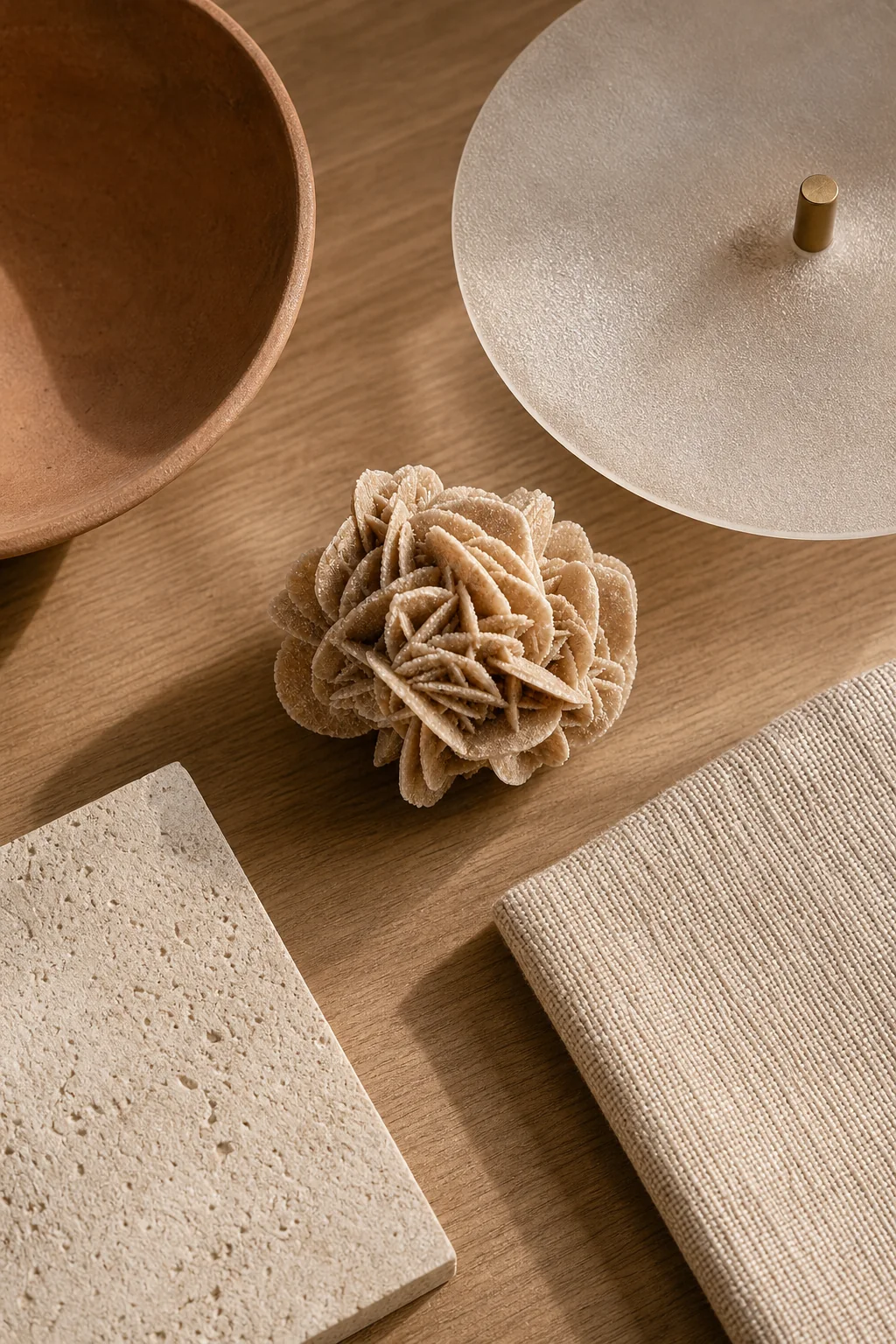
| Arid warmth | The tonal variations of sandy beige and dusty rose inherent to the mineral | A tonal palette of warm sand and dusty taupe across the walls and rug, punctuated by a pale terracotta ceramic bowl on the table. |
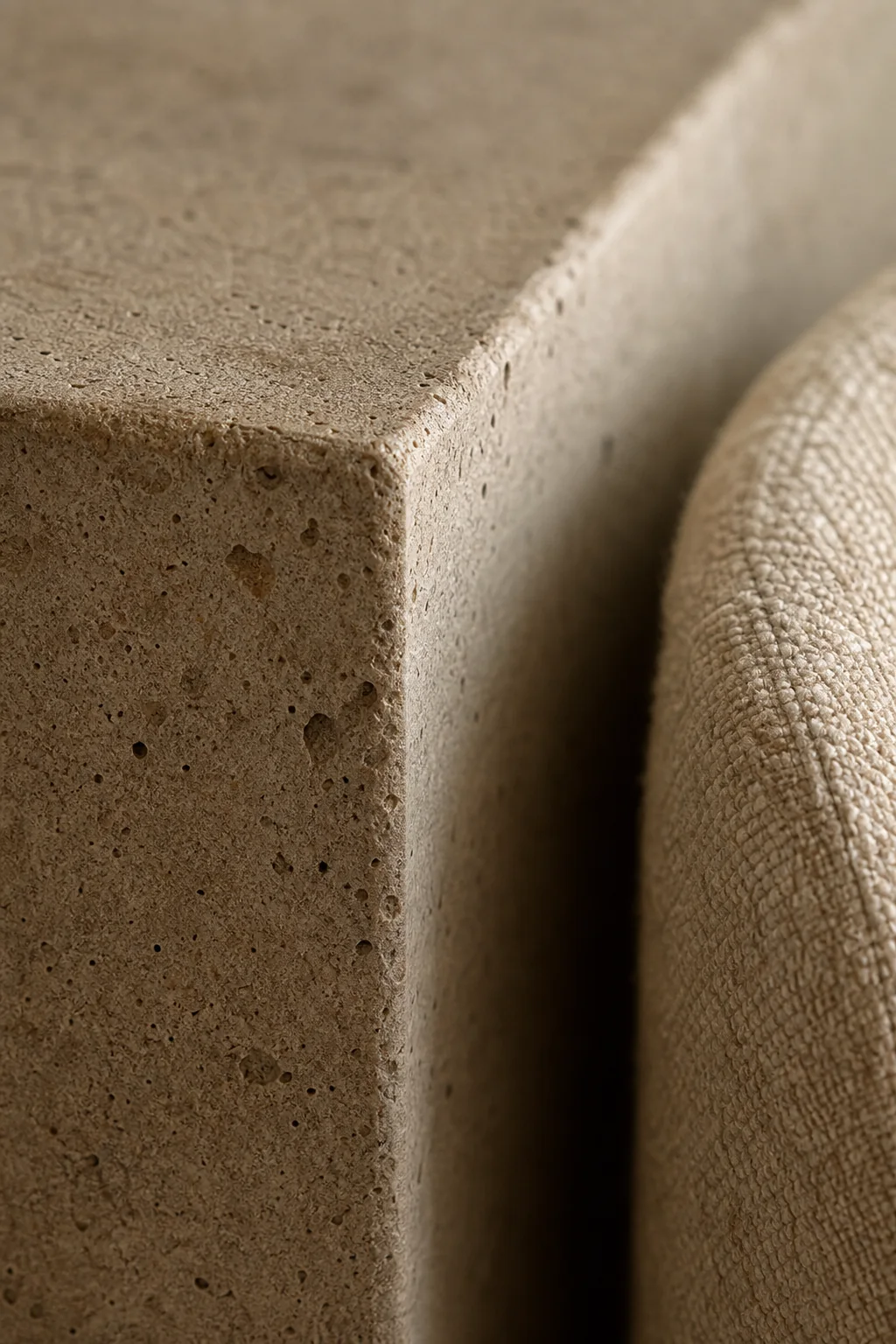
| Crystalline grain | The rough, sand-encrusted surface of the gypsum cluster | A honed sandstone sideboard with a naturally porous, grainy surface, paired with raw, nubby linen upholstery on the dining chairs. |
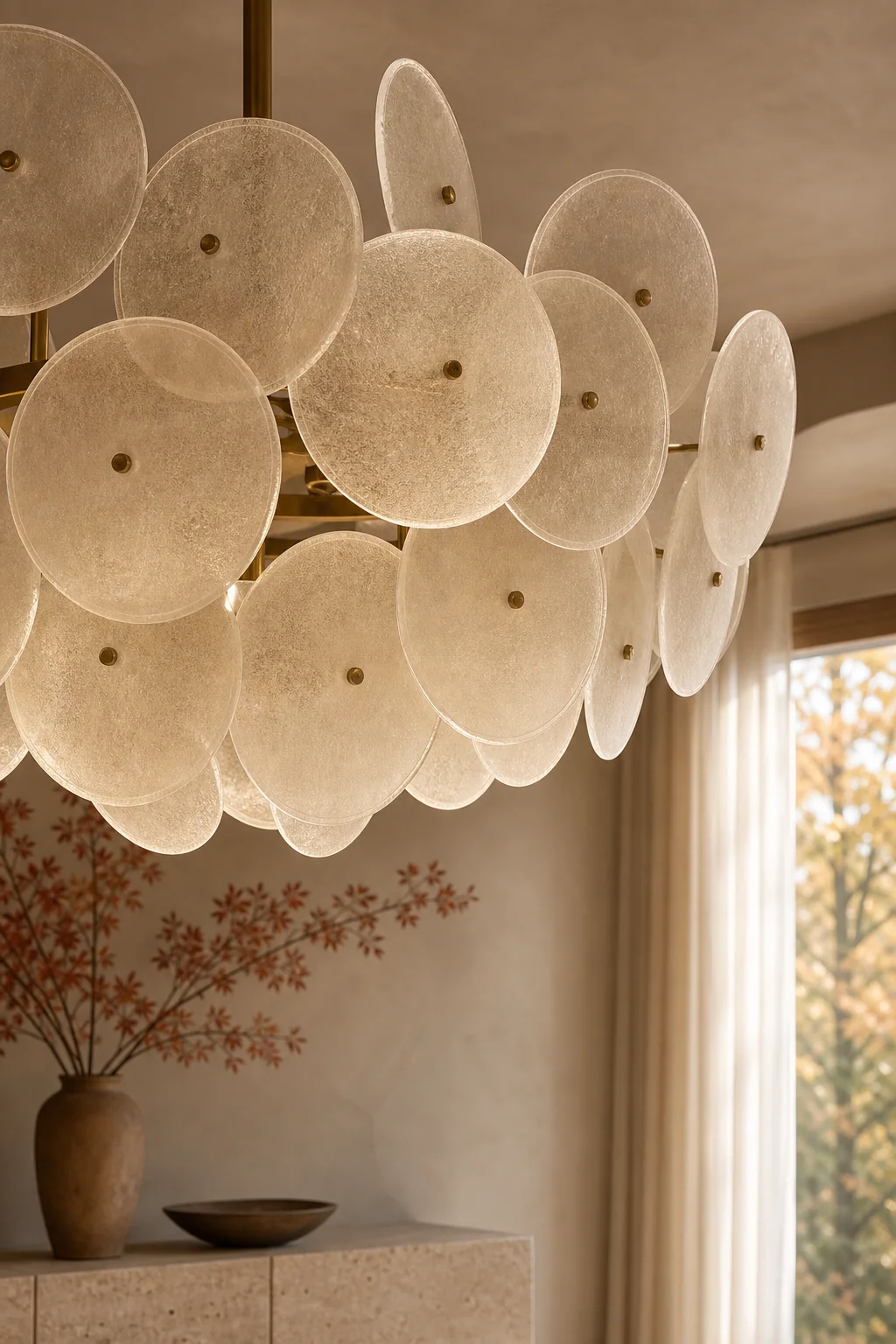
| Radial clustering | The tightly packed, radiating formation of the crystal structure | A central pendant light composed of overlapping, frosted glass discs arranged in a staggered, radial cluster above the dining table. |
A focal point in pale terracotta
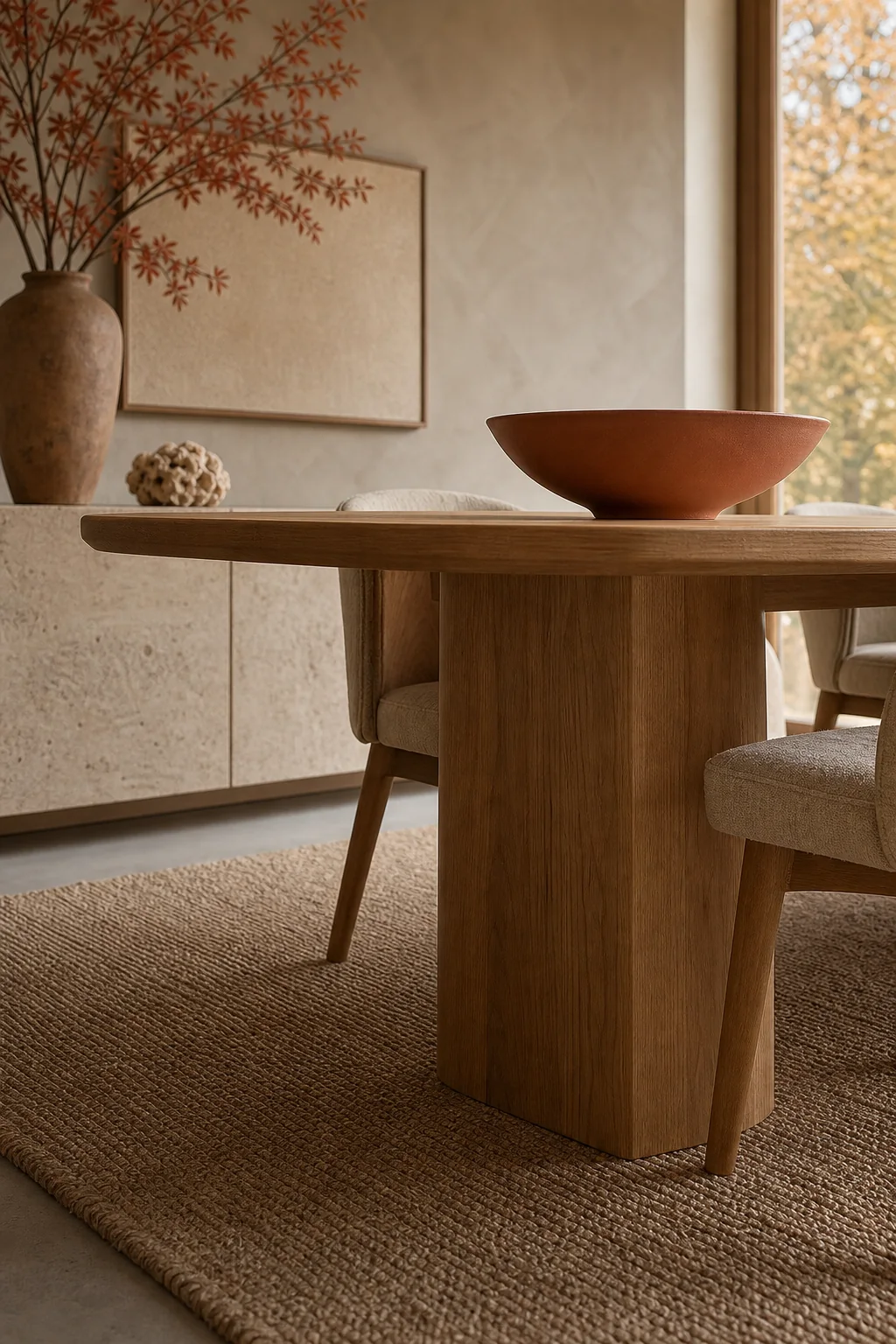
Introducing pale terracotta in small, deliberate doses, such as a matte ceramic centerpiece, highlights the crystal’s subtle pink undertones without overwhelming the dusty taupe base. This singular accent draws the eye toward the center of the raw oak dining table, echoing the deepest, most concentrated colors found at the core of the mineral cluster. By isolating this warmer hue to a single decorative object, the room maintains its minimalist restraint while still celebrating the rich, baked palette of the desert rose. The bowl serves as a quiet anchor for an autumn sideboard display or a simple seasonal arrangement.
Translating crystalline grain into tactile surfaces
The dry, brittle nature of the desert rose demands materials that absorb light and offer a coarse, satisfying hand-feel. Selecting a honed sandstone sideboard anchors the room’s grainy textures, providing a porous surface that directly mimics the sand-encrusted gypsum. To prevent the space from feeling too harsh, heavy, nubby linen dining chairs are introduced to soften the hard stone while maintaining a dry, tactile consistency. This careful balance of rough and soft materials ensures the dining area remains comfortable for long meals. Utilize this room-ready material edit to source the exact finishes needed for this mineral-inspired space.
The porous edge of honed stone
The sideboard’s porous edge mirrors the sand-encrusted gypsum surface, bridging the gap between raw geology and refined interior architecture. By keeping the finish matte and unpolished, the furniture captures the crystalline grain of the source material, ensuring the dining space feels inherently tactile and grounded. To maintain a beautifully balanced intensity throughout the room, pair these highly textured surfaces with expansive negative space. This harmonious approach successfully avoids the extremes of a flat, subtle white room or a bold, deeply saturated terracotta space, allowing the natural stone to stand out as a sophisticated, standalone architectural feature.
Radiating light through clustered geometry
The tight, intersecting geometry of the crystal is elevated to the ceiling, casting a warm, diffused glow over the dining table. A radial pendant light composed of overlapping frosted glass discs anchors the dining zone, translating the mineral’s radial clustering into a functional, luminous centerpiece. This striking fixture mimics the tightly packed formation of the gypsum, drawing the eye upward and balancing the heavy stone elements below. By keeping the surrounding ceiling space minimal, the clustered fixture stands out as a sculptural focal point, perfectly encapsulating the brittle, overlapping beauty of the desert rose in a practical form.
Keep the radial pendant light at least three feet above the dining table. This ensures the overlapping glass discs illuminate the space without obstructing sightlines across the room.