
This Olivewood Platter Became a Dining Room
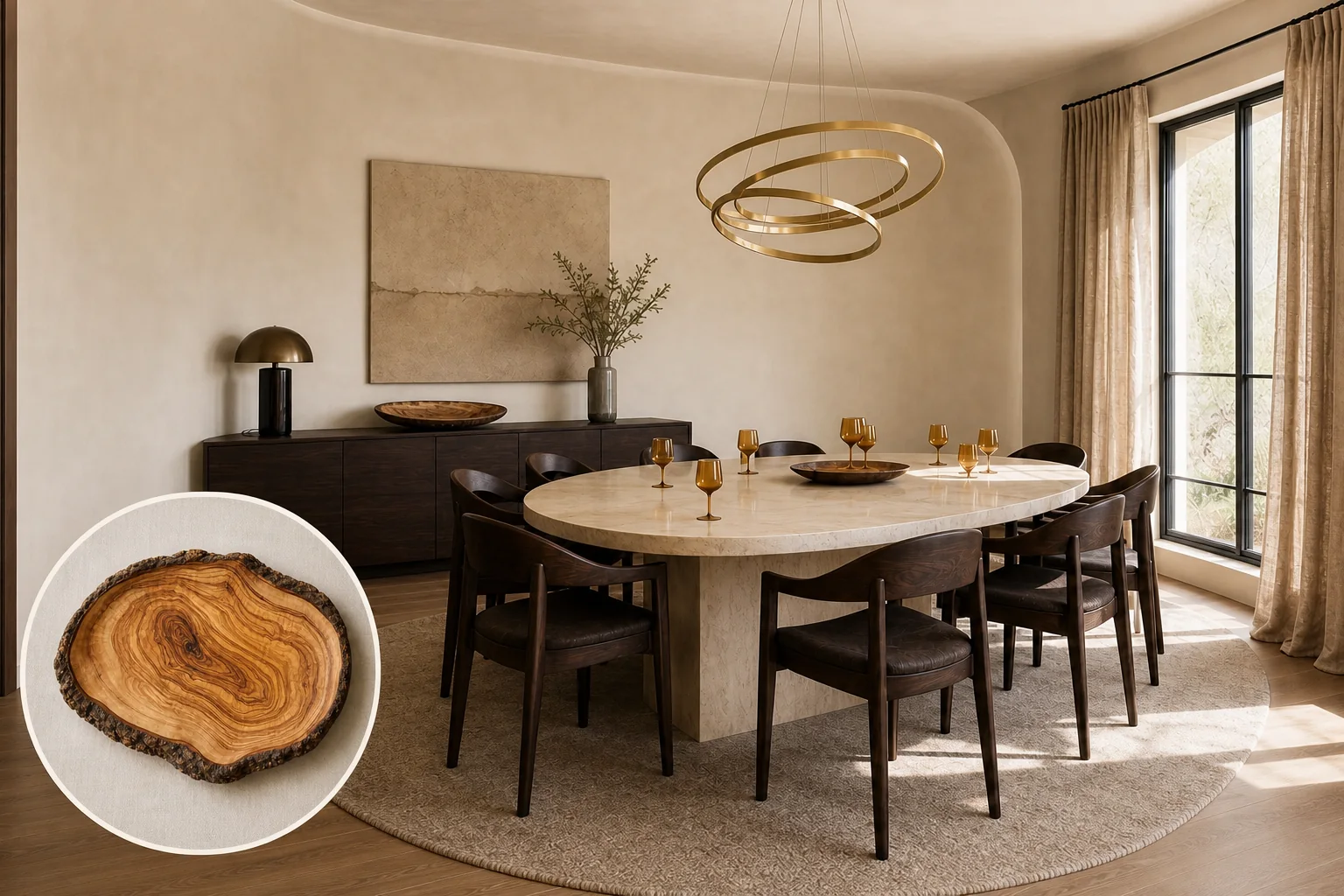
Translating a timeless olivewood platter into a formal dining room requires balancing natural imperfections with deliberate polishing. By mapping its swirling, high-contrast grain and rough live edge into sweeping architectural curves and contrasting textures, the standard dining space becomes a deeply grounded, atmospheric environment that celebrates organic warmth.
Softening the architectural shell
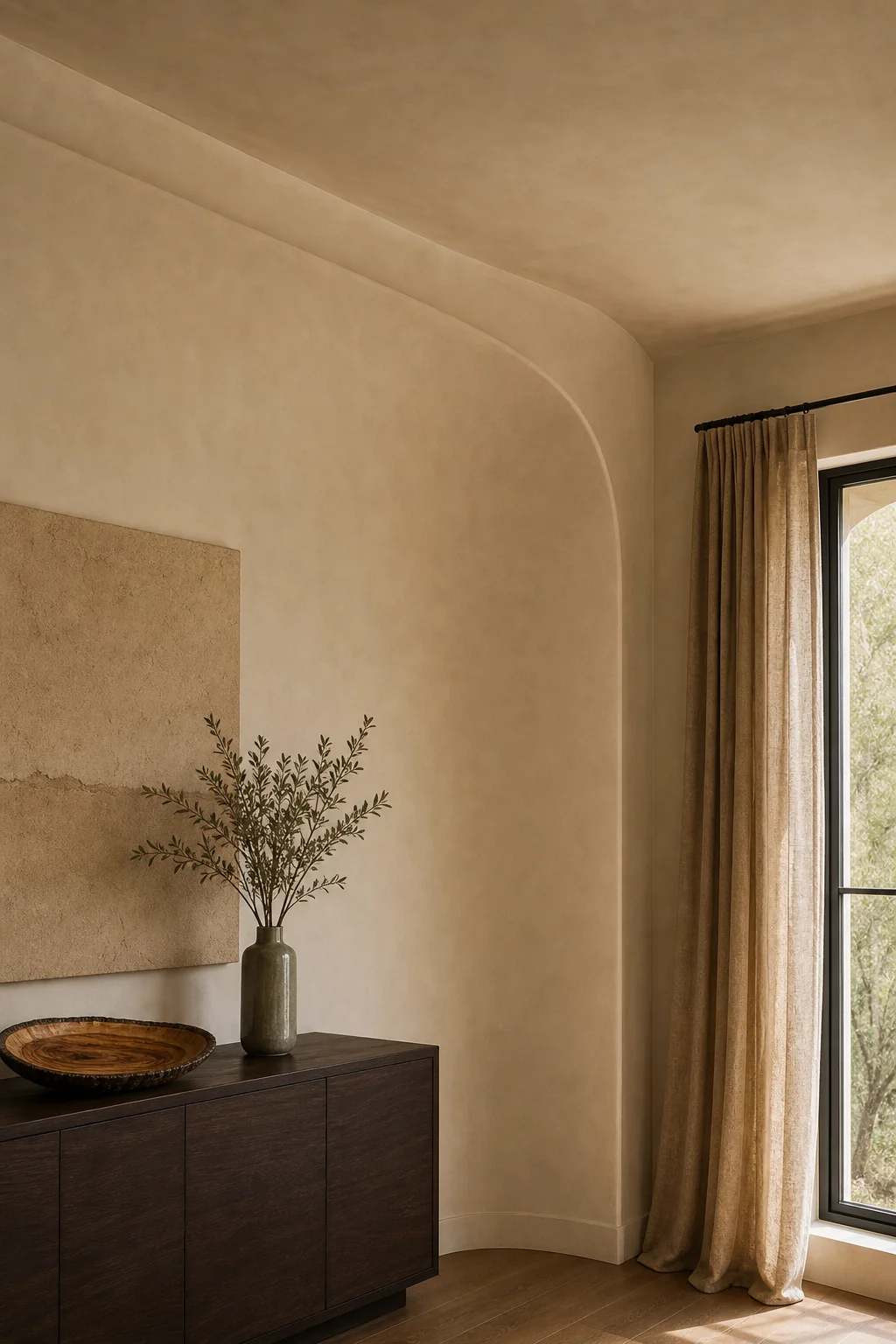
By rounding the rigid transitions between the main dining wall and the ceiling, the room adopts the organic, uninterrupted flow of a carved wooden vessel. Using a sweeping, subtly curved plaster corner mimics the platter’s asymmetrical live edge, softening the room’s rigid geometry and establishing a grounded horizontal plane. This foundational layer relies on hand-troweled plaster to create a sweeping cove that eliminates sharp right angles, allowing soft directional daylight to wash smoothly across the surfaces and set a serene, earthy tone before any furniture is even introduced to the formal dining room.
- Apply hand-troweled plaster to the main dining room walls to establish a subtle, matte texture.
- Build a sweeping, subtly curved plaster transition between the wall and ceiling to replace sharp right angles.
- Install wide-plank oak flooring across the entire space to provide a warming, horizontal foundation.
- Fit large steel-framed windows to maximize natural daylight and cast gentle shadows across the plaster.
Layering heartwood and sapwood tones
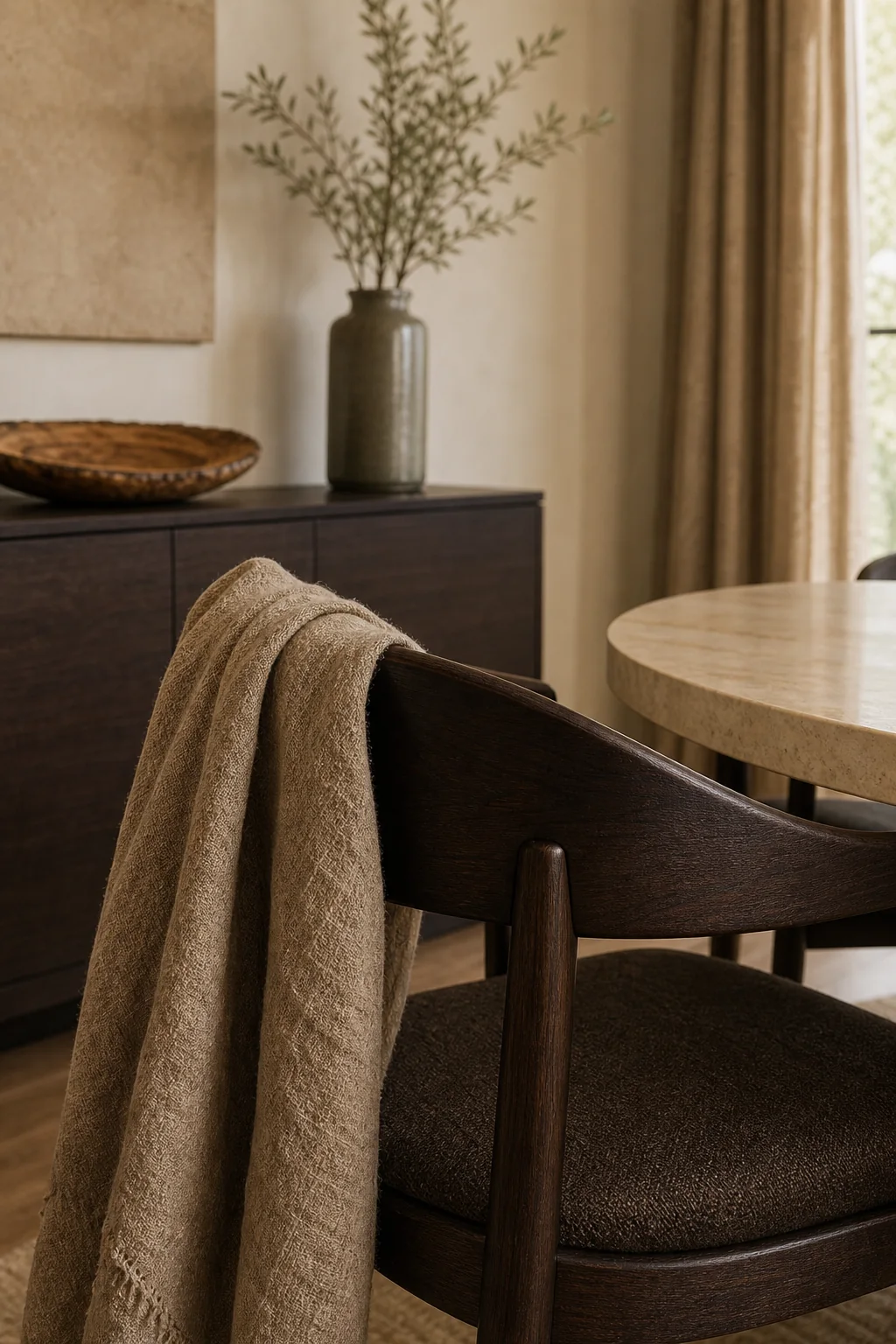
The dining room anchors itself in the platter’s pale sapwood base, using deep espresso and honey amber only as deliberate, high-contrast punctuation. Translating these heartwood and sapwood tones into a physical space requires a structured visual-DNA mapping table to balance the room’s earthy palette. By painting the walls in warm alabaster or sapwood cream, you establish a bright, luminous base that prevents the darker wood elements from feeling heavy. Deep espresso bark tones are then introduced sparingly through the dining chairs and sideboard, ensuring the room remains sophisticated, visually balanced, and deeply grounded.
| Source trait | Visible evidence | Room move |
|---|---|---|
| Organic Boundary | The undulating, asymmetrical live edge of the platter | A sweeping, subtly curved plaster corner transition between the main dining wall and the ceiling, softening the room’s rigid geometry |
| Heartwood & Sapwood | The high-contrast banding of pale cream and deep amber grain | A palette anchored by warm alabaster plaster walls, punctuated by deep espresso-stained oak dining chairs and warm amber glass stemware |
| Polished vs. Raw | The smooth, oiled serving surface contrasting with the rough, tactile bark rim | A highly polished, honed travertine dining table paired with heavily textured, raw wild-silk drapery framing the windows |
| Concentric Swirls | The tight, looping patterns of the olivewood grain | A sculptural pendant light featuring asymmetrical, concentric unlacquered brass rings suspended directly above the dining table |
Catching the light with amber
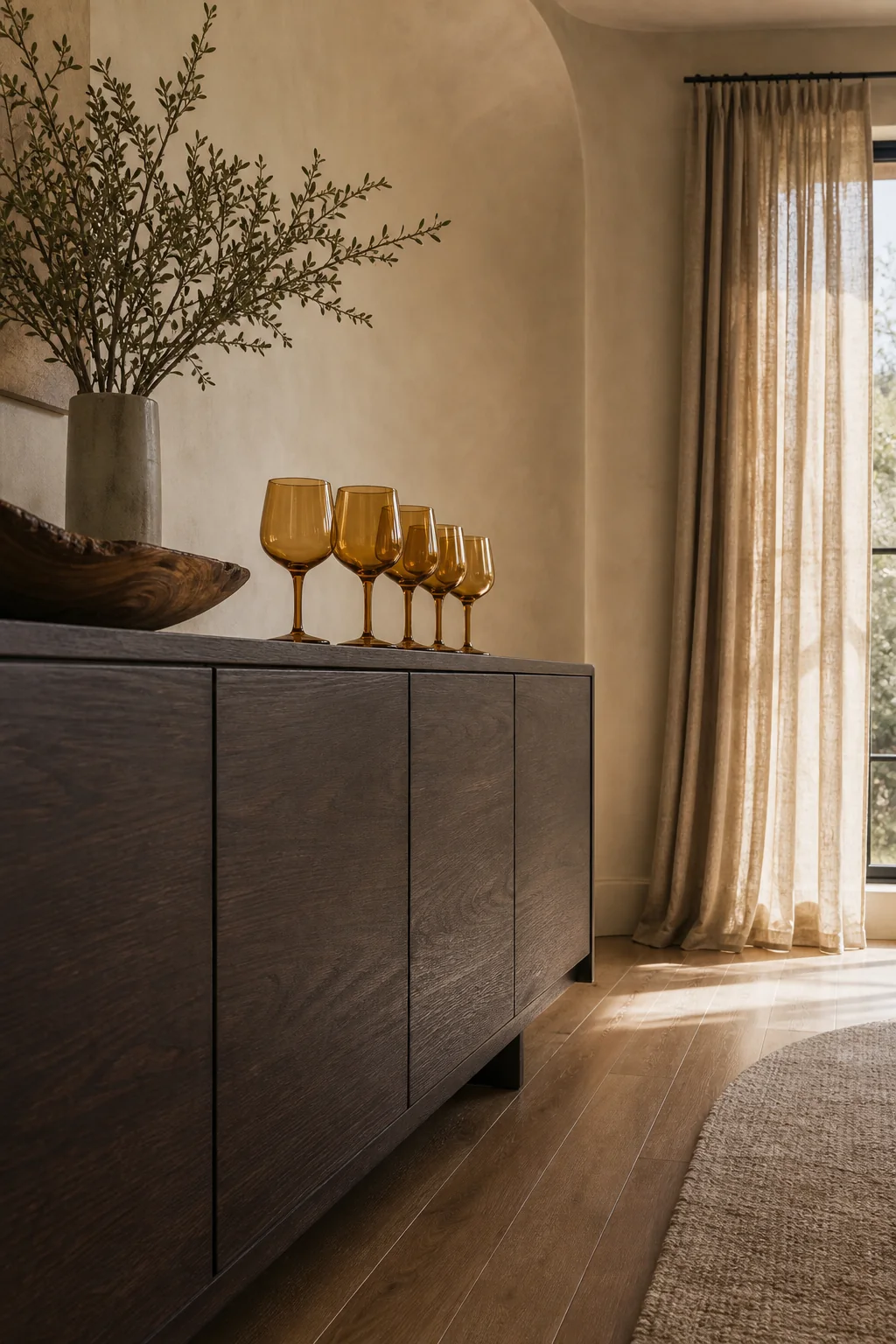
Warm amber stemware captures the honey highlights of the woodgrain, catching soft directional daylight against the espresso-stained oak sideboard. This subtle layering prevents the high-contrast palette from feeling flat, ensuring the dining room retains the glowing, organic warmth inherent to oiled olivewood. By choosing translucent, untextured glass, the stemware acts as a luminous accent that bridges the gap between the pale plaster walls and the dark, matte wood finishes, adding a necessary touch of delicate refinement to the otherwise heavily textured, earthy dining environment without overwhelming the senses.
Contrasting the polished and the raw
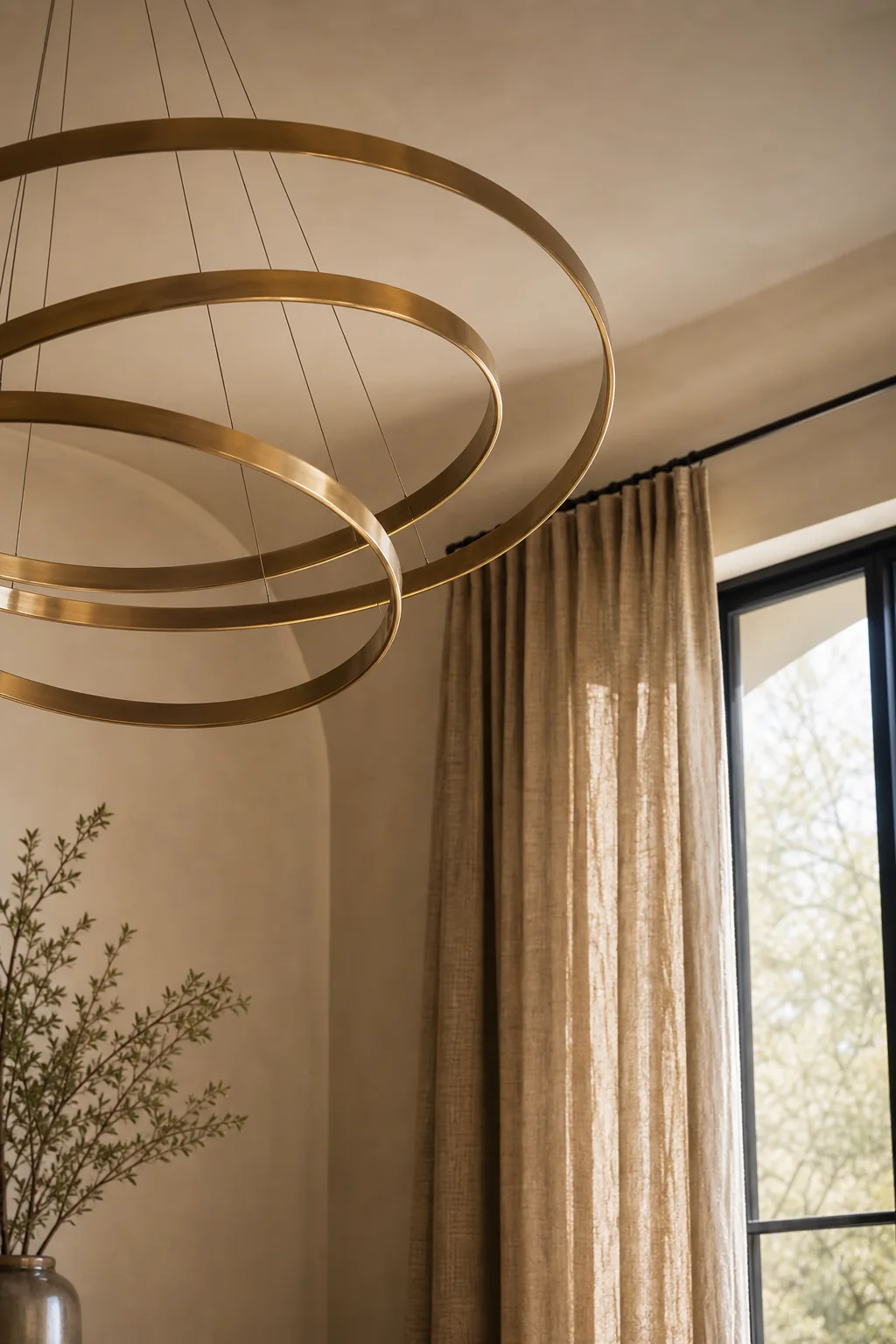
Just as the platter balances an oiled center with a rough bark edge, the room surrounds a sleek dining table with heavily textured textiles. This tension between polished and raw surfaces requires a precise material edit, ensuring every heavily textured element is countered by a sleek, highly finished surface to maintain formal elegance. Centering the room with a highly polished, honed travertine table provides a smooth anchor, while framing the steel windows with heavy, raw wild-silk drapery introduces necessary acoustic dampening and mimics the tactile, unrefined nature of the live-edge bark rim.
Softening the stone foundation
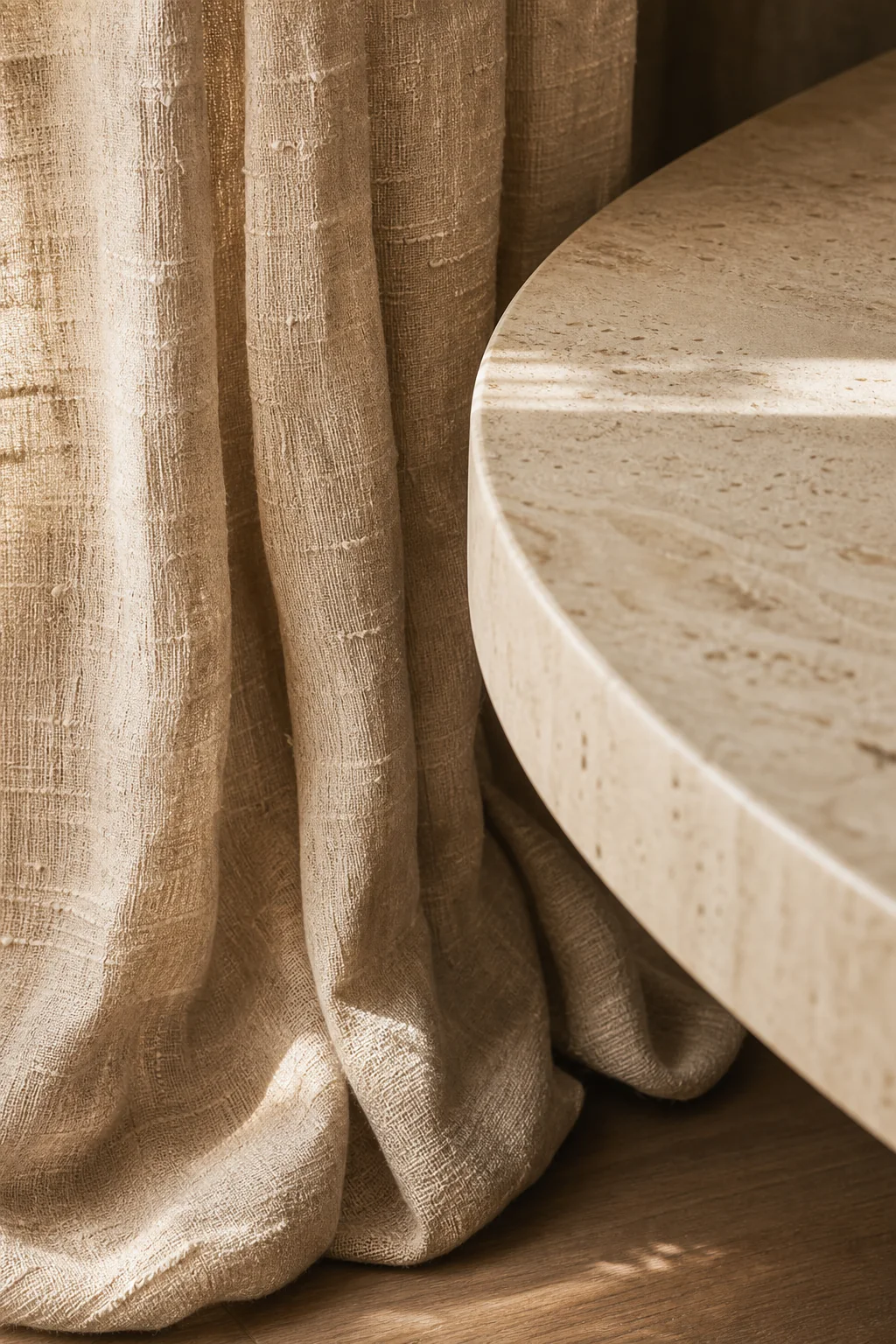
Slubby wild silk provides a tactile counterpoint to smooth stone, pooling slightly next to the honed edge of the travertine table. This acoustic dampening through textiles mimics the rough, tactile edge of the platter’s bark, ensuring the formal dining space remains inviting and architecturally soft rather than cold and echoing. The heavy drape of the raw silk introduces a necessary vertical softness that contrasts beautifully with the rigid steel window frames and the grounded horizontal planes of the wide-plank oak flooring, perfectly balancing the room’s overarching material tension and organic atmosphere.
Radiating concentric energy
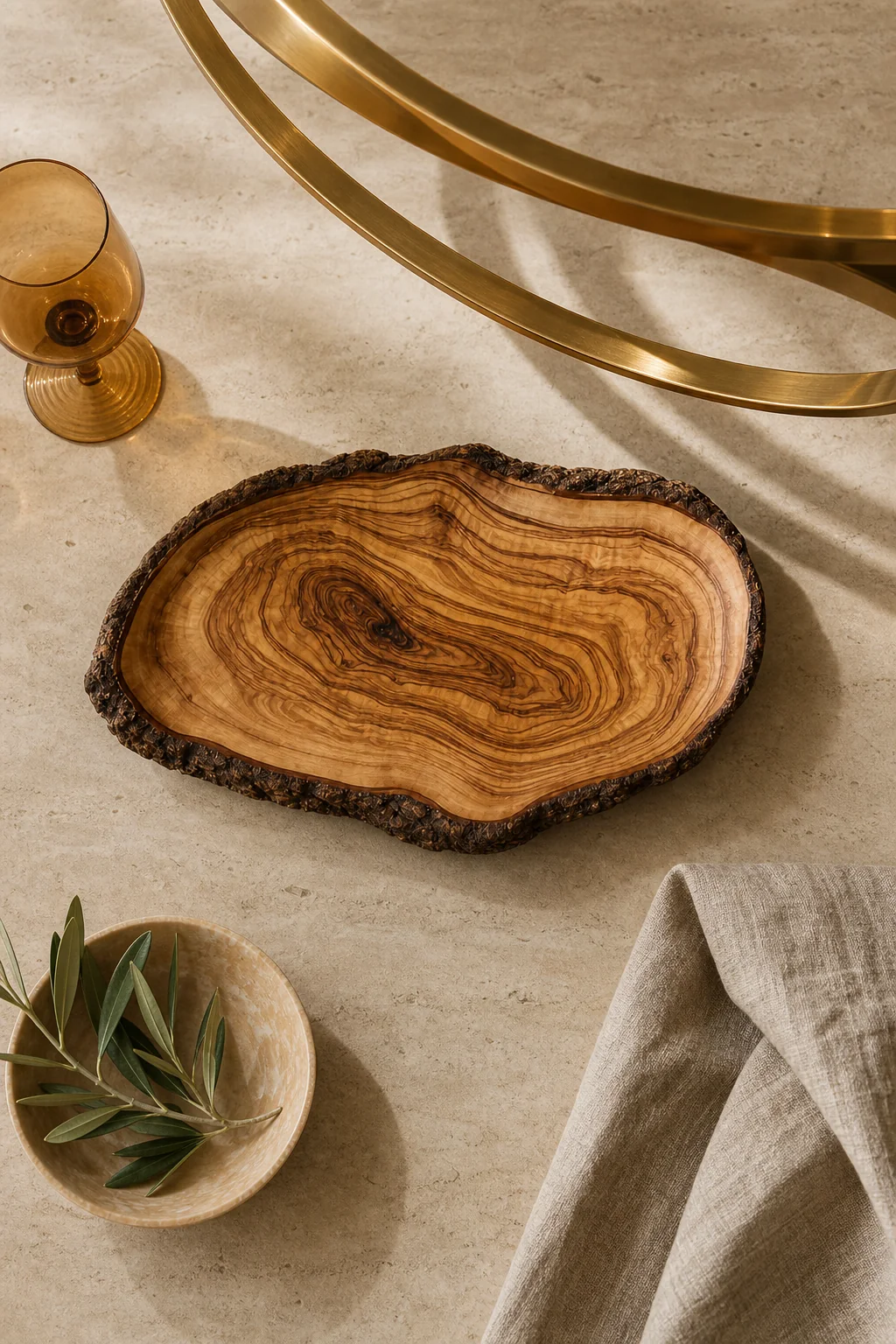
A sculptural brass pendant acts as the room’s core, casting a dimmable glow that ripples outward like an olive tree’s natural growth rings, establishing a concentric expansion radiating across the space. You can dial this energy from subtle to bold. A subtle approach focuses purely on the sapwood cream palette and curved plaster ceiling. A balanced execution mixes the honed travertine table with espresso oak chairs and raw silk drapery. For a truly bold statement, emphasize the high-contrast grain by adding a heavily veined marble sideboard and a massive, oversized concentric pendant.
Ensure the lowest ring of the brass pendant hangs at least thirty inches above the table to keep sightlines clear.