
This Tin Robot Became a Kids Playroom
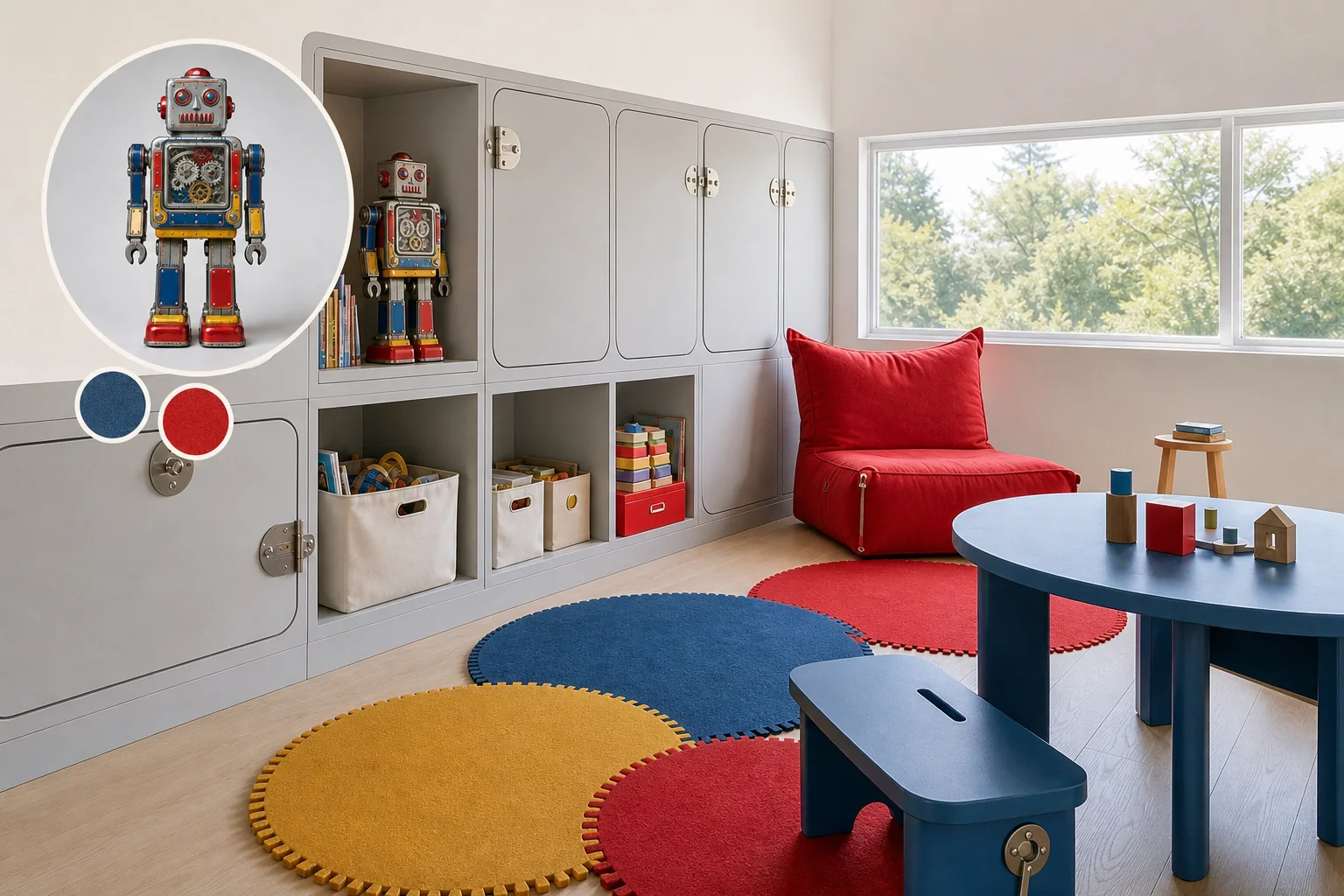
Translating a vintage midcentury tin robot into a kids playroom offers a masterclass in structured playfulness. By abstracting its primary color blocking and honest mechanics, you can shape a highly functional, imaginative space that balances bright energetic hues with expansive smooth neutral surfaces.
Structuring the space with stamped geometry
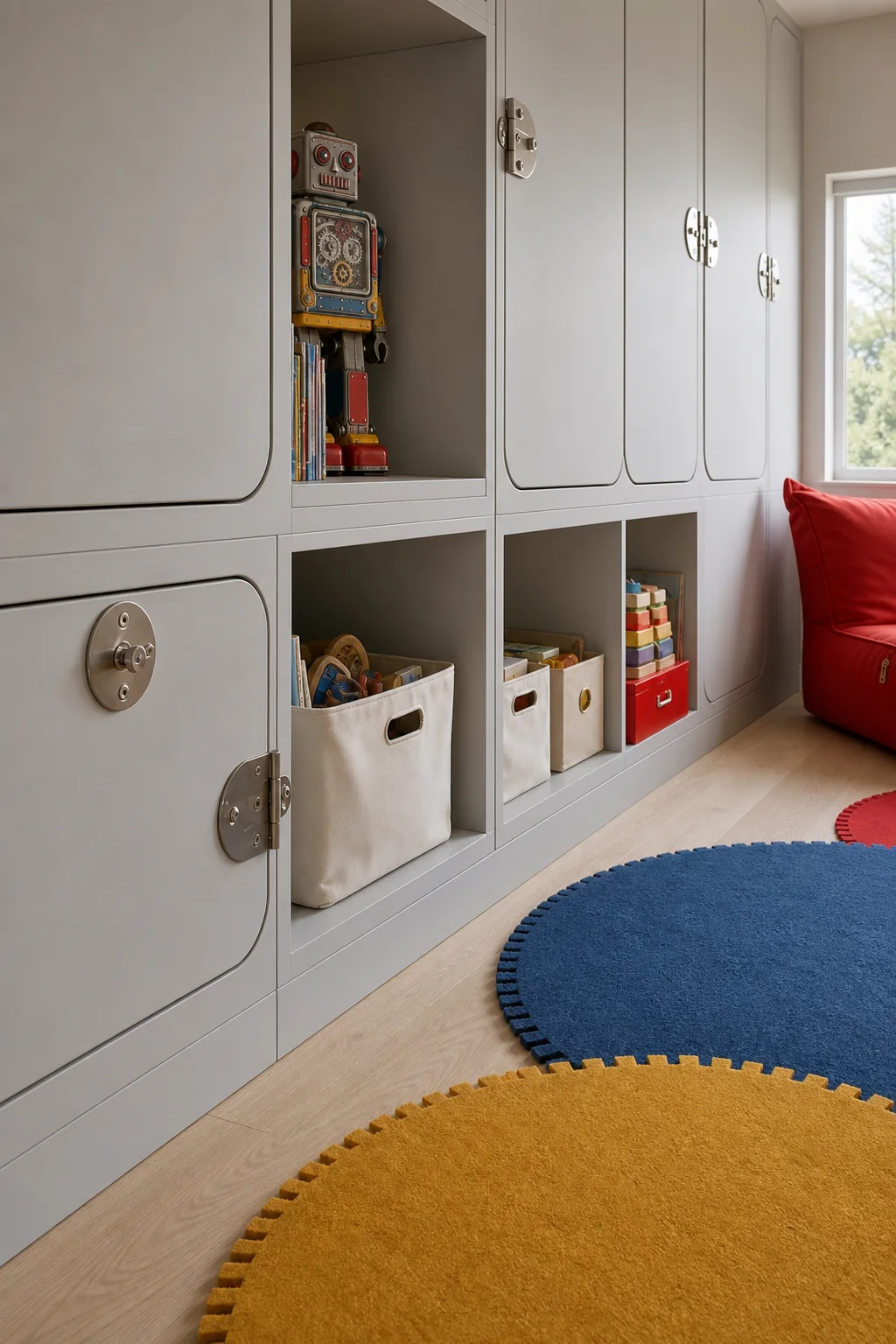
Translating the robot’s pressed tin body into architectural storage provides a calm, organized framework for the room’s more energetic elements. Custom built-in plywood storage cabinets span the main wall, featuring doors with deeply routed pill-shaped profiles painted in a soft tin-white to anchor the space. This expansive neutral base mimics the stamped metal panels of the toy, establishing a quiet foundation that conceals clutter while preparing the room for the structured integration of vibrant colors and tactile hardware.
- Measure and install a continuous plywood storage wall
- Route rounded corners into all cabinet door profiles
- Paint the built-in cabinetry a soft neutral tin-white
- Install oversized brushed stainless steel hardware
- Arrange interlocking circular felt mats on the floor
Deploying primary color blocks
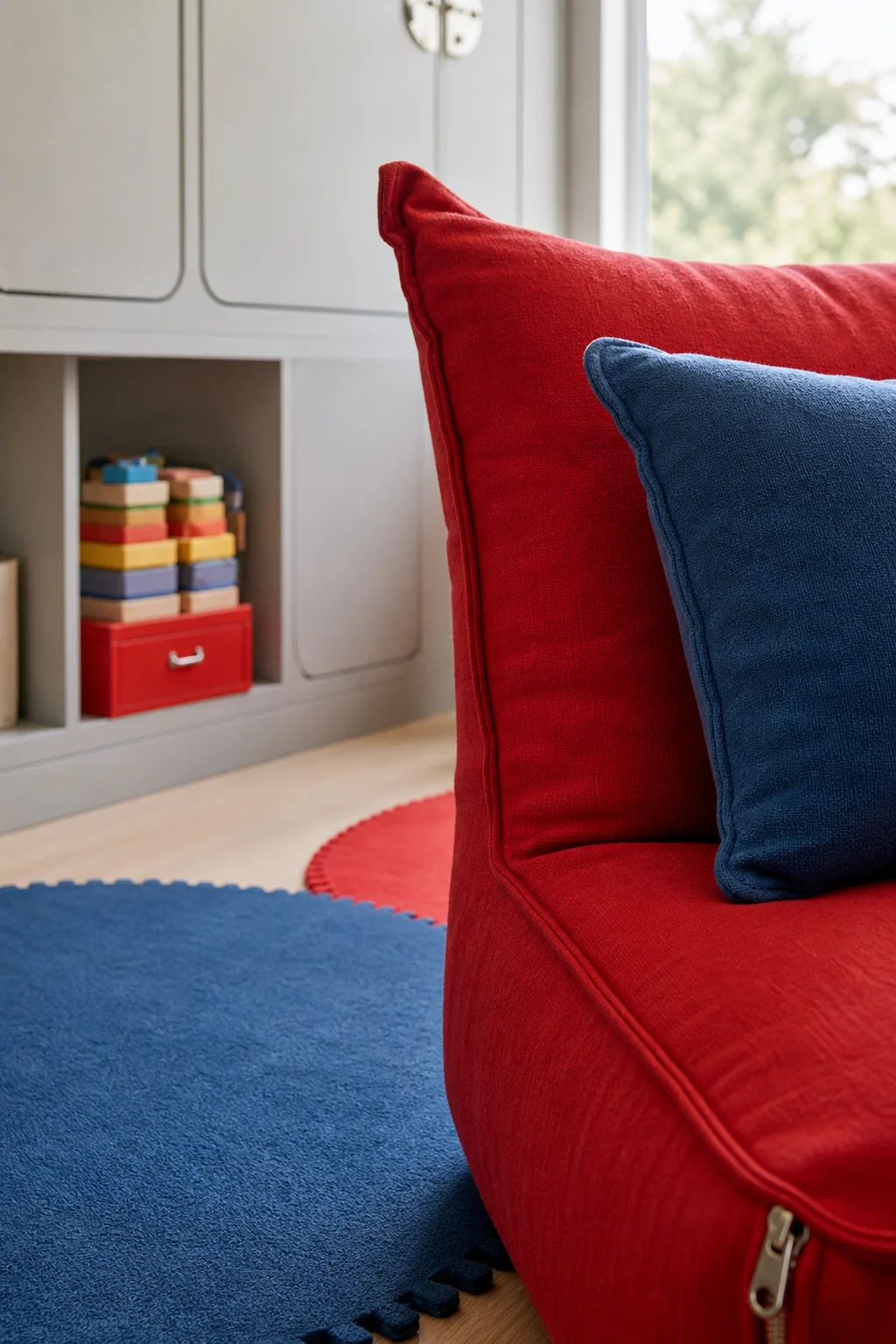
By isolating the robot’s lithographed hues onto specific functional zones, the room achieves playful energy without visual chaos. Solid blocks of signal red and cobalt blue are applied to purposeful areas, such as a blue modular play table, standing out sharply against the neutral cabinetry. This deliberate separation of primary colors prevents the space from feeling overwhelming, ensuring that each vibrant element acts as a distinct, intentional focal point rather than a literal thematic mural that might quickly feel dated.
| Source trait | Visible evidence | Room move |
|---|---|---|
| Stamped Panel Geometry | The robot’s body is constructed from pressed tin panels with distinct rounded corners. | Custom built-in plywood storage cabinets span the main wall, featuring doors with deeply routed, rounded-corner profiles painted in a soft neutral grey to anchor the room. |
| Primary Color Blocking | Distinct zones of lithographed red, blue, and yellow on the robot’s limbs and torso. | Solid blocks of signal red and cobalt blue are applied to specific functional zones, such as a red heavy canvas reading chair and a blue modular play table, standing out against the neutral cabinetry. |
| Exposed Mechanics | Visible steel gears and stamped metal rivets holding the toy’s joints together. | Oversized brushed stainless steel bolts and exposed functional hinges are used on the wooden storage cabinets, adding a tactile, mechanical honesty to the joinery. |
| Interlocking Gears | The overlapping, toothed circular gears visible in the robot’s clear chest cavity. | A series of thick, interlocking circular wool felt floor mats in primary colors provide a soft play surface that mimics the repetitive, overlapping rhythm of mechanical gears. |
Anchoring the reading nook in signal red
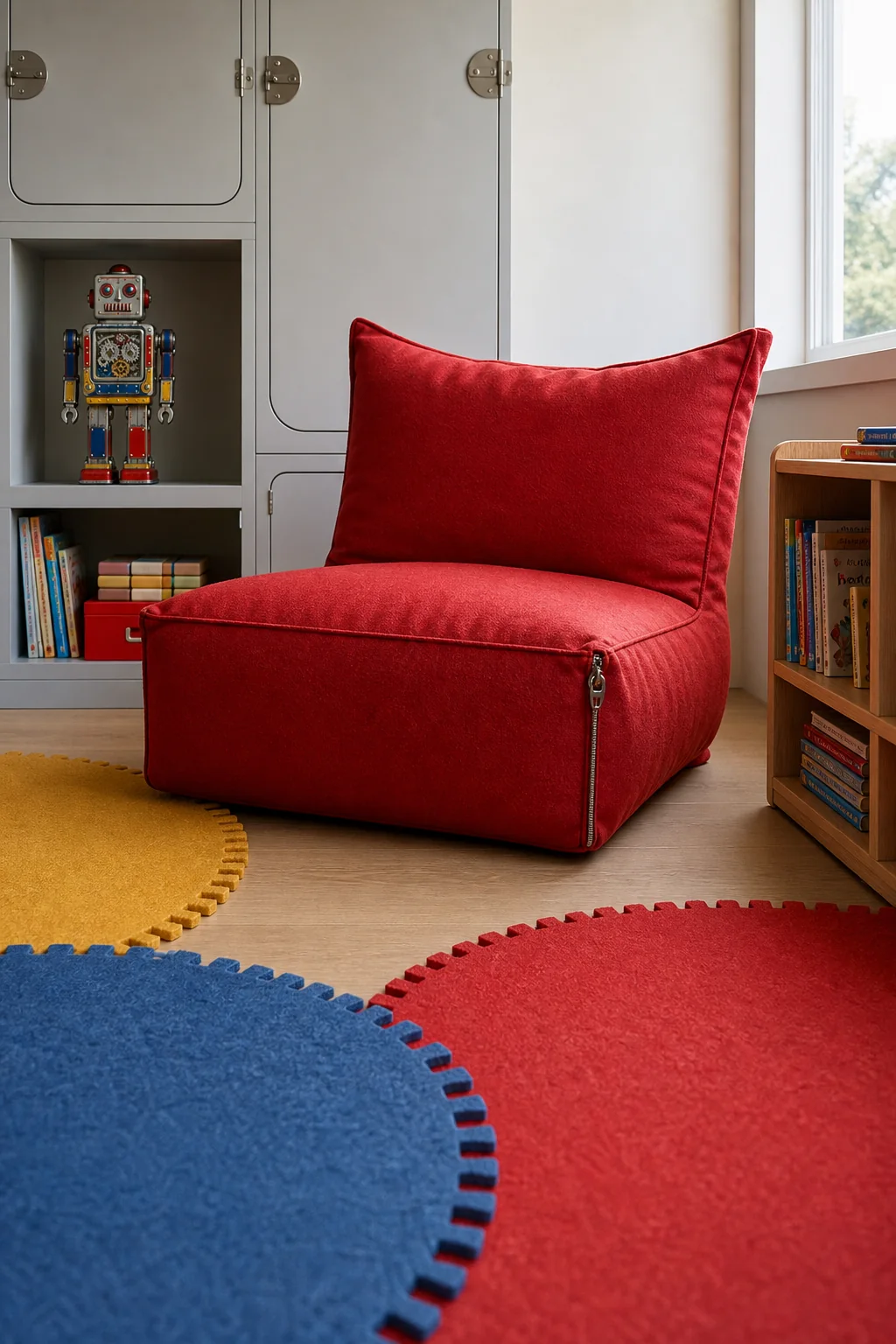
A heavy cotton canvas reading chair in solid signal red mimics the robot’s painted limbs, creating a dedicated zone for quiet focus. Positioned next to a low light oak bookshelf, the chair introduces a bold strike of color that remains grounded by the surrounding natural wood tones and smooth white walls. This targeted application proves that vibrant functional zones can coexist peacefully within a structured interior, providing a stimulating visual anchor without disrupting the room’s overall sense of calm organization.
Keep primary colors strictly separated by neutral space. Allowing red and blue to touch directly creates visual tension, while spacing them out feels intentional.
Exposing the mechanical joints
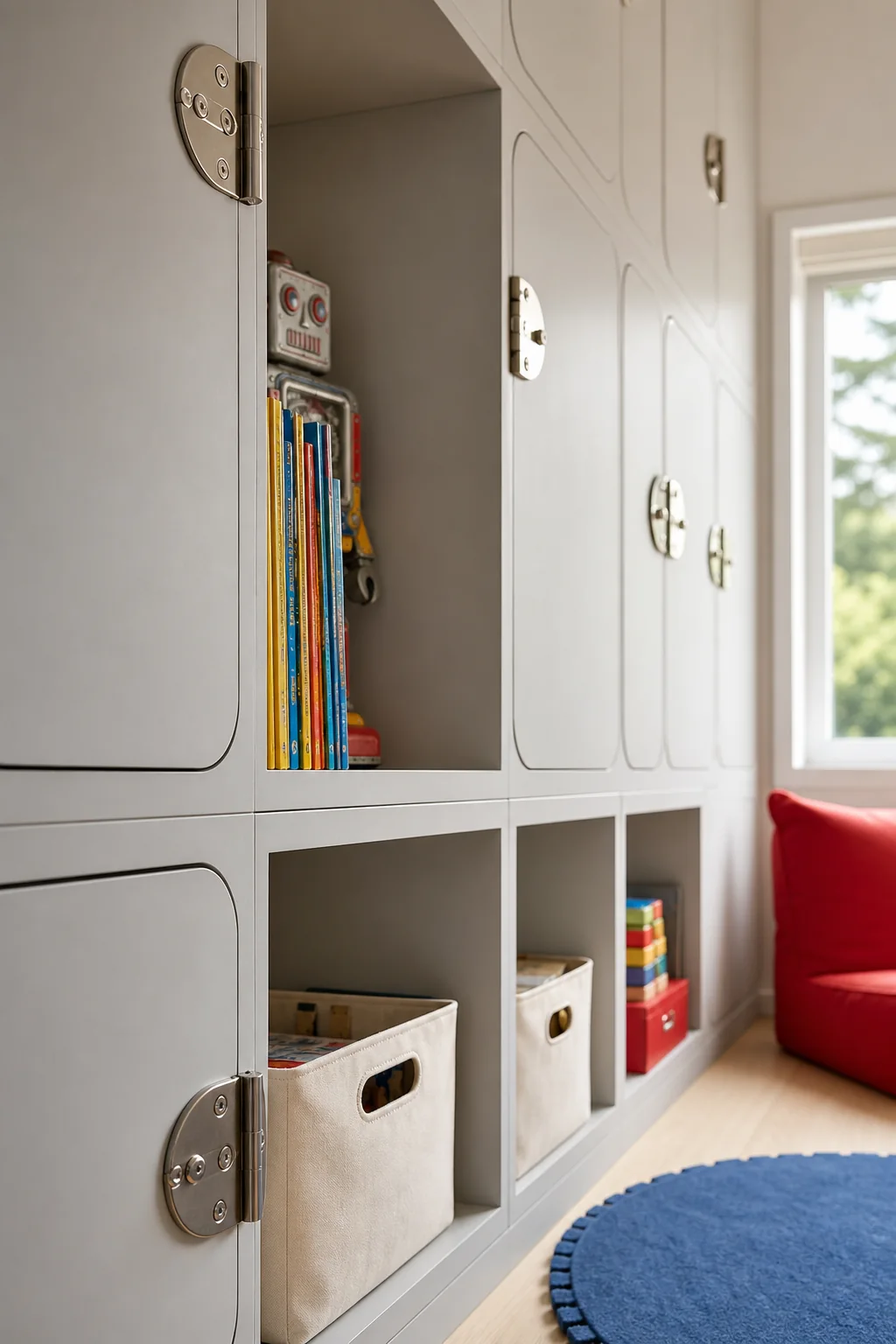
Embracing visible fasteners and brushed metal hardware honors the toy’s mechanical nature while adding durable, tactile details for small hands. Instead of hiding the joinery, oversized brushed stainless steel bolts and exposed functional hinges are used on the wooden storage cabinets, adding a tactile mechanical honesty to the room. Contrasting this cold, heavy-duty steel with warm, painted birch plywood ensures the space remains inviting while celebrating the functional parts that hold it all together in a highly practical way.
Highlighting the honest hardware
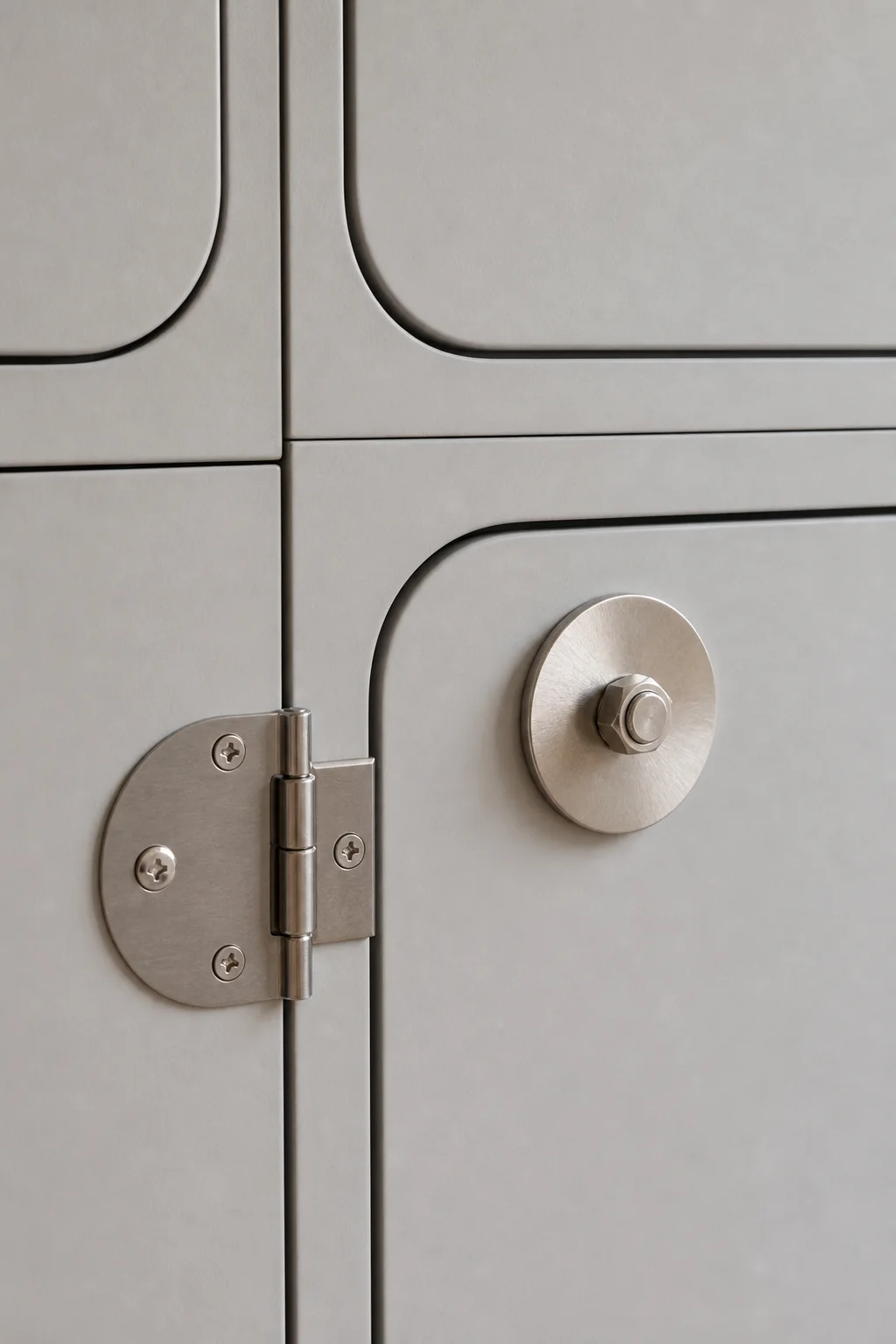
A close-up of the soft grey plywood cabinet doors reveals the heavy-duty brushed stainless steel hinges and oversized exposed bolts that replicate the toy’s stamped metal rivets. Because standard cabinet hinges will visually disappear in a larger room, upsizing your hardware slightly makes the mechanical connection a deliberate design feature. This approach transforms everyday storage into an interactive, tactile experience that subtly nods to vintage robotic joints while maintaining a clean, architectural aesthetic suitable for a modern home.
Standard cabinet hinges will disappear. Upsize your hardware slightly to make the mechanical connection a deliberate, visible design feature.
Overlapping the gear motifs
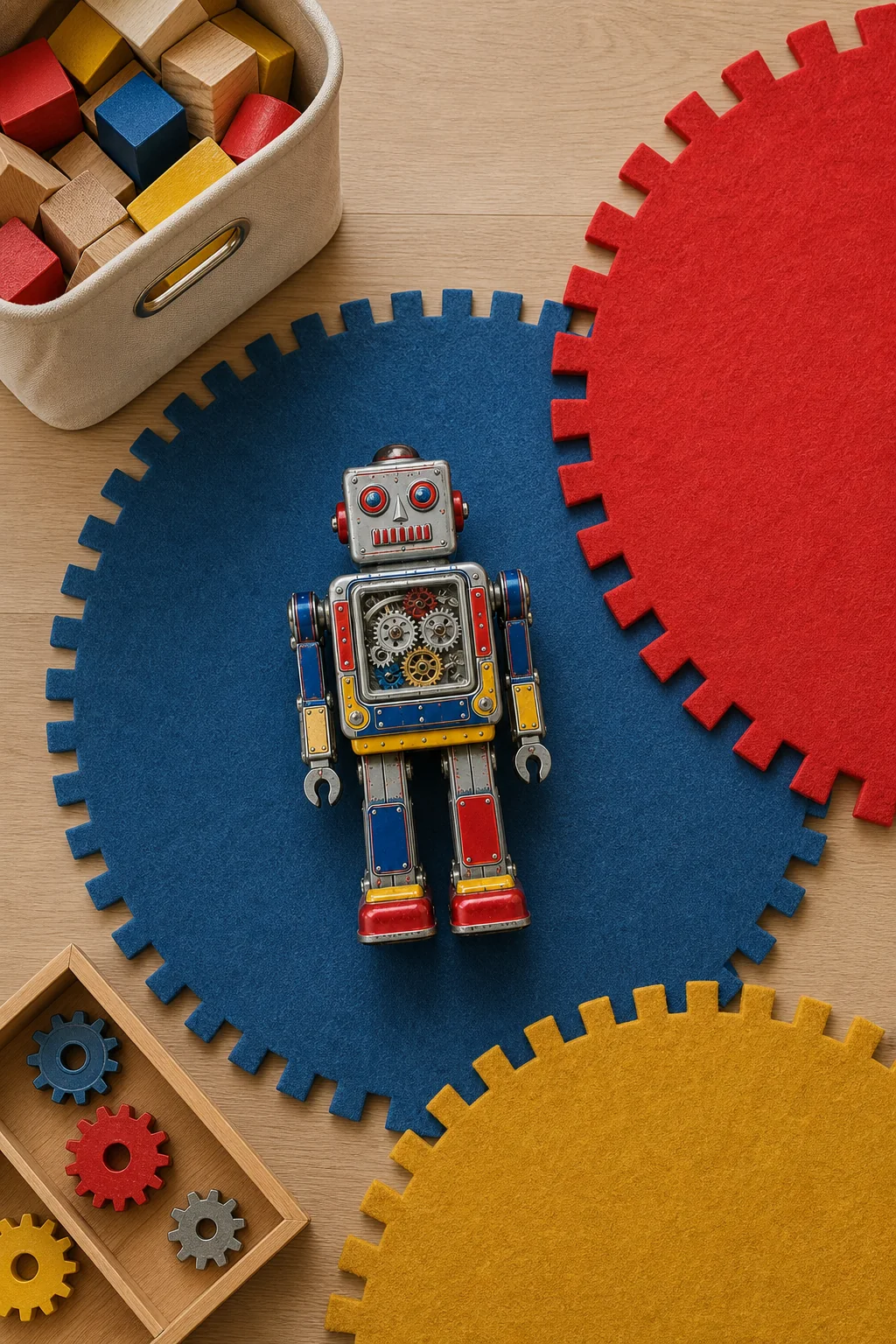
Translating rigid internal gears into soft, overlapping floor mats introduces a playful, modular rhythm that invites physical interaction. Thick, interlocking circular wool felt mats in primary colors provide a comfortable play surface mimicking the repetitive rhythm of mechanical gears. You can scale this concept’s intensity: a subtle approach focuses entirely on soft tin-grey cabinetry with hidden color pops, a balanced room pairs neutral storage with isolated red and blue furniture, while a bold execution expands primary color blocking to the walls alongside highly contrasting oversized hardware on every door.
Translating hard mechanical shapes into soft textiles is the key to making this concept work for a playroom without feeling cold or industrial.