
Prairie Style Meets Cyberpunk: Living Room
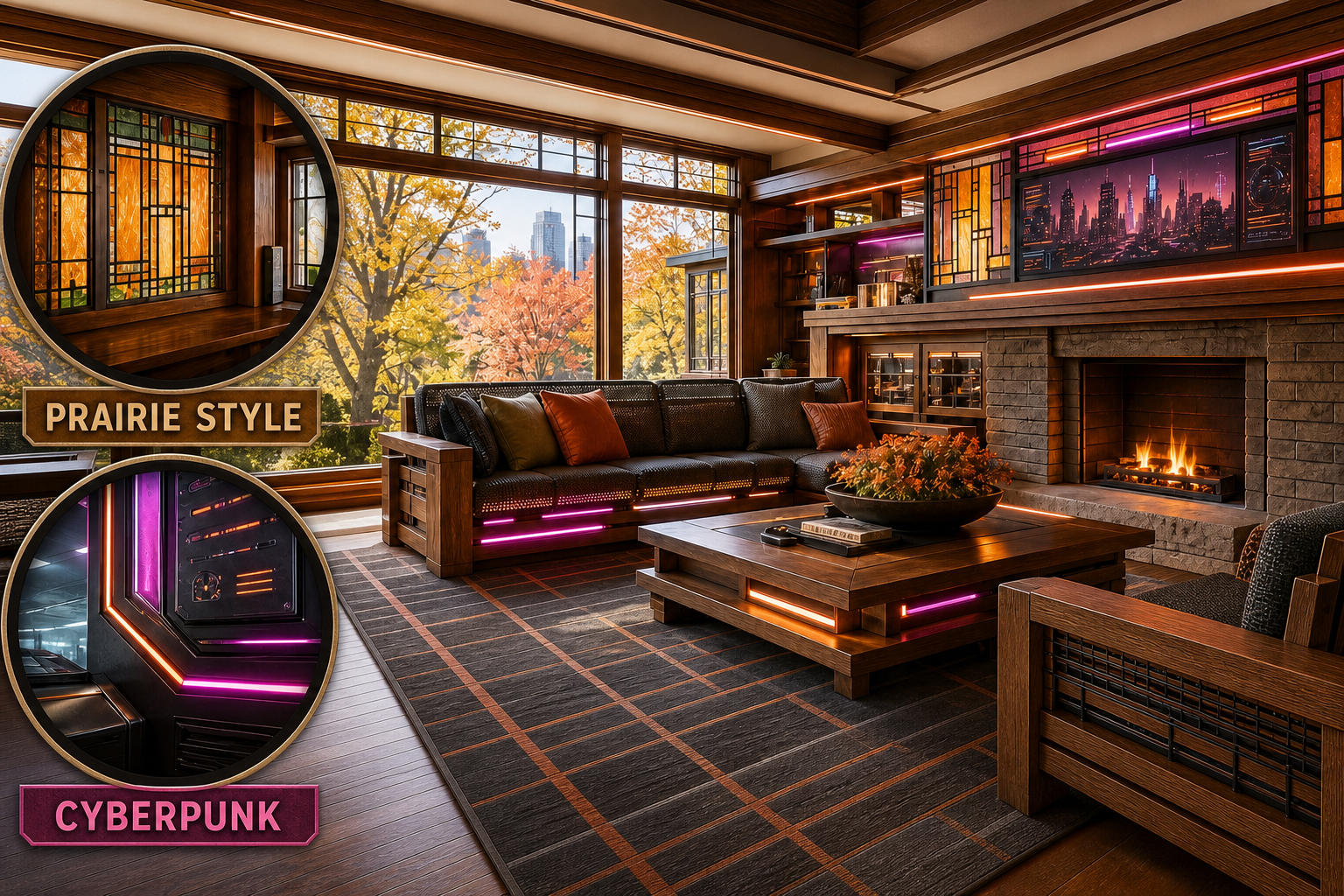
Prairie style’s devotion to handcrafted naturalism and earth-bound historical weight directly clashes with Cyberpunk’s synthetic, hyper-technological futurism. We resolved this contradiction by letting historic oak architecture ground the space while sleek aluminum and glowing LED edge-lighting infiltrate the horizontal lines.
Grounding the Architecture
The architectural shell must establish undeniable historic weight before you introduce futuristic technology. Rich quarter-sawn oak built-ins and sweeping horizontal lines provide a warm, organic foundation for the entire living room, anchoring the space in traditional craftsmanship.
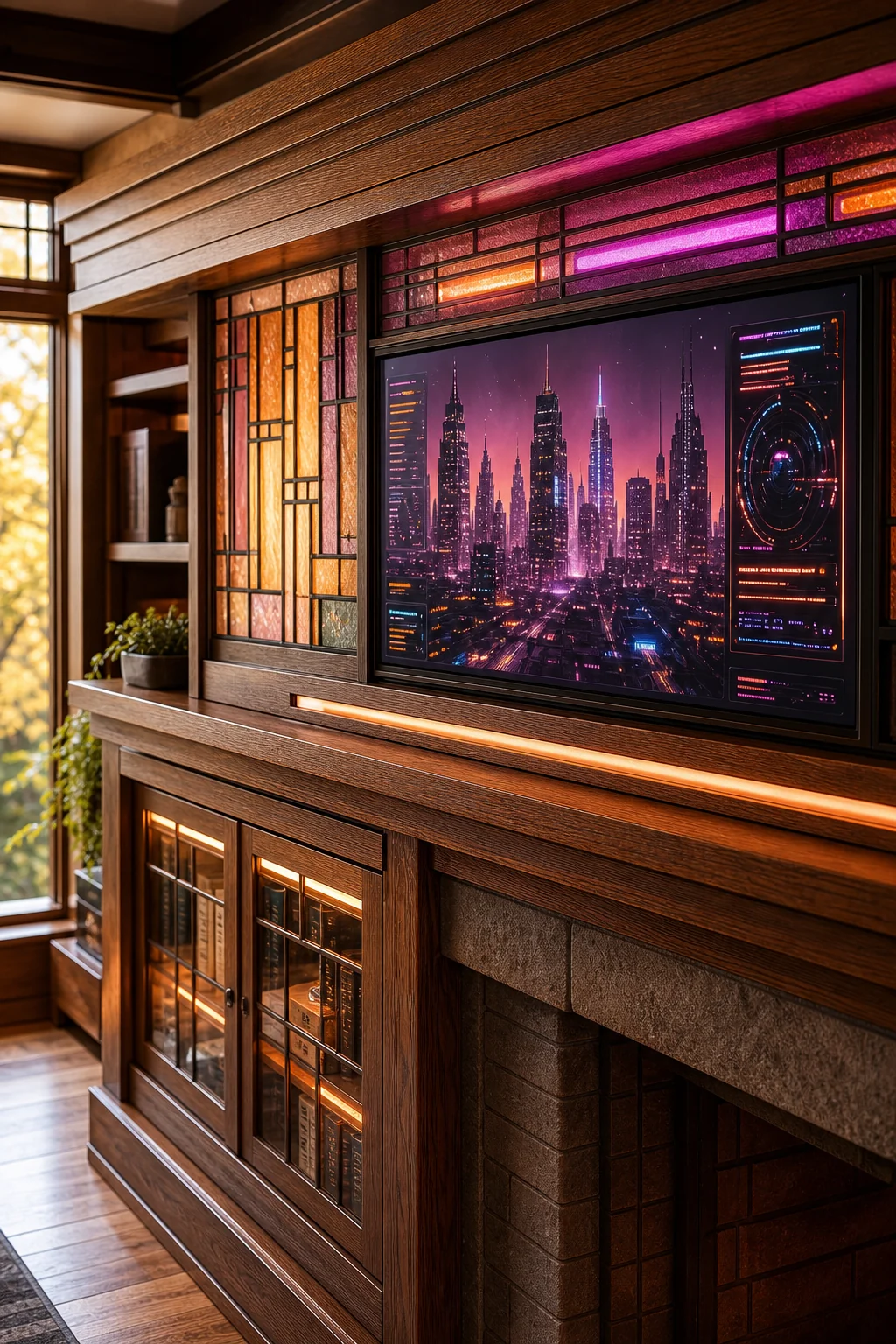
This heavy, handcrafted framework absorbs the synthetic shock of flush-mounted ultra-wide matte data screens. The historic proportions keep the advanced technology from feeling like a temporary gadget left on an antique, ensuring a permanent integration.
By forcing the digital elements to respect the physical boundaries of the woodwork, the room maintains its essential organic warmth. The architecture remains the dominant force, dictating exactly where the synthetic future is allowed to exist.
Integrating the Technology
Modern synthetic materials require careful placement to avoid looking cheap against the historic shell. Cyberpunk infiltrates the space through highly functional, tactile surfaces that contrast sharply with the natural wood grain, bringing a mechanical precision indoors.
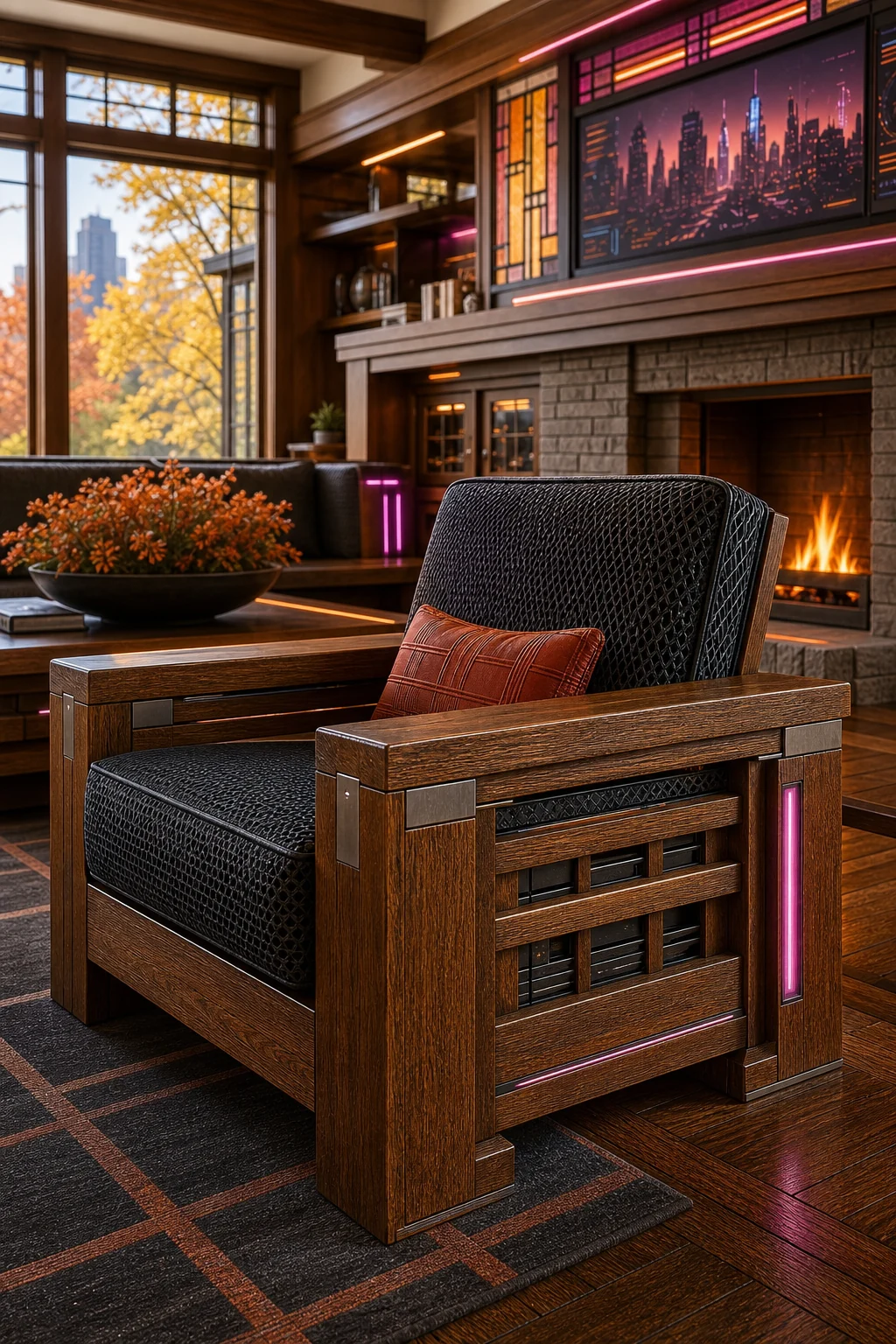
We replaced traditional leather and wool with high-tech, breathable synthetic mesh upholstery. Brushed anodized aluminum hardware reinforces the heavy wooden frames, creating a deliberate, permanent mechanical connection between the two distinct eras of design.
- Use brushed anodized aluminum hardware to avoid the cheap, fragile look of glossy commercial plastics.
- Select breathable synthetic mesh textiles for seating to introduce a highly futuristic, performance-driven tactile experience.
- Mount high-tech metal hardware directly onto heavy wooden frames to create immediate, striking structural contrast.
- Ensure all digital displays feature a matte finish to absorb natural daylight and prevent glare.
Forging the Connection
A successful hybrid relies on shared visual geometry and echoing color palettes to bridge the centuries. The rigid horizontal banding of historic architecture perfectly houses linear LED light strips, turning structural joints into glowing technological pathways.
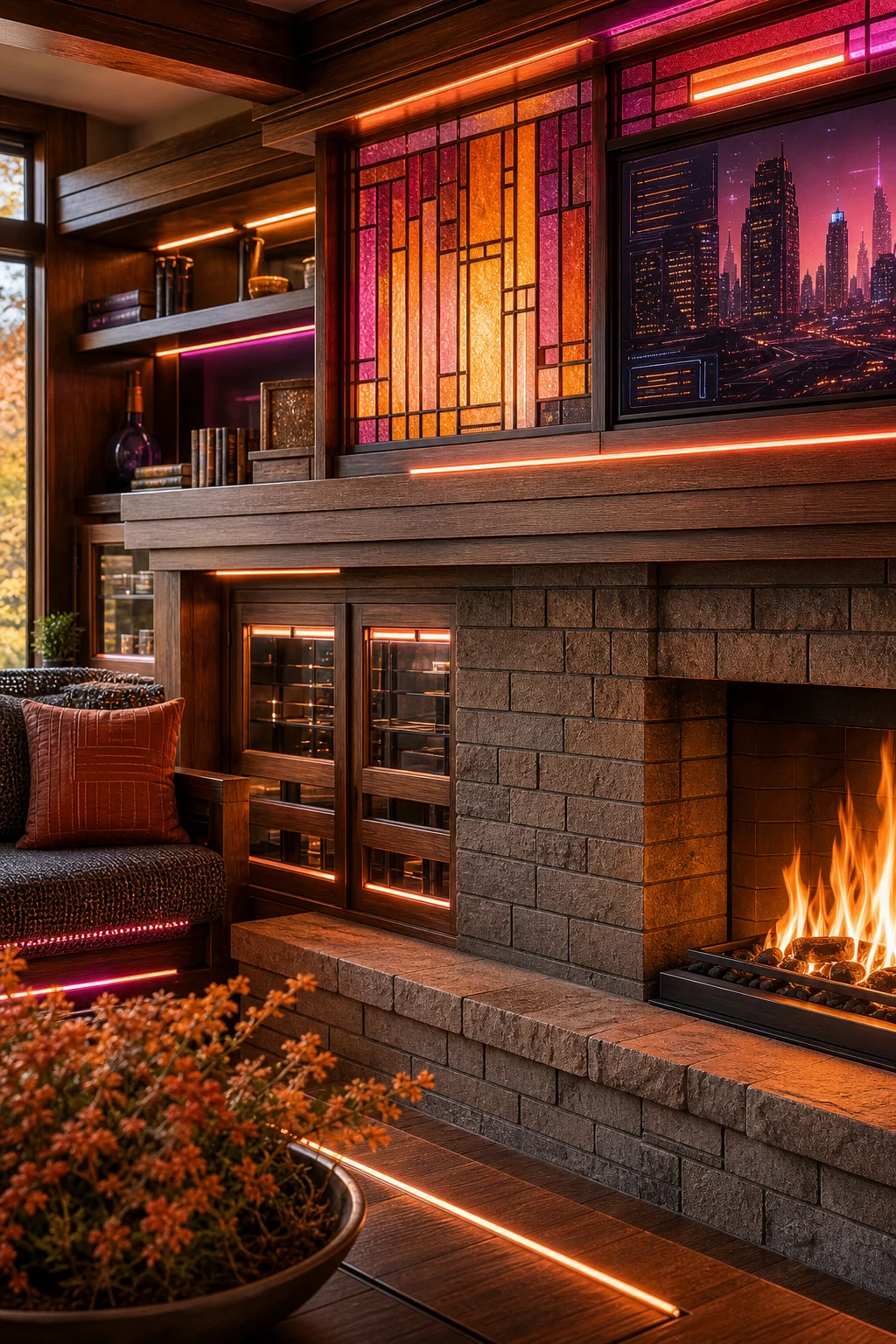
We programmed these edge-lit acrylics to glow in warm amber and soft magenta. This specific choice directly replicates the earthy rust tones of traditional Prairie stained glass, merging digital illumination with historic artisan glasswork seamlessly.
Furnishing the Space
Major furniture pieces must honor low-slung, heavy proportions while subtly accommodating integrated ambient technology. Deep seating arrangements utilize massive wooden bases to physically ground the room, establishing a strong horizontal datum line across the floor.
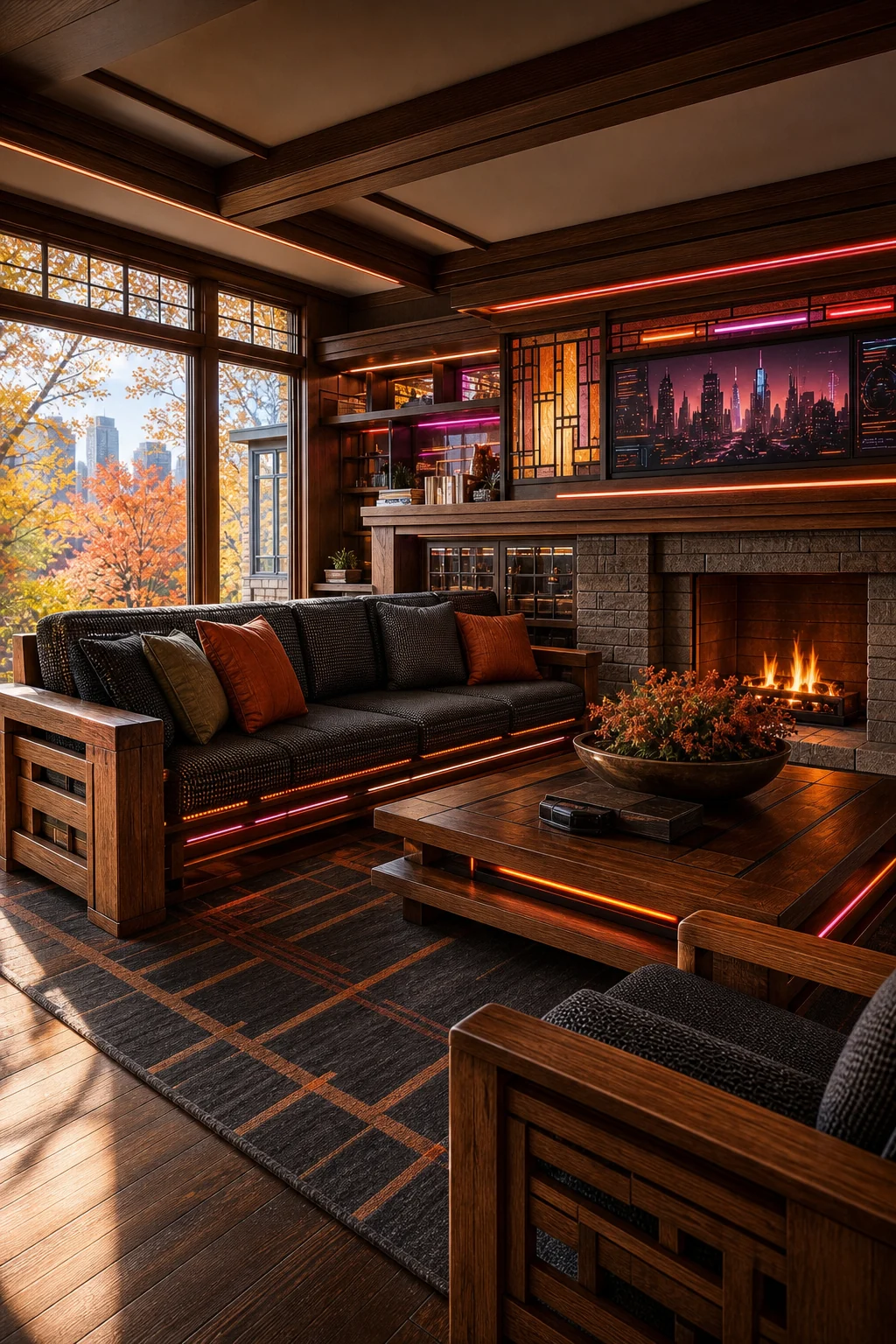
This historic weight allows the subtle integration of under-glow lighting without feeling like a temporary installation. The resulting seating area feels both deeply rooted in architectural history and effortlessly advanced in its technological capabilities.
| Design Layer | Prairie Style Role | Cyberpunk Role | Bridge Decision |
|---|---|---|---|
| Architectural Shell | Quarter-sawn oak built-ins and sweeping horizontal architectural banding. | Flush-mounted ultra-wide matte data screens embedded in wood. | Shared rigid linear geometry houses the technology perfectly without breaking the visual flow. |
| Large Furniture | Low-slung, heavy wooden frames with strict historic proportions. | High-tech breathable synthetic mesh upholstery on seating. | Matte, non-glossy finishes on both materials absorb natural daylight and prevent harsh glare. |
| Textiles | Earthy autumn rust, amber, and moss green color palette. | Tactile carbon fiber textures and dark grey technical fabrics. | Tactile, heavy weaves that feel visually organic but perform like advanced synthetics. |
| Lighting | Traditional amber and magenta stained art glass patterns. | Geometric edge-lit LED acrylic strips and subtle under-glow. | LEDs directly replicate the warm color temperature of historic glass to unify the room. |
| Accents | Handcrafted pottery and heavy Roman brick fireplace textures. | Sleek brushed anodized aluminum hardware and control panels. | Both styles avoid high-gloss plastics in favor of raw, authentic industrial finishes. |
Translating these layers ensures every futuristic addition has a historic counterpart. The resulting environment feels incredibly deliberate, preventing either aesthetic from overwhelming the other and maintaining a perfect equilibrium between organic warmth and synthetic precision.
Illuminating the Structure
Artificial lighting must enhance the architectural geometry rather than transforming the room into a dark, cinematic nightclub. Bright, balanced autumn daylight streams through large horizontal windows, connecting the interior directly to the natural world outside.
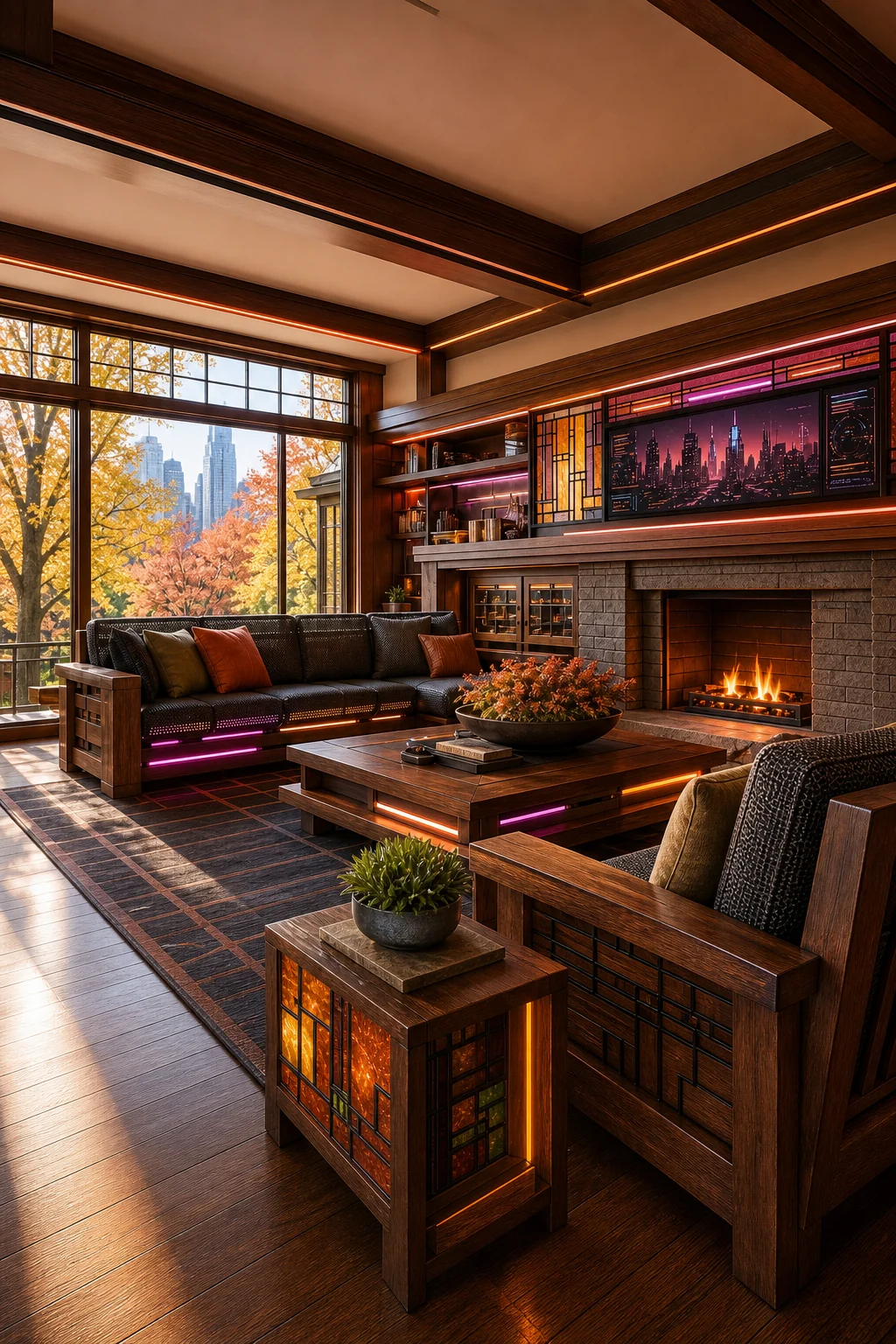
This natural light fills the space with lifted midtones and open shadows. The ambient edge-lit LED strips act as a subtle architectural highlighter rather than the primary illumination source, preserving the room’s daytime usability.
Maintaining this precise balance ensures the futuristic lighting feels like a deliberate enhancement. The technology serves the architecture, tracing the sweeping horizontal lines that define the entire living space without demanding absolute visual dominance.
Curating the Accents
Small styling moments provide the perfect opportunity to blend handcrafted warmth with sleek, futuristic precision. These curated details bridge the gap between heavy oak construction and glowing data interfaces, unifying the room at a human scale.
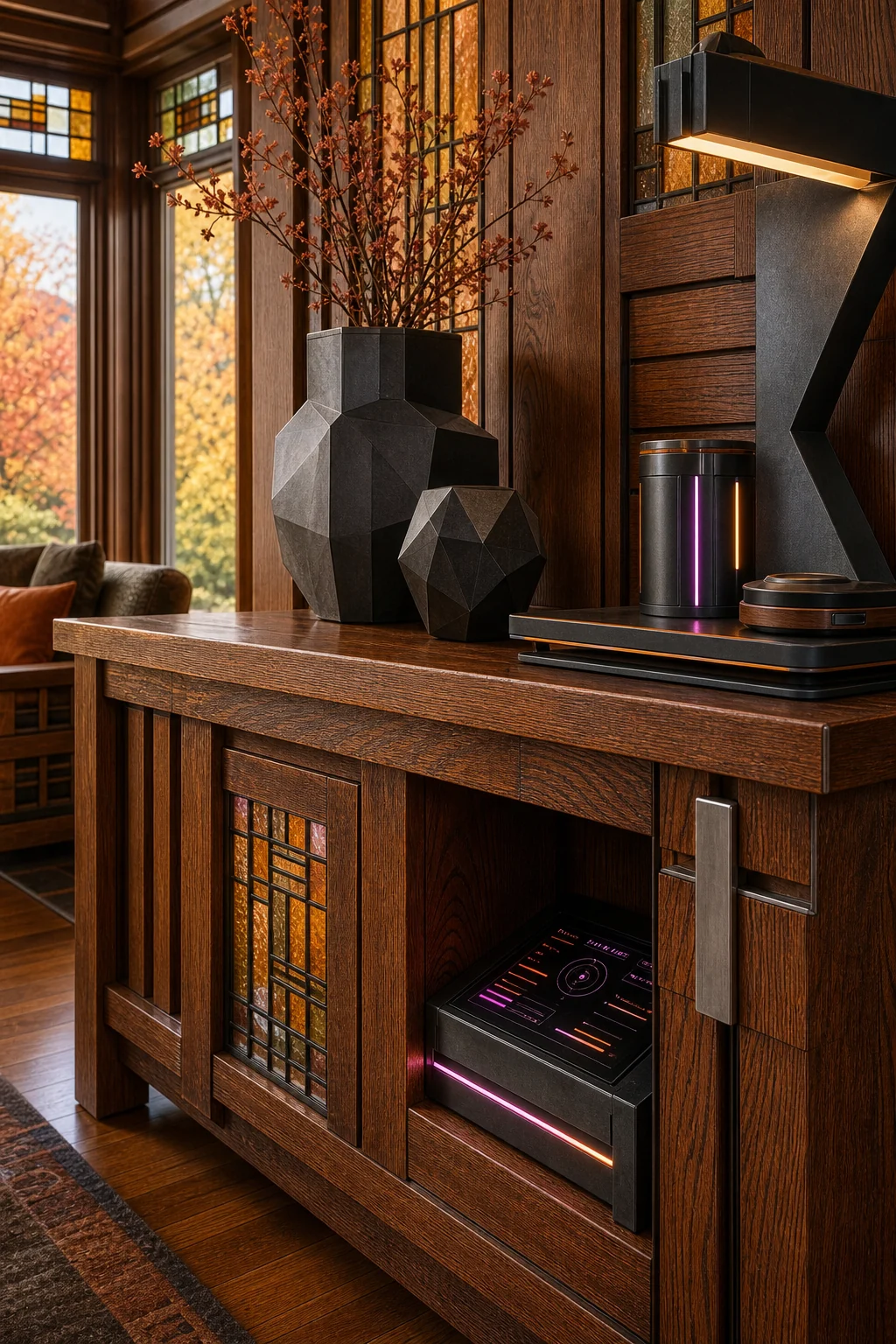
Matte carbon black ceramics and brushed metal hardware sit comfortably alongside oiled wood. These tactile, non-glossy finishes prevent the high-tech elements from feeling overly plastic or cheap, ensuring every surface invites physical interaction.
- Source low-profile anodized aluminum cabinet hardware to replace traditional brass pulls and knobs.
- Incorporate breathable dark grey synthetic mesh textiles for throw pillows to add futuristic texture.
- Install diffused amber LED channel lighting kits along major architectural joints for subtle illumination.
- Display matte black geometric ceramic vessels to visually ground the glowing synthetic tech elements.
Extending the Logic
This aesthetic tension works beautifully in transitional spaces, carrying the narrative beyond the main living area. A hallway or entry threshold provides a focused canvas for this hybrid approach, introducing guests to the resolved contradiction.
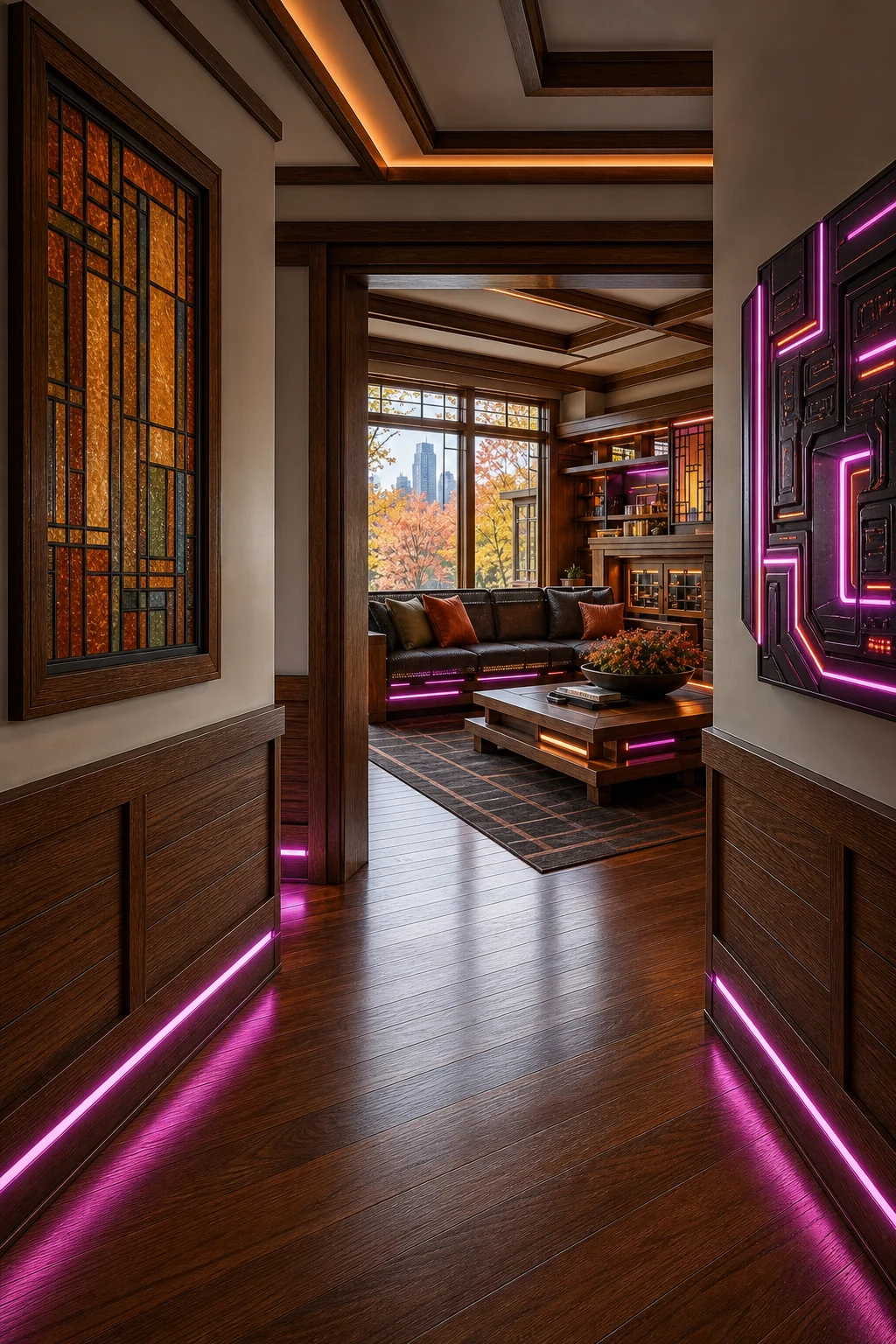
Apply continuous, flush-mounted baseboard lighting along hallway wainscoting to guide movement. Maintaining strict horizontal lines through passages ensures the futuristic elements feel like a permanent, integrated utility rather than an afterthought applied to the walls.
- Keep transitional threshold lighting strictly confined to baseboards or historic wooden picture rails.
- Conceal all modern wiring completely within the historic wooden wall paneling and structural framework.
- Maintain the exact same warm amber color temperature across all connecting rooms and hallways.
- Use identical brushed metal hardware on all transitional doors to ensure a cohesive experience.
Balancing the Extremes
Pushing too far in either direction destroys the delicate harmony, resulting in a disconnected, chaotic environment. A dominant historic shell keeps the futuristic lighting grounded, highly intentional, and perfectly balanced against the natural architectural materials.
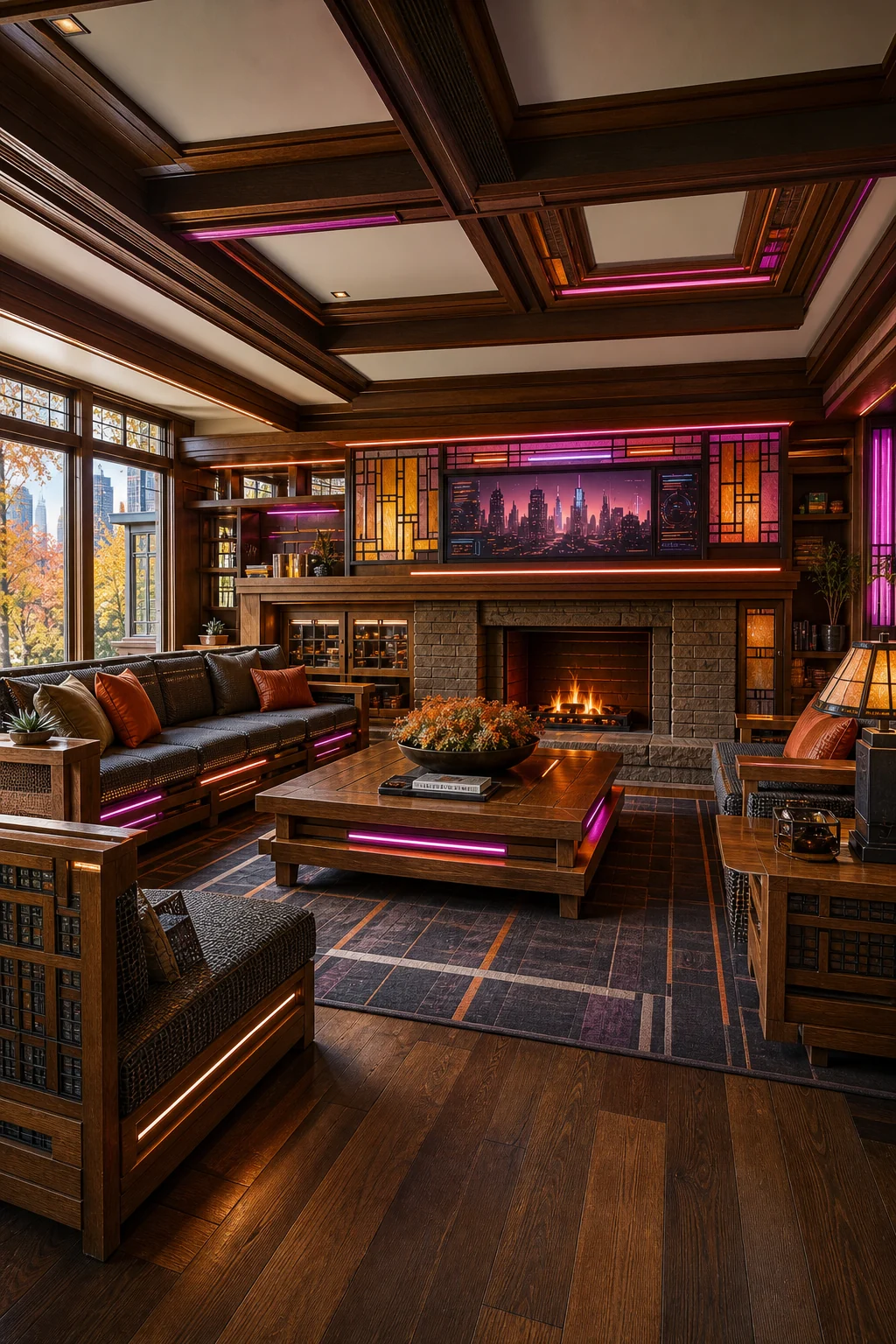
By strictly controlling the material palette and hiding the technological infrastructure, the contradiction resolves beautifully. The final living room becomes a cohesive, aspirational retreat that honors historic craftsmanship while embracing a highly advanced, synthetic future.
Use this test to guarantee your technological additions remain secondary to the architecture. If the room passes, you have successfully avoided creating a chaotic movie set, achieving a truly livable, balanced interior design.
- Avoid glossy neon plastics that look like cheap movie props instead of permanent architectural fixtures.
- Never group all smart technology in one corner away from the grounding historic wood architecture.
- Prevent bright, flashing LEDs from overpowering the natural autumn daylight streaming through the windows.
- Ensure every digital screen is flush-mounted to preserve the sweeping horizontal lines of the room.