
Tudor Meets Modern: Living Room
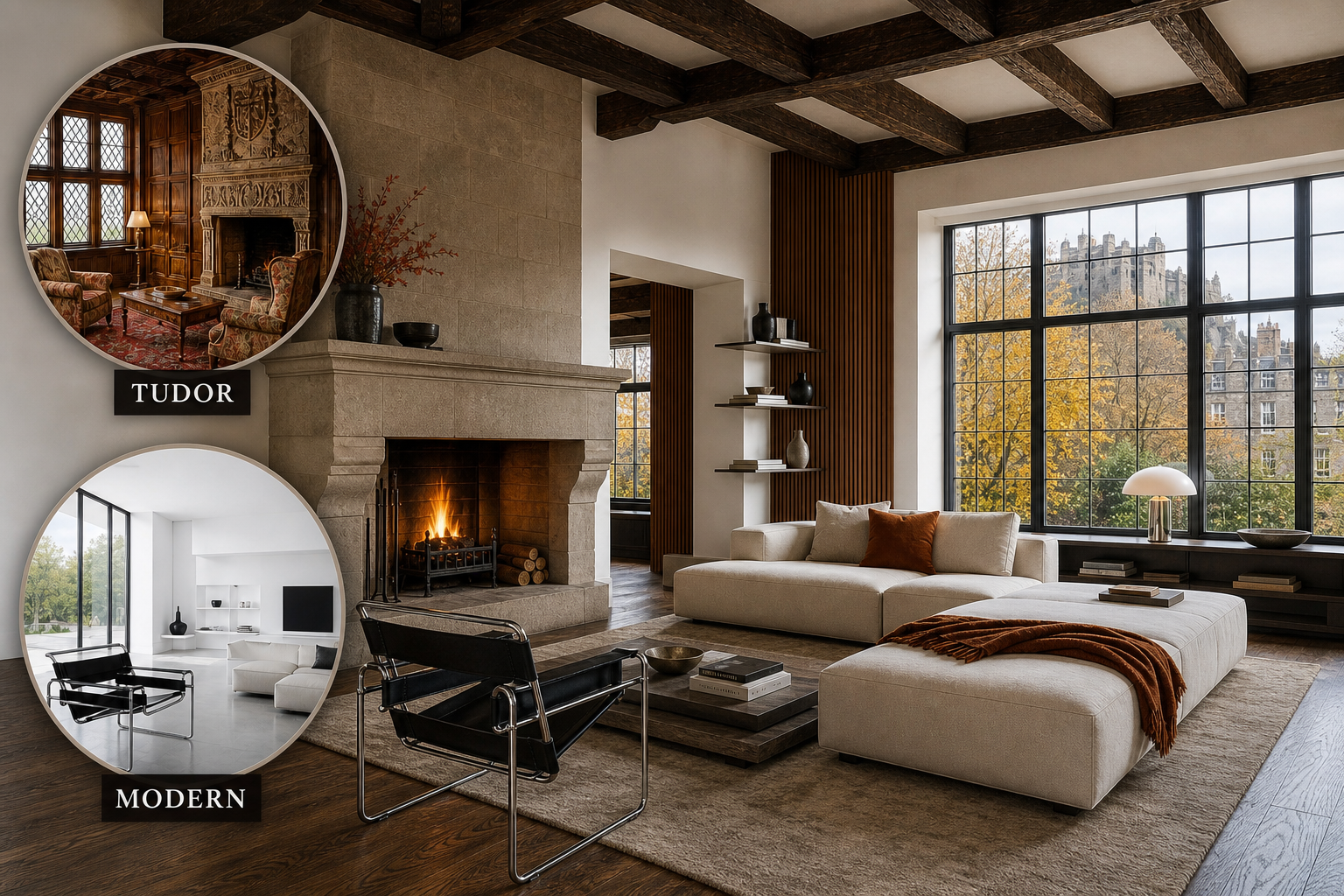
Tudor controls the architectural shell and tactile warmth, while Modernism dictates the spatial flow, furniture silhouettes, and strict absence of clutter. This deliberate framework beautifully resolves the inherent clash between heavy historic handcraft and light, unornamented machine-age functionalism.
Grounding the Historic Shell
The architectural foundation relies entirely on Tudor weight and permanence to anchor the space. Heavy Scottish oak ceiling beams provide essential tactile warmth without overwhelming the room. This historic mass establishes a deeply rooted sense of place before introducing newer concepts.
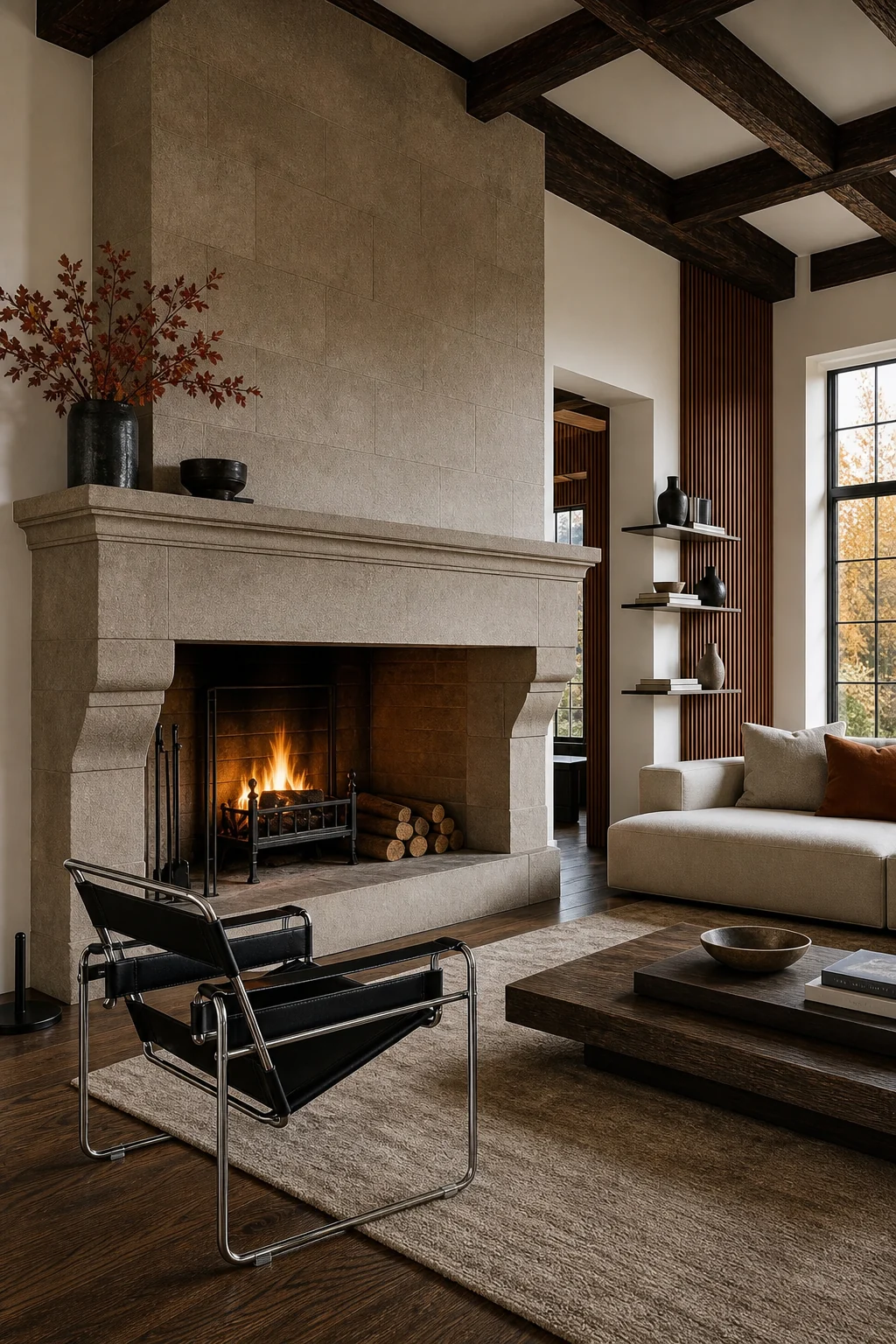
By stripping fussy heraldic carvings from the hearth, the masonry adopts a monolithic modern profile. This stripped-back approach highlights the warm pale grey Edinburgh sandstone. Such monumental restraint sets the perfect structural stage for introducing strict, unornamented furniture silhouettes.
Leaving these architectural surfaces unrefined prevents the space from feeling overly curated or artificially pristine. The deep brown oak with its silvered grain must read as an authentic structural necessity rather than a superficial decorative veneer applied as a mere afterthought.
Introducing Machine-Age Lines
Modernism dictates the spatial flow through low-profile furniture and strict, unornamented geometry. A cream modular sofa keeps sightlines completely clear, ensuring the historic architecture remains the dominant visual force. This calculated emptiness allows the heavy room to breathe effortlessly.
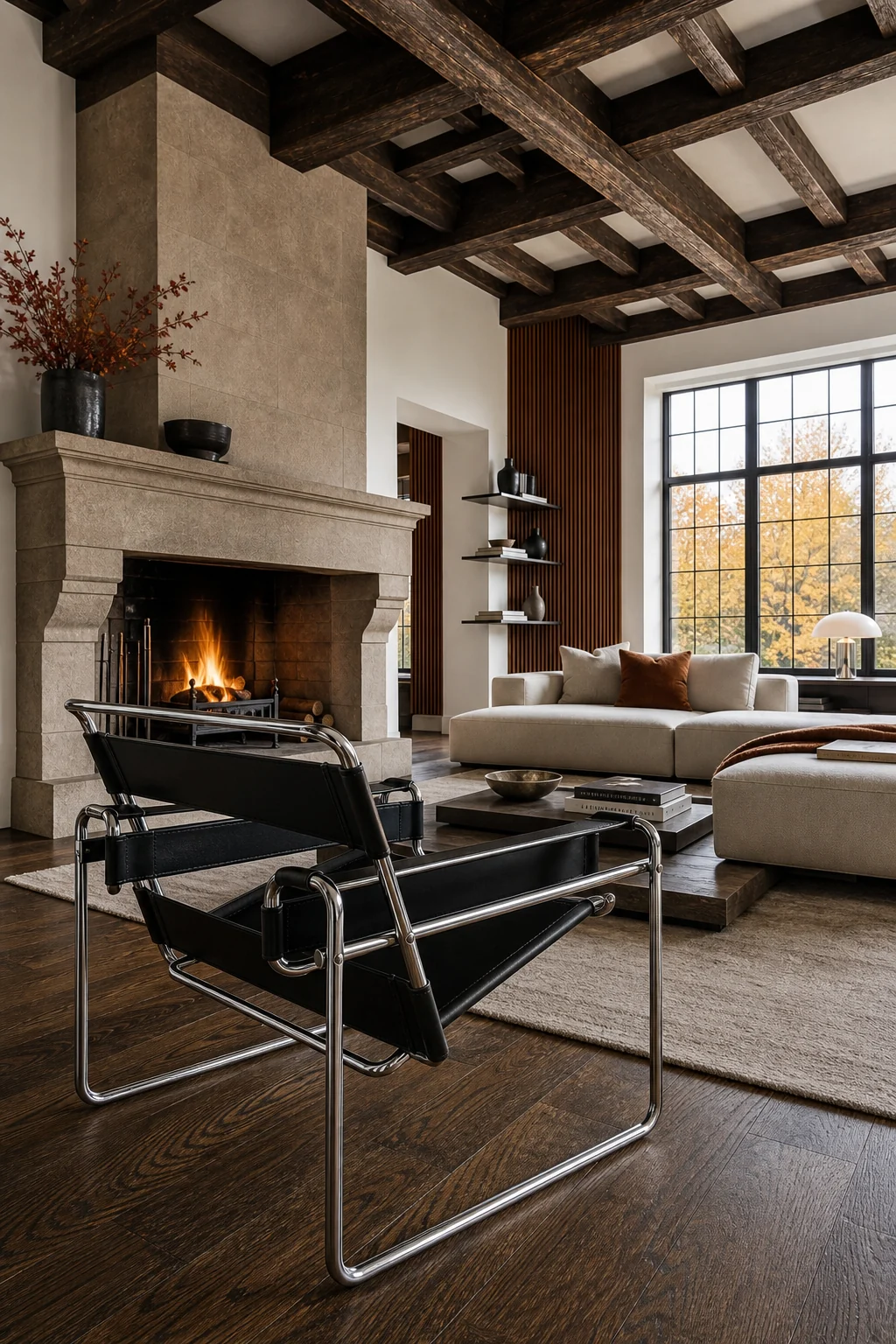
A tubular steel and black leather accent chair introduces sharp, functionalist lines into the traditional envelope. Shared vertical geometry bridges these eras, keeping the visual weight perfectly balanced. You must strictly enforce this physical lightness to prevent historical suffocation.
- Prioritize low-profile seating to preserve open vertical space and highlight the massive historic ceiling beams.
- Select tubular steel frames to contrast heavily against the thick, aged timber of the architecture.
- Use tightly tailored cream upholstery to reflect natural autumn daylight inward across the dark floors.
- Maintain generous negative space around every single piece of modern furniture to ensure effortless circulation.
Bridging the Centuries
Finding shared geometry prevents these two distinct eras from feeling like a chaotic visual collision. Simplified leaded glass retains historic techniques but uses large, strict rectangular panes instead of tiny diamonds. This subtle update modernizes the incoming daylight beautifully.
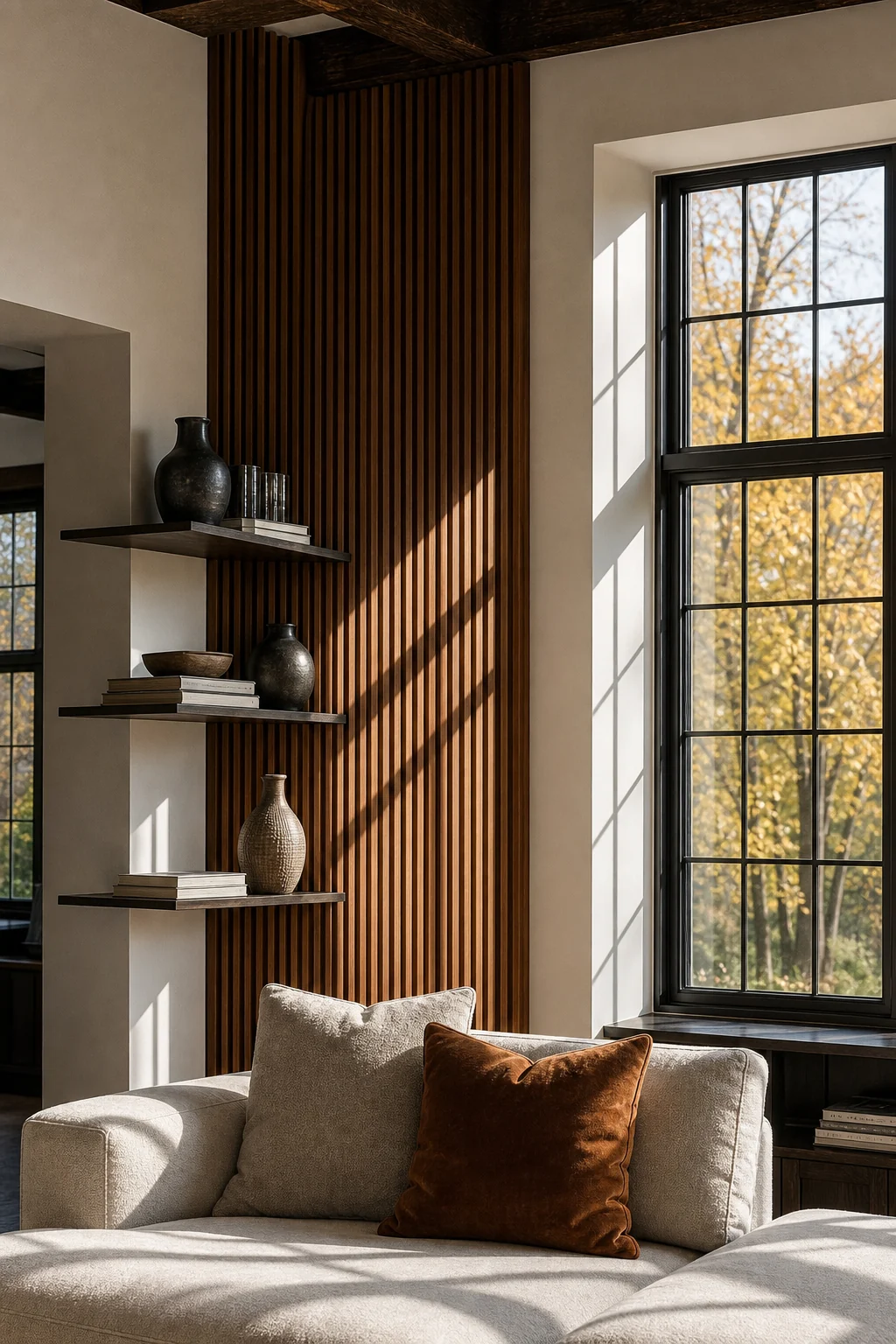
Vertical acoustic wood slats echo traditional Tudor wall paneling through a sleek, contemporary lens. These structural elements set the stage for a cohesive functional zone. Matching the wood tones precisely ensures this modern intervention feels historically inevitable and deeply grounded.
Establishing these material bridges early allows the heavier historic elements to recede slightly into the background. When the eye recognizes shared vertical geometry and textures, the tension between handcraft and machine-age functionalism resolves into a deliberate, harmonious dialogue.
Assembling the Core Vignette
Bringing both styles into a single functional zone requires careful, deliberate material distribution. The seating arrangement prioritizes Modernist restraint while sitting entirely within a Tudor envelope. Muted rust and faded ochre accents introduce subtle autumn warmth into the composition.
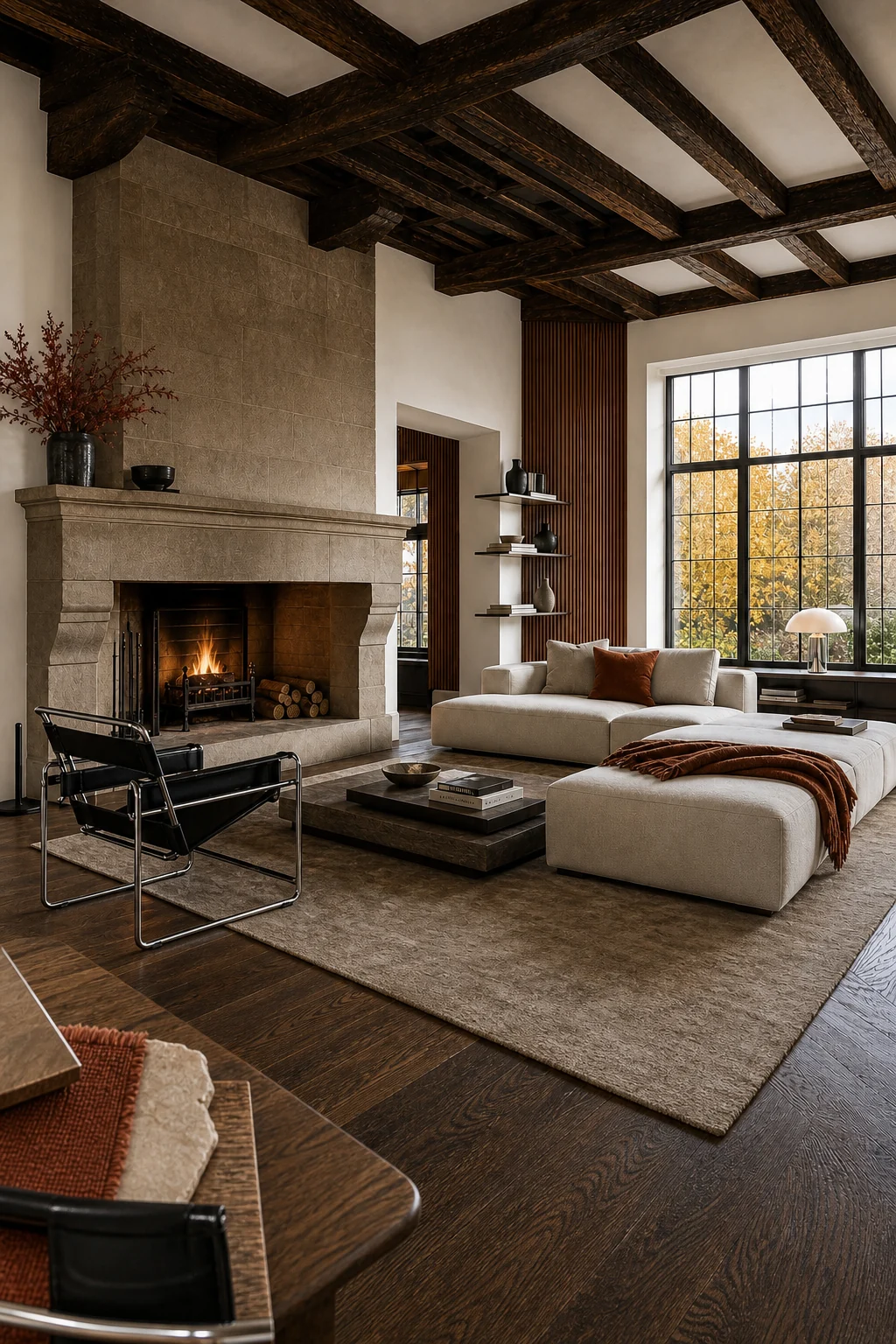
Proper lighting and a strict material hierarchy keep this integrated mix from feeling gloomy. Every object must justify its footprint within the historic shell. The following framework dictates exactly how each design layer contributes to the final unified atmosphere.
| Design Layer | Tudor Role | Modern Role | Bridge Decision |
|---|---|---|---|
| Shell | Architectural foundation and heavy oak beams | Crisp white walls and open spatial flow | Stripped-back monolithic masonry |
| Furniture | Aged Scottish oak accent tables | Low-profile cream modular seating | Matte black steel frames |
| Textiles | Muted rust and faded ochre throws | Unornamented, tightly tailored upholstery | Tactile but unpatterned natural fibers |
| Lighting | Warm ambient glow from the hearth | High-key daylight exposure | Simplified rectangular leaded glass |
| Accents | Raw sandstone and heavy ceramics | Strict absence of clutter | Floating architectural shelving |
By adhering strictly to this layered distribution, the room avoids the chaotic feeling of a random eclectic mix. The architecture provides the necessary gravitas, while the furnishings deliver the clean, functional livability expected in a contemporary Scottish home.
Lifting the Shadows
High-key exposure is crucial to prevent the dark oak beams from compressing the room visually. Crisp gallery white walls between the heavy dark beams lift the midtones significantly. This deliberate contrast ensures open shadows and highlights the deep wood grain.
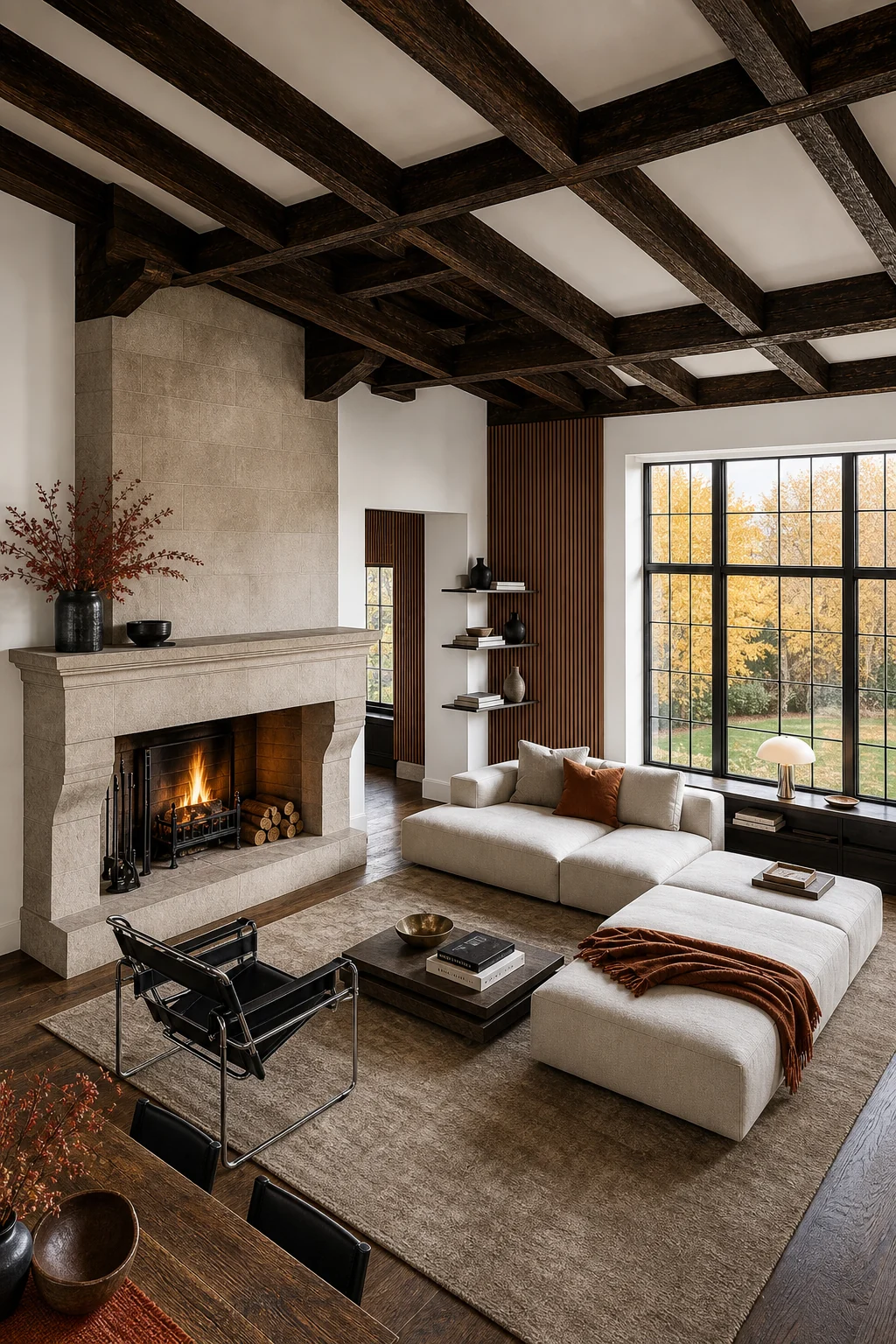
This bright canvas supports curated styling without sacrificing historic warmth. Maximizing the silver autumn daylight streaming through the mullioned windows requires completely unadorned glass. Any heavy drapery would immediately suffocate the crisp, minimalist atmosphere we are working to establish.
Maintaining this stark contrast between the pale walls and the aged Scottish oak is non-negotiable. It is the specific mechanism that allows machine-age furniture to exist comfortably beneath centuries-old architectural framing without looking like a temporary showroom installation.
Curating the Accents
Modernism demands a strict absence of clutter, meaning every styled object must carry significant visual weight. Floating minimalist architectural shelving replaces heavy traditional bookcases entirely. Displaying only a few purposeful objects in matte black and raw stone bridges the gap.
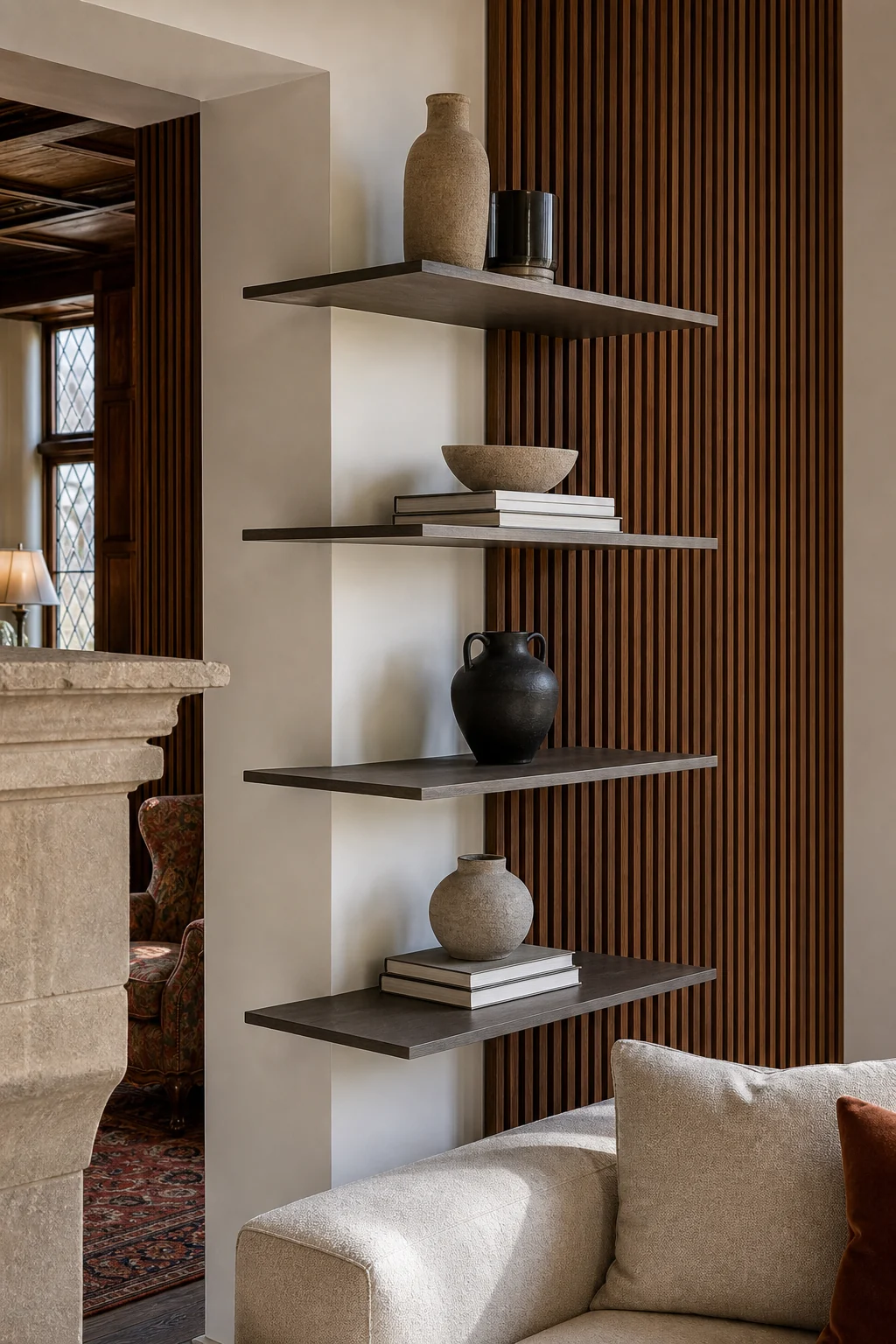
This logic translates easily to adjoining spaces when you maintain strict discipline. Sourcing the right finishing touches requires focusing entirely on texture and silhouette rather than decorative pattern. Look for these specific categories to complete the hybrid aesthetic successfully.
- Source matte black steel log holders for highly functional, unornamented hearth storage.
- Invest in low-profile cream modular sofas to anchor the main seating arrangement effortlessly.
- Select tubular steel accent chairs to introduce sharp, functionalist lines into the traditional space.
- Display raw sandstone ceramic vessels to echo the monumental fireplace masonry on open shelves.
Extending the Logic
This delicate balance must translate beyond the main living area to maintain whole-home coherence. Moving into transitional spaces, heavy Tudor masonry perfectly frames strict Modernist vignettes. A simple steel console table in the hallway continues the functionalist narrative seamlessly.
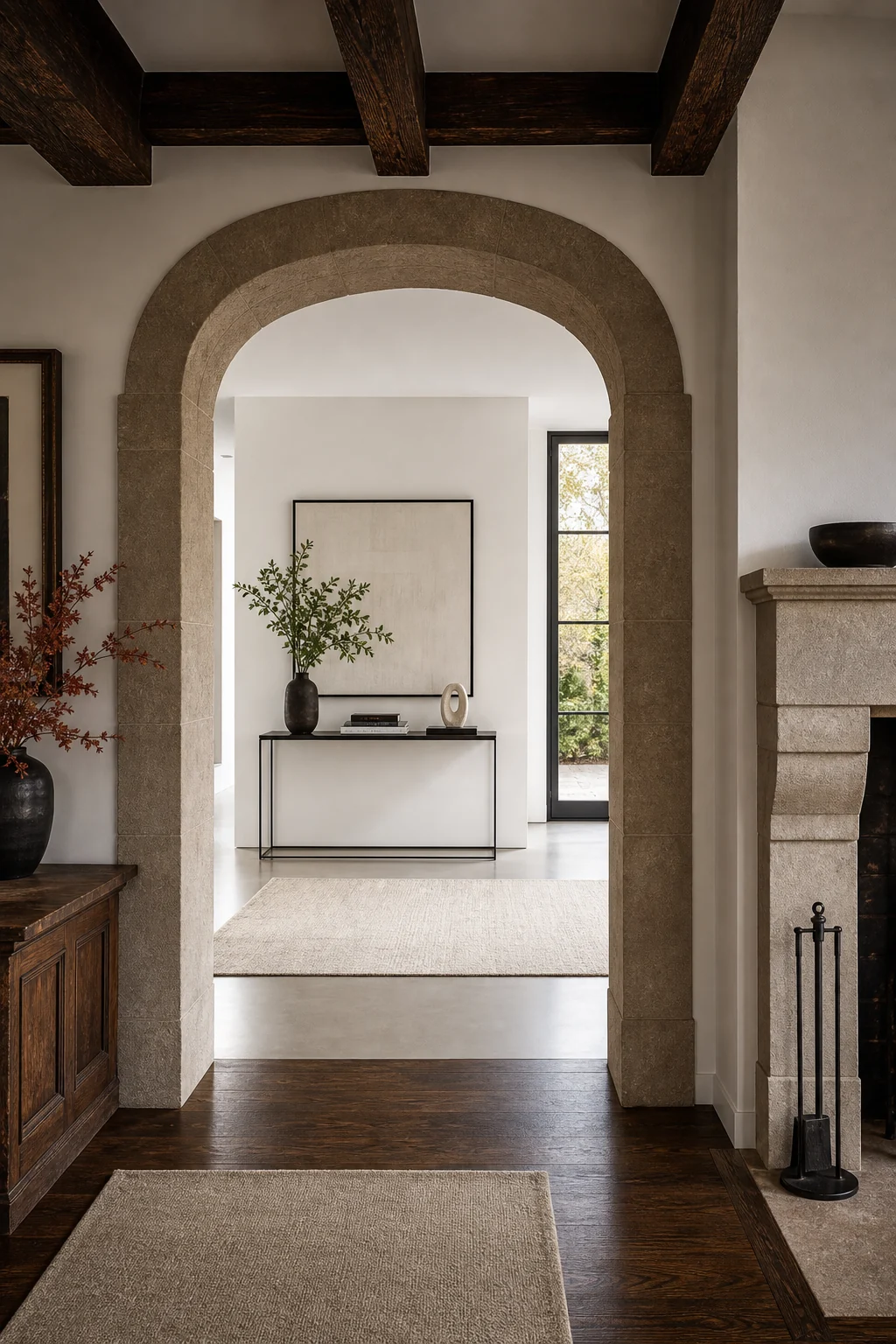
Maintaining this discipline prevents a theme-park effect as you move through the house. The sightlines from the living room into the corridors must maintain the exact same ratio of crisp white walls to dark oak to ensure absolute continuity.
- Ensure connecting hallways share the exact same gallery white paint to maximize light.
- Carry the aged Scottish oak flooring continuously through every threshold without using transition strips.
- Use identical matte black hardware on all interior passage doors for subtle modern repetition.
- Keep transitional lighting fixtures strictly geometric and visually unobtrusive to avoid competing with beams.
Preventing the Split Personality
A successful integration feels inevitable, never like a battle for dominance between two eras. The most common failure mode is a split personality, where one half completely ignores the other. Enforcing strict color palettes and shared geometry resolves this contradiction.
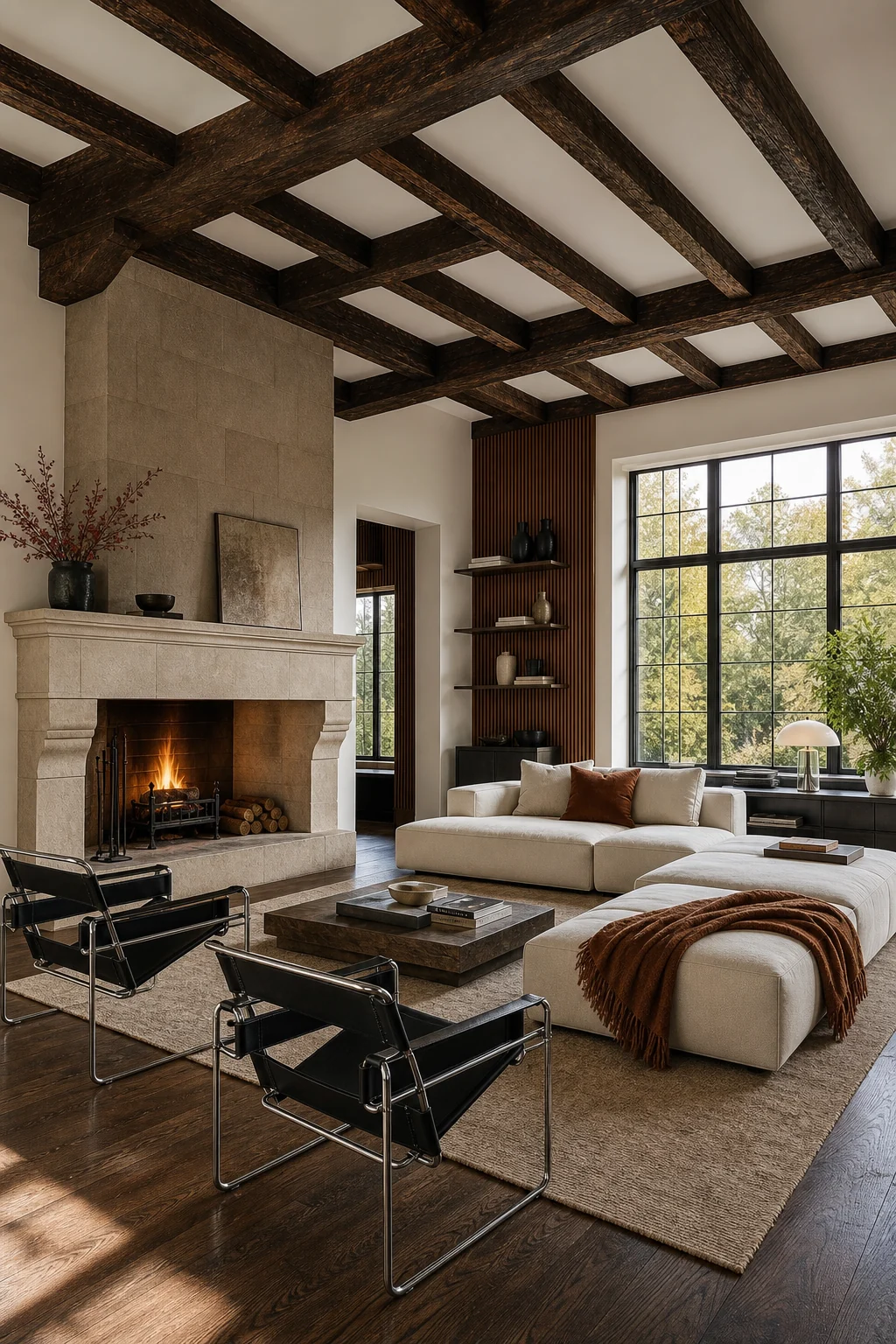
When executed correctly, the tension between the heavy, ornate mass of historic handcraft and the light, open geometry of machine-age functionalism vanishes. The resulting space feels both deeply rooted in its Edinburgh context and entirely suited to contemporary living.
- Avoid tiny diamond window panes that instantly clutter your carefully planned minimalist sightlines.
- Skip ornate heraldic carvings on any new stone architectural additions to maintain sleek profiles.
- Never use heavy antique seating alongside modern architectural wall treatments or minimalist shelving.
- Resist adding patterned traditional rugs that dilute the strict material hierarchy of the floor.