Window Sill Decor: Get Our Free Styling Sheet and Guide
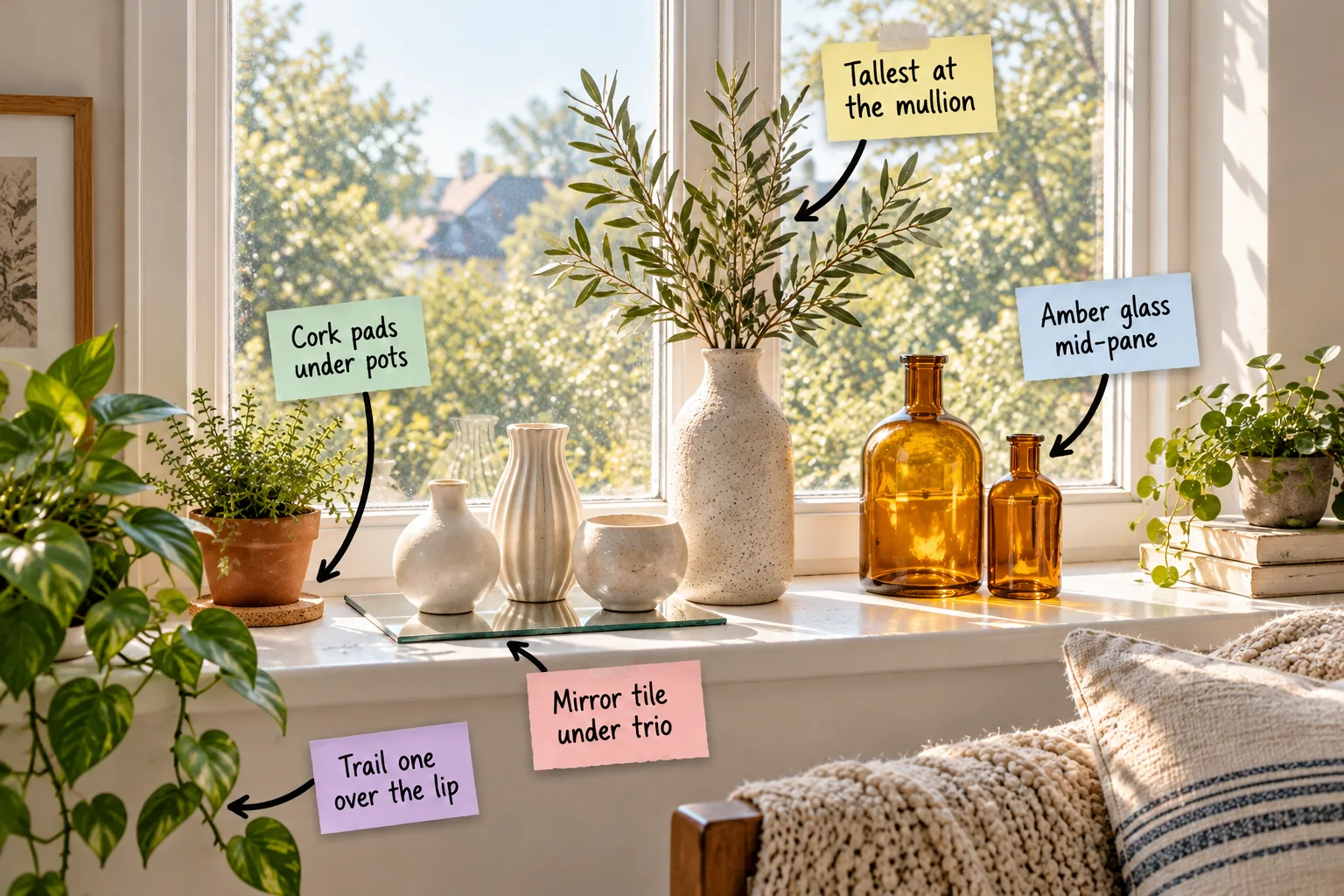
Transform your empty window sill with our printable one-page Sill Styling Sheet, complete with a fit chart and placement plan. You will confidently choose the right plants and arrange decor that perfectly catches the light without blocking your view.
Download Your Free Sill Styling Sheet
In my own Boston apartment, I used to knock over vases daily until I mapped out the exact clearances. Start by grabbing the printable one-page Sill Styling Sheet to check maximum safe object dimensions for standard 4-inch, 6-inch, and 8-inch depths.
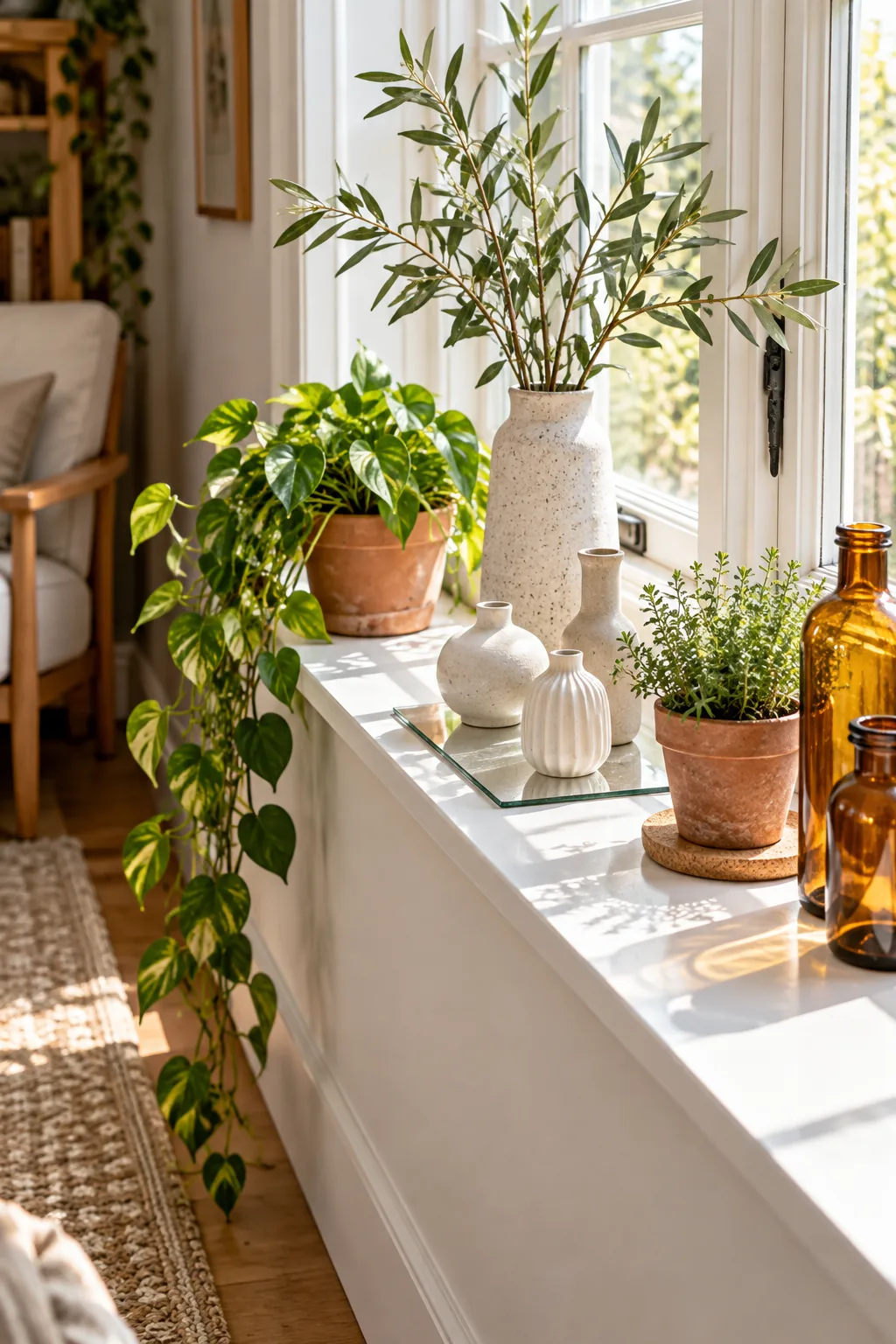
Before you start moving heavy pots or buying new vases, you need to know exactly what your specific window can handle. Taking three quick measurements ensures your new arrangement will look intentional rather than cluttered.
Measure Your Available Ledge Space
Different window frames dictate exactly how much base area you have to work with before objects become unstable. Refer to these standard dimensions to determine your maximum safe styling footprint before purchasing new ceramics.
| Sill Type | Actual Depth | Max Object Base | Best For |
|---|---|---|---|
| Standard Narrow | 4 inches | 3 inches | Small bottles, vines |
| Classic Medium | 6 inches | 5 inches | Herb pots, trios |
| Deep Historic | 8 inches | 7 inches | Large vases, books |
Always measure from the interior glass pane to the rounded front lip to find your true usable depth. Leaving a 1-inch safety margin prevents heavy items from tipping forward into the room.
Soften the Hard Edge With a Trailing Plant
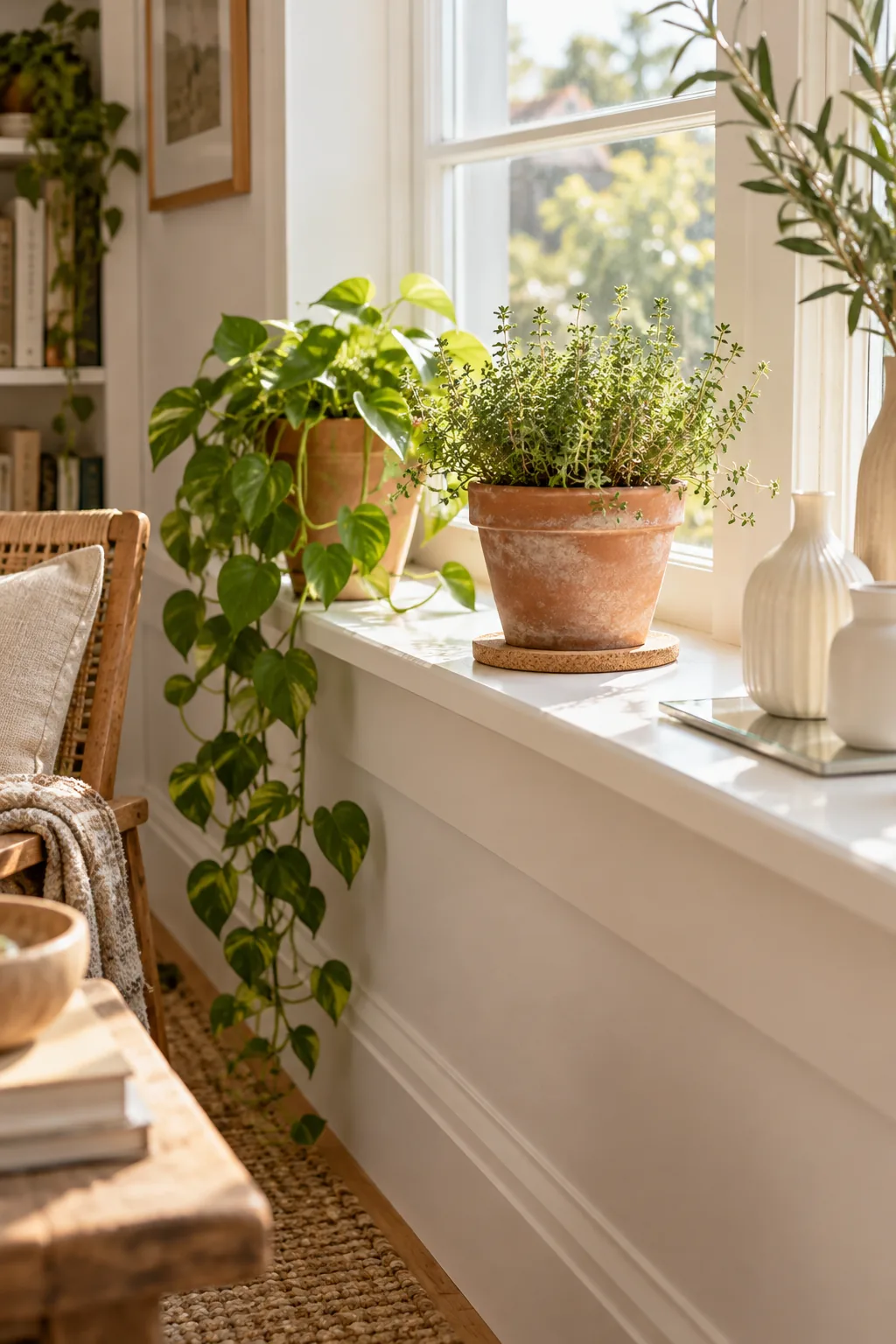
Anchor the far left side of the arrangement with a trailing plant like a pothos to break up the rigid horizontal line of the architecture. Position the pot so that a single vine spills directly over the front lip of the sill.
Choose the Right Trailing Varieties
While pothos is incredibly forgiving in bright indirect light, you can also use a string of pearls for a more delicate texture. Ensure the primary root ball sits at least 2 inches deep in the soil so the cascading weight does not uproot the plant.
Shield White Paint With Hidden Cork Pads
Terracotta pots naturally breathe, which quickly traps moisture and leaves permanent rings on painted wood. Slip a 1/8-inch round cork pad completely under the base of your herb pot to create an invisible protective barrier.
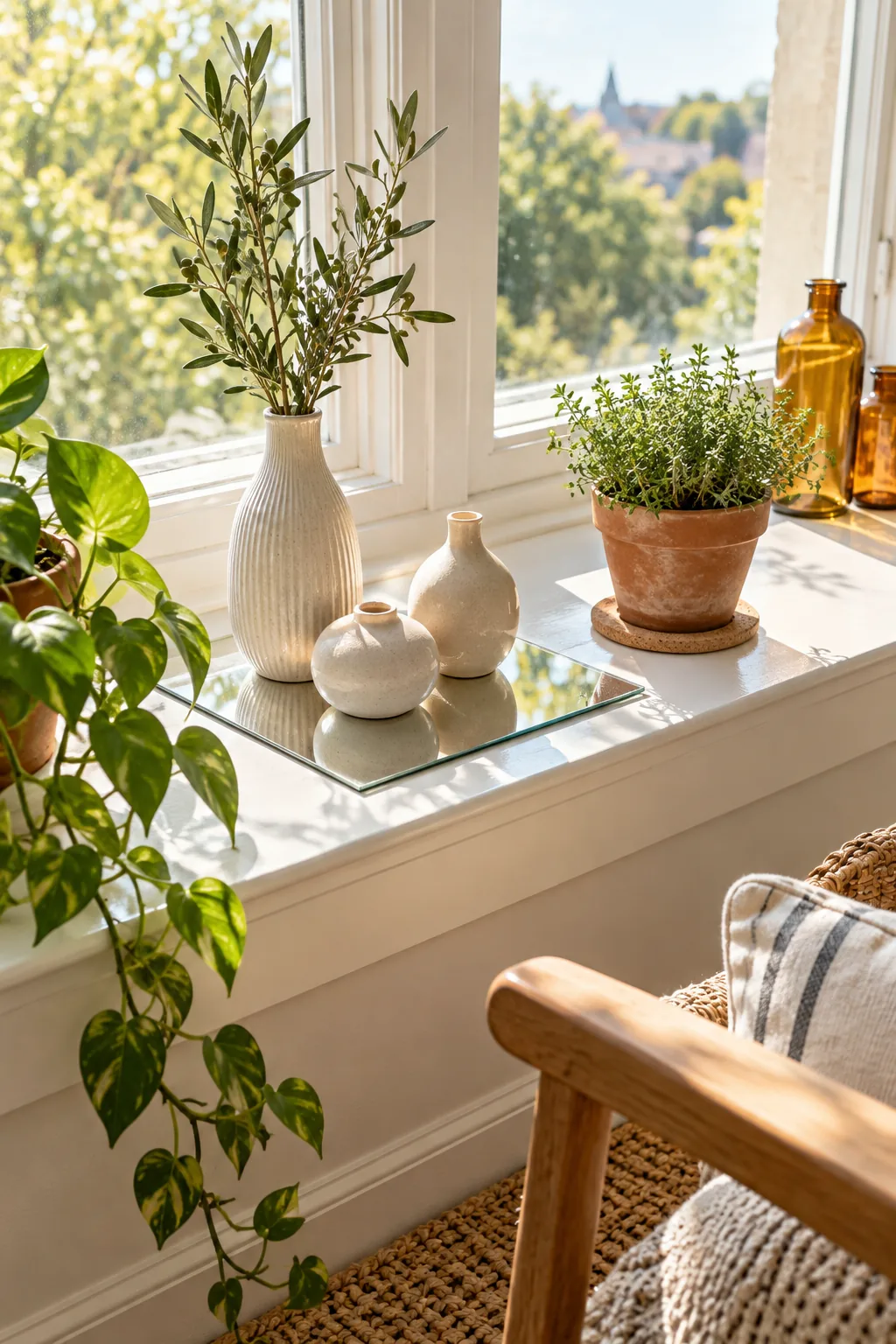
Prevent Moisture Damage on Wood
Painted window ledges are notoriously susceptible to peeling when exposed to constant dampness from overwatered plants. Wiping the surface weekly and maintaining a dry air gap beneath porous pots will dramatically extend the life of your trim.
Bounce Daylight Upward With a Mirror Tile
Lay a small, frameless square mirror tile perfectly flat on the sill to serve as a base for smaller objects. The mirror reflects the bases of the items placed on it and bounces a soft wash of daylight onto their undersides.
Cluster Neutral Ceramics in a Tight Trio
I always group off-white sculptural ceramics directly on top of the mirror tile in my own living room to multiply the morning light. Keep three varying shapes clustered tightly within a 6-inch footprint so they read as a single intentional collection.
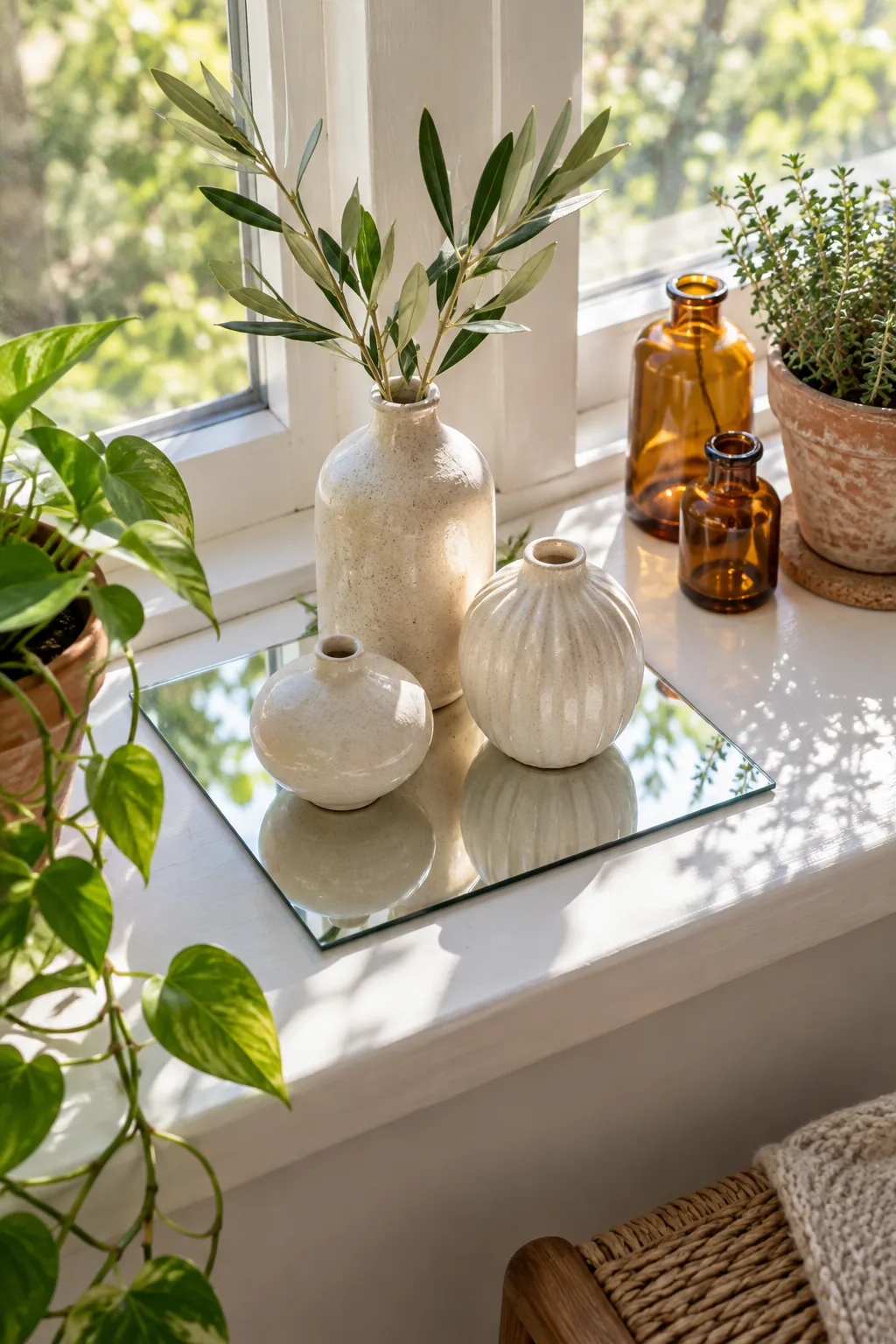
Maintain a Compact Visual Footprint
Spreading small items evenly across the entire sill creates a distracting, cluttered line that draws the eye away from the view outside. Grouping your decorative elements into distinct, purposeful zones allows the negative space to frame the outdoors beautifully.
Align Your Tallest Anchor With the Mullion
Place your tallest object, like a textured stoneware bottle vase holding an olive branch, directly in front of the window’s central vertical glazing bar. This strategic placement hides the thickest part of the decor against the existing frame, preserving your outdoor view.
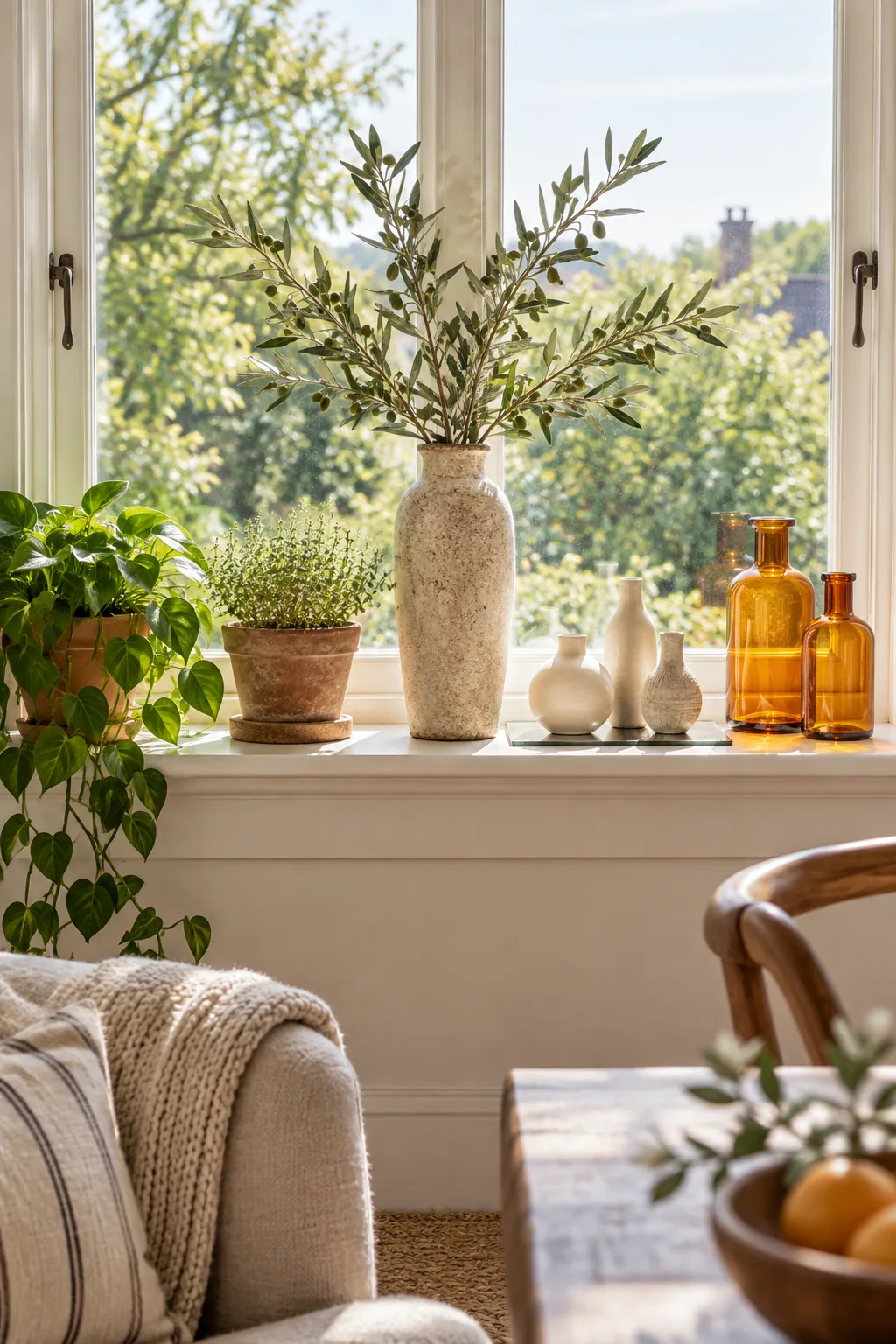
Mask Existing Architectural Dividers
Most modern windows feature a prominent central latch or thick vertical mullion that breaks up the glass pane. Using your tallest, most substantial decor piece to visually block this hardware streamlines the overall look of the room.
Position Transparent Glass in the Mid-Pane
I love placing vintage amber glass bottles right in the brightest center of the right window pane to catch the afternoon glare. Because light passes through them, they glow a warm honey-gold without obstructing the daylight entering the room.
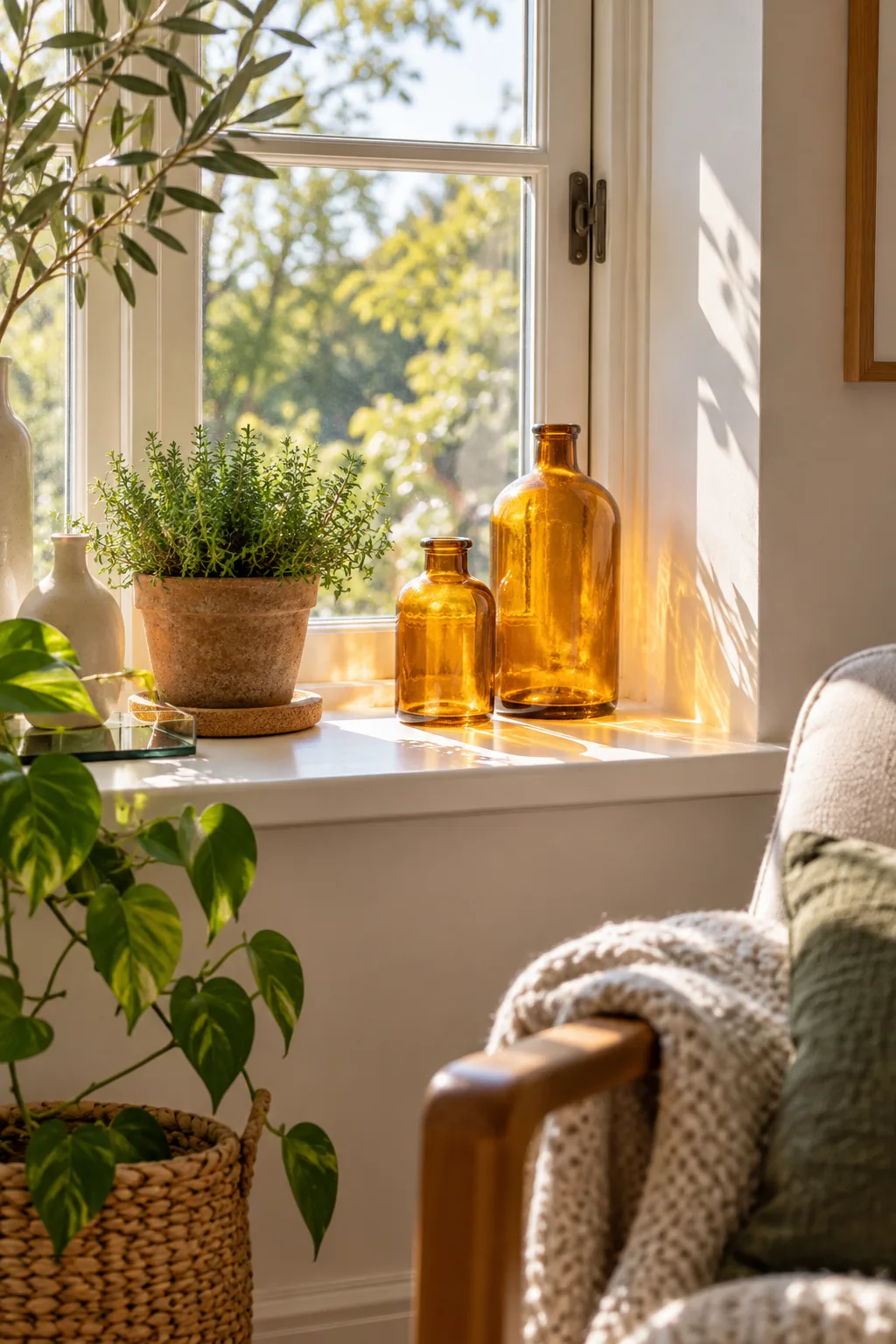
Maximize the Afternoon Sun Path
The angle of the sun shifts significantly throughout the day, altering how your transparent decor reads from the interior. Placing colored glass directly in the path of western exposure ensures a brilliant, glowing focal point during peak afternoon hours.
Finalize Clearances for Window Operation
Ensure all decorative objects sit at least 2 inches away from window cranks, latches, or sliding tracks so you can open the sash easily.
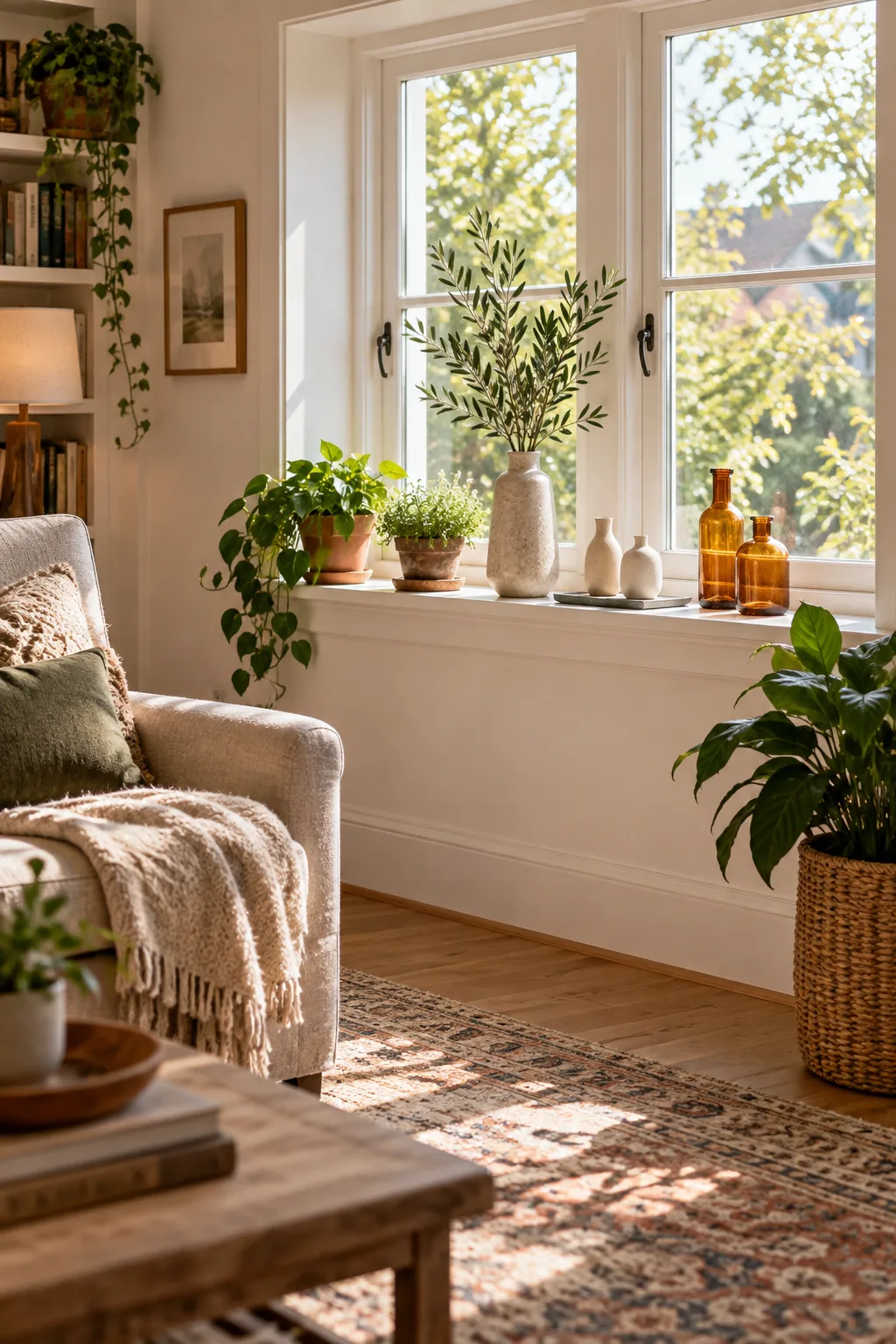
Even the most beautiful arrangement fails if it makes the room less functional. Before you consider the styling finished, double-check how your objects interact with the daily operation of the window.
More Window Sill Styling Ideas
Explore these distinct looks to find the perfect aesthetic for your own sunlit ledge.
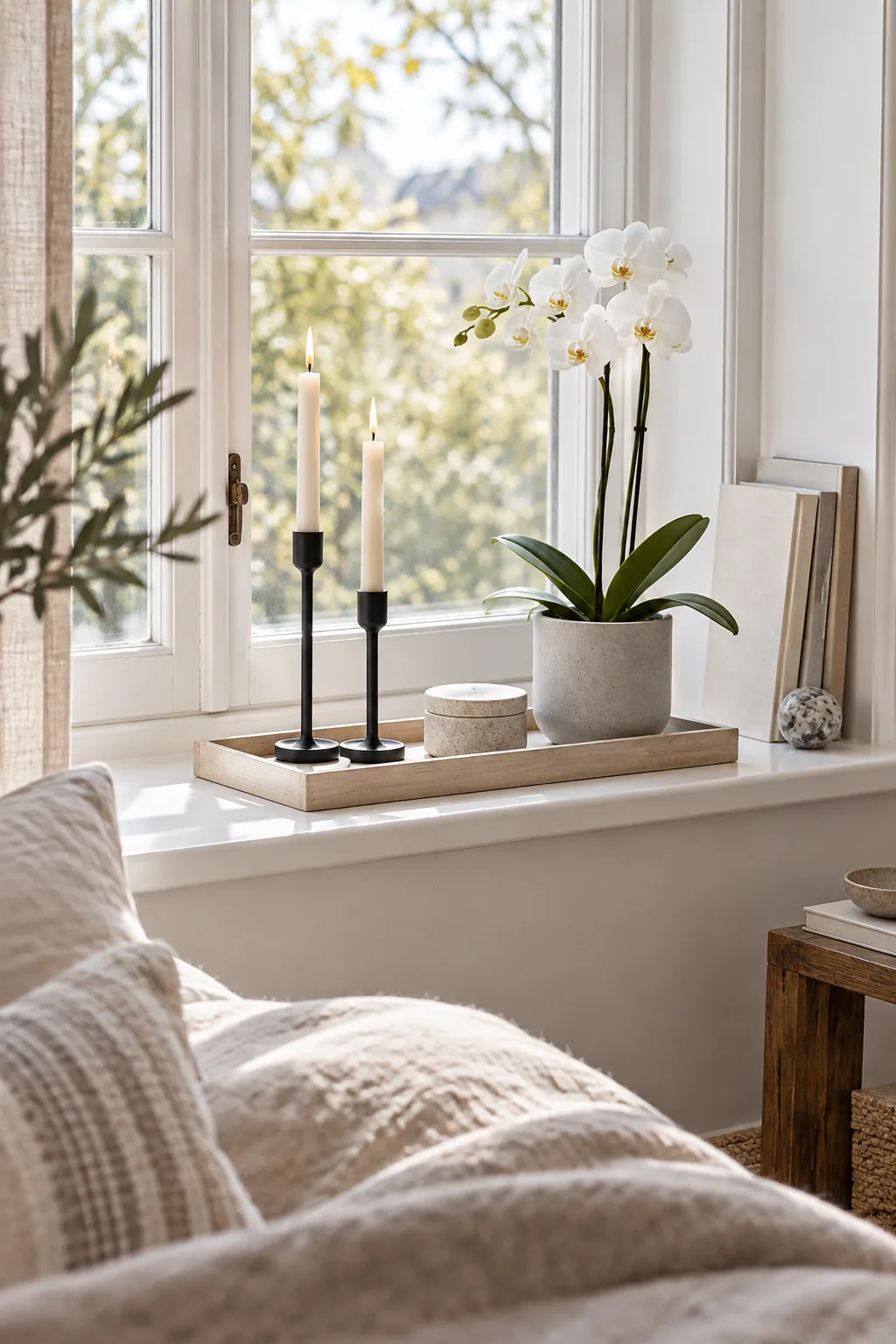
Minimalist Scandi bedroom sill: Anchor a stark white bedroom window with matte black metal accents and bleached wood textures for high contrast.
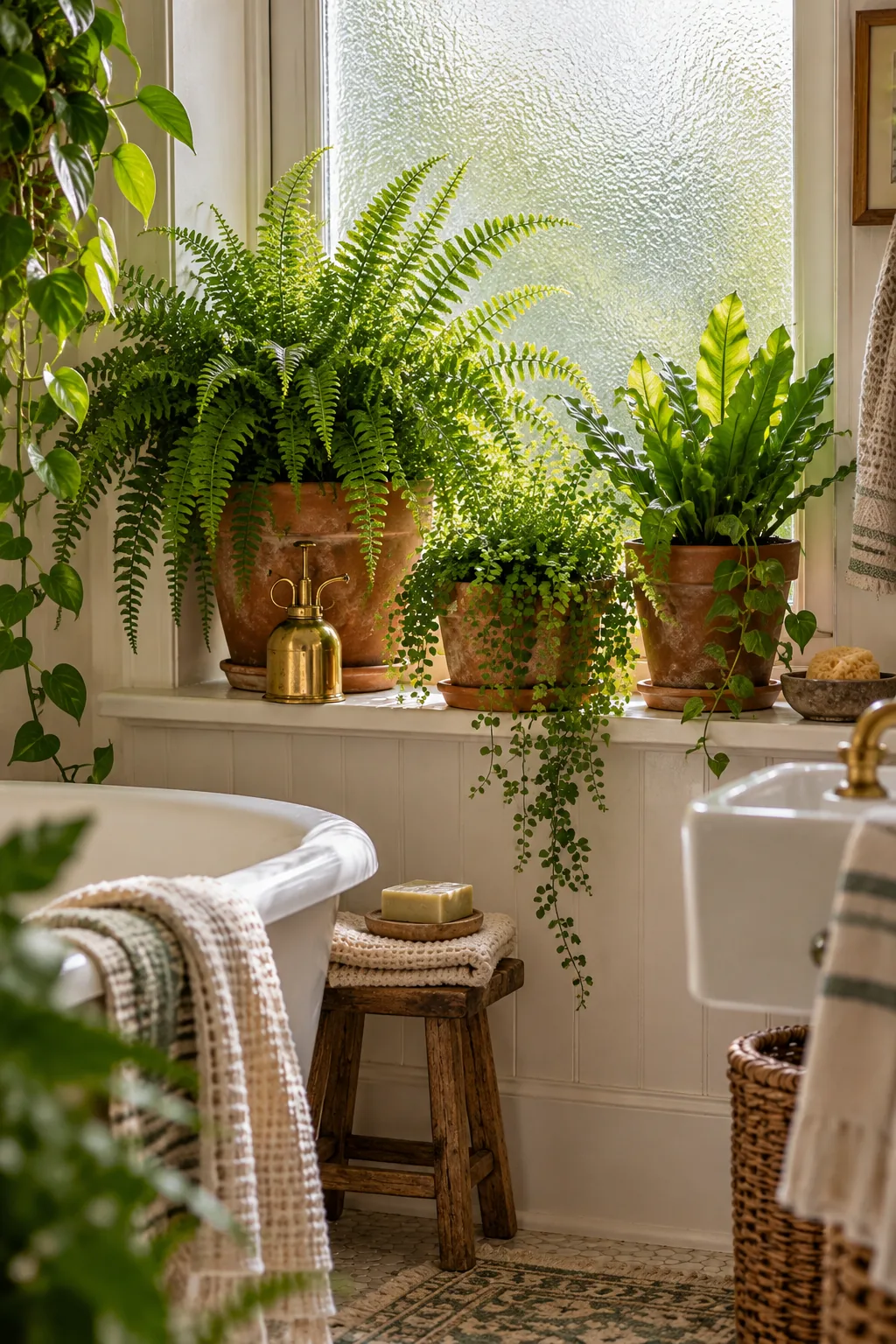
Lush bohemian bathroom jungle: Turn a frosted bathroom window into a greenhouse shelf by packing it tightly with humidity-loving ferns in terracotta.
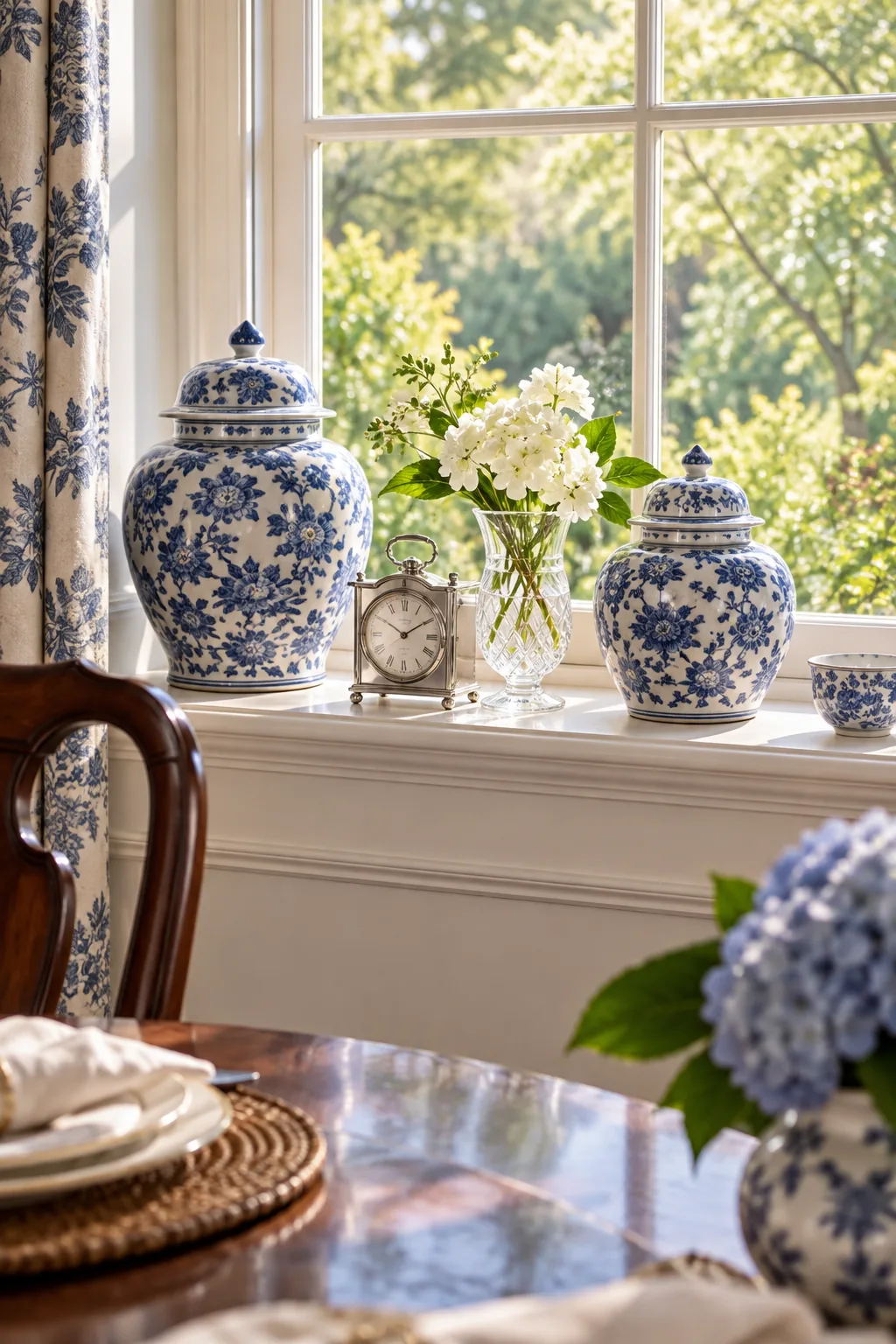
Classic traditional dining room: Flank the center of a formal dining room window with matching blue and white porcelain jars for perfect symmetry.