
10+ Clever Toddler Playroom Ideas for Your Home
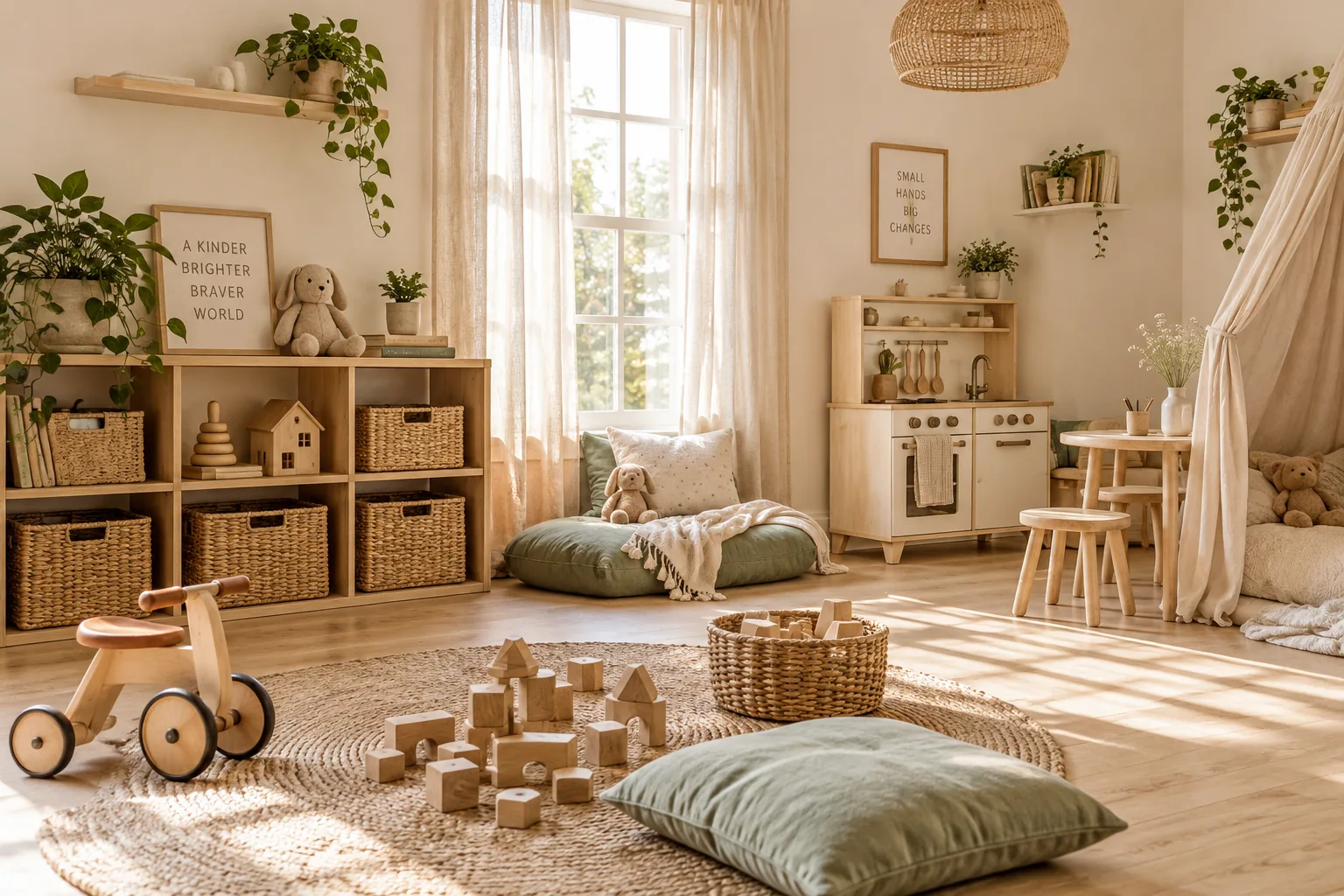
Designing a space for little ones means balancing their need for chaos with your need for order. These practical setups keep the toys accessible while making cleanup incredibly fast.
1. Low-Profile Storage Baskets
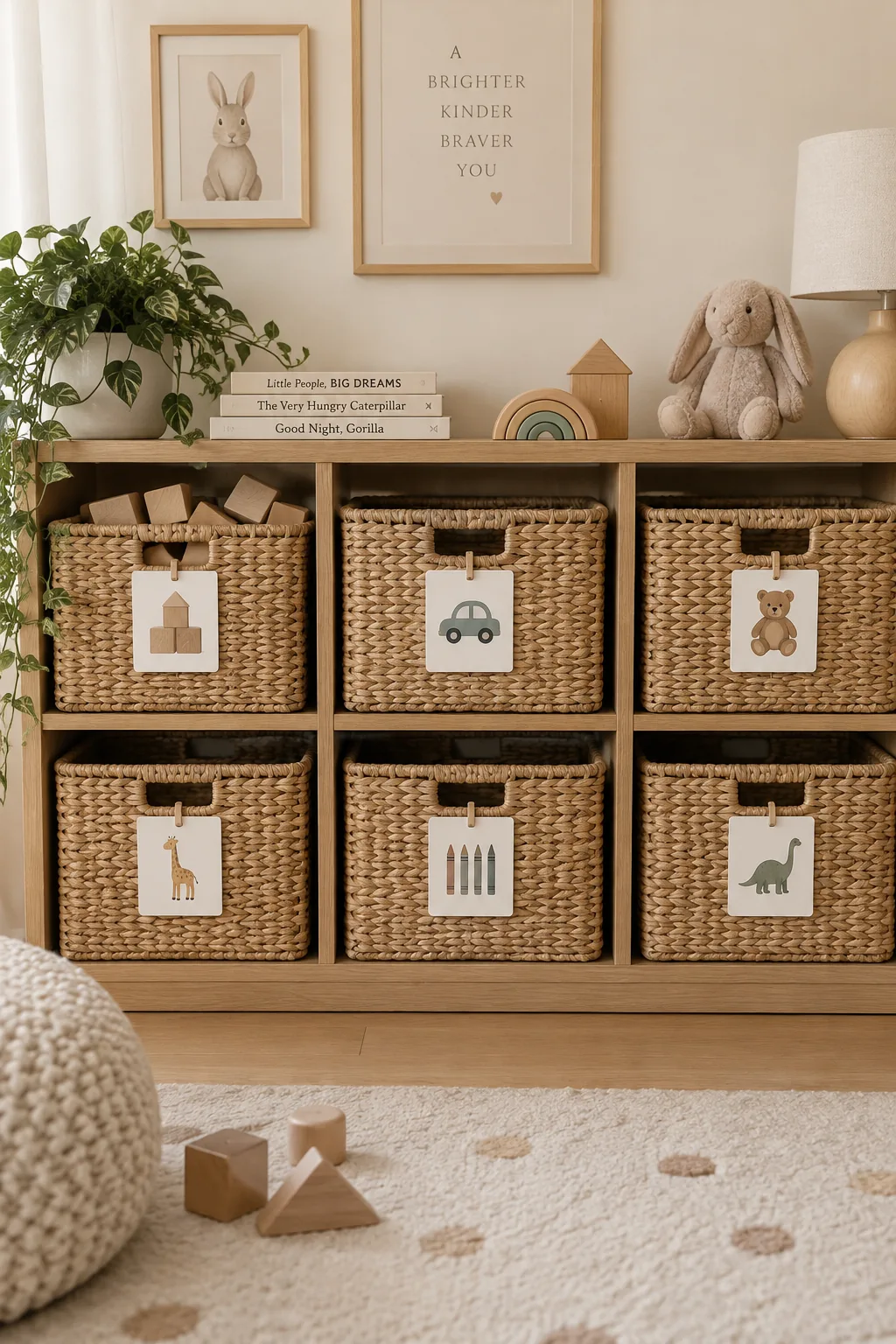
I always struggled with keeping my own kids' toys from taking over the entire house. Setting up a low-profile shelving unit with identical woven baskets completely changed the game. You just toss the loose blocks and plastic figures inside, and the room instantly looks put together. Labeling each basket with a simple picture card helps toddlers learn exactly where things belong.
Why it works: Visual uniformity hides the colorful plastic clutter while keeping everything at a toddler's exact eye level.
2. Create Distinct Play Zones
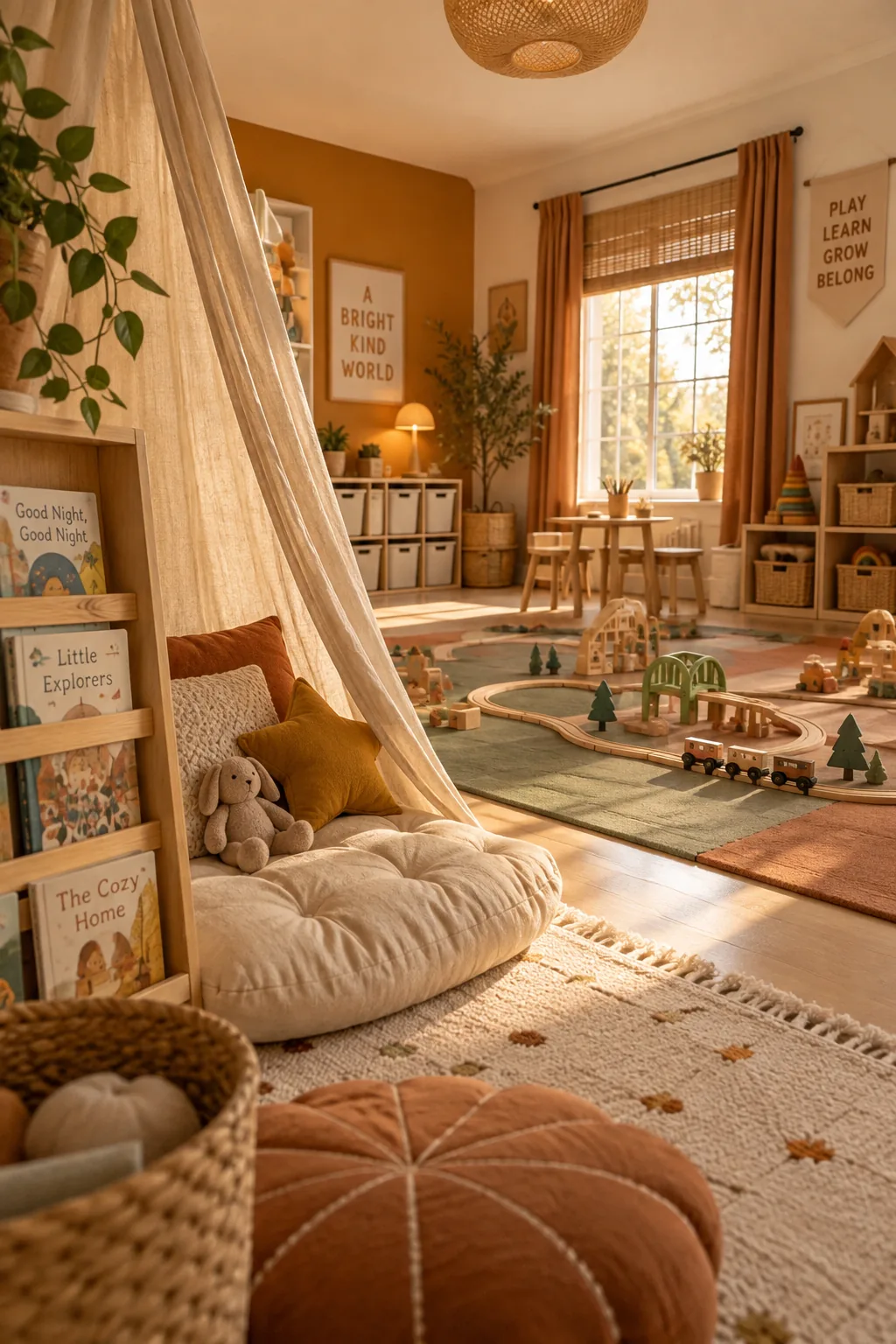
Creating distinct zones is the secret to keeping a toddler engaged for more than five minutes. A dedicated reading corner signals quiet time, while an open rug area invites active building.
Use a thick, washable play mat to anchor the active zone. It absorbs the noise of crashing blocks and wipes clean after inevitable spills.
Keep the furniture pushed to the perimeter. This leaves the center completely free for sprawling out with train tracks.
3. Implement Toy Rotation
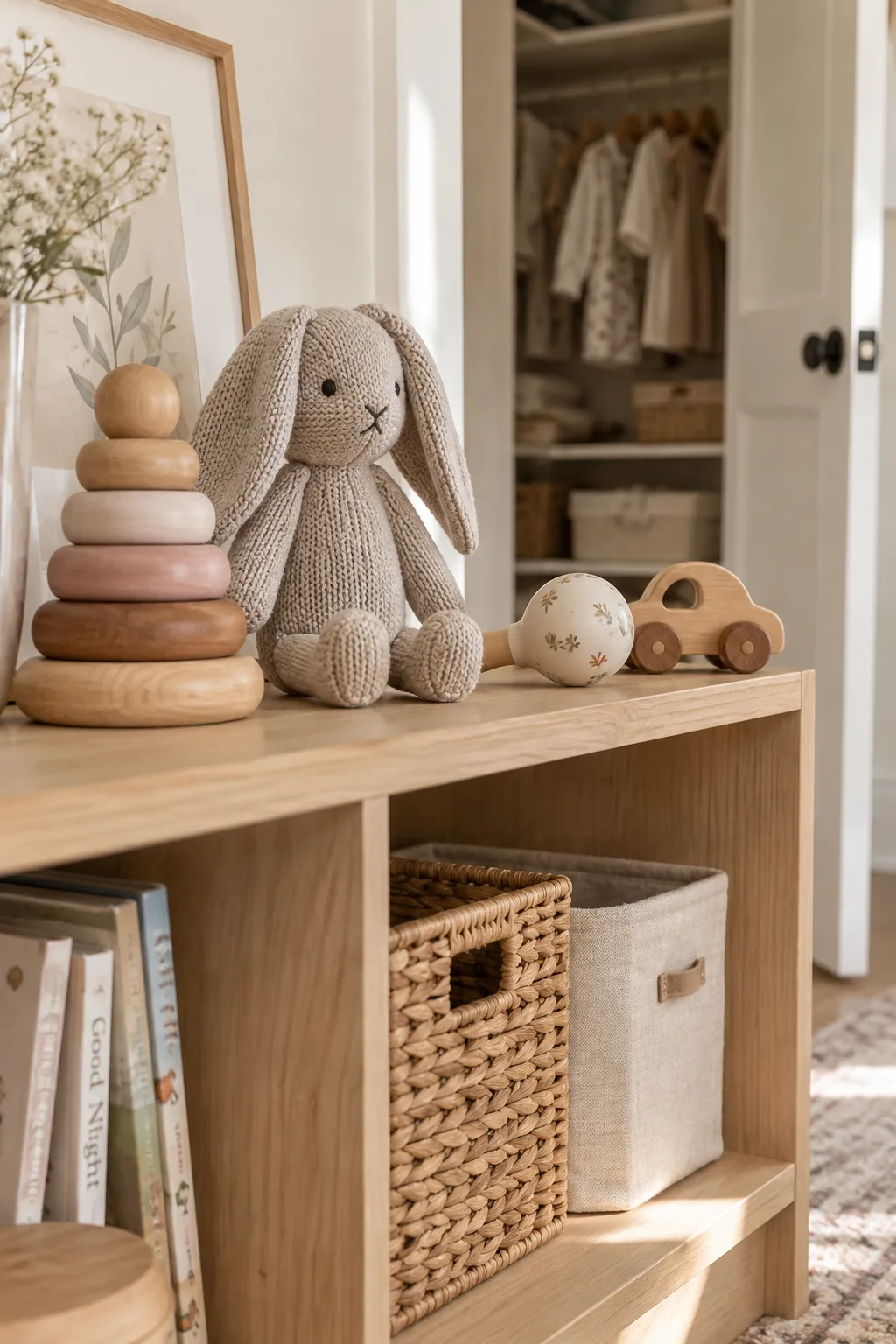
Toddlers typically play with only about 20 percent of their toys at any given time. Setting up a toy rotation closet lets you hide the bulk of their collection out of sight. Bring out just five or six high-quality toys on a display shelf to prevent visual overwhelm. When they get bored after a few weeks, simply swap the current items for the hidden ones. This approach actually makes old toys feel brand new again.
4. Secure Cubby Shelves
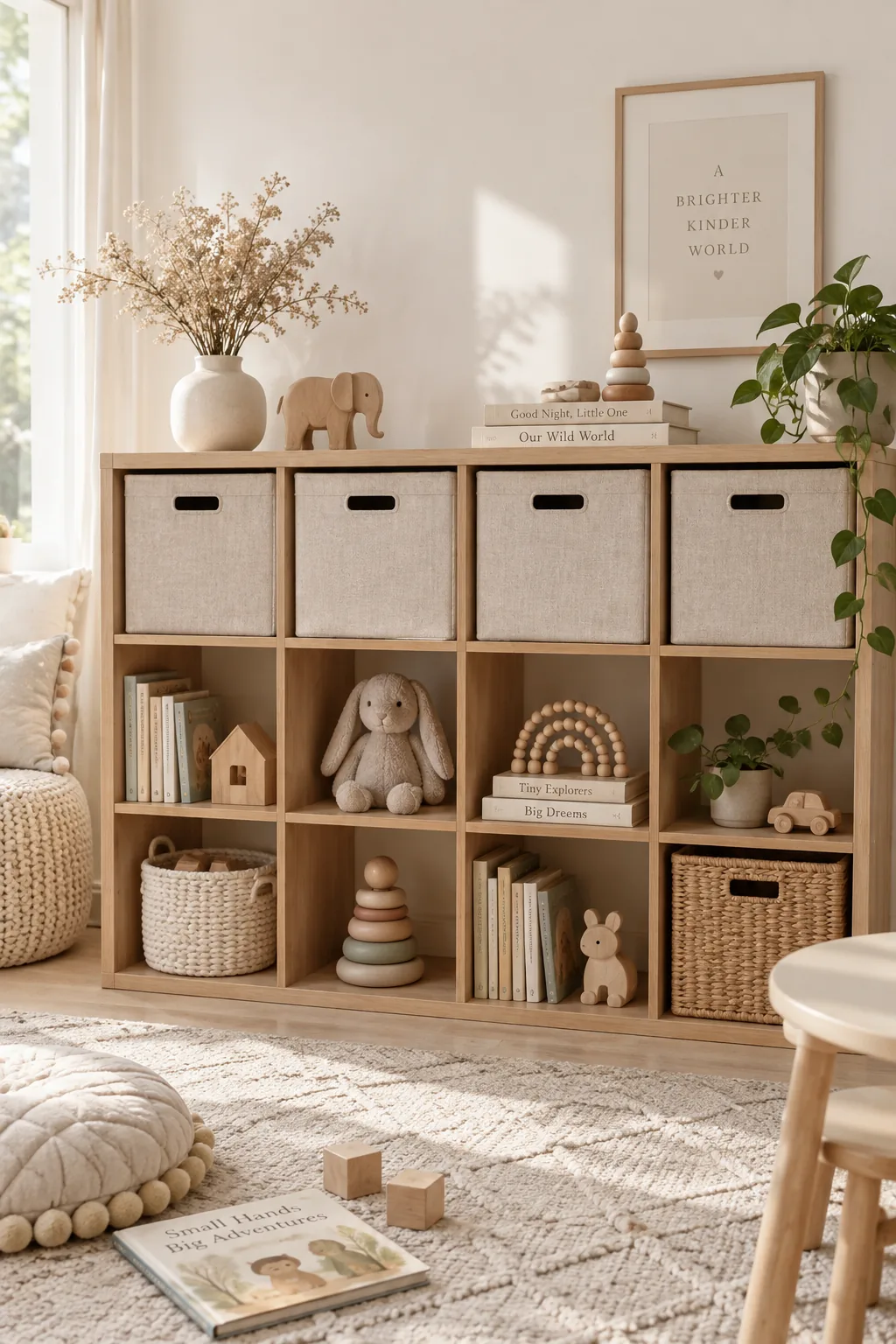
Anchoring heavy furniture directly to the wall studs prevents dangerous tipping accidents.
Toddlers love to climb anything that looks like a ladder, especially cubby shelves. Securing these units gives you peace of mind when you step out to grab a coffee. You can easily hide the safety straps behind the top row of fabric bins.
5. Flexible Floor Cushions
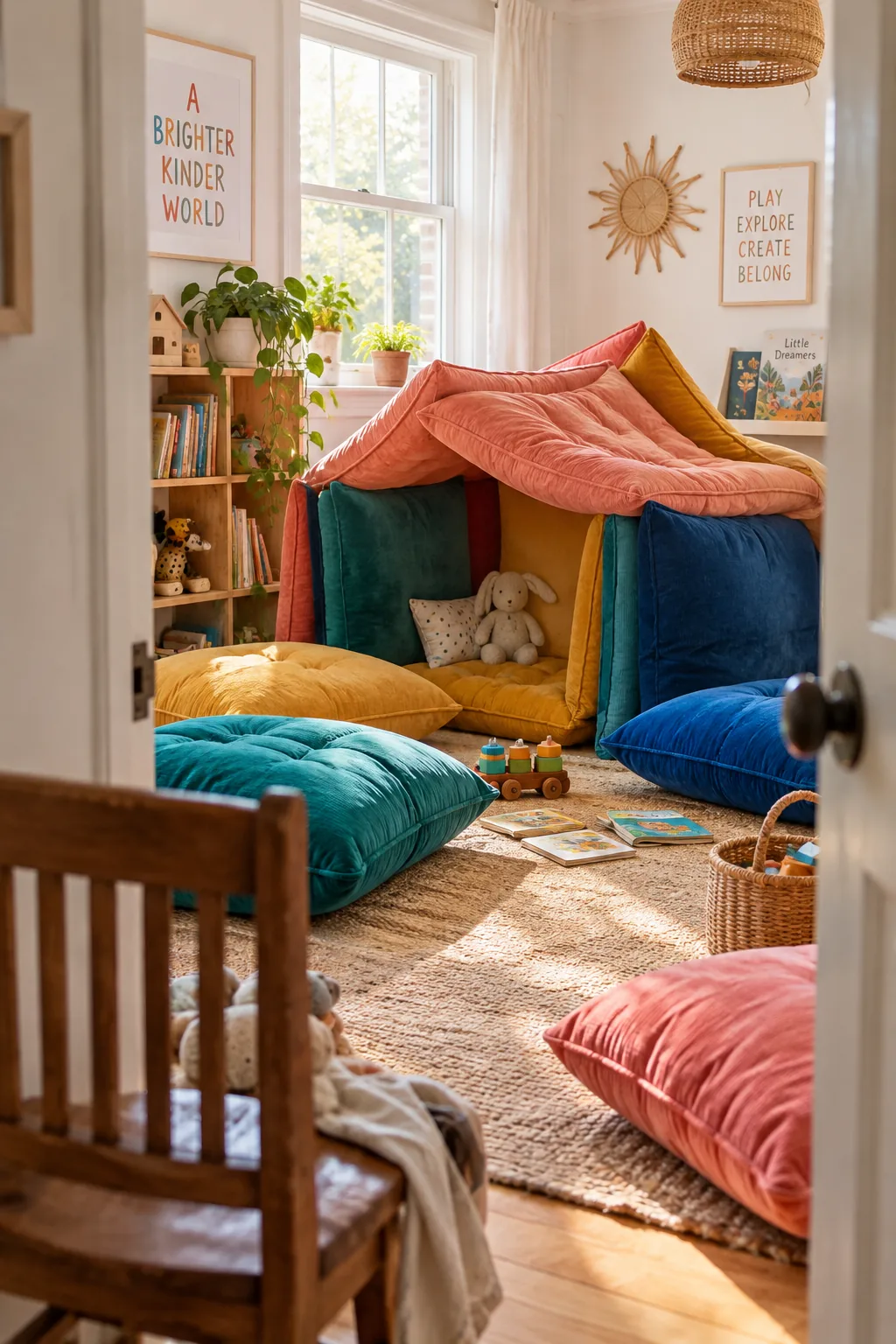
Most kids prefer to play on the floor rather than sitting at a formal desk. Throwing down a few oversized floor cushions creates a flexible seating arrangement they can drag around the room. They will stack them into forts or use them as crash pads during active play.
Just make sure the covers are removable and machine washable.
6. Layer a Soft Rug
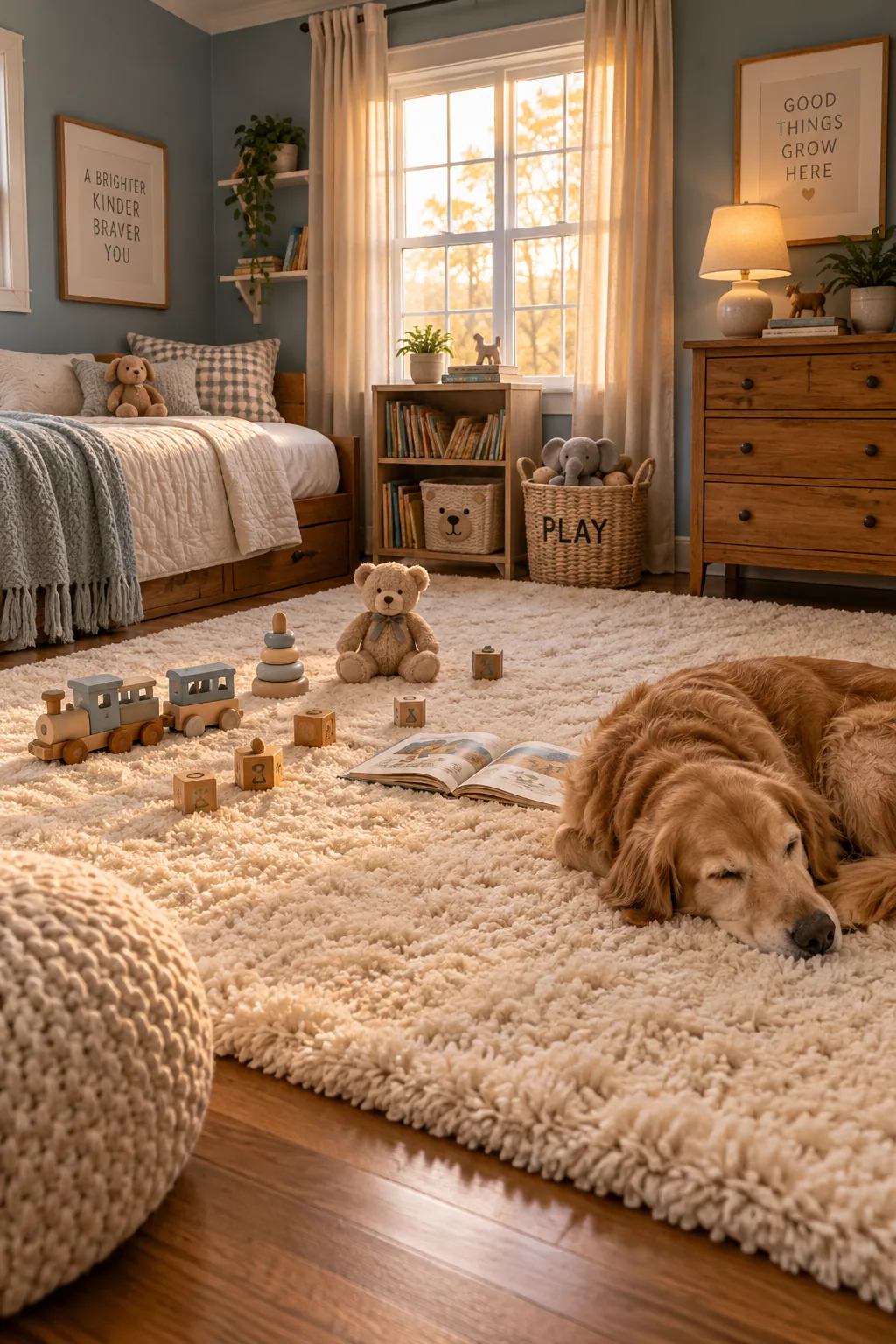
A standard 8×10 rug perfectly defines the main play area in most average bedrooms. Layering a soft shag rug over your hard floors gives little knees the padding they need. It also traps dust and dog hair, which makes vacuuming much more efficient.
Taping down the edges with double-sided carpet tape stops the tripping hazard.
7. Forward-Facing Book Ledges
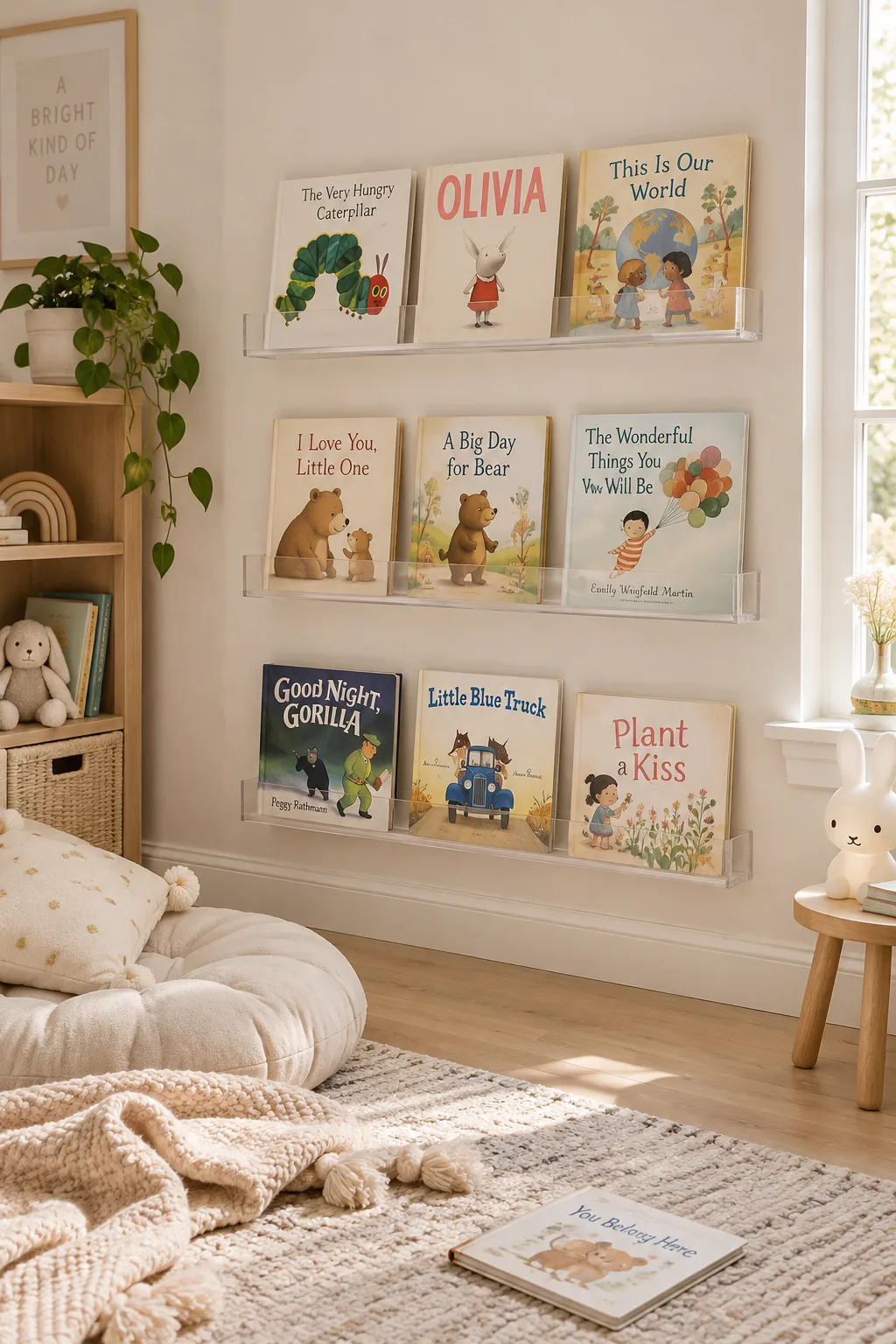
Displaying books with the covers facing out actually encourages toddlers to read independently. Installing cheap acrylic ledges on an empty wall creates a gallery of their favorite stories. They can easily spot the bright illustrations instead of just seeing a boring spine.
Mount the lowest shelf just a few inches off the baseboard for easy access.
8. Indestructible Craft Table
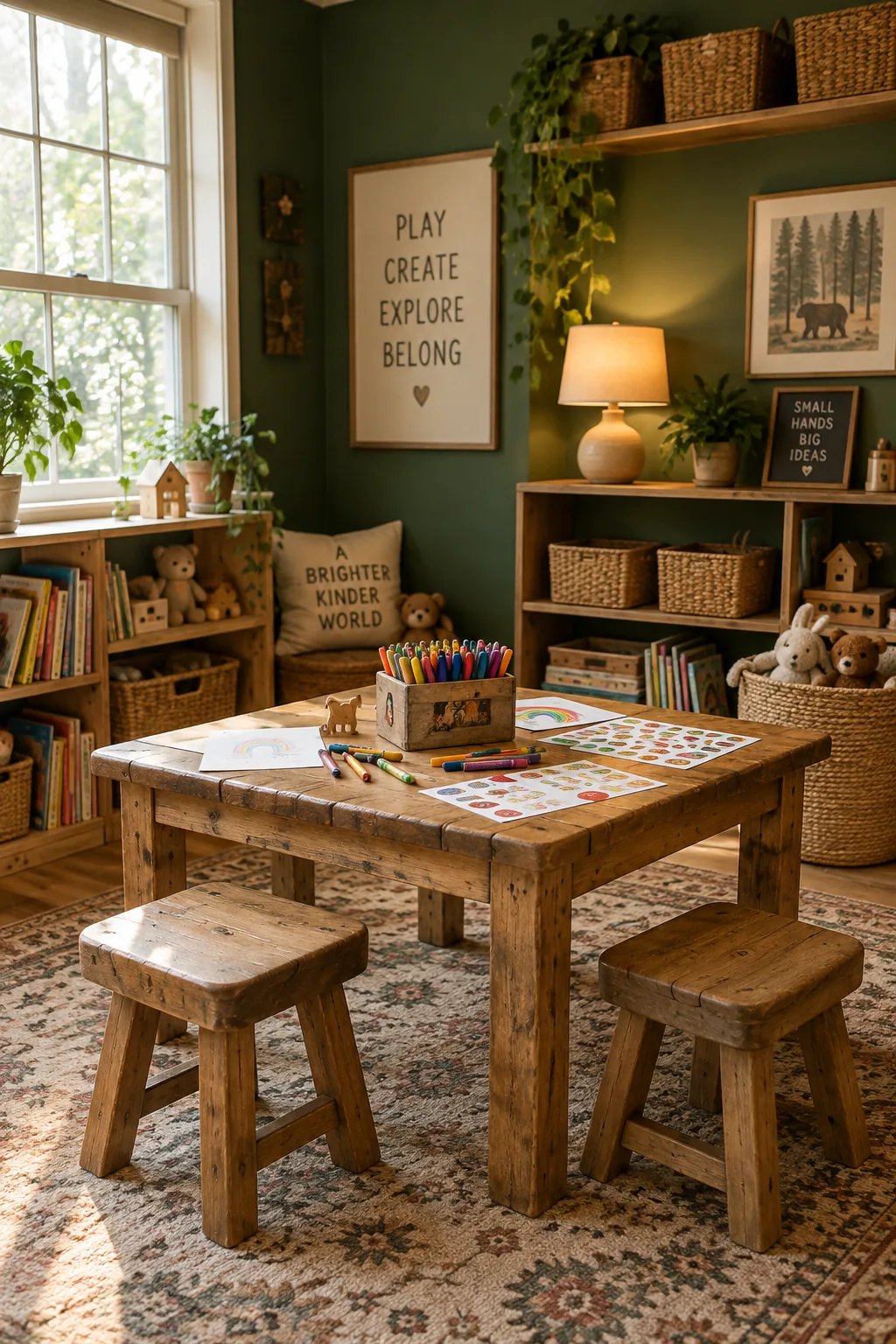
I learned the hard way that a craft table needs to be completely indestructible. A simple wooden play table with a wipeable finish handles crayons, glue, and aggressive sticker peeling.
Pair it with sturdy wooden stools rather than lightweight plastic chairs. The heavier stools will not tip over when a toddler inevitably stands on them.
Keep a small caddy of washable markers right in the center.
9. Indoor Climbing Triangle
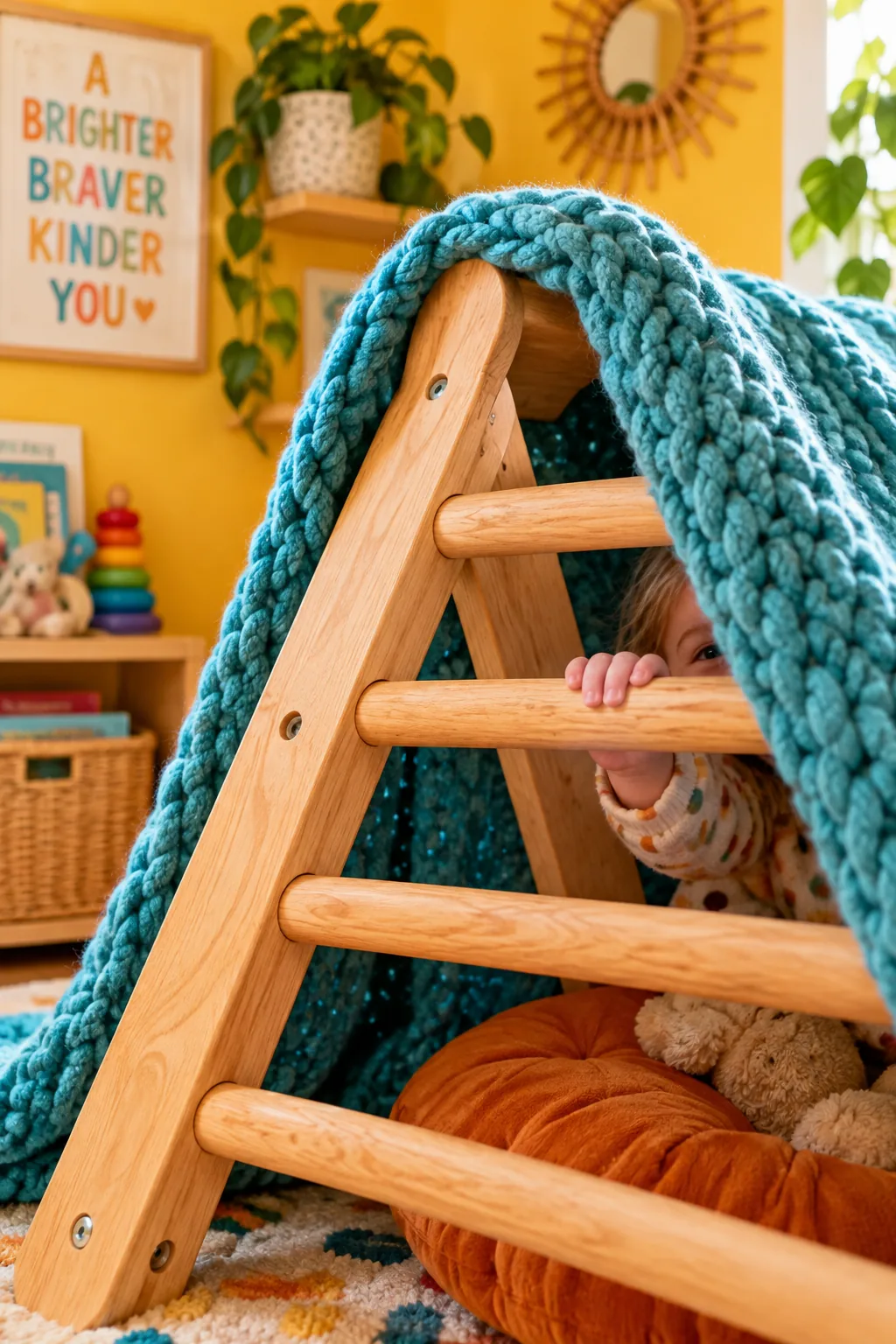
Kids under three need large motor activities just as much as fine motor play. Installing a sturdy indoor climbing triangle gives them a safe place to burn off winter energy. These wooden structures fold up flat when you need the floor space back for other things. Throw a blanket over the top, and it instantly becomes a cozy hideout.
Why it works: Providing a designated climbing spot stops them from scaling your expensive living room sofa.
10. Wall-Mounted Art Station
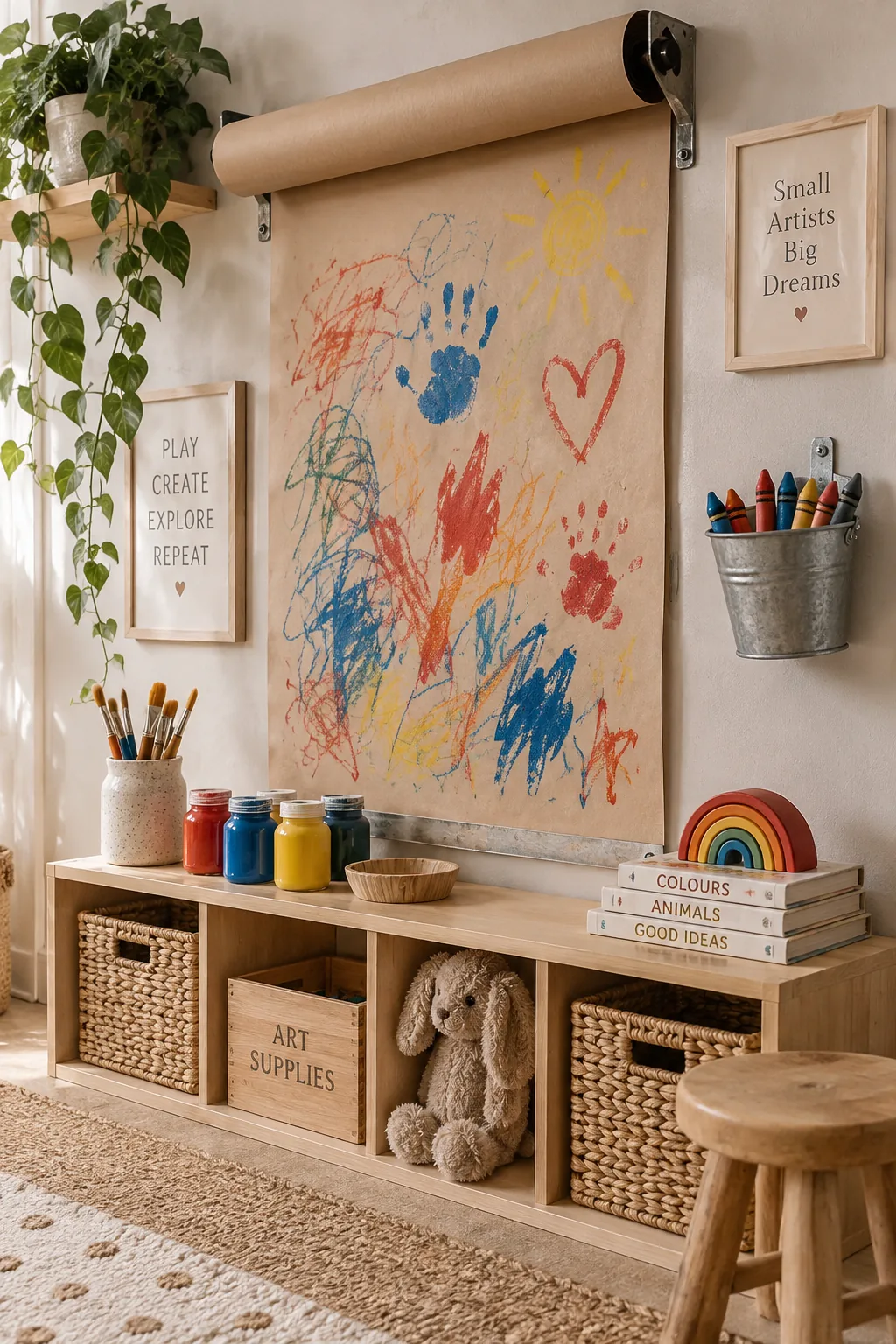
Hang a large roll of butcher paper on the wall for a permanent art station. Sliding a piece of clear acrylic behind the paper protects your drywall from aggressive marker strokes. It gives them a massive canvas to draw on without ruining your paint job.
A tiny galvanized bucket screwed to the wall holds all their chunky crayons perfectly.
11. Calm Monochromatic Walls
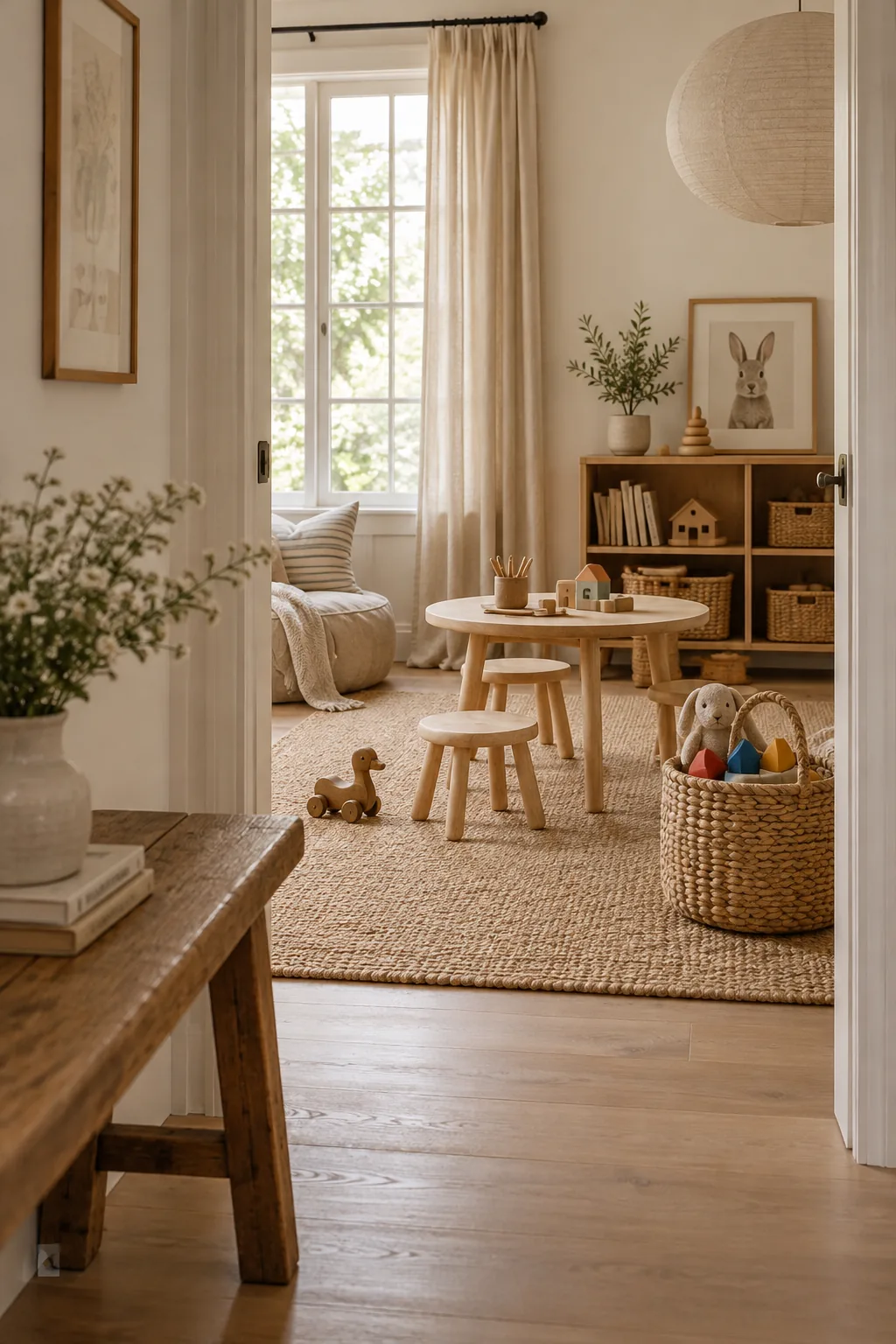
A monochromatic color palette keeps a room full of plastic toys from looking chaotic.
Painting the walls a soft, warm white provides a calm backdrop for all those primary colors. You can bring in texture with linen curtains and natural wood tones to make the space feel intentionally designed. It looks like a stylish extension of your home rather than a messy daycare.