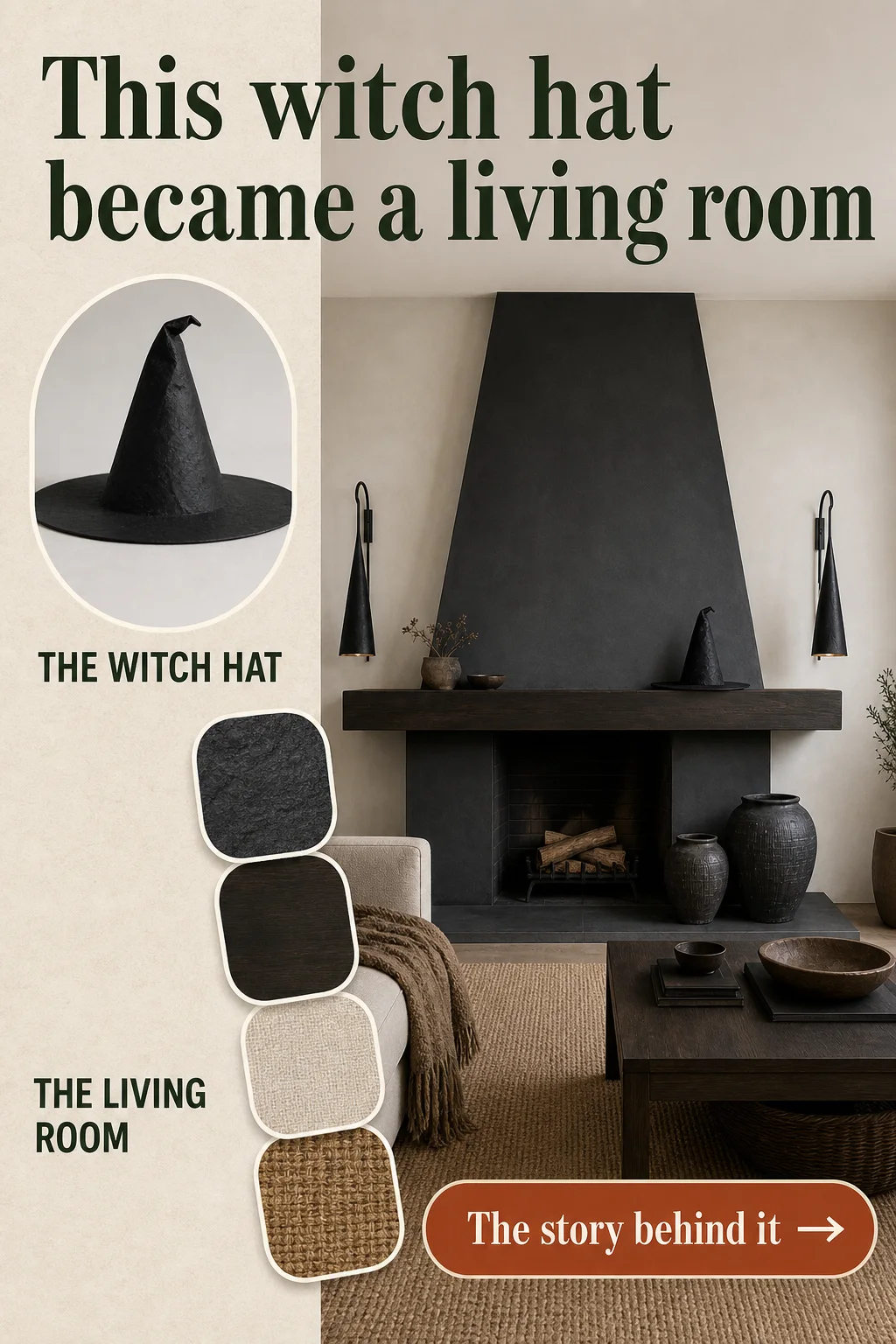
This witch hat became a living room
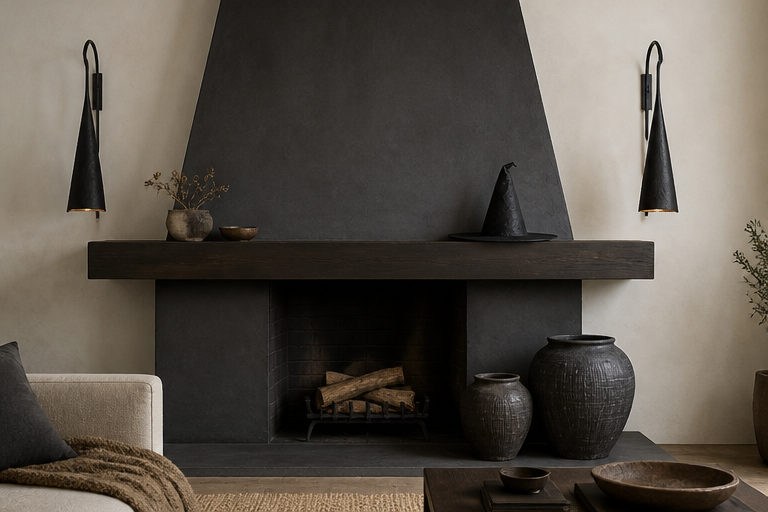
Explore how the stark geometry and dry, light-absorbing textures of a classic papier-mache witch hat can inspire a sophisticated, minimalist living room without feeling like a literal Halloween prop. This translation relies on the dramatic interplay of grounding horizontal planes and sharply tapering vertical ascents, keeping all finishes ultra-matte and dry to prevent the high-contrast palette from feeling harsh or overly modern.
Grounding the Tapered Geometry
The stark transition from a flat brim to a sharp peak translates perfectly into a heavy mantel shelf supporting a sweeping architectural fireplace hood. Ensure the mantel shelf is thick enough to visually support the weight of the hood, keeping the edges of the plaster sharply defined to mimic the crisp lines of the cone. This grounding horizontal base gives way to a sharp, tapering vertical ascent, establishing a commanding focal point that anchors the entire living space while honoring the stark, asymmetrical geometry of the original object.
A tapered hood needs a substantial base. Choose a mantel shelf at least four inches thick to properly ground the vertical sweep of the plaster above it.
Constructing the Horizontal Anchor
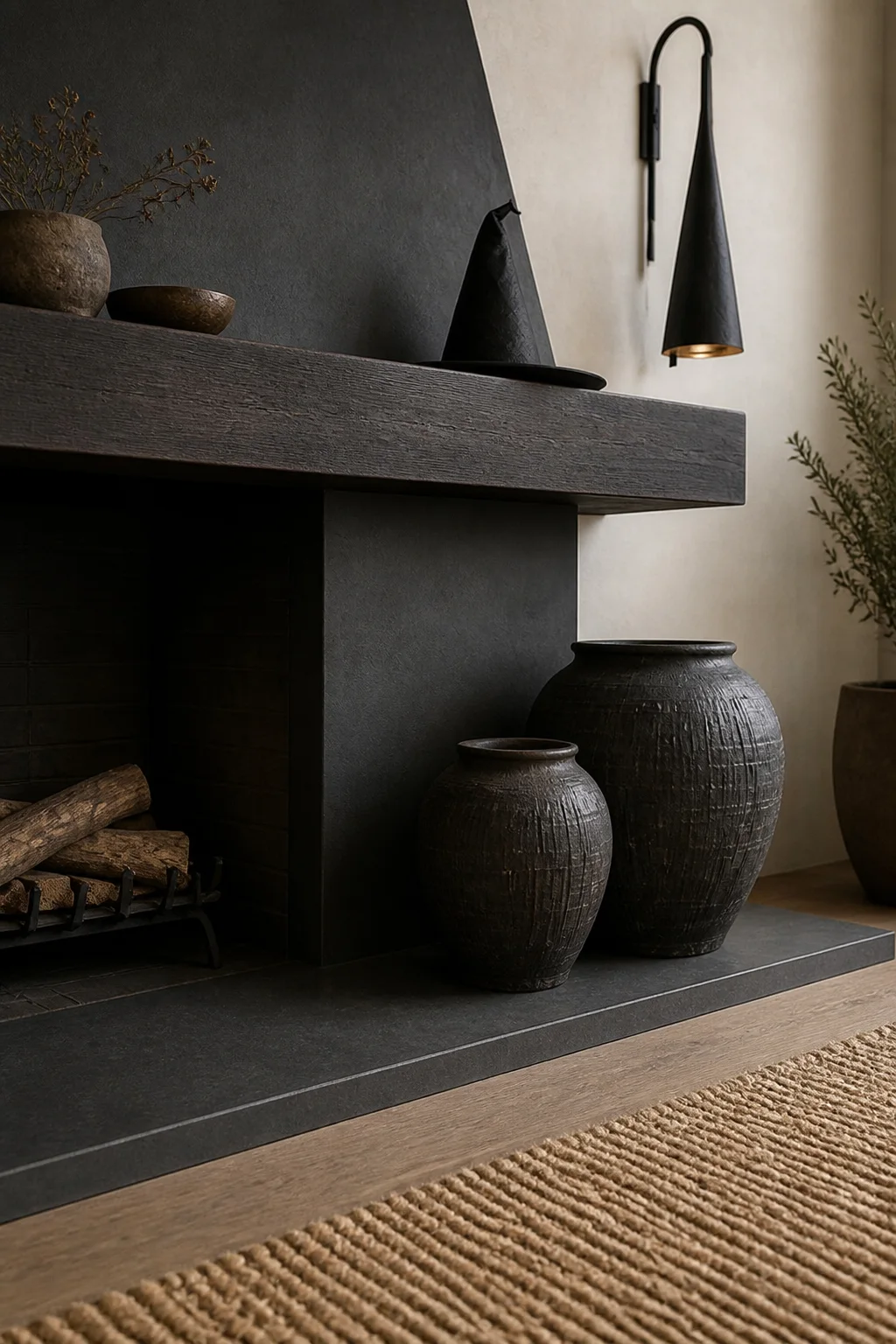
To achieve this precise architectural joint, you must carefully intersect the thick ebonized wood with the dark plaster above it. The following sequence ensures the structural and visual balance remains intact while maintaining the minimalist aesthetic. Executing these steps in order guarantees that the heavy horizontal plane properly supports the dramatic, light-absorbing vertical void without overwhelming the room’s quiet architecture. Proper installation is essential to capture the moody, tactile geometry of the design.
- Frame the tapered fireplace hood so the structure narrows sharply as it rises toward the ceiling.
- Install the ebonized mantel shelf perfectly level, creating a strong horizontal break.
- Apply the charcoal limewash until the fireplace surface is completely matte and absorbs light evenly.
- Mount the wrought iron sconces symmetrically while displaying their organic bends.
- Arrange the unglazed clay vessels to ensure the hearth feels grounded with dry, textured focal points.
Absorbing Light with Matte Charcoal
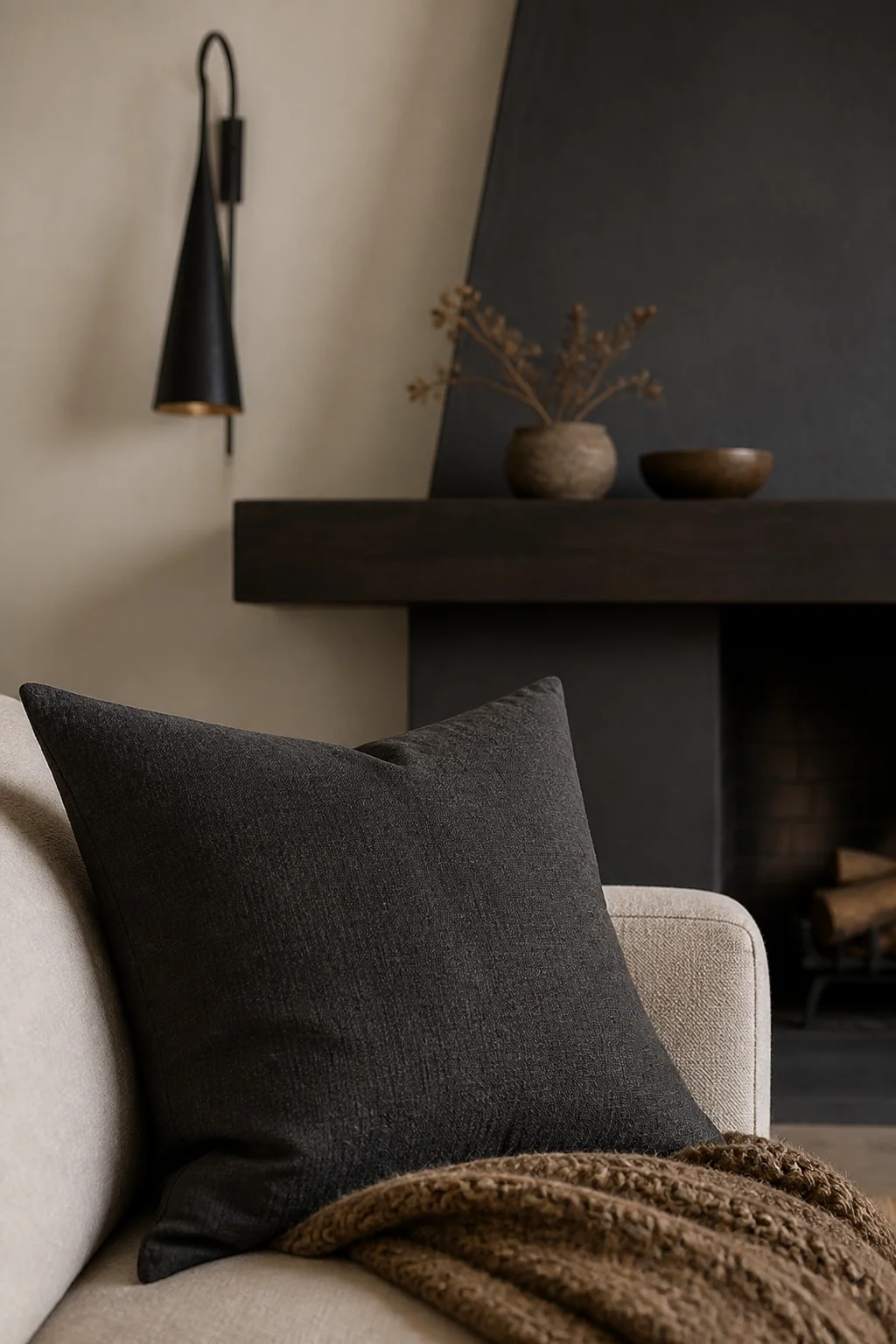
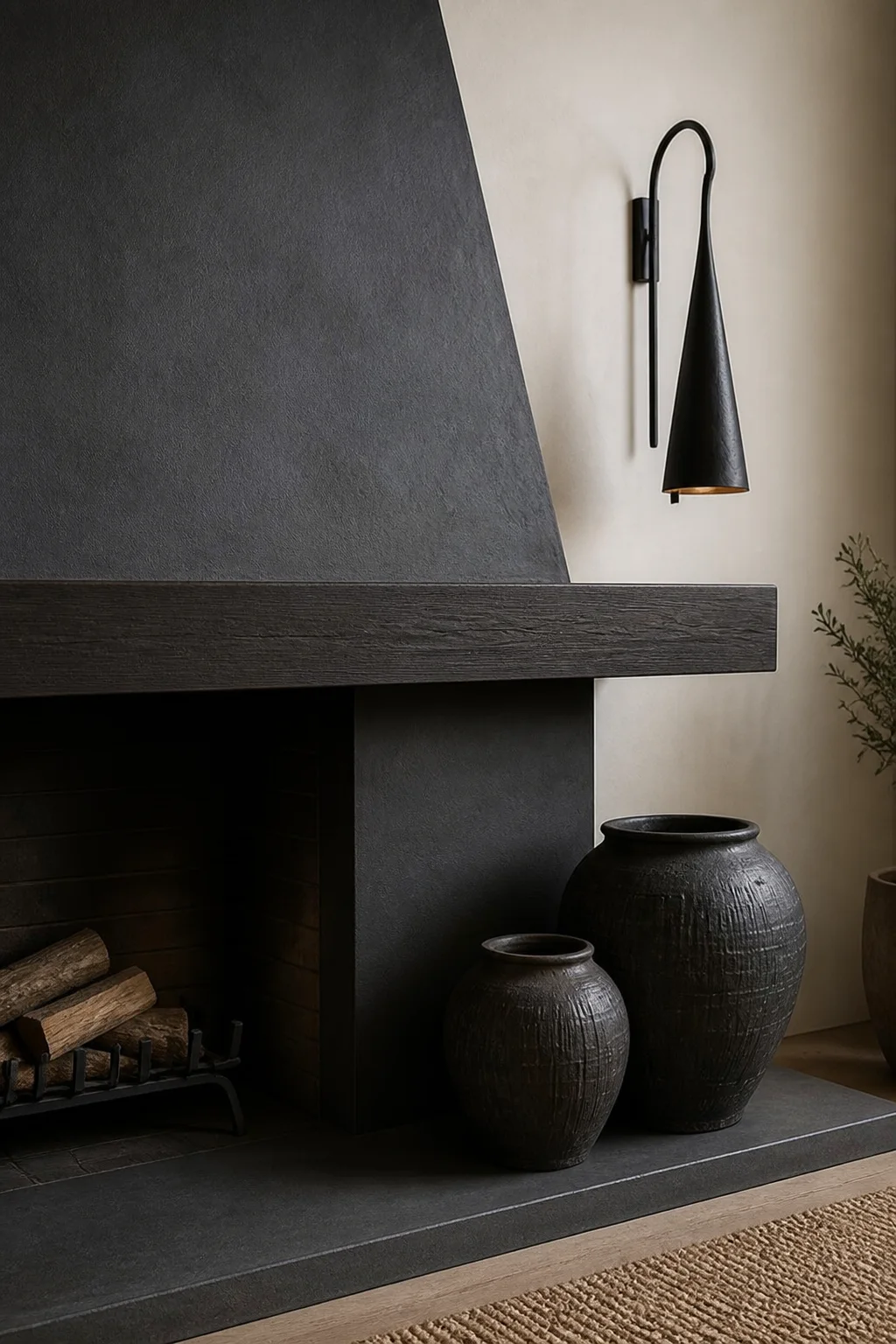
By treating the focal point as a light-absorbing void, the room gains immense depth while remaining quiet and grounded against bone-white walls. Avoid any sheen on the fireplace finish; limewash or Roman clay works best to create this velvety, ultra-matte effect. This deliberate lack of reflection mimics the ultra-matte black finish of the papier-mache, absorbing all ambient light and drawing the eye inward without generating harsh glare. The resulting contrast is sophisticated, moody, and deeply textural.
| Source trait | Visible evidence | Room move |
|---|---|---|
| Brim and cone geometry | The wide, flat circular brim that abruptly shifts into a tall, tapering cone | A thick, ebonized wood mantel shelf extending horizontally, anchoring a dark, sharply tapered plaster fireplace hood above it |
| Light-absorbing void | The ultra-matte black finish of the papier-mache that absorbs all light without reflecting glare | Matte charcoal limewash applied to the fireplace surround, creating a deep, velvety focal point against the quiet bone-white walls |
| Dry fibrous surface | The rough, bumpy, and dry tactile quality of the molded papier-mache | A pair of large, unglazed, heavily grooved dark clay vessels resting on the hearth, offering the same dry, primitive texture |
| Slouching peak | The slight organic crumple and asymmetrical bend at the very tip of the hat | Wrought iron wall sconces flanking the mantel, featuring long, tapering conical metal shades forged with a subtle, intentional organic bend |
Perfecting the Light-Absorbing Finish
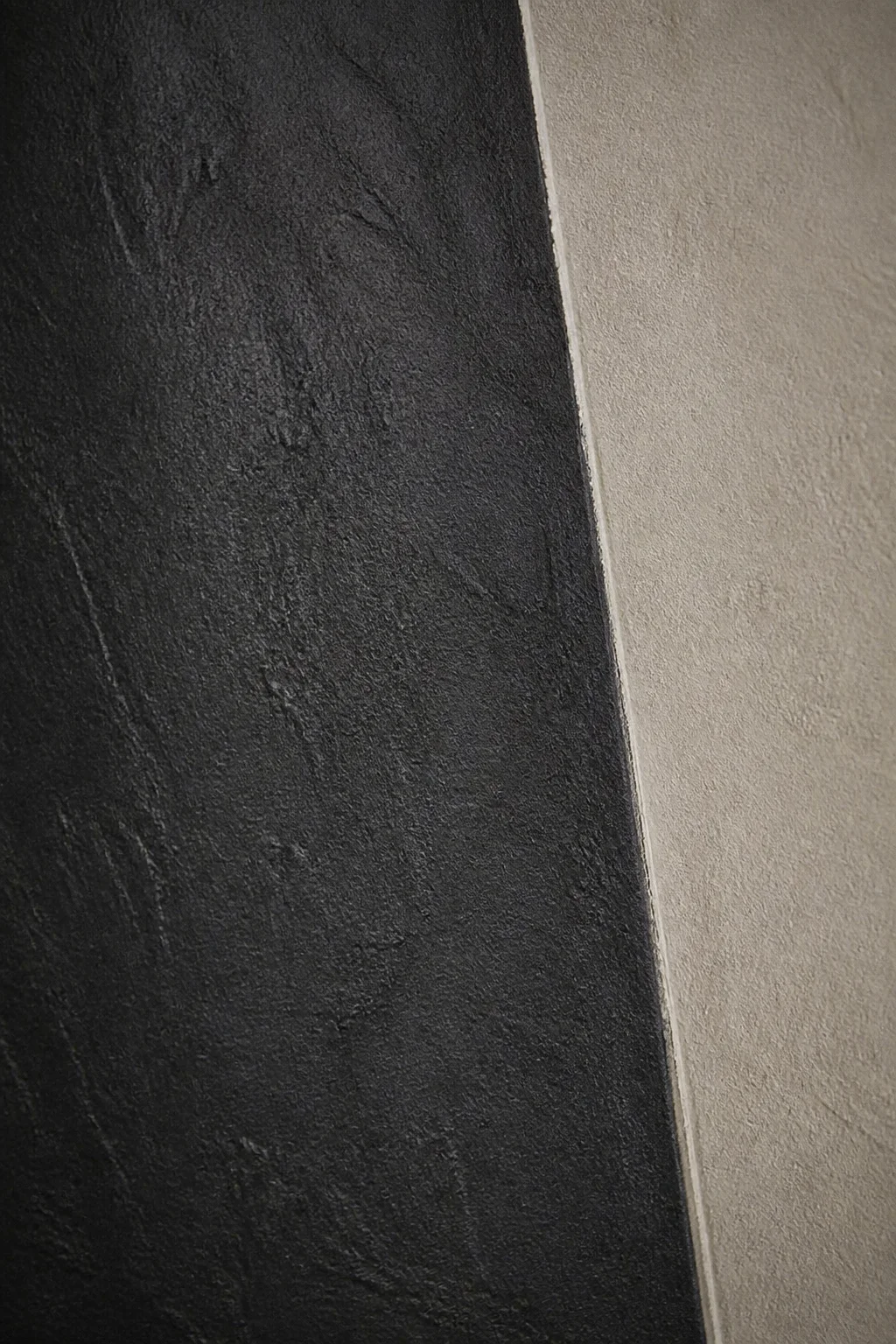
A macro view of the matte charcoal limewash reveals subtle, velvety brushstrokes that contrast beautifully against the smooth bone-white wall behind it. Securing the right finishes is crucial to capturing the dry, fibrous essence of the original inspiration without veering into literal Halloween decor. The materials required for this room recipe prioritize heavily textured, light-absorbing surfaces that feel primitive yet highly intentional, ensuring the space remains balanced and refined.
Embracing Dry and Fibrous Surfaces
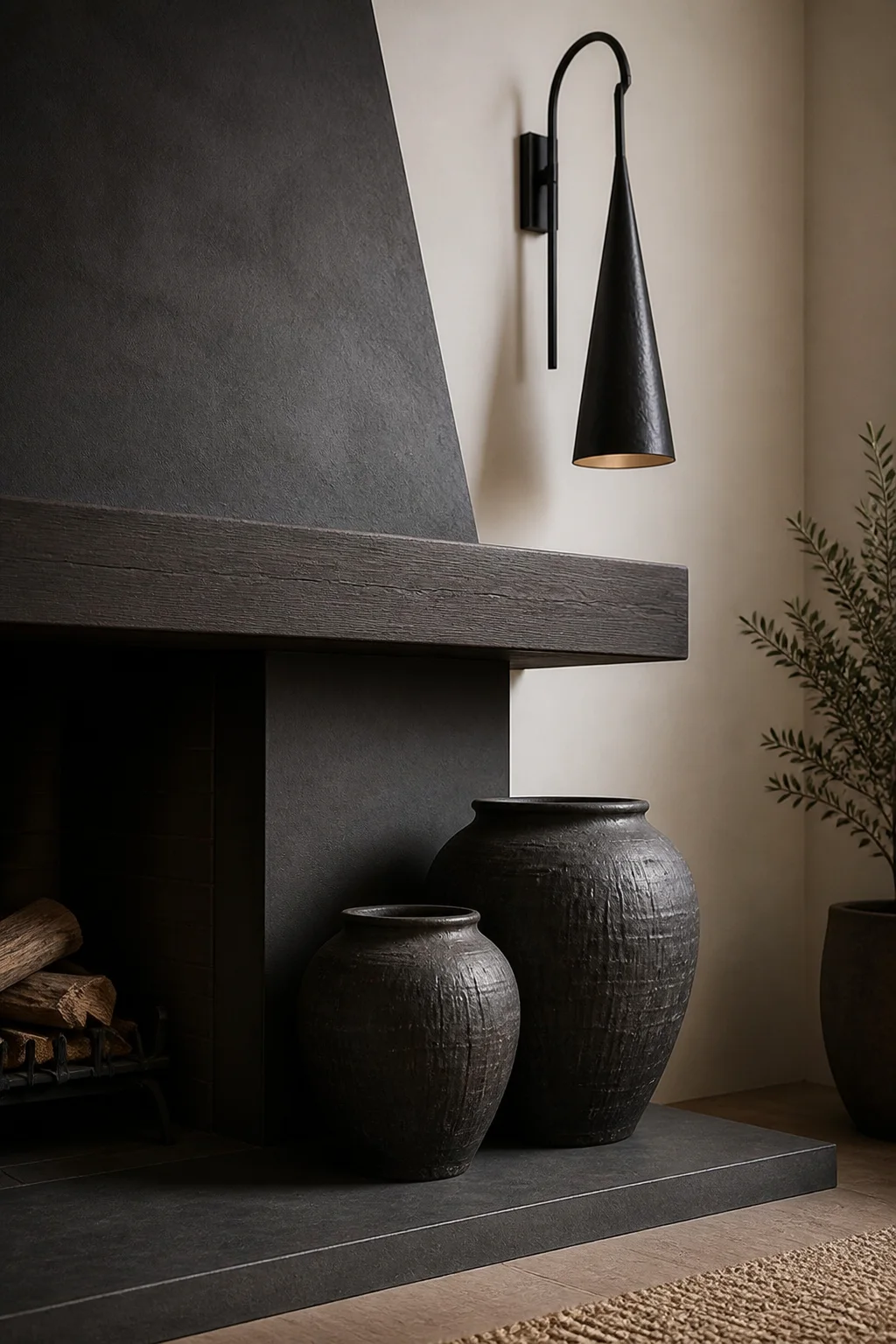
Translating the rough papier-mache into the room requires primitive, unglazed ceramics that share the same dry tactile vulnerability. Group these vessels asymmetrically to build visual weight at the hearth, looking for heavily grooved clay that invites touch. A subtle approach focuses purely on the high-contrast palette of charcoal and bone white, using standard fireplace geometry. A balanced execution introduces these clay vessels alongside the tapered hood and ebonized mantel. For a bold statement, exaggerate the taper of the fireplace hood to a sharp point and use heavily distressed materials to amplify the moody atmosphere.
Introducing Subtle Organic Asymmetry
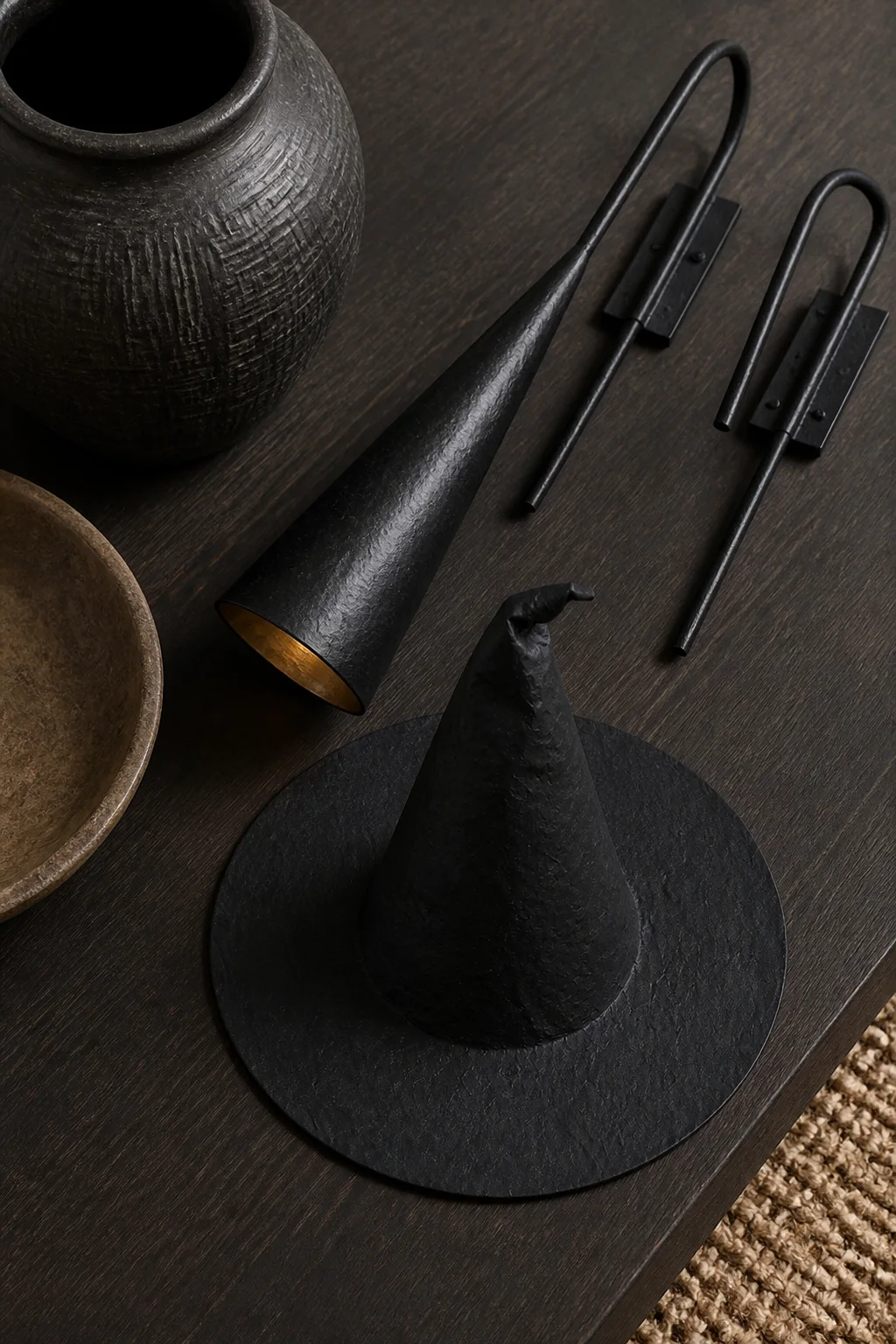
A rigid room feels sterile, but introducing a slight, intentional droop in the lighting fixtures adds the perfect amount of moody character. Mount the sconces symmetrically, but ensure the shades themselves feature organic irregularities and use low-wattage ambient bulbs to cast soft, directional shadows across the stark plaster. This subtle nod to the slouching peak of the original inspiration softens the strict geometry of the fireplace, bringing a quiet, sculptural warmth to the surrounding bone-white walls and completing the sophisticated transformation.
When selecting metal accents, avoid machine-perfect finishes. Hand-forged iron with visible hammer marks captures the organic, slightly crumpled spirit of the original inspiration.
Full Pinterest pin
This full-ratio preview is shown temporarily for visual quality checks.