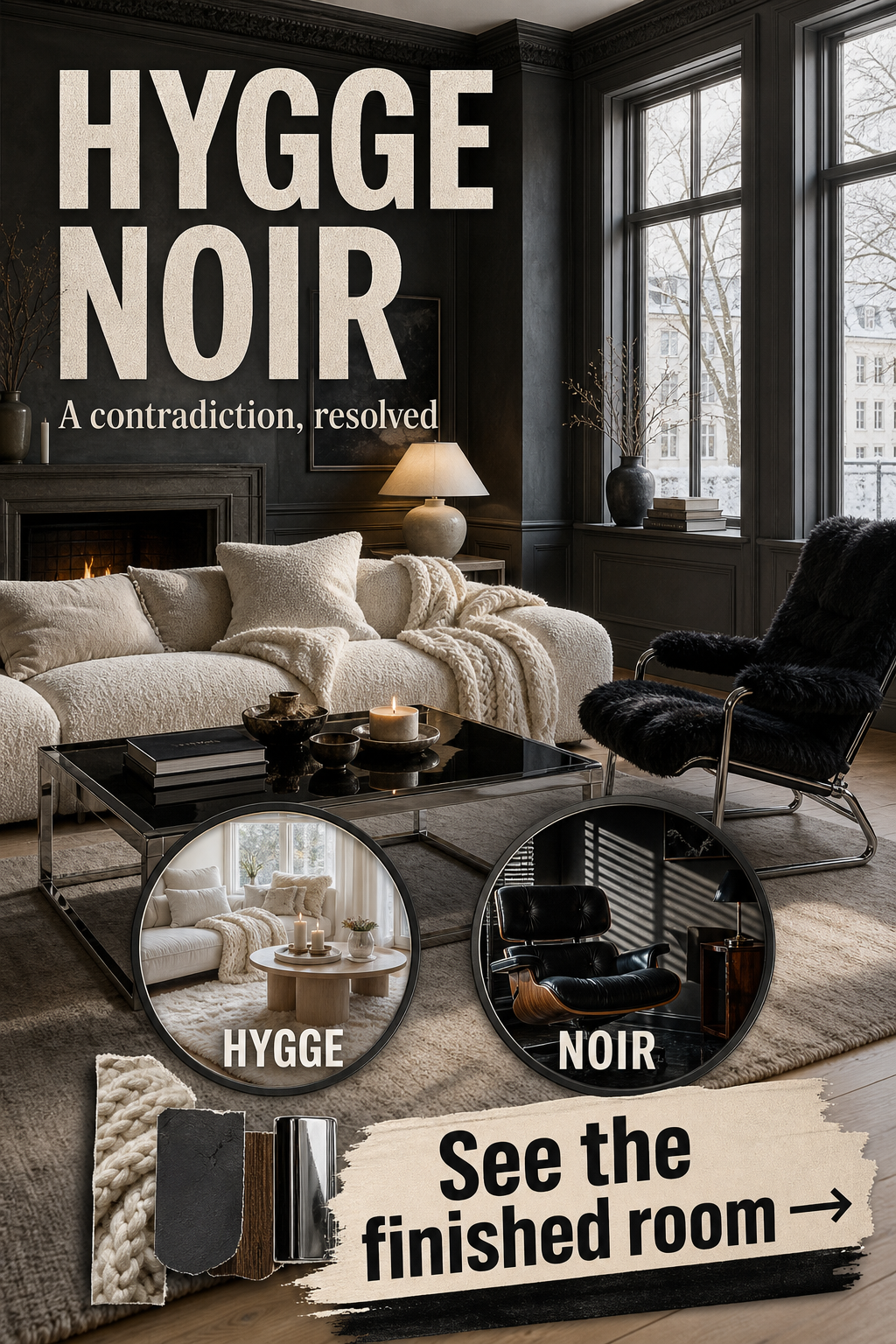
hygge Meets noir
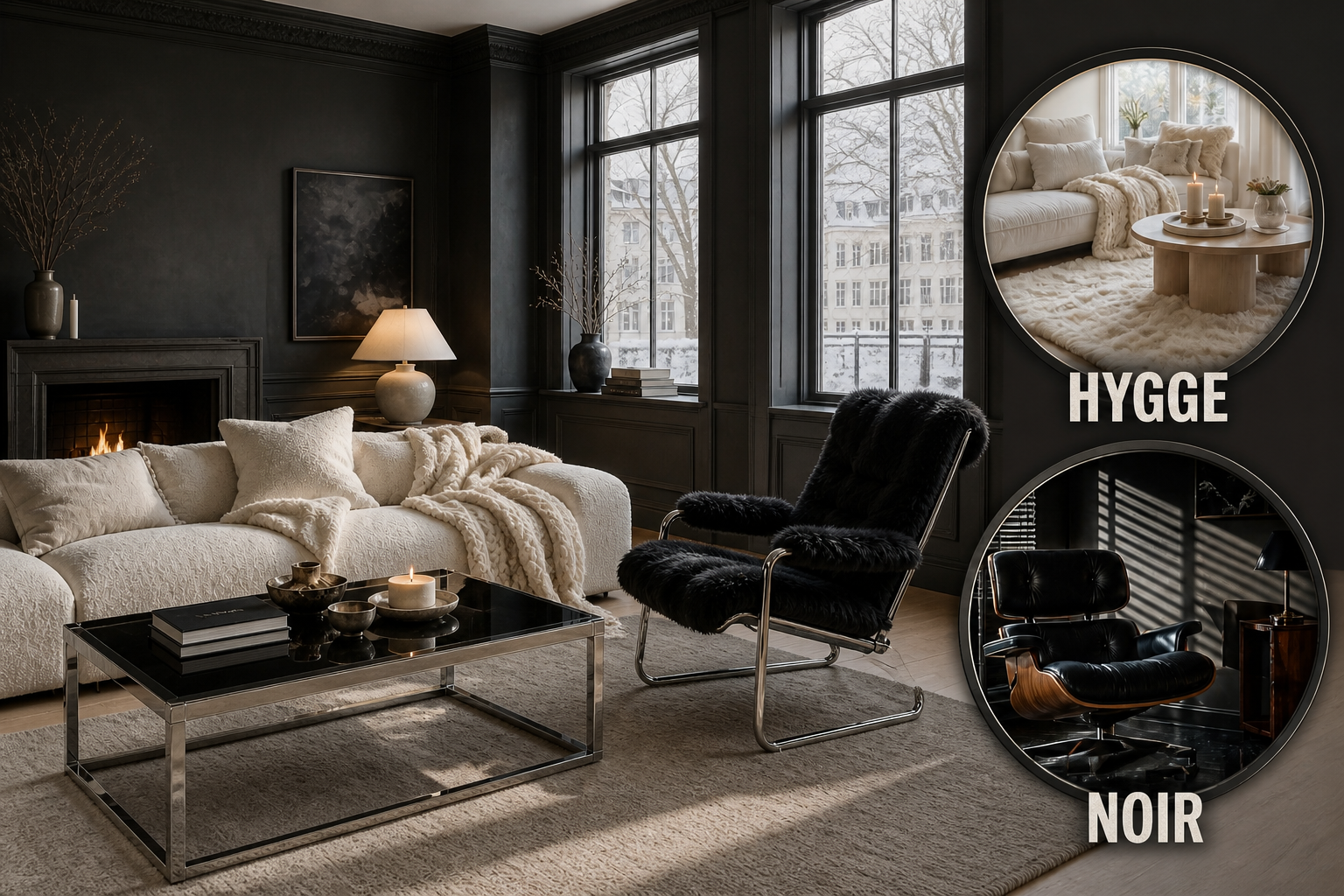
hygge Meets noir
The safe, tactile embrace of Scandinavian coziness directly contradicts the sharp, cynical, and shadowy edge of cinematic noir. We resolve this specific tension by letting hygge dictate plush textures and inviting forms, while noir controls the high-contrast palette and sleek.
Anchoring with hygge
We begin by establishing the unmistakable comfort of hygge to ensure the room remains a true sanctuary. An oversized, slouchy bouclé sofa provides a massive tactile anchor, introducing essential warmth to counterbalance the darker, moodier architectural elements we will add shortly.
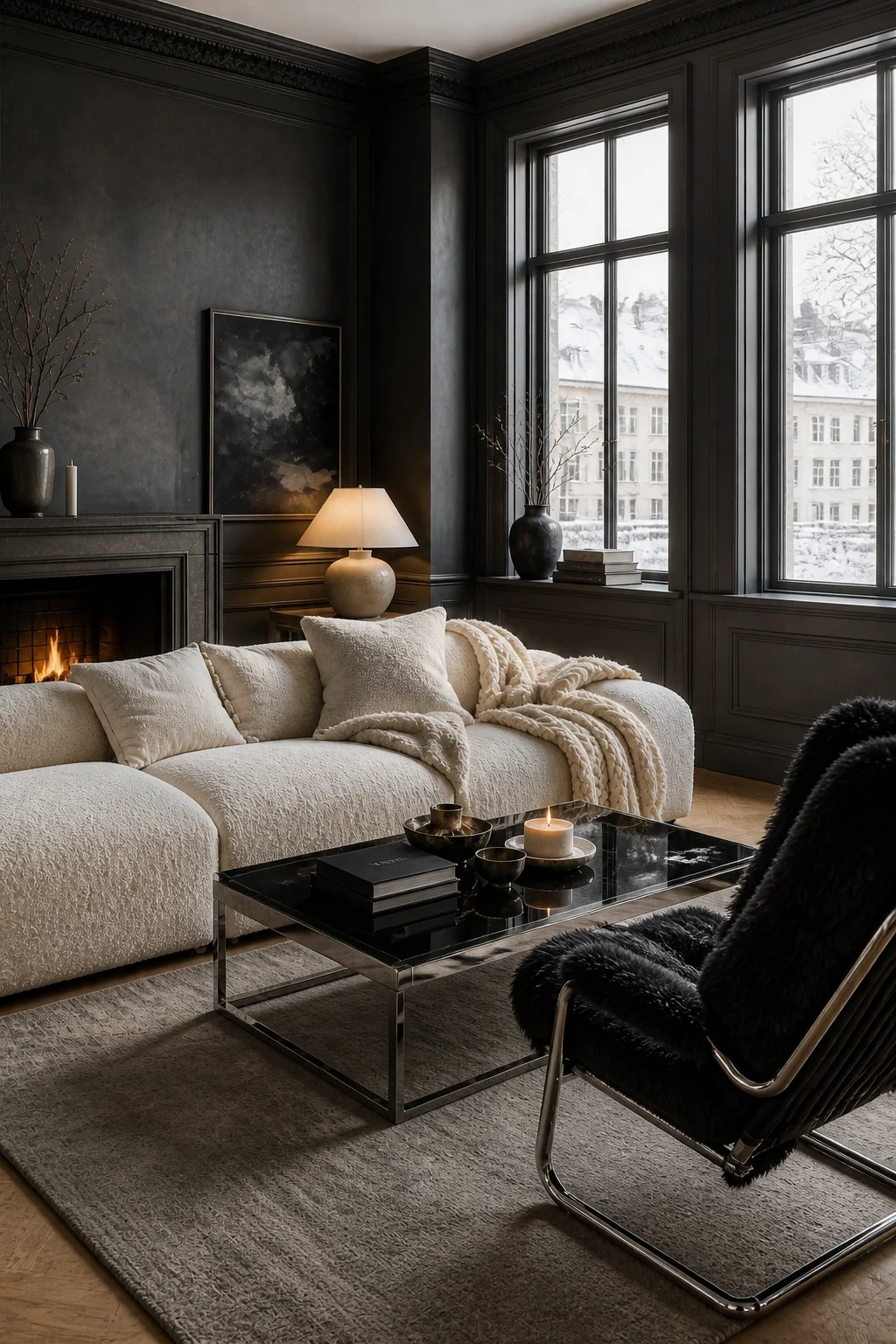
Notice how the deeply textured ivory upholstery absorbs natural light and invites immediate, unpretentious rest. This plush foundation establishes a crucial baseline of softness, ensuring that the seating area feels entirely safe before we introduce dramatic shadows and sharp metallic reflections.
By anchoring the living room with this profoundly comfortable centerpiece, you create an undeniable physical retreat. The heavy, chunky knit wool throws draped across the cushions further emphasize this protective layer, perfectly setting the stage for the contrasting cinematic edges to come.
Embracing noir Architecture
Cinematic tension demands sharp lines and deep shadows, which we introduce through the room’s foundational architectural shell. Matte charcoal plaster walls and sleek smoked-glass surfaces create a dramatic, moody backdrop that perfectly frames the softer Scandinavian moments without ever visually overwhelming them.
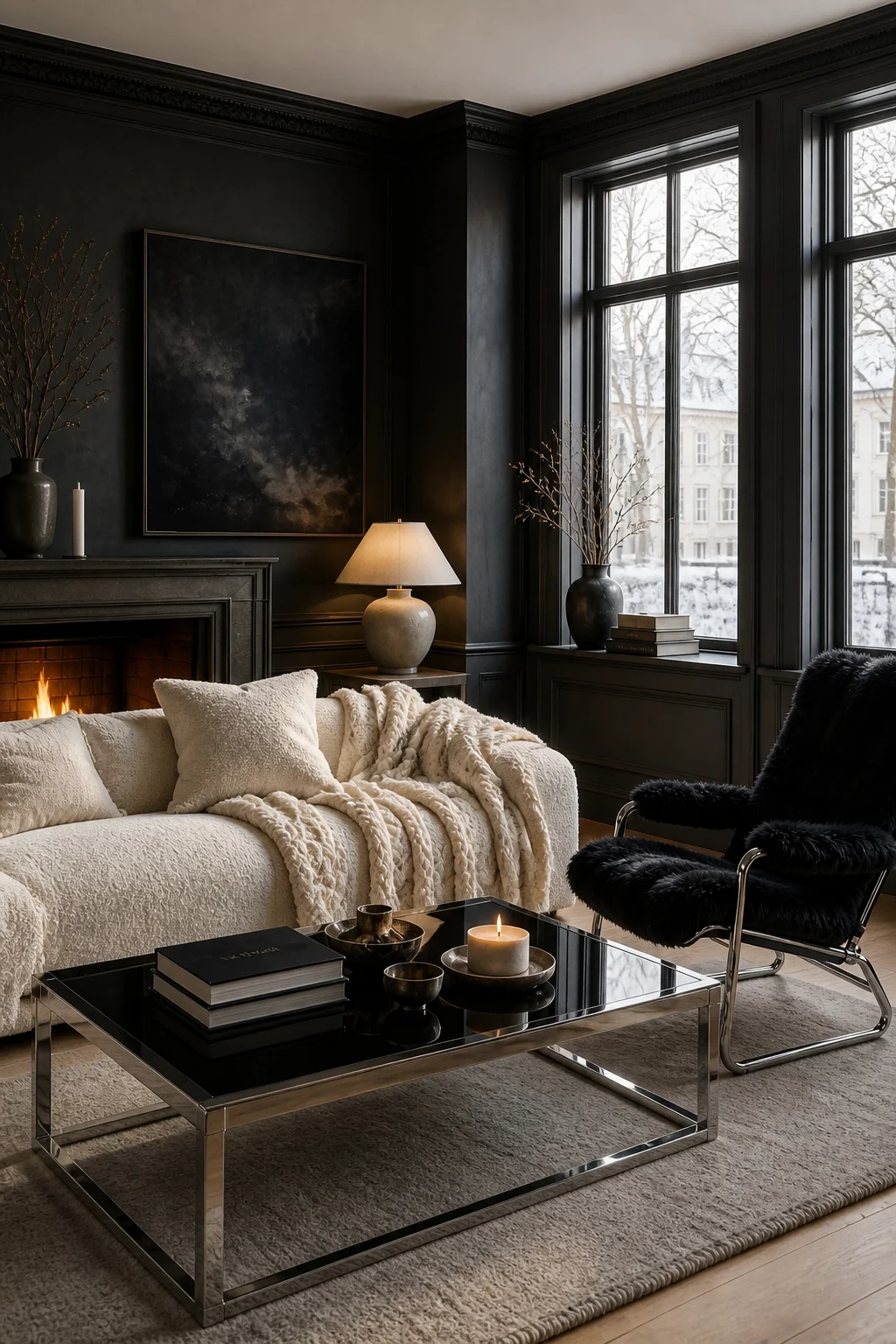
Observe how the smoked-glass coffee table introduces a cynical, reflective edge to the cozy space. These sharp geometric additions provide necessary visual structure, cutting through the heavy wool textures to ensure the room feels sophisticated, deliberate, and undeniably grounded in noir.
- Keep wall finishes entirely matte to absorb light gracefully and significantly reduce harsh, unwanted glare.
- Use smoked glass to maintain visual transparency while simultaneously introducing a dark, decidedly cynical edge.
- Introduce polished chrome accents to create sharp, highly cinematic reflections against the matte charcoal walls.
Bridging the Divide
The ultimate success of this resolved contradiction hinges on transitional pieces that speak both distinct design languages simultaneously. We need specific furniture choices that effortlessly guide the eye between the extremes of plush Scandinavian warmth and sharp, shadowy cinematic drama.
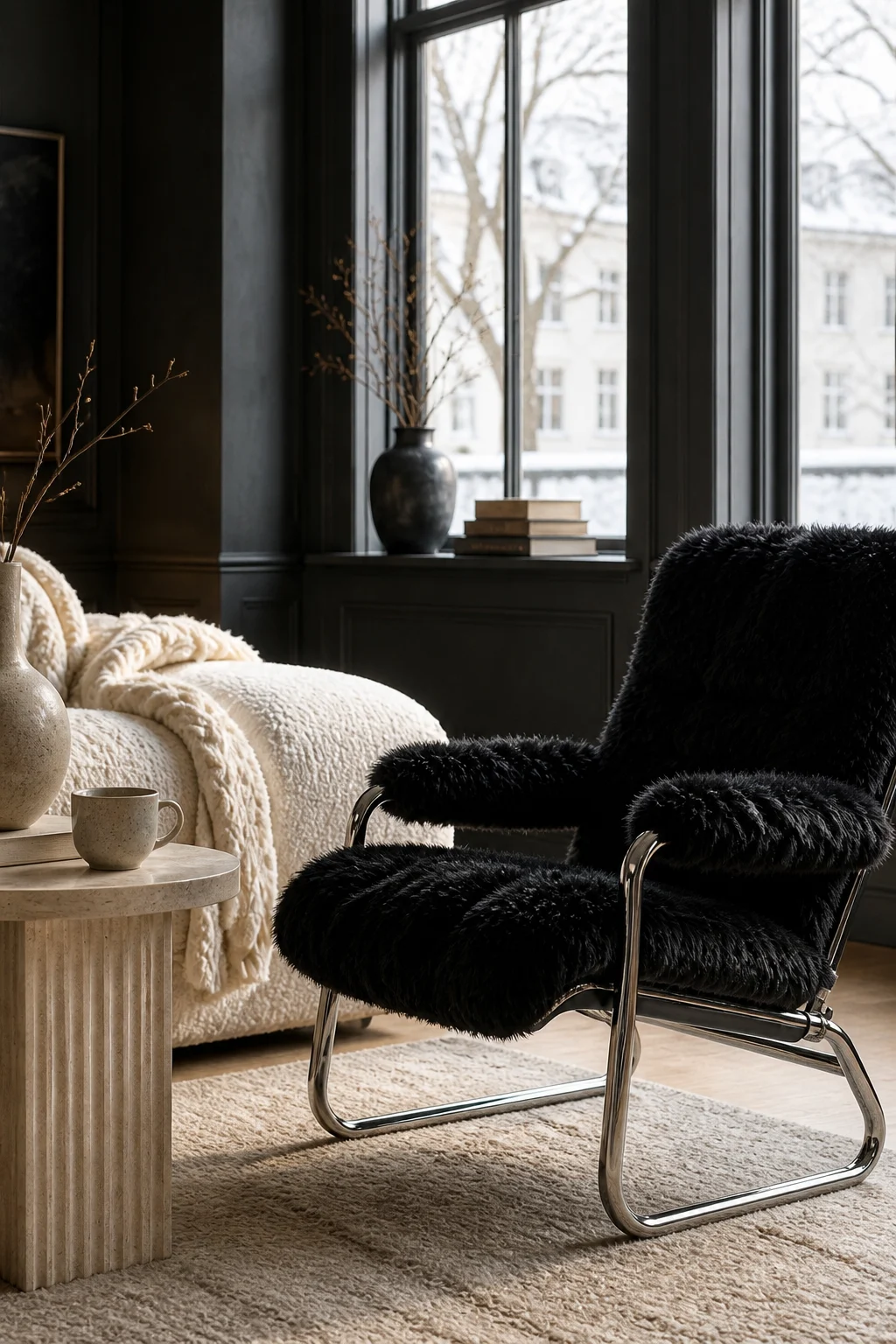
Look closely at the black shearling lounge chair resting on its sleek chrome frame. This crucial piece perfectly translates the dark, moody palette of noir into the deeply tactile, comforting texture required by hygge, effectively merging both distinct aesthetics into one.
This careful bridging technique prevents the living room from feeling like two completely separate concepts fighting for dominance. By merging deep charcoal tones with incredibly soft pile, the chair proves that darkness can be just as inviting as bright ivory bouclé.
Structuring the Space
Assembling the complete seating vignette requires expertly negotiating the tension between a cozy sanctuary and dramatic cinema. Every single layer of the room must negotiate this balance, pairing heavy, light-absorbing textiles with sharp, highly reflective metallic and smoked-glass surfaces.
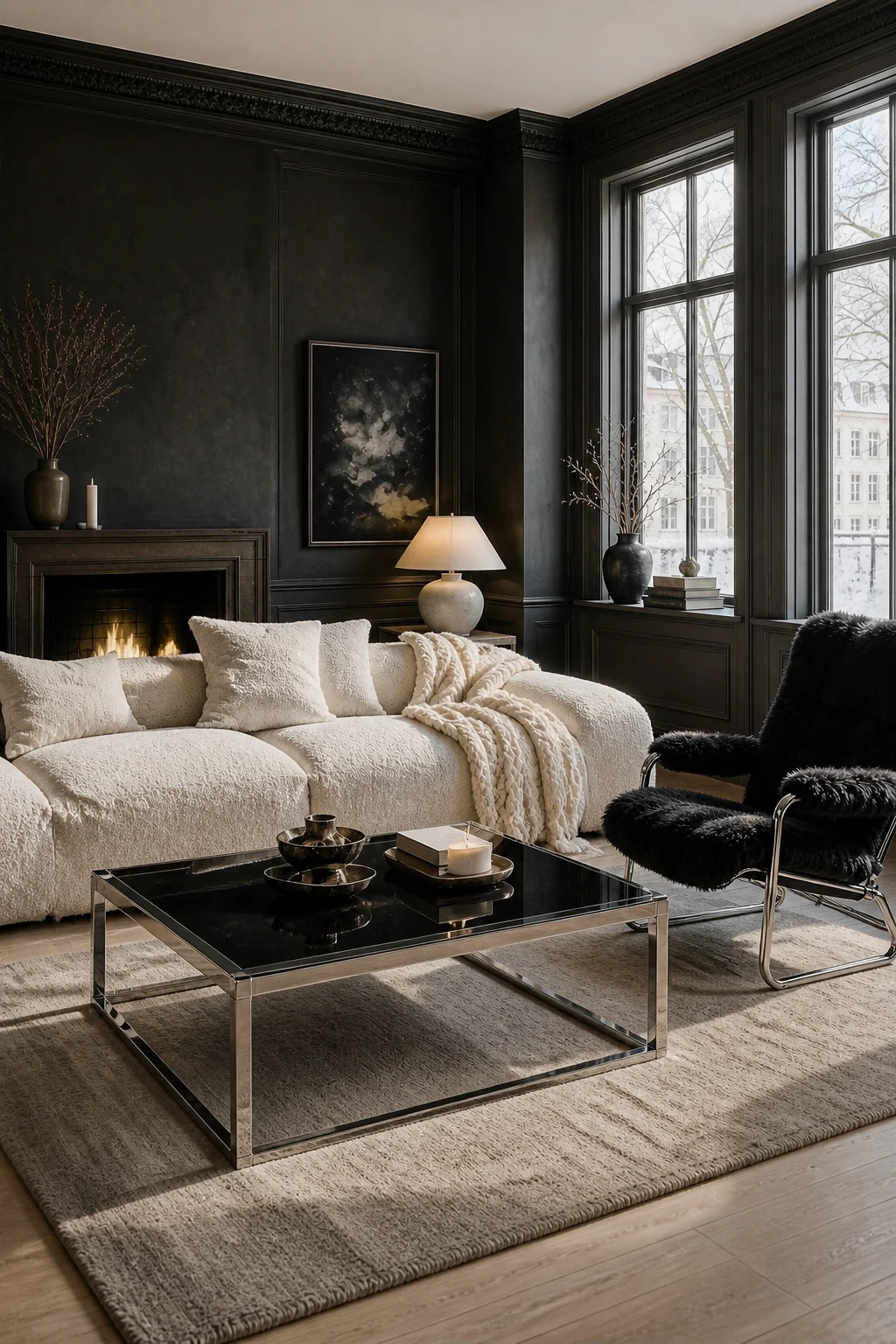
See how the sleek chrome base of the coffee table pierces the slouchy upholstery of the main sofa. This deliberate structural translation between opposing forces ensures the living room feels entirely cohesive, proving that rigorous geometry and relaxed softness can effortlessly coexist.
| Design Layer Focus | hygge Aesthetic Role | noir Aesthetic Role | Strategic Bridge Decision |
|---|---|---|---|
| Shell Architecture | Warm, diffused winter daylight | Matte charcoal plaster walls | Dark surfaces illuminated by soft, inviting natural light |
| Large Furniture | Oversized, slouchy seating forms | Sharp, geometric metal frames | Pairing sleek chrome bases with plush, heavy upholstery |
| Soft Textiles | Chunky knit wool and bouclé | Smooth, taut black leather | Black shearling that merges dark tones with deep pile |
| Room Lighting | Softly glowing ceramic lamps | High-contrast directional shadows | Warm pools of light against dark, moody backdrops |
| Small Accents | Warm ivory ceramic pottery | Smoked glass and polished chrome | Grouping reflective metals with tactile, matte earthen pottery |
By systematically applying this translation framework across every single design layer, you prevent either style from feeling accidental. The resulting composition is a highly intentional environment where the cynical edge of cinema is constantly softened by the welcoming embrace of Scandinavian coziness.
Controlling the Light
Darkly painted rooms easily turn gloomy without deliberate, thoughtful illumination strategies. Achieving true visual coherence relies entirely on managing your natural exposure and repeating warm architectural lighting cues to maintain an inviting atmosphere despite the heavy, absorbing charcoal plaster walls.
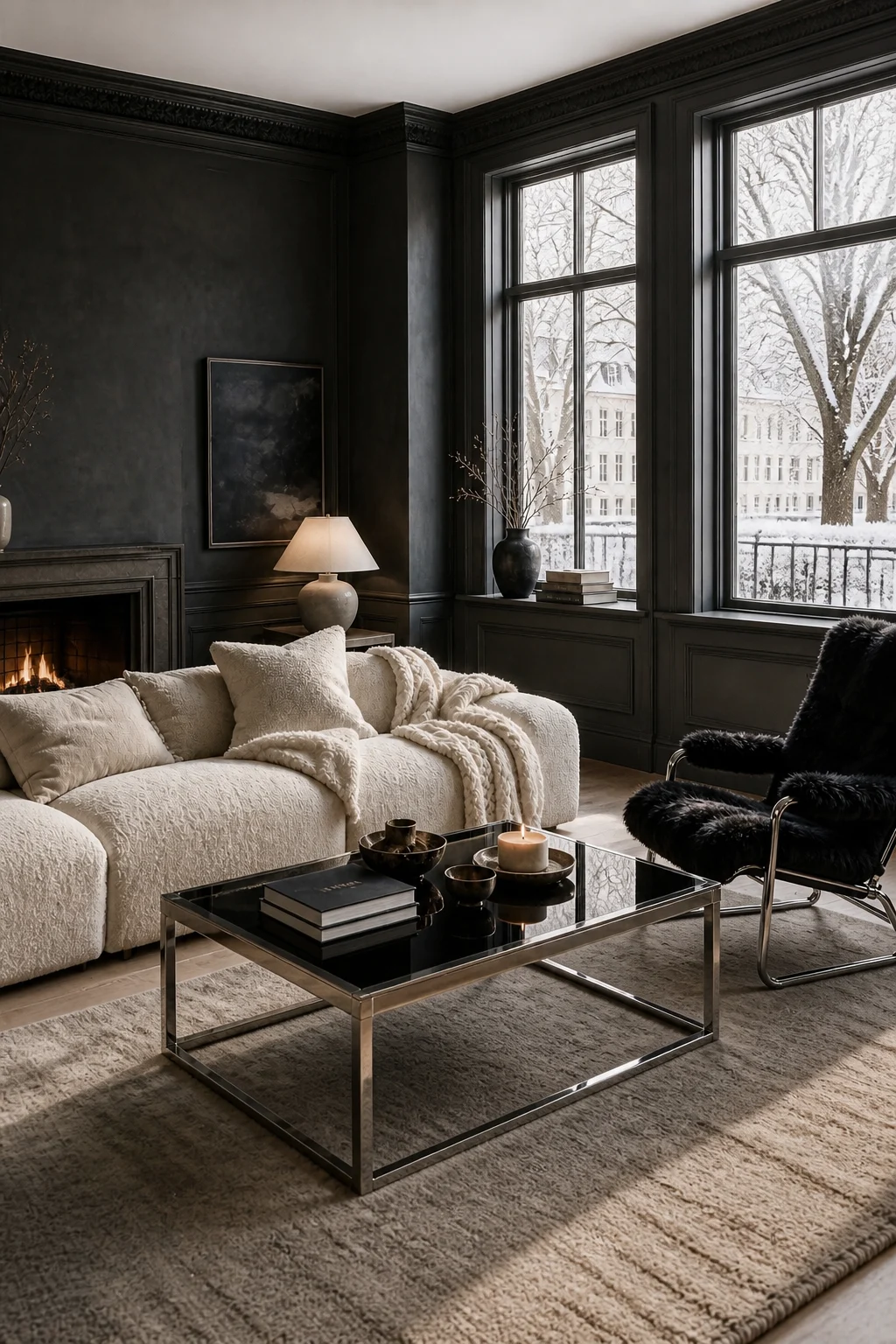
Watch how diffused winter daylight pours through the tall classic windows to gently lift the midtones. This bright, balanced exposure keeps the dark surfaces richly detailed and highly aspirational, ensuring the space feels like a comforting retreat rather than a gloomy cave.
- Maximize natural diffused daylight to keep dark plaster walls entirely legible and consistently welcoming throughout the day.
- Use softly glowing ceramic table lamps to create warm, isolated pools of inviting light during the evening.
- Avoid harsh overhead lighting that flattens delicate architectural details and creates unwanted, severe glare on dark surfaces.
Curating the Accents
Small styling moments reinforce your overarching narrative without overwhelming the physical space. A carefully curated console table or open shelf distills this broader aesthetic clash into a highly concentrated vignette, providing the perfect opportunity to fine-tune your specific material balance.
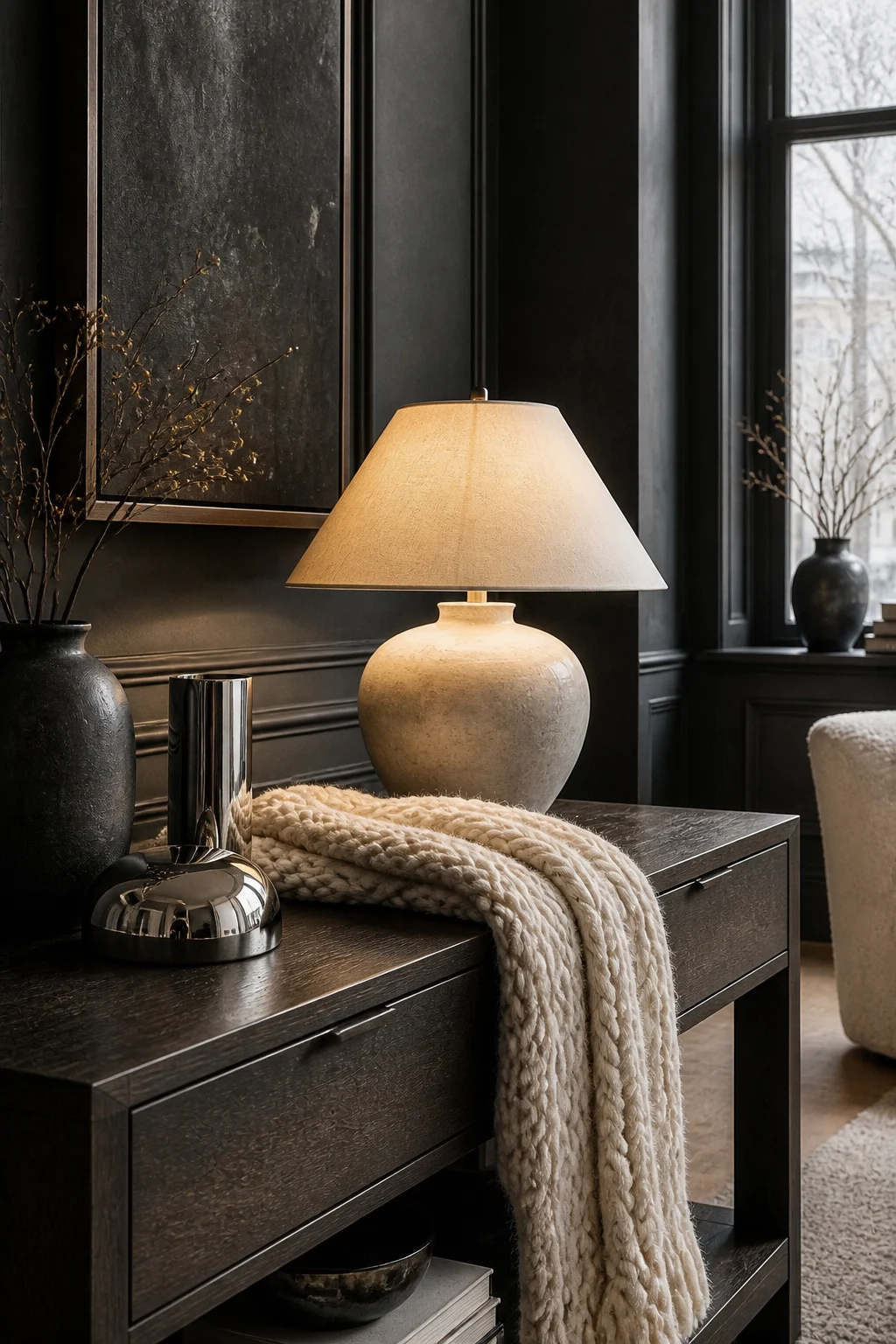
Notice the deliberate pairing of warm ivory ceramics with sharp metallic frames and deep espresso woods. These contrasting materials offer a reliable, foolproof checklist for sourcing your own finishing touches, ensuring every small object contributes directly to the resolved contradiction.
- Source oversized bouclé seating to establish your foundational tactile warmth and inviting, plush softness across the room.
- Select smoked-glass coffee tables to introduce sharp reflections and necessary, rigid geometric rigor to the seating area.
- Find softly glowing ceramic table lamps to gently soften the harsh, dramatic architectural shadows in the corners.
Translating the Look
This powerful aesthetic logic easily travels far beyond the main living area. Transitional spaces, narrow hallways, and compact reading nooks offer the perfect secondary canvas to practice balancing cozy, inviting textiles against moody, deeply shadowed architectural walls and sharp lines.
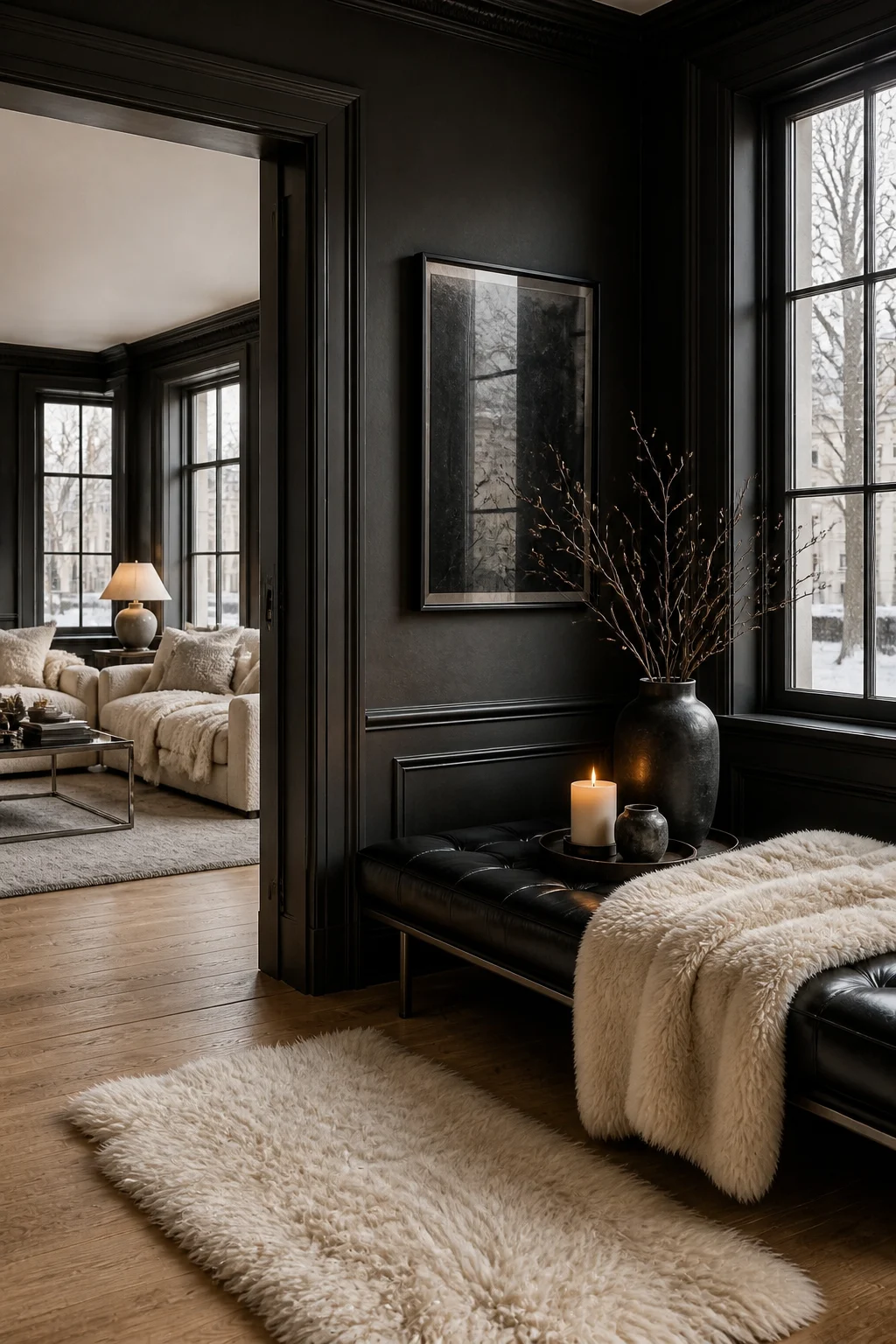
Observe this hallway threshold, where a sleek black leather bench sits beneath dramatic charcoal paint. A fluffy white sheepskin rug immediately softens the severe shadows, proving that you can carry this exact stylistic tension into the smallest corners of your home.
Applying these principles to transitional zones ensures your entire home feels like a unified, deliberate experience. The sudden contrast of stepping from a bright, airy room into this shadowy, tactile nook reinforces the overarching narrative of a dark but deeply soft sanctuary.
Refining the Balance
When mixing such extreme stylistic opposites, the greatest design risk is creating a disjointed, chaotic room. Ultimate success means ensuring that neither the shadowy cinematic drama nor the fluffy Scandinavian comfort completely dominates your visual field at any given moment.
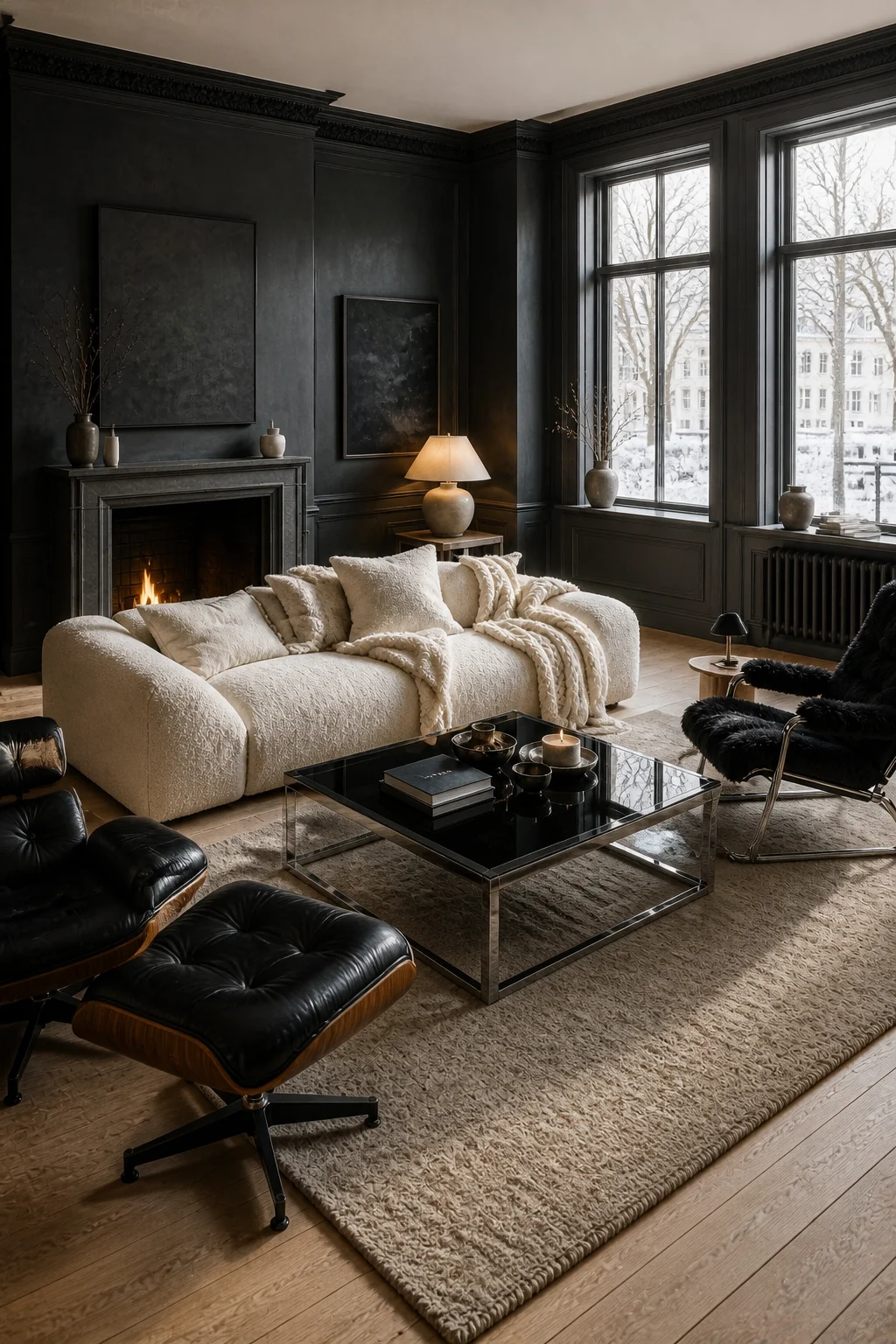
Take in the harmonious final result from this wide perspective. The bright, inviting furniture perfectly offsets the moody walls, proving beyond a doubt that a dark, cynical sanctuary can remain deeply comforting if you strictly follow these final essential balancing rules.
- Avoid using exclusively dark colors across all layers to prevent overwhelming, heavy visual gloom from dominating the space.
- Do not isolate opposing styles into separate, completely disconnected corners of the living room; always mix them closely.
- Ensure every sharp architectural edge is directly balanced by a tactile element of softness to maintain physical comfort.
Full Pinterest pin
This full-ratio preview is shown temporarily for visual quality checks.