
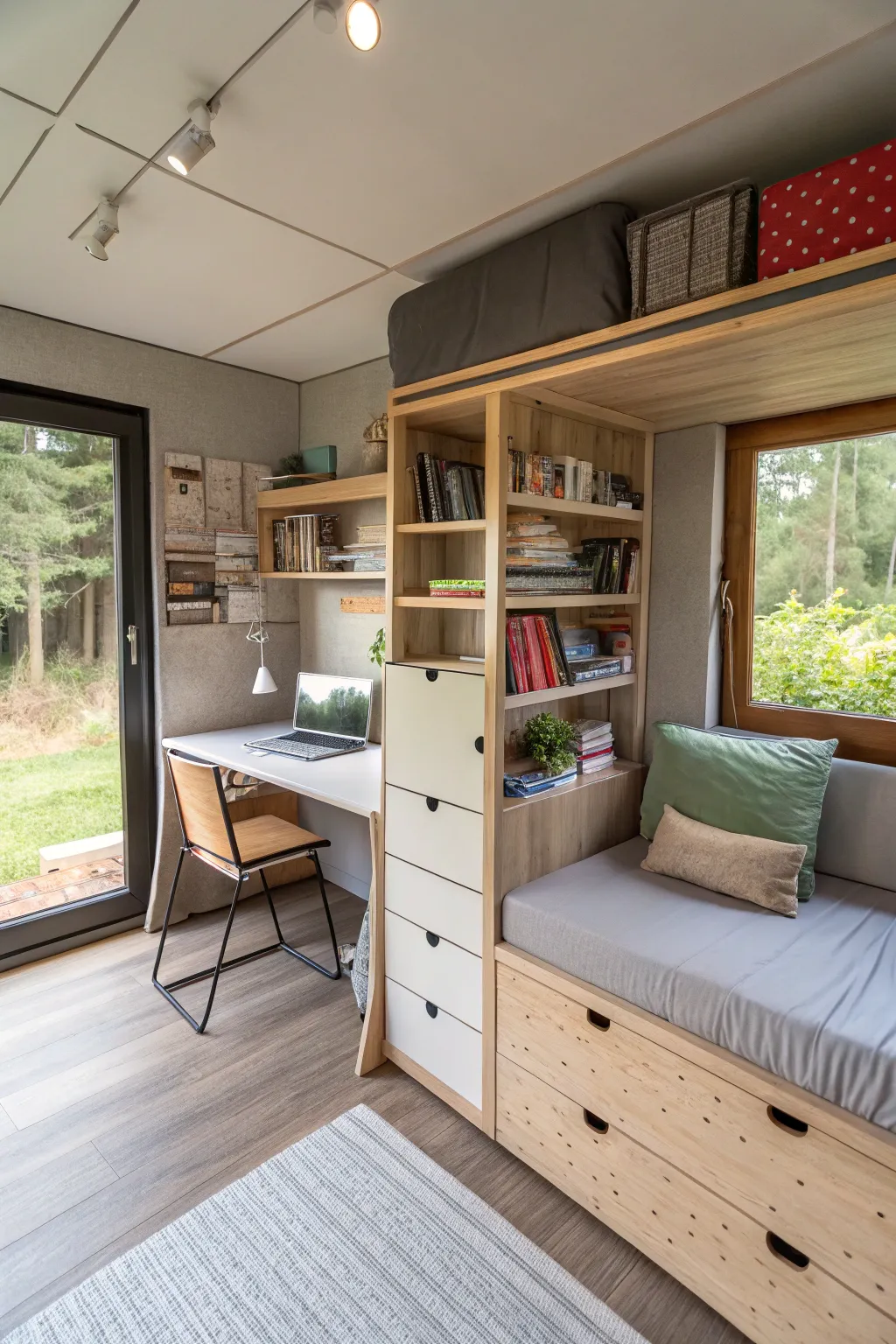
Cramped rooms offer a fantastic chance to unleash creativity, presenting design challenges that spark innovation. In this guide, I’m eager to reveal my go-to methods for turning these limited areas into welcoming and practical retreats.
1. Strategically Incorporate Greenery

Introducing greenery can breathe life into any snug room. Just a small plant on a shelf or a suspended plant near a window can significantly enhance the space. Explore our wall shelf plant ideas to find the perfect setup for your home.
2. Optimize Natural Light and Mirrors

Reflective surfaces like mirrors can significantly boost natural light, giving the illusion of a more expansive room. I often position mirrors across from windows to maximize this effect in smaller settings. These techniques are part of many ingenious ideas for home design that transform your living space.
3. Embrace a Less-is-More Design

Keeping decor minimal prevents cluttering a small space. I prioritize simplicity, ensuring that each piece has a purpose. You can explore these minimal bathroom counter decor ideas to refine your aesthetic.
4. Design Multi-Functional Areas

Dividing a small room into zones for different activities can really boost its usefulness. I love designing areas that flow effortlessly from work to relaxation.
5. Introduce Highlight Lighting

Highlight lighting through sconces or pendants adds warmth and personality without occupying floor space. Enhancing the mood with light is one of my favorite design strategies. You can explore more narrow hallway lighting ideas to brighten your home.
6. Add Dimension with Feature Walls and Textural Elements

Textural finishes or a feature wall can enrich a space without adding clutter. I enjoy applying understated patterns or bold wallpaper to captivate attention and introduce character.
7. Consider Sliding Door Alternatives

Swapping out conventional doors with sliding or pocket models saves space. I’ve used this simple switch to really open up the flow of a room. For more ways to maximize your layout, check out these creative tiny house bathroom ideas.
8. Incorporate Personal Embellishments

Incorporating personal accents, like custom art or unique decor, can transform a small space into something special. I love encouraging clients to display items that reflect who they are. You can find more inspiration in our guide to cozy small cabin decor ideas.
9. Layer with Textiles and Fabrics

Incorporating multiple layers of textiles like throws and cushions adds comfort and visual depth. I often use multiple rugs to delineate different zones within a single room.
10. Explore Creative Bed Arrangements

Positioning your bed in less conventional spots, like within an alcove, can optimize the layout. Clients are often surprised at how much space this tactic can save.
11. Leverage Versatile Furnishings

A key element in maximizing compact spaces, versatile furnishings such as a sofa that transforms into a bed, or a dining table adaptable as a desk, dramatically improve your room’s practicality. From personal experience, I’ve found these items indispensable for striking the right chord between functionality and aesthetic appeal.
12. Play with Vertical Forms

Vertical forms, like tall bookcases or striped wallpaper, make a room feel taller. By using these aspects, I can draw the eye upward, creating the impression of more height.
13. Create Harmonious Color Palettes

A cohesive color scheme can tie a small space together, giving it a more open feel. I tend to select harmonious colors to make a seamless transition throughout the room.
14. Install Elevated Furnishings

Floating furniture like wall-mounted desks or nightstands frees up floor space, creating a more open room. I’ve used this tactic effectively to produce functional, clutter-free environments. You can also explore wall-mounted rack ideas to maximize your storage capacity.
15. Take Advantage of Built-In Structures

Built-in furniture can streamline a space, creating more usable area. I’ve witnessed how this can convert tight spaces into havens of efficient storage. If you need more surface area, explore these fresh ideas for small end tables.