
Master Refrigerator Organization with This Free Zone Map
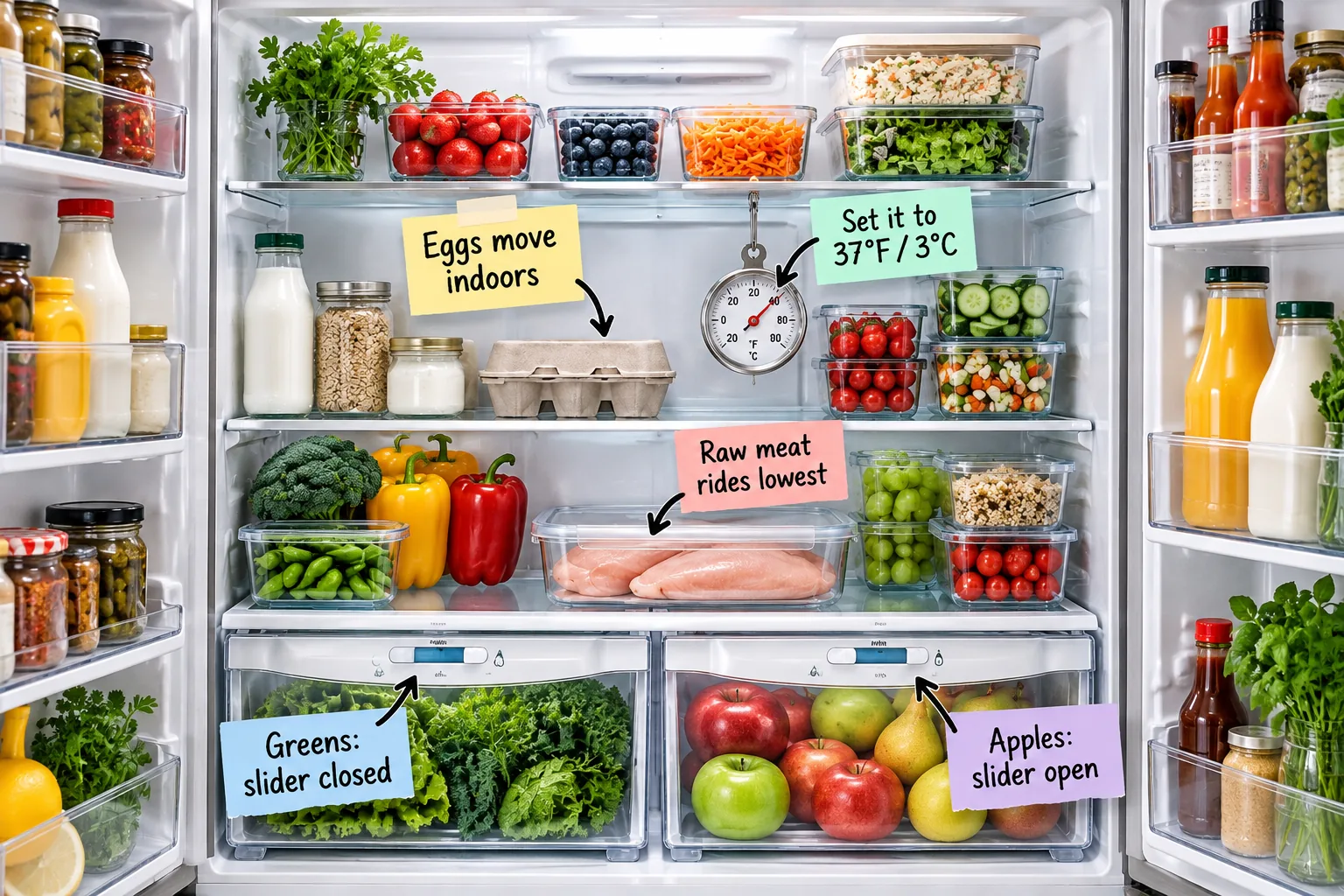
Stop guessing where your groceries belong and download our printable shelf-by-shelf placement chart to match every food to its ideal climate. You will be able to arrange your fridge perfectly by temperature and humidity, keeping ingredients fresher for much longer.
Dialing In the Target Temperature
In my Denver kitchen projects, I always tell clients that keeping the refrigerator core at exactly 37°F (3°C) is the first non-negotiable step. This specific temperature safely slows bacterial growth without accidentally freezing your delicate liquids and produce.
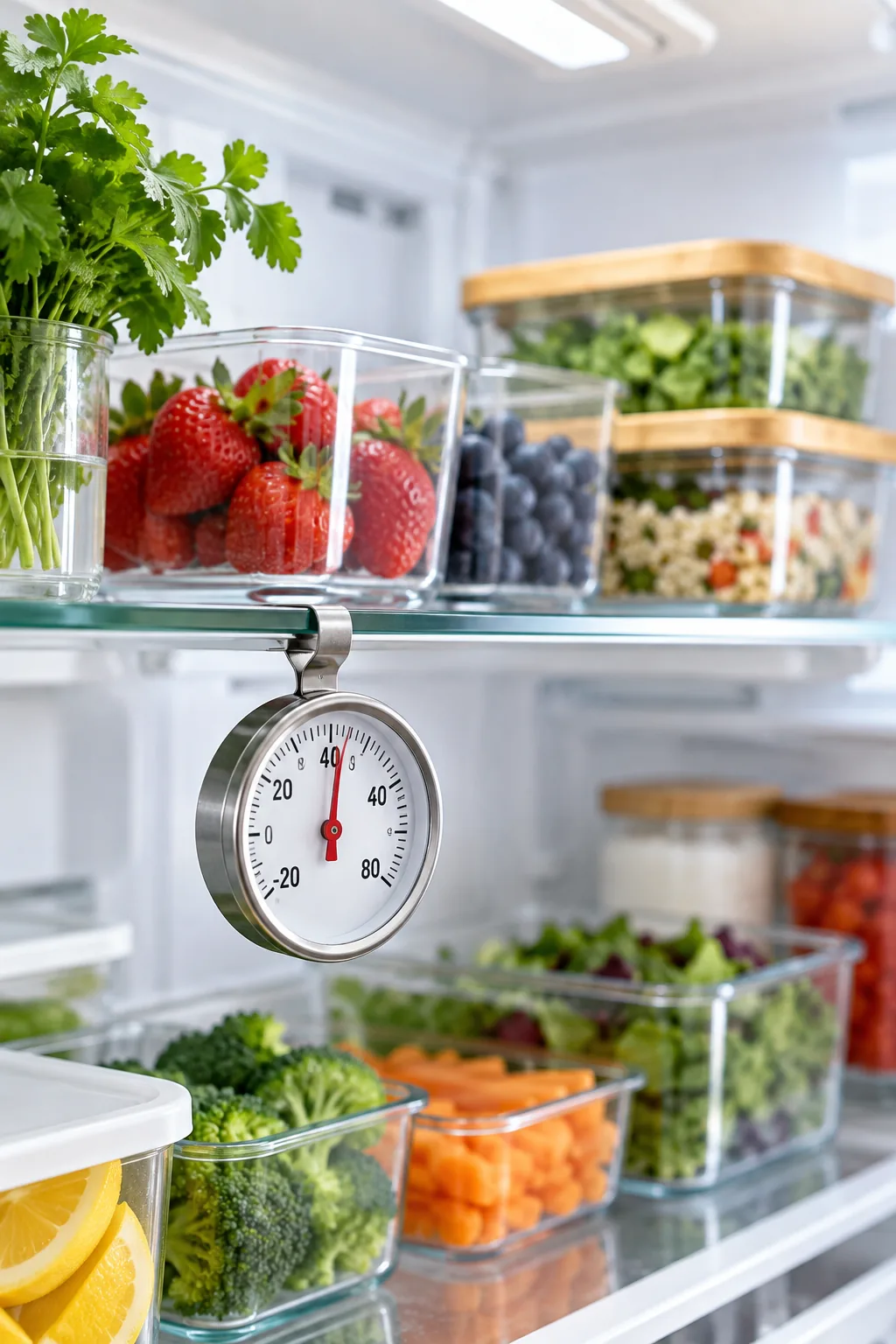
Because built-in sensors often read the air right next to the cooling vent, hang an independent dial thermometer from a middle shelf. This secondary reading lets you verify the actual ambient temperature where your food sits.
The Upper Shelves for Ready-to-Eat Foods
Heat naturally rises, making the upper shelves a zone with highly consistent temperatures but slightly less intense cold than the bottom. This stable environment is perfect for storing ready-to-eat leftovers, fresh herbs sitting in water, and daily beverages.
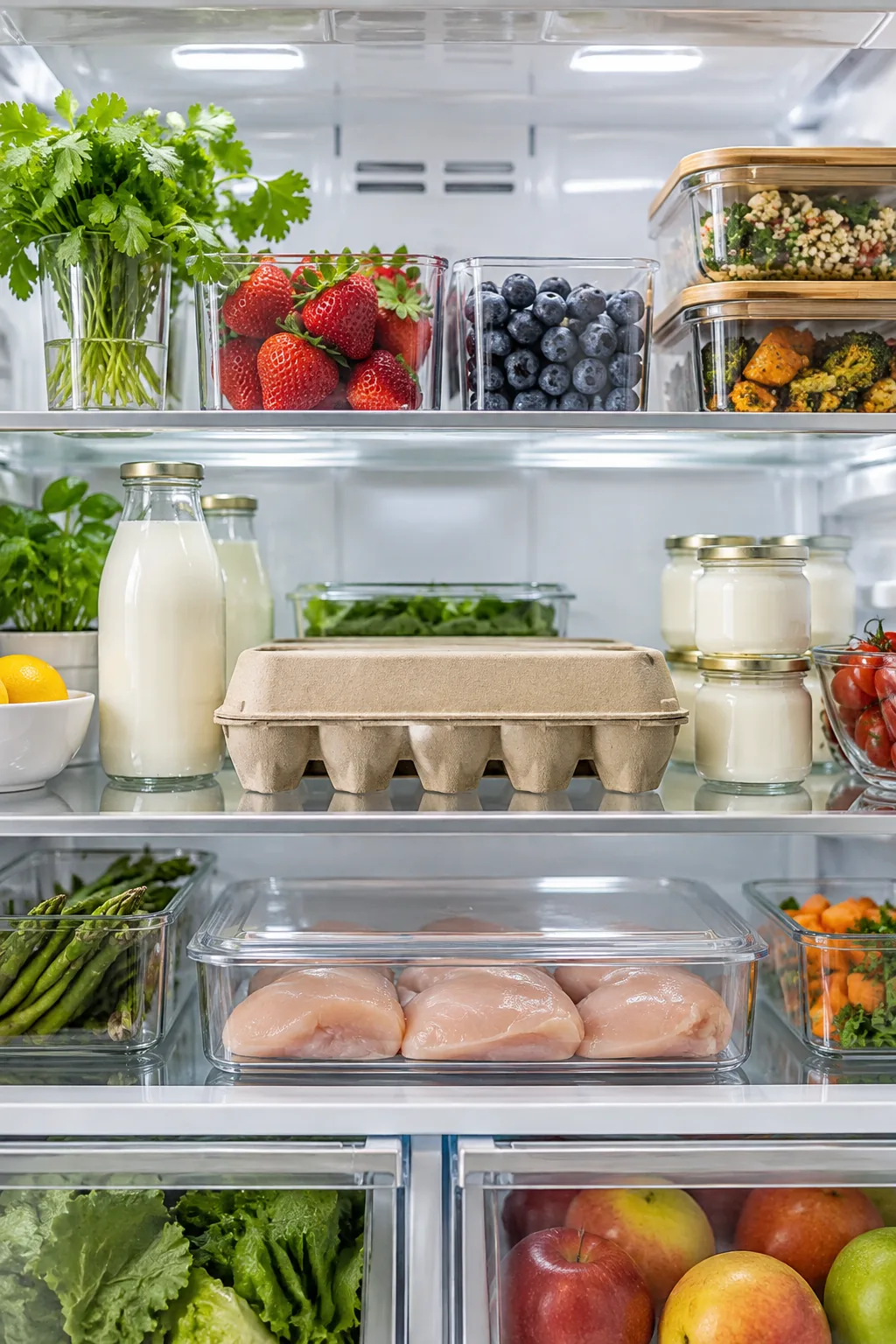
By keeping these fully cooked or delicate items at eye level, you ensure they are visible and consumed before they spoil. Moving them higher also frees up the colder, deeper zones for highly perishable raw ingredients.
The Middle Shelves Protect Dairy
I used to keep my eggs in the molded door tray until I learned that the middle shelves offer the deep, stable cold they actually require. To prevent moisture loss and protect them from temperature swings, eggs move indoors to the main compartment.
Even with the right zones identified, a few common placement habits can quickly compromise your most sensitive groceries.
The Bottom Shelf Isolates Raw Meat
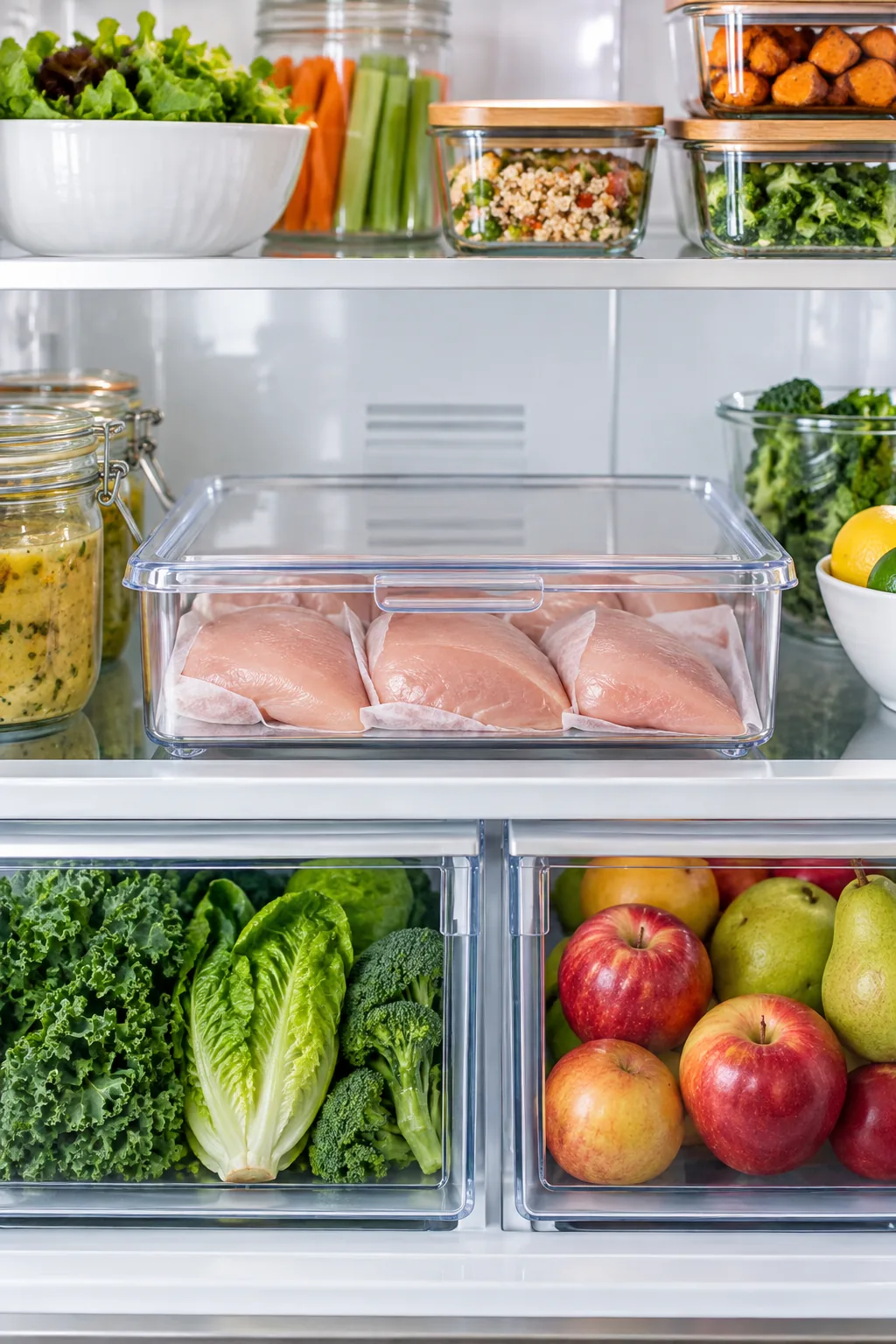
The bottom glass shelf sits just above the crisper drawers and functions as the coldest spot in the main compartment. For strict food safety, raw meat rides lowest in a dedicated, lidded acrylic bin.
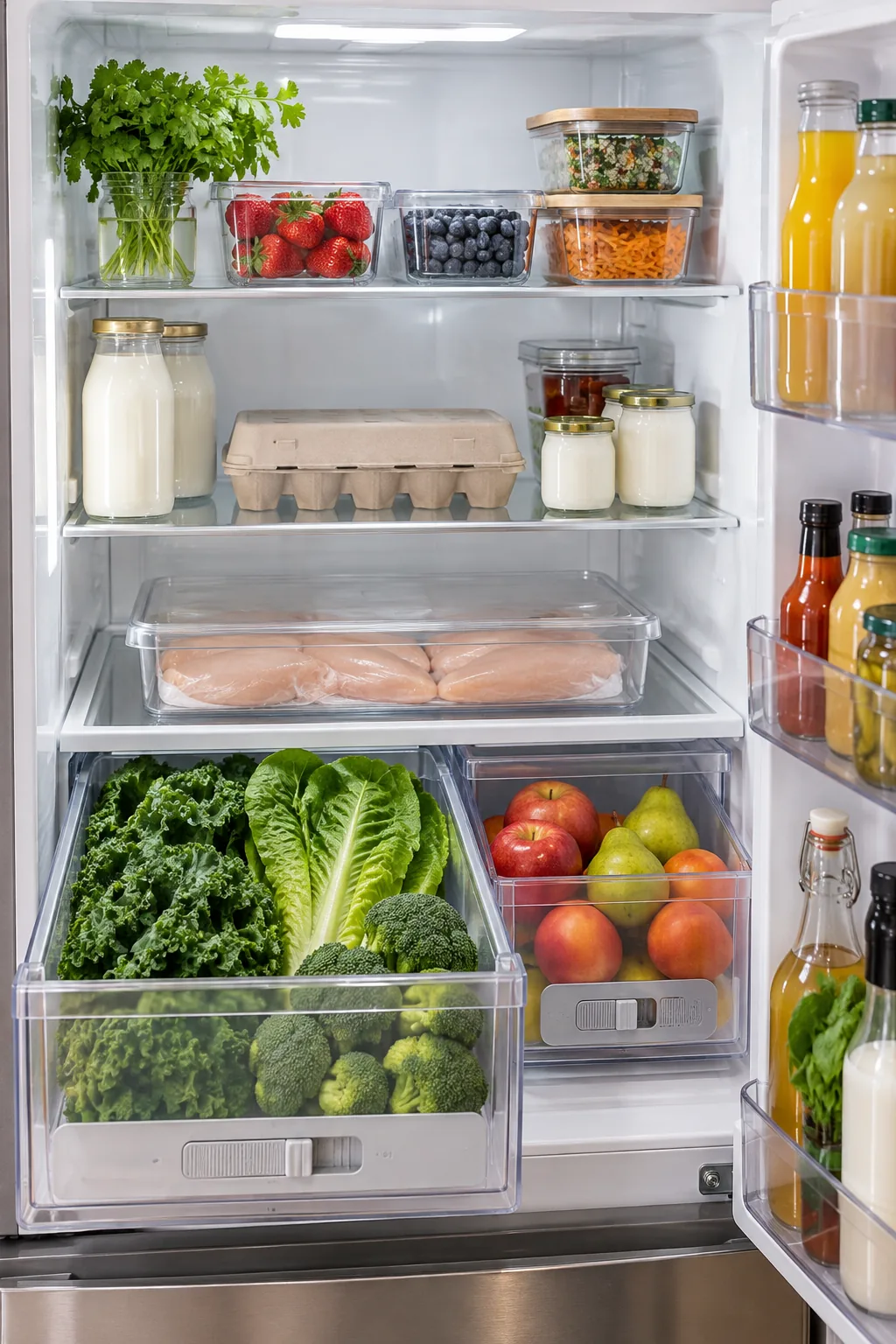
Placing poultry and beef on the lowest tier guarantees that accidental drips cannot fall onto your fresh produce or leftovers. The sealed tray acts as a reliable secondary barrier to prevent dangerous cross-contamination.
The High-Humidity Crisper for Wilting Greens
Crisper drawers give you granular control over moisture, and sliding the vent fully closed traps essential condensation inside the bin. This resulting high-humidity environment is absolutely necessary to prevent leafy greens and herbs from shriveling.
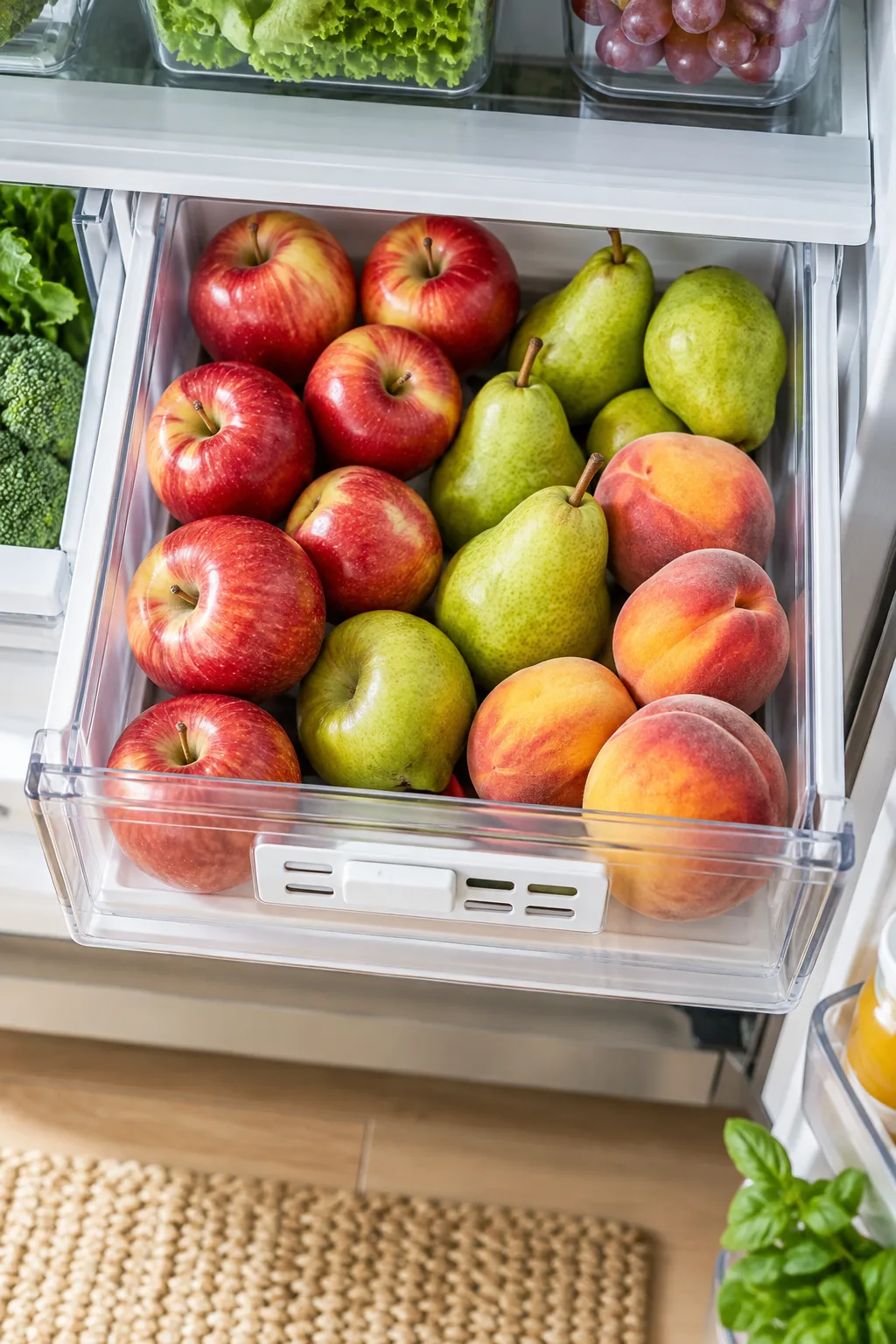
When you configure the setting so your greens slider is closed, thin-skinned vegetables like spinach, kale, and cucumbers retain their crisp texture. The trapped moisture mimics a gentle greenhouse, extending the life of delicate produce by several days.
The Low-Humidity Crisper for Ethylene Emitters
Opening the humidity slider allows vital airflow to cycle through the drawer and vent out naturally ripening gases. I once ruined a whole batch of strawberries by trapping them with apples, which taught me why the apples slider stays open.
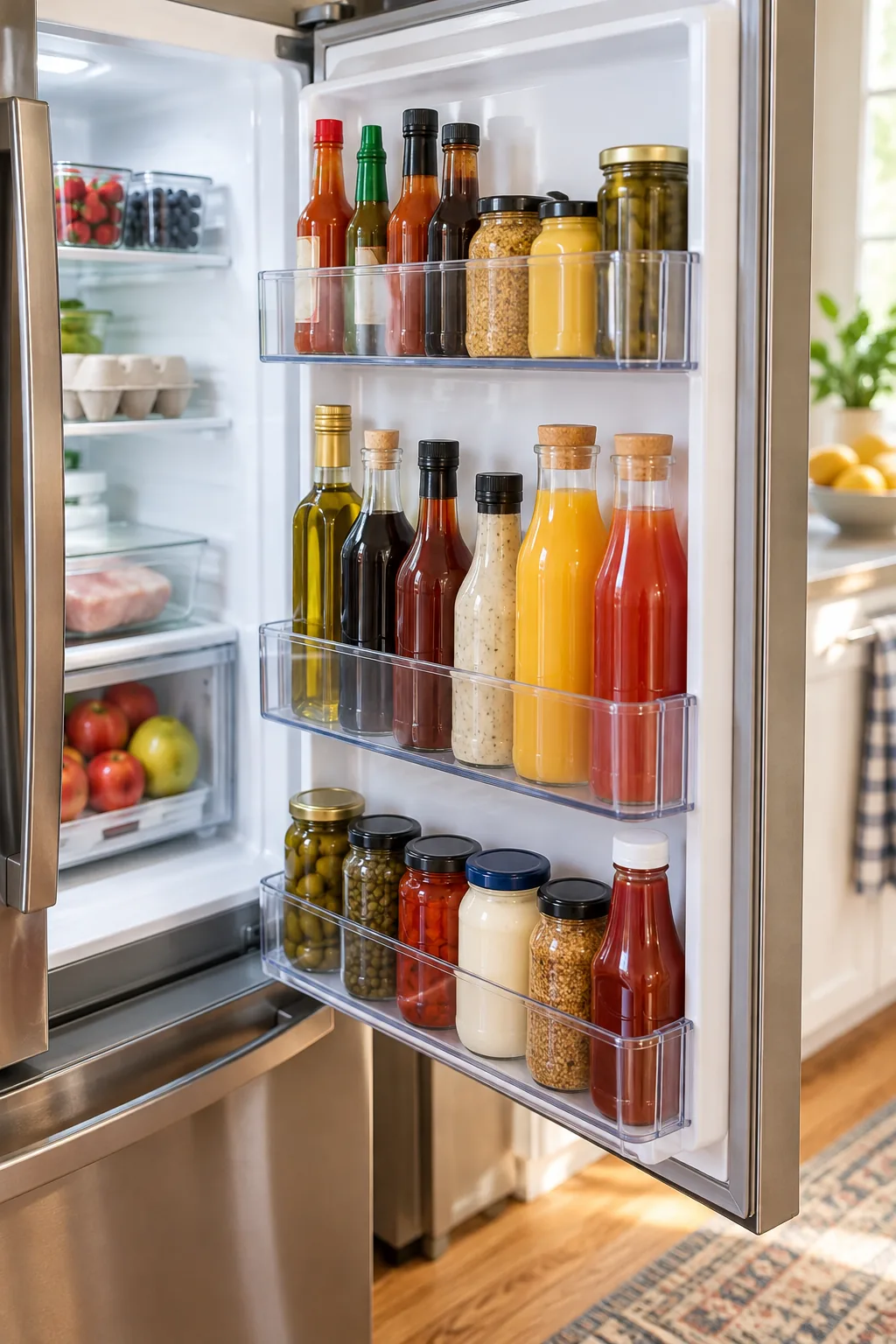
This low-humidity setting prevents premature rotting by giving ethylene-emitting fruits room to breathe. Always use this open-vent drawer for these specific heavy emitters:
- Apples and pears: These release high amounts of ethylene and need constant airflow.
- Stone fruits: Peaches and plums ripen quickly and will turn mushy if trapped with their own gases.
- Melons: Whole cantaloupes and honeydews require low humidity to maintain their firm flesh.
The Door Bins for Resilient Condiments
Every time you open the refrigerator, the door bins are exposed to warm ambient room air, making this the most fluctuating climate zone. Reserve this space strictly for high-acid, vinegar-based condiments, robust sauces, and resilient pasteurized juices.
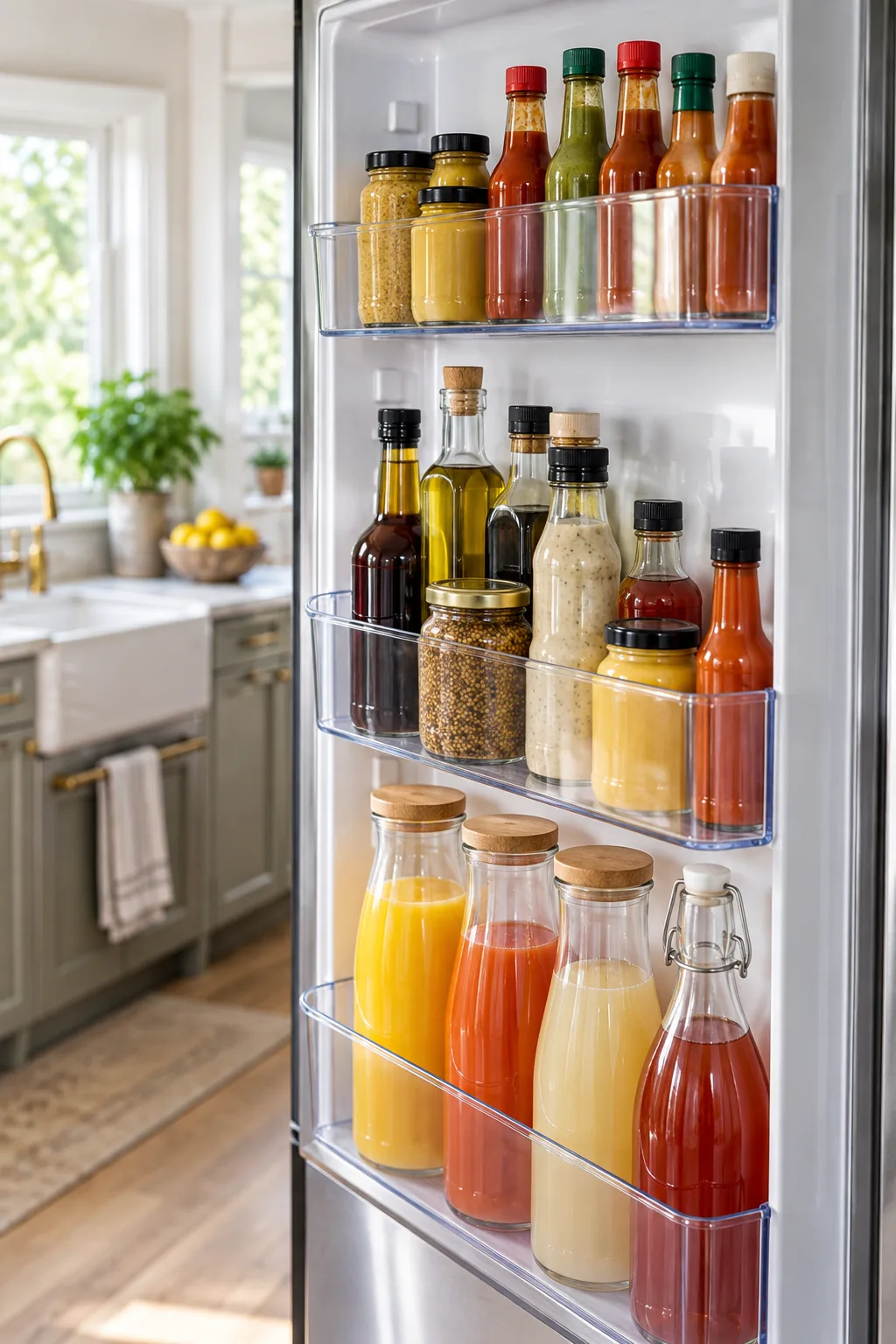
Because the door is the most accessible zone, optimizing its layout makes daily cooking and meal prep much smoother.
5 Ways to Style Your Organized Fridge
Once you know the climate rules, you can customize the containers to match your kitchen's aesthetic.
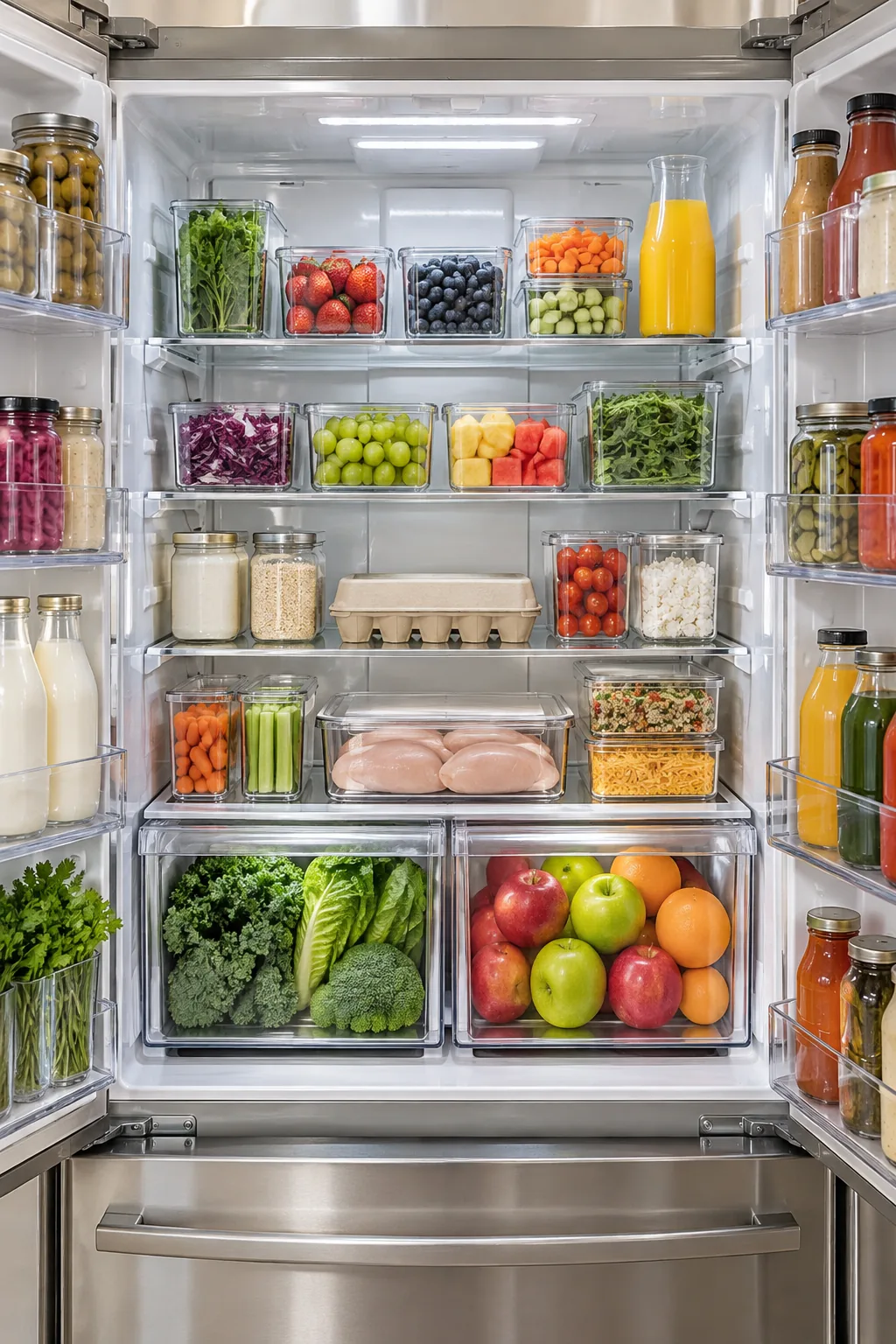
The Clear Acrylic System: Uniform transparent bins create a visually quiet interior while letting you see exactly what you have in stock.
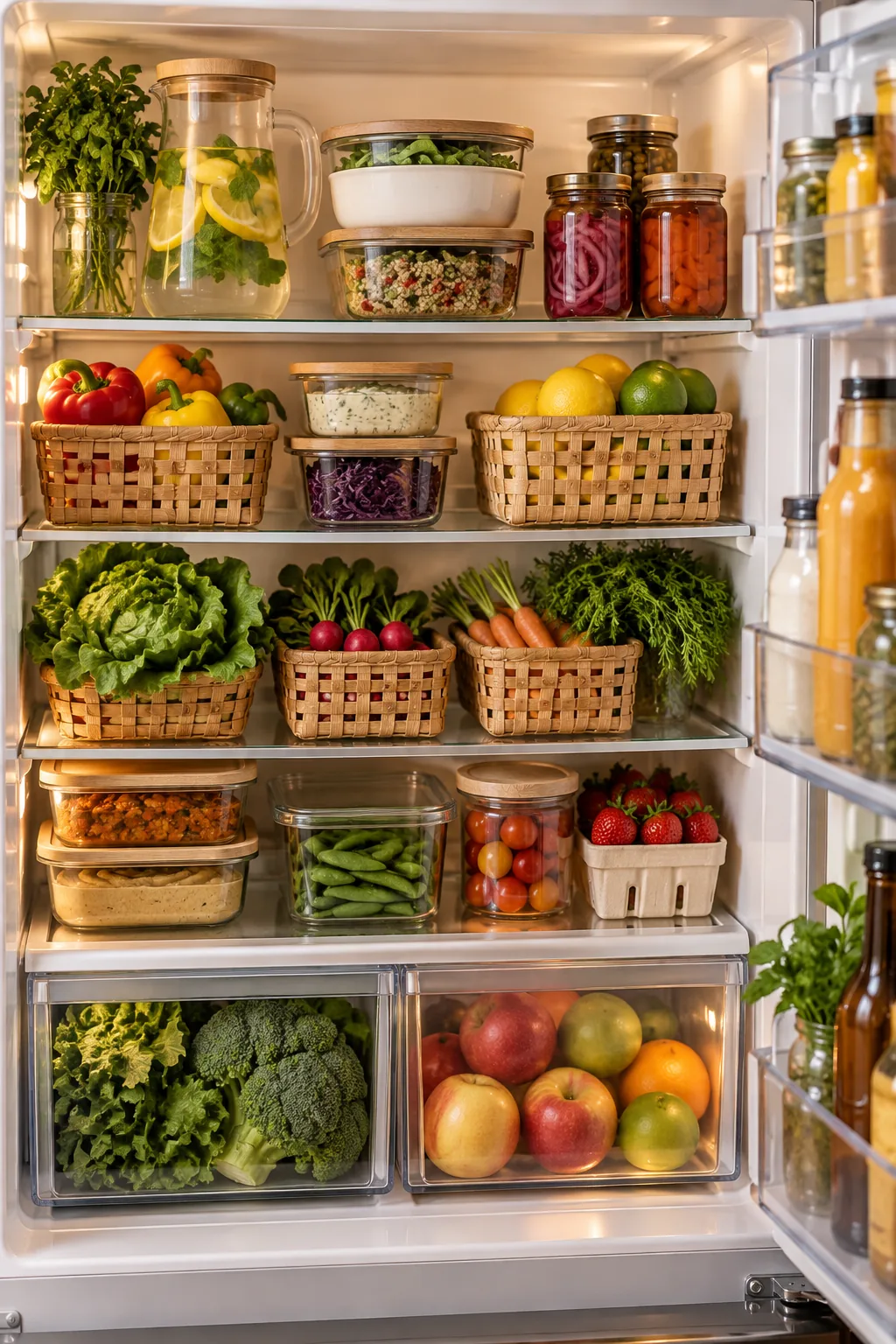
The Organic Wood Aesthetic: Introduce natural textures like bamboo and acacia wood lids to make the cold fridge feel like a warm pantry.
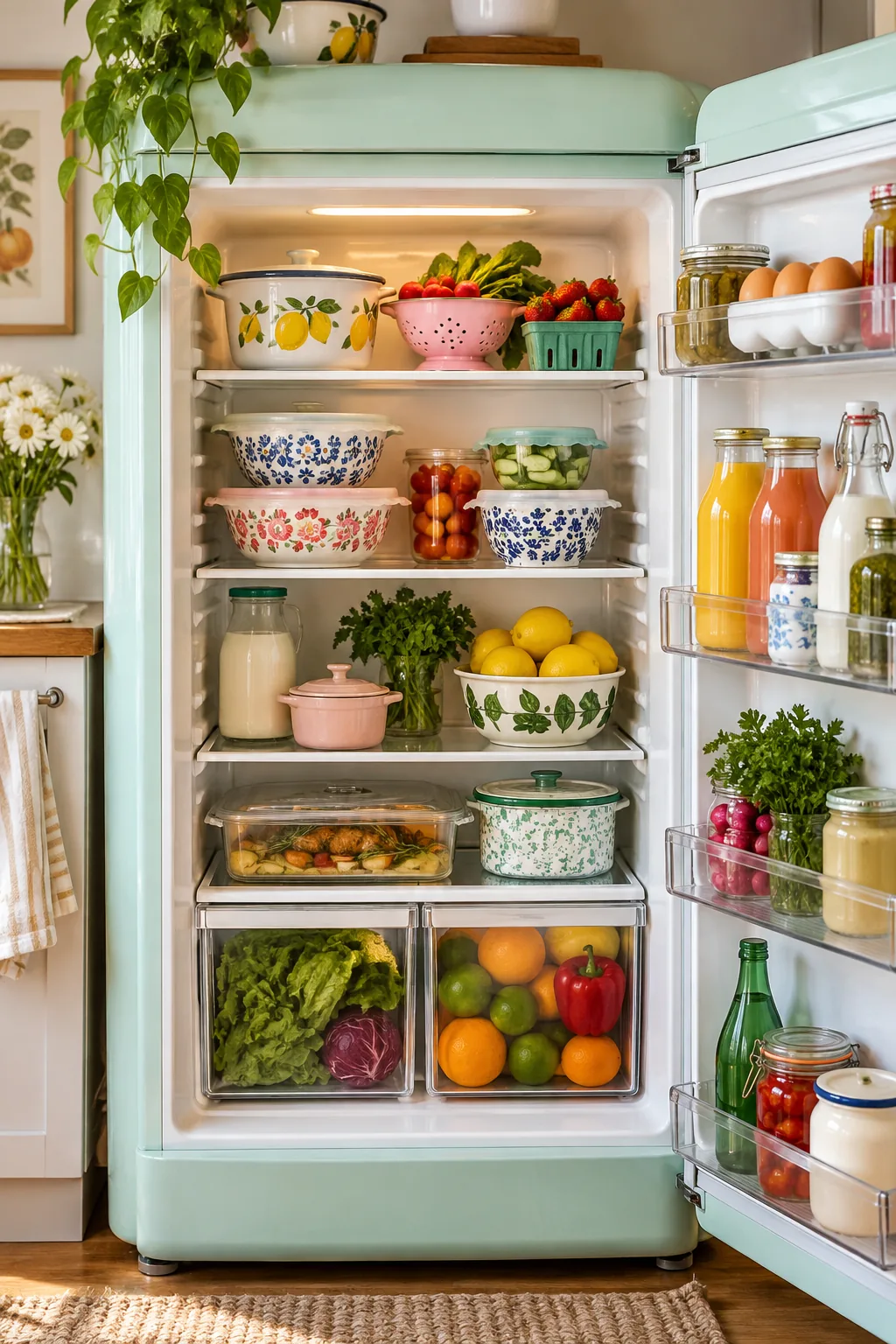
The Colorful Retro Vibe: Ditch the clear plastic for vintage enamelware and patterned ceramics that bring joy every time you open the door.
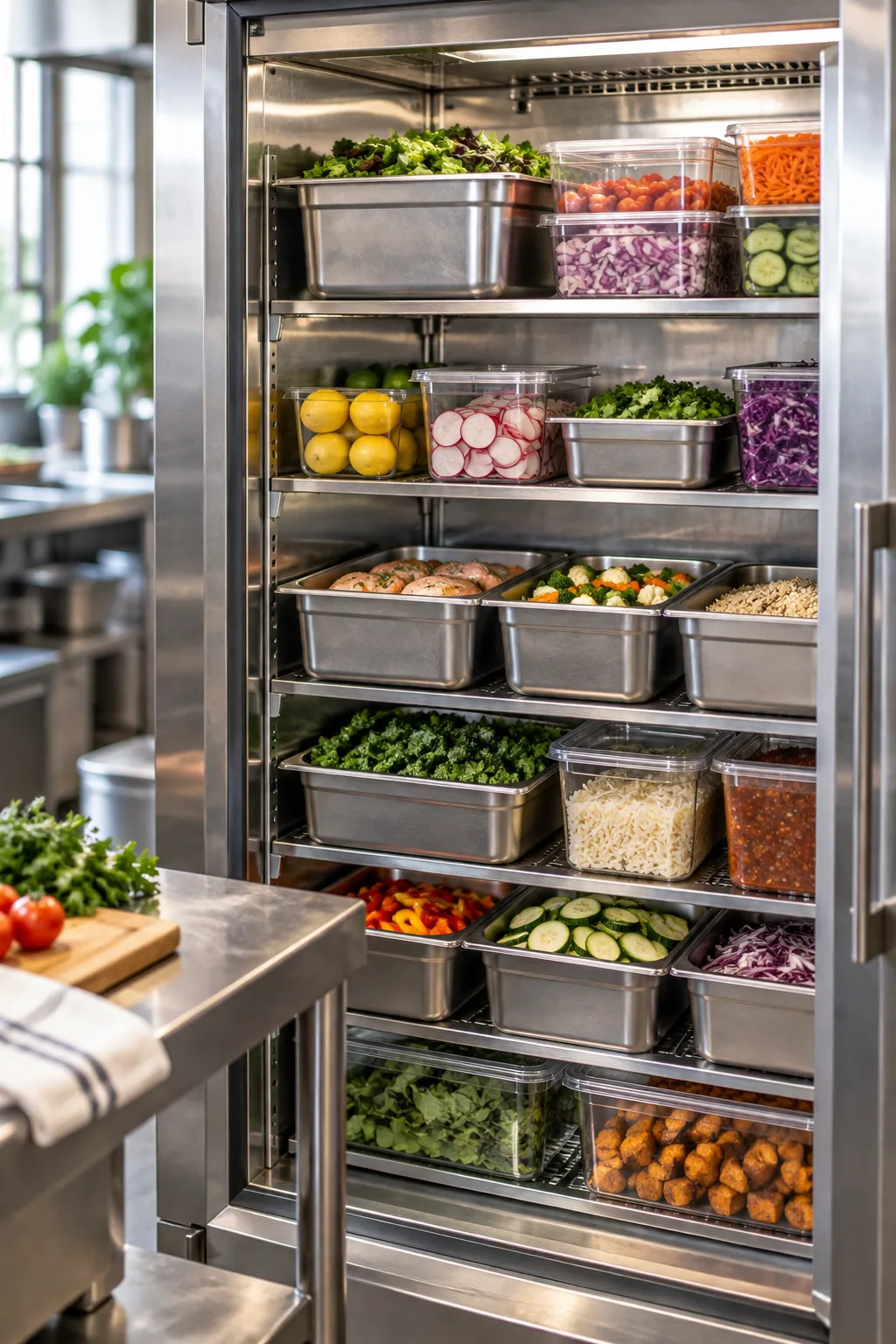
The Professional Kitchen Setup: Adopt the efficiency of a restaurant with indestructible stainless steel pans and high-visibility masking tape labels.
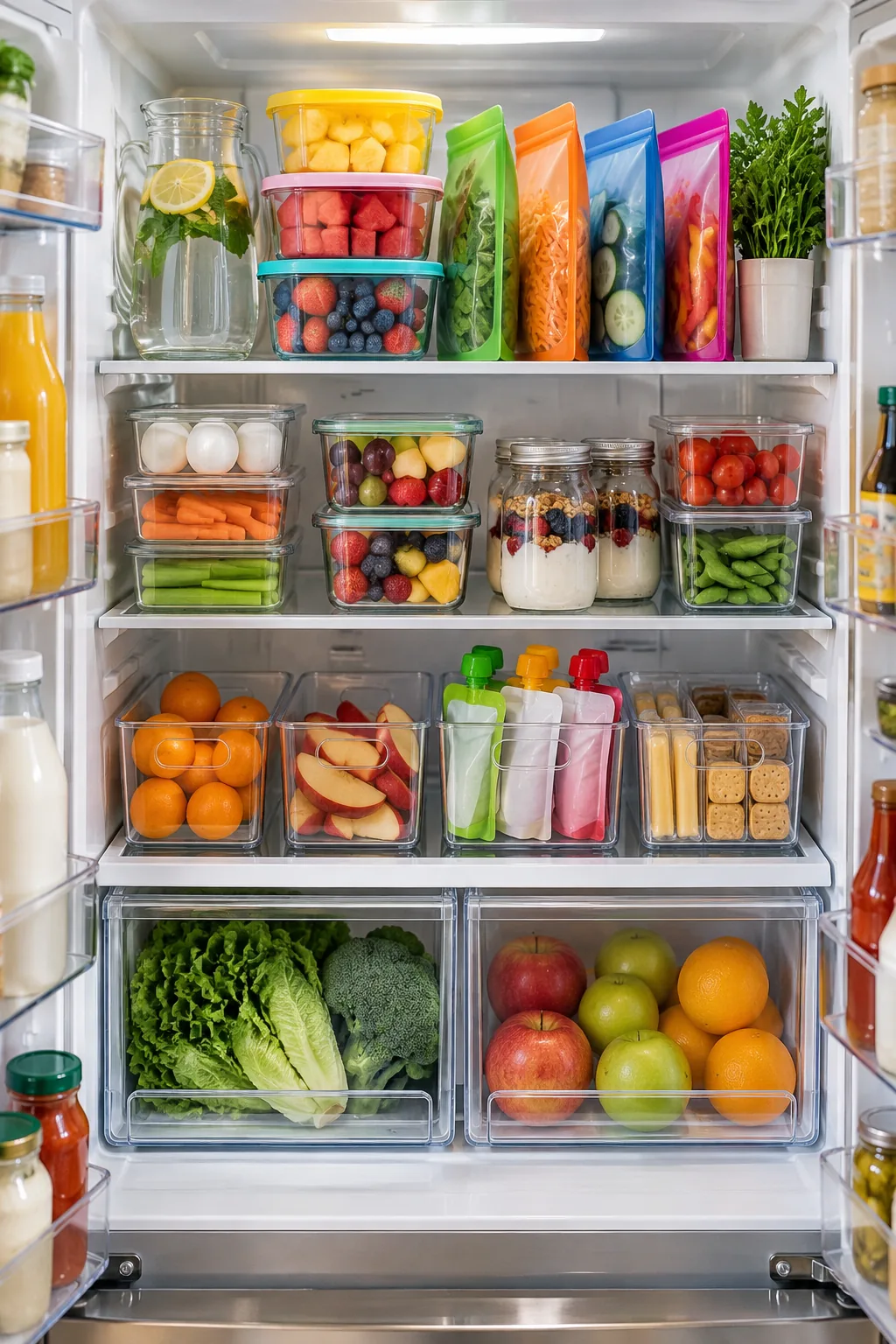
The Family-Friendly Station: Use color-coded silicone bags and dedicated lower-shelf snack bins so kids can easily grab their own healthy food.
Your Printable Shelf-by-Shelf Map
Maintaining this climate-based system is only effective if everyone in your household understands exactly where items belong. Downloading and printing our one-page placement chart provides a visual cheat sheet for every shelf, bin, and drawer.
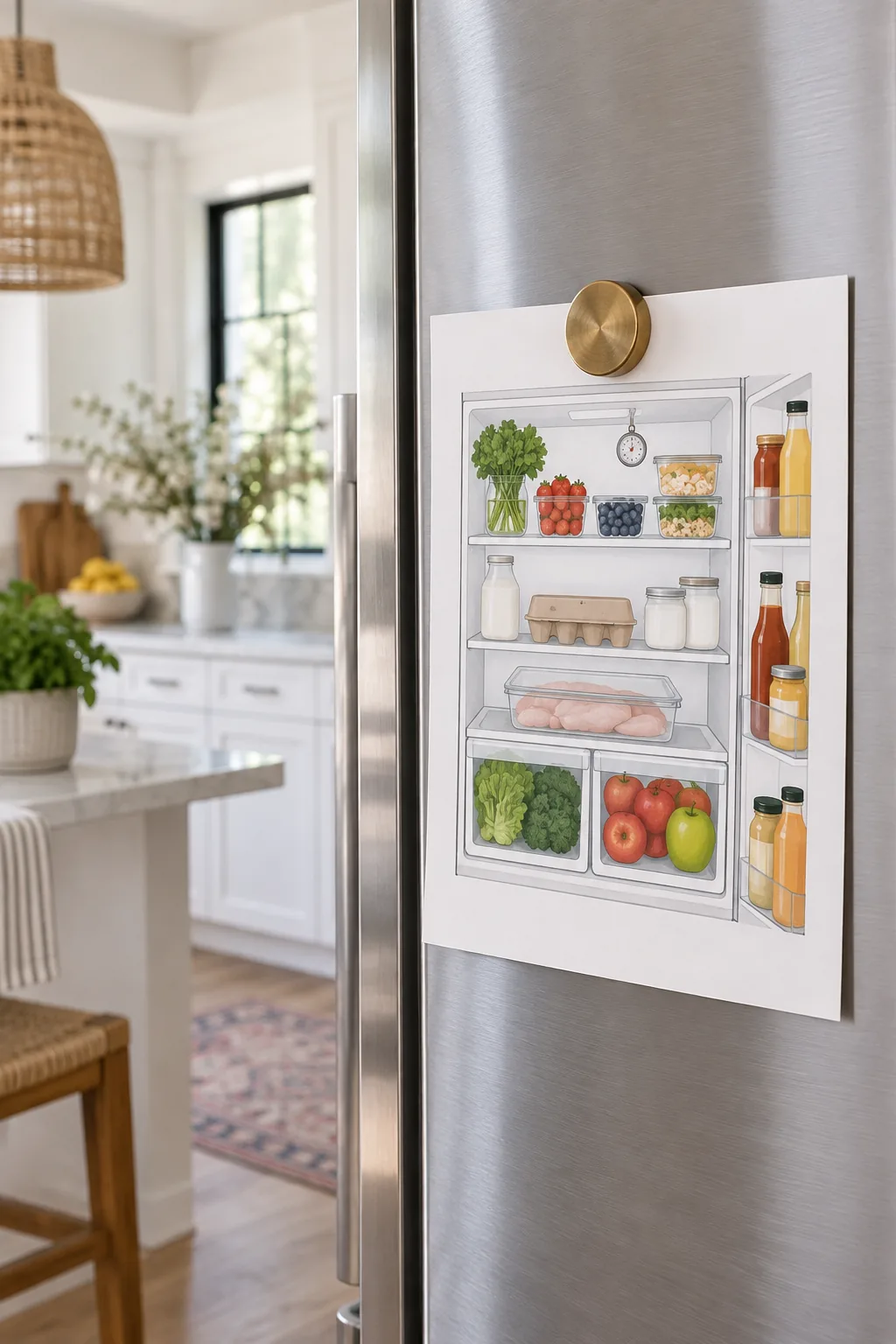
Display the map on the exterior of your refrigerator so family members can reference it while unpacking groceries. By sticking to these designated zones, you will dramatically reduce household food waste and keep your shelves perfectly organized.