
How to Build a Walkable Pea Gravel Backyard (Plus Quantity Chart)
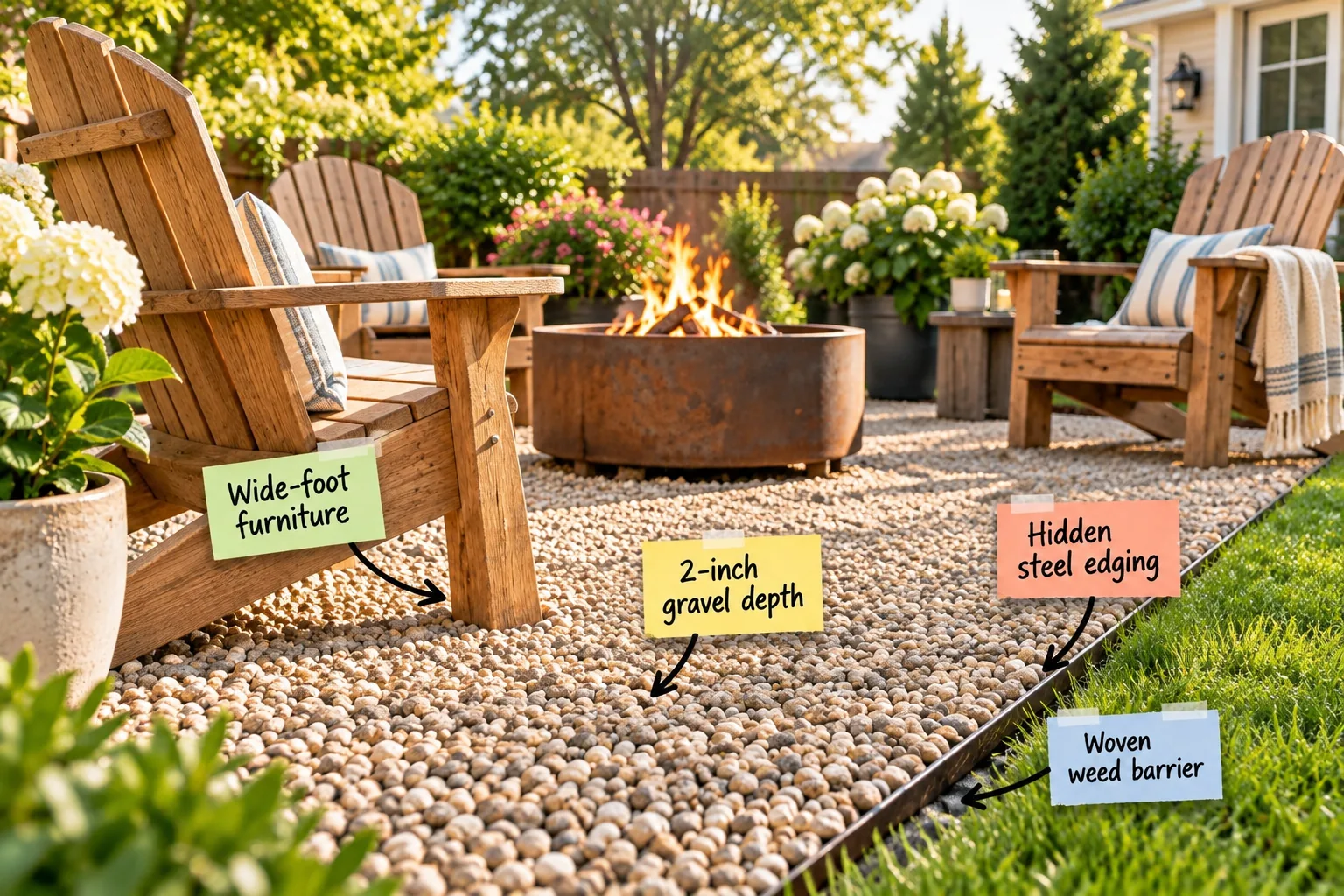
You can build a perfectly walkable outdoor living space that never feels like trudging through deep sand. Use our exact prep checklist and coverage chart to calculate your stone order and construct a stable, sink-free pea gravel backyard.
The Secret to a Walkable Gravel Surface
A successful gravel patio feels incredibly solid underfoot when you use the right construction methods. Achieving this firm stability requires a strict combination of shallow stone depth and rigid borders to keep everything locked securely together.
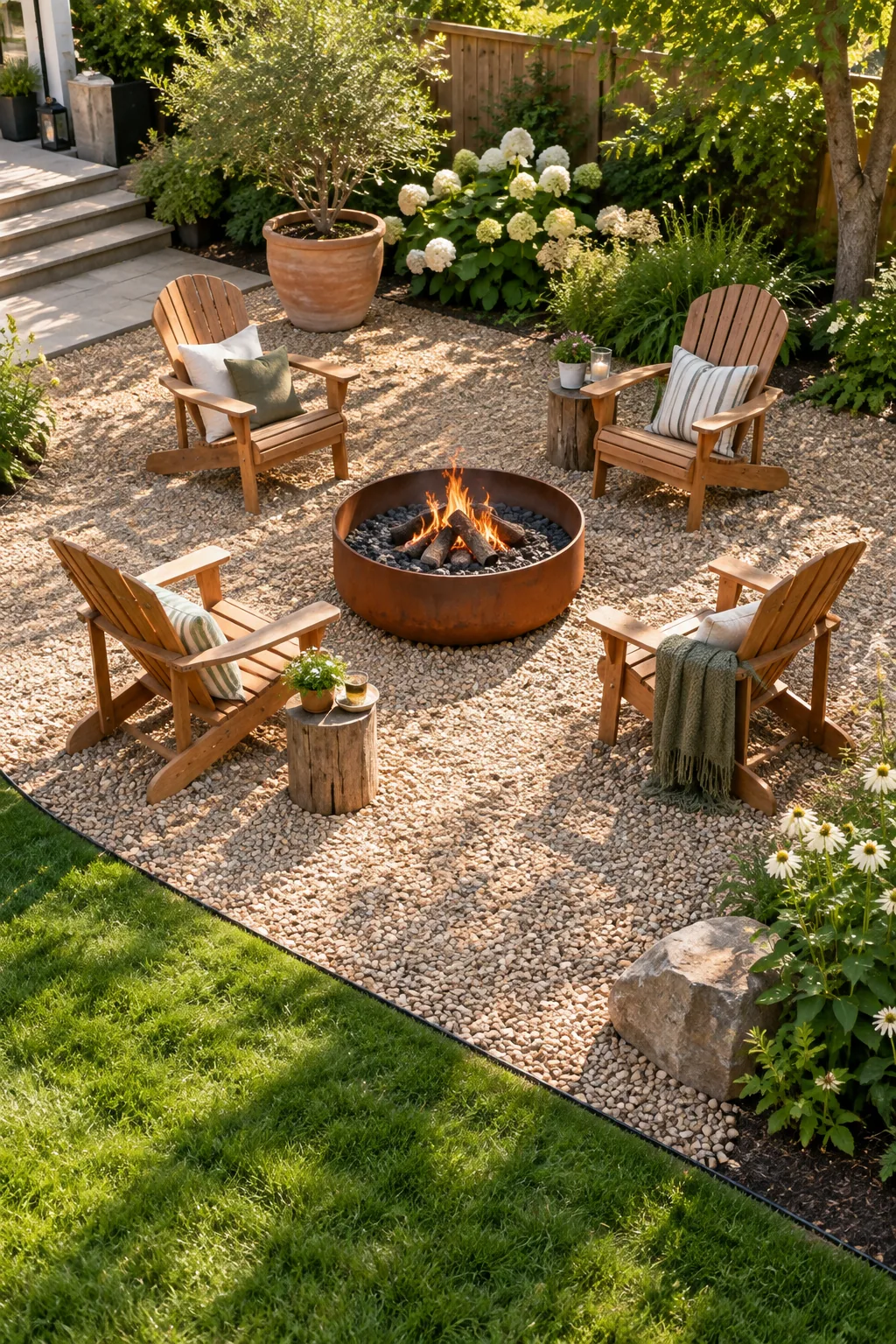
When properly contained, these small stones wedge tightly against one another rather than rolling away from your footsteps. This firm friction is exactly what allows you to walk across the space smoothly without shifting the ground beneath you.
Evaluating Your Existing Drainage
Before digging a single inch, watch how rainwater moves across your yard during a heavy storm. You must ensure the planned patio area naturally drains away from your home foundation to prevent standing water from pooling inside the borders.
Excavating the Base Layer
Mark out your patio footprint with marking paint and excavate the topsoil to exactly 2.5 inches deep. Removing this shallow layer of dirt gives you enough vertical room to accommodate the weed barrier and the final layer of stone.
Tamping the Soil Subgrade
Once you remove the grass and topsoil, use a heavy steel hand tamper to compact the exposed dirt into a firm base. A solid, level subgrade prevents the finished patio from developing uneven dips or annoying soft spots over time.
Laying the Woven Weed Barrier
A heavy-duty underlayment is essential to separate the native soil from your clean stones. Always use a commercial-grade woven weed barrier rather than cheap plastic, overlapping every single seam by at least six inches for total coverage.
Pinning the Fabric Securely
Even the highest quality weed barrier will shift aggressively when hundreds of pounds of rock are poured directly over it. Driving steel landscape pins securely into the overlapped seams is a mandatory step to keep the foundation perfectly flat.
Installing Hidden Steel Edging
To keep the stones from migrating into the lawn, the perimeter must be completely rigid and unbroken. Hidden steel edging provides a crisp, unbreakable boundary that sits perfectly flush with the final gravel height for a seamless look.
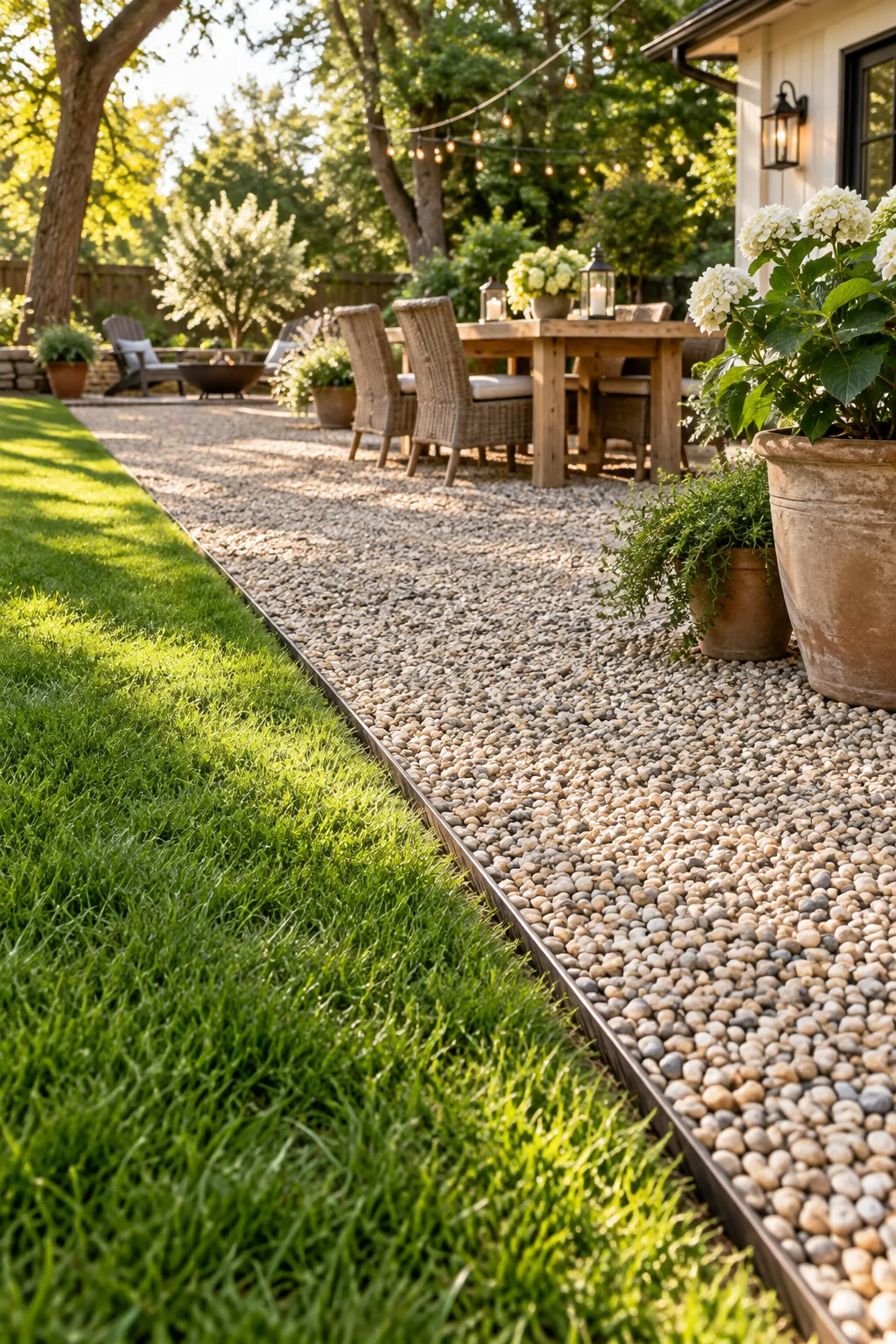
Sink the metal edging deep enough into the perimeter trench that only the top quarter-inch remains visibly exposed above the soil line. This precise depth creates a strong retaining wall for the rocks while remaining completely invisible from a distance.
Staking the Metal Perimeter
Drive the included metal spikes through the overlapping edging brackets to lock the steel strips firmly together. Hammering these stakes deep into the compacted subgrade ensures the border will never bow outward when the heavy gravel settles against it.
Creating a Border Planting Zone
Leave a small buffer zone of soil between your new metal edging and any delicate garden beds. Planting low-growing groundcover just outside the steel boundary helps soften the rigid metal line and blends the hardscape naturally into your lawn.
Why the 2-Inch Gravel Depth Matters
Pouring too much rock is the single most common mistake in modern outdoor design. You must stick to a strict 2-inch gravel depth across the entire seating area to maintain a firm, walkable surface that supports regular foot traffic.
| Gravel Depth | Surface Feel | Furniture Stability |
|---|---|---|
| 1 Inch | Too thin, shows fabric | Wobbles on uneven base |
| 2 Inches | Firm and walkable | Solid, sink-free support |
| 3+ Inches | Like deep, loose sand | Legs sink immediately |
Anything deeper than two inches causes feet and furniture to sink deeply into the loose material. This excess depth makes the beautiful outdoor space incredibly frustrating to navigate and almost impossible to walk across smoothly with a cup of coffee.
Measuring Your Total Square Footage
Measure the length and width of your excavated patio area in feet, then multiply those numbers together to find your total square footage. Having this exact mathematical measurement is absolutely critical before you call the landscape supply yard.
Pea Gravel Quantity Chart & Prep Checklist
Calculating your order is straightforward when you stick to the strict two-inch rule. When I built my own Austin backyard fire pit, I learned quickly that one ton of standard pea gravel covers roughly 100 square feet perfectly.
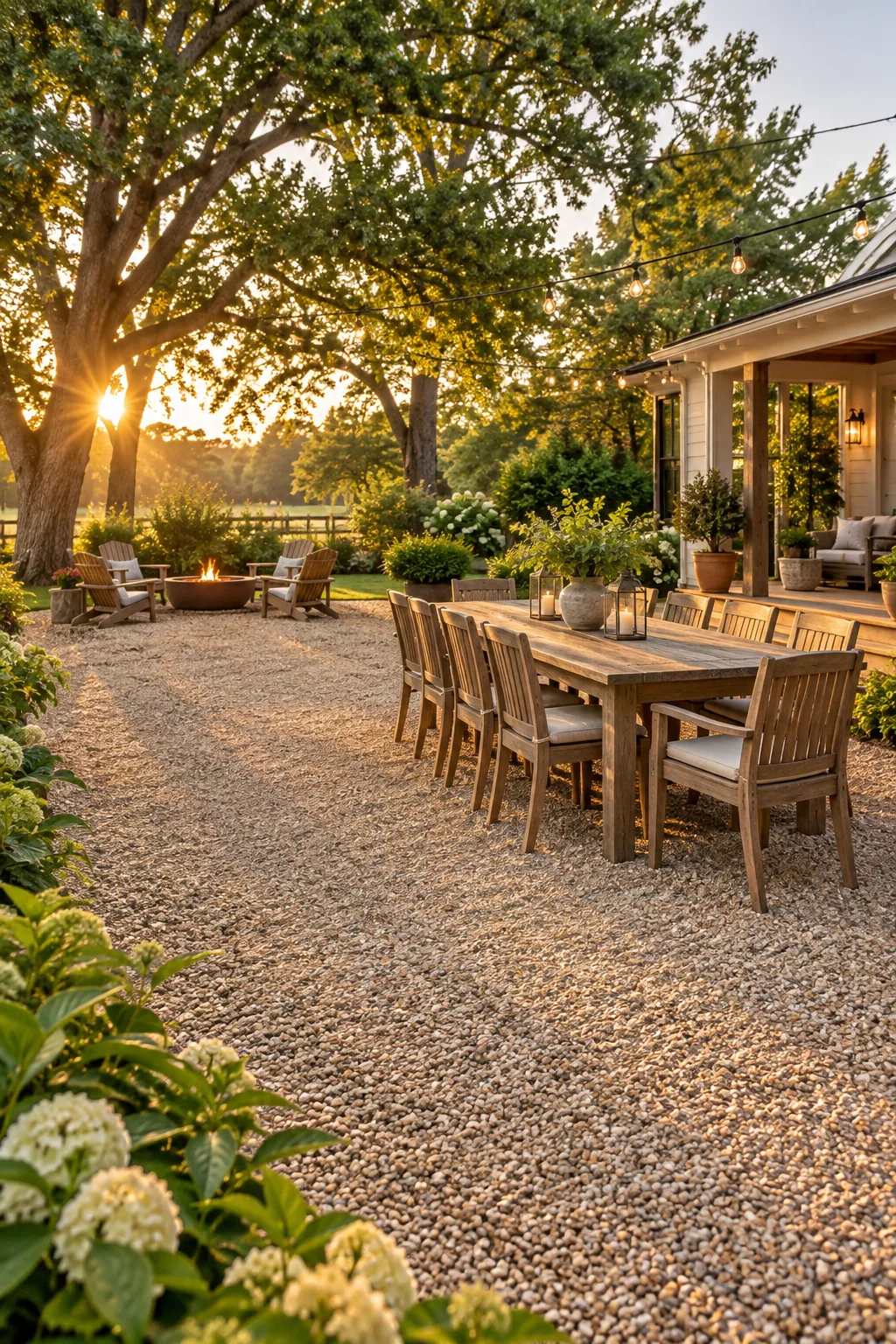
For much larger entertaining spaces, order the stone by the cubic yard, which reliably covers about 160 square feet at the same depth. Before the dump truck arrives, ensure your site is fully prepped so you can move the stone immediately.
Scheduling Your Bulk Stone Delivery
Call your local landscape yard at least a week in advance to schedule a bulk dump truck delivery directly to your driveway. Request that the driver drops the heavy load on a thick tarp to make the final cleanup much easier.
Staging the Wheelbarrow Path
Clear a wide, unobstructed path from the driveway drop zone straight to your backyard patio site. Laying down thick plywood sheets over soft grass protects your lawn from deep wheelbarrow ruts while you transport heavy loads of stone.
Choosing the Right Stone Size
Not all small stones will successfully pack together to create a highly walkable surface. When ordering for my own patio, I always specify exactly 3/8-inch pea gravel, as this specific dimension locks together beautifully under normal human weight.
- 1/4-inch gravel: Too fine, sticks to wet shoes and tracks indoors.
- 3/8-inch gravel: The ideal size for locking together firmly under pressure.
- 5/8-inch river rock: Too large, constantly shifts and rolls beneath your feet.
The distinct mechanical locking mechanism of the three-eighths size is what prevents the dreaded sinking feeling. Larger river rocks simply act like loose marbles, rolling dangerously under your shoes and making the patio feel highly unstable.
Spreading and Tamping the Fill
Dump the stones in small, manageable piles across the weed barrier rather than creating one massive mountain in the center. Use a heavy metal garden rake to spread the rocks evenly until they sit perfectly flush with the steel edging.
Washing the Stone Dust
Freshly delivered gravel always arrives coated in a thick layer of fine, powdery rock dust from the quarry. Spray the entire patio thoroughly with a garden hose to wash this dust down into the soil, revealing the true stone colors.
Selecting Wide-Foot Furniture
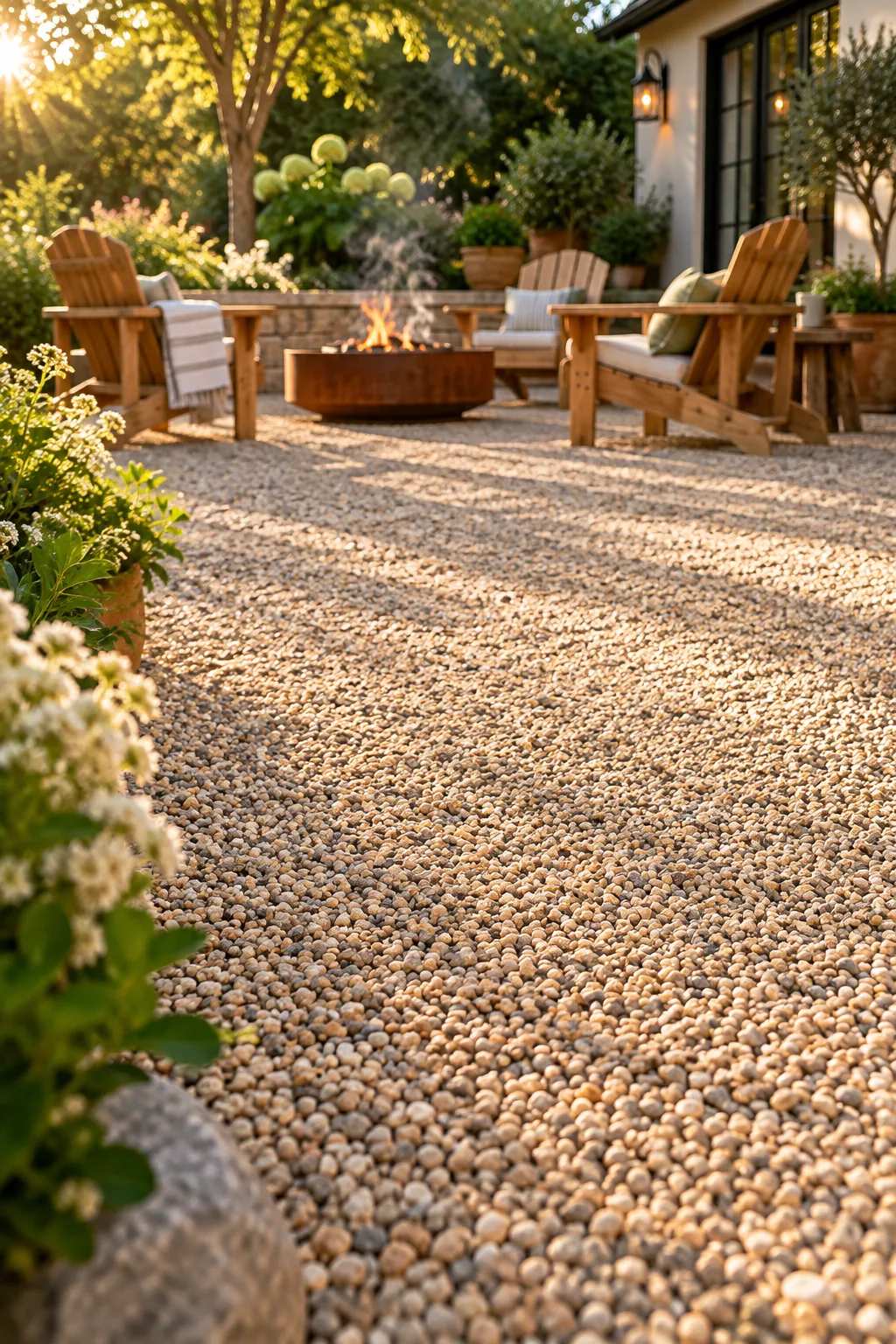
Even a perfectly packed two-inch base cannot support spindly metal chair legs without failing. Choose wide-foot furniture like classic wooden Adirondack chairs or chunky teak sofas to ensure your seating remains entirely above the loose stone surface.
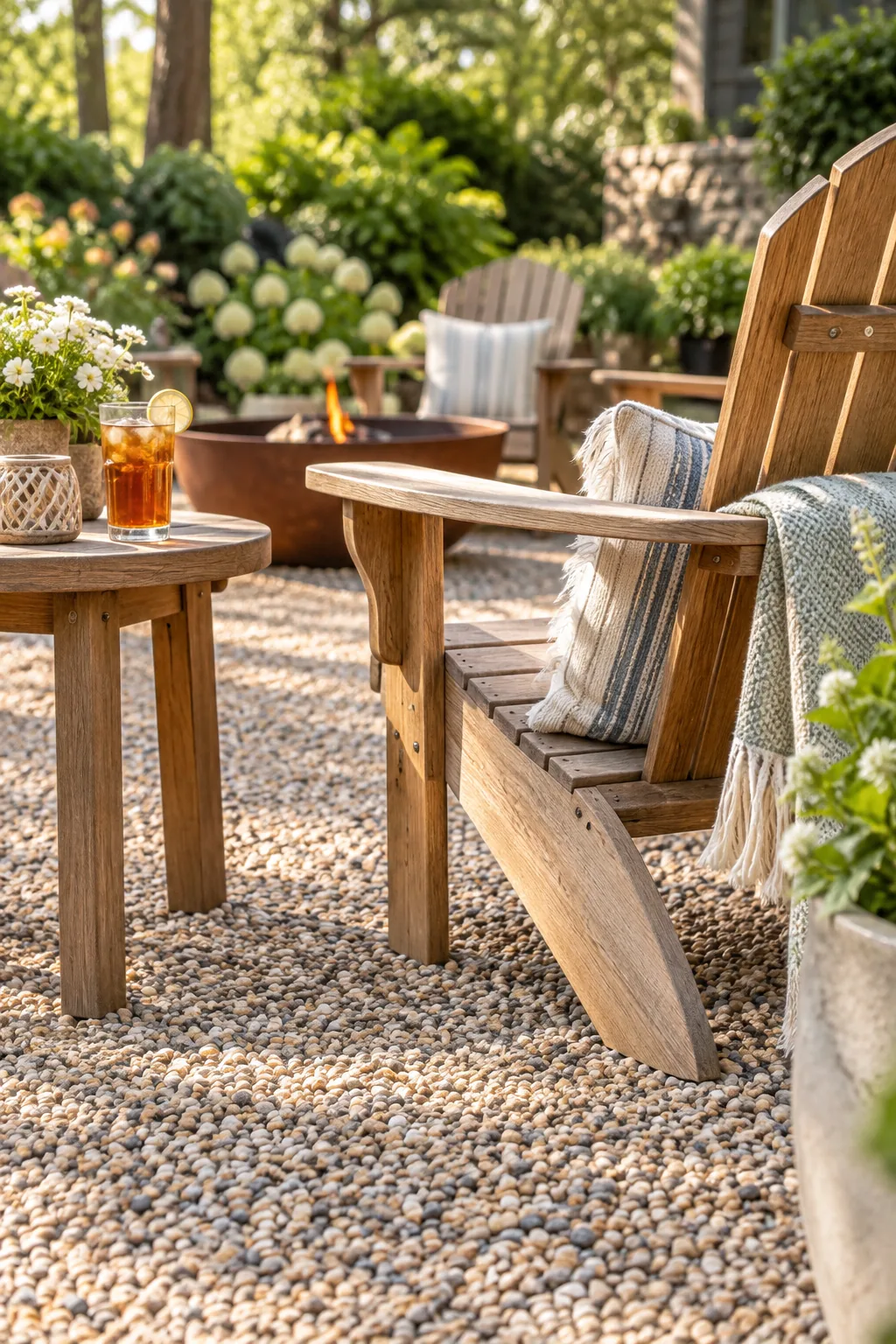
The broad, flat wooden legs distribute the heavy weight evenly across multiple stones. I swapped my thin bistro chairs for thick wooden loungers, completely stopping the furniture from puncturing the weed barrier or sinking into the rocks.
Fire Pit Placement & Heat Safety
Pea gravel is naturally fireproof, making it the safest possible foundation for an active outdoor fire pit. Place your heavy fire bowl directly in the exact center of the patio, ensuring the metal base sits perfectly level on the stones.
Creating Safe Walking Clearances
Keep all wooden furniture pulled back at least three full feet from the outer edge of the fire bowl. This generous spacing allows guests to walk safely behind the chairs while keeping the flammable wood safely away from flying sparks.
5 Ways to Style a Pea Gravel Patio
Explore how different furniture and edging choices completely change the mood of a gravel space.
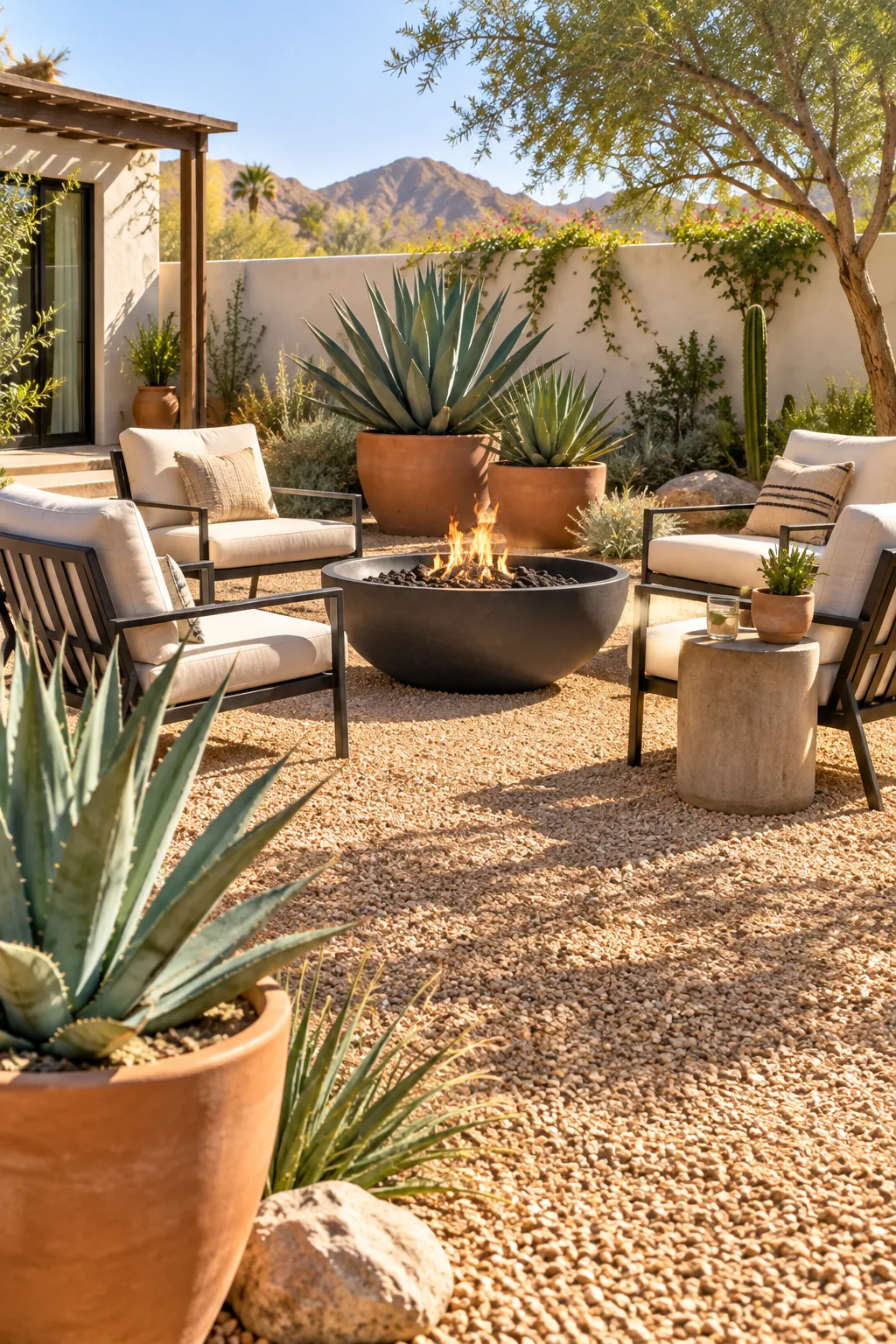
Modern Desert Oasis: Warm tan stones and sleek black metal create a striking contrast against sculptural desert plants.
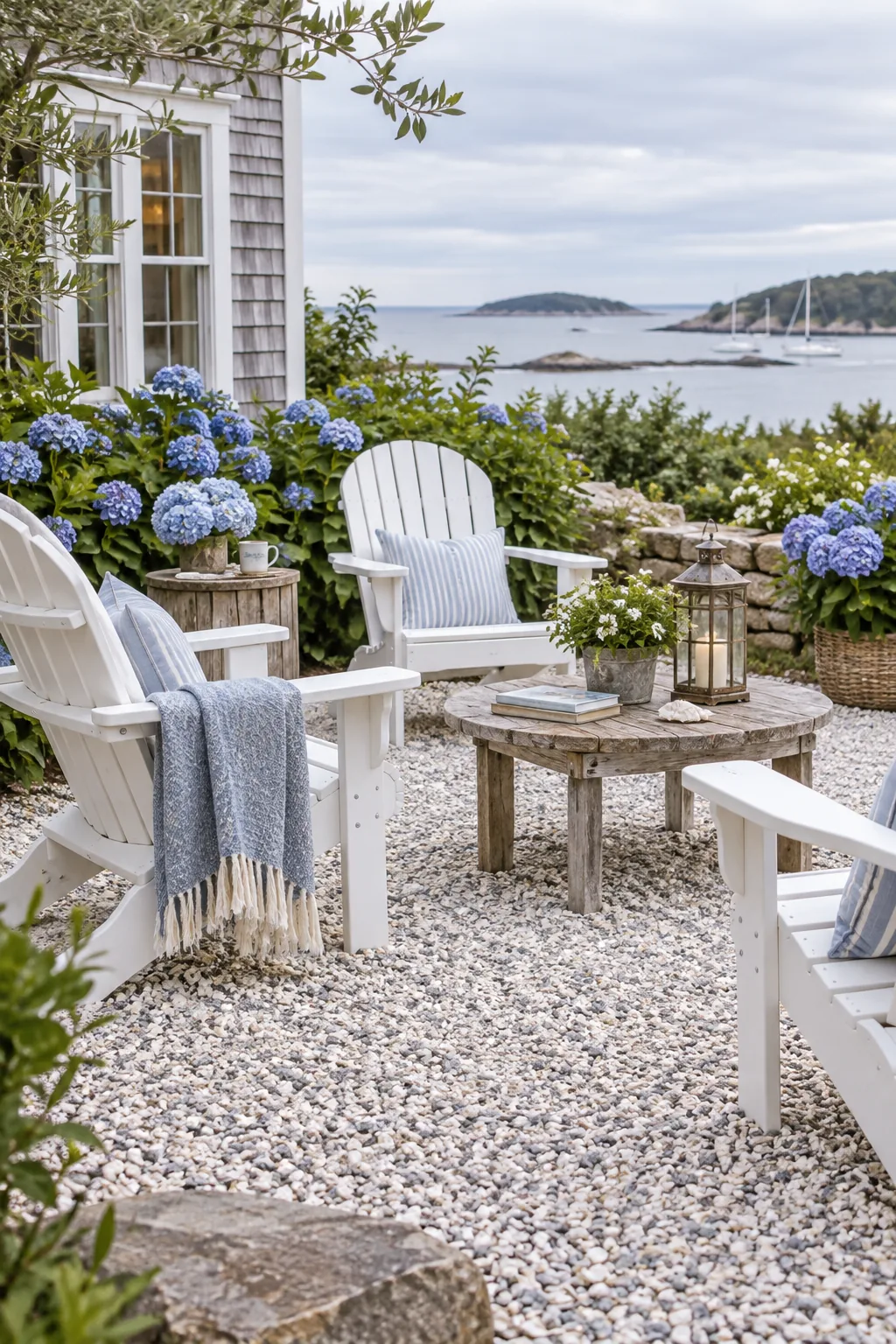
Coastal Cottage Retreat: Light gray stones mimic the look of crushed shells for a relaxed, beach-inspired seating area.
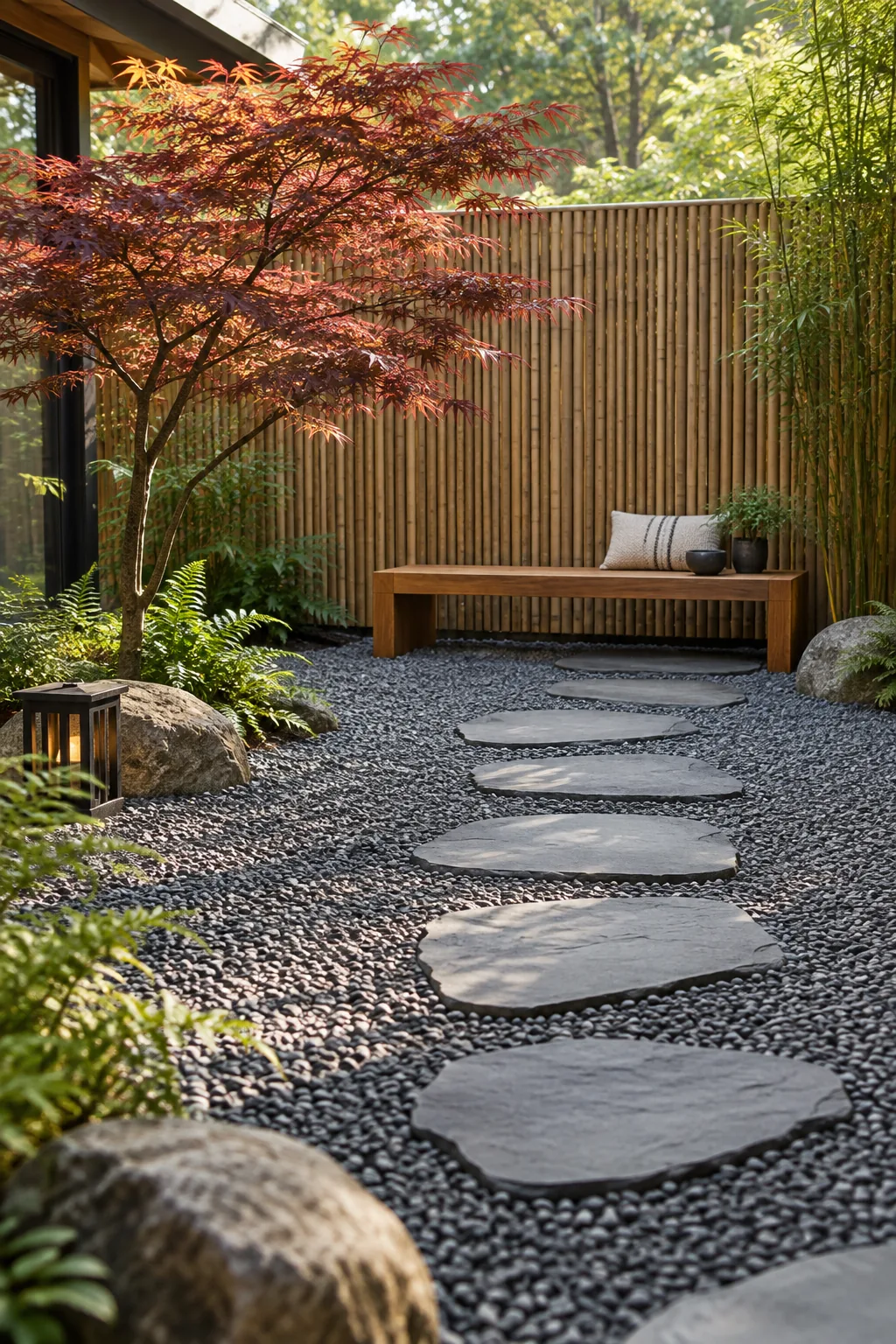
Minimalist Zen Garden: Dark gray stones and embedded slate pathways offer a quiet, meditative space with clean lines.
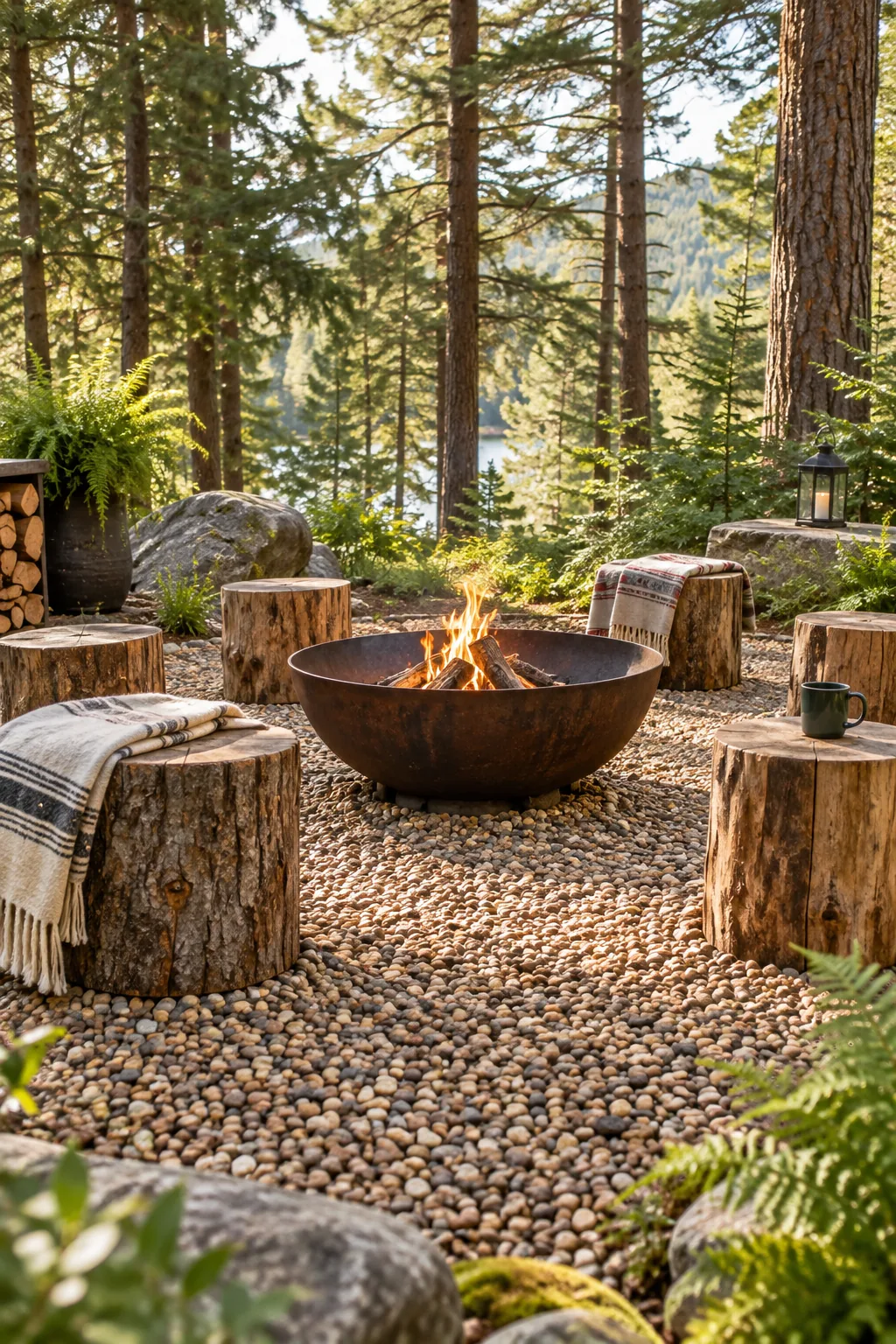
Rustic Woodland Camp: Earthy, multi-colored stones blend seamlessly into a forested backyard for a rugged campfire feel.
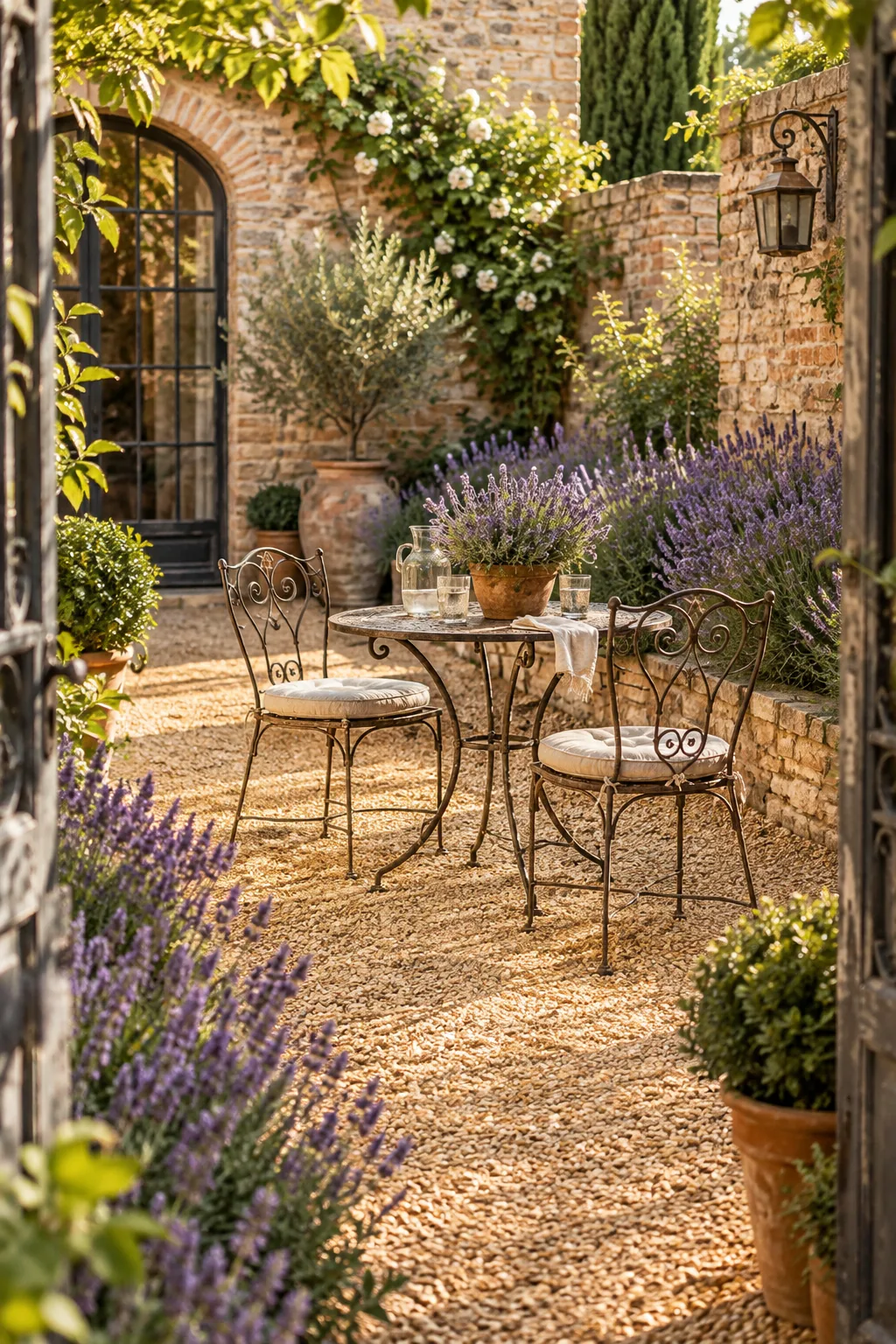
French Country Courtyard: Golden stones and blooming lavender borders instantly evoke the romance of a European outdoor cafe.
Long-Term Maintenance & Raking
A highly walkable patio requires minor monthly upkeep to stay beautifully level and safe. Use a flexible metal leaf rake to gently smooth out any high spots and pull stray stones away from the rigid steel edging boundaries.
Never use a stiff, heavy garden rake for this routine maintenance, as the sharp metal tines will easily catch and tear the woven underlayment beneath. A gentle monthly sweep keeps the surface perfectly flat and entirely trip-free.