
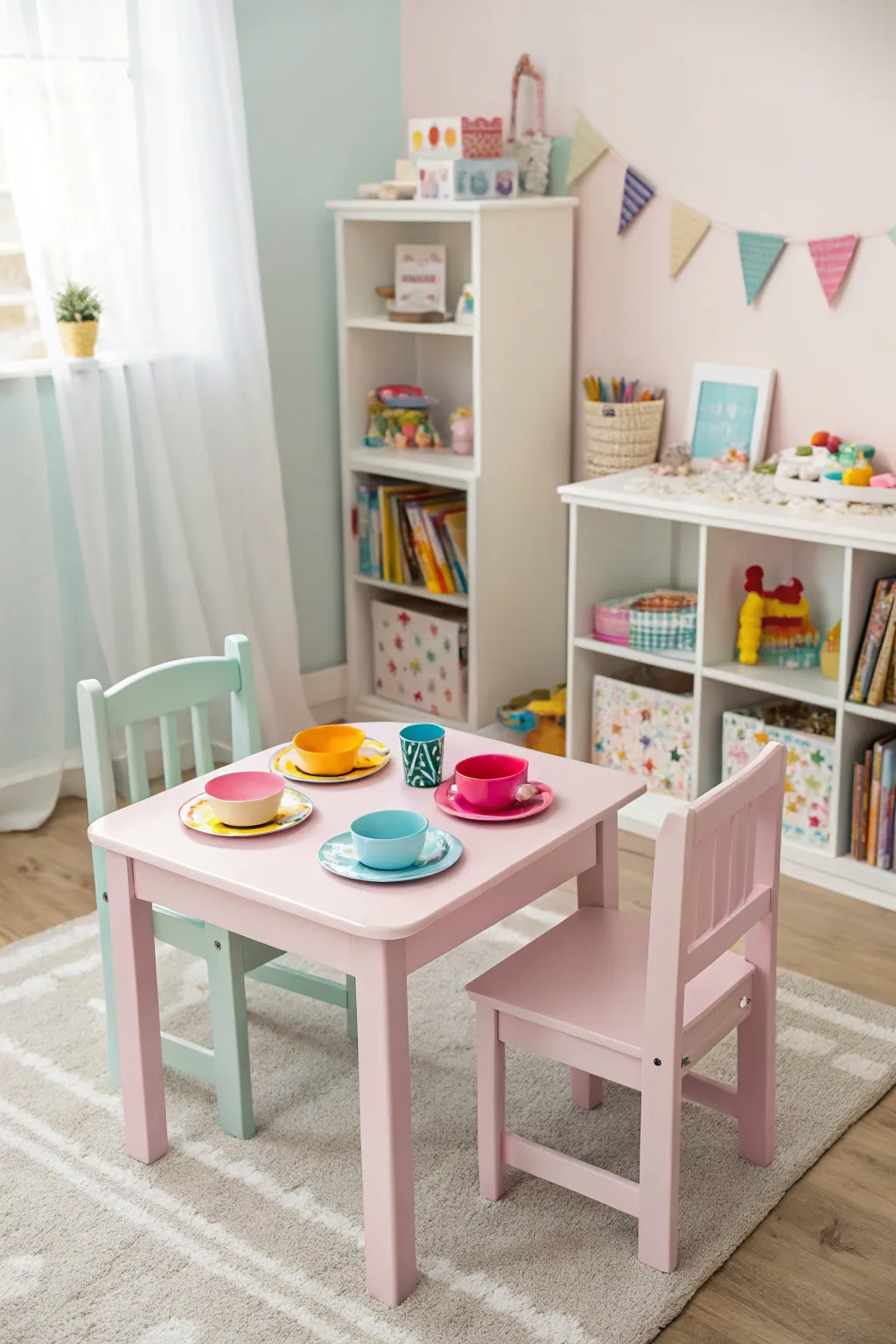
Designing a Montessori-inspired space centers around cultivating your child’s self-reliance and inquisitiveness. Allow me to share some delightful concepts that merge functional design with imaginative charm.
1. Unobstructed Space for Movement

Guarantee there’s sufficient unobstructed space for youngsters to move and discover freely. This encourages physical exercise and supports their natural growth.
2. Individual Reading Area

Create a cozy reading area with pillows and a small bookcase. This dedicated space promotes a passion for books and peaceful reflection.
3. Customizable Lighting

Use an adjustable lamp or night light that children can easily operate themselves. This empowers them to control their environment, enhancing comfort and security.
4. Natural Fabrics for a Peaceful Setting

Go with natural fabrics like wood and cotton to fashion a tranquil and calming atmosphere. This strategy not only appears visually pleasing but also feels welcoming and cozy.
5. Sensory Bins

Introduce sensory bins filled with intriguing objects like pinecones or shells. These bins can ignite curiosity and enhance sensory awareness.
6. Child-Operated Media Player

A simple media player can be a delightful inclusion, letting children enjoy music independently. It’s a wonderful way to introduce rhythm and sound discovery.
7. Opt for a Floor-Level Bed

A floor bed is essential in Montessori-style rooms, offering youngsters the independence to get in and out freely. I’ve observed firsthand how this straightforward alteration can foster self-reliance and contribute to peaceful slumber.
8. Accessible Low Shelves

Integrate low shelving units so toys and books are easily accessible for little ones. This layout cultivates a sense of order and empowers children to choose their activities autonomously.
9. Simple Decor Elements

Keep decor simple with just a few key pieces that include character without overwhelming the space. This strategy maintains the room’s calm and orderly feel. You can achieve this look by following our simple fall mantel decor guide.
10. Handy Art Spaces

Set up a small art space with basic supplies like paper and crayons. This encourages imagination and provides an outlet for self-expression.
11. Designated Play Zones

Allocate particular areas for various activities like reading, playing, and crafting. This helps children grasp and organize their playtime efficiently.
12. Interactive Wall Art

Hang artwork and photographs at a child’s eye level to engage them with their settings. This personal touch makes the space feel truly theirs.
13. Simplified Clothes Storage

Use an open wardrobe or low drawers to make clothing reachable for children. This setup encourages them to dress independently and take responsibility for their items.
14. Multi-Sensory Textures

Incorporate an assortment of textures through carpets, pillows, and modern kitchen wall decorations. This tactile variety invigorates the senses and enhances the learning setting.
15. Nature-Inspired Accents

Bring in elements of nature using indoor plants or a vase of flowers. This connection to nature can be both calming and instructional for children.
16. Child-Proportioned Furniture

Incorporate furniture that’s scaled down to a child’s height to promote self-reliance. A small table and chairs can greatly assist in assisting self-directed activities. You can also explore bistro table and chairs to create a similar scaled-down seating area outdoors.