
Living Room Mirror Rules: Sizing, Height & Placement
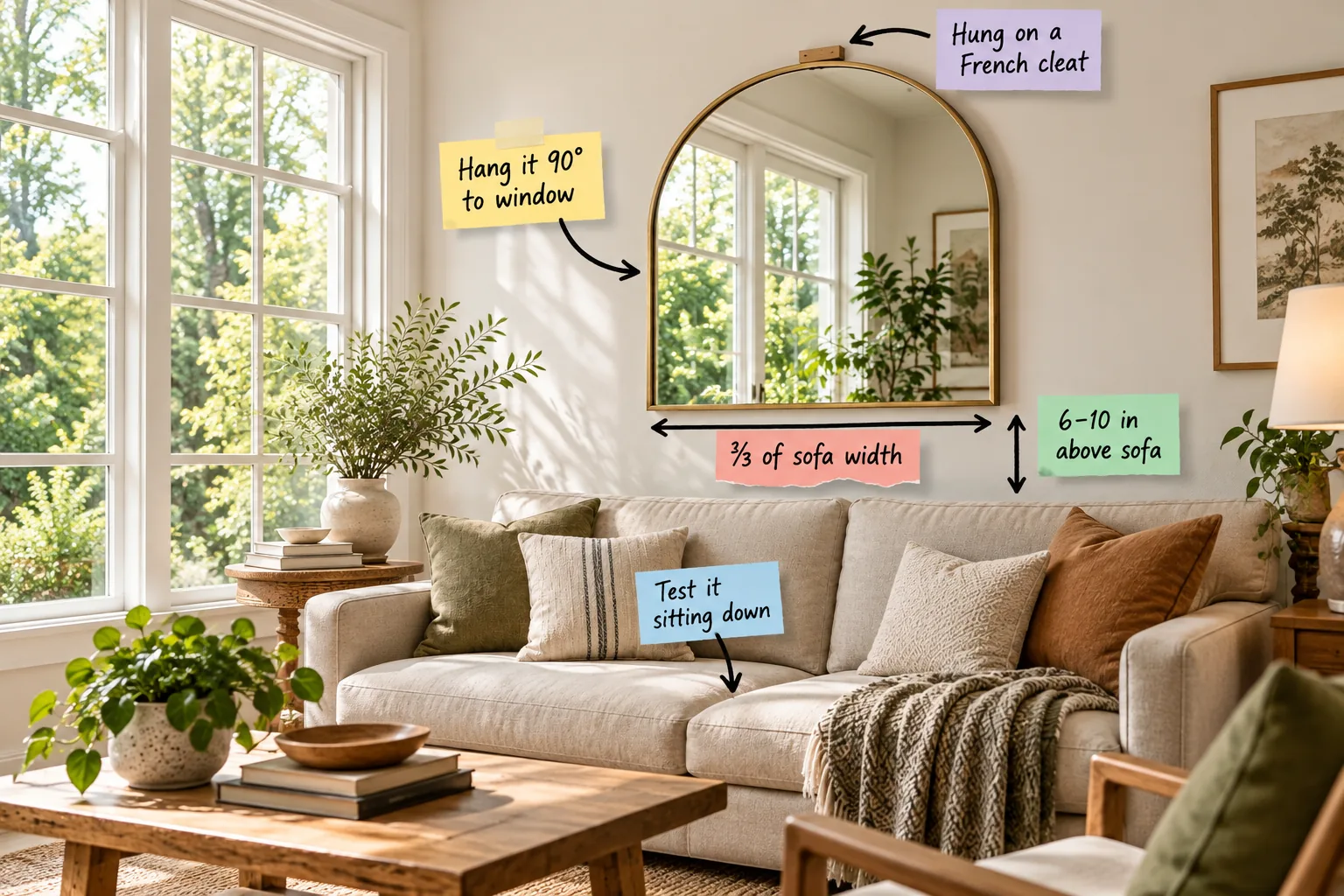
You will be able to confidently choose the right wall, calculate the perfect mirror size, and hang it at the exact right height using our printable Living Room Mirror Sizing & Hanging Height Sheet.
Positioning for the Best Reflection
Hanging a mirror at a 90-degree angle to the room’s single window is the most effective way to capture the outdoor view and pull it inside.
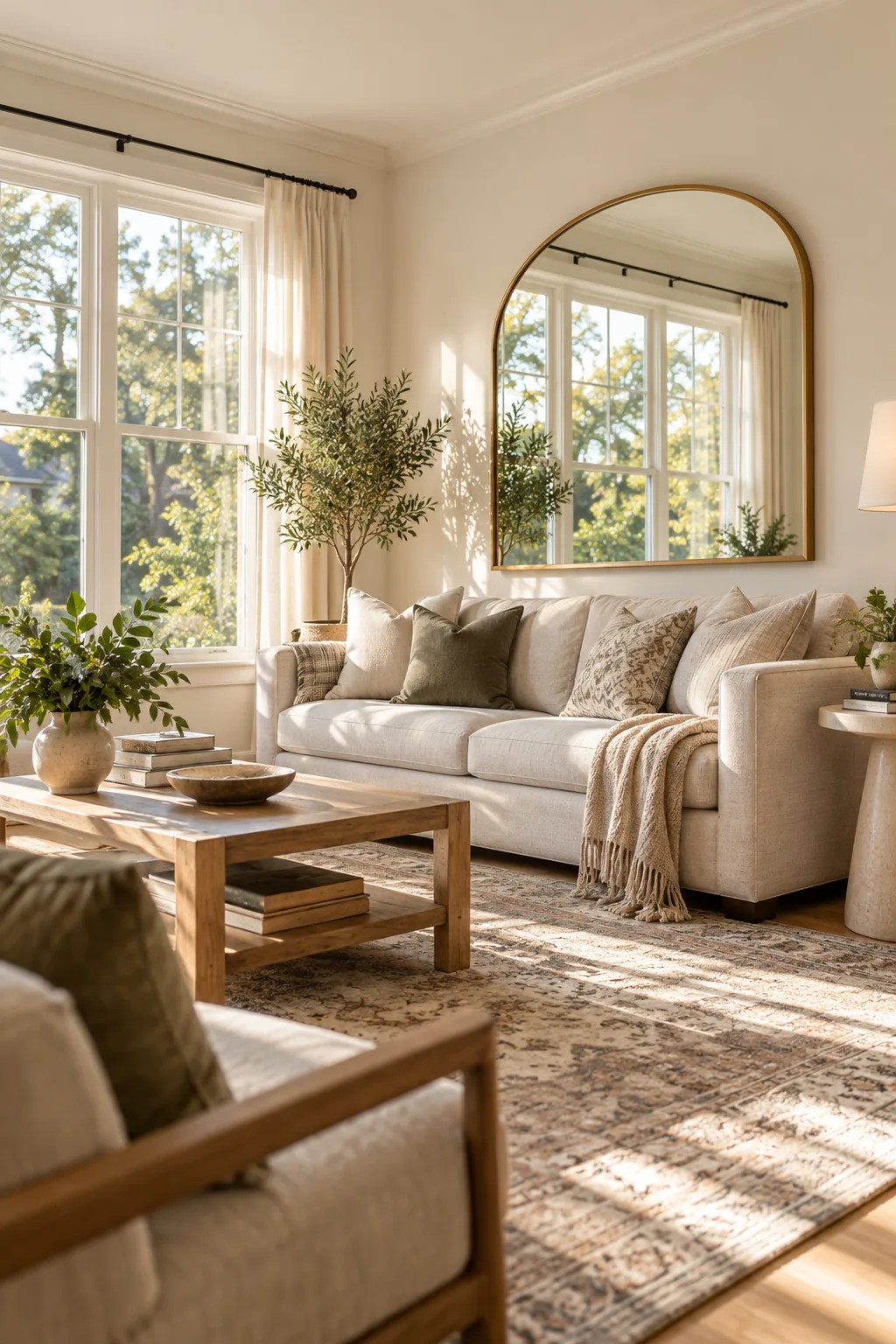
In my own Denver living room, placing the mirror on the adjacent wall essentially created a second window rather than just reflecting a blank opposite wall.
Understanding Room Orientation
Before hanging anything, you must evaluate how your living room receives sunlight throughout the day to avoid washing out the space.
| Window Facing | Light Quality | Mirror Placement Strategy |
|---|---|---|
| North | Cool, indirect | Place directly opposite to maximize scarce light |
| South | Intense, warm | Place on adjacent walls to prevent blinding glare |
| East | Bright morning | Angle away from direct sunrise paths |
| West | Harsh afternoon | Use a 90-degree angle to soften the glow |
This directional strategy ensures your room benefits from natural illumination without creating an uncomfortable environment during peak daylight hours.
Maximizing Natural Light
While an adjacent wall beautifully borrows the view, placing a mirror directly opposite a window bounces the maximum amount of afternoon light into a dark room.
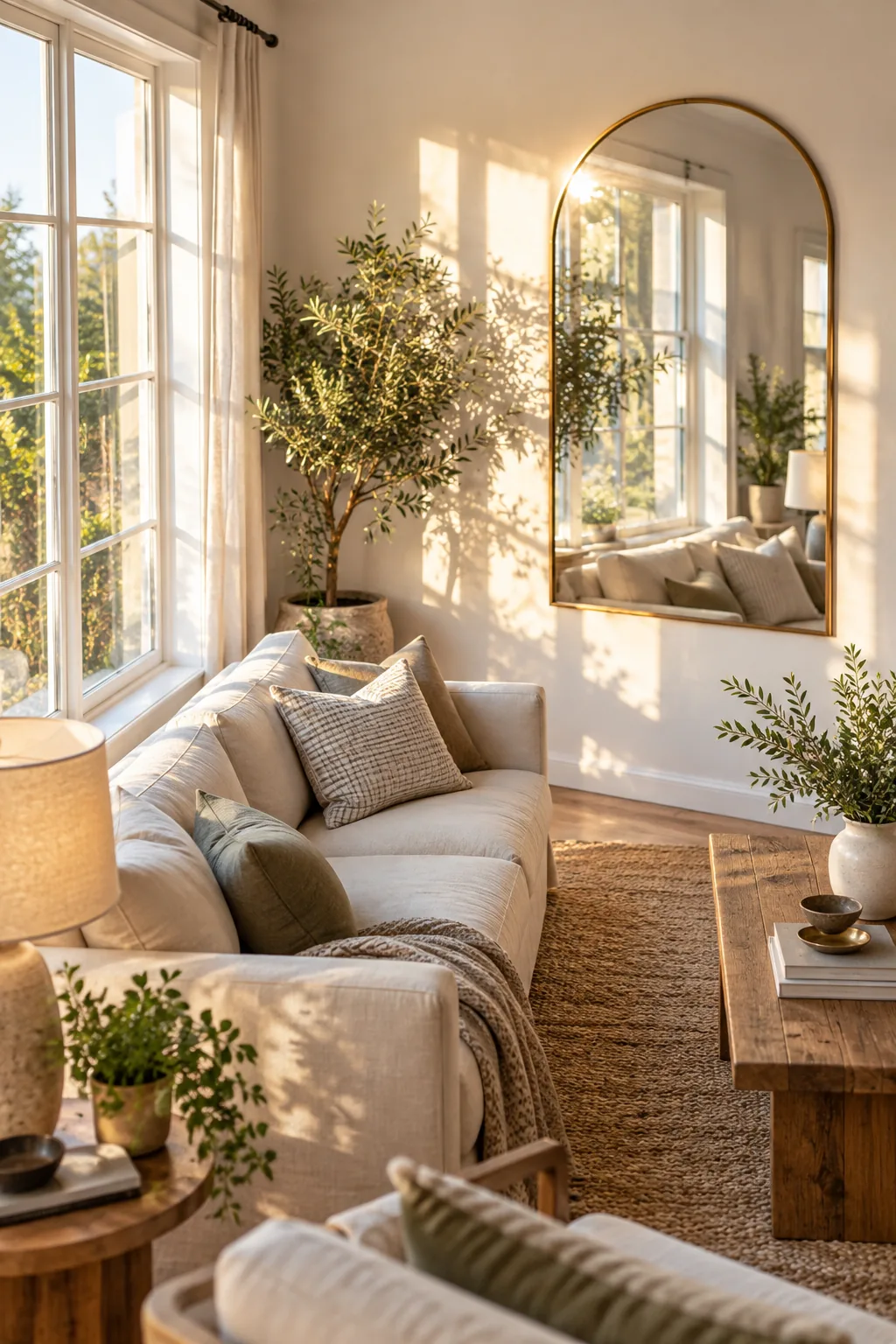
Different walls interact with window light in unique ways, which is why our wall-by-wall guide helps you prioritize between brightness and scenery.
Avoiding Glare and Hotspots
When bouncing light into a dark room, you must be careful not to angle the glass where it will beam intense sunlight directly onto your primary seating.
- Observe the sun’s path across the opposite wall during peak afternoon hours.
- Mark any spots where the light hits exactly at eye level.
- Shift your planned mirror location a few inches left or right to avoid these zones.
Taking a weekend to track the light patterns will save you from constantly pulling the curtains closed just to comfortably watch television.
Scaling to Your Sofa
A mirror hung above seating should be roughly two-thirds the width of the sofa to anchor the wall without overpowering the furniture.
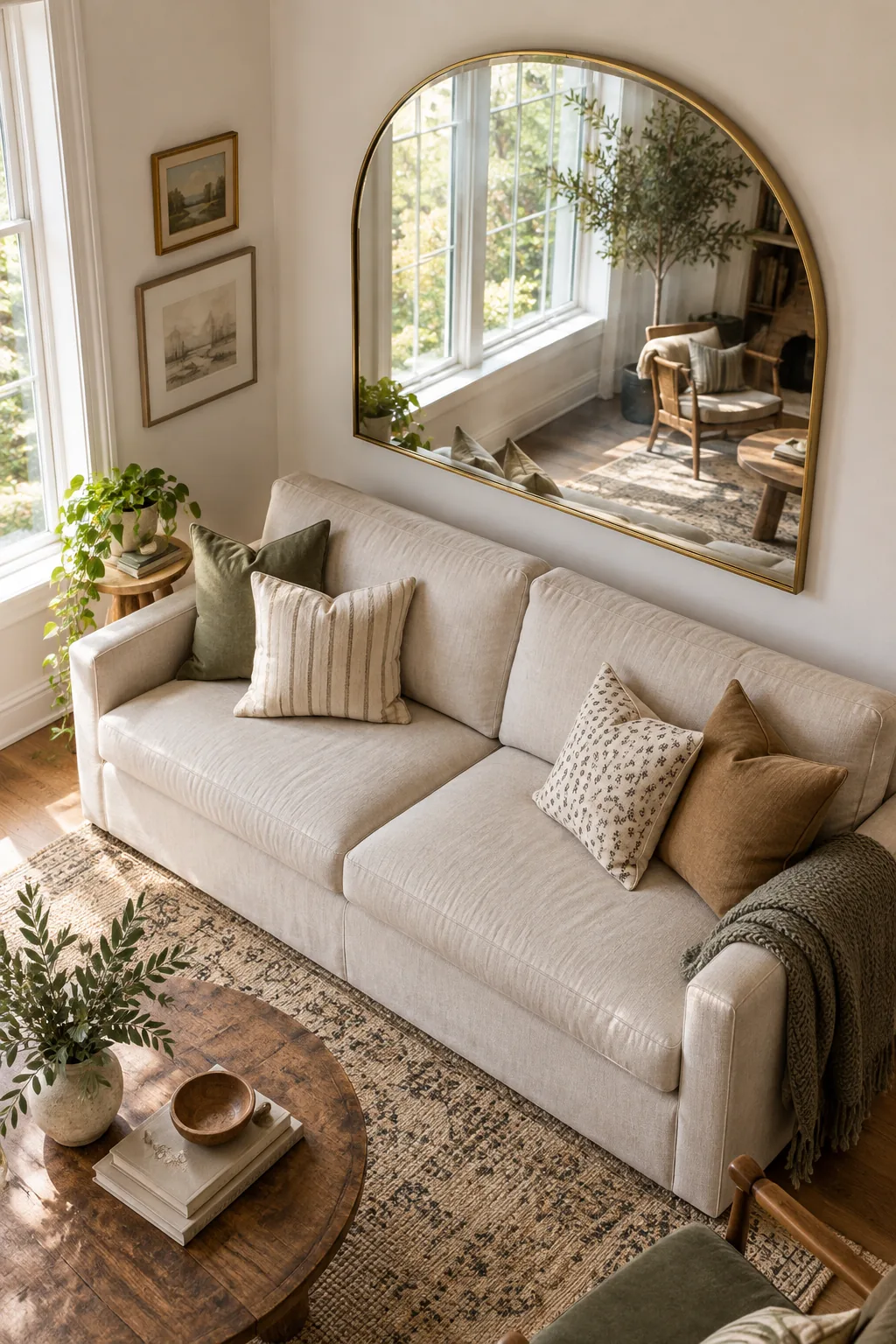
When I swapped out a tiny sunburst mirror for a properly scaled arched piece in a recent project, the entire seating area instantly felt balanced and intentional.
Sizing for Fireplaces and Mantels
If your living room features a fireplace, the mirror width should align with the firebox opening rather than extending all the way to the edges of the mantel.
Leaving at least four inches of bare wall on either side of the frame ensures the architecture of the fireplace remains the focal point.
Matching Console Proportions
When hanging a mirror above a living room console table, apply the same two-thirds width rule to ensure the glass does not visually crush the delicate furniture piece sitting beneath it.
Setting the Gap Above Furniture
Leave a strict 6 to 10-inch vertical gap between the top of the sofa back and the bottom edge of the mirror frame.
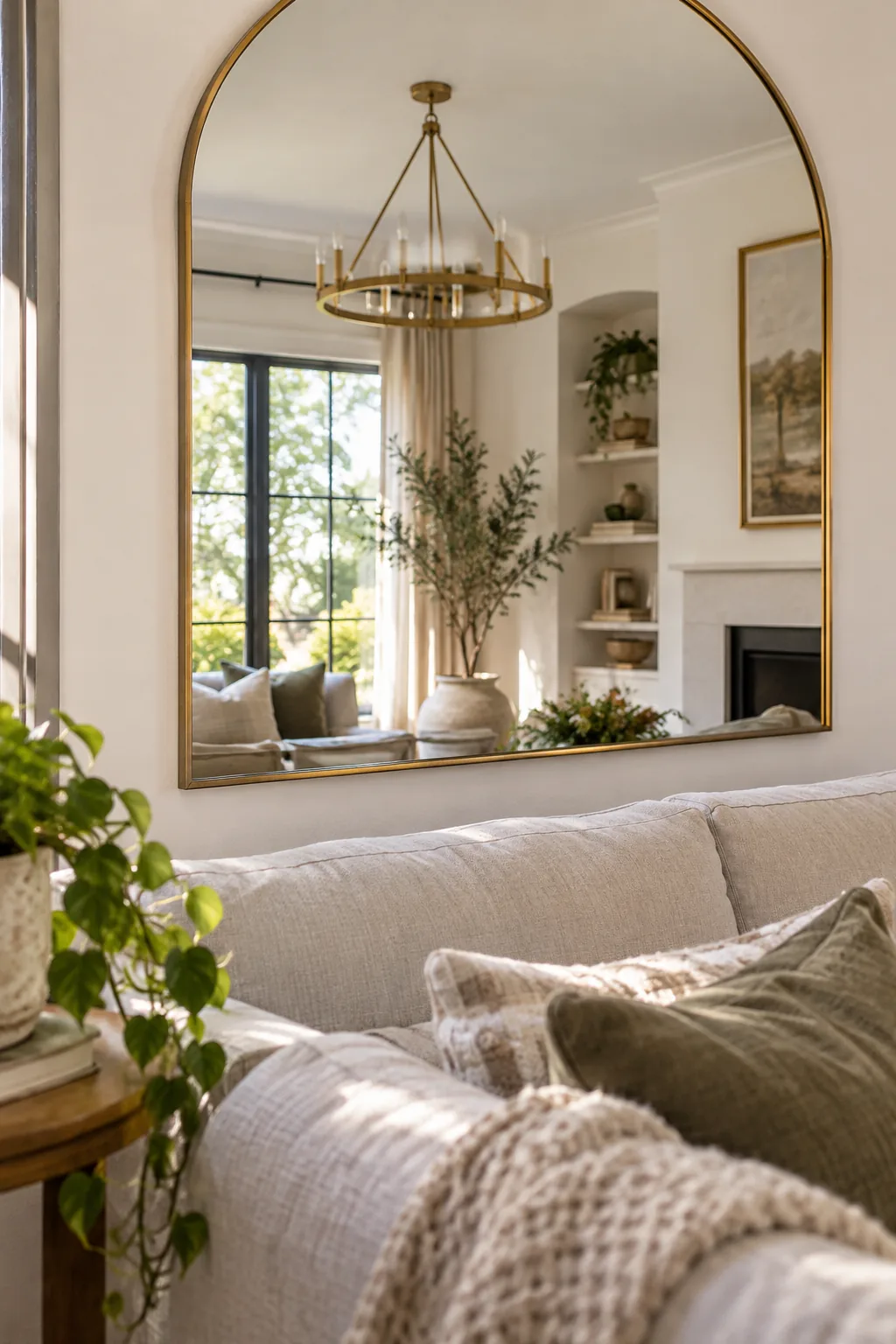
Getting the vertical spacing right is just as important as the mirror’s width, but it is easy to misjudge the gap when dealing with plush furniture.
Adjusting for High Ceilings
In living rooms with vaulted or nine-foot ceilings, you might feel tempted to hang the mirror higher to fill the massive expanse of empty drywall, but you must always keep it visually tethered to the human-scale furniture directly below it.
Factoring in Wainscoting and Molding
If your walls feature decorative molding or wainscoting, center the mirror within the upper wall panel rather than strictly measuring from the furniture, ensuring the frame does not awkwardly overlap the architectural trim.
The Seated Reflection Check
Because living rooms are primarily experienced sitting down, I always test the reflection at seated eye height, a trick that saved my own living room from reflecting a hallway door.
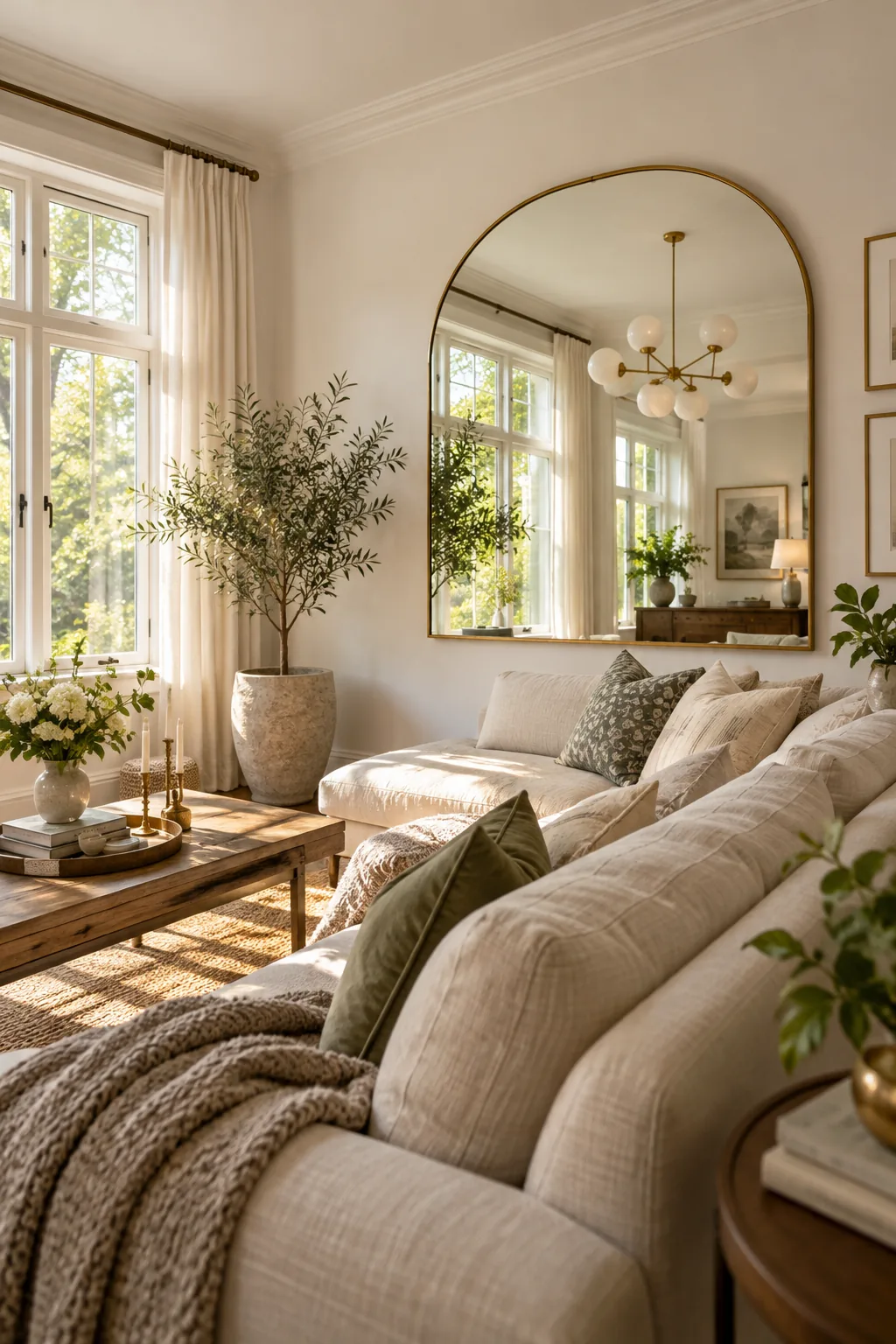
Before you commit to a height and drill into the drywall, run through this quick sequence to ensure your mirror captures the right view.
Testing the Standing Sightline
While the seated view takes priority for the primary seating area, you should also verify what the mirror reflects when guests first walk into the room to ensure they are not greeted by a view of the kitchen trash can.
Checking the Entryway Angle
Stand at the main entrance to your living room and look toward the mirror location to confirm it reflects an inviting vignette, such as a chandelier or an art piece, rather than a blank ceiling or a cluttered corner.
Avoiding the Television Reflection
Never place a mirror where it directly faces your television screen, as the constant flickering movement will create a highly distracting secondary viewing angle that ruins the calm atmosphere of your living room during movie nights.
Incorporating Sconces
If you plan to frame your mirror with wall sconces, leave exactly four to six inches of clearance between the mirror edge and the light fixture to prevent the bulbs from casting harsh, blinding reflections directly into the glass.
Secure Hanging Hardware
A heavy, large-scale mirror should always be hung on a French cleat rather than a wire to distribute the weight evenly across the wall studs.
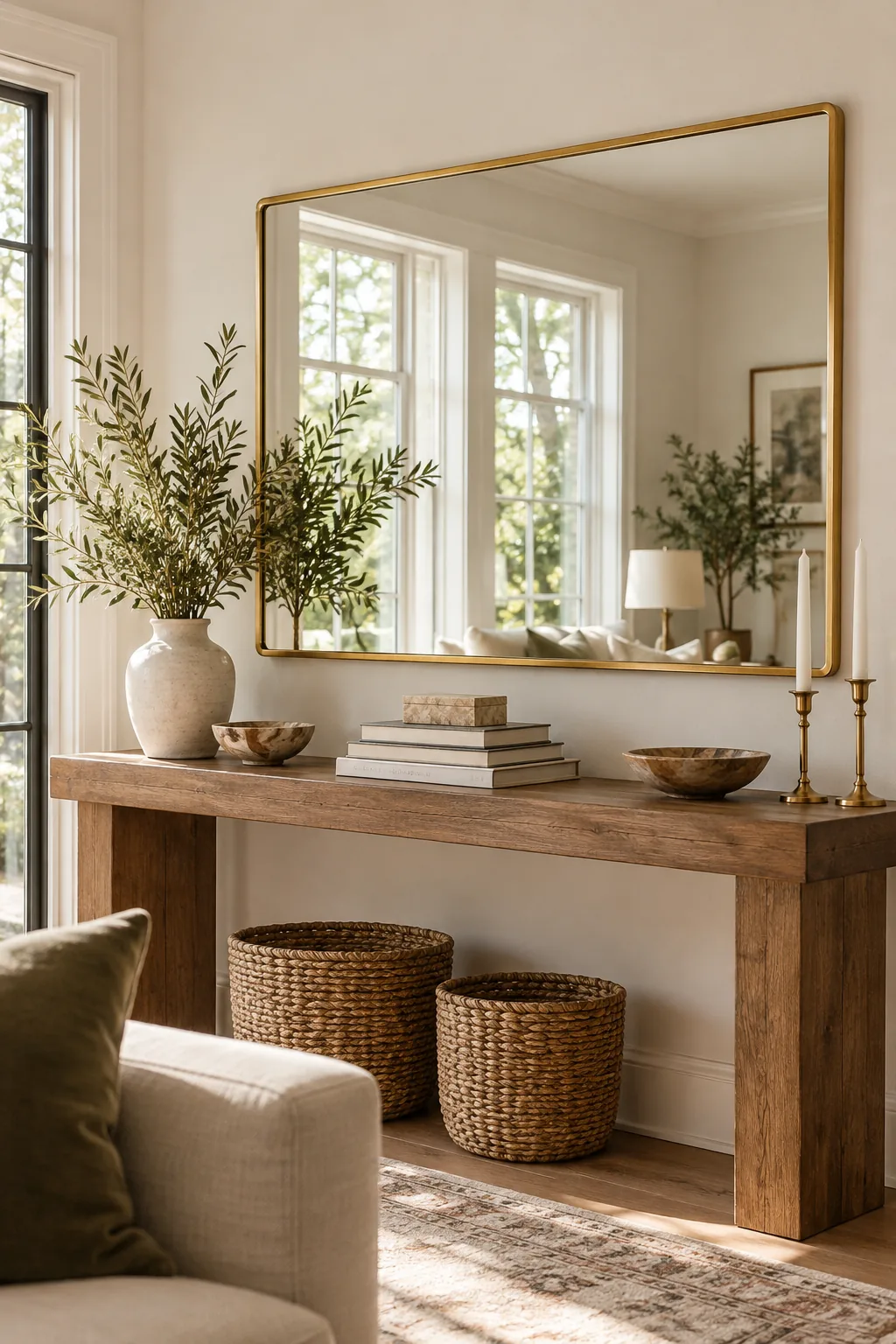
A wooden or metal cleat locks the piece in place and keeps the frame perfectly flush against the wall for a clean, professional finish.
Selecting Drywall Anchors
If your chosen placement prevents you from hitting at least two wooden wall studs, you must upgrade your hardware to heavy-duty toggle bolts, which clamp securely behind the drywall to support significant weight without tearing the gypsum board.
Distributing Weight on Plaster Walls
Older homes with lath and plaster walls require specialized expanding plaster anchors rather than standard plastic sleeves, ensuring the brittle surface does not crack or crumble under the concentrated load of a heavy brass frame.
Hanging Multiple Mirrors
When grouping smaller mirrors together to act as a single large statement piece, treat the entire arrangement as one unit and apply the two-thirds width rule to the outer edges of the total configuration.
Spacing a Gallery Arrangement
Maintain a strict two to three-inch gap between each frame in a mirror gallery wall, providing enough negative space to distinguish the individual pieces while keeping the overall collection visually cohesive and connected.
Leaning Floor Mirrors
Oversized floor mirrors offer a dramatic alternative to hanging, instantly making a small living room feel taller by drawing the eye upward and reflecting the floor plane to create the illusion of extended square footage.
Securing Leaning Frames
Even though they rest on the floor, leaning mirrors must still be secured with a heavy-duty anti-tip strap anchored directly into a wall stud, protecting children and pets from accidental tipping.
Balancing Frame Finishes
The frame material you choose should complement your existing living room hardware, bridging the gap between warm woods and cool metals to create a layered, thoughtfully collected aesthetic rather than a matching showroom look.
Mixing Metals in the Living Room
Introducing a brass mirror frame into a room with matte black light fixtures adds necessary warmth and dimension, proving that deliberately mixing metal finishes creates a much more sophisticated space than rigidly matching every detail.
Choosing Between Beveled and Flat Glass
A beveled edge adds traditional elegance and acts like a subtle prism to catch the light, while flat glass provides a crisp, modern reflection that works perfectly in minimalist or heavily textured living spaces.
Using Tinted or Antiqued Glass
When your primary goal is adding texture rather than bouncing light, opting for antiqued or smoked glass introduces a moody, historical element that softens the reflection and acts more like a piece of atmospheric art.
Cleaning and Maintaining Clarity
To keep your perfectly placed mirror invisible, wipe the glass weekly with a microfiber cloth and a vinegar solution, avoiding ammonia-based cleaners that can seep behind the edges and degrade the silver backing over time.
Living Room Mirror Styles
Find the perfect mirror shape and finish to match your living room's aesthetic.
Minimalist warm oak: A frameless round mirror softens the straight lines of modern furniture while keeping the wall feeling open and uncluttered.
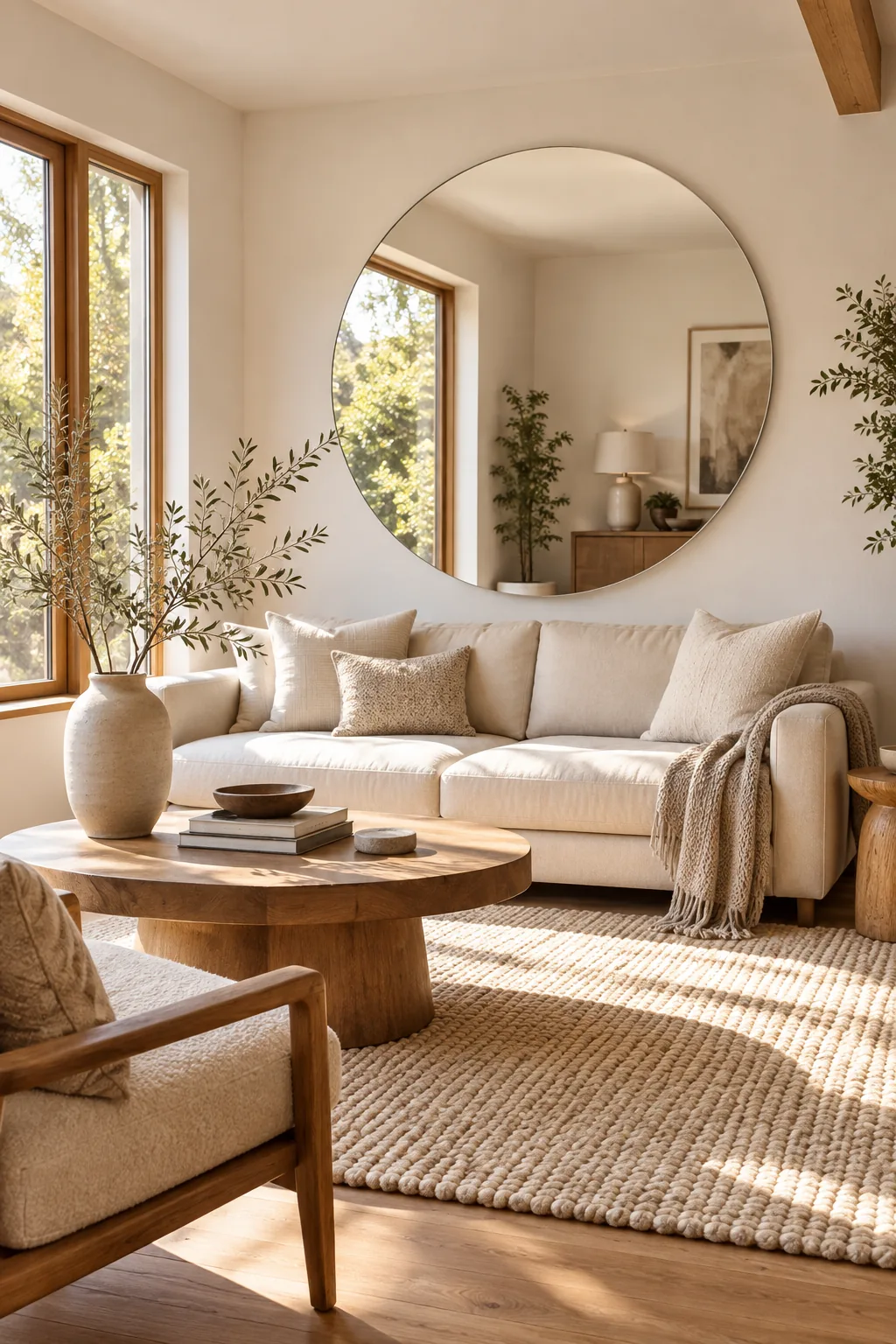
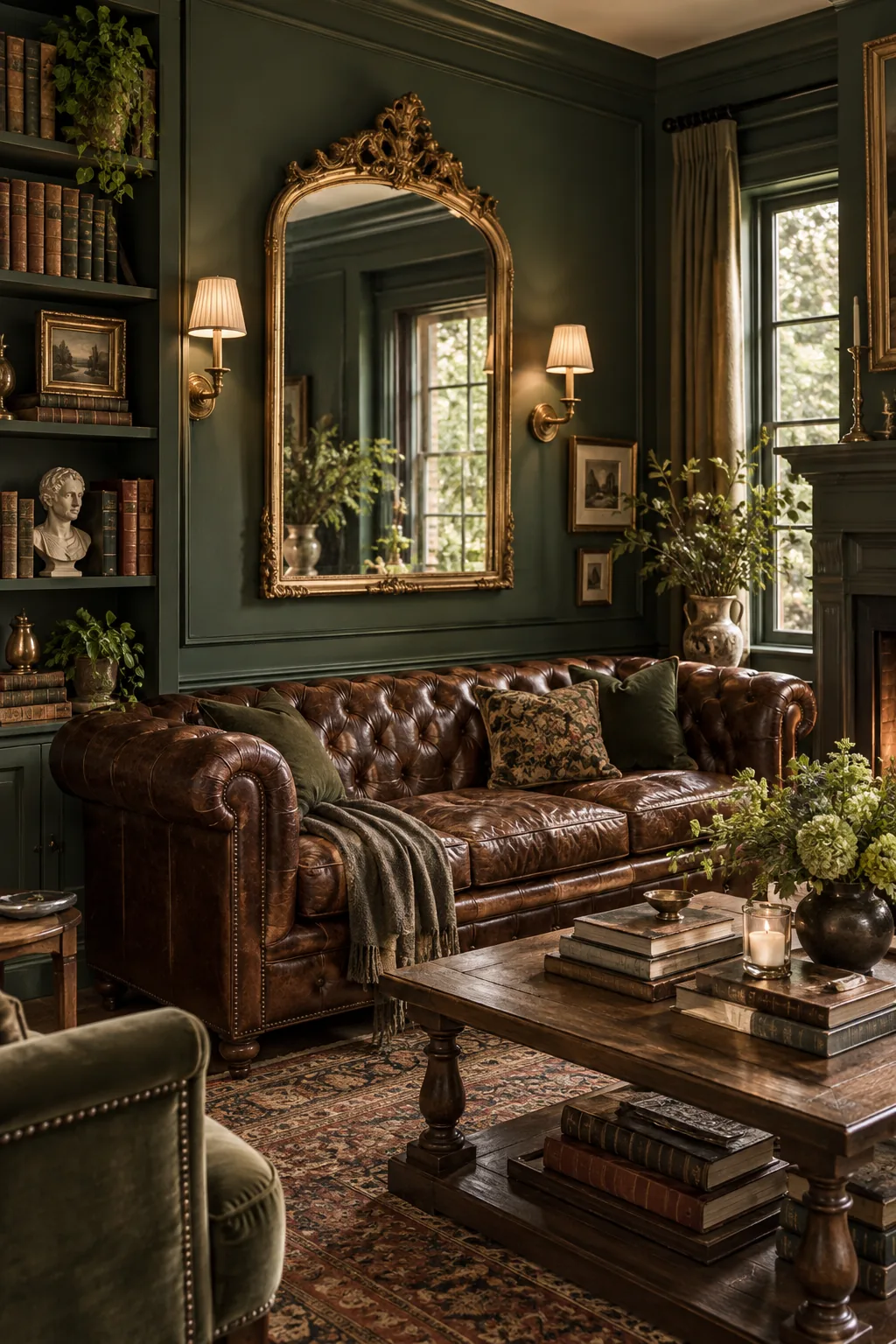
Moody dark academia: An ornate vintage frame acts as a piece of art in itself, bringing warmth and history to dark painted walls.
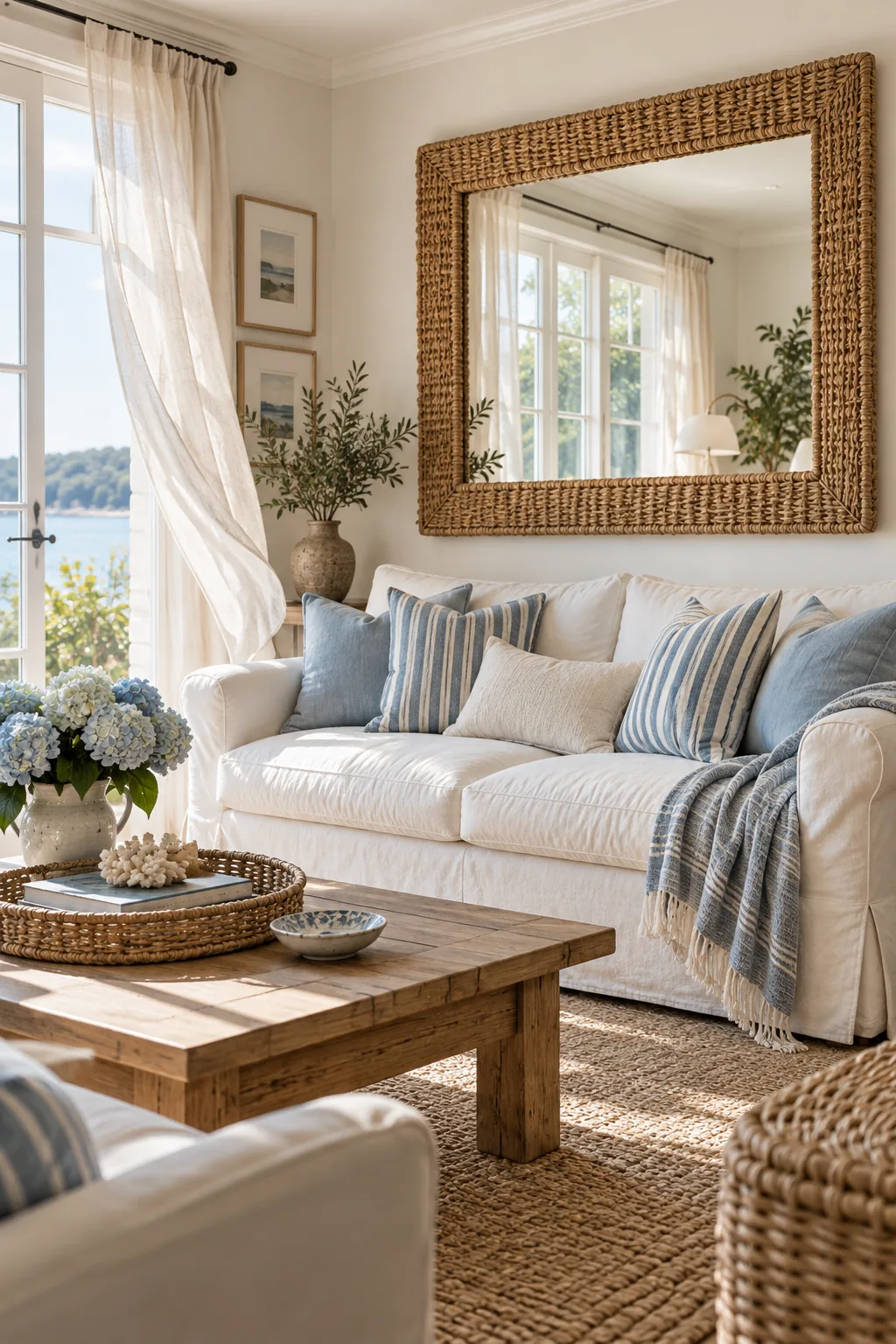
Modern coastal textures: A thick woven rattan frame introduces natural texture that perfectly complements relaxed slipcovers and breezy linen curtains.
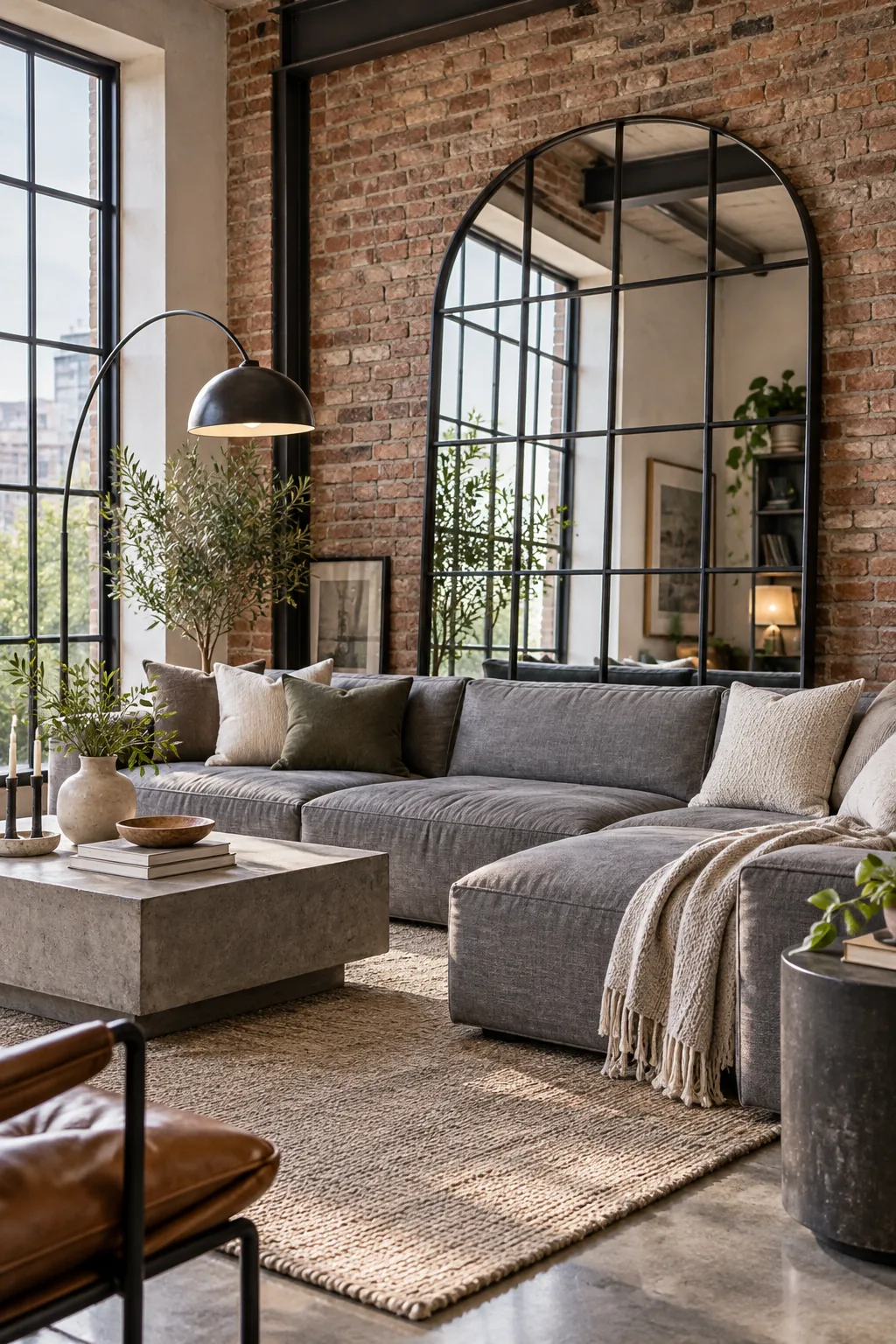
Industrial loft grid: A black metal windowpane mirror mimics architectural factory windows, adding structural interest and depth to exposed brick walls.
Your Mirror Sizing & Height Cheat Sheet
You can easily master these proportions by downloading our printable Living Room Mirror Sizing & Hanging Height Sheet for your next project.
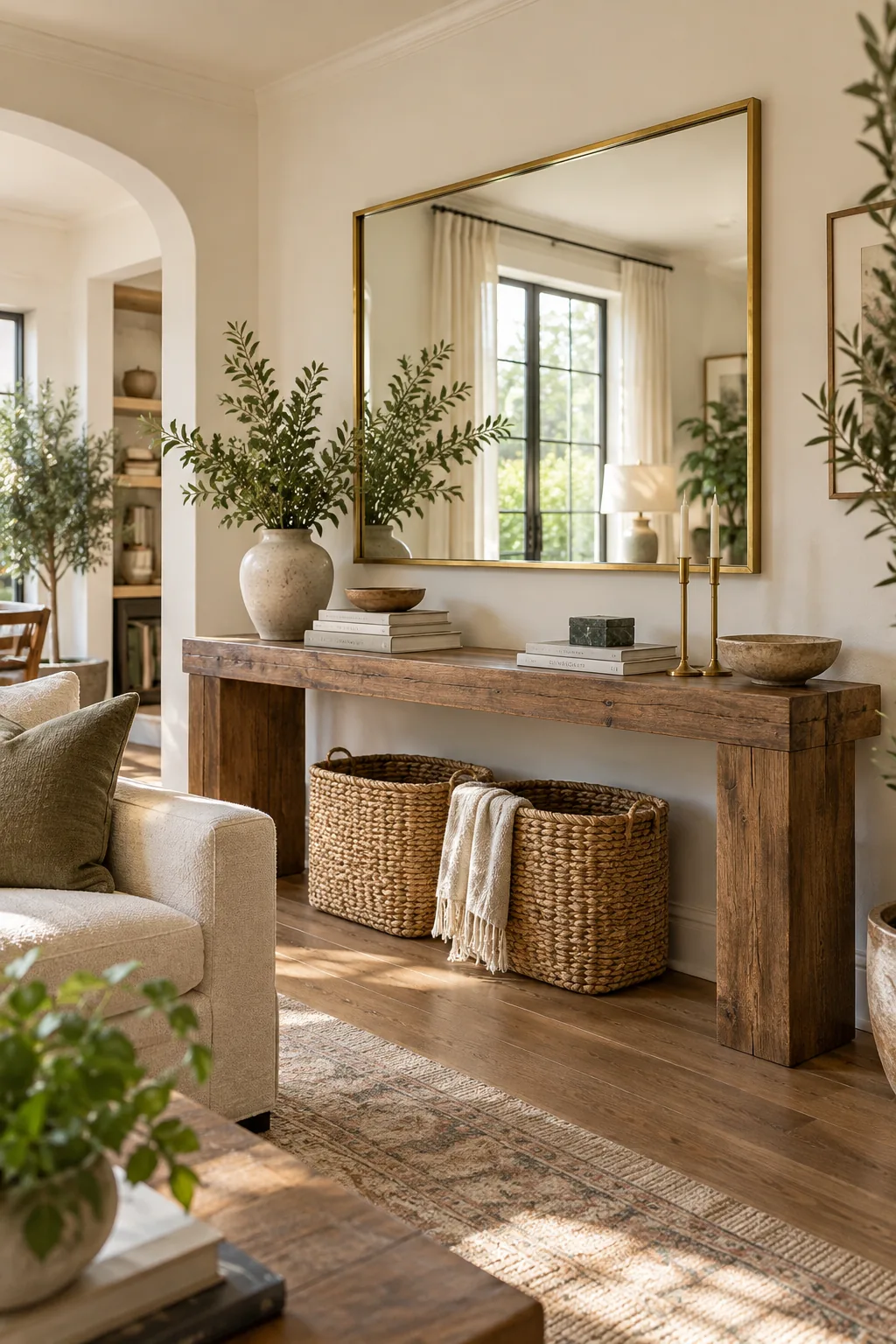
This guide includes your mirror-to-sofa ratios, center heights for hanging versus leaning, the wall-by-wall light guide, and the seated reflection check.